This study investigated the effects of active learning (AL) and problem-based learning (PBL) strategies on students’ reasoning skills in understanding mathematics concepts across four different schools in Kingston & St. Andrew, Jamaica. The research was conducted as an action research using mixed methods in response to observed deficiencies in students’ reasoning abilities in mathematics classrooms, a critical component for success in the subject. The data were collected through focus group discussions, interviews, observational notes, and student questionnaires. The findings revealed that while AL and PBL strategies positively impacted students’ reasoning abilities and conceptual understanding, their effectiveness varied significantly across different school contexts. Key factors influencing these outcomes included the alignment of teaching methods with students’ prior knowledge, the flexibility of the curriculum, and the level of teacher preparedness. The study underscored the need for tailored implementation of these strategies, enhanced teacher training, and continuous curriculum revision to maximize the benefits of AL and PBL in mathematics education. The results contribute to a deeper understanding of how innovative teaching strategies can be adapted to improve students’ critical thinking and problem-solving skills in mathematics.
In the realm of education, mathematics stands as a cornerstone subject, fostering critical thinking, problem-solving, and analytical skills which are crucial for success in various domains of life. However, the mastery of mathematical concepts often eludes many students, particularly in regions where educational resources may be limited or teaching methodologies are traditional and less engaging. Students from schools in Kingston & St. Andrew Jamaica, like many other parts of the world, face challenges in grasping mathematical concepts, particularly in reasoning, which is fundamental to understanding abstract mathematical concepts and principles.
Student-teachers on their fourth-year practicum from September to December 2023 collaborated on a study that sought to address students’ low levels of reasoning in the mathematics classroom using varying mathematical intervention strategies across four high schools located in Kingston & St. Andrew, Jamaica. This study examined the impacts of using Problem-Based Learning and Active Learning activities on the Grade 7 and 9 students’ conceptual understanding. In this study, pseudonyms will be used for the schools, which will be referred to as Blueberry High, Rose High, Bright Sparks High, and Cherry High. Blueberry High School is the only non-traditional high school that was involved in the study, which divides the students into three pathways: Pathway 1, Pathway 2, and Pathway 3. Pathway 1 refers to the traditional academic route that leads students toward pursuing higher education. It includes completing the Caribbean Secondary Education Certificate (CSEC) examinations. This pathway emphasizes a strong foundation in mathematical concepts, problem-solving skills, and critical thinking abilities. Pathway 1 allows students to access the necessary exit examination based on their abilities inclusive of the Caribbean Secondary Examination Certificate (CSEC), City & Guilds, and other standardized examinations 1. Pathway 2, on the other hand, is a two-year transitional programme that aids students who might need additional instructional support. Pathway 3, however, supports students who have not mastered the Grade Four Literacy and Numeracy examination at the primary school level 1.
To learn mathematics in the 21st century, one must be able to think critically about the subject. Consequently, critical thinking in mathematics helps learners avoid misunderstandings and mistakes that undermine systematic thinking and logic. In a non-traditional high school, Blueberry High School, students are assigned to Pathways 1, 2, and 3, with the plan to increase their mathematics fluency based on mathematical proficiencies. While teaching the topic ‘Operations on Fractions’ in a Grade 9 mathematics class, the teacher researcher [she] observed the class during her practicum, and identified significant gaps in students’ critical thinking skills, particularly in adding dissimilar [unlike] fractions. She noted that approximately 50% of the students when they were given the question, “Betty and Boo ate pizza for dinner. Betty ate 3/7 of the pizza while Boo ate ⅖. Sketch a suitable fraction diagram to aid the calculation of the total pizza consumption”, were unable to correctly add fractions like 3/7 + ⅖, often mistakenly adding the numerators and denominators directly to get 3/7 + ⅖ = 5/12. This misunderstanding was evident that the student’s inability to find a common denominator or relate the problem to real-life scenarios suggested a deeper issue with critical thinking skills in mathematics. To address this, the teacher-researcher decided to incorporate Problem-Based Learning (PBL) to encourage self-learning and cooperative learning, which she believed would help illustrate real-life problems and stimulate critical thinking in students 2.
Similarly, at Rose High, another Jamaican teacher researcher [she] shared her account of students having challenges with mathematical reasoning. Mathematical reasoning involves making logical connections and understanding mathematical concepts, which is a fundamental aspect of critical thinking in mathematics 3. Both skills are essential for solving complex problems, as they enable students to analyze, synthesize, and evaluate mathematical information effectively. Moreover, Hassanah et al. 4 postulated that students who can reason will understand mathematical questions, identify patterns and traits [characteristics] of mathematical statements, manipulate mathematics through generalizations, and thereby develop an understanding of mathematics fluently. While teaching the topic of ‘Finding the Highest Common Factor (HCF) and Least Common Multiple (LCM) of numbers, she observed a Grade 7 class struggling with mathematical reasoning. Only 10% of the students could correctly apply the HCF or the LCM in the given problem involving the time taken by different players to finish a game. Here is the scenario: “Anil finished the chess game in 36 minutes, Basil in 42 minutes, and Clarke in 48 minutes. They each make the same number of moves and each move by each player did not take the same time a) how many moves did each player make? b) What is the time taken by each player?” The majority of students incorrectly performed operations like subtraction or division at the given times instead of reasoning out the correct approach. Here are some examples of what they wrote “36 minutes - 42 minutes”, “48 minutes - 42 minutes”, and “. This highlighted a deficiency in their ability to understand mathematical questions and identify patterns, crucial for developing mathematical reasoning 4. This researcher, just like the other teacher research from Blueberry High, also opted to use PBL to improve students’ problem-solving abilities through self-directed learning and to engage them in higher-order thinking and peer collaboration [5, 6]Journal of Educational Research and Practice, vol. 9, no. 3, 2019, pp. 234-245." class="coltj"> 5, 6.
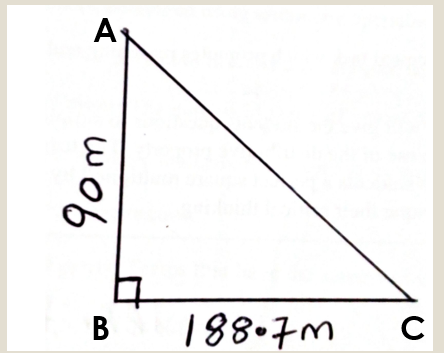
At Bright Sparks High, another teacher-researcher [he] observed that Grade 9 students struggled with mathematical reasoning skills when tackling a trigonometry problem. The question reads as follows: “A vertical pole, AB which is perpendicular to the ground, is 80m high. A piece of wire is attached from point C on the ground to the top of pole, A. The angle formed with the wire and the ground is 230. If an additional 10 m is added at the top of the pole, calculate the new length of wire needed to be attached from the top of the pole to point C”. Only five out of thirty-four students could correctly calculate the new length of wire needed after an additional 10 metres was added to the pole as seen in Figure 1.

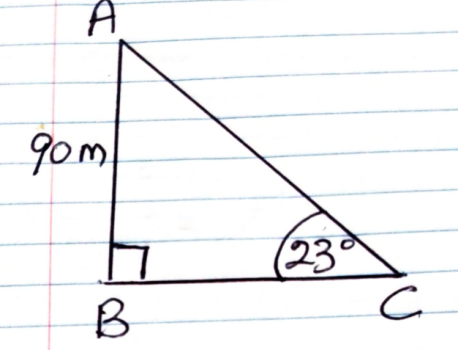
Many students failed to adjust the angle formed by the wire and the ground, reflecting poor mathematical reasoning skills (see Figure 2). The ladder was resting on the wall at an angle of 23 degrees with the ground and at that angle, the ladder reached 80 m up the pole. However, an additional 10 m was added to the pole, so the angle which the ladder made with the ground would be larger than the 23 degrees, however, due to poor mathematics reasoning skills, the students used the 23 degrees to calculate the length of the ladder.
However, lack of mathematics reasoning skills is one of the main factors that hinders students’ performance in proficiency and mastery of mathematics. Students need to learn a new set of mathematics basics which allows them to solve problems creatively and resourcefully 7. To address this, the researcher implemented PBL as a pedagogical strategy similar to the teacher from Rose High which supports active and group learning, helping students make logical connections and tackle new mathematical problems more effectively 3.

Finally, at Cherry High, a Grade 7 class faced significant challenges with student engagement in mathematics. The teacher-researcher observed that students’ lack of motivation and interest led to poor academic performance and participation. Many students expressed that they only attended school because they had to, showing a clear disconnect between their attitudes and engagement in mathematics lessons. To combat this, the researcher employed active learning, a constructivist-based approach that emphasizes learning through experience rather than the passive absorption of facts. This method aimed to increase student involvement and their interest in learning mathematics, thereby improving academic performance and engagement 8 9 10.
The researchers shared that critical thinking deficiencies persist among students, particularly noticeable at Blueberry High. Additionally, they noted that they saw students showing a lack of comprehension of basic operations, underscoring the necessity of interventions like PBL to support cooperative and self-directed learning and to make the connection between mathematics and the real world situations. Moreover, students have been struggling to reason through problems, underscoring the urgency of bolstering students’ reasoning skills through pedagogical strategies like PBL and active learning, which are known for their efficacy in promoting higher-order thinking and problem-solving abilities.
1.1. Purpose of the StudyThis study aimed to determine the challenges students have as to why they seem to have poor reasoning skills of mathematics concepts in four Jamaican high school classrooms at the Grade 7 and 9 levels in the parishes of Kingston, and St. Andrew. The study also seeks to identify the effectiveness of using Active Learning and Problem-based Learning to address students’ challenges in reasoning.
1.2. Research QuestionsThe researchers determined the following research questions to guide the research process:
1. What is the current state of reasoning skills among students in mathematics skills across four schools in Kingston & St. Andrew, Jamaica?
2. How effective are the use of Problem-based Learning (PBL) and Active Learning (AL) strategies in improving students’ reasoning skills and by extension their understanding of mathematics across different school contexts?
3. What are the factors that influenced the implementation and outcomes of AL and PBL in mathematics education across four schools in Kingston & St. Andrew, Jamaica?
1.3. Definition of TermsReasoning skills - This is the ability to generalize, analyze, and solve non-routine problems by providing logical conclusions based on valid evidence or a systematic way of solving the problem 11.
Mathematical intervention - This is defined as a targeted teaching strategy designed to help students who are struggling with specific math skills or concepts. For example, if a student consistently struggles with multiplying fractions, a teacher might provide additional practice, visual aids, and one-on-one instruction focused specifically on that area to help the student improve.
Problem-Based Learning (PBL) - This is a teaching strategy that allows students to learn through real-life situations that encourage concepts and principles 5.
Active Learning (AL) - Active learning according to Brame 12 as cited in Berkeley Center for Teaching & Learning 13, refers to ‘any instructional method that engages students in the learning process beyond listening and passive note-taking’. It promotes and develops metacognitive skills through varied activities.
Traditional high - The traditional high schools in Jamaica can be identified as those high schools that were originally designed to teach core subjects such as mathematics, English language, science subjects, and business subjects. These high schools don’t cater to various practical areas such as auto mechanics, cosmetology, home economics, and those disciplines that cater to students who might not be academically inclined.
Non-traditional high - The non-traditional high schools cater to students’ needs in both academic and vocational areas. Students who are not able to master the CSEC subjects will get the opportunity to do some vocational areas within the non-traditional high schools.
Jamaica Pathway - This is an educational programme initiative in high schools designed to provide students with tailored learning experiences based on their academic abilities, interests, and career goals. It is divided into three pathways: Pathway 1, Pathway 2, and Pathway 3.
Pathway 1 - For students who are performing at or above grade level and are prepared for the traditional academic curriculum, leading to further education or professional careers.
Pathway 2 - For students who need additional support to reach grade-level proficiency in academic strengthening while also providing technical and vocational training.
Pathway 3 - For students who require intensive support, including life skills, vocational training, and remedial education, to prepare them for the workforce or further vocational education.
Piaget's Cognitive Development Theory provides a crucial framework for understanding how students develop reasoning skills in mathematics. Piaget posited that cognitive development occurs in stages, with formal operational thinking - necessary for abstract reasoning - emerging during adolescence 14. If earlier stages are not adequately supported, students may struggle to reach this level of cognitive development, leading to poor reasoning skills. Piaget emphasized the importance of active engagement in learning, suggesting that problem-solving must be discovered through active exploration and interaction rather than taught directly 14. This insight aligns with the principles of AL and PBL, where students engage in constructing their knowledge, thereby making learning more meaningful and effective. Vygotsky’s Sociocultural Theory further underscores the importance of social interaction and cultural context in cognitive development. Vygotsky argued that collaborative learning environments are crucial for enhancing mathematical reasoning, as they enable students to explore concepts through peer interaction and shared problem-solving tasks 15. This approach is consistent with AL and PBL strategies, which encourage students to work together in solving complex problems, thereby deepening their understanding of mathematical principles.
Traditional instructional methods that prioritize rote memorization over conceptual understanding exacerbate the cognitive challenges students face in developing reasoning skills 16. In Jamaica, for instance, the traditional educational practices, particularly in mathematics education, have often been criticized for their reliance on rote memorization and mechanical learning, which are ineffective in fostering deep conceptual understanding and reasoning skills among students. The dominance of teacher-centred methods, such as the “Chalk and Talk” approach which emphasizes memorization over understanding, is a key contributor to students’ poor reasoning skills in mathematics 17. In other words, as explained by Cognitive Load Theory (CLT), complex mathematical tasks can overwhelm students’ working memory, leading to poor reasoning performance 18. This issue is further exacerbated by the cognitive development theory, which suggests that early educational experiences play a critical role in the development of reasoning abilities 19. The failure to emphasize critical thinking from early education stages can lead to long-term deficits in students’ mathematical reasoning. Additionally, AL and PBL aim to manage cognitive load by breaking down complex problems into smaller, more manageable tasks, while providing scaffolding to support students’ processing abilities. This approach reduces cognitive overload and enhances students’ ability to encode, store, and retrieve mathematical information, leading to improved reasoning skills 20. Metacognitive strategies, such as self-monitoring and reflection, are also integral to developing mathematical reasoning skills. AL and PBL encourage students to engage in reflective practices, assessing the effectiveness of different problem-solving approaches and making necessary adjustments. This reflective practice is essential for fostering independent thinking and improving reasoning skills in mathematics 21.
A significant factor contributing to these challenges is the lack of prior knowledge, which is essential for understanding new mathematical concepts. Students who struggle with basic mathematical skills find it difficult to grasp more advanced topics, as they lack the necessary foundation to build upon 22. This deficiency leads to fragmented learning experiences, where new information fails to connect with existing knowledge, resulting in misconceptions and errors in reasoning. Furthermore, the mathematics curriculum itself often overwhelms students and teachers alike, focusing more on content coverage than on developing higher-order thinking skills 23. This curriculum overload forces teachers to prioritize “teaching to the test”, which limits opportunities for students to engage deeply with mathematical concepts and hinders the development of critical thinking and reasoning skills. The literature also highlights the role of comprehension skills in mathematical reasoning. Poor comprehension skills can significantly impact a student’s ability to understand and solve mathematical problems. Students with limited comprehension often struggle to identify patterns, interpret symbols, and justify their solutions, leading to a superficial understanding of mathematical concepts 4 24. This problem is compounded by pedagogical issues, where teachers who lack subject knowledge resort to teacher-directed lessons that emphasize memorization rather than problem-solving 25 26 27. This approach stifles students’ metacognitive development and reinforces a reliance on rote learning, rather than encouraging the creative and critical thinking necessary for mathematical reasoning 24 28 29.
Socio-economic factors significantly influence students’ mathematical achievement, particularly in regions like Kingston and St. Andrew of Jamaica. Students from low-income backgrounds often face additional challenges, such as limited access to resources and support systems, which can impede their development of reasoning skills 30. PBL, with its emphasis on real-world problem-solving, can help bridge these gaps by providing meaningful learning experiences that connect mathematical concepts to students’ everyday lives, thereby enhancing engagement and understanding. Moreover, student engagement, encompassing behavioural, emotional, and cognitive dimensions, is crucial for improving reasoning skills 31. Gafoor and Kurukkan 32 found that a significant percentage of students dislike mathematics, often due to negative perceptions and difficulties in understanding the subject. These challenges underscore the need for instructional strategies that actively engage students and address their specific learning needs.
The impact of these challenges is profound, extending beyond the mathematics classroom. Students who lack critical thinking and reasoning skills in mathematics are likely to struggle in other STEM fields, where these skills are crucial 33. Moreover, the inability to reason mathematically affects students’ ability to engage in informed decision-making and problem-solving in everyday life, which has broader implications for future contributions to society 25 34. The erosion of critical thinking and reasoning in education, therefore, not only undermines individual academic success but also limits the overall development of students as capable and engaged citizens.
Consequently, it was emphasized that to address this technology-based learning can be considered especially since it supports AL and PBL by providing interactive tools that make abstract mathematical concepts more accessible. Digital resources, such as simulations and immediate feedback systems, enable personalized learning experiences that allow students to progress at their own pace, revisit challenging concepts, apply their knowledge to real-world problems, and develop a deeper understanding of mathematics 35. Integrating technology into AL and PBL enhances students’ engagement and reasoning skills, making these strategies more effective in diverse educational settings.
Despite the well-documented benefits of AL and PBL strategies over the years, their successful implementation within the classroom requires meticulous planning, especially concerning curriculum design and instructional practices. One of the significant challenges faced in this context is the often overwhelming nature of syllabi and the rigid assessment structures embedded within many educational systems. These constraints can significantly limit the effectiveness of AL and PBL, as they restrict the time and flexibility needed for students to engage deeply with mathematical concepts. Dr. Camella Buddo 36, a past mathematics lecturer at the School of Education, University of the West Indies, Mona Campus, emphasized that the pressure to cover extensive content within a limited timeframe often forces educators to prioritize breadth over depth. This focus on covering material quickly can prevent students from fully exploring and understanding complex mathematical ideas, thereby undermining the potential of Al and PBL to foster deep conceptual understanding and critical thinking. Moreover, the entrenched nature of standardized testing in many educational systems further exacerbates these challenges. Standardized tests often emphasize rote memorization and procedural knowledge, which can be at odds with the goals of AL and PBL. These strategies aim to promote critical thinking, problem-solving, and the application of knowledge in novel contexts - skills that are not easily accessed through traditional testing methods. As such, educators must advocate for curricula that shift the focus from rote memorization to the development of higher-order thinking skills. This shift would require a fundamental redesign of both curriculum and assessment practices, prioritizing students’ ability to engage with and apply mathematical concepts rather than merely recalling them for exams. Additionally, the effectiveness of AL and PBL is not solely dependent on curricular and assessment structures but is also influenced by students’ learning preferences and styles. Research by Attard et al. 37 titled “The Positive Influence of Inquiry-Based Learning Teacher Professional Learning and Industry Partnerships on Student Engagement with STEM” highlights that while some students excel in the collaborative and interactive environments fostered by AL and PBL, others may find these settings challenging or uncomfortable. For instance, students who prefer structured, teacher-direction instruction may struggle with the open-ended nature of PBL tasks, which require a higher degree of self-directed learning and autonomy. This variation in student engagement and success underscores the importance of considering individual differences when implementing these strategies. To overcome these challenges, educators should adopt a flexible approach that caters to the diverse learning styles and preferences of their students. This could involve offering a mix of instructional methods, including both traditional and active learning strategies, to ensure that all students have the opportunity to succeed. Additionally, scaffolding and support for students who may initially struggle with AL and PBL can help build their confidence and competence in these areas. Ultimately, the goal should be to create an inclusive learning environment where all students can benefit from the rich, exploratory learning experiences that AL and PBL offer.
Improving mathematical reasoning skills among students in regions such as Kingston and St. Andrew requires a multifaceted approach that integrates AL and PBL strategies within a supportive educational framework. By addressing both cognitive and socio-cultural factors, these strategies can enhance students’ understanding of mathematical concepts, thereby improving their reasoning skills and preparing them for future success in STEM disciplines and beyond. However, the successful implementation of these strategies requires careful consideration of curriculum design, resource availability, and student diversity, ensuring that all students benefit from these innovative approaches to learning.
This research was developed using an action research design study, employing a mixed methodology approach. The primary aim was to explore and address the poor reasoning skills observed in students’ understanding of mathematical concepts in four Jamaican high school classrooms at Grade 7 and 9 levels, particularly focusing on the impact of active learning (AL) and problem-based learning (PBL) strategies.
3.2. The ParticipantsThe participants selected for this study were thirty-two (32) students from grade 7 to grade 9 students whose ages range from 12 to 14 years old. Purposive sampling was used to gather insights from students about their classroom experiences, as well as responses from the host teachers and heads of the mathematics departments. The participants were taken from four (4) high schools in Jamaica, namely using pseudonyms: Bright Sparks High School, Cherry, Rose, and Blueberry. Five students were selected from Cherry, ten from Bright Sparks High school, ten from Rose, and seven from Blueberry. This study included 24 female students and 8 male students.
3.3. Data Collection and Data AnalysisThe study used a range of instruments for data collection: semi-structured group interviews with students from each of the four schools which will provide qualitative insights into their experiences with active learning (AL) and problem-based learning (PBL) strategies, exploring perceptions, challenges, and impacts on mathematical reasoning skills. Observational notes were recorded by both the researcher and cooperating teachers during mathematical lessons to document the implementation of AL and PBL, student engagement, and observed changes in reasoning skills. Questionnaires were administered to students and teachers to gather quantitative and qualitative data on their experiences and perceptions, featuring closed and open-ended questions. Additionally, a pre-test and post-test were used to assess students’ baseline reasoning skills and measure any changes following the intervention, focusing on key mathematical concepts. For data analysis, thematic analysis was used to identify and code recurring themes from group interviews, observational notes, and open-ended questionnaire responses. A coding scheme was used to categorize data into relevant themes using both inductive and deductive approaches, and triangulation will validate findings by comparing data from various sources. Quantitative data was analyzed using descriptive statistics to summarize trends and measure changes in reasoning skills.
The findings from the study are organized according to research questions in that sequence.
4.1. Results Based on Research Question 1What is the current state of reasoning skills among students in mathematics classrooms across four schools in Kingston & St. Andrew, Jamaica?
This research question sought to explore the existing level of reasoning skills among Grade 7 and 9 students in mathematics across four schools in Kingston & St. Andrew, Jamaica. It aimed to assess how well students currently understand and apply mathematical concepts, providing a baseline for evaluating the impact of active learning and problem-based learning strategies on their reasoning abilities.
The findings from Cherry High Schools’ Grade 7 students, who participated in this study, revealed significant challenges in engagement during mathematics classes (see Table 1). A substantial 40% (2) of the participants indicated that the lack of engaging activities was a major barrier to their learning. These participants expressed a preference for interactive elements such as games and activities, which are seldom incorporated into their mathematics lessons. The absence of these engaging methods led to a lack of enthusiasm and interest in the subject, as traditional “chalk and talk” techniques failed to capture their attention. This suggests a need for more dynamic and hands-on approaches to teaching mathematics to maintain student interest and foster a deeper understanding of the material. Another 40% (2) of the participants highlighted the insufficiency of interactive teaching techniques as a challenge in their mathematics education. These participants appreciated the variety of teaching methods introduced by the student-teacher during the study, noting that these techniques made the lessons more enjoyable and easier to understand. The cooperating teacher also observed that participants struggled with abstract concepts when lessons were not interactive. This feedback underscores the importance of incorporating interactive methods and manipulatives to bridge the gap between abstract mathematical concepts and real-world applications, making the subject more accessible and comprehensible for students. Additionally, 20% of the participants identified their inability to collaborate with peers as a significant challenge in their learning experience. Although these participants expressed a preference for working together to solve problems, they found limited opportunities to engage in collaborative activities during mathematics lessons. This lack of peer interaction not only hindered their ability to grasp complex concepts but also reduced their overall engagement and motivation in the classroom. The findings suggest that fostering a more collaborative learning environment could enhance student understanding and make mathematics lessons more effective and enjoyable.
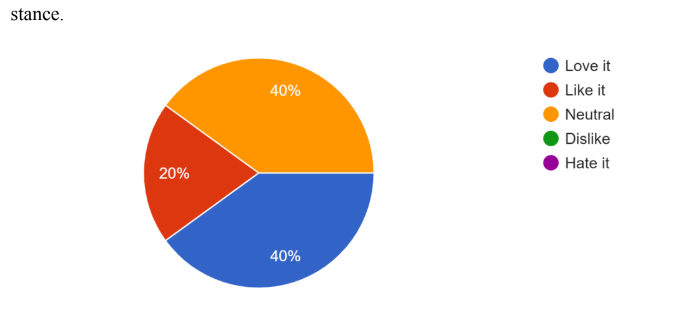
Moreover, the findings also revealed a diverse range of attitudes toward mathematics, particularly at Cherry High School, reflecting their varying levels of engagement and interest (see Figure 3). Notably, 40% (2) of the participants expressed neutral feelings toward mathematics. These participants neither strongly like nor dislike the subject; they approach it as just another part of their academic routine. Their neutral stance seemed to stem from a lack of engaging activities in the classroom, as indicated by earlier findings. Without interactive and stimulating teaching methods, these participants at quite a few times find it difficult to form a strong positive connection with mathematics, leading to an overall indifferent attitude. Conversely, another 40% (2) of the participants reported that they love mathematics. These participants tend to find satisfaction and enjoyment in solving mathematical problems and at times benefit from the structure and logical nature of the subject. Their enthusiasm seems to be attributed to instances when engaging teaching methods were employed, making the subject more accessible and enjoyable for them. The love of mathematics among these participants suggests that, when teaching techniques are effective, they can significantly influence students’ positive attitudes and perceptions of the subject. Lastly, 20% (1) of the students indicated that they just like mathematics.

While they do not have a deep passion for the subject, they hold a favourable view of it. This student seemed to appreciate the subject’s value but lacked the strong connection that those who love mathematics feel. Their attitude seemed to be influenced by a combination of occasional engaging activities and moments where they struggled with the content. For these students, increased efforts in making mathematics lessons more interactive and relatable could help shift their attitude from mere liking to a stronger enthusiasm or love for the subject.
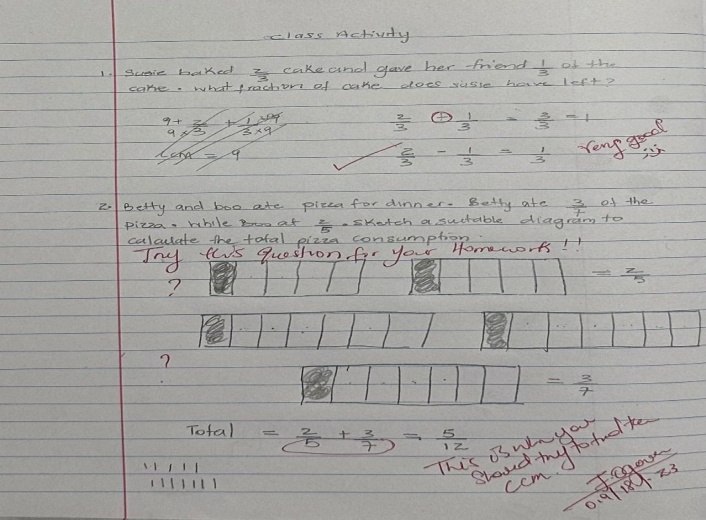
The findings on the current state of students’ reasoning skills in mathematics classrooms across Blueberry High School, Rose High School, and Bright Sparks High School indicated significant challenges in critical thinking (see Table 2). At Blueberry High School, all 100% (7) of the Grade 9 participants struggled with critical thinking skills as evidenced by their responses on the pretest (see Table 2 and Figure 4). These students had difficulty making connections between mathematical concepts and worded problems, which resulted in their inability to properly conclude or solve the problems presented. This suggests a gap in their understanding of how to apply mathematical reasoning to different contexts, particularly when transitioning from abstract concepts to practical applications. This is mostly attributed to the fact that students exhibited both reading and thinking problems. As Samuels 24 stated, in her research titled “An Investigation into the Effects of Secondary Mathematics Trainee Teachers’ Use of Mathematical Language in Reducing Mathematical Errors: A Jamaican Context”, students must understand the mathematics language through the use of proper communication which involves reading, speaking and writing. Whenever students’ communication skills are lacking, this affects their ability to reason in mathematics. For instance, while observing a lesson titled “Operations on Fractions” requiring students to add unlike fractions, the students were unable to complete the task. For example, participants were given a worded problem to arrive at the answer: “Betty and Boo ate pizza for dinner. Betty ate 3/7 of the pizza, while Boo ate ⅖. Sketch a suitable fraction diagram to calculate the total pizza consumption”. The following issues were noticeable: an incorrect sketch of the fraction diagram and a failure to combine fractions as seen in Figure 4. Instead of sketching a diagram that correctly represents the fractions 3/7 and ⅖, a student drew separate pizza to indicate each fraction which shows incorrect proportions as seen in Figure 4; thereby failing to accurately visualize the fractions involved. Also, when asked to combine the fractions, that student attempted to add the numerators and denominators directly (3/7 + ⅖ = 5/12), which reflects a fundamental misunderstanding of how fractions are combined. This error shows that the student did not grasp the need to find a common denominator or understand the concept of adding fractions.
Similarly, at Rose High School, 90% of the Grade 7 participants demonstrated a lack of critical thinking skills on the pretest (see Table 2). These students also failed to make necessary connections and patterns in worded problems as seen in Table 2, reflecting a broader issue with reasoning in mathematics. Additionally, during the classes, these participants displayed lazy behaviour, which could further exacerbate their struggles with critical thinking. Their lack of engagement and effort in class likely contributes to their difficulty in developing the necessary reasoning skills to navigate complex problems. However, at Bright Sparks High, 90% (9) Grade 9 participants also exhibited a significant lack of critical thinking skills, particularly in their ability to recognize when to use trigonometric ratios versus Pythagoras’ theorem. This specific challenge highlights the students’ struggle with applying appropriate mathematical concepts to solve problems accurately. The inability to discern the correct method or formula for a given problem indicated that these students did not fully understand the underlying principles of these mathematical concepts or how they relate to each other.
Moreover, the study revealed that besides the lack of critical thinking skills across Blueberry High School, Rose High School, and Bright Sparks High, the participants also had significant challenges in interpreting and solving mathematical problems (see Table 2). At Blueberry High School, it was uncovered that 85.71% (6) of the grade 9 participants demonstrated an inability to interpret questions or problems, particularly in worded form as seen in Figure 4. These students struggled to decode relevant information, which indicates a fundamental gap in understanding the language and structure of mathematical problems. This inability to interpret questions hinders their capacity to approach and solve problems effectively, affecting their overall performance in mathematics. Similarly, at Rose High School, all of the Grade 7 participants (100%) exhibited difficulty in interpreting questions or problems in worded form. These students struggled to formulate mathematical expressions, suggesting a limited ability to connect mathematical concepts with real-world events. This challenge is further compounded by their limited knowledge of events happening outside the classroom, which restricts their ability to apply mathematical reasoning to practical situations. The inability to interpret and apply mathematical concepts in real-world contexts points to a significant gap in reasoning and critical thinking skills. Again, it was revealed that students exhibited both reading and thinking problems, though in this instance it was mainly due to their thinking skills in mathematics. At Bright Sparks High, however, 60% (6) of the Grade 9 participants showed signs of difficulty in interpreting questions or problems, particularly in tasks that required drawing and labelling diagrams. The incorrect representation of diagrams indicates a lack of spatial reasoning and understanding of mathematical concepts in visual form as seen in Figure 2. This challenge in visualizing and accurately representing mathematical problems further reflects the broader issue of weak reasoning skills among these students. For instance, the students were given the question “A vertical pole, AB which is perpendicular to the ground, is 80m high. A piece of wire is attached from point C on the ground to the top of the pole, A. The angle formed with the wire and the ground is 230. If an additional 10 m is added at the top of the pole, calculate the new length of wire needed to be attached from the top of the pole to point C” to answer. In answering, the students were unable to visualize how the light pole appeared before it was struck by lightning from a given geometric scenario as seen in Figure 1 and Figure 2. Without a clear mental image of the original light post, students struggle to conceptualize the problem accurately, leading to errors in subsequent steps.
The findings showed as well that the Grade 9 students at Blueberry High School had significant challenges with the teaching methods in their mathematics classroom and their prior knowledge. A noTable 57.14% (4) of the participants reported that their reasoning skills were hindered by the limited exposure to diverse problems during mathematics lessons. This lack of variety in problem types left students ill-prepared to approach and solve new or complex mathematical challenges, restricting their ability to think critically and adaptively. In addition to the impact of teaching methods, 71.43% of the participants demonstrated a significant deficit in prior knowledge, which further compromised their reasoning abilities. These students struggled to recall and apply concepts they had previously learnt, which is essential for solving problems.

That require the integration of multiple mathematical ideas. This deficit made it difficult for them to progress in more advanced topics, as they lacked a solid foundation on which to build new understanding. Overall, the findings suggest that both the teaching methods employed and the gaps in students’ prior knowledge are critical factors affecting their reasoning skills in mathematics.
The findings for Rose High School Grade 7 indicated that 80% (8) of the participants struggled significantly with the conceptual understanding of mathematical concepts, particularly in areas requiring the comprehension of sequences and patterns (see Table 2). These students found it challenging to grapes directed numbers and apply rules related to sequences, which are fundamental to understanding mathematical relationships and progressions. This difficulty suggests that students may have been relying more on rote memorization rather than developing a deep understanding of the underlying principles, which is crucial for higher-level reasoning and problem-solving.
Similarly, 50% (5) of the participants from Bright Sparks High School Grade 9 also exhibited challenges with conceptual understanding, particularly in applying trigonometric principles correctly (see Figure 2). A common error among these students was failing to recognize the correct position of the 60° angle. Instead of placing it where the ladder makes the angle with the wall, these students incorrectly positioned it where the ladder makes the angle with the ground. This misplacement led them to use the wrong trigonometric ratio, resulting in incorrect calculations and misunderstandings of the problem's requirements. The incorrect placement of the angle suggests a deeper issue with spatial reasoning and diagram interpretation. Also, such errors indicate that these students may not have fully internalized the concepts behind trigonometric functions and their real-world applications.
The findings uncovered that computational errors are also a significant issue among participants at Rose High School and Bright Sparks High School. At Rose High School, 90% (9) of the participants displayed a range of computational errors, particularly when dealing with tasks such as finding the least common multiple (LCM) and performing prime factorization. These students often provide incorrect multiples and struggle to correctly identify factors during prime factorization. Additionally, a common mistake was observed where students misunderstood the concept of a cube of a number, mistaking it for multiplying the number of three rather than correctly cubing the number. This indicates a fundamental misunderstanding of key mathematical concepts, which affects their ability to perform calculations accurately. Similarly, at Bright Sparks High School, 70% (7) of the participants exhibited computational errors, particularly when calculating lengths in geometric problems. A prevalent issue was the incorrect calculation of lengths needed to arrive at the original length in various problems, such as those involving geometric figures or real-life scenarios like ladder problems. These errors suggest that students at Bright Sparks High School face difficulties in applying the correct formulas and procedures, leading to incorrect answers as seen in Figure 2. The inability to accurately compute lengths not only affects their performance in specific tasks but also reflects a broader issue with understanding and applying mathematical principles in problem-solving situations.
4.2. Results from Research Question 2How effective are the use of problem-based learning and active learning strategies in improving students’ reasoning skills and by extension their understanding of mathematics across different school contexts?
This research question was explored through an analysis of post-test results along with observations. The objectives of the post-test questions in Blueberry High School Grade 9 classroom aimed to assess students’ ability to recognize patterns, apply critical thinking skills, and provide logical and visual representations of mathematical concepts (see Table 2). The results revealed a range of mastery levels among participants, indicating varying degrees of effectiveness of these instructional strategies. Table 3 outlined specific objectives for each post-test question, such as recognizing and describing square patterns, identifying patterns in diagrams, applying critical thinking to solve sequence-related problems, and providing visual representations after analyzing scenarios. The allotted marks for the objectives totalled 20, providing a comprehensive assessment of students’ reasoning skills. The questions were designed to measure both the direct application of mathematical concepts and the deeper critical thinking required to interpret and solve problems.
Table 4 provided an interpretation of participants’ performance on the post-test, revealing diverse levels of achievement. For instance, Participant 01 showed “Exceptional” (E) performance in recognizing patterns (1a) but struggled with applying these patterns to solve sequence-related problems (1c), achieving a “Fair” (F) rating in that area. Similarly, Participant 06 demonstrated “Full Mastery” (FM) with a score of 92.5%, excelling in both critical thinking and problem-solving tasks. However, Participant 03 exhibited “Low Mastery” (LM) with a score of 47.5%, struggling with most aspects of the test, particularly in applying knowledge to new scenarios.
An item analysis in Table 5 further broke down the effectiveness of PBL strategies by evaluating individual responses to each test question. For example, while some participants consistently performed well across various tasks (eg. Participant 07 achieved “Exceptional” and “Satisfactory” ratings across the board), others, such as Participant 03, struggled with fundamental concepts, indicating a need for further support in developing reasoning skills. This analysis highlighted that while some students benefited significantly from PBL strategies, others required additional guidance to achieve mastery.
Table 6 examined the effectiveness of PBL and AL strategies in fostering critical thinking and problem-solving skills through group assignments; while some appreciated the collaborative nature that allowed them challenging due to group members’ varying levels of participation. This feedback suggests that while PBL can promote reasoning skills, the dynamics of group work can influence its overall effectiveness. The use of real-life scenarios and worded problems also had a notable impact on students’ reasoning abilities. Many participants found that these types of problems helped them better understand mathematical concepts by providing concrete contexts, thereby enhancing their ability to visualize and apply the knowledge. However, some students found word problems confusing, requiring multiple readings to fully grasp what was being asked, which may suggest a need for differentiated instruction that addresses varying levels of reading comprehension and processing speed.
The analysis of PBL’s impact on students’ critical thinking and reasoning skills for Blueberry High School was particularly revealing. Participants generally found PBL engaging, as it not only helped them retain knowledge but also encouraged them to explore multiple solution strategies. Most participants have experienced improvements in their ability to think critically and solve problems, attributing this to the relevance of real-life scenarios presented during PBL activities. These findings underscore the potential of PBL to enhance students’ reasoning skills by making learning more interactive and contextually meaningful.
Rose High School, on the other hand, explored this research question by comparing the pre-test and post-test results of its Grade 7 students (see Table 7). The findings reveal significant improvements in students’ reasoning skills and their understanding of mathematical concepts after the implementation of these strategies, though challenges remain. Initially, the pre-test results indicated that 90% of the students stumbled with interpreting problems and formulating mathematical expressions. This difficulty reflected their inability to break down and analyze worded problems effectively. However, after the introduction of problem-based learning (PBL) strategies, the post-test results showed that this percentage dropped to 60%. This improvement suggests that these instructional strategies helped students develop better problem-interpretation skills, allowing them to formulate mathematical expressions.
Moreover, the pre-test results highlighted that only 10% of the students were able to analyze the questions effectively, demonstrating a significant gap in critical thinking and reasoning skills. Post-test results, however, indicated that 40% of the students were not able to analyze questions effectively. This increase points to the positive impact of PBL strategies in enhancing students’ analytical abilities, allowing a larger portion of the class to engage with and understand complex mathematical problems. While it came to following correct procedural steps and demonstrating conceptual understanding, the pre-test showed that only 20% of the students were successful in solving four or more questions. In the post-test, this figure rose to 30%, with an additional 20% of students following the correct procedural steps even if they were unable to solve the questions correctly. This suggests that while students have begun to understand the processes involved, further reinforcement of these strategies is needed to improve their problem-solving accuracy.
Another notable finding was the reduction in computational errors (see Table 7). The pre-test revealed that 90% of students made errors in their calculations, while the post-test results showed a decrease of 60%. However, 40% of the students made three or fewer computational errors in the post-test, indicating a marked improvement in their computational skills, likely due to the hands-on, iterative nature of the PBL strategies. Additionally, the ability to identify patterns and traits in worded problems was initially a challenge, with only 10% of students succeeding in the pre-test. The post-test results, on the other hand, showed a substantial increase, with 40% of the students now being able to identify important patterns and traits. This suggests that the strategies employed helped students recognize underlying mathematical structures within worded problems, a key aspect of reasoning in mathematics. Finally, the pre-test revealed that 80% of the students demonstrated poor conceptual understanding of the five questions given. Post-test results, however, showed that 70% of the students were able to demonstrate conceptual understanding of at least three out of the five questions. This improvement underscores the effectiveness of PBL strategies in deepening students’ understanding of mathematical concepts, moving beyond rote memorization to a more comprehensive grasp of the subject matter.
At Bright Sparks High School, the introduction of PBL among Grade 9 students elicited a spectrum of reactions, as detailed in Table 8. Seventy percent (70%) of the participants responded with enthusiasm, of which most (5) of them noted that the interactive and hands-on nature of PBL made learning mathematics more engaging and enjoyable. These students found the new approach to be a refreshing departure from traditional methods, suggesting that PBL had a positive effect on their motivation and willingness to participate in mathematical reasoning exercises.
However, not all students were equally receptive. Thirty percent (30%) expressed apprehension about the shift from conventional teaching methods, fearing that the complexity and open-ended nature of PBL might complicate their understanding of mathematics. This indicates that while PBL can enhance reasoning skills for many students by fostering a more active learning environment, it may also present challenges for those who are less adaptable to non-traditional learning formats. The mixed reactions underscore the importance of providing adequate support and guidance to ensure that all students can benefit from such innovative strategies.
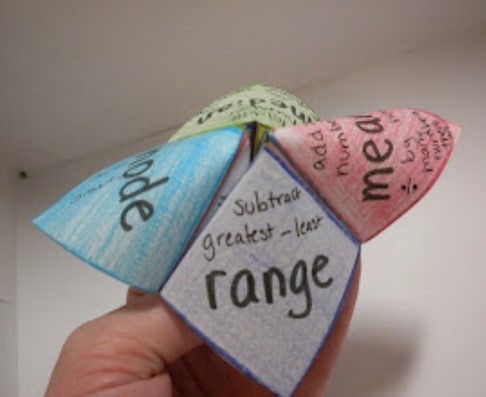
The findings from the implementation of the active learning (AL) strategy, at Cherry High School provide significant insights into their effectiveness in improving students’ reasoning skills and understanding of mathematics. One notable AL strategy, the Fortune teller game, was used to teach measures of central tendency, including the mean, mode, median, and range (see Figure 5). This game, alongside other interactive tools, created an engaging learning environment that allowed students to actively participate in their learning process. The hands-on nature of these activities helped to break down complex mathematical concepts, making them more accessible and easier to understand. The immediate feedback and repetition inherent in these games also reinforced learning, which is crucial for developing reasoning skills in mathematics.

The positive impact of these strategies is further illustrated by the improvements documented after their implementation, as shown in Table 9. Students began to express greater excitement for mathematics, with 20% (1) of the participants from Cherry High School explicitly stating that mathematics had become more exciting after engaging with these interactive learning tools. This shift in attitude is a crucial first step in enhancing students’ engagement and willingness to tackle challenging problems, which are key components of effective reasoning. The ability to solve mathematical problems also saw a marked improvement, with students gaining a better understanding of the topics covered. This is indicative of the strategy’s success in promoting a deeper comprehension of mathematical concepts rather than surface-level memorization.
Moreover, the strategy seemed to have fostered a growing appreciation and love for mathematics among the students. Forty percent (40%) of the participants from this school explicitly mentioned developing a love for the subject, a testament to the strategy’s ability to make mathematics not just understandable but enjoyable. This newfound appreciation is likely to lead to increased persistence and effort in learning, which are essential for mastering more complex reasoning tasks in mathematics. The positive changes in students’ attitudes and skills demonstrate that AL strategy can effectively bridge the gap between abstract mathematical concepts and students’ understanding, ultimately, leading to improved reasoning skills across different school contexts.
What are the factors that influenced the implementation and outcomes of AL and PBL in mathematics education across four schools in Kingston & St. Andrew, Jamaica?
The implementation and outcomes of active learning (AL) and problem-based learning in mathematics education across the four schools - Blueberry High, Cherry High, Rose High, and Bright Sparks High - were influenced by a variety of factors, as revealed in Table 10. The data shows a varied application of these strategies across the schools, with different combinations of AL and PBL being employed based on each school’s unique context, resources, and student needs.
At Cherry High School, the exclusive use of AL strategies had a significant impact on students’ engagement and understanding of mathematical concepts. The focus on AL at Cherry High was driven by the school’s commitment to making mathematics more interactive and engaging for students, which was reflected in the positive outcomes observed, such as increased excitement for mathematics and improved problem-solving abilities. The decision to prioritize AL over PBL was influenced by the school’s recognition of its Grade 7 students’ needs, particularly the need for hands-on, interactive learning experiences that align with the students’ learning styles.
In contrast, Blueberry High and Bright Sparks High Schools both implemented PBL but did not use AL strategies. The focus on PBL in these schools suggests a deliberate choice to foster critical thinking and problem-solving skills by engaging students in real-world mathematical problems. This approach reflected an understanding of the importance of developing reasoning skills through practical application rather than through traditional, teacher-centred instruction. The success of PBL at these schools was attributed to the two schools’ emphasis on creating a learning environment where students are encouraged to explore, hypothesize, and collaborate to find solutions, which aligns with the goals of PBL in enhancing deeper understanding and retention of mathematical concepts.
Rose High School, on the other hand, implemented PBL without the use of Al strategies, similar to Blueberry High and Bright Sparks High. The use of PBL at Rose High was influenced by the school’s desire to promote independent learning and problem-solving among students. However, the absence of AL indicates a reliance on PBL as the primary means of active student engagement, due to resource constraints as well as the teacher’s belief that PBL alone could sufficiently address the students’ learning needs. This approach has been effective in promoting reasoning skills, but it also highlights the importance of balancing different strategies to cater to diverse student needs.
4.4. Further Discussions and ImplicationsThe findings from the study reveal several critical insights into the current state of reasoning skills, the effectiveness of AL and PBL strategies, and the factors influencing their implementation. The exploration of these dimensions offers a comprehensive understanding of the challenges and opportunities in enhancing mathematical reasoning in Jamaican classrooms.
Firstly, the current state of reasoning skills among students across the four schools indicates significant variability. The data uncovered that students at Blueberry High and Rose High exhibit limited proficiency in applying previously learnt concepts to new problem-solving scenarios as seen in Table 2, a finding consistent with the observations made by Kania et al. 22 regarding the crucial role of prior knowledge in mathematics education. The limited exposure to diverse problem types and an overloaded curriculum, as noted by Taylor 23 and Buddo 36, contributed to the observed deficits in reasoning skills. The findings implied that students’ ability to interpret and comprehend mathematical problems could be linked to reading comprehension and thinking challenges, especially in interpreting worded mathematics problems [or understanding instructions]. However, the study highlighted that students mostly had difficulty with reasoning [thinking] skills in mathematics, particularly evidenced by students’ constant struggle with conceptual understanding and reasoning, which are critical components of thinking skills. At Cherry High and Bright Sparks High, the introduction of AL and PBL strategies showed promise in addressing these deficiencies, aligning with the findings of Collins et al. 25, who emphasized the positive impact of interactive learning activities on students’ conceptual understanding.
The effectiveness of AL and PBL strategies in improving students’ reasoning skills is particularly evident at Cherry High, where the implementation of an active learning strategy, such as the Fortune Teller game as seen in Figure 5, resulted in increased engagement and improved mathematical understanding. This aligns with the principles of Piaget’s Theory of Cognitive Development, which posits that hands-on activities can significantly enhance students’ cognitive abilities 19. At Bright Sparks High, the use of PBL led to mixed reactions among students, with some showing enthusiasm for the interactive nature of the strategy, while others expressed concerns about its complexity (see Table 8). This diversity in student response underscores the importance of tailoring instructional strategies to meet the varied cognitive needs of students, as suggested by McLeod 15 in his discussion of Vygotsky’s sociocultural theory.
However, the factors influencing the implementation and outcomes of AL and PBL strategies are multifaceted. At Blueberry High and Rose High, the lack of prior exposure to problem-solving activities posed a significant barrier to the effective adoption of these strategies (see Table 2). As noted by Richards and Samuels 38, students’ unfamiliarity with guided discovery learning can hinder their ability to fully engage with and benefit from such approaches. Additionally, the overloaded curriculum, as highlighted by Taylor 23 and Buddo 36, further complicates the integration of innovative teaching methods, leaving little room for the in-depth exploration of mathematical concepts. In contrast, at Cherry High and Bright Sparks High, the presence of supportive teachers and a conducive learning environment facilitate the successful implementation of AL and PBL strategies, leading to notable improvements in students’ reasoning skills.
The study’s findings also point to the broader implications of these strategies for mathematics education in Jamaica to enhance mathematical reasoning and understanding through innovative teaching methods.
v Integration of AL and PBL into the Mathematics Curriculum: This study demonstrates that AL and PBL strategies can positively influence students’ reasoning skills and understanding of mathematics concepts. Schools should consider integrating these strategies systematically into their mathematics curricula. This integration could involve revising lesson plans to include more hands-on activities, problem-solving sessions, and interactive games that encourage critical thinking and reasoning skills. The curriculum should be designed to gradually build students’ reasoning skills, starting with simple problems and progressing to more complex, real-world scenarios. This approach aligns with research by Collins et al. 25, which highlights the benefits of learning-based activities in enhancing conceptual understanding and problem-solving skills.
v Teacher Training and Professional Development: For successful implementation, teachers need to be adequately trained in AL and PBL methodologies. Professional development programmes should focus on equipping teachers with the necessary skills to facilitate these strategies effectively. This includes training in designing and managing PBL activities, using technology to support AL, and assessing students’ progress in reasoning skills. As Richards and Samuels 38 noted, guided discovery learning, a form of PBL, requires teachers to adopt a more facilitative role, which may differ significantly from traditional teaching methods. Continuous support and resources for teachers will be essential to sustain these innovative practices.
v Addressing Student Diversity and Learning Preferences: The study found varying reactions among students to the implementation of PBL, indicating a need to consider diverse learning preferences. Schools should adopt a flexible approach that allows for differentiation in instruction. This could involve offering a mix of traditional and modern teaching methods, ensuring that all students have access to learning experiences that match their cognitive development stages and learning styles. McLeod 14 suggests that understanding the cognitive development stages of students, as outlined by Piaget, can help in tailoring educational strategies to better suit their needs.
4.5. ConclusionThe study has provided invaluable insights into the potential innovative teaching strategies to enhance students’ reasoning skills in mathematics. The findings indicated that both active learning (AL) and problem-based learning (PBL) strategies have a significant positive impact on students’ ability to reason through mathematical problems and grasp complex concepts. These strategies not only foster a deeper understanding of mathematical principles but also contribute to increased student engagement and motivation, as observed across the participating schools, Blueberry High, Rose High, Cherry High and Bright Sparks High. Moreover, the study highlighted the importance of context in the implementation of AL and PBL. The effectiveness of these strategies varied across the four schools, influenced by factors such as teacher preparedness, student receptiveness, and the existing curriculum structure. This variability underscored the need for a tailored approach to implementing AL and PBL, one that considers the unique characteristics of each educational environment. Also, it is important to note that while reasoning [thinking] skills were found to be the primary concern of this study, reading comprehension issues have also contributed to students’ difficulties in fully engaging with problem-solving and active learning activities. Thus, while it is very valuable to adopt AL and PBL strategies in mathematics education, particularly in contexts where traditional teaching methods may fall short in developing students’ reasoning skills, it is also essential to properly address the students’ reading skills to ensure students overall improvement in their mathematics performance and understanding of mathematics concepts.
4.6. RecommendationsBased on the findings from the study, several key recommendations are proposed to enhance mathematics education and address the challenges identified.
v Tailored Implementation of AL and PBL Strategies: Schools should consider customizing the implementation of active learning (AL) and problem-based learning (PBL) strategies to align with the specific needs and contexts of their student populations. Given the variability in effectiveness observed across the four schools, educators should assess the unique challenges and strengths of their classrooms and adapt these strategies accordingly. This could involve adjusting the complexity of tasks, providing additional scaffolding, or integrating culturally relevant examples that resonate with students.
v Professional Development for Educators: To maximize the impact of AL and PBL strategies, ongoing professional development for mathematics teachers is essential. Training should focus on equipping teachers with the skills needed to effectively design and facilitate AL and PBL activities, as well as strategies for managing diverse learner needs. This includes fostering a deep understanding of the principles behind these approaches and providing practical tools for their implementation, collaborative workshops, peer observations, and continuous feedback loops should be integral to this professional development.
v Curriculum Revision and Support: The study revealed that curriculum constraints can hinder the effective implementation of AL and PBL. Therefore, it is recommended that educational authorities and school administrators review and, where necessary, revise the mathematics curriculum to allow for greater flexibility in the use of these strategies. This may involve reducing content overload, prioritizing conceptual understanding over rote learning, and ensuring that assessment methods are aligned with the goals of AL and PBL. Additionally, providing adequate resources, including manipulatives, technology, and access to real-world problem scenarios, can enhance the learning experience.
v Fostering a Positive Learning Environment: Creating an environment that encourages student engagement and collaboration is critical for the success of AL and PBL strategies. Schools should focus on building a classroom culture that values inquiry, experimentation, and peer learning. This can be achieved by promoting student-centred teaching practices, encouraging open communication, and supporting positive relationships among students. Additionally, efforts should be made to address any resistance to these strategies by involving students in the planning process and providing opportunities for them to experience the benefits of AL and PBL firsthand.
v Continuous Monitoring and Evaluation: To ensure the long-term success of AL and PBL strategies, it is crucial to establish a system of continuous monitoring and evaluation. Schools should regularly assess the effectiveness of these strategies through both qualitative and quantitative measures, such as student feedback, performance data, and classroom observations. This ongoing evaluation will enable educators to make informed adjustments to their teaching practices and ensure that the strategies continue to meet the evolving needs of their students.
The authors of this study would like to thank the participants of the four schools for their willingness to participate and all the members of the Mathematics Department at Shortwood Teachers’ College for the support they provided throughout each stage of this study.
| [1] | Ministry of Education and Youth. "National Standards Curriculum: Pathways to Secondary Education." Government of Jamaica, 2017. | ||
| In article | |||
| [2] | Zabit, M. N. "Problem-based learning on students’ critical thinking skills in teaching business education in Malaysia: A literature review". American Journal of Business Education, vol 3. No. 6, pp. 19-32, 2010. | ||
| In article | View Article | ||
| [3] | Kanmani, S., and Nagarathinam, R. "Enhancing critical thinking skills through mathematical reasoning." International Journal of Pure and Applied Mathematics, 2018, vol. 119, no. 15, pp.1441-1450. | ||
| In article | |||
| [4] | Zaini, S., Hassanah, N., and Ayca, C. "The Role of Comprehension in Mathematical Reasoning." International Journal of Mathematics Education, 2019. | ||
| In article | |||
| [5] | Ali, R. "The impact of problem-based learning on students’ problem-solving skills in mathematics education." Journal of Educational Research and Practice, vol. 9, no. 3, 2019, pp. 234-245. | ||
| In article | |||
| [6] | Tawfik, A. A., Reeves, T. D., Stitch, A. E., Gill, A., Hong, C., and Pfeiffer, V. “The role of problem-based learning in developing students’ problem-solving skills in higher education.” Interdisciplinary Journal of Problem-Based Learning, vol. 15, no. 1, 2021, pp. 1-20. | ||
| In article | |||
| [7] | Generalao, B. L. “Developing mathematical reasoning and problem-solving skills among high school students. Journal of Mathematics Education, vol. 5, no. 2, pp. 45-48. | ||
| In article | |||
| [8] | Alliance for Education Solution. "How to measure student engagement: What is the meaning of student engagement? Why is student engagement important?" Alliance for Education Solution (AES), 2024. | ||
| In article | |||
| [9] | Drew, C. "The impact of active learning on student engagement and achievement in the classroom." Journal of Educational Innovation, vol. 18, no. 1, 2022, pp. 35-48. | ||
| In article | |||
| [10] | Praveena, S. "Constructivist teaching and active learning: Enhancing student engagement in modern classrooms." International Journal of Educational Research, vol. 12, no. 4, 2020, pp. 112-125. | ||
| In article | |||
| [11] | Wulandari, M., Amin, S. M., Irawan, E. B., and Masykuri, M. "Enhancing students’ reasoning skills through problem-solving-based mathematics learning." Journal of Educational Research and Practice, vol. 9, no. 2, 2019, pp. 77-85. | ||
| In article | |||
| [12] | Brame, C. J. “Active learning.” Vanderbilt University Center for Teaching. 2016. | ||
| In article | |||
| [13] | Berkeley Center for Teaching & Learning. “Active learning: Overview.” University of California, Berkeley. n.d. | ||
| In article | |||
| [14] | McLeod, S. "'Piaget’s stages: 4 stages of cognitive development theory." Simple Psychology, 3 Nov. 2022, retrieved August 25, 2024, from https:// www. simplypsychology. org/ piaget.html#:~: text = The%20formal%20operational%20period% 20begins,capacity%20for% 20higher%2Dorder%20reasoning. | ||
| In article | |||
| [15] | McLeod, S. "Lev Vygotsky’s sociocultural theory of cognitive development." Simple Psychology, 26 July 2023, retrieved August 25, 2024, from https://www.simplypsychology.org/vygotsky.html. | ||
| In article | |||
| [16] | Boaler, J., Dieckmann, J., Perez-Nunez, G., Sun, K. L., and Williams, C. "Changing students’ minds and achievement in mathematics: The role of mindset and conceptual understanding." Journal of Educational Psychology, vol. 110, no. 5 2018, pp. 624-639. | ||
| In article | |||
| [17] | Pedraza, J.M. “The role of teaching methods in the development of critical thinking in mathematics.” 2015. | ||
| In article | |||
| [18] | Sweller, J. "Cognitive load during problem solving: Effects on learning." Cognitive Science, vol. 12, no. 2 1988, pp. 257-285. | ||
| In article | View Article | ||
| [19] | Verywell Mind. "Cognitive development theory: How early education affects reasoning skills." Verywell Mind. 2020. | ||
| In article | |||
| [20] | Miller, G. A. "The magical number seven, plus or minus two: Some limits on our capacity for processing information." Psychological Review, vol. 63, no. 2, 1956, pp. 81-97. | ||
| In article | View Article | ||
| [21] | Flavell, J. H. “Metacognition and cognitive monitoring: A new era of cognitive-developmental inquiry.” American Psychologist, vol. 34, no. 510 1979, pp. 906-911. | ||
| In article | View Article | ||
| [22] | Kania, R., Ward, E., and Black, J. “Understanding the role of prior knowledge in learning mathematics: Implications for teaching and curriculum design.” Mathematics Education Research Journal, vol. 35, no. 1, 2023, pp. 125-143. | ||
| In article | |||
| [23] | Taylor, P. "Curriculum overload in mathematics education: Balancing content coverage with higher-order thinking." Journal of Curriculum Studies, vol. 53, no. 2, 2021, pp. 151-165. | ||
| In article | |||
| [24] | Samuels, S. "An investigation into the effects of secondary mathematics trainee teachers’ use of mathematical language in reducing mathematical errors: a Jamaican context." International Journal of Science and Research (IJSR), vol. 12, no. 7, 15 July 2023, pp. 634-644. | ||
| In article | View Article | ||
| [25] | Collins, A., Mattocks, A., Lewis, A., Samuels, S., Williams, T., King, M., Willis, S. "A Cross-Sectional Study Investigating the Effects of Learning-Based Activities, Algebra Tiles and Problem-Solving Techniques on Students’ Conceptual Understanding and Problem-Solving Skills in the Jamaican Classroom." American Journal of Educational Research, vol. 11, no. 7, 14 July 2023, pp. 440-456. | ||
| In article | View Article | ||
| [26] | Hooda, M., Ayal, E., and Jonsson, L. "Pedagogical challenges in mathematical teaching." Educational Research Quarterly, 2018. | ||
| In article | |||
| [27] | Hooda, K., Garg, S., and Singh, R. "The role of pedagogical practices in shaping mathematical reasoning: A review." Journal of Educational Research, vol. 111, no. 6, 2018, pp. 829-844. | ||
| In article | |||
| [28] | Ayal, N., Hertzog, C., and Korkmaz, M. "Developing critical thinking and problem-solving skills through active learning." Journal of Educational Psychology, vol. 108, no. 1, 2016, pp. 145-157. | ||
| In article | |||
| [29] | Jonsson, A. "Fostering mathematical reasoning through inquiry-based learning: A systematic review." Proceedings of the Research in Mathematics Education, vol. 22, no. 3, 2020, pp. 199-211. | ||
| In article | |||
| [30] | Jordan, N. C., Kaplan, D., Nabors Olah, L., and Hanich, L. "The role of socio-economic status and prior knowledge in mathematical reasoning.” Journal of Educational Psychology, vol. 102, no. 4, 2010, pp. 739-752. | ||
| In article | |||
| [31] | Trowler, V. “Student engagement literature review.” Higher Education Academy, 2010. | ||
| In article | |||
| [32] | Gafoor, K. A., and Kurukkan, A. "Student attitudes towards mathematics: An examination of factors affecting student perceptions and engagement." Educational Studies in Mathematics, vol. 89, no. 2, 2015, pp. 191-209. | ||
| In article | |||
| [33] | National Academies of Sciences, Engineering, and Medicine. “Promoting Critical Thinking in STEM Education.” STEM Education Journal, 2016. | ||
| In article | |||
| [34] | National Council of Teachers of Mathematics. "Principles and Standards for School Mathematics." NCTM, 2013. | ||
| In article | |||
| [35] | Keengwe, J., Onchwari, G., and Agamba, J. J. "Promoting active learning through the integration of digital technologies in higher education." Journal of Information Technology Education: Innovations in Practice, vol. 13, 2014, pp. 73-84. | ||
| In article | |||
| [36] | Buddo, C. "Mathematics education: A case for problem solving.” Jamaica Observer. 19 Feb. 2017, https:// www. jamaicaobserver.com/ 2017/02/19/mathematics-education-a-case-for-problem-solving/. | ||
| In article | |||
| [37] | Attard, C., Berger, N., MacKenzie, E. “The positive influence of inquiry-based learning teacher professional learning and industry partnerships on student engagement with STEM.” Frontiers in Education, vol. 6, 2021. | ||
| In article | View Article | ||
| [38] | Richards, T., and Samuels, S. “Exploring the efficacy of guided discovery learning in improving algebraic thinking skills.” International of Science and Research (IJSR), vol. 11, no. 7, pp. 1784-1792. | ||
| In article | |||
Published with license by Science and Education Publishing, Copyright © 2024 Conley Morris, Dickisha Facey, Jahmela Ogeare, Selena Morris and Shaneille Samuels
 This work is licensed under a Creative Commons Attribution 4.0 International License. To view a copy of this license, visit
https://creativecommons.org/licenses/by/4.0/
This work is licensed under a Creative Commons Attribution 4.0 International License. To view a copy of this license, visit
https://creativecommons.org/licenses/by/4.0/
| [1] | Ministry of Education and Youth. "National Standards Curriculum: Pathways to Secondary Education." Government of Jamaica, 2017. | ||
| In article | |||
| [2] | Zabit, M. N. "Problem-based learning on students’ critical thinking skills in teaching business education in Malaysia: A literature review". American Journal of Business Education, vol 3. No. 6, pp. 19-32, 2010. | ||
| In article | View Article | ||
| [3] | Kanmani, S., and Nagarathinam, R. "Enhancing critical thinking skills through mathematical reasoning." International Journal of Pure and Applied Mathematics, 2018, vol. 119, no. 15, pp.1441-1450. | ||
| In article | |||
| [4] | Zaini, S., Hassanah, N., and Ayca, C. "The Role of Comprehension in Mathematical Reasoning." International Journal of Mathematics Education, 2019. | ||
| In article | |||
| [5] | Ali, R. "The impact of problem-based learning on students’ problem-solving skills in mathematics education." Journal of Educational Research and Practice, vol. 9, no. 3, 2019, pp. 234-245. | ||
| In article | |||
| [6] | Tawfik, A. A., Reeves, T. D., Stitch, A. E., Gill, A., Hong, C., and Pfeiffer, V. “The role of problem-based learning in developing students’ problem-solving skills in higher education.” Interdisciplinary Journal of Problem-Based Learning, vol. 15, no. 1, 2021, pp. 1-20. | ||
| In article | |||
| [7] | Generalao, B. L. “Developing mathematical reasoning and problem-solving skills among high school students. Journal of Mathematics Education, vol. 5, no. 2, pp. 45-48. | ||
| In article | |||
| [8] | Alliance for Education Solution. "How to measure student engagement: What is the meaning of student engagement? Why is student engagement important?" Alliance for Education Solution (AES), 2024. | ||
| In article | |||
| [9] | Drew, C. "The impact of active learning on student engagement and achievement in the classroom." Journal of Educational Innovation, vol. 18, no. 1, 2022, pp. 35-48. | ||
| In article | |||
| [10] | Praveena, S. "Constructivist teaching and active learning: Enhancing student engagement in modern classrooms." International Journal of Educational Research, vol. 12, no. 4, 2020, pp. 112-125. | ||
| In article | |||
| [11] | Wulandari, M., Amin, S. M., Irawan, E. B., and Masykuri, M. "Enhancing students’ reasoning skills through problem-solving-based mathematics learning." Journal of Educational Research and Practice, vol. 9, no. 2, 2019, pp. 77-85. | ||
| In article | |||
| [12] | Brame, C. J. “Active learning.” Vanderbilt University Center for Teaching. 2016. | ||
| In article | |||
| [13] | Berkeley Center for Teaching & Learning. “Active learning: Overview.” University of California, Berkeley. n.d. | ||
| In article | |||
| [14] | McLeod, S. "'Piaget’s stages: 4 stages of cognitive development theory." Simple Psychology, 3 Nov. 2022, retrieved August 25, 2024, from https:// www. simplypsychology. org/ piaget.html#:~: text = The%20formal%20operational%20period% 20begins,capacity%20for% 20higher%2Dorder%20reasoning. | ||
| In article | |||
| [15] | McLeod, S. "Lev Vygotsky’s sociocultural theory of cognitive development." Simple Psychology, 26 July 2023, retrieved August 25, 2024, from https://www.simplypsychology.org/vygotsky.html. | ||
| In article | |||
| [16] | Boaler, J., Dieckmann, J., Perez-Nunez, G., Sun, K. L., and Williams, C. "Changing students’ minds and achievement in mathematics: The role of mindset and conceptual understanding." Journal of Educational Psychology, vol. 110, no. 5 2018, pp. 624-639. | ||
| In article | |||
| [17] | Pedraza, J.M. “The role of teaching methods in the development of critical thinking in mathematics.” 2015. | ||
| In article | |||
| [18] | Sweller, J. "Cognitive load during problem solving: Effects on learning." Cognitive Science, vol. 12, no. 2 1988, pp. 257-285. | ||
| In article | View Article | ||
| [19] | Verywell Mind. "Cognitive development theory: How early education affects reasoning skills." Verywell Mind. 2020. | ||
| In article | |||
| [20] | Miller, G. A. "The magical number seven, plus or minus two: Some limits on our capacity for processing information." Psychological Review, vol. 63, no. 2, 1956, pp. 81-97. | ||
| In article | View Article | ||
| [21] | Flavell, J. H. “Metacognition and cognitive monitoring: A new era of cognitive-developmental inquiry.” American Psychologist, vol. 34, no. 510 1979, pp. 906-911. | ||
| In article | View Article | ||
| [22] | Kania, R., Ward, E., and Black, J. “Understanding the role of prior knowledge in learning mathematics: Implications for teaching and curriculum design.” Mathematics Education Research Journal, vol. 35, no. 1, 2023, pp. 125-143. | ||
| In article | |||
| [23] | Taylor, P. "Curriculum overload in mathematics education: Balancing content coverage with higher-order thinking." Journal of Curriculum Studies, vol. 53, no. 2, 2021, pp. 151-165. | ||
| In article | |||
| [24] | Samuels, S. "An investigation into the effects of secondary mathematics trainee teachers’ use of mathematical language in reducing mathematical errors: a Jamaican context." International Journal of Science and Research (IJSR), vol. 12, no. 7, 15 July 2023, pp. 634-644. | ||
| In article | View Article | ||
| [25] | Collins, A., Mattocks, A., Lewis, A., Samuels, S., Williams, T., King, M., Willis, S. "A Cross-Sectional Study Investigating the Effects of Learning-Based Activities, Algebra Tiles and Problem-Solving Techniques on Students’ Conceptual Understanding and Problem-Solving Skills in the Jamaican Classroom." American Journal of Educational Research, vol. 11, no. 7, 14 July 2023, pp. 440-456. | ||
| In article | View Article | ||
| [26] | Hooda, M., Ayal, E., and Jonsson, L. "Pedagogical challenges in mathematical teaching." Educational Research Quarterly, 2018. | ||
| In article | |||
| [27] | Hooda, K., Garg, S., and Singh, R. "The role of pedagogical practices in shaping mathematical reasoning: A review." Journal of Educational Research, vol. 111, no. 6, 2018, pp. 829-844. | ||
| In article | |||
| [28] | Ayal, N., Hertzog, C., and Korkmaz, M. "Developing critical thinking and problem-solving skills through active learning." Journal of Educational Psychology, vol. 108, no. 1, 2016, pp. 145-157. | ||
| In article | |||
| [29] | Jonsson, A. "Fostering mathematical reasoning through inquiry-based learning: A systematic review." Proceedings of the Research in Mathematics Education, vol. 22, no. 3, 2020, pp. 199-211. | ||
| In article | |||
| [30] | Jordan, N. C., Kaplan, D., Nabors Olah, L., and Hanich, L. "The role of socio-economic status and prior knowledge in mathematical reasoning.” Journal of Educational Psychology, vol. 102, no. 4, 2010, pp. 739-752. | ||
| In article | |||
| [31] | Trowler, V. “Student engagement literature review.” Higher Education Academy, 2010. | ||
| In article | |||
| [32] | Gafoor, K. A., and Kurukkan, A. "Student attitudes towards mathematics: An examination of factors affecting student perceptions and engagement." Educational Studies in Mathematics, vol. 89, no. 2, 2015, pp. 191-209. | ||
| In article | |||
| [33] | National Academies of Sciences, Engineering, and Medicine. “Promoting Critical Thinking in STEM Education.” STEM Education Journal, 2016. | ||
| In article | |||
| [34] | National Council of Teachers of Mathematics. "Principles and Standards for School Mathematics." NCTM, 2013. | ||
| In article | |||
| [35] | Keengwe, J., Onchwari, G., and Agamba, J. J. "Promoting active learning through the integration of digital technologies in higher education." Journal of Information Technology Education: Innovations in Practice, vol. 13, 2014, pp. 73-84. | ||
| In article | |||
| [36] | Buddo, C. "Mathematics education: A case for problem solving.” Jamaica Observer. 19 Feb. 2017, https:// www. jamaicaobserver.com/ 2017/02/19/mathematics-education-a-case-for-problem-solving/. | ||
| In article | |||
| [37] | Attard, C., Berger, N., MacKenzie, E. “The positive influence of inquiry-based learning teacher professional learning and industry partnerships on student engagement with STEM.” Frontiers in Education, vol. 6, 2021. | ||
| In article | View Article | ||
| [38] | Richards, T., and Samuels, S. “Exploring the efficacy of guided discovery learning in improving algebraic thinking skills.” International of Science and Research (IJSR), vol. 11, no. 7, pp. 1784-1792. | ||
| In article | |||