Charmout is a traditional product made from sun-dried meat, widely consumed in Chad. Its artisanal nature and exposure to the open air make it susceptible to contamination by various molds. The aim of this work was to evaluate the mycotoxins produced by molds in charmout. One hundred sixty-two samples were collected from the six (6) markets (central market, millet market, Al-afia market, Farcha market, Dembe market, and Al-adala market) in the city of N'Djamena and analyzed. The results showed that out of sixty-four contaminated samples, 41 were fungal flora, of which 39.50%; 26 were Aspergillus niger, 7 were of the Mucor genus, and 8 were of the Fusarium genus. The average concentration of aflatoxins ranged from 0.002 µg/kg to 0.04 µg/kg; from 0.004 µg/kg to 0.97 µg/kg; from 0.011 µg/kg to 0.35 µg/kg; and from 0.065 µg/kg to 0.075 µg/kg respectively for aflatoxins G2, G1, B2, and B1. For moisture content, the average values were 5.40±0.05; 9.78±0.53; 14.21±0.69; 13.28±0.84; 12.98±0.83; and 12.85±1.37, respectively in the samples from the central market, Millet market, Al-afia market, Dembe market, Farcha market, and Al-adala market. The samples from the Al-afia market and the Dembe market had moisture content levels higher than the value set by the Burkinabe Agency for Standardization, which is 13%.
The sanitary quality of food products can be threatened by all kinds of contaminants, particularly natural toxins. Among these are mycotoxins, which refer to the molecules produced by filamentous fungi (molds) and pose a risk to the health of humans and animals 1.
Mycotoxins are a major global concern for public health due to their various toxic effects. Additionally, they lead to enormous economic losses 2, 3, 4, 5. They are natural toxins produced by certain fungi that grow on various foodstuffs and animal feed under pre-harvest and storage conditions, and they are toxic to both humans and animals 6, 7. Mycotoxins are produced by potentially toxinogenic molds, primarily belonging to the genera Fusarium, Aspergillus, Penicillium, Claviceps, and others 8.
Among mycotoxins, the group of aflatoxins is the most well-known, the most studied, and the most regulated. However, three main strains of Aspergillus (A. flavus, A. parasiticus, and A. nominus) are known for their ability to naturally synthesize aflatoxins under warm and humid conditions. Aflatoxins pose a serious threat with potentially devastating effects on health, often going unnoticed in our everyday food 10. AFB1 accounts for more than 75% of all aflatoxin contamination in food and animal feed 11.
To protect consumer health, some countries have set maximum levels (5.0-10.0) µg/kg for mycotoxins in food 12, with the strictest limits established by the European Commission Regulation 1881/2006 (5.0-10.0) µg/kg. The produced charmout is exposed to unsanitary conditions and is susceptible to contamination by mold that produces mycotoxins. Among the food items that are often contaminated by mycotoxins is poorly stored charmout, especially during the rainy season. One of the issues that affects their quality and food safety also concerns the development of microorganisms in food. Particularly aflatoxigenic fungi such as Aspergillus flavus and Aspergillus parasiticus. The presence of spores and these species of fungi in food remains a major challenge for storage and preservation. The exposure of a population to mycotoxins is estimated by combining the concentrations of mycotoxins in food with dietary consumption data.
In developing countries like Chad, if all food resources are not stored under proper conditions, there is a risk of increasing the level of food insecurity among the population. In the same vein, 15 reported that the contamination of kundi by aflatoxin in Nigeria is due to inappropriate conditions. These mycotoxins are aflatoxins (AFs), which have been shown to be potentially carcinogenic… 16. Similarly, some of these toxins are thought to be carcinogenic or mutagenic, while others are toxic to the kidneys, nervous system, or liver. Furthermore, it is important to note that toxicity does not necessarily come from the mycotoxin itself, but can be due to one of its metabolites resulting from its degradation. 17. The most toxic mycotoxins are those produced by the mold Aspergillus flavus; known as aflatoxins B1, B2, G1, and G2, these substances are highly carcinogenic (causing liver tumors). The foods most affected are peanuts and corn, which are produced in tropical/subtropical regions where the temperature and humidity are conducive to the biosynthesis of aflatoxins. However, few studies have been conducted in Chad on the isolation of molds and the determination of aflatoxins in charmout. This highlights the importance of our work, which aimed to analyze the mycotoxins produced by molds in charmout sold in the markets of N'Djamena, Chad.
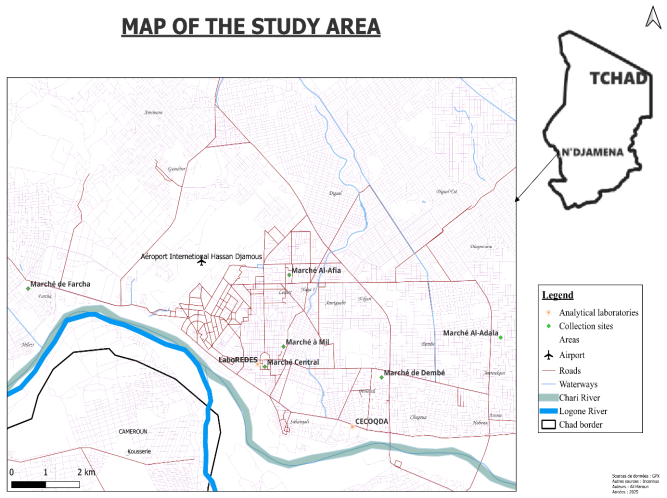
A total of One Hundred Sixty-Two (162) samples were randomly collected from six markets in the city of N'Djamena (Central Market, Millet Market, Farcha Market, Al-Adala Market, Dembe Market, and Al-Afia Market) (Figure 1). Twenty-seven samples (50 grams per sample) were collected from each market and transported to the laboratory in an aseptic manner, then stored at 4 °C while awaiting analysis. Twenty-four (24) contaminated samples were selected for aflatoxin testing, with 4 samples from each market due to their fungal density (black colonies).

The distribution of samples based on the quantity collected from various markets in the city of N'Djamena is presented in Table 1 below.
Decimal dilution series were performed for each sample. The 10-2 and 10-3 dilutions were selected. Two Petri dishes containing Sabouraud agar with chloramphenicol were inoculated and incubated at 25 °C for 1 to 5 days. Colonies with characteristics of molds were isolated and preserved for further identification 18.
2.3. Morphological Identification and Cultural Aspects of Isolated MoldsThe strains were inoculated onto Sabouraud medium with chloramphenicol (BIOLAB) for the macroscopic observation of colonies (size, color, shape, colony outline, etc.)
The morphological identification and cultural aspects of isolated molds were determined using a 5-day culture incubated at 25°C in chloramphenicol Sabouraud medium. The morphology and cultural aspects of the colonies (size, color, shape, colony contour, etc.) were obtained through macroscopic observation with the naked eye 19.
All the pure strains obtained were subjected to morphological identification through macroscopic and microscopic observation. The microscopic observation of the fungal cells was performed using a fragment of the pure strain taken with a sterile platinum loop. This fragment was placed between a slide and a coverslip, onto which lactophenol blue was added as a diluent. The microscopic observation was conducted at magnifications of x10 and x40 20.
2.4. Determination of Moisture ContentThe determination of water content was carried out according to the standard NBF01-087: 2009. 5 g of the ground charmout sample, using an electric grinder, were placed in crucibles that had been previously washed, dried in an oven for 1 hour, and cooled in a desiccator for 30 minutes. The crucibles containing the samples were then placed in the oven at 105°C for 12 hours, and subsequently in the desiccator for 10 minutes. Next, the mass of the test sample. after drying was determined. Thus, the moisture content was calculated using the following formula:
 |
PE = test weight in grams
M1 = mass in grams of the container and the test weight
M2 = mass in grams of the container and the test weight after drying
2.5. Measurement of Aflatoxins B1, B2, G1, and G2 in SamplesTwenty-five grams (25 g) of each sample were weighed and ground to obtain a fine powder that allows for the release of toxins. Then, 5 g of each obtained powder is introduced into a small plastic bottle containing 125 ml of the previously prepared extraction solution (70% methanol / 30% water). The flask is then shaken for 2 minutes at an average speed. A Wathman filter paper (qualitative grade 1V D.240MM-PAR 100) with a diameter of 24 cm and a porosity of 11 µm is used to filter the previous solution, then 15 ml of the filtrate is introduced into a conical flask, and 30 ml of water is added. The mixture is filtered again using a glass microfiber filter paper (11 cm in diameter) to ensure that the filtrate is clear. ISO 16050/2003.
Using a pipette, 15 ml of filtrate was placed in the immunoaffinity column (ref Brownlee Validated C18-USA), and the column was washed with water. The eluted fraction was collected by passing 0-5 ml and then 0-75 ml of pure methanol through the column, thus trapping the aflatoxins in a 5 ml vial and diluting them with water.
Mycotoxins were analyzed according to the ISO 16050/2003 method using ultra-high performance liquid chromatography (UHPLC) from Perkin Elmer.
The calibration curve was standardized using solutions with known concentrations. Each solution was injected into the chromatography, and the areas of the obtained HPLC peaks were recorded. A line was then drawn to represent the relationship between the concentrations of the standards and the corresponding areas. The equation of this line (Y=aX+b) was used to determine the concentration of aflatoxins present in the analyzed charmout samples. This curve is therefore designed to accurately quantify aflatoxins in a food product structure.
2.6. Statistical Analysis of ResultsFor statistical processing, the R software was used for data entry, calculation of means, and standard deviation. These data were subjected to an analysis of variance (ANOVA) using R software to determine statistical differences at a significance level of P = 0.05.
Out of the 162 samples collected, 64 were contaminated with mold. 41 were isolated due to their fungal characteristics (colonies, size, shape, and contour) in order to identify them. The contamination rate is around 39.50%, which is significantly lower than the 91.4% found by 20 based on a total of 57 samples. Considering that fungi thrive in humid areas, this could be explained by the fact that the drying process of the charmout is inadequate.
The mold load in the samples from the Farcha Market consisted of eight (08) types. Four (04) were A. niger, two (02) were Mucor, and two were Fusarium. The samples from the Al-Afia market were also contaminated with mold, totaling 11 types (9 A. niger, 1 Mucor, and 1 Fusarium). The mold load in the samples from the Dembe Market was the highest, with 17 types of molds (10 A. niger, 3 Mucor, and 4 Fusarium). The samples from the charmout of the Al-adala Market contained 5 types of molds (3 A. niger, 1 Mucor, and 1 Fusarium). The samples from the Central Market and the Millet Market showed no mold load. This could be explained by adherence to Good Manufacturing Practices and Good Hygiene Practices.
The isolation carried out from the samples of different markets in Ndjamena (Table 1) resulted in the collection of 64 fungal strains. The microscopic characteristics of the molds are recorded in Table 3 below. The cultural characteristics of the isolated fungal strains (macroscopic) have also been summarized in the same table.
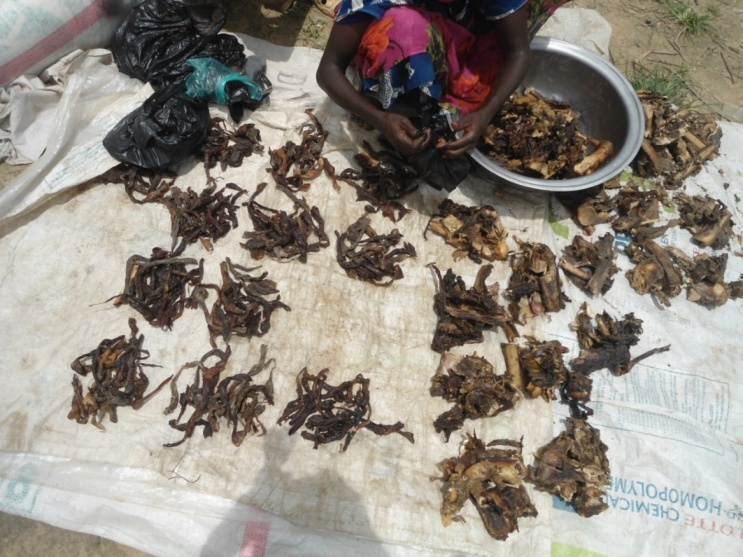
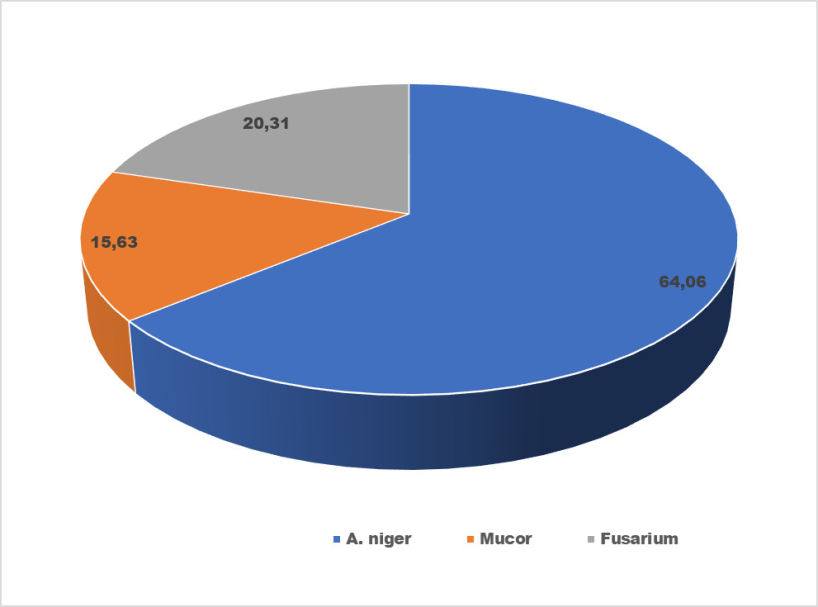
3.3. Frequency of Isolated SpeciesFigure 3 shows the frequency of isolated mold species. These results indicate that out of the one hundred sixty-two samples (162), 41 (64.06%) are Aspergillus niger, 10 (15.63%) are Mucor sp, and 13 (20.21%) are Fusarium. Meat is a food that is very rich in nutrients such as protein, iron, zinc, silicon, phosphorus, and vitamin B12 21. However, due to its high nutrient content, meat provides a favorable environment for the growth of spoilage microorganisms and foodborne pathogens 22. The presence of mold in the samples could be explained by environmental contamination due to non-compliance with good manufacturing practices. For example, it is noted that women handle the meat with their bare hands in the open air (Figure 2).
Fungal contamination of food products can lead to a decrease in their nutritional value as well as the deterioration of their organoleptic qualities. If the strains are toxin-producing molds and if environmental conditions are favorable, there can be synthesis and accumulation of toxins 23.

The results of the moisture content found in the charmout samples are recorded in Table 4 below.

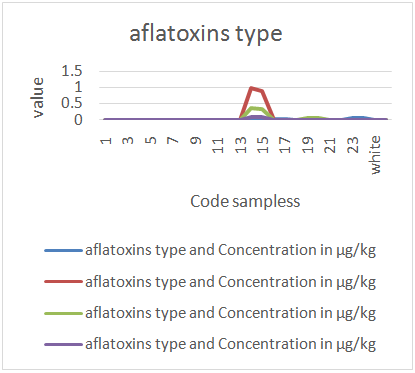
Figure 4 shows that the found values of aflatoxin G2 range from 0.002 µg/kg (E9) to 0.04 µg/kg (E24), while those for aflatoxin G1 range from 0.004 µg/kg (E16) to 0.97 µg/kg (E14). As for the values of aflatoxin B2, they range from 0.0011 µg/kg (E24) to 0.35 µg/kg (E14), and from 0.065 µg/kg (E14) to 0.075 µg/kg (E15) for aflatoxin B1. Aflatoxin G1 was found more frequently in the samples than the other aflatoxins (G2, B2, and B1). The high presence of aflatoxins in the charmout samples from certain markets such as Dembe and the Al-afia market could be explained by the high moisture content in these samples. Indeed, these samples showed moisture levels exceeding the limit set by the Burkinabe Agency for Standardization, which establishes a maximum value of 13%.

Result of the ANOVA statistical test of microbiological parameters based on locations
Overall case of all samples
The result allows us to test the significant differences between the means of the different types of aflatoxins and the total concentration of samples collected from the charmout in the 6 markets of N'Djamena.
Table 6 presents the results obtained from the aflatoxin assay in the charmout.
The results of the mycotoxin analyses produced by the charmout compared to the threshold set by European Regulation 1881/2006 (5.0-10.0) µg/kg are illustrated below:
For all the samples, the result allows us to illustrate the overall correlation of the charmout samples collected from the 6 markets in N'Djamena.
The total aflatoxin dosage performed by HPLC on the charmout revealed that the results of our samples were below the maximum allowable residual content (5.0-10.0 µg/kg) according to European regulation 1881/2006. The results obtained by Bulent Kabac (2021) 23 were higher than ours. The average concentrations found in our charmout samples were higher than those found by Tina et al. (2022) 24 in dried meat. Furthermore, the average concentration of B1 (5.9±1.9) obtained in the charmout samples was lower than those found by Fahim et al. (2014) 25 (13.38±1.52) in Kofta meat and also lower than those reported by Ismail et al. (2013) (10.4±5.1) in Luncheon meat. The presence of aflatoxins in meat poses significant health risks to consumers and has led to numerous publications (Houshman et al., 2024) 26.
The total concentration in the charmout samples found to be 26.66% does not corroborate with that obtained by Houshman et al. (2024) 26 in the MOP samples (meat products and offal).
The samples from the Central market, Millet market, Farcha market, and Al-adala market have a moisture content lower than the standard set by ABNORM (13%). Meanwhile, the samples from the Dembe market and Al-afia market have a moisture content higher than the standard set by ABNORM (Table 4). Furthermore, the moisture content obtained by Ali Haroun et al. (2023) 27 in the charmout was higher than our results. However, the difference in moisture content of the charmout is significant across the various markets in the city of N'Djamena. These discrepancies could be explained by a differential humidity of the charmout during drying or the way it is spread on the ground in certain markets, as shown in figure 2. Ali. H 27 reported higher values (14.33±2.82) for the charmout; this difference could be explained by the fact that his samples were collected from peripheral markets in different provinces, which do not have production units as suitable as those in N’djamena.
Statistically, the difference associated with the examined charmout was not significant (P < 0.05) among the different markets regarding the average concentration of G2 and B2. However, the average concentration of B1 and G1 is statistically significant (0.0398 and 0.0385) P < 0.05.
The results indicate that the contamination of charmout by mycotoxins in the markets of N'Djamena is satisfactory, despite the high humidity levels in some markets. Furthermore, the majority of the isolated fungal flora was Aspergillus, which has the ability to secrete aflatoxin. This allowed us to measure the aflatoxins, and the levels found are not too high, in accordance with European Regulation 1881/2006, which sets a limit of 5.0-10.0 µg/kg. The levels of aflatoxins B1 and B2 varied significantly between samples from different markets. The presence of mold in the charmout samples could be due to poor drying or storage conditions. This study highlights the need to raise awareness among producers and sellers of charmout in the various markets of N'Djamena, Chad, about good manufacturing practices and good hygiene practices. It confirms that the growth of toxic molds does not necessarily imply the presence of mycotoxins in food, as their production depends on a number of environmental factors 28.
| [1] | Oswald I., Forget F., Puel O., coord., 2024. Les Mycotoxines. Connaissances actuelleset futurs enjeux, Versailles, éditions Quæ, 272 p. | ||
| In article | |||
| [2] | Ozden, Sibel, Ayse Sibel Akdeniz, and Buket Alpertunga. 2012. “Occurrence of Ochratoxin A in Cereal-Derived Food Products Commonly Consumed in Turkey.” Food Control 25(1):69–74. | ||
| In article | View Article | ||
| [3] | Paterson, Robert R. M., and Nelson Lima. 2010. “Toxicology of Mycotoxins.” EXS 31–63. | ||
| In article | View Article PubMed | ||
| [4] | Pfohl-Leszkowicz, A. 1999. “Métabolisation Des Mycotoxines-Effets Biologiques et Pathologies-Ecotoxicogenèse.” Dans Les Mycotoxines Dans l’alimentation: Evaluation et Gestion Du Risque. De Conseil Supérieur d’Hygiène Publique de France. Technique et Documentation, Paris 18–35. | ||
| In article | |||
| [5] | Wu, F. 2006. “Economic Impact of Fumonisin and Aflatoxin Regulations on Global Corn and Peanut Markets.” Pp. 83–93 in The Mycotoxin Factbook: Food & Feed Topics. | ||
| In article | View Article | ||
| [6] | S.P. Bangar Lactic acid bacteria: a bio-green preserative againts mycotoxins for food safety and shelf-life extension Qual.Assur.Saf. Crop. Food (2022). | ||
| In article | |||
| [7] | K. Sharafi et al. Aworldwide systematic lirature review for aflatoxin M1 in infant formula milk: human health risk assessment by Monte Carlo simulation Food Control (2022). | ||
| In article | View Article | ||
| [8] | Laganà, A. (2017). Introduction to the toxins special issue on LC-MS/MS methods for mycotoxin analysis. Toxins, 9, 325. | ||
| In article | View Article PubMed | ||
| [9] | Fatima Zohra Ouis, impact d’incorporation d’un mélange des acides organiques et des capteurs des mycotoxines sur la production laitière chez la chèvre ; Thése,2023. | ||
| In article | |||
| [10] | Mayuri Tushar Deshmukh , P.R. Wankhede, Nitin Chakole , Pawan D. Chou frisé, Mahendra R. Jadhav, Madhusudan B. Kulkarni, Manish Bhaiyya «Vers une sécurité alimentaire intelligente: approches d’apprentissage automatique pour la détection de l’aflatoxine et la prédiction des risques »2025. | ||
| In article | |||
| [11] | Y. Guo et al Novel strategies for degradation of aflatoxins in food and feed: a review Food Res. Int (2021). | ||
| In article | View Article PubMed | ||
| [12] | Hans P Van Egmon « Réglementation relative aux mycotoxines dans les aliments: perspectives dans un contexte mondial et européen » Anal Bioanal Chem. 2007 septembre. | ||
| In article | |||
| [13] | Kara, R., Kadri, S., & Aouar, L. (2021). La Flore fongique associée aux grains de blé et d’orge stockés. Université Larbi Ben M'hidi Oum El Bouaghi Faculté des Sciences Exactes et des Sciences de la Nature et de la Vie Département des Sciences de la Nature et de la Vie. | ||
| In article | |||
| [14] | Udovicki, Bozidar, Nikola Tomic, Bojana Spirovic Trifunovic, Sasa Despotovic, Jelena Jovanovic, Liesbeth Jacxsens, and Andreja Rajkovic. 2021. “Risk Assessment of Dietary Exposure to Aflatoxin B1 in Serbia.” Food and Chemical Toxicologie 151:112116. | ||
| In article | View Article PubMed | ||
| [15] | Samuel Ayofemi and Olalekan Adeyeye Quality and safety assessment of sun dried meat product (kundi) from Ibadan, Oyo state, Nigeria Adeyeye, Cogent Food & Agriculture (2016), 2: 1209074. | ||
| In article | View Article | ||
| [16] | Alshannaq, A., & Yu, J.-H. (2017). Occurrence, toxicity, and analysis of major mycotoxins in food. International Journal of Environmental Research and Public Health, 14(6), 632. | ||
| In article | View Article PubMed | ||
| [17] | Alban Gauthier., 2016. Les mycotoxines dans l’alimentation et leur incidence sur la santé. Sciences pharmaceutiques. Dumas-01315198. | ||
| In article | |||
| [18] | Tonjo, T., Manilal, A. and Seid, M, Bacteriological quality and antimicrobial susceptibility profiles of isolates of ready-to eat raw minced meat from hotels and restaurants in Arba Minch, Ethiopia.PLoS ONE, 17(9). 1-15. 2022. | ||
| In article | View Article PubMed | ||
| [19] | Abdoullahi Hissein Ousman,Tapsoba François,Bougma Sanogo,Savadogo Aly,Abdelsalam Tidjani « Impact of artisanal drying on the microbiological quality of dried meat sold in N'Djamena, Tchad » International Journal of Biosciences | IJB |Vol. 26, No. 3, p. 139-146, 2025. | ||
| In article | |||
| [20] | Hamidou COMPAORE, Hagrétou SAWADOGO-LINGANI, Aly SAVADOGO, Dayéri DIANOU et Alfred S. TRAORE (2016). Isolement et caractérisation morphologique de moisissures productrices de substances antibactériennes à partir d’aliments locaux au Burkina Faso Int. J. Biol. Chem. Sci. 10(1): 198-210, February 2016 | ||
| In article | View Article | ||
| [21] | Tantaoui-Elaraki, A., Benabdellah, L., Majdi, M. Elalaoui, R., Dahmani, A. (1994). Recherche De Mycotoxines Dans Des Denrées Alimentaires Distribuées Au Maroc. Actes Inst. Agron. Vét. (Maroc), 14, 11-16. | ||
| In article | |||
| [22] | Bulent Kabac aflatoxins in foodstuffs: Occurrence and risk assesment in Turkey journal of food composition and analysis vol, 96, Mars 2021, 103734. | ||
| In article | View Article | ||
| [23] | Tina Lešic , Ana Vulic , Nada Vahcic , Bojan Šarkanj, Brigita Heng , Ivica Kos, Tomaž Polak, Nina Kudumija and Jelka Pleadin The occurrence of five uregulated mycotoxin most important for traditional Dried-Cured Meat products Toxin Vol 14, 476 (2022). | ||
| In article | View Article PubMed | ||
| [24] | Fahim A. Shaltout, Reham A. Amin, Marionette Z. Nassif, Shimaa A. Abd-Elwahab «Detection of aflatoxins in some meat products» Benha veterinary medical journal, vol. 27, no. 2:368‐374, december 2014. | ||
| In article | |||
| [25] | Ismail, S.A., Shehata, A.A., El-diasty, E.M. 2013. Microbiological quality of some meat products in local markets with special reference to mycotoxins. J. Global Veterinaria. 10, 577-584. | ||
| In article | |||
| [26] | Housmand Sharafi,Amir Hussein emamjomeh, Ali Hosseini, Amin Mousavi Khaneghah, Mehran Maradi Global prevalence of concentration of aflatoxin in meat and edible offal: A systematic review and meta-analysis journal of food composition and analysis vol, 135, Novembre 2024, 106644. | ||
| In article | View Article | ||
| [27] | Ali Haroun Hissein, François Tapsoba, Himeda Makhlouf1, Cisse Hama, Abel Tankoano, Hassan Mahamat Ali, Cheikna Zongo, Abdessalam Tidjani1, Aly Savadogo Production and Microbial Quality of “charmout”, a Dried Meat Produced in Chad, American Journal of Food Science and Technology, 2023, Vol. 11, No. 1, 1-7. | ||
| In article | |||
| [28] | Sørensen, L.M.; Frisvad, J.C.; Nielsen, P.V.; Lametsch, R.; Koch, A.G.; Jacobsen, T. Filamentous Fungi on meat Products, Their Ability to Produce Mycotoxins and a Proteome Approach to Study Mycotoxin Production. Ph.D. Thesis, Technical University of Denmark, Lyngby, Denmark, 2009. Available online: http:// orbit.dtu.dk/files/5022914/Marie%20S%C3%B8rensen%20til%20 tryk.pdf (accessed on 8 January 2022). | ||
| In article | |||
Published with license by Science and Education Publishing, Copyright © 2025 Brahim Adoum A., Ali Haroun, Denis Erbi, Saturnin Naim, Al-Lamadine Mahamat, Abdoullahi Hissein O., Abdelsalam Tidjani and Aly Savadogo
 This work is licensed under a Creative Commons Attribution 4.0 International License. To view a copy of this license, visit
http://creativecommons.org/licenses/by/4.0/
This work is licensed under a Creative Commons Attribution 4.0 International License. To view a copy of this license, visit
http://creativecommons.org/licenses/by/4.0/
| [1] | Oswald I., Forget F., Puel O., coord., 2024. Les Mycotoxines. Connaissances actuelleset futurs enjeux, Versailles, éditions Quæ, 272 p. | ||
| In article | |||
| [2] | Ozden, Sibel, Ayse Sibel Akdeniz, and Buket Alpertunga. 2012. “Occurrence of Ochratoxin A in Cereal-Derived Food Products Commonly Consumed in Turkey.” Food Control 25(1):69–74. | ||
| In article | View Article | ||
| [3] | Paterson, Robert R. M., and Nelson Lima. 2010. “Toxicology of Mycotoxins.” EXS 31–63. | ||
| In article | View Article PubMed | ||
| [4] | Pfohl-Leszkowicz, A. 1999. “Métabolisation Des Mycotoxines-Effets Biologiques et Pathologies-Ecotoxicogenèse.” Dans Les Mycotoxines Dans l’alimentation: Evaluation et Gestion Du Risque. De Conseil Supérieur d’Hygiène Publique de France. Technique et Documentation, Paris 18–35. | ||
| In article | |||
| [5] | Wu, F. 2006. “Economic Impact of Fumonisin and Aflatoxin Regulations on Global Corn and Peanut Markets.” Pp. 83–93 in The Mycotoxin Factbook: Food & Feed Topics. | ||
| In article | View Article | ||
| [6] | S.P. Bangar Lactic acid bacteria: a bio-green preserative againts mycotoxins for food safety and shelf-life extension Qual.Assur.Saf. Crop. Food (2022). | ||
| In article | |||
| [7] | K. Sharafi et al. Aworldwide systematic lirature review for aflatoxin M1 in infant formula milk: human health risk assessment by Monte Carlo simulation Food Control (2022). | ||
| In article | View Article | ||
| [8] | Laganà, A. (2017). Introduction to the toxins special issue on LC-MS/MS methods for mycotoxin analysis. Toxins, 9, 325. | ||
| In article | View Article PubMed | ||
| [9] | Fatima Zohra Ouis, impact d’incorporation d’un mélange des acides organiques et des capteurs des mycotoxines sur la production laitière chez la chèvre ; Thése,2023. | ||
| In article | |||
| [10] | Mayuri Tushar Deshmukh , P.R. Wankhede, Nitin Chakole , Pawan D. Chou frisé, Mahendra R. Jadhav, Madhusudan B. Kulkarni, Manish Bhaiyya «Vers une sécurité alimentaire intelligente: approches d’apprentissage automatique pour la détection de l’aflatoxine et la prédiction des risques »2025. | ||
| In article | |||
| [11] | Y. Guo et al Novel strategies for degradation of aflatoxins in food and feed: a review Food Res. Int (2021). | ||
| In article | View Article PubMed | ||
| [12] | Hans P Van Egmon « Réglementation relative aux mycotoxines dans les aliments: perspectives dans un contexte mondial et européen » Anal Bioanal Chem. 2007 septembre. | ||
| In article | |||
| [13] | Kara, R., Kadri, S., & Aouar, L. (2021). La Flore fongique associée aux grains de blé et d’orge stockés. Université Larbi Ben M'hidi Oum El Bouaghi Faculté des Sciences Exactes et des Sciences de la Nature et de la Vie Département des Sciences de la Nature et de la Vie. | ||
| In article | |||
| [14] | Udovicki, Bozidar, Nikola Tomic, Bojana Spirovic Trifunovic, Sasa Despotovic, Jelena Jovanovic, Liesbeth Jacxsens, and Andreja Rajkovic. 2021. “Risk Assessment of Dietary Exposure to Aflatoxin B1 in Serbia.” Food and Chemical Toxicologie 151:112116. | ||
| In article | View Article PubMed | ||
| [15] | Samuel Ayofemi and Olalekan Adeyeye Quality and safety assessment of sun dried meat product (kundi) from Ibadan, Oyo state, Nigeria Adeyeye, Cogent Food & Agriculture (2016), 2: 1209074. | ||
| In article | View Article | ||
| [16] | Alshannaq, A., & Yu, J.-H. (2017). Occurrence, toxicity, and analysis of major mycotoxins in food. International Journal of Environmental Research and Public Health, 14(6), 632. | ||
| In article | View Article PubMed | ||
| [17] | Alban Gauthier., 2016. Les mycotoxines dans l’alimentation et leur incidence sur la santé. Sciences pharmaceutiques. Dumas-01315198. | ||
| In article | |||
| [18] | Tonjo, T., Manilal, A. and Seid, M, Bacteriological quality and antimicrobial susceptibility profiles of isolates of ready-to eat raw minced meat from hotels and restaurants in Arba Minch, Ethiopia.PLoS ONE, 17(9). 1-15. 2022. | ||
| In article | View Article PubMed | ||
| [19] | Abdoullahi Hissein Ousman,Tapsoba François,Bougma Sanogo,Savadogo Aly,Abdelsalam Tidjani « Impact of artisanal drying on the microbiological quality of dried meat sold in N'Djamena, Tchad » International Journal of Biosciences | IJB |Vol. 26, No. 3, p. 139-146, 2025. | ||
| In article | |||
| [20] | Hamidou COMPAORE, Hagrétou SAWADOGO-LINGANI, Aly SAVADOGO, Dayéri DIANOU et Alfred S. TRAORE (2016). Isolement et caractérisation morphologique de moisissures productrices de substances antibactériennes à partir d’aliments locaux au Burkina Faso Int. J. Biol. Chem. Sci. 10(1): 198-210, February 2016 | ||
| In article | View Article | ||
| [21] | Tantaoui-Elaraki, A., Benabdellah, L., Majdi, M. Elalaoui, R., Dahmani, A. (1994). Recherche De Mycotoxines Dans Des Denrées Alimentaires Distribuées Au Maroc. Actes Inst. Agron. Vét. (Maroc), 14, 11-16. | ||
| In article | |||
| [22] | Bulent Kabac aflatoxins in foodstuffs: Occurrence and risk assesment in Turkey journal of food composition and analysis vol, 96, Mars 2021, 103734. | ||
| In article | View Article | ||
| [23] | Tina Lešic , Ana Vulic , Nada Vahcic , Bojan Šarkanj, Brigita Heng , Ivica Kos, Tomaž Polak, Nina Kudumija and Jelka Pleadin The occurrence of five uregulated mycotoxin most important for traditional Dried-Cured Meat products Toxin Vol 14, 476 (2022). | ||
| In article | View Article PubMed | ||
| [24] | Fahim A. Shaltout, Reham A. Amin, Marionette Z. Nassif, Shimaa A. Abd-Elwahab «Detection of aflatoxins in some meat products» Benha veterinary medical journal, vol. 27, no. 2:368‐374, december 2014. | ||
| In article | |||
| [25] | Ismail, S.A., Shehata, A.A., El-diasty, E.M. 2013. Microbiological quality of some meat products in local markets with special reference to mycotoxins. J. Global Veterinaria. 10, 577-584. | ||
| In article | |||
| [26] | Housmand Sharafi,Amir Hussein emamjomeh, Ali Hosseini, Amin Mousavi Khaneghah, Mehran Maradi Global prevalence of concentration of aflatoxin in meat and edible offal: A systematic review and meta-analysis journal of food composition and analysis vol, 135, Novembre 2024, 106644. | ||
| In article | View Article | ||
| [27] | Ali Haroun Hissein, François Tapsoba, Himeda Makhlouf1, Cisse Hama, Abel Tankoano, Hassan Mahamat Ali, Cheikna Zongo, Abdessalam Tidjani1, Aly Savadogo Production and Microbial Quality of “charmout”, a Dried Meat Produced in Chad, American Journal of Food Science and Technology, 2023, Vol. 11, No. 1, 1-7. | ||
| In article | |||
| [28] | Sørensen, L.M.; Frisvad, J.C.; Nielsen, P.V.; Lametsch, R.; Koch, A.G.; Jacobsen, T. Filamentous Fungi on meat Products, Their Ability to Produce Mycotoxins and a Proteome Approach to Study Mycotoxin Production. Ph.D. Thesis, Technical University of Denmark, Lyngby, Denmark, 2009. Available online: http:// orbit.dtu.dk/files/5022914/Marie%20S%C3%B8rensen%20til%20 tryk.pdf (accessed on 8 January 2022). | ||
| In article | |||