The present study aims to determine the chemical composition, nutritional evaluation and bioactive compounds content of agricultural ruminant's (sweet potato leaves powder, SPLP, and cauliflower leaves powder, CLP). Also, application in the manufacture of the Egyptian Balady bread by partially replacing wheat flour will be in the scope of this investigation. The contents of moisture, total protein, crude fat, crude fiber, ash and carbohydrates content were 8.02, 3.89, 0.81, 5.72, 2.14 and 79.42% (for SPLP) and 7.59, 7.58, 1.97, 10.07, 2.83 and 69.96% (for CLP), respectively. Also, minerals analysis of SPLP and CLP showed that it is rich in different estimated effectual elements including K, P, Mg, Ca, Fe, Mn, Cu, Zn and Se. Furthermore, SPLP and CLP are rich in various bioactive compounds content including dietary fiber, total phenolics, flavonoids, carotenoids, carotene, total anthocyanin's, chlorophyll a and chlorophyll b. The mixing of SPLP and CLP (20%) to wheat flour leads to increase all the assayed minerals, all assayed bioactive compounds and antioxidant activity. For rheological properties, the incorporating of SPLP and CLP (20%) in dough increased the all farinograph parameters including the water absorption, arrival time, dough development time, dough stability and degree of softening. Also, all extensograph parameters were increased including the elasticity, extensibility, proportional number and energy. Sensory evaluation parameters including colour, taste and flavor, mouth feel and overall acceptability were not significantly different between the control and plant parts incorporated Balady bread. In conclusion, SPLP and CLP could play important roles in strategies to contribute a major role to bridging the nutritional gap and improving the quality parameters, which is the bread industry as a partial substitute for flour. Therefore, the present study recommended like of that SPLP and CLP to be included in food processing and therapeutic nutrition applications.
|
Current and expected future climate changes that the world, including Egypt, may suffer from portend a shrinking of available agricultural areas and a decrease in crop productivity, and thus a decrease in total Egyptian production, in conjunction with a steady population increase over time. The increase in the total food needs required by these populations, and thus the decrease in per capita food intake, greatly affects Egypt's food security. Therefore, the attention of researchers has tended to search for new and innovative food sources to compensate for this nutritional deficiency, or what is known as the nutritional gap. The agricultural sector has had the bulk of this thinking, as the role of this sector in human and economic development cannot be overemphasized. Awareness of increased agricultural production is increasing, arising from the need to feed an ever-growing population. Interestingly, almost all agricultural activities generate waste that is generated in large quantities in many countries. However, this waste may pose a serious threat to human health through environmental pollution and dealing with it may result in a huge economic loss. Unfortunately, in many developing countries such as Egypt, where large quantities of such wastes are generated, they are not properly managed because little is known about their potential risks and benefits if properly managed. There are studies that address some of the challenges of agricultural solid waste as well as suggestions on how to properly manage it 1 Thus new aspects concerning the use of these wastes as by-products for further exploitation on the production of food additives or supplements with high nutritional value have gained increasing interest because these are high-value products and their recovery may be economically attractive 2, 3, 4, 5. It is well known that crop agricultural ruminants are rich in dietary fibers, some of which contain appreciable amounts of colorants, antioxidant compounds and other bioactive substances with positive health effects 6, 7, 8, 9.
Cauliflower (Brassica oleracea), family of Cruciferae (Brassicaceae), is widely cultivated all over world and Egypt for its nutritive values, high productivity and wider adaptability under different ecological conditions. It contains various kinds of vitamins, especially vitamin C, minerals like potassium, sodium, calcium, iron, phosphorus and magnesium 10.The total area grown with cauliflower in Egypt 2017/2018 season was about 10394 fed, which produced about 124984 tons with an average yield of 12.025 t/fed 11. Cauliflower leaves considered as a waste by-product which obtained during its harvesting and processing (freezing and cooking) of the fruits. From such treatment, huge amount of leaves are generated, and their disposal is a major problem which leads to environmental pollution. Leaves constitute about 40-50% of cauliflower fruit and have a high content of different nutrients including protein, ash, fiber, minerals, vitamins and carbohydrates; 2, 3. Also, they are rich sources of bioactive compounds (polyphenols, carotenoids, glycoalkaloids, anthocyanin's, dietary fiber etc., 2, 3, 12. Thus, several experiments indicate that such plant part added to laboratory animals’ diet had positive effects on complete blood count (CBC), serum lipid profile, liver and kidney functions and serum glucose 2, 13, 14.
Sweet potato (Ipomea batatas L.), belongs to the Convolvulaceae family and is cultivated on large areas in subtropical and tropical area principally in China, India, Japan, south-eastern Asia and Africa. This species is among the most important food crop in the world with more than 133 million tonnes in annual production 15. Its culture can be found on all continents, in over 95 countries with an area of over 9.5 million hectares, the largest in China 16.The sweet potato contains complex carbohydrates, especially simple sugars; the sweet potato glycemic index is quite high and it is therefore unsuitable for diabetics and overweight persons 17, 18 The leaves of the sweet potato plants, as the above-ground portion of plant, can be collected numerous intervals throughout every cultivating period. Moreover, compared to other leafy plants, they are reported to possess greater yields 19. Nevertheless, the leaves of sweet potato have been reported to be underutilized. Only a little quantity of these parts is utilized as a fresh vegetal 20, 21. Several studies have shown that the leaves of the sweet potato high rich in vitamins, minerals and fiber 22. Also, such plant part exhibited several health-promoting pharmacological activities including hypoglycemic, antioxidant, anti-tumor and anti-inflammatory 19, 23. The previous mentioned activities reported in the leaves of the sweet potato are generally related to their different bioactive compounds namely phenolic and flavonoids contents 22, 24.
Despite all the previous factors, various countries of the world including Egypt, still grow sweet potato for their tubers only and cauliflowers for their fruits (flowers) only, while the vegetative part, which represents the majority of green leaves, is left as waste thrown into the surrounding environment without use causing many adverse problems. Therefore, in an attempt to take advantage of this important plant parts, sweet potato and cauliflower leaves, which is present in Egypt in huge quantities, the present study was carried out to estimate the nutrients, bioactive compounds and antioxidant activity in their plant parts Also, the use of sweet potato and cauliflower leaves powder in one of the most important food industry applications that contributes a major role to bridging the nutritional gap, which is the bread industry as a partial substitute for flour, will be in the scope of this investigation.
Wheat grains were obtained from Shebin El-Kom City, Menoufia Governorate, Egypt during the 2023 harvesting period. The collected samples was transported to the laboratory and stored immediately on the refrigerator at 40C until using in preparation of flour.
Cauliflower (Brassica oleracea) leaf samples were collected during the month of December 2023, in fresh condition and through arrangement with some farmers, Shebin El-Kom City villages, Menoufia Governorate, Egypt. Sweet potato (Ipomea batatas L.) leaf samples were collected during the month of August, 2023 by special arrangements with some farmers, Tala City villages, Menoufia Governorate, Egypt. The collected samples were transported to the laboratory and used immediately for leaves powder preparation.
Gallic acid, catechin, α-tocopherol, butylated hydroxytoluene (BHT) and β-carotene were purchased from Sigma-Aldrich Chemical Co agent, Egypt; linoleic acid was from J.T. Baker Chemical Co., Phillipsburg, NJ, and Tween 20 was from BDH Chemical Co., Toronto, Canada. All other chemicals, solvents and buffers (Except what is mentioned otherwise) were of analytical Grade and purchased from AlGhomhoria Co for Trading Drugs, Chemicals and Medical Instruments, Cairo, Egypt.
Absorbance (Abs) and fluorescence (FL) for different assays were measured using Labo-med. Inc., spectrophotometer, CA and Schematzu fluorescence apparatus, Japan, respectively. Also, Micro-Kjeldahl semiautomatic apparatus, Velp Company, Italy was used for total nitrogen determination. Soxhelt semiautomatic apparatus Velp Company, Italy, was used for crude fat determination. Furthermore, minerals determined using of atomic absorption spectrophotometer (Perkin–Elmer, Model 2380, Waltham, MA, USA).
2.3. MethodsWheat grains were cleaning, manually sorting and then dried in a hot air oven (Horizontal Forced Air Drier, Proctor and Schwartz Inc., Philadelphia, PA) at 70 0C until arriving by the moisture in the final product to 10%. The dried wheat grains were milled into flour using Moulinex miller (Moulinex Egypt, ElAraby Co., Benha, Egypt) and sieved in standard sieves to prepare flour samples with 85% extraction rate.
Agricultural ruminant's powder samples were prepared according to the methods mentioned by 3.Cauliflower and Sweet potato healthy leaves were cleaned and washed with water to remove impurities. Leaves were dried in a hot air oven (Horizontal Forced Air Drier, Velp Inc., Italy) at 70 0C for 10 h (moisture final, 7%). The dried leaves sample ground into a fine powder in a Moulinex miller (Moulinex Egypt, ElAraby Co., Benha, Egypt). The passed materials through an 80 mesh sieve was retained for packing in polyethylene pages and kept at 4 0C for using in different experiments.
Control and composite wheat flour samples were used for their aqueous extracts preparation such as mentioned by Gharib et al., 25. In brief, 20 g from flour sample plus 180 ml water were homogenized and transferred to a beaker and stirred at 200 rpm in an orbital shaker (Unimax 1010, Heidolph Instruments GmbH & Co. KG, Germany) for 1 h at room temperature (24± 40C). The extract was separated from the residue by filtration in Whatman No. 1 filter paper. The remaining residue was re-extracted twice, and then the two extracts were combined. The residual water was removed under reduced pressure at 60°C using a rotary evaporator (Laborata 4000; Heidolph Instruments GmbH & Co. KG, Germany). All aqueous extracts were stored at 0C for further experiments.
Control and composite wheat flour samples were analyzed for proximate chemical composition including moisture, protein (T.N. × 6.25), fat (petroleum ether solvent), ash, fiber and dietary fiber contents were determined using the methods described in the A.O.A.C. 26. Carbohydrates calculated by differences: Carbohydrates (%) = 100 - (% moisture + % protein + % fat + % Ash + % fiber).
Total energy (Kcal/100 g) of control and composite wheat flour samples was calculated according to Insel et al., 27 using the following equation: Total energy value (Kcal/100 g) = 4 (Protein % + carbohydrates %) + 9 (Fat %)
Grams consumed (GDR, g) of food to cover the daily requirements of adult man (63g) in protein was calculated using the RDA values 28. Percent satisfaction of the daily requirement of adult man in protein (PS/80g,%) when consuming the possibly commonly used portions in Egypt i.e. one loaf (80 g weight), was also calculated.
Grams consumed of food to cover the daily requirements of man in energy (GDR, g) were calculated using the RDA (Recommended dietary allowances) which are 2900 Kcal /day for man as given by RDA 28.The percent of satisfaction (PS, %) of the daily needs of adult man (25-50 year old, 79 Kg weight and 176 cm height) in energy upon consumption the commonly used portion at homes in Egypt, i.e. one loaf (80g weight), was also calculated.
Minerals content of samples were prepared and determined according to the method mentioned by Singh et al., 29 In brief, 0.5 g of defatted sample were transferred into a digested glass tube and 6 ml of tri-acids mixture (containing nitric acid: perchloric acid: sulfuric acid in the ratio of 20 : 4 : 1 v/v respectively) were added to each tube. The tubes content were digested gradually as follow, 30 min at 700C; 30 min at 1800C and 30 min at 2200C. After digestion process, the mixture was cooled, dissolved in distilled water, and the volume was increased to 50 ml in volumetric beaker. The mixture samples were filtration in ash less filter paper and aliquots were analyzed for minerals (Na, Zn, Fe, Mn, Cu, K, Mg, P, Ca, Se) using of atomic absorption spectrophotometer.
Antioxidant activity (AA) of plant extracts, control flour, composite flour and standards (α-tocopherol and BHT) was determined according to the β-carotene bleaching (BCB) assay following a modification of the procedure described by Marco, 30
Total phenolics in samples were determined using Folin-Ciocalteu reagent according to Singleton and Rossi, 31 and Wolfe et al., 32 and were expressed as gallic acid equivalents (GAE). Total flavonoids contents were estimated using colorimetric assay described by Zhishen et al., 33 and expressed as catechin equivalent, CAE. The total carotenoids were determined by using the method reported by Litchenthaler, 34.Lutein was extracted from the molokhia leaves according to the methods described by Bangbang et al., 35 and expressed as µg.100 g-1. Total content of anthocyanin's in the sample was measured spectrophotometrically such as described by Sukwattanasinit et al., 36 using molar extinction coefficient of cyanidin-3,5-diglucoside (26 300 M−1cm−1). Total chlorophylls and carotenes were determined according to the method of Nagata and Yamashita 37 as follow: 10 g of sample been placed separately in 95% acetone (50 mL per gram), were homogenized with Braun MR 404 Plus (Aldrich, UK) for 1 minute. The homogenate was filtered and centrifuged at 2500 rpm for 10 minutes (Jowan centrifuge, France). The supernatant was separated, and the Abs (s) at 400-700 nm were read. Chlorophyll a showed maximum absorbance at 662 nm, chlorophyll b at 645 nm, and total carotene at 470 nm. The amounts of these pigments were calculated according to the following formulae: Ca = 11.75 A662 - 2.350 A645; Cb = 18.61 A645 - 3.960 A662., Cx + c = 1000 A470 - 2.270 Ca - 81.4 Cb/227 and Ca = Chlorophyll a; Cb = Chlorophyll b; Cx + c = Total carotene
The Balady bread samples were prepared according to the common method used in Egypt. Formulation of the bread is applied as follow: wheat flour, 1000 g; salt, 20g; and dries yeast, 2 g; and water 500 g. Yeast was mixed with water (25 0C) to form a suspension, to which the other ingredients were then added and kneaded to form smooth dough. Substitution of the wheat flour with the tested plant parts powder were conducted based on 20% of the weight of the wheat flour. The dough was later proofed for 2 hours in a proofer (Bakbar E81, New Zealand), then cut into loafs 80 g prior to baking at 175 0 C for 9 min.
Water (WHC) and oil (OHC) holding capacity were determined according to the method of Larrauri et al., 38. Twenty-five milliliters of distilled water or commercial corn oil were added to 0.5 g of the tested samples, shacked vigorously for 1 min and then centrifuged for 15 min at 10,000g. The residue was weighed and the WHC and OHC were calculated as g water or oil per g of dry sample, respectively.
Both dough of wheat flour control and wheat flour with incorporated with the selected plant parts were determined by using of farinograph and extensograph tests according to the methods of A.A.C.C. 39.
The measurement was achieved by means of ISO 5530-1, 40. The moisture of flour was determined according to ISO norm 712 41 The measurement of water absorption (%), arrival time (min), dough development (min), stability time (min) and degree of softening (B.U) was carried out on a Brabender R Farinograph (BrabenderR GmbH & Co, Duisburg, Germany). Visual comparison of the curves was performed in Farinograph Data Correlation program (BrabenderR GmbH & Co, Duisburg, Germany).
Extensograph test was achieved on a Brabender R Extensograph (BrabenderR GmbH & Co, Duisburg, Germany) to determine the elasticity (B.U), extensibility (mm), Proportional number (P.N) and strength of the dough (energy, cm2) of wheat flour control sample and samples with additions of tested plant parts.
Sensory evaluation was carried out with 10 panelists comprising of postgraduate students from Menoufia University, Shebin El-Kom, Egypt. Each panelist was served with 5 randomly arranged bread samples on a rectangular plastic tray. The loaves' were individually sealed in a pouch and coded with a three-digit number prior to testing. The 5 samples consisted of 4 types of composite flour loafs and a control (100% wheat flour). Water was provided for rinsing between the samples. Panelists were required to evaluate the colour, taste and overall acceptance of the bread using the 9-point hedonic scale with 1=dislike extremely, 2=dislike very much, 3=dislike moderately, 4=dislike slightly, 5=neither like nor dislike, 6=like slightly, 7=like moderately, 8=like very much, and 9=like extremely.
2.4. Statistical AnalysisAll tests/measurements were done in triplicates and presented as mean± standard deviations (SD). Statistical analysis was performed using Student t-test and MINITAB 12 computer program (Minitab Inc., State College, PA).
Bioactive constituents and dietary fiber content in wheat flour and agricultural remnants (sweet potato leaves powder, SPLP and cauliflower leaves powder, CLP) were shown in Table 1. Such data indicated that dietary fiber was the most largest compound is dietary fiber ranged 7.14 ± 0.34 to 36.96 ± 2.47 g. 100 g-1 ) followed by total phenolics ranged 13.65 ± 1.11 to 2109.40 mg gallic acid equivalent. 100 g-1), flavonoids ranged 7.98 ± 0.56 to 411.81 ± 12.47 mg.100 g-1), carotenoids ranged 15.34 ± 2.03 to 394.52 ± 6.54 mg catechin equivalent. 100 g-1), lutein ranged 2.87 ± 0.11 to 281.09 ± 5.04 mg.100 g-1), carotene ranged 6.48 ± 1.33 to 193.49 ± 4.36 mg.100g-1, total anthocyanin's ranged 2.42 ± 0.54 to 156.71 ± 5.47 mg.100 g-1, chlorophyll b ranged 4.04 ± 0.44 to 63.58 ± 1.59 mg.100 g-1 and chlorophyll a ranged 4.04 ± 0.44 and 46.02 ± 2.17 mg.100 g-1 in both wheat flour and agricultural remnants powder. It is also clear from the results that SPLP and CLP are much richer in the percentages of estimated bioactive compounds when compared to the wheat flour. Such data are in a accordance with that reported in several studies have been analyzed CLP; 2, 3. Also, Nakachi et al., 42 and Sasaki et al., 43 found that SPLP have been found as a functional food containing various bioactive compounds that provide a variety of health-promoting benefits polyphenols, flavonoids, and carotenoids 43, 44. All of these bioactive constituents play various important roles in applications of food technology and human nutrition 3, 9, 22.
Data in Table 2 are shown the antioxidant activity of control and composite wheat flour aquatic extract. Such data indicated that agricultural remnants (SPLP and CLP) samples showed high antioxidant activity (AA, 74.98 ± 2.01 and 81.21 ± 2.11 %, respectively) and wheat flour showed low one (AA, 31.89 ± 1.89 %). Agricultural remnants (SPLP and CLP) samples also recorded high antioxidant values compared to standard substances (α-tocopherol and BHT). With the mixing of SPLP and CLP to the wheat flour, the value of antioxidant activity in the composite samples were significant (p≤0.05) increased. The increasing of antioxidant activity in composite flour is correlated with its reasonable content of different bioactive compounds such as phenolics, flavonoids, carotenoids, lutein, carotenoids and chlorophyll. The variation in the antioxidant activity values in composite flours may be possible due to the presence of different quantities of such specific bioactive constituents 45, 46.Such data are in accordance with that observed by several authors who reported that agricultural remnants (SPLP and CLP) samples are rich in nutrients and bioactive compounds (polyphenols, flavonoids, and carotenoids) subsequently antioxidant activities 3, 22, 43, 44. Also, Nguyen et al., 22 reported that SPLP contain a large amount of unique vitamins and minerals which exhibited different biological roles including the antioxidant activity. The determined bioactive compounds (polyphenols, flavonoids, carotenoids different, lutein and chlorophyll) in composite wheat flour recorded free radical scavenging activity which are very important to prevent the adverse role of free radicals in different diseases including obesity, cancer, cardiovascular, diabetes, neurological, pulmonary diseases 9, 47, 48 49, 50 51, 52, 53.
3.3. Chemical Composition and Nutritional Evaluation of Control and Composite Wheat FlourData in Table 3 and Table 4 showed the chemical composition of control and composite wheat flour with SPLP and CLP. Such data indicated that wheat flour samples recorded high values for total protein while SPLP and CLP samples recorded high values for the rest of the components (crude fiber, ash and carbohydrates).With the mixing of SPLP and CLP to the wheat flour, the value of crude fiber, ash and carbohydrates in the composite samples were significant (p≤0.05) increased. The total protein content was recorded the opposite direction. On the other side, nutritional properties of control and composite wheat flour samples may be altered as the result of such chemical composition alterations (Table 5 and Table 6). These properties include the total energy (Kcal/100g), the daily requirement of adult man from energy (GDR/energy) and from protein (GDR/protein), and percent satisfaction of the daily requirements of adult man in energy (P.S./energy) and protein (PS/protein).With the mixing of SPLP and CLP to the wheat flour, the value of total energy, GDR/energy and GDR/protein in the composite samples were significant (p≤0.05) altered. Data of this study are in accordance with that obtained by several authors who found that SPLP and CLP contain high levels of diverse 2, 3, 22, 54. Subsequently, the addition of such plant parts to wheat flour samples leads to highly significant increasing in their crude fiber and mineral content. This property could be played many nutritional and therapeutic benefits. Soluble fiber, which dissolves in water, can help lower blood glucose and cholesterol levels 55, 56. Insoluble fiber, which does not dissolve in water, can help food move through your digestive system, promoting regularity and helping prevent constipation 57. Thus, fiber contributes to reduce the risk of developing various diseases including cardiovascular disease, diabetes, and constipation 5 48 58. Also, various studies proposed that higher intake of fiber may offer protective benefits through manipulate various adverse biochemical parameters including high level of insulin (insulin resistance), excess weight, hyperlipidemia, and low levels of HDL-c (good cholesterol) 47, 48, 49 51, 52, 59, 60. Furthermore, Farvid et al., 61 reported that higher fiber intake reduces breast cancer risk, suggesting that fiber intake during adolescence and early adulthood may be particularly important. Finally, several studies reported that diets low in fiber causes sudden increases in serum glucose which may increase the risk of developing type 2 Diabetes 48, 62, 63.
Data in Table 7 and Table 8) showed the mineral content of control and composite wheat flour with SPLP and CLP. Such data indicated that with the except of Na SPLP and CLP samples recorded high values for all estimated mineral including Ca, Mg, K, P, Fe, Zn, Mn, Cu and Se than wheat flour. With the mixing of SPLP and CLP to the wheat flour, the value of the all estimated minerals in the composite samples were significant (p≤0.05) increased. The high significant increasing in SPLP composite samples was observed for Ca, K, Mg, Fe, Na and Se which recorded 996.82, 418.01, 236.88, 117.88, 144.98 and 145.92% when compared with the control wheat flour samples. While for CLP composite sample, the high significant increasing for the same minerals were recorded 1380.06, 463.60, 330.84, 158.94, 753.34 and 159.18%, respectively. Therefore, mixing wheat flour with the tested plant parts powder covered the recommended daily allowance (RDA) of the adult man and adult woman with different levels of elements estimated in different proportions ranging from 17.14 to 4381.82% (for SPLP) and 19.78 to 4618.18% (for CLP). The present data are in accordance partially with that reviewed by Sun et al., 20 and Sun et al., 21 who mentioned that SPLP contain essential minerals of Na, Mg, P, Ca, and K with ranges of 8.06-832.31, 220.2-910.5, 131.1-2639.8, 229.7-1958.1, and 479.3-4280.6 mg/100 g DW, respectively, while the minerals Cu, Zn, Mn, and Fe have ranges of 0.7-1.9, 1.2-3.2, 1.7-10.9, and 1.9-21.8 mg/100 g DW, respectively.
In general, Mg is a key element in making several parts of the body work smoothly such as the heart, bones, muscles, nerves, etc., as without enough Mg, these areas are disrupted, and the lack or decrease of the diet in magnesium leads to health problems 64. K levels influence multiple physiological processes. Among of them, they are including in resting cellular-membrane potential and the propagation of action potentials in neuronal, muscular, and cardiac tissue, hormone secretion and action, acid–base homeostasis, systemic blood pressure control, fluid and electrolyte balance 65, 66, 67. Ca is the most abundant mineral in the body. Almost all calcium in the body is stored in bones and teeth, giving them structure and hardness. The body needs Ca for muscles to move and for nerves to carry messages between the brain and every part of the body 68, 69. P is a key element of bones, teeth, and cell membranes. It helps to activate enzymes, and keeps blood pH within a normal range. It regulates the normal function of nerves and muscles, including the heart, and is also a building block of the genes, as it makes up DNA, RNA, and ATP, the body’s major source of energy 70. On the other side, mixing SPLP and CLP leads to increase the levels of some trace metals in composite flours including Fe, Se, Mn, Cu and Zn. All of those trace elements are biologically very vital to the human body through prevention and/or fighting many diseases including anemia, immunodeficiency cancer and arthrosclerosis 25, 52, 71, 72. The main role of Fe, as an integral part of haemoglobin in red blood cells, the transfer of oxygen from the lungs to the tissues of all organs in the body 25.Also, Fe has a main biological role through carry oxygen in the hemoglobin of red blood cells in the body so cells can produce energy. It improves oxygen storage through myoglobin, a protein containing iron which transports and stores oxygen within the muscles. Furthermore, Fe is necessary for DNA synthesis and plays an important role in the human immune system 73. Cu works together with Fe to help the body in formation the red blood cells. It also helps keep the blood vessels, nerves, immune system, and bones healthy. Cu also aids in iron absorption 74. Zn is necessary for several enzymes to carry out vital chemical reactions. It is a major player in the creation of DNA, growth and multiply of cells, building proteins, healing damaged tissue, supporting a healthy , and involved with the senses of taste and smell 75 76. Se plays a significant biological role as cofactor for reduction of antioxidant enzymes, such as glutathione peroxidase (GSH-Px) and thioredoxin reductase found in animals and some plants. The GSH-Px catalyze reactions that remove reactive oxygen species (ROS) such as hydrogen peroxide (H2O2) and organic hydroperoxides (HOO.) 5 77. Mn has an important role in the metabolism of lipids and lipoproteins and it participates in the pathogenesis of atherosclerosis as well as numerous other cardiovascular diseases 78.
Data in Table 9 and Table 10 showed the bioactive compounds and dietary fiber of control and composite wheat flour with SPLP and CLP. With the mixing of SPLP and CLP to the wheat flour, the value of the all estimated bioactive compounds in the composite samples were significant (p≤0.05) increased. The high significant increasing in SPLP composite samples was observed for total phenolics, total carotenoids, total flavonoids, lutein, total anthocyanin's, carotene, Chlorophyll a, Chlorophyll b and dietary fiber which recorded 3119.27, 483.12, 953.76, 1716.03, 1139.26, 587.50, 192.57, 226.04 and 111.99% when compared with the control wheat flour samples. While for CLP composite sample, the high significant increasing for the same bioactive compounds were recorded 1798.12, 331.17, 352.14, 281.09, 134.60, 173.67, 39.88, 55.94 and 36.96%, respectively. The present data are in accordance partially with that reviewed by Sayed Ahmed, 2 and Elhassaneen et al., 3 who found that CLP is rich in total phenolics and total carotenoids. Many studies on functional compounds of SPLP indicate that their health benefits are related to high levels of polyphenols, flavonoids, and carotenoids 43, 44. These compounds exhibit various bioactivities, such as antioxidant, anti-cancer, anti-mutagenic activities, immune modulation, and hepato-protection 22, 25 79, 80, 81 82, 83 84, 85 86, 87. Dietary fibers are good for human health as they make an excellent intestinal environment by favoring the growth of intestinal microflora, including probiotic species so they can be considered as prebiotic 88, 89. Also, Elbasouny 9 reported that fibers are primarily insoluble, and can bind bile acids. It is believed that binding of bile acids is one of the mechanisms whereby certain sources of dietary fibers lower plasma cholesterol. Furthermore, high intakes of dietary fibers has a positive influence on blood glucose profile through altering the gastric emptying time and affect the absorption of other simple saccharides 55, 56. Lutein is an oxygenated carotenoid found naturally in high quantities in green leafy vegetables such as spinach, kale and yellow carrots 90. It is synthesized only by plants and like other xanthophylls and animals obtains lutein by ingesting plants. Several studies have shown that higher dietary intake of lutein is associated with the reducing risk of age-related cataract, coronary heart disease, stroke, and metabolic syndrome, possibly through less atherosclerosis and lower inflammatory activity 84 85 91. Such physiological roles of lutein are due to its acts as an antioxidant 90 92. Finally, SPLP and CLP are an excellent source of chlorophylls and carotenes. Chlorophyll provides nutritional benefits to the body and helps keep the healthy including right bones, strong muscles, maintaining normal blood pressure and needs for the blood to clot properly 52, 53 93, 94.
Data in Table 11 showed the water (WHC) and oil (OHC) holding capacity of wheat flour, SPLP, CLP and composite flour. Such data indicated that CLP powder recorded the highest WHC and OHC being 8.96 ± 0.21 g H2O.g-1 and 4.11 ± 0.09 g oil.g-1, while the wheat flour recorded the lowest values being 6.43 ± 0.17 g H2O.g-1 and 2.76 ± 0.11 g oil.g-1, respectively. The addition of the tested plant parts (SPLP and to the wheat flour led to an increase in both Wu compared to the control flour samples. The addition of the tested plant parts (SPLP and CLP) to the wheat flour led to an increase in both WHC and OHC compared to the control flour samples. Such data are in accordance partially with several authors who reported that the plant parts have high WHC is mainly attributed to high fiber content 2, 3, 46, 95. The higher in WHC recorded in brown WHC and OHC could be attributed to the higher fiber content which hold more water compared to wheat flour. In similar study 96 reported that mango peel powder was higher than that of mango kernel powder being 5.08 and 2.08 g water/g, respectively indicating that the higher fiber content in mango peel powder hold more water compared to mango kernel powder. Also, this observation is agreed with that reported by 3, 46, 60, 95, 97.
Data in Table 12 showed all farinograph parameters of wheat and wheat flour mixing with the tested agricultural remnants powder. The incorporating of sweet potato leaves powder (SPLP) and cauliflower leaves powder (CLP) in dough by 20% (/w) increased the water absorption, arrival time, dough development time, dough stability and degree of softening. The samples mixed with CLP also recorded values higher than the increase for all previous parameters when compared to samples mixed with SPLP powder. Such data are in accordance partially with that obtained by 2 who found that the incorporating of plant parts by-products i.e. 5% of potato peel, cauliflower, onion and mango peels powder in dough increased its water absorption. Also, 95 reported that the incorporating of plant powder other than SPLP and CLP i.e. quinoa powder by 10 and 20% in dough increased its all farinograph parameters for cake dough. Furthermore, 5 found that mixing of algae powder by 5 to 10% in dough increased its all farinograph parameters for Egyptian Balady bread. This increment in dough water absorption observed in the present study may be due to high content of dietary fiber in SPLP and CLP which with significant difference with control. Also, the increasing in dough development time and dough stability observed with 20% incorporation of SPLP and CLP may be due to its high content of dietary fibers and pectin which act as a food hydrocolloid. Such as reported by several studies, dough stability in minutes is the most important index for dough strength 3, 5, 45, 46, 98, 99, 100. Incorporation of SPLP and CLP by 20% to flour samples showed significantly longer stability periods than the control samples (wheat flour). This affect could be attributed to the effect of such plant parts powder incorporation on the quality of protein and dietary fiber flour in particular the binding force property 3, 5, 46, 95, 99, 101. From the viewpoint of dough degree of softening, statistically significant difference was found between the control sample and the dough with incorporation of SPLP and CLP by 20%. It is meaning that an improvement in the quality of the dough occurred after the addition of SPLP and CLP, when the degree of softening value significantly increased in comparison with the control sample.
Data in Table 13 showed all extensograph parameters of wheat and wheat flour mixing with SPLP and CLP. The incorporating of such plant parts powder in dough increased the extensibility, elasticity, proportional number and energy. The samples mixed with CLP also recorded values higher than the increase for all previous parameters except the proportional number when compared to samples mixed with SPLP powder. Such data are in accordance partially with that obtained by 2 who found that the incorporating of plant parts by-products including cauliflower leaves powder in dough increased its all extensograph parameters. Also, the same observation was reported by 5 through mixing of algae powder by 5 to 10% in dough for Egyptian Balady bread. The effect of SPLP and CLP powder on increasing the extensibility of the wheat flour may be due to the alteration of the viscosity and forced the gluten network 2, 102. Also, several reports suggest that different plant parts by-products such as potato and onion peels, cauliflower leaves, and skin have antioxidant activity which could be easily prevented the oxidation process usually decreases dough extensibility 2, 3, 46. Therefore, this effect may be similar to what occurs in the plant parts tested in this study (SPLP and CLP), especially after many studies have determined the superior ability in antioxidant activity possessed by these plant parts 22, 79, 80, 83. Finally, data of the rheological studies reported that in order to improve the quality of bakery products such as bread, additions of the SPLP and CLP by rate up to 20% to the dough are recommended.

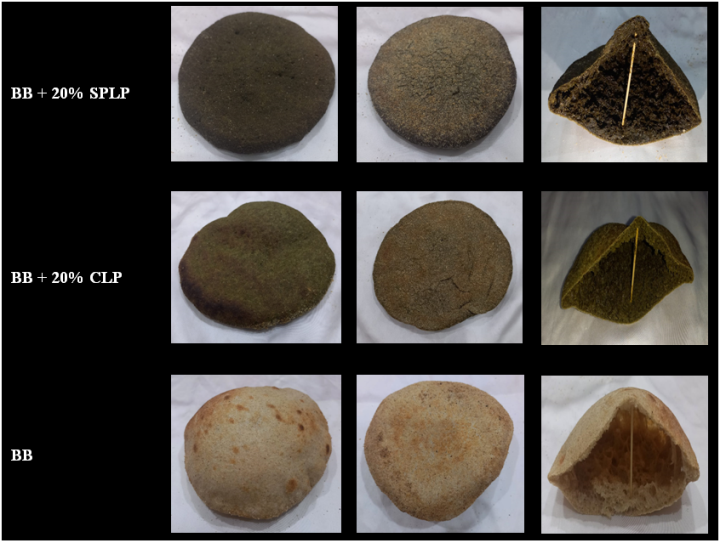
Results of sensory evaluation of Egyptian Balady bread incorporated with SPLP and CLP in terms of appearance, colour, texture and flavor, mouth feel and overall acceptability are illustrated in Table 14 and Figure 1. Colour, taste and flavor, mouth feel and overall acceptability were slight significantly different between the control and plant parts incorporated Balady bread especially SPLP at the level of 20%. The present data are in accordance with that obtained by Ismail et al., 60 with the incorporation of other plant powder i.e. date seed powder mixed with Balady bread at the levels of 5 and 10%. Also, Aly and Sadeek 95 reported the same observation with the incorporation of wheat flour with quinoa powder in cake. Such as reported by Broyart et al., 102 the initial acceptance of baked products is much influenced by colour, which can also be an indicator of baking completion. The desirable colour of bread is mainly due to the Millard browning reaction induced during baking process. However, in SPLP and CLP blended Balady bread, the colour could be partially contributed by the phenolics and carotenoids in such plant powder which imparts a yellowish/brownish colour to the final bread. Similar data were noticed by Brannan et al., 103 who observed that an increased flour and thus muffin visual lightness (with more yellowness and brownness rather than dark and yellow green) yield a higher aroma, texture and colour acceptability scores. Also, in such data there was no significant difference in texture amongst the different control and composite bread samples. Furthermore, slightly significant difference was observed in terms of taste and flavor between the control and SPLP mixed bread. This could probably attribute to the nature of SPLP which did impart some additional flavor to the bread. Finally, there was partially no significant difference in term of overall acceptability among the control and tested plant (SPLP and CLP) incorporated bread. This could be attributed to the close resemblance of the breads types in terms of the colour, texture and taste/flavor of the commercial breads in the market, for example, bread with bran wheat.
The chemical composition of agricultural remnants (sweet potato leaves powder, SPLP and cauliflower leaves powder, CLP) showed that it is a good source of ash, dietary fibers, carbohydrates and bioactive compounds such as total phenolics, carotenoids, flavonoids, lutein, carotene and chlorophyll). Incorporation of such plant parts with the flour (extraction rate, 58%) improved the rheological properties of the dough including farinograph and extensograph parameters subsequently their baking characteristics. Egyptian Balady bread samples enriched with SPLP and CLP showed higher crude fiber, minerals and bioactive than the control breads. Increasing of such bioactive compounds in bread samples probably exhibited significant improving in their antioxidant activity. The SPLP and CLP powder incorporated bread up to 20% doesn't affect on their almost sensory evaluation parameters. Thus, the use of SPLP and CLP in one of the most important food industry applications could be contributed a major role to bridging the nutritional gap, which is the bread industry as a partial substitute for flour.
The authors extend their sincere thanks and appreciation to all the farmers of the villages of Shebin Al-Kom Center, Menoufia Governorate for their efforts and assistance provided during the collection of plant parts samples.
Authors declared no competing of interest whatsoever
The ethical issues of the current work was reviewed and approved by the Scientific Research Ethics Committee, Faculty of Home Economics, Menoufia University, Shebin El-Kom, Egypt (Approval # 19- SREC- 12-2022).
Yousif Elhassaneen participated in preparing and developing the study protocol, following up on the practical experimental part, retrieving conceptual information, reviewing and verifying the results and statistical analyses, and preparing and reviewing the manuscript. Amany Omara conducted the practical experiments, collected, tabulated and interpreted the results, retrieving the basic information and concepts, and preparing the draft of the manuscript. Mai Gharib participated in preparing the study protocol, following up on conducting the practical experiments, retrieving conceptual information, validating the study results, and preparing a draft of the manuscript.
AA, antioxidant activity; Abs, absorbance; BCB, β -Carotene Bleaching; BD, BHT, butylated hydroxyltoluene; CA, catechine; CLP, cauliflower leaves powder; DMSO, dimethylsulfoxide; DNA, deoxyribonucleic acid; FAO, Food Agriculture Organization; GA, gallic acid; GDR (g), Grams consumed of food to cover the daily requirements of man, RDA, Recommended dietary allowances, ROS, reactive oxygen species; PS (%), The percent of satisfaction (PS, %) of the daily needs of adult man (25-50 year old, 79 Kg weight and 176 cm height), SPLP, sweet potato leaves powder.
| [1] | FAO (Food and Agriculture Organization of the United Nations), (2016). Climate change, agriculture and food security. Rome, Italy, ISBN: 978-92-5-109374-0 (http://www.fao.org/3/a-i6030e.pdf). | ||
| In article | |||
| [2] | Sayed Ahmed, S. (2016). Nutritional and technological studies on the effect of phytochemicals on obesity injuries and their related diseases by using experimental animals" Ph.D. Thesis in Home Economics (Nutrition and Food Science), Faculty of Specific Education, Port Said University, Egypt. | ||
| In article | |||
| [3] | Elhassaneen, Y. Sherif R. and Mashal, R. (2016). Improvement of Bioactive Compounds Content and Antioxidant Properties in Crackers with the Incorporation of Prickly Pear and Potato Peels Powder. International Journal of Nutrition and Food Sciences, 5 (1): 53-61. | ||
| In article | View Article | ||
| [4] | Ahmed, M. S. (2019). Utilization of by-products of food industries in biscuits production. M.Sc. Thesis in Food Science, Faculty of Agriculture, Cairo University, Cairo, Egypt. | ||
| In article | |||
| [5] | Elhassaneen, Y., Ghada ELBassouny, Omar Emam, & Fatma A. Alsobky (2024). Brown Algae is a Natural Source Rich in Nutrients and Bioactive Compounds: Application in Balady Bread. American Journal of Food Science and Technology, 12(4): 120-132. | ||
| In article | View Article | ||
| [6] | Vasso, O. & Constantina, T., (2007): Utilization of Plant By-Products for the Recovery of Proteins, Dietary Fibers, Antioxidants, and Colorants. In: Utilization of By-Products and Treatment of Waste in the Food Industry. Ed. By: Vasso Oreopoulou and Winfried Russ. Springer ScienceBusiness Media, LLC, pp. 209–232. | ||
| In article | |||
| [7] | Badawy, R. M. (2017). The effect of phytochemical extracts of some plant parts in liver cancer initiation induced by benzo (a) pyrene. Ph.D. Thesis in Nutrition and Farchood Science, Faculty of Home Economics, Minoufiya University, Fhebin El-Kom, Egypt. | ||
| In article | |||
| [8] | Hallabo, S., Helmy, S. A., Elhassaneen, Y. & Shaaban, M. (2018). Utilization of mango, onion and potato peels as sources of bioactive compounds in biscuits processing". BIOSCIENCE RESEARCH, 15(4): 3647-3657. | ||
| In article | |||
| [9] | Elbasouny, G., Shehata, N. & Elhassaneen, Y. 2019. Feeding of some selected food industries by-products induced changes in oxidants/antioxidant status, lipids profile, glucose and immunological parameters of blood obese rats. The 6th Scientific and 4th International Conference "The Future of Specific Education and people with Special Needs in Light of the Concept of Quality ", 24-26 February 2019, Faculty of Specific Education, Ain Sokhna University, El-Ain El-Soghna, Egypt. | ||
| In article | |||
| [10] | Abdel Nabi, H. M. A.; E. I. El-Gamily & A. A. R. A. El-Amoushi (2020). Organic Fertilization and Foliar Application with some Microelements and Biostimulants Effects on Productivity and Quality of Cauliflower. J. of Plant Production, Mansoura Univ., 11 (1): 41 – 47. | ||
| In article | View Article | ||
| [11] | FAO (2019). Food and Agriculture Organization. Faostat, FAO Statistics Division, November, 2019. | ||
| In article | |||
| [12] | Elhassaneen, Y. A.; Emad M. El-Kholie, Amal N. Zaki & Hend A. Yassen (2018). Potential Effects of Cauliflower Leaves Powder on obese rats. Proceeding of the Annual Conference (13th Arab; 10th International), 11-12 April, Faculty of Specific Education, Mansoura University, " Higher Education in Egypt and the Arab World in the Light of Sustainable Development Strategies", Mansoura, Egypt. [http:// sefac.mans.edu.eg/ english/ mokatamar.htm]. | ||
| In article | |||
| [13] | Lima, E. A. C.; Diré, G.; Mattos, D. M. M.; Freitas, R. S.; Gomes, M. L.; Oliveira, M. B. N.; Faria, M. V. C.; Jales, R. L. and Bernardo-Filho, M. 2002. Effect of an extract of cauliflower (leaf) on the labeling of blood elements with technetium-99m and on the survival of Escherichia coli AB1157 submitted to the treatment with stannous chloride. Food and Chemical Toxicology. 40, 7: 919-923. | ||
| In article | View Article PubMed | ||
| [14] | Kashaf, H. A. (2018). Effect of bioactive phytochemicals on obesity and its complications in rats. M.Sc. Thesis in Nutrition and Food Science, Faculty of Home Economics, Minoufiya University, Egypt. | ||
| In article | |||
| [15] | Aywa, K. & Nyambaka, H. M. (2013). Nutrient variation in colored varieties of Ipomea batatas grown in Vihiga County, Western Kenya. International Food Research Journal, 20(2): 819-825. | ||
| In article | |||
| [16] | FAO Production Year book, (2005): hendry.ifas.ufl.edu. Rome, Italy. | ||
| In article | |||
| [17] | Tian, S. J., Rickard, J. E. & Blanshard. N. K. (1991).Physicochemical properties of sweet potato starch. Journal of the Science of Food and Agriculture. 57(4): 459–491. | ||
| In article | View Article | ||
| [18] | Coghlan, A, (2012). Nutrient-boosted foods protect against blindness. New Scientist, Health. | ||
| In article | |||
| [19] | Wang, S., Nie, S. & Zhu, F. (2016). Chemical constituents and health effects of sweet potato Food Res. Int. 89: 90–116. | ||
| In article | View Article PubMed | ||
| [20] | Sun, H., Mu, T., Xi, L. & Song, Z. (2014). Effects of domestic cooking methods on polyphenols and antioxidant activity of sweet potato leaves. J. Agric. Food Chem. 62: 8982–8989. | ||
| In article | View Article PubMed | ||
| [21] | Sun, H., Mu, T., Xi, L., Zhang, M. & Chen, J. (2014). Sweet potato (Ipomoea batatas L.) leaves as nutritional and functional foods. Food Chem. 2014, 156, 380–389. | ||
| In article | View Article PubMed | ||
| [22] | Nguyen, H.C., Chen, C.-C., Lin, K.-H., Chao, P.-Y., Lin, H.-H. & Huang, M.-Y. (2021). Bioactive Compounds, Antioxidants, and Health Benefits of Sweet Potato Leaves. Molecules, 26: 1820. | ||
| In article | View Article PubMed | ||
| [23] | Mohanraj, R. & Sivasankar, S. (2014). Sweet potato (Ipomoea batatas [L.] Lam) - A valuable medicinal food: A review J. Med. Food 17: 733–41. | ||
| In article | View Article PubMed | ||
| [24] | Dzah C S, Duan Y, Zhang H, Wen C, Zhang J, Chen G & Ma H 2020 The effects of ultrasound assisted extraction on yield, antioxidant, anticancer and antimicrobial activity of polyphenol extracts: A review, Food Biosci. 35: 100547. | ||
| In article | View Article | ||
| [25] | Gharib, M. A. Abd Elalal, N.S. & Elhassaneen, Y.A. (2022). A Study of the Correlation Between Dyslipidemia and Iron Deficiency Anemia in Egyptian Adult Subjects. Alexandria Science Exchange Journal, 43, (1): 44-63. | ||
| In article | View Article | ||
| [26] | A.O.A.C. (1995). Official Methods of the Association of Official analytical Chemists” 16 th Ed. Published by the Association of Official Analytical Chemists. Arlington, Virginia, VA. | ||
| In article | |||
| [27] | Insel, P., Turner, R.E. &Ross, D.2002.Nutrition.Jones and Bartlett pub., Inc. USA. | ||
| In article | |||
| [28] | RDA (1989). Recommended Dietary Allowances, Food and Nutrition Board, National Academy of Series, National Research Council, U.S.A. | ||
| In article | |||
| [29] | Singh, K., Sundarro, K., Tinkerame, J., Kaluwin, C. & Matsuoka, T. (1991). Lipid content fatty acid anid mineral composition of Mud Crabs (Seylla serrata) from Papua new Guinea. Journal of Food Composition and Analysis, 4 (3): 276 – 280. | ||
| In article | View Article | ||
| [30] | Marco, G. (1968). A rapid method for evaluation of antioxidants. J. Am. Oil Chem. Soc., 45: 594-598. | ||
| In article | View Article | ||
| [31] | Singleton, V. & Rossi, J. (1965). Colorimetry of Total Phenolic Compounds with Phosphomolybdic-Phosphotungstic Acid Reagents. American Journal of Enology and Viticulture, 16, 144-158. | ||
| In article | View Article | ||
| [32] | Wolfe, K., Wu, X. & Liu, R.H. (2003). Antioxidant activity of apple peels. J Agric Food Chem. 51:609–614. | ||
| In article | View Article PubMed | ||
| [33] | Zhishen, J., Mengcheng, T. & Jianming, W. (1999). The determination of flavonoid contents in mulberry and their scavenging effects on superoxide radicals. Food Chemistry 64 (4): 555-559. | ||
| In article | View Article | ||
| [34] | Litchenthaler, H.K. (1987). Chlorophylls and carotenoids: pigments of photosynthetic biomembranes. Methods in Enzymology, 148: 350-383. | ||
| In article | View Article | ||
| [35] | Bangbang, W., Xiaohua, L., Xingwei, Z., Jiajia, Z., Ling, Q., Jun Z. (2022). "A simple and robust HPLC method to analyze lutein in wheat". MethodsX, 9, 101926. | ||
| In article | View Article PubMed | ||
| [36] | Sukwattanasinit,T., Burana-Osot, J., & Sotanaphun,U. (2007) Spectrophotometric method for quantitative determination of total anthocyanins and quality characteristics of roselle (Hibiscus sabdariffa). Planta Med. 73(14): 1517-22. | ||
| In article | View Article PubMed | ||
| [37] | Nagata, N. & Yamashita, I., (1992). Simple method for simultaneous determination of chlorophyll and carotenoids in tomato fruit. J. Japan. Soc. Food Sci. Technol. 39: 925-928. | ||
| In article | View Article | ||
| [38] | Larrauri, J., Ruperez, P., Borroto, B. & Saura-Calixto, F. (1996). Mango peels as a new tropical fibre: preparation and characterization. Lebensmittel-Wissenschaft– Food Science and Technology, 29(8): 729–733. | ||
| In article | View Article | ||
| [39] | A.A.C.C. (1969). Approved Methods of the American Association of Cereal Chemists. Published by American Association of Cereal Chemists. Ins. St. Paul. Minnesota, MI. USA. | ||
| In article | |||
| [40] | ISO 5530-1:2013, ISO International Standard Organizartion (2013). Wheat flour — Physical characteristics of doughs Part 1: Determination of water absorption and rheological properties using a farinograph. ISO 5530-1:2013, 3rd Edition, pp 1-26. | ||
| In article | |||
| [41] | ISO norm 712. 2009, ISO International Standard Organizartion (2009). Cereals and cereal products — Determination of moisture content - Reference method. ISO norm 712. 2009. | ||
| In article | |||
| [42] | Nakachi, S. Tokeshi, A. Takamatsu, R., Arakaki, K. Uehara, M., Iguchi, A. Taira, J. & Yoshimi, N. (2016). The modifying effects of the extract from Okinawan sweet potato leaves in mouse colon carcinogenesis. Cancer Res. 76: 840. | ||
| In article | View Article | ||
| [43] | Sasaki, K., Oki, T., Kai, Y., Nishiba, Y. & Okuno, S. (2015). Effect of repeated harvesting on the content of caffeic acid and seven species of caffeoylquinic acids in sweet potato leaves. Biosci. Biotechnol. Biochem. 79: 1308–1314. | ||
| In article | View Article PubMed | ||
| [44] | Kurata, R., Adachi, M.; Yamakawa, O. & Yoshimoto, M. (2007). Growth suppression of human cancer cells by polyphenolics from sweetpotato (Ipomoea batatas L.) leaves. J. Agric. Food Chem. 55, 185–190. | ||
| In article | View Article PubMed | ||
| [45] | Elhassaneen, Y.A. & Abd Elhady, Y.A. (2014). Relationship between antioxidant activity and total phenolics in selected vegetables, fruits, herbs and spices commonly consumed in Egypt. J Am Sci., 10(6):74-86]. | ||
| In article | |||
| [46] | Mashal, R. M. (2016). Technological and chemical studies on the fortification of pakery products with phytochemicals. Ph.D. Thesis in Nutrition and Food Science, Faculty of Home Economics, Minoufiya University, Egypt. | ||
| In article | |||
| [47] | Fayez, S.; Sayed-Ahmed, S. & Elhassaneen, Y. (2021). Bioactive compounds and antioxidant activities of brown algae collected from the shores of the Egyptian seas. Port Saied Specific Research Journal (PSSRJ), 14 (2): 645-665. | ||
| In article | |||
| [48] | Elhassaneen, Y. A., Abd El-Rahman, A. N. & El-Samouny, S. H. (2021). Potential Protective Effects of Cauliflower Leaves and Prickly Pear Fruits Skin on Liver Disorders Induced by Carbon Tetrachloride in Rats. Journal of Home Economics, 32 (1): 19-42. | ||
| In article | |||
| [49] | Abdel rahmam, M., B. (2022). Chemical, nutritional and technological studies on brown algae and its biological effects on obesity disease complication. M.Sc.Thesis in Nutrition and Food Science, Faculty of Specific Education, Benha University, Benha, Egypt. | ||
| In article | |||
| [50] | Gad Alla, H. M. H. (2023). Phytochemical composition and biological activities of brown algae: applications on obesity complications in experimental rats " MSc. Thesis in Nutrition and Food Science, Faculty of Home Economics, Minoufiya University, Shebin El-Kom, Egypt. | ||
| In article | |||
| [51] | El-Hawary, M. M. H. (2022). Studies on the potential effects of brown algae (Sargassum subrepandum) on hyperglycemia and oxidative stress induced by alloxan in diabetic rats ", MSc. Thesis in Nutrition and Food Science, Faculty of Specific Education, Benha University, Benha, Egypt.. | ||
| In article | |||
| [52] | Elhassaneen Y. A., Nasef, A. Z., Arafa, R.S. & Bayomi, A. I. (2023). Bioactive compounds and antioxidant activities of milk thistle (Silybum marianum) extract and their potential roles in the prevention of diet-induced obesity complications. American Journal of Food Science and Technology, 11(3): 70-85. | ||
| In article | View Article | ||
| [53] | Nour ElDeen, A. A. (2023). Potential effects of refrigeration processes on bioactive compounds content and biological activities of leafy vegetables " MSc. Thesis in Nutrition and Food Science, Faculty of Home Economics, Minoufiya University, Shebin El-Kom, Egypt. | ||
| In article | |||
| [54] | Zhang, L., Wang, H., Wen, Q.H. & Huang, T. (2016). Antioxidant activities and polyphenols of sweet potato (Ipomoea batatas L.) leaves extracted with solvents of various polarities. Food Biosci. 15: 11–18. | ||
| In article | View Article | ||
| [55] | Chandalia, M., Garg, A., Lutjohann, D., von Bergmann, k.; Grundy, S.M. & Brinkley, L.J. (2000). Beneficial effect of high dietary fiber intake in patients with type 2 diabetes mellitus. The New England Journal of Medicine. 342:1392-1398. | ||
| In article | View Article PubMed | ||
| [56] | Al-Weshahy, A. & Rao, V. (2012). Potato Peel as a Source of Important Phytochemical Antioxidant Nutraceuticals and Their Role in Human Health - A Review, Phytochemicals as Nutraceuticals – Global Approaches to Their Role in Nutrition and Health, Dr Venketeshwer Rao (Ed.), InTech, Rijeka, Croatia. | ||
| In article | View Article | ||
| [57] | Pereira,M.A., O’Reilly, E. & Augustsson, K.. (2004). Dietary fiber and risk of coronary heart disease: a pooled analysis of cohort studies. Arch Intern Med. 164:370-6. | ||
| In article | View Article PubMed | ||
| [58] | Elhassaneen, Y. Sherif Ragab, Alaa El-Beltagi & Abeer Emad (2013). Mango peel powder: A potential source of phenolics, carotenoids and dietary fiber in Biscuits preparations. 2nd International-16 th Arab Conference of Home Economics "Home Economics in the Service of Industry" 10-11 September, 2013, Faculty of Home Economics. Menoufia University, Egypt. Journal of Home Economics (Special issue), 23(4): 1-16. [https://mkas.journals.ekb.eg/?lang=en] [ISSN 1110-2578]. | ||
| In article | |||
| [59] | McKeown, N.M., Meigs J.B., Liu S/, Wilson, P.W. & Jacques, P.F. (2002). Whole-grain intake is favorably associated with metabolic risk factors for type 2 diabetes and cardiovascular disease in the Framingham Offspring Study. Am J Clin Nutr., 76:390-8. | ||
| In article | View Article PubMed | ||
| [60] | Ismail, N., Elhassaneen, Y, A. & ElKholey, H. M. (2024). Effect of Mixing Date Seed Powder with Wheat Flour on the Rheological Parameters, Nutrients, Bioactive Compounds Content, and Antioxidant Activity of the Egyptian Balady Bread. Alexandria Science Exchange Journal., ): 455-477. | ||
| In article | View Article | ||
| [61] | Farvid MS, Eliassen AH, Cho E, Liao X, Chen WY, Willett WC. (2016): Dietary fiber intake in young adults and breast cancer risk. Pediatrics 137(3): 101. | ||
| In article | View Article PubMed | ||
| [62] | Fung, T.T., Hu, F.B. & Pereira, M.A,. (2002). Whole-grain intake and the risk of type 2 diabetes: a prospective study in men. Am J Clin Nutr. 76:535-40. | ||
| In article | View Article PubMed | ||
| [63] | Schulze, M.B., Liu, S., Rimm, E.B., Manson, J.E., Willett, W.C. & Hu, F.B. (2004). Glycemic index, glycemic load, and dietary fiber intake and incidence of type 2 diabetes in younger and middle-aged women. Am J Clin Nutr. 80:348-56. | ||
| In article | View Article PubMed | ||
| [64] | Orchard T.S., Larson J.C, Alghothani N., Bout-Tabaku S., Cauley J.A., Chen Z, LaCroix A.Z., Wactawski-Wende J. & Jackson R.D. (2014).Magnesium intake, bone mineral density, and fractures: results from the Women’s Health Initiative Observational Study. Am J Clin Nutr. 99(4): 926-33. | ||
| In article | View Article PubMed | ||
| [65] | Mount, D.B. & Zandi-Nejad K. 2011. "Disorders of potassium balance". In Taal, M.W., Chertow, G.M., Marsden, P.A., Skorecki, K.L. and Yu,A.S., Brenner BM (eds.). The kidney (9th ed.). Philadelphia: Elsevier. pp. 640–688. ISBN 978-1-4557-2304-1. | ||
| In article | View Article | ||
| [66] | Malnic,G., Giebisch, G., Muto, S., Wang, W., Baile,y M.A.and Satlin, L.M. (2013). Regulation of K+ excretion". In Alpern RJ, Caplan MJ, Moe OW (eds.). Seldin and Giebisch's the kidney: physiology and pathophysiology (5th ed.). London: Academic Press. pp. 1659–1716. ISBN 978-0-12-381463-0. | ||
| In article | View Article | ||
| [67] | Weiner, I.D., Linus, S. & Wingo, C.S. (2014). Disorders of potassium metabolism. In Freehally J, Johnson RJ, Floege J (eds.). Comprehensive clinical nephrology (5th ed.). St. Louis: Saunders. p. 118. ISBN 978-0-323-24287-5. | ||
| In article | |||
| [68] | IMUS (2011). Institute of Medicine Committee to Review Dietary Reference Intakes for Vitamin D Calcium, Ross, A. C., Taylor, C. L., Yaktine, A. L., Del Valle, H. B., ch. 5. Dietary Reference Intakes. Dietary Reference Intakes for Calcium and Vitamin D. Washington, D.C: National Academies Press. pp. 345–402. | ||
| In article | |||
| [69] | Balk, E.M., Adam, G.P., Langberg, V.N., Earley, A., Clark, P., Ebeling, P.R., Mithal, A., Rizzoli, R., Zerbini, C.A., Pierroz, D.D. & Dawson-Hughes, B. (2017). Global dietary calcium intake among adults: a systematic review. Osteoporosis International. 28 (12): 3315–24. | ||
| In article | View Article PubMed | ||
| [70] | Institute of Medicine, (1997). Food and Nutrition Board. Dietary Reference Intakes for Calcium, Phosphorus, Magnesium, Vitamin D, and Fluoride. Washington, DC: National Academies Press; 1997. | ||
| In article | |||
| [71] | Forrest, H.N. (2000). Importance of making dietary recommendations for elements designated as nutritionally beneficial, pharmacologically beneficial, or conditioinally essentia. In: Special Issue:Trace Elements in Human Health and Disease: An Update, The Journal of Trace Elements in Experimental Medicine, 13 (1), 113-129. | ||
| In article | View Article | ||
| [72] | Lipinski, B. (2005). Rationale for the treatment of cancer with sodium selenite. Medical Hypotheses, 64 (4): 806-810. | ||
| In article | View Article PubMed | ||
| [73] | Nazanin A., Richard H. & Roya K. (2014). Review on iron and its importance for human health. J Res Med Sci. 19(2): 164–174. | ||
| In article | |||
| [74] | Edward H. D. (2020). "Cellular copper transport and metabolism". Annual Review of Nutrition. 20 (1): 291–310. | ||
| In article | View Article PubMed | ||
| [75] | Institute of Medicine, (2001). Food and Nutrition Board. Dietary Reference Intakes for Vitamin A, Vitamin K, Arsenic, Boron, Chromium, Copper, Iodine, Iron, Manganese, Molybdenum, Nickel, Silicon, Vanadium, and Zinc: a Report of the Panel on Micronutrients. Washington, DC: National Academy Press; 2001. | ||
| In article | |||
| [76] | Prakash A, Bharti K, Majeed AB (2015). "Zinc: indications in brain disorders". Fundam Clin Pharmacol. 29 (2), 131–149. | ||
| In article | View Article PubMed | ||
| [77] | Schroeder, H. A., Frost, D. V. & Balassa, J. J. (1970). Essential trace metals in man: Selenium". Journal of Chronic Diseases. 23 (4): 227–243. | ||
| In article | View Article PubMed | ||
| [78] | Li, L. & Yang, X. (2018). The Essential Element Manganese, Oxidative Stress, and Metabolic Diseases: Links and Interactions. Oxid Med Cell Longev. 5; 2018: 7580707. | ||
| In article | View Article PubMed | ||
| [79] | Chen, C.M.; Li, S.C.; Lin, Y.L.; Hsu, C.Y.; Shieh, M.J. & Liu, J.F. (2005). Consumption of purple sweet potato leaves modulates human immune response: T-lymphocyte functions, lytic activity of natural killer cell and antibody production. World J. Gastroenterol. 11: 5777–5781. | ||
| In article | View Article PubMed | ||
| [80] | Nagai, M., Tani, M., Kishimoto, Y., Iizuka, M., Saita, E., Toyozaki, M., Kamiya, T., Ikeguchi, M. & Kondo, K. (2011). Potato (Ipomoea batatas L.) leaves suppressed oxidation of low density lipoprotein (LDL) in vitro and in human subjects. J. Clin. Biochem. Nutr., 48: 203–208. | ||
| In article | View Article PubMed | ||
| [81] | Ezekiel, R., Singh, N., Sharma, S. & Kaur, A. (2013). Beneficial phytochemicals in potato—A review. Food Res. Int., 50: 487–496. | ||
| In article | View Article | ||
| [82] | Fidrianny, I., Windyaswari, A.S. & Wirasutisna, K.R. (2013). DPPH scavenging activity of various extracts of sweet potatoes leaves with varying tubers colors. Inter. J. Res. Pharm. Sci. 3: 133–145. | ||
| In article | |||
| [83] | Kwak, C.S., Lee, K.J., Chang, J.H., Park, J.H., Cho, J.H., Park, J.H., Kim, K.M. & Lee, M.S. (2013). In vitro antioxidant, anti-allergic and anti-inflammatory effects of ethanol extracts from Korean sweet potato leaves and stalks. J. Korean Soc. Food Sci. Nutr. 42: 369–377. | ||
| In article | View Article | ||
| [84] | Wang, X., Jiang, C., Zhang, Y., Gong, Y., Chen, X. & Zhang, M., (2014). Role of Lutein Supplementation in the Management of Age-Related Macular Degeneration: Meta-Analysis of Randomized Controlled Trials. Ophthalmic Res., 52: 198-205. | ||
| In article | View Article PubMed | ||
| [85] | Wang, W., Li, J., Wang, Z., Gao, H., Su, L., Xie, J. Chen, X.; Liang, H., Wang, C., Han, Y. (2014). Oral hepatoprotective ability evaluation of purple sweet potato anthocyanins on acute and chronic chemical liver injuries. Cell Biochem. Biophys. 69: 539–548. | ||
| In article | View Article PubMed | ||
| [86] | Aly, A., Elbassyouny, G.M. & Elhassaneen, Y.A. (2017). Studies on the antioxidant properties of vegetables processing by-products extract and their roles in the alleviation of health complications caused by diabetes in rats. Proceeding of the 1st International Conference of the Faculty of Specific Education, Kafrelsheikh University, “Specific Sciences, their Developmental Role and Challenges of Labor Market” 24-27 October, 2017, PP 1-24, Sharm ElSheikh, Egypt. | ||
| In article | |||
| [87] | Abd Elalal, N.S. El Seedy, G. M. & Elhassaneen, Y. A. (2021). Chemical Composition, Nutritional Value, Bioactive Compounds Content and Biological Activities of the Brown Alga (Sargassum Subrepandum) Collected from the Mediterranean Sea, Egypt. Alexandria Science Exchange Journal, 42, (4): 893-906. | ||
| In article | View Article | ||
| [88] | Camire M.E., Zhao J. & Violette D.A. (1993): In vitro binding of bile acids by extruded potato peels. Journal of Agricultural and Food Chemistry. 41(12): 2391-2394. | ||
| In article | View Article | ||
| [89] | Tosh, S. & Yada, S. (2010). Dietary fibres in pulse seeds and fractions: Characterization, functional attributes, and applications. . 43(2): 450-460. | ||
| In article | View Article | ||
| [90] | Bernstein, P.S., Li, B. & Vachali P.P., (2016). Lutein, Zeaxanthin, and meso-Zeaxanthin: The Basic and Clinical Science Underlying Carotenoid-based Nutritional Interventions against Ocular Disease. Progress in retinal and eye research. 50: 34-66. | ||
| In article | View Article PubMed | ||
| [91] | Ma, L., Liu, R., Du, J.H., Liu, T., Wu, S.S. & Liu, X.H., (2016). Lutein, Zeaxanthin and Meso-zeaxanthin Supplementation Associated with Macular Pigment Optical Density. Nutrients. 8(7): 426. | ||
| In article | View Article PubMed | ||
| [92] | Kijlstra, A., Tian Y, Kelly, E.R. & Berendschot, T.T., (2012). Lutein: more than just a filter for blue light". Prog Retin Eye Res., 31(4):303-315. | ||
| In article | View Article PubMed | ||
| [93] | Niizu, P. Y. & Rodriguez-Amaya, D. B. (2005). New data on the carotenoids composition of raw salad vegetables. Journal of Food Composition and Analysis, 18: 739-749. | ||
| In article | View Article | ||
| [94] | Liu, Y. T., Perera, C. O., & Suresh, V., (2007). Comparison of three chosen vegetables with others from South East Asia for theit lutein and zeaxanthin content. Food Chemistry, 101: 1533-1539. | ||
| In article | View Article | ||
| [95] | Aly, A & Sadeek, R. 2018. Nutritional Properties, Bioactive compounds content and rheological Analysis of Quinoa (Chenopodium quinoa) seeds flour: Application in Cake. Proceeding of the 2nd Scientific International Conference of the Faculty of Specific Education, Minia University, 14-15 April, Minia, Egypt. | ||
| In article | |||
| [96] | Ashoush, I.S. & Gadallah, M.G. (2011). Utilization of Mango Peels and Seed Kernels Powders as Sources of Phytochemicals in Biscuit. World Journal of Dairy & Food Sciences. 6 (1): 35-42. | ||
| In article | |||
| [97] | Ajila, C., Aalami, M., Leelavathi, K. & Prasada, R. (2010). Mango peel powder: A potential source of antioxidant and dietary fiber in macaroni preparations. Innovative Food Science & Emerging Technologies, 11(1): 219-224. | ||
| In article | View Article | ||
| [98] | Nasr, W. M. (1998). Nutritional, chemical and rheological studies, on flour and its products infested with insects. M. Sc. Thesis in Nutrition and Food Science, Faculty of Home Economics, Minoufiya University, Egypt. | ||
| In article | |||
| [99] | El-Sheikh, N. A. (1999). Nutritional and technological studies on fortification of some foods with whey “ M. Sc. Thesis in Nutrition and Food Science, Faculty of Home Economics, Minoufiya University, Egypt. | ||
| In article | |||
| [100] | Mohammed, N. H. (2013). Chemical and technological studies on some food products supplemented with gum arabic " M.Sc. Thesis in Nutrition and Food Science, Faculty of Home Economics, Menoufia University, Shebin El-Kom, Egypt. | ||
| In article | |||
| [101] | Swilm, A. G. (2022). Biochemical/Nutritional Studies of Oat (Avena sativa) and its Effects on Obesity Complications in Rats ". M.Sc. Thesis in Nutrition and Food Science, Faculty of Specific Education, Benha University, Benha, Egypt. | ||
| In article | |||
| [102] | Broyart, B., Trystram, G. & Duquenoy, A. (1998). Predicting colour kinetics during cracker baking. Journal of Food Engineering, 35: 351-368. | ||
| In article | View Article | ||
| [103] | Brannan, G.L., Setser, C.S., Kemp, K.E., Seib, P.A. & Roozeboom, K. (2001). Sensory characteristics of grain sorghum hybrids with potential for use in human food. Cereal Chemistry, 78(6): 693-700. | ||
| In article | View Article | ||
Published with license by Science and Education Publishing, Copyright © 2024 Yousif A. Elhassaneen, Mai A. Gharib and Amany Z. Omara
 This work is licensed under a Creative Commons Attribution 4.0 International License. To view a copy of this license, visit
https://creativecommons.org/licenses/by/4.0/
This work is licensed under a Creative Commons Attribution 4.0 International License. To view a copy of this license, visit
https://creativecommons.org/licenses/by/4.0/
| [1] | FAO (Food and Agriculture Organization of the United Nations), (2016). Climate change, agriculture and food security. Rome, Italy, ISBN: 978-92-5-109374-0 (http://www.fao.org/3/a-i6030e.pdf). | ||
| In article | |||
| [2] | Sayed Ahmed, S. (2016). Nutritional and technological studies on the effect of phytochemicals on obesity injuries and their related diseases by using experimental animals" Ph.D. Thesis in Home Economics (Nutrition and Food Science), Faculty of Specific Education, Port Said University, Egypt. | ||
| In article | |||
| [3] | Elhassaneen, Y. Sherif R. and Mashal, R. (2016). Improvement of Bioactive Compounds Content and Antioxidant Properties in Crackers with the Incorporation of Prickly Pear and Potato Peels Powder. International Journal of Nutrition and Food Sciences, 5 (1): 53-61. | ||
| In article | View Article | ||
| [4] | Ahmed, M. S. (2019). Utilization of by-products of food industries in biscuits production. M.Sc. Thesis in Food Science, Faculty of Agriculture, Cairo University, Cairo, Egypt. | ||
| In article | |||
| [5] | Elhassaneen, Y., Ghada ELBassouny, Omar Emam, & Fatma A. Alsobky (2024). Brown Algae is a Natural Source Rich in Nutrients and Bioactive Compounds: Application in Balady Bread. American Journal of Food Science and Technology, 12(4): 120-132. | ||
| In article | View Article | ||
| [6] | Vasso, O. & Constantina, T., (2007): Utilization of Plant By-Products for the Recovery of Proteins, Dietary Fibers, Antioxidants, and Colorants. In: Utilization of By-Products and Treatment of Waste in the Food Industry. Ed. By: Vasso Oreopoulou and Winfried Russ. Springer ScienceBusiness Media, LLC, pp. 209–232. | ||
| In article | |||
| [7] | Badawy, R. M. (2017). The effect of phytochemical extracts of some plant parts in liver cancer initiation induced by benzo (a) pyrene. Ph.D. Thesis in Nutrition and Farchood Science, Faculty of Home Economics, Minoufiya University, Fhebin El-Kom, Egypt. | ||
| In article | |||
| [8] | Hallabo, S., Helmy, S. A., Elhassaneen, Y. & Shaaban, M. (2018). Utilization of mango, onion and potato peels as sources of bioactive compounds in biscuits processing". BIOSCIENCE RESEARCH, 15(4): 3647-3657. | ||
| In article | |||
| [9] | Elbasouny, G., Shehata, N. & Elhassaneen, Y. 2019. Feeding of some selected food industries by-products induced changes in oxidants/antioxidant status, lipids profile, glucose and immunological parameters of blood obese rats. The 6th Scientific and 4th International Conference "The Future of Specific Education and people with Special Needs in Light of the Concept of Quality ", 24-26 February 2019, Faculty of Specific Education, Ain Sokhna University, El-Ain El-Soghna, Egypt. | ||
| In article | |||
| [10] | Abdel Nabi, H. M. A.; E. I. El-Gamily & A. A. R. A. El-Amoushi (2020). Organic Fertilization and Foliar Application with some Microelements and Biostimulants Effects on Productivity and Quality of Cauliflower. J. of Plant Production, Mansoura Univ., 11 (1): 41 – 47. | ||
| In article | View Article | ||
| [11] | FAO (2019). Food and Agriculture Organization. Faostat, FAO Statistics Division, November, 2019. | ||
| In article | |||
| [12] | Elhassaneen, Y. A.; Emad M. El-Kholie, Amal N. Zaki & Hend A. Yassen (2018). Potential Effects of Cauliflower Leaves Powder on obese rats. Proceeding of the Annual Conference (13th Arab; 10th International), 11-12 April, Faculty of Specific Education, Mansoura University, " Higher Education in Egypt and the Arab World in the Light of Sustainable Development Strategies", Mansoura, Egypt. [http:// sefac.mans.edu.eg/ english/ mokatamar.htm]. | ||
| In article | |||
| [13] | Lima, E. A. C.; Diré, G.; Mattos, D. M. M.; Freitas, R. S.; Gomes, M. L.; Oliveira, M. B. N.; Faria, M. V. C.; Jales, R. L. and Bernardo-Filho, M. 2002. Effect of an extract of cauliflower (leaf) on the labeling of blood elements with technetium-99m and on the survival of Escherichia coli AB1157 submitted to the treatment with stannous chloride. Food and Chemical Toxicology. 40, 7: 919-923. | ||
| In article | View Article PubMed | ||
| [14] | Kashaf, H. A. (2018). Effect of bioactive phytochemicals on obesity and its complications in rats. M.Sc. Thesis in Nutrition and Food Science, Faculty of Home Economics, Minoufiya University, Egypt. | ||
| In article | |||
| [15] | Aywa, K. & Nyambaka, H. M. (2013). Nutrient variation in colored varieties of Ipomea batatas grown in Vihiga County, Western Kenya. International Food Research Journal, 20(2): 819-825. | ||
| In article | |||
| [16] | FAO Production Year book, (2005): hendry.ifas.ufl.edu. Rome, Italy. | ||
| In article | |||
| [17] | Tian, S. J., Rickard, J. E. & Blanshard. N. K. (1991).Physicochemical properties of sweet potato starch. Journal of the Science of Food and Agriculture. 57(4): 459–491. | ||
| In article | View Article | ||
| [18] | Coghlan, A, (2012). Nutrient-boosted foods protect against blindness. New Scientist, Health. | ||
| In article | |||
| [19] | Wang, S., Nie, S. & Zhu, F. (2016). Chemical constituents and health effects of sweet potato Food Res. Int. 89: 90–116. | ||
| In article | View Article PubMed | ||
| [20] | Sun, H., Mu, T., Xi, L. & Song, Z. (2014). Effects of domestic cooking methods on polyphenols and antioxidant activity of sweet potato leaves. J. Agric. Food Chem. 62: 8982–8989. | ||
| In article | View Article PubMed | ||
| [21] | Sun, H., Mu, T., Xi, L., Zhang, M. & Chen, J. (2014). Sweet potato (Ipomoea batatas L.) leaves as nutritional and functional foods. Food Chem. 2014, 156, 380–389. | ||
| In article | View Article PubMed | ||
| [22] | Nguyen, H.C., Chen, C.-C., Lin, K.-H., Chao, P.-Y., Lin, H.-H. & Huang, M.-Y. (2021). Bioactive Compounds, Antioxidants, and Health Benefits of Sweet Potato Leaves. Molecules, 26: 1820. | ||
| In article | View Article PubMed | ||
| [23] | Mohanraj, R. & Sivasankar, S. (2014). Sweet potato (Ipomoea batatas [L.] Lam) - A valuable medicinal food: A review J. Med. Food 17: 733–41. | ||
| In article | View Article PubMed | ||
| [24] | Dzah C S, Duan Y, Zhang H, Wen C, Zhang J, Chen G & Ma H 2020 The effects of ultrasound assisted extraction on yield, antioxidant, anticancer and antimicrobial activity of polyphenol extracts: A review, Food Biosci. 35: 100547. | ||
| In article | View Article | ||
| [25] | Gharib, M. A. Abd Elalal, N.S. & Elhassaneen, Y.A. (2022). A Study of the Correlation Between Dyslipidemia and Iron Deficiency Anemia in Egyptian Adult Subjects. Alexandria Science Exchange Journal, 43, (1): 44-63. | ||
| In article | View Article | ||
| [26] | A.O.A.C. (1995). Official Methods of the Association of Official analytical Chemists” 16 th Ed. Published by the Association of Official Analytical Chemists. Arlington, Virginia, VA. | ||
| In article | |||
| [27] | Insel, P., Turner, R.E. &Ross, D.2002.Nutrition.Jones and Bartlett pub., Inc. USA. | ||
| In article | |||
| [28] | RDA (1989). Recommended Dietary Allowances, Food and Nutrition Board, National Academy of Series, National Research Council, U.S.A. | ||
| In article | |||
| [29] | Singh, K., Sundarro, K., Tinkerame, J., Kaluwin, C. & Matsuoka, T. (1991). Lipid content fatty acid anid mineral composition of Mud Crabs (Seylla serrata) from Papua new Guinea. Journal of Food Composition and Analysis, 4 (3): 276 – 280. | ||
| In article | View Article | ||
| [30] | Marco, G. (1968). A rapid method for evaluation of antioxidants. J. Am. Oil Chem. Soc., 45: 594-598. | ||
| In article | View Article | ||
| [31] | Singleton, V. & Rossi, J. (1965). Colorimetry of Total Phenolic Compounds with Phosphomolybdic-Phosphotungstic Acid Reagents. American Journal of Enology and Viticulture, 16, 144-158. | ||
| In article | View Article | ||
| [32] | Wolfe, K., Wu, X. & Liu, R.H. (2003). Antioxidant activity of apple peels. J Agric Food Chem. 51:609–614. | ||
| In article | View Article PubMed | ||
| [33] | Zhishen, J., Mengcheng, T. & Jianming, W. (1999). The determination of flavonoid contents in mulberry and their scavenging effects on superoxide radicals. Food Chemistry 64 (4): 555-559. | ||
| In article | View Article | ||
| [34] | Litchenthaler, H.K. (1987). Chlorophylls and carotenoids: pigments of photosynthetic biomembranes. Methods in Enzymology, 148: 350-383. | ||
| In article | View Article | ||
| [35] | Bangbang, W., Xiaohua, L., Xingwei, Z., Jiajia, Z., Ling, Q., Jun Z. (2022). "A simple and robust HPLC method to analyze lutein in wheat". MethodsX, 9, 101926. | ||
| In article | View Article PubMed | ||
| [36] | Sukwattanasinit,T., Burana-Osot, J., & Sotanaphun,U. (2007) Spectrophotometric method for quantitative determination of total anthocyanins and quality characteristics of roselle (Hibiscus sabdariffa). Planta Med. 73(14): 1517-22. | ||
| In article | View Article PubMed | ||
| [37] | Nagata, N. & Yamashita, I., (1992). Simple method for simultaneous determination of chlorophyll and carotenoids in tomato fruit. J. Japan. Soc. Food Sci. Technol. 39: 925-928. | ||
| In article | View Article | ||
| [38] | Larrauri, J., Ruperez, P., Borroto, B. & Saura-Calixto, F. (1996). Mango peels as a new tropical fibre: preparation and characterization. Lebensmittel-Wissenschaft– Food Science and Technology, 29(8): 729–733. | ||
| In article | View Article | ||
| [39] | A.A.C.C. (1969). Approved Methods of the American Association of Cereal Chemists. Published by American Association of Cereal Chemists. Ins. St. Paul. Minnesota, MI. USA. | ||
| In article | |||
| [40] | ISO 5530-1:2013, ISO International Standard Organizartion (2013). Wheat flour — Physical characteristics of doughs Part 1: Determination of water absorption and rheological properties using a farinograph. ISO 5530-1:2013, 3rd Edition, pp 1-26. | ||
| In article | |||
| [41] | ISO norm 712. 2009, ISO International Standard Organizartion (2009). Cereals and cereal products — Determination of moisture content - Reference method. ISO norm 712. 2009. | ||
| In article | |||
| [42] | Nakachi, S. Tokeshi, A. Takamatsu, R., Arakaki, K. Uehara, M., Iguchi, A. Taira, J. & Yoshimi, N. (2016). The modifying effects of the extract from Okinawan sweet potato leaves in mouse colon carcinogenesis. Cancer Res. 76: 840. | ||
| In article | View Article | ||
| [43] | Sasaki, K., Oki, T., Kai, Y., Nishiba, Y. & Okuno, S. (2015). Effect of repeated harvesting on the content of caffeic acid and seven species of caffeoylquinic acids in sweet potato leaves. Biosci. Biotechnol. Biochem. 79: 1308–1314. | ||
| In article | View Article PubMed | ||
| [44] | Kurata, R., Adachi, M.; Yamakawa, O. & Yoshimoto, M. (2007). Growth suppression of human cancer cells by polyphenolics from sweetpotato (Ipomoea batatas L.) leaves. J. Agric. Food Chem. 55, 185–190. | ||
| In article | View Article PubMed | ||
| [45] | Elhassaneen, Y.A. & Abd Elhady, Y.A. (2014). Relationship between antioxidant activity and total phenolics in selected vegetables, fruits, herbs and spices commonly consumed in Egypt. J Am Sci., 10(6):74-86]. | ||
| In article | |||
| [46] | Mashal, R. M. (2016). Technological and chemical studies on the fortification of pakery products with phytochemicals. Ph.D. Thesis in Nutrition and Food Science, Faculty of Home Economics, Minoufiya University, Egypt. | ||
| In article | |||
| [47] | Fayez, S.; Sayed-Ahmed, S. & Elhassaneen, Y. (2021). Bioactive compounds and antioxidant activities of brown algae collected from the shores of the Egyptian seas. Port Saied Specific Research Journal (PSSRJ), 14 (2): 645-665. | ||
| In article | |||
| [48] | Elhassaneen, Y. A., Abd El-Rahman, A. N. & El-Samouny, S. H. (2021). Potential Protective Effects of Cauliflower Leaves and Prickly Pear Fruits Skin on Liver Disorders Induced by Carbon Tetrachloride in Rats. Journal of Home Economics, 32 (1): 19-42. | ||
| In article | |||
| [49] | Abdel rahmam, M., B. (2022). Chemical, nutritional and technological studies on brown algae and its biological effects on obesity disease complication. M.Sc.Thesis in Nutrition and Food Science, Faculty of Specific Education, Benha University, Benha, Egypt. | ||
| In article | |||
| [50] | Gad Alla, H. M. H. (2023). Phytochemical composition and biological activities of brown algae: applications on obesity complications in experimental rats " MSc. Thesis in Nutrition and Food Science, Faculty of Home Economics, Minoufiya University, Shebin El-Kom, Egypt. | ||
| In article | |||
| [51] | El-Hawary, M. M. H. (2022). Studies on the potential effects of brown algae (Sargassum subrepandum) on hyperglycemia and oxidative stress induced by alloxan in diabetic rats ", MSc. Thesis in Nutrition and Food Science, Faculty of Specific Education, Benha University, Benha, Egypt.. | ||
| In article | |||
| [52] | Elhassaneen Y. A., Nasef, A. Z., Arafa, R.S. & Bayomi, A. I. (2023). Bioactive compounds and antioxidant activities of milk thistle (Silybum marianum) extract and their potential roles in the prevention of diet-induced obesity complications. American Journal of Food Science and Technology, 11(3): 70-85. | ||
| In article | View Article | ||
| [53] | Nour ElDeen, A. A. (2023). Potential effects of refrigeration processes on bioactive compounds content and biological activities of leafy vegetables " MSc. Thesis in Nutrition and Food Science, Faculty of Home Economics, Minoufiya University, Shebin El-Kom, Egypt. | ||
| In article | |||
| [54] | Zhang, L., Wang, H., Wen, Q.H. & Huang, T. (2016). Antioxidant activities and polyphenols of sweet potato (Ipomoea batatas L.) leaves extracted with solvents of various polarities. Food Biosci. 15: 11–18. | ||
| In article | View Article | ||
| [55] | Chandalia, M., Garg, A., Lutjohann, D., von Bergmann, k.; Grundy, S.M. & Brinkley, L.J. (2000). Beneficial effect of high dietary fiber intake in patients with type 2 diabetes mellitus. The New England Journal of Medicine. 342:1392-1398. | ||
| In article | View Article PubMed | ||
| [56] | Al-Weshahy, A. & Rao, V. (2012). Potato Peel as a Source of Important Phytochemical Antioxidant Nutraceuticals and Their Role in Human Health - A Review, Phytochemicals as Nutraceuticals – Global Approaches to Their Role in Nutrition and Health, Dr Venketeshwer Rao (Ed.), InTech, Rijeka, Croatia. | ||
| In article | View Article | ||
| [57] | Pereira,M.A., O’Reilly, E. & Augustsson, K.. (2004). Dietary fiber and risk of coronary heart disease: a pooled analysis of cohort studies. Arch Intern Med. 164:370-6. | ||
| In article | View Article PubMed | ||
| [58] | Elhassaneen, Y. Sherif Ragab, Alaa El-Beltagi & Abeer Emad (2013). Mango peel powder: A potential source of phenolics, carotenoids and dietary fiber in Biscuits preparations. 2nd International-16 th Arab Conference of Home Economics "Home Economics in the Service of Industry" 10-11 September, 2013, Faculty of Home Economics. Menoufia University, Egypt. Journal of Home Economics (Special issue), 23(4): 1-16. [https://mkas.journals.ekb.eg/?lang=en] [ISSN 1110-2578]. | ||
| In article | |||
| [59] | McKeown, N.M., Meigs J.B., Liu S/, Wilson, P.W. & Jacques, P.F. (2002). Whole-grain intake is favorably associated with metabolic risk factors for type 2 diabetes and cardiovascular disease in the Framingham Offspring Study. Am J Clin Nutr., 76:390-8. | ||
| In article | View Article PubMed | ||
| [60] | Ismail, N., Elhassaneen, Y, A. & ElKholey, H. M. (2024). Effect of Mixing Date Seed Powder with Wheat Flour on the Rheological Parameters, Nutrients, Bioactive Compounds Content, and Antioxidant Activity of the Egyptian Balady Bread. Alexandria Science Exchange Journal., ): 455-477. | ||
| In article | View Article | ||
| [61] | Farvid MS, Eliassen AH, Cho E, Liao X, Chen WY, Willett WC. (2016): Dietary fiber intake in young adults and breast cancer risk. Pediatrics 137(3): 101. | ||
| In article | View Article PubMed | ||
| [62] | Fung, T.T., Hu, F.B. & Pereira, M.A,. (2002). Whole-grain intake and the risk of type 2 diabetes: a prospective study in men. Am J Clin Nutr. 76:535-40. | ||
| In article | View Article PubMed | ||
| [63] | Schulze, M.B., Liu, S., Rimm, E.B., Manson, J.E., Willett, W.C. & Hu, F.B. (2004). Glycemic index, glycemic load, and dietary fiber intake and incidence of type 2 diabetes in younger and middle-aged women. Am J Clin Nutr. 80:348-56. | ||
| In article | View Article PubMed | ||
| [64] | Orchard T.S., Larson J.C, Alghothani N., Bout-Tabaku S., Cauley J.A., Chen Z, LaCroix A.Z., Wactawski-Wende J. & Jackson R.D. (2014).Magnesium intake, bone mineral density, and fractures: results from the Women’s Health Initiative Observational Study. Am J Clin Nutr. 99(4): 926-33. | ||
| In article | View Article PubMed | ||
| [65] | Mount, D.B. & Zandi-Nejad K. 2011. "Disorders of potassium balance". In Taal, M.W., Chertow, G.M., Marsden, P.A., Skorecki, K.L. and Yu,A.S., Brenner BM (eds.). The kidney (9th ed.). Philadelphia: Elsevier. pp. 640–688. ISBN 978-1-4557-2304-1. | ||
| In article | View Article | ||
| [66] | Malnic,G., Giebisch, G., Muto, S., Wang, W., Baile,y M.A.and Satlin, L.M. (2013). Regulation of K+ excretion". In Alpern RJ, Caplan MJ, Moe OW (eds.). Seldin and Giebisch's the kidney: physiology and pathophysiology (5th ed.). London: Academic Press. pp. 1659–1716. ISBN 978-0-12-381463-0. | ||
| In article | View Article | ||
| [67] | Weiner, I.D., Linus, S. & Wingo, C.S. (2014). Disorders of potassium metabolism. In Freehally J, Johnson RJ, Floege J (eds.). Comprehensive clinical nephrology (5th ed.). St. Louis: Saunders. p. 118. ISBN 978-0-323-24287-5. | ||
| In article | |||
| [68] | IMUS (2011). Institute of Medicine Committee to Review Dietary Reference Intakes for Vitamin D Calcium, Ross, A. C., Taylor, C. L., Yaktine, A. L., Del Valle, H. B., ch. 5. Dietary Reference Intakes. Dietary Reference Intakes for Calcium and Vitamin D. Washington, D.C: National Academies Press. pp. 345–402. | ||
| In article | |||
| [69] | Balk, E.M., Adam, G.P., Langberg, V.N., Earley, A., Clark, P., Ebeling, P.R., Mithal, A., Rizzoli, R., Zerbini, C.A., Pierroz, D.D. & Dawson-Hughes, B. (2017). Global dietary calcium intake among adults: a systematic review. Osteoporosis International. 28 (12): 3315–24. | ||
| In article | View Article PubMed | ||
| [70] | Institute of Medicine, (1997). Food and Nutrition Board. Dietary Reference Intakes for Calcium, Phosphorus, Magnesium, Vitamin D, and Fluoride. Washington, DC: National Academies Press; 1997. | ||
| In article | |||
| [71] | Forrest, H.N. (2000). Importance of making dietary recommendations for elements designated as nutritionally beneficial, pharmacologically beneficial, or conditioinally essentia. In: Special Issue:Trace Elements in Human Health and Disease: An Update, The Journal of Trace Elements in Experimental Medicine, 13 (1), 113-129. | ||
| In article | View Article | ||
| [72] | Lipinski, B. (2005). Rationale for the treatment of cancer with sodium selenite. Medical Hypotheses, 64 (4): 806-810. | ||
| In article | View Article PubMed | ||
| [73] | Nazanin A., Richard H. & Roya K. (2014). Review on iron and its importance for human health. J Res Med Sci. 19(2): 164–174. | ||
| In article | |||
| [74] | Edward H. D. (2020). "Cellular copper transport and metabolism". Annual Review of Nutrition. 20 (1): 291–310. | ||
| In article | View Article PubMed | ||
| [75] | Institute of Medicine, (2001). Food and Nutrition Board. Dietary Reference Intakes for Vitamin A, Vitamin K, Arsenic, Boron, Chromium, Copper, Iodine, Iron, Manganese, Molybdenum, Nickel, Silicon, Vanadium, and Zinc: a Report of the Panel on Micronutrients. Washington, DC: National Academy Press; 2001. | ||
| In article | |||
| [76] | Prakash A, Bharti K, Majeed AB (2015). "Zinc: indications in brain disorders". Fundam Clin Pharmacol. 29 (2), 131–149. | ||
| In article | View Article PubMed | ||
| [77] | Schroeder, H. A., Frost, D. V. & Balassa, J. J. (1970). Essential trace metals in man: Selenium". Journal of Chronic Diseases. 23 (4): 227–243. | ||
| In article | View Article PubMed | ||
| [78] | Li, L. & Yang, X. (2018). The Essential Element Manganese, Oxidative Stress, and Metabolic Diseases: Links and Interactions. Oxid Med Cell Longev. 5; 2018: 7580707. | ||
| In article | View Article PubMed | ||
| [79] | Chen, C.M.; Li, S.C.; Lin, Y.L.; Hsu, C.Y.; Shieh, M.J. & Liu, J.F. (2005). Consumption of purple sweet potato leaves modulates human immune response: T-lymphocyte functions, lytic activity of natural killer cell and antibody production. World J. Gastroenterol. 11: 5777–5781. | ||
| In article | View Article PubMed | ||
| [80] | Nagai, M., Tani, M., Kishimoto, Y., Iizuka, M., Saita, E., Toyozaki, M., Kamiya, T., Ikeguchi, M. & Kondo, K. (2011). Potato (Ipomoea batatas L.) leaves suppressed oxidation of low density lipoprotein (LDL) in vitro and in human subjects. J. Clin. Biochem. Nutr., 48: 203–208. | ||
| In article | View Article PubMed | ||
| [81] | Ezekiel, R., Singh, N., Sharma, S. & Kaur, A. (2013). Beneficial phytochemicals in potato—A review. Food Res. Int., 50: 487–496. | ||
| In article | View Article | ||
| [82] | Fidrianny, I., Windyaswari, A.S. & Wirasutisna, K.R. (2013). DPPH scavenging activity of various extracts of sweet potatoes leaves with varying tubers colors. Inter. J. Res. Pharm. Sci. 3: 133–145. | ||
| In article | |||
| [83] | Kwak, C.S., Lee, K.J., Chang, J.H., Park, J.H., Cho, J.H., Park, J.H., Kim, K.M. & Lee, M.S. (2013). In vitro antioxidant, anti-allergic and anti-inflammatory effects of ethanol extracts from Korean sweet potato leaves and stalks. J. Korean Soc. Food Sci. Nutr. 42: 369–377. | ||
| In article | View Article | ||
| [84] | Wang, X., Jiang, C., Zhang, Y., Gong, Y., Chen, X. & Zhang, M., (2014). Role of Lutein Supplementation in the Management of Age-Related Macular Degeneration: Meta-Analysis of Randomized Controlled Trials. Ophthalmic Res., 52: 198-205. | ||
| In article | View Article PubMed | ||
| [85] | Wang, W., Li, J., Wang, Z., Gao, H., Su, L., Xie, J. Chen, X.; Liang, H., Wang, C., Han, Y. (2014). Oral hepatoprotective ability evaluation of purple sweet potato anthocyanins on acute and chronic chemical liver injuries. Cell Biochem. Biophys. 69: 539–548. | ||
| In article | View Article PubMed | ||
| [86] | Aly, A., Elbassyouny, G.M. & Elhassaneen, Y.A. (2017). Studies on the antioxidant properties of vegetables processing by-products extract and their roles in the alleviation of health complications caused by diabetes in rats. Proceeding of the 1st International Conference of the Faculty of Specific Education, Kafrelsheikh University, “Specific Sciences, their Developmental Role and Challenges of Labor Market” 24-27 October, 2017, PP 1-24, Sharm ElSheikh, Egypt. | ||
| In article | |||
| [87] | Abd Elalal, N.S. El Seedy, G. M. & Elhassaneen, Y. A. (2021). Chemical Composition, Nutritional Value, Bioactive Compounds Content and Biological Activities of the Brown Alga (Sargassum Subrepandum) Collected from the Mediterranean Sea, Egypt. Alexandria Science Exchange Journal, 42, (4): 893-906. | ||
| In article | View Article | ||
| [88] | Camire M.E., Zhao J. & Violette D.A. (1993): In vitro binding of bile acids by extruded potato peels. Journal of Agricultural and Food Chemistry. 41(12): 2391-2394. | ||
| In article | View Article | ||
| [89] | Tosh, S. & Yada, S. (2010). Dietary fibres in pulse seeds and fractions: Characterization, functional attributes, and applications. . 43(2): 450-460. | ||
| In article | View Article | ||
| [90] | Bernstein, P.S., Li, B. & Vachali P.P., (2016). Lutein, Zeaxanthin, and meso-Zeaxanthin: The Basic and Clinical Science Underlying Carotenoid-based Nutritional Interventions against Ocular Disease. Progress in retinal and eye research. 50: 34-66. | ||
| In article | View Article PubMed | ||
| [91] | Ma, L., Liu, R., Du, J.H., Liu, T., Wu, S.S. & Liu, X.H., (2016). Lutein, Zeaxanthin and Meso-zeaxanthin Supplementation Associated with Macular Pigment Optical Density. Nutrients. 8(7): 426. | ||
| In article | View Article PubMed | ||
| [92] | Kijlstra, A., Tian Y, Kelly, E.R. & Berendschot, T.T., (2012). Lutein: more than just a filter for blue light". Prog Retin Eye Res., 31(4):303-315. | ||
| In article | View Article PubMed | ||
| [93] | Niizu, P. Y. & Rodriguez-Amaya, D. B. (2005). New data on the carotenoids composition of raw salad vegetables. Journal of Food Composition and Analysis, 18: 739-749. | ||
| In article | View Article | ||
| [94] | Liu, Y. T., Perera, C. O., & Suresh, V., (2007). Comparison of three chosen vegetables with others from South East Asia for theit lutein and zeaxanthin content. Food Chemistry, 101: 1533-1539. | ||
| In article | View Article | ||
| [95] | Aly, A & Sadeek, R. 2018. Nutritional Properties, Bioactive compounds content and rheological Analysis of Quinoa (Chenopodium quinoa) seeds flour: Application in Cake. Proceeding of the 2nd Scientific International Conference of the Faculty of Specific Education, Minia University, 14-15 April, Minia, Egypt. | ||
| In article | |||
| [96] | Ashoush, I.S. & Gadallah, M.G. (2011). Utilization of Mango Peels and Seed Kernels Powders as Sources of Phytochemicals in Biscuit. World Journal of Dairy & Food Sciences. 6 (1): 35-42. | ||
| In article | |||
| [97] | Ajila, C., Aalami, M., Leelavathi, K. & Prasada, R. (2010). Mango peel powder: A potential source of antioxidant and dietary fiber in macaroni preparations. Innovative Food Science & Emerging Technologies, 11(1): 219-224. | ||
| In article | View Article | ||
| [98] | Nasr, W. M. (1998). Nutritional, chemical and rheological studies, on flour and its products infested with insects. M. Sc. Thesis in Nutrition and Food Science, Faculty of Home Economics, Minoufiya University, Egypt. | ||
| In article | |||
| [99] | El-Sheikh, N. A. (1999). Nutritional and technological studies on fortification of some foods with whey “ M. Sc. Thesis in Nutrition and Food Science, Faculty of Home Economics, Minoufiya University, Egypt. | ||
| In article | |||
| [100] | Mohammed, N. H. (2013). Chemical and technological studies on some food products supplemented with gum arabic " M.Sc. Thesis in Nutrition and Food Science, Faculty of Home Economics, Menoufia University, Shebin El-Kom, Egypt. | ||
| In article | |||
| [101] | Swilm, A. G. (2022). Biochemical/Nutritional Studies of Oat (Avena sativa) and its Effects on Obesity Complications in Rats ". M.Sc. Thesis in Nutrition and Food Science, Faculty of Specific Education, Benha University, Benha, Egypt. | ||
| In article | |||
| [102] | Broyart, B., Trystram, G. & Duquenoy, A. (1998). Predicting colour kinetics during cracker baking. Journal of Food Engineering, 35: 351-368. | ||
| In article | View Article | ||
| [103] | Brannan, G.L., Setser, C.S., Kemp, K.E., Seib, P.A. & Roozeboom, K. (2001). Sensory characteristics of grain sorghum hybrids with potential for use in human food. Cereal Chemistry, 78(6): 693-700. | ||
| In article | View Article | ||