This study included the selection of rapeseed seed (Brassica rapa) and radish seed (Raphanus sativus) to estimate the antioxidant activity , the estimation of the amount of phenols , flavonoids ,their ability to bind iron ion , the reduction power and the capture of hydrogen peroxide of these alcoholic and water extracts the extraction process was carried out in two water extraction methods with boiling water for 24 hours and ethanol extraction with 98% ethanol for 24 hours at laboratory temperature 23 - 25°C , Alcohol extraction of rapeseed seed in phenols was 68.16 mg / g / calic acid, in addition, while alcohol extraction of rapeseed seed content of flavonoids was 8.95 mg / g the lowest amount of flavonoids in water extraction of radish seed was 2.36 mg / g, the alcohol extract of the radish surpassed its antioxidant efficiency %90.41 in addition, the highest correlate was found in the radish extract of radish %81.45 compared to the bond of ferrous 87.2% EDTA and citric acid %86.2 the water extraction of radish seed has a hydrogen peroxide capture capacity of 67.8% compared to ascorbic acid % 87.75. And extract of Radish seed and Rapeseed during the 90 day storage period (5.67, 5.41, 3.52, 3.48) and (7.51, 6.50. 5.38. 4.33) mEq / kg respectively . The result of the inhibition of the added extract of Radish seed and Rapeseed concentrations ( 0.1, 0.15, 0.2%), oil to inhibit the oxidation of Sunflower oil as it exceeded the reduction of peroxide values during the reservoir periods (15, 30, 60, 90) d at 70°C temperature.
The dietary supplements, food additives, pharmaceuticals and cosmetics are used as bioactive compounds derived from plants. Active compounds such as phenols are extracted from fresh, frozen and dry plant models. Plant materials are subject to certain processes such as cutting, smoothing, and naturalization. Before the extraction process. Therefore, freeze - drying preserves high levels of phenolic content in plant models compared to air drying 1. Phenolic compounds are characterized by their ability to capture free radicals, bind metal ions, stimulate antioxidants and break down the chain of oxidation reactions and thus participate as the first line of defense against free radicals 2. The therapeutic and medical importance of many medical sources has long been known, with both the Babylonians and the Acadians using herbal medicine and increasing interest in recent years on microbial inhibitors, antioxidants and enzymatic inhibitors used from plant sources 3. Phenolic compounds act as antioxidants in oxidation processes by breaking down the chain of active reactions, "primary oxidation" or by removing free radicals, "secondary oxidation", according to 4, 5. Radish (Raphanus sativus L.) is one of the root vegetables of the Cruciferaceae family and has important plant crops all over the world 6. It contains, like other strains of the Crusader family, a group of important compounds to prevent cancer, as well as killing several types of cancer cells, as well as their role as anti-cancer and anti-mutants such as cytokines and others that act as antioxidants and protect the human body 7. Antioxidants are compounds found in natural plant sources and can serve as dietary supplements and a form of preventive medicine 8. Rapeseed is the root crop of the cruciferous family Cruciferaceae, whose scientific name (Brassica rapa) is used in cooking. It is used in the manufacture of malfunctions. It contains the main nutrients such as carbohydrates, vitamins and minerals. It contains calcium, riboflavin, ascorbic acid, Phosphorus and iron 9. Cultivation of sunflower (Helianthus annuus L.) has significantly increased in recent years, mainly due to quality of its oil, which is useful for the human consumption 10. The seed oil contains unsaturated fatty acids (linoleic 56%, oleic 30% linolenic 0.7%) and saturated fatty acids (14%). And It content a protein 37% clopulin, 51% clotillin, and also connate 7% insoluble oils. Palm Oil also carries a wide range of amino acids rich in vitamin E (tocopherol) beta-sitostiron and phytine 11. Because Palm is rich in unsaturated fatty acids, including linoleic, it works to reduce LDL, which reduces cholesterol in the blood and prevents atherosclerosis and blood vessels. It also leads to lower blood pressure. Earlier, diseases caused by phytosterols 12. Oils and fats are naturally composed of esters of triglyceride fatty acid, called triglycerides. The peroxidase is an indicator of the oxidative oxidation of oils and thus reflects the quality of the products containing these oils 13.
Material: The seed of rapeseed and radish seed were baying from the local Iraqi market and the type of production of sunflower oil produced by (ALDAR) for producing and producing Iraq in 2019.
2.1. Preparing of SamplingThe choice of good seeds, free of pathological, insect and mechanical infections, were selected and then cleaned to remove dirt residue. The outer shell was removed and kept frozen in nylon bags until use.
2.2. Preparation of Plant ExtractsPrepare the alcohol extracts with a weight of 25 g of each sample and grinding. Add 500 mL of 98% ethyl alcohol, mix well and leave for 24h at the laboratory temperature of 23-25°C. Then the extract is filtered using the Whatman No.1 filter paper. Then concentrate the filter using rotary Vacuum Evaporator at 40°C and leave the concentrated filtrate at the laboratory temperature until a concentrated sticky substance was obtained, and packaged in sealed containers and stored in the refrigerator until use according to the method 14.
Prepare water extracts with 25 g of each sample with 500 mL of boiled distilled water and leave for 24 h , then leave on a magnetic mixer for 30 minutes, then filtered with a glass funnel through Whatman No.1 filter paper with discharge. Concentrate the concentrated filter with rotary evaporator Rotary Vacuum At 40°C, leachate is left at laboratory temperature of 23-25°C and placed in dark containers and kept in refrigerator until use according to method 15.
2.3. Determination of Total PhenolsThe value of phenols was determined in the water and alcohol extracts of the plants using the Folin-Ciocalteu method. 16 By dissolving 1 g of plant extracts in 46 ml of distilled water, add 1 mL of Folin-Ciocalteu reagent. Mix well after 3 minutes Add 3 ml of sodium carbonate (2%) Na2CO3 and leave the mixture for 2 hours with intermittent shaking, then measure absorption at a wavelength of 760 nm.
2.4. Determination of the Amount of Total FlavonoidsTo estimate the total content of flavonoids in plant extracts, 1 g of plant extracts were dissolved in 1.5 mL ethyl alcohol and an equal volume of AlCl3.6H2O was added (2% in 100 mL methanol). Shake and measure absorption at a wavelength of 367 nm after 10 min . The amount of flavonoids was calculated based on the linear relationship between acid concentration and absorption. He followed the way he mentioned 17.
2.5. Measurement of Antioxidant ActivityThe antioxidant efficacy of the alcoholic and hydrolytic extracts was estimated by the method described in 18 using the proposed linoleic acid system 19. A mixture of 4.1 mL linoleic acid (2.5% ethanol), 4 Ml of each extract and 8 ml Of the phosphate regulator solution (, pH = 7) and 3.9 ml distilled water, incubate the mixture in dark sealed containers at 40°C for 24 hours. Thiocyanate was estimated by adding 0.1 mL of this mixture to 9.7 mL ethanol (75% concentration), 0.1 mL ammonium thiocyanate (30% concentration) and three minutes later added 0.1 mL chloride chloride () In 3.5% hydrochloric acid) and then measured absorbance at a wavelength of 500 nm, the sample of the control sample was prepared in the same manner above except for mixing 4 mL ethanol instead of the plant extract. The percentage was then calculated in 18 to inhibit linoleic acid peroxides according to equation The following equation:
2.6. Measurement of Reducing PowerMixing 2.5 mL of plant extracts, ascorbic acid with 2.5 mg soluble solution, 200 mM, pH=6.6 and 2.5 mL of Potassium Ferric cyanide solution %1 incubated the mixture at 50°C for 20 minutes. 2.5 ml of Tri chloro acetic acid (%10) The Centrifuges of the mixture was carried out at 2000 rpm for 10 minutes. Separate the top layer of the solution and add 5 ml distilled water and 1 mL of ferric chloride (0.1%). Measure the absorption at a wavelength of 700 nm. The control sample was added by adding all the previous materials except for the addition of 2.5 mL ethanol instead of the plant extracts. The following equation was applied to calculate the amount of reduction power of plant extracts according to the method mentioned in 18:
 |
The method 21 mentioned in 22 was used to estimate the susceptibility of plant extracts to hydrogen peroxide capture by mixing 1 mL of plant extracts prepared at 5 mg / ml concentration with 0.6 ml hydrogen peroxide 2 mM . In phosphate-buffar solution pH= 7.4 Absorption was then measured along a wavelength of 230 nm after 10 minutes. Prepare the control sample from 1 mL phosphate buffer solution without adding plant extracts and use ascorbic acid for comparison.
The following equation was used to calculate the effectiveness of the models in the capture of peroxide as stated in 22:
 |
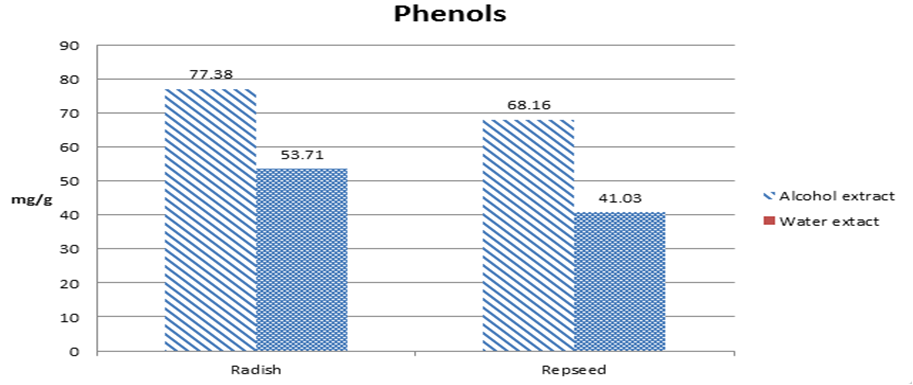
The results shown in Figure 1 showed differences between the water and alcohol extracts in the phenolic compounds of Seeds of root plants group. The amount of phenols in the radish seed was 53.71 mg / g in the water extracts. In the alcoholic extracts, the ratio of phenolic compounds in the radish seed extract was 77.38 mg / g), followed by rapeseed seed alcoholic extract, where the percentage of phenols was 68.16 mg / g while water was 41.03 mg / g. The difference in the amount of phenolic compounds between water and alcohol extracts is due to the nature of the separated compounds and to the high solvent polarity used in extraction 23. The inclusion of water extracts in small quantities of phenolic compounds compared to the high ratio of alcoholic extracts is due to the efficiency of ethanol in the extraction of polyphenols and tannins from plants. 24
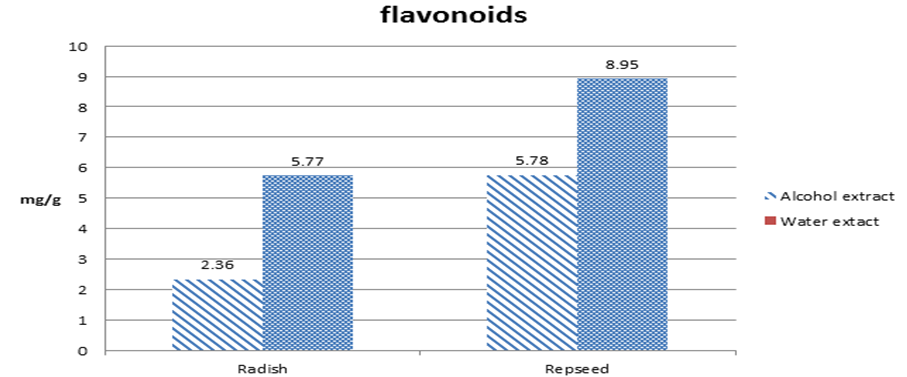
3.2. Content Total FlavonidesFigure 2 shows the amount of flavonoid compounds. There are differences between the water and alcohol extracts in the flavonoid compounds of the Seeds of root plants group. The highest concentration of flavonoids in the rapeseed seed extract was 8.95 mg / g followed by the water 5.78 mg/g while the amount of flavonoids decreased in the extract The radish seed was 5.77 mg / g and the lowest in the radish seed extract was 2.36 mg / g. The high amount of flavonoids in alcoholic extracts from water is due to the high ethanol tolerance of phenolic compounds for different types of fruits compared to other solvents 2.
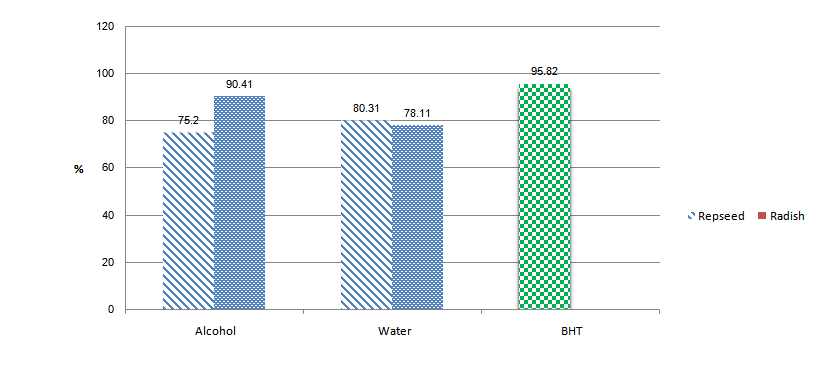
3.3. Antioxidant ActivityThe antioxidant efficacy of both hydrolytic and alcoholic extracts of rapeseed and radish seed was estimated to be antioxidants compared with BHT as shown in Figure 3. The results of the statistical analysis showed significant differences (P <0.05) between prepared and industrial antioxidant extracts and alcohol and water extracts. The antioxidant effect of the extract of radish seed was 90.41% less than the water extract 78.11%. The BHT was less than 95.82% followed by the 80.87% rapeseed extract, while the extract of the radish seed was 75.23%. The differences between water and alcohol extracts in antioxidant efficacy values may be due to the nature and concentration of phenolic compounds found in plants as well as to the type and nature of the solvent 25, 26.


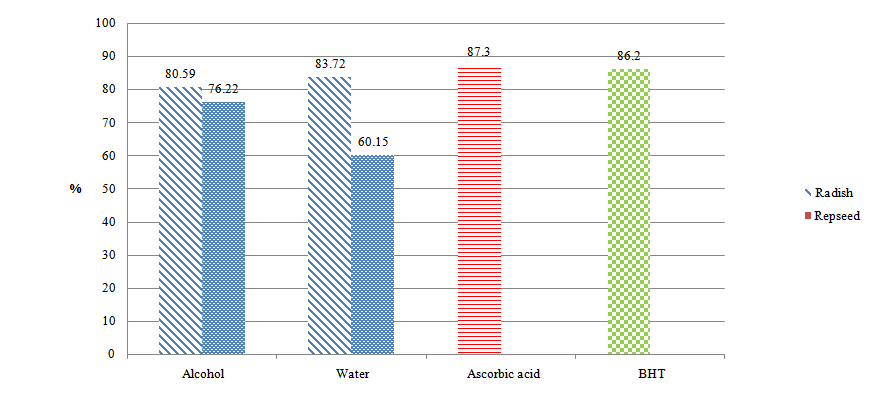
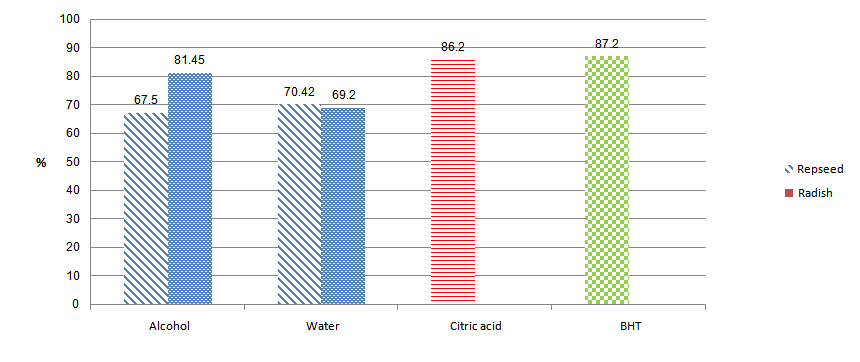
The results showed in Figure 4 the reduced strength of the extracts of water, alcohol and rapeseed and radish were compared with the industrial antioxidant BHT and ascorbic acid, as the results of the statistical analysis showed significant differences (p <0.05) between the industrial antioxidant and ascorbic acid and alcohol and water extracts, Water extract of rapeseed was 67.5%, while the radish seed was 81.45%, while in the alcoholic extracts it was 64.8% and 69.87%, respectively, and the reduction values of the extracts were lower compared with the industrial antioxidant BHT and ascorbic acid, which reached 87.2% and 86,2% respectively. The reduction power is used as a significant indicator of the effectiveness of the antioxidant, thus showing the effectiveness of the reduction force by reducing the ferric cyanide to the ferrous cyanide and containing the plant extracts on the antioxidants causing Fe+3 reduction to form Fe+2 27.
3.5. Chelating ferrous Ion Fe++Figure 5 shows the susceptibility of prepared plant extracts to the Fe++ bond in comparison with Ethylene di amine tetra acetic acid EDTA and citric acid The hydrolytic and alcoholic extracts showed the ability to bind iron ions but the alcoholic extracts showed significantly higher efficacy (p <0.05) than the water extracts the rapeseed . The water extract was 67.5%, while the alcoholic extract was 70.42 %, and the extract of radish alcohol and water 81.45% and 69.2%, respectively. However, EDTA showed a higher binding ratio of 87.2%. Citric acid showed a correlation Also Higher than water and alcohol extracts were 86.2%, because the characteristic chelating of phenolic compounds to bind heavy material ions and thus prevent free radicals 27.
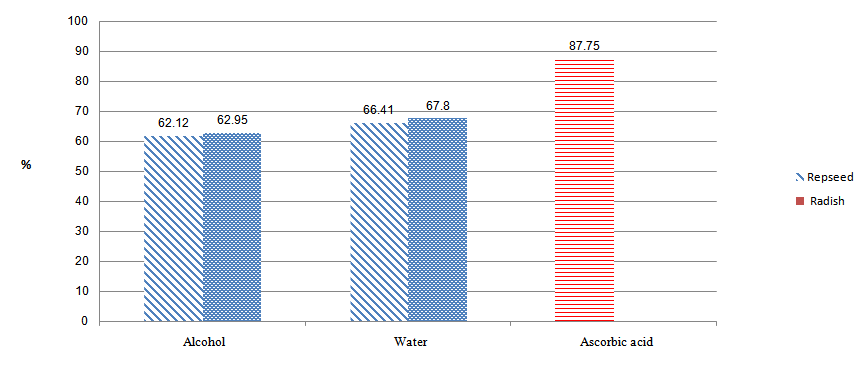
3.6. Hydrogen Peroxide ScavengingThe results in Figure 6 show the susceptibility of water and alcohol extracts to the rapeseed and radish seed to capture H2O2 and prepared at a concentration of 5 mg / mL compared to ascorbic acid. The water extract showed a significantly higher efficacy (p <0.05) than the alcoholic extracts. The water extract gave 67.8% followed by the radish 66.41%, while the alcoholic extracts reached 62.95% and 62.127% for the rapeseed. And radishes respectively. All values for the capture of hydrogen peroxide for all alcohol and water extracts were lower than ascorbic acid at 87.75%. Showed 29 the ability to capture the hydrogen peroxide Scavenging to some extracts on the compounds responsible for their ability to scavenge the free radicals.


Table 1 shows the effect Radish seed and Rapeseed extract on the peroxide values of sunflower Oil for different storage periods and at 70°C all treatments showed an effective anti-oxidant effect of sunflower oil and significantly compared to the control sample T5 and the industrial antioxidant T6, results show that all concentrations showed inhibitory efficacy to inhibit oil oxidation but to varying degrees based on concentrations antioxidant activity increased with increased concentration. there was no significant difference between the peroxide values of the highest concentration and its value with the industrial antioxidant, while there was a rapid increase in the peroxide value of the T5 control sample 18.54mEq/kg and treatments (T1, T2, T3, T4) showed a higher effect of industrial antioxidants for extract of Radish seed and Rapeseed during the 90 day storage period (5.67, 5.41, 3.52.3.48) and (7.51, 6.50. 5.38. 4.33) mEq/kg respectively, while T6 (3.52) mEq / kg) in this regard, seed plant extracts have shown high antioxidant activity due to their ability to inhibit oxidation of fat and oils for their ability to bind ferrous Fe++, which is among the compounds that are characterized by effective phenolic compounds in these seed plant extracts 30.
The results showed that the quantities of phenols extracted alcoholic higher than the extract of water from the carrot, and added to different concentrations helped to an increase (Shelf life) for vegetable oils more than 90 days at a temperature of 70°C.
Complete Randomized Design (CRD) was used to analyze all the studied factors as statistically analyzed. These factors were tested using a least significant difference (L.S.D.) at a probability level of 0.05 31.
Thanks and appreciation to the Deanship of the Faculty of Agriculture and the presidency of the Department of Food Science - University of Kufa.
| [1] | Abascal, K.; Ganora, L. and Yarnell, E. The effect of freeze–drying and its implications for botanical medicine: a review. Phytother. Res. 2005, 19, 655-660. | ||
| In article | View Article PubMed | ||
| [2] | Nickavar, B. and Abolhsani, F. A. Screening of Antioxidant properties of seven umbellferae fruits from Iran. Pak. J. pharm. Sci., 2009 (22): 30-35. | ||
| In article | |||
| [3] | Shahidi, F.; Chandrasekara, A; Millet grain phenolic and their role in disease risk reduction and helth promotion: A Review. Journal of function food. 2013 (5) 570-581. | ||
| In article | View Article | ||
| [4] | Augspole, I., Rackejeva, T., Kruma, Z., and Dimins, F. Shredded carrots quality providing by treatment with Hydrogen peroxide. In 9th Baltic Conference on “Food for Consumer Well-Being” FOOD BALT, 2014, 150-154. | ||
| In article | |||
| [5] | Ndhlala, A. R., Moyo, M., and Van Staden, J. Natural antioxidants: fascinating or mythical biomolecules Molecules, 2010, 15(10), 6905-6930. | ||
| In article | View Article PubMed PubMed | ||
| [6] | Tsouvaltzis, P., and Brecht, J. K. Changes in Quality and Antioxidant Enzyme Activities of Bunched and Topped Radish (Raphanus sativus L.) Plants during Storage at 5 or 10C. Journal of food quality,2014, 37(3), 157-167. | ||
| In article | View Article | ||
| [7] | Al-Saadi, R. K. M, The Cellular Genetic Influence of the Raw Water Extract of Radishus sativus L. Radishus L. On the Cells of the Allium Cepa L. Onions, Al-Nahrain University Journal of Science, 2013, Vol (16), No. 1. 12-19 | ||
| In article | |||
| [8] | García-Andrade, M., González-Laredo, R., Rocha-Guzmán, N., Gallegos-Infante, J., Rosales-Castro, M., and Medina-Torres, L. Mesquite leaves (Prosopis laevigata), a natural resourcewith antioxidant capacity and cardioprotection Potential. Industrial Crops and Products, 2013, (44), 336-342. | ||
| In article | View Article | ||
| [9] | Matloob, A. N.r, Ezzedine S. M. and Karim S. A, Vegetable Production, 1989 Part I, Higher Education Press1989, University of Mosul, Iraq p : 34-39. | ||
| In article | |||
| [10] | Hassan, A. A. Production of Carnivorous and Remarious Vegetables. 2003 Dar Al Arabia for Publishing and Distribution, Egypt, p. 200-205. | ||
| In article | |||
| [11] | Panouille, M.; Durand, S.; Garnier, J. F. and Thibault, E. B. Enzymatic extraction of pectin's from different plant by products. Journal Agricultural and Food Chemistry, 2003, (3)1231-1233. | ||
| In article | |||
| [12] | Farhat, M. K. (2009). Your guide to growing vegetables, fruits and herbs. Dar Al-Hakayyat for Publishing and Distribution, The Origin of Knowledge, Alexandria, Egypt, First Edition, 2009. p. 100-105. | ||
| In article | |||
| [13] | Beevi, S. S., Mangamoori, L. N., and Gowda, B. B. Polyphenolics profile and antioxidant properties of Raphanus sativus L. Natural Product Research,2012, 26(6) 557-563. | ||
| In article | View Article PubMed | ||
| [14] | Elmastas, M.; Cinkilic, S. and Aboul – Enein, H. Y. Antioxidant Capacity and Determination of Total Phenolic Compounds in Daisy (Matricaria Chamomilla, Fam. Asteraceae). World Journal of Analytical Chemistry,2015 (3) : 9-14. | ||
| In article | View Article | ||
| [15] | Moussawi, H. J. and Al-Halafi, S. A. H.. The use of some plant extracts as microbial inhibitors and natural oxidants. Basrah Agricultural Sciences 2012. (25). 826-835. | ||
| In article | |||
| [16] | Slinkard, K. and Singleton, V. L Total phenol analyses: Automation and caparison with manual methods. American. J. Enology and viticulture, 1997 (28):49-55. | ||
| In article | |||
| [17] | De Souza A., L.A., M.L.M. Carvalho, C.A.G. Crislaine Aparecida Gomes Pinto, V.Y. Kataoka and T.T.A. Silva, (2013). Deterioration of sunflower seeds during storage. Journal of Seed Science, 2013 (2): 240-247. | ||
| In article | View Article | ||
| [18] | Moreal, R.A., Singh. v., Eckhoff. S.R., Powell. M.J., Hicks. K.B and Norton. R.A. Acomparison of yield and composition of oil exctracted from corn fiber and corn fiber bran.Cereal chemistry, 1990 (76): 449-451. | ||
| In article | View Article | ||
| [19] | Lowell, B.K. The change in the peroxide values of corn and cottonseed oils under various storage conditions. J. Am. Oil. Chem. Soc. 2006 (4): 66-68. | ||
| In article | |||
| [20] | Nwobi BE, Ofoegbu O, Adesina OB. Extraction and Qualitative Assessment of African Sweet Orange Seed Oil. Afr. J. Food Agric. 2006. 6(2). | ||
| In article | View Article | ||
| [21] | Ruch, R. J.; Cheng, S.J. and Klaining, J.E.. Prevention of cytotoxicity and inhibition of intracellular, communication by antioxidant catechins isolated from Chinese green tea. The Carinogens. 1989, (10): 1003-1008. | ||
| In article | View Article PubMed | ||
| [22] | Gulcin, I. The antioxidant and radical scaving activated of black peper (piper nigrum) seeds. International Journal of Food Science and Nutrition .2005, 56(7): 491-499. | ||
| In article | View Article PubMed | ||
| [23] | Cai, Y., Z.; Luo, Q.; Sun, M. and Corke, H. Antioxidant activity and phenolic compounds of 112 traditional Chinese medicinal plants associated with anticancer. Life Sci., 2004 (74): 2157-2184. | ||
| In article | View Article PubMed | ||
| [24] | Tawaha, K., Alali, F.Q., Gharaibeh, M., Mohammad, M. and El-Elimat, T. Antioxidant activity and total phenolic content of selected Jordanian plant species. Food Chemistry, 2007. (104) 1372-1378. | ||
| In article | View Article | ||
| [25] | Kähkönen, M.P.; Hopia, A.I.; Vuorela, H.J.; Rauha, J.P.; Pihlaja, K.;Kujala, T.S and Heinonen, M. Antioxidant activity of plant extracts containing phenolic compounds. J. Agric. Food Chem. 1999, (47), No.10. 3954-3962. | ||
| In article | View Article PubMed | ||
| [26] | Meyer, A. S.; Heinonen, M. and Frankel, E. N. Antioxidant interactions of Catechin, Cyanidin, Cafeic acid, Quercetin and ellagic acid on human LDL oxidation. Food Chem., 1989 (61): 71-75. | ||
| In article | View Article | ||
| [27] | Half, H. Z. H. (2016). Extraction, purification and characterization of protein extracts from fish and shrimp residues and testing their ability to conserve minced beef. PhD thesis Faculty of Agriculture, Basrah University. 2016. | ||
| In article | |||
| [28] | Nagulendran, K. R.; Velavan, S; Maheesh, R. and Begum, V.H. In vitro antioxidant activity and total phenolic contant, Cyperus runtundus rhizomes, J. Chem, 2009 (4) 440-449. | ||
| In article | View Article | ||
| [29] | Al-Atari, R. A. A. Preparation of some plant extracts Diagnosis of their effective compounds and study their effect on the specific qualities of minced and frozen meat, frozen and frozen meat, Master Thesis University of Basra - Iraq, 2017. | ||
| In article | |||
| [30] | Roche, J., A. Bouniols, Z. Mauloungui, B. T. and Cerny M.. Management of environmental crop conditions to produce useful sunflower oil components. European Journal of Lipid Science and Technology, 2006 108(4): 287-297. | ||
| In article | View Article | ||
| [31] | GEN STAt, General Statistical Gen Stat Vol. 12, Copyright 2009 VSN International Ltd UK. | ||
| In article | |||
Published with license by Science and Education Publishing, Copyright © 2019 Adnan Wahhab Habeeb Al-Mudhafr
 This work is licensed under a Creative Commons Attribution 4.0 International License. To view a copy of this license, visit
http://creativecommons.org/licenses/by/4.0/
This work is licensed under a Creative Commons Attribution 4.0 International License. To view a copy of this license, visit
http://creativecommons.org/licenses/by/4.0/
| [1] | Abascal, K.; Ganora, L. and Yarnell, E. The effect of freeze–drying and its implications for botanical medicine: a review. Phytother. Res. 2005, 19, 655-660. | ||
| In article | View Article PubMed | ||
| [2] | Nickavar, B. and Abolhsani, F. A. Screening of Antioxidant properties of seven umbellferae fruits from Iran. Pak. J. pharm. Sci., 2009 (22): 30-35. | ||
| In article | |||
| [3] | Shahidi, F.; Chandrasekara, A; Millet grain phenolic and their role in disease risk reduction and helth promotion: A Review. Journal of function food. 2013 (5) 570-581. | ||
| In article | View Article | ||
| [4] | Augspole, I., Rackejeva, T., Kruma, Z., and Dimins, F. Shredded carrots quality providing by treatment with Hydrogen peroxide. In 9th Baltic Conference on “Food for Consumer Well-Being” FOOD BALT, 2014, 150-154. | ||
| In article | |||
| [5] | Ndhlala, A. R., Moyo, M., and Van Staden, J. Natural antioxidants: fascinating or mythical biomolecules Molecules, 2010, 15(10), 6905-6930. | ||
| In article | View Article PubMed PubMed | ||
| [6] | Tsouvaltzis, P., and Brecht, J. K. Changes in Quality and Antioxidant Enzyme Activities of Bunched and Topped Radish (Raphanus sativus L.) Plants during Storage at 5 or 10C. Journal of food quality,2014, 37(3), 157-167. | ||
| In article | View Article | ||
| [7] | Al-Saadi, R. K. M, The Cellular Genetic Influence of the Raw Water Extract of Radishus sativus L. Radishus L. On the Cells of the Allium Cepa L. Onions, Al-Nahrain University Journal of Science, 2013, Vol (16), No. 1. 12-19 | ||
| In article | |||
| [8] | García-Andrade, M., González-Laredo, R., Rocha-Guzmán, N., Gallegos-Infante, J., Rosales-Castro, M., and Medina-Torres, L. Mesquite leaves (Prosopis laevigata), a natural resourcewith antioxidant capacity and cardioprotection Potential. Industrial Crops and Products, 2013, (44), 336-342. | ||
| In article | View Article | ||
| [9] | Matloob, A. N.r, Ezzedine S. M. and Karim S. A, Vegetable Production, 1989 Part I, Higher Education Press1989, University of Mosul, Iraq p : 34-39. | ||
| In article | |||
| [10] | Hassan, A. A. Production of Carnivorous and Remarious Vegetables. 2003 Dar Al Arabia for Publishing and Distribution, Egypt, p. 200-205. | ||
| In article | |||
| [11] | Panouille, M.; Durand, S.; Garnier, J. F. and Thibault, E. B. Enzymatic extraction of pectin's from different plant by products. Journal Agricultural and Food Chemistry, 2003, (3)1231-1233. | ||
| In article | |||
| [12] | Farhat, M. K. (2009). Your guide to growing vegetables, fruits and herbs. Dar Al-Hakayyat for Publishing and Distribution, The Origin of Knowledge, Alexandria, Egypt, First Edition, 2009. p. 100-105. | ||
| In article | |||
| [13] | Beevi, S. S., Mangamoori, L. N., and Gowda, B. B. Polyphenolics profile and antioxidant properties of Raphanus sativus L. Natural Product Research,2012, 26(6) 557-563. | ||
| In article | View Article PubMed | ||
| [14] | Elmastas, M.; Cinkilic, S. and Aboul – Enein, H. Y. Antioxidant Capacity and Determination of Total Phenolic Compounds in Daisy (Matricaria Chamomilla, Fam. Asteraceae). World Journal of Analytical Chemistry,2015 (3) : 9-14. | ||
| In article | View Article | ||
| [15] | Moussawi, H. J. and Al-Halafi, S. A. H.. The use of some plant extracts as microbial inhibitors and natural oxidants. Basrah Agricultural Sciences 2012. (25). 826-835. | ||
| In article | |||
| [16] | Slinkard, K. and Singleton, V. L Total phenol analyses: Automation and caparison with manual methods. American. J. Enology and viticulture, 1997 (28):49-55. | ||
| In article | |||
| [17] | De Souza A., L.A., M.L.M. Carvalho, C.A.G. Crislaine Aparecida Gomes Pinto, V.Y. Kataoka and T.T.A. Silva, (2013). Deterioration of sunflower seeds during storage. Journal of Seed Science, 2013 (2): 240-247. | ||
| In article | View Article | ||
| [18] | Moreal, R.A., Singh. v., Eckhoff. S.R., Powell. M.J., Hicks. K.B and Norton. R.A. Acomparison of yield and composition of oil exctracted from corn fiber and corn fiber bran.Cereal chemistry, 1990 (76): 449-451. | ||
| In article | View Article | ||
| [19] | Lowell, B.K. The change in the peroxide values of corn and cottonseed oils under various storage conditions. J. Am. Oil. Chem. Soc. 2006 (4): 66-68. | ||
| In article | |||
| [20] | Nwobi BE, Ofoegbu O, Adesina OB. Extraction and Qualitative Assessment of African Sweet Orange Seed Oil. Afr. J. Food Agric. 2006. 6(2). | ||
| In article | View Article | ||
| [21] | Ruch, R. J.; Cheng, S.J. and Klaining, J.E.. Prevention of cytotoxicity and inhibition of intracellular, communication by antioxidant catechins isolated from Chinese green tea. The Carinogens. 1989, (10): 1003-1008. | ||
| In article | View Article PubMed | ||
| [22] | Gulcin, I. The antioxidant and radical scaving activated of black peper (piper nigrum) seeds. International Journal of Food Science and Nutrition .2005, 56(7): 491-499. | ||
| In article | View Article PubMed | ||
| [23] | Cai, Y., Z.; Luo, Q.; Sun, M. and Corke, H. Antioxidant activity and phenolic compounds of 112 traditional Chinese medicinal plants associated with anticancer. Life Sci., 2004 (74): 2157-2184. | ||
| In article | View Article PubMed | ||
| [24] | Tawaha, K., Alali, F.Q., Gharaibeh, M., Mohammad, M. and El-Elimat, T. Antioxidant activity and total phenolic content of selected Jordanian plant species. Food Chemistry, 2007. (104) 1372-1378. | ||
| In article | View Article | ||
| [25] | Kähkönen, M.P.; Hopia, A.I.; Vuorela, H.J.; Rauha, J.P.; Pihlaja, K.;Kujala, T.S and Heinonen, M. Antioxidant activity of plant extracts containing phenolic compounds. J. Agric. Food Chem. 1999, (47), No.10. 3954-3962. | ||
| In article | View Article PubMed | ||
| [26] | Meyer, A. S.; Heinonen, M. and Frankel, E. N. Antioxidant interactions of Catechin, Cyanidin, Cafeic acid, Quercetin and ellagic acid on human LDL oxidation. Food Chem., 1989 (61): 71-75. | ||
| In article | View Article | ||
| [27] | Half, H. Z. H. (2016). Extraction, purification and characterization of protein extracts from fish and shrimp residues and testing their ability to conserve minced beef. PhD thesis Faculty of Agriculture, Basrah University. 2016. | ||
| In article | |||
| [28] | Nagulendran, K. R.; Velavan, S; Maheesh, R. and Begum, V.H. In vitro antioxidant activity and total phenolic contant, Cyperus runtundus rhizomes, J. Chem, 2009 (4) 440-449. | ||
| In article | View Article | ||
| [29] | Al-Atari, R. A. A. Preparation of some plant extracts Diagnosis of their effective compounds and study their effect on the specific qualities of minced and frozen meat, frozen and frozen meat, Master Thesis University of Basra - Iraq, 2017. | ||
| In article | |||
| [30] | Roche, J., A. Bouniols, Z. Mauloungui, B. T. and Cerny M.. Management of environmental crop conditions to produce useful sunflower oil components. European Journal of Lipid Science and Technology, 2006 108(4): 287-297. | ||
| In article | View Article | ||
| [31] | GEN STAt, General Statistical Gen Stat Vol. 12, Copyright 2009 VSN International Ltd UK. | ||
| In article | |||







 at sunflower oil for different storage periods and storage temperature 70°C)