Products based on African breadfruit (Treculia africana) are limited by low protein content, weak gel formation and pronounced serum separation. This study evaluated whether Bambara groundnut (Vigna subterranea) protein concentrate (BPC) and okra (Abelmoschus esculentus) mucilage, added separately and together, could improve the fermentation, physical stability, rheology and sensory acceptability of a breadfruit beverage fermented with Streptococcus thermophilus and Lactiplantibacillus plantarum. Six systems were produced: an unenriched control (ABM), BPC at 1 and 2 g/100 g (1BPC, 2BPC), okra mucilage at 0.15 g/100 g (OM), and the two combinations (1BOM, 2BOM). Enrichment accelerated acidification, cutting the time to reach pH 4.50 from 10.60 h to 8.10 h and raising the maximum acidification rate from 0.310 to 0.441 pH units h−1. Mass-balance estimates indicated the beverage protein content rose from 2.08 g/100 g in ABM to approximately 3.47 g/100 g in 2BOM. The combined treatment (2BOM) gave the highest starter counts (8.74 and 8.28 log10 CFU g−1) and lactic acid (1.04 g/100 g), reduced phase separation from 24.6% to 0.8% and syneresis from 52.4% to 8.6%, and raised gel firmness more than fifteen-fold. All beverages were shear-thinning, and 2BOM showed the highest apparent viscosity (3.86 Pa·s at 10 s−1) and consistency coefficient (18.91 Pa·sn). Gel firmness correlated inversely with syneresis (r = −0.929) and apparent viscosity with phase separation (r = −0.888). Sensory scores and an exploratory principal component analysis (PC1 = 72.4% of variance) both favoured the combined systems (overall acceptability 8.3/9). Pairing a legume protein concentrate with a small amount of okra mucilage therefore produces complementary effects, protein driving fermentation and gel formation and mucilage governing water retention, yielding a stable, well-liked plant-based fermented beverage suitable for smallholder and small-scale industrial production.
Fermentation remains one of the most accessible and economically important microbial technologies for improving the safety, shelf life, nutritional value and palatability of foods across sub-Saharan Africa, where refrigeration and industrial preservation are frequently unavailable 1, and traditional fermented foods continue to play this role in Nigeria today 2. Lactic acid bacteria (LAB) dominate many of these processes, lowering pH through the conversion of fermentable carbohydrates to lactic acid and generating the flavour and texture attributes that consumers associate with quality 3. Interest in non-dairy fermented beverages has grown steadily, driven by lactose intolerance, milk-protein allergy and demand for sustainable protein, renewing attention on indigenous plant substrates that can be fermented with defined starter cultures to yield yoghurt-type products 4 5. Legume-based extracts are particularly promising, since they ferment readily with LAB and can serve as carriers of live cultures and prebiotic constituents 6 7.
African breadfruit (Treculia africana Decne) is a leguminous tree seed widely consumed in southern Nigeria, valued as a low-cost source of dietary protein and energy, yet it remains an underutilised food-security crop 8 9. Its seeds are rich in carbohydrate and contain appreciable protein and lipid, with reported protein contents of roughly 13 to 23 g/100 g on a dry basis 10 11, and fermentation and germination have long been used to lower antinutrients and improve nutritional and organoleptic quality 12 13. Breadfruit milk itself, however, remains an underexploited beverage: its low soluble-protein content limits the formation of a coherent acid gel, so fermented breadfruit systems tend to be thin, weakly structured and prone to rapid serum separation, the same graininess, high syneresis and poor consistency that constrain plant-based fermented beverages more generally 14.
Two complementary strategies correct such defects. Protein enrichment exploits acid-induced protein aggregation as the primary structural network of a fermented gel; raising protein content increases gel firmness, water-holding capacity and viscosity, properties that correlate positively with consumer liking 15. Bambara groundnut (Vigna subterranea), an underutilised, drought-tolerant African legume, is an attractive local protein source: alkaline extraction followed by isoelectric precipitation yields concentrates of high protein content with good water absorption, emulsifying capacity and gelation 16 17 18 19, and because vicilin, its major storage protein, governs the strength of its acid- and heat-set gels, the concentrate is a plausible fortificant here 20. The second strategy, hydrocolloid addition, uses okra (Abelmoschus esculentus) mucilage, an anionic, pectic polysaccharide rich in galacturonic acid that strengthens protein networks, increases serum retention and reduces whey separation in fermented products 21 22 23, an effect shared by other plant mucilages that lower syneresis while raising viscosity and water-holding capacity 24 25 26.
Combining a plant protein concentrate with a stabilising hydrocolloid is not itself a new concept: this general approach has already been explored in soy yoghurt fortified with gellan gum 27 and in coconut-milk yoghurt analogues enriched with pea protein isolate and starch 28, among other dairy-alternative systems. What remains unexamined is how a legume protein concentrate and a small quantity of an indigenous African mucilage behave when combined in an indigenous breadfruit substrate, and whether their effects on the resident starter community, acidification kinetics and gel structure are additive, synergistic or antagonistic. The interaction is not trivial, since added protein supplies both structure and additional nitrogen for LAB growth, whereas an anionic mucilage may accelerate acid gelation and bind water yet, at higher levels, interfere with protein-protein association. The present study therefore evaluated the separate and combined effects of Bambara protein concentrate (BPC, 1 and 2 g/100 g) and okra mucilage (0.15 g/100 g) on a breadfruit beverage fermented with a defined S. thermophilus and L. plantarum co-culture, characterising acidification kinetics, starter viability, substrate utilisation and lactic acid production, physical stability, gel firmness and flow behaviour, sensory acceptability, and the correlation and principal-component structure linking these instrumental and sensory properties. We hypothesised that protein enrichment and mucilage addition make distinct but complementary contributions that are maximised when the two are applied together, with the novelty of this work lying in its indigenous African substrate and functional ingredients rather than in the protein-hydrocolloid concept itself.
African breadfruit seeds, Bambara groundnut seeds and fresh mature okra pods were obtained from foodstuff traders in Orie Ugba market in Umuahia, Abia State, Nigeria. Materials were sorted manually to remove damaged seeds, stones, stalk fragments and other extraneous matter. African breadfruit served as the base substrate, Bambara groundnut as the source of protein concentrates and okra as the source of mucilage. A food-grade starter culture was used for fermentation; sodium hydroxide and hydrochloric acid were used for protein extraction and pH adjustment. All reagents were of analytical grade.
2.2. Preparation of African Breadfruit MilkSeeds were washed three times and blanched at 90°C for 8 min to loosen the seed coats and reduce the initial microbial load. After manual dehulling, the seeds were soaked in potable water (1:4 w/v) for 8 h, rinsed and wet-milled with water (1:5 w/v). The slurry was filtered through a double layer of sterile muslin cloth, homogenised at 10,000 rpm for 3 min and adjusted to 11 g/100 g total solids. The product was designated African breadfruit milk (ABM).
2.3. Production of Bambara Groundnut Protein Concentrate (BPC)Bambara groundnut seeds were cleaned, dried and milled to flour, which was dispersed in distilled water (1:10 w/v). The dispersion was adjusted to pH 9.0 with 1 mol L−1 NaOH, stirred for 60 min at room temperature and centrifuged at 5,000 ×g for 20 min. The protein-rich supernatant was adjusted to pH 4.5 with 1 mol L−1 HCl to precipitate protein at its isoelectric point; after 30 min the suspension was re-centrifuged (5,000 ×g, 20 min). The precipitate was washed twice, neutralised to pH 7.0, dried at 45°C, milled and stored in airtight containers at 4°C. The concentrate contained 71.6 ± 1.2 g/100 g protein.
2.4. Extraction of Okra MucilageWashed okra pods were cut longitudinally, sliced to about 5 mm, mixed with distilled water (1:10 w/v) and extracted at 50°C for 2 h with intermittent stirring. The extract was filtered through muslin cloth and centrifuged (4,000 ×g, 15 min). Mucilage was precipitated from the supernatant with three volumes of food-grade ethanol, recovered, dried at 45°C, milled to a powder and stored in sealed containers.
2.5. Experimental FormulationsSix beverage systems were produced (Table 1) to separate the individual and combined effects of protein enrichment and mucilage addition. The formulation levels were selected a priori as a constrained screening range rather than through formal statistical optimisation. BPC was incorporated at 1 and 2 g/100 g to provide distinct low and high protein-enrichment levels while restricting the addition of protein concentrate to no more than 2% of the formulation; based on its measured protein content of 71.6 g/100 g, these levels supplied approximately 0.716 and 1.432 g additional protein, respectively, per 100 g formulation before final mass adjustment. Okra mucilage was incorporated at 0.15 g/100 g as a low stabiliser concentration intended to improve water retention while limiting excessive viscosity, stringiness and flavour masking; the selected level was slightly below the 0.2 g/100 g okra-polysaccharide concentration previously associated with the most favourable sensory acceptance in set yoghurt 21. The experimental design was therefore intended to compare the separate and combined effects of modest protein enrichment and low-dose mucilage stabilisation, rather than to identify a mathematical optimum.
Streptococcus thermophilus ATCC 19258 (strain NCDO 573) and Lactiplantibacillus plantarum ATCC 14917 were propagated separately in M17 and MRS broths, respectively, at 37°C for 18–24 h. The cultures were centrifuged at 5,000 ×g for 10 min at 4°C. The cell pellets were washed twice with sterile 0.85% sodium chloride solution and resuspended in the same diluent.
Each suspension was adjusted to approximately 1 × 10⁸ CFU mL−1 using a strain-specific relationship between OD600 and viable cell concentration established from preliminary calibration cultures. The adjusted concentrations were confirmed retrospectively by serial dilution and plate enumeration on M17 agar for S. thermophilus and MRS agar for L. plantarum; plate counts, rather than OD600 alone, were used as the definitive measure of inoculum viability. The standardised suspensions were mixed in equal volumes immediately before inoculation. Each formulation received 2% v/v total mixed inoculum, equivalent to 1% v/v of each starter and an initial concentration of approximately 6 log10 CFU mL−1 for each organism in the beverage.
Each formulation was transferred into sterile glass containers, heat-treated at 85°C for 15 min with continuous agitation, cooled to 37°C and inoculated with the mixed culture as described above. Fermentation was conducted at 37°C for up to 12 h, with pH monitored at 30-min intervals. Fermented samples were cooled to 6°C and analysed within 24 h. Three independent fermentation batches were prepared per formulation.
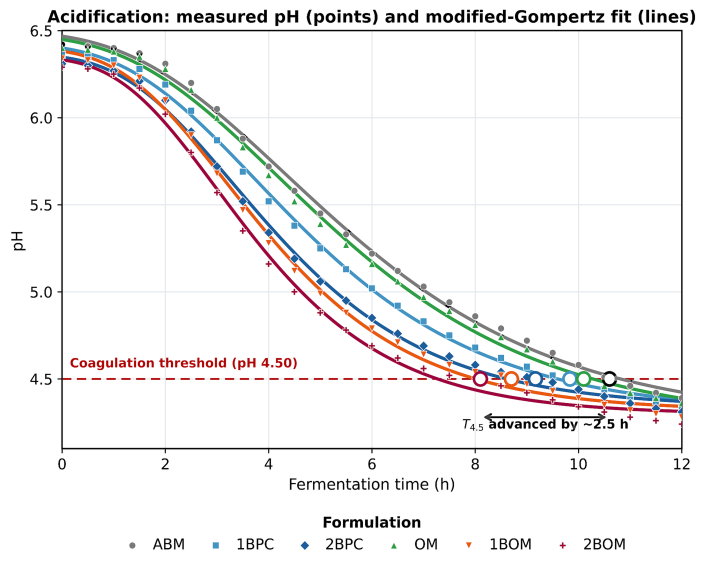
2.7. Acidification KineticsFermentation curves were constructed from pH measurements against time. The initial pH (pH0), final pH (pHf), acidification lag time (λ), maximum pH-reduction rate (μmax) and the time to reach pH 4.50 (T4.5) were obtained from the fitted curves. Sigmoidal pH-decline data of this type are conventionally described by reparameterised (modified Gompertz-type) functions 29 30, from which λ and μmax are extracted. The modified-Gompertz function was selected in preference to the logistic, Baranyi or Weibull models because it is the most widely applied descriptor of lactic-acid-bacterial pH-decline kinetics in fermented plant substrates and because its explicit lag-phase and maximum-rate parameters map directly onto the practical acidification behaviour of interest here; the excellent fits obtained (R2 = 0.997–0.999, Table 3) did not justify a more complex alternative.
2.8. Microbiological AnalysisTenfold serial dilutions were prepared in sterile 0.1% peptone water. S. thermophilus was enumerated on M17 agar and L. plantarum on MRS agar; counts were expressed as log10 CFU g−1. All determinations were made in triplicate.
2.9. Proximate, Sugar and Organic-acid AnalysesRaw breadfruit seeds and breadfruit milk were analysed in triplicate for moisture, crude protein, crude fat, ash, crude fibre and carbohydrate (by difference). Residual maltose and glucose were quantified using an Agilent 1260 Infinity II liquid chromatograph equipped with a refractive-index detector and a Hi-Plex Ca carbohydrate column; HPLC-grade water was used as the mobile phase at 0.6 mL min−1, with samples clarified and filtered through 0.45 µm membranes before injection. Titratable acidity was determined by titration against 0.1 mol L−1 NaOH and expressed as g lactic acid equivalent per 100 g. Free amino nitrogen was determined colorimetrically before and after fermentation and expressed as mg α-amino nitrogen L−1.
2.10. Physical Stability: Phase Separation and SyneresisFor phase separation, 25 mL of each fermented sample was held undisturbed in graduated tubes at 6°C for 24h; separation was calculated as the height of separated serum relative to total sample height (×100). For syneresis, 30 g of sample was centrifuged (1,000 ×g, 10 min, 6°C) and the expelled serum weighed; syneresis was expressed as the mass of separated serum relative to the initial sample mass (×100). Phase separation used three independent batches; syneresis was measured in triplicate.
2.11. Rheology and Gel FirmnessFlow behaviour was measured with an Anton Paar MCR 302 controlled-stress rotational rheometer fitted with a CC27 concentric-cylinder measuring system (Anton Paar GmbH, Graz, Austria). Samples were equilibrated at 20°C for 5 min, and the shear rate was increased logarithmically from 0.1 to 100 s−1. Flow data were fitted to the power-law model τ = Kγ̇n, where τ is shear stress, K the consistency coefficient, γ̇ the shear rate and n the flow behaviour index; apparent viscosity was compared at 10 s−1. The power-law model was preferred over the Herschel-Bulkley, Cross or Carreau models because preliminary inspection of the flow curves showed no measurable yield stress and because the power-law fits obtained across the shear-rate range tested were excellent (R2 ≥ 0.992, Table 9); the additional parameters of the more complex models were not considered justified for these systems. Gel firmness was assessed with a TA.XTplusC Texture Analyser fitted with a P/20, 20 mm cylindrical probe (Stable Micro Systems Ltd., Surrey, UK) by penetrating 20 mL samples (stored at 6°C for 24 h) at 1 mm s−1 to 10 mm depth; the maximum compression force was recorded and the initial slope of the force-distance curve taken as the firmness index. Rheology was performed in triplicate and firmness in quadruplicate.
2.12. Sensory EvaluationSixty untrained adult consumer panellists were recruited from the university community, comprising 30 men and 30 women. Age and habitual consumption frequency were not collected as separate demographic variables. Eligibility required previous consumption of fermented or plant-based beverages and the absence of any known allergy or intolerance to African breadfruit, Bambara groundnut or okra.
A balanced randomised complete-block design was used, with each panellist constituting one block and evaluating all six formulations. Panellists were stratified by sex and randomly assigned to one of six Williams presentation sequences, with ten panellists (five men and five women) assigned to each sequence; this arrangement ensured that each formulation appeared equally often in every serving position and preceded every other formulation equally often, balancing first-order carry-over effects. Samples were prepared and coded by a researcher who did not participate in scoring. Approximately 25 mL of each beverage was served at 8 ± 2°C in identical transparent cups bearing randomly generated, non-consecutive three-digit codes that had no relation to formulation identity or presentation position, and the code key was withheld from panellists during evaluation. Panellists were seated separately, instructed not to discuss the samples, and provided with drinking water for palate cleansing between successive samples. Appearance, aroma, taste, mouthfeel, aftertaste and overall acceptability were scored on a nine-point hedonic scale ranging from 1 (dislike extremely) to 9 (like extremely).
Written informed consent was obtained from all participants before sensory evaluation. Participation was voluntary, and panellists were informed that they could decline to participate or withdraw at any stage without penalty. Samples consisted of small portions of beverages prepared from ordinary food-grade ingredients under hygienic laboratory conditions; no invasive procedure was performed and no identifying or sensitive personal information was collected. The study was therefore considered a voluntary, anonymous consumer-acceptance test presenting no more than minimal risk to participants, and on this basis formal institutional ethics-committee approval was not sought and no ethics approval reference number was issued. The study followed the ethical principles of informed consent, confidentiality, voluntary participation and the right to withdraw consistent with the Declaration of Helsinki.
2.13. Refrigerated-storage ViabilityAliquots from each independently fermented formulation were transferred aseptically into sterile, sealed containers and stored at 6°C for 28 days. Viable counts of S. thermophilus and L. plantarum were determined on days 0, 14 and 28 using M17 and MRS agars, respectively. The storage assessment was limited to starter-culture viability; pH, titratable acidity, physical stability, rheological properties, gel firmness and sensory acceptability were not monitored longitudinally during the storage period.
2.14. Data Modelling and Statistical AnalysisAcidification data were modelled by fitting the measured pH-time series of each fermentation to a reparameterised (modified Gompertz) function for a descending response:
pH(t) = pH0 − ΔpH · exp{ −exp[ (μmaxe / ΔpH)(λ − t) + 1 ] }
where pH0 is the initial pH, ΔpH the asymptotic pH reduction, μmax the maximum acidification rate (pH units h−1), λ the lag time (h), t the fermentation time (h) and e Euler's number. The lag time and μmax were obtained from the fitted parameters, and the coefficient of determination (R2) and root-mean-square error (RMSE) were calculated directly from the residuals. The time to reach pH 4.50 (T4.5) was treated as an observed quantity obtained by linear interpolation between the measured pH points rather than read from the fitted curve.
All other measurements are expressed as mean ± standard deviation and were analysed by one-way analysis of variance with means separated by Tukey's HSD test at P < 0.05. Model residuals were examined for normality using residual Q-Q plots and the Shapiro-Wilk test, and homogeneity of variance was assessed using the Brown-Forsythe or Levene test. Independence was ensured by analysing independent fermentation batches as the experimental units and averaging technical replicates before inferential analysis. Where these assumptions were not met, data were suitably transformed or analysed using Welch's ANOVA followed by Games-Howell multiple comparisons.
Because every panellist evaluated all six beverages, the sensory scores were analysed with a repeated-measures (mixed-effects) model:
Yij = μ + Fi + Pj + εij
where Yij is the hedonic score, μ the overall mean, Fi the fixed effect of formulation, Pj the random effect of panellist and εij the residual error; formulation means were compared by Tukey-adjusted pairwise tests. Relationships among the physicochemical, microbiological and sensory variables were examined by Pearson correlation. Because correlations computed on the six formulations rest on a small sample (n = 6), they were treated as exploratory associations only and were complemented by correlations computed on the underlying replicate-level data (n = 18). Principal component analysis (PCA) was likewise used only as an exploratory ordination of the associations between formulations, instrumental properties and sensory attributes, given the small number of formulation-level observations relative to the number of variables.
All formulations acidified progressively over the 12 h fermentation, but enrichment consistently accelerated the process (Table 2; Figure 1). The measured pH-time series were closely described by the modified-Gompertz model, which fitted the data well across all systems (R2 = 0.997–0.999; RMSE ≤ 0.040 pH units; Table 3), so that the measured points and fitted curves in Figure 1 coincide closely. The initial pH ranged narrowly from 6.29 to 6.42 and the final pH from 4.24 to 4.39. Protein addition shortened the lag phase and raised the maximum acidification rate in a dose-dependent manner, and the combined systems acidified fastest of all. The lag time fell from 2.10 h in ABM to 1.51 h in 2BOM, while μmax rose from 0.310 to 0.441 pH units h−1. The time to reach pH 4.50, obtained by interpolation between measured pH points, fell correspondingly: 2BOM crossed the coagulation threshold in 8.10 h, approximately 2.5 h earlier than the unenriched control (10.60 h).

Raw breadfruit seeds were carbohydrate-rich (61.99 g/100 g dry matter) with moderate protein (18.74 g/100 g) and lipid (10.82 g/100 g) (Table 4). The derived breadfruit milk contained 11.24 g/100 g total solids, 2.08 g/100 g protein, 1.34 g/100 g fat and 7.50 g/100 g carbohydrate, confirming the relatively low soluble-protein baseline that motivated fortification. The Bambara groundnut concentrate supplied 71.6 g/100 g protein.
Because BPC and okra mucilage were incorporated as measured masses of known composition, their combined effect on the proximate composition of the finished beverages could be estimated by mass balance, even though the six fortified formulations were not individually re-analysed by proximate assay (Table 5). Calculated mass-balance estimates indicated that BPC enrichment increased the protein content of the beverage from 2.08 g/100 g in ABM to approximately 2.78 and 3.47 g/100 g in the 1 and 2 g/100 g BPC formulations, respectively. Okra mucilage produced little change in estimated protein, fat or ash content but slightly increased carbohydrate solids. The fully enriched 2BOM formulation was estimated to contain 3.47 g/100 g protein, an increase of approximately 67% relative to the unenriched ABM.
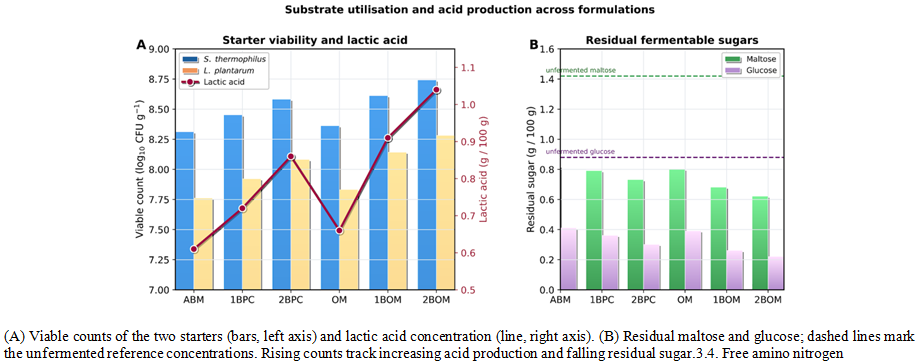
Both starters remained viable in every system, and viability increased with protein level (Table 6; Figure 2). S. thermophilus rose from 8.31 log10 CFU g−1 in fermented ABM to 8.74 in 2BOM, and L. plantarum from 7.76 to 8.28. The higher counts were accompanied by lower residual maltose and glucose and by progressively greater lactic acid accumulation, which reached 1.04 g/100 g in 2BOM against 0.61 g/100 g in the control. Residual sugars in all fermented systems were well below the unfermented values (1.42 g/100 g maltose; 0.88 g/100 g glucose), indicating extensive substrate consumption.


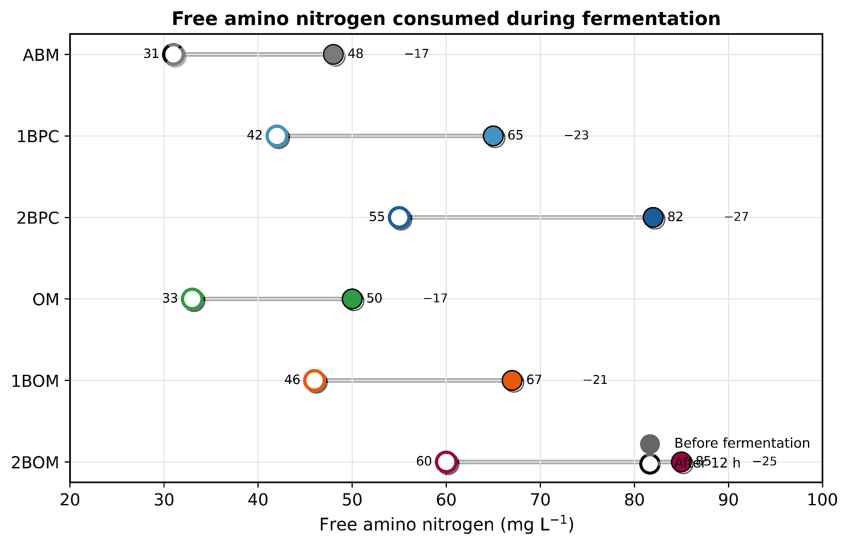
Enrichment with Bambara protein concentrate raised the initial free amino nitrogen (FAN) pool in a dose-dependent manner, from 48 mg L−1 in ABM to 85 mg L−1 in 2BOM (Table 7; Figure 3). FAN declined during fermentation in every system, consistent with assimilation of amino nitrogen by the growing starters, but remained higher in the BPC-enriched beverages both before and after fermentation. The greater nitrogen availability coincided with the higher starter counts and faster acidification recorded above, providing direct support for a nitrogen-nutrition contribution to the enhanced fermentation of the protein-enriched systems.
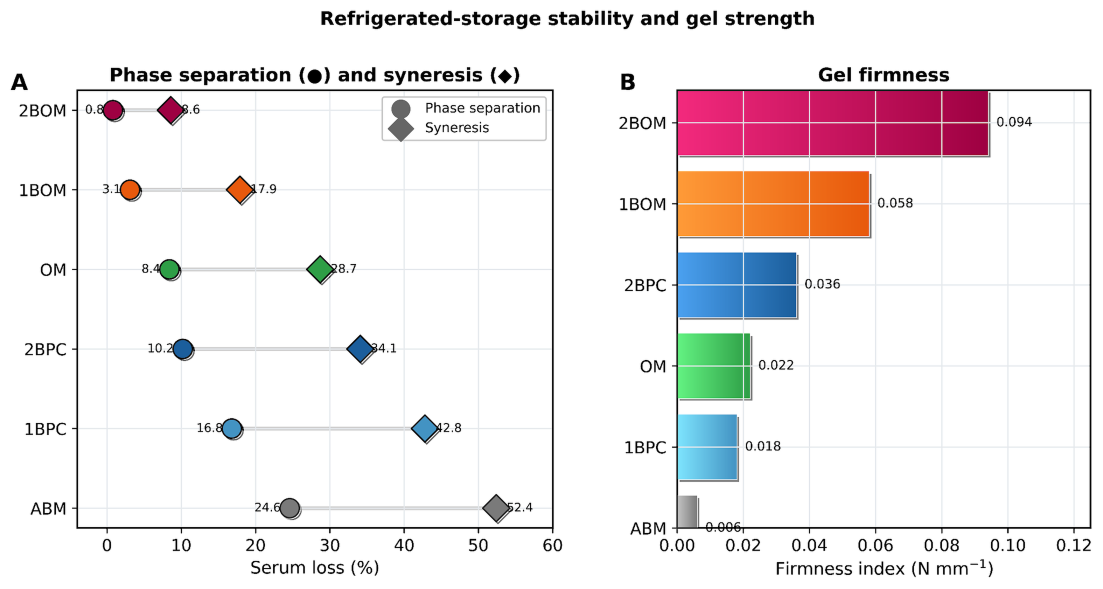
The unenriched beverage was the least stable, losing 24.6% of its volume to phase separation and 52.4% of its mass to syneresis after 24 h at 6°C (Table 8; Figure 4). Protein enrichment reduced both, and okra mucilage produced a larger reduction for a given protein level, consistent with a water-binding rather than purely structural role. The combined 2BOM system was the most stable, with phase separation of only 0.8% (a 96.7% reduction relative to the control) and syneresis of 8.6%. Gel firmness followed the opposite trend, rising more than fifteen-fold from 0.006 N mm−1 in ABM to 0.094 N mm−1 in 2BOM, with the maximum penetration force increasing in parallel.
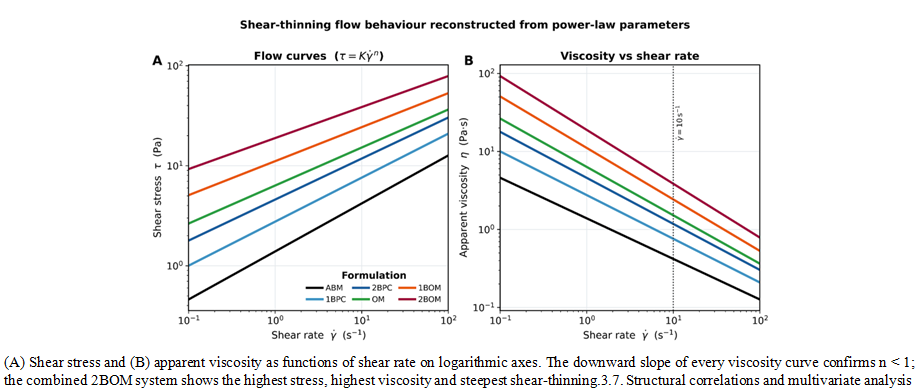
All beverages were non-Newtonian and shear-thinning, with flow behaviour indices below unity and excellent power-law fits (R2 ≥ 0.992) (Table 9; Figure 5). Protein raised the consistency coefficient, and the protein-mucilage combination produced a stronger effect than either component alone. Apparent viscosity at 10 s−1 increased almost tenfold from 0.42 Pa·s in ABM to 3.86 Pa·s in 2BOM, while n decreased from 0.48 to 0.31, indicating progressively more pronounced shear-thinning. The consistency coefficient, recomputed to be self-consistent with the measured apparent viscosity and flow index, rose from 1.39 to 18.91 Pa·sn across the same series.
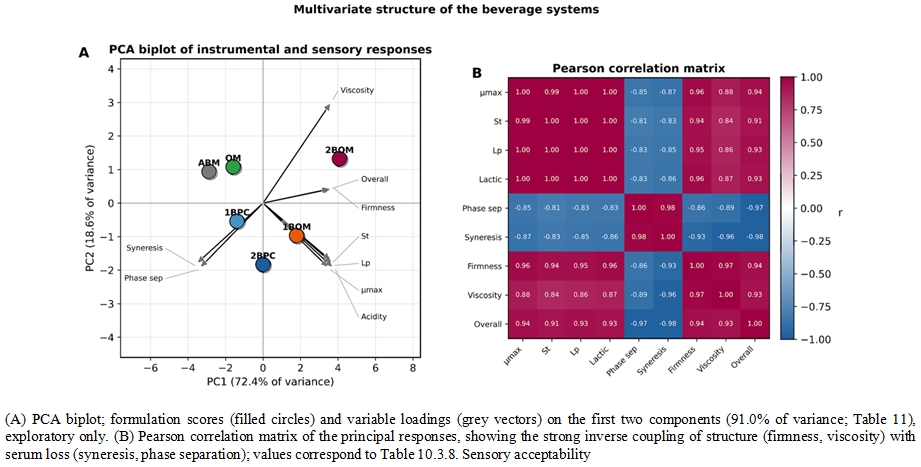
Pearson analysis of the six formulation means revealed strong, coherent relationships among the structural variables (Table 10; Figure 6B). Gel firmness was inversely related to syneresis (r = −0.929, P = 0.0073) and apparent viscosity to phase separation (r = −0.888, P = 0.0181), so that systems with stronger structure retained more of their aqueous phase. Lactic acidity was very strongly and inversely related to the time required to reach pH 4.50 (r = −0.994, P = 0.00006), and added protein level was positively related to viable L. plantarum counts (r = +0.867, P = 0.0254). Because these coefficients rest on only six means, they are reported as exploratory associations only and are not the basis for confirmatory inference; correlations recomputed on the underlying replicate-level data (n = 18) were of comparable magnitude and direction (−0.918, −0.881, −0.955 and +0.847, respectively), which supports the pattern without establishing statistical confirmation.
Principal component analysis, used here as an exploratory ordination rather than a confirmatory technique given the small number of formulation-level observations, condensed this structure into two components that together accounted for 91.0% of the total variance (PC1 = 72.4%, PC2 = 18.6%; Table 11; Figure 6A). All fermentation and structure variables loaded strongly and positively on PC1, whereas phase separation and syneresis loaded negatively, consistent with PC1 representing a single “well-formed, water-holding, fast-fermenting gel” axis; PC2 was dominated by apparent viscosity. The formulation scores separated the well-structured, fast-fermenting, highly acceptable combined systems (1BOM, 2BOM) from the weakly structured control along PC1, with the okra-only system (OM) in an intermediate position, stabilised physically but without the fermentation and textural gains of the combined treatments.
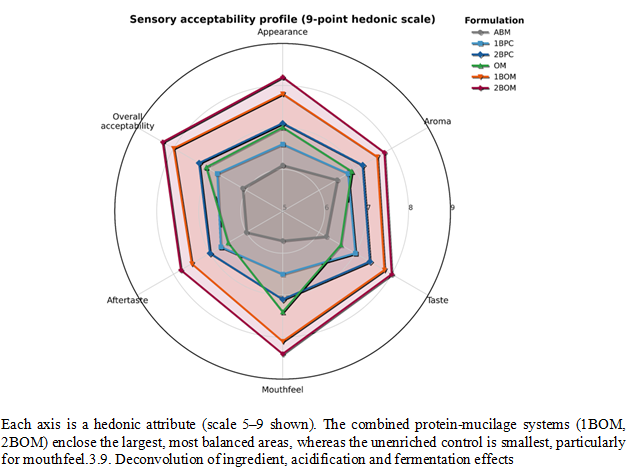
Formulations differed clearly in sensory quality (Table 12; Figure 7). The unenriched beverage received the lowest mouthfeel score (5.7), matching its low viscosity, weak structure and high serum separation. Protein and mucilage each improved specific attributes, with protein enhancing taste and body and mucilage enhancing mouthfeel, and the combined systems performed best across the board. 2BOM achieved the highest scores for appearance (8.2), taste (8.0), mouthfeel (8.4) and overall acceptability (8.3), statistically indistinguishable from 1BOM. The radar profile (Figure 7) shows the combined systems enclosing the largest area, indicating balanced, uniformly high acceptance.
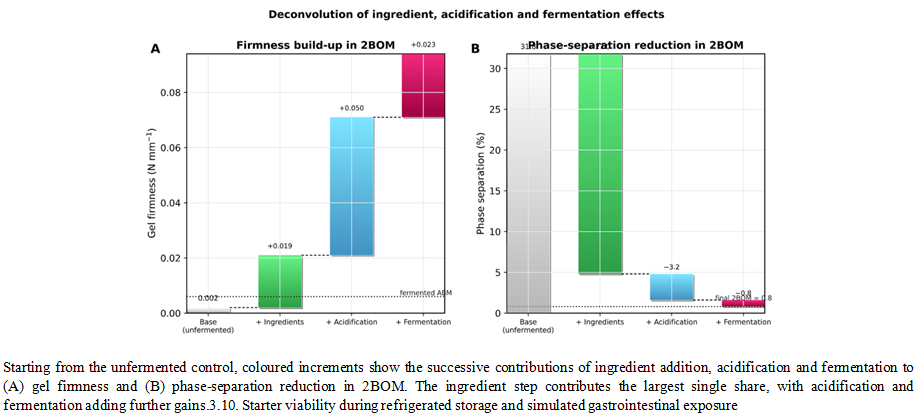
To separate the contributions of the added ingredients, of acidification and of microbial fermentation to the structural gains, the control and the fully enriched system were each examined at three stages: unfermented (U), chemically acidified without microbial metabolism (A) and fully fermented (F) (Table 13; Figure 8). In the control, all three stages produced only small changes, confirming the intrinsically weak structure of unenriched breadfruit milk. In 2BOM, the ingredient step alone accounted for the largest single share of the improvement, raising firmness and viscosity and sharply lowering phase separation and syneresis relative to the control, while acidification and fermentation each contributed further, progressive gains.


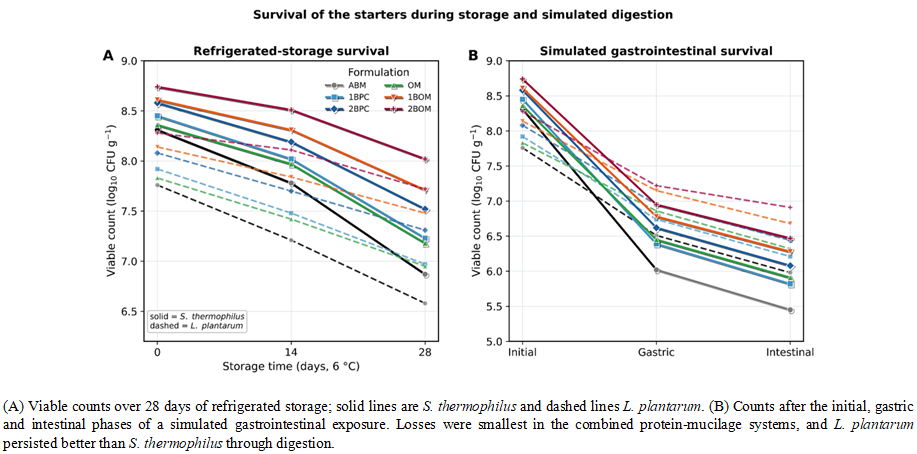
The refrigerated-storage assessment focused specifically on starter-culture survival and should not be interpreted as a complete shelf-life evaluation. Viable counts of both organisms declined progressively during the 28-day storage period, although the extent of decline differed among formulations (Table 14; Figure 9A). The combined protein-mucilage systems retained the highest counts throughout, with 2BOM maintaining 8.02 log10 CFU g−1 of S. thermophilus and 7.72 log10 CFU g−1 of L. plantarum at day 28, whereas the unenriched ABM showed the greatest losses. On sequential exposure to simulated gastric and intestinal conditions, both organisms lost viability at each phase but remained detectable at the end of the intestinal phase in every system (Table 15; Figure 9B). Survival was highest in 2BOM, indicating that the protein-mucilage matrix afforded greater protection than the unenriched beverage, and L. plantarum showed greater persistence through the gastrointestinal sequence than S. thermophilus. These survival data indicate favourable matrix protection but do not, on their own, establish a probiotic effect, which would require species- and strain-level confirmation and demonstration of a documented health benefit.
The central outcome of this study is that a legume protein concentrate and a small quantity of okra mucilage act through distinct but complementary mechanisms, and that their combination produces a breadfruit beverage that is simultaneously faster-fermenting, more stable, firmer and more acceptable than either single intervention. As established in the Introduction, combining a plant protein with a stabilising hydrocolloid is not itself novel 27 28; the contribution here lies in applying the approach to an indigenous breadfruit substrate with indigenous African functional ingredients. Because breadfruit milk supplies only about 2 g/100 g protein, the unenriched control formed the weak, syneresis-prone gel that is characteristic of low-protein plant substrates 14; the interventions tested here directly address that structural deficit. Calculated mass-balance estimates indicate this deficit was partly corrected: beverage protein content rose from 2.08 g/100 g in ABM to approximately 3.47 g/100 g in 2BOM, a roughly 67% increase. Because the six formulations were not individually re-analysed by proximate assay, this figure should be read as an ingredient-based estimate rather than a measured value, and direct analytical confirmation is recommended before the nutritional claim is used in product labelling or marketing.
Enrichment accelerated acidification, shortening the lag phase and raising μmax so that the fully enriched system reached pH 4.50 about 2.5 h sooner than the control. The dose-dependent response to Bambara protein is consistent with the nutritional dependence of lactic acid bacteria on an external supply of amino acids and peptides: unlike sugars, the free-amino-nitrogen pool of a plant substrate is readily limiting, and supplementation with a protein concentrate can relieve this constraint and support additional cell generations 3 31. This interpretation is now supported directly: BPC enrichment raised the initial free amino nitrogen pool in a dose-dependent manner, a substantial fraction of that pool was consumed during fermentation, and the residual nitrogen remained higher in the enriched systems, tracking their higher starter counts. The parallel rise in viable counts of both starters and the positive correlation between protein level and L. plantarum count are therefore consistent with enhanced proteolytic nutrition rather than mere coincidence. Proteolytic lactic acid bacteria that release peptides and free amino acids are known to raise acidification rates and to sustain the growth of co-cultured partner strains, and the growth of S. thermophilus in particular depends on this kind of nitrogen sharing 32. The greater lactic acid accumulation and lower residual sugars in the enriched systems reflect this more vigorous, homofermentative-type metabolism, in agreement with kinetic studies of L. plantarum in which growth, acid production and substrate depletion move together 33.
Okra mucilage on its own advanced acidification only modestly, yet it was the single most effective agent for suppressing serum loss at a given protein level. This dissociation, large stability gains alongside small kinetic gains, points to a physical, water-structuring mechanism rather than a nutritional one. Okra mucilage is an anionic, galacturonic-acid-rich pectic polysaccharide, and such polysaccharides reduce syneresis in fermented gels by binding water, raising continuous-phase viscosity and interacting electrostatically with the positively charged regions of the developing protein network 21 22 23. Plant proteins other than soy generally have poor gelling ability on their own, and reviews of plant-based yoghurt gel formation identify exactly this combination of grainy texture, high syneresis and poor consistency as the central defect that hydrocolloid addition is intended to correct 34. The same water-retaining behaviour has been documented for jujube and other seed mucilages, which lower syneresis while increasing water-holding capacity and viscosity 24, and for charged commercial polysaccharides whose anionic members most effectively strengthen the gel and improve water retention 25 26. The intermediate position of the okra-only system in the PCA is therefore expected: mucilage repairs the water-holding defect without supplying the protein network that governs firmness and mouthfeel.
The combination captured both effects. The steep, inverse correlations between firmness and syneresis (r = −0.929) and between apparent viscosity and phase separation (r = −0.888), though based on only six formulation means and therefore exploratory, indicate that a single underlying construct, namely the strength and water-holding capacity of the acid-set network, drove most of the physical behaviour, which is why PC1 alone explained 72.4% of the variance. In the combined systems, the additional protein raised the density of the aggregating network and hence firmness and viscosity, consistent with the vicilin-governed gelation that dominates the structural behaviour of Bambara groundnut protein 20, while the mucilage filled and immobilised water within that network. The net result was the near-elimination of phase separation (0.8%) and a fifteen-fold gain in firmness. This complementary protein-plus-hydrocolloid strengthening mirrors observations in fortified dairy and plant yoghurts, where combining protein enrichment with a stabilising polysaccharide yields firmer, more viscous, less watery gels than either alone, and where firmness, viscosity and consistency coefficient are the compositional variables most strongly linked to consumer liking 14 15.
Decomposing the fully enriched system into its unfermented, acidified and fermented stages clarified where this structure originates. The addition of protein and mucilage alone, before any pH change, accounted for the largest single share of the improvement in firmness, viscosity and serum retention, establishing a pre-formed matrix that the subsequent acid-set gelation and fermentation then consolidated in progressive, additive increments. In the unenriched control the same three steps produced only marginal changes. This staged analysis supports the interpretation that the ingredients set the structural template while acidification and microbial metabolism refine it, and it explains why neither intervention alone reproduced the performance of the combination.
The rheological data reinforce this picture. Every beverage was shear-thinning (n < 1), and enrichment simultaneously raised the consistency coefficient and lowered n, signifying a more structured, weak-gel fluid whose apparent viscosity falls more sharply under shear. Pseudoplasticity of this kind arises from the progressive breakdown of protein-polysaccharide associations as shear increases and is generally regarded as desirable, since it combines a thick, coating body at rest with easy flow and flavour release in the mouth 35. The very low flow index of 2BOM (0.31) and its high consistency coefficient (18.91 Pa·sn) are consistent with the firm, cohesive gel indicated by penetration testing and with its superior mouthfeel score, and align with reports that added protein and anionic polysaccharides drive plant-based yoghurt systems towards lower n and higher K 21.
From a preservation standpoint, faster acidification and greater acid output are practically valuable. A shorter time to pH 4.5 reduces the window during which slow-growing spoilage or pathogenic organisms can compete, and the higher terminal acidity of the enriched systems contributes to microbial stability during refrigerated storage, in line with the long-standing role of lactic fermentation in securing the safety of African foods 1 2.
The storage experiment demonstrated maintenance of viable starter populations rather than complete physicochemical or sensory shelf stability. Both organisms remained detectable after 28 days at 6 °C, with the combined protein-mucilage systems showing the smallest reductions; comparable retention of viable lactic cultures over 28 days of cold storage has been reported for other plant-based fermented beverages produced under similar conditions 7. This result suggests that the enriched matrix protected the cells during refrigerated storage. Because pH, post-acidification, serum separation, rheology, texture and sensory acceptability were not monitored throughout storage, no conclusion can be drawn about the maintenance of product structure or consumer acceptability over the full 28-day period. Based on the greater initial serum retention, firmness and apparent viscosity of the combined systems, 1BOM and 2BOM would be expected to resist storage-related structural deterioration better than the unenriched control, but this expectation remains to be verified through longitudinal measurements of post-acidification, syneresis, rheology, texture and sensory acceptability.
Both organisms also remained detectable after sequential simulated gastric and intestinal exposure, with L. plantarum persisting better than S. thermophilus. These observations show that the protein and mucilage matrix protects the cultures during storage and simulated digestion. They should not, however, be read as evidence of a probiotic effect, since survival through the gastrointestinal tract is a necessary but not a sufficient condition, and a probiotic claim would require species and strain level identification together with a demonstrated, documented health benefit 4 36. Subject to those confirmations, and given the recognised potential of fermented legume beverages to act as carriers of live cultures and prebiotic constituents 6, the enriched breadfruit beverage is best described as a promising potential carrier of viable LAB rather than as a probiotic beverage in its own right.
The sensory results integrate these instrumental gains into consumer terms. Mouthfeel was the attribute most penalised in the thin, unstable control and most improved by enrichment, tracking the viscosity and firmness data closely. That the highest overall acceptability (8.3/9) coincided with the highest viscosity, firmness and starter counts is consistent with the wider finding that texture is a dominant determinant of yoghurt liking 15. Importantly, the level of okra mucilage used (0.15 g/100 g) improved body and water retention without producing the excessive sliminess or ropiness that can depress acceptability at higher hydrocolloid loadings, indicating a workable formulation window, though this window was set a priori from the measured BPC protein content and prior literature on okra-polysaccharide sensory thresholds rather than from a dedicated optimisation experiment on this substrate.
Taken together, the results position Bambara groundnut protein and okra mucilage as locally available, low-cost functional ingredients that convert a marginal breadfruit substrate into a competitive fermented beverage. Both are indigenous, underutilised crops 8 16 19, which strengthens the practical and economic case for the approach in the regions where breadfruit is consumed. The physicochemical, structural and sensory findings reported here represent an initial post-fermentation assessment, while the storage component was limited to microbiological viability; the compositional, storage, scale-up and strain-level questions noted above remain open for future work.
Combining Bambara groundnut protein concentrate with a small quantity of okra mucilage markedly improved the fermentation, stability, texture and acceptability of a lactic-fermented African breadfruit beverage. Protein enrichment accelerated acidification and supported higher starter viability and acid production, whereas okra mucilage was the more effective agent for retaining serum; only their combination delivered both benefits, producing the fastest-fermenting, most stable, firmest and best-liked product (2BOM), with phase separation reduced by 96.7%, syneresis reduced from 52.4% to 8.6%, apparent viscosity increased almost tenfold and overall acceptability of 8.3/9. Calculated mass-balance estimates further suggest a protein increase from 2.08 to approximately 3.47 g/100 g in the fully enriched system, though this awaits direct analytical confirmation. The strong inverse coupling of gel strength with serum loss, and the dominance of a single principal component, indicate that a well-formed, water-holding protein network underlies the quality improvements, although both the correlation and PCA results remain exploratory given the small number of formulations. The combined formulations retained the highest starter counts during 28 days of refrigerated storage; this finding demonstrates improved culture survival but does not establish physicochemical or sensory shelf stability throughout the storage period, since only viability was monitored longitudinally. The starters also survived simulated gastrointestinal exposure, most strongly in the combined systems, although this matrix protection is not by itself evidence of a probiotic effect and the beverage is better described as a potential carrier of viable LAB. Future work should directly analyse the proximate composition of all six finished beverages, establish the molecular identity of the strains and any documented health benefit, extend the storage study to days 0, 7, 14, 21 and 28 with pH, titratable acidity, phase separation, syneresis, viscosity, firmness and sensory acceptability measured at each interval, formally optimise the protein-to-mucilage ratio by response-surface methods, and confirm performance at pilot scale.
The authors thank the technical staff of the Departments of Microbiology, Food Science & Technology and Statistics, Michael Okpara University of Agriculture, Umudike, for laboratory and analytical support, and the volunteer sensory panellists who took part in this study.
| [1] | Mensah, P., "Fermentation: the key to food safety assurance in Africa?," Food Control, 8 (5-6), 271-278, 1997. | ||
| In article | View Article | ||
| [2] | Ndudi, W., Edo, G.I., Samuel, P.O., Jikah, A.N., Opiti, R.A., Ainyanbhor, I.E., Essaghah, A.E.A., Ekokotu, H.A., Oghroro, E.A.E. and Agbo, J.J., "Traditional fermented foods of Nigeria: microbiological safety and health benefits," Journal of Food Measurement and Characterization, 18, 4246-4271, 2024. | ||
| In article | View Article | ||
| [3] | Harper, A.R., Dobson, R.C.J., Morris, V.K. and Moggré, G.-J., "Fermentation of plant-based dairy alternatives by lactic acid bacteria," Microbial Biotechnology, 15 (5), 1404-1421, 2022. | ||
| In article | View Article PubMed | ||
| [4] | Montemurro, M., Pontonio, E., Coda, R. and Rizzello, C.G., "Plant-based alternatives to yogurt: state-of-the-art and perspectives of new biotechnological challenges," Foods, 10 (2), 316, 2021. | ||
| In article | View Article PubMed | ||
| [5] | Sethi, S., Tyagi, S.K. and Anurag, R.K., "Plant-based milk alternatives an emerging segment of functional beverages: a review," Journal of Food Science and Technology, 53 (9), 3408-3423, 2016. | ||
| In article | View Article PubMed | ||
| [6] | Cichońska, P. and Ziarno, M., "Legumes and legume-based beverages fermented with lactic acid bacteria as a potential carrier of probiotics and prebiotics," Microorganisms, 9 (3), 522, 2021. | ||
| In article | View Article PubMed | ||
| [7] | Deziderio, M.A., de Souza, H.F., Kamimura, E.S. and Petrus, R.R., "Plant-based fermented beverages: development and characterization," Foods, 12 (22), 4128, 2023. | ||
| In article | View Article PubMed | ||
| [8] | Nwokolo, E., "African breadfruit (Treculia africana Decne) and Polynesian breadfruit (Artocarpus altilis)," in Food and Feed from Legumes and Oilseeds, Nwokolo, E. and Smartt, J. (Eds.), Chapman & Hall, London, 1996, 345-354. | ||
| In article | View Article | ||
| [9] | Ojimelukwe, P.C. and Ugwuona, F.U., "The traditional and medicinal use of African breadfruit (Treculia africana Decne): an underutilized ethnic food of the Ibo tribe of South East, Nigeria," Journal of Ethnic Foods, 8, 21, 2021. | ||
| In article | View Article | ||
| [10] | Edet, E.E., Eka, O.U. and Ifon, E.T., "Chemical evaluation of the nutritive value of seeds of African breadfruit (Treculia africana)," Food Chemistry, 17 (1), 41-47, 1985. | ||
| In article | View Article | ||
| [11] | Aniegboka, C.O., Okunola, A.A. and Adekanye, T.A., "Effect of temperature and moisture content on the nutritional properties of African breadfruit (Treculia africana) seed," Food Research, 8 (4), 90-98, Jul. 2024. | ||
| In article | View Article | ||
| [12] | Ariahu, C.C., Ukpabi, U. and Mbajunwa, K.O., "Production of African breadfruit (Treculia africana) and soybean (Glycine max) seed-based food formulations, 1: effects of germination and fermentation on nutritional and organoleptic quality," Plant Foods for Human Nutrition, 54 (3), 193-206, 1998. | ||
| In article | View Article PubMed | ||
| [13] | Nkhata, S.G., Ayua, E., Kamau, E.H. and Shingiro, J.-B., "Fermentation and germination improve nutritional value of cereals and legumes through activation of endogenous enzymes," Food Science & Nutrition, 6 (8), 2446-2458, Oct. 2018. | ||
| In article | View Article PubMed | ||
| [14] | Grasso, N., Alonso-Miravalles, L. and O’Mahony, J.A., "Composition, physicochemical and sensorial properties of commercial plant-based yogurts," Foods, 9 (3), 252, 2020. | ||
| In article | View Article PubMed | ||
| [15] | Gupta, M.K., Torrico, D.D., Ong, L., Gras, S.L., Dunshea, F.R. and Cottrell, J.J., "Plant and dairy-based yogurts: a comparison of consumer sensory acceptability linked to textural analysis," Foods, 11 (3), 463, 2022. | ||
| In article | View Article PubMed | ||
| [16] | Arise, A.K., Amonsou, E.O. and Ijabadeniyi, O.A., "Influence of extraction methods on functional properties of protein concentrates prepared from South African bambara groundnut landraces," International Journal of Food Science & Technology, 50 (5), 1095-1101, 2015. | ||
| In article | View Article | ||
| [17] | Arise, A.K., Nwachukwu, I.D., Aluko, R.E. and Amonsou, E.O., "Structure, composition and functional properties of storage proteins extracted from bambara groundnut (Vigna subterranea) landraces," International Journal of Food Science and Technology, 52 (5), 1211-1220, 2017. | ||
| In article | View Article | ||
| [18] | Adeleke, O.R., Adiamo, O.Q. and Fawale, O.S., "Nutritional, physicochemical, and functional properties of protein concentrate and isolate of newly developed Bambara groundnut (Vigna subterranea L.) cultivars," Food Science & Nutrition, 6 (1), 229-242, 2018. | ||
| In article | View Article PubMed | ||
| [19] | Adebowale, K.O. and Lawal, O.S., "Comparative study of the functional properties of bambara groundnut (Voandzeia subterranea), jack bean (Canavalia ensiformis) and mucuna bean (Mucuna pruriens) flours," Food Research International, 37 (4), 355-365, 2004. | ||
| In article | View Article | ||
| [20] | Diedericks, C.F., Shek, C., Jideani, V.A., Venema, P. and van der Linden, E., "Physicochemical properties and gelling behaviour of Bambara groundnut protein isolates and protein-enriched fractions," Food Research International, 138, 109773, 2020. | ||
| In article | View Article PubMed | ||
| [21] | Xu, K., Guo, M., Du, J. and Zhang, Z., "Okra polysaccharide: effect on the texture and microstructure of set yoghurt as a new natural stabilizer," International Journal of Biological Macromolecules, 133, 117-126, 2019. | ||
| In article | View Article PubMed | ||
| [22] | Dantas, T.L., Alonso Buriti, F.C. and Florentino, E.R., "Okra (Abelmoschus esculentus L.) as a potential functional food source of mucilage and bioactive compounds with technological applications and health benefits," Plants, 10 (8), 1683, 2021. | ||
| In article | View Article PubMed | ||
| [23] | Fateh, H., "Effects of coriander extract and okra gum on the quality characteristics of low-fat stirred yogurt," Journal of Food Processing and Preservation, 2025, 6698071, 2025. | ||
| In article | View Article | ||
| [24] | Yekta, M. and Ansari, S., "Jujube mucilage as a potential stabilizer in stirred yogurt: improvements in the physiochemical, rheological, and sensorial properties," Food Science & Nutrition, 7 (11), 3709-3721, 2019. | ||
| In article | View Article PubMed | ||
| [25] | Ge, Z., Yin, D., Li, Z., Chen, X. and Dong, M., "Effects of commercial polysaccharides stabilizers with different charges on textural, rheological, and microstructural characteristics of set yoghurts," Foods, 11 (12), 1764, 2022. | ||
| In article | View Article PubMed | ||
| [26] | Bo, L.-y., Pan, Z.-q., Du, G.-j., Song, Z.-q., Song, C.-l., Jian, R. and An, J.-j., "Effects of sugar beet pulp on the microstructure, rheological and textural properties of set yogurt," International Journal of Dairy Technology, 78, 2025. | ||
| In article | View Article | ||
| [27] | Kong, X., Xiao, Z., Du, M., Wang, K., Yu, W., Chen, Y., Liu, Z., Cheng, Y. and Gan, J., "Physicochemical, textural, and sensorial properties of soy yogurt as affected by addition of low acyl gellan gum," Gels, 8 (7), 453, 2022. | ||
| In article | View Article PubMed | ||
| [28] | Libberecht, S., Ristevska, M., Gibis, M. and Loeffler, M., "Potential of homopolysaccharide-producing starter cultures in the fermentation of coconut yoghurt alternatives enriched with pea protein isolate," Foods, 15 (1), 48, 2025. | ||
| In article | View Article PubMed | ||
| [29] | Zwietering, M.H., Jongenburger, I., Rombouts, F.M. and van ’t Riet, K., "Modeling of the bacterial growth curve," Applied and Environmental Microbiology, 56 (6), 1875-1881, 1990. | ||
| In article | View Article PubMed | ||
| [30] | Buchanan, R.L., Whiting, R.C. and Damert, W.C., "When is simple good enough: a comparison of the Gompertz, Baranyi, and three-phase linear models for fitting bacterial growth curves," Food Microbiology, 14 (4), 313-326, 1997. | ||
| In article | View Article | ||
| [31] | Tangyu, M., Muller, J., Bolten, C.J. and Wittmann, C., "Fermentation of plant-based milk alternatives for improved flavour and nutritional value," Applied Microbiology and Biotechnology, 103 (23-24), 9263-9275, 2019. | ||
| In article | View Article PubMed | ||
| [32] | Canon, F., Maillard, M.-B., Henry, G., Thierry, A. and Gagnaire, V., "Positive interactions between lactic acid bacteria promoted by nitrogen-based nutritional dependencies," Applied and Environmental Microbiology, 87 (20), e01055-21, 2021. | ||
| In article | View Article PubMed | ||
| [33] | Di Biase, M., Le Marc, Y., Bavaro, A.R., Lonigro, S.L., Verni, M., Postollec, F. and Valerio, F., "Modeling of growth and organic acid kinetics and evolution of the protein profile and amino acid content during Lactiplantibacillus plantarum ITM21B fermentation in liquid sourdough," Foods, 11 (23), 3942, 2022. | ||
| In article | View Article PubMed | ||
| [34] | Yin, X., Zhang, H. et al., "Advances in the formation mechanism of set-type plant-based yogurt gel: a review," Critical Reviews in Food Science and Nutrition, 64 (26), 2023. | ||
| In article | View Article PubMed | ||
| [35] | Le Ba, T., Dam, M.S., Nguyen, L.L.P., Baranyai, L. and Kaszab, T., "A review of processing techniques and rheological properties of yogurts," Journal of Texture Studies, 56 (1), e70006, Feb. 2025. | ||
| In article | View Article PubMed | ||
| [36] | Roobab, U., Batool, Z., Manzoor, M.F., Shabbir, M.A., Khan, M.R. and Aadil, R.M., "Sources, formulations, advanced delivery and health benefits of probiotics," Current Opinion in Food Science, 32, 17-28, 2020. | ||
| In article | View Article | ||
Published with license by Science and Education Publishing, Copyright © 2026 Onwuakor C.E., Onwuakor A.G., Ohaegbu C.G., Umeh M.N., Uzoka J.I. and Uchendu C.E.
 This work is licensed under a Creative Commons Attribution 4.0 International License. To view a copy of this license, visit
http://creativecommons.org/licenses/by/4.0/
This work is licensed under a Creative Commons Attribution 4.0 International License. To view a copy of this license, visit
http://creativecommons.org/licenses/by/4.0/
| [1] | Mensah, P., "Fermentation: the key to food safety assurance in Africa?," Food Control, 8 (5-6), 271-278, 1997. | ||
| In article | View Article | ||
| [2] | Ndudi, W., Edo, G.I., Samuel, P.O., Jikah, A.N., Opiti, R.A., Ainyanbhor, I.E., Essaghah, A.E.A., Ekokotu, H.A., Oghroro, E.A.E. and Agbo, J.J., "Traditional fermented foods of Nigeria: microbiological safety and health benefits," Journal of Food Measurement and Characterization, 18, 4246-4271, 2024. | ||
| In article | View Article | ||
| [3] | Harper, A.R., Dobson, R.C.J., Morris, V.K. and Moggré, G.-J., "Fermentation of plant-based dairy alternatives by lactic acid bacteria," Microbial Biotechnology, 15 (5), 1404-1421, 2022. | ||
| In article | View Article PubMed | ||
| [4] | Montemurro, M., Pontonio, E., Coda, R. and Rizzello, C.G., "Plant-based alternatives to yogurt: state-of-the-art and perspectives of new biotechnological challenges," Foods, 10 (2), 316, 2021. | ||
| In article | View Article PubMed | ||
| [5] | Sethi, S., Tyagi, S.K. and Anurag, R.K., "Plant-based milk alternatives an emerging segment of functional beverages: a review," Journal of Food Science and Technology, 53 (9), 3408-3423, 2016. | ||
| In article | View Article PubMed | ||
| [6] | Cichońska, P. and Ziarno, M., "Legumes and legume-based beverages fermented with lactic acid bacteria as a potential carrier of probiotics and prebiotics," Microorganisms, 9 (3), 522, 2021. | ||
| In article | View Article PubMed | ||
| [7] | Deziderio, M.A., de Souza, H.F., Kamimura, E.S. and Petrus, R.R., "Plant-based fermented beverages: development and characterization," Foods, 12 (22), 4128, 2023. | ||
| In article | View Article PubMed | ||
| [8] | Nwokolo, E., "African breadfruit (Treculia africana Decne) and Polynesian breadfruit (Artocarpus altilis)," in Food and Feed from Legumes and Oilseeds, Nwokolo, E. and Smartt, J. (Eds.), Chapman & Hall, London, 1996, 345-354. | ||
| In article | View Article | ||
| [9] | Ojimelukwe, P.C. and Ugwuona, F.U., "The traditional and medicinal use of African breadfruit (Treculia africana Decne): an underutilized ethnic food of the Ibo tribe of South East, Nigeria," Journal of Ethnic Foods, 8, 21, 2021. | ||
| In article | View Article | ||
| [10] | Edet, E.E., Eka, O.U. and Ifon, E.T., "Chemical evaluation of the nutritive value of seeds of African breadfruit (Treculia africana)," Food Chemistry, 17 (1), 41-47, 1985. | ||
| In article | View Article | ||
| [11] | Aniegboka, C.O., Okunola, A.A. and Adekanye, T.A., "Effect of temperature and moisture content on the nutritional properties of African breadfruit (Treculia africana) seed," Food Research, 8 (4), 90-98, Jul. 2024. | ||
| In article | View Article | ||
| [12] | Ariahu, C.C., Ukpabi, U. and Mbajunwa, K.O., "Production of African breadfruit (Treculia africana) and soybean (Glycine max) seed-based food formulations, 1: effects of germination and fermentation on nutritional and organoleptic quality," Plant Foods for Human Nutrition, 54 (3), 193-206, 1998. | ||
| In article | View Article PubMed | ||
| [13] | Nkhata, S.G., Ayua, E., Kamau, E.H. and Shingiro, J.-B., "Fermentation and germination improve nutritional value of cereals and legumes through activation of endogenous enzymes," Food Science & Nutrition, 6 (8), 2446-2458, Oct. 2018. | ||
| In article | View Article PubMed | ||
| [14] | Grasso, N., Alonso-Miravalles, L. and O’Mahony, J.A., "Composition, physicochemical and sensorial properties of commercial plant-based yogurts," Foods, 9 (3), 252, 2020. | ||
| In article | View Article PubMed | ||
| [15] | Gupta, M.K., Torrico, D.D., Ong, L., Gras, S.L., Dunshea, F.R. and Cottrell, J.J., "Plant and dairy-based yogurts: a comparison of consumer sensory acceptability linked to textural analysis," Foods, 11 (3), 463, 2022. | ||
| In article | View Article PubMed | ||
| [16] | Arise, A.K., Amonsou, E.O. and Ijabadeniyi, O.A., "Influence of extraction methods on functional properties of protein concentrates prepared from South African bambara groundnut landraces," International Journal of Food Science & Technology, 50 (5), 1095-1101, 2015. | ||
| In article | View Article | ||
| [17] | Arise, A.K., Nwachukwu, I.D., Aluko, R.E. and Amonsou, E.O., "Structure, composition and functional properties of storage proteins extracted from bambara groundnut (Vigna subterranea) landraces," International Journal of Food Science and Technology, 52 (5), 1211-1220, 2017. | ||
| In article | View Article | ||
| [18] | Adeleke, O.R., Adiamo, O.Q. and Fawale, O.S., "Nutritional, physicochemical, and functional properties of protein concentrate and isolate of newly developed Bambara groundnut (Vigna subterranea L.) cultivars," Food Science & Nutrition, 6 (1), 229-242, 2018. | ||
| In article | View Article PubMed | ||
| [19] | Adebowale, K.O. and Lawal, O.S., "Comparative study of the functional properties of bambara groundnut (Voandzeia subterranea), jack bean (Canavalia ensiformis) and mucuna bean (Mucuna pruriens) flours," Food Research International, 37 (4), 355-365, 2004. | ||
| In article | View Article | ||
| [20] | Diedericks, C.F., Shek, C., Jideani, V.A., Venema, P. and van der Linden, E., "Physicochemical properties and gelling behaviour of Bambara groundnut protein isolates and protein-enriched fractions," Food Research International, 138, 109773, 2020. | ||
| In article | View Article PubMed | ||
| [21] | Xu, K., Guo, M., Du, J. and Zhang, Z., "Okra polysaccharide: effect on the texture and microstructure of set yoghurt as a new natural stabilizer," International Journal of Biological Macromolecules, 133, 117-126, 2019. | ||
| In article | View Article PubMed | ||
| [22] | Dantas, T.L., Alonso Buriti, F.C. and Florentino, E.R., "Okra (Abelmoschus esculentus L.) as a potential functional food source of mucilage and bioactive compounds with technological applications and health benefits," Plants, 10 (8), 1683, 2021. | ||
| In article | View Article PubMed | ||
| [23] | Fateh, H., "Effects of coriander extract and okra gum on the quality characteristics of low-fat stirred yogurt," Journal of Food Processing and Preservation, 2025, 6698071, 2025. | ||
| In article | View Article | ||
| [24] | Yekta, M. and Ansari, S., "Jujube mucilage as a potential stabilizer in stirred yogurt: improvements in the physiochemical, rheological, and sensorial properties," Food Science & Nutrition, 7 (11), 3709-3721, 2019. | ||
| In article | View Article PubMed | ||
| [25] | Ge, Z., Yin, D., Li, Z., Chen, X. and Dong, M., "Effects of commercial polysaccharides stabilizers with different charges on textural, rheological, and microstructural characteristics of set yoghurts," Foods, 11 (12), 1764, 2022. | ||
| In article | View Article PubMed | ||
| [26] | Bo, L.-y., Pan, Z.-q., Du, G.-j., Song, Z.-q., Song, C.-l., Jian, R. and An, J.-j., "Effects of sugar beet pulp on the microstructure, rheological and textural properties of set yogurt," International Journal of Dairy Technology, 78, 2025. | ||
| In article | View Article | ||
| [27] | Kong, X., Xiao, Z., Du, M., Wang, K., Yu, W., Chen, Y., Liu, Z., Cheng, Y. and Gan, J., "Physicochemical, textural, and sensorial properties of soy yogurt as affected by addition of low acyl gellan gum," Gels, 8 (7), 453, 2022. | ||
| In article | View Article PubMed | ||
| [28] | Libberecht, S., Ristevska, M., Gibis, M. and Loeffler, M., "Potential of homopolysaccharide-producing starter cultures in the fermentation of coconut yoghurt alternatives enriched with pea protein isolate," Foods, 15 (1), 48, 2025. | ||
| In article | View Article PubMed | ||
| [29] | Zwietering, M.H., Jongenburger, I., Rombouts, F.M. and van ’t Riet, K., "Modeling of the bacterial growth curve," Applied and Environmental Microbiology, 56 (6), 1875-1881, 1990. | ||
| In article | View Article PubMed | ||
| [30] | Buchanan, R.L., Whiting, R.C. and Damert, W.C., "When is simple good enough: a comparison of the Gompertz, Baranyi, and three-phase linear models for fitting bacterial growth curves," Food Microbiology, 14 (4), 313-326, 1997. | ||
| In article | View Article | ||
| [31] | Tangyu, M., Muller, J., Bolten, C.J. and Wittmann, C., "Fermentation of plant-based milk alternatives for improved flavour and nutritional value," Applied Microbiology and Biotechnology, 103 (23-24), 9263-9275, 2019. | ||
| In article | View Article PubMed | ||
| [32] | Canon, F., Maillard, M.-B., Henry, G., Thierry, A. and Gagnaire, V., "Positive interactions between lactic acid bacteria promoted by nitrogen-based nutritional dependencies," Applied and Environmental Microbiology, 87 (20), e01055-21, 2021. | ||
| In article | View Article PubMed | ||
| [33] | Di Biase, M., Le Marc, Y., Bavaro, A.R., Lonigro, S.L., Verni, M., Postollec, F. and Valerio, F., "Modeling of growth and organic acid kinetics and evolution of the protein profile and amino acid content during Lactiplantibacillus plantarum ITM21B fermentation in liquid sourdough," Foods, 11 (23), 3942, 2022. | ||
| In article | View Article PubMed | ||
| [34] | Yin, X., Zhang, H. et al., "Advances in the formation mechanism of set-type plant-based yogurt gel: a review," Critical Reviews in Food Science and Nutrition, 64 (26), 2023. | ||
| In article | View Article PubMed | ||
| [35] | Le Ba, T., Dam, M.S., Nguyen, L.L.P., Baranyai, L. and Kaszab, T., "A review of processing techniques and rheological properties of yogurts," Journal of Texture Studies, 56 (1), e70006, Feb. 2025. | ||
| In article | View Article PubMed | ||
| [36] | Roobab, U., Batool, Z., Manzoor, M.F., Shabbir, M.A., Khan, M.R. and Aadil, R.M., "Sources, formulations, advanced delivery and health benefits of probiotics," Current Opinion in Food Science, 32, 17-28, 2020. | ||
| In article | View Article | ||