Tempe chips are a type of processed tempe popular in Indonesia, including conventional tempe chips, tapioca tempe chips, and kemul tempe chips. The research aims to analyze the effect of variations in tempe fermentation time on the quality of the chips produced. The tempe fermentation times (36, 42, 48, 56, and 60 hours at room temperature) were analyzed for the physical, chemical, and sensory quality of conventional tempe chips. The results showed that the length of tempe fermentation time tended to reduce color intensity, ash and carbohydrate contents, and to increase aw, moisture, and protein contents of tempe chips. Amino acid analysis in tempe chips showed fluctuating results in the bitter taste profile (arginine, histidine, isoleucine, leucine, methionine, phenylalanine, valine, and tyrosine), and there was an increasing trend in the umami taste profile, namely aspartic and glutamic acids. Sensory tests using the RATA method showed that the length of tempe fermentation time had no significant effect (p > 0.05) on the intensity of the nutty, beany, garlic, spice, orange leaves, and oil aroma; umami, salty, beany, and nutty taste; golden brown color; crispiness; bitter and beany aftertaste of tempe chips. The recommendation of this study is to make tempe chips from 48 hours of fermentation, because it is close to the ideal attribute. This finding has the potential to support the development of value-added processed tempe products for soy-based agroindustry businesses.
Indonesia has a variety of traditional indigenous foods, including tempe. Tempe is a product of soybean fermentation by the Rhizopus spp. mold. During fermentation, mycelial tissue forms, resulting in a dense, compact texture 1. Tempe consumption in Indonesia currently stands at 7.47 kg/capita/year. Total domestic soybean production is 0.63 million tons/year, with a productivity of 1.57 tons/hectare 2. Tempe consumption in Indonesia tends to be high because tempe is easy to find and affordable. Recently, people's diets have changed, with reduced meat consumption and tempe as an alternative source of protein 3.
Protein in tempe ranges from 40 to 44% on a dry basis, which has contributed to its high popularity, given the rise of vegan lifestyles and plant-based diets in recent decades 4. Tempe also contains prebiotics, vitamins, minerals, and is easily digestible 5. The tempe industry worldwide has spread across several countries, including the United States, Canada, Australia, and South Africa 6.
Tempe has a high moisture content of around 55-65%, which can trigger microbial growth and reduce product quality 4. The processing of tempe into chips aims to extend the product's shelf life by reducing its moisture content. Recently, many tempe-based food diversification products have been created, including chips. Tempe chips are food made from soybean tempe, in the form of thin slices, through frying and drying processes, so they have a crispy texture and are ready for consumption (SNI 2602: 2018).
Three types of tempe chips are readily available commercially. The first type is tapioca tempe chips, made with tapioca flour as a mixed ingredient during fermentation. The second type is conventional tempe chips, made from sliced tempe that are dipped in flour and spices before frying. The third type is kemul tempe chips, which are slices of tempe that are coated with a thick dough from various flours and spices so that they have a more pungent taste with a yellower color due to the presence of turmeric 7. The tempe chips that the international market wants are conventional tempe chips and tapioca tempe chips. Tempe chips are generally packaged using a metalized plastic standing pouch. This plastic-laminated packaging has the same relative resistance as aluminium foil, which provides good protective properties 8.
The quality characteristics of chips are determined by the processing method and conditions employed 9. Tempe chips often exhibit a bitter aftertaste, which can degrade the product's sensory quality. This problem may be caused by a fermentation process that lasts for a long time, affecting the characteristics of amino acids that form the bitter taste in tempe. The typical fermentation time in the tempe industry is 36-48 hours. Sensory evaluation methods based on consumer panellists' perceptions are currently of greater concern because they can provide insights into consumer preferences 10. This study was conducted to determine the effect of variations in tempe fermentation time on the quality of the chips produced from the physical, chemical, and amino acid composition characteristics.
The main ingredient used in the study is non-GMO soybean tempe obtained from Rumah Tempe Indonesia (RTI), Bogor, Indonesia. Other ingredients needed are tempe inoculum (RAPRIMA), tapioca flour, rice flour, chicken eggs, various spices, cooking oil, and chemicals for analysis.
2.1. Production of Tempe ChipsThe manufacture of tempe chips in general, according to Indonesian National Standard (SNI 2602:2018), includes the manufacture of soybean tempe, slicing tempe, mixing with spice dough, and frying. The production of tempe chips including for the control was carried out based on the method described in patent number S00202513359 under Astawan et al. 11 Tempe is made as follows: up to 1 kg of boiled and skinned soybeans is mixed with 0.1% tempe inoculum, packaged with oval polyethylene plastic with a diameter of 3.5 cm, and fermented at room temperature (28 - 30 oC). Tempe will be divided into five fermentation treatments for 36, 42, 48, 54, and 60 hours. The fermented fresh tempe is sliced to a thickness of 2 mm using a slicer machine, then blanched with hot steam at 100 oC for 15 minutes to stop the fermentation process. Tempe slices are cooled at room temperature and dipped in the coating dough (a diluted mixture of flour and spices). Frying tempe chips was done at 160 - 170 oC until golden brown. Next, the chips are drained and packaged with metalized plastic.
2.2. Ethics StatementsThis study was approved by the ethics committee of IPB University (Approval no. 1776/IT3.KEPMSM-IPB/SK/2025).
2.3. Physical AnalysisPhysical analysis of tempe chips measured hardness using the TA-TX2 (Stable Micro Systems, UK) texture analyzer. The type of probe used is a spherical ball probe of 0.25 with a pretest speed of 1.0 mm/second, test speed of 1.0 mm/second, post-test speed of 10.0 mm/second, distance of 5.0 mm, time of 3.0 seconds, and force of 205 g. Color analysis was performed on the surface of the tempe chips sample using a Minolta Chromameter model CR-400.15. Before the analysis, the device was calibrated using a white calibration plate. Measurements were taken on samples with five collection points and were reported as L*, a*, b* scale values. Water activity calculation commenced after pressing the start button and concluded after 5 minutes. The Aqualab 4TE aw meter was the instrument utilized for the analysis.
2.4. Chemical AnalysisChemical analysis of tempe chips includes proximate analysis, as per AOAC 2012 12. This method encompasses the analysis of moisture, ash, protein, and fat content. Moisture and ash content were analyzed using gravimetric methods. Protein levels were analyzed using the Kjeldahl method. Fat levels were analyzed using the Soxhlet method. Meanwhile, the carbohydrate content will be calculated using a by difference method. The analysis of amino acid composition using HPLC instruments, referring to AOAC 2012.
2.5. Sensory EvaluationSensory testing was conducted with consumer panellists. The consumer panellists were 30 students from the Division of Food Science and Technology at IPB University, aged 18-25. The focus group discussion was conducted by 10 panellists who were not trained to represent consumers and had a sufficient understanding of sensory attributes. The FGD output is in the form of attributes that were discussed in general to improve the panellists' (consumers') understanding, which will be used for the RATA test. These panellists are recruited through registration and completing an online form. Before evaluating the sensory attributes, the panellists agreed on the requirements. Sensory tests were performed on six samples of tempe chips on a scale of 1 - 7. A value of 1 represents the least liked/least visible sensory experience, and 7 signifies the most liked/most obvious sensory experience. Each panellist will evaluate aroma, taste, color, aftertaste, and overall aspects. Panellists were asked to sample and complete a 10 - 20 minute RATA questionnaire containing attributes found in tempe chips.
2.6. Data AnalysisThis study used a complete random design with five different tempe fermentation time treatments. The outcomes of testing physical characteristics, proximate composition, and overall test results for tempe chips will be analyzed using one-way ANOVA in SPSS version 29.0.2.0. If the ANOVA results show a significant difference at α = 0.05, proceed with Duncan's Multiple Range Test (DMRT). The RATA method was conducted using PCA in XLSTAT, resulting in an output presented as a spider web. The PCA analysis serves to compare the sensory profile of the tempe chips sample data obtained.
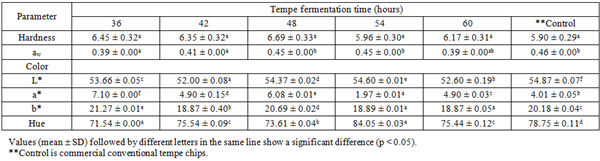
The results of the physical analysis of tempe chips are shown in Table 1. Tempe fermentation time was not significantly associated with tempe chips hardness (p> 0.05). The hardness parameter is an important factor in chips products, as it affects consumer acceptance. The time of tempe fermentation had a significant effect (p < 0.05) on the lightness (brightness) of the chips produced. Research by Muzdalifah et al. 13 shows that the brightness values of soybeans and mycelia in tempe decrease as fermentation time increases. Analysis of water activity parameters showed that the long-term fermentation treatment had a significant effect (p < 0.05). The higher the temperature, the faster the aw rate decreases. The water activity of the six tempe chips samples was promising. In general, the desired aw value on chips is below 0.6. Chips with an aw value > 0.7 are at risk of bacterial, yeast, and mold growth 14.
The sensory characteristics, color, and texture of the chips are influenced by various factors, including storage conditions prior to processing, slice thickness, frying time, and temperature 15, 16. Other variables that affect the hardness of tempe chips are the time, frying temperature, and thickness of the tempe slices to be fried. The moisture content of tempe undergoes intensive evaporation during deep-frying, increasing oil absorption. When frying, heat from the oil to the product is transferred, accompanied by mass transfer, so frying with the right duration can produce tempe chips with a hardness that meets the standard. In addition, chemical components in the product, such as starch, reducing sugars, and amino acids, interact, leading to physical changes and structural alterations that ultimately increase hardness 17.
Fried food products not only have a complex texture but also a crispy texture. The hardness and crispiness levels of the chips are negatively related to frying time and temperature. The higher the temperature and the longer the frying time, the lower the chips' hardness, thus increasing their crispiness 18, 19. The thickness of the tempe slice can affect its hardness. The thicker the slice, the greater the force needed to break the tempe chips, indicating a high hardness level, and the tempe chips are not crispy. On the other hand, if tempe is thinly sliced, it will produce chips that are not hard and crispy 9.
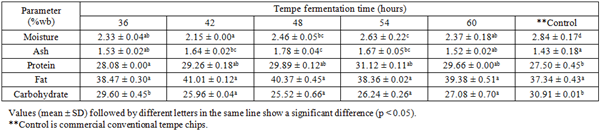
3.2. Chemical Characteristics of Tempe ChipsThe proximate composition of tempe chips is presented in Table 2. The moisture content analysis revealed a significant correlation between fermentation time and tempe chips water content (p < 0.05). The fluctuating results in this study may be attributed to the coating material, tapioca flour, which contains over 80% starch. This high starch content absorbs substantial water, increasing the water content 20. Nevertheless, all tempe chips samples analyzed conformed to the SNI 2602:2018 standard, with a maximum moisture content limit of 4%. The variegated analysis of fat content parameters revealed that prolonged tempe fermentation had no significant effect on chips fat content (p > 0.05).
The variegated analysis of protein content parameters showed that the long tempe fermentation treatment had a significant effect (p < 0.05) on the protein content of tempe chips. According to SNI 2602:2018, the minimum protein content for tempe chips is 12%, and the entire sample in this study met the requirements. Analysis of various carbohydrate content parameters revealed that the prolonged fermentation treatment had a significant impact (p < 0.05) on the carbohydrate content of tempe chips
The free water in tempe is used by microbes during fermentation for biochemical reactions such as protein hydrolysis and increased antioxidant activity 21. These microorganisms require water for metabolism, thus reducing the availability of free water and lowering the aw value. Different aw values can result from frying. According to Dangal et al. 22, water activity decreases rapidly with increasing frying pan temperature. Previous research indicates that prolonged fermentation increases water content through microbial activity that digests the substrate. Carbohydrate substrates are converted into ATP, carbon dioxide (CO2), metabolites, and water 23.
Ash content, as indicated by a food's mineral composition, is a crucial factor to consider. Fermenting soybeans into tempe can enhance the bioavailability of essential minerals, such as calcium, phosphorus, and iron 24. The proximate analysis identified the water-soluble mineral as ash content 25. However, it is important to note that the frying process can adversely affect the mineral and vitamin content of tempe chips. The results showed a decrease in mineral levels ranging from 5% to 40%, particularly affecting iodine, calcium, zinc, selenium, and iron. Consequently, the frying process can lead to variations in the ash content of tempe chips.
Conversely, as tempe fermentation duration increases, the fat content decreases due to lipase-catalyzed hydrolysis by the mould Rhizopus oligosporus. The fluctuations in fat content may be attributed to the coating used, which includes chicken eggs. Chicken eggs contain approximately 12.5 g of protein, 0.7 g of carbohydrates, and 8.7-11.2 g of fat per 100 g 26. Research by Rizal et al. 23 shows that tempe protein levels increase with increasing fermentation time. The increase in protein levels during tempe fermentation is due to the mold Rhizopus oligosporus, which produces protease enzymes that break down proteins into free amino acids. This free amino acid contains a nitrogen group, increasing protein content.
Analysis of various carbohydrate content parameters revealed that the prolonged fermentation treatment had a significant impact (p < 0.05) on the carbohydrate content of tempe chips. Research conducted by Rizal et al. 23 demonstrated a gradual decline in carbohydrate levels during tempe fermentation, spanning from 0 to 45 hours. Conversely, the Astawan et al. 24 study on tempe bosok (fermented tempe with a maximum fermentation time of 8-9 days) indicated that carbohydrate levels increased as fermentation duration extended. Carbohydrates serve as essential nutrients for microorganisms during fermentation. Rhizopus oligosporus molds can digest hexoses and stachyoses, which are subsequently used to synthesize enzymes 27. Based on these findings, fermentation can effectively reduce carbohydrate levels to a specific point in time. However, extending the fermentation duration may increase carbohydrate levels.
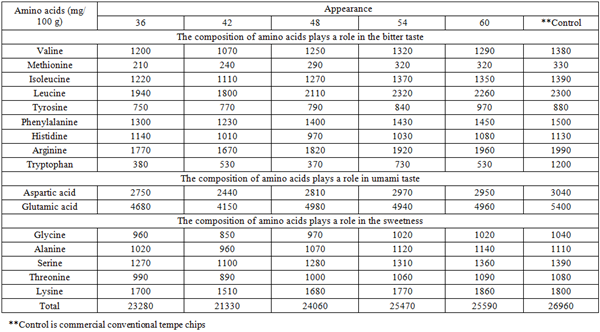
3.3. Amino Acid Composition of Tempe ChipsThe amino acids analyzed in this study include those with bitter and umami taste profiles. The results of amino acid analysis are presented in Table 3. In certain studies, the amino acid content of fermented foods shows fluctuations, potentially due to the metabolic processes of organisms that use fats and carbohydrates as energy sources. The metabolism of carbohydrates leads to an increase in protein levels after 24 hours, followed by a subsequent decrease in amino acid levels such as arginine, glycine, and lysine. In contrast, Utami et al. 28 reported increased amino acid content during soybean fermentation. Research by Hakimi et al. 29 and Tanase et al. 30 suggests that the amino acid composition in soybean fermentation can serve as a predictive tool for food taste, as it can establish a flavor profile influenced by the specific amino acids present.
During fermentation, the Rhizopus spp. mold release enzyme, such as protease, which breaks down proteins into amino acids and bioactive peptides 31. The quantity of amino acids produced is directly proportional to the number of molds employed and the fermentation process 32. Amino acids with a bitter taste profile are expected to impart a bitter aftertaste in tempe chips products. Conversely, amino acids with an umami flavor profile contribute to the taste of tempe and its derived products 33. The impact of fermentation on a product's protein content is inherently unpredictable 34. Amino acids such as alanine, glycine, serine, and threonine contribute to a sweet taste. The eight amino acids responsible for the bitter taste are arginine, histidine, isoleucine, leucine, methionine, phenylalanine, valine, and tyrosine. Aspartic acid and glutamic acid contribute to the umami taste, while lysine does not. However, amino acids with bitter taste profiles exhibit greater variability, allowing both umami and bitter tastes to be perceived and influence the taste of tempe chips 29, 30.
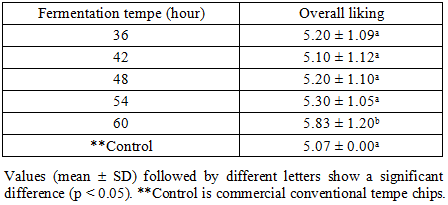
3.4. Hedonic TestDuring the hedonic test, each panellist was simultaneously presented with six samples of tempe chips and assessed on a scale of 1 (strongly dislike) to 7 (strongly like). The preferences were analyzed as overall scores for each sample, as presented in Table 4. The results of the variety analysis indicated that the long-fermentation treatment significantly affected the overall liking of the chips produced (p < 0.05). Tempe chips with a fermentation time of 60 hours exhibited the most pronounced difference. The analysis revealed a positive correlation between fermentation duration and panellists' preferences, with the highest preference observed for chips fermented for 60 hours. This phenomenon can be attributed to an enhanced umami flavor, which effectively masks the sample's bitterness. This observation aligns with previous research by Utami et al., 28, which demonstrated that the amino acids responsible for umami flavor are accompanied by those responsible for bitter flavor.
Hedonic sensory analysis was conducted to determine panellists' preferences for the food products produced 35. The RATA method is a sensory analysis technique that employs an intensity rating system to assess sensory attributes that consumers perceive as defining a product. This method facilitates the acquisition of information regarding the characteristics of food products under examination 36.
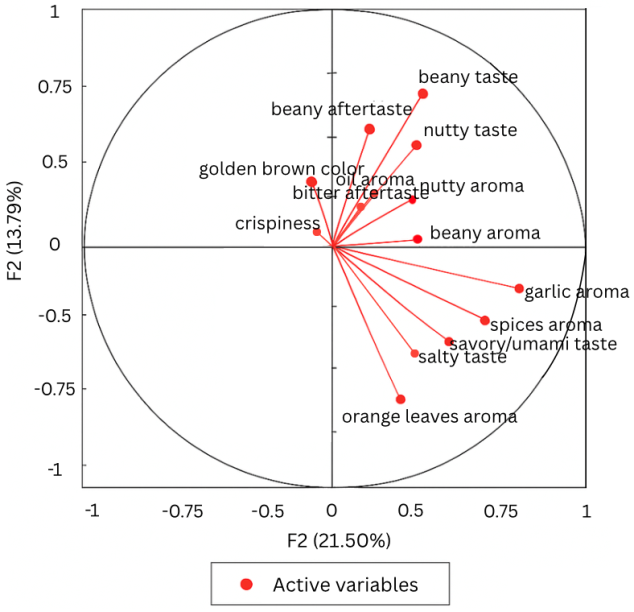
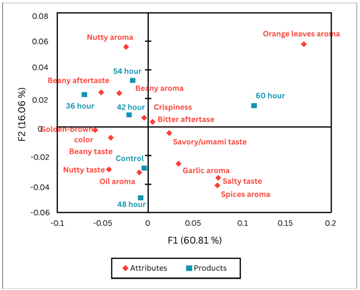
3.5. RATA TestA sensory test employing the RATA method was conducted concurrently with the hedonic overall liking test using the same panellists. The panellists' assessments are presented in Table 6, indicating that fermentation duration does not significantly impact all sensory attributes. The RATA method's output manifests as a biplot PCA graph, as illustrated in Figure 1. This PCA biplot presents a profile map of sensory attributes, their intensities, and the correlations among them 37. The graph facilitates visualization of attribute points by their positions, indicating positive or negative correlations 4.
The PCA graph shows the relationships between attributes, both positive and negative, through the distribution of attribute points. Positively correlated attributes indicate that an increase or decrease in the intensity of one attribute will affect other attributes. Attributes that are significantly positively correlated include: golden brown color attributes with crispiness; garlic aroma with spice aroma, umami taste, salty taste, and aroma of orange leaves; as well as beany aftertaste, beany taste, nutty taste, oil aroma, bitter aftertaste, nutty, and beany aroma. As the golden-brown color increases, so does the crispiness. The same will also occur with increases and decreases in the intensity of other attributes that are significantly positively correlated.
For attributes that are significantly negatively correlated, namely: between the color of golden brown and crispiness, and between the aroma of garlic, the aroma of spices, umami taste, salty taste, and the aroma of orange leaves. If the intensity of the garlic aroma is increased, there will be a decrease in golden brown color and crispiness, and vice versa. The same will also occur with increases and decreases in the intensity of other attributes that are significantly negatively correlated. A PCA biplot can be used to illustrate the correlations between the sensory attributes of each sample or formula 38.
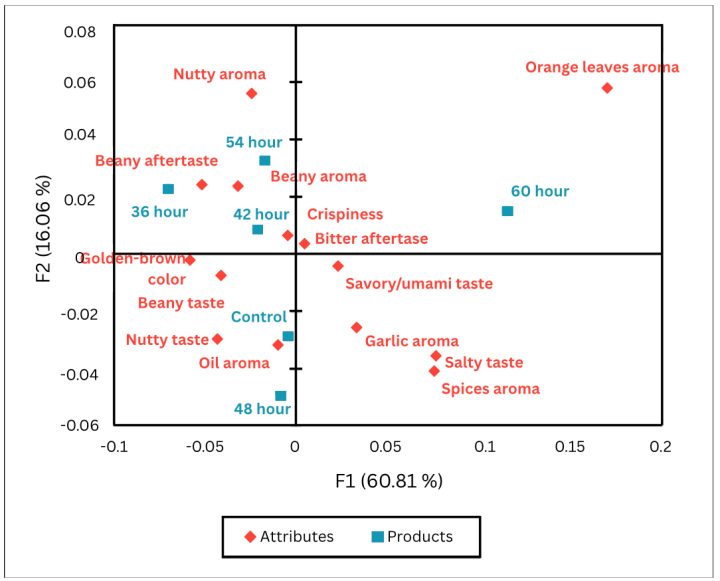
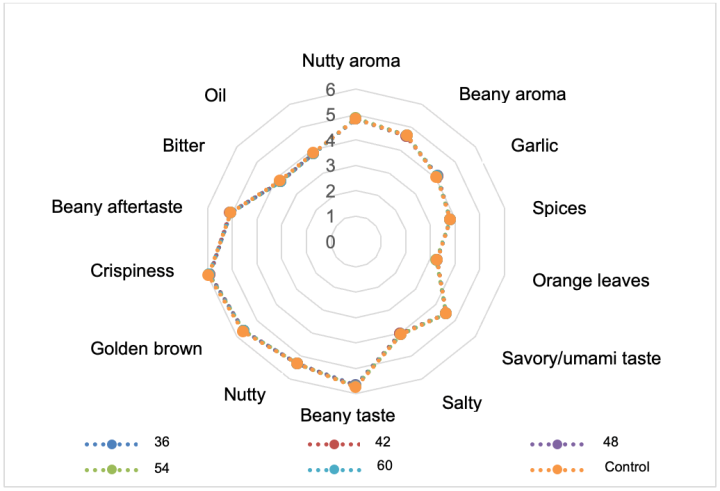
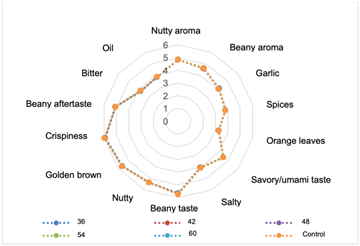
Biplots of tempe chips samples against sensory attributes profiles showed results in different quadrants (Figure 2). The sample of 60-hour fermentation tempe chips was in quadrant 1, dominated by the sensory attributes of orange leaves aroma and bitter aftertaste. Meanwhile, chips samples from tempe fermented for 36, 42, and 54 hours were in quadrant 2, with sensory attributes that dominate being beany aftertaste, crispiness, nutty aroma, and beany aroma. The control sample was in quadrant 3 at 48 hours, with the predominant attributes being a golden-brown color, a beany taste, a nutty taste, and an oil aroma. It can be concluded that the samples with the most extended fermentation have the most pungent bitter aftertaste. Sensory analysis with RATA also produced spider-web graphs, as shown in Figure 3. The spider-web graph compares the values of all the attributes on each sample. Figure 3 shows that each sample tends to have the same value, and Table 5 shows no noticeable difference across attributes.
The results showing similar tendencies can be attributed to the fact that the RATA test was conducted by untrained panellists, resulting in highly variable data across samples. Consequently, the generated dataset deviated from the hypothesized outcomes. This variability is inherent in existing assessments, which are inherently subjective and influenced by individual preferences 39. Using sensory assessment techniques such as PCA biplots, ANOVA, and spider-web tests, it has been established that chips from tempe with a fermentation period of 48 hours exhibit the most desirable characteristics, except for the undesirable attribute of bitterness. While the hedonic analysis revealed that chips from 60-hour fermented tempe were the most preferred, the sensory evaluation of each attribute indicated that chips from 48-hour fermented tempe were the most ideal. Incorporating various spices through flavor innovation can enhance the preference value of chips from 48-hour fermented tempe.
Positively correlated attributes indicate the position of adjacent attribute points, within the same quadrant, or form an angle < 90o from the center point. In contrast, negatively correlated attributes indicate that an increase in the intensity of one attribute decreases the intensity of the other, and the points representing the attributes are far apart or on opposite sides, indicating an angle > 90° from the center 40. Research by Utami et al. 28 states that the longer the fermentation, the more bitter-tasting amino acids will be produced and tasted. In this study, the tempe fermented for 60 hours (the longest fermentation time) showed a dominant bitter aftertaste.
The different time fermentation treatment (p < 0.05) was associated with decreases in color, ash, and carbohydrates, and with increases in aw, moisture, and protein content of the tempe chips. Different fermentation time on tempe (p > 0.05), the hardness and fat of chips. There was an increase of amino acids in the umami profile (aspartic and glutamic acid) and the bitter profile (arginine, histidine, isoleucine, leucine, methionine, phenylalanine, valine, and tyrosine). Although the overall liking result (p < 0.05) for the chips attribute sensory showed that the 60-hour sample was most preferred (5.83 ± 1.20), fermentation at 48 hours is recommended because it provides an optimal balance between sensory quality and nutritional value. This finding has the potential to support the development of value-added processed tempe products for soy-based agroindustry businesses.
The authors are very grateful for financial support from the “Riset Kolaborasi Dunia Usaha dan Dunia Industri” scheme, IPB University, FY 2025. This research is funded by the Indonesian Endowment Fund for Education (LPDP) on behalf of the Indonesian Ministry of Higher Education, Science and Technology, and managed under the EQUITY Program (Contract No: 4297/B3/DT.03.08/2025 and No. 42011/IT3/HK.07.00-4/P/B/2025) under the leadership of Made Astawan.
| [1] | Yang Y., Kameda T., Aoki H., Dwi E. N., Akane I., Norihisa K., Noriyuki Y., Yukako O., Thanutchaporn K, “The effects of tempe fermented with Rhizopus microsporus, Rhizopus oryzae, or Rhizopus stolonifer on the colonic luminal environment in rats”. J Funct Foods, 49.162-167. Okt.2018. | ||
| In article | View Article | ||
| [2] | Kuswantoro H., Ginting E., Yusnawan E., Utomo J.S., Sundari T, “Agronomic performance, seed chemical composition, and bioactive components of selected Indonesian soybean genotypes (Glycine max [L.] | ||
| In article | |||
| [3] | Shanti R., Komala K., Azhar I.H., Shalihati F, “Tempe: Indonesian Vegan Protein for the World,” In: Proceedings of the business innovation and engineering conf, 185-195. 2023. | ||
| In article | View Article | ||
| [4] | Mahdi S.A., Astawan M., Wulandari N., Muhandri T, “Sensory profiling of tempe functional drink powder using rate-all-that-apply method,” Food Res, 7.19–26, 2023. | ||
| In article | View Article | ||
| [5] | Teoh S.Q., Chin N.L., Chong C.W., Ripen A.M., How S., Lim J.J.L, “A review on health benefits and processing of tempeh with outlines on its functional microbes,” Future Foods, 9. Jun. 2024. | ||
| In article | View Article | ||
| [6] | Badan Pusat Statistik Indonesia (BPSI). 2021. Statistical yearbook of Indonesia 2021. Jakarta, Indonesia: Badan Pusat Statistik. [In Bahasa Indonesia] | ||
| In article | |||
| [7] | Romulo A., Surya R, “Tempe: A traditional fermented food of Indonesia and its health benefits,” Int. J. Gastron. Food Sci., 26, Dec. 2021. | ||
| In article | View Article | ||
| [8] | Versino F., Ortega F., Monroy Y., Rivero S., López O.V., García M.A, “Sustainable and Bio-Based Food Packaging: A Review on Past and Current Design Innovations,” Foods, 12(5). Mar. 2023. | ||
| In article | View Article PubMed | ||
| [9] | Vaitkevičienė N., Jarienė E., Kulaitienė J., Levickienė D, “The Physico-Chemical and Sensory Characteristics of Coloured-Flesh Potato Chips: Influence of Cultivar, Slice Thickness and Frying Temperature,” Applied Sciences (Switzerland), 12(3). Feb. 2022. | ||
| In article | View Article | ||
| [10] | Xu K., Jiang K., Yang A., Zhang Z., Lin Z., Wang T., Xu L., Meng F., Wang B, “Sensory and chemical characterization of chestnuts processed in different methods using instrumental analyses and the Check-all-that-apply method,” 17(9). Sep. 2024. | ||
| In article | View Article | ||
| [11] | Astawan M., Nasution Z., Febrinda A.E., Prayudani A.P.G., Nada S.A, “Metode Pembuatan Keripik Tempe Tanpa Rasa Pahit” ID Patent S00202513359, December, 1st 2025. | ||
| In article | |||
| [12] | AOAC 2012. Official Method of Analysis: Association of Analytical Chemists. 19th Edition, Washington DC, 121-130.29. | ||
| In article | |||
| [13] | Muzdalifah D., Athaillah Z.A., Nugrahani W., Devi A.F, “Colour and pH changes of tempe during extended fermentation,” in AIP Conference Proceedings, American Institute of Physics Inc., Jan. 2017. | ||
| In article | View Article | ||
| [14] | Cruz G., Cruz-Tirado J.P., Delgado K., Guzman Y., Castro F., Rojas M.L., Linares G, “Impact of pre-drying and frying time on physical properties and sensorial acceptability of fried potato chips,” J. Food Sci. Technol., 55(1).138-144. Jan. 2018. | ||
| In article | View Article PubMed | ||
| [15] | Lazaridou A., Kotsiou K., Biliaderis C.G, “Nutritional and technological aspects of barley β-glucan enriched biscuits containing isomaltulose as sucrose replacer,” Food Hydrocolloids for Health, 2. Dec. 2022. | ||
| In article | View Article | ||
| [16] | Polivanova O.B., Gins E.M., Moskalev E.A., Voinova M.S., Koroleva A.K., Semenov A.Z., Sivolapova A.B., Ivanova A.S., Kazakov O.G., Simakov E.A., Chalaya N.A., Rogozina E.V., Goryunova S.V, “Quality evaluation, phytochemical characteristics and estimation of beta-carotene hydroxylase 2 (Chy2) alleles of interspecific potato hybrids,” Agronomy, 11(8). Aug. 2021. | ||
| In article | View Article | ||
| [17] | Al Jumayi H.A., Darwish A.M.G, “Frying Time and Temperature Conditions’ Influences on Physicochemical, Texture, and Sensorial Quality Parameters of Barley-Soybean Chips,” J. Food Qual., 2021. | ||
| In article | View Article | ||
| [18] | BahramParvar M., Moghaddam T.M., Razavi S.M.A, “Effect of deep-fat frying on sensory and textural attributes of pellet snacks,” J. Food Sci. Technol., 51(12) 3758–3766. Dec. 2014, doi: 10.1007/s13197-012-0914-6O. B. Polivanova et al., ‘Quality evaluation, phytochemical characteristics and estimation of beta-carotene hydroxylase 2 (Chy2) alleles of interspecific potato hybrids’, Agronomy, vol. 11, no. 8, Aug. 2021. | ||
| In article | View Article PubMed | ||
| [19] | Sumartini, Gurusmatika S., Amira W, “The effect of food additive on physicochemical characteristics of seaweed stick snack and consumer acceptance,” Canrea Journal: Food Technology, Nutritions, and Culinary Journal, 4(2).102-113. Dec.2021. | ||
| In article | View Article | ||
| [20] | Alfani N.N.A., Ishartani D., Anam C., Praseptiangga D., Manuhara G.J, “Chemical and sensory characteristics of white sweet potato (Ipomoea batatas L.), rice (Oryza sativa L.), and tapioca (Manihot esculenta) flours - Based seasoning composite flour,” in IOP Conference Series: Materials Science and Engineering, Institute of Physics Publishing, Oct. 2019. | ||
| In article | View Article | ||
| [21] | Sitanggang A.B., Sinaga W.S.L., Wie F., Fernando F., Krusong W, “Enhanced antioxidant activity of okara through solid state fermentation of GRAS Fungi,” Food Science and Technology, 40(1). 178-186. Jan. 2020. | ||
| In article | View Article | ||
| [22] | Dangal A., Tahergorabi R., Acharya D., Timsina P., Rai K., Dahal S., Acharya P., Giuffrè A.M, “Review on deep-fat fried foods: physical and chemical attributes, and consequences of high consumption,” Jun. 01, 2024, Springer Science and Business Media Deutschland GmbH. | ||
| In article | View Article | ||
| [23] | Rizal M, “Teknologi Pengolahan Buah Pisang Kepok di Kalimantan Timur,” Prosiding Seminar Nasional Hasil Penelitian Agribisnis VI, 6(1).280-286. 2022. | ||
| In article | |||
| [24] | Astawan M., Cahyani A.P., Wresdiyati T, “Antioxidant activity and isoflavone content of overripe Indonesian tempe,” Food Res, 7. 42-50. 2023. | ||
| In article | View Article | ||
| [25] | Ahnan-Winarno A.D., Cordeiro L., Winarno F.G., Gibbons J., Xiao H, “Tempeh: A semicentennial review on its health benefits, fermentation, safety, processing, sustainability, and affordability,” Compr. Rev. Food Sci. Food Saf., 20(2). 1717–1767. Mar. 2021. | ||
| In article | View Article PubMed | ||
| [26] | Réhault-Godbert S., Guyot N., Nys Y, “The golden egg: Nutritional value, bioactivities, and emerging benefits for human health,” MDPI AG. Mar. 2019. | ||
| In article | View Article PubMed | ||
| [27] | Damanik R.N.S., Pratiwi D.Y.W., Widyastuti N., Rustanti N., Anjani G., Afifah D.N, “Nutritional Composition Changes during Tempeh Gembus Processing,” in IOP Conference Series: Earth and Environmental Science, Institute of Physics Publishing, Mar. 2018. | ||
| In article | View Article | ||
| [28] | Utami R., Wijaya C.H., Lioe H.N, “Taste of Water-Soluble Extracts Obtained from Over-Fermented Tempe,” Int. J. Food Prop., 19(9). 2063-2073. Sep. 2016. | ||
| In article | View Article | ||
| [29] | Hakimi S., Kari N.M., Ismail N., Ismail M.N., Ahmad F, “Evaluation of taste active peptides and amino acids from anchovy proteins in fish sauce by in silico approach,” Food Sci. Biotechnol., 31(7). 767-785. Jul. 2022. | ||
| In article | View Article PubMed | ||
| [30] | Tanase R., Senda R., Matsunaga Y., Narukawa Y, “Taste Characteristics of Various Amino Acid Derivatives,” J Nutr Sci Vitaminol, 68.475-480. 2022. | ||
| In article | View Article PubMed | ||
| [31] | Thulesen L., Duque-Estrada P., Zhang L., Martin M.S., Aaslyng M.D., Petersen I.L, “Faba bean tempeh: The effects of fermentation and cooking on protein nutritional quality and sensory quality,” Food Chemistry Advances, 6. Mar. 2025. | ||
| In article | View Article | ||
| [32] | Starzyńska-Janiszewska A., Duliński R., Stodolak B., Mickowska B., Wikiera A, “Prolonged tempe-type fermentation in order to improve bioactive potential and nutritional parameters of quinoa seeds,” J. Cereal Sci., 71. 116-121. Sep. 2016. | ||
| In article | View Article | ||
| [33] | Prativi M.B.N., Astuti D.I., Putri S.P., Laviña W.A., Fukusaki E., Aditiawati P, “Metabolite Changes in Indonesian Tempe Production from Raw Soybeans to Over-Fermented Tempe,” Metabolites, 13(2). Feb. 2023. | ||
| In article | View Article PubMed | ||
| [34] | Samtiya M., Aluko R.E., Puniya A.K., Dhewa T, “Enhancing micronutrients bioavailability through fermentation of plant-based foods: A concise review,” 7(2). MDPI AG. 2021. | ||
| In article | View Article | ||
| [35] | Ruiz-Capillas C., Herrero A.M, “Sensory analysis and consumer research in new product development,” In Foods, 10(3). 2021. | ||
| In article | View Article PubMed | ||
| [36] | Giacalone D., Hedelund P.I, “Rate-all-that-apply (RATA) with semi-trained assessors: An investigation of the method reproducibility at assessor-, attribute- and panel-level,” Food Qual. Prefer., 51.65-71. Jul. 2016. | ||
| In article | View Article | ||
| [37] | Baião L.F., Rocha C., Lima R.C., Valente L.M.P., Cunha L.M, “Development of a Rate-All-That-Apply (RATA) ballot for sensory profiling of sea urchin (Paracentrotus lividus) gonads,” Food Research International, 153. Mar. 2022. | ||
| In article | View Article PubMed | ||
| [38] | Belgis M., Arifin T.Z., Prameswari D., Taruna I., Choiron M., Witono Y., Masahid A.D, “Sensory Profile on Robusta Coffee by Rate-All-That-Apply (RATA),” Pelita Perkebunan (a Coffee and Cocoa Research Journal), 39(1). Apr. 2023. | ||
| In article | View Article | ||
| [39] | Niimi J., Collier E.S., Oberrauter L.M., Sörensen V., Norman C., Normann A., Bendtsen M., Bergman P, “Sample discrimination through profiling with rate all that apply (RATA) using consumers is similar between home use test (HUT) and central location test (CLT),” Food Qual. Prefer., 95. Jan. 2022. | ||
| In article | View Article | ||
| [40] | Dewi A.M., Taufikurohmah T, “Synthesis, Characterization, and the Antifungal Activity of Nanosilver in Mangrove Juice (Sonneratia caseolaris),” Indonesian Journal of Chemical, 12(2). 195-206. 2023. | ||
| In article | |||
Published with license by Science and Education Publishing, Copyright © 2026 Made Astawan, Shidqiyya Aufan Nada, Rahmi Naily Maghfiroh, Zuraidah Nasution and Andi Early Febrinda
 This work is licensed under a Creative Commons Attribution 4.0 International License. To view a copy of this license, visit
http://creativecommons.org/licenses/by/4.0/
This work is licensed under a Creative Commons Attribution 4.0 International License. To view a copy of this license, visit
http://creativecommons.org/licenses/by/4.0/
| [1] | Yang Y., Kameda T., Aoki H., Dwi E. N., Akane I., Norihisa K., Noriyuki Y., Yukako O., Thanutchaporn K, “The effects of tempe fermented with Rhizopus microsporus, Rhizopus oryzae, or Rhizopus stolonifer on the colonic luminal environment in rats”. J Funct Foods, 49.162-167. Okt.2018. | ||
| In article | View Article | ||
| [2] | Kuswantoro H., Ginting E., Yusnawan E., Utomo J.S., Sundari T, “Agronomic performance, seed chemical composition, and bioactive components of selected Indonesian soybean genotypes (Glycine max [L.] | ||
| In article | |||
| [3] | Shanti R., Komala K., Azhar I.H., Shalihati F, “Tempe: Indonesian Vegan Protein for the World,” In: Proceedings of the business innovation and engineering conf, 185-195. 2023. | ||
| In article | View Article | ||
| [4] | Mahdi S.A., Astawan M., Wulandari N., Muhandri T, “Sensory profiling of tempe functional drink powder using rate-all-that-apply method,” Food Res, 7.19–26, 2023. | ||
| In article | View Article | ||
| [5] | Teoh S.Q., Chin N.L., Chong C.W., Ripen A.M., How S., Lim J.J.L, “A review on health benefits and processing of tempeh with outlines on its functional microbes,” Future Foods, 9. Jun. 2024. | ||
| In article | View Article | ||
| [6] | Badan Pusat Statistik Indonesia (BPSI). 2021. Statistical yearbook of Indonesia 2021. Jakarta, Indonesia: Badan Pusat Statistik. [In Bahasa Indonesia] | ||
| In article | |||
| [7] | Romulo A., Surya R, “Tempe: A traditional fermented food of Indonesia and its health benefits,” Int. J. Gastron. Food Sci., 26, Dec. 2021. | ||
| In article | View Article | ||
| [8] | Versino F., Ortega F., Monroy Y., Rivero S., López O.V., García M.A, “Sustainable and Bio-Based Food Packaging: A Review on Past and Current Design Innovations,” Foods, 12(5). Mar. 2023. | ||
| In article | View Article PubMed | ||
| [9] | Vaitkevičienė N., Jarienė E., Kulaitienė J., Levickienė D, “The Physico-Chemical and Sensory Characteristics of Coloured-Flesh Potato Chips: Influence of Cultivar, Slice Thickness and Frying Temperature,” Applied Sciences (Switzerland), 12(3). Feb. 2022. | ||
| In article | View Article | ||
| [10] | Xu K., Jiang K., Yang A., Zhang Z., Lin Z., Wang T., Xu L., Meng F., Wang B, “Sensory and chemical characterization of chestnuts processed in different methods using instrumental analyses and the Check-all-that-apply method,” 17(9). Sep. 2024. | ||
| In article | View Article | ||
| [11] | Astawan M., Nasution Z., Febrinda A.E., Prayudani A.P.G., Nada S.A, “Metode Pembuatan Keripik Tempe Tanpa Rasa Pahit” ID Patent S00202513359, December, 1st 2025. | ||
| In article | |||
| [12] | AOAC 2012. Official Method of Analysis: Association of Analytical Chemists. 19th Edition, Washington DC, 121-130.29. | ||
| In article | |||
| [13] | Muzdalifah D., Athaillah Z.A., Nugrahani W., Devi A.F, “Colour and pH changes of tempe during extended fermentation,” in AIP Conference Proceedings, American Institute of Physics Inc., Jan. 2017. | ||
| In article | View Article | ||
| [14] | Cruz G., Cruz-Tirado J.P., Delgado K., Guzman Y., Castro F., Rojas M.L., Linares G, “Impact of pre-drying and frying time on physical properties and sensorial acceptability of fried potato chips,” J. Food Sci. Technol., 55(1).138-144. Jan. 2018. | ||
| In article | View Article PubMed | ||
| [15] | Lazaridou A., Kotsiou K., Biliaderis C.G, “Nutritional and technological aspects of barley β-glucan enriched biscuits containing isomaltulose as sucrose replacer,” Food Hydrocolloids for Health, 2. Dec. 2022. | ||
| In article | View Article | ||
| [16] | Polivanova O.B., Gins E.M., Moskalev E.A., Voinova M.S., Koroleva A.K., Semenov A.Z., Sivolapova A.B., Ivanova A.S., Kazakov O.G., Simakov E.A., Chalaya N.A., Rogozina E.V., Goryunova S.V, “Quality evaluation, phytochemical characteristics and estimation of beta-carotene hydroxylase 2 (Chy2) alleles of interspecific potato hybrids,” Agronomy, 11(8). Aug. 2021. | ||
| In article | View Article | ||
| [17] | Al Jumayi H.A., Darwish A.M.G, “Frying Time and Temperature Conditions’ Influences on Physicochemical, Texture, and Sensorial Quality Parameters of Barley-Soybean Chips,” J. Food Qual., 2021. | ||
| In article | View Article | ||
| [18] | BahramParvar M., Moghaddam T.M., Razavi S.M.A, “Effect of deep-fat frying on sensory and textural attributes of pellet snacks,” J. Food Sci. Technol., 51(12) 3758–3766. Dec. 2014, doi: 10.1007/s13197-012-0914-6O. B. Polivanova et al., ‘Quality evaluation, phytochemical characteristics and estimation of beta-carotene hydroxylase 2 (Chy2) alleles of interspecific potato hybrids’, Agronomy, vol. 11, no. 8, Aug. 2021. | ||
| In article | View Article PubMed | ||
| [19] | Sumartini, Gurusmatika S., Amira W, “The effect of food additive on physicochemical characteristics of seaweed stick snack and consumer acceptance,” Canrea Journal: Food Technology, Nutritions, and Culinary Journal, 4(2).102-113. Dec.2021. | ||
| In article | View Article | ||
| [20] | Alfani N.N.A., Ishartani D., Anam C., Praseptiangga D., Manuhara G.J, “Chemical and sensory characteristics of white sweet potato (Ipomoea batatas L.), rice (Oryza sativa L.), and tapioca (Manihot esculenta) flours - Based seasoning composite flour,” in IOP Conference Series: Materials Science and Engineering, Institute of Physics Publishing, Oct. 2019. | ||
| In article | View Article | ||
| [21] | Sitanggang A.B., Sinaga W.S.L., Wie F., Fernando F., Krusong W, “Enhanced antioxidant activity of okara through solid state fermentation of GRAS Fungi,” Food Science and Technology, 40(1). 178-186. Jan. 2020. | ||
| In article | View Article | ||
| [22] | Dangal A., Tahergorabi R., Acharya D., Timsina P., Rai K., Dahal S., Acharya P., Giuffrè A.M, “Review on deep-fat fried foods: physical and chemical attributes, and consequences of high consumption,” Jun. 01, 2024, Springer Science and Business Media Deutschland GmbH. | ||
| In article | View Article | ||
| [23] | Rizal M, “Teknologi Pengolahan Buah Pisang Kepok di Kalimantan Timur,” Prosiding Seminar Nasional Hasil Penelitian Agribisnis VI, 6(1).280-286. 2022. | ||
| In article | |||
| [24] | Astawan M., Cahyani A.P., Wresdiyati T, “Antioxidant activity and isoflavone content of overripe Indonesian tempe,” Food Res, 7. 42-50. 2023. | ||
| In article | View Article | ||
| [25] | Ahnan-Winarno A.D., Cordeiro L., Winarno F.G., Gibbons J., Xiao H, “Tempeh: A semicentennial review on its health benefits, fermentation, safety, processing, sustainability, and affordability,” Compr. Rev. Food Sci. Food Saf., 20(2). 1717–1767. Mar. 2021. | ||
| In article | View Article PubMed | ||
| [26] | Réhault-Godbert S., Guyot N., Nys Y, “The golden egg: Nutritional value, bioactivities, and emerging benefits for human health,” MDPI AG. Mar. 2019. | ||
| In article | View Article PubMed | ||
| [27] | Damanik R.N.S., Pratiwi D.Y.W., Widyastuti N., Rustanti N., Anjani G., Afifah D.N, “Nutritional Composition Changes during Tempeh Gembus Processing,” in IOP Conference Series: Earth and Environmental Science, Institute of Physics Publishing, Mar. 2018. | ||
| In article | View Article | ||
| [28] | Utami R., Wijaya C.H., Lioe H.N, “Taste of Water-Soluble Extracts Obtained from Over-Fermented Tempe,” Int. J. Food Prop., 19(9). 2063-2073. Sep. 2016. | ||
| In article | View Article | ||
| [29] | Hakimi S., Kari N.M., Ismail N., Ismail M.N., Ahmad F, “Evaluation of taste active peptides and amino acids from anchovy proteins in fish sauce by in silico approach,” Food Sci. Biotechnol., 31(7). 767-785. Jul. 2022. | ||
| In article | View Article PubMed | ||
| [30] | Tanase R., Senda R., Matsunaga Y., Narukawa Y, “Taste Characteristics of Various Amino Acid Derivatives,” J Nutr Sci Vitaminol, 68.475-480. 2022. | ||
| In article | View Article PubMed | ||
| [31] | Thulesen L., Duque-Estrada P., Zhang L., Martin M.S., Aaslyng M.D., Petersen I.L, “Faba bean tempeh: The effects of fermentation and cooking on protein nutritional quality and sensory quality,” Food Chemistry Advances, 6. Mar. 2025. | ||
| In article | View Article | ||
| [32] | Starzyńska-Janiszewska A., Duliński R., Stodolak B., Mickowska B., Wikiera A, “Prolonged tempe-type fermentation in order to improve bioactive potential and nutritional parameters of quinoa seeds,” J. Cereal Sci., 71. 116-121. Sep. 2016. | ||
| In article | View Article | ||
| [33] | Prativi M.B.N., Astuti D.I., Putri S.P., Laviña W.A., Fukusaki E., Aditiawati P, “Metabolite Changes in Indonesian Tempe Production from Raw Soybeans to Over-Fermented Tempe,” Metabolites, 13(2). Feb. 2023. | ||
| In article | View Article PubMed | ||
| [34] | Samtiya M., Aluko R.E., Puniya A.K., Dhewa T, “Enhancing micronutrients bioavailability through fermentation of plant-based foods: A concise review,” 7(2). MDPI AG. 2021. | ||
| In article | View Article | ||
| [35] | Ruiz-Capillas C., Herrero A.M, “Sensory analysis and consumer research in new product development,” In Foods, 10(3). 2021. | ||
| In article | View Article PubMed | ||
| [36] | Giacalone D., Hedelund P.I, “Rate-all-that-apply (RATA) with semi-trained assessors: An investigation of the method reproducibility at assessor-, attribute- and panel-level,” Food Qual. Prefer., 51.65-71. Jul. 2016. | ||
| In article | View Article | ||
| [37] | Baião L.F., Rocha C., Lima R.C., Valente L.M.P., Cunha L.M, “Development of a Rate-All-That-Apply (RATA) ballot for sensory profiling of sea urchin (Paracentrotus lividus) gonads,” Food Research International, 153. Mar. 2022. | ||
| In article | View Article PubMed | ||
| [38] | Belgis M., Arifin T.Z., Prameswari D., Taruna I., Choiron M., Witono Y., Masahid A.D, “Sensory Profile on Robusta Coffee by Rate-All-That-Apply (RATA),” Pelita Perkebunan (a Coffee and Cocoa Research Journal), 39(1). Apr. 2023. | ||
| In article | View Article | ||
| [39] | Niimi J., Collier E.S., Oberrauter L.M., Sörensen V., Norman C., Normann A., Bendtsen M., Bergman P, “Sample discrimination through profiling with rate all that apply (RATA) using consumers is similar between home use test (HUT) and central location test (CLT),” Food Qual. Prefer., 95. Jan. 2022. | ||
| In article | View Article | ||
| [40] | Dewi A.M., Taufikurohmah T, “Synthesis, Characterization, and the Antifungal Activity of Nanosilver in Mangrove Juice (Sonneratia caseolaris),” Indonesian Journal of Chemical, 12(2). 195-206. 2023. | ||
| In article | |||