The aim of this study was to assess the mineral content of bambara groundnut seeds in the Northern regions of Côte d'Ivoire and evaluate their nutritional value. A total of 120 bambara groundnut samples were collected from five regions and categorized into seven cultivars based on seed coat color. The seeds were then analyzed at the Nutrition and Food Technology Laboratory of Félix Houphouet-Boigny National Polytechnic Institute using energy dispersive spectrophotometry. The analysis revealed the presence of macro elements, including potassium, sodium, magnesium, calcium, and phosphorus, with varying concentrations. The microelements zinc, iron, manganese, and copper were also found in the seeds. The contribution of these minerals to daily intake requirements ranged from 0.11% to 20.94%. However, zinc was found to have a higher need for adequate intake. These findings indicate that bambara groundnut seeds, regardless of cultivar, are a good source of essential minerals. Promoting the consumption of bambara groundnut could help address food security and poverty alleviation in the region. Furthermore, these results emphasize the importance of this underutilized legume in combating hunger and malnutrition in Africa.
Micronutrient deficiencies pose a significant public health challenge in developing countries, particularly for infants and pregnant women 1, 2. Infants, in particular, require sufficient micronutrients for proper growth and development 3, 4. The most critical micronutrient deficiencies in terms of public health impact are zinc and iron deficiencies, which can lead to cognitive impairment, reduced work capacity, weakened immune system, pregnancy complications (such as low birth weight), poor learning ability, and diminished psychomotor skills 5, 6. Severe anemia has been identified as a direct cause of maternal and child mortality 7, 8. Lack of sufficient information regarding the composition of diverse feed resources in certain regions has been suggested as the main barrier to their utilization, rather than an actual scarcity 9. For example, there is limited knowledge about the mineral content of certain plants used for human and animal consumption in Côte d'Ivoire, especially the newly introduced diets and lesser-known legumes.
Legumes are a cheap source of protein and minerals in many African countries, legumes are a cost-effective source of protein and minerals, especially since animal protein is expensive. One such legume is the Bambara groundnut (Vigna subterranea L.), which is known for its protein and mineral content 10, 11. The seeds of this legume are considered a complete food due to their adequate amounts of protein, carbohydrates, and lipids 12. Therefore, incorporating Bambara groundnut into diets can help improve food security and address nutritional deficiencies 13, 14. Despite its potential, Bambara groundnut has historically been underutilized and has only gained attention in recent years. This crop is resilient to drought, can thrive in poor soil conditions, and is resistant to pests and diseases 15. In Africa, it is widely cultivated at a subsistence level and is the third most important legume crop, after cowpea and groundnut 16, 17. Additionally, it is a popular food in Côte d'Ivoire 18. The immature seeds are consumed as a boiled snack, while the mature seeds are boiled and incorporated into main meals or ground into flour for making porridge 19, 20. The dried seeds can also be soaked, the outer covering removed, and the seeds ground into a paste, which can then be used to make various steamed or fried products 21, 22. Efforts are being made to popularize the cultivation of this legume in Cote d'Ivoire, particularly among the rural population 18. However, in order to promote this crop as a nutritious food source, it is important to determine its nutritional composition. Limited research has been conducted on the nutrient quality of bambara groundnut in major production areas of Cote d'Ivoire. Therefore, the objective of this study is to assess the nutritional quality of bambara groundnut, specifically by determining its essential mineral content in the Northern region of Côte d’Ivoire.
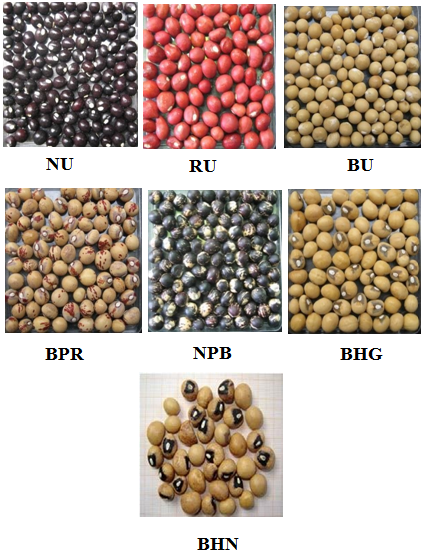
The biological material used in this study includes seven different cultivars of bambara groundnut seeds. These cultivars are known as Uniform Black (NU), Uniform Red (RU), Uniform Beige (BU), Beige variegated with Red (BPR), Black Variegated with Beige (NPB), Beige with Grey Hilum outline (BHG), and Beige with black hilum outline (BHN) (Figure 1).

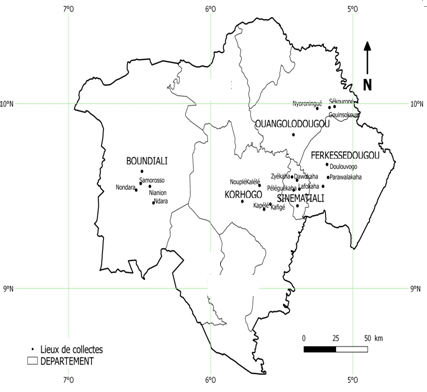
The research was conducted in five different departments in the savannah zone of Côte d'Ivoire where bambara groundnut is produced. These departments include Korhogo, Ferkessédougou, Ouangolodougou, Sinématiali, and Boundiali (Figure 2). These areas have similar geographical and climatic conditions that impact the production of bambara groundnut. Specifically, the climate in these regions is of the Sudanese type, characterized by a rainy season from April to October, followed by a dry season lasting five harsh months from November to March 23.

The survey was conducted between November 2017 and February 2018. Villages were chosen randomly within a 15 km radius of the five departments. Samples were collected from four randomly selected farmers or traders in each village. A total of 30 villages were visited and 120 bambara groundnut samples were collected. Each selected farmer or trader provided approximately 500 g of seed samples. The samples were categorized into seven cultivars based on seed coat color. The cultivars were then transported to the laboratory in polyethylene bags and stored in a cold room at -20°C for analysis.
The seeds of each bambara groundnut cultivar were washed with water, then dried in a ventilated oven (Minergy Atie Process, France) at 65°C for 6 hours. After drying, the seeds were ground using a hammer mill (Forplex). The resulting powders were filtered through sieves with a diameter of 250 µm. The filtered products were then stored in polyethylene hermetic bags in a dry place until further analysis.
The mineral content of bambara groundnut samples was determined by analyzing powders using an Energy Dispersive Spectrometer device 24.
The mineral composition of the seeds was determined using an energy dispersive spectrophotometer apparatus coupled with a scanning electronic microscope. The microscope used was the SEM-FEG Supra 40 Vp Zeiss, which operated at variable pressure. It was equipped with an X-ray detector from Oxford Instruments, which was connected to a flat shape of the EDS microanalyser (Inca cool dry, without liquid nitrogen). The operative conditions of the EDS-SEM device included a zoom range of 10x to 1000000x, a resolution of 2 nm, and a variable voltage of 0.1 KeV to 30 KeV. The chemical elements were acquired using a zoom of 50x, a probe diameter of 30 nm to 120 nm, a probe energy of 20 KeV and 25 KeV, and a work distance of 8.5 mm. The chemical composition was explored in three different zones, and the data was then transferred to MS Word and Excel software for further analysis.
The mineral analysis method was validated following standard procedures 25, 26, which included assessing linearity, repeatability, reproducibility, extraction yields, and detection and quantification limits. The linearity of nine mineral elements was determined using five standard points ranging from 25% to 125% (25%, 50%, 75%, 100%, and 125%). Repeatability and reproducibility tests were conducted using standards with a mineral content of 25%. A 5% percentage was added to the standard content of each mineral to determine the yield of mineral extraction. Ten separate tests were conducted for the added proportions.
The mineral contributions were determined using the Codex Alimentarius method, which considers the mineral concentrations in the bambara groundnut samples and the daily consumption of this food by a child aged 1 to 3 years, as described by Langyintuo et al. (2003) 27. The contribution of bambara groundnut to the daily requirement was also calculated based on the recommended daily intake values [28, 29] 28, 29. The Estimated Daily Intake (EDI) was calculated using the formula:
Estimated Daily Intake (EDI) = C × Q(1)
Contribution (%) = (EDI × 100)/DRI(2)
With: C, mineral concentration measured; Q: bambara groundnut daily consumption (4.93 g per capita/day); DRI: Daily Recommended Intake.
The information was recorded using Microsoft Excel and analyzed using the Statistical Program for Social Sciences (SPSS 22.0 for Windows, USA). To compare the different cultivars of bambara groundnut, a one-way analysis of variance (ANOVA) was conducted. The mean values for each parameter were compared using the Tukey post-hoc test at a significance level of 5%. Additionally, Multivariate Statistical Analysis (MSA) was performed using Principal Components Analysis (PCA) with the XLSTAT software version 2016 to explore the relationship between the bambara groundnut samples and their mineral traits.
The study found significant variations in the macroelement content of bambara groundnut seeds (Table 2). Potassium was the main mineral element, ranging from 12308 ± 12.3 to 16425 ± 4.6 mg/kg DM, with the highest content in the NPB cultivar and the lowest in the BPR cultivar. Sodium content ranged from 1319 ± 25.5 (RU) to 9893 ± 3.2 mg/kg DM (NPB), and magnesium content ranged from 1376 ± 5.5 (BPR) to 1879 ± 18.8 mg/kg DM (RU). NPB and BPR cultivars had higher sodium content compared to RU and BU cultivars, while RU and BU cultivars had higher magnesium content compared to NPB and BPR cultivars. Calcium content varied between 3149 ± 4.6 and 6267 ± 3 mg/kg DM, with the highest values observed in the BHG, BHN, and NPB cultivars, and the lowest in the BU and BPR cultivars (3726 ± 0.8 to 3149 ± 4.6 mg/kg). Phosphorus content ranged from 104 ± 3.5 to 307 ± 3.8 mg/kg, with lower concentrations in the NU and BPR cultivars (Table 1).
The analysis detected four trace elements (iron, copper, manganese, and zinc) in the samples of Bambara groundnut seeds from the seven cultivars. Table 3 shows that there is significant variation (P<.001) in the mineral content among the samples. Zinc is the dominant trace element, with the BHN and NPB cultivars having lower content (79 ± 2.1 to 142 ± 3 mg/kg DM), while the BU cultivar has the highest zinc content of 425 ± 3.8 mg/kg DM. The BU cultivar also has the highest content (P˂.001) of copper and iron, ranging from 13 ± 0.7 mg/kg DM to 151 ± 0.2 mg/kg DM. The BHG cultivars have lower contents of these minerals, ranging from 7.12 ± 0.6 mg/kg DM to 95 ± 1.5 mg/kg DM, while the NU cultivar records contents of 11 ± 0.2 to 137 ± 8.5 mg/kg DM. Manganese is found in contents of 16 ± 0.6 mg/kg DM to 35 ± 1.9 mg/kg DM, with the NPB cultivar having the highest content (Table 2).
Among the bambara groundnut seeds studied, the NPB cultivar had the highest daily intakes of potassium (80.98 mg/day), sodium (48.77 mg/day), calcium (25.79 mg/day), and manganese (0.17 mg/day). The NPB cultivar also provided 9.26 mg/day, 2.09 mg/day, 0.75 mg/day, and 0.06 mg/day of magnesium, zinc, iron, and copper, respectively. The BHN cultivar had the highest total phosphorous intake ranging from 0.51 mg/day to 1.51 mg/day, while the BPR cultivar had a lower intake of 0.6 mg/day. The BHG cultivar contributed 7.01 mg/day, 8.15 mg/day, and 30.9 mg/day to the daily intakes of magnesium, sodium, and calcium, respectively. The bambara groundnut seeds studied provided low intakes of copper, zinc, manganese, and iron, ranging from 0.04 mg/day to 2.09 mg/day. In terms of daily recommended intakes, the bambara groundnut seeds contributed macro and microelements in percentages ranging from 0.11% to 20.94%. Zinc had the highest contribution from the bambara groundnut cultivars, ranging from 7% to 20.94% (Table 4).
The Kaiser statistical rule was used to carry out principal component analysis (PCA), considering components F1 and F2 with eigenvalues greater than 1 (Table 5). Figure 3.A illustrates the correlation between the factorial axes F1 and F2, which account for 69.28% of the total variability of the parameters studied. F1, with an eigenvalue of 3.81, explains 42.35% of the variance and is primarily influenced by positive correlations with sodium, calcium, and manganese, and a negative correlation with magnesium, zinc, iron, and copper. F2, with an eigenvalue of 2.42, explains 26.93% of the variance and is mainly influenced by positive correlations with potassium, phosphorus, and copper (Table 5). The projection of characteristics and samples onto the F1-F2 plane reveals four groups of bambara groundnut cultivars. Group 1 consists primarily of the NPB cultivar, characterized by higher levels of potassium, phosphorus, sodium, manganese, and calcium compared to other cultivars. Group 2 consists of BU cultivars, which have higher levels of copper, magnesium, iron, and zinc compared to all other cultivars (Figure 3.B). Groups 3 and 4 include individuals with intermediate and lower levels of the nine minerals, respectively.

During this study, the presence and analysis of five macro minerals (potassium, sodium, magnesium, calcium, phosphorus) and four microelements (zinc, iron, manganese, copper) were examined. These nutrients play a crucial role in cell growth and metabolism 30. Analysis of the bambara groundnut samples revealed that potassium, sodium, calcium, and magnesium were the most abundant macro mineral elements. These findings align with previous studies by Olaleye et al. 31 and Chelangat et al. 12. However, the results were relatively higher compared to the values reported by Aremu et al. 32 and Ijarotimi and Esho 33. Among the different cultivars, the black variegated with beige (NPB) cultivar exhibited the highest levels of potassium and sodium. The uniform beige (BU) cultivar had the highest levels of magnesium, while the beige with grey hilum outline (BHG) cultivar had the highest calcium levels. The variations observed in the results were attributed to the genetic origin, soil fertility level, and geographical source of the bambara groundnut seeds 34, 35. The phosphorus levels (104 – 307 mg/kg) were lower than those reported by Olaleye et al. 31 but comparatively lower than the 313–563 mg/100 g reported by Dansi et al. 36.
Potassium is important for protecting against high blood pressure and other cardiovascular risks. It also plays a crucial role in the synthesis of amino acids and proteins 37. Sodium is involved in regulating the osmotic pressure between blood and cells due to imbalanced ionic concentrations 38. Calcium is essential for children and adults as it helps strengthen bones and develop teeth 39. It also aids in the formation of muscles, the heart, and the digestive system 40. Magnesium helps regulate the body's acid-base balance and maintains normal muscle and nerve function 41. It is also involved in over 300 biochemical reactions in the body, maintaining regular heart rhythms and regulating blood sugar levels 41. Phosphorus is primarily involved in energy production through phosphorylation reactions 42.
The mineral composition analysis shows that Bambara groundnut seeds samples have significant amounts of essential trace elements (zinc, iron, manganese, and copper) that are beneficial for children, pregnant or nursing women, and athletes 43. Among all the samples collected from different regions, the BU cultivar has the highest zinc, iron, and copper content, while the NPB cultivar has the highest manganese level.
The levels of copper, iron, and zinc in the different cultivars of Bambara groundnut seeds examined in this study were comparatively lower compared to the findings of Dansi et al. 36 and Chelangat et al. 12. Copper plays a crucial role in various enzymatic systems such as cytochrome oxidase and tyrosinase 44. It also contributes significantly to the synthesis and maintenance of myelin and acts as a cofactor in anti-radical processes 23. Iron is an important element, particularly in the synthesis of hemoglobin in the blood 45. Additionally, it aids in the oxidation of carbohydrates, proteins, and lipids 46. Zinc is referred to as a vital metal as it is a component of over 300 enzymes found in various body tissues. It helps prevent organ inflammation and damage by reducing oxidative stress and plays a role in blood pressure regulation 47.
The study found that consuming bambara groundnut seeds from different regions in Côte d'Ivoire can provide significant amounts of essential minerals. The recommended daily intake of these minerals was compared to the mineral content of the seeds, and it was determined that bambara groundnut is a good source of potassium, zinc, copper, and iron.
Therefore, incorporating bambara groundnut into the diet could help prevent mineral deficiencies in the population residing in these regions.
The objective of this research was to analyze the mineral composition of bambara groundnut seeds grown in different regions of Northern Côte d'Ivoire. The findings indicate that regardless of the cultivar, bambara groundnut contains substantial levels of the minerals examined. As a result, incorporating bambara groundnut into a balanced diet can be beneficial. Additionally, in regions where these minerals are lacking in the diet, bambara groundnut can serve as a valuable source. These findings emphasize the significance of this local and underutilized legume in addressing hunger and malnutrition in Africa.
The authors declare that there are no conflicts of interest in relation to this manuscript. The authors declare that they have no competing interests.
| [1] | Hindu V.; Palacios-Rojas N.; Babu R.; Suwarno W.B.; Rashid Z.; Usha R.; Saykhedkar G.R.; Nair S.K. Identification and validation of genomic regions influencing kernel zinc and iron in maize. Theor. Appl. Genet., 2018. 131. 1443-1457. | ||
| In article | View Article PubMed | ||
| [2] | Schmidhuber, J.; Sur P.; Fay K.; Huntley B.; Salama J.; Lee A.; Cornaby L.; Horino M.; Murray C.; Afshin A. The Global nutrient database: Availability of macronutrients and micronutrients in 195 countries from 1980 to 2013. Lancet Planet Health, 2018. 2. E353–E368. | ||
| In article | View Article PubMed | ||
| [3] | Rush D (2000). Nutrition and Maternal mortality in the developing world. Am. J. Clin. Nutr., 72 (Suppl.): 2125-2405. | ||
| In article | View Article PubMed | ||
| [4] | Wessells K.R.; Brown K.H. Estimating the global prevalence of zinc deficiency: Results based on zinc availability in national food supplies and the prevalence of stunting. PLoS ONE 2012. 7. 11. | ||
| In article | View Article PubMed | ||
| [5] | Mahan M. R., Deigna-Mockey V., Coulibaly A., Sidibe D. and Biego G. H. M. Essential mineral of the new shoots of palmyra enriched with Moringa oleifera leaves and Vigna unguiculata bean powders. International Journal of Biochemistry Research & Review, 2017. 16(3): 1-12. | ||
| In article | View Article | ||
| [6] | Baltaci A.K.; Mogulkoc R.; Baltaci S.B. The role of zinc in the endocrine system. Pak. J. Pharm. Sci. 2019. 32. 231–239. | ||
| In article | |||
| [7] | Chakravarty I., Ghosh k. Micronutrient malnutrition-present status and future remedy. J. Indian Med. Assoc. 2000. 98(9): 539-542 | ||
| In article | |||
| [8] | World Health Organization (WHO). Global Health Risks: Mortality and Burden of Disease Attributable to Selected Major Risks; WHO: Geneva, Switzerland, 2009. | ||
| In article | |||
| [9] | Aletor V. A., Omodara O. A. Studies on some leguminous browse plants. with particular reference to their proximate. mineral and some endogenous anti-nutritional constituents. Anim. Feed Sci. Technol. 1994. 46: 343-348. | ||
| In article | View Article | ||
| [10] | Harouna D.V., Venkataramana P.B., Ndakidemi, P.A., Matemu A.O. Under-exploited wild Vigna species potentials in human and animal nutrition: A review. Glob. Food Secur. 2018, 18, 1–11. | ||
| In article | View Article | ||
| [11] | Khan M.M.H.; Rafii M.Y.; Ramlee S.I.; Jusoh M.; Al-Mamun M. Bambara Groundnut (Vigna subterranea L. Verdc): A Crop for the New Millennium, Its Genetic Diversity, and Improvements to Mitigate Future Food and Nutritional Challenges. Sustainability 2021, 13, 5530. | ||
| In article | View Article | ||
| [12] | Chelangat M., Muturi P., Gichimu B., Gitari J. and Mukono S. (2023). Nutritional and phytochemical composition of bambara groundnut (Vigna subterranea [L.] Verdc) landraces in Kenya. Hindawi, International Journal of Agronomy, 2023, Article ID 9881028, 11 pages. | ||
| In article | View Article | ||
| [13] | Chandra K., Nandini R., Kumar C. B., Gobu R. Improving Nutritional Security of India Through a Potential Underutilized Legume-Bambara Groundnut (Vigna subterranea (L.) Verdc.). Environment & Ecology. 2017. 35 (2): 606 – 610. | ||
| In article | View Article | ||
| [14] | Ibrahim A.R.; Dansi A.; Salifou M.; Ousmane A.; Alzouma A., Alou W. Farmers’ practices, utilization, conservation and marketing of Bambara groundnut [Vigna subterranea (L.) Verdc.] in Dosso Region, Western Niger. Genet. Resour. Crop Evol. 2018. 65, 1907–1914. | ||
| In article | View Article | ||
| [15] | Baina D.- J., Mourtala M. Z., Abdou M. M., Yerima B. I. Étude de la Variabilité agro morphologique de 81 accessions de Voandzou [Vigna subterranea (L.) Verdc] au Niger. J. Appl. Biosci. 2023. 183 : 19181-19196. | ||
| In article | |||
| [16] | Kay. E. D. Food legumes. Digest No 3. Tropical Products Institute. London. 1979. | ||
| In article | |||
| [17] | Massawe F.J., Mwale S.S., Azam-Ali S.N., Roberts J.A. Breeding in Bambara groundnut (Vigna subterranea (L.) Verdc.): Strategic considerations Tropical Crops Research Unit. African Journal of Biotechnology. 2005. 4: 463-471. | ||
| In article | |||
| [18] | Diallo K. S., Koné K. Y., Soro D., Assidjo N. E., Yao K. B. Biochemical characterization and functional properties of seven cultivars of Bambara groundnut Seeds (Vigna subterranea (L.) Verdc.) produced in Côte d'Ivoire. European Scientific Journal. 2015. 11 (27): 288-304. | ||
| In article | |||
| [19] | Azam-Ali S.N.; Sesay A.; Karikari S.K.; Massawe F.; Aguilar-Manjarrez J.; Bannayan M.; Hampson K.J. Assessing the potential of an underutilized crop - A case study using Bambara groundnut. Exp. Agric. 2001. 37, 433–472. | ||
| In article | View Article | ||
| [20] | Halimi, A.R.; Mayes, S.; Barkla, B.; King, G. The potential of the underutilized pulse Bambara groundnut [Vigna subterranea (L.) Verdc.] for nutritional food security. J. Food Compos. Anal. 2019. 77, 47–59. | ||
| In article | View Article | ||
| [21] | Anyika J.U., Obizola I.C. & Nwamarah J.U. Effect of processing on the protein quality of African Yam bean and Bambara groundnut supplemented with sorghum or crayfish in rats. Pakistan Journal of Nutrition. 2009. 8: 1623-1628. | ||
| In article | View Article | ||
| [22] | Koné M., Paice A.G., Touré Y. Bambara Groundnut [Vigna subterranea (L.) Verde. (Fabaceae)] Usage in human health. In Preedy: V. R.Watson R. R.. Patel V. B. (Editors). Nuts & Seeds in Health and Disease Prevention (1st ed.). 2011. pp 189-196. | ||
| In article | View Article | ||
| [23] | Kouamé D., Niamketchi G. L., Konan C., Konan Y. and Biego H. M. Determination of essential mineral content of maize (Zea mays L.) produced and stocked from rural conditions in Côte d’Ivoire. International Journal of Biochemistry Research & Review. 2022. 31(3): 18-31. | ||
| In article | View Article | ||
| [24] | AOAC: Official methods of analysis. Association of Official Analytical Chemists. Washington. DC. USA. 2000. 376-384. | ||
| In article | |||
| [25] | AFNOR. Essai des eaux : Protocole d’évaluation d’une méthode alternative d’analyse physico-chimique quantitative par rapport à une méthode de référence In Association Française de Normalisation (éd). XP T ISSN 0335-3931: Paris. 1996. 210. | ||
| In article | |||
| [26] | CEE. Quality Control Procedures or Pesticide Residue Analysis: Guidelines forresidues Monitoring in the European Union (2 Edn) N°SANCO/3103/2000; 30. | ||
| In article | |||
| [27] | Langyintuoa AS. Lowenberg-DeBoer J. Faye M. Lambert D. Ibro G. Moussa B. Cowpea supply and demand in West and Central Africa. Field Crops Research. 2003. 82: 215-231. | ||
| In article | View Article | ||
| [28] | WHO/FAO. Vitamins and minerals requirements in human nutrition, 2nd ed. Genève; 2004. Accessed on November 30, 2023. | ||
| In article | |||
| [29] | USDA. Dietary reference intake table for vitamins and minerals; 2011. Updated in November 2023. Available: http.//www.nap.edu/objet.File/Master/7/296/webtable minerals; pdf. | ||
| In article | |||
| [30] | Goredema-Matongera, N.; Ndhlela, T.; Magorokosho, C.; Kamutando, C.N.; van Biljon, A.; Labuschagne, M. Multinutrient Biofortification of Maize (Zea mays L.) in Africa: Current Status, Opportunities and Limitations. Nutrients. 2021. 13, 1039. | ||
| In article | View Article PubMed | ||
| [31] | Olaleye A. A., Adeyeye E. I., Adesina A. J. Chemical composition of bambara groundnut (V. subterranea L. Verdc) seed parts. Bangladesh J. Sci. Ind. Res. 2013. 48(3), 167-178. | ||
| In article | View Article | ||
| [32] | Aremu M. O., Oloafe O. and Akintayo E. T. Chemical composition and physicochemical characteristics of two varieties of Bambara groundnut Seeds (Vigna subterranea) flours. Journal of Applied Sciences. 2006. 6(9): 1900-1903. | ||
| In article | View Article | ||
| [33] | Ijarotimi S.O. and Esho R. T. Comparison of nutritional composition and anti-nutrient status of fermented, germinated and roasted Bambara groundnut seeds (Vigna subterranea), British Food Journal. 2009. 111: 376-386. | ||
| In article | View Article | ||
| [34] | Amarteifio J.O., Tibe O. Njogu R.M. The mineral composition of bambara groundnut (Vigna subterranea) grown in Southern Africa. African Journal of Biotechnology. 2006. 5: 2408-2411. | ||
| In article | |||
| [35] | Annan K., Dickson R. A., Amponsah I. K., Nooni I. K. The heavy metal contents of some selected medicinal plants sampled from different geographical locations. Pharmacognosy Research. 2013. 5 (2): 103-108. | ||
| In article | View Article PubMed | ||
| [36] | Dansi A., Vodouhè R., Azokpota P., Yedomonhan H., Assogba P., Adjatin A., Loko Y.L., Dossou-Aminon I., Akpagana K. Diversity of the neglected and underutilized crop species of importance in Benin. The Scienti;c World Journal, vol. 2012, Article ID 932947, 19 pages. | ||
| In article | View Article PubMed | ||
| [37] | Ekmekcioglu C., Elmadfa I., Meyer A. L., and Moeslinger T. The role of dietary potassium in hypertension and diabetes, Journal of Physiology and Biochemistry. 2016. 72(1): 93–106. | ||
| In article | View Article PubMed | ||
| [38] | Stachenfeld N. S., Splenser A. E., Calzone W. L., Taylor M. P., Keefe D. L. Sex differences in osmotic regulation of AVP and renal sodium handling. Journal of Applied Physiology. 2001. 91: 1893-1901. | ||
| In article | View Article PubMed | ||
| [39] | Nelson R.I. Dietary minerals and colon carcinogenesis. Anticancer Research. 1987. 3: 259-269. | ||
| In article | |||
| [40] | Paiko Y.B., Dauda B.E., Suleiman M.A., Akanya H.O., Jacob J.O. Physico-chemical properties and metal ions content of oil extracted from cricket (Brachytrupes membranaceus) in Bosso local government area of Niger state. Nigeria. Asian Journal of Science and Technology. 2013. 4 (5): 8-12. | ||
| In article | |||
| [41] | Saris N. E., Mervaala E., Karppanen H., Khawaja J. A., Lewenstam A. Magnesium: an update on physiological. clinical. and analytical aspects. Clinica Chimica Acta. 2000. 294: 1-26. | ||
| In article | View Article PubMed | ||
| [42] | Mahan M. R., Konan N. Y., Sidibe D., Coulibaly A., Biego G. H. M. Investigation in minerals nutrients from powders deriving with leaflets of Moringa oleifera L. and beans of Vigna unguiculata W. for fortification of the flour processed from new shoots of Borassus aethiopum M. Annual Research & Review in Biology. 2016. 11(3): 1-12. | ||
| In article | View Article | ||
| [43] | Omotoso O.T. Nutritional quality. functional properties and anti-nutrient composition of the larva of Cirina forda (West wood) (Lepidoptera: Saturniidae). Journal of Zheijang University. 2006. 7: 51-55. | ||
| In article | View Article PubMed | ||
| [44] | Garcia-Horsman J., Barquera B., Rumbley J., Ma J., Gennis R. The superfamily of heme-copper respiratory oxidases. Journal of bacteriology. 1994. 176 (18): 5587-5600. | ||
| In article | View Article PubMed | ||
| [45] | Gerrano A. S., Lubinga M. H., Bairu M. W. Genetic resources management, seed production constraints and trade performance of orphan crops in southern Africa: a case of cowpea. South African Journal of Botany. 2022. vol. 146, pp. 340– 347. | ||
| In article | View Article | ||
| [46] | Buss J. L., Torti F. M., Torti S. V. The role of iron chelation in cancer therapy. Current Medicinal Chemistry. 2003. 10: 1021-1030. | ||
| In article | View Article PubMed | ||
| [47] | Knoell, D.L.; Julian, M.W.; Bao, S.; Besecker, B.; Macre, J.E.; Leikauf, G.D.; DiSilvestro, A.R.; Crouser, E.D. Zinc deficiency increases organ damage and mortality in a murine model of polymicrobial sepsis. Crit. Care Med. 2009. 37, 1380–1388. | ||
| In article | View Article PubMed | ||
Published with license by Science and Education Publishing, Copyright © 2024 Diallo Koffi Séraphin, Niamketchi Gilles Léonce, Soro Doudjo and Assidjo Nogbou Emmanuel
 This work is licensed under a Creative Commons Attribution 4.0 International License. To view a copy of this license, visit
http://creativecommons.org/licenses/by/4.0/
This work is licensed under a Creative Commons Attribution 4.0 International License. To view a copy of this license, visit
http://creativecommons.org/licenses/by/4.0/
| [1] | Hindu V.; Palacios-Rojas N.; Babu R.; Suwarno W.B.; Rashid Z.; Usha R.; Saykhedkar G.R.; Nair S.K. Identification and validation of genomic regions influencing kernel zinc and iron in maize. Theor. Appl. Genet., 2018. 131. 1443-1457. | ||
| In article | View Article PubMed | ||
| [2] | Schmidhuber, J.; Sur P.; Fay K.; Huntley B.; Salama J.; Lee A.; Cornaby L.; Horino M.; Murray C.; Afshin A. The Global nutrient database: Availability of macronutrients and micronutrients in 195 countries from 1980 to 2013. Lancet Planet Health, 2018. 2. E353–E368. | ||
| In article | View Article PubMed | ||
| [3] | Rush D (2000). Nutrition and Maternal mortality in the developing world. Am. J. Clin. Nutr., 72 (Suppl.): 2125-2405. | ||
| In article | View Article PubMed | ||
| [4] | Wessells K.R.; Brown K.H. Estimating the global prevalence of zinc deficiency: Results based on zinc availability in national food supplies and the prevalence of stunting. PLoS ONE 2012. 7. 11. | ||
| In article | View Article PubMed | ||
| [5] | Mahan M. R., Deigna-Mockey V., Coulibaly A., Sidibe D. and Biego G. H. M. Essential mineral of the new shoots of palmyra enriched with Moringa oleifera leaves and Vigna unguiculata bean powders. International Journal of Biochemistry Research & Review, 2017. 16(3): 1-12. | ||
| In article | View Article | ||
| [6] | Baltaci A.K.; Mogulkoc R.; Baltaci S.B. The role of zinc in the endocrine system. Pak. J. Pharm. Sci. 2019. 32. 231–239. | ||
| In article | |||
| [7] | Chakravarty I., Ghosh k. Micronutrient malnutrition-present status and future remedy. J. Indian Med. Assoc. 2000. 98(9): 539-542 | ||
| In article | |||
| [8] | World Health Organization (WHO). Global Health Risks: Mortality and Burden of Disease Attributable to Selected Major Risks; WHO: Geneva, Switzerland, 2009. | ||
| In article | |||
| [9] | Aletor V. A., Omodara O. A. Studies on some leguminous browse plants. with particular reference to their proximate. mineral and some endogenous anti-nutritional constituents. Anim. Feed Sci. Technol. 1994. 46: 343-348. | ||
| In article | View Article | ||
| [10] | Harouna D.V., Venkataramana P.B., Ndakidemi, P.A., Matemu A.O. Under-exploited wild Vigna species potentials in human and animal nutrition: A review. Glob. Food Secur. 2018, 18, 1–11. | ||
| In article | View Article | ||
| [11] | Khan M.M.H.; Rafii M.Y.; Ramlee S.I.; Jusoh M.; Al-Mamun M. Bambara Groundnut (Vigna subterranea L. Verdc): A Crop for the New Millennium, Its Genetic Diversity, and Improvements to Mitigate Future Food and Nutritional Challenges. Sustainability 2021, 13, 5530. | ||
| In article | View Article | ||
| [12] | Chelangat M., Muturi P., Gichimu B., Gitari J. and Mukono S. (2023). Nutritional and phytochemical composition of bambara groundnut (Vigna subterranea [L.] Verdc) landraces in Kenya. Hindawi, International Journal of Agronomy, 2023, Article ID 9881028, 11 pages. | ||
| In article | View Article | ||
| [13] | Chandra K., Nandini R., Kumar C. B., Gobu R. Improving Nutritional Security of India Through a Potential Underutilized Legume-Bambara Groundnut (Vigna subterranea (L.) Verdc.). Environment & Ecology. 2017. 35 (2): 606 – 610. | ||
| In article | View Article | ||
| [14] | Ibrahim A.R.; Dansi A.; Salifou M.; Ousmane A.; Alzouma A., Alou W. Farmers’ practices, utilization, conservation and marketing of Bambara groundnut [Vigna subterranea (L.) Verdc.] in Dosso Region, Western Niger. Genet. Resour. Crop Evol. 2018. 65, 1907–1914. | ||
| In article | View Article | ||
| [15] | Baina D.- J., Mourtala M. Z., Abdou M. M., Yerima B. I. Étude de la Variabilité agro morphologique de 81 accessions de Voandzou [Vigna subterranea (L.) Verdc] au Niger. J. Appl. Biosci. 2023. 183 : 19181-19196. | ||
| In article | |||
| [16] | Kay. E. D. Food legumes. Digest No 3. Tropical Products Institute. London. 1979. | ||
| In article | |||
| [17] | Massawe F.J., Mwale S.S., Azam-Ali S.N., Roberts J.A. Breeding in Bambara groundnut (Vigna subterranea (L.) Verdc.): Strategic considerations Tropical Crops Research Unit. African Journal of Biotechnology. 2005. 4: 463-471. | ||
| In article | |||
| [18] | Diallo K. S., Koné K. Y., Soro D., Assidjo N. E., Yao K. B. Biochemical characterization and functional properties of seven cultivars of Bambara groundnut Seeds (Vigna subterranea (L.) Verdc.) produced in Côte d'Ivoire. European Scientific Journal. 2015. 11 (27): 288-304. | ||
| In article | |||
| [19] | Azam-Ali S.N.; Sesay A.; Karikari S.K.; Massawe F.; Aguilar-Manjarrez J.; Bannayan M.; Hampson K.J. Assessing the potential of an underutilized crop - A case study using Bambara groundnut. Exp. Agric. 2001. 37, 433–472. | ||
| In article | View Article | ||
| [20] | Halimi, A.R.; Mayes, S.; Barkla, B.; King, G. The potential of the underutilized pulse Bambara groundnut [Vigna subterranea (L.) Verdc.] for nutritional food security. J. Food Compos. Anal. 2019. 77, 47–59. | ||
| In article | View Article | ||
| [21] | Anyika J.U., Obizola I.C. & Nwamarah J.U. Effect of processing on the protein quality of African Yam bean and Bambara groundnut supplemented with sorghum or crayfish in rats. Pakistan Journal of Nutrition. 2009. 8: 1623-1628. | ||
| In article | View Article | ||
| [22] | Koné M., Paice A.G., Touré Y. Bambara Groundnut [Vigna subterranea (L.) Verde. (Fabaceae)] Usage in human health. In Preedy: V. R.Watson R. R.. Patel V. B. (Editors). Nuts & Seeds in Health and Disease Prevention (1st ed.). 2011. pp 189-196. | ||
| In article | View Article | ||
| [23] | Kouamé D., Niamketchi G. L., Konan C., Konan Y. and Biego H. M. Determination of essential mineral content of maize (Zea mays L.) produced and stocked from rural conditions in Côte d’Ivoire. International Journal of Biochemistry Research & Review. 2022. 31(3): 18-31. | ||
| In article | View Article | ||
| [24] | AOAC: Official methods of analysis. Association of Official Analytical Chemists. Washington. DC. USA. 2000. 376-384. | ||
| In article | |||
| [25] | AFNOR. Essai des eaux : Protocole d’évaluation d’une méthode alternative d’analyse physico-chimique quantitative par rapport à une méthode de référence In Association Française de Normalisation (éd). XP T ISSN 0335-3931: Paris. 1996. 210. | ||
| In article | |||
| [26] | CEE. Quality Control Procedures or Pesticide Residue Analysis: Guidelines forresidues Monitoring in the European Union (2 Edn) N°SANCO/3103/2000; 30. | ||
| In article | |||
| [27] | Langyintuoa AS. Lowenberg-DeBoer J. Faye M. Lambert D. Ibro G. Moussa B. Cowpea supply and demand in West and Central Africa. Field Crops Research. 2003. 82: 215-231. | ||
| In article | View Article | ||
| [28] | WHO/FAO. Vitamins and minerals requirements in human nutrition, 2nd ed. Genève; 2004. Accessed on November 30, 2023. | ||
| In article | |||
| [29] | USDA. Dietary reference intake table for vitamins and minerals; 2011. Updated in November 2023. Available: http.//www.nap.edu/objet.File/Master/7/296/webtable minerals; pdf. | ||
| In article | |||
| [30] | Goredema-Matongera, N.; Ndhlela, T.; Magorokosho, C.; Kamutando, C.N.; van Biljon, A.; Labuschagne, M. Multinutrient Biofortification of Maize (Zea mays L.) in Africa: Current Status, Opportunities and Limitations. Nutrients. 2021. 13, 1039. | ||
| In article | View Article PubMed | ||
| [31] | Olaleye A. A., Adeyeye E. I., Adesina A. J. Chemical composition of bambara groundnut (V. subterranea L. Verdc) seed parts. Bangladesh J. Sci. Ind. Res. 2013. 48(3), 167-178. | ||
| In article | View Article | ||
| [32] | Aremu M. O., Oloafe O. and Akintayo E. T. Chemical composition and physicochemical characteristics of two varieties of Bambara groundnut Seeds (Vigna subterranea) flours. Journal of Applied Sciences. 2006. 6(9): 1900-1903. | ||
| In article | View Article | ||
| [33] | Ijarotimi S.O. and Esho R. T. Comparison of nutritional composition and anti-nutrient status of fermented, germinated and roasted Bambara groundnut seeds (Vigna subterranea), British Food Journal. 2009. 111: 376-386. | ||
| In article | View Article | ||
| [34] | Amarteifio J.O., Tibe O. Njogu R.M. The mineral composition of bambara groundnut (Vigna subterranea) grown in Southern Africa. African Journal of Biotechnology. 2006. 5: 2408-2411. | ||
| In article | |||
| [35] | Annan K., Dickson R. A., Amponsah I. K., Nooni I. K. The heavy metal contents of some selected medicinal plants sampled from different geographical locations. Pharmacognosy Research. 2013. 5 (2): 103-108. | ||
| In article | View Article PubMed | ||
| [36] | Dansi A., Vodouhè R., Azokpota P., Yedomonhan H., Assogba P., Adjatin A., Loko Y.L., Dossou-Aminon I., Akpagana K. Diversity of the neglected and underutilized crop species of importance in Benin. The Scienti;c World Journal, vol. 2012, Article ID 932947, 19 pages. | ||
| In article | View Article PubMed | ||
| [37] | Ekmekcioglu C., Elmadfa I., Meyer A. L., and Moeslinger T. The role of dietary potassium in hypertension and diabetes, Journal of Physiology and Biochemistry. 2016. 72(1): 93–106. | ||
| In article | View Article PubMed | ||
| [38] | Stachenfeld N. S., Splenser A. E., Calzone W. L., Taylor M. P., Keefe D. L. Sex differences in osmotic regulation of AVP and renal sodium handling. Journal of Applied Physiology. 2001. 91: 1893-1901. | ||
| In article | View Article PubMed | ||
| [39] | Nelson R.I. Dietary minerals and colon carcinogenesis. Anticancer Research. 1987. 3: 259-269. | ||
| In article | |||
| [40] | Paiko Y.B., Dauda B.E., Suleiman M.A., Akanya H.O., Jacob J.O. Physico-chemical properties and metal ions content of oil extracted from cricket (Brachytrupes membranaceus) in Bosso local government area of Niger state. Nigeria. Asian Journal of Science and Technology. 2013. 4 (5): 8-12. | ||
| In article | |||
| [41] | Saris N. E., Mervaala E., Karppanen H., Khawaja J. A., Lewenstam A. Magnesium: an update on physiological. clinical. and analytical aspects. Clinica Chimica Acta. 2000. 294: 1-26. | ||
| In article | View Article PubMed | ||
| [42] | Mahan M. R., Konan N. Y., Sidibe D., Coulibaly A., Biego G. H. M. Investigation in minerals nutrients from powders deriving with leaflets of Moringa oleifera L. and beans of Vigna unguiculata W. for fortification of the flour processed from new shoots of Borassus aethiopum M. Annual Research & Review in Biology. 2016. 11(3): 1-12. | ||
| In article | View Article | ||
| [43] | Omotoso O.T. Nutritional quality. functional properties and anti-nutrient composition of the larva of Cirina forda (West wood) (Lepidoptera: Saturniidae). Journal of Zheijang University. 2006. 7: 51-55. | ||
| In article | View Article PubMed | ||
| [44] | Garcia-Horsman J., Barquera B., Rumbley J., Ma J., Gennis R. The superfamily of heme-copper respiratory oxidases. Journal of bacteriology. 1994. 176 (18): 5587-5600. | ||
| In article | View Article PubMed | ||
| [45] | Gerrano A. S., Lubinga M. H., Bairu M. W. Genetic resources management, seed production constraints and trade performance of orphan crops in southern Africa: a case of cowpea. South African Journal of Botany. 2022. vol. 146, pp. 340– 347. | ||
| In article | View Article | ||
| [46] | Buss J. L., Torti F. M., Torti S. V. The role of iron chelation in cancer therapy. Current Medicinal Chemistry. 2003. 10: 1021-1030. | ||
| In article | View Article PubMed | ||
| [47] | Knoell, D.L.; Julian, M.W.; Bao, S.; Besecker, B.; Macre, J.E.; Leikauf, G.D.; DiSilvestro, A.R.; Crouser, E.D. Zinc deficiency increases organ damage and mortality in a murine model of polymicrobial sepsis. Crit. Care Med. 2009. 37, 1380–1388. | ||
| In article | View Article PubMed | ||