The physicochemical properties of starches isolated from seven potato varieties grown in Enshi Prefecture of China were determined, with three starches from commercial potato, sweet potato, and cassava as control. There was a significant difference (p < 0.05) in moisture, ash and protein contents of the starches. The starch granules of potato were larger (33.96 -51.94 μm) and showed a wider range of size distribution than sweet potato (16.06μm) and cassava (14.90μm). The potato starch had a lower gelatinization peak temperature than sweet potato starch. Potato starches digestibility were influenced by processing conditions; microwave cooking can significantly increase the content of resistant starch (RS). Results of the principal component analysis demonstrated that potato starch from PS2, PS3, PS4, PS5, PS7 shared high similarity and differentiated from other potato cultivars. The variability observed in the properties of the various starches can improve their future potential in food or non-food applications.
Enshi Prefecture is in the heart of Wuling mountains, southwest of Hubei Province, China. It is the most important potato production area in Hubei province and major double-season potato planting area in China, where Southern China Potato Research Center (Enshi) is located. Huang et al concluded that Enshi's land contains high levels of selenium that can be enriched during plant growth, leading to health benefits for the human body 1. As a food that also contains abundant starch, rice has been shown to contain high levels of selenium in its starch granules in the Enshi territory 2. In view of the annual potato planting area of Enshi Prefecture was approximately 130 thousand hectares, with an average total annual yield of 35.31 tons/ hectare, occupies approximately 50% of the potato planted area in Hubei and accounts for approximately 24% of the total annual crop production in the whole prefecture. Potato is not only consumed as a local major source of energy in diet, but also combined perfectly with local food culture and has formed a large variety of potato food products. Presently, the government is investing a lot in the potato industry and encouraging the conversion of fresh potatoes into starch for food application, the production of potato starch would be a commercially viable venture. Therefore, it was necessary to clarify starch differences in potatoes grown in enriched soils.
The nutritional property of starch as food plays a key role in food application. Its function is closely related to the extent of digestion and absorption in the human body 3. For this purpose, potato starch can be classified into three kinds of starch. One is rapidly digestible starch (RDS), which can rapidly convert into glucose molecules by enzymatic digestion within 20 min; the other is slowly digestible starch (SDS) that takes longer time for digestion and can be completely digested in the small intestine within 120 min; the last one is resistant starch (RS) that is only fermented in the colon 4. Compared to the former two kinds of starch, RS is a form of dietary fibre that exhibits extraordinary physiological benefits and unique functional properties, including the control of levels of glycaemic and cholesterol, and absorption of minerals 5, 6.
Potato is an excellent source of raw starch, which can be characterized by specific properties. A great proportion of gelatinized potato RS can escape digestion and be absorbed in the small intestine, and then fermented in the large intestine of human, thus it gains importance in the food processing industry. Nevertheless, the underlying mechanisms of relative resistance to the digestion of starch granules are still unclear because the factors are often interconnected by varieties, chemical compositions, like protein and ash, granule size, gelatinization temperature, etc 3, 7. Besides, the content of RS in food is highly influenced by food processing techniques, which in turn could affect the functional properties of starch 8, 9, 10. The purpose of this study was to characterize starches isolated from seven potato varieties with respect to their physicochemical, granule size, thermal properties, and in vitro digestibility by different gelatinized treatments. This research aimed at identifying appropriate starch for food application and developing proper treatment which is required for desired starch function.
Four released potato varieties, Eshu No.5, Eshu No.10, Eshoo No.11, Eshu No.16, and two local potato cultivars named Mila and P4 were obtained from three locations in Enshi Prefecture, Enshi City, Lichuan City and Badong County. Typically, Eshu No.10 was both harvested in Enshi City and Badong County. Potato cultivars of comparable maturity levels were harvested in July 2016 to avoid seasonal differences in physicochemical characteristics among cultivars. The individual potato variety was marked as follows: Eshu No.5 from Enshi City- PS1, Eshu No.11 from Enshi City- PS2, Eshu No.16 from Enshi City- PS3, Eshoo No.10 from Enshi City- PS4, Eshu No.10 from Badong county- PS5, Mila from Lichuan city- PS6, P4 from Lichuan city- PS7. Three more kinds of starch from commercial potato, sweet potato, and cassava were used as control, which were purchased from the local market and marked as PS8, SPS9, and CPS10.
2.2. Potato Starch PreparationStarches of the cultivated potato were obtained following Winchman et al. 11. Potato tubers were rinsed, peeled, and cut into pieces. The pieces were soaked in a solution containing 10 mM citric acid and disintegrated using a centrifugal juicer. Pulp was discarded, and starch milk could sediment. The supernatant was discarded, and the starch pellet was resuspended in distilled water and passed through a 50 μm sieve. This step was repeated several times until the supernatant became transparent. The starch pellet was dried in an air oven at 50°C until the moisture content was lower than 8%. Dried starch was passed through a 100 μm sieve and stored in a sealed plastic bag at room temperature.
2.3. Physicochemical PropertiesContent of moisture (Method AOAC 925.09), crude protein (Method AOAC 954.01), and ashes (Method AOAC 923.03) of the starches were measured. A nitrogen coefficient of 6.25 was used to calculate protein contents.
2.4. Morphology of the Starch GranuleTo observe the shape and size of the starch granules, scanning electron micrographs of the starches were obtained by using an environmental scanning electron microscope (SEM, JEOL JSM-7500F +EDS, Tokyo, Japan) at 1000×magnification. Starch samples were attached to an SEM stub with double-sided cellophane tape. The sample was coated with gold-palladium to avoid charging under the electron beam after the acetone was volatilized. An accelerating voltage of 20 KV was used for the observation.
Particle size distribution of starch samples was measured by using Mesmerizer 2000 (Malvern, UK). A small amount of starch was dispersed in water and the average size of particles was characterized by the volume mean diameter D 12.
2.5. Thermal PropertiesThe thermal properties of starches were analysed by using a differential scanning calorimeter (DSC, F204 Phoenix Nietzsche, Germany) equipped with a thermal analysis station. Water-starch dispersion (2:1; w/w) was sealed in an aluminium pan. The pan was equilibrated for 1 h at 20°C before heating in DSC. Then the samples were heated at a rate of 5°C/min from 20°C to 110°C, while the empty aluminium pan was used as a reference. Based on the received thermograms, the onset (To), peak (Top), and conclusion (Tc) gelatinization temperatures and enthalpy (ΔH), peak height (PH) of gelatinization were calculated automatically.
2.6. In Vitro Starch DigestibilityThe starches were treated with hydrothermal, microwave, steam pressure and irradiation cooking to find out their different effect on starch digestibility. Two hundred milligrams of each starch sample were mixed with 25 mL of 0.1 M sodium acetate buffer (pH 5.2) in 50 mL conical tubes and the mixture was stirred magnetically for 10 min before gelatinization treatment.
For hydrothermal gelatinization, the capped tubes were heated in the boiling water bath for 10 min with constant shaking. After heating, they could cool to room temperature before being placed in a shaking water bath at 37°C to equilibrate for 10 min. Non-microwave absorbing plastic containers with starch dispersions inside were directly placed in a heating chamber of a microwave oven set at 700 W for 25 s, and the solutions were heated for 10 s to transfer heat throughout the entire sample. After that, they were placed in 37°C shaking water bath for 10 min for gelatinization. Steam pressure cooked starches were prepared in a closed pressure cooker for 10 min by providing high moisture steam at 121°C, and then cooled down to room temperature and put in the 37°C shaking water bath for 10 min. Furthermore, the preheated starch solutions were also irradiated by 60Coγ ray under an irradiation dosage of 10 kGy.
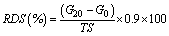
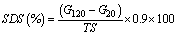
In vitro digestibility for gelatinized starches was determined according to Englyst et al. 12 with modifications. Gelatinized starches were mixed with 4 mL porcine pancreaticα-amylase (300U/mL) and 1 mL amyl glucosidase (2500U/mL) before assay, mixtures were incubated in a shaking water bath at 37°C. Enzyme solution was freshly prepared for each digestion. Aliquots containing 1 mL solution were taken from the reaction mixture in the enzymatic hydrolysates after 0, 20, and 120 minutes of hydrolysis, and immediately mixed with 1 mL of 80% (v/v) ethanol to stop the reaction. The glucose content in the supernatant was measured using the glucose oxidase-peroxidase method described in AOAC method 996.11 with a GAGO20 glucose assay kit. The same procedures for digestibility were followed.
 |
 |
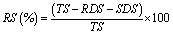 |
where G0, G20 and G120 were the contents of glucose released within 0, 20, and 120 min of hydrolysis, respectively; TS was total starch weight.
2.7. Statistical AnalysisAll samples underwent three parallel tests, and the results were expressed as the mean ± standard deviation. One-way analysis of variance at a significance level of p < 0.05 was used. The significance of differences between means was estimated with Duncan’s test. Principal component analysis (PCA) was used to provide a visualized way of differences and similarities among the investigated starches. Statistical calculations were done using V. 3.4.3 R packages and V. 7.05 DPS software.
Minor constituents in starch like moisture, protein and ash usually vary with botanical origin. Table 1 presents the values of the physicochemical parameters of starches. The moisture ranged between 4.14 and 6.13 g/100g for CPS10 and PS1 starch, and there were significant differences among the samples. Ash content of the samples varied from 0.21 g/100 g for PS2 and PS5 to 0.86 g/100 g for SPS9, the highest ash content was observed in sweet potato starch. With respect to protein, the differentiation between starches was significant, the lowest protein content was observed at 0.12 g/100 g for PS2 and PS6, while the highest protein content was 0.67 g/100 g for SP9. Starches low in protein were suggested for the high purity starch extracts 13. Even though PS4 and PS5 were the same potato variety (Eshoo No.10), they had a significant difference in minor constituents. This variation may be due to the difference in soil type and climate conditions because they were cultivated in different locations 15.
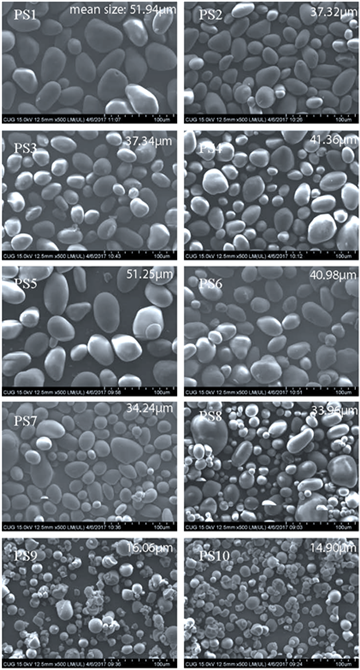
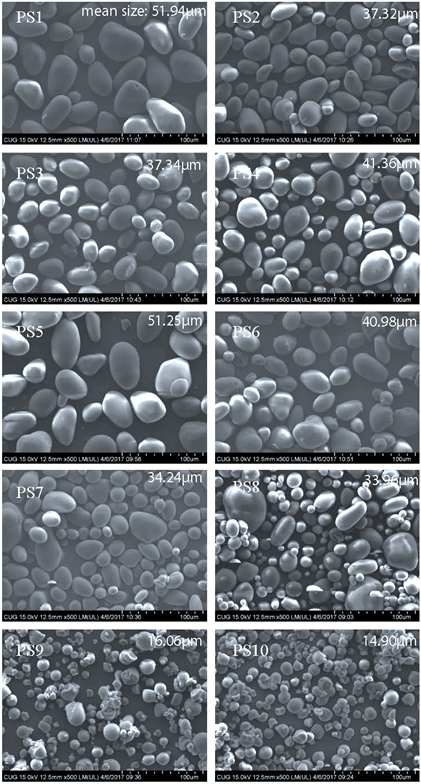
The size of starch granules depended on botanical origin and species 15. Most of the granules of tubers and roots starches were oval, while some of them were round, spherical, polygonal, and irregular 16, 17. As shown in Figure 1, potato starches PS1-PS8 had large, round or oval granules, the mean values of their sizes varied from 33.96 to 51.94 μm. Similar results was also reported for commercial potato starch 18. Sweet potato starch granules (SPS9) were mostly small to medium size, angular or round with some indented, the mean value of its size was 16.06 μm. Cassava starch (CPS10) had round or truncated granules with the mean value of size 14.904 μm.
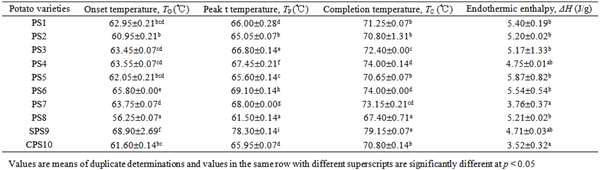
3.3. Thermal PropertiesThe temperature at which granules burst in an aqueous medium was characteristic of the source of the starch 18. To study the properties of the starches, DSC was used to evaluate the thermal properties of the starches during gelatinization. As shown in Table 2, the onset temperature values (TO) ranged from 56.25°C for PS8 to 68.90°C for SPS9. The peak temperature (TP) occurred between 61.50°C for PS8 and 78.30°C for SPS9, whilst the end temperature (TE) was from 67.40°C for PS8 to 79.15°C for SPS9. The differences in the gelatinization temperature between analysed starches may result from different degrees of crystallinity of the starch samples, starch granules with high degree of crystallinity gelatinized at high temperature because of their greater stability and resistance to hydrothermal treatment 19. Values of gelatinization enthalpy (GE) for the starches ranged between 3.52 J/g for CPS10 and 5.87 J/g for PS5, GEs obtained in this study were somewhat lower than previous investigations 20, 22. GE was a measurement of the amount of energy needed to disintegrate the ordered structure of the starch granules 20; values of GE depended on many factors, granule shape, size and degree of crystallinity all belonged to important factors. Kaur et al reported that potato starches which were predominantly composed of large granules showed greater GE 23. However, Noda et al. demonstrated that there were no significant differences in values of GE between different potato starches 24.
Resistant starches on human metabolism were beneficial because they decreased postprandial glycaemia after ingestion of starch-rich foods. Food processing conditions were the main factors that influenced starch digestibility 10, 25. This section assessed in vitro starch digestion of various starch to ascertain the influence of different processing methods on the enzymatic degradation of potato starch.
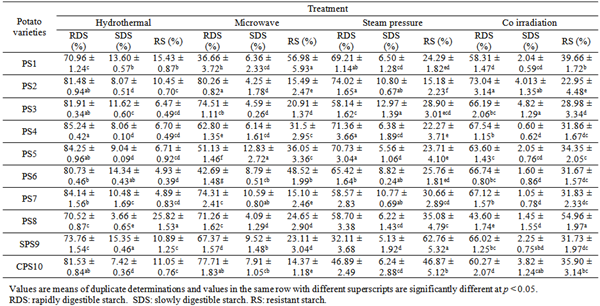
As shown in Table 3, by hydrothermal treatment, 70% more starches of all samples were digested by porcine pancreatin in 20 min incubation, the most rapid digestion fraction was PS4, while the least was PS8. After 120 min digestion, the percentages of the resistant starch changed, and PS8 had the highest RS content. Starches which had low RDS content tended to be high in RS. The percentage of starch susceptibility to in vitro enzyme digestion varied significantly among samples.
Starch digestibility by microwave cooking varied significantly among the samples. RDS content varied from 36.66% for PS1 to 80.26% for PS2 and the content of the former was more than double that of the latter. For RS content, PS1 had the least starch digestibility and PS2 had the largest digestibility. Compared to hydrothermal cooking, the digestibility of the samples in microwave cooking varied more greatly.
Steam pressure cooking for 10 min decreased enzymatic digestion of the starches compared to hydrothermal cooking. The highest increment of 74.02% was observed in PS2 followed by PS4 71.36% and PS5 70.73% after 20 min enzymatic hydrolysis, while SPS9 decreased to 32.10% and the CPS10 decreased to 46.89%. The percentage of starch susceptibility to in vitro enzyme digestion varied significantly between samples. SPS9 had the maximum RS content followed by CPS10. The results showed that sweet potato and cassava starch had the minimum starch digestibility than potato starch under steam-pressure cooking. Besides, starch sample digestibility by pressure cooking decreased markedly compared to hydrothermal cooking. The cause of these phenomena may due to the pastes that had gelatinized in steamed pressure and formed partial gel structures via amylose-amylose interactions, thus retarded starch hydrolysis by enzyme 26.
Irradiation by 60Co with a dosage rate of 10 kGy had a significant effect on starch digestibility. RDS content changed from 43.60% for PS8 to 73.04% for PS2 but RS content varied from 22.95% for PS2 to 54.96% for PS8. In general, high-dose irradiation treatment could increase RS content and decrease starch digestibility. Starch digestibility in vitro being reduced at high doses may owe to the formation of inhibitors of amylolytic enzymes as in Maillard reactions or owe to the formation of resistant starch made up of short amylose chains 27. Short-chain amylose molecules were formed when the –(1-6) glycosidic bonds of large amylopectin molecules were broken. Short-chain amylose molecules were well known to be resistant to hydrolysis by amylases owing to retrogradation 28. Another possible cause of decreased starch digestibility at high doses may be the formation of indigestible properties. A prior study documented that starch digestibility after 120 min increased to a maximum value at 2.5 kGy, then decreased between 5 and 10 kGy. During pyrolysis, new glycosidic bonds, such as β-(1-2) and β-(1-4) bonds, may be formed by trans glycosylation in starch molecules, hence decreasing starch digestibility 29.
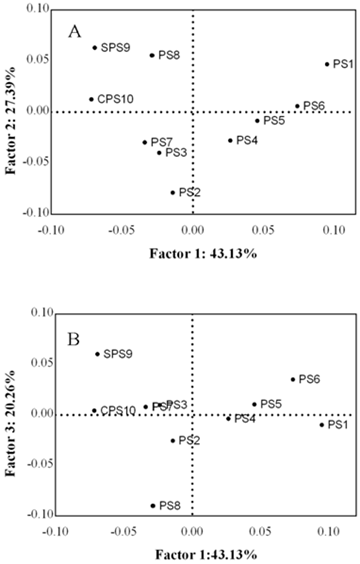
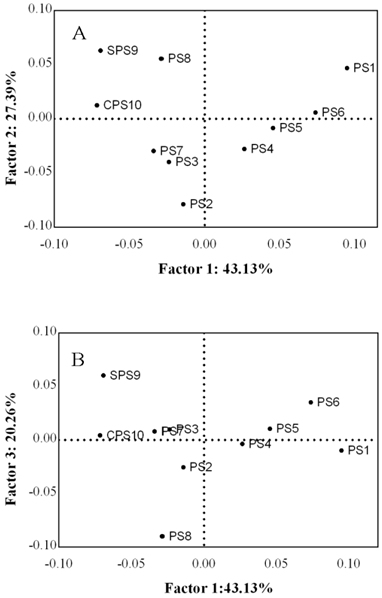
Since fewer amounts of the measured characteristics can give a better visualization of the differences among the samples, the PCA number of variables were reduced by using correlations among the parameters. Figure 2 showed the result of PCA based on the selected parameters. PCA loading plots for PC1 and PC2 factors were shown in Figure 2A. Loading plots for PC1 and PC3 were shown in Figure 2B. Principal Component 1 (PC1) contributed 43.13% of the total variability, while PC2 accounted for 27.39% of the total variability. PC3 contributed 20.26% of the observed variability. The first three principal components could explain 90.78% of the overall variation, thus making this model usable for further principal component analysis. The distribution of different starch varieties on the plot showed the overall variation among compared starches. PC1 was dominated by the effects of T0 and ΔH, supplemented by the effects of moisture and ash content; PC2 was dominated by the effects of protein, supplemented by the effects of moisture, T0, and ΔH; and PC3 was dominated by the effects of T0, supplemented by the effects of TP and TC. Therefore, the model indicated significant similarities among samples of PS2, PS3, PS4, PS5, and PS7, they were grouped into the first group of starches, while PS1 and PS6 were classified into the second group. PS8, SPS9, and CPS10 starch were marked differently from the other ones.
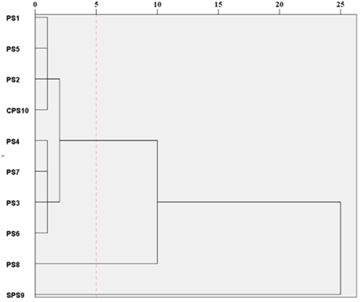
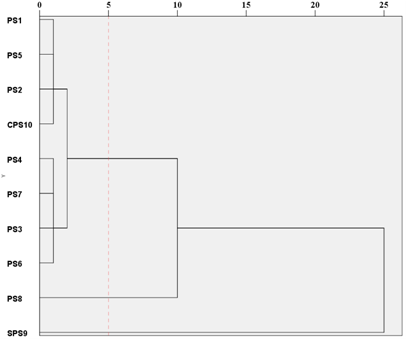
Based on the main physicochemical property indexes of potato starch, the 10 samples were further analysed by SPSS 23.0 for systematic clustering. As shown in Figure. 3, 10 varieties of samples were clustered into 4 classes by setting the Euclidean distance to 5.0. Evidently, the local potato starch in Enshi has a big difference compared with the commonly marketed ones. This was consistent with the results found by Chang et al. in rice, they reckon the differences may be due to differences in soil selenium content 1.
The present study showed the physicochemical properties of potato starches from potatoes grown in Enshi Prefecture of China and their in vitro digestibility. The physicochemical properties of each potato starch were significantly different. The digestibility of potato starch was greatly influenced by processing conditions, microwave cooking can significantly increase the content of RS. Principal component analysis demonstrated an ability to differentiate the starches isolated from different potato cultivars. These results could be of practical value from a nutritional perspective for populations who need to consume more RS, as well as industries interested in developing functional food using potato starch.
The authors acknowledge the support for Hubei Province Science and Technology Innovation Talent Project (2023DJC101), and Youth Foundation of Hubei Academy of Agricultural Science (2018NKYJJ16).
The authors declare no competing financial interest.
| [1] | Chang, C.; Yin, R.; Wang, X.; Shao, S.; Chen, C.; Zhang, H. Selenium translocation in the soil-rice system in the Enshi seleniferous area, Central China. Sci Total Environ. 2019, 669, 83-91. | ||
| In article | View Article PubMed | ||
| [2] | Huang, Y.; Wang, Q.; Gao, J.; Lin, Z.; Bañuelos, G.S.; Yuan, L.; Yin, X. Daily dietary selenium intake in a high selenium area of Enshi, China. Nutrients. 2013, 5, 700-710. | ||
| In article | View Article PubMed | ||
| [3] | Raymond, P., Ezekiel, R., Raymond, B., Resistant starch in food: A review. J. Sci. Food Agr. 2015, 95, 1968–1978. | ||
| In article | View Article PubMed | ||
| [4] | Miao, M., Jiang, B., Cui, S. W., Zhang, T., Jinn, Z., Slowly digestible starch—A review. Crit. Rev. Food Sci. 2015, 55, 1642–1657. | ||
| In article | View Article PubMed | ||
| [5] | Fuentes-Zaragoza, E., Raquel-Navarrete, M. J., Sánchez-Zapata, E., Pérez-Álvarez, J. A., Resistant starch as functional ingredient: A review. Food Res. Int. 2010, 43, 931–942. | ||
| In article | View Article | ||
| [6] | Eshwar, B. A., Gain, A., Shah, A., Wane, I. A., Masood, F. A., Preparation, health benefits and applications of resistant starch—A review. Starch‐Strake 2016, 68, 287-301. | ||
| In article | View Article | ||
| [7] | Zhang, G., Sofiane, M., Haymaker, B. R., Slowly digestible state of starch: mechanism of slow digestion property of gelatinized maize starch. J. Agric. Food Chem. 2008, 56, 4695–4702. | ||
| In article | View Article PubMed | ||
| [8] | Tian, J., Chen, S., Wu, C., Chen, J., Du, X., Chen, J., Ye, X., Effects of preparation methods on potato microstructure and digestibility: An in vitro study. Food Chem. 2016, 211, 564–569. | ||
| In article | View Article PubMed | ||
| [9] | Lovegrove, A., Edwards, C. H., De Noni, I., Patel, H., El, S. N., Grassy, T., Shery, P. R., Role of polysaccharides in food, digestion, and health. Crit. Rev. Food Sci. 2017, 57, 237–253. | ||
| In article | View Article PubMed | ||
| [10] | Englyst, K., Gout, A., Meunier, A., Quigley, M., Enlist, H., Brick, O., Vanoy, S., Inter-laboratory validation of the starch digestibility method for determination of rapidly digestible and slowly digestible starch. Food Chem. 2018, 245, 1183–1189. | ||
| In article | View Article PubMed | ||
| [11] | Winchman, B., Ahmet, T., Bandshell, O., Beknow, A., Young, N., Jeppesen, L., Thomsen, L., Testing properties of potato starch from different scales of isolations-A ring test. J. Food Eng. 2007, 79, 970–978. | ||
| In article | View Article | ||
| [12] | Englyst, H. N., Kingman, S. M., Cummings, J. H., Classification and measurement of nutritionally important starch fractions. Eur. J. Clin. Nutr. 1992, 46, S33–S50. | ||
| In article | |||
| [13] | Andrade, L. A., Barbosa, N. A., Pereira, J., Extraction and properties of starches from the non-traditional vegetables Yam and Taro. Polimerous 2017, 27, 151–157. | ||
| In article | View Article | ||
| [14] | Simkova, D., Lachman, J., Hamouz, K., Vokal, B., Effect of cultivar, location and year on total starch, amylose, phosphorus content and starch grain size of high starch potato cultivars for food and industrial processing. Food Chem. 2013, 141, 3872–3880. | ||
| In article | View Article PubMed | ||
| [15] | Pfister, B., Zeeman, S. C., Formation of starch in plant cells. Cell Mol. Life Sci. 2016, 73, 2781–2807. | ||
| In article | View Article PubMed | ||
| [16] | Lindblom, N., Chang, P. R., Tyler, R. T., Analytical, Biochemical and Physicochemical Aspects of Starch Granule Size, with Emphasis on Small Granule Starches: A Review. Starch - Strake, 2004, 56, 89–99. | ||
| In article | View Article | ||
| [17] | Bai, W., Hebraic, P., Sasikumar, M., Hear, Y., Investigation on the pitting of potato starch granules during high frequency ultrasound treatment. Ultrason Sonochem. 2017, 35, 547–555. | ||
| In article | View Article PubMed | ||
| [18] | Han, Z., Zeng, X. A., Yu, S. J., Zhang, B. S., Chen, X. D., Effects of pulsed electric fields (PEF) treatment on physicochemical properties of potato starch. Innov. Food Sci. Emerg. 2009, 10, 481–485. | ||
| In article | View Article | ||
| [19] | Trinh, K. S., Recrystallization of starches by hydrothermal treatment: digestibility, structural, and physicochemical properties. J. Food Sci. Tech. 2015, 52, 7640–7654. | ||
| In article | View Article PubMed | ||
| [20] | Lycia, K., Szczuka, L., Rakowski, D., Walczak, M., Physicochemical properties of starches obtained from Polish potato cultivars. Starch - Strake 2011, 64, 105–114. | ||
| In article | View Article | ||
| [21] | Alani, K., Qi, X., Tester, R. F., Snape, C. E., Physic-chemical properties of potato starches. Food Chem. 2011, 125, 958–965. | ||
| In article | View Article | ||
| [22] | Liu, Q., Weber, E., Currie, V., Yada, R., Physicochemical properties of starches during potato growth. Carbohyd Polym. 2003, 51, 213–221. | ||
| In article | View Article | ||
| [23] | Kaur, L., Singh, N., Sodhi, N. S., Some properties of potatoes and their starches II. Morphological, thermal and rheological properties of starches. Food Chem. 2002, 79, 183–192. | ||
| In article | View Article | ||
| [24] | Noda, T., Takanawa, S., Matsuura-Endo, C., Kim, S., Hashimoto, N., Yamauchi, H., Takeda, Y., Physicochemical properties and amylopectin structures of large, small, and extremely small potato starch granules. Carbohyd. Polym. 2005, 60, 245–251. | ||
| In article | View Article | ||
| [25] | Raatz, S. K., Idso, L., Johnson, L. A. K., Jackson, M. I., Combs, G. F., Resistant starch analysis of commonly consumed potatoes: Content varies by cooking method and service temperature but not by variety. Food Chem. 2016, 208, 297–300. | ||
| In article | View Article PubMed | ||
| [26] | Bustos, M. C., Barrera, G. N., Perez, G. T., León, A. E., The effect of type II and type IV resistant starch on the hydrolysis of maize and wheat gelatinised starch catalysed by pancreatic α-amylase. Int. J. Food Sci. Tech. 2012, 47, 2134–2140. | ||
| In article | View Article | ||
| [27] | Faisant, N., Champ, M., Colonna, P., Buléon, A., Structural discrepancies in resistant starch obtained in vivo in humans and in vitro. Carbohydr. Polym. 1993, 21, 205-209. | ||
| In article | View Article | ||
| [28] | Leloup, V. M., Colonna, P., Ring, S. G., Physico—chemical aspects of resistant starch. J. Cereal Sci. 1992, 16, 253-266. | ||
| In article | View Article | ||
| [29] | Rambo, G. O., Taylor, J. R., Munnar, A., Effect of irradiation, with and without cooking of maize and kidney bean flours, on porridge viscosity and in vitro starch digestibility. J. Sci. Food Agr. 2001, 81, 497–502. | ||
| In article | View Article | ||
Published with license by Science and Education Publishing, Copyright © 2024 Yong Sui, Jianbin Shi, Tian Xiong, Xueling Chen, Sha Cai and Xin Mei
 This work is licensed under a Creative Commons Attribution 4.0 International License. To view a copy of this license, visit
http://creativecommons.org/licenses/by/4.0/
This work is licensed under a Creative Commons Attribution 4.0 International License. To view a copy of this license, visit
http://creativecommons.org/licenses/by/4.0/
| [1] | Chang, C.; Yin, R.; Wang, X.; Shao, S.; Chen, C.; Zhang, H. Selenium translocation in the soil-rice system in the Enshi seleniferous area, Central China. Sci Total Environ. 2019, 669, 83-91. | ||
| In article | View Article PubMed | ||
| [2] | Huang, Y.; Wang, Q.; Gao, J.; Lin, Z.; Bañuelos, G.S.; Yuan, L.; Yin, X. Daily dietary selenium intake in a high selenium area of Enshi, China. Nutrients. 2013, 5, 700-710. | ||
| In article | View Article PubMed | ||
| [3] | Raymond, P., Ezekiel, R., Raymond, B., Resistant starch in food: A review. J. Sci. Food Agr. 2015, 95, 1968–1978. | ||
| In article | View Article PubMed | ||
| [4] | Miao, M., Jiang, B., Cui, S. W., Zhang, T., Jinn, Z., Slowly digestible starch—A review. Crit. Rev. Food Sci. 2015, 55, 1642–1657. | ||
| In article | View Article PubMed | ||
| [5] | Fuentes-Zaragoza, E., Raquel-Navarrete, M. J., Sánchez-Zapata, E., Pérez-Álvarez, J. A., Resistant starch as functional ingredient: A review. Food Res. Int. 2010, 43, 931–942. | ||
| In article | View Article | ||
| [6] | Eshwar, B. A., Gain, A., Shah, A., Wane, I. A., Masood, F. A., Preparation, health benefits and applications of resistant starch—A review. Starch‐Strake 2016, 68, 287-301. | ||
| In article | View Article | ||
| [7] | Zhang, G., Sofiane, M., Haymaker, B. R., Slowly digestible state of starch: mechanism of slow digestion property of gelatinized maize starch. J. Agric. Food Chem. 2008, 56, 4695–4702. | ||
| In article | View Article PubMed | ||
| [8] | Tian, J., Chen, S., Wu, C., Chen, J., Du, X., Chen, J., Ye, X., Effects of preparation methods on potato microstructure and digestibility: An in vitro study. Food Chem. 2016, 211, 564–569. | ||
| In article | View Article PubMed | ||
| [9] | Lovegrove, A., Edwards, C. H., De Noni, I., Patel, H., El, S. N., Grassy, T., Shery, P. R., Role of polysaccharides in food, digestion, and health. Crit. Rev. Food Sci. 2017, 57, 237–253. | ||
| In article | View Article PubMed | ||
| [10] | Englyst, K., Gout, A., Meunier, A., Quigley, M., Enlist, H., Brick, O., Vanoy, S., Inter-laboratory validation of the starch digestibility method for determination of rapidly digestible and slowly digestible starch. Food Chem. 2018, 245, 1183–1189. | ||
| In article | View Article PubMed | ||
| [11] | Winchman, B., Ahmet, T., Bandshell, O., Beknow, A., Young, N., Jeppesen, L., Thomsen, L., Testing properties of potato starch from different scales of isolations-A ring test. J. Food Eng. 2007, 79, 970–978. | ||
| In article | View Article | ||
| [12] | Englyst, H. N., Kingman, S. M., Cummings, J. H., Classification and measurement of nutritionally important starch fractions. Eur. J. Clin. Nutr. 1992, 46, S33–S50. | ||
| In article | |||
| [13] | Andrade, L. A., Barbosa, N. A., Pereira, J., Extraction and properties of starches from the non-traditional vegetables Yam and Taro. Polimerous 2017, 27, 151–157. | ||
| In article | View Article | ||
| [14] | Simkova, D., Lachman, J., Hamouz, K., Vokal, B., Effect of cultivar, location and year on total starch, amylose, phosphorus content and starch grain size of high starch potato cultivars for food and industrial processing. Food Chem. 2013, 141, 3872–3880. | ||
| In article | View Article PubMed | ||
| [15] | Pfister, B., Zeeman, S. C., Formation of starch in plant cells. Cell Mol. Life Sci. 2016, 73, 2781–2807. | ||
| In article | View Article PubMed | ||
| [16] | Lindblom, N., Chang, P. R., Tyler, R. T., Analytical, Biochemical and Physicochemical Aspects of Starch Granule Size, with Emphasis on Small Granule Starches: A Review. Starch - Strake, 2004, 56, 89–99. | ||
| In article | View Article | ||
| [17] | Bai, W., Hebraic, P., Sasikumar, M., Hear, Y., Investigation on the pitting of potato starch granules during high frequency ultrasound treatment. Ultrason Sonochem. 2017, 35, 547–555. | ||
| In article | View Article PubMed | ||
| [18] | Han, Z., Zeng, X. A., Yu, S. J., Zhang, B. S., Chen, X. D., Effects of pulsed electric fields (PEF) treatment on physicochemical properties of potato starch. Innov. Food Sci. Emerg. 2009, 10, 481–485. | ||
| In article | View Article | ||
| [19] | Trinh, K. S., Recrystallization of starches by hydrothermal treatment: digestibility, structural, and physicochemical properties. J. Food Sci. Tech. 2015, 52, 7640–7654. | ||
| In article | View Article PubMed | ||
| [20] | Lycia, K., Szczuka, L., Rakowski, D., Walczak, M., Physicochemical properties of starches obtained from Polish potato cultivars. Starch - Strake 2011, 64, 105–114. | ||
| In article | View Article | ||
| [21] | Alani, K., Qi, X., Tester, R. F., Snape, C. E., Physic-chemical properties of potato starches. Food Chem. 2011, 125, 958–965. | ||
| In article | View Article | ||
| [22] | Liu, Q., Weber, E., Currie, V., Yada, R., Physicochemical properties of starches during potato growth. Carbohyd Polym. 2003, 51, 213–221. | ||
| In article | View Article | ||
| [23] | Kaur, L., Singh, N., Sodhi, N. S., Some properties of potatoes and their starches II. Morphological, thermal and rheological properties of starches. Food Chem. 2002, 79, 183–192. | ||
| In article | View Article | ||
| [24] | Noda, T., Takanawa, S., Matsuura-Endo, C., Kim, S., Hashimoto, N., Yamauchi, H., Takeda, Y., Physicochemical properties and amylopectin structures of large, small, and extremely small potato starch granules. Carbohyd. Polym. 2005, 60, 245–251. | ||
| In article | View Article | ||
| [25] | Raatz, S. K., Idso, L., Johnson, L. A. K., Jackson, M. I., Combs, G. F., Resistant starch analysis of commonly consumed potatoes: Content varies by cooking method and service temperature but not by variety. Food Chem. 2016, 208, 297–300. | ||
| In article | View Article PubMed | ||
| [26] | Bustos, M. C., Barrera, G. N., Perez, G. T., León, A. E., The effect of type II and type IV resistant starch on the hydrolysis of maize and wheat gelatinised starch catalysed by pancreatic α-amylase. Int. J. Food Sci. Tech. 2012, 47, 2134–2140. | ||
| In article | View Article | ||
| [27] | Faisant, N., Champ, M., Colonna, P., Buléon, A., Structural discrepancies in resistant starch obtained in vivo in humans and in vitro. Carbohydr. Polym. 1993, 21, 205-209. | ||
| In article | View Article | ||
| [28] | Leloup, V. M., Colonna, P., Ring, S. G., Physico—chemical aspects of resistant starch. J. Cereal Sci. 1992, 16, 253-266. | ||
| In article | View Article | ||
| [29] | Rambo, G. O., Taylor, J. R., Munnar, A., Effect of irradiation, with and without cooking of maize and kidney bean flours, on porridge viscosity and in vitro starch digestibility. J. Sci. Food Agr. 2001, 81, 497–502. | ||
| In article | View Article | ||