Mango production is a very important sector for food security and social well-being of the Chadian population. Mango processing in Chad is limited, and diversification of processed products is very important. However, there is a lack of data on the biochemical and microbiological characteristics of the mango varieties used. The aim of this study was to assess the microbiological characteristics of dried mangoes consumed in five localities in Chad (Doba, Bebedjia, Koumra, Moundou and Bongor). One hundred samples were randomly collected from 3 vendors of the 5 localities. Standard microbiological methods were used. Results showed a total absence of spores, Escherichia coli and Salmonella in all samples analyzed. Total aerobic mesophilic counts (TAMC) was detected in all samples analyzed. TAMC was significantly affected (p=˂0.05) by locality in contrast to water content (p˂0.05). Total coliforms were counted in all samples except those from Bongor. Faecal coliforms were found in samples V3 from Doba, V1 from Bebedjia, V1 from Koumra and V3 from Moundou. Staphylococci and fungi were found in samples from Koumra, Doba and Moundou. Principal microbiological analysis revealed that samples from Bongor were the most hygienic, unlike those from Koumra. In summary, these results will open up new prospects for enhancing the value of dried mangoes. Therefore, it’s imperative for the government and its partners to propose appropriate solutions for better processing, through training and awareness-raising on good hygiene and manufacturing practices.
The mango tree, Mangifera indica L, belongs to the Anacardiaceae family and is native to northern India at the foot of the Himalayan range 1. There are some 1,000 varieties on various continents 2. Its fruit (the mango) is one of the most widely cultivated and profitable tropical fruits. It comes just after banana (37.60%) and before pineapple (12.10%), avocado (9.80%), papaya (5.40%), oranges (4.60%), watermelon (4.20%) and passion fruit (3.70%) 3, 4. Its production quantity accounts for 19.60% of the world's production of tropical fruit, which was 48.361 million tonnes in 2017 5.
This high production makes the fruit a prime source of income for arboriculturists. Chad is no stranger to mango production and marketing. In fact, its production quantity in 2010 (27,600 tonnes) represented 2% of production in ECOWAS countries 6. On average, 12,600 tonnes are produced each year in the north, south, east and west of Chad. However, the high perishability of this fruit considerably limits its distribution in the fresh state. Yet there is a strong demand for semi-worked products for the pastry, confectionery and dairy industries, as well as for processed products such as juices, nectars, concentrates, jams and flavours 7.
This early post-harvest deterioration accounts for nearly 80% of mango production 8. This loss is caused by poor harvesting techniques, attacks by parasites and pests, and product depreciation under the influence of microbiological agents. We should also note the difficulties of preservation in the absence of appropriate infrastructures, and the low level of processing due to a lack of knowledge of the most appropriate techniques. Microbiological deterioration seems to be the most worrying in that it affects both the sanitary and physico-chemical quality of the food, thus reducing the cost of sale on the market. Several microorganisms, including Escherichia coli, Salmonella, staphylococci, enterobacteria and coliforms of external or internal origin colonize this fruit, which is very rich in carbohydrates, water and vitamins, leading to the degradation and loss of these nutritional substances 9, 10.
Food processing and storage are of considerable importance, in that they can ensure social equilibrium and contribute to the country's economic development. Another essential role played by these activities in terms of nutrition and health is to ensure their preservation over a long period, mainly justified by the reduction in losses linked to man's need to have sufficient food available at all times 11.
To compensate for these losses, several processing techniques based essentially on the reduction of water activity are increasingly being applied. These include processing into juice, nectars, jams, compotes, mango preserves mango chutney and dried slices 12, 13, 14, 15
Drying mangoes to improve shelf life and preservation is becoming increasingly popular, given the ease with which it can be implemented. Indeed, mango drying results in the production of mango pods following dehydration, which partially or totally removes the water. This ancient technique is widely used today in developing countries for food preservation.
In a cash crop, the survival of sun-dried mango as a commercial product depends on its nutritional, gustatory and hygienic qualities, as well as on how well it keeps at room temperature. All this has a greater or lesser impact on the acceptability and final quality of the marketed product. It is in this context that this work was initiated, with the aim of assessing the hygienic quality of dried mangoes sold in 5 towns in Chad. Specifically, it aims to determine some compositional and microbiological characteristics of dried mangoes consumed in Chad.
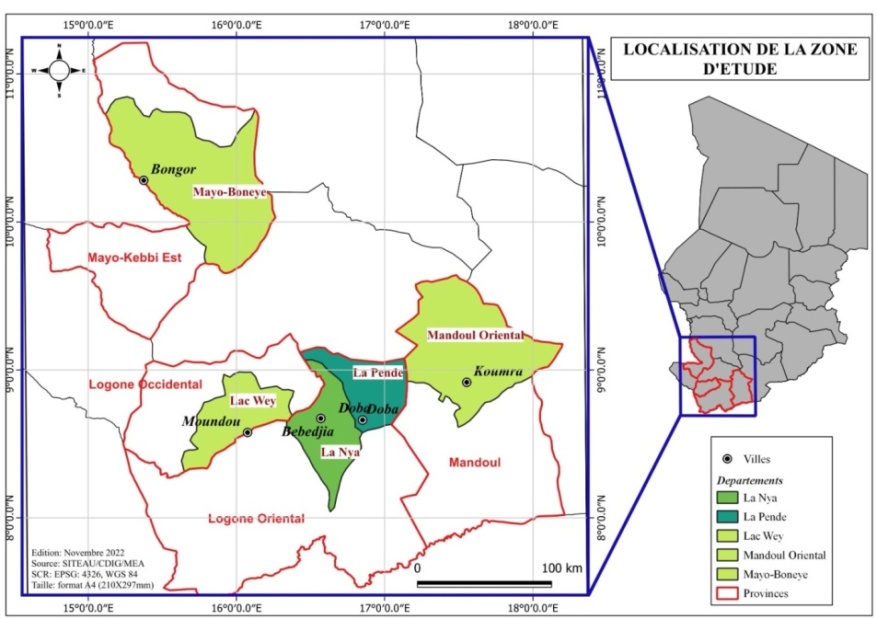
The experimental study was conducted in the research laboratory of Food Science and Nutrition at the Faculty of Human health sciences of the University of N'Djamena. The study took place in four regions of the Sudanian zone, namely Logone Occidental, Logone Oriental, Mandoul and Mayo Kebbi Ouest, reputed to be areas with high mango production potential (Figure 1)
The mango samples used come from the local markets of Logone Occidental, Logone Oriental, Mandoul and Mayo Kebbi Ouest. The fruits used were commercially ripe and unripe without injury. The fresh mangoes were solar dried by all the vendors in different regions.
2.2. MethodsDried mango samples were collected aseptically, poured in labeled sterile bags avoiding any risk of contamination during sampling and handling in the laboratory. A total of 100 samples (dried mangoes) due to 20 samples per site were studied; in fact, 3 sets of samples were collected per study locality. These 3 batches corresponded to 3 vendors identified in these areas. Once the samples had been collected, they were transported in a refrigerated cooler within 12 hours of collection, where they were directly used to enumerate the various microorganisms under aseptic conditions.
This was assessed according to the standard IUPAC (1979) protocol. 5 g (M1) of each sample were placed in coffee filter paper (Watman N° 4), dried at 105°C for 30 min and cooled in a desiccator for 90 min to remove moisture, sealed, weighed and dried at 105°C in a ventilated oven branded "Venticell (MM-group)". Weighing was carried out at regular intervals of 2 h until a constant mass (M2) was obtained. The moisture content (MC) was determined by the following formula 1:
 | (1) |
M1and M2 being the sample masses before and after drying respectively.

Plate Count Agar (PCA) medium was used for inoculation and enumeration of TAMC in accordance with NF ISO 4833. 0.94 g of PCA were dissolved in 40 mL of distilled water and the mixture autoclaved at 121°C for 15 min. After sterilization and cooling to room temperature in a microbiological hood, approximately 20 mL were poured into sterilized glass petri dishes. One (1) mL of each sample and of each dilution prepared as described above were deeply inoculated into these dishes at a rate of two replicates per sample and per dilution. They were incubated at 30°C for 72 h before colony counting, and results were expressed as Colony Forming Units (CFU) per g of sample (CFU/g).
Fecal coliforms were detected and counted on Methylene Blue Eosin (MBE) medium. It was prepared by mixing 1.44 g of EMB powder in 40 mL of distilled water, followed by autoclaving at 121°C for 15 min. The medium was then poured into petri dishes and each dilution added in depth, followed by incubation at 37°C for total coliforms and 44°C for fecal coliforms for 24 h. Colony counting was carried out after incubation and results expressed as CFU/g.
Methylene Blue Eosin (MBE) medium was used for the isolation of enteropathogenic E. coli. Petri dishes containing the seeded medium were incubated at 37°C for 24 hr. Colonies with a metallic green sheen were picked and plated on Muller Hington (MH) medium for identification of enteropathogenic E. coli. Each suspect colony obtained on nutrient agar was scraped off and sterilely introduced into 1.5 mL of heart-brain broth containing 15% glycerol (v/v) and kept cool (+4°C). API® 20E, API® 20NE (Bio Mérieux) and minimal galleries were used for bacteria biochemical identification.
The SSA (Salmonella Shigella Agar) culture medium was used for detection and counting of Salmonella and Shigella. This selective medium has the particularity of inhibiting the growth of Gram-positive bacteria and many Coliforms and Proteus. This enumeration takes place in four (4) steps namely pre-enrichment, enrichment, isolation and identification of salmonella. Two (2) media were required, one for enrichment (Rappaport-Vassiliadis) and the other for isolation (SSA). The identification of salmonella was made from the minimum gallery and confirmation by the API 20 E rapid method.
The results were expressed in Colony Forming Units for 25 g of products (CFU/25 g).
Staphylococci were detected and counted on Chapman agar medium which has the particularity of being very selective. Once the medium was prepared (dissolving 111 g of dehydrated medium in 1 L of water followed by sterilization), it was poured into petri dishes before solidification. A volume of 0.1 mL of the product to be analyzed and its dilutions obtained as described above were spread on the medium surface using a sterile spreader then incubated at 37°C for 24 to 48 h. Colony Forming Units (CFU/g) were used to express the results of the enumeration, which was done by counting the colonies.
Detection and counting of spores required the combination of two media: Glucose Bromocresol Purple Agar (GPB) for the identification of Bacillus spp spores and Reinforced Clostridial Medium Agar (TSN) for Clostridium spp. After preparation of the different dilutions as described above, 4 mL of inoculum from each dilution were introduced into 4 test tubes at a rate of 1 mL per tube and heated in a water bath at 80°C for 10 min. The inocula were removed and cooled to room temperature for 10 min and inoculated at a rate of 1 mL per dish on the surface by plating on Bromocresol Purple Glucose Agar for the search for Bacillus spp and at depth in Reinforced Clostridial Medium Agar for the search for Clostridium spp. After seeding, the plates were incubated at 37°C for 48 h. The spores were subsequently identified after staining with 0.5% malachite green and safranin (the vegetative forms have a red color and the free spores have a green color). Colony Forming Units (CFU/g) were used to express the results of the enumeration, which was done by counting the colonies.
SABOURAUD agar medium enriched with chloramphenicol was used to isolate and enumerate yeasts and molds. Once the medium was prepared (dissolving 45.50 g of dehydrated medium in 1 L of water followed by sterilization), it was poured (10 to 25 mL of medium, homogenizing perfectly) into petri dishes before solidification. A volume of 0.1 mL of the product to be analyzed and its dilutions obtained as described above were spread on the surface of the medium using a sterile spreader then incubated at 30°C for 72 to 120 h. Colony Forming Units (CFU/g) were used to express the results of the enumeration, which was done by counting the colonies.
2.3. Statistical AnalysisThe results obtained were presented in the form of means ± standard deviation using Microsoft Office Excel 2013 software. These means are the result of three tests or two replicates. Analysis of variance (ANOVA) at the 5% probability threshold allowed us to compare the means and a Fisher post hoc test was carried out to classify the means using Minitab version 18.Ink software. XLSTAT 2014 software allowed us to carry out a Principal Component Analysis (PCA).
3.4. Faecal Coliform Load of Dried Mango Pods in Different Regions
3.5. Escherichia Coli Load in Dried Mango Pods in Different Regions
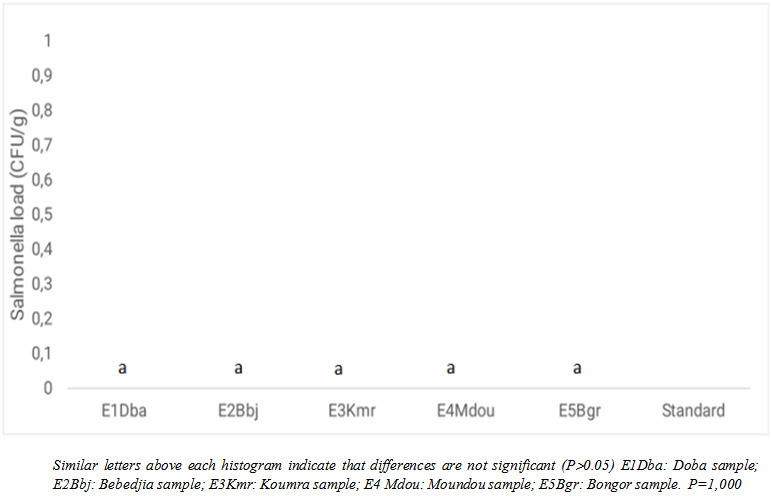
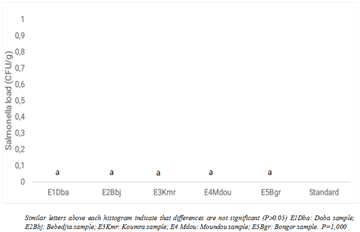
Results from Figure 7 showed that no Salmonella colonies (0 CFU/25 g) were found in 25 g of mango pods, irrespective of locality and vendor.
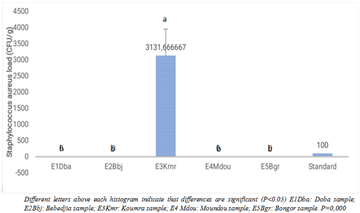
Analysis of the Staphylococcus aureus load shows that samples V1 and V3 from Koumra are significantly (contaminated and unfit for consumption. They showed overall loads of 4.55.103 and 1.82.103 CFU/g respectively.
3.9. Yeast and Mold Load of Dried Mango Pods in Different Regions
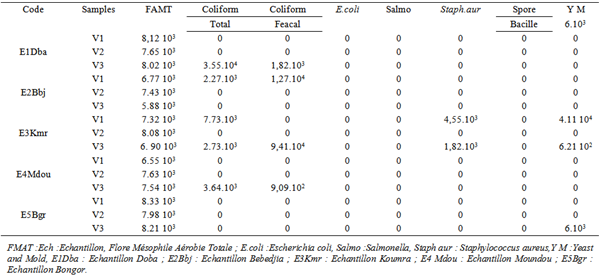
Table 1 represent the influence of collection area and vendor on the yeast and mold load. It shows that samples V1 from Doba, V2 from Koumra and V1 from Moundou respectively had yeast and mold loads of 6.000 CFU/g, 411.000 CFU/g and 621 CFU/g, making them unfit for consumption.
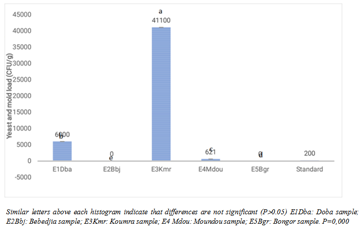
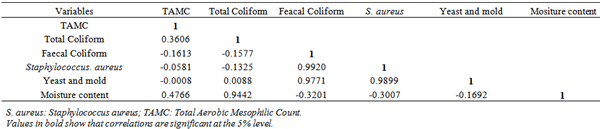
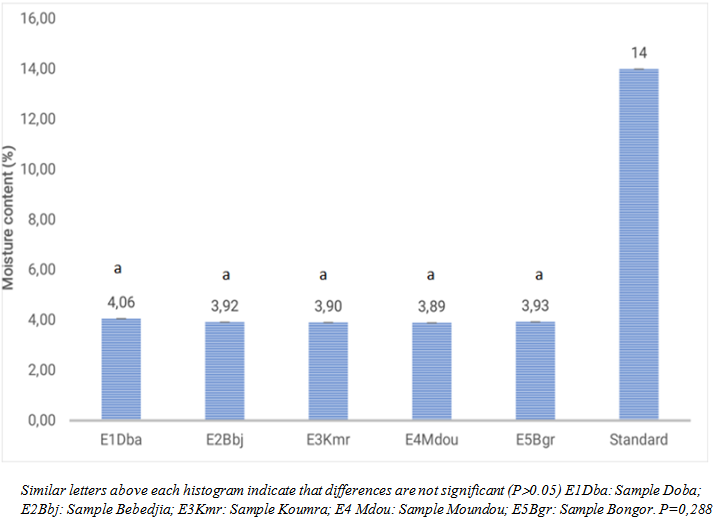
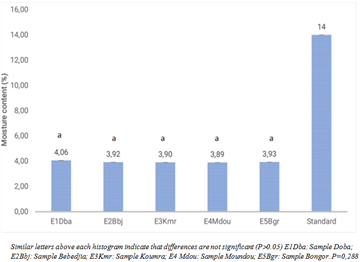
Figure 2 shows the influence of collection area on the moisture content of dried mango pods. Overall, the figure shows that the study area did not significantly (p=˃0.05) affect this parameter. An application of the same drying method from one zone to another, the use by arboriculturists of ventilated dryers that remove more water and the similarity in temperatures between these different zones (Figure 2). Water contents ranged from 3.90% (Koumra) to 4.06% (Doba) and were lower than the 14% reported by Ndangui 16 as the limit content to ensure good microbiological stability and shelf life of food raw materials. The values obtained were also at those of Mwamba et al. 17, which were 8.25±0.01% and 14.17±0.01% respectively on oven-dried and sun-dried mango pods. This demonstrates the importance of respecting the drying conditions (time-temperature pair) for pods, as well as the use of appropriate tools. The availability of water in a matrix is at the root of the reduction in its shelf life, in that it favors good microbial growth and colonization. These observations are confirmed by the positive correlation (r=0.9442) observed between this parameter and Total Aerobic Mesophilic Flora.
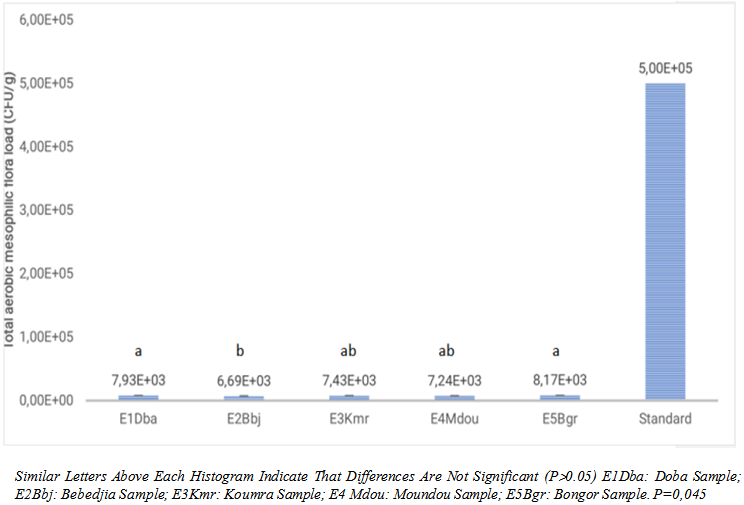
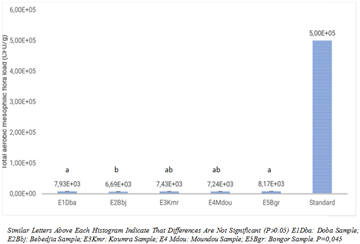
Total Aerobic Mesophilic Count (TAMC) is an indicator of food sanitary quality due to a certain human activity 18. These germs may or may not be pathogenic, depending on the hygienic state of the contaminant. These observations are confirmed by the positive correlation with total coliforms (r=0.3606). Evaluation of the microbiological quality of mango pods (Table 1) shows that, depending on the vendor and locality, these two parameters significantly affect TAMC. This is explained by the population density in each vendor's trading area, as well as the sanitation of the area. A ranking of this parameter shows that TAMC is highest among vendors in Bongor, followed by Doba, Koumra, Moundou and Bebedjia. These findings can be explained by the fact that the first two locations are transportation crossroads with considerable human activity and dense populations, both of which would affect the product's hygienic quality. It also varies from one vendor to another within the same locality. This variability in TAMC could depend on the density of street traffic, which influences environmental hygiene and therefore product pollution. This high TAMC load favors strong product spoilage and the risk of the presence of pathogenic germs 19. Results from Figure 3, which shows the average TAMC as a function of collection area, shows that the values obtained are all below the threshold value (500,000 CFU/g) prescribed by ISO 4833. It can be due to the airtight nature of the packaging used by the vendors in each case. Nevertheless, there was a significant influence (p˂0.05) of collection areas on this parameter, with a higher load in the Doba and Bongor pods and a lower load in the Bebedjia pods. The loads obtained are lower than those of Kasse et al. 18, which were over 1.49.106 CFU/g in mango pods sold in Senegal, but similar to the data of Mwamba et al. 20.
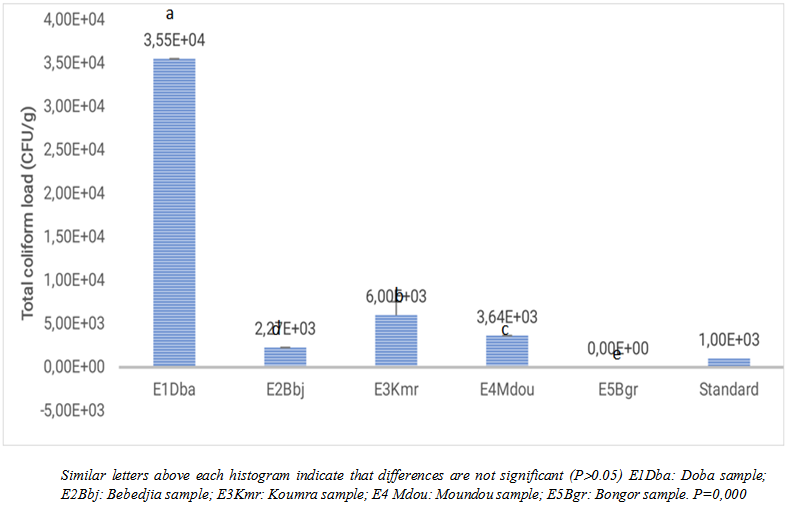
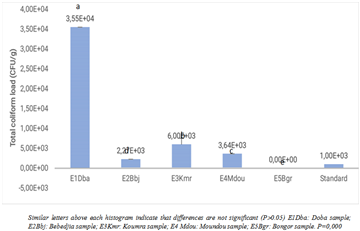
Total coliforms are among the germs whose presence in food does not necessarily pose a health risk, 17. Nevertheless, prolonged contact with the substrates in their environment could lead to their rapid multiplication and a certain health risk for consumers. They are generally caused by a lack of hygiene during handling, the use of soiled equipment and contaminated water from streams bordering toilets or in densely populated areas. Vendors in Bongor were very hygienic as showed in Table 1, as no total coliform colonies were detected. At the same time, vendors in Koumra were the least hygienic, with two out of three presenting contaminated samples. Indeed, vendors in Bongor are better educated and are under constant sanitary control by the authorities, given that this locality is an inter-state crossroads and a tourist town. Figure 4 also shows that only samples from Bongor met the ISO 4833 standard for total coliforms (maximum 1000 CFU/g) and were therefore fit for human consumption. The statistical differences observed can also be explained by difference in temperature in the two study areas. The results obtained are comparable to those of Bongor, but they are also higher than the values found on sun- and oven-dried mango pods by Mwamba et al. 20, which were 0 CFU/g. A high sugar content reducing water availability and, consequently, microbial mobility and growth in the different samples could also explain the differences observed 21.
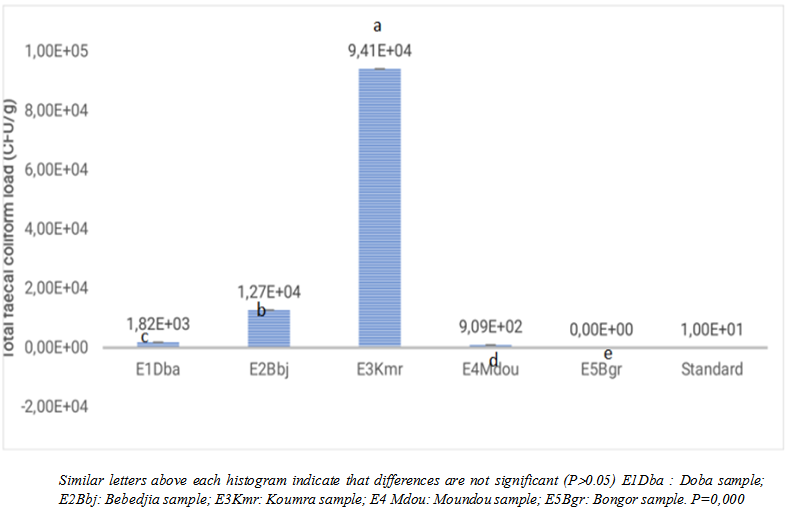
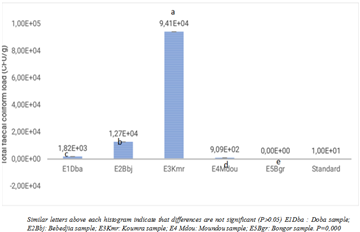
Faecal coliforms refer to germs found in the human gastrointestinal tract, whose presence on foodstuffs would indicate faecal contamination due to poor personal hygiene and the use of water contaminated by faeces to clean mangoes and utensils 19. The presence of these germs is thus indicative of the presence of numerous germs such as staphylococci and fungi (intestinal yeasts). A positive correlation has been established between this parameter and the presence of both staphylococci (r=0.9920) and fungi (r=0.9771). It reveals that vendors in all localities except Bongor are healthy carriers of these germs. Table 1 also shows that samples V3 from Doba, V1 from Bebedjia, V1 from Koumra and V3 from Moundou are unfit for consumption. This supports the findings of Rakotonantoandro 21 and Hyacinthe 22, who similarly noted that the vendors, their location, and the water content of the various samples all affected the level of contamination in a community. Furthermore, Figure 5 shows that all cosettes sold in all localities except Bongor are unfit for consumption from the point of view of this germ. This would be due to storage in humid environments favorable to microbial growth by vendors in these aforementioned localities 23. We also noted that Koumra is the most at-risk locality in terms of hygiene (average load of 94100 CFU/g). The average values obtained are higher than those of Mwamba et al. 20, who reported 0 CFU on oven- and sun-dried mango pods. These results thus demonstrate the need to train vendors on good hygiene and preservation practices.
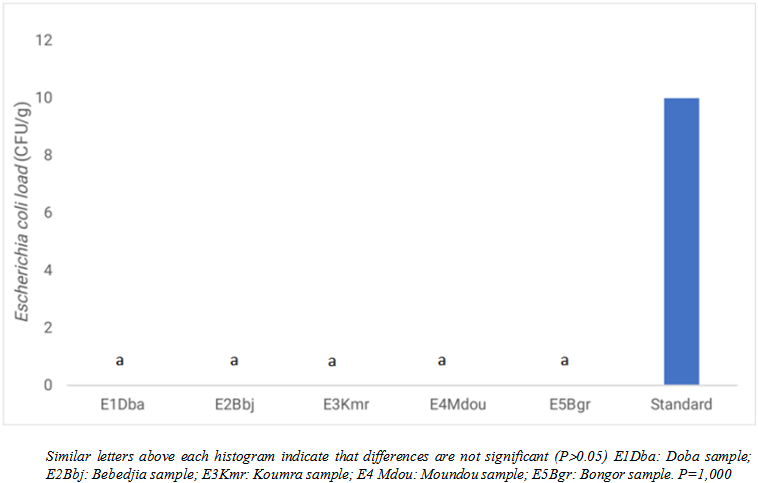
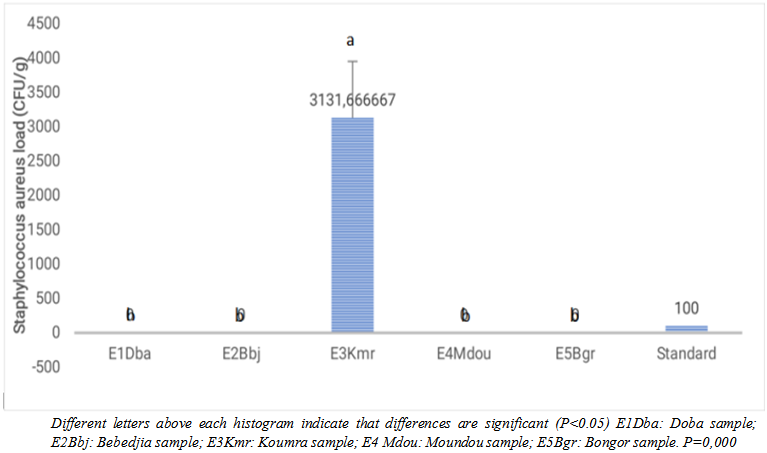
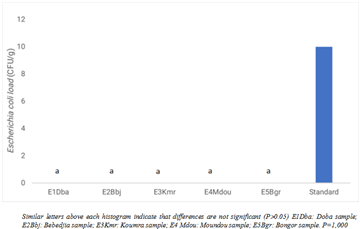
E. coli, salmonella, staphylococci and yeasts are among the germs that cause faecal contamination, reflecting intense human activity and poor knowledge of hygiene rules. Table 1 and Figure 6 shows that not all samples contained Escherichia coli. It could be due to the absence of this germ among the faecal coliforms found in all localities except Bongor. The values obtained are statistically lower for all vendors and localities according to the ISO 16649-1 or 2 standard cited in EC regulation 2073/2005, which stipulates that the load of this germ in fruit ready for consumption must be less than 10 CFU/g. As a result, these pods are edible from the point of view of this pathogen. The results obtained are similar to those of Rakotonantoandro 21. This shows that vendors in all these localities observe good practices, i.e. that the water used to clean mangoes and utensils is free of Salmonella. Irrespective of locality and vendor, the cosettes surveyed were fit for human consumption, as their Salmonella load was similar to the ISO 4833 standard of 0 CFU/25 g. The results obtained are similar to those of Kasse et al. 18 and Mwamba et al. 20. The positive correlation (r=0.9920) between these two metrics indicates the existence of these germs in fecal coliforms. This would further demonstrate that the V1 and V3 vendors do not comply with good pre- and post-production hygiene and sanitation practices 24. The cause may be attributed to the advanced maturity of mangoes used for cosette production in this area 13. Analysis of the results presented in Figure 8 showed a statistical difference (p˂0.05) between results depending on locality. The staphylococcus load in the Koumra samples was 3.13.103 CFU/g, unlike all the others, which were 0 CFU/g. So, apart from this sample, all the others showed values in line with the ISO 4833 standard of 100 CFU/g in ready-to-eat fruit. The data obtained is similar (with the exception of Koumra) to that of 24, which was 0 CFU/g.
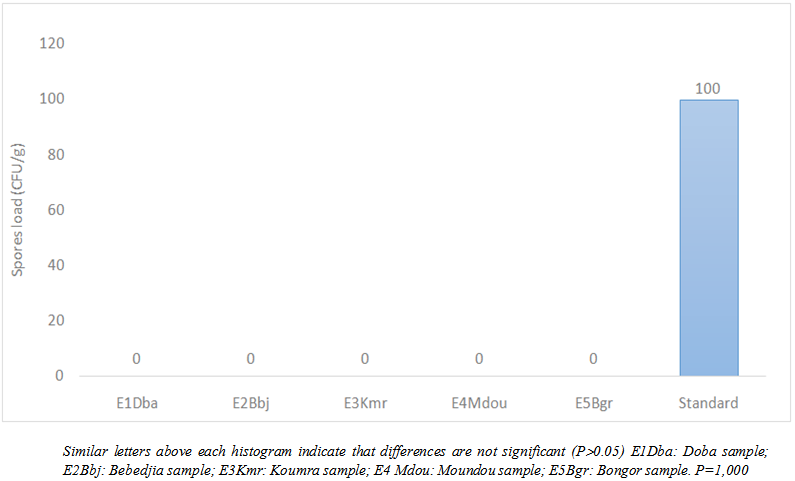
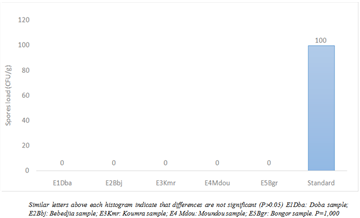
Bacterial spores are ubiquitous, thermoresistant (resistant to heat, radiation, disinfectants and desiccation) and dormant, making them a major contaminant of food products. The presence of these germs indicates a greater health problem, as they are resistant to heat treatment. From Figure 9 and Table 1, it can be seen that dried mango pods do not contain heat-resistant or thermophilic germs, whatever the area or vendor. This can be explained by the fact that the collection and cultivation areas for the various samples do not have temperatures above 40°C, making it virtually impossible to find such germs in these areas. Numerous authors 24, 18, 20 have also reported the absence of spore-forming microorganisms in mango pods. What's more, the average load in these different areas is below the regulatory threshold (100 CFU/g) according to ISO 4833. These pods are therefore compliant and fit for consumption in terms of spore load.
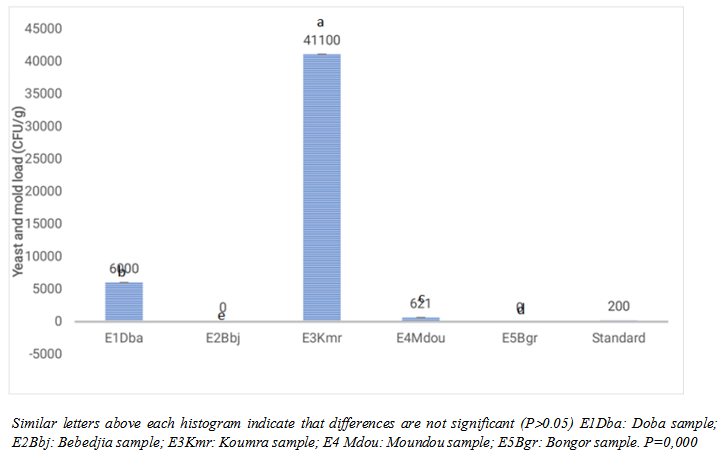
These different loads between vendors in the same locality and between localities can be explained by the cleanliness of the collection areas, the presence or absence of asphalt in the sales area, the leaking of packaging in the aforementioned areas, faecal contamination linked to a diet rich in processed cereal products such as bread, and finally to the ripeness of the fruit. This contamination is thought to have occurred during processing in contaminant-laden open air. Similarly, open-air solar drying by vendors in high-risk areas would also explain the differences observed 13. Thus, the use of electric dryers and strict compliance with hygiene rules during processing would appear to be solutions to yeast and mold contamination. Figure 10 also shows that only samples from Bebedjia and Bongor complied with the ISO 4833 standard, which recommends a yeast and mold load ≤200 CFU/g. Samples from Koumra were the most affected (41100 CFU/g), demonstrating the need for intensified sanitary controls of foodstuffs by the public authorities in this area, combined with hygiene training for dried fruit producers and processors.
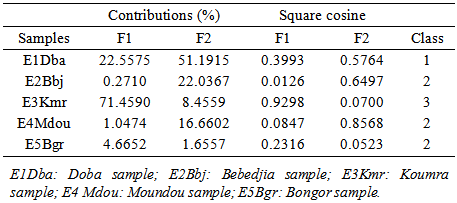
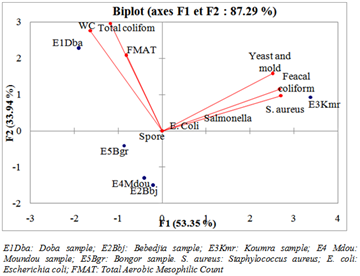
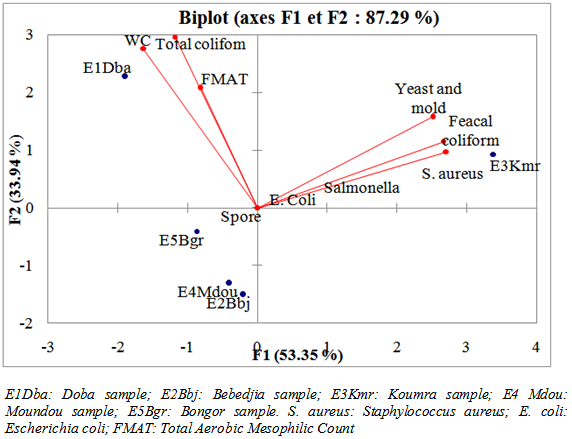
Principal component analysis enabled us to evaluate the different parameters and associate both the samples (observations) with the different variables (microbial load). This analysis revealed the Biplot correlation between observations and variables (Figure 11). Hierarchical Ascending Classification (HAC) enabled us to group the two parameters into three groups, showing the correlations by small group. Table 2 shows the contribution and cosine squared of the observations: the F1 axis is formed by samples from Koumra and Bongor, while the F2 axis is formed by samples from Doba, Moundou and Bebedjia. In contrast to this first analysis, HAC classification enabled us to associate samples from Bongor, Bebedjia and Moundou (class 2), while samples from Doba and Koumra formed classes 1 and 3 respectively. Overall, these observations suggest a similarity between samples from Bongor, Bebedjia and Moundou in terms of microbial load. This is confirmed by the observations made in Figure 11, where samples from these three localities appear in the same frame.
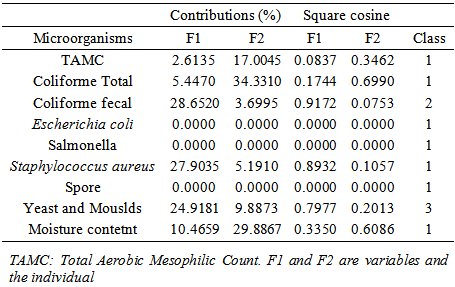
The contribution and classification of variables carried out and presented in Table 3 show that faecal coliforms, E.coli, Salmonella, S. aureus, spore, yeast and mold contribute to the formation of the F1 axis to the tune of 28.65%; 0.00%; 0.00%; 27.90%; 0.00% and 24.92% respectively. The F2 axis was formed by TAMC, total coliforms and water content. Hierarchical ascending classification correlated TAMC, total coliforms, E. coli, Salmonella, S. aureus, spores and water content, while fecal coliforms and yeasts/molds formed groups 2 and 3 respectively. These analyses also show that these variables are globally represented in the different observations.
The Biplot (Figure 11) presenting the correlation between observations and variables shows that samples from Bebedjia, Bongor and Moundou are correlated with spores and E. coli, while the sample from Doba had higher overall water content, faecal coliform and TAMC loads. Dried mangoes from Koumra were less hygienic, being loaded with staphylococci, total coliforms, yeasts and molds. The small-group correlations formed by HAC and shown in Table 10 confirm the relationship between TAMC, total coliforms (r= 0.3606) and water content (r= 0.4766). Kameni et al 13 also reported an increase in microbial load in water-rich fruit. In fact, the availability of water in a food favors the motility of microorganisms, facilitating contact with nutrients and their multiplication. As for total coliforms, this would be due to the fact that TAMC is most often made up of this microbial genus 18. A negative correlation was noted with S.aureus (r= -0.0581).
At the end of this study, which was aimed at the microbiological characterization of dried mango samples from several sales outlets in (5) localities in Chad, it emerged that, with the exception of the samples from Bongor, which showed overall satisfaction on the whole, the others posed problems on the sanitary level. Faulty hygiene conditions in the Koumra samples led to significant contamination with coliforms (total and faecal), staphylococci, yeasts and molds. Spores and salmonella were not found in any of the samples (0 CFU/g). From a sanitary point of view, only spore and salmonella loads were acceptable from the point of view of the standard in all samples. Principal component analysis revealed that samples from Bongor were the healthiest, followed by those from Moundou and Bebedjia, while those from Koumra were the least hygienic. These initial results suggest that the study should be extended to other localities, villages and neighborhoods in Chad, to ensure the sanitary quality of fruit sold to the population. It will also help to improve the quality of products sold and to implement health monitoring measures in Chad. This work also highlights the need for public authorities to train those involved in food processing, including fruit, in the prevention of microbiological hazards.
The authors declare that there are no conflicts of interest in relation to this manuscript.
The authors declare that they have no competing interests.
| [1] | Arbonnier M. (2002). Arbres, Arbustes et Lianes des Zones Sèches d’Afrique de l’Ouest. Edition CIRAD, 539p. | ||
| In article | |||
| [2] | Rivier M., Méot J. M., Ferré T., & Briard M. (2009). Le Séchage des Mangues. Éditions Centre Technique de Coopération Agricole et Rurale (CTA): Pays Bas; 116 p. | ||
| In article | View Article | ||
| [3] | Cisse M. (2012). Immobilisation d’un système de lactoperoxydase dans un enrobage de chitosane dans le but de prolonger la conservation de mangues. | ||
| In article | |||
| [4] | USAID-Kaves. (2014). USAID Kenya horticulture competitiveness project (USAID-KHCP). Final Year Annual Report, 61 p. | ||
| In article | |||
| [5] | FAO. (2019). FAOSTAT Food Balance/Food Supply - Crops Primary Equivalent at maize and products, food supply quantity. Available from: http://faostat3.fao.org/browse/FB/CC/E. Accessed 2023 July 12. | ||
| In article | |||
| [6] | FAO. (2011). Mangue. Service des Nouvelles des Marchés. International Trade Center (ITC): Genève; 25 p. | ||
| In article | |||
| [7] | Aboubakar D., Sorto M., Mbayabe L., Woin N., Bourou S., & Gandebe M. (2009). Commercialisation des fruits dans les savanes d’Afrique centrale. Communication au Colloque «Savane Africaines en développement : innover pour durer», 20-24 avril 2009, Garoua, Cameroun. Livre de résumé de la communication, p 58. | ||
| In article | |||
| [8] | Kansci G., Koubala B. B., & Mbome L. I. (2003). Effect of ripening on the composition and suitability for jam processing of different varieties of mango (Mangifera indica). African Journal of Biotechnology, 2(9): 301-306. | ||
| In article | View Article | ||
| [9] | Sawadogo G. H., & Traore A. S. (2001). Chemical composition and nutritional value of Burkina Faso amelie mango (Mangifera indica L.). Journal of Science, 2(1): 35-39. | ||
| In article | |||
| [10] | Masibo M., & He Q. (2008). Major mango polyphenols and their potential significance to human health. Comprehensive Reviews in Food Science and Food Safety, 7: 309-319. | ||
| In article | View Article PubMed | ||
| [11] | Mbodj M. (2005). Le développement durable et la lutte contre la pauvreté: cas du Sénégal, la filière mangue d’exportation. Rapport final. Atelier ASPRODEB/SOM, p. 65. | ||
| In article | |||
| [12] | Laroussilhe D. F. (1980). Le manguier. Collection Techniques Agricoles et Productions Tropicales G.P. Maisonneuve et Larose, Paris, volume 29, 312 p. | ||
| In article | |||
| [13] | Kameni A., Mbofung C. M., Ngnamtam Z., Doassem J., & Hamadou L. (2002). Aptitude au séchage de quelques variétés de mangue cultivées au Cameroun: Amélie, Zill, Irwin et Horé Wandou. Actes du colloque, 27-31 mai 2002, Garoua, Cameroun. | ||
| In article | |||
| [14] | Vayssières J. F., Korie A., & Ayegnon D. (2009). Correlation of fruit fly (Diptera tephritidae) infestation of major mango cultivars in Borgou (Benin) with abiotic and biotic factors and assessment of damage. Crop Protection, 28: 477-488. | ||
| In article | View Article | ||
| [15] | ITC (Centre du Commerce International). (2011). Mangue, Service des Nouvelles des Marchés (MNS). Bulletin MNS, ECOWAS TEN, 26 p. | ||
| In article | |||
| [16] | Ndangui C. (2015). Production and characterization of sweet potato flour (Ipomoea batatas Lam): optimization of bread-making technology. Doctoral thesis in food processes and biotechnologies defended at the University of Lorraine and the University of Marien Ngouabi, Brazzaville, Congo, 135p. | ||
| In article | |||
| [17] | Izaora Mwamba., Karle T., Doudet M., Moukuna C., & Jean Noel M. K. (2018) Séchage des mangues par étuvage et au soleil International Journal of Innovation and Scientific Research, pp. 216-222 | ||
| In article | |||
| [18] | Kasse M., Cisse M., Toure A., Ducamp-Collin M. N., & Guisse A. (2014). Qualité microbiologique des tranches de mangues (Mangifera indica L.) vendues à Dakar (Sénégal). International Journal of Biological and Chemical Sciences, 8(4): 1611-1619. | ||
| In article | View Article | ||
| [19] | Moussa K., Mady C., Aminata T., Marie Noelle D., & Aliou G., (2014) Qualité microbiologigiques des tranches de mangues (Manguifera indica L) vendu à Dakar (Senegal). Int. J. Biol. Chim Sci.8(4): 1611-1619. | ||
| In article | View Article | ||
| [20] | Mwamba I., Tshimenga K., Mbabu D., Conas M., & Mputu Kanyinda J. N. (2018). Séchage des mangues par étuvage et au soleil. International Journal of Innovation and Scientific Research, 37(2): 216-222. | ||
| In article | |||
| [21] | Rakotonantoandro L. V. (2010). Valorisation de la mangue: pâtes et pickles. Mémoire de fin d’études en Industries Agricoles et Alimentaires, 117 p. | ||
| In article | |||
| [22] | Hyacinthe KANTE TRAORE (2019). Valorisation des varietés des mangues au Burkina FASO: Aspects biochimiques, biotechnologiques et nutritionnels. These de doctorat unique. | ||
| In article | |||
| [23] | Belem A., Tapsoba F., Toulsoumdé Songre-Ouattara L., Zongo C., & Savadogo A. (2017). Study of the organoleptic quality of three varieties of dried mangos: Amélie, Lippens and Brooks during storage by enzymatic tanning technique of peroxidases (POD) and the polyphenoloxydases (PPO). Revue Scientifique de Technologie et Synthèse, 34: 38-47. | ||
| In article | |||
| [24] | Traore S. (2013). Stabilisation et conservation de la pulpe de mangues en vue de la production de vinaigre de fermentation. Mémoire de fin d'étude pour l'obtention de la Licence Professionnelle en Génie Biologique, 56 p. | ||
| In article | |||
Published with license by Science and Education Publishing, Copyright © 2024 Al-lamadine Mahamat, Abdoullahi Hissein Ousman, Brahim Adoum Ahmat, François Tapsoba, Boureima Kgambega, Mbaigolmem Beral Valery, Bakaranga Via Issakou and Abdelsalam Tidjani
 This work is licensed under a Creative Commons Attribution 4.0 International License. To view a copy of this license, visit
http://creativecommons.org/licenses/by/4.0/
This work is licensed under a Creative Commons Attribution 4.0 International License. To view a copy of this license, visit
http://creativecommons.org/licenses/by/4.0/
| [1] | Arbonnier M. (2002). Arbres, Arbustes et Lianes des Zones Sèches d’Afrique de l’Ouest. Edition CIRAD, 539p. | ||
| In article | |||
| [2] | Rivier M., Méot J. M., Ferré T., & Briard M. (2009). Le Séchage des Mangues. Éditions Centre Technique de Coopération Agricole et Rurale (CTA): Pays Bas; 116 p. | ||
| In article | View Article | ||
| [3] | Cisse M. (2012). Immobilisation d’un système de lactoperoxydase dans un enrobage de chitosane dans le but de prolonger la conservation de mangues. | ||
| In article | |||
| [4] | USAID-Kaves. (2014). USAID Kenya horticulture competitiveness project (USAID-KHCP). Final Year Annual Report, 61 p. | ||
| In article | |||
| [5] | FAO. (2019). FAOSTAT Food Balance/Food Supply - Crops Primary Equivalent at maize and products, food supply quantity. Available from: http://faostat3.fao.org/browse/FB/CC/E. Accessed 2023 July 12. | ||
| In article | |||
| [6] | FAO. (2011). Mangue. Service des Nouvelles des Marchés. International Trade Center (ITC): Genève; 25 p. | ||
| In article | |||
| [7] | Aboubakar D., Sorto M., Mbayabe L., Woin N., Bourou S., & Gandebe M. (2009). Commercialisation des fruits dans les savanes d’Afrique centrale. Communication au Colloque «Savane Africaines en développement : innover pour durer», 20-24 avril 2009, Garoua, Cameroun. Livre de résumé de la communication, p 58. | ||
| In article | |||
| [8] | Kansci G., Koubala B. B., & Mbome L. I. (2003). Effect of ripening on the composition and suitability for jam processing of different varieties of mango (Mangifera indica). African Journal of Biotechnology, 2(9): 301-306. | ||
| In article | View Article | ||
| [9] | Sawadogo G. H., & Traore A. S. (2001). Chemical composition and nutritional value of Burkina Faso amelie mango (Mangifera indica L.). Journal of Science, 2(1): 35-39. | ||
| In article | |||
| [10] | Masibo M., & He Q. (2008). Major mango polyphenols and their potential significance to human health. Comprehensive Reviews in Food Science and Food Safety, 7: 309-319. | ||
| In article | View Article PubMed | ||
| [11] | Mbodj M. (2005). Le développement durable et la lutte contre la pauvreté: cas du Sénégal, la filière mangue d’exportation. Rapport final. Atelier ASPRODEB/SOM, p. 65. | ||
| In article | |||
| [12] | Laroussilhe D. F. (1980). Le manguier. Collection Techniques Agricoles et Productions Tropicales G.P. Maisonneuve et Larose, Paris, volume 29, 312 p. | ||
| In article | |||
| [13] | Kameni A., Mbofung C. M., Ngnamtam Z., Doassem J., & Hamadou L. (2002). Aptitude au séchage de quelques variétés de mangue cultivées au Cameroun: Amélie, Zill, Irwin et Horé Wandou. Actes du colloque, 27-31 mai 2002, Garoua, Cameroun. | ||
| In article | |||
| [14] | Vayssières J. F., Korie A., & Ayegnon D. (2009). Correlation of fruit fly (Diptera tephritidae) infestation of major mango cultivars in Borgou (Benin) with abiotic and biotic factors and assessment of damage. Crop Protection, 28: 477-488. | ||
| In article | View Article | ||
| [15] | ITC (Centre du Commerce International). (2011). Mangue, Service des Nouvelles des Marchés (MNS). Bulletin MNS, ECOWAS TEN, 26 p. | ||
| In article | |||
| [16] | Ndangui C. (2015). Production and characterization of sweet potato flour (Ipomoea batatas Lam): optimization of bread-making technology. Doctoral thesis in food processes and biotechnologies defended at the University of Lorraine and the University of Marien Ngouabi, Brazzaville, Congo, 135p. | ||
| In article | |||
| [17] | Izaora Mwamba., Karle T., Doudet M., Moukuna C., & Jean Noel M. K. (2018) Séchage des mangues par étuvage et au soleil International Journal of Innovation and Scientific Research, pp. 216-222 | ||
| In article | |||
| [18] | Kasse M., Cisse M., Toure A., Ducamp-Collin M. N., & Guisse A. (2014). Qualité microbiologique des tranches de mangues (Mangifera indica L.) vendues à Dakar (Sénégal). International Journal of Biological and Chemical Sciences, 8(4): 1611-1619. | ||
| In article | View Article | ||
| [19] | Moussa K., Mady C., Aminata T., Marie Noelle D., & Aliou G., (2014) Qualité microbiologigiques des tranches de mangues (Manguifera indica L) vendu à Dakar (Senegal). Int. J. Biol. Chim Sci.8(4): 1611-1619. | ||
| In article | View Article | ||
| [20] | Mwamba I., Tshimenga K., Mbabu D., Conas M., & Mputu Kanyinda J. N. (2018). Séchage des mangues par étuvage et au soleil. International Journal of Innovation and Scientific Research, 37(2): 216-222. | ||
| In article | |||
| [21] | Rakotonantoandro L. V. (2010). Valorisation de la mangue: pâtes et pickles. Mémoire de fin d’études en Industries Agricoles et Alimentaires, 117 p. | ||
| In article | |||
| [22] | Hyacinthe KANTE TRAORE (2019). Valorisation des varietés des mangues au Burkina FASO: Aspects biochimiques, biotechnologiques et nutritionnels. These de doctorat unique. | ||
| In article | |||
| [23] | Belem A., Tapsoba F., Toulsoumdé Songre-Ouattara L., Zongo C., & Savadogo A. (2017). Study of the organoleptic quality of three varieties of dried mangos: Amélie, Lippens and Brooks during storage by enzymatic tanning technique of peroxidases (POD) and the polyphenoloxydases (PPO). Revue Scientifique de Technologie et Synthèse, 34: 38-47. | ||
| In article | |||
| [24] | Traore S. (2013). Stabilisation et conservation de la pulpe de mangues en vue de la production de vinaigre de fermentation. Mémoire de fin d'étude pour l'obtention de la Licence Professionnelle en Génie Biologique, 56 p. | ||
| In article | |||