In an era where education is evolving and being reshaped by technology, it becomes increasingly important to understand artificial intelligence (AI) and online learning, particularly in terms of their impact on students’ academic outcomes. This study aimed to investigate the effects of online learning and AI tools on the academic engagement and performance of Jamaican secondary school students, particularly in the post-COVID-19 environment. The study employed a mixed-methods approach leveraging the convergent parallel research design, where data were gathered from 510 participants using questionnaires and interviews. The findings reported that approximately 75% of the students had consistent internet connectivity, and 94% owned devices for virtual classes. However, many students reported challenges, such as household distractions and insufficient support, in completing their subjects online. Nonetheless, they were eventually able to benefit from AI tools such as ChatGPT and Khan Academy for comprehending different subject areas and for academic improvement. The results indicated that students have become more reliant on technology in education, emphasizing the need to bridge the digital divide and benefit from personalized learning opportunities. These insights point to policy and classroom practices, where AI can be integrated in a structured manner in the teaching and learning process across Jamaica.
The COVID-19 pandemic placed the entire world at a standstill, while governments grapple to identify how to stay afloat while contending with the virus. By March 2020, Jamaica saw its earliest wave of the pandemic, which caused a massive change in how the education system dealt with classes. Due to the stay-at-home measures, schools came to a halt, where about 627,000 students had to transition to online classes, a new phenomenon for Jamaica. This required teachers’ quick action to become familiar with platforms such as Zoom, Microsoft Teams, and Google Meet, to name a few, even if they lacked the requisite knowledge to use them 1. Nonetheless, even with this quick action to continue schooling, inequalities persist, especially during this time. The transition from face-to-face modalities to online required access to electronic devices and internet stability, which students heavily depended on to make it through each day’s classes. However, many students either lacked access to Wi-Fi, or it was poor, along with proper devices, particularly for those who were from low-income families 1. Corey Robinson 2 wrote in The Sunday Gleaner that parents have now been forced to strategically choose between basic needs such as food and purchasing the necessary devices for their children’s education. Additionally, the irregular or limited internet access was still a challenge. Eventually, the Jamaican government addressed these issues, sourced devices for students, and negotiated with internet providers such as FLOW and Digicel to supply deals, particularly for students to access data plans, to bridge the digital divide. However, despite these efforts, some students seemingly were disengaged or unwilling to participate in the discussions, as well as lacking physical learning materials such as textbooks to help accentuate the synchronous experience. Furthermore, the asynchronous tasks became common for students who were unable to join online classes, which caused the gap in understanding content and engagement in class lessons to increase. Contrastingly, students had immediate access to teacher support during face-to-face classes before the pandemic, which enabled them to participate in discussions, ask questions, and obtain real-time assistance. The online learning, however, at times, is affected by delays, where students may miss hearing their teachers participate in the lesson. Also, some students communicate with their teachers via email, which may delay the response time since teachers must respond to each email, which is not a fast-paced, interactive learning environment to enhance learning outcomes. Students’ learning outcomes were also affected by the malfunctioning of tools 3. Eventually, online attendance started declining as students struggled immensely to keep up with the increasing problems, which also include emotional and psychological stress factors due to the prolonged lockdowns.
According to Fawah and Samaha 4, in their study with Lebanese university students during the pandemic, students over time displayed signs of stress, anxiety, and depression due to the abrupt transition to online learning. Jamaica experienced a similar dilemma, where students became demotivated, disengaged, and decreasing their learning outcomes, particularly their academic performance. The learning loss experienced by students calls for urgent interventions to comprehend and address the short-term and long-term implications of shifting to online modality. Furthermore, technology companies in response to the pandemic, due to critical vulnerabilities, offered technological innovations such as Artificial Intelligence (AI) tools for education. These tools provided new opportunities for addressing learning experiences, even though not many educators, particularly in Jamaica, were aware during the pandemic. These AI technologies, such as personalised learning platforms and advanced analytics tools, have opened gateways for integration into the education systems. In Jamaica, the Former Education Minister Fayval Williams encouraged educators to embrace these technologies because they would eventually become permanent to assist the teachers and students in richer and more efficient learning environments 5. This has erupted in excitement globally across the education systems. According to Forbes 6, AI tools can analyse students’ learning patterns, so educators can better tailor intervention strategies to track students’ progress in real-time. Moreover, these tools can help educators design lessons with differentiated instructions, especially for each student to work at his or her own pace. This is also promising in the context of large class sizes, such as in the Jamaican context, where individualized instruction is often challenging, so educators can adapt these tools to create content for each student, providing remediation or acceleration, as necessary 7. Additionally, based on the literacy rates in some countries like Jamaica, AI tools can facilitate personalized reading programmes to help improve these rates. However, it is necessary for the infrastructural challenges to be addressed to facilitate better integration of AI tools in the teaching and learning process 8. In a report by Minister Williams, the Educational Ministry has been working to address the significant disparities in students’ access to devices and high-speed internet across Jamaica 5. Moreover, urban schools tend to have better access, as opposed to rural schools. Besides infrastructural issues, educators are concerned about pedagogical instruction, with the adoption of AI tools in the teaching and learning process, particularly in terms of the essential human elements of education. Teachers have expressed that AI tools cannot replace social interaction, mentorship, and emotional support. Furthermore, educators are cautioned to avoid relying on AI because the relational aspects of teaching are critical to develop students holistically as individuals 9. Therefore, AI tools should complement, rather than replace, traditional pedagogical methods. Against this background, this study sought to examine Jamaican high school students’ experiences with online learning platforms, especially their influence on academic engagement and performance. Also, students perceived the impact of AI tools on students’ understanding and learning outcomes was investigated. This involved assessing the adaptation of AI tools alongside traditional and online strategies to improve their academic success. Addressing these issues is crucial for the education ministry and policymakers to develop informed education policies and practices to harness the potential of digital innovations and safeguard equitable access for students’ holistic development in the post-pandemic era.
1.1. Rationale and Significance of the StudyThis research was motivated by the increasing changes in how students learn, especially in classrooms that involve digital tools. Since the COVID-19 pandemic, AI tools and online learning platforms have been integrated into education across the world, including Jamaican classrooms. These tools and platforms are increasingly being used by teachers and students for student engagement, more teacher-student interactions, and with a focus on students’ academic performance. This study is therefore essential to shed light on students’ comprehension of these technologies and how they use them to support their learning journeys, or spontaneously cause gaps in their learning experiences. This research captured the students’ voices and assessed their real experiences to uncover how their learning was influenced by AI and online learning strategies, particularly in comprehending and retaining concepts for the different subject areas, as well as their participation in classes. The findings of this study are aimed at providing educators, school leaders, and policy makers with informed strategic choices regarding the integration of digital tools, purposed to enhance student engagement and bring about an effective learning environment for all.
1.2. Research QuestionsThe following research questions guided the study:
1. In what ways do students integrate AI tools alongside traditional and online learning strategies to enhance academic success?
2. In what ways have high school students’ experiences with online learning platforms shaped their academic engagement and performance?
3. What is the impact of AI-powered tools on high school students’ learning outcomes and subject comprehension?
Within secondary schools, the rapid integration of artificial intelligence (AI) coupled with online learning platforms has significantly transformed the potential to reshape the way the students learn and stay engaged with their studies, within the classroom settings. The literature below provides insightful resources exploring the complexity and promise AI could provide for online learning on high school students’ academically.
Online Learning and Student Performance in Secondary Schools
The pandemic brought on by the spread of the COVID-19 virus prompted a rapid shift to online learning and has significantly swayed many practices and gave rise to the use of online learning platforms globally. Jamaica is no different, as the sudden transition from face-to-face to online learning critically exposed vulnerabilities seen in our educational systems – more so in the secondary schools. According to Blackman 10 and Golding & Jackson 1 a total of 627,156 of Jamaican school children was affected by the lockdown, leading to suspension of classes, with many experiencing significant difficulties accessing stable network connections and possessing adequate instruments to facilitate online learning. Of this amount a total of 200,563 students were from the secondary school system. There was inequitable learning opportunities brought on by infrastructural insufficiencies affecting more students from working and lower-class society. Students from low-income backgrounds face greater disadvantages or risks than their wealthier peers and they normally experience more barriers in their adjustment to online 11. According to Robinson 2, basic psychological needs were prioritized over technological needs, leaving many students shortchanged by the choice. Additionally, many households could only utilize one instrument to serve more than one child, which reduced the time needed for adequate online learning. New opportunities for engagement were not presented by the COVID-19 pandemic for educators and schools to move away from the old didactic ways of delivering the curriculum 12. This has hampered the transition, highlighting fundamental issues related to student engagement and performance. Novikov 3 noted that although teachers attempted to replicate face-to-face dynamics in online environments, students often struggled with the use of both digital and physical tools. Students’ limited access to real-time feedback, once readily available during in-person classes, negatively impacted their academic engagement and overall performance. Similarly, Fawaz and Samaha 4 highlighted that one contributing factor hampering learning outcomes was the deficiencies seen in face-to-face interactions that brought on enhanced levels of anxiety, depression, and stress. The compounded infrastructural and emotional challenges accentuate the need for innovative interventions to support student learning, where educational disparities remain a concern, more so in the Jamaican context.
AI in Education: Tools, Benefits, and Limitations
The worldwide integration of Artificial Intelligence (AI) in education has been acclaimed as a transformative development. AI Tools such as Grammarly, Google Gemini, ChatGPT, and Khan Academy’s AI-powered systems have afforded new ways to personalize learning experiences. Salido 13 highlighted that AI’s ability to customize educational content to meet the needs of individual students and possesses the potential to enhance academic outcomes and concept mastery. In Jamaica, where challenges in core subjects such as Mathematics persist, Angus 14 highlighted Terry-Ann Thomas-Gayle as saying that AI offers new opportunities to enhance and redefine education. a promising avenue for intervention. Nationwide News Network 15 reported that a concern echoed by the former Education Minister was that even with the slight increase in the pass rate of CSEC Mathematics to 36%, the overall performance remained disappointing 16. To address such disparities real-time feedback and personalized study plans could be gained from the utilization of intelligent tutoring platforms and adaptive learning systems. While urban areas may benefit quickly, rural schools’ risk being left behind, reinforcing educational inequities if deliberate policies are not enacted to ensure equitable AI access. Despite this, the successful deployment of AI in Jamaican schools must also contend with infrastructure deficits, which could otherwise widen existing inequalities. These technologies have been identified as crucial for bridging educational resource disparities, particularly in under-resourced contexts like Jamaica 17, 18. Clarke 19 pointed to the fact that some Jamaican students are becoming over-reliant on the use of AI tools such as Google Gemini and ChatGPT for swift overviews, compromising deep learning. Globally, UNESCO 20 has advocated for its uncritical adaptation utilizing a balanced approach where AI is regarded as progress rather than a potential replacement of human teaching. This trend, dubbed “Cashpot grades,” reflects an emerging challenge where convenience may replace critical engagement with educational material.
Student Engagement Theories: Behavioral, Emotional, and Cognitive Aspects
Student engagement is multifaceted, involving emotional, cognitive, and behavioral components. Behavioral engagement refers to participation in academic activities, emotional engagement relates to students' affective reactions to learning environments, and cognitive engagement encompasses investment in learning and willingness to exert the effort needed to comprehend challenging concepts. Given the pandemic-driven shift to online learning, all three dimensions of engagement were negatively affected. As highlighted by Fawaz and Samaha 4, Emotional engagement suffered; they also found that students experienced significant emotional distress in online learning environments. Additionally, students’ behavioral engagement declined due to connectivity issues and a lack of devices 1. It was also notable that cognitive engagement was compromised when students have difficulty understanding asynchronous lessons without prompt teacher support. AI Tools provides instantaneous comprehensive assessment on student performance into their aspects of engagement by offering insights into how these tools could re-engage them through interactive offerings, continuous feedback, through their tailored learning experiences that account for diverse preferences and learning styles.
Integration of AI and Traditional Study Methods
Although the presence of AI affords significant potential, its effortless engagement with traditional study methods is essential to enhance educational advantages. The former Education Minister in Jamaica stated in The Jamaica Gleaner 21, that the need to emphasize AI tools to augment rather than replace traditional teaching practices was strong. AI can support teachers by automating administrative tasks, enabling them to devote more time to higher-order instructional activities 16. Moreover, AI tools can personalize study materials based on students' strengths and weaknesses. Pawar 22 noted that adaptive learning platforms can adjust content presentation styles—visual, textual, or interactive—according to students' learning preferences. Ayman et al. 23 further elaborated that AI-generated personalized study plans target specific weaknesses, thereby promoting academic progress more efficiently than one-size-fits-all approaches. Active teacher involvement remains critical to ensure that AI-assisted learning still fosters critical thinking, creativity, and conceptual understanding. Clarke 19 stressed that students must be taught to use AI as a supportive tool rather than a refuge. Nonetheless, the incorporation of AI into teaching and learning must be explored delicately as a precaution for dependency and should be handled carefully to prevent its overdependence on AI for basic tasks.
Identified Gaps in the Literature
It should be observed that notable gaps remain despite the growing body of research on AI’s role in education, substantial shortcomings exist. Much of the prior work on this topic focuses on tertiary or andragogy, with limited research on AI’s impact on high school students, more so in developing countries such as Jamaica. The empirical data on AI in high school education is still in its developing stages while its effects on academic engagement and performance among adolescents are sparse. Second, the post-pandemic context offers unique challenges and opportunities. While studies such as Fawaz and Samaha 4 assessed immediate pandemic impacts, longer-term shifts in student behavior, expectations, and technological integration have yet to be carefully assessed. Particularly in Jamaica, where infrastructural limitations persist, understanding the evolving transition of AI in education is vital to crafting effective interventions that promote equity, engagement, and academic success. Third, few studies have examined how students integrate AI tools alongside traditional and online learning methods. Most research treats AI adoption in isolation, ignoring the hybrid realities of students who might use AI for certain tasks while relying on teacher explanations or textbook materials for others. This fragmented understanding limits the development of holistic educational strategies.
Conceptual Framework
This study adopts a Technology Integration Engagement Model, combining principles from student engagement theory and technology acceptance models. The conceptual framework posits that students’ academic performance and engagement is influenced by their access to technology (devices, internet), their use of AI tools for personalized learning, and their integration of traditional study methods alongside new digital tools. In relation to the research questions, the framework suggests that:
• Online learning platforms and AI tools shape academic engagement both behaviorally and emotionally.
• AI's personalized features impact students' subject comprehension and learning outcomes.
• Students' strategic integration of AI with traditional learning methods fosters (or hinders) overall academic success.
By mapping these relationships, the study seeks to uncover patterns that can inform educational strategies for a more resilient, equitable, and technologically integrated Jamaican secondary education system.
This study employed a mixed-methods approach using the convergent parallel design. This approach facilitated the concurrent data collection of quantitative and qualitative data from high school students and educators from 2022 to 2023. It allowed the researchers to capture both the numerical data trends (such as students’ engagement levels) and the personal experiences and opinions of the students. The study assessed the influences that online learning and artificial intelligence (AI) have on high school students’ engagement and academic performance. The main tool used was an online questionnaire, particularly in the initial stages of the data collection, which Creswell 24 described as a tool most suited to gather data on attitudes, behaviours, and experiences of a population sample.
3.2. The ParticipantsThe study included a sample of 510 individuals from across the parishes of Kingston, St. Andrew, St. Ann, St. Catherine, Manchester, Trelawny, and St. Mary. These participants consisted of 484 secondary students and 26 educators. Additionally, 425 students were from Grades 7-9, and 59 Grades 10-13. These students responded to the online questionnaire; however, 14 of them were willing to be engaged in a follow-up interview, while the educators participated in interviews and focus group discussions for deeper qualitative inquiry, ensuring diverse perspectives. These participants were selected using the purposive sampling method, where they could share direct experiences related to the research questions.
3.3. Data Collection and Data AnalysisThe study gathered data from the students using an online questionnaire, which captured both closed-ended and open-ended responses. The instrument focused on areas including computer and internet access, use of technology, and students’ opinions and attitudes toward technology integration. The instrument employed Likert-type scales that measured students’ levels of agreement or experience having a focus on technology use in education; while the open-ended questions facilitated qualitative insights. The students’ interviews sought to obtain deeper, narrative insights focusing on students’ challenges, perceptions, and successes concerning AI tools and online learning platforms. Additionally, educators were interviewed who elaborated on their experiences with online learning and AI tools.
The data for the study were analysed using descriptive and inferential statistics, coupled with thematic analysis. Descriptive statistics facilitate an analysis using frequencies and percentages regarding access to technology, use of AI tools, level of satisfaction, and perceived academic performance. This analysis was done based on data visualization tools, including bar charts, column charts, and tables that showed the trends and comparisons. Also, inferential statistics such as the chi-square test of independence, which focused on categorical variables including students’ rating of learning effectiveness by level of importance (high, low, medium), and students perceived usefulness of technology. Additionally, the study identified the challenges students encountered in using online learning platforms, their experiences, and learning strategies using thematic coding. This approach of coding required reading through students’ responses multiple times, identifying significant codes, and clustering them into appropriate themes, including technology access challenges. Together, these methods provided a robust, multi-dimensional understanding of the effects AI and online learning had on students’ engagement and performance.
3.4. Ethical ConsiderationsSince the study involved human subjects, the study adhered to protecting the participants’ rights and privacy. For students who were minors, informed consent was obtained from their guardians and/or parents before participation. Additionally, all participants were informed of the objectives of this study, the nature of their involvement as volunteers, and their right to withdraw at any point in time without any problem. They were also told their identity would be anonymous and confidentially maintained during the entire research process, which the researchers ensured. Furthermore, the data collected was stored in a safe and secure location, which was only accessible to the principal investigators, also adherence to the data protection policies was considered. The relevant educational authorities also provided approval before the data collection commenced. Moreover, the analysis was done with great care to ensure the participants’ voices were accurately and respectfully presented.
The findings from the study are organised according to research questions in that sequence.
4.1. Results Based on Research Question 1In what ways do students integrate AI tools alongside traditional and online learning strategies to enhance academic success?
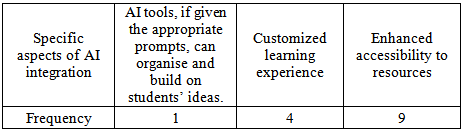
This research question focused on the combined usage of AI tools with traditional and online learning strategies that students have used since 2022 to help improve their academic success. It explored the specific ways that students mentioned that these tools assisted in improving their learning experiences as well as complementing the existing educational practices. It provides insights based on multiple instruments, based on the main group surveyed (484) and those who volunteered to be interviewed for follow-up for further insights (14). Now, Table 1 shares an account of the specific aspects of AI integration that students found most beneficial during their learning journey. It accounts for the responses of the 14 students interviewed. The students reported that they benefited from enhanced accessibility to resources, customized learning experiences, and AI tools’ ability to organize and build on ideas once prompted correctly. Nine students reported that the AI tools enhanced their access to resources, stating that AI was found to be convenient and effective in helping them obtain information on concepts, explaining concepts (particularly complex ones), and academic materials that helped make notes and complete assignments. Furthermore, they could organize their self-directed study by complementing classroom instruction through well-explained examples and relevant subject content. Educators have agreed with this trend, as one of them explained has helped to make lesson planning and content delivery efficient and relevant to better engage students in the teaching and learning process. They expressed that they found these tools quite suited to complement traditional instruction. This suggests that students have become more inclined to integrate non-traditional learning pathways that assist with reinforcing their understanding, especially when their immediate teacher support is unavailable. On the other hand, 4 students expressed that they could customize their learning experience using AI to suit their individual needs. They benefited from targeting feedback, changing the difficulty level of practice questions as they studied for tests and examinations, and even recommended study plans and materials based on their input. In addition, one student shared that they used AI tools to help him or her organize and build on his or her ideas by using correct prompts. This has helped with planning for his or her academic success and supporting their structured thinking. This highlights that just like this student, AI has the potential to improve others’ metacognition skills to organize their study plan and develop their creativity skills. Overall, the data suggests that students have noticed gaps in their learning that they desire to address by accessing AI tools for personalise learning paths and supplementing their academic efforts in a more efficient way.
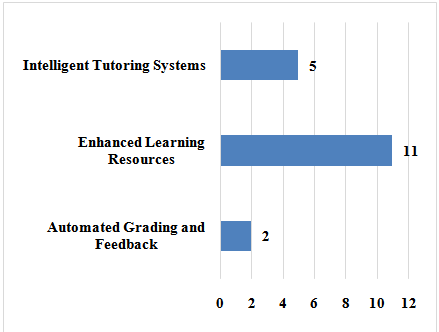
Figure 1 displays the frequency of the ways students perceived AI tools’ impact on their overall academic success. The most significant perceived impact mentioned by students (11) is “enhanced learning resources”. This highlights that students found AI tools to be a valuable supplement for learning subject content by accessing more detailed explanations coupled with examples, practice material, including tests and examinations of different forms. Additionally, these students have expressed that they have obtained real-time explanations of difficult concepts, identified video tutorials to strengthen their comprehension skills, and summaries generated from AI that facilitate reinforcement of what they learnt from their teachers. This view was echoed by educators who mentioned that gamification platforms encouraged students to think critically and provided them with quick feedback to help them enhance their performance. Also, students who engage with these interaction simulations can benefit from a blend of traditional and modern approaches for greater engagement, particularly since these tools consider students’ usage patterns. This indicates that there is a growing reliance on AI by students to understand concepts and prepare for tests and examinations. However, 5 students recognized intelligent tutoring systems that provided academic support due to the tools interactive and adaptive nature. In additional, students benefited from personalise learning such as one-on-one tutoring to engage more deeply with provided subject material that guide them to practice and prepare for their overall academic success. On the other hand, 2 students mentioned that they benefited from automated grading and feedback especially when preparing for tests and examinations due to immediate evaluation to help them identify where they went wrong. As such, they stated that they were able to correct errors more efficiently to improve in areas where they fell short. Even though there are not many students who selected this feature, it emphasizes that AI tools are emerging to become prominent in offering assessment for improvement and growth of students academically.
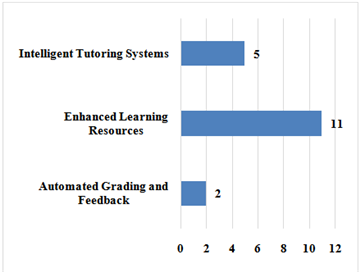
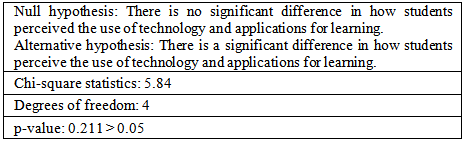
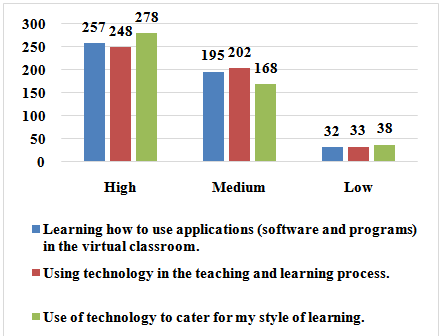
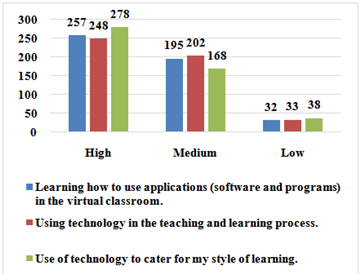
Figure 2 presents students’ ratings when asked their opinions of the importance of using technology to either (1) cater for their learning style or (2) for the teaching and learning process, and (3) applications for virtual learning, defined into three dimensions (High, Low, Medium). This figure gives an account of all participants’ responses. Most of the students rated these aspects as highly important by stating a “High” rating, where 257 of them gave ratings for using applications for virtual classes, while 248 rated leveraging technology for the teaching and learning process, and 278 rated utilizing technology based on their learning style. These aspects (1-3) also received medium-level ratings with a notable range from 168 to 202, while relatively fewer students rated them as “Low”, with scores of 32, 33, and 38, respectively. Overall, it is evident that the students believe strongly that using technology and applications is important to support various facets of their learning. Furthermore, upon statistically assessing the significance of these differences in perceptions, a Chi-square test for independence was conducted and presented in Table 2. The test explored whether the students’ rating of importance (High, Medium, Low) had any significant variation across the three aspects (1-3). The findings revealed that the calculated Chi-square statistic was 5.84, with a p-value of 0.211 (> 0.05), indicating that there is no significant difference in students perceived importance of these categories (applications and uses of technology for learning). This implies that students consistently considered these categories to be valued across all three dimensions. Additionally, this fortifies the notion that students believe in a holistic support system in using technology and applications for learning (virtual and face-to-face), engagement, and personalization.
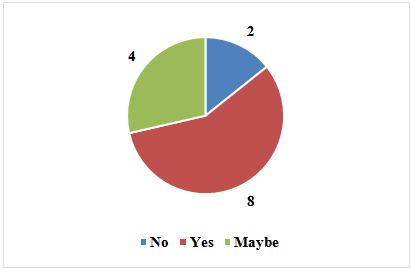
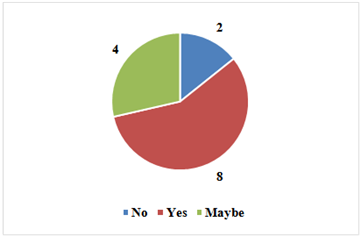
Additionally, when the 14 students were interviewed, they were asked to identify if they noticed any changes in their study habits or learning approach after integrating AI into their learning process (Figure 3). Figure 3 revealed that 8 of them stated “Yes”, explaining that these tools were adapted as part of their learning strategies based on the capabilities it offered. Furthermore, these tools helped them to develop self-directed learning plans, and they benefit from real-time AI feedback, especially for content revision and clarification. This suggests that for students, using these tools was not just for supplemental, but rather to facilitate engagement with academic material. On the other hand, four identified that “Maybe” some noticeable changes were reflecting a level of uncertainty. This suggests that students might have been in the exploration phase of the AI tools to become familiar, so they have not yet realized the impact on their study patterns. Lastly, 2 students stated “No”, indicating that they did not notice any change in their study habits. This implies that students are at least engaging with the AI tools in ways such as prompt reconsideration. Overall, AI has become a transformative tool that, when leveraged, has the potential to shape students’ academic behaviours, as they seek to identify new methods of learning considering the use of technological support.
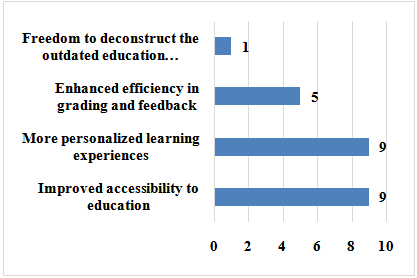
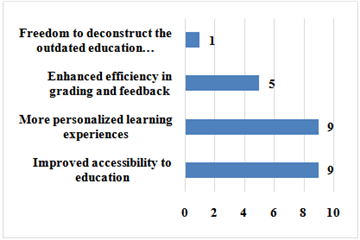
Figure 4 illustrates that students believe AI will play a role in education in various ways, such as providing more personalized learning experiences, enhancing accessibility to education, improving efficiency in grading and feedback, and deconstructing and reshaping the traditional education system. Nine students equally stated that they benefited from “more personalized learning experiences” and “improved accessibility to education”. This emphasizes a strong consensus around the belief that AI can break down barriers to learning by unlocking resources that are readily available for students to benefit from, especially for personalized learning. These resources allow students to organize their learning where they can pace themselves, tailor activities based on their learning styles and needs. This affords students with non-traditional education opportunities, which have the potential to minimize the struggles students typically encounter in using traditional methods. Additionally, these resources can help provide more equitable and inclusive opportunities to engage students with meaningful content regardless of their location or circumstance. However, the educators expressed concern about equity and sustainability, even though one shared that marginalized students can benefit from using AI tools, which can close the achievement gap. Another warned that although AI tools have that capability, it is still important to address the digital divide, where all students benefit from fair distribution. Furthermore, these educators expressed that this is only possible if the Jamaican education system prioritises investments in infrastructure, teacher training opportunities, and support systems for students and teachers (educators). On the other hand, 5 students expressed that they have found AI to contribute to their preparation for tests and examinations through efficient access to grading and feedback on questions of different forms. These students further stated they appreciate the speed and objectivity of the assessment tools. Also, their teachers used these tools, which helped them improve the turnaround time of providing feedback. One student, however, stated that he or she appreciated the freedom and flexibility of using AI tools to deconstruct and reshape the outdated traditional educational system. This suggests that students are now looking and expecting a transformation of the educational system in Jamaica. Also, based on the responses, students have indicated that AI has the potential to refine and improve the existing structures of the current educational system without completely revolutionising it.
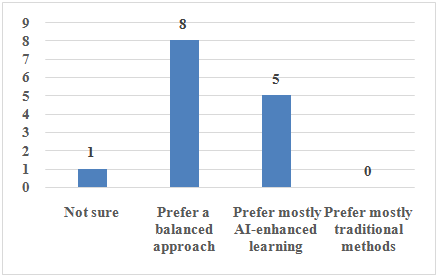
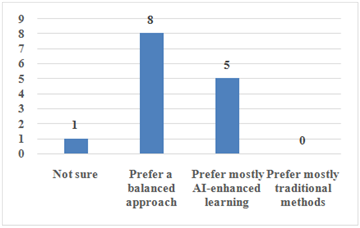
The data from Figure 5 shows that eight students preferred to learn using a balanced approach, which encapsulates traditional and online learning strategies. This suggests that the students currently value the use of technology, including AI tools, in their education to be used alongside the traditional face-to-face teaching methods. This aligns with educators’ observations that AI tools are well-suited for blended learning opportunities to encourage flexibility and relevance in education. Furthermore, these students do not desire conventional methods to be replaced, but that online strategies be used as well to support their learning styles and needs. This is possible, they stated, due to the nature of AI and digital tools to personalize learning materials and approach, they can access it once they have a device and internet, whenever they desire. However, they enjoy the traditional methods, which allow them to interact with their teachers, obtain structured guidance, peer interactions, and hands-on experiences. On the other hand, five students expressed that they have a preference for AI-enhanced learning, mostly due to its ability to engage them in independent learning, and they find the AI tools very efficient. Interestingly, no one stated that they preferred only traditional methods, revealing that more and more students have been embracing technology for modern learning. However, one student stated, “Not sure”, indicating that while other students had clear opinions of their preferred learning modalities, he or she is still exploring the tools and comparing them with the traditional methods to decide.
How have high school students’ experiences with online learning platforms shaped their academic engagement and performance?
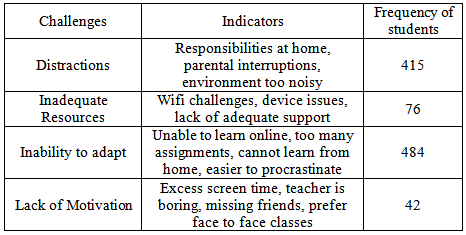
This research question speaks to identifying some of the challenges high school students experienced with online learning and the impact of online learning on their academic engagement and performance. The findings revealed that most of the students (415) who participated in this study have been affected by distractions such as having responsibilities at home where their parents required them to be doing chores, amongst other things, while they should be in online classes (Table 3). A participant shared, “Your responsibilities at home. Too much distraction, and I really want to go back to physical school, even if it is three days online and two in the physical class.” As emphasized in Table 1, participants also mentioned other forms of distractions, which included parental interruptions and the environment being too noisy. These challenges highlighted the misalignment between parental expectations and the online schooling structure.
This was expressed by a participant who stated.
“The greatest challenge for me as a student was my inability to stay focused while at home, the constant distractions in my household as well as my neighbours who have three children, the constant screaming and crying of their toddler while I am in between sessions, most times it is like a piercing scream or cry that makes my earring. Nevertheless, the constant calling of my name in between classes to come and do minimal chores whereas I proceed to say my parents have the mentality that while I am at home I am doing absolutely nothing and if I do not get up to go to them I am now disobedient and unreliable.”
This indicated that online schooling at home, if no structure is established by the parents in communication with the teachers, results in students being deprived of academic responsibility. Students experience the absence of a dedicated learning space, which is quiet, and the lack of understanding family members, which has minimized students’ concentration and caused undue emotional stress. So, students constantly struggled to focus on their continued lessons with disruptions. Additionally, despite students having to deal with home situations that frustrate them, these were also compounded by inadequate resources, as reported by 76 of them. They explained that they had internet and device issues, as well as inadequate support, which made the learning experience even more difficult to sustain.
These challenges emphasize that structured learning environments are essential for students to achieve academic success. The educators in this study highlighted that even though AI tools were not yet prominent during COVID-19, especially with the stay-at-home measures, they can support the structure. They pointed out that these tools help create structure for hybrid and blended learning environments. A few of these teachers explained they became aware of such tools slowly since 2021, during which time they were becoming acquainted, so they did not get the opportunity to really utilise these tools for virtual classes and engage the students. They went on to say by 2022 they could facilitate integrating these tools as Jamaican education system was slowly returning to face-to-face but due to COVID-19 measures, a blended approach with the aid of these tools was considered to support increased teaching delivery, better organization of classes and flexibility. Students (484) have expressed that they long to return to the physical classroom, where one shared, “even if it is three days online and two in the physical class”. They stated that they had difficulty adapting to online (474) and lacked the motivation needed to keep up (42). This suggests that the students desired structure in the home with the teachers’ assistance and social interaction with their peers, which has been compromised by online schooling.
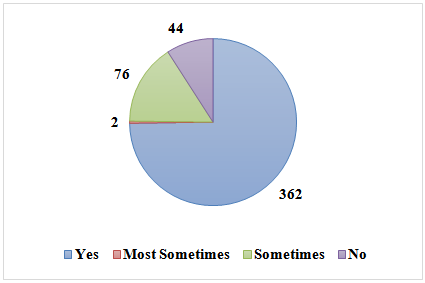
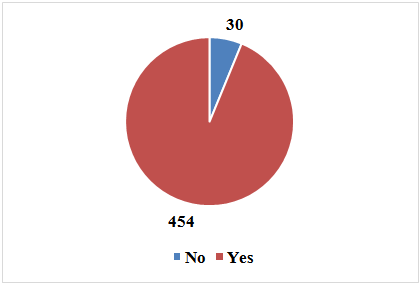
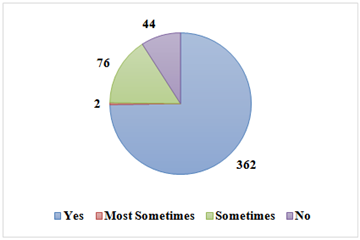
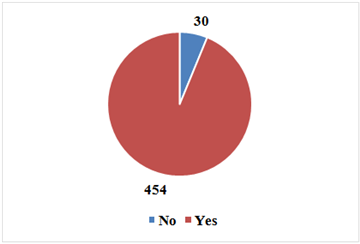
Most of the students (362) shared they had accessed the internet at home, while 76 reported they had internet sometimes, and 44 had no internet access (see Figure 6). The data indicated that a significant number of students (120) could not be fully engaged in the online teaching and learning process to comprehend the course content. Tied to this, we see that most of the participants (93.8%, 362) stated that they have access to their device (see Figure 7). This is good since most students would have access to the most suitable resources needed to access the teaching platforms for both asynchronous and synchronous classes. This suggests a positive indication since the minimum requirement for online classes is that students have the requisite hardware to participate in lessons, whether recorded or live. However, even though students lacked the resources such as internet connectivity and devices, educators mentioned that AI tools were introduced to them, which began to enhance their engagement in virtual lessons. Furthermore, students’ interaction increased when teachers began using gamified platforms and AI simulations during virtual classes. According to these educators, students enjoyed these game-based learning experiences as well as the instant feedback they obtained.
Also, a few (6.2%) students had access, even if temporarily, at computer labs or internet cafes. While this provides students with some opportunity to stay connected, even though it is revealed that students had barriers to the learning process. These barriers included insufficient time to access online classes; moreover, it is also based on availability, which may be affected by potential overcrowding. Additionally, these students had to physically travel to these locations for access, especially those who did not live in the surrounding community. The government had sought to help students get devices to ensure that they could access classes using phase programmes such as Programme for Advancement Through Health and Education (PATH) and assistance from the Kiwanis Club 25. These initiatives revealed that the government made efforts to encourage equity in students accessing education, however, it still did not benefit all students since some had to share or could only access these resources temporarily. Thus, it was evident that poor attendance to online classes was not encouraged due to a lack of personal devices. Furthermore, although more students had access to a device, they still needed a stable connection to the internet, and were without the use of their own devices, which remained prominent.
These students were at a disadvantage as they had to consider the restrictions, such as time constraints and the availability of computers and limitations at these internet sources. Even though many students had access to their own devices, some explained they had to share with their younger siblings, who also had to access their online classes. This caused a conflict of scheduling to use the device, which also became a challenge minimising their learning time. This was even compounded where they were expected to assist their siblings, particularly the young children who did not understand how to maneuver the features. It is also noteworthy to mention as well that even with the majority who have internet access, a lot of students find the internet to be causing technical issues, such as low bandwidth, for the internet moving sluggishly. This is because the internet service providers in Jamaica did not originally prepare for everyone to access the internet all at once at home 1. A participant shared, “Lagging connection produces issues with learning and class attention”. Another stated that he or she, on the other hand, had the challenge of “wifi going away”. These concerns were in line with Jasford Gabriel, a former president of the Jamaica Teachers Association (JTA), who demitted office in early 2021, and stated that between March and July 2020, only one-third of the students in Jamaica had consistent and regular internet connectivity 26. The issues with internet connectivity were revealed to be a hindrance, coupled with technological access to students’ equitable learning experiences. Consequently, these students could not benefit from quality internet service that is reliable and uninterrupted for meaningful engagement in online classes.
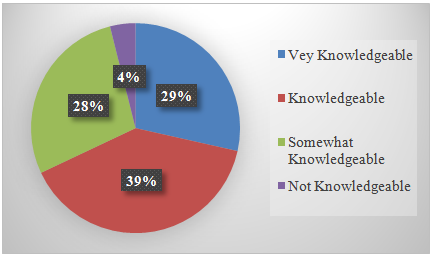
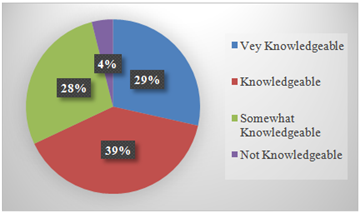
Although a notable portion of the students (4%, 19) shared that they lacked the technology needed for online classes, many of them (approximately 96%, 465) reported they had at least the requisite knowledge to use technology for their online classes (Figure 8). This suggests that while students were technologically literate, they needed to have access to the availability and reliability of technology to maneuver the devices and platforms to learn. A student expressed this clearly by stating the challenge of “your inability to use the online tools”. This suggests that although students having the basic skills of using technology are necessary, these skills are irrelevant to being able to access proper digital tools or technical support. However, one educator cautioned students of becoming over-reliant on AI tools, stating that this level of reliance can erode their ability to think critically and problem-solve independently. Students also indicated the need for support from home and school, though mainly at home. However, the need of support students expected should be from both their parents and/or guardians, and the school, placing emphasis on their parents and/or guardians to be more understanding. The insufficient support was tied to the distractions experienced, particularly the responsibilities given at home, where they were expected to complete chores during class times, so they struggled to focus and engage with class activities. Additionally, they expressed that the teachers’ method of teaching affects their learning gravely, based on what most said.
Students have expressed their inability to adapt to online learning in a few ways, including their difficulty learning effectively online from home (Table 3). Students have shared that the shift to online learning has proved to be more difficult than when classes were face-to-face. Students expressed repeatedly that they struggled to learn subjects like mathematics, often citing that “the teacher's approach to teaching mathematics” was a major hurdle. Part of adapting to the online classes, students have stated that too many assignments are being given, and it has been a struggle to keep up. This has left them feeling confused, and in their efforts to make progress, they felt burned out. One student shared that “I just felt a bit confused with almost everything, not to mention my will to do anything has just decreased”. This highlighted the emotional stress experienced, coupled with a sense of disengagement, countered by many. Furthermore, students have reported missing the communication with their peers, especially in fostering collaboration, and submitting assignments in the physical classroom was easier. Some have explained that they feel a sense of disconnect from the learning process, along with increased procrastination. They expressed that they tried to find ways to adjust to learning and achieve the objectives for synchronous lessons, but they were too discouraged to attend online classes based on the pace and structure of the lessons.
As part of the challenges encountered, students explained that motivational decline was one of them that also affected their adaptation to online classes. The reasons students seemed to lack motivation were closely tied to excessive screen time, teachers referred to as being boring, missing friends, and preferring face-to-face classes. Students noted that they had struggled with excessive screen times, where they had to use their computers, laptops, or phones for long periods of time due to the number of subjects required at the high school level. One student shared, “Staring at a screen for 8 hours is really boring, and because I have to stare at the screen, I often get migraines”. As shared by the students repeatedly, excess screen time, which has been damaging the eyes and causing migraines, indicating that online learning has caused physical consequences, including students’ health issues, impairing their learning. Students had also shared that the online space is not interesting and have even mentioned that the teachers were boring, and attending online classes was depressing. This theme is closely tied to the others because with all the challenges students face with distractions, the resources, and being able to adapt has dampened their spirits and they lack the motivation or the will to be in an online class.
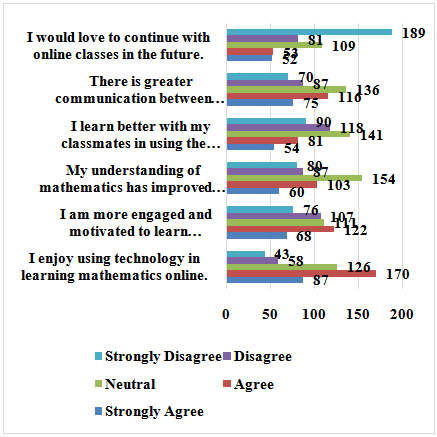
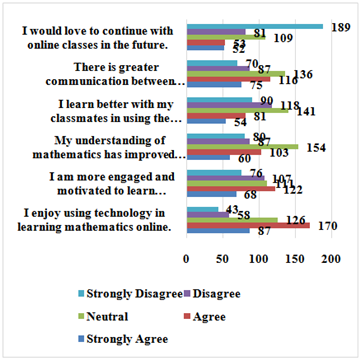
Figure 9 below zooms in on students’ perceptions of having mathematics classes online and just online classes in general, particularly with the use of technology. The results revealed that 39.26% agreed that they were engaged and motivated to learn mathematics using technology in the online classroom, while 37.81% opposed. Students even shared that they have shied away from online classes, or they pretend not to be there, or even decided not to return when kicked off due to internet challenges. According to Figure 10, a little more than half (53.10%) of the students agreed that they enjoyed using the technology in their mathematics classroom, while 26.03% were indifferent. On the other hand, 33.68% shared that their understanding of mathematics has improved with the use of technology in the online class, while 31.81% were undecided, and 34.51% disagreed. This reflects that more persons did not believe, as opposed to those who believed their understanding of mathematics improved. A significant portion (42.98%) of the students did not agree that they learnt better with classmates using technology in the online classroom, where 29.13% of them seemed undecided. Also, 32.44% of the participants did not seem to agree with having greater communication between themselves and the teacher, since the online classes; additionally, 28.10% were undecided. Most students (55.79%) shared their displeasure with having online classes in the future, but 22.52% were indifferent. Overall, it is evident that most students are not seeing how using online technology is truly beneficial to learning mathematics in the online classroom. Consequently, students are not psychologically ready for online classes and do not have the will to learn mathematics content.
Based on the challenges students have experienced, it has negatively impacted them. Students were suffering from learning loss of mathematics content resulting from the distraction they suffered due to problems at home, internet and device issues, problems adapting to the new learning environment and lacking motivation. This caused learning loss for the students, and had affected students' performance on assessments as reflected above in Figure 9 that students are not seeing improvement in their understanding of mathematics. Additionally, students have mental and physical health challenges resulting from the lengthy time required to use the computers, laptops, etc for online classes. Students have been affected by eye strain, which resulted in them experiencing migraines. Students mainly experienced mental challenges because they have not been socializing with their peers, whom they missed due to no face-to-face classes; they also experienced a state of depression due to all the challenges faced.
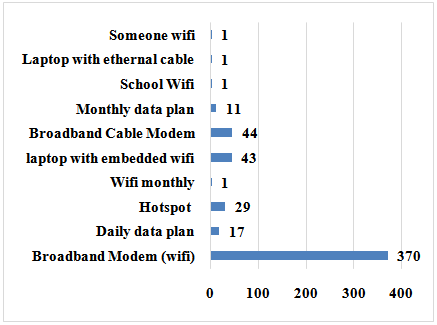
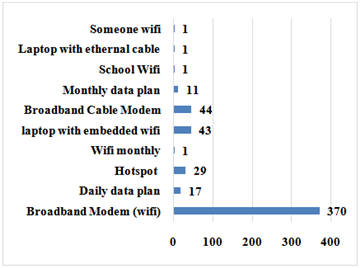
The study conducted a further analysis of how students mainly access the internet. The column chart in Figure 10 depicts the possible ways that students may access the internet for online school. From the 484 participants, fewer than 50 students sourced the internet from friends, neighbours, or school. Additionally, approximately 100 students access the internet by purchasing data plans- daily, weekly, or monthly, mobile hotspot, laptop with embedded Wifi, or modem/ broadband cable. It is noteworthy that students who had to purchase data plans took on an additional expense, which cost more than being in the physical classroom. However, most participants (76%) stated that to access the internet, they used a broadband modem/ Wifi. Based on this information, most students' absence from online school is not due to a lack of internet access. Moreover, according to the data in Figure 100, most of the students said that they had internet access at home. Less than 100 students said ‘sometimes’ and less than 50 students do not have internet access at home. Additionally, some students relocate to other homes or parents/ guardians' workplace just to access online classes.
What is the impact of AI-powered tools on high school students’ learning outcomes and subject comprehension?
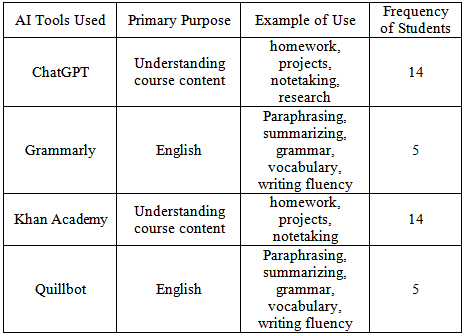
This research question examined high school students’ perceived impact of AI-powered tools on their learning outcomes and subject comprehension. The study sought to obtain further insights to uncover the nuances of online learning strategies since 2022, with a particular focus on AI usage in learning that has recently become an educational tool leveraged by students and teachers. Note that when a follow-up was done with the students after issuing the questionnaire, the main survey instrument, only 14 decided to participate. So, the data for this research question is based on these participants’ responses. According to Table 4, the data revealed that the most widely used tools were ChatGPT (14) and Khan Academy (14). These tools were used to help students understand subject content by participating in activities such as projects, research, homework, and note-taking. This suggests that an increasing number of students are utilising AI tools, particularly following the aftermath of online schooling, which has caused students to catch up with content knowledge. Moreover, students have expressed that they found these platforms to be interactive, which provide learning support, especially for core subjects such as Mathematics and English. This account was corroborated by the educators who reported that besides ChatGPT and Khan Academy, other AI tools such as Photomath and Third Space Learning were used and found to increase students’ comprehension skills and performance. One educator explained that her students enjoyed taking pictures of mathematics problems and uploading them to Photomath to get step-by-step solutions for each problem. Also, due to the ability of Third Space Learning to employ strategies related to student performance, students can better understand concepts and improve their skills. This has indicated that while students have returned to face-to-face classroom learning, they now have tools to complement their learning experiences based on the resources provided beyond the traditional instruction. Based on the findings, the data revealed that a growing number of students have taken an interest in self-directed learning, which they have organized using AI-powered tools. Contrastingly, Grammarly and Quillbot were equally used by only 5 students to improve their English language. They indicated that it helped them with paraphrasing, summarizing sections of documents, enhancing their ability to correct grammar, having a much better vocabulary, and improving writing skills.
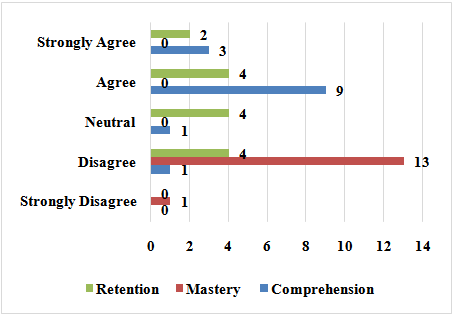
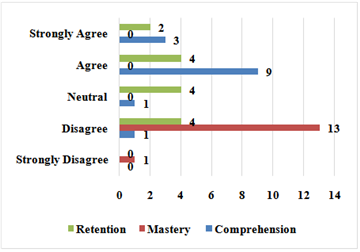
Furthermore, Figure 11 reveals the effectiveness of using the AI-powered tools mentioned in Table 2 to improve students’ comprehension of content, mastery of concepts in subjects, and students’ ability to retain subject content. According to Figure 7, thirteen (13) of the fourteen students expressed that AI tools helped them to comprehend, with 9 agreeing and 3 strongly agreeing to this statement. This is aligned to the benefits students shared they derive from using ChatGPT and Khan Academy, where they could break down complex topics into more digestible ones. Thus, students have been able to make sense of the academic material through self-directed learning by doing research and completing their homework. Educators added that with the nature of AI tools to constantly adapt to students’ learning patterns, students could frequently review what they are working on, which reinforces learning. According to Disprz [27 and MindTools 28, these AI features are consistent with cognitive retention theories, suggesting that these tools potentially can improve comprehension skills and strengthen students’ long-term memory and understanding of concepts, especially as they work independently. Contrastingly, 14 of the students reported that these tools did not help them master subject topics. This revealed that the AI tools might not be as effective in having a full command or application of subject matters or areas, even though these tools assisted them in comprehending topics. Additionally, when asked about their retention of information, only 6 of them agreed, while 4 remained neutral and 4 disagreed. This revealed mixed results, suggesting that AI may not be consistently providing support to help students develop deeper cognitive processes for lifelong learning and skill development, even though the AI provided them with immediate clarification of topics, which seemed only surface-level. Together, the study indicates that there exist limitations with students retaining and mastering subject matter, although these tools were found valuable for comprehension. This highlights the need for students to receive additional instructional support to address these limitations while using AL-powered tools.
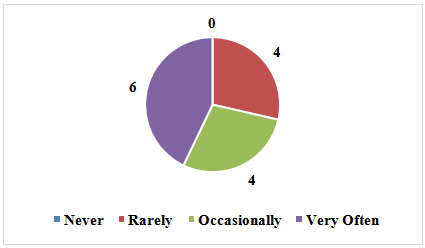
Moreover, the findings from Figure 12 displayed the frequency with which AI tools were used for collaborative activities. Six (6) students reported that they engaged with these tools for peer-related tasks or in groups “Very Often”, indicating that AI tools were used regularly. However, four equally selected “Occasionally” and “Rarely”, suggesting that all students had some exposure to using AI tools for collaboration. The differing views revealed a narrow spread, indicating that students are aware of using AI tools for collaborative activities. This trend highlights that group learning using AI tools is gradually becoming accepted, even not consistently, since the adoption seemed uneven among high school students. From the responses, it is evident that students’ use of AI for peer-related tasks has begun to become routine. This suggests that students may have been using these tools for dividing tasks among themselves, brainstorming for ideas, or sharing them. Educators also highlighted that AI tools like DreamBox has the capability of early identification and intervention. Therefore, they used them to identify students who were at-risk as early as possible to provide targeted support. Since then, these students have benefited and have improved their academic performance.
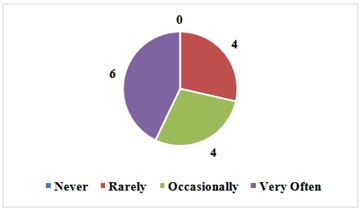
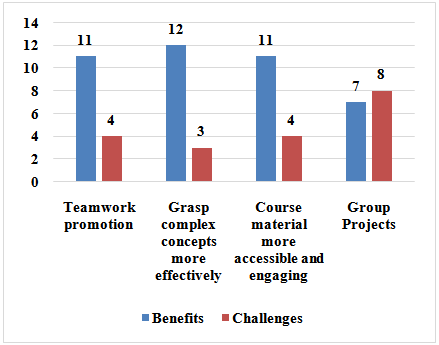
Furthermore, the students who rarely used AI tools for group activities may have limited access to these resources (tools) or may have preferred not to use AI for collaboration. The findings reported that the students believed that they benefited from using AI tools to assist their learning experience more than the challenges encountered in using them. Most students (12) expressed that in using AI tools, they have been able to better comprehend complex concepts effectively (Figure 13). On the other hand, eleven students equally praised AI tools for helping them with better teamwork and making course material more accessible and engaging. This highlights that AI tools were found to be valuable in helping students simplify complex content and improve their engagement with learning materials. Furthermore, students using AI tools for collaborative learning were found to be in line with earlier findings, where students frequently used these tools to complete group activities. This suggests that students have found meaningful ways to enhance their comprehension skills and benefit from interactive, peer-supported learning by leveraging these tools. Moreover, educators reported that despite the benefits of AI tools, students are not impacted in the same ways. For instance, students who normally perform exceptionally often rely less on AI, but rather spend quality time completing independent work. On the other hand, the students who tend to rely on AI tools are those struggling. These struggling learners were found to obtain good or improved performance, but once they no longer used these tools, their grades fell along with their critical thinking skills. However, even with these benefits, students have expressed noticeable challenges. For instance, eight of them reported that in completing group projects they experienced difficulties, revealing that while the like using it for collaborative learning, they experience issues for coordination or usage of AI tools to help them have integrative structure in group activities. Additionally, although most students expressed that they benefited from teamwork promotion, comprehending concepts, and interacting with course material in leveraging AI tools, fewer students indicated that they experienced challenges instead. This is because students experienced inconsistency while completing group work, the fact that they learn differently where some are either slower or faster than others, or believed AI tools cannot be leveraged as much as possible due to the need for reliable internet access. It is evident that students appreciated the use of AI tools and considered them valuable for the learning process so they can engage with content in an interactive ways despite the challenges faced particularly for collaboration.
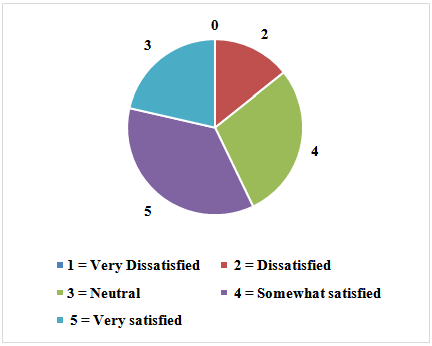
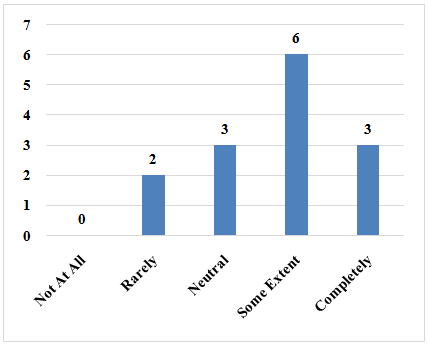
Moreover, the data presented in Figure 14 displays students expressed levels of satisfaction in leveraging AI tools for personalized feedback for subject areas, including Biology, Mathematics, English A, Caribbean Studies, Information Technology, Economics, among others. Eight students indicated a positive perception, rating their experiences as either “Somewhat Satisfied” (5) or “Very Satisfied” (3). This suggests that AI tools were found to be acceptable to support students’ learning concepts. Moreover, personalized feedback is a key feature of AI tools for educational purposes, suggesting that these tools have the potential to provide a guided framework to enhance students’ understanding of specific areas in these subjects. However, the other students had mixed feelings about leveraging AI tools (4), taking a neutral stance, or were not pleased with the experience (2). This inconsistency may be related to the generated information or how the feedback was interrupted for different subject areas, revealing that these tools will not always meet the students’ expectations in having clarity of concepts, obtaining accurate information, or those relevant to the various subjects. Hence, students can better experience meaningful and contextual learning opportunities through the continuous improvement of AI tools to meet their learning goals. Figure 15 displays the frequency of students perceived levels of satisfaction in using personalized AI tools to enhance academic performance. Six students shared that these tools helped with improving their performance slightly, while three of them expressed “completely”. This indicates that personalized AI tools have successfully contributed to students’ learning routines and have been found to provide meaningful academic progress, such as helping them overcome academic challenges or comprehend concepts. However, Figure 15 also showed that two students reported they were rarely satisfied with leveraging these tools due to the variability in their effectiveness across subject areas, their preferred learning styles, or not experiencing much engagement in using these tools. On the other hand, three remained neutral, suggesting their level of uncertainty about how satisfied they were with using the tools, which may also be based on the variability of the effectiveness across subjects. Overall, most of the students reported that these tools have the potential to improve their academic performance based on their effectiveness in terms of the nature of the academic content supported.
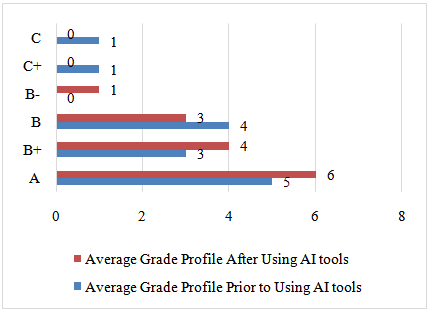
Figure 16 displays an upward trend in students perceived academic performance following their interaction with AI tools. It was revealed that before leveraging AI tools for educational purposes, students obtained A’s (5), B’s (4), B+ (3), C’s (2), and C+ (1). However, following their use of AI, the grade range slightly shifted to now include B- instead of C+, and 1 more equally obtained A’s and B+. Taking a closer look reveals that the number of A’s rose from 5 to 6, the count for B+ increased from 3 to 4; however, the number of B’s decreased from 4 to 3, and 1 student now received B-, slightly decreasing the lower performance bands. Also, the count for C+ reduced from 1 to 0, and C from 2 to 1. This suggests that students have a more positive performance. Furthermore, a deeper analysis of three students shared that they maintained an A grade in only one of the subjects: English Language, Accounting, and Biology. Another who studied the English Language expressed a movement of his or her grade from C to B+. Additionally, three of them who studied Mathematics reported experiencing a slight increase B+ to A, another slight decrease from B to B- and the other no change (still obtaining A grade). On the other hand, students who studied subjects such as Information Technology, Accounts, and Economics also experienced either unchanged grades or slight improvement in their performance. Upon, further insights, the data revealed that students who studied Mathematics and English Language had a greater perception of the effectiveness derived from skill-based learning. Also, the data suggests that students were able to leverage these tools to enhance the weak areas of subject content, particularly the difficult concepts or benefited from more practice opportunities.
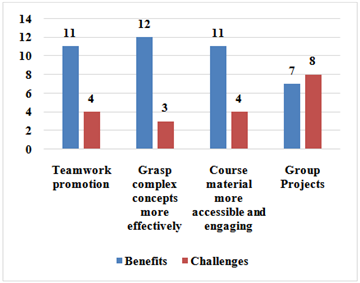
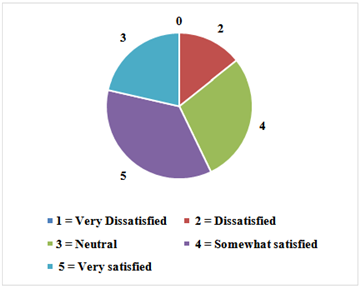
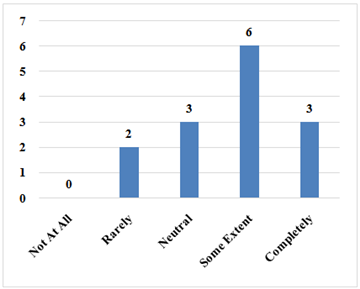
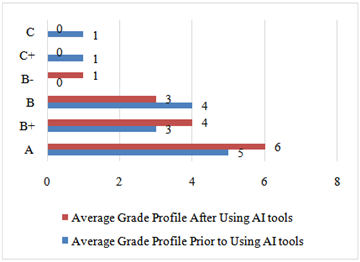
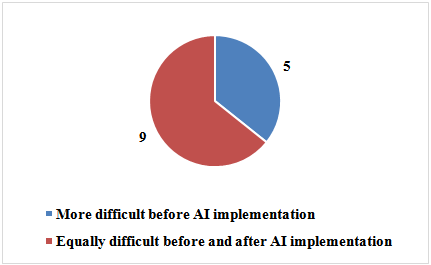
Figure 17 displays students perceived levels of difficulty in comprehending subject contents before and after the implementation of AI tools. The data revealed that five students believed that before the integration of these tools in their learning process, the concepts of the different subjects were more difficult. This indicates that shift they have used AI tools, they have experienced a positive shift in their approach to subject content as well as their understanding of different subject concepts. These students have found the different subject areas clearer, especially complex concepts, due to the nature of the AI provides additional explanations that are more detailed than their teachers’ notes. Also, these students reported that they had more practice opportunities for different forms than previously available and in greater abundance. As such, since the integration of these tools, students’ feelings of cognitive overload have reduced, making subject areas more manageable and improving their comprehension
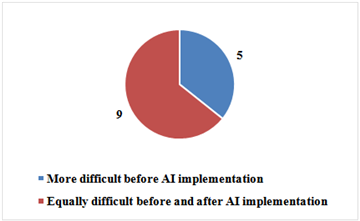
significant difference. This implies that while students have found these tools to offer support, there is no automatic ease in their learning process, especially across all subject areas. This is because these students have challenges beyond what AI offers in assistance, including teaching methods, personal learning styles, and a lack of interaction and support. Overall, while AI tools offered support to students, the impact was not uniform since some students believed that they had not experienced improvement in their comprehension levels.
4.4. Further Discussions and ImplicationsThe findings revealed that there exists a complex interplay among online learning environments, AI integration, and students’ academic engagement and performance. The data reported that students’ online learning experiences were deeply influenced by the conditions faced at home, where they were affected by distractions, mainly including parental expectations and chores. As such, students struggled to focus and stay on par with the classes. Even though approximately 75% of the students reported that they had access to the internet at home for their online classes, and 94% owned devices, many expressed that they encountered challenges such as sharing devices with younger siblings or that the internet was unstable 1, 8. Additionally, these students reported that they underwent stress due to the insufficient emotional support from their family and the seemingly insurmountable number of assignments to complete. According to Novikov 3, students were unprepared for the sudden shift from face-to-face classes to virtual interaction and put strain on both the students and teachers. By extension, Fawaz and Samaha 4 added that such a sudden transition has increased emotional fatigue and impacted students’ engagement in the teaching and learning process. Additionally, the study reported that students experienced diminished motivation and increased screen-related health issues such as migraines, which revealed that there was a need for blended learning models.
Moreover, when a follow-up interview was conducted with the students, 14 of them participated. They reported their perceived impact of AI tools on their learning outcomes and comprehension of subject areas. The data revealed that there are promising benefits, though uneven. For instance, all 14 stated that the AI tools used were ChatGPT and Khan Academy whenever they sought to understand subject content, while five stated that they used Quillbot and Grammarly to help improve their language skills, particularly their writing. When further analysis was done, it was found that these tools helped students to understand different subject areas, where 13 reported that they either strongly agreed or agreed. However, when asked about concept mastery and retention of subject matter, only a few expressed that they benefited from using these tools. This indicates that disparity exists since students found AI tools to be effective in enhancing comprehension, but not sufficient for deeper learning processes. This was echoed by Forbes 6 and the World Economic Forum 18, sharing that AI is a supplement to traditional pedagogical methods, not their replacement. Furthermore, there were mixed feelings based on students’ level of satisfaction with using AI tools for personalized feedback, with only 3 of them expressing satisfaction. Thus, to facilitate optimal AI integration in education, the robust technology needs to be coupled with sound and context-sensitive pedagogy.
Additionally, eight students reported that both traditional and online strategies should coexist using a hybrid model of AI tools with conventional and digital classroom methods to achieve academic success. This indicates that students desire a combination of enhanced resource access and personalized learning opportunities using AI tools while having structured and human interaction (teacher and classmates). It was revealed that 9 students benefited from AI through improved accessibility, while 4 enjoyed the personalized learning experiences. However, there was limited preferred usage of AI for collaboration and deep learning. This relates to the arguments put forward by Clarke 19 and Lake 9 that students should not over-rely on AI tools but rather have sufficient human mediation, especially when using these tools. Furthermore, Salido 13 explained that students need to be guided in using these tools as well, especially in what prompts would be best used to benefit from AI capabilities to help students achieve academic success. When these students have become digitally fluent, then their shared uneven success will be addressed.
The study noted the following implications, which are crucial for educators and policymakers in Jamaica and similar developing contexts as students and teachers leverage AI tools.
v There is a great need to enhance the digital infrastructure and support systems for equitable online learning and use of digital tools, especially at rural schools and schools in low socio-economic communities. This is necessary to ensure equitable access and effective engagement. According to UNESCO 20 and The Jamaica Observer 16, investment is needed not only in acquiring hardware and providing internet connection but building the capacity of students, teachers, and parents.
v As policies are decided , educators and policymakers must be thoughtful of how AI is integrated, carefully considering AI as a complement to human instruction and not a replacement. Also, teacher training institutions need to implement strategies that incorporate AI tools in pedagogy in meaningful ways, as advocated by Pawar 22.
v Students and teachers can use a blended learning model to promote more active learning experiences by leveraging the strengths of AI along with those of traditional classroom methods. Also, while the government’s vision 5 is to eventually transform the education system to one that is technology-enabled, it is important to identify realistic appraisals of students’ needs, by clearly identifying their learning styles, levels of motivation, and how to motivate them, and their mental health.
4.5. ConclusionThis study revealed that the role of online and AI integration is evolving in the Jamaican secondary schools, especially since the pandemic, by shaping students’ academic engagement and performance. A significant number of students stated that they had their own devices and access to the internet connection for their virtual classes, signaling that they were ready for digital instruction. However, despite having the hardware and internet access, they encountered challenges such as household distractions, difficulty adapting to online learning, and inadequate support. Even so, students reported that since accessing AI tools, they benefited in ways such as improving their comprehension skills of subject content, experiencing improvements in their academic performance in subjects such as Economics, Mathematics, and English. They expressed that these benefits were derived from leveraging tools such as Khan Academy and ChatGPT. Also, 8 (1.65%) students mentioned that their study habits have changed since they have adopted these tools. Finally, 9 (1.86%) students reported that they envisioned AI tools influencing the transformation of the education system through enhanced accessibility and personalized learning in the future.
4.6. RecommendationsThe study recommends that policymakers and educators develop a structured framework which focuses on making access to AI tools and other learning technologies available to all students. In other words, they need to address the disparity that exist in making digital access equity to all students to facilitate engagement and academic outcomes.
The authors express their heartfelt gratitude to the participants of this study and all the members of the Mathematics Department at Shortwood Teachers’ College for their continued support throughout each stage of this study.
| [1] | Golding, P., & Jackson, C. A. (2021, August 19). Jamaican high school students’ satisfaction during the COVID-19 lockdown. Quality Assurance in Education. | ||
| In article | View Article | ||
| [2] | Robinson, C. (2020, October 11). “We were not trained for this” – Inequity bedevils online classes as teachers battle assessment and matriculation concerns as low turnout marks first week. The Sunday Gleaner. | ||
| In article | |||
| [3] | Novikov, P. (2020). Impact of COVID-19 emergency transition to online learning on international students’ perceptions of educational process at Russian university. Journal of Social Studies Education Research, 11(3), 270–302. | ||
| In article | |||
| [4] | Fawaz, M., & Samaha, A. (2020). E-learning: Depression, anxiety, and stress symptomatology among Lebanese university students during COVID-19 quarantine. Nursing Forum, 56, 52–57. | ||
| In article | View Article PubMed | ||
| [5] | Jamaica Information Service. (2022, October 21). Education Minister outlines benefits of artificial intelligence. Jamaica Information Service. https://jis.gov.jm/education-minister-outlines-benefits-of-artificial-intelligence/. | ||
| In article | |||
| [6] | Forbes. (2023). Artificial intelligence in school. Forbes Advisor. https:// www.forbes.com/advisor/ education/ it-and-tech/ artificial-intelligence-in-school/. | ||
| In article | |||
| [7] | Calvert, C. (2023, September 27). Teacher availability in Jamaica - How teacher shortages affect students. One Academy. https://www.oneacademy.com/home/2023/09/26/teacher-availability-in-jamaica-how-teacher-shortages-affect-students/. | ||
| In article | |||
| [8] | Cunningham, D., Cunningham, S., Haye, K., Ellis, A., Facey, D., Hamilton, A., Jacobs, N., Miller, J., Morris, C., Morris, S., Ogeare, J., Samuels, S., & White, C. (2024, December 6). Beyond the horizon: An investigation to unravel the impact of AI on Jamaican students’ performance. American Journal of Educational Research, 12(12), 479–502. | ||
| In article | View Article | ||
| [9] | Lake. R. (2023). Shockwaves of innovation: How nations worldwide are dealing with AI in education. The 74 Million. https://www.the74million.org/article/shockwaves-innovations-how-nations-worldwide-are-dealing-with-ai-in-education/. | ||
| In article | |||
| [10] | Blackman, S. (2021). The impact of Covid-19 on education equity: A view from Barbados and Jamaica. UNESCO IBE 2021. Prospects (2022) 51:611-625. | ||
| In article | View Article PubMed | ||
| [11] | Soria K.M, et al. (2020) The Obstacles to Remote Learning for Undergraduate, Graduate, and Professional Students. Berkeley: Center for Studies in Higher Education. Available at: https:// escholarship.org/uc/item/5624p4d7 (accessed 14 January 2021). | ||
| In article | |||
| [12] | Arnove, R. (2020). Imagining what education can be post-COVID-19. Prospects, 49, 43–46. | ||
| In article | View Article PubMed | ||
| [13] | Salido, M. (2023). Personalized learning through AI: Transforming education for the future. EdTech Magazine. https://edtechmagazine.com/article/2023-ai-personalized-learning/. | ||
| In article | |||
| [14] | Angus, G. (2024) Education Ministry using AI to reshape learning. Jamaica Information Service. Retrieved from https://jis.gov.jm/education-ministry-using-ai-to-reshape-learning/. | ||
| In article | |||
| [15] | Nationwide News Network. (2024). Only 36% passed mathematics in 2024 CSEC sitting. https:// nationwideradiojm.com/ only-36-passed-mathematics- in-2024-csec-sitting/. | ||
| In article | |||
| [16] | Jamaica Observer. (2023). Education Minister explores AI’s benefits for addressing teacher shortages. Jamaica Observer. https://www.jamaicaobserver.com/news/education-minister-on-ai/. | ||
| In article | |||
| [17] | KeyMakr. (2023). Bridging the digital divide: AI’s role ineducation. KeyMakr News. https://keymakr.com/blogs/ai-and-education. | ||
| In article | |||
| [18] | World Economic Forum. (2024). AI reshaping classrooms:Personalized learning and global impacts. World Economic Forum. https:// agenda/ 2024/ai-in-education. | ||
| In article | |||
| [19] | Clarke, T. (2023). The implications of AI on students’ learning in Jamaica: Cashpot grades and quick answers. Jamaica Observer. https://www.jamaicaobserver.com/opinion/cashpot-grades-ai-use-in-jamaica/. | ||
| In article | |||
| [20] | UNESCO. (2024). Integrating AI in education: Balancing innovation with human interaction. UNESCO Education Policy Brief. https://unesco.org/education/ai-2024. | ||
| In article | |||
| [21] | Jamaica Gleaner. (2024). Education Minister discusses AI and itsrole in transforming classrooms. https://www.jamaica-gleaner.com/article/news/ai-transform-classrooms-jamaica/. | ||
| In article | |||
| [22] | Pawar, P. (2023). AI-enhanced education: Personalized learning and educational technology. ResearchGate. | ||
| In article | |||
| [23] | Ayman, A., Daghestani, A., & Juaid, D. (2023). The impact of ChatGPT on student learning/performing. ResearchGate. | ||
| In article | |||
| [24] | Creswell, J. W., & Plano Clark, V.L. (2018). Designing and conducting mixed methods research (3rd ed.). SAGE Publications. | ||
| In article | |||
| [25] | Morris, A. (2021, May 21). 150,000 students to have devices by end of school year. Jamaica Information Service – The Voice of Jamaica. https://jis.gov.jm/150000-students-to-have-devices-by-end-of-school-year/. | ||
| In article | |||
| [26] | Chin See, K. (2020, October 7). Advertorial | Lack of internet access poses challenge to online learning. Jamaica Gleaner. https://jamaica-gleaner.com/article/news/20201007/advertorial-lack-internet-access-poses-challenge-online-learning. | ||
| In article | |||
| [27] | Disprz. (2023). Cognitive learning theory: Understanding how people learn. Disprz. https://disprz.ai/blog/cognitive-learning-theory. | ||
| In article | |||
| [28] | MindTools. (n.d.). Cognitive load theory: Keeping learning simple. https://www.mindtools.com/aqxwcpa/cognitive-load-theory. | ||
| In article | |||
Published with license by Science and Education Publishing, Copyright © 2025 Shaneille Samuels, Kimberley Haye, Denneil Cunningham, Nicole Jacobs, Tanielle Stephens, Shalamara Waldron, Althia McKay, Odeisha Clunie, Matthew Bartlett, Orinthia Fisher-Howe, Corey Williamson, Toney-Ann Richards, Monique McFarlane, Saskia Bryan, Moesha Gonzales, Rohan Cobourne, Okhema Francis and Kereisha Johnson-Clayton
 This work is licensed under a Creative Commons Attribution 4.0 International License. To view a copy of this license, visit
http://creativecommons.org/licenses/by/4.0/
This work is licensed under a Creative Commons Attribution 4.0 International License. To view a copy of this license, visit
http://creativecommons.org/licenses/by/4.0/
| [1] | Golding, P., & Jackson, C. A. (2021, August 19). Jamaican high school students’ satisfaction during the COVID-19 lockdown. Quality Assurance in Education. | ||
| In article | View Article | ||
| [2] | Robinson, C. (2020, October 11). “We were not trained for this” – Inequity bedevils online classes as teachers battle assessment and matriculation concerns as low turnout marks first week. The Sunday Gleaner. | ||
| In article | |||
| [3] | Novikov, P. (2020). Impact of COVID-19 emergency transition to online learning on international students’ perceptions of educational process at Russian university. Journal of Social Studies Education Research, 11(3), 270–302. | ||
| In article | |||
| [4] | Fawaz, M., & Samaha, A. (2020). E-learning: Depression, anxiety, and stress symptomatology among Lebanese university students during COVID-19 quarantine. Nursing Forum, 56, 52–57. | ||
| In article | View Article PubMed | ||
| [5] | Jamaica Information Service. (2022, October 21). Education Minister outlines benefits of artificial intelligence. Jamaica Information Service. https://jis.gov.jm/education-minister-outlines-benefits-of-artificial-intelligence/. | ||
| In article | |||
| [6] | Forbes. (2023). Artificial intelligence in school. Forbes Advisor. https:// www.forbes.com/advisor/ education/ it-and-tech/ artificial-intelligence-in-school/. | ||
| In article | |||
| [7] | Calvert, C. (2023, September 27). Teacher availability in Jamaica - How teacher shortages affect students. One Academy. https://www.oneacademy.com/home/2023/09/26/teacher-availability-in-jamaica-how-teacher-shortages-affect-students/. | ||
| In article | |||
| [8] | Cunningham, D., Cunningham, S., Haye, K., Ellis, A., Facey, D., Hamilton, A., Jacobs, N., Miller, J., Morris, C., Morris, S., Ogeare, J., Samuels, S., & White, C. (2024, December 6). Beyond the horizon: An investigation to unravel the impact of AI on Jamaican students’ performance. American Journal of Educational Research, 12(12), 479–502. | ||
| In article | View Article | ||
| [9] | Lake. R. (2023). Shockwaves of innovation: How nations worldwide are dealing with AI in education. The 74 Million. https://www.the74million.org/article/shockwaves-innovations-how-nations-worldwide-are-dealing-with-ai-in-education/. | ||
| In article | |||
| [10] | Blackman, S. (2021). The impact of Covid-19 on education equity: A view from Barbados and Jamaica. UNESCO IBE 2021. Prospects (2022) 51:611-625. | ||
| In article | View Article PubMed | ||
| [11] | Soria K.M, et al. (2020) The Obstacles to Remote Learning for Undergraduate, Graduate, and Professional Students. Berkeley: Center for Studies in Higher Education. Available at: https:// escholarship.org/uc/item/5624p4d7 (accessed 14 January 2021). | ||
| In article | |||
| [12] | Arnove, R. (2020). Imagining what education can be post-COVID-19. Prospects, 49, 43–46. | ||
| In article | View Article PubMed | ||
| [13] | Salido, M. (2023). Personalized learning through AI: Transforming education for the future. EdTech Magazine. https://edtechmagazine.com/article/2023-ai-personalized-learning/. | ||
| In article | |||
| [14] | Angus, G. (2024) Education Ministry using AI to reshape learning. Jamaica Information Service. Retrieved from https://jis.gov.jm/education-ministry-using-ai-to-reshape-learning/. | ||
| In article | |||
| [15] | Nationwide News Network. (2024). Only 36% passed mathematics in 2024 CSEC sitting. https:// nationwideradiojm.com/ only-36-passed-mathematics- in-2024-csec-sitting/. | ||
| In article | |||
| [16] | Jamaica Observer. (2023). Education Minister explores AI’s benefits for addressing teacher shortages. Jamaica Observer. https://www.jamaicaobserver.com/news/education-minister-on-ai/. | ||
| In article | |||
| [17] | KeyMakr. (2023). Bridging the digital divide: AI’s role ineducation. KeyMakr News. https://keymakr.com/blogs/ai-and-education. | ||
| In article | |||
| [18] | World Economic Forum. (2024). AI reshaping classrooms:Personalized learning and global impacts. World Economic Forum. https:// agenda/ 2024/ai-in-education. | ||
| In article | |||
| [19] | Clarke, T. (2023). The implications of AI on students’ learning in Jamaica: Cashpot grades and quick answers. Jamaica Observer. https://www.jamaicaobserver.com/opinion/cashpot-grades-ai-use-in-jamaica/. | ||
| In article | |||
| [20] | UNESCO. (2024). Integrating AI in education: Balancing innovation with human interaction. UNESCO Education Policy Brief. https://unesco.org/education/ai-2024. | ||
| In article | |||
| [21] | Jamaica Gleaner. (2024). Education Minister discusses AI and itsrole in transforming classrooms. https://www.jamaica-gleaner.com/article/news/ai-transform-classrooms-jamaica/. | ||
| In article | |||
| [22] | Pawar, P. (2023). AI-enhanced education: Personalized learning and educational technology. ResearchGate. | ||
| In article | |||
| [23] | Ayman, A., Daghestani, A., & Juaid, D. (2023). The impact of ChatGPT on student learning/performing. ResearchGate. | ||
| In article | |||
| [24] | Creswell, J. W., & Plano Clark, V.L. (2018). Designing and conducting mixed methods research (3rd ed.). SAGE Publications. | ||
| In article | |||
| [25] | Morris, A. (2021, May 21). 150,000 students to have devices by end of school year. Jamaica Information Service – The Voice of Jamaica. https://jis.gov.jm/150000-students-to-have-devices-by-end-of-school-year/. | ||
| In article | |||
| [26] | Chin See, K. (2020, October 7). Advertorial | Lack of internet access poses challenge to online learning. Jamaica Gleaner. https://jamaica-gleaner.com/article/news/20201007/advertorial-lack-internet-access-poses-challenge-online-learning. | ||
| In article | |||
| [27] | Disprz. (2023). Cognitive learning theory: Understanding how people learn. Disprz. https://disprz.ai/blog/cognitive-learning-theory. | ||
| In article | |||
| [28] | MindTools. (n.d.). Cognitive load theory: Keeping learning simple. https://www.mindtools.com/aqxwcpa/cognitive-load-theory. | ||
| In article | |||