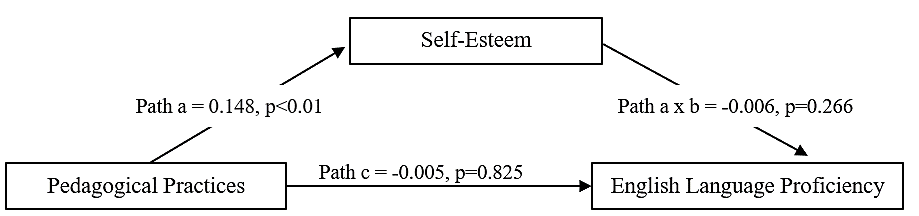
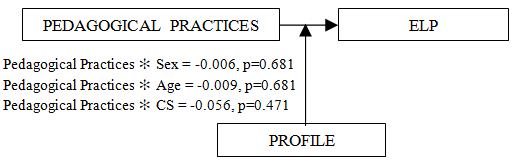
This study examined the role of students’ self-esteem as a mediating variable in the relationship between Teachers’ Pedagogical Practices (TPP) and English Language Proficiency (ELP), and whether demographic profiles influence the strength or direction of this relationship. Using a descriptive-correlational design, data were collected from 270 students enrolled in English-related programs at selected higher education institutions in Misamis Oriental during Academic Year 2024–2025. Validated survey tools and a standardized English proficiency test were used, with statistical analyses including descriptive statistics, Pearson correlation, multiple regression, mediation, and moderation. Results showed that most respondents were female, single, and aged 18 to 20. Teachers' Pedagogical Practices (TPP) were reported as highly practiced, and students exhibited high levels of self-esteem; however, their English Language Proficiency was low. Regression analysis indicated that neither Teachers' Pedagogical Practices (p = 0.635) nor self-esteem (p = 0.177) significantly predicted students' English Language Proficiency. However, pedagogical practices significantly influenced students’ self-esteem (β = .211, p < .000). Mediation analysis revealed that self-esteem did not mediate the relationship between pedagogical practices and English Language Proficiency (indirect effect = -0.006, p = .266). Likewise, the moderating variables; age, sex, and civil status, did not significantly moderate the relationship (p > .05 for all interaction terms). The study concludes that although Teachers’ Pedagogical Practices enhance students’ self-esteem, they did not significantly predict or mediate improvements in English Language Proficiency. Thus, there is a need to create holistic instructional strategies and policies that address factors beyond pedagogy and psychological aspects.
The enhancement of English Language Proficiency (ELP) remains a fundamental objective in education systems across the globe. This is due to ELP’s vital role in ensuring academic success, increasing employability, and facilitating international communication 1. Both local and international educational institutions continuously revise their curricula, adapt instructional materials, and innovate teaching strategies to align with global standards and improve students’ proficiency in English.
In the context of 21st-century education, ELP has become even more crucial as it fosters cross-cultural understanding, enables academic mobility, and opens pathways for professional growth in an increasingly interconnected world. ELP contributes to increased self-confidence and motivation, creating a positive feedback loop that enhances overall academic performance 2. The important core components of language proficiency, such as vocabulary, reading comprehension, syntax, and grammar have been shown to significantly influence ELP 3. Similarly, grammar and syntax, listening, and reading are some of the components in the English proficiency test that are needed for students to be fluent in English 4.
However, Filipino students' low English proficiency was revealed in the 2018 PISA, where they scored below the OECD average in reading 5. The country also dropped from 20th to 27th in the English Proficiency Index, signaling systemic issues and the urgent need for improved language education strategies 6.
In addition, it has been observed that in one of the local community colleges in Misamis Oriental, the performance rating of secondary education graduates, including English majors, on the national board examinations has shown a declining trend over three consecutive board examination periods. The pass rate dropped from 66.67% in September 2021 to 59.09%, 53.85%, and 50.00% in 2022, and the rates in 2023 subsequently fell below the national passing average 7, 8.
Thus, the findings contribute to the field of language education by providing a nuanced understanding of the factors influencing English Language Proficiency (ELP) outcomes. Specifically, the study offers insights informing the targeted strategies to address the evolving needs of students in higher education, whether through the involvement of teachers’ pedagogical practices or by recognizing the role of students’ self-esteem in the learning process. This study offers evidence-based insights that can guide instructional approaches.
Among the key factors affecting ELP are teachers’ pedagogical practices, which significantly shape students' language learning experiences by engaging effective instructional methods, such as direct instruction (DI), task-based instruction (TBI), project-based instruction (PBI), and technology-mediated instruction (TMI). DI is a teacher-centered approach that features structured lessons where the teacher explicitly presents and demonstrates content, followed by guided practice and feedback to efficiently teach specific skills and knowledge. PBI engages students in meaningful projects that apply knowledge to real-world problems, encouraging active learning, collaboration, and interdisciplinary integration. TBI focuses on learning through purposeful activities that develop practical skills aligned with specific learning goals, allowing students to apply knowledge in real-life contexts, while TMI incorporates digital tools such as online platforms, educational software, and multimedia to create interactive, personalized, and flexible learning experiences. These methods have been shown to enhance language skills and foster confidence among learners 9, 10. These practices do not operate in isolation.
Students' self-esteem is a psychological factor influencing their engagement, motivation, and performance. It refers to the students' self-confidence, which enables them to successfully engage with and comprehend academic content delivered in English. Self-esteem, whether global, specific to language learning, or task-oriented, affects students' willingness to participate in language tasks, take risks, and persist in overcoming challenges 11, 12. Global self-esteem refers to a student’s overall sense of self-worth, including self-respect, self-acceptance, and confidence, in which an individual feels positive about themselves (feeling good and valuable). Specific Self-Esteem refers to students’ self-evaluation in particular domains or activities. It pertains to how students perceive their abilities and worth in specific subjects or tasks that are essential to acquire a second or foreign language, like English, as the medium of instruction in different settings. While task self-esteem is a more focused form, focusing on an individual's confidence and self-perception to complete specific tasks or activities such as English language tasks; vocabulary, grammar, syntax, and reading comprehension analysis. It is influenced by the classroom participation and the perceived relevance of tasks to real-life situations. On the other hand, demographic and psychological factors affecting English proficiency among ESL students shed light on how factors like age, gender, and socioeconomic status can impact language learning. Additionally, gender and civil status may also influence how self-esteem mediates the relationship between pedagogical practices and ELP 13. Nevertheless, only a few studies claim a positive correlation where self-esteem can significantly impact ELP. Higher self-esteem is associated with better English proficiency test scores 14, 15. It highlights the essential role of self-esteem in language learning contexts, as students with increased confidence and positive self-perception engage more actively and perform better on proficiency measures.
Despite its significance, the interplay between pedagogical practices, self-esteem, and ELP has been underexplored, particularly in the Philippine context. Research suggests that students with higher self-esteem tend to perform better in English language tasks, as they are more likely to engage actively and overcome language-related anxieties 14, 15.
This study is primarily grounded in Bandura's Social Cognitive Theory (SCT), which posits that learning occurs in a social context through the dynamic interaction of personal, behavioral, and environmental influences 16.
Thus, the study sought to address the foregoing gaps by examining the mediating role of students' self-esteem in the relationship between teachers' pedagogical practices and students’ English Language Proficiency. This research aimed to provide insights into how educators can create supportive learning environments that enhance both self-esteem and language skills.
The research methodology delineates the overall design, population and sampling, research instruments, data collection and analysis procedures, validity and reliability measures, and the overall integrity of the research findings.
2.1. Research DesignThis study used a descriptive-correlational research design, or more specifically, a quantitative research technique to describe a phenomenon by analyzing, describing, and interpreting conditions that are present, and to explore the mediation and moderation effects. Descriptive-correlational design helps to measure the degree of association between two variables, and it additionally enables the formulation of informed predictions derived from the identified relationships 17.
2.2. Sampling Method and RespondentsProportional Random Sampling is used to identify the study's sample size and represent the population accurately and proportionately. The 270 respondents were from the selected local community college in Misamis Oriental, enrolled in English-related courses during the Second Semester Academic Year 2024-2025.
2.3. Research Instruments, Validity, and ReliabilityThe instruments were composed of four sets of questionnaires. The first part gathered participants’ demographic profiles, including age, sex, and civil status. The second part, adapted from Arbaoui and Puangpunsi 18, 19 assessed students’ perceptions of teachers’ pedagogical practices, particularly DI, TBI, PBI, and TMI, through a 20-item survey rated on a four-point Likert scale. The third part measured self-esteem using a 30-item instrument, combining the Rosenberg Self-Esteem Scale mentioned by Garcia 20 and items adapted from Garcia and Kalanzadeh et al. and Oktaviani 4, addressing global, specific, and task-related self-esteem. The fourth part assessed ELP through a standardized test with 30 items covering vocabulary, reading comprehension, syntax, and grammar which adapted from standardized tests such as the G-TELP (for vocabulary, reading comprehension, and syntax) and TOEFL (for grammar), both widely recognized for evaluating English proficiency in academic and real-world contexts 21.
The instruments were validated by experts, with the Teachers’ Pedagogical Practices (TPP) construct (20 items) showing excellent content validity; its Scale Content Validity Index /Average (S-CVI/Ave) was 0.90, and the Scale-Content Validity Index/Universal (S-CVI/UA) was 0.80. Likewise, the students’ self-esteem and ELP constructs (30 items each) achieved S-CVI/Ave scores of 0.93 and 0.94, and S-CVI/UA scores of 0.87 and 0.83, respectively, confirming that all items were relevant and met the criteria for acceptable content validity. The interpretation of the Content Validity Index (CVI) followed the indicators proposed by Polit and Beck (2006), found in the study of Dalawi et al. 22 and Yusoff 23.
In addition, the reliability of the instruments was assessed using Cronbach’s alpha. The subscales showed acceptable internal consistency: Pedagogical Practices (20 items, α=.76), students’ Self-Esteem (30 items, α=.75), and students’ ELP (30 items). These results indicate that the survey instruments of students’ perceptions on teachers’ pedagogical practices, their self-esteem, and English Language Proficiency were reliable. According to Nunnally (1978), as mentioned in the study of Ahmad et al. 24, a Cronbach's alpha of 0.70 or higher is acceptable for basic research, while 0.80 or above indicates greater reliability.
This chapter includes the presentation, analysis, and interpretation of the data gathered in the study. Each research question is addressed systematically to provide a clear understanding of the findings and their implications.
3.1. Respondents' Demographic ProfileThe results revealed that most of the respondents (51.11%) were between 18 and 20 years old, followed by 23.33% aged 21–23, 15.93% aged 24–26, and only 9.63% aged 27 and above. This distribution suggests that most of the students participating in the study are in the early stages of their college education, likely first-year or second-year students who are still developing foundational academic skills, including proficiency in English. Further, female respondents comprised 68.15%, while males made up 31.85%. This female predominance is reflective of current trends in education-related degree programs in the Philippines, where women are more likely to pursue careers in teaching, a profession historically viewed as nurturing and aligned with traditional gender roles. The study also found that the majority of respondents were single (85.56%), with only 14.44% reported as married, and primarily enrolled in English language education programs at local colleges.
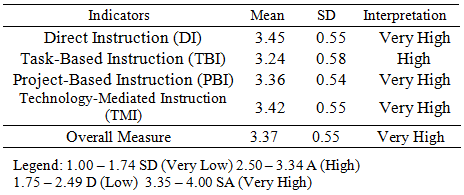
3.2. Level of Teachers’ Pedagogical Practices (TPP)Table 1 presents the findings on teachers’ pedagogical practices, measured across four key indicators: direct instruction (DI), task-based instruction (TBI), project-based instruction (PBI), and technology-mediated instruction (TMI).
The results indicated that among the four instructional strategies measured, Direct Instruction (M = 3.45, SD = 0.55), Project-Based Instruction (M = 3.36, SD = 0.54), and Technology-Mediated Instruction (M = 3.42, SD = 0.55) were all rated as “Very High”, suggesting that teachers frequently implement structured, interactive, and technology-supported methods that cater to clarity, engagement, and real-world application in language learning. While Task-Based Instruction (M = 3.24, SD = 0.58) was the only approach rated as “High”, implying that while TBI is utilized, it may not be as deeply embedded in instructional routines compared to the other methods. The high mean score of 3.45 for Direct Instruction (DI) indicates that this is the most consistently practiced pedagogical approach among English language teachers in local colleges in Misamis Oriental. The overall mean score of 3.37 (SD = 0.56) indicated that teachers’ pedagogical practices, as perceived by students, are generally categorized as “Very High level.” The result suggests that instructors in local colleges in Misamis Oriental consistently use a mix of teaching strategies, especially direct instruction, project-based, and technology-mediated methods, perceived as effective in supporting student learning.
Despite clear instructions from instructors, many students in community-based colleges enter higher education with weak communication skills due to limited access to resources like books, facilities, and laboratories. Students from diverse, resource-limited backgrounds benefit from clear instruction, interactive projects, and digital tools, which enhance engagement and English proficiency 25. The low TBI results suggest it is less consistently used than other methods, likely due to limited training, large classes, or resource constraints. This highlights the need for stronger teacher and institutional support for task-based, learner-centered instruction. These practices show how faculty maximize classroom time to meet learners' needs and build essential skills. Direct Instruction (DI), especially when paired with formative assessment, enhances student achievement and engagement 26. English learners benefit from clear, structured, and scaffolded instruction, a defining feature of Direct Instruction (DI).
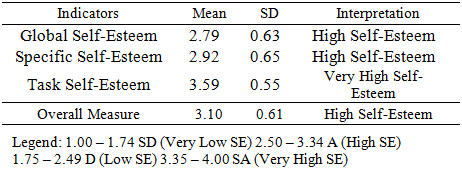
3.3. Level of Students’ Self-EsteemTable 2 reveals the findings on students’ self-esteem, measured across three key indicators: Global, Specific, and Task Self-Esteem.
The overall self-esteem level of students is high (M = 3.10, SD = 0.61). A closer look reveals variation among dimensions: Global Self-Esteem is high (M = 2.79), Specific Self-Esteem is also high (M = 2.92), and Task Self-Esteem is very high (M = 3.59). This pattern suggests that students are confident when completing specific academic tasks, particularly in language learning contexts.
This result aligns with the study of some scholars that students can feel competent in particular tasks while maintaining a more moderate view of their overall self-worth 27. In other words, students may not always perceive themselves as highly capable in a general sense (global self-esteem) indicating that students may experience doubts about their overall self-worth, which could be influenced by factors like societal pressure or personal challenges, and when it comes to specific academic tasks, students feel confident in their abilities within specific domains, such as language skills or particular subjects. This high score reflects a positive self-perception when focusing on particular areas of competence. However, Task Self-Esteem is rated as Very High Self-Esteem, indicating that students feel confident in their ability to handle tasks, particularly specific assignments or challenges. This implication reflects a strong belief in their capacity to engage with and complete tasks, often linked to academic achievement and persistence. Its development may result from effective teaching strategies that encourage small, consistent successes.
However, the gap between task and global self-esteem suggests the need to expand students’ confidence beyond specific tasks. In local colleges like those in Misamis Oriental, external challenges may lower general self-esteem, emphasizing the value of motivational support. Future programs should integrate affective support systems alongside language instruction to ensure balanced academic and emotional growth.
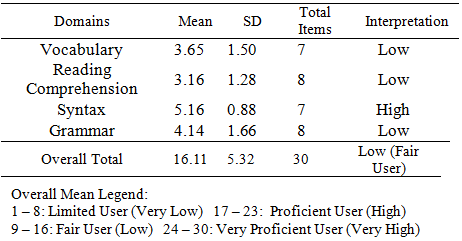
3.4. Level of Students’ English Language ProficiencyTable 3 shows the results of the students’ English Language Proficiency level across four domains: Vocabulary, Reading Comprehension, Syntax, and Grammar.
Among the domains, Syntax recorded the highest mean score of 5.16 (SD = 0.88) out of 7, suggesting that students performed best in constructing or analyzing sentence structures. Grammar (M = 4.14, SD = 1.66), Vocabulary (M = 3.65, SD = 1.50), and Reading Comprehension (M = 3.16, SD = 1.28) showed a low level of proficiency, highlighting that this is the most challenging domain for the respondents.
The high score in syntax suggests that formal instruction effectively reinforces rule-based English components. However, the 2018 PISA results showed Filipino students ranked lowest in reading comprehension, struggling with informational texts vital for academic success, 28 and had been observed its comparable trends across Vietnam, Indonesia, and Thailand 29. These results struggle with low literacy levels, limited vocabulary, and reduced exposure to authentic reading materials 30.
However, the overall English proficiency score of the students averaged 16.10 (SD = 3.03) out of 30, placing them within the category of "Low" level of proficiency or Fair User of English. This indicates that while students may excel in areas like syntax, their overall English proficiency remains limited. The low average underscores the need for focused support in reading comprehension and vocabulary to meet academic and professional language demands. Task-based and content-enriched instruction can significantly enhance students' engagement with language input, and proves their significance towards language development, thus, improving proficiency across multiple domains 31. Strengthening foundational skills in vocabulary and reading are vital for students to progress from fair to proficient users of English, supporting their academic success and future professional communication.
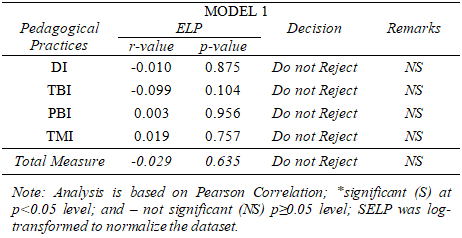
3.5. Teachers’ Pedagogical Practices (TPP) as Perceived by the Students Predict Students’ English Language Proficiency (ELP)The results presented in Table 4 indicate that there is no statistically significant relationship between teachers’ pedagogical practices: Direct Instruction (DI), Task-Based Instruction (TBI), Project-Based Instruction (PBI), and Technology-Mediated Instruction (TMI) and students’ English Language Proficiency (ELP).
The correlation coefficients (R-values) for all four instructional strategies are close to zero, DI at -0.010 (p = 0.875), TBI at -0.099 (p = 0.104), PBI at 0.003 (p = 0.956), and TMI at -0.019 (p = 0.757), with all p-values greater than 0.05. The overall p-value of 0.635 indicates that these pedagogical practices and English Language Proficiency (ELP) were not statistically significant. This suggests that students’ perceptions of pedagogical approaches do not meaningfully align with their English language proficiency levels. In other words, the perceived use of Direct, Task-Based, or Project-Based Instruction does not translate into measurable differences in language skills. This disconnect may stem from ineffective implementation or limited student engagement with the strategies.
The absence of significant links between teaching strategies and language proficiency challenges the belief that structured or student-centered approaches automatically lead to better language outcomes. The effectiveness of these approaches may rely on mediating or moderating factors such as implementation quality, learner motivation and attitudes, and access to resources and support 32.
Similarly, the effectiveness of pedagogical practices hinges not only on the methods themselves but also on how they are adapted to meet learners’ needs, the classroom environment, and the instructional goals 33.
The lack of correlation may indicate a gap between students’ perceptions of pedagogical practices and their actual impact, highlighting the need to better align instructional intent with student experience. English language proficiency may be more strongly shaped by factors beyond classroom instruction, such as self-study, media exposure, peer interaction, and affective variables like self-esteem and confidence.
These insights call for pedagogical approaches that are both contextually responsive and integrated with strategies to enhance learner engagement, self-esteem, and holistic language growth.
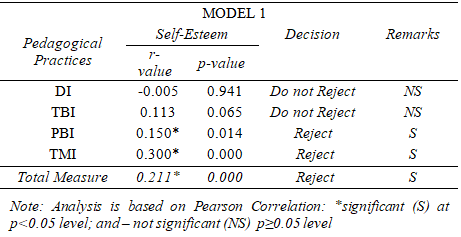
3.6. Teachers’ Pedagogical Practices (TPP) Predict Students’ Self-EsteemTable 5 shows the multiple regression results on how students’ perceptions of teachers’ pedagogical practices predict their self-esteem, highlighting which strategies significantly influence students’ confidence and self-worth in the classroom.
The results of the correlation between students’ perceptions of their teachers’ pedagogical practices and their self-esteem. Overall, the total measure of pedagogical practices yielded a statistically significant positive relationship with student self-esteem (r = 0.211, p = 0.000), suggesting that students who perceive their teachers as effectively employing a variety of instructional strategies tend to report higher levels of self-esteem. The results suggest that while teaching practices may not directly impact English proficiency, they can positively influence students’ confidence, self-worth, and motivation in academic settings through supportive and varied instructional methods.
Among the individual teaching strategies, Project-Based Instruction (PBI) (r = 0.150, p = 0.014) and Technology-Mediated Instruction (TMI) (r = 0.300, p = 0.000) were found to have statistically significant positive correlations with student self-esteem. The strongest correlation was found with TMI, suggesting that technology use in teaching enhances students’ self-esteem. This may stem from the autonomy, accessibility, and personalized learning experiences that digital tools provide, helping students feel more empowered and capable. Technology-enhanced instruction promotes greater learner confidence and reduces performance anxiety, especially in language learning contexts 34.
PBI showed a weaker yet significant link to self-esteem, suggesting that engaging in meaningful, collaborative projects fosters a sense of achievement and self-worth. PBI promotes ownership, creativity, and tangible outcomes that reinforce students’ confidence and self-belief. The experiential and participatory nature of project-based learning contributes positively to students’ academic self-concept and emotional engagement 35.
Direct Instruction (DI) and Task-Based Instruction (TBI) showed no significant correlation with self-esteem, with DI nearly zero (r = -0.005, p = 0.941) and TBI nearing significance (r = 0.113, p = 0.065). This suggests that teacher-centered methods like DI may limit emotional growth, while TBI’s impact may depend on how tasks support autonomy, creativity, and success experiences.
From a practical perspective, this finding underscores the importance of integrating technology and project-based learning in higher education, not only to enhance academic outcomes but also to support students’ emotional and psychological development.
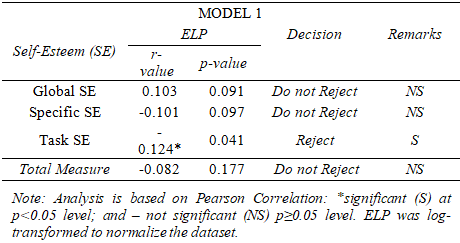
3.7. Self-Esteem Predicts the Students’ ELPTable 6 provides further evidence regarding the role of students’ self-esteem in predicting their English Language Proficiency.
Overall, the total self-esteem measure did not exhibit a significant relationship with ELP (r = -0.082, p = 0.177), indicating that, when all dimensions of self-esteem are considered together, there is no meaningful linear association with students’ ELP. The results show that none of the self-esteem dimensions (global self-esteem, specific self-esteem, and task-self-esteem) significantly predict ELP, as all p-values exceed the 0.05 significance level. Task Self-Esteem emerged as the only dimension significantly related to English Language Proficiency (r = -0.124, p = 0.041). Interestingly, the relationship is negative, suggesting that higher task-related self-esteem is associated with slightly lower English proficiency scores.
One possible explanation for this finding is the presence of overestimation or inflated confidence among some students, particularly those who perceive themselves as competent but may not consistently demonstrate actual mastery of the English language. The discrepancies between perceived and actual performance can occur when students possess high emotional or motivational self-perceptions but lack the linguistic accuracy or depth needed for academic proficiency 36.
Global Self-Esteem (r = 0.103, p = 0.091) and Specific Self-Esteem (r = -0.101, p = 0.097) did not reach statistical significance, though both approached the threshold. The weak positive correlation for global self-esteem suggests a trend where students who generally feel good about themselves may perform slightly better in English, though this effect is not strong enough to draw firm conclusions.
Meanwhile, the slight negative correlation observed for specific self-esteem may reflect inconsistencies in students’ perceived versus actual competencies in language-related skills such as speaking, writing, and reading comprehension 37. Students may feel confident in isolated tasks but still struggle with broader or integrated academic applications, which could explain the lack of a direct, linear relationship.
While self-esteem influences motivation and engagement, its impact on language proficiency is often indirect, shaped by factors like effort, prior knowledge, and support systems. Affective variables such as self-esteem interact with cognitive and contextual elements in complex ways. This negative relationship between task self-esteem and English proficiency suggests the need for more nuanced classroom support 38.
Thus, reflective assessments and feedback can help students align self-perception with actual performance, encouraging accurate self-assessment and deeper learning in language instruction. These practices promote metacognitive awareness, allowing learners to identify their strengths and areas for improvement.
3.8. Students’ Self-esteem Significantly Mediates the Relationship between the Pedagogical Practices and Students’ ELPTable 7 presents the mediation analysis on self-esteem’s role in the relationship between Teachers’ Pedagogical Practices and students’ English proficiency. It explores whether self-esteem helps explain how teaching methods impact language learning by influencing students’ confidence, motivation, and self-perception.
Building on the findings from the mediation analysis in Table 7, the relationship between Teachers’ Pedagogical Practices, students’ self-esteem, and their English Language Proficiency (ELP) reveals important yet detailed and meaningful insights. The analysis shows that the indirect effect of pedagogical practices on ELP through self-esteem was rejected (a × b = -0.006, SE = 0.005, as the confidence interval includes zero. Likewise, the direct effect of pedagogical practices on ELP (c = -0.005, SE = 0.024, and the total effect (c + a × b = -0.011, SE = 0.024, were both non-significant or did not reject the null hypothesis. These results suggest that self-esteem does not mediate, nor do pedagogical practices directly predict, students’ English language proficiency in a statistically meaningful way.
Pedagogical practices did not significantly predict English Language Proficiency (ELP) because language learning involves many factors beyond instruction, such as motivation, exposure, and opportunities for real-world use. Teaching strategies must be paired with interactive, student-centered activities that promote authentic communication to drive language development 24.
Thus, even strong pedagogy may have a limited effect without active learner involvement and supportive learning environments.
The diagram below summarizes the mediation analysis by visually representing the relationships among pedagogical practices, self-esteem, and ELP to discuss the mediating effect of the direct and indirect variables.
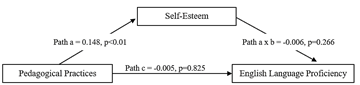
In this study, Path a (pedagogical practices → self-esteem) was significant (estimate = 0.148, p < 0.01), affirming that when teachers apply diverse, student-centered methods, especially Technology-Mediated Instruction (TMI) and Project-Based Instruction (PBI), students tend to develop stronger self-concept and consistent with findings 9, 10. However, Path b (self-esteem → ELP) failed to achieve significance, reaffirming earlier regression results (Table 6) and suggesting that improvements in self-esteem alone do not predict gains in language proficiency. The diagram illustrates that while pedagogical practices positively affect students’ self-esteem, this does not significantly translate into improved English Language Proficiency (ELP), indicating no significant mediation effect.
The findings align with previous research suggesting that while pedagogical practices influence learners’ affective development, including self-esteem, this affective growth may not directly translate into measurable language proficiency unless bolstered by other academic and behavioral factors 11, 39.
The results reflect the theoretical underpinnings of Bandura’s Social Cognitive Theory (SCT), which proposes that behavioral outcomes are shaped by dynamic interactions between personal, environmental, and behavioral factors. Teachers’ instructional practices act as environmental stimuli, which can shape self-esteem.
However, unless this internal state is activated by concrete behavior, such as sustained practice, task engagement, or metacognitive strategy use, performance outcomes like ELP may not significantly shift 16. This observation was that high task-specific self-esteem, while critical, must coincide with opportunities for application, feedback, and reflection to impact academic outcomes meaningfully 12.
Furthermore, international assessments like PISA and EPI highlight the ongoing challenge in the Philippines, with Filipino students consistently ranking low in reading comprehension 5. The gap between perceived competence and actual performance may help explain the non-significant mediation observed. While self-esteem can initiate engagement, it requires reinforcement through visible academic progress, often limited in contexts with limited exposure to authentic language use.
3.9. Students’ Demographic Profile Moderates the Relationship between Pedagogical Practices and Students’ ELPThe moderation analysis in Table 8 explored whether sex moderates the relationship between pedagogical practices and English Language Proficiency (ELP). The interaction term for Pedagogical Practices ✻ Sex was not statistically significant (Estimate = -0.02214, p = 0.681), indicating that the relationship between instructional strategies and language proficiency did not vary significantly between male and female students.
Additionally, the main effect of sex on English proficiency approached significance (p = 0.112) but ultimately did not meet the standard threshold (p < 0.05), suggesting no meaningful difference in English performance between genders in the context of this study.
Pedagogical effectiveness in language learning tends to be gender-neutral when inclusive teaching methods are applied consistently 40. In the local context, students in Philippine HEIs often outperform males in verbal tasks; the gender gap is diminishing as technological and project-based methods are increasingly integrated into instruction 41.
Table 9 examined whether age moderates the relationship between pedagogical practices and English Language Proficiency (ELP).
The interaction term for Pedagogical Practices ✻ Age was not significant (Estimate = -0.00978, p = 0.681), indicating that age does not moderate the effect of pedagogical strategies on English performance. However, the main effect of age was significant (Estimate = -0.00990, p = 0.039), suggesting that, independent of pedagogy, younger students tended to perform slightly better in English proficiency assessments.
The significant main effect of age may reflect findings that younger learners, particularly those in late adolescence and early adulthood, exhibit greater adaptability to technology-mediated and task-based learning environments 42. Students often enhance their English skills through informal digital platforms and peer interaction, complementing formal learning and language proficiency. However, the non-significant interaction suggests that age does not affect how pedagogical practices influence English proficiency, as outcomes remain consistent across age groups.
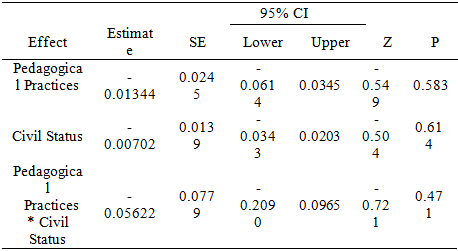
Table 10 tested whether civil status moderates the relationship between pedagogical practices and English Language Proficiency (ELP).
The interaction term for Pedagogical Practices ✻ Civil Status was again not significant (Estimate = -0.05622, p = 0.471), and the main effect of marital status on English proficiency was also not statistically significant (p = 0.614). These results indicate that whether students are single or married does not affect how pedagogical practices relate to their English language performance.
This outcome aligns with prior research showing that marital status has an indirect effect on academic performance, influencing factors like time management and emotional well-being, but seldom plays a direct or moderating role in instructional effectiveness 43. Similar study stated that civil status does not significantly affect academic performance among adult learners 44. This idea supports that instructional quality and student engagement have a greater impact on English proficiency than demographic factors.
Figure 2 provides a visual summary of the moderation analysis, illustrating the role of students’ demographic profile—specifically sex, age, and civil status—in the relationship between teachers’ pedagogical practices and students’ English language proficiency. The diagram presents three interaction terms tested in the analysis: Pedagogical Practices ✻ Sex (p = 0.681), Pedagogical Practices ✻ Age (p = 0.681), and Pedagogical Practices ✻ Civil Status (p = 0.471). All three interaction effects were statistically non-significant, showing that the link between pedagogical practices and ELP is consistent regardless of students’ demographic characteristics. Instructional strategies were equally effective regardless of demographic differences. This supports the study of Lin 45 who emphasized that well-implemented pedagogical approaches can transcend demographic differences. Demographic factors may affect study habits, but rarely alter the link between teaching strategies and academic outcomes 43.
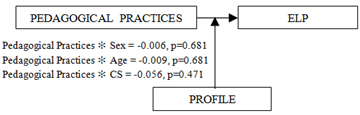
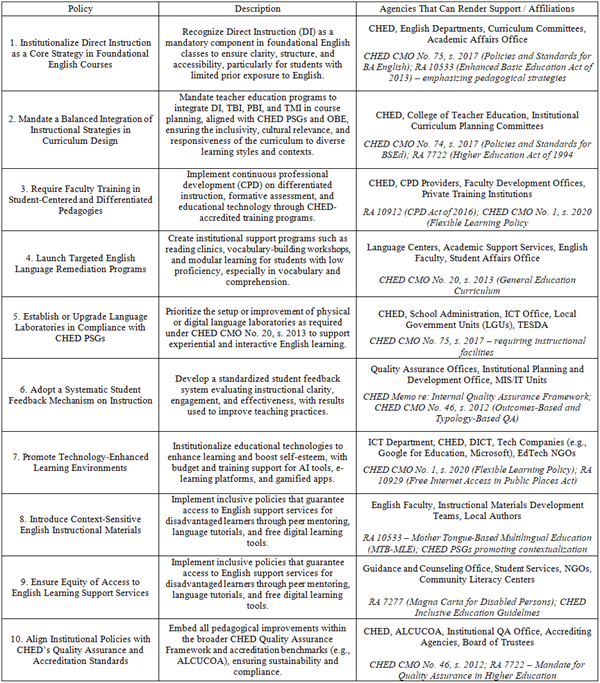
Table 11 presents ten policy recommendations aimed at evaluating and proposing educational policies that align pedagogical practices with the students' learning needs and ELP outcomes, particularly in community-based colleges in Misamis Oriental. Based on empirical findings and CHED's regulatory frameworks, the recommendations address gaps in instructional effectiveness, resource access, and equity in quality English instruction.
Despite high self-esteem and highly practiced pedagogical strategies, low English proficiency highlights the need for targeted interventions.
Each recommendation includes a description, designated implementing agencies (e.g., CHED and academic offices), and relevant legal bases to ensure legitimacy and reinforce implementation.
Table 11 outlines ten key policy recommendations aimed at improving English Language Proficiency (ELP) among college students by enhancing pedagogical practices, strengthening learner support, and aligning institutional strategies with national education standards. Each recommendation is accompanied by a clear description and is matched with specific supporting agencies such as CHED, academic offices, and government institutions anchored in relevant legal bases to legitimize and reinforce their implementation.
The study found that while students rated teachers’ pedagogical practices such as direct, task-based, project-based, and technology-mediated instruction, at a high level, these did not significantly predict English Language Proficiency. Grounded in Bandura’s Social Cognitive Theory, this suggests that instructional methods alone are not enough without engagement, feedback, and authentic language use.
However, technology-mediated instruction positively influenced students’ self-esteem, supporting SCT’s view of the environment's role in shaping personal beliefs, indicating that digital, student-centered classrooms enhance academic confidence and emotional well-being. Still, self-esteem did not significantly predict or mediate English Language Proficiency and pedagogical practices; it needs to align affective support with competence-building activities and include cognitive and behavioral mediators like motivation and engagement.
The findings emphasize that language learning is complex and requires aligned psychological, instructional, and contextual factors. Effective instruction must include guided practice, feedback, and student motivation. No significant moderation by demographic variables suggests quality teaching benefits all learners.
While pedagogical practices and student self-esteem are relatively strong, English Language Proficiency remains low among students in local colleges. This disconnect implies that teaching strategies alone are insufficient without aligned, resource-supported, and evidence-based interventions. Thus, this study recommends ten policies to enhance English instruction, focusing on instructional diversity, faculty training, remediation, tech-based tools, and CHED-aligned support systems. As shown in Table 11 above, indicates a need for institutionalized policies that operationalize CHED standards and address the unique realities of students in under-resourced, community-based higher education institutions. The findings advocate for a paradigm shift: from practice-based evaluation alone to outcome-based policy implementation that ensures equitable, effective, and measurable English language learning.
The successful completion of this research would not have been possible without the support of several individuals, to whom the researcher extends her heartfelt gratitude. Sincere appreciation goes to her adviser, Dr. Joel D. Potane, for his unwavering guidance and expertise, and to Dr. Jonas Enriquez for his valuable insights during pilot testing and data analysis. Special thanks are given to the research validators—Dr. Ralph Vendel E. Musni, Dr. Eva L. Alcantara, and Ms. Sally C. Echem, MAGC—for their constructive feedback in validating the instruments. The researcher is also grateful to college administrators Dr. Lyllan D. Magdale, Dr. Neilson D. Bation, and Atty. Nadya B. Emano-Elipe for their support during data collection, and to the panel members—Dr. Josephine O. Oted, Dr. Olga C. Alonsabe, Dr. Eva L. Alcantara, and Dr. Warren I. Luzano—for their enriching feedback on the paper. Thanks are due to Dr. Heidi Grace P. Mendoza for her guidance on manuscript requirements. She also extends her deepest gratitude to the CHED SIKAP Team in Region X for their invaluable support in her pursuit of a doctoral degree and for generously funding this research, which greatly contributed to its successful completion. The researcher also deeply thanks her family for their unwavering support, encouragement, and unconditional love. Above all, she offers her highest gratitude to Almighty God, whose grace and guidance sustained her throughout the academic journey.
| [1] | Alamer, A., & Lee, J. (2021). A motivational process model explaining the L2 achievement of Saudi EFL learners. System, 99, 102496. | ||
| In article | |||
| [2] | Matsumoto, D., & Ando, H. (2020). The relationship between English language proficiency, self-confidence, and academic performance. Journal of Language and Education, 34(2), 58–72. | ||
| In article | |||
| [3] | Grabe, W., & Yamashita, J. (2022). Reading and syntactic knowledge: The role of vocabulary and grammar in English language proficiency. TESOL Quarterly, 56(1), 98–113. | ||
| In article | |||
| [4] | Oktaviani, L. (2022). An analysis of students’ English proficiency test results: A focus on grammar, syntax, listening, and reading components. English Language Teaching Educational Journal (ELTEJ), 3(2), 89–97. | ||
| In article | |||
| [5] | OECD. (2019). PISA 2018 results (Volume I): What students know and can do. OECD Publishing. | ||
| In article | View Article | ||
| [6] | Education First. (2022). EF English Proficiency Index: A ranking of 111 countries and regions by English skills. https:// www.ef.com/wwen/epi/. | ||
| In article | |||
| [7] | Professional Regulation Commission. (2021–2024). Licensure examination for teachers (LET) results. https://www.prc.gov.ph. [Accessed: 04.20.2025]. | ||
| In article | |||
| [8] | The Summit Express. (2022 – 2024). LET result: Performance of secondary_schools. https:// www.thesummitexpress.com/ 2022/11/ october-2022-let-result-performance-of-schools-secondary.html. https:// www.thesummitexpress.com/2023/11/september-2023-let-result-performance-of-schools-secondary.html. https:// www. thesummitexpress.com/ 2024/11/ september-2024-let-result-performance-of-schools-secondary.html .[Accessed: 04.15.2025]. | ||
| In article | |||
| [9] | Martinez, L., & Sanz, I. (2021). Impact of learner-centered and project-based approaches on language acquisition. Journal of Language Teaching and Research, 12(3), 456–468. | ||
| In article | |||
| [10] | Zhao, L. (2023). Self-esteem and academic success: The mediating role of teacher support and student engagement. Teaching and Teacher_Education,_92,_103087. | ||
| In article | |||
| [11] | MacIntyre, P. D., Gregersen, T., & Mercer, S. (2023). The role of affective factors in second language learning: Implications for pedagogy and language proficiency. Language Teaching Research,_27(1),_42–58. | ||
| In article | |||
| [12] | Chacón, C. T. (2021). Self-esteem and foreign language learning: The mediating role of task self-efficacy. International Journal of Language_Studies,15(2),_1-20. https:// www.ijls.net/ 2018 /vol15num2.html. | ||
| In article | |||
| [13] | Serquina, A. (2021). Demographic and psychological factors affecting English proficiency among ESL students. International Journal of English Language Studies, 9(2), 45–60. | ||
| In article | |||
| [14] | Gultom, A. (2021). The correlation between students’ self-esteem and their English proficiency test result. Journal of English Language Teaching and Learning - Universitas Teknokrat Indonesia, 2(2), 111-122. | ||
| In article | View Article | ||
| [15] | Utami, D. (2022). Does self-esteem influence student English proficiency test scores?. Journal of English Language Teaching and Learning - Universitas Teknokrat Indonesia, 3(1), 18-27. | ||
| In article | View Article | ||
| [16] | Bandura, A. (1986). Social Foundations of Thought and Action: A Social Cognitive Theory. Englewood Cliffs, NJ: Prentice-Hall. https://books.google.com/books/about/Social_Foundations_of_Thought_and_Actio.html?id=HJ7wAAAAMAAJ. | ||
| In article | |||
| [17] | Bhandari, P. (2021). Descriptive-correlational design in research: Measuring variable associations and making informed predictions. International Journal of Research Methods, 12(3), 157–169. | ||
| In article | |||
| [18] | Arbaoui, K. (2023). Students’ perceptions of teachers’ pedagogical practices in language learning. International Journal of Language and Education Studies, 12(3), 45–60. | ||
| In article | |||
| [19] | Puangpunsi, N. (2021). Project-based learning in English language classrooms: Teachers’ and students’ perspectives. Asian Journal of Education and E-Learning, 9(2), 88–95. Silpakorn University. https:// files.eric.ed.gov/ fulltext/EJ1304647.pdf. [Accessed: 03.10.2025]. | ||
| In article | |||
| [20] | García, J. A. (2019). Self-esteem levels vs global scores on the Rosenberg self-esteem scale. National Center for Biotechnology Information. Heliyon. Volume 5, Issue 3. | ||
| In article | View Article PubMed | ||
| [21] | General Test of English Language Proficiency. G-TELP Level Test. https://www.g-telp.com/take/practice/glt. Accessed: 02.19.2025]. | ||
| In article | |||
| [22] | Dalawi, et al. (2023). Development of the Malay language of understanding, attitude, practice and health literacy questionnaire on COVID-19 (MUAPHQ C-19): content validity & face validity analysis. National Library of Medicine. PMC PubMED Central. PMCID: PMC10262113. https:// pmc.ncbi.nlm.nih.gov/ articles/ PMC10262113/. | ||
| In article | View Article PubMed | ||
| [23] | Yusoff MSB. (2019). ABC of response process validation and face validity index calculation. Education in Medicine Journal. 2019; 11(3): 55–61. | ||
| In article | View Article | ||
| [24] | Ahmad, S., & Rao, C. (2021). Exploring the role of teaching strategies in promoting communicative competence among ESL learners. Arab World English Journal (AWEJ), 12(1), 3–17. | ||
| In article | |||
| [25] | Bernardo, A. B. I., & Estrellado, A. F. (2022). Academic Reading and Comprehension Challenges in Philippine Higher Education. Journal of Asia TEFL, 19(1), 213-229. | ||
| In article | |||
| [26] | Lim, J., & Lee, M. (2019). The role of direct instruction and formative assessment in promoting learner achievement. TESOL Journal, 10(3), e00423. | ||
| In article | |||
| [27] | Skaalvik, E. M., & Skaalvik, S. (2021). Collective teacher culture: exploring an elusive construct and its relations with teacher autonomy, belonging, and job satisfaction. Educational Studies, 47(3), 268–281. | ||
| In article | |||
| [28] | San Juan, R. (2019, December 3). The Philippines is lowest in reading comprehension among 79 countries.—Philstar--Global. https://www.philstar.com/headlines/2019/12/03/1974002/philippines-lowest-reading-comprehension-among-79-countries | ||
| In article | |||
| [29] | Chua, B. L., & Lin, L. H. (2020). English language learning in Southeast Asia: Current trends and challenges. Asian Journal of Education and e-Learning, 8(1), 34–42. | ||
| In article | |||
| [30] | Apiles, V. F. (2025). Building reading classrooms: Insights from educational service contracting schools in the Philippines. International Journal of Educational Management and Development Studies. Vol 6 (1). https:// philarchive.org/ archive/ APIBRC. | ||
| In article | View Article | ||
| [31] | Majeed, S., & Memon, S. (2022). Integrating task-based learning and content-enriched instruction to enhance students' engagement and language proficiency. Journal of Language and Education, 36(2), 134-150. | ||
| In article | |||
| [32] | Vasylyeva, N. (2024). Semilinear multi-term fractional in time diffusion with memory. Frontiers in Applied Mathematics and Statistics. | ||
| In article | View Article | ||
| [33] | Walsh, S., & Mann, S. (2020). Introduction: Language teacher education – a complex, dynamic and situated endeavor. In S. Walsh & S. Mann (Eds.), The Routledge handbook of English language teacher education (pp. 1–14). Routledge. | ||
| In article | View Article | ||
| [34] | Chen, C. M., & Chiu, C. H. (2021). An empirical study of the effects of a digital game-based learning system on students' learning achievement and self-confidence in English vocabulary learning. Educational Technology & Society, 24(2), 26–37. | ||
| In article | |||
| [35] | Mamaril, M. J. N., Sandoval, R. E., & Gomez, M. B. (2020). Project-based learning: Its impact on self-esteem and performance of students in technology and livelihood education. International Journal of Educational Management and Development Studies, 1(1), 16–29. | ||
| In article | |||
| [36] | Dewaele, J. M., & Li, C. (2020). Emotions in second language acquisition: A critical review and research agenda. Foreign Language Annals, 53(2), 347–365. | ||
| In article | |||
| [37] | Manalastas, A. K. M., & Batang, B. L. (2024). Factors influencing the English language competency of Filipino university students. International Journal of Multidisciplinary Research and Analysis, 7(6), 2671–2673. | ||
| In article | View Article | ||
| [38] | Wang, J., & Zhang, L. (2021). The interaction of affective, cognitive, and contextual factors in language learning: A complex approach to understanding self-esteem's role. Language Learning Research Journal, 28(2), 154–169. | ||
| In article | |||
| [39] | Gao, X., Zhang, L., & Wang, Y. (2023). Investigating the role of learner self-esteem and classroom engagement in second language proficiency. System, 113, 102945. | ||
| In article | |||
| [40] | Dabbagh, N., & Fakhrpour, A. (2020). Gender-neutral pedagogical effectiveness in language learning: The role of inclusive teaching methods. International Journal of Educational Research, 58(4), 315–330. | ||
| In article | |||
| [41] | Cabanlit, R. G. (2022). Gender differences in academic performance: The impact of technological and project-based methods in Philippine higher education. Asian Journal of Educational Research, 15(1), 45–58. | ||
| In article | |||
| [42] | Ortega, L. M., & Chavez, D. A. (2022). Age-related adaptability in technology-mediated and task-based learning environments: A study of adolescent and early adult learners. Journal of Educational Technology and Pedagogy, 29(3), 202–216. | ||
| In article | |||
| [43] | Demir, S., & Arslan, H. (2021). The role of demographic factors in academic performance: A focus on age, gender, and civil status. Educational Studies and Research Journal, 34(1), 78–92. | ||
| In article | |||
| [44] | Villanueva, G. T., & Salazar, L. J. (2020). Gender differences in English language learning motivation: A study of college students in the Philippines. Asia Pacific Journal of Education, Arts and Sciences, 7(1), 45–52. | ||
| In article | |||
| [45] | Lin, Y., Chen, M., & Huang, J. (2020). The impact of pedagogical approaches on student achievement across diverse demographics. Journal of Educational Research and Practice, 10(3), 112–124. | ||
| In article | |||
Published with license by Science and Education Publishing, Copyright © 2025 Eunice S. Villegas and Joel D. Potane
 This work is licensed under a Creative Commons Attribution 4.0 International License. To view a copy of this license, visit
http://creativecommons.org/licenses/by/4.0/
This work is licensed under a Creative Commons Attribution 4.0 International License. To view a copy of this license, visit
http://creativecommons.org/licenses/by/4.0/
| [1] | Alamer, A., & Lee, J. (2021). A motivational process model explaining the L2 achievement of Saudi EFL learners. System, 99, 102496. | ||
| In article | |||
| [2] | Matsumoto, D., & Ando, H. (2020). The relationship between English language proficiency, self-confidence, and academic performance. Journal of Language and Education, 34(2), 58–72. | ||
| In article | |||
| [3] | Grabe, W., & Yamashita, J. (2022). Reading and syntactic knowledge: The role of vocabulary and grammar in English language proficiency. TESOL Quarterly, 56(1), 98–113. | ||
| In article | |||
| [4] | Oktaviani, L. (2022). An analysis of students’ English proficiency test results: A focus on grammar, syntax, listening, and reading components. English Language Teaching Educational Journal (ELTEJ), 3(2), 89–97. | ||
| In article | |||
| [5] | OECD. (2019). PISA 2018 results (Volume I): What students know and can do. OECD Publishing. | ||
| In article | View Article | ||
| [6] | Education First. (2022). EF English Proficiency Index: A ranking of 111 countries and regions by English skills. https:// www.ef.com/wwen/epi/. | ||
| In article | |||
| [7] | Professional Regulation Commission. (2021–2024). Licensure examination for teachers (LET) results. https://www.prc.gov.ph. [Accessed: 04.20.2025]. | ||
| In article | |||
| [8] | The Summit Express. (2022 – 2024). LET result: Performance of secondary_schools. https:// www.thesummitexpress.com/ 2022/11/ october-2022-let-result-performance-of-schools-secondary.html. https:// www.thesummitexpress.com/2023/11/september-2023-let-result-performance-of-schools-secondary.html. https:// www. thesummitexpress.com/ 2024/11/ september-2024-let-result-performance-of-schools-secondary.html .[Accessed: 04.15.2025]. | ||
| In article | |||
| [9] | Martinez, L., & Sanz, I. (2021). Impact of learner-centered and project-based approaches on language acquisition. Journal of Language Teaching and Research, 12(3), 456–468. | ||
| In article | |||
| [10] | Zhao, L. (2023). Self-esteem and academic success: The mediating role of teacher support and student engagement. Teaching and Teacher_Education,_92,_103087. | ||
| In article | |||
| [11] | MacIntyre, P. D., Gregersen, T., & Mercer, S. (2023). The role of affective factors in second language learning: Implications for pedagogy and language proficiency. Language Teaching Research,_27(1),_42–58. | ||
| In article | |||
| [12] | Chacón, C. T. (2021). Self-esteem and foreign language learning: The mediating role of task self-efficacy. International Journal of Language_Studies,15(2),_1-20. https:// www.ijls.net/ 2018 /vol15num2.html. | ||
| In article | |||
| [13] | Serquina, A. (2021). Demographic and psychological factors affecting English proficiency among ESL students. International Journal of English Language Studies, 9(2), 45–60. | ||
| In article | |||
| [14] | Gultom, A. (2021). The correlation between students’ self-esteem and their English proficiency test result. Journal of English Language Teaching and Learning - Universitas Teknokrat Indonesia, 2(2), 111-122. | ||
| In article | View Article | ||
| [15] | Utami, D. (2022). Does self-esteem influence student English proficiency test scores?. Journal of English Language Teaching and Learning - Universitas Teknokrat Indonesia, 3(1), 18-27. | ||
| In article | View Article | ||
| [16] | Bandura, A. (1986). Social Foundations of Thought and Action: A Social Cognitive Theory. Englewood Cliffs, NJ: Prentice-Hall. https://books.google.com/books/about/Social_Foundations_of_Thought_and_Actio.html?id=HJ7wAAAAMAAJ. | ||
| In article | |||
| [17] | Bhandari, P. (2021). Descriptive-correlational design in research: Measuring variable associations and making informed predictions. International Journal of Research Methods, 12(3), 157–169. | ||
| In article | |||
| [18] | Arbaoui, K. (2023). Students’ perceptions of teachers’ pedagogical practices in language learning. International Journal of Language and Education Studies, 12(3), 45–60. | ||
| In article | |||
| [19] | Puangpunsi, N. (2021). Project-based learning in English language classrooms: Teachers’ and students’ perspectives. Asian Journal of Education and E-Learning, 9(2), 88–95. Silpakorn University. https:// files.eric.ed.gov/ fulltext/EJ1304647.pdf. [Accessed: 03.10.2025]. | ||
| In article | |||
| [20] | García, J. A. (2019). Self-esteem levels vs global scores on the Rosenberg self-esteem scale. National Center for Biotechnology Information. Heliyon. Volume 5, Issue 3. | ||
| In article | View Article PubMed | ||
| [21] | General Test of English Language Proficiency. G-TELP Level Test. https://www.g-telp.com/take/practice/glt. Accessed: 02.19.2025]. | ||
| In article | |||
| [22] | Dalawi, et al. (2023). Development of the Malay language of understanding, attitude, practice and health literacy questionnaire on COVID-19 (MUAPHQ C-19): content validity & face validity analysis. National Library of Medicine. PMC PubMED Central. PMCID: PMC10262113. https:// pmc.ncbi.nlm.nih.gov/ articles/ PMC10262113/. | ||
| In article | View Article PubMed | ||
| [23] | Yusoff MSB. (2019). ABC of response process validation and face validity index calculation. Education in Medicine Journal. 2019; 11(3): 55–61. | ||
| In article | View Article | ||
| [24] | Ahmad, S., & Rao, C. (2021). Exploring the role of teaching strategies in promoting communicative competence among ESL learners. Arab World English Journal (AWEJ), 12(1), 3–17. | ||
| In article | |||
| [25] | Bernardo, A. B. I., & Estrellado, A. F. (2022). Academic Reading and Comprehension Challenges in Philippine Higher Education. Journal of Asia TEFL, 19(1), 213-229. | ||
| In article | |||
| [26] | Lim, J., & Lee, M. (2019). The role of direct instruction and formative assessment in promoting learner achievement. TESOL Journal, 10(3), e00423. | ||
| In article | |||
| [27] | Skaalvik, E. M., & Skaalvik, S. (2021). Collective teacher culture: exploring an elusive construct and its relations with teacher autonomy, belonging, and job satisfaction. Educational Studies, 47(3), 268–281. | ||
| In article | |||
| [28] | San Juan, R. (2019, December 3). The Philippines is lowest in reading comprehension among 79 countries.—Philstar--Global. https://www.philstar.com/headlines/2019/12/03/1974002/philippines-lowest-reading-comprehension-among-79-countries | ||
| In article | |||
| [29] | Chua, B. L., & Lin, L. H. (2020). English language learning in Southeast Asia: Current trends and challenges. Asian Journal of Education and e-Learning, 8(1), 34–42. | ||
| In article | |||
| [30] | Apiles, V. F. (2025). Building reading classrooms: Insights from educational service contracting schools in the Philippines. International Journal of Educational Management and Development Studies. Vol 6 (1). https:// philarchive.org/ archive/ APIBRC. | ||
| In article | View Article | ||
| [31] | Majeed, S., & Memon, S. (2022). Integrating task-based learning and content-enriched instruction to enhance students' engagement and language proficiency. Journal of Language and Education, 36(2), 134-150. | ||
| In article | |||
| [32] | Vasylyeva, N. (2024). Semilinear multi-term fractional in time diffusion with memory. Frontiers in Applied Mathematics and Statistics. | ||
| In article | View Article | ||
| [33] | Walsh, S., & Mann, S. (2020). Introduction: Language teacher education – a complex, dynamic and situated endeavor. In S. Walsh & S. Mann (Eds.), The Routledge handbook of English language teacher education (pp. 1–14). Routledge. | ||
| In article | View Article | ||
| [34] | Chen, C. M., & Chiu, C. H. (2021). An empirical study of the effects of a digital game-based learning system on students' learning achievement and self-confidence in English vocabulary learning. Educational Technology & Society, 24(2), 26–37. | ||
| In article | |||
| [35] | Mamaril, M. J. N., Sandoval, R. E., & Gomez, M. B. (2020). Project-based learning: Its impact on self-esteem and performance of students in technology and livelihood education. International Journal of Educational Management and Development Studies, 1(1), 16–29. | ||
| In article | |||
| [36] | Dewaele, J. M., & Li, C. (2020). Emotions in second language acquisition: A critical review and research agenda. Foreign Language Annals, 53(2), 347–365. | ||
| In article | |||
| [37] | Manalastas, A. K. M., & Batang, B. L. (2024). Factors influencing the English language competency of Filipino university students. International Journal of Multidisciplinary Research and Analysis, 7(6), 2671–2673. | ||
| In article | View Article | ||
| [38] | Wang, J., & Zhang, L. (2021). The interaction of affective, cognitive, and contextual factors in language learning: A complex approach to understanding self-esteem's role. Language Learning Research Journal, 28(2), 154–169. | ||
| In article | |||
| [39] | Gao, X., Zhang, L., & Wang, Y. (2023). Investigating the role of learner self-esteem and classroom engagement in second language proficiency. System, 113, 102945. | ||
| In article | |||
| [40] | Dabbagh, N., & Fakhrpour, A. (2020). Gender-neutral pedagogical effectiveness in language learning: The role of inclusive teaching methods. International Journal of Educational Research, 58(4), 315–330. | ||
| In article | |||
| [41] | Cabanlit, R. G. (2022). Gender differences in academic performance: The impact of technological and project-based methods in Philippine higher education. Asian Journal of Educational Research, 15(1), 45–58. | ||
| In article | |||
| [42] | Ortega, L. M., & Chavez, D. A. (2022). Age-related adaptability in technology-mediated and task-based learning environments: A study of adolescent and early adult learners. Journal of Educational Technology and Pedagogy, 29(3), 202–216. | ||
| In article | |||
| [43] | Demir, S., & Arslan, H. (2021). The role of demographic factors in academic performance: A focus on age, gender, and civil status. Educational Studies and Research Journal, 34(1), 78–92. | ||
| In article | |||
| [44] | Villanueva, G. T., & Salazar, L. J. (2020). Gender differences in English language learning motivation: A study of college students in the Philippines. Asia Pacific Journal of Education, Arts and Sciences, 7(1), 45–52. | ||
| In article | |||
| [45] | Lin, Y., Chen, M., & Huang, J. (2020). The impact of pedagogical approaches on student achievement across diverse demographics. Journal of Educational Research and Practice, 10(3), 112–124. | ||
| In article | |||