Ready-to-eat salads have become highly demanded foods in the city of Abidjan (Côte d’ivoire) because of their considerable benefits both nutritionally and therapeutically. However, these foods are considered products that are very vulnerable to microbial contamination. In order to contribute to food safety in Côte d'Ivoire, in particular among the Abidjan population, we have set the objective of inventorying psychrophilic pathogenic species in ready-to-eat salads sold in supermarkets. Thus, a total of 60 samples were analyzed using the techniques of classical microbiology, molecular biology, bioinformatics and statistics. For the search for psychrophilic pathogens, the selective culture medium (Oxford agar) of the pathogens frequently isolated (L. monocytogenes) was used. Microbiological analyzes revealed the presence of similar germs in 6 samples based on growth characters with Oxford’s selective medium. However, molecular sequencing allowed to identify six (6) different pathogens, Lysinibacillus fusiformis in spinach salads (EP), Listeria monocytogenes in mixed salads (SCOM), Staphylococcus saprophyticus in lamb's lettuce and arugula, Staphylococcus fleurettii in carrots (SCA), Staphylococcus nepalensis in young shoots (JP) and Bacillus cereus in cabbage (SCH). The growth kinetics showed the characterized species grow significantly in the different lettuces under domestic storage conditions after opening the packaging except for S. fleurettii. However, the growth of L. fusiformis and B. cereus was found to be more significant. In conclusion, S. saprophyticus, S. nepalensis, B. cereus, L. fusiformis and B. cereus grow easily on oxford agar presenting similar culture characters like L. monocytogenes. In addition, the presence of unknown pathogenic species in ready-to-eat salads and their significant growth during the domestic storage period is a real public health problem. It would therefore be wise for the health authorities to set up a monitoring program for these species in the ready-to-eat sold in supermarkets in Côte d'Ivoire.
The consumption of ready-to-eat salads has gained momentum in developed countries nowadays, which could be justified by the simple fact that these foods are perceived by consumers as fresh, safe, nutritious, healthy products and socially appreciated 1, 2, 3. However, despite the cold chain recommended as a condition for preserving these pre-cleaned fresh products, which are mainly packaged and ready-to-consume without prior preparation or cooking 4, their health safety is not always guaranteed 5. Indeed, ready-to-eat salads have been a veritable reservoir of pathogenic microorganisms throughout the world 6, 7, 8, 9. Based on currently available statistics, Listeria monocytogenes (L. monocytogenes) is one of the most important ready-to-eat food-associated pathogens. This bacteria is a psychrophilic bacteria and responsible for Listeriosis, the 3rd cause of death from food-borne illnesses with a lethality rate from 20 to 30% and a very high hospitalization rate (> 97%), generating high patient care costs 10. In addition, the presence of this bacteria in these products has been reported in several countries, with the detection of rate ranging from 0.6 to 9.1% 11. However, the consumption of these salads is becoming more and more important in Côte d'Ivoire and raises concerns because the work of 12 described a significant evolution of psychrophilic bacteria in ready-to-eat salads sold in Abidjan' supermarkets. But data on the psychrophilic pathogenic species present in these foods sold in Abidjan are unknown. During 2021 and 2022, 60 samples of 20 types of salads were analysed in order to provide information to Ivorian health authorities on the presence of psychrophilic pathogens in ready-to-eat salad samples and to ascertain the risk of these products for consumers.
The biological material consisted of 20 types of ready-to-eat salads composed of fruits or vegetables. These are salads packaged in transparent bags (500 g) or in trays (125 g) made of polyethylene terephthalate (PET) plastic. These salads are of various origins and sold in supermarkets in the city of Abidjan (Côte d'Ivoire). In total, 60 samples were evaluated.
The microorganisms sought are psychrophilic bacterial pathogens, in particular Listeria monocytogenes, and other pathogens capable to develop on the oxford medium. The search for these microorganisms has been possible thanks to several techniques of classical microbiology and molecular biology..
2.1. Microbiological StudyThe search for L. monocytogenes and other psychrophilic pathogens was carried out by counting in accordance with the ISO 11290-2 standard. In fact, all the samples were subjected to enrichment in liquid medium with ½ Fraser broth incubated at 30°C for 24 hours. Next, the selective enrichment culture underwent a decimal dilution series up to 10-3. Then 0.1 mL of each dilution was inoculated on the Oxford medium and incubated at 37°C for 24 to 48 hours. The colonies enveloped in black halos were counted then the average concentration or bacterial load was reported according to the ISO 7218 (2007) standard. Three colonies of each strain were isolated on the same selective medium (Oxford) to check compliance between the different strains isolated. Finally, purification by subculture of the strains was carried out on Luria Bertani (LB) agar followed by Gram staining.
2.2. Molecular Characterization of Psychrophilic PathogensThe preparation of the cell extract in an Eppendorf tube containing 100 µL of distilled water was carried out by diluting a colony in the Eppendorf tube with 1.5 µL. Then a 1/50th dilution was performed.
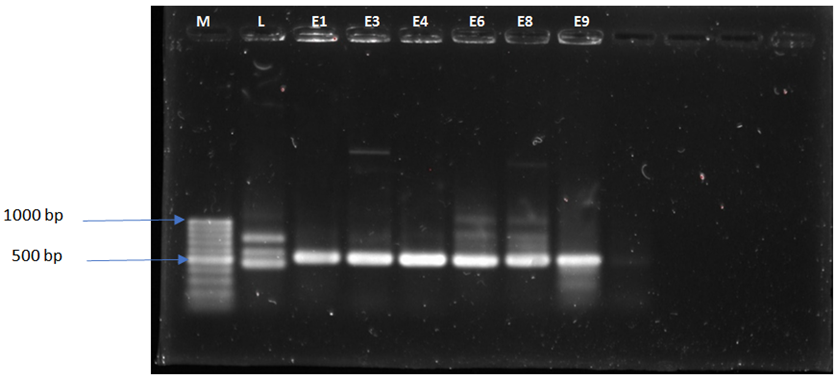
The method used is colony PCR. It consisted of amplified hypervariable regions of the 16S gene which is about 500 bp. The universal primers used are F27 (5'-AGAGTTTGATCCTGGCTCAG-3') and R520 (5'-ACCGCGGCTGCTGGC-3') 15. The reaction mixture consisted of 15 µL sterile H2O; 25 µL of 2X Phusion Master Mix; 2.5 µL primer F; 2.5 µL primer R; 5 µL of cell extract. The amplification was carried out according to this program: an initial denaturation at 95°C for 4 min then 35 reaction cycles; each cycle includes a denaturation phase at 95°C for 1 min, a annealing phase at 54°C of the primers for 1 min and an elongation phase at 72°C for 1 min. These 35 cycles are followed by a final extension of 10 min at 72°C.
In order to purify the PCR products, a centrifugation for 1 min at 13000 g was performed after adding the elution buffer (30 uL) of purification kit (OMEGA bio-tek E.Z.N.A. Gel Extraction Kit).
Sequencing was performed at Paul Sabatier University (Toulouse, France) with the BigDyeV3.1 Dye Terminator kit (Thermo Fisher Scientific). The sequences were then purified with the BigDyeXterminator kit (Thermo Fisher Scientific) before being analyzed on the ABI3730XL 96 capillary sequencer (Thermo Fisher Scientific).
The significance of the evolution of bacterial loads as a function of storage time was assessed using analyzes of variance (ANOVA) at 5% threshold by Rcmdr package of R software 16. However, the DNA sequences obtained were compared to homologous sequences contained in the National Center for Biotechnology Information (NCBI) sequence database using the Basic Local Alignment Search Tools (BLAST) program https://blast.ncbi.nlm.nih.gov/Blast.cgi 17. The overall alignment of these sequences was carried out thanks to Clustal omega with the Jalview software and the phylogenetic tree on the MEGA11 software.
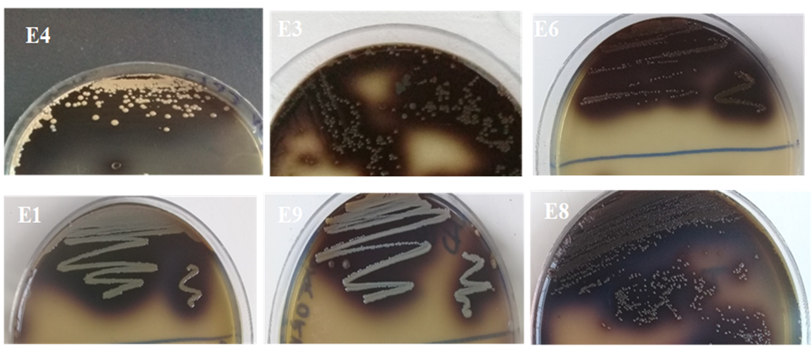
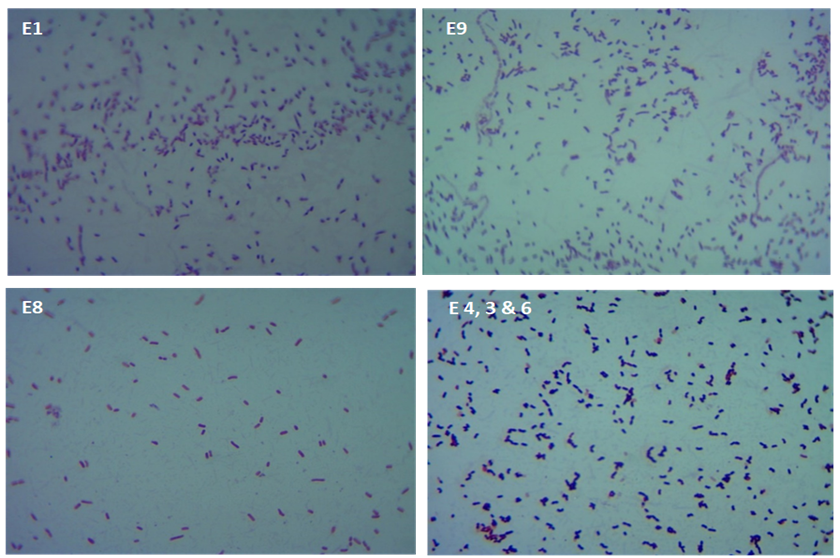
The microbiological analyzes showed contamination of six (6) types of salads samples by microorganisms with substantially the same cultural characteristics. These are spinach (Ep), lamb’s lettuce+arugula (MR), young shoots (JP), cabbage (SCH), carrot (SCA) and mixed salad (SCOM) salads. The colonies of these microbial germs were all surrounded by a black halo which is an identical characteristic to Listeria monocytogenes on this culture medium. Indeed, on the oxford medium, Listeria monocytogenes presents small greenish colonies surrounded by a black halo. However, the colonies obtained on this medium after culturing, although surrounded by black halos, showed various shapes and colors. The isolation of these bacterial strains on Oxford agar clearly shows (Figure 1) the presence of non-identical strains. Thus, based on morphological identification, Gram staining confirmed the presence of Gram-positive Bacilli and Gram-positive Cocci (Figure 2).


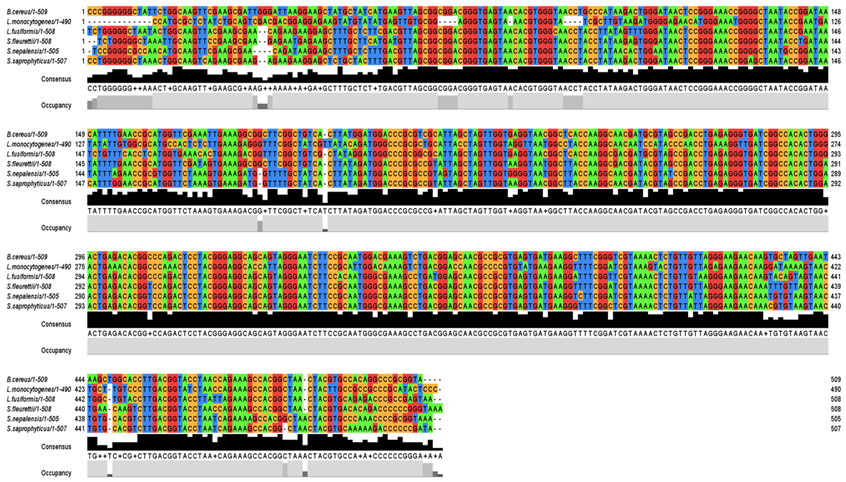
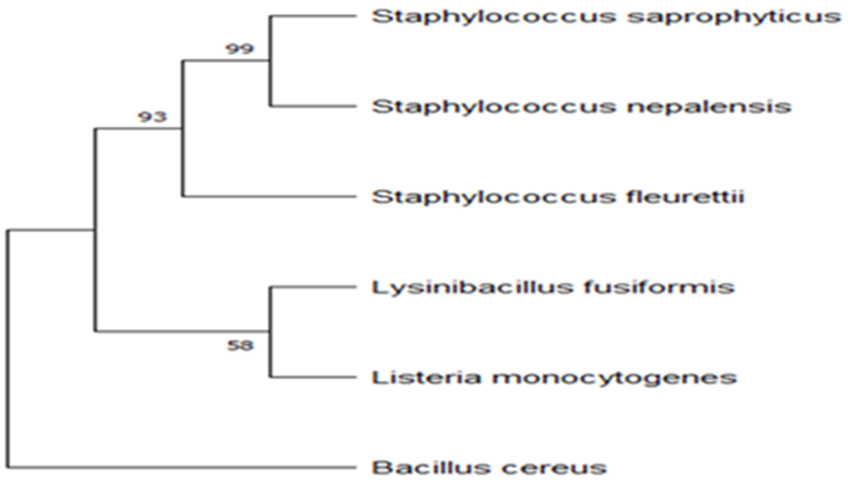
The results observed on the electrophoretic profile of the amplification product in Figure 3 showed that the hypervariable regions of 16S rRNA (500 bp) have been amplified. In addition, the analysis of the sequencing made it possible to identify the different bacterial species isolated from the ready-to-eat salads. Similarity, E-value, maximum score, query’s coverage rates are recorded in Table 1. It emerges that the strain isolated from the Ep salads is a Lysinibacillus fusiformis, that of the MR salads is a strain of Staphylococcus saprophyticus, that of the JPs was the species Staphylococcus fleurettii. As for the SCA salads, they were contaminated by Staphylococcus nepalensis, those of SCH were contaminated by Bacillus cereus and SCOM by Listeria monocytogenes. To better appreciate the areas of similarity between the different species, a multiple alignment was performed between the sequences obtained after sequencing through the Clustal Omega algorithm with the default parameters (Figure 4). Thus, the phylogenetic tree produced through a BLAST between the sequences of the different characterized species made it possible to determine the coefficients of similarity between these strains on the hypervariable regions of the 16S rRNA (Figure 5). The tree revealed that on the hypervariable regions of this gene the different pathogens identified can be grouped into three (3) classes, the first of which includes the 3 three species of the genus Staphylococcus sp which showed strong homology varying between 93 and 99%. The second presents a homology between Lysinibacillus fusiformis and Listeria monocytogenes (58%) and the 3rd class contains Bacillus cereus which is different from all of the characterized species.


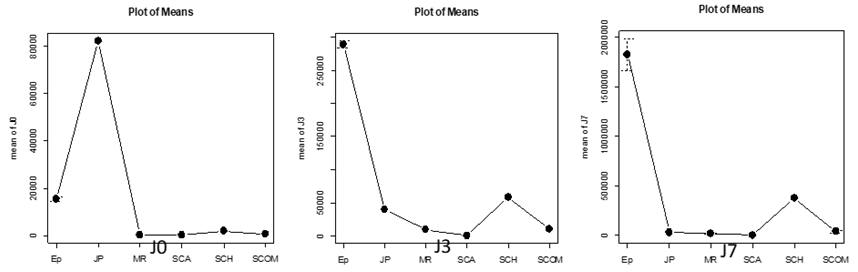
Upon opening the packaging, samples of ready-to-eat salads collected for searching psychrophilic pathogens were contaminated. The results obtained from the count after opening the packaging and during storage time at 7°C made it possible to evaluate the evolution of the different bacterial species. In general, the average pathogen loads vary between 2.80.102 ± 0 and 8.20.104 ± 0 CFU/g at the first day (J0). At the third day (J3) of analysis, the loads are between 9.00.102 ± 0 and 2.89.105 CFU/g. At the seventh day (J7), the loads are of the order of 1.32.103 ± 2.80.102 to 1.82.106 ± 2.75.105 CFU/g. In accordance with the statistical analyzes of variance (one-way ANOVA), there was a significant evolution of the microorganisms in ready-to-eat salads during the storage period despite the cold chain as storage method (Figure 6). But this growth was found to be positively more significant in Lysinibacillus fusiformis in Ep and Bacillus cereus in SCH. However, a considerable decrease in average load was observed in Staphylococcus fleurettii in JP. Concerning Listeria monocytogenes, Staphylococcus saprophyticus and Staphylococcus nepalensis, their evolution was substantially identical during the storage period. Indeed, these bacteria clearly developed during cold storage. It follows from these analyzes that the domestic storage temperature is favorable to the growth of all characterized bacterial species except Staphylococcus fleurettii. However, Lysinibacillus fusiformis and Bacillus cereus show more significant growth at home storage temperature.
During this study we searched for Listeria monocytogenes and also shed light on the presence of other pathogens capable of growing at domestic refrigeration temperature on Oxford agar. This culture medium made it possible to highlight in six samples of ready-to-eat salads, microorganisms showing similar cultural characteristics to Listeria monocytogenes. However, the molecular characterization revealed the presence of different pathogenic species even if among these, the pathogenic power of some is unknown. These include Listeria monocytogenes, Lysinibacillus fusiformis, Bacillus cereus, Staphylococcus saprophyticus, Staphylococcus fleurettii and Staphylococcus nepalensis. Indeed, these different species, on the basis of the cultural characteristics presented a black halo around the colonies on the Oxford culture medium as Listeria monocytogenes. This precipitate around the colonies would provide information on the probable presence of an esculinase within these microorganisms which makes it possible to catalyze the hydrolysis of the esculin present in the medium into esculetin and glucose. Consequently, the product, through its phenol function, aesculetin reacts with the Fe3+ of the iron citrate contained in the medium and forms a brown or black precipitate 18. This precipitate darkens the medium surrounding the growing colonies. Biochemical tests for enterococci such as the genus Bacillus show a positive reaction to esculin (esculin +) 19. However, the presence of these microorganisms on Oxford base could reflect resistance of these bacteria to inhibitors such as the three antibiotics (colistin, cefotetan and fosfomycin) incorporated into the medium.
In this study, the species L. monocytogenes was identified in mixed salads (SCOM) containing lettuce, tomatoes, green beans, corn, carrots, peas, cabbage, ham and egg. This contamination would probably come from the primary or secondary source of production, in this case the association of meat products (ham and egg). Indeed, this species is a pathogen of environmental origin frequently found in irrigation water, soil, vegetation and the excrement of farm animals. According to 20, recycled wastewater includes the potential to transport this foodborne pathogen if the water is not treated properly or if the treatment process is not validated. 21 also showed in South Africa that L. monocytogenes strains identified in surface water were recovered from vegetables. It was also published in an update review of L. monocytogenes in the pork meat industry and its products in France, that the prevalence of this bacterium generally increases from the farm to the manufacturing plants due to the cross contamination 22. Indeed, according to these authors, L. monocytogenes can survive and/or develop despite the obstacles during the manufacturing and storage processes. 23 isolated L. monocytogenes strains from two ready-to-eat meat processing plants in Shanghai Municipality, China, from 2019-2020 using pulsed-field gel electrophoresis and whole genome sequencing. These results are in agreement with ours because they would justify the source of contamination of our ready-to-eat salads by this bacterial pathogen. Therefore, the presence of L. monocytogenes in ready-to-eat salads that do not undergo heat treatment before consumption is a real problem for Côte d'Ivoire. Because this germ is responsible for listeriosis and despite its low morbidity, this disease has a high mortality rate due to the severity of its clinical manifestation. While the source of human listeriosis is often uncertain 24.
In addition to L. monocythogenes, B. cereus is also known for its worrying pathogenic power for humans and is regularly found in food products. B. cereus has been recognized as the most frequently detected foodborne pathogen in fresh-cut salads in Korea 25. Our results are similar to those obtained by 26. Indeed, these authors during a study carried out on the evaluation of B. cereus contamination of local vegetables in Obosi in Nigeria detected the presence of this pathogen in cabbage samples. The presence of this species in samples of ready-to-eat salads sold in supermarkets in the city of Abidjan does not guarantee food safety for consumers because B. cereus is a new emerging pathogen widely isolated from animal feed. and food chains and the direct consequence of which could be a huge economic loss for the animal industry and a high risk for human health 27.
Also, Coagulase Negative Staphylococcus (CNS) inhabit various ecological habitats, between the environment and the host, the environment of dairy farms, on the skin and mucous membranes of cattle. They are also the most widespread bacteria whose reservoirs and transmission routes have not yet been fully elucidated 28, 29. During this study a S. saprophyticus strain was isolated as well as other species of Staphylococcus such as Staphylococcus fleurettii and Staphylococcus nepalensis. Indeed, although S. aureus is the species responsible for food poisoning regularly isolated from food, S. saprophyticus is an important pathogen responsible for community-acquired urinary tract infections. In addition for composing the human microbiota, this species is widely distributed in the environment and the origins of this organism for human infection are not fully characterized 30. Some researchers have already detected in ready-to-eat foods as in our case. Thus, 31 in Taiwan, isolated more than 10 species of Staphylococcus sp in ready-to-eat foods, in which S. saprophyticus appeared in all categories. This species was also identified during the screening of community microbes associated with endive salad during post-harvest processing on an industrial scale by 32, in Germany. In addition to this species, Staphylococcus fleurettii (S. fleurettii) is a new species of the genus Staphylococcus which is coagulase-negative and resistant to novobiocin. This species is differentiated from other staphylococci by its resistance to novobiocin on the basis of ribotype and intergenic transcriptional spacer, DNA-DNA reassociation reactions, cell wall composition and phenotypic characteristics 33. However, the isolation of S. nepalensis is sporadic and the first report of the presence of this species in human clinical material as well as in other sources was made by 34. Furthermore, an instructive case of S. nepalensis bacteremia in a 71-year-old man who presented with Boerhaave syndrome after a meal was reported by 35. The presence of this species in ready-to-eat salads is therefore not a guarantee for food safety. Coagulase-negative species of the genus Staphylococcus would be of capital interest in the study and control of foods with a view to ensuring food security in Côte d'Ivoire.
In spinach salads, the presence of L. fusiformis would provide information on poor cultural practices in the production of this vegetable from the field. This contamination could also come from the soils on which these vegetables were grown. Indeed, this species is considered to be a natural bacterium, isolated in environmental samples, wastewater from factories and agricultural soils. It produces dormant, non-reproductive, spherical endospores that can withstand desiccation, high temperatures, and ultraviolet radiation and can survive for long periods causing severe sepsis due to persistent bacteremia, tropical ulcers, and respiratory disease in man 36. Although it has been identified in endive salads during post-harvest processing on an industrial scale by 32, in Germany, its presence in the food chain remains rare. However, this species must be taken into account in food security programs because serious cases of persistent bacteremia have been reported in recent years in 2022 37.
In addition, the species identified in ready-to-eat salads, samples are mostly rare in the bacterial ecosystem of Côte d'Ivoire and the existence of certain poorly described species in food products has led to a determination of the kinetics of their growth during domestic conservation. Thus, a significant evolution of these bacteria in ready-to-eat salads was observed. L. monocytogenes, S. nepalensis and S. saprohyticus developed significantly in mixed salads (SCOM), carrots (SCA) and lamb’s lettuce+arugula (MR), respectively. As S. fleurettii, it was inhibited during storage. The evolution of growth was found to be greatest in L. fusiformis and B. cereus respectively in the salads of EP and SCH. According to 38, B. cereus will grow in most foods under favorable conditions of pH (4.5 to 9.5), water activity (>0.93) and temperatures of 4 to 48°C. Then, its spores have the ability to survive to common food treatments like temperature storage. The growth of this pathogen was found to be significant in our cabbage samples (SCH) whose pH is 6.80±0.57. This increase in L. fusiformis and B. cereus suggests that it is related to their spores. However, the growth behavior of L. monocytogenes during the storage time of ready-to-eat salads studied by 39 varied depending on the temperature and type of lettuce product. Also, work done on shelf life on ready-to-eat pre-cut iceberg lettuce packaged in a modified atmosphere 40 has shown that L. monocytogenes can easily grow in this product at a temperature of 4°C. Consequently, the slow growth of this bacteria at the temperature of 7°C in the mixed salads makes it possible to understand that the growth of these microorganisms could depend not only on the storage conditions but also on the extrinsic and intrinsic composition of the different lettuces.
During this study the search of psychrophilic microorganisms through the oxford medium resulted in the identification of 6 bacterial species. These include, among others, L. monocytogenes, L. fusiformis, B. cereus, S. nepalensis, S. fleurettii and S. saprohyticus. In addition, L. fusiformis and B. cereus species developed very significantly respectively in spinach salads (EP) and cabbage salads (SCH) at domestic storage temperature (7°C). L. monocytogenes, S. nepalensis and S. saprohyticus developed significantly in mixed lettuces (SCOM), carrots (SCA) and lamb’s lettuce+arugula (MR), respectively. However, S. fleurettii was inhibited by storage temperature. In short, ready-to-eat salads sold in supermarkets of the city of Abidjan harbor unknown highly pathogenic species which develop very quickly under domestic storage conditions (7°C) after opening the packaging.
The authors thank Profs. Caroline Conte, Eric Lacazette, Vincent Ecochard and Mr. Simon Marques from Paul Sabatier University (Toulouse, France) for their precious assistance in the sequencing of our samples.
| [1] | Rico, D., Martin-Diana, A. B., Barat, M. and Barry-Ryan, C. Extending and measuring the quality of fresh-cut fruit and vegetables A Review Trends in Food Science and Technology, 18, 373-386, 2007. | ||
| In article | View Article | ||
| [2] | De Corato, U. Improving the shelf-life and quality of fresh and minimally-processed fruits and vegetables for a modern food industry: A comprehensive critical review from the traditional technologies into the most promising advancements. Critical Reviews in Food Science and Nutrition, 60, 940-975, 2020. | ||
| In article | View Article PubMed | ||
| [3] | Lorente-Mento, J. M., Valverde, J., Serrano, M. and Pretel, M. T. 2022. Fresh-Cut Salads: Consumer Acceptance and Quality Parameter Evolution during Storage in Domestic Refrigerators. Sustainability, 14, 3473, 2022. | ||
| In article | View Article | ||
| [4] | Paudyal, N., Anihouvi, V., Hounhouigan, J., Matsheka, M. I., Sekwati-Monang, B., Amoa-Awua, W., Atter, A., Ackah, N. B., Mbugua, S., Asagbra, A., Abdelgadir, W., Nakavuma, J., Jakobsen, M. and Fang, W. Prevalence of Foodborne Pathogens in Food from Selected African Countries - A Meta-Analysis. International Journal of Food Microbiology. 249, 35 43. 2017. | ||
| In article | View Article PubMed | ||
| [5] | N'Zi, N. P., Angaman, D. M., Gbonon, V. C. and Tiekoura, K. B. Etude de la qualité microbiologique des salades de 4ème gamme vendues dans des supermarchés de la ville d’Abidjan (Côte d’Ivoire) durant la période de conservation domestique après ouverture des emballages, International Journal of Innovation and Applied Studies, 36 (2), 577-587, 2022. | ||
| In article | |||
| [6] | Mir, S. A., Shah, M. A., Mir, M. M., Dar, B. N., Greiner, R. and Roohinejad. S. Microbiological Contamination of Ready-to-Eat Vegetable Salads in Developing Countries and Potential Solutions in the Supply Chain to Control Microbial Pathogens. Food Control, 85, 235-44, 2018. | ||
| In article | View Article | ||
| [7] | Allende, A., Aguayo, E. and Artés, F. Microbial and Sensory Quality of Commercial Fresh Processed Red Lettuce throughout the Production Chain and Shelf Life. International Journal of Food Microbiology. 91 (2), 109-17, 2004. | ||
| In article | View Article | ||
| [8] | Tian, J. Q., Bae, Y. M., Choi, N.Y., Kang, D. H., Heu, S. and Lee, S. Y. Survival and Growth of Foodborne Pathogens in Minimally Processed Vegetables at 4 and 15 °C. Journal of Food Science. 77 (1), 48-50, 2012. | ||
| In article | View Article PubMed | ||
| [9] | Becker, B., Stoll, D., Schulz, P., Kulling, S. and Huch, M. Microbial Contamination of Organically and Conventionally Produced Fresh Vegetable Salads and Herbs from Retail Markets in Southwest Germany. Foodborne Pathogens and Disease, 16 (4), 269-75. 2019. | ||
| In article | View Article PubMed | ||
| [10] | Churchill, K. J., Sargeant, J. M., Farber, J. M. and O’connor, A. M. Prevalence of Listeria monocytogenes in Select Ready-to-Eat Foods Deli Meat, Soft Cheese, and Packaged Salad: A Systematic Review and Meta-Analysis. Journal of Food Protection, 82 (2), 344-57, 2019. | ||
| In article | View Article PubMed | ||
| [11] | Chen, M., Chen, Y., Wu, Q., Zhang, J., Cheng, J., Li, F., Zeng, H., Lei, T., Pang, R., Ye, Q., Bai, J., Xianhu, J. W., Wei., Zhang, Y. and Ding, Y. Genetic characteristics and virulence of Listeria monocytogenes isolated from fresh vegetables in China. BMC Microbiology 19 (1), 119, 2019. | ||
| In article | View Article PubMed | ||
| [12] | Angaman, D. M., N’zi, N. P. and Gbonon, V. C. Kinetics of Microorganisms in Ready-To-Eat Salads Stored at 4°C Sold in Supermarkets in the City of Abidjan, Côte d’Ivoire. International Journal of Current Microbiology and Applied Sciences. 10 (03), 1984-1992. 2021. | ||
| In article | |||
| [13] | ISO 11290-2:2017 Microbiology of the food chain — Horizontal method for the detection and enumeration of Listeria monocytogenes and of Listeria spp. — Part 2: Enumeration method. | ||
| In article | |||
| [14] | ISO 7218: 2007 Microbiology of food and animal feeding stuffs — General requirements and guidance for microbiological examinations. | ||
| In article | |||
| [15] | Ouattara, H. G., Revercho, n S. and Niamke, S. L., Nasser W. Molecular identification and pectate lyase production byBacillus strains involved in cocoa fermentation. Food Microbiology, 28, 1-8, 2011. | ||
| In article | View Article PubMed | ||
| [16] | Boko A.C.E. and Angaman D. M. Evaluation de L’entomophagie dans Quatre Grandes Villes de Côte d’Ivoire. European Scientific Journal, 17(37), 1. 2021. | ||
| In article | View Article | ||
| [17] | Boumba, A. E. L., Lebonguy, A. A., Chancelvy, P. L. P., Moukala, M. B. and Goma-Tchimbakala, J. Hygienic Quality of Fermented Pepper Sold in the Markets of Brazzaville. Journal of Food Security.10 (1), 17-24, 2022. | ||
| In article | |||
| [18] | Sapkota A. Esculin Hydrolysis Test- Principle, Procedure, Results, Uses. Microbe Notes, 2022. | ||
| In article | |||
| [19] | Baatouche Amina M. Synthese bibliographique sur caracteres et methodes bacteriologiques horizontales pour denombrement des especes Listeria monocytogenes dans les denrees alimentaires. 2021. | ||
| In article | |||
| [20] | Gartley, S., Brienna, A. C, Manan S. and Kalmia, E. K. Listeria Monocytogenes in Irrigation Water: An Assessment of Outbreaks, Sources, Prevalence, and Persistence. Microorganisms, 10 (7), 13-19, 2022. | ||
| In article | View Article PubMed | ||
| [21] | Ijabadeniyi, Oluwatosin A., Buys, E.M., Debusho, L. K., Van der Linde, and Michael J. Irrigation Water as a Potential Preharvest Source of Bacterial Contamination of Vegetables. Journal of Food Safety 31 (4), 452-61, 2011. | ||
| In article | View Article | ||
| [22] | Thévenot, D., Dernburg, A. and Vernozy-Rozand, C. An Updated Review of Listeria Monocytogenes in the Pork Meat Industry and Its Products. Journal of Applied Microbiology 101 (1), 7-17. 2006. | ||
| In article | View Article PubMed | ||
| [23] | Zhang, H., Wang, J., Chang, Z., Liu, X., Chen, W., Yu, Y. Wang, X., Dong, Q., Ye, Yulong, and Zhang, X. Listeria monocytogenes Contamination Characteristics in Two Ready-to-Eat Meat Plants From 2019 to 2020 in Shanghai. Frontiers in Microbiology, 12, 729-114. 2021. | ||
| In article | View Article PubMed | ||
| [24] | Tanui, C. K., Benefo, E. O., Karanth, S. and Pradhan, A. K. Machine Learning Model for Food Source Attribution of Listeria monocytogenes. Pathogens 11 (6), 691, 2022. | ||
| In article | View Article PubMed | ||
| [25] | Kim, H. J., Koo, M., Hwang, D., Choi, J. H., Kim, S M. and Se-Wook Oh. Contamination Patterns and Molecular Typing of Bacillus Cereus in Fresh-Cut Vegetable Salad Processing. Applied Biological Chemistry 59 (4), 573-77, 2016. | ||
| In article | View Article | ||
| [26] | Mgbakogu, R. A. and Eledo, B. O. Studies on Urinary Tract Infection among Diabetics in Some Eastern States of Nigeria. Advances in Life Science and Technology, 34, 4246. 2015. | ||
| In article | |||
| [27] | Haque, M. D., Quan, H., Zuo, Z., Khan, A., Siddique, N. and Cheng H. Pathogenicity of Feed-Borne Bacillus Cereus and Its Implication on Food Safety. Agrobiological Records, 3, 1-16, 2020. | ||
| In article | View Article | ||
| [28] | De Visscher A., Supré K., Haesebrouck F., Zadoks R.N., Piessens V., Van Coillie E., Piepers S. & De Vliegher S. Further evidence for the existence of environmental and host-associated species of coagulase-negative staphylococci in dairy cattle. Veterinary Microbiology, 172(3-4), 466-474, 2014. | ||
| In article | View Article PubMed | ||
| [29] | Piccart K., Verbeke J., De Visscher A., Piepers S., Haesebrouck F. & De Vliegher S. Local host response following an intramammary challenge with Staphylococcus fleurettii and different strains of Staphylococcus chromogenes in dairy heifers. Veterinary Research, 47(1), 56, 2016. | ||
| In article | View Article PubMed | ||
| [30] | De Paiva-Santos, W., De Sousa, V. S. and De Marval, M. G. Occurrence of Virulence-Associated Genes among Staphylococcus Saprophyticus Isolated from Different Sources. Microbial Pathogenesis, 119, 9-11, 2018. | ||
| In article | View Article PubMed | ||
| [31] | Wang, Y. T., Lin, Y. T., Wan, T. W. Wang, D. Y., Lin, H. Y. Lin, C. Y., Chen, Y. C. and Teng, L. J. Distribution of Antibiotic Resistance Genes among Staphylococcus Species Isolated from Ready-to-Eat Foods. Journal of Food and Drug Analysis, 27 (4), 841-48, 2019. | ||
| In article | View Article PubMed | ||
| [32] | Fröhling, A., Rademacher, A., Rumpold, B., Klocke, M. and Schlüter, O. Screening of Microbial Communities Associated with Endive Lettuce during Postharvest Processing on Industrial Scale. Heliyon, 4 (7), 00671, 2018. | ||
| In article | View Article PubMed | ||
| [33] | Vernozy-Rozand C., Mazuy C., Meugnier H., Bes M., Lasne Y., Fiedler F., Etienne J. and Freney J. Staphylococcus fleurettii sp. nov., isolated from goat’s milk cheeses. International Journal of Systematic and Evolutionary Microbiology, 50(4), 1521-1527, 2000. | ||
| In article | View Article PubMed | ||
| [34] | Nováková D., Pantůcek R., Petrás P., Koukalová D. & Sedlácek I. Occurance of Staphylococcus nepalensis strains in different sources including human clinical material. FEMS microbiology letters, 263(2), 163-168, 2006. | ||
| In article | View Article PubMed | ||
| [35] | Hosoya S., Kutsuna S., Shiojiri D., Tamura S., Isaka E., Wakimoto Y., Nomoto H. & Ohmagari N. Leuconostoc lactis and Staphylococcus nepalensis Bacteremia, Japan. Emerging Infectious Diseases, 26(9), 2283-2285, 2020. | ||
| In article | View Article PubMed | ||
| [36] | Sulaiman, I. M., Hsieh, Y. H., Jacobs, E., Miranda, N., Simpson, S. and Kerdahi, K. Identification of Lysinibacillus Fusiformis Isolated from Cosmetic Samples Using MALDI-TOF MS and 16S RRNA Sequencing Methods. Journal of AOAC International, 101 (6), 1757-62, 2018. | ||
| In article | View Article PubMed | ||
| [37] | Morioka H., Oka K., Yamada Y., Nakane Y., Komiya H., Murase C., Iguchi M. & Yagi T. Lysinibacillus fusiformis bacteremia: Case report and literature review. Journal of Infection and Chemotherapy: Official Journal of the Japan Society of Chemotherapy, 28(2): 315-318, 2022. | ||
| In article | View Article PubMed | ||
| [38] | Rodrigo, Dolores, Cristina M. Rosell, et Antonio Martinez. Risk of Bacillus cereus in Relation to Rice and Derivatives. Foods 10 (2), 302, 2021. | ||
| In article | View Article PubMed | ||
| [39] | Alegbeleye, O. and Sant’Ana, A. S. Survival and Growth Behaviour of Listeria Monocytogenes in Ready-to-Eat Vegetable Salads. Food Control, 138, 109023. 2022. | ||
| In article | View Article | ||
| [40] | Tucci, P., Centorotola, G., Salini, R., Iannetti, L., Sperandii, A. F., D’Alterio, N., Migliorati, G. and Pomilio. F. Challenge test studies on Listeria monocytogenes in ready-to-eat iceberg lettuce. Food Science & Nutrition, 7 (12): 3845-52, 2019. | ||
| In article | View Article PubMed | ||
Published with license by Science and Education Publishing, Copyright © 2022 N’Goran Parfait N’Zi, Hadja Djénéba Ouattara, Yao Paul Attien, Valérie Carole Gbonon, Nathalie Kouadio Guessennd and Djédoux Maxime Angaman
 This work is licensed under a Creative Commons Attribution 4.0 International License. To view a copy of this license, visit
http://creativecommons.org/licenses/by/4.0/
This work is licensed under a Creative Commons Attribution 4.0 International License. To view a copy of this license, visit
http://creativecommons.org/licenses/by/4.0/
| [1] | Rico, D., Martin-Diana, A. B., Barat, M. and Barry-Ryan, C. Extending and measuring the quality of fresh-cut fruit and vegetables A Review Trends in Food Science and Technology, 18, 373-386, 2007. | ||
| In article | View Article | ||
| [2] | De Corato, U. Improving the shelf-life and quality of fresh and minimally-processed fruits and vegetables for a modern food industry: A comprehensive critical review from the traditional technologies into the most promising advancements. Critical Reviews in Food Science and Nutrition, 60, 940-975, 2020. | ||
| In article | View Article PubMed | ||
| [3] | Lorente-Mento, J. M., Valverde, J., Serrano, M. and Pretel, M. T. 2022. Fresh-Cut Salads: Consumer Acceptance and Quality Parameter Evolution during Storage in Domestic Refrigerators. Sustainability, 14, 3473, 2022. | ||
| In article | View Article | ||
| [4] | Paudyal, N., Anihouvi, V., Hounhouigan, J., Matsheka, M. I., Sekwati-Monang, B., Amoa-Awua, W., Atter, A., Ackah, N. B., Mbugua, S., Asagbra, A., Abdelgadir, W., Nakavuma, J., Jakobsen, M. and Fang, W. Prevalence of Foodborne Pathogens in Food from Selected African Countries - A Meta-Analysis. International Journal of Food Microbiology. 249, 35 43. 2017. | ||
| In article | View Article PubMed | ||
| [5] | N'Zi, N. P., Angaman, D. M., Gbonon, V. C. and Tiekoura, K. B. Etude de la qualité microbiologique des salades de 4ème gamme vendues dans des supermarchés de la ville d’Abidjan (Côte d’Ivoire) durant la période de conservation domestique après ouverture des emballages, International Journal of Innovation and Applied Studies, 36 (2), 577-587, 2022. | ||
| In article | |||
| [6] | Mir, S. A., Shah, M. A., Mir, M. M., Dar, B. N., Greiner, R. and Roohinejad. S. Microbiological Contamination of Ready-to-Eat Vegetable Salads in Developing Countries and Potential Solutions in the Supply Chain to Control Microbial Pathogens. Food Control, 85, 235-44, 2018. | ||
| In article | View Article | ||
| [7] | Allende, A., Aguayo, E. and Artés, F. Microbial and Sensory Quality of Commercial Fresh Processed Red Lettuce throughout the Production Chain and Shelf Life. International Journal of Food Microbiology. 91 (2), 109-17, 2004. | ||
| In article | View Article | ||
| [8] | Tian, J. Q., Bae, Y. M., Choi, N.Y., Kang, D. H., Heu, S. and Lee, S. Y. Survival and Growth of Foodborne Pathogens in Minimally Processed Vegetables at 4 and 15 °C. Journal of Food Science. 77 (1), 48-50, 2012. | ||
| In article | View Article PubMed | ||
| [9] | Becker, B., Stoll, D., Schulz, P., Kulling, S. and Huch, M. Microbial Contamination of Organically and Conventionally Produced Fresh Vegetable Salads and Herbs from Retail Markets in Southwest Germany. Foodborne Pathogens and Disease, 16 (4), 269-75. 2019. | ||
| In article | View Article PubMed | ||
| [10] | Churchill, K. J., Sargeant, J. M., Farber, J. M. and O’connor, A. M. Prevalence of Listeria monocytogenes in Select Ready-to-Eat Foods Deli Meat, Soft Cheese, and Packaged Salad: A Systematic Review and Meta-Analysis. Journal of Food Protection, 82 (2), 344-57, 2019. | ||
| In article | View Article PubMed | ||
| [11] | Chen, M., Chen, Y., Wu, Q., Zhang, J., Cheng, J., Li, F., Zeng, H., Lei, T., Pang, R., Ye, Q., Bai, J., Xianhu, J. W., Wei., Zhang, Y. and Ding, Y. Genetic characteristics and virulence of Listeria monocytogenes isolated from fresh vegetables in China. BMC Microbiology 19 (1), 119, 2019. | ||
| In article | View Article PubMed | ||
| [12] | Angaman, D. M., N’zi, N. P. and Gbonon, V. C. Kinetics of Microorganisms in Ready-To-Eat Salads Stored at 4°C Sold in Supermarkets in the City of Abidjan, Côte d’Ivoire. International Journal of Current Microbiology and Applied Sciences. 10 (03), 1984-1992. 2021. | ||
| In article | |||
| [13] | ISO 11290-2:2017 Microbiology of the food chain — Horizontal method for the detection and enumeration of Listeria monocytogenes and of Listeria spp. — Part 2: Enumeration method. | ||
| In article | |||
| [14] | ISO 7218: 2007 Microbiology of food and animal feeding stuffs — General requirements and guidance for microbiological examinations. | ||
| In article | |||
| [15] | Ouattara, H. G., Revercho, n S. and Niamke, S. L., Nasser W. Molecular identification and pectate lyase production byBacillus strains involved in cocoa fermentation. Food Microbiology, 28, 1-8, 2011. | ||
| In article | View Article PubMed | ||
| [16] | Boko A.C.E. and Angaman D. M. Evaluation de L’entomophagie dans Quatre Grandes Villes de Côte d’Ivoire. European Scientific Journal, 17(37), 1. 2021. | ||
| In article | View Article | ||
| [17] | Boumba, A. E. L., Lebonguy, A. A., Chancelvy, P. L. P., Moukala, M. B. and Goma-Tchimbakala, J. Hygienic Quality of Fermented Pepper Sold in the Markets of Brazzaville. Journal of Food Security.10 (1), 17-24, 2022. | ||
| In article | |||
| [18] | Sapkota A. Esculin Hydrolysis Test- Principle, Procedure, Results, Uses. Microbe Notes, 2022. | ||
| In article | |||
| [19] | Baatouche Amina M. Synthese bibliographique sur caracteres et methodes bacteriologiques horizontales pour denombrement des especes Listeria monocytogenes dans les denrees alimentaires. 2021. | ||
| In article | |||
| [20] | Gartley, S., Brienna, A. C, Manan S. and Kalmia, E. K. Listeria Monocytogenes in Irrigation Water: An Assessment of Outbreaks, Sources, Prevalence, and Persistence. Microorganisms, 10 (7), 13-19, 2022. | ||
| In article | View Article PubMed | ||
| [21] | Ijabadeniyi, Oluwatosin A., Buys, E.M., Debusho, L. K., Van der Linde, and Michael J. Irrigation Water as a Potential Preharvest Source of Bacterial Contamination of Vegetables. Journal of Food Safety 31 (4), 452-61, 2011. | ||
| In article | View Article | ||
| [22] | Thévenot, D., Dernburg, A. and Vernozy-Rozand, C. An Updated Review of Listeria Monocytogenes in the Pork Meat Industry and Its Products. Journal of Applied Microbiology 101 (1), 7-17. 2006. | ||
| In article | View Article PubMed | ||
| [23] | Zhang, H., Wang, J., Chang, Z., Liu, X., Chen, W., Yu, Y. Wang, X., Dong, Q., Ye, Yulong, and Zhang, X. Listeria monocytogenes Contamination Characteristics in Two Ready-to-Eat Meat Plants From 2019 to 2020 in Shanghai. Frontiers in Microbiology, 12, 729-114. 2021. | ||
| In article | View Article PubMed | ||
| [24] | Tanui, C. K., Benefo, E. O., Karanth, S. and Pradhan, A. K. Machine Learning Model for Food Source Attribution of Listeria monocytogenes. Pathogens 11 (6), 691, 2022. | ||
| In article | View Article PubMed | ||
| [25] | Kim, H. J., Koo, M., Hwang, D., Choi, J. H., Kim, S M. and Se-Wook Oh. Contamination Patterns and Molecular Typing of Bacillus Cereus in Fresh-Cut Vegetable Salad Processing. Applied Biological Chemistry 59 (4), 573-77, 2016. | ||
| In article | View Article | ||
| [26] | Mgbakogu, R. A. and Eledo, B. O. Studies on Urinary Tract Infection among Diabetics in Some Eastern States of Nigeria. Advances in Life Science and Technology, 34, 4246. 2015. | ||
| In article | |||
| [27] | Haque, M. D., Quan, H., Zuo, Z., Khan, A., Siddique, N. and Cheng H. Pathogenicity of Feed-Borne Bacillus Cereus and Its Implication on Food Safety. Agrobiological Records, 3, 1-16, 2020. | ||
| In article | View Article | ||
| [28] | De Visscher A., Supré K., Haesebrouck F., Zadoks R.N., Piessens V., Van Coillie E., Piepers S. & De Vliegher S. Further evidence for the existence of environmental and host-associated species of coagulase-negative staphylococci in dairy cattle. Veterinary Microbiology, 172(3-4), 466-474, 2014. | ||
| In article | View Article PubMed | ||
| [29] | Piccart K., Verbeke J., De Visscher A., Piepers S., Haesebrouck F. & De Vliegher S. Local host response following an intramammary challenge with Staphylococcus fleurettii and different strains of Staphylococcus chromogenes in dairy heifers. Veterinary Research, 47(1), 56, 2016. | ||
| In article | View Article PubMed | ||
| [30] | De Paiva-Santos, W., De Sousa, V. S. and De Marval, M. G. Occurrence of Virulence-Associated Genes among Staphylococcus Saprophyticus Isolated from Different Sources. Microbial Pathogenesis, 119, 9-11, 2018. | ||
| In article | View Article PubMed | ||
| [31] | Wang, Y. T., Lin, Y. T., Wan, T. W. Wang, D. Y., Lin, H. Y. Lin, C. Y., Chen, Y. C. and Teng, L. J. Distribution of Antibiotic Resistance Genes among Staphylococcus Species Isolated from Ready-to-Eat Foods. Journal of Food and Drug Analysis, 27 (4), 841-48, 2019. | ||
| In article | View Article PubMed | ||
| [32] | Fröhling, A., Rademacher, A., Rumpold, B., Klocke, M. and Schlüter, O. Screening of Microbial Communities Associated with Endive Lettuce during Postharvest Processing on Industrial Scale. Heliyon, 4 (7), 00671, 2018. | ||
| In article | View Article PubMed | ||
| [33] | Vernozy-Rozand C., Mazuy C., Meugnier H., Bes M., Lasne Y., Fiedler F., Etienne J. and Freney J. Staphylococcus fleurettii sp. nov., isolated from goat’s milk cheeses. International Journal of Systematic and Evolutionary Microbiology, 50(4), 1521-1527, 2000. | ||
| In article | View Article PubMed | ||
| [34] | Nováková D., Pantůcek R., Petrás P., Koukalová D. & Sedlácek I. Occurance of Staphylococcus nepalensis strains in different sources including human clinical material. FEMS microbiology letters, 263(2), 163-168, 2006. | ||
| In article | View Article PubMed | ||
| [35] | Hosoya S., Kutsuna S., Shiojiri D., Tamura S., Isaka E., Wakimoto Y., Nomoto H. & Ohmagari N. Leuconostoc lactis and Staphylococcus nepalensis Bacteremia, Japan. Emerging Infectious Diseases, 26(9), 2283-2285, 2020. | ||
| In article | View Article PubMed | ||
| [36] | Sulaiman, I. M., Hsieh, Y. H., Jacobs, E., Miranda, N., Simpson, S. and Kerdahi, K. Identification of Lysinibacillus Fusiformis Isolated from Cosmetic Samples Using MALDI-TOF MS and 16S RRNA Sequencing Methods. Journal of AOAC International, 101 (6), 1757-62, 2018. | ||
| In article | View Article PubMed | ||
| [37] | Morioka H., Oka K., Yamada Y., Nakane Y., Komiya H., Murase C., Iguchi M. & Yagi T. Lysinibacillus fusiformis bacteremia: Case report and literature review. Journal of Infection and Chemotherapy: Official Journal of the Japan Society of Chemotherapy, 28(2): 315-318, 2022. | ||
| In article | View Article PubMed | ||
| [38] | Rodrigo, Dolores, Cristina M. Rosell, et Antonio Martinez. Risk of Bacillus cereus in Relation to Rice and Derivatives. Foods 10 (2), 302, 2021. | ||
| In article | View Article PubMed | ||
| [39] | Alegbeleye, O. and Sant’Ana, A. S. Survival and Growth Behaviour of Listeria Monocytogenes in Ready-to-Eat Vegetable Salads. Food Control, 138, 109023. 2022. | ||
| In article | View Article | ||
| [40] | Tucci, P., Centorotola, G., Salini, R., Iannetti, L., Sperandii, A. F., D’Alterio, N., Migliorati, G. and Pomilio. F. Challenge test studies on Listeria monocytogenes in ready-to-eat iceberg lettuce. Food Science & Nutrition, 7 (12): 3845-52, 2019. | ||
| In article | View Article PubMed | ||