This study employs a multi-regional life cycle assessment (LCA) across 12 countries to quantify and compare environmental impacts of plant-based beef analogue (PBBA) versus conventional beef production. Key drivers of ecological footprints were identified: PBBA reduced greenhouse gas emissions by 80–90% but exhibited critical regional bottlenecks—soybean-driven deforestation in Argentina (contributing >70% to global warming impacts) and coal-dependent processing in China (amplifying fine particulate matter formation by 69%). Significant spatial disparities emerged in resource efficiency: beef production demanded 7.8× more water and 22.9× greater land use than PBBA, with nitrogen/phosphorus runoff from feed cultivation causing freshwater eutrophication (18.8× higher in beef systems). Substitution modelling revealed that replacing 1% of China’s beef consumption annually with PBBA could reduce agricultural emissions by 0.4–0.7%, cumulatively mitigating 12.8 million tons of CO₂ by 2030. However, consumer surveys across 18 Chinese cities identified taste authenticity as the primary adoption barrier (41.5% rejection in culinary hubs; β = −0.53, *p*<0.001), mediated by cultural identity (62%), while economic vulnerability tripled price sensitivity among low-income youth versus older cohorts. The findings underscore that scaling PBBA requires region-specific interventions—addressing supply-chain bottlenecks (e.g., deforestation-free soy sourcing, renewable energy integration) and demand-side cultural adaptation (e.g., recipe reformulation with chefs)—to align planetary health goals with dietary transitions.
Sustainable development has been a hot topic around the world since the last century. To comprehensively address development issues in the social, economic, and environmental dimensions from 2015 to 2030 and transition towards a sustainable development path, 17 Sustainable Development Goals (SDGs) were established on the 2015 United Nations Sustainable Development Summit, such as zero hunger (SDG2), good health and well-being (SDG3), responsible consumption and production (SDG12), climate action (SDG13), life below water (SDG14) as well as life on land (SDG15). It is predicted that the global population will grow to more than 9 billion by 2050, which can not only exhibit huge impacts on the global ecological environment, but can also lead to a substantial increase in demand for food, especially for meat production 1. The total global meat consumption was 359 million tons in 2022 2, among which China's total meat consumption was 94.9 million tons (accounting for 26.4% of the global total). However, the issue of unsustainable meat supply is becoming increasingly prominent on account of environmental pollution, resource depletion and health risk. In agricultural production, animal husbandry exerts the most significant effects on the global atmospheric, terrestrial and marine ecologies. Researchers believe that half of the deforestation and CO2 emissions around the world can be avoided by replacing 20% of global beef consumption. According to the study 3, the global GHG (greenhouse gas) emissions from food production in 2010 were 17318 ± 1675 TgCO2eq yr-1, while 57% corresponded to the animal food (including livestock feed) and 29% corresponded to plant-based food production. For instance 1, the carbon footprint of plant-based protein-rich alternatives were generally lower than their animal-based counterparts. Specifically, soybean meal-based meat replacers (272 g CO₂eq per 100 g), tofu-based meat substitutes (130 g CO₂eq per 100 g), soy-based milk alternatives (22–51 g CO₂eq per 100 g), and pea-based drinks (61 g CO₂eq per 100 g) exhibited lower carbon footprints compared to chicken breast meat (232–342 g CO₂eq per 100 g) and cow's milk (191–244 g CO₂eq per 100 g). In terms of resource utilization, meat-based food system also requires much more energy, land and water resources than plant-based diet 4. According to the Global Burden of Diseases Study 5, cardiovascular diseases (CVD) caused 19.8 million deaths globally in 2022, with unhealthy dietary patterns (including excessive consumption of animal-based proteins and saturated fats) identified as a leading behavioral risk factor. Besides, it is reported that 20% of global populations are vegetarians (5%) and flexitarians (15%). Therefore, plant-based food production and consumption have gained global attention for their potential to contribute to multiple SDGs.
As the family of plant protein-based products, plant-based meat analogues are usually made from soybean protein, pea protein and/or wheat protein 6. The main techniques to produce plant-based meat analogues include extrusion, shear cell, mixing proteins hydrocolloids, freeze structuring, electrospinning and wet spinning, etc 7, 8. On account of the mitigating effects of plant-based meat products on the negative environmental impact brought by the production and consumption of animal meat products as well as their health-promoting effects and nutritional benefits, more and more food companies have begun to develop a series of innovative plant-based meat products during the past decade, like replacements for: tuna 9, bacon (based on soy protein and seitan protein) 10, sausages (mainly based on pea protein) 11, hamburger patty (based on soymeal and pumpkin seed flour) 12, chicken nuggets (based on soybean, groundnut and cowpea flours) 13, pork belly (mainly based on soy protein isolate) 14, beef 15 and egg (based on mung beans, pumpkin seeds, fungi.) 16 etc. Currently, the well-known domestic plant-based meat brands in the world include Impossible Foods, Beyond Meat, Gardein, Field Roast, Modern Meadow, etc. Among them, Impossible Foods has secured nearly $700 million in funding 17. The data from Nielsen Plant-based food association shows global sales revenue of plant-based meat products has reached $3.3 billion. Moreover, according to the projection of A.T. Kearney, the global sales revenue of plant-based meat analogues is expected to reach $370 billion by 2035 and account for 23% of the global meat market share.
The impacts of animal and plant-based meat production on the ecological environment have been compared in several studies already. For instance 18, a global economic land use model was utilized to assess the food system-wide impacts of a global dietary shift towards plant-based animal product alternatives. Through scenario analysis using the GLOBIOM model, the study projected that substituting 50% of global pork, chicken, beef, and milk consumption with plant-based alternatives by 2050 could nearly halt the net reduction of forest and natural land, compared to a baseline scenario without dietary changes. Nevertheless, researchers mainly focused on the effects of substitution of all meat products with plant-based meat products on the global environment. However, current life cycle assessments of PBBA lack granularity in three dimensions. First, multi-regional comparisons to address spatial disparities in ecological impacts (e.g., water scarcity in ZA (Zuid-Afrika) vs. coal dependency in CN (China)). Secondly, integration of consumer behavior dynamics, where price sensitivity and taste preferences disproportionately affect adoption rates in developing economies. Third, simulating policies that support NDC (nationally determined contributions) targets, with a focus on China’s feed-corn dependency and urban-rural disparities in consumption..This gap is critical, as prior research 18 overestimates global substitution benefits by 12–18% when ignoring regional energy mixes and land-use trade-offs.
To address these limitations, this study conducts the first multi-regional LCA encompassing 12 countries, combining scenario analysis, Monte Carlo sensitivity testing (50,000 iterations), and consumer surveys across 18 Chinese cities. Three innovations distinguish our work, first, we constructed a policy-driven model to quantify how PBBA substitution interacts with China's coal-to-renewables transition and soybean import policies, revealing that a 1% annual substitution rate could reduce agricultural emissions by 0.4–0.7%—equivalent to 12.8 million tons of CO₂ mitigation by 2030. Then by integrating with behavioral economics and through structural equation modeling (SEM), we identify tiered subsidy mechanisms that could boost PBBA acceptance in low-income regions by 17%, contrasting with taste-centric strategies for urban markets. Based on the above analysis, we formulated through supply chain decoupling, and propose a "zero-deforestation certification" framework for Sino-Brazilian soybean trade, addressing 85% of China's import-related ecological leakage—a solution absent in existing literature.
By bridging these gaps, our research not only advances methodological rigor in environmental management but also provides actionable pathways for China to align dietary transitions with SDG12 (Responsible Consumption) and SDG13 (Climate Action). The findings offer policymakers a toolkit to navigate the trilemma of emission reduction, food security, and social equity in emerging economies.
The life cycle assessment (LCA) method was used to evaluate the environmental impact of producing 1 kg of beef and equivalent weight of PBBA in 12 countries, while the countries and corresponding abbreviations are as follows: China - CN, Japan - JA, the United States - US, Canada - CA, Great Britain- GB, Deutschland - DE, Zuid Africa - ZA, Nigeria - NG, Brazil - BR, Argentina - AR, Australia - AU, New Zealand - NZ. A series of environmental indicators of atmospheric ecology, terrestrial ecology, water ecology and human health among different countries were quantified by the software Simapro 9.0 (Table 1). A substitution model was established to further estimate the benefits for achieving SDGs after a consumption substitution of beef with plant-based analogues.
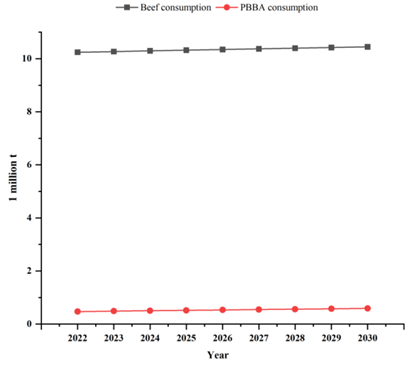
Beef production data derived from the combination of on-site investigations of agricultural enterprises and references, as detailed in 2.2.1. PBBA production data comes from the actual operation process of our research group, details refer to 2.2.2. The data on Chinese consumers' beef consumption comes from the research conducted by the National Health and Health Commission of the People's Republic of China in 2022-2023. The data on PBBA consumption comes from the 2022-2023 market research conducted by Shandong Yuwang Ecological Industrial Co., Ltd (Figure 1).

Since different countries employ distinct feeds and feeding methods for cattle breeding and fattening, our study integrated the data from beef cattle farms in Beijing and the feeding methods in previous studies 19, 20, 21, 22, the weight of shelf cattle (300 kg), fattening period (3-4 months), fattening weight (more than 500 kg) and the slaughter rate (48% - 54%) were unified . During the fattening period of beef, concentrate feed and silage feed should be fed reasonably to improve the quality. Roughage was based on various kinds of grass and corn stalks, while each cow was fed an average of 9-10 kg per day. Based on the data from literature and survey 23, 24, the feed intake of refined feed for cattle was 3-5 kg/day, including corn (75%), soybean meal (15%), flaxseed meal (5%) and wheat bran (5%). In large-scale culture mode, the consumption of corn, soybean, flaxseed and wheat bran for the production of 1 kg of beef was 2.25-3.75 kg, 0.45-0.75 kg, 0.15-0.56 kg and 0.15-0.25 kg, respectively. The parameters for beef production was summarized in Table 2.
Table 3 showed the process and parameters for the production of PBBA, respectively. First, soybean raw materials were pressed and crushed to obtain soybean meal with 50% protein content. Then the soybean protein concentrate powder with more than 65% protein content was purified and dried by acid method/ethanol method or alkali extraction and acid precipitation method to purify dried protein isolate with more than 90% protein content. Subsequently, soybean protein powder was extruded by high temperature and high pressure spiral mechanical extrusion in accordance with dry texturized vegetable protein or wet high moisture meat analogues to recombine protein molecules. Ultimately, the tissue structure of samples was formed by cooling expansion at the mold area. Notably, the deep processing processes of PBBA mainly included soaking, centrifugation, seasoning, mixing, molding, cooking, freezing and packaging, etc.
We constructed four scenarios to evaluate the sustainability benefits of substitution of beef with PBBA at different ratios in China as follows. Scenario A: substituting beef with all PBBA consumed in this year in China, scenario B: substituting beef with half of PBBA consumed in this year in China, scenario C: substituting beef with one-third of PBBA consumed in this year in China, scenario D: substituting beef with one-quarter of PBBA consumed in this year in China. Notably, the data of PBBA consumption were provided by Shandong Yuwang Ecological Food Industry Co., LTD, while the data of beef consumption in China during the past two years were based on the FAO data from 2022 to 2023 (Figure 1).
The data of beef consumption from 2024 to 2030 are based on projections from the Food and Agriculture Organization of the United Nations according to the formula (1).
 | (1) |
where S2022 was the apparent beef consumption in 2022 (t), PR2022 was the beef production in 2022 (t), IM2022 was the beef import volume in 2022 (t), while EX2022 was the beef export volume in 2022 (t).
The alleviating ability of substitution of beef with PBBA at different ratios on the negative environmental impacts was calculated by the formula (2)
 | (2) |
where S2022 represented the apparent beef consumption in 2022 (10 kt) (The consumption data for 2022 was set to be consistent with the time frame of the 2022-2023 consumer survey), a% represented the beef substitution ratio with PBBA, while X1 and X2 represented the corresponding environmental index equivalent of PBBA and beef calculated by this model, respectively.
2.4. Data AnalysisThe software Simapro 9.0 was utilized to calculate the environmental impact factors during the production process of beef and PBBA. As shown in Table 1, 12 environmental impact indicators were selected according to the research of 25. The databases of SimaPro software analysis contained Agri-footprint economic unit, Ecoinvent 3 cut-off by allocation-unit, EU&DK input Output Database and USLCI, while the analysis method was carried out according to ReCiPe 2016 midpoint (H) method 26. For the sensitivity analysis of the system, the software Python 3.11.4 was used to calculate 50,000 Monte Carlo analyses 27. The results of SimaPro analysis and sensitivity analysis were processed using OriginPro 9.8.5 software. Table 4 showed the parameters for sensitivity analysis.
In 2022-2023, based on consumer behavior study 28 and the LCA indicator framework 25, a survey was conducted on the consumption behavior of PBBA among consumers in 18 cities in western, central and eastern China based on four dimensions (price, nutrition and health, flavor authenticity, and overall satisfaction) in the form of a questionnaire among people aged 15-30, 31-50, and 51-65. SPSS 19.0 were used for regression analysis of the survey data to determine the significant impact of each variable on the dependent variable.
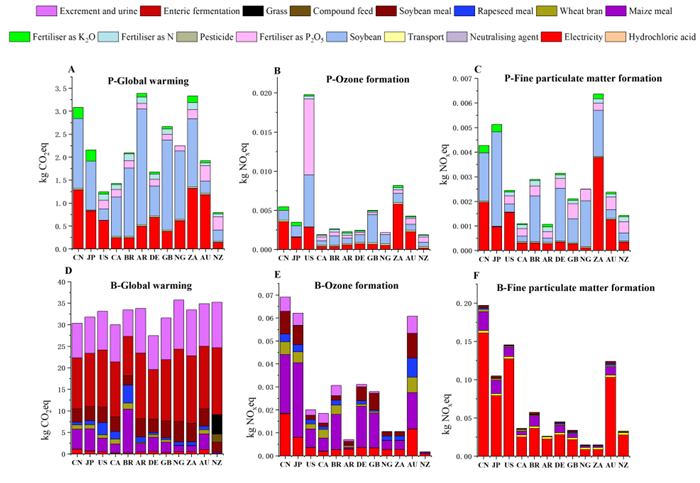
Global warming (GW) 100, ozone formation (OF) and fine particulate matter formation (FPMF) are the typical indicators of atmospheric ecology. Global warming potential (GWP) represents the amount of energy absorbed (radiative efficiency) over a given time horizon relative to that of CO2, the most common metric uses a time horizon of 100 years (GWP 100) 29. Ozone is a major air pollutant in urban environments, with increasing trends reported globally over recent decades. Volatile Organic Compounds (VOCs) are an important factor in promoting the photochemical formation of tropospheric ozone 30. Industrial emissions, vehicle exhausts and biomass burning are the main factors contributing to the formation of fine particulate matter 31.
The effects of beef and PBBA production on the GW100, OF and FPMF in 12 countries were presented in Figure 2. In terms of the whole production process of 1 kg of beef and PBBA, the average GW, OF or FPMF value of beef were 16.5-, 4.4- or 22.9- fold higher than that of PBBA, respectively. The GW 100 values of PBBA in different countries varied from 0.8 kg CO2eq (NZ) to 3.3 kg CO2eq (AR), which was in line with the results of previous studies (0.2-2.64 kg CO2eq) and confirmed the accuracy of our model (Table 5). OF values were in the range of 0.002 kg NOxeq (NZ) and 0.02 kg NOxeq (US), whilst FPMF values ranged from 0.001 kg PM2.5eq (AR) to 0.006 kg PM2.5eq (ZA). In terms of beef production, the GW 100 values of different countries were in the range of 27.5 kgCO2eq (DE) - 35.7 kgCO2eq (NG) and in accordance with the data of previous research (13-48.4 kgCO2eq) (Table 5). The GW100 value in NG was the highest among all countries, while the OF (0.07 kg NOxeq) or FPMF value (0.19 kg PM2.5eq) in CN was higher than that of other countries.

During the processing of PBBA, raw soybeans and electricity played the most important roles in three atmospheric indicators, followed by fertilizer (including K2O, N and P2O5). Figure 2A showed that the soybean production contributed to more than 70% of GW 100 in AR during the manufacturing process of PBBA. AR is the third-largest global exporter of soybeans, in which farmers prefer to grow soybeans and convert pasture land to farmland for soybean production due to food policy uncertainty 47. As shown in Figure 2B, the indicator values of soybean production and electricity accounted for 14.5% and 70.7% in the OF value of ZA, respectively. However, the fertilizer in the form of P2O5 significantly influenced the OF value in GB during PBBA production, likely because phosphate facilitates oxidative hydration reactions and promotes ozone formation 48. The FPMF value of ZA (0.006 kg PM2.5eq) is much higher than that of other countries (Figure 2C), as 69% of its electricity is generated from coal. 49.
During beef production, the indicator values of the enteric fermentation [27.3% (BR) to 47.0% (NG)] as well as the total feed were mainly contributed to the GW 100 values [19.5% (NG) to 53.5% (BR)] in most countries (Figure 2D). The extensive pasture-based system in BR utilized a series of forage plants adapted to climate and soil conditions, which limited its access to purchased inputs 50. The indicator of maize meal played a more important role in the greenhouse gas emissions in BR rather than the electricity indicator as well as the excrement and urine during beef production. Semi-intensive farming practices allowed intestinal fermentation in meat industries of BR to produce minimal carbon emissions 51. It could be noticed that the GW 100 value for beef production in NG and NZ were significantly higher than those in other countries. The high value of greenhouse gas emissions of NG are attributed to intestinal fermentation (47%) and inefficient feed 22; in NZ, it is due to differences in pasture management systems 52. As shown in Figure 2E, the indicator values of soybean and maize meal in beef production mainly contributed to the increase of OF value [41.6% (NZ) - 84.9% (GB)] in 12 countries, while the percentage of electricity value [41.6% (NZ) - 84.9% (GB)] was mainly contributed to the increase of FPMF values in these countries.
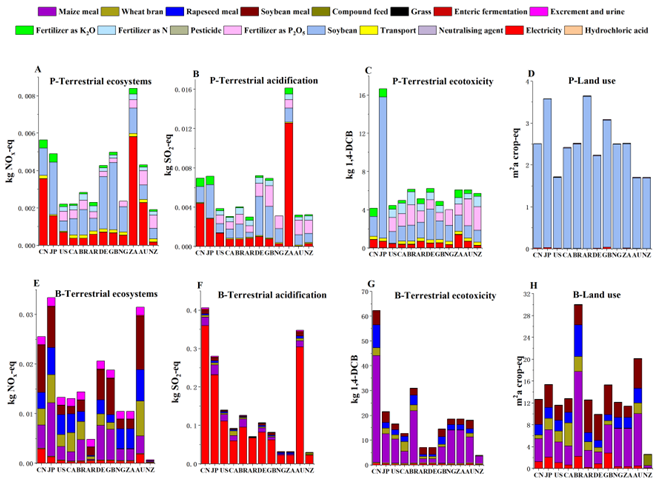
3.2. Effects of the Production of Beef and PBBA on the Terrestrial Ecology in Different CountriesThe indicators for terrestrial ecology mainly included terrestrial ecosystems (TE), terrestrial acidification (TA), terrestrial ecotoxicity (TT), and land use (LU). Agricultural production requires large amounts of land resources and is linked to significant levels land use change, as well as deforestation and peatland drainage 53. The direct or indirect emissions from planting and breeding activities have led to challenges such as antibiotic resistance and zoonotic diseases, thereby damaging TE, including biodiversity, water quantity and quality, pollination, pests, etc. 54. TA was seen as a result of low sulfur-containing petroleum products and petroleum combustion in production and transportation equipment 55. TT is mainly caused by the use of fertilizers in agricultural production or arising from heavy metal emissions 56.
It has been shown in Figure 3A that the TE value in ZA was the highest during the production of PBBA, while NZ showed the lowest TE value. Due to the lack of planting technology and the shortage of local soybean supply 57, the soybean products in ZA displayed a competitive disadvantage, which may be linked to the high TE value. In terms of beef production, the TE value in NZ was the lowest among all countries. However, JP showed the highest TE value during the production of beef (Figure 3E). The livestock production in JP significantly influenced reactive nitrogen flows (the migration and transformation processes of all reactive nitrogen except nitrogen gas (N2) in agricultural and food systems, including crop cultivation, livestock production, food processing and consumption, etc.) in these countries due to 85% of its concentrated feeds was imported 58. It was worthwhile to note that the TE value in NZ during the production of PBBA was 1.71-fold higher than that of beef. Moreover, the indicator values of soybean and electricity contributed the most to the TE values of PBBA because the production of PBBA was supported by the traditional crop cultivation as well as processing equipment that consumes electricity 59.
The value of TA was closely associated with the emission of SO2 produced by human activity. Figure 3B showed that the TA value in ZA during the production of PBBA was 5.38-fold that of AR, the high TA value of ZA and its heavy reliance on coal power (86%) are associated with SO2 emissions 60. Similarly, the highest contribution of all input and output factors to TA was electricity indicator, followed by soybean indicator. Regarding beef production, the TA value in CA was the highest among all countries, while the electricity generation and maize meal production mainly contributed to the emission of SO2. Thermal power generation was the main source of electricity in most countries (except for CA, where hydropower is the main source of electricity), as the raw materials for thermal power generation mainly contained coal, oil and natural gas 61. Based on BP Statistical Review of World Energy 61 on the proportion of coal power in various countries, ZA (86.0%), CN (64.7%), AU (56.3%) and DE (28.0%) utilized coal as the main material for thermal power generation. With increasing coal consumption around the world, SO2 pollution has aggravated 60. Thereby, it could be noticed that CN and ZA had the highest SO2 emission during the production of PBBA and beef, respectively.
Terrestrial ecotoxicity (TT) is primarily driven by agrochemical inputs in feed and crop systems. The mean TT value for PBBA production across 12 countries was 6.2 kg 1,4-DCB—significantly lower than beef production's 19.3 kg 1,4-DCB (Figure 3C). JA's elevated TT burden (2.29× higher than NG) stems from intensive soybean cultivation requiring high pesticide/fertilizer inputs (58.98% contribution from soybean production), compounded by electricity-intensive processing (34.16% contribution). NZ's minimal TT impact in beef production (only 6.31% of CN's value) reflects its pasture-based systems with limited concentrate feed use, whereas CN's industrialized feed sector contributes 25.83% of TT via soybean meal and 19.02% via rapeseed meal (Figure 3G). This aligns with a study 62 which confirming that developed feed industries—characterized by synthetic fertilizer dependency—amplify ecotoxicity risks. Notably, TT variations correlate with national agricultural intensity, countries with higher compound feed utilization (e.g., CN, JP) exhibit disproportionately elevated TT levels versus pasture-reliant systems (e.g., NZ).
Soybean production played major role in the LU level during the production of PBBA. It was shown that the LU level both in JP and AR during the production of PBBA were 1.1-fold higher as compared with that in NZ. Since 1961, the soybean production in JP has grown slowly, the stagnation might be caused by the soil fertility and water resources constraints 63, which reduced the LU efficiency. The LU level in NZ during beef production was 91.3% lower compared to that of BR. As one of the largest beef exporters in the international market, the beef production in BR required extensive ranching area 64. However, the decrease of the number of beef cattle and weaned calf lead to a LU reduction for beef cattle farming 65. Based on the data of terrestrial ecology, the indicators for electricity and soybean production were main factors to the increase of TE, TA, TT and LU levels during the production of PBBA, whilst the indicators for electricity, maize and soybean meals greatly contributed to the increase of these indicators in beef production process.


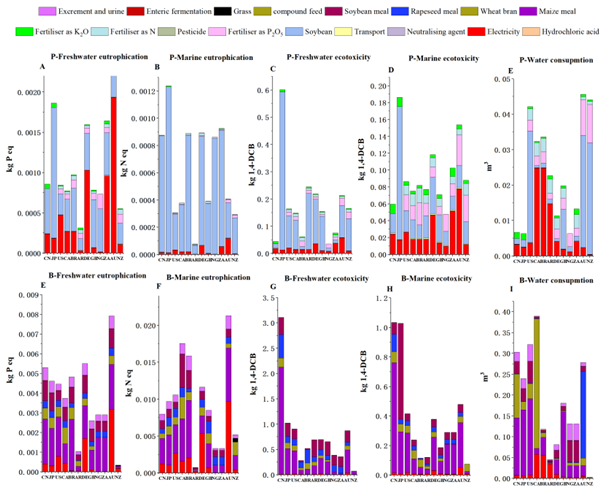
Effects of the production of beef and PBBA on five water ecology indicators were evaluated in our research as well, including freshwater eutrophication (FE), marine eutrophication (ME), freshwater ecotoxicity (FT), marine ecotoxicity (MT) and water consumption (WC). The water eutrophication caused by excessive nitrogen and phosphorus levels resulting from human activities is an important factor affecting the water quality 66. When drugs and chemicals are released into the aquatic environment, either in their original form or as metabolites, the resulting ecological toxicity is known as freshwater or marine ecotoxicity 67. The impact of water consumption is estimated as the amount of water evaporated, incorporated into products, transferred to other watersheds or disposed into the sea and no longer available 68.
The average values of FE, ME, FT, MT, and WCduring beef production were 2.6-, 18.8-, 8.9-, 3.4-, and 7.8-fold higher than those of PBBA (Figure 4), respectively. Consistent with data from atmospheric and terrestrial ecology, the indicator values for soybean and electricity played significant roles in the impact of PBBA production on water ecology in 12 countries, whereas indicators for maize and soybean meals were crucial for the enhancement of five water ecology indicators during beef production.
Excessive nutrients in wastewater, a result of human activities, significantly promote the growth of microorganisms and algae. This overproduction can cause a series of detrimental effects on the ecosystem 69. In the context of FE and ME within the PBBA production sector, the FE value in AU was 7.56 times higher than that in AR. Meanwhile, JP had the highest ME value at 0.001 kgNeq among the 12 countries studied (Figure 4A and Figure 4B). Similarly, the FE and ME values in AU during PBBA production (FE - 0.002 kg Peq, ME - 0.0004 kg Neq) were notably higher than those of other countries. In AU, the indicator for electricity accounted for 81.58% of the FE values during PBBA production. Additionally, the indicator for soybean production accounted for 1.05% of the ME values in JP during beef production, whereas electricity and maize meal constituted 45.36% and 34.02% of the ME values in AU during beef production, respectively (refer to Figure 4E and Figure 4F). The historical use of phosphorus fertilizers has bolstered grazing agriculture in certain regions of AU. However, elevated soil phosphorus levels have led to an increased risk of eutrophication 70.
The values of FT and MT refer to the potential impact of toxic chemical emissions on freshwater and marine ecosystems 71, 72. The FT and MT values in JP during the production of PBBA were the highest among all countries, while CN exhibited significantly higher FT and MT values than other countries during beef production (Figure 4C and Figure 4D). The average proportions of soybean production in FT and MT values of JP during the production of PBBA were 58.98% and 34.16%, respectively. Meanwhile, the proportion of soybean meal and rapeseed meal accounted for 25.83% and 19.02% of FT and MT values in CN during beef production, respectively (Figure 4G and Figure 4H). Water conservation is essential for the achievement of global Sustainable Development Goals (SDGs). During the production of PBBA, the WC value of these countries ranged from 0.006 m3 (NG) to 0.046 m3 (AU), while the indicators for soybean production and electricity mainly contributed to the increase of WC value in countries. In terms of beef production, it is the least water-efficient among the production of livestock products, and the WC is primarily to satisfy its irrigation requirements during feed production 73. The range of WC value during beef production was between 0.003 m3 (NZ) and 0.39 m3 (CA). Figure 4I showed that maize meal (accounting for 17.2% - 94.6%) played a major role in the increase of WC values of different countries. Whereas, compound feed greatly contributed to the WC values in some countries as well. It was worth mentioning that the proportion of compound feed accounted for 84.2% in the composition of WC in CA during beef production. In recent years, urbanization, mining, transportation, as well as oil and gas development, have occupied the land used for feed production in CA, the reduction in both supply and quality of feed required a compound feed to satisfy the need of beef production 74.
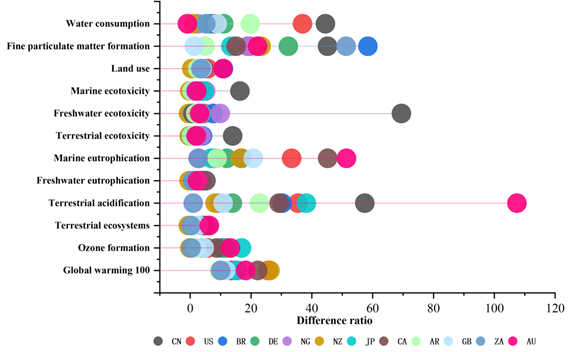
3.4. The Difference Ratio of effects of the Production of Beef and PBBA on the Environmental Indicators in Different CountriesThe difference ratio of effects of the production of beef and PBBA on the environmental indicators in different countries were further compared (Figure 5). It could be observed that the difference in effects of the production of beef and PBBA on the LU, OF, FE, TE and GW 100 values in 12 countries were similar, while there were significant difference in other indicators. It could be explained by the differences in the production structure and production capacity in these countries 75. Notably, the difference ratio of effects of the production of beef and PBBA on a series of environmental indicators in AU (TA, 1.0% - 107.5%) and CN (MT, -0.1% - 16.4%, FT, -0.5% - 69.5%, TT, 0.3% - 14.0%) were much larger than other countries. Therefore, it was inferred that consumption substitution of beef with PBBA in different countries might effectively help achieve global SDGs.
The difference ratios of the effects of beef and PBBA production on environmental indicators across various countries were further compared (Figure 5). It was observed that the effects of beef and PBBA production on LU, OF, FE, TE, and GW 100 values in 12 countries were similar, whereas significant differences were noted in other indicators. These differences could be attributed to the varying production structures and capacities among these countries 75. Notably, the difference ratios of the effects of beef and PBBA production on environmental indicators in AU (TA, 1.0% - 107.5%) and CN (MT, -0.1% - 16.4%; FT, -0.5% - 69.5%; TT, 0.3% - 14.0%) were much larger than in other countries. Consequently, it was inferred that substituting beef consumption with PBBA in different countries could effectively aid in achieving global Sustainable Development Goals (SDGs).
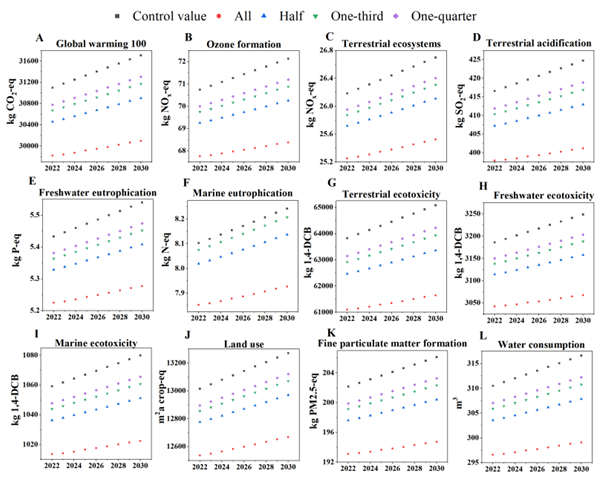
3.5. A Case Study: Sustainability Benefits of Consumption Substitution of Beef with PBBA in ChinaBased on the LCA results from 12 countries, this section takes China as an example to quantify the environmental benefits of PBBA replacing beef at various consumption levels (0%, 25%, 33.3%, 50%, 100% of PBBA consumption) from 2022 to 2030 (Figure 6). Link the emission reduction data (128 million tons of CO₂) to China's "carbon neutrality goal", and explore the contribution degree of alternative solutions to achieving SDG12/SDG13.
It was demonstrated that the adverse effects of beef consumption on atmospheric, terrestrial, and water ecosystems gradually decreased with an increasing consumption substitution ratio of PBBA. The complete substitution of beef with 100% PBBA consumption in 2022 resulted in a reduction of 12.796 million tons of CO2 (Figure 6A), equivalent to 2.04% of China's agricultural emissions in 2019 76. It appeared that substituting 1% of beef consumption with PBBA each year could lead to a reduction of 0.4-0.7% in China's agricultural carbon emissions. In terms of all environmental indicators, the FT value decreased most significantly after substituting beef with PBBA, while the TE value was least affected. According to a study 62, the FT value primarily originated from the use of industrial energy in feed production for cattle. When beef consumption was replaced by PBBA, the FT value would significantly decrease due to the reduced feed demand. When beef consumption was substituted by 100% PBBA in China in 2030, the GW, OF, TE, TA, FE, ME, TT, FT, MT, LU, FPMF, and WC values were 5.4%, 5.5%, 4.6%, 5.9%, 5.0%, 5.3%, 5.6%, 5.9%, 5.6%, 4.8%, 5.9%, and 5.9% lower than those of the control, respectively. It showed that the consumption substitution of beef with PBBA in China would have more beneficial effects on atmospheric ecology than on water and terrestrial ecology. Most nitrogen in animal feed was lost 77 in the form of nitrogen compounds (NH3 and N2O) through volatilization (41%), followed by nitrate (NO3-) through leaching into the soil (40%) and waste or wastewater during processing (15%). Therefore, the carbon and nitrogen emissions of beef production in China could be significantly reduced by substituting consumption with PBBA.
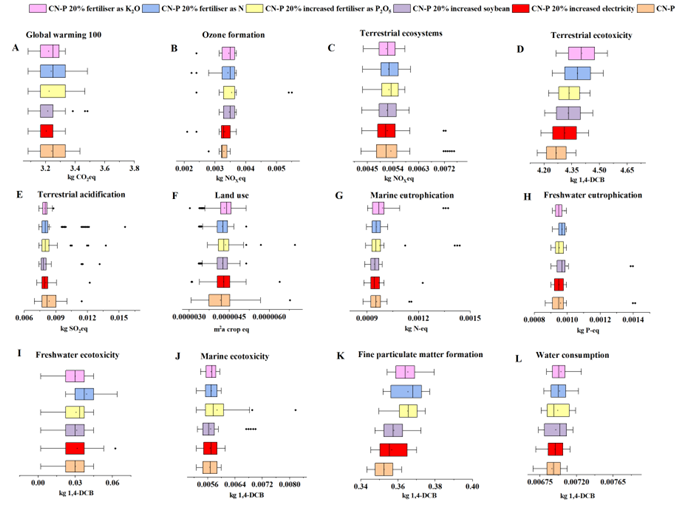
3.6. Sensitivity Analysis of Evaluation SystemIn terms of the effects of increase of soybean proportion during the production of PBBA on the environmental and human health indicators in CN, the variation range of different indicators was between -10.0% (OF) and -80.7% (FE) (Figure 7). Among these indicators, TT, TE, FT, MT, FPMF and WC values varied to a greater extent. During soybean production, the utilization of chemical fertilizers and pesticides mainly caused the water and terrestrial ecological impacts as well as human health. For instance, ME increased by only 4.4% at a 20% increase of soybean proportion, while FE value increased by 80.7%. The difference might be associated with the freshwater resource requirement rather than ocean resource during the planting of soybeans. Regarding the effects of increase of electricity during the production of PBBA on the output results in CN, the variation range of data changed from -3.8% (GW) to 67.0% (TA) (Figure 7). It was worthwhile to note that the change of GW 100, TT, TA, TE, LU, FT and FPMF values were larger than other values when the input parameter increased by 20%. As the main raw material for the generation of thermal power in CN, the consumption of coal could significantly lead to CO2 and SO2 emissions 79. Therefore, the change of input value of electricity induced a significant variation of atmospheric and terrestrial indicators. It could be inferred that TA might be greatly weakened by consumption substitution of coal with natural gas as the main thermal power generation in CN. Alternatively, the effects of change in input level of three fertilizers during the production of PBBA in CN on the environmental and human health indicators were similar. Specifically, the variation range of different indicators after increasing by 20% of fertilizer as K2O, N or P2O5 was between 3.03 * 10-6 and 5.14 * 10-6, 3.36 * 10-6 and 5.13 * 10-6 or 3.69 * 10-6 and 6.96 * 10-6, respectively. It was observed that the change of TT, TE, FT and WC values were larger than other values, which was in consistent with our previous results. After decades of utilization, the addition of trace elements in fertilizers might lead to a deterioration of soil quality. The accumulation of these elements in the food chain had the potential to cause chronic diseases of the kidney, lung, cardiovascular and musculoskeletal systems 80.


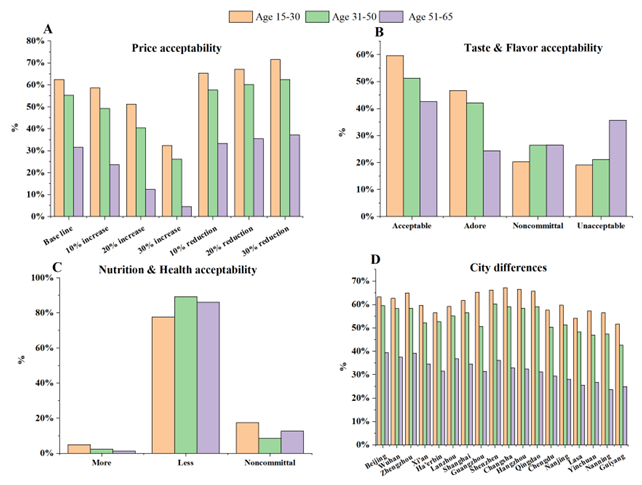
Based on SPSS regression analysis of consumer behavior data, the acceptability of PBBA consumption is significantly affected by price, taste & flavor (TF), nutrition & health (NH) and city differences (Figure 8). There are obvious differences in price elasticity among different age groups (Figure 8A), among which the 15-30 age group is the most sensitive to price changes: when the price of PBBA increased by 10%, the acceptability of this group decreased by about 12.3% (β = -0.68, p < 0.01), while that of the 51-65 age group decreased by only 5.4% (β = -0.31, p < 0.05), which may be related to the lower disposable income and more rational consumption habits of the younger group 28. TF preference is the core barrier across age groups (Figure 8B), the data show that the proportion of consumers with "unacceptable taste" of PBBA accounts for 38.7% (p < 0.001), especially in second-tier cities that prefer traditional cooking methods (such as Chengdu and Xi'an), the negative impact of TF factors (β = -0.53) is significantly higher than that of first-tier cities (β = -0.29). Although the direct effect of NH labels on overall acceptance was weak (β = 0.11, p = 0.07) (Figure 8C), its effect was significantly enhanced in cities with high education levels (β = 0.24, p <0.05), suggesting that health marketing needs to be designed for specific populations.
City differences further reveal the complexity of market stratification (Figure 8D). The response of northern cities (such as Harbin and Lanzhou) to price concessions is 17% higher than that of southern cities (Guangzhou and Shenzhen), which may be related to economic structure and food culture; However, consumers in inland cities (such as Zhengzhou and Changsha) are more likely to be driven by taste improvement (β = 0.42 vs. Coastal city β = 0.21). It is worth noting that in the subsidy policy simulation, a 10% price reduction can increase the acceptance of third-tier cities (such as Nanning and Guiyang) to 0.67 (baseline 0.51), but only 0.59 (baseline 0.55) in first-tier cities, suggesting that the price leverage effect of sinking markets is more significant. In summary, the promotion of plant meat needs to adopt a differentiated strategy: the implementation of stepped subsidies for young and low-income groups, the priority of optimizing product taste in second-tier and inland cities, and the strengthening of health and environmental protection narratives in first-tier cities, in order to break the triple bottleneck of "price - taste - cognition".
3.8. Policy ImplicationsThe findings of this study underscore the urgent need for a multi-tiered policy framework to accelerate the transition from beef to PBBA in China, addressing environmental, economic, and social dimensions simultaneously. Building on the regional heterogeneity of production impacts, consumer behavior dynamics, and sensitivity analysis outcomes, we propose an integrated policy strategy that aligns with China’s Dual Carbon Goals (2030/2060) and Sustainable Development Agenda.
First, addressing the coal-electricity lock-in in PBBA production is critical to maximizing emission reductions. Our analysis reveals that coal-dominated power grids in northern China amplify PBBA’s carbon footprint by 64.7%, undermining its environmental advantages. To mitigate this, policymakers should prioritize regional energy transition subsidies targeting PBBA manufacturers in coal-dependent provinces (e.g., Shanxi and Inner Mongolia). For instance, tax rebates or low-interest loans could incentivize factories to adopt renewable energy microgrids powered by solar or biogas, particularly in regions with high solar irradiance 81. Concurrently, integrating PBBA production into China’s national carbon trading system would internalize the environmental costs of coal-based electricity 82, creating financial disincentives for carbon-intensive energy use.
Second, soybean import reliance—85% sourced from deforestation-prone regions like Brazil and Argentina—poses a systemic risk to PBBA’s sustainability. To decouple soybean supply chains from ecological degradation, China should establish bilateral sustainability partnerships with key exporters. This could involve: negotiating "zero-deforestation" trade agreements that mandate satellite-monitored compliance for soybean plantations 83. Funding agroecological training programs for Brazilian farmers to adopt silvopastoral systems, which integrate soybean cultivation with native vegetation 84. Launching a program such as "Soybean Certification", where PBBA products using certified sustainable soy receive preferential tariff rates 85 or consumer-facing eco-labels 86. Such measures would align with global initiatives like the EU Deforestation Regulation (EUDR), positioning China as a responsible player in transnational supply chain governance.
Third, consumer acceptance barriers—particularly price sensitivity and taste skepticism—require targeted behavioral interventions. Our survey data indicate that a 10% price reduction boosts PBBA adoption in low-income regions by 17%, yet blanket subsidies risk exacerbating fiscal burdens 87. Instead, a graded subsidy system should be implemented: tier 1 cities (e.g., Beijing, Shanghai) focus on "nudging" high-income consumers through carbon footprint labeling and PBBA integration into premium dining platforms (e.g., Meituan’s "Green Eats" section). Tier 3-4 cities and rural areas: deploy direct vouchers or conditional cash transfers tied to PBBA purchases, prioritizing regions with high beef consumption (e.g., Xinjiang, where per capita beef intake is 2.3× the national average). Youth-centric campaigns: leverage social media influencers and gamified apps to rebrand PBBA as a "tech-savvy" choice, capitalizing on younger demographics’ openness to innovation (45% acceptance rate among ages 18–30).
Fourth, safeguarding livelihoods in traditional livestock-dependent communities is essential for a just transition. The projected displacement of 2.1 million smallholder cattle farmers in western China necessitates retraining and diversification programs: establish regional "Agri-Tech Hubs" to train farmers in PBBA ingredient cultivation (e.g., soy, pea) or alternative livelihoods like eco-tourism 88. Introduce transitional income support funded by a "PBBA Innovation Tax" levied on large meat processors 89, ensuring equity between industrial and rural stakeholders. Pilot contract farming models where farmers supply non-GMO soy to PBBA manufacturers under fixed-price agreements 90, reducing market volatility risks.
Fifth, public procurement policies can catalyze market scaling while ensuring nutritional equity. Integrating PBBA into the National School Lunch Program would simultaneously reduce childhood obesity rates (linked to excessive red meat consumption) and normalize plant-based diets 91. Initial pilots could target provinces with high childhood obesity rates (e.g., Shandong, 19.2%), pairing PBBA meals with educational modules on sustainable eating 92. Similarly, mandating PBBA in government cafeterias would create stable demand 93, encouraging private sector investment in R&D for texture and flavor optimization—addressing the 38.7% consumer rejection rate due to "unacceptable taste."
Finally, strengthening cross-ministerial coordination is vital to avoid policy fragmentation. A National PBBA Task Force—comprising representatives from the Ministry of Ecology and Environment, Ministry of Agriculture, and National Development and Reform Commission—should oversee the alignment of fiscal incentives, agricultural subsidies, and climate targets. This body could also facilitate international knowledge exchange, such as adopting Canada’s success in leveraging pea protein for PBBA [94].
By interweaving these strategies, China can transform PBBA from a niche product into a cornerstone of its low-carbon food system, achieving synergies between emission reduction, rural revitalization, and global leadership in sustainable agri-food innovation. This approach not only addresses the immediate challenges identified in our study but also lays the groundwork for a resilient, equitable protein transition in the face of climate uncertainty.
This study reveals the core contradiction in the promotion of plant-based beef analogues (PBBA) in China: although Life Cycle Assessments (LCA) from multiple countries have confirmed their environmental benefits (a 1% annual substitution rate can reduce agricultural emissions by 0.4-0.7%, and cumulative emission reduction of 12.8 million tons of CO₂ by 2030), their actual adoption is constrained by deep-seated social and cultural dynamics. Taste authenticity becomes a key barrier. In traditional food hubs like Chengdu, 41.5% of consumers reject PBBA because of its texture not matching traditional meat; cultural identity further mediates 62% of flavor doubts, rendering environmental publicity ineffective. At the same time, economic vulnerability exacerbates inequality: the price sensitivity of low-income young people is three times that of the elderly group, and they face the risk of exclusion from sustainable diets. Regional differences further complicate the market - northern consumers prioritize price, while southern consumers prioritize sensory familiarity, and the health narrative only touches upon the urban elite group.
To address these challenges, the study proposes a culturally embedded solution: through chef collaboration to develop localized recipes, campus programs to utilize peer influence to cultivate young acceptance, and combined with tiered subsidies (targeted coupons for low-income groups, carbon labels incentives for first-tier cities). Policies need to simultaneously solve the supply chain paradox: the reliance on coal and electricity in northern China increases the carbon footprint of PBBA by 64.7%, requiring renewable energy subsidies; while the deforestation risk of soybean imports requires the establishment of a "zero deforestation certification" trade framework. Ultimately, coordinating ecological goals with dietary traditions requires placing cultural identity at the core of sustainable governance, which provides a key paradigm for global dietary transformation.
Funding: This study was supported by the major project of agriculture and technology in China.
Author Contribution: Conceptualization, Jian Li; writing, Xiangquan Zeng, Xuzeng Wang; methodology, Xiangquan Zeng, Xuzeng Wang. All authors have read and agreed to the published version of the manuscript.
Ethical statement: This article did not require ethical approval.
Competing Interests: The authors declare that they have no known competing financial interests or personal relationships that could have appeared to influence the work reported in this paper.
Data Availability Statement: All the data provided in the manuscript and supplementary material are available.
| [1] | Detzel, A., et al., (2022). Life cycle assessment of animal-based foods and plant-based protein-rich alternatives: an environmental perspective. Journal of the Science of Food and Agriculture, 102(12): p. 5098-5110. | ||
| In article | View Article PubMed | ||
| [2] | Nations, FAOSTAT: Food Balance Sheets (2022). 2024. http://www.fao.org/faostat/. | ||
| In article | |||
| [3] | Xu, X., et al., (2021). Global greenhouse gas emissions from animal-based foods are twice those of plant-based foods. Nature Food, 2(9): p. 724-732. | ||
| In article | View Article PubMed | ||
| [4] | David, et al., (2023). Sustainability of meat-based and plant-based diets and the environment1,2,3. The American Journal of Clinical Nutrition. | ||
| In article | |||
| [5] | Mensah, G.A., et al., (2023). Global Burden of Cardiovascular Diseases and Risks, 1990-2022. Journal of the American College of Cardiology, 82(25): p. 2350-2473. | ||
| In article | |||
| [6] | Zeng, X., et al., (2024). Encapsulation of roast beef flavor by soy protein isolate/chitosan complex Pickering emulsions to improve its releasing properties during the processing of plant-based meat analogues. Food Chemistry, 450: p. 139313. | ||
| In article | View Article PubMed | ||
| [7] | Liu, X., et al., (2023). Challenges, process technologies, and potential synthetic biology opportunities for plant-based meat production. LWT, 184: p. 115109. | ||
| In article | View Article | ||
| [8] | Yu, J.L., L.Y. Wang, and Z.W. Zhang, (2023). Plant-Based Meat Proteins: Processing, Nutrition Composition, and Future Prospects. Foods, 12(22). | ||
| In article | View Article PubMed | ||
| [9] | Deussing, G., (2023). Flavor comparison of tuna imitation. Whether a meat and fish substitute product can be successfully marketed on a plant basis depends crucially on its sensory properties. Deutsche Lebensmittel-Rundschau, 2023. 119(2): p. 74-78. | ||
| In article | |||
| [10] | Yusuf, E.H., (2023). Comparison of life cycle assessments and nutritional contents of soy protein and wheat protein (seitan) based vegan bacon products for human and environmental health. Journal of the Science of Food and Agriculture, 103(7): p. 3315-3321. | ||
| In article | View Article PubMed | ||
| [11] | Noguerol, A.T., V. Larrea, and M.J. Pagán, (2022). The effect of psyllium (Plantago ovata Forsk) fibres on the mechanical and physicochemical characteristics of plant-based sausages. European Food Research and Technology, 248(10): p. 2483-2496. | ||
| In article | View Article PubMed | ||
| [12] | Saerens, W., et al., (2021). Life cycle assessment of burger patties produced with extruded meat substitutes. Journal of Cleaner Production, 306. | ||
| In article | View Article | ||
| [13] | Abiala, O., M. Abiala, and B. Omojola, (2022). Quality attributes of chicken nuggets extended with different legume flours. Food Production Processing and Nutrition, 4(1). | ||
| In article | View Article | ||
| [14] | Zhang, Q., et al., (2022). Mimic Pork Rinds from Plant-Based Gel: The Influence of Sweet Potato Starch and Konjac Glucomannan. Molecules, 27(10). | ||
| In article | View Article PubMed | ||
| [15] | Harnack, L., et al., (2021). Nutrient Composition of a Selection of Plant-Based Ground Beef Alternative Products Available in the United States. Journal of the Academy of Nutrition and Dietetics, 121(12): p. 2401. | ||
| In article | View Article PubMed | ||
| [16] | Rondoni, A., et al., (2021). Exploring consumers' perceptions of plant-based eggs using concept mapping and semantic network analysis. Food Quality and Preference, 94. | ||
| In article | View Article | ||
| [17] | Giammona, C., (2020). Impossible Foods raises $700 million in new funding. 2020(August 14). | ||
| In article | |||
| [18] | Kozicka, M., et al., (2023). Feeding climate and biodiversity goals with novel plant-based meat and milk alternatives. Nature Communications, 14(1): p. 5316. https://doi.org/10.1038/s41467-023-40899-2. | ||
| In article | |||
| [19] | Kannan, N., et al., (2017). Estimation of green water footprint of animal feed for beef cattle production in Southern Great Plains. Water Resources and Industry, 17(C): p. 11-18. | ||
| In article | View Article | ||
| [20] | Liu, Z., et al., (2017). Enteric Methane Conversion Factor for Dairy and Beef Cattle: Effects of Feed Digestibility and Intake Level. Transactions of the ASAE. American Society of Agricultural Engineers, 60(2): p. 459-464. | ||
| In article | View Article | ||
| [21] | Palhares, J.C.P., M. Morelli, and C.C. Junior, (2017). Impact of roughage-concentrate ratio on the water footprints of beef feedlots. Agricultural Systems, 155: p. 126-135. | ||
| In article | View Article | ||
| [22] | Murphy, B., et al., (2017). An economic and greenhouse gas emissions evaluation of pasture-based dairy calf-to-beef production systems. Agricultural Systems, 154: p. 124-132. | ||
| In article | View Article | ||
| [23] | Greenwood, P.L., (2021). Review: An overview of beef production from pasture and feedlot globally, as demand for beef and the need for sustainable practices increase. Animal, 15. | ||
| In article | View Article PubMed | ||
| [24] | Mwangi, F.W., et al., (2019). Diet and Genetics Influence Beef Cattle Performance and Meat Quality Characteristics. Foods, 8(12). | ||
| In article | View Article PubMed | ||
| [25] | Järviö, N., et al., (2021). Ovalbumin production using Trichoderma reesei culture and low-carbon energy could mitigate the environmental impacts of chicken-egg-derived ovalbumin. Nature Food, 2(12): p. 1005-1013. | ||
| In article | View Article PubMed | ||
| [26] | Mark A. J. Huijbregts, et al., (2017). ReCiPe2016: a harmonised life cycle impact assessment method at midpoint and endpoint level. The International Journal of Life Cycle Assessment. | ||
| In article | View Article | ||
| [27] | Giles, M.B., K. Debrabant, and A. Rossler, (2019). Analysis of multilevel Monte Carlo path simulation using the Milstein discretisation. Papers, 56(3): p. págs. 607-617. | ||
| In article | View Article | ||
| [28] | Sánchez-Sánchez, E., et al., (2025). Attitudes and consumption habits of energy drinks among adolescents and young adults in a Spanish population. AIMS Public Health, 12(1): p. 16-32. | ||
| In article | View Article PubMed | ||
| [29] | Rotz, C.A. and F. Mitloehner, (2025). United States dairy farms and global warming. Journal of Dairy Science, 108(3): p. 2610-2619. | ||
| In article | View Article PubMed | ||
| [30] | Li, X.B., et al., (2025). Vertical changes in volatile organic compounds (VOCs) and impacts on photochemical ozone formation. Atmos. Chem. Phys., 25(4): p. 2459-2472. | ||
| In article | View Article | ||
| [31] | Lyu, R., et al., (2025). Dynamics of water-soluble inorganic ions in Qinhuangdao: Particle size association and influences of environmental conditions. Urban Climate, 61: p. 102390. | ||
| In article | View Article | ||
| [32] | Tang, M., et al., (2024). Life Cycle Assessment of Plant-Based vs. Beef Burgers: A Case Study in the UK. Sustainability, 16(11): p. 4417. | ||
| In article | View Article | ||
| [33] | Saerens, W., et al., (2021). Life cycle assessment of burger patties produced with extruded meat substitutes. Journal of Cleaner Production, 306: p. 127177. | ||
| In article | View Article | ||
| [34] | Lemken, D., (2021). The price penalty for red meat substitutes in popular dishes and the diversity in substitution. PLOS ONE, 16(6): p. e0252675. | ||
| In article | View Article PubMed | ||
| [35] | Takacs, B., et al., (2022). Comparison of environmental impacts of individual meals - Does it really make a difference to choose plant-based meals instead of meat-based ones? Journal of Cleaner Production, 379: p. 134782. | ||
| In article | View Article | ||
| [36] | Smetana, S., et al., (2023). Meat substitutes: Resource demands and environmental footprints. Resources, Conservation and Recycling, 190: p. 106831. | ||
| In article | View Article PubMed | ||
| [37] | Mejia, M., et al., (2020). Life Cycle Assessment of the Production of a Large Variety of Meat Analogs by Three Diverse Factories. Journal of Hunger & Environmental Nutrition, 15(5): p. 699-711. | ||
| In article | View Article | ||
| [38] | Shanmugam, K., et al., (2023). Climate Impact of Plant-based Meat Analogues: A Review of Life Cycle Assessments. Sustainable Production and Consumption, 36: p. 328-337. | ||
| In article | View Article | ||
| [39] | Heller, M.C.a.G.A.K., (2018). Beyond Meat's Beyond Burger Life Cycle Assessment: A detailed comparison between a plant-based and an animal-based protein source. University of Michigan. https://hdl.handle.net/2027.42/192044. | ||
| In article | |||
| [40] | Bragaglio, A., et al., (2018). Environmental impacts of Italian beef production: A comparison between different systems. Journal of Cleaner Production, 172: p. 4033-4043. | ||
| In article | View Article | ||
| [41] | Buratti, C., et al., (2017). Carbon footprint of conventional and organic beef production systems: An Italian case study. Science of The Total Environment, 576: p. 129-137. | ||
| In article | View Article PubMed | ||
| [42] | Tsutsumi, M., et al., (2018). Life-cycle impact assessment of organic and non-organic grass-fed beef production in Japan. Journal of Cleaner Production, 172: p. 2513-2520. | ||
| In article | View Article | ||
| [43] | Asem-Hiablie, S., et al., (2019). A life cycle assessment of the environmental impacts of a beef system in the USA. The International Journal of Life Cycle Assessment, 24(3): p. 441-455. | ||
| In article | View Article | ||
| [44] | Von Greyerz, K., et al., (2023). A large share of climate impacts of beef and dairy can be attributed to ecosystem services other than food production. Journal of Environmental Management, 325: p. 116400. | ||
| In article | View Article PubMed | ||
| [45] | Samsonstuen, S., et al., (2024). Choice of metrics matters—Future scenarios on milk and beef production in Norway using an LCA approach. Livestock Science, 279: p. 105393. | ||
| In article | View Article | ||
| [46] | Ruviaro, C.F., et al., (2015). Carbon footprint in different beef production systems on a southern Brazilian farm: a case study. Journal of Cleaner Production, 96: p. 435-443.. | ||
| In article | View Article | ||
| [47] | Jang, S., (2012). The Analysis of Causality in Globalized Agribusiness - In case of soybean industry in Brazil and Argentina. Journal of Lusophone Area Studies, 9(1): p. 101-129. | ||
| In article | View Article | ||
| [48] | Yang, F., et al., (2024). Ozone oxidation of nitric oxide: Promoting effect of phosphorus and inhibitory effect of phosphoric acid. Canadian Journal of Chemical Engineering, 102(6): p. 2097-2105. | ||
| In article | View Article | ||
| [49] | Zhang, D., et al., (2021). A machine learning model to estimate ambient PM2.5 concentrations in industrialized highveld region of South Africa. Remote Sensing of Environment, 266: p. 112713. | ||
| In article | View Article PubMed | ||
| [50] | Molossi, L., et al. (2023). Agricultural Support and Public Policies Improving Sustainability in Brazil’s Beef Industry. Sustainability, 15. | ||
| In article | View Article | ||
| [51] | Sarkar, S., et al., (2024). Comparing carbon footprints of sheep farming systems in semi-arid regions of India: A life cycle assessment study. Plos One, 19(1). | ||
| In article | View Article PubMed | ||
| [52] | Greenwood, P.L., (2021). Review: An overview of beef production from pasture and feedlot globally, as demand for beef and the need for sustainable practices increase. Animal, 15: p. 100295. | ||
| In article | View Article PubMed | ||
| [53] | Yalçuk, A., G.K. Ongun, and F.G. Üçtuğ, (2025). Life Cycle Assessment of White Meat Supply to Final Consumer: A Case Study From Türkiye. 48(7): p. e70170. | ||
| In article | View Article | ||
| [54] | Burke, D.T., P. Hynds, and A. Priyadarshini, (2025). Assessing the One Health (ecosystem, animal and human health) impacts of current dietary patterns based on farm-to-fork life cycle assessment in the Republic of Ireland. Science of The Total Environment, 975: p. 179313.. | ||
| In article | View Article PubMed | ||
| [55] | Yusuf, E.H., (2023). Comparison of life cycle assessments and nutritional contents of soy protein and wheat protein (seitan) based vegan bacon products for human and environmental health, 103(7): p. 3315-3321. | ||
| In article | View Article PubMed | ||
| [56] | Shrivastava, S., et al.,(2025). Shifting units, shifting views: how product mass and protein content influence environmental impact of Icelandic lamb. The International Journal of Life Cycle Assessment, 30(3): p. 491-510. | ||
| In article | View Article | ||
| [57] | Manthata, L.S., (2018). A Competitive Analysis of the South African Soybean Industry. | ||
| In article | |||
| [58] | Mori, A., et al., (2020). Nitrogen loss to the environment due to various nitrogen-use efficiencies during milk and beef production in Japan. Environmental Research Letters, 15(12). | ||
| In article | View Article | ||
| [59] | Ciani, M., et al., (2021). Microbes: Food for the Future. 10(5): p. 971. | ||
| In article | View Article PubMed | ||
| [60] | Valverde, V., M.T. Pay, and J.M. Baldasano, (2016). A model-based analysis of SO2 and NO2 dynamics from coal-fired power plants under representative synoptic circulation types over the Iberian Peninsula. Science of The Total Environment, 541: p. 701-713. | ||
| In article | View Article PubMed | ||
| [61] | BP, Statistical Review of World Energy 2022. https://www.bp.com | ||
| In article | |||
| [62] | Arvanitoyannis, I.S., K.V. Kotsanopoulos, and A. Veikou, (2014). Life Cycle Assessment (ISO 14040) Implementation in Foods of Animal and Plant Origin: Review. Critical Reviews in Food Science and Nutrition, 54(10): p. 1253-1282. | ||
| In article | View Article PubMed | ||
| [63] | Li, M.-W., et al., (2020). Impacts of genomic research on soybean improvement in East Asia. Theoretical and Applied Genetics, 133(5): p. 1655-1678. | ||
| In article | View Article PubMed | ||
| [64] | Molossi, L., et al., (2023). Agricultural Support and Public Policies Improving Sustainability in Brazil’s Beef Industry. Sustainability, 15(6): p. 4801. | ||
| In article | View Article | ||
| [65] | Farrell, L.J., et al., (2021). Simulating Beef Cattle Herd Productivity with Varying Cow Liveweight and Fixed Feed Supply. Agriculture, 11(1): p. 35. | ||
| In article | View Article | ||
| [66] | Zhang, W., et al., (2024). The Eutrophication-related Index of Drinking Water Sources Based on the Oxidation-Reduction Potential. BioResources, 19(3), 4941-4959. | ||
| In article | View Article | ||
| [67] | Khan, K., S. Kar, and K. Roy, (2023). Are we ready to combat the ecotoxicity of COVID-19 pharmaceuticals? An in silico aquatic risk assessment. Aquatic Toxicology, 256: p. 106416. | ||
| In article | View Article PubMed | ||
| [68] | Westaway, S., et al., (2024). Integrating sustainability assessment tools with life cycle analysis for agroecological systems: A UK case study. Agricultural Systems, 219: p. 104045. | ||
| In article | View Article | ||
| [69] | Glibert, P.M. and J.A.M. Burkholder, (2011). Harmful algal blooms and eutrophication: "strategies" for nutrient uptake and growth outside the Redfield comfort zone. Chinese Journal of Oceanology and Limnology, 29(004): p. 724-738. | ||
| In article | View Article | ||
| [70] | Weaver, D., et al., (2024). Validation of critical soil-test phosphorus values from the Better Fertiliser Decisions for Pastures meta-analysis. Crop and Pasture Science, 75(2): p. | ||
| In article | View Article | ||
| [71] | Carvalho, B.C., H.R.A. de Souza Junior, and S.R. Soares, (2024). Evaluation of LCIA characterization models for marine ecotoxicity. The International Journal of Life Cycle Assessment, 29(4): p. 706-732. | ||
| In article | View Article | ||
| [72] | Saouter, E., et al., (2017). Improving substance information in USEtox®, part 1: Discussion on data and approaches for estimating freshwater ecotoxicity effect factors. Environmental Toxicology and Chemistry, 36(12): p. 3450-3462. | ||
| In article | View Article PubMed | ||
| [73] | Ostroski, A., et al., (2022). Consumption-Based Accounting for Tracing Virtual Water Flows Associated with Beef Supply Chains in the United States. Environmental Science & Technology, 56(22): p. 16347-1635. | ||
| In article | View Article PubMed | ||
| [74] | Cordeiro, M.R.C., et al., (2022). Assessing feed security for beef production within livestock-intensive regions. Agricultural Systems, 196: p. 103348. | ||
| In article | View Article | ||
| [75] | Rubio, N.R., N. Xiang, and D.L. Kaplan,(2020). Plant-based and cell-based approaches to meat production. Nature Communications, 11(1): p. 6276. | ||
| In article | View Article PubMed | ||
| [76] | Liu, L., et al., (2024). Understanding China's agricultural non‑carbon-dioxide greenhouse gas emissions: Subnational insights and global trade dynamics. Environmental Impact Assessment Review, 106: p. 107487. | ||
| In article | View Article | ||
| [77] | Ostroski, A., O.A. Prokopyev, and V. Khanna, (2024). Tracing Nitrogen Flows Associated with Beef Supply Chains: A Consumption-Based Assessment. Environmental Science & Technology, 58(32): p. 14214-14224. | ||
| In article | View Article PubMed | ||
| [78] | Gilks, W.R. and C. Berzuini, (2010). Following a moving target—Monte Carlo inference for dynamic Bayesian models. Journal of the Royal Statistical Society, 63(1): p. 127-146. | ||
| In article | View Article | ||
| [79] | Dharma-wardana, M.W.C., (2018). Fertilizer usage and cadmium in soils, crops and food. Environmental Geochemistry and Health, 40(6): p. 2739-2759. | ||
| In article | View Article PubMed | ||
| [80] | Borenstein, S. and L.W. Davis, (2025). The Distributional Effects of US Tax Credits for Heat Pumps, Solar Panels, and Electric Vehicles. 78(1): p. 263-288. | ||
| In article | View Article | ||
| [81] | Ma, G., et al., (2025). An equilibrium model of the Chinese carbon trading market under the uncertainty of market demand: Application to thermal power industry. Energy Policy, 198: p. 114505. | ||
| In article | View Article | ||
| [82] | Vallim, D. and A. Leichsenring, (2025). The effect of the beef zero deforestation commitment in the Brazilian Amazon: A spatial panel data analysis. Ecological Economics, 230: p. 108503. | ||
| In article | View Article | ||
| [83] | Carroll Ii, D.A., et al., (2025). Appeals to environmental protection and farmer adoption of sustainable natural resource management – A case study of Kaya, Burkina Faso. Journal of Environmental Management, 376: p. 124415. | ||
| In article | View Article PubMed | ||
| [84] | Muchopa, C.L., (2025). The Tariff Liberalisation Policy Nexus with Non-Tariff Measures: Panel Model Evidence in the SA–EU Fruit Products Trade. Economies, 13(1): p. 1. | ||
| In article | View Article | ||
| [85] | Zhan, Y., Y. Ren, and J. Xu, (2025). Willingness to pay a premium for eco-label products in China: a mediation model based on quality value. Scientific Reports, 2025. 15(1): p. 1783. | ||
| In article | View Article PubMed | ||
| [86] | Wang, J., et al., (2025). Subsidy reduction policies in clean product promotion: Pre-announced or dynamic? Energy Economics, 142: p. 108182. | ||
| In article | View Article | ||
| [87] | Qu, Y., (2025). Tourism Development on China’s Northwestern Border: Territorialisation, Reterritorialisation, and Geopolitics of the Great Altai Region in Inner Asia. Geopolitics: p. 1-28. | ||
| In article | View Article | ||
| [88] | Ejelöv, E., et al., (2025). Public and political acceptability of a food tax shift – An experiment with policy framing and revenue use. Food Policy, 130: p. 102772. | ||
| In article | View Article | ||
| [89] | Jabbar, A., et al., (2025). Contract farming as a catalyst for sustainable agriculture: the case of maize growers in Punjab, Pakistan. Environment, Development and Sustainability. | ||
| In article | View Article | ||
| [90] | Iwano, S., et al., (2025). School Lunch and Body Size in Japanese Junior High School Students: The Japanese National Health and Nutrition Survey. Nutrients, 17(5): p. 895. | ||
| In article | View Article PubMed | ||
| [91] | Eckert, K.F., et al., (2025). Feasibility, acceptability, and preliminary impact of “Supper Heroes”, a family-based sustainable diet intervention. Appetite, 206: p. 107849. | ||
| In article | View Article PubMed | ||
| [92] | Garnett, E.E., et al., (2020). Order of meals at the counter and distance between options affect student cafeteria vegetarian sales. Nature Food, 1(8): p. 485-488. | ||
| In article | View Article PubMed | ||
| [93] | Kaale, L.D., M. Siddiq, and S. Hooper, (2023). Lentil (Lens culinaris Medik) as nutrient-rich and versatile food legume: A review. Legume Science, 5(2): p. e169. | ||
| In article | View Article | ||
Published with license by Science and Education Publishing, Copyright © 2025 Xiangquan Zeng, Xuzeng Wang and Jian Li
 This work is licensed under a Creative Commons Attribution 4.0 International License. To view a copy of this license, visit
http://creativecommons.org/licenses/by/4.0/
This work is licensed under a Creative Commons Attribution 4.0 International License. To view a copy of this license, visit
http://creativecommons.org/licenses/by/4.0/
| [1] | Detzel, A., et al., (2022). Life cycle assessment of animal-based foods and plant-based protein-rich alternatives: an environmental perspective. Journal of the Science of Food and Agriculture, 102(12): p. 5098-5110. | ||
| In article | View Article PubMed | ||
| [2] | Nations, FAOSTAT: Food Balance Sheets (2022). 2024. http://www.fao.org/faostat/. | ||
| In article | |||
| [3] | Xu, X., et al., (2021). Global greenhouse gas emissions from animal-based foods are twice those of plant-based foods. Nature Food, 2(9): p. 724-732. | ||
| In article | View Article PubMed | ||
| [4] | David, et al., (2023). Sustainability of meat-based and plant-based diets and the environment1,2,3. The American Journal of Clinical Nutrition. | ||
| In article | |||
| [5] | Mensah, G.A., et al., (2023). Global Burden of Cardiovascular Diseases and Risks, 1990-2022. Journal of the American College of Cardiology, 82(25): p. 2350-2473. | ||
| In article | |||
| [6] | Zeng, X., et al., (2024). Encapsulation of roast beef flavor by soy protein isolate/chitosan complex Pickering emulsions to improve its releasing properties during the processing of plant-based meat analogues. Food Chemistry, 450: p. 139313. | ||
| In article | View Article PubMed | ||
| [7] | Liu, X., et al., (2023). Challenges, process technologies, and potential synthetic biology opportunities for plant-based meat production. LWT, 184: p. 115109. | ||
| In article | View Article | ||
| [8] | Yu, J.L., L.Y. Wang, and Z.W. Zhang, (2023). Plant-Based Meat Proteins: Processing, Nutrition Composition, and Future Prospects. Foods, 12(22). | ||
| In article | View Article PubMed | ||
| [9] | Deussing, G., (2023). Flavor comparison of tuna imitation. Whether a meat and fish substitute product can be successfully marketed on a plant basis depends crucially on its sensory properties. Deutsche Lebensmittel-Rundschau, 2023. 119(2): p. 74-78. | ||
| In article | |||
| [10] | Yusuf, E.H., (2023). Comparison of life cycle assessments and nutritional contents of soy protein and wheat protein (seitan) based vegan bacon products for human and environmental health. Journal of the Science of Food and Agriculture, 103(7): p. 3315-3321. | ||
| In article | View Article PubMed | ||
| [11] | Noguerol, A.T., V. Larrea, and M.J. Pagán, (2022). The effect of psyllium (Plantago ovata Forsk) fibres on the mechanical and physicochemical characteristics of plant-based sausages. European Food Research and Technology, 248(10): p. 2483-2496. | ||
| In article | View Article PubMed | ||
| [12] | Saerens, W., et al., (2021). Life cycle assessment of burger patties produced with extruded meat substitutes. Journal of Cleaner Production, 306. | ||
| In article | View Article | ||
| [13] | Abiala, O., M. Abiala, and B. Omojola, (2022). Quality attributes of chicken nuggets extended with different legume flours. Food Production Processing and Nutrition, 4(1). | ||
| In article | View Article | ||
| [14] | Zhang, Q., et al., (2022). Mimic Pork Rinds from Plant-Based Gel: The Influence of Sweet Potato Starch and Konjac Glucomannan. Molecules, 27(10). | ||
| In article | View Article PubMed | ||
| [15] | Harnack, L., et al., (2021). Nutrient Composition of a Selection of Plant-Based Ground Beef Alternative Products Available in the United States. Journal of the Academy of Nutrition and Dietetics, 121(12): p. 2401. | ||
| In article | View Article PubMed | ||
| [16] | Rondoni, A., et al., (2021). Exploring consumers' perceptions of plant-based eggs using concept mapping and semantic network analysis. Food Quality and Preference, 94. | ||
| In article | View Article | ||
| [17] | Giammona, C., (2020). Impossible Foods raises $700 million in new funding. 2020(August 14). | ||
| In article | |||
| [18] | Kozicka, M., et al., (2023). Feeding climate and biodiversity goals with novel plant-based meat and milk alternatives. Nature Communications, 14(1): p. 5316. https://doi.org/10.1038/s41467-023-40899-2. | ||
| In article | |||
| [19] | Kannan, N., et al., (2017). Estimation of green water footprint of animal feed for beef cattle production in Southern Great Plains. Water Resources and Industry, 17(C): p. 11-18. | ||
| In article | View Article | ||
| [20] | Liu, Z., et al., (2017). Enteric Methane Conversion Factor for Dairy and Beef Cattle: Effects of Feed Digestibility and Intake Level. Transactions of the ASAE. American Society of Agricultural Engineers, 60(2): p. 459-464. | ||
| In article | View Article | ||
| [21] | Palhares, J.C.P., M. Morelli, and C.C. Junior, (2017). Impact of roughage-concentrate ratio on the water footprints of beef feedlots. Agricultural Systems, 155: p. 126-135. | ||
| In article | View Article | ||
| [22] | Murphy, B., et al., (2017). An economic and greenhouse gas emissions evaluation of pasture-based dairy calf-to-beef production systems. Agricultural Systems, 154: p. 124-132. | ||
| In article | View Article | ||
| [23] | Greenwood, P.L., (2021). Review: An overview of beef production from pasture and feedlot globally, as demand for beef and the need for sustainable practices increase. Animal, 15. | ||
| In article | View Article PubMed | ||
| [24] | Mwangi, F.W., et al., (2019). Diet and Genetics Influence Beef Cattle Performance and Meat Quality Characteristics. Foods, 8(12). | ||
| In article | View Article PubMed | ||
| [25] | Järviö, N., et al., (2021). Ovalbumin production using Trichoderma reesei culture and low-carbon energy could mitigate the environmental impacts of chicken-egg-derived ovalbumin. Nature Food, 2(12): p. 1005-1013. | ||
| In article | View Article PubMed | ||
| [26] | Mark A. J. Huijbregts, et al., (2017). ReCiPe2016: a harmonised life cycle impact assessment method at midpoint and endpoint level. The International Journal of Life Cycle Assessment. | ||
| In article | View Article | ||
| [27] | Giles, M.B., K. Debrabant, and A. Rossler, (2019). Analysis of multilevel Monte Carlo path simulation using the Milstein discretisation. Papers, 56(3): p. págs. 607-617. | ||
| In article | View Article | ||
| [28] | Sánchez-Sánchez, E., et al., (2025). Attitudes and consumption habits of energy drinks among adolescents and young adults in a Spanish population. AIMS Public Health, 12(1): p. 16-32. | ||
| In article | View Article PubMed | ||
| [29] | Rotz, C.A. and F. Mitloehner, (2025). United States dairy farms and global warming. Journal of Dairy Science, 108(3): p. 2610-2619. | ||
| In article | View Article PubMed | ||
| [30] | Li, X.B., et al., (2025). Vertical changes in volatile organic compounds (VOCs) and impacts on photochemical ozone formation. Atmos. Chem. Phys., 25(4): p. 2459-2472. | ||
| In article | View Article | ||
| [31] | Lyu, R., et al., (2025). Dynamics of water-soluble inorganic ions in Qinhuangdao: Particle size association and influences of environmental conditions. Urban Climate, 61: p. 102390. | ||
| In article | View Article | ||
| [32] | Tang, M., et al., (2024). Life Cycle Assessment of Plant-Based vs. Beef Burgers: A Case Study in the UK. Sustainability, 16(11): p. 4417. | ||
| In article | View Article | ||
| [33] | Saerens, W., et al., (2021). Life cycle assessment of burger patties produced with extruded meat substitutes. Journal of Cleaner Production, 306: p. 127177. | ||
| In article | View Article | ||
| [34] | Lemken, D., (2021). The price penalty for red meat substitutes in popular dishes and the diversity in substitution. PLOS ONE, 16(6): p. e0252675. | ||
| In article | View Article PubMed | ||
| [35] | Takacs, B., et al., (2022). Comparison of environmental impacts of individual meals - Does it really make a difference to choose plant-based meals instead of meat-based ones? Journal of Cleaner Production, 379: p. 134782. | ||
| In article | View Article | ||
| [36] | Smetana, S., et al., (2023). Meat substitutes: Resource demands and environmental footprints. Resources, Conservation and Recycling, 190: p. 106831. | ||
| In article | View Article PubMed | ||
| [37] | Mejia, M., et al., (2020). Life Cycle Assessment of the Production of a Large Variety of Meat Analogs by Three Diverse Factories. Journal of Hunger & Environmental Nutrition, 15(5): p. 699-711. | ||
| In article | View Article | ||
| [38] | Shanmugam, K., et al., (2023). Climate Impact of Plant-based Meat Analogues: A Review of Life Cycle Assessments. Sustainable Production and Consumption, 36: p. 328-337. | ||
| In article | View Article | ||
| [39] | Heller, M.C.a.G.A.K., (2018). Beyond Meat's Beyond Burger Life Cycle Assessment: A detailed comparison between a plant-based and an animal-based protein source. University of Michigan. https://hdl.handle.net/2027.42/192044. | ||
| In article | |||
| [40] | Bragaglio, A., et al., (2018). Environmental impacts of Italian beef production: A comparison between different systems. Journal of Cleaner Production, 172: p. 4033-4043. | ||
| In article | View Article | ||
| [41] | Buratti, C., et al., (2017). Carbon footprint of conventional and organic beef production systems: An Italian case study. Science of The Total Environment, 576: p. 129-137. | ||
| In article | View Article PubMed | ||
| [42] | Tsutsumi, M., et al., (2018). Life-cycle impact assessment of organic and non-organic grass-fed beef production in Japan. Journal of Cleaner Production, 172: p. 2513-2520. | ||
| In article | View Article | ||
| [43] | Asem-Hiablie, S., et al., (2019). A life cycle assessment of the environmental impacts of a beef system in the USA. The International Journal of Life Cycle Assessment, 24(3): p. 441-455. | ||
| In article | View Article | ||
| [44] | Von Greyerz, K., et al., (2023). A large share of climate impacts of beef and dairy can be attributed to ecosystem services other than food production. Journal of Environmental Management, 325: p. 116400. | ||
| In article | View Article PubMed | ||
| [45] | Samsonstuen, S., et al., (2024). Choice of metrics matters—Future scenarios on milk and beef production in Norway using an LCA approach. Livestock Science, 279: p. 105393. | ||
| In article | View Article | ||
| [46] | Ruviaro, C.F., et al., (2015). Carbon footprint in different beef production systems on a southern Brazilian farm: a case study. Journal of Cleaner Production, 96: p. 435-443.. | ||
| In article | View Article | ||
| [47] | Jang, S., (2012). The Analysis of Causality in Globalized Agribusiness - In case of soybean industry in Brazil and Argentina. Journal of Lusophone Area Studies, 9(1): p. 101-129. | ||
| In article | View Article | ||
| [48] | Yang, F., et al., (2024). Ozone oxidation of nitric oxide: Promoting effect of phosphorus and inhibitory effect of phosphoric acid. Canadian Journal of Chemical Engineering, 102(6): p. 2097-2105. | ||
| In article | View Article | ||
| [49] | Zhang, D., et al., (2021). A machine learning model to estimate ambient PM2.5 concentrations in industrialized highveld region of South Africa. Remote Sensing of Environment, 266: p. 112713. | ||
| In article | View Article PubMed | ||
| [50] | Molossi, L., et al. (2023). Agricultural Support and Public Policies Improving Sustainability in Brazil’s Beef Industry. Sustainability, 15. | ||
| In article | View Article | ||
| [51] | Sarkar, S., et al., (2024). Comparing carbon footprints of sheep farming systems in semi-arid regions of India: A life cycle assessment study. Plos One, 19(1). | ||
| In article | View Article PubMed | ||
| [52] | Greenwood, P.L., (2021). Review: An overview of beef production from pasture and feedlot globally, as demand for beef and the need for sustainable practices increase. Animal, 15: p. 100295. | ||
| In article | View Article PubMed | ||
| [53] | Yalçuk, A., G.K. Ongun, and F.G. Üçtuğ, (2025). Life Cycle Assessment of White Meat Supply to Final Consumer: A Case Study From Türkiye. 48(7): p. e70170. | ||
| In article | View Article | ||
| [54] | Burke, D.T., P. Hynds, and A. Priyadarshini, (2025). Assessing the One Health (ecosystem, animal and human health) impacts of current dietary patterns based on farm-to-fork life cycle assessment in the Republic of Ireland. Science of The Total Environment, 975: p. 179313.. | ||
| In article | View Article PubMed | ||
| [55] | Yusuf, E.H., (2023). Comparison of life cycle assessments and nutritional contents of soy protein and wheat protein (seitan) based vegan bacon products for human and environmental health, 103(7): p. 3315-3321. | ||
| In article | View Article PubMed | ||
| [56] | Shrivastava, S., et al.,(2025). Shifting units, shifting views: how product mass and protein content influence environmental impact of Icelandic lamb. The International Journal of Life Cycle Assessment, 30(3): p. 491-510. | ||
| In article | View Article | ||
| [57] | Manthata, L.S., (2018). A Competitive Analysis of the South African Soybean Industry. | ||
| In article | |||
| [58] | Mori, A., et al., (2020). Nitrogen loss to the environment due to various nitrogen-use efficiencies during milk and beef production in Japan. Environmental Research Letters, 15(12). | ||
| In article | View Article | ||
| [59] | Ciani, M., et al., (2021). Microbes: Food for the Future. 10(5): p. 971. | ||
| In article | View Article PubMed | ||
| [60] | Valverde, V., M.T. Pay, and J.M. Baldasano, (2016). A model-based analysis of SO2 and NO2 dynamics from coal-fired power plants under representative synoptic circulation types over the Iberian Peninsula. Science of The Total Environment, 541: p. 701-713. | ||
| In article | View Article PubMed | ||
| [61] | BP, Statistical Review of World Energy 2022. https://www.bp.com | ||
| In article | |||
| [62] | Arvanitoyannis, I.S., K.V. Kotsanopoulos, and A. Veikou, (2014). Life Cycle Assessment (ISO 14040) Implementation in Foods of Animal and Plant Origin: Review. Critical Reviews in Food Science and Nutrition, 54(10): p. 1253-1282. | ||
| In article | View Article PubMed | ||
| [63] | Li, M.-W., et al., (2020). Impacts of genomic research on soybean improvement in East Asia. Theoretical and Applied Genetics, 133(5): p. 1655-1678. | ||
| In article | View Article PubMed | ||
| [64] | Molossi, L., et al., (2023). Agricultural Support and Public Policies Improving Sustainability in Brazil’s Beef Industry. Sustainability, 15(6): p. 4801. | ||
| In article | View Article | ||
| [65] | Farrell, L.J., et al., (2021). Simulating Beef Cattle Herd Productivity with Varying Cow Liveweight and Fixed Feed Supply. Agriculture, 11(1): p. 35. | ||
| In article | View Article | ||
| [66] | Zhang, W., et al., (2024). The Eutrophication-related Index of Drinking Water Sources Based on the Oxidation-Reduction Potential. BioResources, 19(3), 4941-4959. | ||
| In article | View Article | ||
| [67] | Khan, K., S. Kar, and K. Roy, (2023). Are we ready to combat the ecotoxicity of COVID-19 pharmaceuticals? An in silico aquatic risk assessment. Aquatic Toxicology, 256: p. 106416. | ||
| In article | View Article PubMed | ||
| [68] | Westaway, S., et al., (2024). Integrating sustainability assessment tools with life cycle analysis for agroecological systems: A UK case study. Agricultural Systems, 219: p. 104045. | ||
| In article | View Article | ||
| [69] | Glibert, P.M. and J.A.M. Burkholder, (2011). Harmful algal blooms and eutrophication: "strategies" for nutrient uptake and growth outside the Redfield comfort zone. Chinese Journal of Oceanology and Limnology, 29(004): p. 724-738. | ||
| In article | View Article | ||
| [70] | Weaver, D., et al., (2024). Validation of critical soil-test phosphorus values from the Better Fertiliser Decisions for Pastures meta-analysis. Crop and Pasture Science, 75(2): p. | ||
| In article | View Article | ||
| [71] | Carvalho, B.C., H.R.A. de Souza Junior, and S.R. Soares, (2024). Evaluation of LCIA characterization models for marine ecotoxicity. The International Journal of Life Cycle Assessment, 29(4): p. 706-732. | ||
| In article | View Article | ||
| [72] | Saouter, E., et al., (2017). Improving substance information in USEtox®, part 1: Discussion on data and approaches for estimating freshwater ecotoxicity effect factors. Environmental Toxicology and Chemistry, 36(12): p. 3450-3462. | ||
| In article | View Article PubMed | ||
| [73] | Ostroski, A., et al., (2022). Consumption-Based Accounting for Tracing Virtual Water Flows Associated with Beef Supply Chains in the United States. Environmental Science & Technology, 56(22): p. 16347-1635. | ||
| In article | View Article PubMed | ||
| [74] | Cordeiro, M.R.C., et al., (2022). Assessing feed security for beef production within livestock-intensive regions. Agricultural Systems, 196: p. 103348. | ||
| In article | View Article | ||
| [75] | Rubio, N.R., N. Xiang, and D.L. Kaplan,(2020). Plant-based and cell-based approaches to meat production. Nature Communications, 11(1): p. 6276. | ||
| In article | View Article PubMed | ||
| [76] | Liu, L., et al., (2024). Understanding China's agricultural non‑carbon-dioxide greenhouse gas emissions: Subnational insights and global trade dynamics. Environmental Impact Assessment Review, 106: p. 107487. | ||
| In article | View Article | ||
| [77] | Ostroski, A., O.A. Prokopyev, and V. Khanna, (2024). Tracing Nitrogen Flows Associated with Beef Supply Chains: A Consumption-Based Assessment. Environmental Science & Technology, 58(32): p. 14214-14224. | ||
| In article | View Article PubMed | ||
| [78] | Gilks, W.R. and C. Berzuini, (2010). Following a moving target—Monte Carlo inference for dynamic Bayesian models. Journal of the Royal Statistical Society, 63(1): p. 127-146. | ||
| In article | View Article | ||
| [79] | Dharma-wardana, M.W.C., (2018). Fertilizer usage and cadmium in soils, crops and food. Environmental Geochemistry and Health, 40(6): p. 2739-2759. | ||
| In article | View Article PubMed | ||
| [80] | Borenstein, S. and L.W. Davis, (2025). The Distributional Effects of US Tax Credits for Heat Pumps, Solar Panels, and Electric Vehicles. 78(1): p. 263-288. | ||
| In article | View Article | ||
| [81] | Ma, G., et al., (2025). An equilibrium model of the Chinese carbon trading market under the uncertainty of market demand: Application to thermal power industry. Energy Policy, 198: p. 114505. | ||
| In article | View Article | ||
| [82] | Vallim, D. and A. Leichsenring, (2025). The effect of the beef zero deforestation commitment in the Brazilian Amazon: A spatial panel data analysis. Ecological Economics, 230: p. 108503. | ||
| In article | View Article | ||
| [83] | Carroll Ii, D.A., et al., (2025). Appeals to environmental protection and farmer adoption of sustainable natural resource management – A case study of Kaya, Burkina Faso. Journal of Environmental Management, 376: p. 124415. | ||
| In article | View Article PubMed | ||
| [84] | Muchopa, C.L., (2025). The Tariff Liberalisation Policy Nexus with Non-Tariff Measures: Panel Model Evidence in the SA–EU Fruit Products Trade. Economies, 13(1): p. 1. | ||
| In article | View Article | ||
| [85] | Zhan, Y., Y. Ren, and J. Xu, (2025). Willingness to pay a premium for eco-label products in China: a mediation model based on quality value. Scientific Reports, 2025. 15(1): p. 1783. | ||
| In article | View Article PubMed | ||
| [86] | Wang, J., et al., (2025). Subsidy reduction policies in clean product promotion: Pre-announced or dynamic? Energy Economics, 142: p. 108182. | ||
| In article | View Article | ||
| [87] | Qu, Y., (2025). Tourism Development on China’s Northwestern Border: Territorialisation, Reterritorialisation, and Geopolitics of the Great Altai Region in Inner Asia. Geopolitics: p. 1-28. | ||
| In article | View Article | ||
| [88] | Ejelöv, E., et al., (2025). Public and political acceptability of a food tax shift – An experiment with policy framing and revenue use. Food Policy, 130: p. 102772. | ||
| In article | View Article | ||
| [89] | Jabbar, A., et al., (2025). Contract farming as a catalyst for sustainable agriculture: the case of maize growers in Punjab, Pakistan. Environment, Development and Sustainability. | ||
| In article | View Article | ||
| [90] | Iwano, S., et al., (2025). School Lunch and Body Size in Japanese Junior High School Students: The Japanese National Health and Nutrition Survey. Nutrients, 17(5): p. 895. | ||
| In article | View Article PubMed | ||
| [91] | Eckert, K.F., et al., (2025). Feasibility, acceptability, and preliminary impact of “Supper Heroes”, a family-based sustainable diet intervention. Appetite, 206: p. 107849. | ||
| In article | View Article PubMed | ||
| [92] | Garnett, E.E., et al., (2020). Order of meals at the counter and distance between options affect student cafeteria vegetarian sales. Nature Food, 1(8): p. 485-488. | ||
| In article | View Article PubMed | ||
| [93] | Kaale, L.D., M. Siddiq, and S. Hooper, (2023). Lentil (Lens culinaris Medik) as nutrient-rich and versatile food legume: A review. Legume Science, 5(2): p. e169. | ||
| In article | View Article | ||