White cheeses made using extract from Solanum aethiopicum shum or calf rennet were compared for their microbiological, physicochemical, rheological, and sensory characteristics. Except Staphylococcus aureus which was higher in cheese manufactured with Solanum extract, the microbiological parameter values (coliforms, Lactobacillus spp, Listeria monocytogenes, yeasts/moulds, Escherichia coli, sulfito-reducer germs, Salmonella spp) were similar in all cheeses. In the same way, chemical parameter values (pH, ash, proteins, fats and sugar) were equivalent. Soluble nitrogen values were observed to be higher in the cheese made using Solanum extract than in the cheese made using calf rennet. The values for the non-protein nitrogen did not exhibit any difference according to the type of coagulant used. Textural profile showed different behaviour. However, cheese made with 1x Solanum (low quantity of extract) was close to calf rennet-based cheese. Such a trend was observed for the following parameters: cohesiveness, springiness, chewiness and adhesive strength. Cheese made with calf rennet was statistically harder than that made with Solanum extract. This hardness decreased with Solanum extract quantity. The values for sensory parameters did not show any difference between the 1x Solanum extract and calf rennet, excluding texture (hard, friability and soft). Therefore, the results suggest that Solanum extract might be used successfully to make cheese of acceptable nutritional quality.
Cheese concentrates the essential nutrients of milk, and it is the most valuable technology of milk preservation. The feeding and functional roles of cheese have been demonstrated by many studies 1, 2. Calf rennet is the conventional coagulant used in cheesemaking because it contains at least 70 % chymosin which exhibits specific and limited proteolysis the Phe105 - Met106 bond in κ-casein. The world shortage of calf rennet estimated at 70 - 80 % 3 is filled by substitutes from animal, microbial and vegetable origins. Since the use of animal and microbial coagulants is related to many restrictions, attention has been focused on natural coagulants from plants 4. In this light, plant coagulants have been used in cheese processing all over the world, such as Calotropis procera in West Africa 5, Eriosima spp in Austral Africa 6 Cynara spp in Iberian Peninsula, Australia, Mediterranean area and Latin American 7, Solanum dobium in North-East Africa 8. However, most of the vegetable coagulants have proven their inadequacy for cheese technology. They lower the milk solids recovery in curd and reduce the profitability of cheese technology 9. The quality of cheese resulting to the application of vegetable extract as coagulant is often poor, especially in terms of crumbly texture and bitter taste 10. In addition, the toxin content of plant extract limits their use as food ingredient.
Most of these defects are caused by the proteolytic action of plant coagulant on the α-, β- and κ-caseins. Final cheese quality and quantity can be affected by residual amount of coagulant retained in the curd after syneresis 11. The thermal stability of coagulant is an important factor in cheese manufacturing which influences protein degradation and affects also the quality of the final product. All these problems can be overcome if: a good source of plant coagulant is chosen, adequate amount of coagulant is used, and if coagulant is thermosensitive. The investigation is going on to find a source of coagulants from plant which can successfully use in cheesemaking.
Our trials on the Solanum aethiopicum Shum fruits (SASF) showed that extracts obtained have a great potential as coagulant in cheesemaking for the following reasons: it was nontoxic at the dose used to coagulate 2.5 kg of milk; this extract which was thermosensitive, lost 82 % of its activity after 10 min of wet heating at 50°C; The difference between S. aethiopicum Shum fruits extract (SASFE) and calf rennet was not significant in terms of milk solids recovery in curd 12. Moreover, Sanchez-Mata et al. 13 observed that this annual plant grows under the extreme climatic conditions; indicating that it is available in various parts of the world. The fruits of this plant can be used as raw material to make a coagulant, in view to stimulate the production of cheese in the areas where restrictions are imposed by use animal or microbial rennet.
In countries as Cameroon, cheese is produced at the farm level, and the processing varies as function of available ingredients such as calf rennet, calcium chloride and starters. Processing of milk into cheese became inconstant, due to the scarcity of calf rennet, other animal and microbial rennet 14. The Cameroon model cheese does not have the protected designations of origin. The production of this cheese remains so low that it cannot satisfy the national demand, while the milk production is increasing in average of 12 % per year since 2009 15. It also showed that the import of cheese increased from 221 tons in 2000 to 286 tons in 2006. For all these reasons, a reliable cheese technology is fundamental to make profitable milk production in the countries which face problems of coagulant availability. In this purpose, natural coagulant from plant as SASFE is not still applied for cheese production. While, many developing countries need endogenous technology to build their emergence.
Therefore, the work investigated the influence of SASFE used as coagulant for cheesemaking, in comparison with calf rennet on the chemical, microbiological, rheological and sensory characteristics Cameroon model cheese.
SASFE was prepared by soaking 12.5 % of SASF (harvested from Ngaoundere area, Adamawa Region-Cameroon) powder in solution 4% NaCl at 25°C for 20 h. The mixture was filtered and centrifuged; the supernatant was lyophilized and stored at 4°C until used as plant coagulant. Dried-frozen calf rennet (CR) from BioRen® Naturlabextrakt, Österreichische Laberzeugung Hundsbichler GmbH, Langkampfen, Austria; (with declared activity of 15,000 Soxhlet units) was used as animal coagulant.
Raw zebu milk (40 kg) from five herds situated around the locality of Ngaoundere, Adamawa Region-Cameroon, was obtained by the morning milking of 40 zebu cows. Collected milk was mixed, filtered, heated (75°C, 10 min), cooled (35°C), then CaCl2 and yogurt starter (Bifidobacterium lactis, Lactobacillus acidophilus, Lactobacillus delbrueckii subsp. bulgaricus, and Streptococcus thermophilus) added to a final concentration of 0.02% (v/v) and 2% (v/v) respectively. After 15 min, solution was added to 20 L of milk. Forty minutes later, the obtained coagula were cut and drained. Resulting curds were pressed for 12 h.
2.2. AnalysesThe moisture (method 925.09), fat (method 2000.18), lactose (method 923.09), ash (method 930.30), and acidity (g/100 g of lactic acid; method 920.124) were analysed according to the AOAC International 16 guidelines. The total protein was estimated by the Kjeldahl method (method 939.02) using a conversion factor of 6.38. The cheese pH was determined using a digital pH meter (model Q400AS; Quimis, Diadema, Sao Paulo, Brazil).
Microbiological counts of mesophilic aerobic bacteria, Lactobacillus spp, coliforms, E. coli, Sulfito-reducer germs, Staphylococcus aureus, Listeria monocytogenes, Salmonella spp, yeasts and moulds were performed by placing a 10 g of a sample and 90 mL of saline peptone water in a stomacher bag and subsequently homogenizing it in a stomacher for 2 min at normal speed. To determine the count of aerobic bacteria, plates with nutrient agar medium were used, incubated at 30°C for 72 h and at 4°C for 10 days, respectively: for Lactobacillus spp, plates with MRS medium, incubated at 30°C for 72 h; for coliforms bacteria, plates with VRBL medium, incubated at 37°C for 24 h; for E. coli, plates with TBX medium, incubated at 44°C for 18 h; for Enterobacteriaceae, plates with VRBG medium, incubated at 37°C for 24 h; for Staphylococcus spp., plates with Baird Parker medium, incubated at 37°C for 48 h; and for yeasts and moulds, plates with Sabouraud dextrose medium with chloramphenicol, incubated at 25°C for 5 days.
AC agar for microbiology, Nutriselect Plus from Merck was used to identify sulfito-reducing germs, incubated at 37°C within 24 h. For the identification of Staphylococcus and E. coli, nonreagent Erba Lachema tests (Brno, Czech Republic) were used: Staphytest 24, Streptotest 24, and Enterotest 24 new, as well as Multiscan EX test reader. In order to determine the presence of Salmonella spp., an examination was performed according to PN-EN ISO 6785. Twenty-five grams of a sample in 225 mL of buffered peptone water was homogenized in a laboratory blender (Stomacher 400) and incubated at 37°C for 18 h. The media used subsequently were Rappaport-Vassiliadis incubated at 41.5°C for 24 h, and then, simultaneously, XLD and BGA were incubated at 37°C for 24 h. To determine the presence of Listeria spp., an examination was performed according to procedure as follow, twenty-five grams of a sample in 225 mL half Fraser broth was homogenized in a laboratory blender (Stomacher 400) and incubated at 30°C for 24 h. Then, the Fraser broth was used, incubated at 37°C for 48 h, and, subsequently, Ottaviani and Agosti medium (ALOA) along with Oxford medium was used, incubated at 37°C for 24- 48 h. The results were expressed in log cfu/g.
The CR-300 colorimeter (Minolta Co., Osaka, Japan) was used for instrumental colour evaluation. The CIE Lab colour scale (where L* represents the lightness of the colour, a* represents its position between red/magenta and green, and b* represents its position between yellow and blue) was used with a D65 illuminate (standard daylight) at a 10° angle. The L*, a*, and b* parameters were determined according to the International Commission on Illumination 17. Using reference plates, the apparatus was calibrated in the reflectance mode, and the specular reflection was excluded. A 10-mm quartz cuvette was used for analysing the inner section of the cheeses immediately after unpacking 18.
The texture profile analyses were performed using the texture analyser TA-XT2 (Stable Micro Systems Ltd., Godalming, UK). A 2-bite compression test was applied to the cheese samples (5.0 cm in diameter and 2.0 cm in height) by a cylindrical acrylic probe with a 25-mm diameter. The compression ratio was set to 2 mm/s and the maximum penetration was set to 10 mm. All the determinations were repeated 6 times for each cheese.
The sensory evaluation of cheese was performed by the quantitative descriptive analysis technique 19 and the purchase intent. For the quantitative descriptive analysis test, 10 trained panellists (aged 20-30 years), recruited and preselected based on their discriminate sensory capacity, described the cheese sensory characteristics. The panellists participated in 11 training sessions (1 h for each session) to develop their descriptive terminology and to familiarize themselves with the reference materials. The samples were characterized based on appearance (smooth, whitish, creamy colour, and wetness), aroma (goat milk and butter), flavour (goat milk, butter, acidity, and salty), and texture (softness and homogeneity). An unstructured scale from 0 (poor) to 9 (strong) was used to assess the intensity of the attributes described. The purchase intent test was assessed with 100 untrained evaluators, using a 5-point structured scale that ranged from 1 (definitely would not buy) to 5 (certainly would buy). These evaluators were recruited from students, employees, and professors of the Federal University of Paraiba (Joao Pessoa, Brazil) and selected according to interest and Minas fresh cheese habit of consumption.
The analyses were performed in individual booths with white illumination. Each assessor was served of 20 g of each cheese sample placed on small white plates coded with 3-digit random numbers served immediately after being taken out of refrigerated storage. Assessors were asked to use low-salt crackers and water to clean their palates between the assessed samples.
Analyses were carried out using software XLSTAT-Pro version 2013.5.01. Data collected were analysed using descriptive statistics and then subjected to analysis of variances. Duncan’s tests at the 5% level have been performed. Figures were produced using Sigmaplot software (Version 11.0.).
The toxicology analysis of the SAS fruit extract showed it is innocuous at dose level of 1000 mg/kg body mass per day 20. This extract amount is fit to induce the clotting of a 2.5 L of milk within 40mn. Studies conducted on coagulants agree on the specific influence of the type of coagulant upon the final product quality 3. It was then necessary to apply this extract as a coagulant in cheese-making and to assess its effect on physicochemical, microbiology, rheology and sensory characteristics of the obtained cheese.
3.1. Cheese Physicochemical PropertiesTable 1 shows pH values, moisture, fat, protein, lactic acid, lactose, ash, soluble nitrogen and non-protein nitrogen contents from cheese obtained with calf rennet and SAS extract. Resulting values are close to those reported by Galina et al. 21, concerning moisture, protein and lipid contents for a zebu milk-based cheese. Moisture content values that were found suggest that the derived cheeses exhibit soft and non-refined paste 22. There was no significant difference between cheese pastes obtained from the two coagulant types (P > 0,05), with exception for acid, soluble nitrogen and non-protein nitrogen. Lactic acid was statistically high for cheeses made from vegetable extract. A reverse trend was observed concerning pH (even if this evolution was not significant). This difference could be due to an important syneresis level caused by rennet, with consequence the loss of lactic acid and other acidification factors during draining 9. For these last authors, the very lightly acid pH of these cheeses could be linked to the fact that obtained cheeses were not salted. Indeed, the curds pH of various cheeses (For example: Swiss, Dutch, Tilsit and Blue), is comprised between 6.2 and 6.5. After salting, pH decreased down to 5.0. Moreover, salting reduces moisture content and can inhibit some biological processes, such as microbial growth and enzyme activity in the cheese paste.
The nitrogenous fraction was significantly high for cheeses obtained from SAS extract. Soluble nitrogen increased with the SAS extract quantity that was used. Cheeses obtained with the SAS extract contained 1.7 to 2 times more soluble nitrogen that cheese made with rennet. Some authors working on cheese made with flower extracts from Cynara cardonculus and Cynara humilis, as coagulants 23. This can be explained by the strong and non-specific proteolytic activity of vegetable enzymes when compared to animal ones 11, limiting syneresis and favouring soluble protein binding. Non-protein nitrogen is essentially constituted from amino acids and peptides with no more than 20 amino acids. Cheese obtained with SAS fruit extracts contained 1.12 to 1.28 times more non-protein nitrogen than cheese made with rennet. There was no significant increase of non-protein nitrogen with the SAS extract amount. The production of non-protein nitrogen is usually attributed to enzyme proteolytic activity from lactic acid bacteria 24. Meanwhile, the first casein hydrolysis products should have been formed thanks to the general proteolytic action of SAS fruit extracts when compared to rennet. This may justify the fact that cheese produced from SAS fruit extract contains more nitrogenous compounds with molecular weight weaker than cheese obtained from rennet. The increase of this nitrogenous fraction in cheese can present an advantage in the sense that soluble proteins -rich in sulphured amino acids- and bioactive peptides could remain in the curds 25.
Table 2 exhibits L* a* b* coordinates, index of whiteness, colour intensity and tone for cheese obtained with SAS fruit extracts. Cheeses looked whitish. The colour analysis allowed the determining of the cheese colour characteristics. L* values representing the brightness varied from 47.58 ± 0.98 (3 x EFSAS) to 53.86 ± 1.27 (rennet). L* values decreased significantly from rennet cheese to SAS cheese (P< 0.05). Extract quantity used, negatively affected the cheese brightness. Meanwhile this reduction was significant SAS 1 cheese and rennet-based cheese (P > 0.05). The higher the L* value brighter the cheese. This suggests that SAS 1 and rennet-based cheeses were whitest. a* value varied from + 0.56 ± 0.05 (1 x EFSAS) to + 0,82 ± 0,03 (3 x EFSAS). The latter value was significantly higher than the three others whose difference was not statistically significant. The higher the a* value the redder the cheese colour. Despite this difference, values are positive and around zero, so cheeses are weakly red. A different behaviour was observed for Cheddar cheese 26. b* value evolved from + 6.51 ± 0.45 (1 x EFSAS) à + 7.81 ± 0.84 (2 x EFSAS). A significant difference was noted between rennet-based cheese and 2 x EFSAS based cheese. All the b* values were positive and suggested yellow colour for cheese. Food yellow colour is due to the presence of beta-carotene 27. The cheese yellow coloration could be explained by the fact that milk was collected from zebu feeding with green grasses rich in beta-carotene. However, this justification is not only valuable for cheese made by craftsmen. At industrial scale, colorants are used in order to get homogeneous colour cheeses.
Other colour parameters such as index of whiteness, colour tone and intensity were obtained by calculation from L* a* b* values. Index of whiteness evolved significantly (P < 0.05) from 47.14 ± 0.92 (3 x EFSAS) to 53.39 ±1.16 (rennet). Cheeses made from rennet and 1 x EFSAS respectively showed similar and highest whiteness. Colour intensity followed the same trend and varied from 48.19 ± 1.52 (3 x EFSAS) and 54.32 ± 1.84 (rennet). The colour tone significantly varied from 6.53 ± 0.34 (1 x EFSAS) to 7.83 ± 0.44 (2 x EFSAS). High luminosity values corresponded to a weak colour tone and a high index of whiteness. Vargas et al. 28 observed a similar behaviour from colour parameters. This observation can be explained by the fact that enzyme hydrolysis caused the release of pigmented molecules and increased the whiteness of cheeses produced by rennet and 1 x EFSAS. Tone is one of the more used parameters in food colour determination. Globally, the colour parameters studied showed a similarity between rennet and 1 x EFSAS cheeses.
The study of cheese proximate composition showed that this medium was high in nutrients, with slight acid pH and high moisture content. Such conditions are favourable to (pathogen or not pathogen) microorganisms’ growth. For this reason, an analysis was conducted on these cheeses eight days later to seek if it meets the food security norms in force in supranational institutions such as European Union. Table 3 shows microorganism groups enumerated in produced cheeses through rennet and SAS fruit extract coagulants. Salmonella sp. and sulfito-reducer germs, Listeria monocytogenes, Escherichia coli and coliforms were absent in 1 g of these cheeses. Cheese was made from pasteurized milk, so the presence of these microorganisms was noted, that could have been related only to contamination through coagulants extracts or handling. Previous works showed that SAS fruit extract was not infected with Salmonella spp, Clostridium spp and E. coli 13. In fact, the absence of coliforms in 1g cheese suggests a good hygienic quality for the obtained foods.
Nevertheless, cheeses were loaded with total mesophilic aerobic bacteria that varied from 3.72 ± 0.35 x 10⁶ cfu/g (rennet) to 6.04 ± 0.47 x10⁶ cfu/g (1 x EFSAS). A significant difference was observed between cheese made with rennet and cheese produced with the littlest plant extract quantity. Difference in cheeses moisture content can explain this (Table 3). In fact, the cheese made with plant extract exhibited the highest moisture content and then could have enhanced the microbial flora growth 29. Staphylococcus aureus load varied from 2.45 ± 0.06 x 10² (rennet) to 4.81 ± 0.07 x 10² cfu/g (1 x EFSAS). Staphylococcus aureus followed the mesophilic aerobic bacteria trend. Staphylococcus aureus load was slightly higher compared to the superior limit (102 cfu/g) for the end stage of manufacturing fixed by the EC 31. Yet analysis was made 14 days after manufacture. This directive is applicable to non-refined soft paste cheeses based on pasteurized milk or undergone thermal processing conditions higher than pasteurization. Meanwhile these values are very low when compared to 105 cfu/g. Above this latter value, regulations impose to improve product hygiene and look for staphylococcal enterotoxins. Yeasts and moulds from cheese obtained through plant extract were higher than that of cheese obtained from rennet with the following values 6.21 ± 0.04 x10² cfu/g and 5.87 ± 0.06 x 10² cfu/g respectively. This could be due to the contamination of SAS fruit extract. Meanwhile no significant difference was noted in cheese yeast and mould loads. For Lactobacillus spp, the variation went from 5.56 ± 0.11 x 10⁶ cfu/g (cheese made with rennet) to 5.84 ± 0.08 x 10⁶ cfu/g (cheese made with 3 x EFSAS). No significant difference was noted between cheeses for this microorganism. High Lactobacillus level in cheese made with SAS fruit extract could be due to the supplementary supply in plant extract. However, the salting of cheese could result into its water loss during storage and that could influence its microbial load 9, 29, 30.
These results were compared to microbiological recommendations of the EU for non-refined soft paste cheese based on pasteurized milk. This institution recommends the following microbial loads: Salmonella spp (0 cfu/25g), E. coli (10-100 cfu/g), S. aureus (10 - 100 cfu/g) 31. Moreover, Fox et al. 9 recommended the following minimal and maximal limits: Salmonella spp (0/25g); S. aureus (100 - 1000 cfu/g); coliforms (10000 - 100000 cfu/g) and E. coli (100 - 1000 cfu/g). These recommendations don’t precise limits for total mesophilic aerobic bacteria, Clostridium spp, Lactobacillus spp, yeasts and moulds. Lactobacillus spp was predominantly represented in cheeses with high level in cheese made with SAS fruit extract. As a matter of fact, lactic acid bacteria utilize soluble non-protein nitrogen released from the protein hydrolysis for their growth 32. Anyway, the microbial load of the studied cheeses was within the authorized limits. Produced cheeses were pathogen - microorganisms free. These results suggest that SAS fruit extract did not bring supplementary microbial load liable to contaminate produced cheeses.
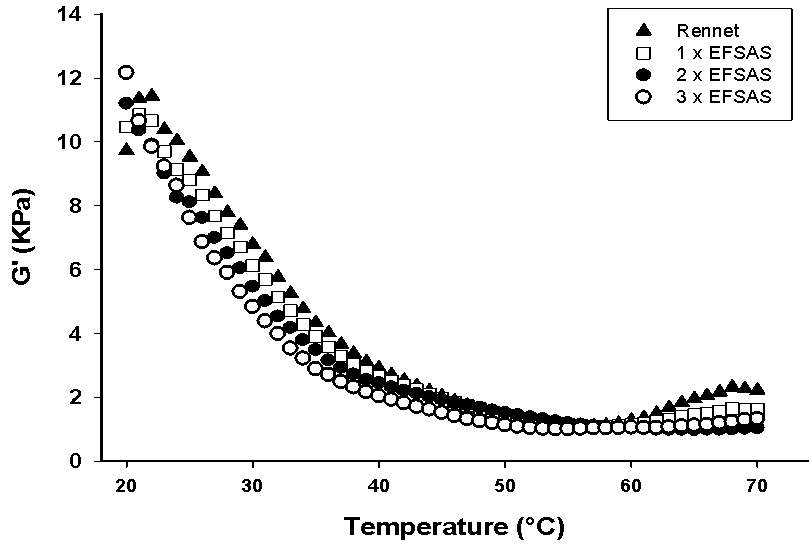
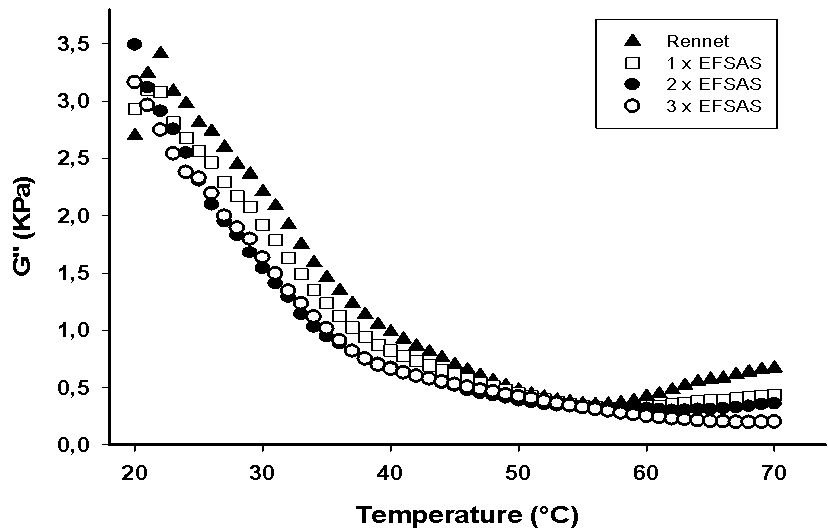
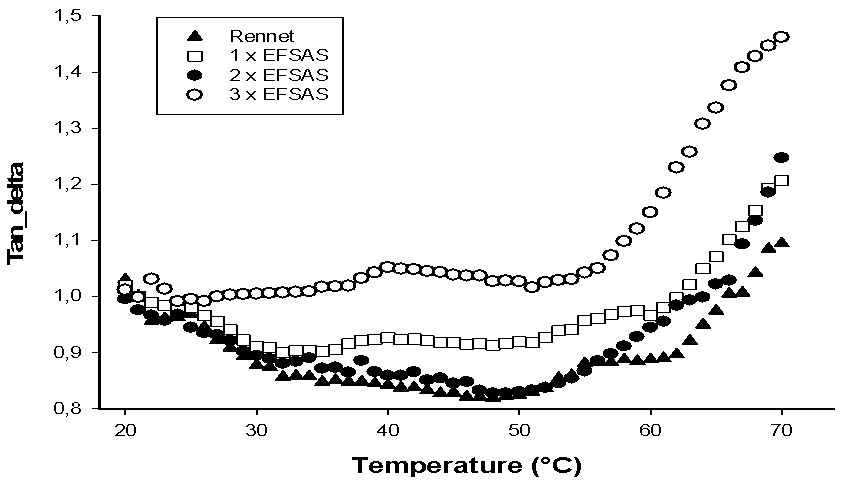
3.3. Cheese Rheological AnalysisTwo fundamental measurements are used to indicate dynamic rheology that is the elastic/storage modulus (G’) and the viscous/loss modulus (G’’). The phase delta is linked to these two parameters through the relation Tan_delta. For a perfect elastic solid G’’= 0 and for a viscous liquid without any elasticity G’= 0. All these measurements depend on temperature, concerned sample and oscillation frequency 33. For this study the cheese G’ modulus decreased significantly with temperature (22 - 50°C) and beyond this interval G’ remained constant up to 60°C, followed by a slight increment from 60 to 70°C (Figure 1). Cheese made with SAS fruit extract exhibited behaviour similar to that of cheese made with rennet as coagulant, concerning the elastic modulus. A similar trend was observed with G’’ (Figure 2). The study of heating effect on loss modulus showed that rennet-based cheese exhibited behaviour comparable to that of 1 x EFSAS. G’ values were high for rennet-based cheese. The viscoelastic modulus as a function of heating is presented in Figure 3. G’’/G’ values were constant from 20 to 50°C, at upper temperature values an increment was observed. Temperature at which tan-delta [cheese melting temperature] is equal to 1 corresponds to 23°C for cheese made with 3 x EFSAS, and about 60°C for three other cheeses. El-Bakry et al. 34 reported melting temperature around 63°C. As a matter of fact, the viscoelastic modulus increased with heating. This trend is similar to the findings reported by Montesinos-Herrero et al. 35. Meanwhile cheese made with 3 x EFSAS as coagulant showed the highest viscoelastic modulus and rennet-based cheese the lowest.
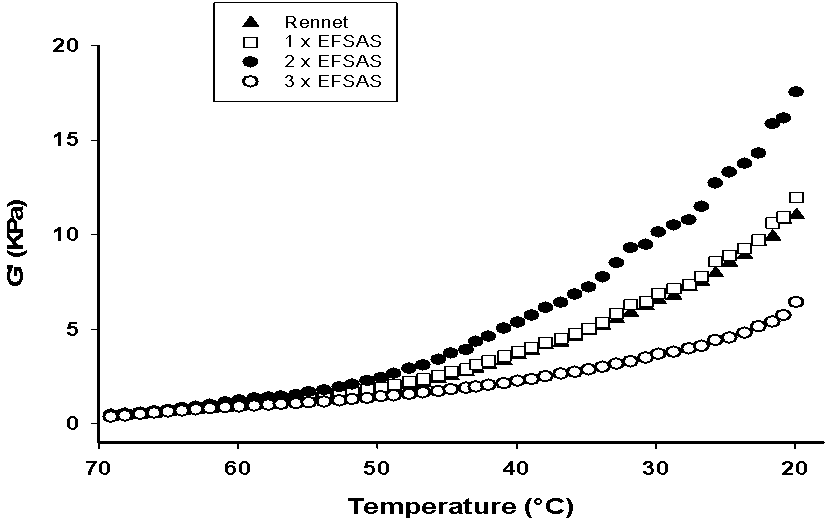
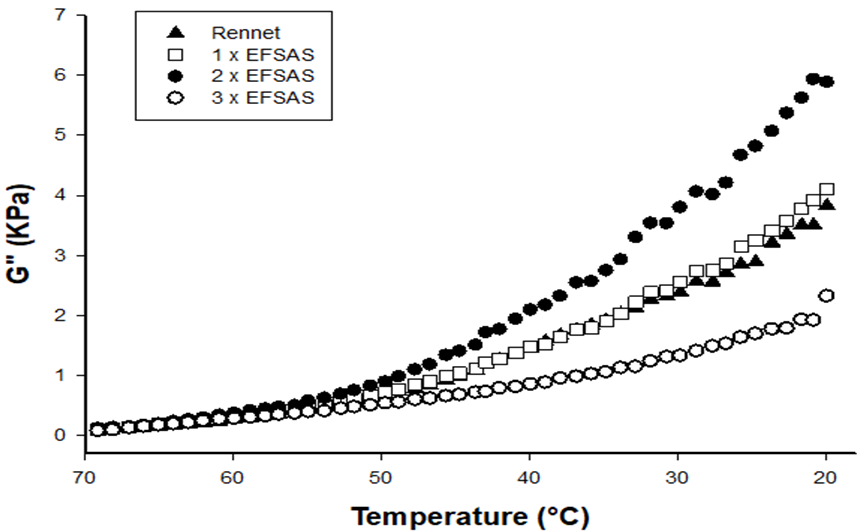
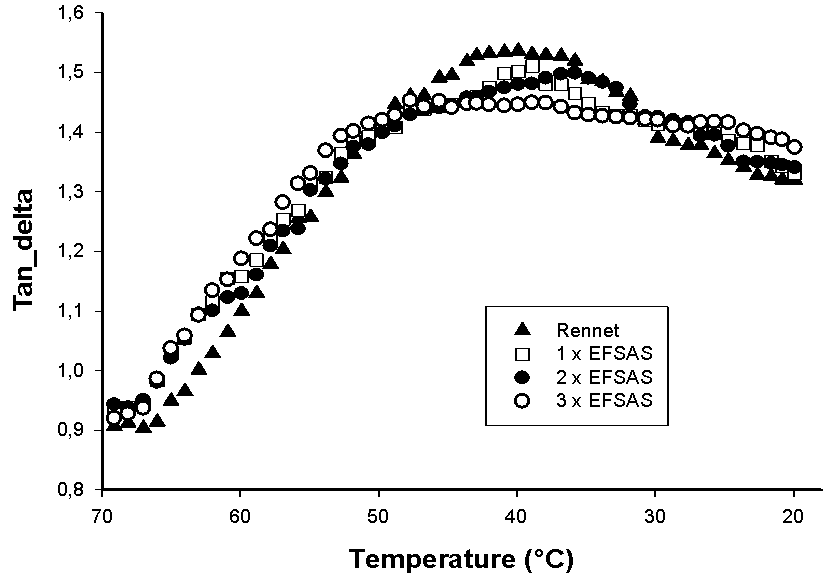
Cheese sample cooling effect (70 to 20°C) on G’ and G’’ was assessed. Results are presented in Figure 4, Figure 5 and Figure 6. The cooling effect on G’ was constant from 70 to 50°C and then increased for all cheeses. The same trend was observed for G’’. Cheese made with 2 x EFSAS as clotting agent showed the highest values of G’ and G’’ during cooling. Rennet-based cheese and cheese made from 1 x EFSAS were alike, concerning G’ and G’’, as noticed during heating. Viscoelastic modulus increased with cooling (70 - 50°C). Melting temperature went from 63°C for rennet-based cheese to 65°C for cheese made with SAS fruit extract. These results are close to those reported by El-Bakry et al. 34. Rheological test of cheeses showed that temperature (heating and cooling) influences viscosity parameters such as G’, G’’ and G’’/G’. Rennet-based cheese exhibited large similarity with that made from 1 x EFSAS as coagulant.


Table 4 shows textural profile parameters (hardness, cohesiveness, springiness, breakability, chewiness, and adhesive strength) of test - cheeses made with SAS fruit extract and rennet. Test-cheeses showed no ability to break into two or more pieces. This is due to their soft shape, in fact only cheese with high hardness level or very low cohesiveness degree can break 36. Some test-cheese textural parameters as hardness, cohesiveness, springiness, chewiness, and adhesive strength changed significantly as a function of coagulant type (P < 0.05). Cheese made with rennet was statistically harder than those made with SAS fruit extract as coagulant. This hardness decreased with SAS fruit extract quantity. Awad 37 indicated that hardness may decrease with cheese moisture. Test-cheeses showed a different behaviour. Cheese made with 1 x EFSAS was close to rennet-based cheese. Such a trend was observed for the following parameters: cohesiveness, springiness, chewiness, and adhesive strength. This result can be explained by the proteolysis difference between rennet and SAS fruit extract, according to the quantity of SAS fruit extract used. For instance, Fedrick 38 observed good correlation between hardness and proteolysis on cheddar cheese textural profile.
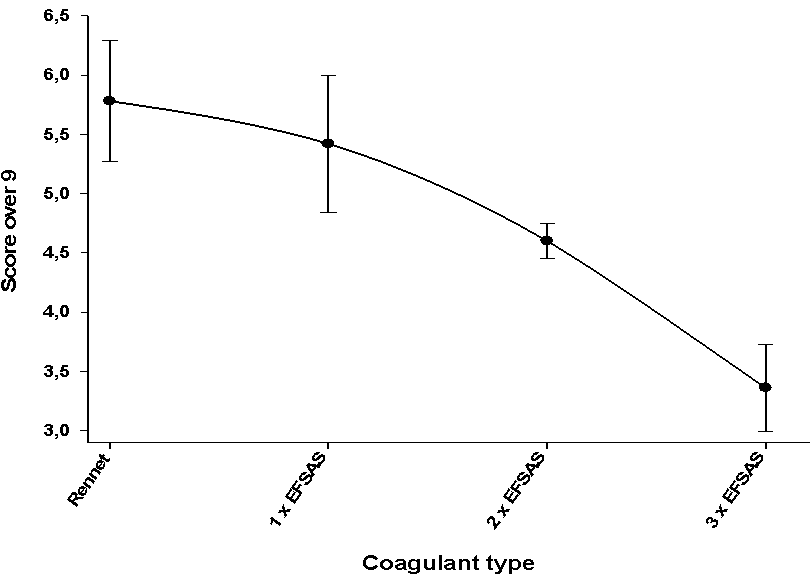
3.4. Sensory AnalysisFigure 7 shows preference variation for test-cheeses assessed by 25 panellists, giving scores based on a category scale from 1 to 9. Average score obtained with rennet-based cheese was not significantly different from that made with 1 x EFSAS (P > 0.05). Inversely, cheeses made with 2 x and 3 x EFSAS were statistically lower than the two other cheeses (P < 0,05). Plant extracts are renowned for their non-specific proteolysis, generating unwanted final products 11. Test-cheese appreciation decreased as a function of SAS fruit extract quantity, with a strong negative and significant correlation (-0.99; P < 0,001) between recorded test-cheese scores and SAS fruit extracts used for its manufacturing. Proportion control in used plant extracts allows obtaining food product with a good sensory quality 8. Thus, cheese made with 1 x EFSAS (that is 440 mg per L of milk) was appreciated as much as rennet-based cheese.

Table 5 presents mean scores corresponding to some sensory attribute intensity relatively to cheese (made with rennet and SAS fruit extract) colour, taste, odour and texture. The white colour scored best values for 3 x EFSAS (4.25 ± 0.78) and rennet (5.29 ± 0.87), followed by the yellow colour from 2.46 ± 0.37 (rennet) to 4.05 ± 0.69 (3 x EFSAS). The brown colour varied from 2.53 ± 0.15 (1 x EFSAS) to 3.77 ± 0.38 (3 x EFSAS). Similarity was observed between cheeses made with rennet and 1 x EFSAS (p > 0.05). Colour plays a major role in food product preference 39. Thus, a high significant and positive correlation (0.99; p = 0.002) was noted between white colour and cheese preference. These results show that contrarily to yellow and brown colours, with colour cheese influenced positively panel affection for test-cheeses. However, final product taste is one of the major challenges to accept when manufacturing cheese with plat extracts.
Mean scores related to bitter and sour tastes and also related to zebu milk were recorded. It varied from 2.15 ± 0.72 (rennet) to 5.89 ± 0.56 (3 x EFSAS); from 3.16 ± 0.28 (rennet) to 4.38 ± 0.25 (3 x EFSAS) and from 2.47 ± 0.43 (3 x EFSAS) to 4.03 ± 1.12 (1 x EFSAS) respectively for bitterness and sourness intensity and zebu milk characteristic odour. No significant difference was revealed between cheeses made with rennet and 1 x EFSAS (p > 0.05). The difference was significant with cheeses from 2 x and 3 x EFSAS (p< 0.05). Bitterness increased with plant extract quantity linked to casein β hydrolysis leading to a release of bitter peptides 9. Sourness followed the same trend because of the supplementary supply in lactic acid bacteria present plant extract. The zebu milk characteristic taste intensity exhibited an inverse look; it could have been masked by bitterness and sourness. Caspia et al. 40 established a correlation between taste and cheese preference, that is product-based and consumer-based tests. Thus, bitterness showed a negative strong and significant correlation (-0.99; p = 0.008) with cheese preference. Cheese sourness was negatively correlated (-0.95, p = 0.04) with cheese preference. This relation was strong, positive and significant (0.97, p = 0.02) for zebu milk characteristic taste. These results agree with panellist comments indexing unanimously bitterness as the main factor for cheese depreciation. Odour was indicated as a reason of cheese preference.
Cheese odour perception is due to volatile components of which alcohols, ketones, ester and carboxylic acids are the most abundant 41. Galina et al. 21 identified 20 methyl esters in zebu milk-based cheeses. Average scores recorded for zebu milk characteristic odour varied from 3.01 ± 0.65 (3 x EFSAS) to 5.23 ± 1.29 (rennet); from 1.29 ± 0.05 (rennet) to 3.08 ± 0.61 (3 x EFSAS) concerning SAS fruit characteristic odour and from 2.38 ± 0.48 (3 x EFSAS) to 3.21 ± 1.06 (rennet) for odour stability. No significant difference was observed for odour stability. Whatever the coagulant type (p > 0.05), inversely to the other two sensory characteristics linked to odour (p < 0.05). zebu milk characteristic odour that recorded the best scores was similar for both the cheese made with rennet and 1 x EFSAS. As for SAS fruit characteristic odour, the worst scores were recorded. A strong positive (0.97) and significant (p = 0.03) correlation was observed between cheese preference and cheese odour. SAS fruit characteristic odour showed a negative (-0.87) and non-significant (p = 0.12) correlation with cheese preference. A positive (0.95) and significant (p = 0.04) correlation was noted between cheese odour stability and preference. These results suggest that the use of SAS fruit extract as coagulant did not release aroma compounds able to mask zebu milk characteristic odour. Meanwhile, texture remains the sensory parameter limiting plant extract use in cheese dairy.
Hardness mean scores varied from 3.78 ± 0.46 (3 x EFSAS) to 5.81 ± 0.43 (rennet); while those of soft texture were from 3.45 ± 0.28 (rennet) to 5.30 ± 1.17 (3 x EFSAS) and from 2.20 ± 0.19 (rennet) to 4.92 ± 0.71 (3 x EFSAS) for cheese friability. The three attributes linked to texture showed a significant difference with cheese preference (p < 0.05). Texture analysis allowed distinguishing cheeses made with rennet from cheeses made with SAS fruit extract. This indicates proteolysis importance on textural properties. General or non-specific hydrolysis of casein limits curdle strengthening leading to curdles that are soft or friable 22. Thus, scores recorded by cheeses made with 1 x EFSAS was closer to cheeses made with rennet. Hardness intensity showed the highest scores. This can be explained by the fact that cheese spent a 14 days period at 4°C before being analysed. Galan et al. 32 established strong and negative correlation between proteolysis and hardness intensity. This is linked to cheese preference with strong, positive (0.95) and significant (p = 0.04) correlation. A strong, negative (-0.98) and significant (p = 0.02) correlation was observed between soft texture intensity and cheese preference. Cheeses’ friability intensity was negatively (-0.89) and significantly correlated with their preference. After all, scores related to colour intensity, taste, odour and texture are correlated to cheese preference. These results, associated with panel comments, indicate that bitterness intensity was the major factor of cheese debasement when the white colour intensity was the major factor of its appreciation. These sensory attributes are closely linked to overall acceptability 40.

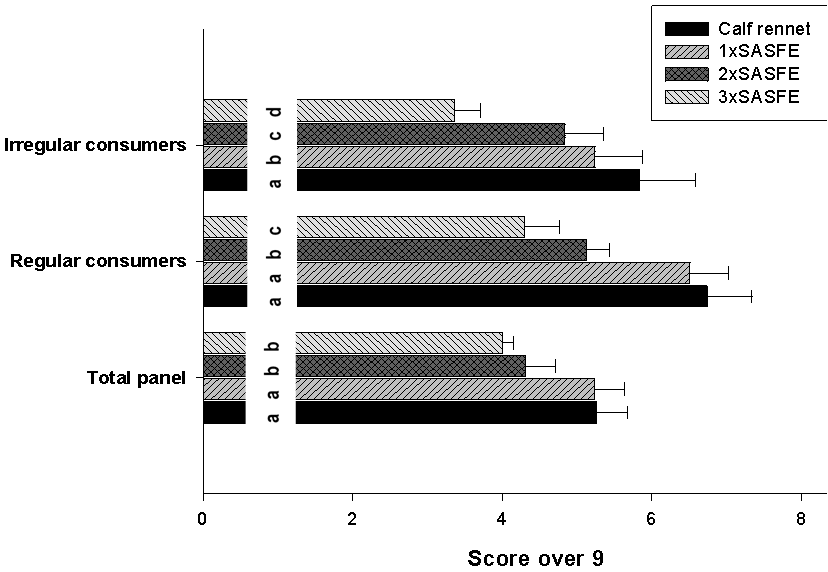
For more consumers, food acceptability depends on its sensory attributes. Food acceptability is more a test for consumers’ affection in favour of a product. Figure 8 presents overall acceptability of cheeses made with rennet and SAS fruit extract. Cheese appreciation made by panel showed no significant difference between cheeses made with rennet and 1 x EFSAS (p > 0.05). The same trend was observed for cheese regular consumers. An opposite trend was observed for occasional consumers. Cheeses with rennet and 1 x EFSAS recorded best scores for cheese overall acceptability.
SAS fruit extract used as coagulant did not affect moisture, protein, pH, fat, ash and lactose contents for test-cheeses. On the other hand, lactic acid, soluble nitrogen and non-protein contents increased significantly with SAS fruit extract. Cheeses were from soft paste type. SAS fruit extracts did not bring supplementary microbial load liable to contaminate test-cheeses. For rheological properties, viscoelastic modulus was similar to both the cheeses made with rennet and 1 x EFSAS. Textural profile parameters decreased with SAS fruit extract as coagulant. For sensory analysis, there was correlation between preference and sensory attributes. Bitterness affected mostly cheese debasement that increased as a function of SAS fruit extract quantity. Zebu milk white colour and characteristic odour better favoured test-cheese acceptability. Cheese made with 1 x EFSAS was closer to that made with rennet, on nutritional and technological plans.
We would like to thank Dominique VERCAIGNE-MARKO Professor Emeritus, University of Science and Technology, Lille 1, France, for technical assistance.
All authors declare no conflict of interest.
| [1] | Miller, G. D., Jarvis, J. K. & McBean, L. D. (2007). Handbook of Dairy Foods and Nutrition. 3rd Edition, Taylor & Francis Group, CRC Press. 386 pages. New York, USA. | ||
| In article | |||
| [2] | Steijns, J. M. (2008). Dairy products and health: Focus on their constituents or on the matrix? International Dairy Journal, 18, 425-435. | ||
| In article | View Article | ||
| [3] | Jacob, M., Jaros, D. & Rohm, H. (2011). Recent advances in milk clotting enzymes. International Journal of Dairy Technology, 64, 14-33. | ||
| In article | View Article | ||
| [4] | Mazorra-Manzano, M. A., Moreno-Hernández, J. M., Ramírez-Suarez, J. C., Torres-Llanez, M. J., González-Córdova, A. F. & Vallejo-Córdoba, B. (2013). Sour orange Citrus aurantium L. flowers: A new vegetable source of milk-clotting proteases. LWT - Food Science and Technology, 54, 325-330. | ||
| In article | View Article | ||
| [5] | Aworh, O. C. (2008). The Role of Traditional Food Processing Technologies. In National Development: theWest African Experience. In: Using Food Science and Technology to Improve Nutrition and Promote National Development. Editors: Robertson G.L. and Lupien, J.R., International Union of Food Science and Technology. | ||
| In article | |||
| [6] | Lopes, A., Teixeira, G., Liberato, M. C., Pais, M. S. & Clemente, A. (1998). New vegetal sources for milk-clotting enzymes. Journal of Molecular Catalysis B: Enzymatic, 5, 63-68. | ||
| In article | View Article | ||
| [7] | Roseiro, L. B., Barbosa, M., Mames, J. & Wilbey, A. (2003). Cheese-making with vegetable coagulants: the use of Cynara L. for the Production of ovine milk cheese. International Journal of Dairy Technology, Review, 56, 76-85. | ||
| In article | View Article | ||
| [8] | Yousif, B. H., McMahon, D. J. & Shammet, K. M. (1996). Milk-clotting enzyme from Solanum dubium plant. International Dairy Journal, 6, 637- 644. | ||
| In article | View Article | ||
| [9] | Fox, P. F., Guinee, T. P., Cogan, T. M. & McSweeney, P. L. H. (2000). Fundamentals of Cheese Science. (Colilla, J. ed.), Aspen Publishers Inc, 543p., Gaithersburg, Maryland, USA. | ||
| In article | |||
| [10] | Agboola, S. O., Chan, H. H., Zhao, J. & Rehman, A. (2009). Can the use of Australian cardoon (Cynara cardunculus L.) coagulant overcome the quality problems associated with cheese made from ultrafiltered milk? LWT - Food Science and Technology. 42, 1352-1359. | ||
| In article | View Article | ||
| [11] | Silva, S. V. & Malcata, F. X. (2005). Studies pertaining to coagulant and proteolytic activities of plant proteases from Cynara cardunculus. Food Chemistry, 89, 19-26. | ||
| In article | View Article | ||
| [12] | Guiama, V. D., Beka, G. R., Ngah, E., Libouga, G. D., Vercaigne-Marko, D. & Mbofung C. M. (2014). Milk-coagulating extract produced from Solanum aethiopicum Shum fruits: multivariate techniques of preparation, thermal stability and effect on milk solids recovery in curd. | ||
| In article | View Article | ||
| [13] | Sanchez-Mata, M.-C., Yokoyama, W. E., Hong, Y.-J. & Prohens, J. (2010). α-Solasonine and α-Solamargine Contents of Gboma (Solanum macrocarpon L.) and Scarlet (Solanum aethiopicum L.) Eggplants. Journal of Agriculture and Food Chemistry, 58, 5502-5508. | ||
| In article | View Article PubMed | ||
| [14] | Imele, H., Fonteh, F. A., Bayemi, H., Nkouam Kamdem, S. (2005). Utilisation de la pepsine de poulet dans la fabrication du fromage artisanal dans les hauts plateaux de l’ouest du Cameroun. Revue scientifique de IRAD. Yaoundé du 25-28 juillet 2005. (eds): A. Njoya, M. Havard, V.N. Tanya, J. Tonyé, B. Fohaom, S. Nyassé, J.M. Ngeve, L. Nounamo. pp124. | ||
| In article | |||
| [15] | FAO (2010). Internet document - URL http://faostat.fao.org/ site/610/default.aspx#ancor. Accessed 10 january 2013. | ||
| In article | |||
| [16] | AOAC (1990). Official Methods of Analysis, 15th edition, Association of Official Analytical Chemists, Washington, D. C., USA. | ||
| In article | |||
| [17] | CIE. (1986). Commission Internationale d’Eclairage - colorimetry. Publication n° 15-2. 2nd Edition. CIE, Paris France. | ||
| In article | |||
| [18] | Queiroga et al., 2013. | ||
| In article | |||
| [19] | Stone, L. H. J. & Sidel, L. (1993). Sensory Evaluation Practices. 2nd edition. Academic Press, London, UK. | ||
| In article | |||
| [20] | Guiama, V. D. (2015). Development of functional cheese made with coagulant from Solanum aethiopicum Shum fruits. Ph.D thesis. University of Ngaoundéré. 258 pages. | ||
| In article | |||
| [21] | Galina, M. A, Osnaya, F., Cuchillo, H. M. & Haenlein, G. F. W. (2007). Cheese quality from milk of grazing or indoor fed Zebu cow and alpine crossbred goats. Small Ruminant Research, 71, 264-272. | ||
| In article | View Article | ||
| [22] | Farkye, N. Y. (2004). Cheese technology. International Journal of Dairy Technology, 57, 91-98. | ||
| In article | View Article | ||
| [23] | Prados, F., Pino, A., Rincon, F., Vioque, M. & Fernandez-Salguero, J. (2006). Influence of frozen storage on some characteristics of ripened Manchego-type cheese manufactured with a powdered vegetable coagulant and rennet. Food Chemistry, 95, 677-682. | ||
| In article | View Article | ||
| [24] | McSweeney, P. L. H. (2007). Principal families of cheese. In: Cheese problems solved. Edited by McSweeney, P. L. H. Padstow. 176-177pp. Cornwall, England. | ||
| In article | View Article | ||
| [25] | O'brien, N. M. & O'connor, T. P. (2004). Nutritional aspects of cheese. In: Cheese: Chemistry, Physics and Microbiology. Volume 1 General Aspects, 3rd edition. Edited by P. F. Fox, P. L. H. McSweeney, T. M. Cogan & T. P. Guinee. 573-581pp. Elsevier Academic Press, Amsterdam, Netherlands. | ||
| In article | |||
| [26] | Martley, F. G. & Michel, V. (2001). Pinkish colouration in Cheddar cheese - description and factors contributing to its formation. Journal of Dairy research, 68, 327-332. | ||
| In article | View Article PubMed | ||
| [27] | Woolfe, J. A. (1992). Sweet potato an untapped food resource. Cambridge: Cambridge, University Press. 1-12. | ||
| In article | |||
| [28] | Vargas, M., Chafer, M., Albors, A., Chiralt, A. & Gonzalez-Martinez, C. (2008). Physicochemical and sensory characteristics of yoghurt produced from mixture of cows’ and goats’ milk. International Dairy Journal, 18, 1146-1152. | ||
| In article | View Article | ||
| [29] | Beresford, T. P., Ftzsimons, N. A., Brennan, N. L. & Cogan, T. M. (2001). Recent advances in cheese microbiology. International Dairy Journal, 11, 259-274. | ||
| In article | View Article | ||
| [30] | Osman-Khir, S. E. (2009). Effect of Solanum dubium Fruit (Gubbain) Extract on the Milk Clotting and Quality of White Cheese (Gibna Bayda). Ph.D thesis. University of Khartoum - Sudan. 162 pages. | ||
| In article | |||
| [31] | CE (2007). Règlement (CE) No 1441/2007 de la Commission du 5 décembre 2007 modifiant le règlement (CE) no 2073/2005 concernant les critères microbiologiques applicables auxdenrées alimentaires. Journal Officiel de l’Union Européenne, 322, 23-26. | ||
| In article | |||
| [32] | Galan, E., Prados, F., Pino, A., Tejada, L. & Fernandez-Salguero, J. (2008). Influence of différent amounts of vegetable coagulant from cardoon Cynara cardunculus and calf rennet on the proteolysis and sensory characteristics of cheeses made with sheep milk. International Dairy Journal, 18, 93-98. | ||
| In article | View Article | ||
| [33] | Foegeding, E. A., Brown, J., Drake, M. A., Daubert, C. R. (2003). Sensory and mechanical aspects of cheese texture. International Dairy Journal 13, 585-591. | ||
| In article | View Article | ||
| [34] | El-Bakry, M., Abraham, J., Cerda, A., Barrena, R. Ponsá, S., Gea, T. & Sánchez, A. (2010). Effects of emulsifying salts reduction on imitation cheese manufacture and functional properties. Journal of Food Engineering 100, 596-603. | ||
| In article | View Article | ||
| [35] | Montesinos-Herrero, C., Cottell, D. C., O’Riordan, E. D. & O’Sullivan, M. (2006). Partial replacement of fat by functional fibre in imitation cheese: Effects on rheology and microstructure. International Dairy Journal, 16, 910-919. | ||
| In article | View Article | ||
| [36] | IDF (1991). Rheological and fracture proprieties of cheese 1991. Bulletin, International Dairy Federation, 268, 1-67. | ||
| In article | |||
| [37] | Awad, S. (2006). Texture and flavour development in Ras cheese made from raw and pasteurized milk. Food chemistry, 97, 394-400. | ||
| In article | View Article | ||
| [38] | Fedrick, I. A. (1987). Technology and economics of the accelerated ripening of Cheddar cheese, Aust. J. Dairy Technol. 42, 33-36. | ||
| In article | |||
| [39] | Desai, A. D., Kulkarni, S. S., Sahoo, A. K., Ranveer, R. C. & Dandge, P. B. (2010). Effect of supplementation of malted ragi flour on the nutritional and sensory characteristics. Advanced Journal of Food Science and Technology, 57, 98-115. | ||
| In article | |||
| [40] | Caspia, E. L., Coggins, P. C., Schilling, M. W., Yoon, Y. & White, C. H. (2006). The relationship between consumer acceptability and descriptive sensory attributes in Cheddar cheese. Journal of Sensory Studies, 21, 112-127. | ||
| In article | View Article | ||
| [41] | Abilleira, E., Schlichtherle-Cerny, H., Virto, M., Renobales, M. & Barron, L. J. R. (2010). Volatile composition and aroma-active compound of farmhouse Idiazabal cheese made in winter and spring. International dairy Journal, 20, 537-544. | ||
| In article | View Article | ||
Published with license by Science and Education Publishing, Copyright © 2021 Valentin Désiré GUIAMA, Juliette KOUBE, Esther NGAH, Robert Germain BEKA and Jean Marcel BINDZI
 This work is licensed under a Creative Commons Attribution 4.0 International License. To view a copy of this license, visit
http://creativecommons.org/licenses/by/4.0/
This work is licensed under a Creative Commons Attribution 4.0 International License. To view a copy of this license, visit
http://creativecommons.org/licenses/by/4.0/
| [1] | Miller, G. D., Jarvis, J. K. & McBean, L. D. (2007). Handbook of Dairy Foods and Nutrition. 3rd Edition, Taylor & Francis Group, CRC Press. 386 pages. New York, USA. | ||
| In article | |||
| [2] | Steijns, J. M. (2008). Dairy products and health: Focus on their constituents or on the matrix? International Dairy Journal, 18, 425-435. | ||
| In article | View Article | ||
| [3] | Jacob, M., Jaros, D. & Rohm, H. (2011). Recent advances in milk clotting enzymes. International Journal of Dairy Technology, 64, 14-33. | ||
| In article | View Article | ||
| [4] | Mazorra-Manzano, M. A., Moreno-Hernández, J. M., Ramírez-Suarez, J. C., Torres-Llanez, M. J., González-Córdova, A. F. & Vallejo-Córdoba, B. (2013). Sour orange Citrus aurantium L. flowers: A new vegetable source of milk-clotting proteases. LWT - Food Science and Technology, 54, 325-330. | ||
| In article | View Article | ||
| [5] | Aworh, O. C. (2008). The Role of Traditional Food Processing Technologies. In National Development: theWest African Experience. In: Using Food Science and Technology to Improve Nutrition and Promote National Development. Editors: Robertson G.L. and Lupien, J.R., International Union of Food Science and Technology. | ||
| In article | |||
| [6] | Lopes, A., Teixeira, G., Liberato, M. C., Pais, M. S. & Clemente, A. (1998). New vegetal sources for milk-clotting enzymes. Journal of Molecular Catalysis B: Enzymatic, 5, 63-68. | ||
| In article | View Article | ||
| [7] | Roseiro, L. B., Barbosa, M., Mames, J. & Wilbey, A. (2003). Cheese-making with vegetable coagulants: the use of Cynara L. for the Production of ovine milk cheese. International Journal of Dairy Technology, Review, 56, 76-85. | ||
| In article | View Article | ||
| [8] | Yousif, B. H., McMahon, D. J. & Shammet, K. M. (1996). Milk-clotting enzyme from Solanum dubium plant. International Dairy Journal, 6, 637- 644. | ||
| In article | View Article | ||
| [9] | Fox, P. F., Guinee, T. P., Cogan, T. M. & McSweeney, P. L. H. (2000). Fundamentals of Cheese Science. (Colilla, J. ed.), Aspen Publishers Inc, 543p., Gaithersburg, Maryland, USA. | ||
| In article | |||
| [10] | Agboola, S. O., Chan, H. H., Zhao, J. & Rehman, A. (2009). Can the use of Australian cardoon (Cynara cardunculus L.) coagulant overcome the quality problems associated with cheese made from ultrafiltered milk? LWT - Food Science and Technology. 42, 1352-1359. | ||
| In article | View Article | ||
| [11] | Silva, S. V. & Malcata, F. X. (2005). Studies pertaining to coagulant and proteolytic activities of plant proteases from Cynara cardunculus. Food Chemistry, 89, 19-26. | ||
| In article | View Article | ||
| [12] | Guiama, V. D., Beka, G. R., Ngah, E., Libouga, G. D., Vercaigne-Marko, D. & Mbofung C. M. (2014). Milk-coagulating extract produced from Solanum aethiopicum Shum fruits: multivariate techniques of preparation, thermal stability and effect on milk solids recovery in curd. | ||
| In article | View Article | ||
| [13] | Sanchez-Mata, M.-C., Yokoyama, W. E., Hong, Y.-J. & Prohens, J. (2010). α-Solasonine and α-Solamargine Contents of Gboma (Solanum macrocarpon L.) and Scarlet (Solanum aethiopicum L.) Eggplants. Journal of Agriculture and Food Chemistry, 58, 5502-5508. | ||
| In article | View Article PubMed | ||
| [14] | Imele, H., Fonteh, F. A., Bayemi, H., Nkouam Kamdem, S. (2005). Utilisation de la pepsine de poulet dans la fabrication du fromage artisanal dans les hauts plateaux de l’ouest du Cameroun. Revue scientifique de IRAD. Yaoundé du 25-28 juillet 2005. (eds): A. Njoya, M. Havard, V.N. Tanya, J. Tonyé, B. Fohaom, S. Nyassé, J.M. Ngeve, L. Nounamo. pp124. | ||
| In article | |||
| [15] | FAO (2010). Internet document - URL http://faostat.fao.org/ site/610/default.aspx#ancor. Accessed 10 january 2013. | ||
| In article | |||
| [16] | AOAC (1990). Official Methods of Analysis, 15th edition, Association of Official Analytical Chemists, Washington, D. C., USA. | ||
| In article | |||
| [17] | CIE. (1986). Commission Internationale d’Eclairage - colorimetry. Publication n° 15-2. 2nd Edition. CIE, Paris France. | ||
| In article | |||
| [18] | Queiroga et al., 2013. | ||
| In article | |||
| [19] | Stone, L. H. J. & Sidel, L. (1993). Sensory Evaluation Practices. 2nd edition. Academic Press, London, UK. | ||
| In article | |||
| [20] | Guiama, V. D. (2015). Development of functional cheese made with coagulant from Solanum aethiopicum Shum fruits. Ph.D thesis. University of Ngaoundéré. 258 pages. | ||
| In article | |||
| [21] | Galina, M. A, Osnaya, F., Cuchillo, H. M. & Haenlein, G. F. W. (2007). Cheese quality from milk of grazing or indoor fed Zebu cow and alpine crossbred goats. Small Ruminant Research, 71, 264-272. | ||
| In article | View Article | ||
| [22] | Farkye, N. Y. (2004). Cheese technology. International Journal of Dairy Technology, 57, 91-98. | ||
| In article | View Article | ||
| [23] | Prados, F., Pino, A., Rincon, F., Vioque, M. & Fernandez-Salguero, J. (2006). Influence of frozen storage on some characteristics of ripened Manchego-type cheese manufactured with a powdered vegetable coagulant and rennet. Food Chemistry, 95, 677-682. | ||
| In article | View Article | ||
| [24] | McSweeney, P. L. H. (2007). Principal families of cheese. In: Cheese problems solved. Edited by McSweeney, P. L. H. Padstow. 176-177pp. Cornwall, England. | ||
| In article | View Article | ||
| [25] | O'brien, N. M. & O'connor, T. P. (2004). Nutritional aspects of cheese. In: Cheese: Chemistry, Physics and Microbiology. Volume 1 General Aspects, 3rd edition. Edited by P. F. Fox, P. L. H. McSweeney, T. M. Cogan & T. P. Guinee. 573-581pp. Elsevier Academic Press, Amsterdam, Netherlands. | ||
| In article | |||
| [26] | Martley, F. G. & Michel, V. (2001). Pinkish colouration in Cheddar cheese - description and factors contributing to its formation. Journal of Dairy research, 68, 327-332. | ||
| In article | View Article PubMed | ||
| [27] | Woolfe, J. A. (1992). Sweet potato an untapped food resource. Cambridge: Cambridge, University Press. 1-12. | ||
| In article | |||
| [28] | Vargas, M., Chafer, M., Albors, A., Chiralt, A. & Gonzalez-Martinez, C. (2008). Physicochemical and sensory characteristics of yoghurt produced from mixture of cows’ and goats’ milk. International Dairy Journal, 18, 1146-1152. | ||
| In article | View Article | ||
| [29] | Beresford, T. P., Ftzsimons, N. A., Brennan, N. L. & Cogan, T. M. (2001). Recent advances in cheese microbiology. International Dairy Journal, 11, 259-274. | ||
| In article | View Article | ||
| [30] | Osman-Khir, S. E. (2009). Effect of Solanum dubium Fruit (Gubbain) Extract on the Milk Clotting and Quality of White Cheese (Gibna Bayda). Ph.D thesis. University of Khartoum - Sudan. 162 pages. | ||
| In article | |||
| [31] | CE (2007). Règlement (CE) No 1441/2007 de la Commission du 5 décembre 2007 modifiant le règlement (CE) no 2073/2005 concernant les critères microbiologiques applicables auxdenrées alimentaires. Journal Officiel de l’Union Européenne, 322, 23-26. | ||
| In article | |||
| [32] | Galan, E., Prados, F., Pino, A., Tejada, L. & Fernandez-Salguero, J. (2008). Influence of différent amounts of vegetable coagulant from cardoon Cynara cardunculus and calf rennet on the proteolysis and sensory characteristics of cheeses made with sheep milk. International Dairy Journal, 18, 93-98. | ||
| In article | View Article | ||
| [33] | Foegeding, E. A., Brown, J., Drake, M. A., Daubert, C. R. (2003). Sensory and mechanical aspects of cheese texture. International Dairy Journal 13, 585-591. | ||
| In article | View Article | ||
| [34] | El-Bakry, M., Abraham, J., Cerda, A., Barrena, R. Ponsá, S., Gea, T. & Sánchez, A. (2010). Effects of emulsifying salts reduction on imitation cheese manufacture and functional properties. Journal of Food Engineering 100, 596-603. | ||
| In article | View Article | ||
| [35] | Montesinos-Herrero, C., Cottell, D. C., O’Riordan, E. D. & O’Sullivan, M. (2006). Partial replacement of fat by functional fibre in imitation cheese: Effects on rheology and microstructure. International Dairy Journal, 16, 910-919. | ||
| In article | View Article | ||
| [36] | IDF (1991). Rheological and fracture proprieties of cheese 1991. Bulletin, International Dairy Federation, 268, 1-67. | ||
| In article | |||
| [37] | Awad, S. (2006). Texture and flavour development in Ras cheese made from raw and pasteurized milk. Food chemistry, 97, 394-400. | ||
| In article | View Article | ||
| [38] | Fedrick, I. A. (1987). Technology and economics of the accelerated ripening of Cheddar cheese, Aust. J. Dairy Technol. 42, 33-36. | ||
| In article | |||
| [39] | Desai, A. D., Kulkarni, S. S., Sahoo, A. K., Ranveer, R. C. & Dandge, P. B. (2010). Effect of supplementation of malted ragi flour on the nutritional and sensory characteristics. Advanced Journal of Food Science and Technology, 57, 98-115. | ||
| In article | |||
| [40] | Caspia, E. L., Coggins, P. C., Schilling, M. W., Yoon, Y. & White, C. H. (2006). The relationship between consumer acceptability and descriptive sensory attributes in Cheddar cheese. Journal of Sensory Studies, 21, 112-127. | ||
| In article | View Article | ||
| [41] | Abilleira, E., Schlichtherle-Cerny, H., Virto, M., Renobales, M. & Barron, L. J. R. (2010). Volatile composition and aroma-active compound of farmhouse Idiazabal cheese made in winter and spring. International dairy Journal, 20, 537-544. | ||
| In article | View Article | ||