Leafy vegetables contain nutrients and micronutrients that are essential for the proper functioning of the body of living things. The latter can be affected when cooking leafy vegetables. The objective of this work was therefore to study the impact of varying cooking parameters of sweet potato leaves on body mass and hematological and biochemical parameters in the rats. To do this, the sweet potato leaves were cooked in 500 ml of water according to three cooking conditions by varying the leaf quantity and the cooking time: cooking n° 1 (300 g; 7.93 min), cooking n° 2 (400 g; 10 min) and cooking n° 3 (441.4 g; 15.07 min). Contents of protein, fiber, vitamin C, β-carotene, vitamin B9, polyphenol, flavonoid, iron and zinc of the precooked leaves were determined. The female rats were divided on the basis of their body weight into 4 groups of 5 rats each and were fed with pellets (reference food). The control batch received distilled water. Batches 1, 2 and 3 received, by force-feeding for 30 days, aqueous extracts of sweet potato leaves from cooking n° 1, cooking n° 2 and cooking n° 3, respectively. During the experiment, three blood samples were taken (day 0, day 15 and day 30) to assess the levels of white blood cells, red blood cells, hemoglobin, blood platelets and serum iron, and blood sugar. The results indicated that the aqueous extracts of precooked sweet potato leaves caused an increase in weight and, levels of hematological parameters and serum iron, and a decrease in blood sugar in rats. In addition, the cooking conditions of sweet potato leaves significantly influenced the weight and the levels of hemoglobin, blood platelet and serum iron in rats; while they did not significantly affect blood sugar and levels of white blood cell and red blood cell in rats. The cooking condition which gave the most satisfactory results was cooking n° 3 (441.4 g; 15.07 min). These results suggest that sweet potato leaves could be used in the treatment of anaemia, and hypertension, hence their importance in nutrition and health. However, it would be necessary to adopt a cooking condition that best preserves the virtues of sweet potato leaves.
Leafy vegetables are rich in micronutrients and occupy an important place in the eating habits of Ivorian populations 1. Indeed, in addition to their nutritional interests, they present a significant economic and social interest 2. This is explained by their relatively low cost, the ease and speed of their preparations and their availability on the market regardless of the time of year 3.
Sweet potato leaves are one of the most consumed leafy vegetables in Ivory Coast because, according to Agbo et al. 4, approximately 70 % of households in Côte d'Ivoire consume them. Sweet potato leaves are generally rich in proteins, vitamins (A, C and B9), minerals (iron, magnesium, phosphorus, manganese, etc.), dietary fibers, polyphenols and flavonoids 5, 6. Thanks to its bioactive compounds, they contribute to improving the state of health of the population 7. Moreover, Mbaeyi-Nwaoha and Emejulu 5 revealed that sweet potato leaves have an antimicrobial property against Staphylococcus aureus, and Aspergillus niger, thanks to the phytochemicals (flavonoid, tannin, alkali, steroid) present in the extract.
In addition, the consumption of sweet potato leaves impacts on hematological and biochemical parameters, possibly improving blood formulation and blood sugar. Indeed, a study conducted by Hasan et al. 8 reported that the aqueous extract of sweet potato leaves increased the blood platelet level in rats. Olowu et al. 9 reported hypoglycaemic activity in the aqueous extract of sweet potato leaves. As for Osime et al. 10, they reported that sweet potato leaf extract increased hematological parameters in rabbits. However, these studies focused on extracts from raw sweet potato leaves.
In general, sweet potato leaves are eaten cooked. Zoro et al. 6 showed that bleaching sweet potato leaves decreased the contents of vitamin C, polyphenol, carotenoid and increased total fiber. Thus, the cooking conditions (cooking method, cooking time, leaves quantity, etc.) applied to these leaves could influence the nutrient content. Moreover, Gouekou et al. 11 who varied the quantity of sweet potato leaves and the cooking time revealed three optimal conditions for water cooking: (300 g; 7.93 min), (400 g; 10 min) and (441.4 g; 22.07 min). Also, to deepen this previous study, it would be appropriate to assess the impact of precooked sweet potato leaf under its three conditions (leaves quantity; cooking time) on hematological and biochemical parameters.
The plant material consisted of sweet potato (Ipomoea batatas) leaves. These leafy vegetables were purchased from 10 traders in the Adjamé Gouro market (Abidjan, Ivory Coast). This market is a wholesale market for foods of plant origin. Rotten leaves, leaf debris and foreign bodies were removed by hand sorting. And the leaves in good condition were used for experimentation.
The animal material consisted of 20 young growing female rats of the Wistar strain from the animal center of the National Superior School (ENS), located within Félix Houphouët-Boigny University (Abidjan, Ivory Coast). The rats were on average 90 days old and weighed between 132 and 190 g.
2.2. MethodsThree cooking conditions were applied according to Gouekou et al. 11. Healthy leaves were weighed according to the quantity required for each cooking condition (Table 1). They were cut, washed in drinking water and drained to remove dust and chemical residue. Then, 500 ml of water was heated in a stainless steel saucepan using a hot plate (200W, SEVERIN, Illkirch Graffenstaden, France) set at 100°C. A thermometer was placed in the covered saucepan at 3/4. As soon as the water began to boil (≈95°C), the thermometer was removed and the previously cleaned sweet potato leaves were placed in the saucepan. The cooking time was then programmed according to the cooking condition (Table 1) and the saucepan remained covered at 3/4. Finally, the sweet potato leaves were drained at room temperature (20°C) and dried in an oven (BOV-V125F, BIOBASE, Jinan, China) for 72 h at 45 °C. Once dry, the sweet potato leaves were finely crushed using a blinder and the powders obtained were stored in the freezer at -18 ° C in airtight boxes for their later use.
Protein and fiber contents were determined according to the standard methods described by AOAC 12. Protein content was calculated from total nitrogen using a conversion factor of 6.25. The determination of vitamin C was carried out according to the method described by Pongcraz et al. 13. Phenolic compounds were extracted with a hydro-alcoholic methanol/water mixture (90:10; v/v) 14. β-Carotene, polyphenols and flavonoids contents were determined by UV-Visible spectrophotometry (Model V-530, Jasco International, Tokyo, Japan) according to the methods of Tee et al. 15 at 450 nm, Mc Donald et al. 16 at 765 nm and Chang et al. 17 at 415 nm, respectively. Vitamin B9 content was determined by high performance liquid chromatography (Nexera, SHIMADZU, Kyoto, Japan) according to the method developed by El-Gizawy et al. 18. Iron and zinc were determined by flame atomic absorption spectrophotometry (Perkin Elmer 1100B, Norwalk, CT, USA) according to the AOAC 12 digestion method using strong acids.
The female rats were acclimatized to the medium for four weeks. In fact, they were divided into four batches of five rats according to their body weight and were placed in cages provided with feeding bottles. These cages were placed in a room equipped with the ambient conditions of temperature (25 ± 2 °C) and relative humidity between 70 and 80 %. During the acclimatization period, the cages were cleaned and, the water and food were renewed daily. Their food consisted of pellets from the market.
Each day, for each rat, the quantity of sweet potato leaves powder to be dissolved in 1 ml of distilled water was calculated by multiplying the rat weight (in kg) by the acceptable daily intake. This dose is 400 mg/kg body weight 19. Thus, daily, between 6.30 am and 7.30 am, 1 ml of aqueous extract was administered orally and by force-feeding to each rat for 30 days. Treatment of the rats was carried out as follows:
- control batch received distilled water;
- batch 1 received the aqueous extract of the sweet potato leaf from cooking n° 1;
- batch 2 received the aqueous extract of the sweet potato leaf from cooking n° 2;
- batch 3 received the aqueous extract of the sweet potato leaf from cooking n° 3.
The young rats were weighed using an analytical balance (ME-YP-3002, MesuLab Instruments, Guangzhou, China) at the start of the experimental period (day 0), then on the 15th day and then at the end of the experience on the 30th day.
During the experiment three blood samples were taken. The first sample was taken before administration of the extracts to the rats on day 0 to obtain basic values. The second sample was taken on the 15th day of force-feeding (day 15) and finally the last sample was taken on the last day (day 30). The day before each sample, the animals were fasted. The rats were put to sleep with ether and blood samples were taken from the tail. Three types of collection tubes were used: EDTA tubes for hematological parameters, gray tubes (sodium fluoride) for blood sugar testing and dry tubes for determination of serum iron level. The samples were placed in a cooler containing dry ice and taken to the laboratory for analysis.
Determination of hematological parameters was performed immediately in whole blood using an automatic analyzer (BIOBASE, BK-6100, China). Blood sugar and serum iron level were determined in serum by spectrophotometry (BIOBASE, BK-F96PRO, China) at 505 nm and 562 nm respectively 20
For each sample (control batch, batch 1, batch 2, batch 3), the variation of a parameter (∆Pj) on days 0, 15 or 30 were calculated as follows:
 | (1) |
where P0 is the value of the parameter before administration of the extracts and Pj is the value of the parameter on days 0, 15 or 30.
Analysis of variance (ANOVA) was used to express the variation in biochemical and hematological parameters studied. When a significant effect was observed, a Duncan's test was used to determine the levels of statistical significance between the variables studied. Statistical calculations were performed using STATISTICA 7.1 software 21 and statistical significance was set at p < 0.05. In addition, GraphPad prism software was used for the representation of histograms as well as for the calculation of means and standard deviations.
Table 2 shows some biochemical properties of uncooked and precooked sweet potato leaves under different conditions. In general, water cooking led to a decrease in the biochemical parameters levels. Indeed, uncooked leaves (UCL) exhibited the highest levels significantly except for total fiber content. Moreover, between the three precooked leaves, the parameters studied were significantly different, except for the vitamin C content. Indeed, CL3 had the highest values followed by CL2 and CL1 for the contents of iron, zinc, β-carotene, polyphenol and flavonoids. While for the vitamin B9 content, CL3 presented the lowest value (8.72 ± 0.69 µg/100g). The protein content of CL1 (16.31 ± 0.40 %) was significantly lower than those of CL2 (23.69 ± 0.25 %) and CL3 (23.29 ± 0.16 %) which had similar contents. Finally, the total fiber content varied significantly between the different leaves. CL2 had the highest content (42.12 ± 0.51 %) while CL1 had the lowest content (27.42 ± 0.52 %).
3.2. Weight and, Hematological and Biochemical Parameters of Rats on Day 0The values of the weight and, of the hematological and biochemical parameters of the rats before the administration of extracts of precooked sweet potato leaves are summarized in Table 3. The statistical analysis showed that the parameters studied were not significantly different (p > 0.05) between rats batches. Also, on day 0, the four rats batches had almost similar weights and, hematological and biochemical parameters.
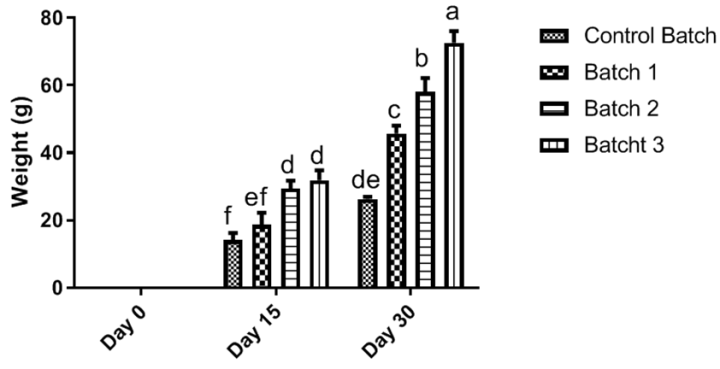
3.3. Rats WeightThe variations in the weight in rats on day 15 and day 30 are represented in Figure 1. The weight increased significantly (p < 0.05) with time for the four rats batches. However, on both day 15 and day 30, the variation in weight was significantly different (p < 0.05) between rats batches. Indeed, on day 30, batch 3 had the highest weight variation (72.56 ± 3.49 g) while the weight variation (26.33 ± 0.67 g) of the control batch was the lowest. This result therefore showed that administration of aqueous extract of sweet potato leaves to rats increased their weight, and that this increase varied significantly depending on the cooking conditions of sweet potato leaves.

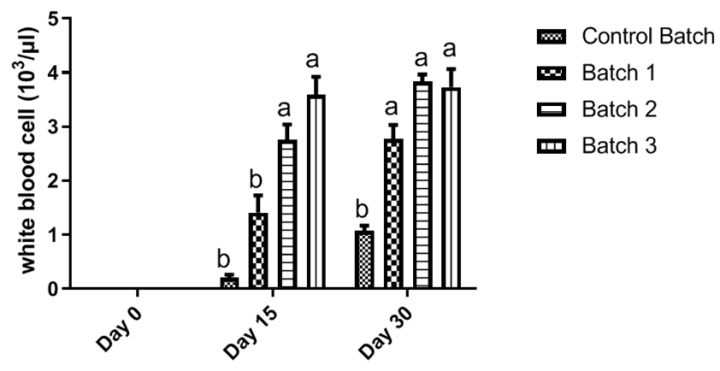
The variations in the white blood cell level in rats on day 15 and day 30 are illustrated in Figure 2. On day 15, an increase in the white blood cell level was observed for the four rats batches. However, from day 15 to day 30, only the white blood cell level in batch 1 increased significantly (p < 0.05). On day 30, the variations in the white blood cell level (between 2.77 ± 0.56 103/μl and 3.83 ± 0.13 103/μl) in batches 1, 2 and 3 were not significantly different (p > 0.05), while the control batch had the lowest variation in white blood cell level (1.07 ± 0.33 103/μl). This result therefore indicated that administration of aqueous extract of sweet potato leaves to rats caused an increase in their white blood cell level. However, this parameter was not significantly influenced by the cooking conditions of sweet potato leaves.

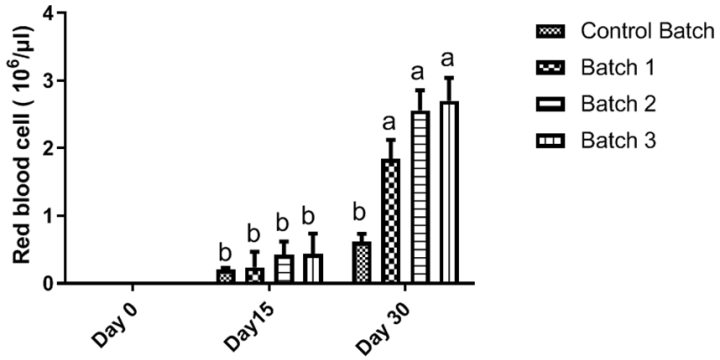
Figure 3 represents the variations in red blood cell level in rats on day 15 and day 30. For batches 1, 2 and 3, the red blood cell level increased significantly (p < 0.05) with time. However, on both day 15 and day 30, the variation in red blood cell level was not significantly different (p > 0.05) between these three rats batches. As for the control batch, from day 15 to day 30, there was no significant increase in the red blood cell level (p > 0.05). On day 30, the variation in red blood cell level (0.62 ± 0.11 106/μl) was the lowest. This result therefore revealed that administration of aqueous extract of sweet potato leaves to rats caused an increase in their red blood cell level. However, this hematological parameter was not significantly influenced by the cooking conditions of sweet potato leaves.

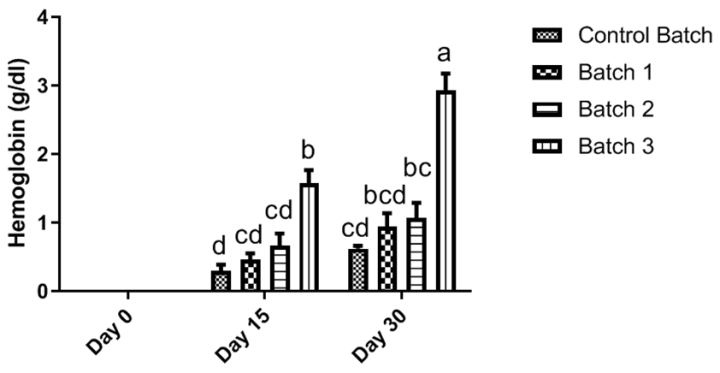
Figure 4 illustrates the variations in hemoglobin level in rats on day 15 and day 30. The hemoglobin level in batch 3 increased significantly (p < 0.05) with time. In addition, from day 15 (1.57 ± 0.26 g/dl) to day 30 (2.93 ± 0.40 g/dl), the variation in this hemoglobin level was markedly greater (p < 0.05) than that of the other three batches. As for the control batch and batches 1 and 2, from day 15 to day 30, their hemoglobin level did not increase significantly (p > 0.05); furthermore, the variation in their hemoglobin level was not significantly different (p > 0.05) between them on day 15 and day 30. This result therefore showed that administration of aqueous extract of sweet potato leaves to rats promoted an increase in their hemoglobin level and that this increase varied significantly depending on the cooking conditions of sweet potato leaves.

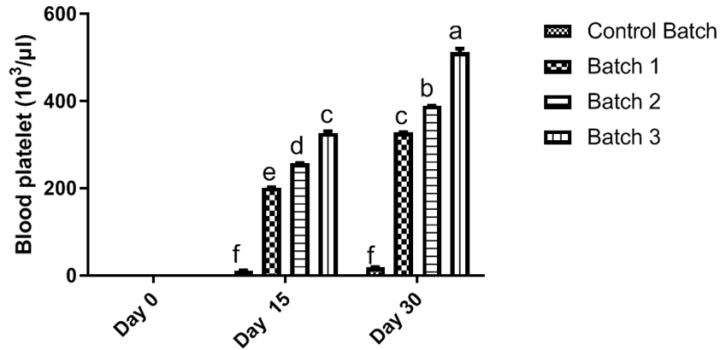
The variations in blood platelet level in rats on day 15 and day 30 are described in Figure 5. For batches 1, 2 and 3, the variation in the blood platelet level increased significantly (p < 0.05) with time. However, on day 15 and day 30, the variation in blood platelet level was significantly different (p < 0.05) between these three rats batches. As for the control batch, from day 15 (10.22 ± 1.54 103/μl) to day 30 (18.67 ± 1.20 103/μl), its blood platelet level did not significantly increase (p > 0.05). Thus, on day 30, the variation in the blood platelet level in the control batch was the lowest (18.67 ± 1.20 103/μl); while batch 3 had the highest variation in blood platelet level (512.33 ± 8.09 103/μl). From this result, it therefore emerged that administration of aqueous extract of sweet potato leaves to rats caused an increase in their blood platelet level and that this increase varied significantly depending on the cooking conditions of sweet potato leaves.

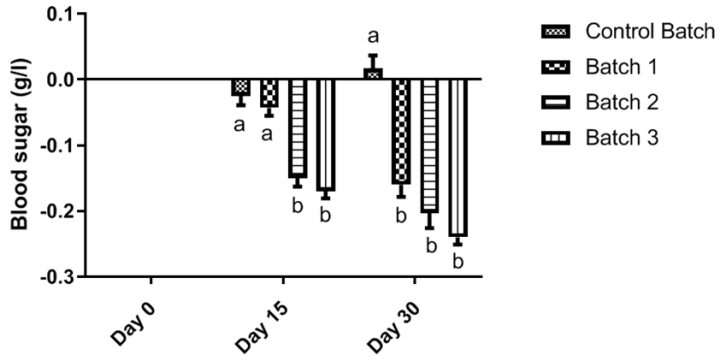
The variations in blood sugar in rats on day 15 and on day 30 are represented by Figure 6. On day 15, a decrease in blood sugar was observed for batches 1, 2 and 3. However, from day 15 to day 30, only the blood sugar in batch 1 increased significantly (p < 0.05). On day 30, the variations in blood sugar (between -0.16 ± 0.06 g/l and -0.24 ± 0.01 g/l) of batches 1, 2 and 3 were not significantly different (p > 0.05) between them. As for the control batch, its blood sugar did not vary significantly (p > 0.05) from day 15 to day 30. This result therefore indicated that the administration of an aqueous extract of sweet potato leaves to rats caused a decrease in their blood sugar. However, this decrease did not vary significantly depending on the cooking conditions of sweet potato leaves.

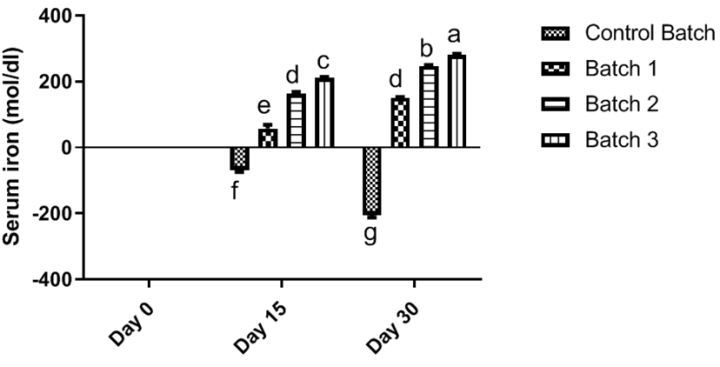
The variations in serum iron level in rats on day 15 and day 30 are illustrated in Figure 7. For batches 1, 2 and 3, the serum iron level increased significantly (p < 0.05) with time. However, on both day 15 and day 30, the variation in serum iron levels was significantly different (p < 0.05) between these three rats batches. As for the control batch, its serum iron level decreased significantly (p < 0.05) with time. Also, on day 30, the variation in the serum iron level (-204.55 ± 6.79 mol/dl) of the control batch was strongly negative. On the other hand, batch 3 had the highest variation in serum iron level (279.98 ± 4.26 mol/dl). This result therefore revealed that administration of aqueous extract of sweet potato leaves to rats increased their serum iron levels and that this increase varied significantly depending on the cooking conditions of sweet potato leaves.
The results of biochemical properties generally revealed relatively high micronutrient contents in uncooked sweet potato leaves. This would testify to the richness of sweet potato leaves in bioactive compounds such as vitamin C, β-carotene, vitamin B9, polyphenols and flavonoids, thus assuming their importance in nutrition and health. In addition, biochemical analyzes showed that water cooking led to a decrease in nutrient and micronutrient contents, except that of fibers. The decrease in protein content could be explained by the migration of proteins in the cooking water 22. The losses of vitamins would be due to the fact that these vitamins are water soluble and heat labile 23. The decrease in polyphenols and flavonoids contents could be due to their high sensitivity to heat treatment 24. As for the decrease in mineral contents, this could be explained by their solubility. In fact, during water cooking, minerals diffuse into the extra cellular medium causing losses 23. Thus, the loss of biochemical compounds would have been the result of the combination of two phenomena which are, on the one hand, their degradation by the heat from the cooking water, and on the other hand, their leaching or their diffusion in cooking or bleaching liquids.
Among the precooked leaves, CL3 recorded the highest nutrient contents followed by CL2 and CL1, respectively. This result could be explained by the fact that the volume/surface ratio for cooking n° 3 was lower than that for cooking n° 2 and n° 1, respectively. In fact, the phenomenon of diffusion of the soluble compounds in the cooking water is more marked, when the volume/surface ratio is higher 25. Thus, cooking n° 3 would have resulted in lower nutrient migration into the cooking water than cooking n° 2 and n° 1, respectively. However, the biochemical compounds contents in all precooked sweet potato leaves were satisfactory, and could help cover the body's needs.
The study showed that administration of aqueous extract of precooked sweet potato leaves increased the rats weight. This increase in the rats weight would be due to the high protein content of the precooked sweet potato leaves. Indeed, proteins are essential nutrients for the harmonious growth of organs 26. Furthermore, Ekpo et al. 27 also found a gradual increase in the rats weight after administration of aqueous extract of Ipomoea batatas. Therefore, the consumption of sweet potato leaves could be recommended for people suffering from weight loss.
In addition, the administration of aqueous extract of precooked sweet potato leaves resulted in an increase in hematological parameters (levels of white blood cell, red blood cell, hemoglobin, blood platelet) in the rats. The increase in the levels of white blood cells, red blood cells, hemoglobin and blood platelets could be explained by the fact that precooked sweet potato leaves contain appreciable levels of bioactive compounds such as iron, zinc, flavonoids, β-carotene (provitamin A), vitamin C and vitamin B9 which would contribute to the increase in hematological parameters. Indeed, zinc is involved in the integrity of the immune system by affecting both specific and non-specific immunity 28. According to Montejo et al. 29, vitamin C would contribute to the white blood cell count by increasing the leukocyte enzymes necessary for the production of competent leukocytes. As for β-carotene, it is converted into vitamin A and would directly participate in the production of leukocytes 30. In addition, these bioactive compounds would stimulate erythropoietic factors which have a direct influence on blood production in the bone marrow 31. Iron is an important element for the formation of red blood cells and hemoglobin 32. Flavonoids have antioxidant activity and may protect stem cells and blood platelets from oxidative damage 33, 34. In addition, Hasan et al. 8 and Osman et al. 35 also observed an increase in blood platelet level after administration of aqueous extract of sweet potato leaf (Ipomoea batatas) and a diet supplemented with Moringa oleifera leaves, respectively.
Furthermore, administration of aqueous extract of precooked potato leaves resulted in a decrease in blood sugar and an increase in serum iron levels in rats. These results observed on the biochemical parameters could be attributed to the presence in the precooked sweet potato leaves of phytochemicals such as polyphenols and flavonoids as well as iron and soluble fibers. The results obtained are similar to those of Rafu and luka 19 who found a significant reduction in blood sugar levels in diabetic rats after administration of aqueous sweet potato leaves extract. Indeed, thanks to their antioxidant potential and their ability to inhibit starch digestion, polyphenols could have a protective effect against hyperglycemia 36. The hypoglycemic properties of aqueous sweet potato leaves extract may stimulate the insulin release thereby improving cellular potential for glucose uptake and utilization in animals 37.
Regarding iron, Ma et al. 38 showed that oral absorption of iron would increase serum iron levels in rats. Iron is a component of haem and is combined with globin molecules to form hemoglobin in the bone marrow 39. Thus, hemoglobin and serum iron would be linked. An increase in serum iron level would therefore imply an increase in hemoglobin level.
However, the variations observed differed significantly depending on the precooked sweet potato leaves. In addition, the leaves (CL3) cooked by condition of cooking n° 3 better promoted the increase in weight, hemoglobin, blood platelet and serum iron levels in rats. This could be explained by the fact that the leaves CL3 were more concentrated in nutrients, such as proteins, β-carotene, polyphenols, flavonoids, iron and zinc, than the other precooked leaves (CL1 and CL2). Indeed, several authors have already shown that these biochemical compounds could contribute to the increase in weight and, hematological and biochemical parameters 26, 28, 30, 32, 33, 34, 36, 38. According to observations, it would seem that the impact of precooked sweet potato leaves on weight, levels of hemoglobin, blood platelet and serum iron would depend on their content of these compounds. In addition, the results of the biochemical properties showed that the contents of these compounds in the precooked leaves varied significantly depending on the cooking conditions. This therefore suggests that the cooking conditions of sweet potato leaves would have an impact on weight and, hematological and biochemical parameters.
The administration of aqueous extract of precooked sweet potato leaves to the rats resulted in a weight gain, and an improvement in the hematological (levels of white blood cells, red blood cells, hemoglobin, blood platelets) and biochemical (blood sugar and serum iron level) parameters studied. In addition, the condition of cooking n° 3 better promoted the increase in weight and, levels of hemoglobin, blood platelet and serum iron in rats. However, all the cooking conditions applied similarly favored the decrease in blood sugar and the increased in levels of white blood cell and red blood cell. Thus, the results of this study reveal the importance of precooked sweet potato leaves in nutrition and health, and the need to adopt a cooking condition that best preserves the virtues of sweet potato leaves.
| [1] | Agbo, E., Kouame, C., Mahyao, A., N'zi, J.C. and Fondio, L., “NUTRITIONAL IMPORTANCE OF INDIGENOUS LEAFY VEGETABLES IN CÔTE D'IVOIRE”, Acta Horticulturae, 806. 361-3660. 2009. | ||
| In article | View Article | ||
| [2] | Nafir.-Zenati, S., Gallon, G. and Favier, J-C., “Effet de la cuisson sur la teneur en minéraux des épinards”, ORSTOM fonds documentaire, 36.915 (Code B), Montpellier (Centre IRD), 7 p. 1992. | ||
| In article | |||
| [3] | Kahane, R., Temple, L., Brat, P. and Bon, D.H., “Les légumes feuilles des pays tropicaux : diversité, richesse économique et valeur santé dans un contexte très fragile”, in Les légumes : un patrimoine à transmettre et à valoriser, Colloque Angers, 10p. septembre 2005. | ||
| In article | |||
| [4] | Agbo, A.E., Kouame, C., Anin, A.O.L., Soro, L.C., N’zi, J.C., Fondio, L. and Gnakri, D., “Seasonal variation in nutritional compositions of spider plant (Cleome gynandra L.) in south Côte d’Ivoire”, International Journal of Agricultural Policy and Research, 2 (11): 406-413. 2014. | ||
| In article | |||
| [5] | Mbaeyi-Nwaoha, I.E. and Emejulu, V.N., “Evaluation of phytochemical composition andantimicrobial activity of Sweet potato (Ipomoea batatas) leaf”, Pakistan Journal of Nutrition, 12 (6): 575-586. 2013. | ||
| In article | View Article | ||
| [6] | Zoro, A.F., Zoue, L.T. and Niamke, S.L., “Evaluation of nutritive and antioxidant properties of blanched leafy vegetables consumed in western Côte d’Ivoire”, Food and Environnement Safety, 13 (2): 99 -108. 2014. | ||
| In article | |||
| [7] | Agbo, A.E., Kouassi, K., Gouekou, A.D., Méité, S., Gbogouri, A.G. and Brou K., “Antioxidant Activities in Sweet Potatoes Leaves Steamed with Spices”, Journal of Food Research, 9 (4): 41-49. 2020. | ||
| In article | View Article | ||
| [8] | Hasan, Z, Quadir, R, Eva, E.O. and Khanam M., “Platelet Raising Effect of Ipomoea batatas (Sweet Potato) Leaf Extract in Rats”, Original Article, 1 (2): 9-12. 2016. | ||
| In article | |||
| [9] | Olowu, A.O., Adeneye, A.A. and Adeyemi, O.O., “Hypoglycaemic effect of Ipomoea batatas aqueous leaf and stem extract in normal and streptozotocin-induced hyperglycaemic rats”, Journal of Natural Pharmaceuticals, 2 (2): 55-61. 2011. | ||
| In article | View Article | ||
| [10] | Osime, E.O, Ediale, G.E, Omoti, C.E and Famodu, A.A., “Effect of sweet potato leaf (Ipomoea batatas) extract on some haematological parameters using rabbits.” Journal of Medicine and Biomedical Research, 7 (1): 1-5. 2008. | ||
| In article | View Article | ||
| [11] | Gouekou, A.D., Guédé, S.S., Agbo, E.A. and Gbogouri, A.G., “Optimization of Water Cooking of Sweet Potato (Ipomoea batatas) Leaves and Characterization of Three Nutritional Interest Molecules (Folic Acid, Iron and Phytate)”, European Journal of Nutrition & Food Safety, 10 (4): 242-252. 2019. | ||
| In article | View Article | ||
| [12] | AOAC, Official methods of analysis, Association of Official Analytical Chemists 15th Ed., Washington DC, USA, 684p. 1990. | ||
| In article | |||
| [13] | Pongracz, G., Weiser, H. and Matzinger, D., “Tocopherols-antioxydant”, Journal Science Technology, 97: 90-104. 1971. | ||
| In article | View Article | ||
| [14] | Bala, I.M., Manigundan, K., Usha, J. and Shanmuga, P.A., “Antioxidant and Anti-proliferative activity of methanolic leaf extract of Eupatorium glandulosum L.”, International Journal of Advanced Research, 2 (7): 717-723. 2014. | ||
| In article | |||
| [15] | Tee, E.S., Kuladevan, R., Young, S.I., Khor, S.C. and Zakiyah, H.O., Laboratory Procedures in Nutrient Analysis of Foods. Division of Human Nutrition, Institute of Medical Research, Kuala Lumpur, Malaysi. 1996. | ||
| In article | |||
| [16] | McDonald, S., Prenzler, P.D., Autolovich, M. and Robards, K., “Phenolic content and antioxidant activity of olive extracts”, Food Chemistry, 73: 73-84. 2001. | ||
| In article | View Article | ||
| [17] | Chang, C., Yang, M., Wen, H. and Chern, J., “Estimation of total flavonoid content in propolis by two complementary colorimetric methods”, Journal of Food and Drug Analysis, 10: 178-182. 2002. | ||
| In article | View Article | ||
| [18] | El-Gizawy, S.M., Ahmed, A.N. and El-Rabbat, N.A., “High-performance liquid chromatographie determination of multivitamin preparations using a chemically bonded cyclodextrin stationary phase”, Analytical Letters, 24 (7): 1173-1181. 1991. | ||
| In article | View Article | ||
| [19] | Rafiu, A.A. and Luka, C.D., “Effects of Aqueous Extract of Ipomoea batatas Leaf on Blood Glucose, Kidney Functions And Hematological Parameters of Streptozotocin-Induced Diabetic Rats”, Journal of Research in Diabetes & Metabolism, 4 (1): 004-009. 2018. | ||
| In article | |||
| [20] | Perrotta, G., Iron and iron-binding capacity, In: Kaplan A. et al, editor. Clinical chemistry, The C.V. Mosby Co. St Louis, Toronto, Princeton, 1984, 1063-1065. | ||
| In article | |||
| [21] | Statsoft, Statistica for Windows [7.1]. Computer Program, Tulsa, OK, (USA): StatSoft, Inc. 2005. | ||
| In article | |||
| [22] | Vodouhe, S., Dovoedo, A., Anihouvi, V.B., Soumanou, M.M. and Tossou, R.C., “Influence du mode de cuisson sur la valeur nutritionnelle de Solanum macrocarpum, Amaranthus hybridus et Ocimum gratissimum, trois légumes feuilles traditionnels acclimatés au Bénin”, International journal of Biological and Chemical Sciences, 6 (5): 1926-1937. 2012. | ||
| In article | View Article | ||
| [23] | Agbo, A.E., Gbogouri, G.A., N’zi, J.C., Kouassi, K., Fondio, L. and Kouame, C., “Evaluation des pertes en micronutriments et en oxalates au cours de la cuisson à l’eau et à la vapeur des feuilles d’épinard malabar (Basella alba) et de celosie (Celosia argentea)”, Agronomie Africaine, 31 (2): 100-110. 2019. | ||
| In article | |||
| [24] | Ismail, A., Marjan, Z.M. and Foong, C.W., “Total antioxidant activity and phenolic content in selected vegetables”, Food Chemistry, 87: 581-586. 2004. | ||
| In article | View Article | ||
| [25] | Holasova, M., Vlasta, F. and Slavomira, V., “Determination of folates in vegetables and their retention during boiling”, Czech Journal of food science, 26 (1): 31-37. 2008. | ||
| In article | View Article | ||
| [26] | Rahaman, A., Abdel, S.M., Elmakil, H.B., Hassan, W.I., Babiker E.E. and Eltinay, A.H., “Proximate composition, anti-nutritional factors and mineral content and availability of selected legumes and cereal grown in Sudan”, Journal of Food Technology, 3 (4): 511-515. 2005. | ||
| In article | |||
| [27] | Ekpo, I.A., Agbor, R.B., Ekaluo, U.B., Ikpeme, E.V. and Kalu, S.E., “Hepatotoxicity of Ipomoea batatas leaf extract on male wistar rats”, American International Journal of Biology, 1 (1): 21-28. 2013. | ||
| In article | |||
| [28] | Balmont, S, Intérêts des micros nutriments pour l’immunité des personnes âgée, Thèse de doctorat, Université Joseph fourier, Grenoble, France, 2016, 157p. | ||
| In article | |||
| [29] | Montejo, J.F., Mondonedo, J.A.B., Lee, M.G.A., Ples, M.B. and Vitor, R.J.S., “Hematological effects of Ipomoea batatas (camote) and Phyllanthus niruri (sampa-sampalukan) from Philippines in the ICR mice (Mus musculus)”, Asian Pacific Journal of Tropical Biomedicine, 5 (1): 29-33. 2015. | ||
| In article | View Article | ||
| [30] | Fryburg, D.A., Mark, R.J., Griffith, B.P., Askenase, P.W. and Patterson, T.F., “The effect of supplemental beta-carotene on immunologic indices in patients with AIDS: a pilot study”, Yale Journal of Biology of Medicine, 68 (1-2): 19-23. 1995. | ||
| In article | |||
| [31] | Prasad, S.Y.P., Hari, P., Shajina, M., Mirshad, P.V. and Rahiman, F.O.M., “Hematinic and antioxidant potential of aqueous extract of Sesamumi indicum seeds against phenylhydrazine-induced hemolytic anemia inalbino rats”, National Journal of Physiology, Pharmacy and Pharmacology, 8 (8): 1092-1096. 2018. | ||
| In article | View Article | ||
| [32] | Modupe, O. and Oladiji, T.A., “Optimizing dose of aqueous extract of Mangifera indica L stem bark for treating anaemia and its effect on some disaccharidases activity in iron deficient weanling rats”, Journal of Nutrition & Intermediary Metabolism, 3: 18-22. 2016. | ||
| In article | View Article | ||
| [33] | Olmendilla, B., Granado, F., Gil-Martinez, E., Blanco, I. and Rojas-Hildago, E., “Reference values from retinol, tocopherol and main carotenoids in serum of control and insulin dependent diabetic Spanish subjects”, Clinical Chemistry, 43: 1066-1071. 1997. | ||
| In article | View Article PubMed | ||
| [34] | Sambo, M.H., Etude du traitement traditionnel du diabète par une recette et les écorces de tronc de Manilkara multinervis dub (sapotaceae), Thèse de doctorat, Université de Bamako, Bamako, Mali, 2005, 125 p. | ||
| In article | |||
| [35] | Osman, H.M., Shayoub, M.E. and Babiker, E.M., “The Effect of Moringa oleifera leaves on blood parameters and body weights of albinno rats and rabbits”, Jordan Journal of Biological Sciences, 5 (3): 147-150. 2012. | ||
| In article | |||
| [36] | Asgar, A.M., “Anti-Diabetic potential of phenolic”, International Journal of Food Properties, 16 (1): 91-103. 2013. | ||
| In article | View Article | ||
| [37] | Afolayan, A.J. and Sunmonu, T.O., “In vivo Studies on Antidiabetic Plants Used in South African Herbal Medicine”, Journal of Clinical Biochemistry and Nutrition, 47 (2): 98-106. 2010. | ||
| In article | View Article PubMed | ||
| [38] | Ma, S., Koshino, Y., Yamamoto, S., Shimasaki, T. and Tomosugi, N., “Rapid Increase in Serum Iron Level After Oral Iron Intake as an Indicator of Duodenal Iron Absorption and Inverse Regulation of Iron Absorption by Hepcidin Expression”, Journal Kanazawa Medical University, 41: 25-31. 2016. | ||
| In article | |||
| [39] | Habita, A. and Necibe, M., L’effet d’extrait flavonoïdique de Camellia sinensis et de la quercétine sur la neurotoxicité induit par les nanoparticules d’oxyde de fer (NPsFe2O3) chez les rates Wistar, Mémoire de Master, Université Echahid Hamma Lakhdar, El Oued, Algérie, 2017, 100 p. | ||
| In article | |||
Published with license by Science and Education Publishing, Copyright © 2021 Désirée A. Gouekou, Serge S. Guédé, Moussa Gbogbo, Edith A. Agbo, Dénis Y. N’dri and Albarin G. Gbogouri
 This work is licensed under a Creative Commons Attribution 4.0 International License. To view a copy of this license, visit
http://creativecommons.org/licenses/by/4.0/
This work is licensed under a Creative Commons Attribution 4.0 International License. To view a copy of this license, visit
http://creativecommons.org/licenses/by/4.0/
| [1] | Agbo, E., Kouame, C., Mahyao, A., N'zi, J.C. and Fondio, L., “NUTRITIONAL IMPORTANCE OF INDIGENOUS LEAFY VEGETABLES IN CÔTE D'IVOIRE”, Acta Horticulturae, 806. 361-3660. 2009. | ||
| In article | View Article | ||
| [2] | Nafir.-Zenati, S., Gallon, G. and Favier, J-C., “Effet de la cuisson sur la teneur en minéraux des épinards”, ORSTOM fonds documentaire, 36.915 (Code B), Montpellier (Centre IRD), 7 p. 1992. | ||
| In article | |||
| [3] | Kahane, R., Temple, L., Brat, P. and Bon, D.H., “Les légumes feuilles des pays tropicaux : diversité, richesse économique et valeur santé dans un contexte très fragile”, in Les légumes : un patrimoine à transmettre et à valoriser, Colloque Angers, 10p. septembre 2005. | ||
| In article | |||
| [4] | Agbo, A.E., Kouame, C., Anin, A.O.L., Soro, L.C., N’zi, J.C., Fondio, L. and Gnakri, D., “Seasonal variation in nutritional compositions of spider plant (Cleome gynandra L.) in south Côte d’Ivoire”, International Journal of Agricultural Policy and Research, 2 (11): 406-413. 2014. | ||
| In article | |||
| [5] | Mbaeyi-Nwaoha, I.E. and Emejulu, V.N., “Evaluation of phytochemical composition andantimicrobial activity of Sweet potato (Ipomoea batatas) leaf”, Pakistan Journal of Nutrition, 12 (6): 575-586. 2013. | ||
| In article | View Article | ||
| [6] | Zoro, A.F., Zoue, L.T. and Niamke, S.L., “Evaluation of nutritive and antioxidant properties of blanched leafy vegetables consumed in western Côte d’Ivoire”, Food and Environnement Safety, 13 (2): 99 -108. 2014. | ||
| In article | |||
| [7] | Agbo, A.E., Kouassi, K., Gouekou, A.D., Méité, S., Gbogouri, A.G. and Brou K., “Antioxidant Activities in Sweet Potatoes Leaves Steamed with Spices”, Journal of Food Research, 9 (4): 41-49. 2020. | ||
| In article | View Article | ||
| [8] | Hasan, Z, Quadir, R, Eva, E.O. and Khanam M., “Platelet Raising Effect of Ipomoea batatas (Sweet Potato) Leaf Extract in Rats”, Original Article, 1 (2): 9-12. 2016. | ||
| In article | |||
| [9] | Olowu, A.O., Adeneye, A.A. and Adeyemi, O.O., “Hypoglycaemic effect of Ipomoea batatas aqueous leaf and stem extract in normal and streptozotocin-induced hyperglycaemic rats”, Journal of Natural Pharmaceuticals, 2 (2): 55-61. 2011. | ||
| In article | View Article | ||
| [10] | Osime, E.O, Ediale, G.E, Omoti, C.E and Famodu, A.A., “Effect of sweet potato leaf (Ipomoea batatas) extract on some haematological parameters using rabbits.” Journal of Medicine and Biomedical Research, 7 (1): 1-5. 2008. | ||
| In article | View Article | ||
| [11] | Gouekou, A.D., Guédé, S.S., Agbo, E.A. and Gbogouri, A.G., “Optimization of Water Cooking of Sweet Potato (Ipomoea batatas) Leaves and Characterization of Three Nutritional Interest Molecules (Folic Acid, Iron and Phytate)”, European Journal of Nutrition & Food Safety, 10 (4): 242-252. 2019. | ||
| In article | View Article | ||
| [12] | AOAC, Official methods of analysis, Association of Official Analytical Chemists 15th Ed., Washington DC, USA, 684p. 1990. | ||
| In article | |||
| [13] | Pongracz, G., Weiser, H. and Matzinger, D., “Tocopherols-antioxydant”, Journal Science Technology, 97: 90-104. 1971. | ||
| In article | View Article | ||
| [14] | Bala, I.M., Manigundan, K., Usha, J. and Shanmuga, P.A., “Antioxidant and Anti-proliferative activity of methanolic leaf extract of Eupatorium glandulosum L.”, International Journal of Advanced Research, 2 (7): 717-723. 2014. | ||
| In article | |||
| [15] | Tee, E.S., Kuladevan, R., Young, S.I., Khor, S.C. and Zakiyah, H.O., Laboratory Procedures in Nutrient Analysis of Foods. Division of Human Nutrition, Institute of Medical Research, Kuala Lumpur, Malaysi. 1996. | ||
| In article | |||
| [16] | McDonald, S., Prenzler, P.D., Autolovich, M. and Robards, K., “Phenolic content and antioxidant activity of olive extracts”, Food Chemistry, 73: 73-84. 2001. | ||
| In article | View Article | ||
| [17] | Chang, C., Yang, M., Wen, H. and Chern, J., “Estimation of total flavonoid content in propolis by two complementary colorimetric methods”, Journal of Food and Drug Analysis, 10: 178-182. 2002. | ||
| In article | View Article | ||
| [18] | El-Gizawy, S.M., Ahmed, A.N. and El-Rabbat, N.A., “High-performance liquid chromatographie determination of multivitamin preparations using a chemically bonded cyclodextrin stationary phase”, Analytical Letters, 24 (7): 1173-1181. 1991. | ||
| In article | View Article | ||
| [19] | Rafiu, A.A. and Luka, C.D., “Effects of Aqueous Extract of Ipomoea batatas Leaf on Blood Glucose, Kidney Functions And Hematological Parameters of Streptozotocin-Induced Diabetic Rats”, Journal of Research in Diabetes & Metabolism, 4 (1): 004-009. 2018. | ||
| In article | |||
| [20] | Perrotta, G., Iron and iron-binding capacity, In: Kaplan A. et al, editor. Clinical chemistry, The C.V. Mosby Co. St Louis, Toronto, Princeton, 1984, 1063-1065. | ||
| In article | |||
| [21] | Statsoft, Statistica for Windows [7.1]. Computer Program, Tulsa, OK, (USA): StatSoft, Inc. 2005. | ||
| In article | |||
| [22] | Vodouhe, S., Dovoedo, A., Anihouvi, V.B., Soumanou, M.M. and Tossou, R.C., “Influence du mode de cuisson sur la valeur nutritionnelle de Solanum macrocarpum, Amaranthus hybridus et Ocimum gratissimum, trois légumes feuilles traditionnels acclimatés au Bénin”, International journal of Biological and Chemical Sciences, 6 (5): 1926-1937. 2012. | ||
| In article | View Article | ||
| [23] | Agbo, A.E., Gbogouri, G.A., N’zi, J.C., Kouassi, K., Fondio, L. and Kouame, C., “Evaluation des pertes en micronutriments et en oxalates au cours de la cuisson à l’eau et à la vapeur des feuilles d’épinard malabar (Basella alba) et de celosie (Celosia argentea)”, Agronomie Africaine, 31 (2): 100-110. 2019. | ||
| In article | |||
| [24] | Ismail, A., Marjan, Z.M. and Foong, C.W., “Total antioxidant activity and phenolic content in selected vegetables”, Food Chemistry, 87: 581-586. 2004. | ||
| In article | View Article | ||
| [25] | Holasova, M., Vlasta, F. and Slavomira, V., “Determination of folates in vegetables and their retention during boiling”, Czech Journal of food science, 26 (1): 31-37. 2008. | ||
| In article | View Article | ||
| [26] | Rahaman, A., Abdel, S.M., Elmakil, H.B., Hassan, W.I., Babiker E.E. and Eltinay, A.H., “Proximate composition, anti-nutritional factors and mineral content and availability of selected legumes and cereal grown in Sudan”, Journal of Food Technology, 3 (4): 511-515. 2005. | ||
| In article | |||
| [27] | Ekpo, I.A., Agbor, R.B., Ekaluo, U.B., Ikpeme, E.V. and Kalu, S.E., “Hepatotoxicity of Ipomoea batatas leaf extract on male wistar rats”, American International Journal of Biology, 1 (1): 21-28. 2013. | ||
| In article | |||
| [28] | Balmont, S, Intérêts des micros nutriments pour l’immunité des personnes âgée, Thèse de doctorat, Université Joseph fourier, Grenoble, France, 2016, 157p. | ||
| In article | |||
| [29] | Montejo, J.F., Mondonedo, J.A.B., Lee, M.G.A., Ples, M.B. and Vitor, R.J.S., “Hematological effects of Ipomoea batatas (camote) and Phyllanthus niruri (sampa-sampalukan) from Philippines in the ICR mice (Mus musculus)”, Asian Pacific Journal of Tropical Biomedicine, 5 (1): 29-33. 2015. | ||
| In article | View Article | ||
| [30] | Fryburg, D.A., Mark, R.J., Griffith, B.P., Askenase, P.W. and Patterson, T.F., “The effect of supplemental beta-carotene on immunologic indices in patients with AIDS: a pilot study”, Yale Journal of Biology of Medicine, 68 (1-2): 19-23. 1995. | ||
| In article | |||
| [31] | Prasad, S.Y.P., Hari, P., Shajina, M., Mirshad, P.V. and Rahiman, F.O.M., “Hematinic and antioxidant potential of aqueous extract of Sesamumi indicum seeds against phenylhydrazine-induced hemolytic anemia inalbino rats”, National Journal of Physiology, Pharmacy and Pharmacology, 8 (8): 1092-1096. 2018. | ||
| In article | View Article | ||
| [32] | Modupe, O. and Oladiji, T.A., “Optimizing dose of aqueous extract of Mangifera indica L stem bark for treating anaemia and its effect on some disaccharidases activity in iron deficient weanling rats”, Journal of Nutrition & Intermediary Metabolism, 3: 18-22. 2016. | ||
| In article | View Article | ||
| [33] | Olmendilla, B., Granado, F., Gil-Martinez, E., Blanco, I. and Rojas-Hildago, E., “Reference values from retinol, tocopherol and main carotenoids in serum of control and insulin dependent diabetic Spanish subjects”, Clinical Chemistry, 43: 1066-1071. 1997. | ||
| In article | View Article PubMed | ||
| [34] | Sambo, M.H., Etude du traitement traditionnel du diabète par une recette et les écorces de tronc de Manilkara multinervis dub (sapotaceae), Thèse de doctorat, Université de Bamako, Bamako, Mali, 2005, 125 p. | ||
| In article | |||
| [35] | Osman, H.M., Shayoub, M.E. and Babiker, E.M., “The Effect of Moringa oleifera leaves on blood parameters and body weights of albinno rats and rabbits”, Jordan Journal of Biological Sciences, 5 (3): 147-150. 2012. | ||
| In article | |||
| [36] | Asgar, A.M., “Anti-Diabetic potential of phenolic”, International Journal of Food Properties, 16 (1): 91-103. 2013. | ||
| In article | View Article | ||
| [37] | Afolayan, A.J. and Sunmonu, T.O., “In vivo Studies on Antidiabetic Plants Used in South African Herbal Medicine”, Journal of Clinical Biochemistry and Nutrition, 47 (2): 98-106. 2010. | ||
| In article | View Article PubMed | ||
| [38] | Ma, S., Koshino, Y., Yamamoto, S., Shimasaki, T. and Tomosugi, N., “Rapid Increase in Serum Iron Level After Oral Iron Intake as an Indicator of Duodenal Iron Absorption and Inverse Regulation of Iron Absorption by Hepcidin Expression”, Journal Kanazawa Medical University, 41: 25-31. 2016. | ||
| In article | |||
| [39] | Habita, A. and Necibe, M., L’effet d’extrait flavonoïdique de Camellia sinensis et de la quercétine sur la neurotoxicité induit par les nanoparticules d’oxyde de fer (NPsFe2O3) chez les rates Wistar, Mémoire de Master, Université Echahid Hamma Lakhdar, El Oued, Algérie, 2017, 100 p. | ||
| In article | |||