Background: Wind speed is a key environmental factor affecting the atomization performance and irrigation quality of sprinkler irrigation systems, with wind‑induced drift and reduced uniformity being particularly prominent under low‑pressure sprin-kler conditions.Methods: To investigate the coupling effects of wind speed, nozzle structural parameters, and operating conditions, this study adopted an L9 (3³) orthogonal experimental design with nozzle orifice diameter (1.0 mm, 1.2 mm, 1.5 mm), operating pressure (0.2 MPa, 0.3 MPa, 0.4 MPa), and wind speed (2 m/s, 4 m/s, 6 m/s) as experimental factors. The effects of these parameters on sprinkler uniformity (Christiansen uniformity coefficient, CU) and drift loss rate under the influence of wind speed were systematically investigated. Results: The results show that wind speed had the most significant effect on sprinkler uniformity: as wind speed increased from 2 m/s to 6 m/s, the average CU decreased by 4.4 percentage points. Under the influence of wind speed, nozzle orifice diameter did not significantly affect the drift loss rate; however, the 1.2 mm diameter exhibited the best balance between uniformity and wind resistance. Operating pressure had a significant effect on drift loss rate: when the pressure increased from 0.2 MPa to 0.4 MPa, the average drift loss rate increased by 5 percentage points, while the improvement in uniformity was limited. The optimal combination of parameters was a nozzle orifice diameter of 1.2 mm, an operating pressure of 0.4 MPa, and a wind speed of 2 m/s. Under this combination, sprinkler uniformity reached 82.06% and the drift loss rate was controlled at 32.46%, achieving an optimal balance between uniformity and anti‑drift performance. Conclusion: This study reveals the coupling effects of wind speed and nozzle structural parameters on atomization performance, clarifies the regulation effects of structural parameters when wind speed changes, and provides a theoretical basis for the optimal selection of sprinkler systems and the configuration of operating parameters under complex wind conditions in the field.
Sprinkler irrigation technology has been widely applied in agricultural irrigation due to its significant water-saving and yield-increasing effects. As the core component of sprinkler irrigation systems, the atomization performance of sprinklers directly affects irrigation uniformity and water resource utilization efficiency 1. In actual field applications, environmental wind speed is a key factor affecting sprinkler performance, especially under medium and low-pressure sprinkler irrigation conditions 2, 3, where wind-induced drift and uniformity degradation problems are particularly prominent.
Regarding the influence of wind speed on sprinkler irrigation performance, scholars domestically and internationally have conducted extensive research. Wang Xinkun et al. optimized the internal drive structure and hydraulic performance of jet pulse sprinklers 4. Zhou Xuan et al. studied the influence of working pressure and sprinkler rotation speed on hydraulic performance using a self-developed sprinkler rotation control device 5. Zhao Yuxia et al. designed a pressure regulation device for fixed sprinkler irrigation systems in hilly areas 6. Li Tao et al. conducted hydraulic performance tests using guide vane shape parameters as experimental factors and con-structed a nonlinear mapping model for optimal structural parameters of impact sprinklers 7. Pyakurel et al. studied nighttime sprinkler irrigation scheduling to save water by reducing wind drift and evaporation losses (WDEL) 8. Zheng et al. analyzed droplet-leaf interactions under wind conditions using digital holography combined with machine learning 9. Zhong et al. evaluated sprinkler distribution uniformity under different working pressures and wind speeds through multiple experiments 10. Regarding the synergistic effect of wind speed and nozzle parameters, studies have found that wind speed has a greater influence on droplet penetration rate than nozzle inclination angle; numerical simulation was used to explore the influence of nozzle parameters on droplet throw distance 11, 12, 13. Studies on rotating spray plate sprinklers show that droplet diameter increases with distance from the sprinkler 14, 15. Domestic scholars have also made significant progress in sprinkler hydraulic performance, water distribution, and structural optimization, laying a foundation for sprinkler irrigation technology development.
Based on the comprehensive research status, existing work still has the following deficiencies: (1) Most studies focus on medium and high-pressure conditions, with relatively lacking systematic research on atomization performance under low-pressure irrigation conditions (below 0.4 MPa); (2) Research on wind influence is mostly limited to single-factor analysis, with insufficient exploration of multi-factor coupling effects and interaction mechanisms between wind speed, nozzle diameter, and working pressure; (3) In terms of fine particle loss evaluation, there is a lack of collaborative characterization of fine particle proportion and drift loss and their quantitative relationship with wind speed; (4) The variation pattern of sprinkler irrigation uniformity under multi-factor coupling conditions and the compensation effect of pressure regulation still lack systematic quantitative analysis.
Therefore, in this study, wind speed, nozzle orifice diameter, and operating pressure were selected as experimental factors, and an orthogonal experimental method was adopted to systematically investigate the effects of each factor on sprinkler uniformity and drift loss. The analysis focused on the interaction mechanisms of structural parameters under the influence of wind speed, aiming to clarify the quantitative characteristics of wind speed effects and the compensatory effects of structural parameter regulation under low‑pressure sprinkler conditions. The results are expected to provide a theoretical basis for the optimal selection of sprinkler irrigation systems and the configuration of operating parameters under complex wind conditions in the field.
Based on the impinging atomization principle, our research team has innovatively designed a novel hollow cone atomizing nozzle. The core improvement lies in the addition of a multistage impinging structure outside the conventional nozzle. Experimental validation demonstrates that this novel atomizing nozzle can significantly improve atomization performance under low‑pressure conditions, which is of great reference value for addressing the problems of uneven and insufficient sprinkler performance under low‑pressure conditions.
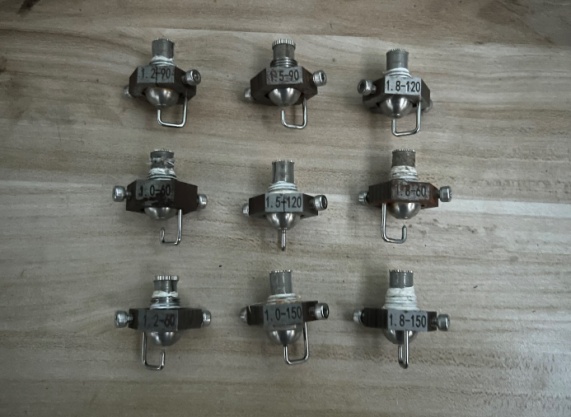
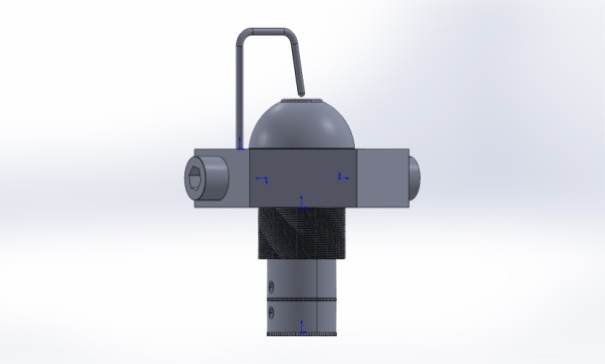
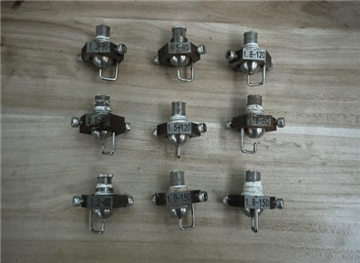
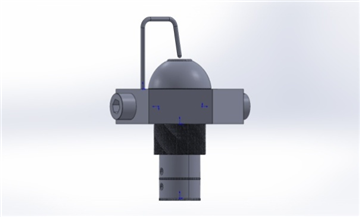
The novel hollow cone atomizing nozzle device consists of a basic atomization unit, an axial adjustment mechanism, an impinging needle assembly, and a positioning and fastening device. The axial adjustment mechanism, driven by a threaded pair, enables precise control of the distance between the needle tip face and the nozzle outlet. After the water jet is discharged from the nozzle outlet, the liquid sheet formed by primary atomization collides with the conical needle and breaks up over a short micro‑distance. Subsequently, the secondary atomization process continues in a dynamic balance among aerodynamic disturbance effects and droplet collision, coalescence, and breakup. The photograph and structural diagram of the novel hollow cone atomizing nozzle are shown in Figure 1 and Figure 2, respectively
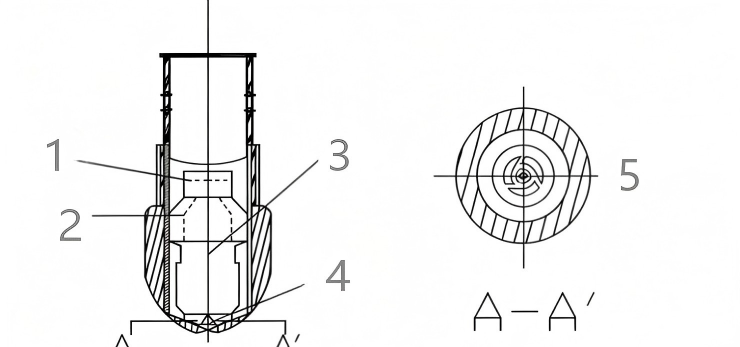
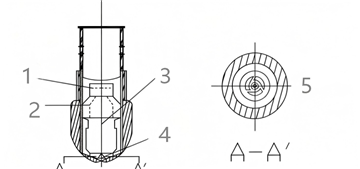
The filter screen inside the nozzle can effectively intercept most particles in the water, preventing nozzle clogging. In the optimized nozzle design, the central cylindrical core is connected to the outer body by means of a helical structure. After being cut by the cross‑section of the cylindrical core, the water flows into the chamber formed by the cylindrical core and the outer body, and eventually moves toward the bottom. The water then passes through the bottom tangential slot into the swirl chamber. Under the effect of the pressure difference, the liquid is rapidly discharged from the nozzle, achieving atomization. The detailed structure of the nozzle is shown in Figure 3.
A Methods for measuring droplet size distribution have evolved over the years, showing a diversified trend. Common techniques include light scattering, planar structured light illumination, phase Doppler anemometry, dual-spectrum imaging, and laser diffraction 16.
In this experiment, a laser particle size analyzer based on the laser diffraction method was selected to accurately quantify the fine droplet drift loss. The instrument, manufactured by Sympatec GmbH (Germany), is capable of measuring droplet sizes ranging from 0.1 to 3500 μm. The core component of the droplet size measurement system is the laser particle size analyzer, which offers a wide measurement range, good repeatability, high reliability, and ease of operation, while also enabling real-time monitoring of droplet size.
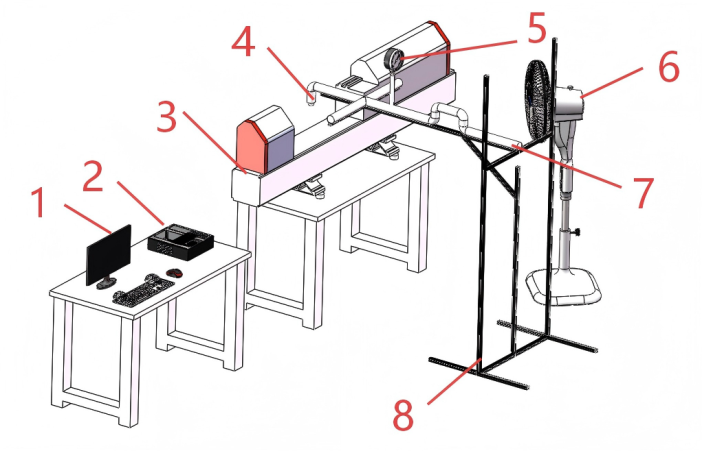
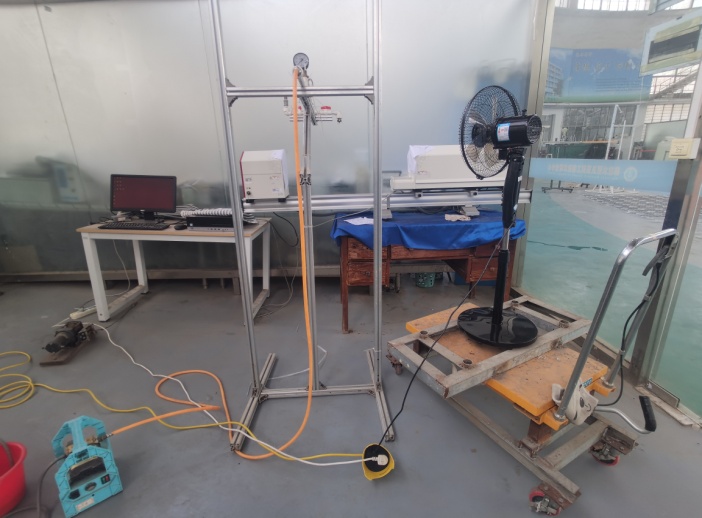
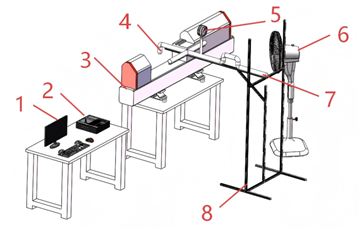
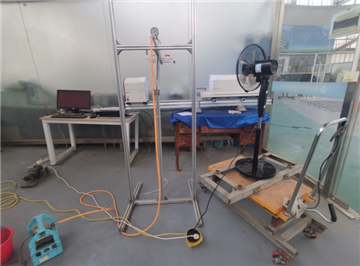
The experimental platform consisted of a complete testing system, including a small water pump, connecting hoses, a self-developed adjustable test bench, a pressure gauge, a small anemometer, nozzles of different orifice diameters, and the laser particle size analyzer with its dedicated workstation, as shown in Figure 4 and Figure 5. The system was arranged in a laboratory setting. The transmitter and receiver of the laser particle size analyzer were fixed at a distance of 1 m to ensure that the measurement zone covered the entire spray area of the nozzle, thereby improving data accuracy and minimizing experimental error. Droplet size data were collected for nozzles with different parameters, and each experimental condition was repeated three times, with the final results expressed as the average value.
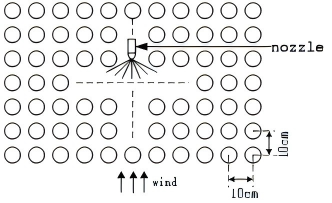
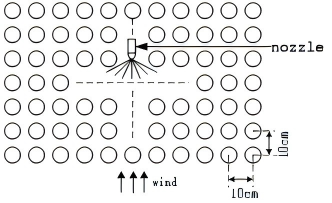
Sprinkler uniformity was measured using the water collection and weighing method. Rain gauges of uniform specification were employed, all made of plastic cups with identical diameter and height to eliminate the influence of container differences on measurement accuracy. The rain gauges were arranged in a radial grid pattern centered on the nozzle, with measurement points set along both the radial and circumferential directions. A total of 77 measurement points were arranged in 7 rows and 11 columns. The radial spacing was set at 10 cm 17, essentially covering the radial range extending outward from the nozzle center. The circumferential spacing was uniformly distributed across each radial row, ensuring complete measurement of the water distribution pattern in the 360° direction around the nozzle. The nozzle was positioned at the center of the grid, allowing the measurement area to symmetrically cover the sprinkler water distribution characteristics around the nozzle, facilitating analysis of directional differences in water distribution under windy conditions.Before each test, all plastic cups were uniformly numbered, and the radial distance and circumferential angle of each measurement point relative to the nozzle were recorded to ensure consistent placement across tests. Prior to the test, all plastic cups were dried and weighed to obtain their initial mass, eliminating the influence of residual moisture on measurement accuracy.
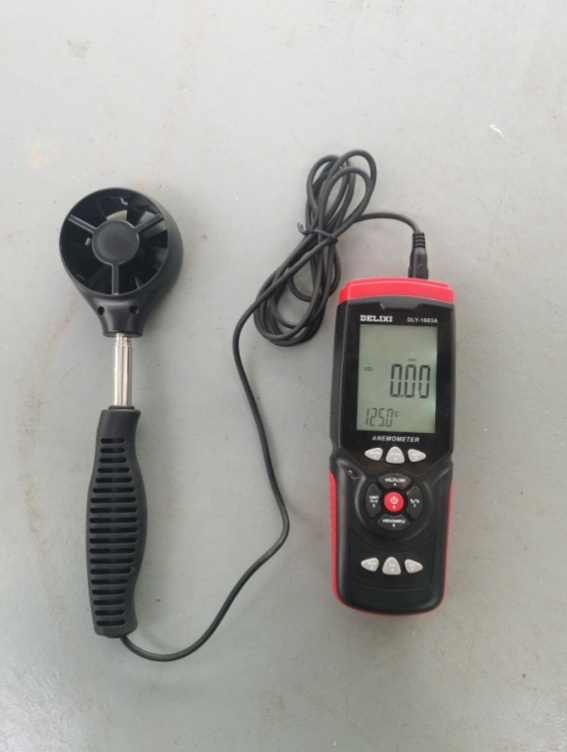
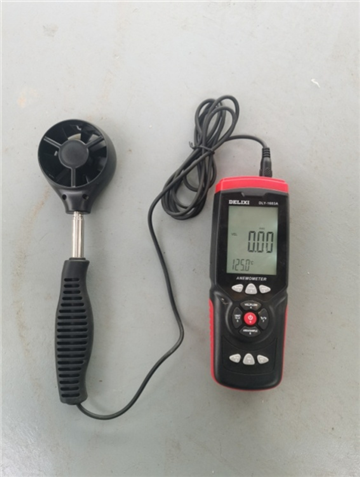
During the test, timing began after the sprinkler system reached stable operation, with each test lasting 10 minutes. After each test, all rain gauges were immediately weighed again, and the collected water volume was calculated from the difference in mass. After each measurement, the exterior of the plastic cups was carefully wiped with a dry soft cloth to remove adhering droplets, preventing residual moisture from affecting the initial mass of subsequent tests. Meanwhile, new dry plastic cups were used for the next test to minimize experimental error. Each experimental condition was repeated three times 18, and the average value of the three measurements was taken as the final collected water volume for that measurement point, which was subsequently used to calculate the sprinkler uniformity coefficient. Sprinkler uniformity was evaluated using the Christiansen uniformity coefficient, which comprehensively considers the deviation between the collected water volume at each measurement point and the average collected water volume, enabling an objective reflection of the water distribution uniformity of the nozzle under both calm and windy conditions. The layout of the water collection test is shown in Figure 3, while wind speed was controlled by adjusting the distance between the fan and the nozzle, with the handheld anemometer shown in Figure 6.
Based on preliminary experiments and relevant literature, the key control parameters affecting nozzle atomization performance and their experimental ranges were determined. Atomization performance encompasses sprinkler uniformity and drift loss, where sprinkler uniformity determines the consistency of water distribution over the target area, while drift loss directly affects the risk of drift and water use efficiency.The selection of wind speed directly determines the trajectory and spatial distribution of droplets. Wind is the most significant environmental factor affecting the field application of sprinkler irrigation systems, as it substantially alters the falling direction and landing position of droplets, thereby influencing the spatial distribution of irrigation water. Wind speed also directly affects the extent of drift loss and irrigation uniformity, making it a priority environmental factor in the design and operational management of sprinkler irrigation systems. According to QX/T 51-2007, wind speeds below 1.6 m/s are classified as light air, where the disturbance to droplets is minimal, making it difficult to fully capture the impact of windy conditions on sprinkler performance. Conversely, wind speeds exceeding 7.9 m/s are classified as strong breeze, which is unsuitable for sprinkler irrigation. Under such conditions, drift loss of fine droplets increases significantly, and sprinkler uniformity markedly declines. Most sprinkler irrigation guidelines recommend suspending operations when wind speeds exceed this threshold.
Nozzle orifice diameter influences jet velocity and flow rate. Investigating the effect of nozzle orifice diameter on atomization performance under different wind speeds is of great significance for optimizing the wind resistance of sprinkler irrigation systems. An appropriate diameter can achieve favorable atomization fineness while maintaining flow rate, enabling more uniform droplet distribution in the air and thereby mitigating wind-induced drift. Under windy conditions, a properly selected diameter can better adapt to complex airflow conditions, ensuring that water is effectively delivered to the target area. If the diameter is too small, the flow rate may be insufficient, limiting the coverage area of a single nozzle and increasing susceptibility to clogging. Conversely, if the diameter exceeds 1.5 mm, atomization efficiency deteriorates under low-pressure conditions, and the jet kinetic energy becomes inadequate to generate fine and uniform droplets, compromising wind resistance.
The selection of operating pressure not only determines the initial kinetic energy of the jet and the degree of atomization, but is also closely related to the energy consumption and operational cost of the sprinkler system. Higher pressure can improve atomization quality, thereby enhancing wind resistance under the same wind speed conditions. Investigating the effect of pressure on atomization performance enables the identification of the optimal pressure matching different wind speeds while maintaining irrigation quality, thereby improving overall system performance and economic efficiency. However, if the pressure exceeds 0.4 MPa, energy consumption per unit area increases correspondingly, and the kinetic energy of water droplets may exceed the tolerance threshold of crops. Conversely, if the pressure falls below 0.2 MPa, atomization becomes insufficient, and the jet manifests as a water column or coarse droplets, resulting in a substantial reduction in wind resistance.
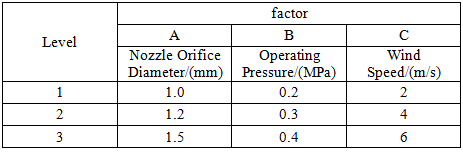
Therefore, this study focuses on optimizing the effects of wind speed, nozzle orifice diameter, and operating pressure on nozzle atomization performance under windy conditions. Wind speed (v), nozzle orifice diameter (d), and operating pressure (p) were selected as experimental factors. The three levels for wind speed were set at 2 m/s, 4 m/s, and 6 m/s; the three levels for nozzle orifice diameter were 1.0 mm, 1.2 mm, and 1.5 mm; and the three levels for operating pressure were 0.2 MPa, 0.3 MPa, and 0.4 MPa.The hydraulic performance factor levels are presented in Table 1.
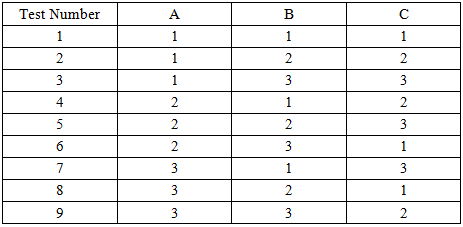
Compared with full-factorial experimentation, orthogonal design reduces the required number of trials exponentially while preserving experimental completeness, significantly enhancing efficiency. This study employed an L9(33) orthogonal array—a three-factor, three-level design requiring only nine experimental runs to comprehensively evaluate all factor-level interactions. The experimental matrix is presented in Table 2.
Analysis combined range analysis and analysis of variance (ANOVA). Range analysis quantifies factor influence magnitude on response variables, where the range value R directly indicates effect strength. Factors demonstrating larger R values receive priority consideration in optimization. ANOVA was performed using statistical software to conduct multifactorial significance testing. At α = 0.05, p > 0.05 indicates nonsignificant factor effects, p ≤ 0.05 denotes statistically significant effects, and p ≤ 0.01 identifies highly significant effects 19, 20, 21.
2.5. Calculation of Drift Loss(1) Calculation formula of sprinkler irrigation intensity
Drift loss was primarily determined by the drift loss rate. The measurement method involved using a laser particle size analyzer to measure the droplet size distribution of the nozzle spray. The loss was assessed by comparing the proportion of droplets corresponding to the highest frequency peak in the droplet size distribution under windy and calm conditions. The calculation is:
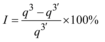 | (1) |
where I is the drift loss rate, %;q^(3‘) indicates the typical frequency of fine droplets under windy conditions,lg; q^3 is the typical frequency of fine droplets under calm conditions, lg.
(2) Calculation formula of sprinkler irrigation uniformity Sprinkler irrigation uniformity is quantified using CU:
where Cu is the sprinkler irrigation uniformity, %; xi represents the measured water depth of the i-th measurement point, mm; x ̅ is the average water depth of all measurement points, mm; n is the total number of rain barrels deployed.
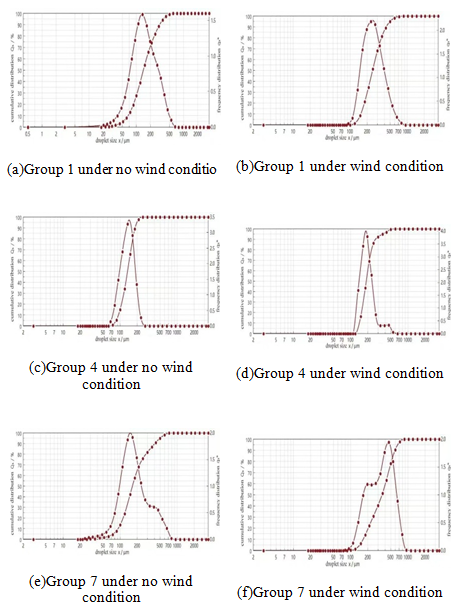
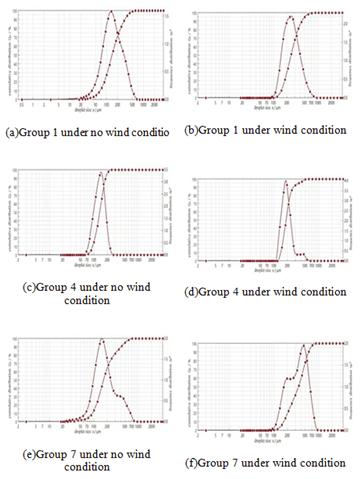
According to the laser particle size analyzer tests, the corresponding droplet size distribution data were obtained. Representative results are shown in Figure 8.
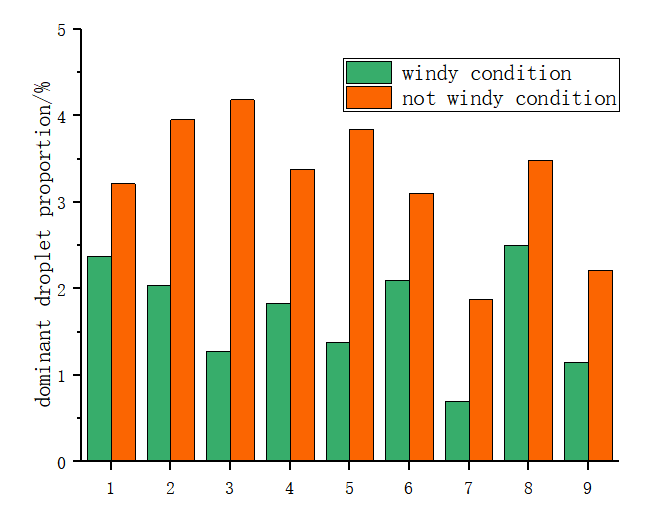
Based on the tests conducted under different operating conditions, the proportions of the dominant droplet size under varying wind speeds were obtained, as shown in Figure 9. Across all nine groups of data, the average proportion of the dominant droplet size under windy conditions was 1.71, compared to 3.25 under calm conditions, representing an average decrease of 47.5%. This result indicates that the presence of crosswind significantly reduces the proportion of the dominant droplet size in the total droplet volume. The reasons for this include two main aspects: first, fine droplets drift under the influence of horizontal airflow, deviating from the intended collection area; second, the evaporation rate of droplets accelerates during movement, leading to a reduction in droplet size or even complete evaporation.
Notably, the sensitivity of the effect of wind speed varied considerably across different experimental conditions. For example, in Group 3 (nozzle diameter 1.0 mm, pressure 0.4 MPa, wind speed 6 m/s), the difference between windy and calm conditions was the largest, with a reduction of 69.5%. In contrast, Group 1 (nozzle diameter 1.0 mm, pressure 0.2 MPa, wind speed 2 m/s) showed a relatively smaller difference, with a reduction of 26.0%. This suggests that the combination of high wind speed and high pressure exacerbates the reduction in the proportion of the dominant droplet size, which can be attributed to the fact that high pressure generates a greater number of fine droplets, and these fine droplets are more susceptible to drift loss under strong wind conditions.
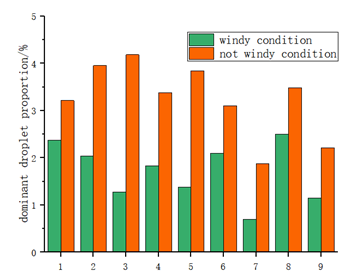
From the overall trend, the proportion of the dominant droplet size under windy conditions was generally lower than that under calm conditions, indicating that ambient airflow exerts a significant reducing effect on droplet size distribution. This trend can be attributed to two underlying physical mechanisms. First, the horizontal drag force generated by crosswind causes fine droplets to deviate from their original settling trajectory, leading to a decrease in the proportion of fine droplets within the target collection area. Second, the airflow accelerates the relative motion between droplets and the surrounding air, enhancing the evaporation rate on the droplet surface, which causes some fine droplets to evaporate completely before reaching the collection surface. The combined effect of these two mechanisms results in a systematic trend in which the proportion of the dominant droplet size under windy conditions is consistently lower than that under calm conditions.
It is noteworthy that the effect of wind speed does not occur in isolation but exhibits complex interactions with nozzle orifice diameter and operating pressure. Under the same wind speed conditions, the magnitude of the decrease in the proportion of the dominant droplet size varies considerably across different nozzle parameter combinations, indicating that the extent of the wind speed effect is modulated by the atomization characteristics of the nozzle itself. This suggests that simply reducing wind speed is not the only approach to improving the wind resistance of nozzles; optimizing nozzle structural parameters and operating conditions can also mitigate wind-induced losses to a certain extent.
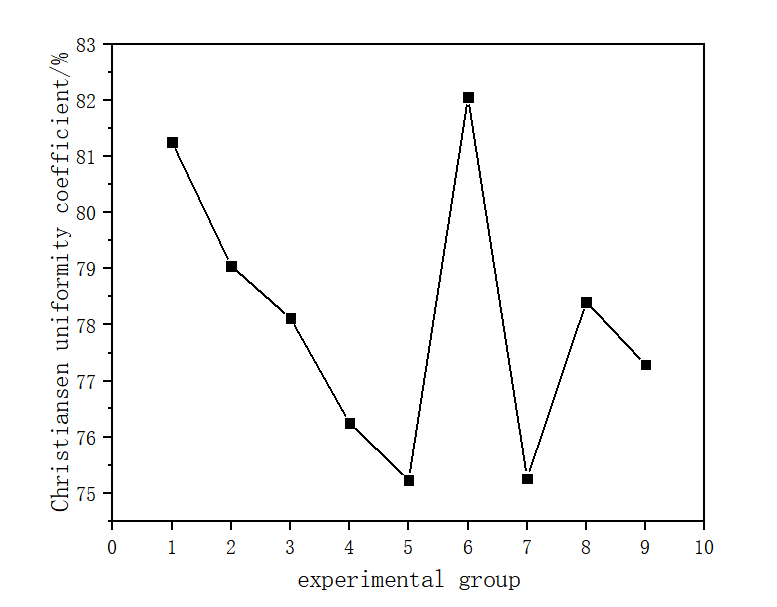
After completing the sprinkler uniformity tests, the data were analyzed and processed. Figure 10 shows the variation in sprinkler uniformity under the influence of wind speed. From the overall trend, the Christiansen uniformity coefficient (CU) exhibited a decreasing trend with increasing wind speed. The physical basis for this trend lies in the fact that the drag effect of crosswind on droplets disrupts the spatial symmetry of water distribution. Under ideal conditions of calm or light wind, droplets settle essentially vertically, forming an approximately circularly symmetric water distribution around the nozzle, resulting in high uniformity. When horizontal wind speed occurs, droplets acquire an additional horizontal displacement during the settling process, with the displacement increasing as droplet size decreases. This leads to a downwind shift in water distribution, a reduction in water volume in the upwind direction, and consequently a decrease in uniformity.
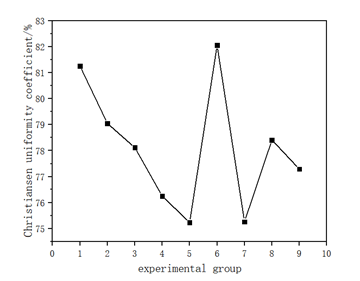
(1) Effect of wind speed under different nozzle orifice diameters:The effect of wind speed on uniformity varied significantly among nozzles with different orifice diameters. Nozzles with a small orifice diameter were the most sensitive to wind speed. Under low wind speed conditions, small-diameter nozzles generated a high proportion of fine droplets, resulting in a diffuse spray pattern and good uniformity. However, as wind speed increased, these fine droplets, due to their low mass and inertia, were readily carried by crosswind, causing substantial water drift to the downwind direction. Water volume in the upwind area decreased sharply, while water accumulated in the downwind area, leading to a rapid decline in the uniformity coefficient. Among all nozzle types, small-diameter nozzles exhibited the largest decrease in uniformity as wind speed increased from low to high, indicating their poor wind resistance.
Nozzles with a medium orifice diameter showed moderate sensitivity to wind speed. Under low wind speed conditions, they achieved uniformity levels comparable to or even higher than those of small-diameter nozzles. As wind speed increased, the droplet size distribution generated by medium-diameter nozzles exhibited a higher proportion of coarse droplets. These coarse droplets possessed greater momentum and inertia, enabling them to maintain a relatively vertical settling trajectory in the airflow, thereby preserving the symmetry of water distribution to a certain extent. Consequently, the rate of decrease in uniformity for medium-diameter nozzles under medium to high wind speeds was lower than that for small-diameter nozzles, demonstrating superior wind resistance stability.
(2) Effect of wind speed under different operating pressures:The modulating effect of operating pressure on the influence of wind speed was also significant. Under low-pressure conditions, droplet sizes tended to be larger, with a lower proportion of fine droplets. Under low wind speed conditions, these coarse droplets were less disturbed by airflow, resulting in a modest decrease in uniformity. Even when wind speed increased, the limited presence of fine droplets constrained the deterioration of uniformity. However, the limitation of low-pressure conditions lay in their low baseline uniformity under calm or light wind conditions. Therefore, despite relatively favorable wind resistance, the overall performance still fell short of the desired level.
Under low-to-medium pressure conditions, the droplet size distribution exhibited a reasonable broad-spectrum characteristic, comprising fine droplets that ensured coverage and dispersion, alongside coarse droplets that provided wind resistance inertia. Under low wind speeds, high uniformity levels were achieved. As wind speed increased, the fine droplets were partially displaced by airflow, but the coarse droplets still maintained basic distribution symmetry. Consequently, low-to-medium pressure conditions often achieved the optimal balance between uniformity and wind resistance under moderate wind speeds.
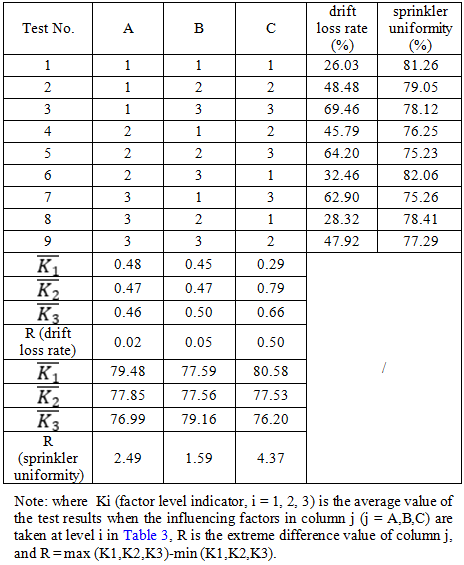
3.2. Optimization of Hydraulic PerformanceThe atomization performance of the nozzle under different operating conditions was obtained through orthogonal experimental design. Range analysis was employed to investigate the effects of wind speed, nozzle orifice diameter, and operating pressure on nozzle atomization performance. The range value R (i.e., the maximum difference in the average values of the experimental index across different levels of the same factor) directly reflects the degree of influence of each factor. A larger range value indicates a greater influence of that factor on the experimental index, and this factor should be prioritized in experimental design. The range analysis results for atomization performance are shown in Table 3.
(1) Drift Loss Rate
In terms of range magnitude, the range value for wind speed reached 0.50, considerably larger than those for operating pressure (0.05) and nozzle orifice diameter (0.02), indicating that wind speed was the most dominant factor affecting the drift loss rate. When wind speed increased from 3 m/s to 6 m/s, the average drift loss rate rose sharply from approximately 29% to 79%, an increase of 50 percentage points, indicating that moderate wind speeds already caused substantial droplet drift out of the target area. Operating pressure had a secondary effect on drift loss rate, with a range value of 0.05. As pressure increased from 0.2 MPa to 0.3 MPa and then to 0.4 MPa, the average drift loss rate increased gradually from 45% to 47% and then to 50%, showing a monotonic increasing trend. This is because higher pressure leads to finer atomization, resulting in a greater proportion of fine droplets, which have low mass and low inertia and are therefore more susceptible to drift in airflow. From the perspective of drift control, a lower pressure (0.2 MPa) is more favorable.Nozzle orifice diameter had a minimal effect on drift loss rate, with a range value of only 0.02. As diameter increased from 1.0 mm to 1.2 mm and then to 1.5 mm, the average drift loss rate decreased slightly from 48% to 47% and then to 46%, a very limited reduction.
Considering the drift loss rate alone, the optimal parameter combination was a diameter of 1.5 mm, a pressure of 0.2 MPa, and a wind speed of 2 m/s, i.e., a combination of large diameter, low pressure, and low wind speed. This combination primarily aims for low drift, which may compromise atomization quality and sprinkler uniformity, so a trade‑off with uniformity metrics is required in practical applications.
(2) Range Analysis of Sprinkler Uniformity
For sprinkler uniformity, the range values were ranked as follows: wind speed (4.37%) > nozzle orifice diameter (2.49%) > operating pressure (1.59%), with wind speed again being the most significant influencing factor. Sprinkler uniformity exhibited a monotonic decreasing trend with increasing wind speed: at a wind speed of 3 m/s, the average uniformity was 80.58%; at 6 m/s, it decreased to 77.53%; and at 9 m/s, it further decreased to 76.20%.
Nozzle orifice diameter had the second‑greatest effect on uniformity. At a diameter of 1.0 mm, the average uniformity was 79.48%; at 1.2 mm, it was 77.85%; and at 1.5 mm, it was 76.99%, showing a monotonic decreasing trend. Smaller‑diameter nozzles generated finer droplets and a more diffuse spray pattern, enabling a relatively uniform water distribution under light wind conditions. As diameter increased, droplets became coarser, jet breakup was less complete, and the water distribution became more concentrated, resulting in decreased uniformity. Therefore, from the perspective of ensuring sprinkler uniformity, smaller‑diameter nozzles are more advantageous.
Operating pressure had the smallest effect on uniformity. At a pressure of 0.2 MPa, the average uniformity was 77.59%; at 0.3 MPa, it was 77.56%, with little difference between the two. At a pressure of 0.4 MPa, the average uniformity increased to 79.16%. This trend indicates that pressure variations had little effect on uniformity within the lower pressure range (0.2–0.3 MPa), whereas increasing the pressure to 0.4 MPa improved atomization fineness and spray dispersion, resulting in a notable increase in uniformity.
Considering sprinkler uniformity alone, the optimal parameter combination was a diameter of 1.0 mm, a pressure of 0.4 MPa, and a wind speed of 2 m/s, i.e., a combination of small diameter, high pressure, and low wind speed.
(3) Comprehensive Analysis and Discussion
Nozzle orifice diameter had opposite effects on the two indicators: reducing the diameter improved uniformity but slightly increased drift loss; increasing the diameter slightly reduced drift loss but significantly decreased uniformity. This reflects a trade‑off in the selection of nozzle orifice diameter. The diameter of 1.2 mm exhibited intermediate levels for both indicators, demonstrating good overall performance, consistent with previous findings on the diameter‑to‑efficiency ratio.Operating pressure also showed contradictory effects on the two indicators: higher pressure improved uniformity (particularly at 0.4 MPa) but gradually increased drift loss. Therefore, the selection of operating pressure under windy conditions should be dynamically adjusted according to actual wind speed. Under calm or light wind conditions, a relatively high pressure (0.4 MPa) can be used to achieve good atomization and uniformity. When wind speed is high, the pressure should be appropriately reduced (0.2–0.3 MPa) to minimize drift loss and avoid the loss of fine droplets generated by high pressure.
In summary, for the optimization of nozzle performance under windy conditions, the nozzle orifice diameter and operating pressure should be appropriately matched. Under light wind conditions (below 2 m/s), a combination of a nozzle diameter of 1.0–1.2 mm and an operating pressure of 0.4 MPa is recommended. Under moderate wind speeds (around 4 m/s), a combination of a diameter of 1.2 mm and a pressure of 0.3 MPa is recommended to balance uniformity and drift control. When the wind speed exceeds 6 m/s, it is difficult to achieve satisfactory sprinkler quality with any combination, and it is advisable to suspend operations.
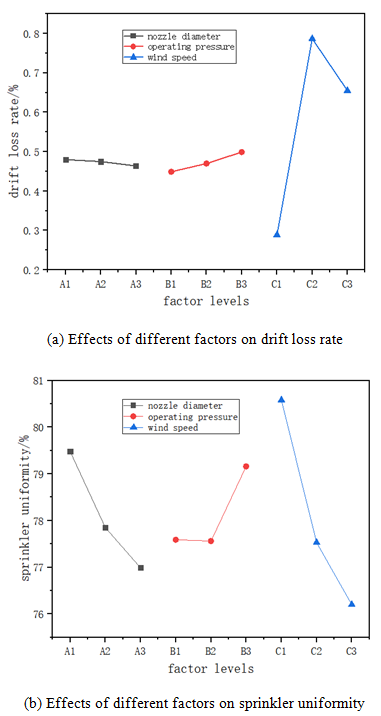
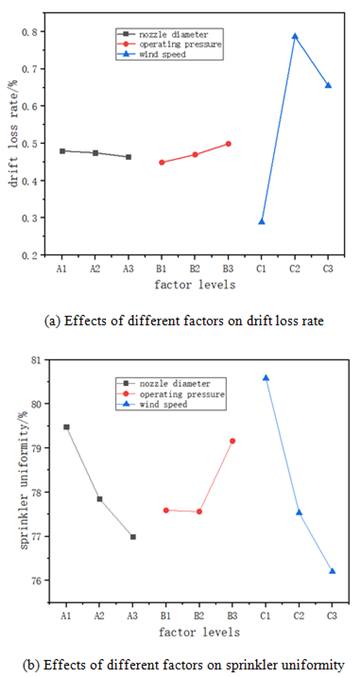
By plotting the evaluation index versus factor curves, the patterns of influence of wind speed, nozzle orifice diameter, and operating pressure on nozzle atomization performance can be clearly observed. The evaluation index versus factor curves for drift loss rate, sprinkler uniformity, and atomization performance are shown in Figure 11. For drift loss rate (Figure 11a), as nozzle orifice diameter increased, the drift loss rate showed a slight decreasing trend (larger diameter, less drift). As pressure increased, the drift loss rate exhibited an increasing trend, with higher pressure leading to more pronounced drift. Wind speed had the most significant effect on drift loss. At low wind speeds, drift was small; as wind speed increased, drift increased significantly (peaking at moderate wind speeds); with further increases in wind speed, drift levels remained high, but the rate of increase slowed, exhibiting clear wind speed sensitivity and potentially nonlinear relationships.
For sprinkler uniformity (Figure 11b), as nozzle orifice diameter increased, uniformity exhibited a decreasing trend, with larger diameters leading to lower uniformity. Pressure had a relatively small effect on uniformity, although a slight improvement was observed at the highest pressure level, with overall fluctuations being minor. Higher wind speeds resulted in lower uniformity, with a clear negative effect of wind speed. Uniformity was sensitive to both wind speed and nozzle orifice diameter, with increases in either being detrimental to uniformity.
Based on the range analysis, although the key factors affecting the hydraulic performance of the sprinkler irrigation system were identified, it remains difficult to accurately determine the significance of each factor’s influence on the atomization performance indicators. Therefore, analysis of variance (ANOVA) and the SPSS data processing system were employed to calculate the significance coefficients of each parameter with respect to the sprinkler performance indicators.
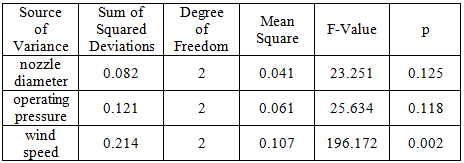
The significance of the experimental factors was determined through ANOVA, and the SPSS system was used to calculate the significance coefficients of each parameter on the sprinkler performance indicators. The ANOVA table for drift loss rate (Table 4) shows that the p-value for wind speed was 0.002, which is well below 0.05, indicating that the effect of wind speed on drift loss rate was statistically significant. In contrast, the p-values for nozzle orifice diameter and operating pressure were 0.125 and 0.118, respectively, indicating that their effects were relatively insignificant.
In terms of the sum of squares, wind speed made the largest contribution (0.214), followed by operating pressure (0.121) and nozzle orifice diameter (0.082). The sum of squares for operating pressure was slightly larger than that for diameter, indicating that under windy conditions, pressure‑induced variations in drift loss were slightly higher than those induced by diameter. From the F‑value analysis, the F‑value for pressure (25.634) was slightly higher than that for diameter (23.251), but both were much smaller than the F‑value for wind speed, indicating that the main effects of diameter and pressure were substantially weakened against the dominant background of wind speed.
Specifically, under the influence of wind speed, an increase in nozzle orifice diameter generally shifts the droplet size spectrum toward the coarse end, enhancing the wind resistance of coarse droplets and theoretically reducing drift loss. However, the effect of diameter did not reach statistical significance in this experiment, possibly because the range of diameter variation (1.0–1.5 mm) was relatively narrow, or because the strong effect of wind speed masked the weak effect of diameter. An increase in operating pressure refines droplets and increases the proportion of fine particles, thereby exacerbating wind‑induced drift.
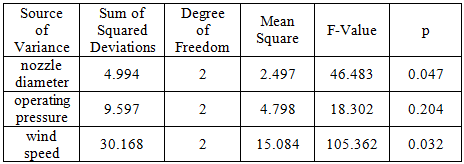
The ANOVA table for sprinkler uniformity (Table 5) shows that the p-values for nozzle orifice diameter and wind speed were 0.047 and 0.032, respectively, both of which were less than 0.05, indicating that nozzle orifice diameter and wind speed had significant effects on sprinkler uniformity. In contrast, the p-value for operating pressure was 0.204, indicating that its effect was relatively insignificant.
According to the ANOVA results for sprinkler uniformity (Table 5), the p-value for wind speed was 0.032 (<0.05), reaching a significant level, indicating that wind speed is the dominant factor affecting sprinkler uniformity. As wind speed increases, uniformity significantly decreases. Under the influence of wind speed, the effects of nozzle orifice diameter and operating pressure on improving uniformity exhibit different characteristics.
The p-value for nozzle orifice diameter was 0.047 (<0.05), also reaching a significant level, indicating that diameter has an independent significant effect on uniformity. In terms of the sum of squares (4.994) and F-value (46.683), the contribution of diameter is much smaller than that of wind speed, but its effect is stable and reliable. Under windy conditions, the improvement in uniformity by diameter manifests as follows: at low wind speeds, a small diameter (e.g., 1.0 mm) achieves higher uniformity due to diffuse atomization; at high wind speeds, a large diameter (e.g., 1.5 mm) produces coarse droplets with strong drift resistance, resulting in a smaller decrease in uniformity. Therefore, the improving effect of diameter is wind‑speed‑dependent - a proper selection of diameter can compensate for wind‑induced uniformity loss to some extent, and increasing the diameter becomes an effective means to improve uniformity under high wind speeds.
The p-value for operating pressure was 0.204 (>0.05), which did not reach a significant level, indicating that the main effect of pressure on uniformity is not significant under the influence of wind speed. Nevertheless, from the sum of squares (9.597) and F-value (18.302), pressure still makes a certain contribution. The improving effect of pressure on uniformity is generally reflected in the fact that higher pressure refines droplets and makes the spray more diffuse, thereby enhancing uniformity. However, the reason why pressure is not significant in the ANOVA may be that there is an interaction between pressure and wind speed, and the improvement in uniformity caused by pressure within the low-pressure range (0.2-0.4 MPa) - especially the jump from 0.3 to 0.4 MPa - may be masked by the strong negative effect of wind speed. Under actual windy conditions, increasing pressure can still partially compensate for uniformity loss, but the effect is less pronounced than that of diameter adjustment.
In summary, under the influence of wind speed, nozzle orifice diameter has a significant improving effect on uniformity, and this effect varies with wind speed (increasing diameter is beneficial at high wind speeds). Although operating pressure is not statistically significant, it can still serve as an auxiliary measure to mitigate wind-induced uniformity loss through appropriate pressure increases. Under windy conditions, properly matching the diameter and appropriately increasing the pressure can further improve sprinkler uniformity.
Through orthogonal experimental design and multi‑indicator analysis, this study systematically investigated the coupled effects of wind speed, nozzle orifice diameter, and operating pressure on the atomization performance of hollow cone nozzles, with a focus on revealing the regulatory mechanisms of structural and operational parameters on drift loss and sprinkler uniformity under wind‑disturbed conditions.
The results consistently show that as wind speed increased from 2 m/s to 6 m/s, sprinkler uniformity (Christiansen uniformity coefficient, CU) decreased by an average of 4.4 percentage points, while the drift loss rate increased significantly. This trend can be physically attributed to the interference of horizontal airflow with droplet trajectories.
The effect of nozzle orifice diameter on atomization performance exhibited distinct characteristics. Both range analysis and ANOVA showed that orifice diameter had a significant effect on sprinkler uniformity (p = 0.047 < 0.05), but its effect on drift loss rate did not reach a significant level (p = 0.125 > 0.05). This difference reflects the physical nature of diameter regulation: changes in orifice diameter primarily alter the initial liquid sheet thickness and jet velocity, thereby affecting the droplet size distribution after breakup. A small diameter generates finer droplets with a large spray angle, achieving high uniformity at low wind speeds (e.g., Test 1, CU = 81.26%). However, the high proportion of fine droplets results in poor wind resistance, and uniformity declines most rapidly as wind speed increases. A large diameter produces coarser droplets with stronger wind resistance, leading to a slight decrease in drift loss rate (from 48% to 46%), but uniformity decreases significantly (from 79.48% to 76.99%) because coarse droplets are incompletely atomized and water distribution tends to be concentrated. The medium diameter exhibited intermediate levels for both indicators, demonstrating the best overall performance. Notably, under high wind speeds, the rate of decrease in uniformity for the 1.2 mm diameter was lower than that for the 1.0 mm diameter, while the increase in drift loss was smaller than that for the 1.5 mm diameter, reflecting an optimization philosophy of “moderate refinement with consideration of wind resistance”.
Compared with orifice diameter, the regulation of atomization performance by operating pressure exhibited greater contradiction and limitation. The effect of pressure on drift loss rate approached significance (p = 0.118), while its effect on uniformity was not significant (p = 0.204). When pressure increased from 0.2 MPa to 0.4 MPa, the average drift loss rate increased by 5 percentage points (from 45% to 50%), whereas uniformity only showed a noticeable improvement at 0.4 MPa (79.16% vs. 77.56%). This indicates that low pressure is favorable for controlling drift but results in insufficient atomization and relatively low uniformity (77.59%); medium pressure significantly improves atomization fineness and dispersion, enhancing uniformity, but at the cost of an increased proportion of fine droplets, which exacerbates drift loss under wind. Increasing pressure raises the initial kinetic energy of the jet, promotes primary and secondary breakup of the liquid sheet, and generates more fine droplets, thereby improving spatial distribution uniformity. However, these fine droplets are precisely the component most sensitive to wind drift and are more likely to deviate from the target area under crosswind conditions. Consequently, the positive effect of pressure on uniformity is partially offset by the negative interference of wind speed, resulting in a lack of statistical significance in the ANOVA.
From a practical application perspective, pressure regulation should be considered a “conditional strategy”: at low wind speeds (≤ 2 m/s), 0.4 MPa can be used to achieve good atomization and uniformity; at moderate to high wind speeds (≥ 4 m/s), the pressure should be reduced to 0.2-0.3 MPa to control drift loss, rather than relying on high pressure to improve uniformity. This wind-speed-responsive pressure regulation strategy is more conducive to achieving the dual goals of water saving and energy efficiency compared with fixed high-pressure operation.
Through theoretical analysis and experimental validation, this study systematically investigated the effects of nozzle orifice diameter and operating pressure on nozzle atomization performance under windy conditions, and revealed the synergistic influence mechanisms of these factors on sprinkler uniformity and drift loss rate based on an orthogonal experimental design. The main conclusions are as follows:
(1) Wind speed is the most dominant factor affecting atomization performance. At low wind speeds, a pressure of 0.4 MPa combined with a small orifice diameter (1.0-1.2 mm) is recommended to achieve high uniformity. When the wind speed reaches 4 m/s or above, the pressure should be reduced to 0.2-0.3 MPa and a diameter of 1.2 mm should be selected to suppress wind-induced drift. When the wind speed exceeds 6 m/s, it is difficult to ensure irrigation quality with any parameter combination, and it is advisable to suspend operations.
(2) Nozzle orifice diameter has a significant effect on uniformity and a secondary effect on drift loss rate. The small diameter (1.0 mm) achieves the best uniformity at low wind speeds (CU up to 81.26%), but its wind resistance is poor. The large diameter (1.5 mm) slightly reduces drift loss (by approximately 2 percentage points), but uniformity decreases markedly (by approximately 2.5 percentage points). In comparison, the medium diameter (1.2 mm) best balances uniformity and wind resistance under different wind speeds, exhibiting the smallest rate of decrease in uniformity and a moderate increase in drift loss, making it the recommended diameter under complex wind conditions.
(3) Regulatory effect of operating pressure: increasing pressure improves uniformity but exacerbates drift loss. When the pressure increased from 0.2 MPa to 0.4 MPa, the average drift loss rate increased by 5 percentage points, while uniformity only showed a noticeable improvement at 0.4 MPa. Therefore, pressure should be used as an auxiliary regulation parameter in response to wind speed: at low wind speeds, 0.4 MPa is recommended to improve atomization quality; at moderate to high wind speeds, 0.2-0.3 MPa is recommended to control fine droplet drift.
| [1] | Yang, G.; Li, H.; Zhao, X.; et al.“Optimized Allocation of Irrigation Water Resources Based on Uncertainty: Model Construction and Dynamic Regulation Mechanism.” Water, 18 (5), 612-614. Mar. 2026. | ||
| In article | View Article | ||
| [2] | Singh, R.; Nath, P.C.; Praharaj, S.C.; et al. “Conservation Tillage and Sprinkler Irrigation for Sustainable Water Management and Enhanced Crop Yields in Maize and Field Pea Cropping System.” Sci. Rep, 12 (1), 35-37. Mar. 2026. | ||
| In article | View Article PubMed | ||
| [3] | Chaulagain, K.R.; Ghimire, P.; Ojha, S.; et al. “Simulation and Experimental Investigation of Low-Speed Centrifugal Pump Coupled with Vertical Ultra-Low-Head Turbine for Small-Scale Irrigation.” Eng. Rep, 8 (4), e70653. Apr. 2026. | ||
| In article | View Article | ||
| [4] | Wang, X.K.; Wu, W.J.; Meng, T.S.; et al. “Optimization of Internal Driving Structure and Hydraulic Performance of Jet Pulse Sprinkler.” Trans. Chin. Soc. Agric. Eng, 42 (2), 150-156. Jan. 2026. | ||
| In article | |||
| [5] | Zhou, X.; Li, H.; Pan, X.W.; et al. “Effect of Sprinkler Rotation Speed and Operating Pressure on Hydraulic Performance of Rotary Sprinkler.” J. Drain. Irrig. Mach. Eng., 43 (12), 1291-1296. Dec. 2025. | ||
| In article | |||
| [6] | Zhao, Y.X.; Liu, J.P.; Zhao, Y.Y.; et al. “Optimization of Structural Parameters of Pressure Regulating Device for Sprinkler Irrigation System.” J. Drain. Irrig. Mach. Eng, 43 (6), 635-641. May. 2025. | ||
| In article | |||
| [7] | Li, T.; Feng, T.T.; Gao, Z.H.; et al. “Hydraulic Performance and Optimal Structure Analysis of Deflector‑Type Sprinkler Nozzle.” J. Drain. Irrig. Mach. Eng., 43 (3), 299-307. Jan. 2025. | ||
| In article | |||
| [8] | Pyakurel, S.; Stock, N.M.; Jones, B.S.; et al. “Sprinkler Irrigation Timing Drives Water Loss Tradeoffs in an Urban, Semi-Arid Environment.” Irrig. Sci., 44 (2), 50-53. Feb. 2026. | ||
| In article | View Article | ||
| [9] | Zheng, H.; Zheng, C.; Sun, C.; et al. “Corrigendum to “Micro-Sprinkler Irrigation with Optimal Irrigation Regimes Maintain Grain Yields While Increasing Carbon Emission Efficiency and Water Productivity of Winter Wheat on the North China Plain”.” Agric. Water Manag., 32 (3), 110065–110068. Mar. 2026. | ||
| In article | View Article | ||
| [10] | Zhong, X.; Ge, M.; Tang, Z.; et al. “The Water Lifting Performance of a Photovoltaic Sprinkler Irrigation System Regulated by Solar‑Coupled Compressed‑Air Energy Storage.” Agriculture, 16 (2), 154. Jan. 2026. | ||
| In article | View Article | ||
| [11] | Fu, S.H.; Ren, N.X.; Zhang, X.Z.; et al. “Design and Experiment of Variable‑Angle Variable Spray Device for Plant Protection UAV Based on Fruit Tree Canopy Recognition.” Trans. Chin. Soc. Agric. Mach., 57 (3), 47–56.Nov.2025. | ||
| In article | |||
| [12] | Liu, X.M.; Ma, M.R.; Hou, X.W.; et al. “Research Status and Prospect of Gas‑Liquid Two‑Phase Flow Nozzle.” Trans. Chin. Soc. Agric. Mach., 56 (6), 296–318. Jun. 2025. | ||
| In article | |||
| [13] | Yuan, W.W.; Wang, X.K.; Yan, H.L.; et al. “Structure Optimization of Jet Tee Based on Non‑Rotating Refractive Sprinkler.” J. Drain. Irrig. Mach. Eng., 43 (2), 209–216. Jan. 2025. | ||
| In article | |||
| [14] | Zhu, L.; Hui, X.; Yan, H.J.; et al. “Water Distribution Characteristics and Optimization of Different End Gun Combinations for Circular Sprinkler Irrigation System.” Trans. Chin. Soc. Agric. Eng., 41 (07), 42–51. Jan. 2025. | ||
| In article | |||
| [15] | Zhang, R.; Liu, Y.C.; Zhu, D.L.; et al. “Calculation Method of Sprinkler Droplet Equivalent Indicators Based on Energy Weighting.” Trans. Chin. Soc. Agric. Eng., 40 (22), 69-78. Nov. 2024. | ||
| In article | |||
| [16] | Wang, Z.X.; Jiang, Y.; Pan, X.W.; et al. “Design and Hydraulic Performance Test of Jet Impact Low‑Pressure Sprinkler.” Trans. Chin. Soc. Agric. Eng., 40 (6), 220–227. May. 2024. | ||
| In article | |||
| [17] | Bonzi, L.; Carrara, M.; Hamouda, F.; et al. “Effect of Irrigation Uniformity on the Delineation of Homogeneous Zones in a Pear Orchard.” Agric. Water Manag., 32 (6), 110224–110229. Jun. 2026. | ||
| In article | View Article | ||
| [18] | Liu, S.S.; Ma, X.; Wang, Y.W.; et al. “Design and Experiment of Variable‑Rate Sprinkler Irrigation Device for Water, Fertilizer and Pesticide in Rice Seedling Raising in Field.” Trans. Chin. Soc. Agric. Eng., 40 (13), 1–14. Aug. 2024. | ||
| In article | |||
| [19] | Tang, Y.T.; Yang, S.X.; Yang, J.P.; et al. “Comprehensive Analysis of Influencing Factors on Sprinkler Irrigation Uniformity Based on Orthogonal Test Method.” J. Drain. Irrig. Mach. Eng., 40 (11), 1145–1150. Nov. 2022. | ||
| In article | |||
| [20] | Li, H.Y.; Li, T.; Di, Y.H. “Effect of Nozzle Deflector of Impact Sprinkler on Hydraulic Performance and Its Optimization Evaluation.” J. Irrig.Drain., 44 (3). 34–45. Mar. 2025. | ||
| In article | |||
| [21] | Deng, J.B. Optimization Design and Forming Accuracy of DIW Liquid Metal 3D Printing Nozzle Structure. Master’s Thesis, Kunming University of Science and Technology, Kunming, China, 2024. | ||
| In article | |||
Published with license by Science and Education Publishing, Copyright © 2026 Yongqiang Zhang, Xingye Zhu, Chenglin Wang, Sijia Zhu and Junping Liu
 This work is licensed under a Creative Commons Attribution 4.0 International License. To view a copy of this license, visit
http://creativecommons.org/licenses/by/4.0/
This work is licensed under a Creative Commons Attribution 4.0 International License. To view a copy of this license, visit
http://creativecommons.org/licenses/by/4.0/
| [1] | Yang, G.; Li, H.; Zhao, X.; et al.“Optimized Allocation of Irrigation Water Resources Based on Uncertainty: Model Construction and Dynamic Regulation Mechanism.” Water, 18 (5), 612-614. Mar. 2026. | ||
| In article | View Article | ||
| [2] | Singh, R.; Nath, P.C.; Praharaj, S.C.; et al. “Conservation Tillage and Sprinkler Irrigation for Sustainable Water Management and Enhanced Crop Yields in Maize and Field Pea Cropping System.” Sci. Rep, 12 (1), 35-37. Mar. 2026. | ||
| In article | View Article PubMed | ||
| [3] | Chaulagain, K.R.; Ghimire, P.; Ojha, S.; et al. “Simulation and Experimental Investigation of Low-Speed Centrifugal Pump Coupled with Vertical Ultra-Low-Head Turbine for Small-Scale Irrigation.” Eng. Rep, 8 (4), e70653. Apr. 2026. | ||
| In article | View Article | ||
| [4] | Wang, X.K.; Wu, W.J.; Meng, T.S.; et al. “Optimization of Internal Driving Structure and Hydraulic Performance of Jet Pulse Sprinkler.” Trans. Chin. Soc. Agric. Eng, 42 (2), 150-156. Jan. 2026. | ||
| In article | |||
| [5] | Zhou, X.; Li, H.; Pan, X.W.; et al. “Effect of Sprinkler Rotation Speed and Operating Pressure on Hydraulic Performance of Rotary Sprinkler.” J. Drain. Irrig. Mach. Eng., 43 (12), 1291-1296. Dec. 2025. | ||
| In article | |||
| [6] | Zhao, Y.X.; Liu, J.P.; Zhao, Y.Y.; et al. “Optimization of Structural Parameters of Pressure Regulating Device for Sprinkler Irrigation System.” J. Drain. Irrig. Mach. Eng, 43 (6), 635-641. May. 2025. | ||
| In article | |||
| [7] | Li, T.; Feng, T.T.; Gao, Z.H.; et al. “Hydraulic Performance and Optimal Structure Analysis of Deflector‑Type Sprinkler Nozzle.” J. Drain. Irrig. Mach. Eng., 43 (3), 299-307. Jan. 2025. | ||
| In article | |||
| [8] | Pyakurel, S.; Stock, N.M.; Jones, B.S.; et al. “Sprinkler Irrigation Timing Drives Water Loss Tradeoffs in an Urban, Semi-Arid Environment.” Irrig. Sci., 44 (2), 50-53. Feb. 2026. | ||
| In article | View Article | ||
| [9] | Zheng, H.; Zheng, C.; Sun, C.; et al. “Corrigendum to “Micro-Sprinkler Irrigation with Optimal Irrigation Regimes Maintain Grain Yields While Increasing Carbon Emission Efficiency and Water Productivity of Winter Wheat on the North China Plain”.” Agric. Water Manag., 32 (3), 110065–110068. Mar. 2026. | ||
| In article | View Article | ||
| [10] | Zhong, X.; Ge, M.; Tang, Z.; et al. “The Water Lifting Performance of a Photovoltaic Sprinkler Irrigation System Regulated by Solar‑Coupled Compressed‑Air Energy Storage.” Agriculture, 16 (2), 154. Jan. 2026. | ||
| In article | View Article | ||
| [11] | Fu, S.H.; Ren, N.X.; Zhang, X.Z.; et al. “Design and Experiment of Variable‑Angle Variable Spray Device for Plant Protection UAV Based on Fruit Tree Canopy Recognition.” Trans. Chin. Soc. Agric. Mach., 57 (3), 47–56.Nov.2025. | ||
| In article | |||
| [12] | Liu, X.M.; Ma, M.R.; Hou, X.W.; et al. “Research Status and Prospect of Gas‑Liquid Two‑Phase Flow Nozzle.” Trans. Chin. Soc. Agric. Mach., 56 (6), 296–318. Jun. 2025. | ||
| In article | |||
| [13] | Yuan, W.W.; Wang, X.K.; Yan, H.L.; et al. “Structure Optimization of Jet Tee Based on Non‑Rotating Refractive Sprinkler.” J. Drain. Irrig. Mach. Eng., 43 (2), 209–216. Jan. 2025. | ||
| In article | |||
| [14] | Zhu, L.; Hui, X.; Yan, H.J.; et al. “Water Distribution Characteristics and Optimization of Different End Gun Combinations for Circular Sprinkler Irrigation System.” Trans. Chin. Soc. Agric. Eng., 41 (07), 42–51. Jan. 2025. | ||
| In article | |||
| [15] | Zhang, R.; Liu, Y.C.; Zhu, D.L.; et al. “Calculation Method of Sprinkler Droplet Equivalent Indicators Based on Energy Weighting.” Trans. Chin. Soc. Agric. Eng., 40 (22), 69-78. Nov. 2024. | ||
| In article | |||
| [16] | Wang, Z.X.; Jiang, Y.; Pan, X.W.; et al. “Design and Hydraulic Performance Test of Jet Impact Low‑Pressure Sprinkler.” Trans. Chin. Soc. Agric. Eng., 40 (6), 220–227. May. 2024. | ||
| In article | |||
| [17] | Bonzi, L.; Carrara, M.; Hamouda, F.; et al. “Effect of Irrigation Uniformity on the Delineation of Homogeneous Zones in a Pear Orchard.” Agric. Water Manag., 32 (6), 110224–110229. Jun. 2026. | ||
| In article | View Article | ||
| [18] | Liu, S.S.; Ma, X.; Wang, Y.W.; et al. “Design and Experiment of Variable‑Rate Sprinkler Irrigation Device for Water, Fertilizer and Pesticide in Rice Seedling Raising in Field.” Trans. Chin. Soc. Agric. Eng., 40 (13), 1–14. Aug. 2024. | ||
| In article | |||
| [19] | Tang, Y.T.; Yang, S.X.; Yang, J.P.; et al. “Comprehensive Analysis of Influencing Factors on Sprinkler Irrigation Uniformity Based on Orthogonal Test Method.” J. Drain. Irrig. Mach. Eng., 40 (11), 1145–1150. Nov. 2022. | ||
| In article | |||
| [20] | Li, H.Y.; Li, T.; Di, Y.H. “Effect of Nozzle Deflector of Impact Sprinkler on Hydraulic Performance and Its Optimization Evaluation.” J. Irrig.Drain., 44 (3). 34–45. Mar. 2025. | ||
| In article | |||
| [21] | Deng, J.B. Optimization Design and Forming Accuracy of DIW Liquid Metal 3D Printing Nozzle Structure. Master’s Thesis, Kunming University of Science and Technology, Kunming, China, 2024. | ||
| In article | |||