Bael, scientifically known as Aegle marmelos (L.) Correa and belongs to the Rutaceae family. The present study evaluates the feasibility of producing herbal tea from different parts of Bael, including whole flowers, stamens, and immature fruits, to identify the most suitable part for tea preparation. The preparation process involved crushing and oven-drying the raw materials, followed by sieving and packaging into tea bags. Phytochemical analysis was performed through aqueous extraction, with total phenolic content (TPC) measured using the Folin-Ciocalteu method and total flavonoid content assessed via a modified aluminum chloride (AlCl₃) method. Antioxidant activity was evaluated using the DPPH free radical scavenging and Oxygen Radical Absorbance Capacity (ORAC) assays, while mineral content was analyzed with Inductively Coupled Plasma Mass Spectrometry (ICP-MS). Sensory evaluation was conducted with thirty-one untrained panelists using a 7-point Hedonic scale to assess acceptability. The results indicated that herbal tea derived from immature fruit exhibited significantly elevated concentrations of phenolic compounds (206.63±1.58 mg GAE g-1) and flavonoids (12.90±0.12 mg QE g-1) in comparison to tea made from whole flowers and stamens. The results were statistically significant, with a p-value of less than 0.05. The highest level of antioxidant activities (67.22±2.4 µg mL-1) was observed in whole flower tea. Comparatively higher mineral content was recorded in stamen tea. Sensory evaluation revealed that herbal tea made from immature fruit had the best organoleptic qualities, while stamen was the least suitable for herbal tea preparation. In conclusion, herbal tea made from immature Bael fruit demonstrated strong market potential, due to its high phytochemical content, antioxidant properties, and favorable sensory attributes.
In recent years, there has been a significant global trend towards identification of foods and beverages rich in antioxidants and health-boosting properties which has fueled by increasing consumer awareness about natural health products made from herbs because of their long-standing consumption and widespread acceptance 1, 2. Herbal tea has its roots in traditional, homemade brews consumed by people for their health benefits for centuries 3. With continuous innovation, it has evolved into a popular beverage with notable success in the market 4. Herbal beverages are generally referred to as herbal infusion, tisane, or botanical infusion can be prepared by steeping or boiling fresh or dried parts of edible plants such as flowers, immature fruits, leaves, seeds, and roots 5, 6. Herbal teas are rich in naturally occurring bioactive compounds such as carotenoids, phenolic acids, flavonoids, alkaloids, polyacetylenes, saponins and terpenoids, among others 7, 8, 9. Scientific research evidence indicates that these bioactive compounds offer a myriad of biological benefits, such as antioxidant, antibacterial, antiviral, anti-inflammatory, antiallergic, antithrombotic and vasodilatory action, as well as providing protection against mutations, cancer, and aging 10, 11. In the Sri Lankan context, before black tea was introduced, people relied on various medicinal herbs, including: Koththamalli (Coriandrum sativum), Iramusu (Hemidesmus indicus), Ranawara (Cassia auriculata), Belimal (Aegle marmelos), Nelli (Phyllanthus emblica), Rasakinda (Tinospora cordifolia) and Polpala (Aerva lanata) as beverages by just boiling the sun-dried parts of these herbs during their daily diet 12.
Aegle marmelos belongs to family Rutaceae, native to India and can also be found in Malaysia, Myanmar, Pakistan, Bangladesh, Sri Lanka, Thailand and the majority of the countries in South-East Asia. It remains as an underutilized fruit in South Asian region 13 with high therapeutic properties which included astringency, antidiarrhea, anti-dyscentricity, antipyretic, antiulcer, antidiabetic, antibacterial, antiviral, antifungal, anti-inflammatory, anticancer, analgesic and radio protectiveness 14, 15, 16. As a result, various parts of Bael tree are highly valued in Ayurvedic medicines and have high demand for pharmaceutical purposes 17. Therefore, it has an immense potential to be used in the functional food industry 14. Along with other popular beverages such as tea, coffee and cocoa, Bael can be entered into an emerging niche market as a consumer preferable, economically feasible, and therapeutically valuable herbal beverage.
With increasing global demand for unique, naturally sourced ingredients, Sri Lanka’s indigenous plants provide a competitive advantage. For Sri Lanka to succeed in the global herbal tea market, a multifaceted approach is required. This study will be crucial in this aspect which focused on research and development of one of an herbal plant well-known in Sri Lanka that has highly therapeutic values which can be highly demanded in the global market specially among health-conscious people. As well as it is crucial to select the best element of Bael which has high antioxidant properties, phytochemicals and consumer preference organoleptic qualities in order to produce healthy herbal tea.
Chemicals and Reagents Used
2,2-diphenyl1picrylhydrazyl (DPPH), Trolox (6hydroxy2,5,7,8tetramethylchroman-2-carboxylic acid), Methanol, Quercetin, Folin-Ciocaltue's reagent, gallic acid and 2,2’Azobis(2methylpropionamidine) dihydrochloride (AAPH) were purchased from Sigma-Aldrich Co., Louis, (USA). AlCl3 was purchased from DUKSAN Pure Chemicals, Ansan City, Kyungkido, Korea. Sodium carbonate was purchased from Sisco Research Laboratories Pvt Ltd., Maharashtra, India. All chemicals and reagents used in the experiment were analytical grade.
Sample collection
Fully matured, naturally dried Bael flowers, stamens, and Bael fruits, aged between two to three months, were purchased from a local market.
Sample preparation
The flowers were manually cleaned to remove soil and other foreign particles. Dust was removed from stamens by sieving through meshes of 710 µm and 450 nm. The collected fruits were cleaned and washed under running tap water to remove dirt, dust and insects. Also, the fresh weight of whole flowers, stamens and fruits was first measured by using top-loading balance (KERN, Germany).
The following parameters were measured for ten fruits: average weight, average girth, average length, average width, rind color, thickness of the rind, and flesh color. Next, the fruits were sliced into 2 mm thick pieces using a knife. The slices were chopped by using Multi chopper (Model- MG75SS, Jinasena (Pvt) Ltd, Sri Lanka). The chopped fruit sample was dried at 100°C for seven hours and cleaned petals and stamens were dried at 60°C for five hours in an oven (Memmert, Model- ISOTECH milliK, Germany).
All the three dried samples were then weighed and ground by using mixture grinder (Panasonic AC400, Osaka, Japan) and sieved through two sieves with mesh sizes of 450 nm and 710 µm, resulting two powder samples of 710 µm and 450 nm. These samples were packed separately in airtight polythene bags and sealed using a plastic film sealer. Finally, packages were labeled and stored under room temperature.
Preparation of tea bags
1.5 g of powdered samples were added to each empty tea bag, which were then sealed using a plastic film sealer. Whole flowers, stamens and immature fruit tea bags were prepared separately. These tea bags were packed in airtight polythene bags and stored in room temperature for later antioxidant analyzation and sensory evaluation.
Preparation of herbal tea
In order to prepare the tea, 180 mL of boiled water (100°C) was added to a teacup, and one tea bag was steeped in it for 2–3 minutes. After 3 minutes the tea bag was removed, and the extract was used for antioxidant analysis and sensory evaluation.
Determination of Total Phenolic Content (TPC)
The total phenolic contents (TPC) of prepared tea samples were determined by using Folin-Ciocalteu method described by Singleton 18 with slight modifications. A volume of 20 μL of each tea sample (100 μg/mL) was mixed with 110 μL of the Folin-Ciocalteu reagent (diluted 1:10 with deionized water) and was neutralized with 70 μL of sodium carbonate solution (10%, w/v). The reaction mixture was incubated at room temperature for 30 minutes. The absorbance of the resulting blue color was measured at the wavelength of 765 nm against a sample blank (water). The standard curve of gallic acid, (y = 0.079x + 0.203, r2 = 0.986) was used to determine TPC, which was expressed as gallic acid equivalent per gram of extract (GAE/g extract).
Determination of Total Flavonoid Content (TFC)
Total flavonoid content (TFC) was determined by the modified AlCl3 method described by Gursoy et al., 19. Each tea sample (100 μL) was separately mixed with 100 μL of 2% AlCl3. After 10-minute incubation at room temperature, the absorbance of the reaction mixture was measured at the wavelength of 415 nm against a methanol blank. The standard curve of quercetin (y = 0.045x + 0.028, r2 = 0.996) was used to determine the TFC, expressed as mg quercetin equivalent per gram (of extract (mg QE/g extract) 20.
2,2-Diphenyl-1-picrylhydrazyl (DPPH) free radical scavenging assay
The DPPH free radical scavenging assay was performed according to the method described 20. Three tea samples were tested at the assay concentration range of 5 to 40 μg/mL. DPPH solution (40 μg/mL, 200 μL) was incubated with 100 μL of each tea sample at room temperature (25±2°C) in the dark for 10 minutes. The absorbance was recorded against a blank wavelength of 517 nm. Trolox was used as a positive standard. The capacity to scavenge the DPPH radical by 50% (IC50) was calculated from the dose effect curves by linear regression. The percentage inhibition was calculated using the following equation:
 |
where, A (sample) is the absorbance of the sample extracts, A (control) is the absorbance of the assay using the buffer instead of inhibitor (sample).
Oxygen Radical Absorbance Capacity (ORAC) assay
The oxygen radical absorbance capacity (ORAC) assay was performed by the method described by 21 with slight modifications as explained by Liyanaarachchi 20. The reaction was carried out in 75 mM phosphate buffer (pH 7.4) with a final reaction volume of 200 μL. Tea samples (10 μL, varying from 1 to 50 μg/mL) and fluorescein (100 μL; 1.6 μg/mL) solutions were added, and mixture was pre-incubated for 5 minutes at 37°C. Fifty micro liters of AAPH solution was added immediately, and decaying of fluorescence was scanned for 35 minutes at 1-minute interval at 37 °C (Ex 494 nm, Em 535 nm). The net area under the curve (AUC) corresponding to a sample was calculated by subtracting the AUC corresponding to the blank. ORAC values were expressed as Trolox equivalents using the standard curve prepared with Trolox (y = 0.349x + 0.845, r2 = 0.996). The ORAC values of the extracts were expressed as mg/g Trolox equivalent (TE) of dry extract 20.
Proximate Analysis
Samples of Bael fruit tea were subjected to proximate analysis using the methods outlined by AACC (2000). All analyses were performed in triplicates to ensure accuracy and reliability of the results.
Determination of Ash Content
Estimation of ash content was done in accordance with the process demonstrated by AACC (2000) method 08-01. Weighted crucibles containing 2 g of each Bael fruit powdered tea samples were ignited through an oxidizing flame for few minutes, then placed in a furnace at 550°C for 4 hours. The crucibles then shifted to desiccator to cool, reweight and the ash content was calculated using following formula.
 |
Determination of Moisture Content
The moisture content of Bael fruit tea samples was determined using the official method 44-01 of the AACC (2000). First, the weight of the petri dishes was recorded. Then, 2 g of each tea sample was added to the dishes, which were placed in an oven at 105°C for 4 hours. Afterward, the dishes were transferred from the oven to desiccators for 30 minutes. The petri dishes with the samples were weighed again, and the percentage moisture was calculated using the following formula:
 |
Determination of Mineral Content
The mineral content was determined using the Inductively Coupled Plasma Mass Spectrometry (ICP-MS) method. A 25 g sample of each tea type was prepared by digestion, typically utilizing acids such as nitric acid, to convert the solid samples into a liquid form. This solution was then introduced into the ICP-MS instrument, where it was atomized and ionized using an argon plasma at high temperatures. The generated ions were directed into a mass spectrometer, where they were separated based on their mass-to-charge ratio. A detector then measured these ions, allowing for the quantification of trace elements at parts per million levels.
Determination of pH
The pH of Bael fruit tea samples was measured using pH meter (AMT20), which was standardized with buffer solutions of pH 4, 7 and 10 following the method as described in AOAC (2007) 22.
Determination of Total Soluble Solid
The total soluble solids, expressed as degree brix, were analyzed using hand refractometer at room temperature following the procedure of 23.
Determination of Color Value
The color of Bael fruit tea samples was measured using a CR-400 Chroma Meter (KONICA MINOLTA, Inc, Japan), which consists of a measuring head (CR400). The meter was calibrated using a white tile (D65: Y = 85.8, x = 0.3200, y = 0.3381). A 50 mL beaker filled with tea was placed on a standard white plate. Three measurements of L*, a*, and b* values representing lightness, red to green color dimension, and yellow to blue color dimension, respectively, were taken for tea sample by placing the Chroma meter directly on top of the tea sample.
Sensory Evaluation
A sensory evaluation was conducted for three herbal tea samples made from whole flowers, stamens, and immature fruit using a 7-point Hedonic scale. Thirty untrained panelists participated in the evaluation. The sensory attributes assessed included appearance, color, aroma, taste, mouthfeel, aftertaste, and overall acceptability.
Statistical Analysis
All non-parametric data was analyzed by using Friedman test at 95% confident level. Parametric data was statistically analyzed by one – way ANOVA test at significant level of 95%. Statistical analysis for each experiment was conducted by using R software version 4.3.3. & Minitab software 21.2 version.
In the present study, all steps of herbal tea preparation using different parts of Bael (whole flower, stamens and immature fruits were demonstrated. Physical parameters of immature fruits are demonstrated in Table 1 -3.
Total Phenol Content
According to the results presented in Table 4, the immature Bael fruit tea demonstrated a significantly higher total phenol content of 206.63 mg GAE/g DW, which is notably superior to that of whole flower tea, recorded at 38.88 mg GAE/g DW. Conversely, stamen tea exhibited the lowest total phenol content, quantified at 17.83 mg GAE/g DW.
The total phenol contents identified in this study were markedly higher than those reported in previous investigations on Bael fruit powder and Bael pulp, which yielded 10.6 mg GAE/g DW and 87.34 mg GAE/g DW, respectively 24. Furthermore, the total phenol content of immature Bael fruit tea exceeded the findings from prior research that assessed various medicinal herbs in Sri Lanka, where the total phenol content ranged from 1.2 to 111 mg GAE/g DW 12.
Total Flavonoid Content
As shown in Table 4, there were significant differences (p < 0.05) in the total flavonoid contents among the three types of Bael teas. Immature Bael fruit tea exhibited the highest total flavonoid content at 12.9 mg QE/g DW of tea, while Bael stamen tea had the lowest total flavonoid content at 5.20 mg QE/g DW of tea among the samples tested. Whole flower tea had a total flavonoid content of 9.82 mg QE/g DW of tea, which falls between that of immature fruit tea and stamen tea.
However, the research conducted by 12 regarding the total phenolic content (TPC) and total flavonoid content (TFC) of various herbal tea blends indicated that the total flavonoid content ranged from 7.1 to 176.4 mg RE/g DW. In addition, the total flavonoid content of the medicinal plants analyzed in that study varied from 1.58 ± 0.10 mg QE/g extract to 20.4 ± 0.6 mg QE/g extract. Consequently, the flavonoid content of the prepared Bael tea samples was found to be comparable and considerably higher than that of most medicinal plants examined in the earlier study.
DPPH Radical Scavenging Activity (IC50 value)
According to the data presented in Table 4, stamen tea demonstrated a significantly higher IC50 value of 219.69 ± 3.42 µg/mL, which corresponds to a lower level of antioxidant activity. In comparison, immature fruit tea exhibited a lower IC50 value of 117.01 ± 1.86 µg/mL, indicating enhanced antioxidant properties relative to stamen tea. Furthermore, whole flower tea showcased the lowest IC50 value of 67.22 ± 1.67 µg/mL, signifying the highest antioxidant activity among the three tea samples analyzed. In summary, the antioxidant activity of the three types of tea samples is ordered as follows: whole flower tea > immature fruit tea > stamen tea.
According to a previous study referenced as 24, the in-vitro antioxidant activity (IC50) of Bael flowers was found to be 50.5 µg/mL for aqueous extracts. Additionally, study 20 cites that the IC50 values of extracts from various tested medicinal plants ranged from 3.31 ± 0.05 to 1348.68 ± 77.70 μg/mL. Therefore, the antioxidant properties observed in the present study agree with previous studies.
Oxygen Radical Absorbance Capacity
The results for the oxygen radical absorbance capacity of the three Bael tea samples are summarized in Table 4. The immature fruit tea exhibited the highest ORAC value at 363.74 mg TE/g of tea, followed by the whole flower tea at 132.03 mg TE/g of tea, and the stamen tea at 111.19 mg TE/g of tea.
According to a previous study conducted by 20, the ORAC values of extracts from all tested medicinal plants ranged from 103.5 ± 11.5 to 1771 ± 47 mg TE/g extract. Additionally, a study on the antioxidant capacity of green tea, using hot tea extracts, reported ORAC values ranging from 23.40 ± 1.50 to 113.6 ± 2.30 mg TE/g per sample 25. Therefore, in comparison, Bael tea samples exhibit a higher antioxidant capacity than green tea based on the ORAC assay.
Mineral Composition of Tested Tea Samples
The content of 16 minerals of all three tea samples were analyzed and presented in Table 5. By comparing the resulted mineral contents of the present study with the previous study 26, 27 on green Bael fruit powder, prepared herbal tea from immature Bael fruit had comparatively high amounts of minerals.
Comparison of total phenol content, total flavonoids content and antioxidant capacity of traditionally prepared Bael fruit slices and immature Bael fruit tea
Table 6 presents the phytochemical and antioxidant capacities of traditional immature Bael fruit slices purchased from the open market as well as prepared immature Bael fruit tea. The study revealed significant differences in total phenolic content (TPC), total flavonoid content (TFC), and antioxidant capacity between prepared immature Bael fruit tea and dried fruit slices extract.
Immature fruit tea showed a 206.63 mg GAE/g DW TPC, while tea prepared by dried Bael sclices demonstrated 0.52 mg GAE/g DW. and a fourfold higher TFC (12.90 ± 0.08 mg QE/g DW) than dried slices. Antioxidant capacity, measured via IC50 and ORAC, showed lower IC50 for immature Bael fruit tea, though ORAC values were similar. The enhanced quality of immature tea is attributed to processing differences, where crushing facilitates compound release, unlike traditional methods using whole dried slices with limited extraction.
Physicochemical properties of prepared immature Bael fruit tea
Maintaining physicochemical properties of herbal tea, such as pH, ash content, moisture content, colour and brix value is crucial for ensuring quality, and understanding potential health benefits. Table 7, demonstrates the essential physicochemical parameters of immature Bael fruit tea.
Sensory evaluation of immature Bael fruit tea
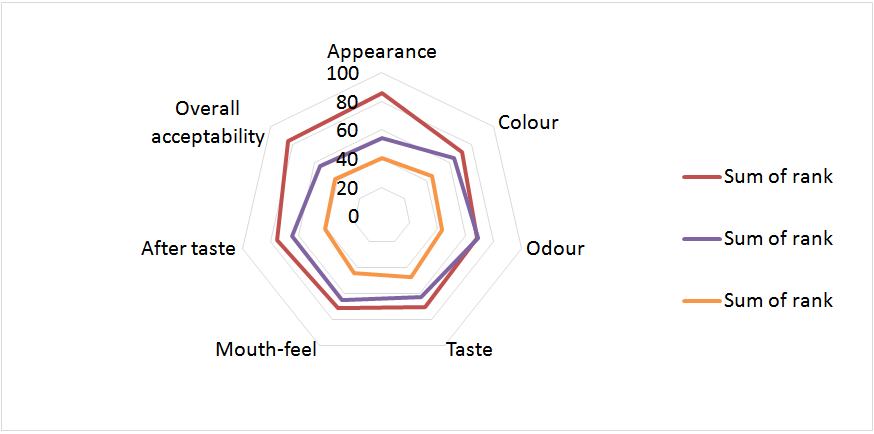
Sensory evaluation is pivotal in the food and beverage industry, offering valuable insights into consumer perceptions, preferences, and overall product acceptability. This information is essential for guiding product development, ensuring quality assurance, and shaping effective marketing strategies. Figure 1 illustrates the sensory evaluation results for tea prepared using immature Bael fruit.

The findings from the sensory evaluation of the three types of Bael tea revealed that the immature fruit tea was the most preferred among the panelists, exhibiting the highest sensory qualities across various attributes. Specifically, it received the top score for appearance (85.5), colour (71.0), taste (70.0), mouthfeel (71.0), aftertaste (75.0), and overall acceptability (83.5). On the other hand, stamen tea had the lowest rankings across the board. The whole flower tea demonstrated moderate scores for most attributes, except for odour, which deviated from the trend. The statistical analysis confirmed that the differences in sensory attributes were significant, with p<0.05 across the different tea types. These results suggest that immature fruit tea possesses superior organoleptic qualities compared to the other two teas. The elevated levels of bioactive properties found in immature fruits are consistent with the research conducted by Jayaratne 28, who assessed the bioactive compounds present in Punica granatum. This observation indicates that immature fruits may provide significant health benefits due to their concentration of bioactive constituents.
The findings highlight the immature fruit of Bael as the optimal ingredient for creating herbal tea, showcasing not only superior organoleptic qualities but also higher levels of Total Phenol Content, Total Flavonoid Content, and enhanced antioxidant properties compared to teas made from other floral parts, like whole flowers and stamens. Although stamen-based tea received the lowest preference in sensory evaluations, it was found to possess significantly higher mineral content, which makes it more suitable as a food supplement rather than herbal tea. Furthermore, the newly developed herbal tea, thanks to its refined processing and quality, has the potential to supplant traditional fruit slice-based Bael teas in the local market, appealing to a wider range of consumers.
Gratitude is extended to the senior scientists and laboratory staff of the Herbal Technology and Food Technology Sections at the Industrial Technology Institute and the lecturers of the department of plant sciences at Rajarata University for their invaluable assistance and encouragement.
| [1] | Yuchao Liu, Chunyan Guo, Erhuan Zang, Ruyu Shi, Qian Liu, Min Zhang, Keyong Zhang, Minhui Li, Review on herbal tea as a functional food: classification, active compounds, biological activity, and industrial status, J. Futur. Foods, vol. 3, no. 3, pp. 206–219, 2023. | ||
| In article | View Article | ||
| [2] | Ariffin, F. Heong Chew, S. Bhupinder, K.. Karim, A. and N. Huda, “Antioxidant capacity and phenolic composition of fermented Centella asiatica herbal teas,” J. Sci. Food Agric., vol. 91, no. 15, 2731–2739, 2011. | ||
| In article | View Article PubMed | ||
| [3] | Huda HS, Majid NBA, Chen Y, Adnan M, Ashraf SA, Roszko M, Bryła M, Kieliszek M, Sasidharan S. Exploring the ancient roots and modern global brews of tea and herbal beverages: A comprehensive review of origins, types, health benefits, market dynamics, and future trends. Food Sci Nutr. 2024 Jul 21; 12(10): 6938-6955. | ||
| In article | View Article PubMed | ||
| [4] | Xuetao, P. “Innovation Strategies of the Herbal Tea Industry in Guangdong,” pp. 9–19, 2015. | ||
| In article | |||
| [5] | Liu, Y. D. Wang, S. Zhang, and H. Zhao, “Global expansion strategy of Chinese herbal tea beverage,” Adv. J. Food Sci. Technol., vol. 7, no. 9, pp. 739–745, 2015. | ||
| In article | View Article | ||
| [6] | Pathaw N, Devi KS, Sapam R, Sanasam J, Monteshori S, Phurailatpam S, Devi HC, Chanu WT, Wangkhem B, Mangang NL. A comparative review on the anti-nutritional factors of herbal tea concoctions and their reduction strategies. Front Nutr. 2022 Oct 5; 9: 988964. | ||
| In article | View Article PubMed | ||
| [7] | Hajimonfarednejad, M. Ostovar, M. Raee, M. J. Hashempur, M. H. Mayer, J. G.and M. Heydari, “Cinnamon: A systematic review of adverse events,” Clin. Nutr., vol. 38, no. 2, pp. 594–602, 2019. | ||
| In article | View Article PubMed | ||
| [8] | Lis B. and B. Olas, “Pro-health activity of dandelion (Taraxacum officinale L.) and its food products – history and present,” J. Funct. Foods, vol. 59, no. May, pp. 40–48, 2019. | ||
| In article | View Article | ||
| [9] | Vuong, Q. V. Pham, H. N. T. and C. Negus, “From Herbal Teabag to Infusion—Impact of Brewing on Polyphenols and Antioxidant Capacity,” Beverages, vol. 8, no. 4, pp. 1–13, 2022. | ||
| In article | View Article | ||
| [10] | Samanta, S. “Potential Bioactive Components and Health Promotional Benefits of Tea (Camellia sinensis),” J. Am. Coll. Nutr., vol. 0, no. 0, pp. 1–29, 2020. | ||
| In article | View Article PubMed | ||
| [11] | Sen S. and Chakraborty, R. Herbal Medicine in India. 2020. | ||
| In article | View Article | ||
| [12] | Perera M. V. H. L., Abeysinghe’ D. C., and R. M. Dharmadasa, “Phenolic and Flavonoid Contents and Antioxidant Capacity of Selected Green and Black Tea (Camellia sinensis L.) Blends with Medicinal Herbs,” no. May, pp. 450–454, 2016. | ||
| In article | |||
| [13] | Pathirana, C. K. Madhujith, T. and J. Eeswara, “Bael (Aegle marmelos L. Corrêa), a Medicinal Tree with Immense Economic Potentials,” Adv. Agric., vol. 2020, 2020. | ||
| In article | View Article | ||
| [14] | Khanal, A. Dall’ S. acqua, and R. Adhikari, “Bael (Aegle marmelos), an Underutilized Fruit with Enormous Potential to Be Developed as a Functional Food Product: A Review,” J. Food Process. Preserv., vol. 2023, pp. 1–11, 2023. | ||
| In article | View Article | ||
| [15] | Jagetia, G. C. “Ethnomedicinal properties of Bael Aegle marmelos Corrêa family Rutaceae: A review,” Trends Hortic., vol. 6, no. 2, p. 2941, 2023. | ||
| In article | View Article | ||
| [16] | Mukhia, J. D. Chatterjee, S. Ranjit Biswal, and R. Kumar, “Advances in Production Technology of Bael,” Prod. Technol. Garlic, no. November, pp. 99–117, 2023. | ||
| In article | |||
| [17] | Mani, A. Singh, A. Jain, N. and S. Misra, “Flowering, Fruiting and Physio-chemical Characteristics of Bael (Aegle marmelos Correa.) Grown in Northern Districts of West Bengal,” Curr. J. Appl. Sci. Technol., vol. 23, no. 3, pp. 1–8, 2017. | ||
| In article | View Article | ||
| [18] | Singleton, V. L. Orthofer, R. and and R. M. Lamuela-ravent, “Analysis of Total Phenols and Other Oxidation Substrates and Antioxidants by Means of Folin-Ciocalteu Reagent,” Lipids, vol. 3, no. 6, p. 561, 1968. | ||
| In article | |||
| [19] | Gursoy, N. Sarikurkcu, C. Cengiz, M. and M. H. Solak, “Antioxidant activities, metal contents, total phenolics and flavonoids of seven Morchella species,” Food Chem. Toxicol., vol. 47, no. 9, pp. 2381–2388, 2009. | ||
| In article | View Article PubMed | ||
| [20] | Liyanaarachchi, G. D. Samarasekera, J. K. Mahanama, R. R.K. R. R.and K. D. P. Hemalal, “Tyrosinase, elastase, hyaluronidase, inhibitory and antioxidant activity of Sri Lankan medicinal plants for novel cosmeceuticals,” Ind. Crops Prod., vol. 111, no. November 2017, pp. 597–605, 2018. | ||
| In article | View Article | ||
| [21] | B. Ou, M. Hampsch-Woodill, and R. L. Prior, “Development and validation of an improved oxygen radical absorbance capacity assay using fluorescein as the fluorescent probe,” J. Agric. Food Chem., vol. 49, no. 10, pp. 4619–4626, 2001. | ||
| In article | View Article PubMed | ||
| [22] | Thiex, N. “Evaluation of analytical methods for the determination of moisture, crude protein, crude fat, and crude fiber in distillers dried grains with solubles,” J. AOAC Int., vol. 92, no. 1, pp. 61–73, 2009. | ||
| In article | View Article PubMed | ||
| [23] | Cambier, C. Poppe, J. Galle, W. Elsen, S. and N. De Temmerman, “The Circular Retrofit Lab: A multi-disciplinary development of a building envelope according to circular design qualities,” IOP Conf. Ser. Earth Environ. Sci., vol. 855, no. 1, 2021. | ||
| In article | View Article | ||
| [24] | Sarkar, T. Salauddin, M.and R. Chakraborty, “In-depth pharmacological and nutritional properties of bael (Aegle marmelos): A critical review,” J. Agric. Food Res., vol. 2, no. October, 2020. | ||
| In article | View Article | ||
| [25] | Ramirez-Aristizabal, A. Luz Stella ORTÍZ, M. F. RESTREPO-ARISTIZABAL, and J. F. SALINAS-VILLADA, “Comparative Study of the Antioxidant Capacity in Green Tea By Extraction At Different Temperatures of Four Brands Sold in Colombia Tt - Estudio Comparativo De La Capacidad Antioxidante En Té Verde Por Extracción a Diferentes Temperaturas De Cuatro Marcas,” Vitae, vol. 24, no. 2, pp. 132–145, 2017, [Online]. Available: http://www.scielo.org.co/scielo.php?script=sci_arttext&pid=S0121-40042017000200132 & lang=pt %0A http:// www.scielo.org.co/ pdf/vitae/v24n2/0121-4004-vitae-24-02-00132.pdf. | ||
| In article | |||
| [26] | Islam M. M., “Comparative Study of Minerals Content in Green and Ripe Bael (Wood Apple) Powder,” Int. J. Basic Appl. Sci. IJBAS-IJENS, no. January 2011, 2011, [Online]. Available: https://www.researchgate.net/publication/281176004. | ||
| In article | |||
| [27] | Tanmay Sarkar, Molla Salauddin, Runu Chakraborty,. In-depth pharmacological and nutritional properties of bael (Aegle marmelos): A critical review, Journal of Agriculture and Food Research, 2: 1-23,2020. | ||
| In article | View Article | ||
| [28] | Jayarathne, P.S.I.U., Dharmadasa, R.M. ,. Abeysinghe, D.C , and S.W.A. Weerawarna, Changes of physicochemical parameters, bioactive compounds & antioxidant capacity of four different cultivars of Punica granatum (L.) at four distinct maturity stages, Food Chemistry Advances, 4,1-7 2024. | ||
| In article | View Article | ||
Published with license by Science and Education Publishing, Copyright © 2025 S.M.P.P. Bandara, R.M. Dharmadasa, W.C.P. Egodawatta and Upeksha Medawatta
 This work is licensed under a Creative Commons Attribution 4.0 International License. To view a copy of this license, visit
http://creativecommons.org/licenses/by/4.0/
This work is licensed under a Creative Commons Attribution 4.0 International License. To view a copy of this license, visit
http://creativecommons.org/licenses/by/4.0/
| [1] | Yuchao Liu, Chunyan Guo, Erhuan Zang, Ruyu Shi, Qian Liu, Min Zhang, Keyong Zhang, Minhui Li, Review on herbal tea as a functional food: classification, active compounds, biological activity, and industrial status, J. Futur. Foods, vol. 3, no. 3, pp. 206–219, 2023. | ||
| In article | View Article | ||
| [2] | Ariffin, F. Heong Chew, S. Bhupinder, K.. Karim, A. and N. Huda, “Antioxidant capacity and phenolic composition of fermented Centella asiatica herbal teas,” J. Sci. Food Agric., vol. 91, no. 15, 2731–2739, 2011. | ||
| In article | View Article PubMed | ||
| [3] | Huda HS, Majid NBA, Chen Y, Adnan M, Ashraf SA, Roszko M, Bryła M, Kieliszek M, Sasidharan S. Exploring the ancient roots and modern global brews of tea and herbal beverages: A comprehensive review of origins, types, health benefits, market dynamics, and future trends. Food Sci Nutr. 2024 Jul 21; 12(10): 6938-6955. | ||
| In article | View Article PubMed | ||
| [4] | Xuetao, P. “Innovation Strategies of the Herbal Tea Industry in Guangdong,” pp. 9–19, 2015. | ||
| In article | |||
| [5] | Liu, Y. D. Wang, S. Zhang, and H. Zhao, “Global expansion strategy of Chinese herbal tea beverage,” Adv. J. Food Sci. Technol., vol. 7, no. 9, pp. 739–745, 2015. | ||
| In article | View Article | ||
| [6] | Pathaw N, Devi KS, Sapam R, Sanasam J, Monteshori S, Phurailatpam S, Devi HC, Chanu WT, Wangkhem B, Mangang NL. A comparative review on the anti-nutritional factors of herbal tea concoctions and their reduction strategies. Front Nutr. 2022 Oct 5; 9: 988964. | ||
| In article | View Article PubMed | ||
| [7] | Hajimonfarednejad, M. Ostovar, M. Raee, M. J. Hashempur, M. H. Mayer, J. G.and M. Heydari, “Cinnamon: A systematic review of adverse events,” Clin. Nutr., vol. 38, no. 2, pp. 594–602, 2019. | ||
| In article | View Article PubMed | ||
| [8] | Lis B. and B. Olas, “Pro-health activity of dandelion (Taraxacum officinale L.) and its food products – history and present,” J. Funct. Foods, vol. 59, no. May, pp. 40–48, 2019. | ||
| In article | View Article | ||
| [9] | Vuong, Q. V. Pham, H. N. T. and C. Negus, “From Herbal Teabag to Infusion—Impact of Brewing on Polyphenols and Antioxidant Capacity,” Beverages, vol. 8, no. 4, pp. 1–13, 2022. | ||
| In article | View Article | ||
| [10] | Samanta, S. “Potential Bioactive Components and Health Promotional Benefits of Tea (Camellia sinensis),” J. Am. Coll. Nutr., vol. 0, no. 0, pp. 1–29, 2020. | ||
| In article | View Article PubMed | ||
| [11] | Sen S. and Chakraborty, R. Herbal Medicine in India. 2020. | ||
| In article | View Article | ||
| [12] | Perera M. V. H. L., Abeysinghe’ D. C., and R. M. Dharmadasa, “Phenolic and Flavonoid Contents and Antioxidant Capacity of Selected Green and Black Tea (Camellia sinensis L.) Blends with Medicinal Herbs,” no. May, pp. 450–454, 2016. | ||
| In article | |||
| [13] | Pathirana, C. K. Madhujith, T. and J. Eeswara, “Bael (Aegle marmelos L. Corrêa), a Medicinal Tree with Immense Economic Potentials,” Adv. Agric., vol. 2020, 2020. | ||
| In article | View Article | ||
| [14] | Khanal, A. Dall’ S. acqua, and R. Adhikari, “Bael (Aegle marmelos), an Underutilized Fruit with Enormous Potential to Be Developed as a Functional Food Product: A Review,” J. Food Process. Preserv., vol. 2023, pp. 1–11, 2023. | ||
| In article | View Article | ||
| [15] | Jagetia, G. C. “Ethnomedicinal properties of Bael Aegle marmelos Corrêa family Rutaceae: A review,” Trends Hortic., vol. 6, no. 2, p. 2941, 2023. | ||
| In article | View Article | ||
| [16] | Mukhia, J. D. Chatterjee, S. Ranjit Biswal, and R. Kumar, “Advances in Production Technology of Bael,” Prod. Technol. Garlic, no. November, pp. 99–117, 2023. | ||
| In article | |||
| [17] | Mani, A. Singh, A. Jain, N. and S. Misra, “Flowering, Fruiting and Physio-chemical Characteristics of Bael (Aegle marmelos Correa.) Grown in Northern Districts of West Bengal,” Curr. J. Appl. Sci. Technol., vol. 23, no. 3, pp. 1–8, 2017. | ||
| In article | View Article | ||
| [18] | Singleton, V. L. Orthofer, R. and and R. M. Lamuela-ravent, “Analysis of Total Phenols and Other Oxidation Substrates and Antioxidants by Means of Folin-Ciocalteu Reagent,” Lipids, vol. 3, no. 6, p. 561, 1968. | ||
| In article | |||
| [19] | Gursoy, N. Sarikurkcu, C. Cengiz, M. and M. H. Solak, “Antioxidant activities, metal contents, total phenolics and flavonoids of seven Morchella species,” Food Chem. Toxicol., vol. 47, no. 9, pp. 2381–2388, 2009. | ||
| In article | View Article PubMed | ||
| [20] | Liyanaarachchi, G. D. Samarasekera, J. K. Mahanama, R. R.K. R. R.and K. D. P. Hemalal, “Tyrosinase, elastase, hyaluronidase, inhibitory and antioxidant activity of Sri Lankan medicinal plants for novel cosmeceuticals,” Ind. Crops Prod., vol. 111, no. November 2017, pp. 597–605, 2018. | ||
| In article | View Article | ||
| [21] | B. Ou, M. Hampsch-Woodill, and R. L. Prior, “Development and validation of an improved oxygen radical absorbance capacity assay using fluorescein as the fluorescent probe,” J. Agric. Food Chem., vol. 49, no. 10, pp. 4619–4626, 2001. | ||
| In article | View Article PubMed | ||
| [22] | Thiex, N. “Evaluation of analytical methods for the determination of moisture, crude protein, crude fat, and crude fiber in distillers dried grains with solubles,” J. AOAC Int., vol. 92, no. 1, pp. 61–73, 2009. | ||
| In article | View Article PubMed | ||
| [23] | Cambier, C. Poppe, J. Galle, W. Elsen, S. and N. De Temmerman, “The Circular Retrofit Lab: A multi-disciplinary development of a building envelope according to circular design qualities,” IOP Conf. Ser. Earth Environ. Sci., vol. 855, no. 1, 2021. | ||
| In article | View Article | ||
| [24] | Sarkar, T. Salauddin, M.and R. Chakraborty, “In-depth pharmacological and nutritional properties of bael (Aegle marmelos): A critical review,” J. Agric. Food Res., vol. 2, no. October, 2020. | ||
| In article | View Article | ||
| [25] | Ramirez-Aristizabal, A. Luz Stella ORTÍZ, M. F. RESTREPO-ARISTIZABAL, and J. F. SALINAS-VILLADA, “Comparative Study of the Antioxidant Capacity in Green Tea By Extraction At Different Temperatures of Four Brands Sold in Colombia Tt - Estudio Comparativo De La Capacidad Antioxidante En Té Verde Por Extracción a Diferentes Temperaturas De Cuatro Marcas,” Vitae, vol. 24, no. 2, pp. 132–145, 2017, [Online]. Available: http://www.scielo.org.co/scielo.php?script=sci_arttext&pid=S0121-40042017000200132 & lang=pt %0A http:// www.scielo.org.co/ pdf/vitae/v24n2/0121-4004-vitae-24-02-00132.pdf. | ||
| In article | |||
| [26] | Islam M. M., “Comparative Study of Minerals Content in Green and Ripe Bael (Wood Apple) Powder,” Int. J. Basic Appl. Sci. IJBAS-IJENS, no. January 2011, 2011, [Online]. Available: https://www.researchgate.net/publication/281176004. | ||
| In article | |||
| [27] | Tanmay Sarkar, Molla Salauddin, Runu Chakraborty,. In-depth pharmacological and nutritional properties of bael (Aegle marmelos): A critical review, Journal of Agriculture and Food Research, 2: 1-23,2020. | ||
| In article | View Article | ||
| [28] | Jayarathne, P.S.I.U., Dharmadasa, R.M. ,. Abeysinghe, D.C , and S.W.A. Weerawarna, Changes of physicochemical parameters, bioactive compounds & antioxidant capacity of four different cultivars of Punica granatum (L.) at four distinct maturity stages, Food Chemistry Advances, 4,1-7 2024. | ||
| In article | View Article | ||