The containment of greenhouse gases, mainly CO2, is considered a significant solution to abating the impact of climate change. Possible leakages of stored CO2 in the subsurface will pose significant threats to humans and indirectly pollute aquatic ecosystems. Seal integrity and fault connectivity analyses are necessary for assessing storage sites, especially where depleted hydrocarbon reservoirs are the target. Many studies on top seal efficiency, lateral flow boundaries and fault reactivation have been carried out during exploration and production of oil fields. This makes these fields good candidates where such existing data and knowledge can be harnessed and applied to the case of CO2 storage. This work uses data from two wells, including extracted Vshale/Vclay logs, SGR compilation, vertical and lateral structural limits, to assess the potential for vertical and lateral leakages for CO2 subsurface storage. It was shown that shale content, lithology and compaction, often indicated in the well logs and stress tests, can be used to estimate top and lateral limiting stress. By identifying the important parameter in the estimation of capillary entry pressure (Pe), it was demonstrated that the evaluation process may be repeated without direct measurement of parameters such as pore throat(R), contact angle (θ) and interfacial tension(γ). The results have shown that understanding the mechanisms involved in fault communication and compartmentalization is vital for developing more effective strategies in choosing depleted reservoirs selectively, and for safely and reliably storing CO2 in the subsurface. Hopefully, these findings will improve the potential for CO2 storage and highlight the important parameters to be considered for improving the overall efficiency of subsurface carbon storage systems.
Greenhouse gases, including carbon dioxide, methane, nitrogen oxide, and fluorinated gases, play an important role in preserving the ozone layer, yet their excessive presence poses a risk to the planet. These gases contribute significantly to global warming and climate change, particularly, carbon dioxide (CO2), which has emerged as a major culprit in exacerbating the adverse impacts of global warming, accounting for more than 70% of all greenhouse gases. The release of atmospheric CO2 stems from various sources, encompassing human exhalation, volcanic eruptions, decomposing plant matter, and underground aquifers. Over the years, the atmospheric CO2 level has surged dramatically, a trend largely linked to augmented fossil fuel consumption and intensified utilization of power plants, vehicles, and industrial facilities.
One of several mitigation options of CO2 emissions is Carbon Capture and 1, 2. Reliable CCS monitoring is vital to confirm that injected CO2 stays in the reservoir as intended, and that any occurring leakage is promptly detected allowing corrective actions to be initiated 3. Safe and efficient operation of CCS sites will require developing new site assessment approaches to reduce risks associated with CCS operations and facilitate leak detection 4. In addition to leak detection is the quantification of the leakage. This is equally important to assess economic, environmental, and reputational risks 5.
An effective approach to combat the detrimental effects of excessive CO2 lies in capturing and storing it within underground aquifers, depleted reservoirs, and saline reservoirs. By confining CO2, the quantity released into the atmosphere is significantly reduced, provided that suitable geological conditions exist to avert potential leakage back into the atmosphere. Such carbon sequestration endeavors hold promise in mitigating the impact of greenhouse gases and preserving environmental stability. Understanding the compaction process is crucial for various geological applications, such as understanding sedimentary basin evolution, predicting subsidence, and assessing the potential for storage. Leakage of CO2 from saline aquifers involves co-current and countercurrent flow of two fluid phases (brine and CO2), and relative permeability and capillary pressure play critical roles in buoyancy driven flow 6, 7, 8.
This work studies the prospect for such effective and safe storage, which depends mainly on the subsurface structural and trapping conditions. Among the factors assessed in this work is the role of capillary entry pressure across low permeability faults, interplay between top-seal and lateral seal, role of burial and fault reactivation, as well as regional seismicity. The reservoir must have containment barriers (faults, caprock, or an impermeable medium) to avert upward movement out of the reservoir and retard the progress of the CO2 plume to minimize stresses acting on faults in the reservoir 9. An efficacious trapping mechanism necessitates a good configuration. It is the very existence of a seal that typically forestalls the upward migration of these hydrocarbons. Fluid will always flow towards an area of less resistance without a capillary hindrance or barrier. When the pressure of the hydrocarbon becomes greater than the seal, it causes fluid to leak.
Sealing occurs if,
Ph + Pw < P seal.
While leakage occurs when,
Ph + Pw > P seal.
Where:
Ph is the hydrocarbon pressure, Pw is the water or hydrostatic pressure and Pseal is the pressure the seal, or the top or lateral flow limiting barrier.
Pseal may be alternated by Pstress, in which case the lithology and strength of the top-seal is the controlling factor of trapping/sealing.
Seal potential of the caprock is determined by its seal capacity, seal geometry, and seal integrity, which are evaluated through petrophysical analyses, well data, and seismic surveys. Shales have higher sealing capacity than carbonate and sandstone samples. Pore throat is a more controlling factor than sorting for sealing capacity in shales. These include diffusion and capillary migration due to changes in wettability and/or interfacial tension caused by CO2-caprock interaction. Also, changes in the caprock mineralogy due to geochemical interactions between the rock, formation fluids and injected CO2 may lead to either the dissolution or precipitation of some minerals and thus to an increase or decrease in permeability 10.
In any CO2 injection modeling, the buoyancy of injected CO2, which is less dense than brine, is a driving force for vertical displacement of CO2 toward the top of the formation. In this vertical flow, the buoyant CO2 may remain as a mobile fluid but be prevented from flowing back to the surface by an impervious cap rock 11. Faults and fractures may enhance or retard the rates of fluid migration 12. Apart from natural leakage triggers, activities like tunneling, mining, reservoir impoundment, hydraulic fracturing, and the injection or withdrawal of fluids in nearby fields or wells to a CO2 site can induce stresses and strains in the Earth's crust. This deformation can influence the local Geo-mechanical environment, potentially leading to ground subsidence, induced seismicity, or changes in rock permeability running to far distances and onto CO2 storage sites. One of the basins of interest in this study is the Guyana basin, which is on the passive margin, considered a safe site for CO2 storage.
Aims And Objective of The Study
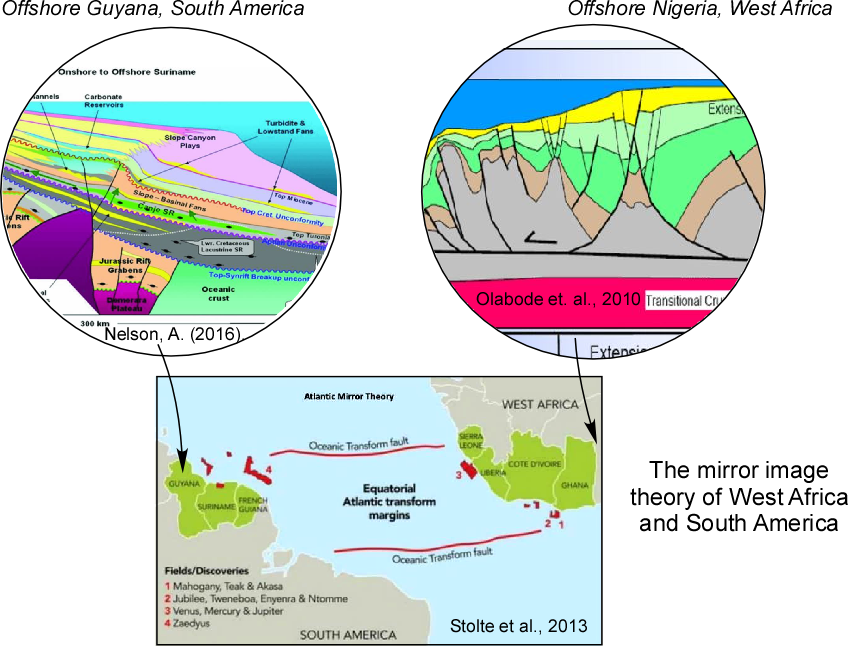
The aim is to highlight the important parameters of safety, and potential for CO2 storage. This will involve identifying suitable types of trap and the subsurface conditions that may favour retention, especially across fault and top seal within structurally confined reservoirs. Such storage site must be safe, especially an onshore site. This is because the proximity of onshore sites to densely populated areas are a risk factor. Should leakage occur, it could result in toxicity to aquatic organisms and humans, leading to distressing consequences such as skin infections and liver damage to the population. This study \conditions essential for the effective retention of CO2, notably focusing on seal integrity and fault compartmentalization, using data from different regions, as shown above.
Search for Suitable Sites For CCUS
By comprehensively examining the identified conditions and factors of safe CO2 storage in the subsurface, this research aims to contribute in advancing sustainable carbon sequestration solutions for mitigating CO2 emissions. This work evaluates the basins and fields suitable for carbon capture and storage. To achieve successful containment of CO2 subsurface, various critical conditions must be met to prevent any potential leakage back into the atmosphere, and these conditions are mainly in the subsurface and depend on the site's geology. Several natural CO2 reservoir analogues show that similar structural and trapping mechanisms may contain CO2 in natural oil and gas traps, which have been depleted by drilling and oil production activities. It was important to look at field data and oil well data, in known sites, and use the information from them to apply in the current seal integrity and connectivity analysis. Few sites, targeted for available data are in the Niger Delta, which has abundant subsurface data for depleted wells, and may help in a pioneer study of the Guyana Basin for CSS.
Sedimentation
The Guyana sedimentary basin is located along the northeastern South America's passive coast. It faces the Atlantic Ocean Basin to the northeast and includes the offshore of Guyana and Suriname 12. The basin is distinguished by the existence of a top-tier source rock from the Cenomanian to the Turonian which was discovered in wells created by the Ocean Drilling Program (ODP) in deep offshore waters along the boundary between Guyana and Suriname in the Demerara Rise 13
Tectonic Evolution
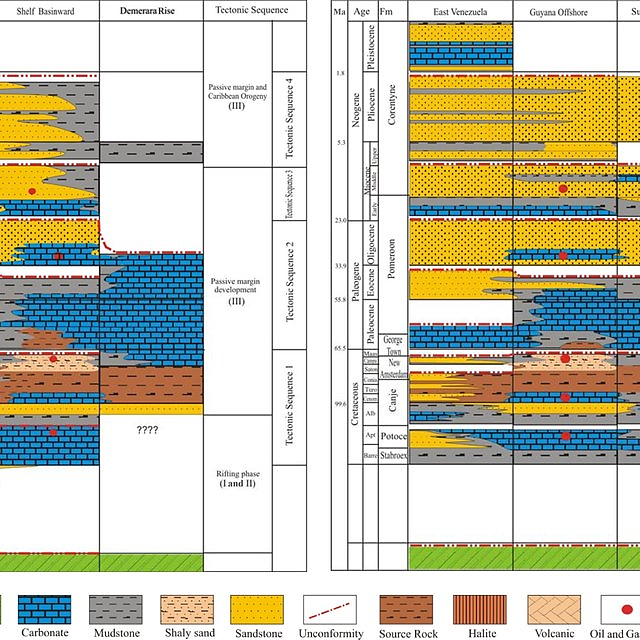
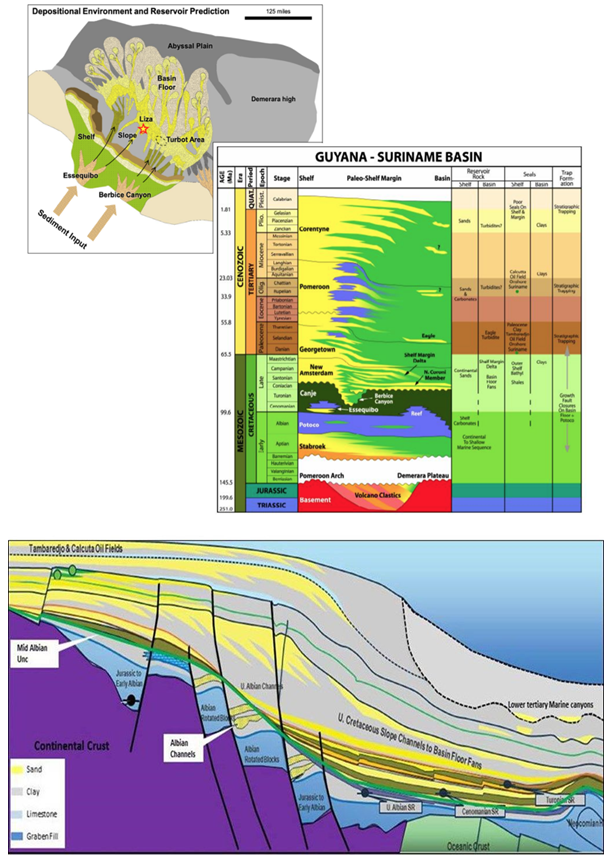
According to plate reconstructions, rifting and early seafloor spreading (between 190 and 160 Ma) started with NNW/SSE extension, but later, the relative plate motion altered to NW/SE. There is less magmatic basin floor westward, and the distance from continental crust to oceanic crust reduces from 200 km in Suriname to less than 50 km in Guyana. The geometry and location of the onshore Takutu Graben point to the possibility that it was a failed arm of a Jurassic triple junction that, during post-rift subsidence, presumably trapped the Berbice River and directed sediment into the Guyana Basin. The tectonic sequence, age and stratigraphy of the Guyana Offshore is shown in Figure 1.


The NE margin of the basin experienced crustal-scale folds and thrusts, small inversions of the basin margin, and basin-segmenting faults due to Berriasian to Aptian shortening. Inboard inverted basement faults are stratigraphically trapped Liza trend hydrocarbon discoveries, indicating a connection between transform margin structure and their formation. Four major stratigraphic sequences have been identified from the Cretaceous through the Pliocene.
The Niger Delta Basin as Analogue
One interesting comparison can be made between the Guyana Basin and the Niger Delta Basin in Nigeria. The Guyana Basin is located off the northern coast of South America, while the Niger Delta Basin is situated on the West African continental margin in the Gulf of Guinea. Both basins have experienced tectonic activities influencing their geologic history and petroleum potential. The tectonic history of the Niger Delta Basin is well-documented by several researchers. These activities were triggered by the tectonic extension of the African plate from the South American continental plate and the opening of the South Atlantic 15.
On the other hand, information about the tectonic evolution of the Guyana Basin is not as extensively documented. However, it is known that the basin originated from a rift system during the Late Cretaceous period. The sedimentation patterns in the two basins also differ. In the Niger Delta Basin, the sedimentary fill is categorized into Quaternary deposits, Benin, Agbada, and Akata Formations, each representing a different age.
This work reviews the comparative analysis of the tectonostratigraphic setting between the Guyana Basin and the Niger Delta Basin and analyze parameters that are common in both basins for effectiveness of CO2 capture and storage. The focus is on structural and geometrical analysis, using few existing wells and seismic profiles. Among the methods that would be adopted would be to:
• Extrapolate Vshale or Vclay data to simulate capillary entry pressure.
• Perform computation of Shale Gouge Ratio (SGR) and apply to fault sealing.
• Establish capillary entry pressures and VClay relations.
• Assess trapping mechanisms and evaluate retention capacity.
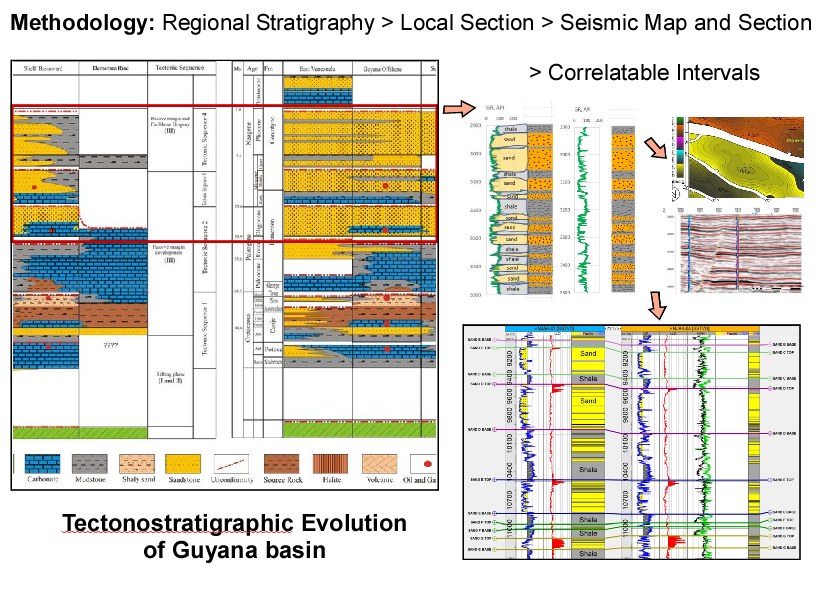
As some of the original data and wells were for oil and gas development, the current study will attempt to reevaluate them in the context of CO2 storage, noting that certain factors such as density, fluid phase and capillary behaviors may vary. The tectonic and stratigraphic sequences were correlated with intervals of interest, highlighting where the target reservoirs occur adjacent to faulting, leading to local closures that are observable in maps and sections (Figure 3).

Extraction of V-shale and Estimation of Compaction
V-shale is a critical parameter to understand because it can affect the productivity of oil and gas reservoirs by occluding the pore spaces. The extraction of V-shale involves using a Gamma-ray log. Shale typically has a higher gamma ray reading and a lower resistivity compared to sand due to the presence of radioactive elements. The degree of compaction can be affected by physical and mechanical processes and these, in turn affect the degree of porosity and permeability. Understanding the compaction rate is crucial as it affects the storage and flow of hydrocarbons.
Shale Gouge Ratio Computation
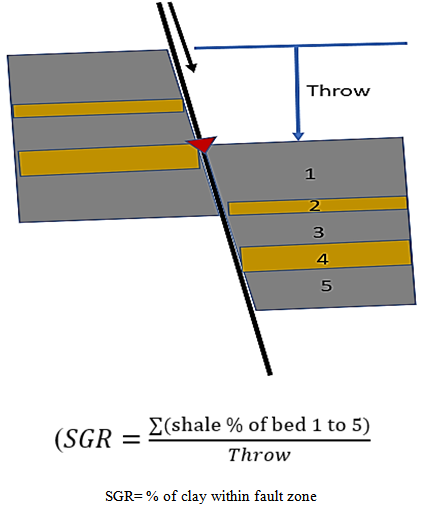
SGR can be estimated by adding the sum of each percentage of shale in a series of beds, let us say bed 1 to 5, and then dividing it with the throw as shown in the figure below. e.g., fig x. The shale gouge ratio was done by using Vclay from Njak well one data. The shale gouge ratio was estimated by dividing the Net Shale in the footwall against the Throw (as shown in Figure 4).

For SGR computation, the units, for example, unit 1 in the foot wall above, have moved down to the position of level 2 in the footwall. It was done almost automatically, where log values were available with constant depth, using 16 method.
Use of Leak-Off Tests / Fracture Points
Through a relation among SGR, the Capillary Entry pressures and VClay, it was possible to Estimate Fracture Gradient /Leak-Off Tests, as shown in the subsequent sections. Leak-off tests are performed to estimate the point where the drilling fluid will exert a stress high enough to cause a fracture. LOT helps to give an idea of the relative strength of rocks. If the formation pressure exceeds the borehole pressure, there will be fluid influx; on the other hand, the mud weight pressure should not exceed the leak-off pressure to prevent lost circulation.
Assessing Trapping Mechanisms and Retention Capacity
These made it possible to assess trapping mechanisms and evaluate retention capacity in the case of CO2 subsurface storage (compared to natural oil and gas traps). One of the ways to do this, is to evaluate the fault permeability and wall rock microfabrics, usually in field or cored fault zones. These is a standard process for the evaluation of oil and gas traps, with major difference being the density difference between hydrocarbon and CO2 and the variation in reactivity of the fluids with wall rocks.
Fault Permeability And Wall Rock Microfabrics
There is a relationship between macroscopic physical and petrophysical properties and the morphology or shape of individual grains within fault zones 17. Faults can act as barriers to fluid flow, especially if there is a significant offset or if the rocks on either side of the fault have different permeabilities. In the case of the Njak fault, it appears to act as a barrier or seal to the lateral movement of hydrocarbons, further ensuring their confinement. These was shown by the shaly gouge materials, comparable with that sampled in similar sediments in the Alpine regions. Figure X is a sample of fault gouge from the Annot Sandstone, whose permeabilities were measured and related to the clay content.
Other zones of interest, where ample sample data have been collected and analyzed are the foreland basins and marine deposits in the Pyrenees and the Alps, where outcropping deltaic and turbiditic sediments are well characterized. Such field-based studies form the basis for calibrations and upscaling of structural and fluid flow parameters applied in target depleted well in selected sites studied in the current work.
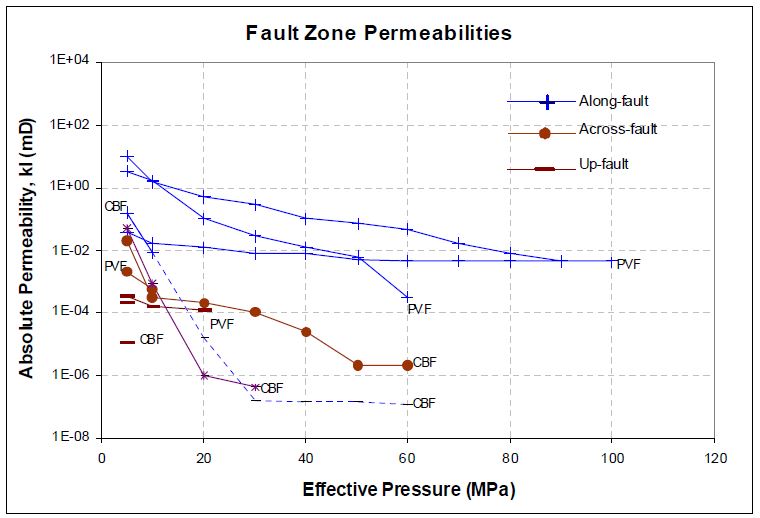
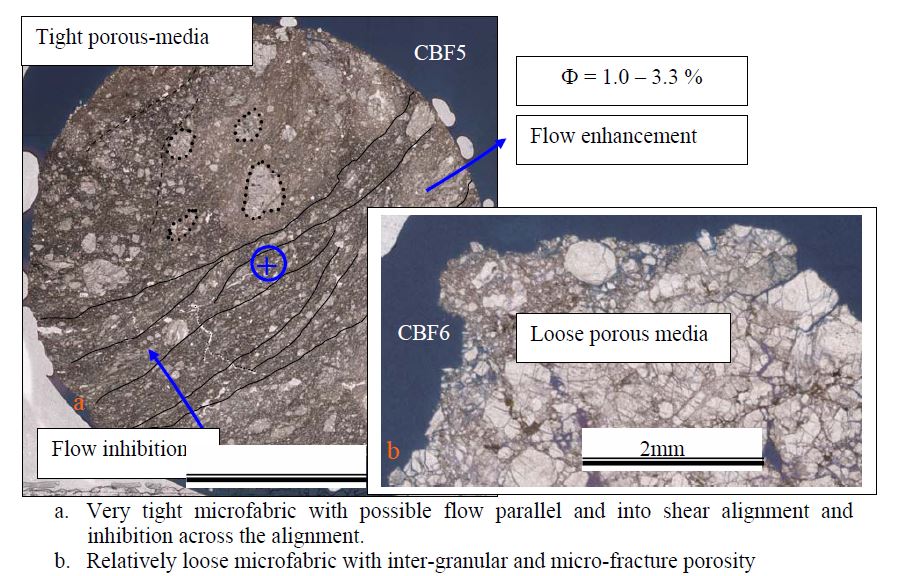
This field-based studies 18 have shown that fault zone permeability in cored faults gouges, similar to the case studies, values applied in the Niger Delta turbidites and in marine deposits of the Guyana Basin, range in the order of 10-06 to 10-02 as shown in Figure 5. Figure 6a shows tight of fault zone (as against lose microfabrics of wall rock in Figure 6b, with a tendency for flow inhibition in one direction and enhancement on the other, leading to permeability anisotropy. These lithologies and their permeabilities were used to calibrate and upscaled measured permeabilities in faults zones that may not be drilled in petroleum oil field and in depleted reservoir candidates of CO2 storage.


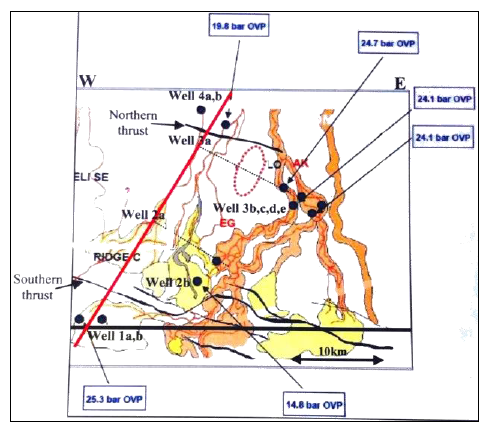
The current work uses comparative analogues in the Niger Delta, with inferences from the Guyana sites, which re impacted by similar tectonics which created the passive margins on both sides of the Atlantic Ocean. The Niger Delta marine deposits, especially the deep offshore turbidite, may be used to store CO2 in certain conditions. These is because these turbidites channels, often highly compartmentalized in the deep offshore, had held virgin pressures of over 100 bars in overpressure. Such pressures may not be attained by CO2 injection alone. A case fault (Figure 7) from the Niger Delta turbidites was evaluated and used to make flow computations 18, with the results now applied in the case of CO2 and shown in this work (with emphasis on lateral migration despite up- and across-fault sealing). CCS should target reservoirs with regional seals, and major lateral boundaries, to avoid lateral migration to different compartments where the seals may be weaker.
This fault was chosen due to its burial history (ref: Figure 11), allowing the evaluation of increasing burial pressure / effective stress, which affected compaction, lithification (both of which have impact on capillarity and shear strength). This has helped in also making a link between clay content and compaction. Compression, reducing pore spaces and pore throat, are now understood as factors of capillarity as well as minimum principal stress. The work therefore shows that reducing pore space also leads to increasing strength and fracture gradient.
Trapping Mechanism in the Guyana Basin
Among the reviewed basins is the Guyana basins, where there are however few outcrops in the target areas. The geology of the basin presents interlayers of reservoir and seal lithologies, and oil fields are now being developed following recent major discoveries. These presents with similar basin flow channels and lobes such as have been characterized on the field in the Alps and in the Niger Delta and discussed above.

Figure 8 shows an example in the Suriname Basin, which is now studies and evaluated for possible CO2 storage. The context is that if such candidates are proven positive, current ongoing and foreseeable oil and gas well development will adapt the well structure and completion for CCS in the near future. Notable in this basin are:
1. Presence of clinoforms at the shelf margin wedge which provides top and down laps, creating stratigraphic traps
2. Imbricate fault structures, creating displaced fault blocks (Figure 8)
3. Incised valleys and lobes / seafloor fans
4. Hemipelagic shales (at maximum flooding surfaces)
5. Regional reservoirs and regional seal (alternation of res-seal pairs)
The above, just like in the Niger Delta and other petroliferous basins, are architectures that have trapped hydrocarbon and holds potentials for CCS. The advantage of the Guyana Basin, making it invaluable in this study, is that the new oil fields with these features may be developed in view of CCS, unlike the Niger Delta and other similar basins where there will be added cost for adaptation of the fields.
Preemptive Study for Development and Oil Well Completion in View of CCS
According to 12 the Guyana Basin developed during the North Atlantic's Jurassic opening. The Demerara Plateau in Suriname has a passive extensional volcanic margin, an inboard oblique extensional margin at the Guyana-Suriname border, a transform margin parallel to the shelf in northwest Guyana, and an ocean-ocean margin to the NE that transitioned from transform to oblique extension. Many oil and gas seeps have been discovered throughout the modern coastline, suggesting a functional petroleum infrastructure. These are now being developed and it would be important to carry out these developments, well upper and lower completions, with the possibility of later use for CCS. This is why the preemptive study of the Guyana basin, using the Niger Delta Analogues, is imperative.
Evaluation Of Capillary Entry Pressures
Some important parameters that were assessed in evaluating the capillary entry pressures are the Pore Throat (R), Contact Angle (θ), and interfacial tension(γ). Pore throats affects the restriction or the narrowness between grains. Understanding the size and distribution of pore throats was important as it influenced the movement of fluids and can impact the rock's permeability and its ability to store fluids. Interfacial tension, as well was important in evaluating the capillary entry pressure. It is the force acting at the interface between two immiscible liquids or between a liquid and a gas. It is likened to surface tension, which is the force acting at the surface of a liquid in contact with another liquid or gas. Interfacial tension arises due to an equilibrium between fluids.

Contact angle is the shape of a liquid droplet/Meniscus on the surface of another liquid or solid. A smaller contact angle indicated that the liquid wets the surface more readily, while a larger angle indicates poor wetting. The contact angle was used to deduce the wettability of surfaces, and it played a fundamental role in the capillarity and wetting evaluation. It has been established that,
Capillary Entry Pressure Pe = 2 . ɤ. Cos /R
/R
Where,
R= Pore throat size, ɤ= Interfacial tension, and 
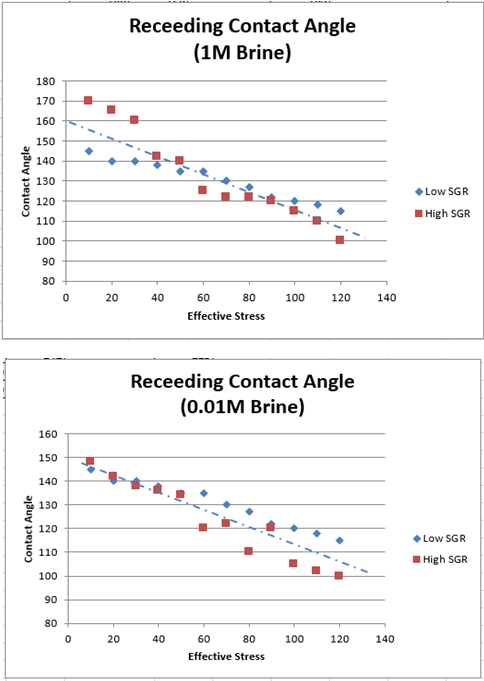
Figure 9 shows measured receding contact angles at different effective stresses. The evolution of the contact angle was similar in both the low SGR and High SGR sample, indicating that a different parameter affected the SGR. The contact angle, as well as the Interfacial tension or wettability, played little role in affecting the SGR as such had little impact on the sealing potential. The determinant factor for sealing was therefore the R.
The radius, R or pore throat, which is a factor of lithology and Vshale/Vclay, is the main controlling factor of capillary entry pressure. This relation became vital in simplifying seal evaluation, as SGR was calibrated against R or lithology in most cases for seal evaluation. This on one and established increasing sealing capacity due to capillarity and due to increasing strength / fracture gradients due compaction. A quick look evaluation of CO2 storage site could then be achieved by extracting or evaluating the Vclay, in potential depleted reservoirs, where these data are usually available.
Top and Lateral Limiting Stresses
Limiting stress, which is maximum pressures a geological formation or layer can sustain before undergoing deformation. In the context of subsurface geomechanics, "top" and "lateral" denote the directions from which these stresses are applied. The top limiting priority resulted from the overlying rock weight and any additional surface loads, while the lateral tensions arise due to tectonic forces and the inherent properties of the rock layers. Understanding these stresses is pivotal for activities like drilling, where exceeding the limiting pressures can lead to borehole instability or other geomechanically issues. In addition to geomechanical effects, other mechanisms can lead to potential fluid movement of the stored CO2 after injection.
Extrapolation of Vclay to Simulate the Capillary Entry Pressure
Capillary pressure, which is the difference in pressure between the pore fluid and the bulk fluid phase in a rock, was required to initiate non-wetting phase flow into a rock's pores. This pressure is influenced by the size and distribution of the pore throats, the wettability of the rock, and the interfacial tension between the fluids. Clay minerals significantly influenced the petrophysical properties of a rock, including its capillary pressure behavior. This is because clays are often associated with smaller pore sizes, leading to higher capillary entry pressures. In many reservoirs studied, direct measurements of capillary pressures might be sparse or absent, especially for specific rock types or depth intervals. In such cases, the relationship between Vclay and measured capillary pressures from similar rocks, which was established above 19, was used to extrapolate or simulate capillary entry pressures for the rocks of interest.
Clay Content, Lithology and Compaction
The clay content estimated made it possible to analyze the physical properties of the material and determine its suitability for CCS. It defined the lithology and the physical and chemical characteristics of rocks and sediments. These characteristics included factors like compaction state, burial history, age, cementation, texture, bulk density, anisotropy, fracturing, and pore shape. These lithological factors were essential in reservoir characterization as they helped to determine fluid content, porosity, permeability, and reserve volume estimation. Compaction was another vital factor that was related to clay content and lithology, as it reduced the volume of sediment or soil under pressure and made the fault gouges tight and more resistant.

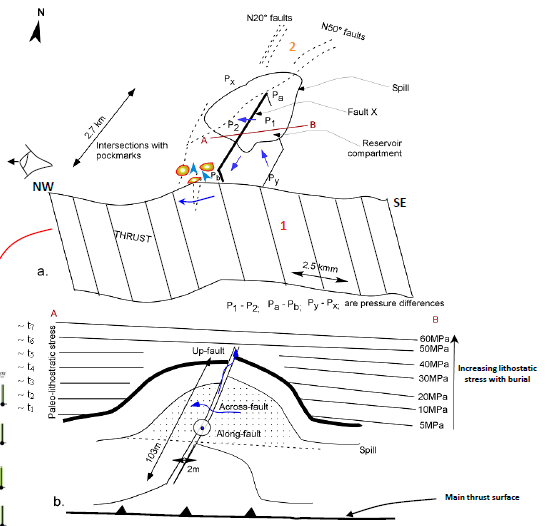
In Figure 10, there was a burial of 5MPA to 60MPA, which was also simulated in the laboratory by placing sample rocks from the field in a pressure chamber with such confining pressure. Permeability was then measured at this varying pressure (Figure 10b) and the flow evaluated. This fault (in Figure 10a) showed an along fault flow which was most enhanced in the lateral-direction, while up-fault and across-fault flow was reduced due to high SGR/VClay in the X and Y anisotropy respectively. This result required that for CCS, it is important to storing CO2 only in reservoir compartment that has top regional seal as well as lateral major fault boundary in a three to four-way closure. This is to not allow migration along fault or laterally away to leak in a non-targeted zone outside the reservoir. It also showed that compaction, burial, affected both the capillary entry pressure by reducing pore-throat, as well as lithifying and strengthening stress seals. High Vclay values indicate smaller pore throat, and this is similar to smaller pore-throat due to compaction – making seal reduction comparable in both cases. A linear relationship is therefore possible, with the limitation being that clay content and reduced porosity/permeability due increasing matrix ratio does not have the same genetic causative despite correlation.
Applications To Structural Interpretation of Case Studies
An initial structural interpretation, establishing the horizons and maps, and the fault structures, helped in understanding the deformations that had affected the field. Tectonic activity contributes to deformation such as uplift, relaxation, and fault reactivation, which could give rise to fold and faults. These traps are essential for the formation and accumulation of commercial quantities of hydrocarbons. Faults typically form arrays that have the potential to displace both reservoirs and caprocks. At a regional scale, they form the major fold that could hold CO2 storage, at a local scale, they become conduits for fluid passage or gouge smeared with clay and thereby trapping the stored CO2.

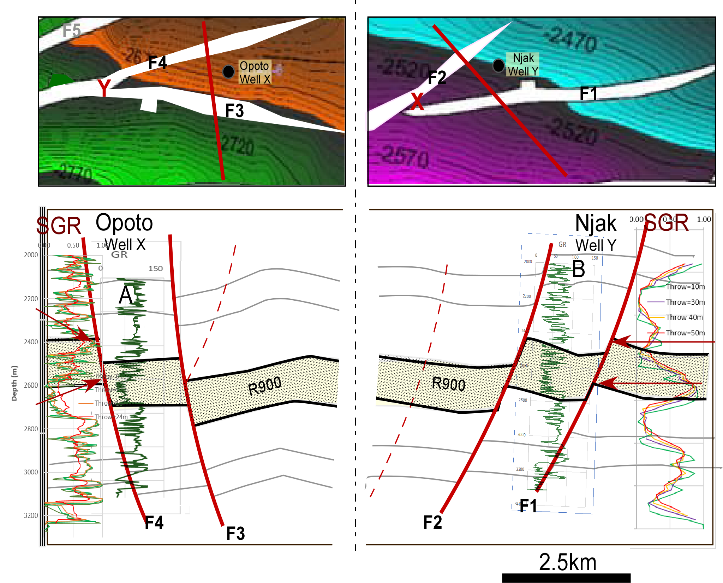
These interchanging roles is evaluated in the case of the Njak and Opoto wells in the panels and sites, where the faults were evaluated in 3D, first in map for closures and then in section for across-fault and upfault leakages. The flow modelling for along-fault flow was integrated to give insight to possible lateral escape of CO2. This made this case study fundamental in highlighting that closures for CCS must be a full closure, or three-way closures with lateral sealing compartments. In Figure 11, it may look as if the seal is completely efficient based only on the 2D window, but the map shows possible leak downdip, in the eastward direction where the fault shows no closure. However, a dipping bed in the same direction may provide a full closure. It was therefore important to consider possible expansion and seal at spill point, as against only top-seal and juxtaposition leak due to buoyancy.
The structural profile in Figure 11, with superimposed SGR and GR for Opoto and Njak wells, shows prospective reservoir (R900, shaded with dotted reservoir lithology in the figure), storage sites in the same field. Leakages at point Y and X in the map are highly unlikely in both sites, due to proper mapped closures of F3 and F4 for Opoto and F1 and F2 for Njak. Yet, X shows a better linkage compared to Y. Despite both panel having a good potential for CCS, the Opoto is a more preferable site because the regional seal at ‘A’ overlying the target reservoir (R900) is indicative a better seal, as shown by the GR. The seals immediately overlying the Njak Well Y, and the equivalent regional seal, show lower gamma ray logs. Even if the caprock were less efficient, the next layer, which is the regional seal will trap the fluid, making the lateral fault seal to be the limiting factor. In this case, the SGR in the Opoto panel were consistently higher (above 50) compared to that of the Njak, especially in the reservoir levels of interest (as indicated by the red arrows).
1). This showed that the fault with such high content as seen in the Opoto field (>60% VShale / > 40 VClay) were mainly sealing.
2). The Opoto Well Y showed high SGR above the target reservoir below regional seal A, indicating a better site for CO2 storage.
3). Despite good reservoir and overlying regional seal, the immediate layer above Njak field had poor seal (as seen from the GR), making it unsuitable for CCS due to possible lateral migration away from closure (see map)
Table 1 presents the empirical results from the case study, giving standard ranges for sealing, retardation and flow enhancement / in both top and lateral seals, where across fault, upfault and along fault flow are all important. This work showing that lithological seal and fault seal may evaluated with same parameters. Compared with measured parameters in the laboratory, these initial these initial observations, provided a cut off for calibrating SGR computation for other fields, where the ranges for non-sealing, retardation and sealing were established, as shown in Table 1. The RT-T Index (which was developed and introduced by 20 for seal assessment, using the formula below:
RTT = (Reservoir Thickness – Throw) / (Reservoir Thickness) * 100
The RTT index indicates the numerical expression of juxtaposition, where a high RT-T index > 10 is defined as non-sealing while a low RT-T index < 0 is defined as sealing. The range in between, 0 – 10% is considered retardation.
This assessment takes into consideration the difference in densities between oil and gas, and CO2, where oil or gas was the initial fluid parametrized in depleted wells. Where absolute permeabilities were used to calibrate the parameters, the in-situ fluid is not of relevance (rather the pressure that such fluid may exert at varying burial pressures) and the pressure exerted eventually increases with increasing depth irrespective of density.
Perspective for the Guyana Basin
Conditions highlighted in the current study, which holds perspective for CCS in the Guyana Basin that are:
1. New development that can be adapted for CCS architecture.
2. Good turbiditic channels.
3. Alternating reservoir seal pairs.
4. Cataclasis and smearing in fault gouges.
5. Regional seals.
More focus is suggested for CCS reservoirs offshore Guyana. Indeed, the recent work on coal, basement and unconventional terrains has shown that CCS may also be possible in hard rocks, most of which are exposed at the interiors onshore Guyana.
Carbon dioxide (CO2) storage commonly known as carbon sequestration, has gained significant attention as a potential solution to mitigate anthropogenic carbon emissions. The idea centers on capturing CO2 from emission sources (like power plants) and storing it in deep geological formations, such as depleted oil and gas reservoirs, saline aquifers, or coal seams. This approach aims to keep CO2 out of the atmosphere, combating global warming and climate change. With the increasing concerns over climate change, the potential for large-scale CO2 storage offers a promising avenue to transition towards a more sustainable energy future. The results from Njak well-X and the Opoto well-Y, which has similar geology as that of the Paleogene age of the Guyana basin, as well as other trapping mechanism in the analogous sites, highlighted important factors for CO2 storage site since it once stored hydrocarbon. Among the factors that are now more evident for site selection are the integrity and efficiency of seals, mineralogy and burial relations, virgin pressures and regional seal, in addition to factors already emphasized in literature, such as fracture gradient, seismicity, engineering and man-made / artificial deformation.
This work has shown that the contact angle, as well as the interfacial tension or wettability, played little role in affecting the SGR as such the sealing potential. The determinant factor was therefore the R. This has simplified the evaluation of seal in CCS, where only Vclay is used to extrapolate other sealing parameters in quick look studies or search of suitable sites based on top and lateral seals.
The results have shown that understanding the mechanisms involved in fault communication and compartmentalization is vital for developing more effective strategies to choose depleted reservoirs selectively, and for safely and reliably storing CO2 in the subsurface. Burial impacts the tightness of fault zone, as well as the clayiness of the fault gouge lithology. Both factors, which were simulated in this study, affect strength and indirectly fluid pressure to stress relationship. This has led to the use of Vclay and SGR calibrations as a principal tool for approximating the other parameters for limiting stresses, such as capillary entry pressure and minimum principle stresses. Several factors can influence seal integrity and efficiency including basin type/age, burial, depth, regional seal and V-clay content (as lithological indicator) of top and lateral seals. Highlighted flow modelling results in this work shows that in CCS projects it is important to store CO2 only in reservoir compartment that has top regional seal as well as lateral major fault boundary in a four-way closure. This is to not allow migration along fault or laterally away to leak in a non-targeted zone outside the reservoir.
When the subsurface conditions have been ascertained, other man-made conditions, engineering and artificial deformation, may affect the stability of storage zone and efficiency of CO2 storage systems. It is hoped that these findings will improve the potential for CCS and highlight the important parameters to be considered for improving the overall efficiency of subsurface carbon storage. This has simplified the evaluation of seal in CCS, where mainly Vclay in fault gouge or caprock is used to extrapolate other sealing parameters in quick look studies or search of suitable site based on top and lateral seals.
| [1] | Joseph, M.E and Kara, L.E (2022). An overview of carbon capture and storage and its potential role in the energy transition. First Break I Volume 40 I pp.35 - 40. | ||
| In article | View Article | ||
| [2] | Karstens, J. & Berndt, C., 2015. Seismic chimneys in the Southern VikingGraben implications for palaeo fluid migration and overpressure evolu-tion, Earth planet. Sci. Lett., 412, 88–10. | ||
| In article | View Article | ||
| [3] | Ivar-Kristian Waarum, Ann E.A. Blomberg, Espen Eek, Jock Brown, Amund Ulfsnes, Mike Carpenter, Torleiv S. Grimsrud, Joonsang Park, Gerard Cornelissen, Per Sparrevik, CCS Leakage Detection Technology - Industry Needs, Government Regulations, and Sensor Performance, Energy Procedia,Volume 114, 2017, Pages 3613-3627, ISSN 1876-6102. | ||
| In article | View Article | ||
| [4] | Connely D. and participants (2015). STEMM-CCS: Strategies for Environmental Monitoring of Marine Carbon Capture and Storage, http://www.stem-ccs.eu. | ||
| In article | |||
| [5] | IEAGHG, 2012. Quantification Techniques for CO2 Leakage, 02, January, 584. | ||
| In article | |||
| [6] | Bachu, S., Bennion, B. Effects of in-situ conditions on relative permeability characteristics of CO2-brine systems. Environ Geol 54, 1707–1722 (2008). | ||
| In article | View Article | ||
| [7] | Lakshminarasimhan, S., Bryant, S.L., Pope, G.A., 2006. Buoyancy-dominated multiphase flow and its impact on geological sequestration of CO2. SPE/DOE Improved Oil Recovery Symposium, April 22–26, Tulsa, OK. | ||
| In article | |||
| [8] | Saadatpoor, E., Bryant, S.L., Sepehrnoori, K., 2008. Effect of heterogeneous capillary pressure on buoyancy-driven CO2 migration. In: SPE Improved Oil Recovery Symposium, April 19–23, Tulsa, OK. | ||
| In article | View Article | ||
| [9] | Alexander, D. and Bryant S.L(2009). Evaluating storage and leakage scenarios for carbon dioxide sequestration in Trinidad and Tobago” Science Direct Energy Procedia (2009), pp. 2761-2768. | ||
| In article | View Article | ||
| [10] | Richard F. Daniel, John G. Kaldi, 2009. "Evaluating Seal Capacity of Cap Rocks and Intraformational Barriers for CO2 Containment", Carbon Dioxide Sequestration in Geological Media—State of the Science, M. Grobe, J. C. Pashin, R. L. Dodge. | ||
| In article | |||
| [11] | Bachu, S., Gunter, W.D., Perkins, E.H., 1994. Aquifer disposal of CO2—hydrodynamic and mineral trapping. Energy Convers. Manage. 35 (4), 269–279. | ||
| In article | View Article | ||
| [12] | Wenxiu Yang, Alejandro Escalona; Tectonostratigraphic evolution of the Guyana Basin. AAPG Bulletin 2011; 95 (8): 1339–1368. | ||
| In article | View Article | ||
| [13] | Meyers et al., 2006- Origins and accumulation of organic matter in expanded Albian to Santonian black shale sequences on the Demerara Rise, South American margin. | ||
| In article | View Article | ||
| [14] | W. Yang and A. Escalona, 2011. Tectonostratigraphic evolution of the Guyana Basin, AAPG Bulletin (2011) 95 (8): 1339–1368. | ||
| In article | View Article | ||
| [15] | Aweto, K.E. & Oghenero, Ohwoghere-Asuma. (2018). Assessment of Aquifer Pollution Vulnerability Index at Oke–Ila, South-western Nigeria Using Vertical Electrical Soundings. Journal of Geography, Environment and Earth Science International. 16. 1-11. 10.9734/JGEESI/2018/41836. | ||
| In article | View Article | ||
| [16] | Nosike, L. 2019. A New Shale Gorge Ratio Computation (SGR) Approach – Application in: Implication of Structural Analysis in the Development and Management of a Maturing Field, SPE, Conference Proceeding, Nigeria Annual International Conference and Exhibition (NAICE), August Lagos, pp. 18. | ||
| In article | View Article | ||
| [17] | Sperrevik, S., Gillespie, P.A., Fisher, Q.J., Halvorsen, T., Knipe, R.J., 2002. Empirical estimation of fault-rock properties. In: Koestler, A.G., Hunsdale, R. (Eds.), Hydrocarbon Seal Quantification. Norwegian Petroleum Society, Trondheim, Norway, p. 11. (Special Publications). | ||
| In article | View Article | ||
| [18] | Nosike, L. (2009). Relationship between Tectonics and Vertical Hydrocarbon Leakage: A Case Study of the Deep Offshore Niger Delta. PhD Thesis, University of Nice-Sophia Antipolis, France, 281 p. | ||
| In article | |||
| [19] | Nosike, L. (2020). Exploration and Production Geoscience – Comprehensive Skills Acquisition for an Evolving Industry, Delizon Publishers, p. 164-195. | ||
| In article | |||
| [20] | Nosike, L. (2021). Numerical Expression of Juxtaposition Using a New Assessment Index: Reservoir Thickness – Throw (RT-T) Index. Integrated Elvee Services Oil and Gas (iEsog) Internal Reports. Elvee-202123 6pp. | ||
| In article | |||
Published with license by Science and Education Publishing, Copyright © 2024 Josephine Maximus and Livinus Nosike
 This work is licensed under a Creative Commons Attribution 4.0 International License. To view a copy of this license, visit
https://creativecommons.org/licenses/by/4.0/
This work is licensed under a Creative Commons Attribution 4.0 International License. To view a copy of this license, visit
https://creativecommons.org/licenses/by/4.0/
| [1] | Joseph, M.E and Kara, L.E (2022). An overview of carbon capture and storage and its potential role in the energy transition. First Break I Volume 40 I pp.35 - 40. | ||
| In article | View Article | ||
| [2] | Karstens, J. & Berndt, C., 2015. Seismic chimneys in the Southern VikingGraben implications for palaeo fluid migration and overpressure evolu-tion, Earth planet. Sci. Lett., 412, 88–10. | ||
| In article | View Article | ||
| [3] | Ivar-Kristian Waarum, Ann E.A. Blomberg, Espen Eek, Jock Brown, Amund Ulfsnes, Mike Carpenter, Torleiv S. Grimsrud, Joonsang Park, Gerard Cornelissen, Per Sparrevik, CCS Leakage Detection Technology - Industry Needs, Government Regulations, and Sensor Performance, Energy Procedia,Volume 114, 2017, Pages 3613-3627, ISSN 1876-6102. | ||
| In article | View Article | ||
| [4] | Connely D. and participants (2015). STEMM-CCS: Strategies for Environmental Monitoring of Marine Carbon Capture and Storage, http://www.stem-ccs.eu. | ||
| In article | |||
| [5] | IEAGHG, 2012. Quantification Techniques for CO2 Leakage, 02, January, 584. | ||
| In article | |||
| [6] | Bachu, S., Bennion, B. Effects of in-situ conditions on relative permeability characteristics of CO2-brine systems. Environ Geol 54, 1707–1722 (2008). | ||
| In article | View Article | ||
| [7] | Lakshminarasimhan, S., Bryant, S.L., Pope, G.A., 2006. Buoyancy-dominated multiphase flow and its impact on geological sequestration of CO2. SPE/DOE Improved Oil Recovery Symposium, April 22–26, Tulsa, OK. | ||
| In article | |||
| [8] | Saadatpoor, E., Bryant, S.L., Sepehrnoori, K., 2008. Effect of heterogeneous capillary pressure on buoyancy-driven CO2 migration. In: SPE Improved Oil Recovery Symposium, April 19–23, Tulsa, OK. | ||
| In article | View Article | ||
| [9] | Alexander, D. and Bryant S.L(2009). Evaluating storage and leakage scenarios for carbon dioxide sequestration in Trinidad and Tobago” Science Direct Energy Procedia (2009), pp. 2761-2768. | ||
| In article | View Article | ||
| [10] | Richard F. Daniel, John G. Kaldi, 2009. "Evaluating Seal Capacity of Cap Rocks and Intraformational Barriers for CO2 Containment", Carbon Dioxide Sequestration in Geological Media—State of the Science, M. Grobe, J. C. Pashin, R. L. Dodge. | ||
| In article | |||
| [11] | Bachu, S., Gunter, W.D., Perkins, E.H., 1994. Aquifer disposal of CO2—hydrodynamic and mineral trapping. Energy Convers. Manage. 35 (4), 269–279. | ||
| In article | View Article | ||
| [12] | Wenxiu Yang, Alejandro Escalona; Tectonostratigraphic evolution of the Guyana Basin. AAPG Bulletin 2011; 95 (8): 1339–1368. | ||
| In article | View Article | ||
| [13] | Meyers et al., 2006- Origins and accumulation of organic matter in expanded Albian to Santonian black shale sequences on the Demerara Rise, South American margin. | ||
| In article | View Article | ||
| [14] | W. Yang and A. Escalona, 2011. Tectonostratigraphic evolution of the Guyana Basin, AAPG Bulletin (2011) 95 (8): 1339–1368. | ||
| In article | View Article | ||
| [15] | Aweto, K.E. & Oghenero, Ohwoghere-Asuma. (2018). Assessment of Aquifer Pollution Vulnerability Index at Oke–Ila, South-western Nigeria Using Vertical Electrical Soundings. Journal of Geography, Environment and Earth Science International. 16. 1-11. 10.9734/JGEESI/2018/41836. | ||
| In article | View Article | ||
| [16] | Nosike, L. 2019. A New Shale Gorge Ratio Computation (SGR) Approach – Application in: Implication of Structural Analysis in the Development and Management of a Maturing Field, SPE, Conference Proceeding, Nigeria Annual International Conference and Exhibition (NAICE), August Lagos, pp. 18. | ||
| In article | View Article | ||
| [17] | Sperrevik, S., Gillespie, P.A., Fisher, Q.J., Halvorsen, T., Knipe, R.J., 2002. Empirical estimation of fault-rock properties. In: Koestler, A.G., Hunsdale, R. (Eds.), Hydrocarbon Seal Quantification. Norwegian Petroleum Society, Trondheim, Norway, p. 11. (Special Publications). | ||
| In article | View Article | ||
| [18] | Nosike, L. (2009). Relationship between Tectonics and Vertical Hydrocarbon Leakage: A Case Study of the Deep Offshore Niger Delta. PhD Thesis, University of Nice-Sophia Antipolis, France, 281 p. | ||
| In article | |||
| [19] | Nosike, L. (2020). Exploration and Production Geoscience – Comprehensive Skills Acquisition for an Evolving Industry, Delizon Publishers, p. 164-195. | ||
| In article | |||
| [20] | Nosike, L. (2021). Numerical Expression of Juxtaposition Using a New Assessment Index: Reservoir Thickness – Throw (RT-T) Index. Integrated Elvee Services Oil and Gas (iEsog) Internal Reports. Elvee-202123 6pp. | ||
| In article | |||