Vitamin C (L-ascorbic acid) is an essential micronutrient that cannot be synthesized or stored by the human body, necessitating regular dietary intake to prevent deficiency-related conditions such as scurvy, which can be life-threatening. This review examines the pathophysiological mechanisms associated with vitamin C deficiency and evaluates current dietary reference intakes (DRIs), major dietary sources, and the role of supplementation in meeting physiological requirements. It also explores the physicochemical and molecular properties of vitamin C that affect its bioavailability, stability, and biological functions.
This introduction is divided into two subsections, the first (1.1) addressing general aspects of vitamin C, and the second (1.2) exploring the physicochemical factors that influence this compound’s bioavailability.
1.1. Overview of Vitamin CVitamins (Latin vita added to the English amine) were initially named in alphabetical order and then based on their chemical structure 1, 2. Hence, vitamin C, identified as L-ascorbic acid (or L-ascorbate), was isolated in the late 1920s by the Hungarian biochemist Albert von Szent-Györgyi (1893-1986) and has been produced by the industry since 1934 2.
Human beings have lost the ability to synthesize vitamin C around 65 million years ago because of an enzymatic deficit (L-gulonolactone oxidase), and do not possess the vitamin store in the body, so they must consume foods (or supplements) rich in this micronutrient on a daily basis 2, 3. Besides humans, other animals, such as monkeys and guinea pigs, do not express the gene for the abovementioned enzyme and are susceptible to developing scurvy, unless daily vitamin C is given, it is worth emphasizing 4. Thus, scurvy is a chronic nutritional deficiency caused by prolonged lack of vitamin C in the diet, further discussed ahead 5.
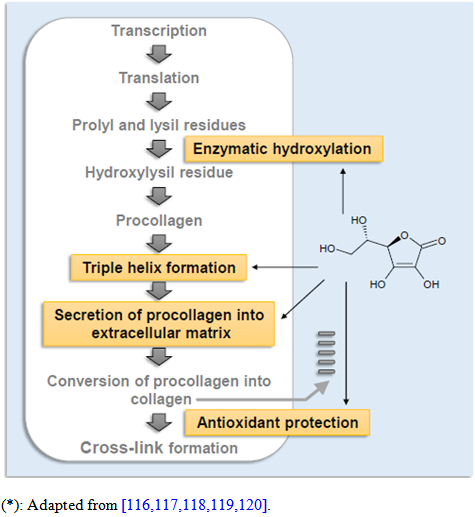
In fact, vitamin C has undeniable benefits for human health, favourably impacting on epithelial integrity and function together with vitamins A (retinol) and D (calcitriol or yet 1,25-dihydroxycholecalciferol), micronutrient metabolism (e.g., iron, copper, and folic acid), neuropeptides (enzymatic amidation), lipoproteins (antioxidant effect on low-density lipoprotein or LDL), immune process, collagen synthesis, among other important roles 2, 6, 7. Delving deeper into collagen synthesis, vitamin C is necessary for the production and maintenance of collagen (generic term), a complex protein (quaternary structure), forming the basis for connective tissues (bones, teeth, skin, and tendons) 8. Recent research has reviewed the pathophysiology and clinical manifestations of vitamin C deficiency (or scurvy) according to age groups 7.
The clinical manifestations of scurvy are more severe in children (less than or equal to (≤) 17 years old) than in adults (between 18-59 years old) 7. In addition, it is not uncommon to encounter asymptomatic adult patients who have subclinical vitamin C deficiency, with significantly lower laboratory values less than 0.2 mg/dL (but the threshold of vitamin C deficiency at which symptoms arise has not been defined yet) 7. For example, among 172 patients of all ages examined in May 2024 in Manaus, Amazonas, Brazil, 14 adults (mean age 48 years) exhibited no symptoms of scurvy despite having very low blood levels of vitamin C (mean 0.09 mg/dL; unpublished personal data).
Scurvy manifestations should be contextualized with the socioeconomic environment (e.g., alcoholism, limited budget, mental incapacity) of elderly individuals (greater than or equal to (≥) 60 years old) to be accurately detected in everyday clinical practice 7.
Data regarding the oldest-old individuals (≥ 85 years old) are virtually non-existent 7. Nevertheless, octogenarians and nonagenarians who consumed fresh fruits and vegetables daily were regularly followed in clinics throughout 2024 in Manaus, Amazonas, Brazil. They were asymptomatic for scurvy and showed normal blood levels of vitamin C (unpublished personal data).
1.2. Physicochemical Properties Influencing the Bioavailability of Vitamin CThe physicochemical characteristics of vitamin C greatly influence its bioavailability, i.e., its rate and extent/amount of absorption of unchanged drug from its dosage form, as well as some of its biological properties, justifying the brief comments below 9.
Vitamin C is a weak organic acid that looks like a crystalline and white compound 10. Weak organic acids are only partially ionized, and depending on pH (or potential of hydrogen), will exist as either the undissociated acid form, the dissociated acid form, or a mixture of both 11. Weak organic acids are more inhibitory to microorganisms than strong acids because they are lipophilic and penetrate the plasma membrane, thus acidifying the cell interior (e.g., inactivating the Gram-negative bacterium Escherichia coli and the Gram-positive bacterium Listeria monocytogenes) 12. But in reality, vitamin C displays significant antibacterial activity at acidic pH against all bacterial strains 13. Of note, studies in vivo and in vitro have shown that vitamin C inhibits the Gram-negative spiral bacterium Helicobacter pylori, a well-known risk factor for gastric carcinoma, and also the Gram-positive rod-shaped bacterium (or bacillus) Mycobacterium tuberculosis (in vitro) 14, 15, 16, 17, 18.
Candida albicans is considered a model for studying fungal pathogens 19. The antifungal activities of vitamin C are complex and involve, for example: (1) regulation of the Fenton reaction (i.e., the reaction between iron and hydrogen peroxide (H2O2), generating hydroxyl radical (OH)), destroying C. albicans; (2) interference with yeast-to-filamentous form (or hypha) transition in C. albicans, a well-established virulent trait of this opportunistic microorganism 20, 21.
The COVID-19 pandemic has renewed the interest in vitamin C and its antiviral properties, opening new perspectives in the vitamin research and potential therapeutic uses, as revised in a recent article 2.
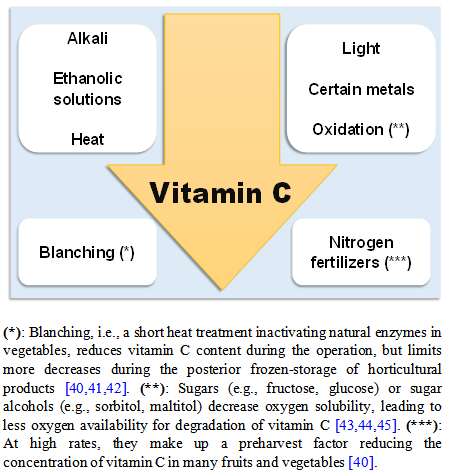
On the other hand, vitamin C is highly soluble in water, but very labile in solution and readily destroyed by heat, oxidation, alkali, and light 22, 23, 24. Because of its sensitivity to air and light, vitamin C must be appropriately kept in a closed container, protected from light 24. Even so, vitamin C loss during prolonged storage of milk is attributable to the dissolved oxygen present in the dairy product 23. Similarly, oxygen ingress at bottling or via the closure after bottling is an important factor that contributes to the loss of vitamin C in white wine 25.
In reality, vitamin C occurs naturally in many wine-making fruits, and the industry also uses the vitamin as an antioxidant and color stabilizer in the production of alcoholic beverages, including white wine, wine coolers, alcopops (a collective term that refers to flavored alcoholic beverages, or FABs, among other synonyms), and fruit liqueurs 26, 27. However, during storage, vitamin C degradation in ethanolic solutions follows a first-order reaction, i.e., a reaction that proceeds at a rate that depends linearly only on one reactant concentration; the degradation and browning (or Maillard reaction) rates increasing with the increase of ethanol concentration 26, 28.
In a study of the stability of vitamin C in different beverages, vitamin C was stable in orange juice at the original pH values, whereas beer was also a good matrix for vitamin C addition, but only under pH 4 and at low storage temperature (4ºC) 29.
Vitamin C provides considerable protection against white wine oxidation under conditions of low oxygen, having the ability to remove oxygen from the beverage more quickly than would be the case in its absence 25. But, different from white wine, vitamin C is seldom used in red wine as the higher concentration of phenolic compounds (especially flavonoids) in red wine negate the need for further antioxidant addition (actually, the antioxidant potential of flavonoids is more robust than that of vitamin C and vitamin Ealso known as α-tocopherol) 5, 30, 31, 32.
A study on factors influencing the preservation rate of vitamin C in acerola cherry pulp (Malpighiaceae family), rich in the vitamin (up to 4,000 mg or 4 g/100 g), demonstrated that this fruit is suitable for storing at the temperature of 5 °C, pH value between 3.2 to 3.5, no light, sealed, and without metal ions such as ferrous iron (Fe2+), ferric iron (Fe3+), cuprous ion (Cu+), cupric ion (Cu2+), and aluminium ion (Al3+) 33. The effect of these physicochemical factors can differ depending on the fruit species, as seen with the yellow bell pepper (Solanaceae family) 34 (Figure 1). Other mechanisms of vitamin C degradation, including the enzymatic one (e.g., L-ascorbate oxidase activity), are discussed in the following references 35, 36, 37, 38, 39.
Dietary Reference Intakes (DRIs) refer to a set of four nutrient-based reference values: Recommended Dietary Allowance (RDA), Adequate Intake (AI), Tolerable Upper Intake Level (UL), and Estimated Average Requirement (EAR) 6, 46. Each of these values serves a specific purpose and has associated advantages and limitations, which are not discussed further here.
The RDA represents the daily intake level sufficient to meet the nutrient requirements of nearly all (97-98%) healthy individuals 47. It is often used to plan nutritionally adequate diets for individuals 47.
The AI is the intake level assumed to ensure nutritional adequacy and is established when evidence is insufficient to develop an RDA. 47.
The UL is the maximum daily intake level unlikely to cause adverse health effects 47.
The EAR is the average daily intake level estimated to meet the requirements of 50% of healthy individuals 47. It is usually used to assess the nutrient intakes of groups and to plan nutritionally adequate diets for them 47. It can also be used to assess the nutrient intakes of individuals 47.
The scientific data used to develop the DRIs come from both observational and experimental studies 46. The DRIs provide estimates of nutrient intakes that are adequate for the vast majority of individuals within a specific population and are used by professionals to assess and plan diets for both individuals and groups 48. The RDA is particularly noteworthy because it is designed to meet the nutrient needs of nearly all healthy individuals; this is worth emphasizing 46.
The DRIs for vitamin C are based on estimated tissue levels considered sufficient to provide antioxidant protection with minimal urinary loss (Table 1) 46, 49. This topic is revisited in the therapeutic discussion (see Section 4).
Vitamin C is widespread throughout the plant kingdom (Plantae) 50 and is found in particularly high concentrations in fresh fruits and vegetables 51. The following five fruits have exceptionally high vitamin C content.
Kakadu plum (Terminalia ferdinandiana Exell.) is an endemic plant species of the Combretaceae family that grows in the monsoonal tropical climate of northern Australia 52. It is so designated because most official botanical records of the plant are from the Mirrar homelands and the World Heritage–listed Kakadu National Park; however, the tree grows prolifically throughout northern Australia, above the Tropic of Capricorn 53. It is a small, semi-deciduous tree with broad, light green leaves, bearing ovoid, yellowish-green fruit approximately 2.5 cm long and 1 cm in diameter, with a succulent outer layer surrounding a hard stone 54. It contains the highest known concentration of vitamin C among fruits, with levels that can exceed 5 g/100 g 55.
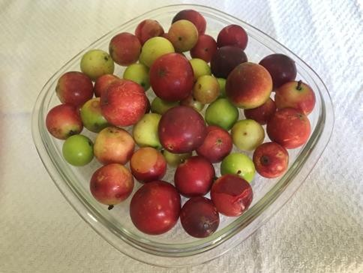
Camu-camu (Myrciaria dubia (Kunth) McVaugh) is a small, bushy riverside tree belonging to the Myrtaceae family 56. It is native to the Amazon rainforest and commonly found in Colombia, Ecuador, Peru, Bolivia, and Brazil 57. The fruit is a globose berry, 1-3 cm in diameter, with a circular hypanthial scar at the apex and a thin skin 57, 58. It is green when immature, turning reddish-brown to purple-black as it ripens (Figure 2) 57, 58. The pulp is fleshy and soft at maturity, enclosing 2-3 seeds 57. The fruit has a high vitamin C content, approaching 3 g per 100 g (i.e., 2,994 mg/100 g) 57, 58.
Camu-camu fruits are processed into various forms—including powders, juices, and supplements—due to their tart, acidic taste when consumed fresh. They are also used in the production of jellies, sherbets, and purees. Lastly, camu-camu may serve as a raw material in the production of caxiri, a traditional fermented beverage of Tupi origin from the Amazon region of Brazil.

Acerola (Malpighia punicifolia L.), a member of the Malpighiaceae family, is native to South and Central America, with Brazil hosting many of the world’s largest plantations due to the species’ favorable adaptation to local soil and climate conditions 59.
A superfruit may be defined as a fruit believed to provide significant health benefits beyond basic nutritional value 60. Acerola is considered a superfruit due to its exceptionally high vitamin C content 61. In this fruit, vitamin C levels are notably high, ranging from 623,2 to 4,023 mg/100 g 62, 63.
Based on my clinical experience in Manaus, Amazonas, Brazil, patients who report growing acerola in their backyard and consuming its juice daily consistently present with elevated serum vitamin C levels (unpublished personal observations). In addition to beverages, acerola is used in dietary supplements and even in meat products (see also Subsection 3.2.2).
Rose hips, which are pseudofruits, are aggregate structures composed of several achenes—the true seed-containing fruits—enclosed within an enlarged, red, fleshy floral cup known as the hypanthium 64.
Rose hips are produced by various species of wild and cultivated roses, most commonly by Rosa canina L., Rosa rugosa Thunb., and other members of the Rosa genus. The genus Rosa, encompassing all rose species, is widely cultivated across diverse agroecological regions worldwide.
Rose hips have been used in herbal medicine for over 2,000 years, but only recently has research begun to clarify the specific mechanisms by which they affect human health, such as their antioxidant, anti-inflammatory, antidiabetic, lipid-lowering, and anti-obesogenic activities 64, 65. Among their key bioactive components, vitamin C stands out due to its abundance and biological significance. Notably, fresh rose hips contain high levels of vitamin C (727-2,712 mg/100 g), depending on the species, harvest time, and post-harvest handling conditions 66, 67.
Interestingly, a study of five ripening stages in four species/cultivars (cv.) of the Rosa genus showed that the highest vitamin C content in R. rugosa, R. rugosa ‘Alba’, and R. rugosa ‘Rubra’ was found at ripening Stage I (1972.63 mg/100 g, 1139.93 mg/100 g, and 1646.23 mg/100 g, respectively), whereas in R. canina, the highest content was observed at ripening Stage IV (1351.74 mg/100 g) 68.
Rose hips have a variety of culinary applications, including syrups, jellies, soups, seasonings, sauces, and infusions.
Phyllanthus emblica L., a synonym of Emblica officinalis Gaertn., is a deciduous tree belonging to the family Phyllanthaceae and commonly known as amla, aonla, or Indian gooseberry 69, 70. It is said to be the very first tree to have originated on Earth, according to ancient Indian mythology 70.
It is found throughout the tropical and subtropical regions of India, Sri Lanka, and Malacca, and is also abundant in the deciduous forests of Madhya Pradesh, Darjeeling, Sikkim, and Kashmir 71.
The arrangement of aonla fruits along the branches gives the impression that the plant bears flowers on its leaves—a characteristic reflected in the genus name Phyllanthus, which literally means “leaf flower” 72.
The fruit is reported to be very rich in vitamin C (≥ 600 mg/100 g) 71, 72, 73.
Indian gooseberries are primarily used in culinary applications (e.g., pickles, candied fruits, juices), in Ayurvedic medicine—the traditional Indian system of medicine (e.g., as a rejuvenative and for treating various ailments), and in beauty products (e.g., hair and skincare).
In addition, Table 2 lists other fruits and vegetables rich in vitamin C.
As observed with rose hips (see Subsection 3.1.4), the composition of fruits and vegetables depends on both the cultivar and the stage of ripeness—factors often overlooked in research. Additionally, specifying the method of food preparation is essential, as it significantly affects nutritional content.
Finally, both bilimbi and star fruit may pose health risks due to their high levels of two bioactive compounds: oxalate, which is nephrotoxic, and caramboxin, which is neurotoxic 76, 77, 78, 79, 80. More specifically, caramboxin is a non-peptide amino acid toxin with potent excitatory, convulsant, and neurodegenerative properties 80. However, its neurotoxicity is particularly evident in individuals with pre-existing kidney conditions 78, 81
3.2. Emerging SourcesThis subsection highlights two noteworthy and unconventional dietary sources of vitamin C: camel milk (3.2.1) and vitamin C–fortified meat products, such as sausages (3.2.2).
In many mammalian species—including ruminants (e.g., cows) and non-ruminants such as tylopods (e.g., camels)—vitamin C is believed to be synthesized in the liver from D-glucose via the glucuronic acid pathway 82, 83, 84, 85. In these animals, the need for exogenous vitamin C supplementation is often overlooked 85.
A study by Barakat and Abdalla (1965) reported that camel liver from 120 specimens contained a maximum of 74.33 mg, a minimum of 38.73 mg, and a mean of 58.06 mg of vitamin C/100 g of liver 86. In another study involving 3,429 camels, the highest concentrations of vitamin C were found in the adrenal glands (151 mg/100 g of wet tissue) and the lowest in the heart (8 mg/100 g of wet tissue) 87. These values were not influenced by seasonal variation 87.
Lactation may be defined as the integrated process of milk synthesis, secretion, and excretion, beginning at calving and continuing until natural or induced drying-off in the lactating female 88. Camel lactation lasts approximately 12 months, with a progressive increase in vitamin C concentration in the milk throughout the lactation period 89, 90.
The high vitamin C content of camel milk has been reported in several studies 91, 92, 93. Compared to the milk of other species, camel milk contains 52 mg/L, whereas cow, buffalo, sheep, goat, human, donkey, and mare’s milk contain 27, 22, 29, 16, 35, 49, and 61 mg/L, respectively 92. This high vitamin C content lowers the pH of the milk, thereby stabilizing it and delaying cream separation for longer periods compared to the milk of other livestock species 91. These and other biotechnological properties make camel milk a key dietary component in arid and semi-arid regions, where access to green foods is limited 94. Africa is home to approximately 87.1% (32.7 million) of the world’s camels 91.
Due to its richness in bioactive compounds, camel milk is considered a functional food—i.e., a food that provides health benefits beyond basic nutritional value 95, 96.
As noted earlier (see Subsection 1.2), vitamin C is readily degraded by heat and other physicochemical factors. In particular, camel liver loses more vitamin C during frying (44.20 mg) than during roasting (23.19 mg) 86. In addition to heat treatment, other factors—such as parasitic infections (e.g., trypanosomiasis)—also contribute to reduced vitamin C levels in camel liver 84. Furthermore, low blood levels of vitamin C in camels may impair resistance to infectious diseases, potentially perpetuating a vicious cycle 82.
Camel milk has attracted growing scientific interest due to its high overall biological value (as mentioned above) and, in particular, its elevated vitamin C content. Nonetheless, it is important to note that the European Food Safety Authority (EFSA) states that, to claim a contribution to the maintenance of normal immune function during and after intense physical exercise, a food must provide at least 200 mg of vitamin C per day in addition to the normal diet—a quantity that can be easily achieved through a balanced intake 97. Notably, a 250 mL serving of camel milk provides approximately 23.3% of the recommended dietary allowance (RDA) for vitamin C in humans (as discussed in Section 2) 98.
A fortified food may be defined as one to which macronutrients and/or micronutrients have been added using specific technological strategies to enhance its nutritional profile 99.
Sausages, in particular, are valued primarily for their flavor and, to a lesser extent, for their versatility—making them a popular choice across diverse occasions and cuisines. Sausages are quite common in the Norwegian diet, yet their vitamin C content is listed as zero in the Norwegian Food Composition Table, as well as in the food composition tables of several other countries 100.
One potential strategy to address the nutritional limitation of highly valued food sources such as meat products is the addition of vitamin C to sausages as an antioxidant 100. When recalculating vitamin C intake in adults and adolescents using updated values from the most recent Norwegian national dietary surveys, total intake was found to increase by 3-10% 100.
On the other hand, the direct addition of vitamin C to meat products is challenging—not only because it is highly unstable at meat pH, promoting lipid oxidation, but also because its use is often prohibited due to its ability to stabilize meat color, which is considered a form of adulteration by consumers 101, 102. Moreover, it may mask quality changes, such as those resulting from microbiological activity 102.
As meat consumption increases, consumers are increasingly demanding meat products that contain functional ingredients with beneficial health effects, rather than merely serving as conventional foods 103. Further research is warranted in this field.
3.3. Intermediate SourcesIntermediate sources of vitamin C refer to foods that contain a moderate amount of the vitamin, falling between high and low levels, such as certain fruits and vegetables.
Vitamin C content in fruits may vary depending on the tissue examined (e.g., peel, pulp, and placenta) and the stage of ripeness (i.e., green, turning, ripe, and fully ripe), as previously discussed in relation to rose hips 68.
For instance, in cubiu, also known as cocona (Figure 3)—a fruit from the Solanaceae family—the vitamin C content in the peel (mg/100 g fresh weight) gradually increases from the green stage (20.230), through the turning stage (23.170), to the ripe (27.148) and fully ripe stages (32.452) 6, 104. In the pulp, vitamin C content (mg/100 g fresh weight) increases from the green stage (16.367) to the turning stage (21.268), then returns to near-initial levels at the ripe stage (16.886), and slightly decreases at the fully ripe stage (13.139) 6, 104. In the cubiu placenta, vitamin C content (mg/100 g fresh weight) is higher than in the pulp at the green stage (17.809), shows little variation between the turning stage (22.248) and the ripe stage (22.709), and increases again at the fully ripe stage (24.842) 6, 104.

Thus, cubiu is a fruit rich in vitamin C—particularly in the peel and placenta at the fully ripe stage—and should be considered a palatable dietary source of this essential micronutrient 6, 104. Additionally, understanding the vitamin C content in the edible parts of cubiu during ripening may support its use in health promotion and disease prevention 6, 104.
To sum up, intermediate sources of vitamin C include various fresh fruits and vegetables, as shown in Table 3.
In contrast to fresh fruits and vegetables—and as previously noted—meat products are generally poor sources of vitamin C. For instance, chicken contains 2.3 mg/100 g, while pork contains 0.9 mg/100 g; vitamin C is undetectable in turkey, lamb, and veal 107. Likewise, the edible portions of fish contain no appreciable amount of vitamin C 108.
When nutritional assessments reveal a deficiency in essential nutrients—such as vitamin C and key minerals—appropriate supplementation should be recommended to restore adequate levels and prevent deficiency-related conditions 109. Today, vitamin supplementation plays a regular and important role in health and nutrition care, complementing fortified foods and improved dietary practices in addressing deficiencies such as scurvy 110.
Vitamin supplements fall under the broader category of dietary supplements, which refer specifically to food products added to the regular diet that provide nutritional substances—such as vitamins and minerals—or compounds with physiological or nutritional effects 111. These may include amino acids, essential fatty acids, fibers, or plant extracts, and are typically offered in pre-dosed forms 111.
Dietary supplements are intended for ingestion—specifically, they must be swallowed 112. As such, topical or inhaled products do not qualify as dietary supplements 112. They are available in a wide range of forms, including pills, tablets, capsules, gummies, softgels, liquids, and powders 112.
Although gummies can be an appealing delivery form for vitamin C, this micronutrient may contribute to tooth enamel erosion, especially when consumed frequently or in high doses 8. In addition, at elevated concentrations, vitamin C—and other supplements—may exhibit pro-oxidant activity, particularly in the presence of transition metals such as iron, via Fenton chemistry 8, 46, 113. In this context, vitamin C supplements enhance iron absorption, potentially increasing the risk of iron overload in susceptible individuals, such as those with hereditary hemochromatosis or certain chronic conditions 8, 46.
The rationale for consistent vitamin C supplementation is further supported by understanding the biological consequences of chronic deficiency. Scurvy, a disease virtually eliminated in many populations but still possible under restrictive diets, arises from prolonged insufficiency of this vitamin. It results in impaired metabolic processes, especially those involving collagen synthesis, as discussed below 7.
As described earlier in this work, vitamin C is essential for the production and maintenance of collagen—the most abundant structural protein in the body, responsible for connecting and supporting tissues such as skin, bones, tendons, muscles, cartilage, and internal organs 6, 114. The majority of human collagen consists of Types I and III 115 (Figure 4).

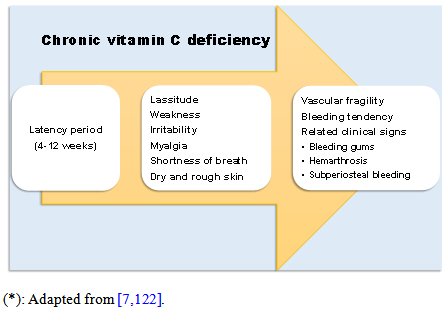
Collagen turnover is relatively slow, with a half-life of approximately 70 days 121. However, insufficient vitamin C disrupts its synthesis and stability, leading over time to the characteristic clinical features of scurvy—such as increased vascular fragility, bleeding tendencies, and poor wound healing 7. This also explains the latency period observed before scurvy manifests clinically in adults 7, 122 (Figure 5).

As discussed in Section 2, daily vitamin C requirements vary according to sex, age, and dietary source. Readers are encouraged to revisit that section for a detailed understanding of individual needs and intake recommendations.
DRIs represent a substantial effort to provide a scientific rationale for the proper clinical application of nutrients—in this case, vitamin C—while also accounting for different age groups.
Nutraceuticals—also known as functional or even medical foods—are no longer just biomedical terms, but the tangible expression of nutrient-dense foods. Fruits such as Kakadu plum, camu-camu, acerola, rose hips, and Indian gooseberry are justifiably considered superfoods and warrant further scientific investigation.
With all the advances in food science, the ancient wisdom of Hippocrates’ aphorism—'Let food be thy medicine'—seems to be more fully appreciated today. Nonetheless, significant hurdles and knowledge gaps must still be addressed before this enduring Hippocratic insight can be fully realized.
Regarding dietary sources of vitamin C, it is important to classify them—as attempted in the present work—to facilitate an objective and timely choice when making dietetic prescriptions. However, on a daily basis, combining all available food sources will not only meet vitamin C requirements but also enrich the diet with other essential nutrients and bioactive compounds. Therefore, no source of vitamin C should be overlooked, regardless of whether its content is moderate or even low.
It is essential to educate patients—regardless of age—and dispel any doubts about the ongoing need to consume vitamin C-rich foods to prevent scurvy and its harmful consequences.
If cultural or socioeconomic taboos exist surrounding the consumption of fresh fruits and vegetables—particularly among children and individuals with obesity, who often consume more calorie-dense foods—laboratory tests should be conducted and will likely reveal significantly low blood levels of vitamin C. It will then be crucial to inform patients about the need to take vitamin C supplements consistently every day without interruption. During the consultation, patients with vitamin C deficiency may be advised on appropriate daily supplementation strategies.
The author is grateful to Professor Guy Drouin (University of Ottawa) for his insightful discussion on the evolutionary aspects of vitamin C.
The author also wishes to express sincere gratitude to the librarians of the Instituto Nacional de Pesquisas da Amazônia (INPA) for their invaluable assistance and dedication in supporting the documentation of this project.
The author declares no conflict of interest.
| [1] | Barthelemy, H., Chouvet, B., Cambazard, F., “Skin and mucosal manifestations in vitamin deficiency”, Journal of the American Academy of Dermatology, 15(6). 1263-1274. 1986. | ||
| In article | View Article PubMed | ||
| [2] | Andrade Jr., M.C., “Vitamin C: evolution, prehistory, and history”, Journal of Food and Nutrition Research, 12(5). 255-263. 2024. | ||
| In article | View Article | ||
| [3] | Naidu, K.A., “Vitamin C in human health and disease is still a mystery? An overview”, Nutrition Journal, 2. 1-10. 2003. | ||
| In article | View Article PubMed | ||
| [4] | Sato, P., Udenfriend, S., “Scurvy-prone animals, including man, monkey, and guinea pig, do not express the gene for gulonolactone oxidase”, Archives of Biochemistry and Biophysics, 187(1). 158-162, 1978. | ||
| In article | View Article PubMed | ||
| [5] | Eggington, J., Pitt, R., Hodson, C.,“A macroscopic assessment of porosity and new bone formation on the inferior pars basilaris: normal growth or an indicator of scurvy?”, International Journal of Paleopathology, 45. 62-72. 2024. | ||
| In article | View Article PubMed | ||
| [6] | de Andrade Júnior, M.C., Andrade, J.S., de Souza Costa, S., “Biochemical changes of cubiu fruits (Solanum sessiliflorum Dunal, Solanaceae) according to different tissue portions and ripening stages”, Food and Nutrition Sciences, 7(12). 1191-1219. 2016. | ||
| In article | View Article | ||
| [7] | Andrade Jr., M.C., “Vitamin C deficiency (or scurvy): pathophysiology and clinical manifestations according to age groups”, Journal of Food and Nutrition Research, 11(12). 752-758. 2023. | ||
| In article | View Article | ||
| [8] | Sizer, F.S., Whitney, E.N., Nutrition: concepts and controversies, 16 ed., Cengage, Belmont, 2023. | ||
| In article | |||
| [9] | Kumar, S., Dilbaghi, N., Rani, R., Bhanjana, G., Umar, A., “Novel approaches for enhancement of drug bioavailability”, Reviews in Advanced Sciences and Engineering, 2(2). 133-154. 2013. | ||
| In article | View Article | ||
| [10] | Ahmed, L.; Omer, R., “Spectroscopic properties of vitamin C: a theoretical work”, Cumhuriyet Science Journal, 41(4). 916-928. 2020. | ||
| In article | View Article | ||
| [11] | Rotsch, T.D., Pietrzyk, D.J., “Ion-interaction high performance liquid chromatography off weak mono- and diprotic organic acids and ampholytes on amberlite XAD-2”, Journal of Chromatographic Science, 19(2). 88-95. 1981. | ||
| In article | View Article | ||
| [12] | Akbas, M.Y., Ölmez, H., “Inactivation of Escherichia coli and Listeria monocytogenes on iceberg lettuce by dip wash treatments with organic acids”, Letters in Applied Microbiology, 44(6). 619-624. 2007. | ||
| In article | View Article PubMed | ||
| [13] | Mumtaz, S., Mumtaz, S., Ali, S., Tahir, H.M., Kazmi, S.A.R., Mughal, T.A., Younas, M., “Evaluation of antibacterial activity of vitamin C against human bacterial pathogens”, Brazilian Journal of Biology, 83(e247165). 2021. | ||
| In article | View Article PubMed | ||
| [14] | VeRghese, R.J., Ramya, S., Kanungo, R., “In vitro antibacterial activity of vitamin C and in combination with ciprofloxacin against uropathogenic Escherichia coli”, Journal of Clinical and Diagnostic Research, 11. 1-5. 2017. | ||
| In article | View Article | ||
| [15] | Foja, C., Senekowitsch, S., Winter, F., Grimm, M., Rosenbaum, C., Koziolek, M., Feldmüller, M., Kromrey, M.-L., Scheuch, E., Tzvetkov, M.V., Weitschies, W., Schick, P., “Prolongation of the gastric residence time of caffeine after administration in fed state: comparison of effervescent granules with an extended-release tablet”, European Journal of Pharmaceutics and Biopharmaceutics, 199(114313). 2024. | ||
| In article | View Article PubMed | ||
| [16] | Zhang, H.M., Wakisaka, N., Maeda, O., Yamamoto, T., “Vitamin C inhibits the growth of a bacterial risk factor for gastric carcinoma: Helicobacter pylori”, Cancer: Interdisciplinary International Journal of the American Cancer Society, 80(10). 1897-1903. 1997. | ||
| In article | View Article | ||
| [17] | Vilchèze, C., Hartman, T., Weinrick, B., Jacobs Jr., W.R., “Mycobacterium tuberculosis is extraordinarily sensitive to killing by a vitamin C-induced Fenton reaction”, Nature Communications, 4(1881). 2013. | ||
| In article | View Article PubMed | ||
| [18] | Sawicki, R., Widelski, J., Truszkiewicz, W., Kawka, S., Kai, G., Sieniawska, E., “Sulphides from garlic essential oil dose-dependently change the distribution of glycerophospholipids and induce N6-tuberculosinyladenosine formation in mycobacterial cell”, Scientific Reports, 13(20351). 2023. | ||
| In article | View Article PubMed | ||
| [19] | Kabir, M.A., Hussain, M.A., Ahmad, Z,. “Candida albicans: a model organism for studying fungal pathogens”, ISRN Microbiology, 2012. | ||
| In article | View Article PubMed | ||
| [20] | Farjana, M., Moni, A., Sohag, A.A.M., Hasan, A., Hannan, M.A., Hossain, M.G., Uddin, M.J., “Repositioning vitamin C as a promising option to alleviate complications associated with COVID-19”, Infection & Chemotherapy, 52(4). 461-477. 2020. | ||
| In article | View Article PubMed | ||
| [21] | Chow, E.W.L., Pang, L.M., Wang, Y., “From Jekyll to Hyde: the yeast-hyphal transition of Candida albicans”, Pathogens, 10(7). 2021. | ||
| In article | View Article PubMed | ||
| [22] | Morgan, S.L., Weinsier, R.L., Fundamentals of clinical nutrition, 2 ed., Mosby-Year Book, Inc., St. Louis, 1998. | ||
| In article | |||
| [23] | Dimick, P.S., “Effect of fluorescent light on the flavor and selected nutrients of homogenized milk held in conventional containers”, Journal of Food Protection, 36(7). 383-387. 1973. | ||
| In article | View Article | ||
| [24] | Shad, Z., Arsalan, A., Bano, R., Khan, M.F., Ahmed, I., “Physicochemical, biochemical and antioxidant properties of ascorbic acid”, The Journal of the Baqai Medical University, 14(2). 33-40. 2011. | ||
| In article | |||
| [25] | Barril, C., Rutledge, D.N., Scollary, G.R., Clark, A.C., “Ascorbic acid and white wine production: a review of beneficial versus detrimental impacts”, Australian Journal of Grape and Wine Research, 22(2). 169-181. 2016. | ||
| In article | View Article | ||
| [26] | Hsu, H.Y., Tsai, Y.C., Fu, C.C., Wu, J.S.B., “Degradation of ascorbic acid in ethanolic solutions”, Journal of Agricultural and Food Chemistry, 60(42). 10696-10701. 2012. | ||
| In article | View Article PubMed | ||
| [27] | Precieuse, K.M., Kumar, V., Suri, S., Gat, Y., Kumar, A., “Alcopops: a global perspective on the new category of alcoholic beverage”, Drugs and Alcohol Today. 2018. | ||
| In article | View Article | ||
| [28] | Mumtahinah, M., “Transport equation for the joint distribution functions of certain variables in convective turbulent flow in presence of Coriolis force undergoing a first order reaction”, Applied Mathematics and Computational Intelligence (AMCI), 4(1). 309-324. 2015. | ||
| In article | |||
| [29] | Jeney-Nagymate, E., Fodor, P., “The stability of vitamin C in different beverages”, British Food Journal, 110(3). 296-309. 2008. | ||
| In article | View Article | ||
| [30] | Zhang, X., Blackman, J.W., Clark, A.C., “Ascorbic acid addition to rosé: impact on the oxidative and reductive development of bottled wine”, Food Chemistry, 424. 136418. 2023. | ||
| In article | View Article PubMed | ||
| [31] | Ullah, A., Munir, S., Badshah, S.L., Khan, N., Ghani, L., Poulson, B.G., Emwas, A.H., Jaremko, M., “Important flavonoids and their role as a therapeutic agent”, Molecules, 25(22). 2020. | ||
| In article | View Article PubMed | ||
| [32] | Andrade Jr., M.C., J.S., A. Fermented foods in general and ethnic fermented foods in particular, LAP LAMBERT Academic Publishing, Saarbrücken, 2015. | ||
| In article | |||
| [33] | Huang, J., Yang, J., Tang, K., Yang, T., Tan, H., “A study on the factors influencing the preservation rate of ascorbic acid in acerola cherry pulp”, Food Science and Technology, 42(e16322). 1-7. 2022. | ||
| In article | View Article | ||
| [34] | Farah, H.S., Alhmoud, J.F., Al-Othman, A., Alqaisi, K.M., Atoom, A.M., Shadid, K., Shakya, A., AlQaisi, T., “Effect of pH, temperature and metal salts in different storage conditions on the stability of vitamin C content of yellow bell pepper extracted in aqueous media”, Systematic Reviews in Pharmacy, 11. 661-667. 2020. | ||
| In article | |||
| [35] | Klein, B.P., “Nutritional consequences of minimal processing of fruits and vegetables”, Journal of Food Quality, 10(3). 179-193. 1987. | ||
| In article | View Article | ||
| [36] | Burg, P., Fraile, P., “Vitamin C destruction during the cooking of a potato dish”, LWT-Food Science and Technology, 28(5). 506-514. 1995. | ||
| In article | View Article | ||
| [37] | Chang, A., Jeske, L., Ulbrich, S., Hofmann, J., Koblitz, J., Schomburg, I., Neumann-Schaal, M., Jahn, D., Schomburg, D., “BRENDA, the ELIXIR core data resource in 2021: new developments and updates”, Nucleic Acids Research, 49. D498-D508. 2021. | ||
| In article | View Article PubMed | ||
| [38] | Smirnoff, N., “Ascorbic acid metabolism and functions: a comparison of plants and mammals”, Free Radical Biology and Medicine, 122. 116-129. 2018. | ||
| In article | View Article PubMed | ||
| [39] | Kim, Y.R., Yu, S.W., Lee, S.R., Hwang, Y.Y., Kang, S.O., “A heme-containing ascorbate oxidase from Pleurotus ostreatus”, Journal of Biological Chemistry, 271(6). 3105-3111. 1996. | ||
| In article | View Article PubMed | ||
| [40] | Lee, S.K., Kader, A.A., “Preharvest and postharvest factors influencing vitamin C content of horticultural crops”, Postharvest Biology and Technology, 20(3). 207-220. 2000. | ||
| In article | View Article | ||
| [41] | Gogo, E.O., Opiyo, A., Ulrichs, C., Huyskens-Kei, l.S., “Postharvest treatments of African leafy vegetables for food security in Kenya: a review”, African Journal of Horticultural Science, 9. 32-40. 2016. | ||
| In article | |||
| [42] | Potter, N.N., and Hotchkiss, J.H., Food science, 5 ed., Aspen Publishers, Inc., Gaithersburg, 1998. | ||
| In article | |||
| [43] | Herbig, A.L., Renard, C.M.G.C., “Factors that impact the stability of vitamin C at intermediate temperatures in a food matrix”, Food Chemistry, 220. 444-451. 2017. | ||
| In article | View Article PubMed | ||
| [44] | Koseki, H., Akima, C., Ohasi, K., Sakai, T,. “Effect of sugars on decomposition and browning of vitamin C during heating storage”, Journal of the Japanese Society for Food Science and Technology, 48(4). 268-276. 2001. | ||
| In article | View Article | ||
| [45] | Whitcombe, M.J., Parker, R., Ring, S.G., “Oxygen solubility and permeability of carbohydrates”, Carbohydrate Research, 340(8). 1523-1527. 2005. | ||
| In article | View Article PubMed | ||
| [46] | National Academy of Sciences, Dietary reference intakes for vitamin C, vitamin E, selenium, and carotenoids, National Academy Press, Washington, D.C., 2000. | ||
| In article | |||
| [47] | National Institutes of Health. 2025. Nutrient recommendations and databases. Available from https:// ods.od.nih.gov/ HealthInformation/ nutrientrecommendations.aspx#:~:text=These% 20values% 2C%20which% 20vary% 20by,nutritionally% 20adequate%20diets% 20for% 20individuals. | ||
| In article | |||
| [48] | Morgan-Bathke, M., McLimans, K. “Dietary Reference Intakes: Cutting Through the Confusion”, in Nutrition guide for physicians and related healthcare professions, Wilson, T., Temple, N.J., Bray, G.A. Eds., Springer, Cham, pp. 411–416, 2022. | ||
| In article | View Article | ||
| [49] | Diab, L., Krebs, N.F., “Vitamin excess and deficiency”, Pediatrics in Review, 39(4). 161-179. 2018. | ||
| In article | View Article PubMed | ||
| [50] | Aliotta, G. [The distribution of L-ascorbic acid in the leaves of Italian medicinal plants. Quantitative and taxonomic aspects]. “La distribuzione dell’acido 1-ascorbico nelle foglie di piante officinali italiane. Aspetti quantitativi e tassonomici”, Giornale Botanico Italiano, 114. 217-226. 1980. | ||
| In article | View Article | ||
| [51] | Nelson, D.L., Cox, M.M., Hoskins, A.A., Lehninger principles of biochemistry, 8 ed, Macmillan Learning, New York, 2021. | ||
| In article | |||
| [52] | Zhou, Y., Phan, A.D.T., Akter, S., Bobasa, E.M., Seididamyeh, M., Sivakumar, D., Sultanbawa, Y., “Bioactive properties of Kakadu plum-blended products”, Molecules, 28(6). 2828. 2023. | ||
| In article | View Article PubMed | ||
| [53] | Botsman, P. “Kakadu plum, aboriginal knowledge, sustainability, science”, ILC Project Brief Consultancy Agreement Contract, 4675. 2018. | ||
| In article | |||
| [54] | Konczak, I., Maillot, F., Dalar, A., “Phytochemical divergence in 45 accessions of Terminalia ferdinandiana (Kakadu plum)”, Food Chemistry, 151. 248-256. 2014. | ||
| In article | View Article PubMed | ||
| [55] | Deslous, P. [Towards the characterization of regulators involved in the metabolism of ascorbic acid in tomato]. Vers la caractérisation des régulateurs impliqués dans le métabolisme de l'acide ascorbique chez la tomate. [Doctor Degree]. Bordeaux, France: Biologie Végétale, Université de Bordeaux; 2018. | ||
| In article | |||
| [56] | Kaneshima, T., Myoda, T., Toeda, K., Fujimori, T., Nishizawa, M., “Antimicrobial constituents of peel and seeds of camu-camu (Myrciaria dubia)”, Bioscience, Biotechnology, and Biochemistry, 81(8). 1461-1465. 2017. | ||
| In article | View Article PubMed | ||
| [57] | Myrciaria dubia in Edible medicinal and non-medicinal plants, T.K. Lim, Ed., Springer Science + Business Media B.V., 2012. | ||
| In article | |||
| [58] | Akter, M.S., Oh, S., Eun, J.B., Ahmed, M., “Nutritional compositions and health promoting phytochemicals of camu-camu (Myrciaria dubia) fruit: a review”, Food Research International, 44(7). 1728-1732. 2011. | ||
| In article | View Article | ||
| [59] | Jaeschke, D.P., Marczak, L.D.F., Mercali, G.D., “Evaluation of non-thermal effects of electricity on ascorbic acid and carotenoid degradation in acerola pulp during ohmic heating”, Food Chemistry, 128-134. 128-134. 2016. | ||
| In article | View Article PubMed | ||
| [60] | Victoria, R.M., Economic and demographic factors affecting the consumer demand for superfruit beverages in the United States. [Doctor Degree]. 2015. | ||
| In article | |||
| [61] | Coelho, B.E.S., de Araújo, A.A., dos Santos, J.C., Braga, A.C.D., de Azevedo, M.C., Neto, A.F., de Sousa, K.D.S.M., “Production and characterization of powdered acerola juice obtained by atomization”, Acta Scientiarum. Technology, 47(1). 2025. | ||
| In article | View Article | ||
| [62] | [Brazilian food composition table] Tabela brasileira de composição de alimentos, 4 ed., NEPA/ UNICAMP, Campinas, 2011. | ||
| In article | |||
| [63] | Doseděl, M., Jirkovský, E., Macáková, K., Krčmová, L.K., Javorská, L., Pourová, J., Mercolini, L., Remião, F., Nováková, L., Mladěnka, P., Oemonom, “Vitamin C—sources, physiological role, kinetics, deficiency, use, toxicity, and determination”, Nutrients, 13(2). 2021. | ||
| In article | View Article PubMed | ||
| [64] | Winther, K., Hansen, A.S.V., Campbell-Tofte, J., “Bioactive ingredients of rose hips (Rosa canina L) with special reference to antioxidative and anti-inflammatory properties: in vitro studies”, Botanics: Targets and Therapy, 6. 11-23. 2016. | ||
| In article | View Article | ||
| [65] | Cohen, M., “Rosehip: an evidence based herbal medicine for inflammation and arthritis”, Australian Family Physician, 41(7). 495-498. 2012. | ||
| In article | |||
| [66] | Ercisli, S., “Chemical composition of fruits in some rose (Rosa spp.) species”, Food Chemistry, 104(4). 1379-1384. 2007. | ||
| In article | View Article | ||
| [67] | Demir, F., Özcan, M., “Chemical and technological properties of rose (Rosa canina L.) fruits grown wild in Turkey”, Journal of Food Engineering, 47(4). 333-336. 2001. | ||
| In article | View Article | ||
| [68] | Medveckienė, B., Kulaitienė, J., Levickienė, D., Hallmann, E., “The effect of ripening stages on the accumulation of carotenoids, polyphenols and vitamin C in rosehip species/ cultivars”, Applied Sciences, 11(15). 2021. | ||
| In article | View Article | ||
| [69] | Sarojamma, V., Siddhartha, E., Vadde, R., “Antibacterial effect of Indian gooseberry (Phyllanthus emblica L.) extract against ESBL producing multidrug-resistant bacteria”, Journal of Biomedical Research & Environmental Sciences, 5(2). 227-232. 2024. | ||
| In article | View Article | ||
| [70] | Gantait, S., Mahanta, M., Bera, S., Verma, S.K., “Advances in biotechnology of Emblica officinalis Gaertn. syn. Phyllanthus emblica L.: a nutraceuticals-rich fruit tree with multifaceted ethnomedicinal uses”, 3 Biotech, 11(2). 2021. | ||
| In article | View Article PubMed | ||
| [71] | Gupta, S., PrabhaBishnoi, J., Singla, V., Singla, A., “Bioactive components of medicinal plants and their health benefits”, in Advancement in functional food ingredients, Kumar, H., Ed., Narendra Publishing House, Delhi, pp. 203-224, 2019. | ||
| In article | |||
| [72] | Hiwale, S., “Aonla (Indian gooseberry)”, in Sustainable horticulture in semiarid dry lands, Springer India, pp. 83-96, 2015. | ||
| In article | View Article | ||
| [73] | Puranik, V., Mishra, V., Yadav, N., Rai, G.K., “Bioactive components retention in processed Indian gooseberry products”, Journal of Food Processing & Technology, 3(12). 2012. | ||
| In article | |||
| [74] | Lima, V.L.A.G.D., Mélo, E.D.A., Santos Lima, L.D., “Physicochemical characteristics of bilimbi (Averrhoa bilimbi L.)”, Revista Brasileira de Fruticultura, 23. 421-423. 2001. | ||
| In article | View Article | ||
| [75] | Levine, M., Rumsey, S.C., Daruwala, R., Park, J.B., Wang, Y, “Criteria and recommendations for vitamin C intake”, JAMA, 281(15). 1415-1423. 1999. | ||
| In article | View Article PubMed | ||
| [76] | Ix, J.H., “Implications of oxalate as a novel risk factor for chronic kidney disease”, JAMA Internal Medicine, 179(4). 551-552. 2019. | ||
| In article | View Article PubMed | ||
| [77] | Li, A., Chen, B., Jin, X., Bai, Y., Zhang, J., Zhang, C., Cheng, M., Guo, C., Zhang, Y., Zhou, J., “Antiepileptic therapy in a patient with star fruit intoxication: a case report”, Medicine, 102(9). 2023. | ||
| In article | View Article PubMed | ||
| [78] | Simon, S., Thomas, J., Jayaram, V., “Status epilepticus owing to consumption of seasonal fruit in dialysis: case report”, Journal of Clinical Nephrology and Renal Care, 6. 2020. | ||
| In article | View Article | ||
| [79] | Saha, C.P., Chowdhury, N., Podder, C.S., Chowdhury, N., “Neurotoxicity and acute oxalate nephropathy in a chronic kidney disease patient due to plant toxin (bilimbi fruit-Averrhoa bilimbi): case report from a primary care center of Bangladesh”, Bangladesh Journal of Medicine, 35(2, Supplement). 174-175. 2024. | ||
| In article | View Article | ||
| [80] | Garcia-Cairasco, N., Moyses-Neto, M., Del Vecchio, F., Oliveira, J.A.C., dos Santos, F.L., Castro, O.W., Arisi, G.M., Dantas, M., Carolino, R.O.G., Coutinho-Netto, J., Dagostin, A.L.A., Rodrigues, M.C.A., Leão, R.M., Quintiliano, S.A.P., Silva Jr., L.F., Gobbo-Neto, L., Lopes, N.P., “Elucidating the neurotoxicity of the star fruit”, Angewandte Chemie, 125. 13305-13308. 2013. | ||
| In article | View Article | ||
| [81] | Caetano, C.P., de Sá, C.B., Faleiros, B.A.P., Gomes, M.F.C.F., Pereira, E.R.S., “Neurotoxicity following the ingestion of bilimbi fruit (Averrhoa bilimbi) in an end-stage renal disease patient on hemodialysis”, Case Reports in Nephrology and Dialysis, 7. 6-12. 2017. | ||
| In article | View Article PubMed | ||
| [82] | Ranjan, R., Ranjan, A., Dhaliwal, G.S., Patra, R.C., “L-Ascorbic acid (vitamin C) supplementation to optimize health and reproduction in cattle”, Veterinary Quarterly, 32(3-4). 145-150. 2012. | ||
| In article | View Article PubMed | ||
| [83] | Fowler, M.E., “Camelids are not ruminants”, Zoo and Wild Animal Medicine, 19. 375–385. 2009. | ||
| In article | View Article PubMed | ||
| [84] | Mohamed, H.E., Beynen, A.C., “Ascorbic acid content of blood plasma, erythrocytes, leukocytes and liver in camels (Camelus dromedarius) without or with parasite infections”, International Journal for Vitamin and Nutrition Research, 72(6). 369-371. 2002. | ||
| In article | View Article PubMed | ||
| [85] | Faye, B., Konuspayeva, G., Magnan, C., L’élevage des grands camélidés, Versailles, éditions Quæ, 2022. | ||
| In article | View Article | ||
| [86] | Barakat, M.Z., Abdalla, A., “The ascorbic acid content of edible liver”, Journal of Food Science, 30(2). 185-187. 1965. | ||
| In article | View Article | ||
| [87] | Mohamed, H.E., Beynen, A.C., “Vitamin C concentrations in blood plasma, tissues and urine of camels (Camelus dromedarius) in Sudanese herds”, Journal of Animal Physiology and Animal Nutrition, 86(9-10). 342-346. 2002. | ||
| In article | View Article PubMed | ||
| [88] | Angeles-Hernandez, J.C., Aranda-Aguirre, E., Muñoz-Benítez, A.L., Chay-Canul, A.J., Albarran-Portillo, B., Pollott, G.E., Gonzalez-Ronquillo, M., “Physiology of milk production and modelling of the lactation curve”, CABI Reviews. 2021. | ||
| In article | View Article | ||
| [89] | Le Houérou, H.N., “Livestock” in The grazing land ecosystems of the African Sahel, Springer-Verlag, Berlin Heidelberg, pp. 124-148, 1989. | ||
| In article | View Article | ||
| [90] | Konuspayeva, G., Faye, B., Loiseau, G., Narmuratova, M., Ivashchenko, A., Meldebekova, A., Davletov, S., “Physiological change in camel milk composition (Camelus dromedarius) 1. Effect of lactation stage”, Tropical Animal Health and Production, 42. 495-499. 2010. | ||
| In article | View Article PubMed | ||
| [91] | Oselu, S., Ebere, R., Arimi, J.M., “Camels, camel milk, and camel milk product situation in Kenya in relation to the world”, International Journal of Food Science, 2022. 2022. | ||
| In article | View Article PubMed | ||
| [92] | El-Agamy, E.I., “Bioactive components in camel milk”, in Bioactive components in milk and dairy products, Y.W. Park., Ed., Wiley-Blackwell, Ames, pp. 158-194, 2009. | ||
| In article | View Article | ||
| [93] | Atwaa, E.S.H., Shahein, M.R., Alrashdi, B.M., Hassan, M.A.A., Alblihed, M.A., Dahran, N., Ali, F.A.Z., Elmahallawy, E.K., “Effects of fermented camel milk supplemented with sidr fruit (Ziziphus spina-christi L.) pulp on hyperglycemia in streptozotocin-induced diabetic rats”, Fermentation, 8(269). 2022. | ||
| In article | View Article | ||
| [94] | Swelum, A.A., El-Saadony, M.T., “Nutritional, antimicrobial and medicinal properties of camel’s milk: a review”, Saudi Journal of Biological Sciences, 28(5). 3126-3136. 2021. | ||
| In article | View Article PubMed | ||
| [95] | Marriott, B.M., “Functional foods: an ecologic perspective”, The American Journal of Clinical Nutrition, 71(supp). 1728S-1734S. 2000. | ||
| In article | View Article PubMed | ||
| [96] | Mohan, G., Gupta, V., Raj, A., Kaur, R., “Consumer acceptance of camel milk in emerging economy”, Journal of International Food & Agribusiness Marketing, 32(1). 54-68. 2018. | ||
| In article | View Article | ||
| [97] | European Food Safety Authority (EFSA), “Scientific Opinion on the substantiation of health claims related to vitamin C and protection of DNA, proteins and lipids from oxidative damage (ID 129, 138, 143, 148), antioxidant function of lutein (ID 146), maintenance of vision (ID 141, 142), collagen formation (ID 130, 131, 136, 137, 149), function of the nervous system (ID 133), function of the immune system (ID 134), function of the immune system during and after extreme physical exercise (ID 144), non-haem iron absorption (ID 132, 147), energy-yielding metabolism (ID 135), and relief in case of irritation in the upper respiratory tract (ID 1714, 1715) pursuant to Article 13(1) of Regulation (EC) No 1924/20061”, EFSA Journal, 7(9). 2009. | ||
| In article | View Article | ||
| [98] | Ahmed, A.A.H., Saad, N.M., Wahba, N.M., Sayed, R.G., “Nutritional value and antioxidant activity of camel's milk”, Journal of Advanced Veterinary Research, 8(4). 90-94. 2018. | ||
| In article | |||
| [99] | Cutroneo, S., Petrusan, J.-I., Stolzenberger, R., Zurlini, C., Tedeschi, T., “Formulation of new sourdough bread prototypes fortified with non-compliant chickpea and pea residues”, Frontiers in Nutrition, 11. 2024. | ||
| In article | View Article PubMed | ||
| [100] | Fredriksen, J., Løken, E.B., Borgejordet, Å., Gjerdevik, K., Nordbotten, A., “Unexpected sources of vitamin C”, Food Chemistry, 113(3). 832-834. 2009. | ||
| In article | View Article | ||
| [101] | Decker, E.A., Park, Y., “Healthier meat products as functional foods”, Meat Science, 86(1). 49-55. 2010. | ||
| In article | View Article PubMed | ||
| [102] | Pogorzelska-Nowicka, E., Atanasov, A.G., Horbańczuk, J., Wierzbicka, A. “Bioactive compounds in functional meat products”, Molecules, 23(307). 2018. | ||
| In article | View Article PubMed | ||
| [103] | Soo-hyun, J., Beom-young, P., Yeong-mo, Y., Hyeon-seok, C., Jae-jun, W., Jong-nam, A., Jin-hyeong, K., Jong-moon, L., Yong-gon, K., “Physico-chemical and sensory characteristics of pork bulgogi containing ginseng saponin”, Food Science of Animal Resources, 22(1). 30-36. 2002. | ||
| In article | |||
| [104] | Andrade Jr., M.C., “Bioactive compounds from cubiu fruits (Solanum sessiliflorum Dunal)”, in Murthy, H.N., Bapat, V.A., Eds., Bioactive compounds in underutilized fruits and nuts. Reference Series in Phytochemistry, Springer Nature Switzerland AG, Cham, 2019. | ||
| In article | View Article | ||
| [105] | Mieszczakowska-Frąc, M., Celejewska, K., Płocharski, W., “Impact of innovative technologies on the content of vitamin C and its bioavailability from processed fruit and vegetable products”, Antioxidants, 10(1). 2021. | ||
| In article | View Article PubMed | ||
| [106] | Ivanović, L., Milašević, I., Topalović, A., Ðurović, D., Mugoša, B., Knežević, M., Vrvić, M., “Nutritional and phytochemical content of Swiss chard from Montenegro, under different fertilization and irrigation treatments”, British Food Journal, 121(2). 411-425. 2019. | ||
| In article | View Article | ||
| [107] | Cobos, A., Díaz, O., “Chemical composition of meat and meat products”, in Handbook of food chemistry, Cheung, P.C.K., Mehta, B.M., Eds., Springer-Verlag, Berlin, pp. 471-510, 2015. | ||
| In article | View Article | ||
| [108] | Petricorena, Z.C., “Chemical composition of fish and fishery products”, in Handbook of food chemistry, Cheung, P.C.K., Mehta, B.M., Eds., Springer-Verlag, Berlin, pp. 403-435, 2015. | ||
| In article | View Article | ||
| [109] | Nelms, M., Sucher, K.P., Lacey, K., “Nutrition therapy and pathophysiology”, 3 ed., Cengage Learning, Boston, 2016. | ||
| In article | |||
| [110] | Kjolhede, C., “Vitamin supplementation: role”, in Encyclopedia of human nutrition, Sadler, M.J., Strain, J.J., Caballero, B., Eds., Academic Press, San Diego, pp. 1935-1939, 1999. | ||
| In article | |||
| [111] | Martini, L., Pecoraro, L., Salvottini, C., Piacentini, G., Atkinson, R., Pietrobelli, A., “Appropriate and inappropriate vitamin supplementation in children”, Journal of Nutritional Science, 9. 2020. | ||
| In article | View Article PubMed | ||
| [112] | U.S. Food & Drug Administration (FDA). 2025. Questions and answers on dietary supplements. Available from https:// www. fda.gov/ food/ information- consumers-using-dietary- supplements/ questions-and-answers-dietary-supplements #:~: text = Dietary% 20supplements% 20are%20products% 20that,softgels% 2C%20liquids% 2C%20and%20powders. | ||
| In article | |||
| [113] | Kaźmierczak-Barańska, J., Boguszewska, K., Adamus-Grabicka, A., Karwowski, B.T., “Two faces of vitamin C—antioxidative and pro-oxidative agent”, Nutrients, 12. 2020. | ||
| In article | View Article PubMed | ||
| [114] | Kasoju, N., Ali, S.S., Dubey, V.K., Bora, U., “Exploiting the potential of collagen as a natural biomaterial in drug delivery”, Journal of Proteins and Proteomics, 1(1). 9-14. 2010. | ||
| In article | |||
| [115] | Bazyka, D.A., Litvinenko, O.O., Bugaytsov, S.G., Shakhrai, G.F., “Skin and subcutaneous adipose tissue damage after radiation therapy in breast cancer patients”, Problems of Radiation Medicine and Radiobiology, 26. 19-35. 2021. | ||
| In article | View Article PubMed | ||
| [116] | Grădinaru, A.C., Popa, S., “Vitamin C: from self-sufficiency to dietary dependence in the framework of its biological functions and medical implications”, Life, 15(2). 2025. | ||
| In article | View Article PubMed | ||
| [117] | Sharma, S.R., Poddar, R., Sen, P., Andrews, J.T., “Effect of vitamin C on collagen biosynthesis and degree of birefringence in polarization sensitive optical coherence tomography (PS-OCT)”, African Journal of Biotechnology, 7(12). 2049-2054. 2008. | ||
| In article | View Article | ||
| [118] | Pressman, E.K., Cavanaugh, J.L., Mingione, M., Norkus, E.P., Woodsa, J.R., “Effects of maternal antioxidant supplementation on maternal and fetal antioxidant levels: a randomized, double-blind study”, American Journal of Obstetrics & Gynecology, 189. 1720-1725. 2003. | ||
| In article | View Article PubMed | ||
| [119] | Boyera, N., Galey, I., Bernard, B.A., “Effect of vitamin C and its derivatives on collagen synthesis and cross-linking by normal human fibroblasts”, International Journal of Cosmetic Science, 20(3). 151-158. 1998. | ||
| In article | View Article PubMed | ||
| [120] | Ghosh, M.K., Chattopadhyay, D.J., Chatterjee, I.B., “Vitamin C prevents oxidative damage”, Free Radical Research, 25(2). 173-179. 1996. | ||
| In article | View Article PubMed | ||
| [121] | Vastmans, J., Maes, L., Peirlinck, M., Vanderveken, E., Rega, F., Kuhl, E., Famaey, N., “Growth and remodeling in the pulmonary autograft: computational evaluation using kinematic growth models and constrained mixture theory”, International Journal for Numerical Methods in Biomedical Engineering, 38(1). e3545. 2022. | ||
| In article | View Article PubMed | ||
| [122] | Maxfield, L., Daley, S.F., Crane, J.S. 2025. Vitamin C deficiency. Available from https:// www.ncbi.nlm.nih.gov/ books/ NBK493187/ #:~:text=Symptoms%20of% 20scurvy%20appear% 20within,%5D%5B12%5D%5B13%5D. | ||
| In article | |||
Published with license by Science and Education Publishing, Copyright © 2025 Moacir C. Andrade Jr
 This work is licensed under a Creative Commons Attribution 4.0 International License. To view a copy of this license, visit
http://creativecommons.org/licenses/by/4.0/
This work is licensed under a Creative Commons Attribution 4.0 International License. To view a copy of this license, visit
http://creativecommons.org/licenses/by/4.0/
| [1] | Barthelemy, H., Chouvet, B., Cambazard, F., “Skin and mucosal manifestations in vitamin deficiency”, Journal of the American Academy of Dermatology, 15(6). 1263-1274. 1986. | ||
| In article | View Article PubMed | ||
| [2] | Andrade Jr., M.C., “Vitamin C: evolution, prehistory, and history”, Journal of Food and Nutrition Research, 12(5). 255-263. 2024. | ||
| In article | View Article | ||
| [3] | Naidu, K.A., “Vitamin C in human health and disease is still a mystery? An overview”, Nutrition Journal, 2. 1-10. 2003. | ||
| In article | View Article PubMed | ||
| [4] | Sato, P., Udenfriend, S., “Scurvy-prone animals, including man, monkey, and guinea pig, do not express the gene for gulonolactone oxidase”, Archives of Biochemistry and Biophysics, 187(1). 158-162, 1978. | ||
| In article | View Article PubMed | ||
| [5] | Eggington, J., Pitt, R., Hodson, C.,“A macroscopic assessment of porosity and new bone formation on the inferior pars basilaris: normal growth or an indicator of scurvy?”, International Journal of Paleopathology, 45. 62-72. 2024. | ||
| In article | View Article PubMed | ||
| [6] | de Andrade Júnior, M.C., Andrade, J.S., de Souza Costa, S., “Biochemical changes of cubiu fruits (Solanum sessiliflorum Dunal, Solanaceae) according to different tissue portions and ripening stages”, Food and Nutrition Sciences, 7(12). 1191-1219. 2016. | ||
| In article | View Article | ||
| [7] | Andrade Jr., M.C., “Vitamin C deficiency (or scurvy): pathophysiology and clinical manifestations according to age groups”, Journal of Food and Nutrition Research, 11(12). 752-758. 2023. | ||
| In article | View Article | ||
| [8] | Sizer, F.S., Whitney, E.N., Nutrition: concepts and controversies, 16 ed., Cengage, Belmont, 2023. | ||
| In article | |||
| [9] | Kumar, S., Dilbaghi, N., Rani, R., Bhanjana, G., Umar, A., “Novel approaches for enhancement of drug bioavailability”, Reviews in Advanced Sciences and Engineering, 2(2). 133-154. 2013. | ||
| In article | View Article | ||
| [10] | Ahmed, L.; Omer, R., “Spectroscopic properties of vitamin C: a theoretical work”, Cumhuriyet Science Journal, 41(4). 916-928. 2020. | ||
| In article | View Article | ||
| [11] | Rotsch, T.D., Pietrzyk, D.J., “Ion-interaction high performance liquid chromatography off weak mono- and diprotic organic acids and ampholytes on amberlite XAD-2”, Journal of Chromatographic Science, 19(2). 88-95. 1981. | ||
| In article | View Article | ||
| [12] | Akbas, M.Y., Ölmez, H., “Inactivation of Escherichia coli and Listeria monocytogenes on iceberg lettuce by dip wash treatments with organic acids”, Letters in Applied Microbiology, 44(6). 619-624. 2007. | ||
| In article | View Article PubMed | ||
| [13] | Mumtaz, S., Mumtaz, S., Ali, S., Tahir, H.M., Kazmi, S.A.R., Mughal, T.A., Younas, M., “Evaluation of antibacterial activity of vitamin C against human bacterial pathogens”, Brazilian Journal of Biology, 83(e247165). 2021. | ||
| In article | View Article PubMed | ||
| [14] | VeRghese, R.J., Ramya, S., Kanungo, R., “In vitro antibacterial activity of vitamin C and in combination with ciprofloxacin against uropathogenic Escherichia coli”, Journal of Clinical and Diagnostic Research, 11. 1-5. 2017. | ||
| In article | View Article | ||
| [15] | Foja, C., Senekowitsch, S., Winter, F., Grimm, M., Rosenbaum, C., Koziolek, M., Feldmüller, M., Kromrey, M.-L., Scheuch, E., Tzvetkov, M.V., Weitschies, W., Schick, P., “Prolongation of the gastric residence time of caffeine after administration in fed state: comparison of effervescent granules with an extended-release tablet”, European Journal of Pharmaceutics and Biopharmaceutics, 199(114313). 2024. | ||
| In article | View Article PubMed | ||
| [16] | Zhang, H.M., Wakisaka, N., Maeda, O., Yamamoto, T., “Vitamin C inhibits the growth of a bacterial risk factor for gastric carcinoma: Helicobacter pylori”, Cancer: Interdisciplinary International Journal of the American Cancer Society, 80(10). 1897-1903. 1997. | ||
| In article | View Article | ||
| [17] | Vilchèze, C., Hartman, T., Weinrick, B., Jacobs Jr., W.R., “Mycobacterium tuberculosis is extraordinarily sensitive to killing by a vitamin C-induced Fenton reaction”, Nature Communications, 4(1881). 2013. | ||
| In article | View Article PubMed | ||
| [18] | Sawicki, R., Widelski, J., Truszkiewicz, W., Kawka, S., Kai, G., Sieniawska, E., “Sulphides from garlic essential oil dose-dependently change the distribution of glycerophospholipids and induce N6-tuberculosinyladenosine formation in mycobacterial cell”, Scientific Reports, 13(20351). 2023. | ||
| In article | View Article PubMed | ||
| [19] | Kabir, M.A., Hussain, M.A., Ahmad, Z,. “Candida albicans: a model organism for studying fungal pathogens”, ISRN Microbiology, 2012. | ||
| In article | View Article PubMed | ||
| [20] | Farjana, M., Moni, A., Sohag, A.A.M., Hasan, A., Hannan, M.A., Hossain, M.G., Uddin, M.J., “Repositioning vitamin C as a promising option to alleviate complications associated with COVID-19”, Infection & Chemotherapy, 52(4). 461-477. 2020. | ||
| In article | View Article PubMed | ||
| [21] | Chow, E.W.L., Pang, L.M., Wang, Y., “From Jekyll to Hyde: the yeast-hyphal transition of Candida albicans”, Pathogens, 10(7). 2021. | ||
| In article | View Article PubMed | ||
| [22] | Morgan, S.L., Weinsier, R.L., Fundamentals of clinical nutrition, 2 ed., Mosby-Year Book, Inc., St. Louis, 1998. | ||
| In article | |||
| [23] | Dimick, P.S., “Effect of fluorescent light on the flavor and selected nutrients of homogenized milk held in conventional containers”, Journal of Food Protection, 36(7). 383-387. 1973. | ||
| In article | View Article | ||
| [24] | Shad, Z., Arsalan, A., Bano, R., Khan, M.F., Ahmed, I., “Physicochemical, biochemical and antioxidant properties of ascorbic acid”, The Journal of the Baqai Medical University, 14(2). 33-40. 2011. | ||
| In article | |||
| [25] | Barril, C., Rutledge, D.N., Scollary, G.R., Clark, A.C., “Ascorbic acid and white wine production: a review of beneficial versus detrimental impacts”, Australian Journal of Grape and Wine Research, 22(2). 169-181. 2016. | ||
| In article | View Article | ||
| [26] | Hsu, H.Y., Tsai, Y.C., Fu, C.C., Wu, J.S.B., “Degradation of ascorbic acid in ethanolic solutions”, Journal of Agricultural and Food Chemistry, 60(42). 10696-10701. 2012. | ||
| In article | View Article PubMed | ||
| [27] | Precieuse, K.M., Kumar, V., Suri, S., Gat, Y., Kumar, A., “Alcopops: a global perspective on the new category of alcoholic beverage”, Drugs and Alcohol Today. 2018. | ||
| In article | View Article | ||
| [28] | Mumtahinah, M., “Transport equation for the joint distribution functions of certain variables in convective turbulent flow in presence of Coriolis force undergoing a first order reaction”, Applied Mathematics and Computational Intelligence (AMCI), 4(1). 309-324. 2015. | ||
| In article | |||
| [29] | Jeney-Nagymate, E., Fodor, P., “The stability of vitamin C in different beverages”, British Food Journal, 110(3). 296-309. 2008. | ||
| In article | View Article | ||
| [30] | Zhang, X., Blackman, J.W., Clark, A.C., “Ascorbic acid addition to rosé: impact on the oxidative and reductive development of bottled wine”, Food Chemistry, 424. 136418. 2023. | ||
| In article | View Article PubMed | ||
| [31] | Ullah, A., Munir, S., Badshah, S.L., Khan, N., Ghani, L., Poulson, B.G., Emwas, A.H., Jaremko, M., “Important flavonoids and their role as a therapeutic agent”, Molecules, 25(22). 2020. | ||
| In article | View Article PubMed | ||
| [32] | Andrade Jr., M.C., J.S., A. Fermented foods in general and ethnic fermented foods in particular, LAP LAMBERT Academic Publishing, Saarbrücken, 2015. | ||
| In article | |||
| [33] | Huang, J., Yang, J., Tang, K., Yang, T., Tan, H., “A study on the factors influencing the preservation rate of ascorbic acid in acerola cherry pulp”, Food Science and Technology, 42(e16322). 1-7. 2022. | ||
| In article | View Article | ||
| [34] | Farah, H.S., Alhmoud, J.F., Al-Othman, A., Alqaisi, K.M., Atoom, A.M., Shadid, K., Shakya, A., AlQaisi, T., “Effect of pH, temperature and metal salts in different storage conditions on the stability of vitamin C content of yellow bell pepper extracted in aqueous media”, Systematic Reviews in Pharmacy, 11. 661-667. 2020. | ||
| In article | |||
| [35] | Klein, B.P., “Nutritional consequences of minimal processing of fruits and vegetables”, Journal of Food Quality, 10(3). 179-193. 1987. | ||
| In article | View Article | ||
| [36] | Burg, P., Fraile, P., “Vitamin C destruction during the cooking of a potato dish”, LWT-Food Science and Technology, 28(5). 506-514. 1995. | ||
| In article | View Article | ||
| [37] | Chang, A., Jeske, L., Ulbrich, S., Hofmann, J., Koblitz, J., Schomburg, I., Neumann-Schaal, M., Jahn, D., Schomburg, D., “BRENDA, the ELIXIR core data resource in 2021: new developments and updates”, Nucleic Acids Research, 49. D498-D508. 2021. | ||
| In article | View Article PubMed | ||
| [38] | Smirnoff, N., “Ascorbic acid metabolism and functions: a comparison of plants and mammals”, Free Radical Biology and Medicine, 122. 116-129. 2018. | ||
| In article | View Article PubMed | ||
| [39] | Kim, Y.R., Yu, S.W., Lee, S.R., Hwang, Y.Y., Kang, S.O., “A heme-containing ascorbate oxidase from Pleurotus ostreatus”, Journal of Biological Chemistry, 271(6). 3105-3111. 1996. | ||
| In article | View Article PubMed | ||
| [40] | Lee, S.K., Kader, A.A., “Preharvest and postharvest factors influencing vitamin C content of horticultural crops”, Postharvest Biology and Technology, 20(3). 207-220. 2000. | ||
| In article | View Article | ||
| [41] | Gogo, E.O., Opiyo, A., Ulrichs, C., Huyskens-Kei, l.S., “Postharvest treatments of African leafy vegetables for food security in Kenya: a review”, African Journal of Horticultural Science, 9. 32-40. 2016. | ||
| In article | |||
| [42] | Potter, N.N., and Hotchkiss, J.H., Food science, 5 ed., Aspen Publishers, Inc., Gaithersburg, 1998. | ||
| In article | |||
| [43] | Herbig, A.L., Renard, C.M.G.C., “Factors that impact the stability of vitamin C at intermediate temperatures in a food matrix”, Food Chemistry, 220. 444-451. 2017. | ||
| In article | View Article PubMed | ||
| [44] | Koseki, H., Akima, C., Ohasi, K., Sakai, T,. “Effect of sugars on decomposition and browning of vitamin C during heating storage”, Journal of the Japanese Society for Food Science and Technology, 48(4). 268-276. 2001. | ||
| In article | View Article | ||
| [45] | Whitcombe, M.J., Parker, R., Ring, S.G., “Oxygen solubility and permeability of carbohydrates”, Carbohydrate Research, 340(8). 1523-1527. 2005. | ||
| In article | View Article PubMed | ||
| [46] | National Academy of Sciences, Dietary reference intakes for vitamin C, vitamin E, selenium, and carotenoids, National Academy Press, Washington, D.C., 2000. | ||
| In article | |||
| [47] | National Institutes of Health. 2025. Nutrient recommendations and databases. Available from https:// ods.od.nih.gov/ HealthInformation/ nutrientrecommendations.aspx#:~:text=These% 20values% 2C%20which% 20vary% 20by,nutritionally% 20adequate%20diets% 20for% 20individuals. | ||
| In article | |||
| [48] | Morgan-Bathke, M., McLimans, K. “Dietary Reference Intakes: Cutting Through the Confusion”, in Nutrition guide for physicians and related healthcare professions, Wilson, T., Temple, N.J., Bray, G.A. Eds., Springer, Cham, pp. 411–416, 2022. | ||
| In article | View Article | ||
| [49] | Diab, L., Krebs, N.F., “Vitamin excess and deficiency”, Pediatrics in Review, 39(4). 161-179. 2018. | ||
| In article | View Article PubMed | ||
| [50] | Aliotta, G. [The distribution of L-ascorbic acid in the leaves of Italian medicinal plants. Quantitative and taxonomic aspects]. “La distribuzione dell’acido 1-ascorbico nelle foglie di piante officinali italiane. Aspetti quantitativi e tassonomici”, Giornale Botanico Italiano, 114. 217-226. 1980. | ||
| In article | View Article | ||
| [51] | Nelson, D.L., Cox, M.M., Hoskins, A.A., Lehninger principles of biochemistry, 8 ed, Macmillan Learning, New York, 2021. | ||
| In article | |||
| [52] | Zhou, Y., Phan, A.D.T., Akter, S., Bobasa, E.M., Seididamyeh, M., Sivakumar, D., Sultanbawa, Y., “Bioactive properties of Kakadu plum-blended products”, Molecules, 28(6). 2828. 2023. | ||
| In article | View Article PubMed | ||
| [53] | Botsman, P. “Kakadu plum, aboriginal knowledge, sustainability, science”, ILC Project Brief Consultancy Agreement Contract, 4675. 2018. | ||
| In article | |||
| [54] | Konczak, I., Maillot, F., Dalar, A., “Phytochemical divergence in 45 accessions of Terminalia ferdinandiana (Kakadu plum)”, Food Chemistry, 151. 248-256. 2014. | ||
| In article | View Article PubMed | ||
| [55] | Deslous, P. [Towards the characterization of regulators involved in the metabolism of ascorbic acid in tomato]. Vers la caractérisation des régulateurs impliqués dans le métabolisme de l'acide ascorbique chez la tomate. [Doctor Degree]. Bordeaux, France: Biologie Végétale, Université de Bordeaux; 2018. | ||
| In article | |||
| [56] | Kaneshima, T., Myoda, T., Toeda, K., Fujimori, T., Nishizawa, M., “Antimicrobial constituents of peel and seeds of camu-camu (Myrciaria dubia)”, Bioscience, Biotechnology, and Biochemistry, 81(8). 1461-1465. 2017. | ||
| In article | View Article PubMed | ||
| [57] | Myrciaria dubia in Edible medicinal and non-medicinal plants, T.K. Lim, Ed., Springer Science + Business Media B.V., 2012. | ||
| In article | |||
| [58] | Akter, M.S., Oh, S., Eun, J.B., Ahmed, M., “Nutritional compositions and health promoting phytochemicals of camu-camu (Myrciaria dubia) fruit: a review”, Food Research International, 44(7). 1728-1732. 2011. | ||
| In article | View Article | ||
| [59] | Jaeschke, D.P., Marczak, L.D.F., Mercali, G.D., “Evaluation of non-thermal effects of electricity on ascorbic acid and carotenoid degradation in acerola pulp during ohmic heating”, Food Chemistry, 128-134. 128-134. 2016. | ||
| In article | View Article PubMed | ||
| [60] | Victoria, R.M., Economic and demographic factors affecting the consumer demand for superfruit beverages in the United States. [Doctor Degree]. 2015. | ||
| In article | |||
| [61] | Coelho, B.E.S., de Araújo, A.A., dos Santos, J.C., Braga, A.C.D., de Azevedo, M.C., Neto, A.F., de Sousa, K.D.S.M., “Production and characterization of powdered acerola juice obtained by atomization”, Acta Scientiarum. Technology, 47(1). 2025. | ||
| In article | View Article | ||
| [62] | [Brazilian food composition table] Tabela brasileira de composição de alimentos, 4 ed., NEPA/ UNICAMP, Campinas, 2011. | ||
| In article | |||
| [63] | Doseděl, M., Jirkovský, E., Macáková, K., Krčmová, L.K., Javorská, L., Pourová, J., Mercolini, L., Remião, F., Nováková, L., Mladěnka, P., Oemonom, “Vitamin C—sources, physiological role, kinetics, deficiency, use, toxicity, and determination”, Nutrients, 13(2). 2021. | ||
| In article | View Article PubMed | ||
| [64] | Winther, K., Hansen, A.S.V., Campbell-Tofte, J., “Bioactive ingredients of rose hips (Rosa canina L) with special reference to antioxidative and anti-inflammatory properties: in vitro studies”, Botanics: Targets and Therapy, 6. 11-23. 2016. | ||
| In article | View Article | ||
| [65] | Cohen, M., “Rosehip: an evidence based herbal medicine for inflammation and arthritis”, Australian Family Physician, 41(7). 495-498. 2012. | ||
| In article | |||
| [66] | Ercisli, S., “Chemical composition of fruits in some rose (Rosa spp.) species”, Food Chemistry, 104(4). 1379-1384. 2007. | ||
| In article | View Article | ||
| [67] | Demir, F., Özcan, M., “Chemical and technological properties of rose (Rosa canina L.) fruits grown wild in Turkey”, Journal of Food Engineering, 47(4). 333-336. 2001. | ||
| In article | View Article | ||
| [68] | Medveckienė, B., Kulaitienė, J., Levickienė, D., Hallmann, E., “The effect of ripening stages on the accumulation of carotenoids, polyphenols and vitamin C in rosehip species/ cultivars”, Applied Sciences, 11(15). 2021. | ||
| In article | View Article | ||
| [69] | Sarojamma, V., Siddhartha, E., Vadde, R., “Antibacterial effect of Indian gooseberry (Phyllanthus emblica L.) extract against ESBL producing multidrug-resistant bacteria”, Journal of Biomedical Research & Environmental Sciences, 5(2). 227-232. 2024. | ||
| In article | View Article | ||
| [70] | Gantait, S., Mahanta, M., Bera, S., Verma, S.K., “Advances in biotechnology of Emblica officinalis Gaertn. syn. Phyllanthus emblica L.: a nutraceuticals-rich fruit tree with multifaceted ethnomedicinal uses”, 3 Biotech, 11(2). 2021. | ||
| In article | View Article PubMed | ||
| [71] | Gupta, S., PrabhaBishnoi, J., Singla, V., Singla, A., “Bioactive components of medicinal plants and their health benefits”, in Advancement in functional food ingredients, Kumar, H., Ed., Narendra Publishing House, Delhi, pp. 203-224, 2019. | ||
| In article | |||
| [72] | Hiwale, S., “Aonla (Indian gooseberry)”, in Sustainable horticulture in semiarid dry lands, Springer India, pp. 83-96, 2015. | ||
| In article | View Article | ||
| [73] | Puranik, V., Mishra, V., Yadav, N., Rai, G.K., “Bioactive components retention in processed Indian gooseberry products”, Journal of Food Processing & Technology, 3(12). 2012. | ||
| In article | |||
| [74] | Lima, V.L.A.G.D., Mélo, E.D.A., Santos Lima, L.D., “Physicochemical characteristics of bilimbi (Averrhoa bilimbi L.)”, Revista Brasileira de Fruticultura, 23. 421-423. 2001. | ||
| In article | View Article | ||
| [75] | Levine, M., Rumsey, S.C., Daruwala, R., Park, J.B., Wang, Y, “Criteria and recommendations for vitamin C intake”, JAMA, 281(15). 1415-1423. 1999. | ||
| In article | View Article PubMed | ||
| [76] | Ix, J.H., “Implications of oxalate as a novel risk factor for chronic kidney disease”, JAMA Internal Medicine, 179(4). 551-552. 2019. | ||
| In article | View Article PubMed | ||
| [77] | Li, A., Chen, B., Jin, X., Bai, Y., Zhang, J., Zhang, C., Cheng, M., Guo, C., Zhang, Y., Zhou, J., “Antiepileptic therapy in a patient with star fruit intoxication: a case report”, Medicine, 102(9). 2023. | ||
| In article | View Article PubMed | ||
| [78] | Simon, S., Thomas, J., Jayaram, V., “Status epilepticus owing to consumption of seasonal fruit in dialysis: case report”, Journal of Clinical Nephrology and Renal Care, 6. 2020. | ||
| In article | View Article | ||
| [79] | Saha, C.P., Chowdhury, N., Podder, C.S., Chowdhury, N., “Neurotoxicity and acute oxalate nephropathy in a chronic kidney disease patient due to plant toxin (bilimbi fruit-Averrhoa bilimbi): case report from a primary care center of Bangladesh”, Bangladesh Journal of Medicine, 35(2, Supplement). 174-175. 2024. | ||
| In article | View Article | ||
| [80] | Garcia-Cairasco, N., Moyses-Neto, M., Del Vecchio, F., Oliveira, J.A.C., dos Santos, F.L., Castro, O.W., Arisi, G.M., Dantas, M., Carolino, R.O.G., Coutinho-Netto, J., Dagostin, A.L.A., Rodrigues, M.C.A., Leão, R.M., Quintiliano, S.A.P., Silva Jr., L.F., Gobbo-Neto, L., Lopes, N.P., “Elucidating the neurotoxicity of the star fruit”, Angewandte Chemie, 125. 13305-13308. 2013. | ||
| In article | View Article | ||
| [81] | Caetano, C.P., de Sá, C.B., Faleiros, B.A.P., Gomes, M.F.C.F., Pereira, E.R.S., “Neurotoxicity following the ingestion of bilimbi fruit (Averrhoa bilimbi) in an end-stage renal disease patient on hemodialysis”, Case Reports in Nephrology and Dialysis, 7. 6-12. 2017. | ||
| In article | View Article PubMed | ||
| [82] | Ranjan, R., Ranjan, A., Dhaliwal, G.S., Patra, R.C., “L-Ascorbic acid (vitamin C) supplementation to optimize health and reproduction in cattle”, Veterinary Quarterly, 32(3-4). 145-150. 2012. | ||
| In article | View Article PubMed | ||
| [83] | Fowler, M.E., “Camelids are not ruminants”, Zoo and Wild Animal Medicine, 19. 375–385. 2009. | ||
| In article | View Article PubMed | ||
| [84] | Mohamed, H.E., Beynen, A.C., “Ascorbic acid content of blood plasma, erythrocytes, leukocytes and liver in camels (Camelus dromedarius) without or with parasite infections”, International Journal for Vitamin and Nutrition Research, 72(6). 369-371. 2002. | ||
| In article | View Article PubMed | ||
| [85] | Faye, B., Konuspayeva, G., Magnan, C., L’élevage des grands camélidés, Versailles, éditions Quæ, 2022. | ||
| In article | View Article | ||
| [86] | Barakat, M.Z., Abdalla, A., “The ascorbic acid content of edible liver”, Journal of Food Science, 30(2). 185-187. 1965. | ||
| In article | View Article | ||
| [87] | Mohamed, H.E., Beynen, A.C., “Vitamin C concentrations in blood plasma, tissues and urine of camels (Camelus dromedarius) in Sudanese herds”, Journal of Animal Physiology and Animal Nutrition, 86(9-10). 342-346. 2002. | ||
| In article | View Article PubMed | ||
| [88] | Angeles-Hernandez, J.C., Aranda-Aguirre, E., Muñoz-Benítez, A.L., Chay-Canul, A.J., Albarran-Portillo, B., Pollott, G.E., Gonzalez-Ronquillo, M., “Physiology of milk production and modelling of the lactation curve”, CABI Reviews. 2021. | ||
| In article | View Article | ||
| [89] | Le Houérou, H.N., “Livestock” in The grazing land ecosystems of the African Sahel, Springer-Verlag, Berlin Heidelberg, pp. 124-148, 1989. | ||
| In article | View Article | ||
| [90] | Konuspayeva, G., Faye, B., Loiseau, G., Narmuratova, M., Ivashchenko, A., Meldebekova, A., Davletov, S., “Physiological change in camel milk composition (Camelus dromedarius) 1. Effect of lactation stage”, Tropical Animal Health and Production, 42. 495-499. 2010. | ||
| In article | View Article PubMed | ||
| [91] | Oselu, S., Ebere, R., Arimi, J.M., “Camels, camel milk, and camel milk product situation in Kenya in relation to the world”, International Journal of Food Science, 2022. 2022. | ||
| In article | View Article PubMed | ||
| [92] | El-Agamy, E.I., “Bioactive components in camel milk”, in Bioactive components in milk and dairy products, Y.W. Park., Ed., Wiley-Blackwell, Ames, pp. 158-194, 2009. | ||
| In article | View Article | ||
| [93] | Atwaa, E.S.H., Shahein, M.R., Alrashdi, B.M., Hassan, M.A.A., Alblihed, M.A., Dahran, N., Ali, F.A.Z., Elmahallawy, E.K., “Effects of fermented camel milk supplemented with sidr fruit (Ziziphus spina-christi L.) pulp on hyperglycemia in streptozotocin-induced diabetic rats”, Fermentation, 8(269). 2022. | ||
| In article | View Article | ||
| [94] | Swelum, A.A., El-Saadony, M.T., “Nutritional, antimicrobial and medicinal properties of camel’s milk: a review”, Saudi Journal of Biological Sciences, 28(5). 3126-3136. 2021. | ||
| In article | View Article PubMed | ||
| [95] | Marriott, B.M., “Functional foods: an ecologic perspective”, The American Journal of Clinical Nutrition, 71(supp). 1728S-1734S. 2000. | ||
| In article | View Article PubMed | ||
| [96] | Mohan, G., Gupta, V., Raj, A., Kaur, R., “Consumer acceptance of camel milk in emerging economy”, Journal of International Food & Agribusiness Marketing, 32(1). 54-68. 2018. | ||
| In article | View Article | ||
| [97] | European Food Safety Authority (EFSA), “Scientific Opinion on the substantiation of health claims related to vitamin C and protection of DNA, proteins and lipids from oxidative damage (ID 129, 138, 143, 148), antioxidant function of lutein (ID 146), maintenance of vision (ID 141, 142), collagen formation (ID 130, 131, 136, 137, 149), function of the nervous system (ID 133), function of the immune system (ID 134), function of the immune system during and after extreme physical exercise (ID 144), non-haem iron absorption (ID 132, 147), energy-yielding metabolism (ID 135), and relief in case of irritation in the upper respiratory tract (ID 1714, 1715) pursuant to Article 13(1) of Regulation (EC) No 1924/20061”, EFSA Journal, 7(9). 2009. | ||
| In article | View Article | ||
| [98] | Ahmed, A.A.H., Saad, N.M., Wahba, N.M., Sayed, R.G., “Nutritional value and antioxidant activity of camel's milk”, Journal of Advanced Veterinary Research, 8(4). 90-94. 2018. | ||
| In article | |||
| [99] | Cutroneo, S., Petrusan, J.-I., Stolzenberger, R., Zurlini, C., Tedeschi, T., “Formulation of new sourdough bread prototypes fortified with non-compliant chickpea and pea residues”, Frontiers in Nutrition, 11. 2024. | ||
| In article | View Article PubMed | ||
| [100] | Fredriksen, J., Løken, E.B., Borgejordet, Å., Gjerdevik, K., Nordbotten, A., “Unexpected sources of vitamin C”, Food Chemistry, 113(3). 832-834. 2009. | ||
| In article | View Article | ||
| [101] | Decker, E.A., Park, Y., “Healthier meat products as functional foods”, Meat Science, 86(1). 49-55. 2010. | ||
| In article | View Article PubMed | ||
| [102] | Pogorzelska-Nowicka, E., Atanasov, A.G., Horbańczuk, J., Wierzbicka, A. “Bioactive compounds in functional meat products”, Molecules, 23(307). 2018. | ||
| In article | View Article PubMed | ||
| [103] | Soo-hyun, J., Beom-young, P., Yeong-mo, Y., Hyeon-seok, C., Jae-jun, W., Jong-nam, A., Jin-hyeong, K., Jong-moon, L., Yong-gon, K., “Physico-chemical and sensory characteristics of pork bulgogi containing ginseng saponin”, Food Science of Animal Resources, 22(1). 30-36. 2002. | ||
| In article | |||
| [104] | Andrade Jr., M.C., “Bioactive compounds from cubiu fruits (Solanum sessiliflorum Dunal)”, in Murthy, H.N., Bapat, V.A., Eds., Bioactive compounds in underutilized fruits and nuts. Reference Series in Phytochemistry, Springer Nature Switzerland AG, Cham, 2019. | ||
| In article | View Article | ||
| [105] | Mieszczakowska-Frąc, M., Celejewska, K., Płocharski, W., “Impact of innovative technologies on the content of vitamin C and its bioavailability from processed fruit and vegetable products”, Antioxidants, 10(1). 2021. | ||
| In article | View Article PubMed | ||
| [106] | Ivanović, L., Milašević, I., Topalović, A., Ðurović, D., Mugoša, B., Knežević, M., Vrvić, M., “Nutritional and phytochemical content of Swiss chard from Montenegro, under different fertilization and irrigation treatments”, British Food Journal, 121(2). 411-425. 2019. | ||
| In article | View Article | ||
| [107] | Cobos, A., Díaz, O., “Chemical composition of meat and meat products”, in Handbook of food chemistry, Cheung, P.C.K., Mehta, B.M., Eds., Springer-Verlag, Berlin, pp. 471-510, 2015. | ||
| In article | View Article | ||
| [108] | Petricorena, Z.C., “Chemical composition of fish and fishery products”, in Handbook of food chemistry, Cheung, P.C.K., Mehta, B.M., Eds., Springer-Verlag, Berlin, pp. 403-435, 2015. | ||
| In article | View Article | ||
| [109] | Nelms, M., Sucher, K.P., Lacey, K., “Nutrition therapy and pathophysiology”, 3 ed., Cengage Learning, Boston, 2016. | ||
| In article | |||
| [110] | Kjolhede, C., “Vitamin supplementation: role”, in Encyclopedia of human nutrition, Sadler, M.J., Strain, J.J., Caballero, B., Eds., Academic Press, San Diego, pp. 1935-1939, 1999. | ||
| In article | |||
| [111] | Martini, L., Pecoraro, L., Salvottini, C., Piacentini, G., Atkinson, R., Pietrobelli, A., “Appropriate and inappropriate vitamin supplementation in children”, Journal of Nutritional Science, 9. 2020. | ||
| In article | View Article PubMed | ||
| [112] | U.S. Food & Drug Administration (FDA). 2025. Questions and answers on dietary supplements. Available from https:// www. fda.gov/ food/ information- consumers-using-dietary- supplements/ questions-and-answers-dietary-supplements #:~: text = Dietary% 20supplements% 20are%20products% 20that,softgels% 2C%20liquids% 2C%20and%20powders. | ||
| In article | |||
| [113] | Kaźmierczak-Barańska, J., Boguszewska, K., Adamus-Grabicka, A., Karwowski, B.T., “Two faces of vitamin C—antioxidative and pro-oxidative agent”, Nutrients, 12. 2020. | ||
| In article | View Article PubMed | ||
| [114] | Kasoju, N., Ali, S.S., Dubey, V.K., Bora, U., “Exploiting the potential of collagen as a natural biomaterial in drug delivery”, Journal of Proteins and Proteomics, 1(1). 9-14. 2010. | ||
| In article | |||
| [115] | Bazyka, D.A., Litvinenko, O.O., Bugaytsov, S.G., Shakhrai, G.F., “Skin and subcutaneous adipose tissue damage after radiation therapy in breast cancer patients”, Problems of Radiation Medicine and Radiobiology, 26. 19-35. 2021. | ||
| In article | View Article PubMed | ||
| [116] | Grădinaru, A.C., Popa, S., “Vitamin C: from self-sufficiency to dietary dependence in the framework of its biological functions and medical implications”, Life, 15(2). 2025. | ||
| In article | View Article PubMed | ||
| [117] | Sharma, S.R., Poddar, R., Sen, P., Andrews, J.T., “Effect of vitamin C on collagen biosynthesis and degree of birefringence in polarization sensitive optical coherence tomography (PS-OCT)”, African Journal of Biotechnology, 7(12). 2049-2054. 2008. | ||
| In article | View Article | ||
| [118] | Pressman, E.K., Cavanaugh, J.L., Mingione, M., Norkus, E.P., Woodsa, J.R., “Effects of maternal antioxidant supplementation on maternal and fetal antioxidant levels: a randomized, double-blind study”, American Journal of Obstetrics & Gynecology, 189. 1720-1725. 2003. | ||
| In article | View Article PubMed | ||
| [119] | Boyera, N., Galey, I., Bernard, B.A., “Effect of vitamin C and its derivatives on collagen synthesis and cross-linking by normal human fibroblasts”, International Journal of Cosmetic Science, 20(3). 151-158. 1998. | ||
| In article | View Article PubMed | ||
| [120] | Ghosh, M.K., Chattopadhyay, D.J., Chatterjee, I.B., “Vitamin C prevents oxidative damage”, Free Radical Research, 25(2). 173-179. 1996. | ||
| In article | View Article PubMed | ||
| [121] | Vastmans, J., Maes, L., Peirlinck, M., Vanderveken, E., Rega, F., Kuhl, E., Famaey, N., “Growth and remodeling in the pulmonary autograft: computational evaluation using kinematic growth models and constrained mixture theory”, International Journal for Numerical Methods in Biomedical Engineering, 38(1). e3545. 2022. | ||
| In article | View Article PubMed | ||
| [122] | Maxfield, L., Daley, S.F., Crane, J.S. 2025. Vitamin C deficiency. Available from https:// www.ncbi.nlm.nih.gov/ books/ NBK493187/ #:~:text=Symptoms%20of% 20scurvy%20appear% 20within,%5D%5B12%5D%5B13%5D. | ||
| In article | |||