Conventional physicochemical pretreatments (ultrasound, microwave, mild-acid hydrolysis) can require high energy/heat and lack specificity, risking degradation of heat-sensitive phytochemicals and uncontrolled alterations in composition. To address these limitations, we evaluated microbial bioconversion—specifically Lentilactobacillus kefiri DH5, a phenolic-transforming LAB that remains underexplored relative to commonly used L. plantarum—to enhance polyphenols/antioxidant capacity in Cucumis melo L. byproducts (whole residue vs. juice-derived sludge). We compared sonication, microwave, and citric-acid pretreatments—each with/without subsequent fermentation—to bioconversion alone. Fermentation of untreated whole residues (NB) produced the largest gains in total polyphenols and the highest DPPH scavenging activity, outperforming physicochemical pretreatments and even sonication-assisted fermentation; citric-acid pretreatment showed no benefit. Representative values include NB DPPH 82.56% vs. 66.6% in untreated controls; citric-acid–treated samples failed to improve even after bioconversion. Sludge (juice residues) showed limited responsiveness, consistent with substrate depletion after juicing. In conclusion, selective, enzyme-driven L. kefiri DH5 bioconversion resolves prior extraction limitations and maximizes bioactivity without harsh processing, positioning Cucumis melo L. byproducts as promising prebiotic-oriented ingredients.
Fruits and vegetable processing generates substantial amounts of byproducts rich in bioactive compounds such as polyphenols, flavonoids, and dietary fibers. According to the Food and Agriculture Organization (FAO), food loss and waste account for up to 60% of total horticultural production, with 25-30% arising from processing alone. These byproducts, typically seed, skins, and pomace are often discarded despite containing valuable phytochemicals and secondary metabolites. Developing cost-effective strategies to recover and utilize these compounds is essential for both sustainable food production of functional ingredients 1.
Cucumis melo L. (melon) is widely consumed for its refreshing taste and nutritional value, but melon processing produces a considerable volume of waste. FAOSTAT reported that global melon production reached approximately 29 million tons in 2023, generating 8-15 million tons of byproducts, corresponding to 28-51% of the fruit’s weight 2. These non-edible parts, particularly the peel and pulp residues, represent a promising raw material for bioactive-rich functional food ingredients 3.
Conventional extraction and pretreatment methods, such as ultrasound- and microwave-assisted extraction, are frequently employed to disrupt plant cell walls and enhance the release of intracellular compounds 4, 5. Ultrasound improves solvent penetration through cavitation, while microwave irradiation rapidly disrupts cellular structures. Acid hydrolysis using mild acids such as citric acid can further cleave glycosidic bonds, increasing the concentration of free phenolics 6, 7, 8. However, these conventional physicochemical approaches have limitations: they require high energy or heat, often operate at elevated temperatures or under strong acidic conditions, and risk degradation of heat-sensitive compounds. Moreover, their non-specificity may lead to uncontrolled alterations of phytochemicals, reducing nutritional quality.
Microbial fermentation has emerged as an eco-friendly and selective alternative for valorizing plant byproducts 9. Lactic acid bacteria (LAB) possess enzyme such as β-glucosidases, esterases, and phenolic acid decarboxylases that release bound phenolics and generate novel metabolites with enhanced bioactivity, providing higher reaction specificity while avoiding heat-induced losses 9. Fermentation not only improves polyphenol bioavailability and antioxidant potency but also produces short-chain fatty acids and other prebiotic metabolites, thereby increasing the functional value of agro-industrial byproducts 10. Previous studies have shown that ultrasonication-assisted fermentation with Lactobacillus plantarum enhanced phenolic release and antioxidant activity in fruit matrices 11, 12.
Within LAB, species of Lentilolactobacillus exhibit particularly strong enzymatic capabilities for hydrolyzing glycosides and converting phenolics into metabolites with antioxidant, anti-inflammatory, and even anticancer potential 9, 13, 14, 15. While previous studies have predominantly used L. plantarum or L. acidophilus for fruit byproduct fermentation, the use of L. kefiri is relatively unexplored despite its strong phenolic-transforming capacity, offering a novel avenue for bioconversion strategies.
Given the abundance of polyphenolic and fermentable substrates in Cucumis melo L. byproducts, a prebiotic-oriented bioconversion strategy is particularly attractive. Therefore, the objective of this study was to compare conventional pretreatments (ultrasound, microwave, and citric acid) with microbial fermentation using L. kefiri DH5 to enhance the polyphenol content and antioxidant activity of melon byproducts. Two types of melon residues, whole and juice-derived sludge, were evaluated to determine which treatment yields the greatest functional improvement. By integrating physicochemical pretreatments with LAB fermentation, this study aims to determine the optimal pretreatment-bioconversion strategy for melon byproducts and to highlight their potential as next-generation, prebiotic-oriented functional ingredients.
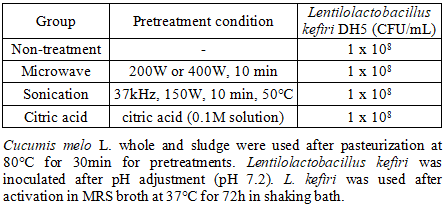
Cucumis melo L. whole was crushed with peel, pulp, and seed and sludge was the residues crushed with peel, pulp, and seed after juicing. Cucumis melo L. whole and sludge were mixed with distilled water (100g : 160ml w/v) and subjected to microwave treatment (200W or 400W for 10 min) or sonication (37 kHz, 150W, 10 min at 50°C). The mixtures were inoculated with Lentilolactobacillus kefiri DH5 (1.0 × 10⁸ CFU/mL) after pH adjustment (pH 7.0) and fermented for 24 h at 37°C in shaking incubator. Afterward, the mixtures were pasteurized at 85°C for 10 minutes and subsequently cooled to 37°C (Table 1).
For citric acid treatment, citric acid (0.1M solution) was then added to adjust the pH to 2. The pH-adjusted samples were incubated in a water bath at 80°C for 2 hours. Following incubation, the samples were centrifuged at 3,000 g for 10 minutes and filtered through filter paper. The filtrates were precipitated overnight at 4°C. Ethanol (95%, v/v) was added to achieve a final ethanol concentration of 80% (v/v). and the mixtures were centrifuged again at 3,000 g for 15 minutes. The resulting pellets were redissolved in distilled water and washed sequentially with 80% and 100%. Finally, all samples were frozen at -80°C and freeze-dried at -50°C under 0.3 mbar 16, 17, 18, 19.
2.2. pH and Brix MeasurementpH was measured using a pH meter (Ohaus, Starter3100) after calibration using standard buffer (pH 4.0, 7.0 and 10.0). Brix was measured using a digital refractometer (Hanna, HI 96801 refractometer) after calibration the with distilled water. 200 μL of samples were added to the well and the Brix value is measured.
2.3. Total Phenol ContentBased on the research of Kwaw et al. (2018), total phenolic content was measured with minor modifications. Samples were incubated with 500 μL of 10% Folin & Clocalteu’s phenol reagent (2N) at room temperature for 5 min. Then, 0.4 mL of 7.5% Na2CO3 solution was added and vortexed. The mixture was subsequently incubated in the dark for 10 min at 50℃, and the absorbance was measured at 765 nm by a microplate reader (Multiskan GO, Thermo Scientific, Waltham, MA, USA). The results were calculated by the standard curve of gallic acid and expressed as gallic acid equivalents (GAE) 20.
The total phenolic content = mg gallic acid equivalent (GAE) in mg per g (mg GAE/g) of sample
2.4. DPPH Radical Scavenging ActivityThe DPPH radical scavenging activity was measured as described previously with slight modifications. Briefly, 500 μL of diluted sample was mixed with 3 mL of 0.2 mM DPPH solution (in methanolic solution) and incubated in the dark at 37℃ for 20 min. Absorbance was measured at 517 nm. The DPPH radical scavenging rate was calculated according to following equation 21.
DPPH radical scavenging activity (%) = {(Ac-As-Ab)/Ac}×100
2.5. HPLC Analysis of Phenolic CompoundsThe DPPH radical Phenolic compound profiling was conducted using high-performance liquid chromatography (HPLC). Lyophilized melon byproduct samples (100 mg) were extracted with 1 mL of 70% methanol by vortexing for 1 min and sonicating for 30 min at room temperature. The mixture was centrifuged at 12,000 × g for 10 min, and the supernatant was filtered through a 0.45 µm syringe filter prior to injection. The HPLC system was equipped with a C18 column (250 × 4.6 mm, 5 µm particle size) and a UV detector set at 280 nm. The mobile phase consisted of solvent A (0.1% formic acid in water) and solvent B (methanol) using a linear gradient from 10% to 90% B over 30 minutes at a flow rate of 1.0 mL/min. The injection volume was 20 µL. Standard solutions of gallic acid, caffeic acid, and chlorogenic acid were prepared in the range of 5-100 μg/mL for calibration. Peak identification was achieved by comparing retention times with those of authentic standards, and quantification was based on external calibration curves (R² > 0.99 for all compounds). The limits of detection (LOD) ranged from 0.3 to 0.6 µg/mL and limits of quantification (LOQ) from 1.0 to 2.0 µg/mL, depending on the compound.
2.6. Statistical AnalysisData were analyzed by one-way ANOVA and Duncan’s multiple range test using SPSS software (p<0.05).
In this study, we compared the effects of various pretreatment strategies (sonication, microwave, citric acid treatment) and subsequent bioconversion by L. kefiri DH5 on the antioxidant properties of Cucumis melo L. byproducts. Our data demonstrated that microbial bioconversion (fermentation) significantly enhanced the antioxidant activity compared to other physicochemical methods. This suggests that microbial fermentation may be a more effective strategy for unlocking the functional potential of fruit-derived bioactive components than conventional solvent extraction methods.
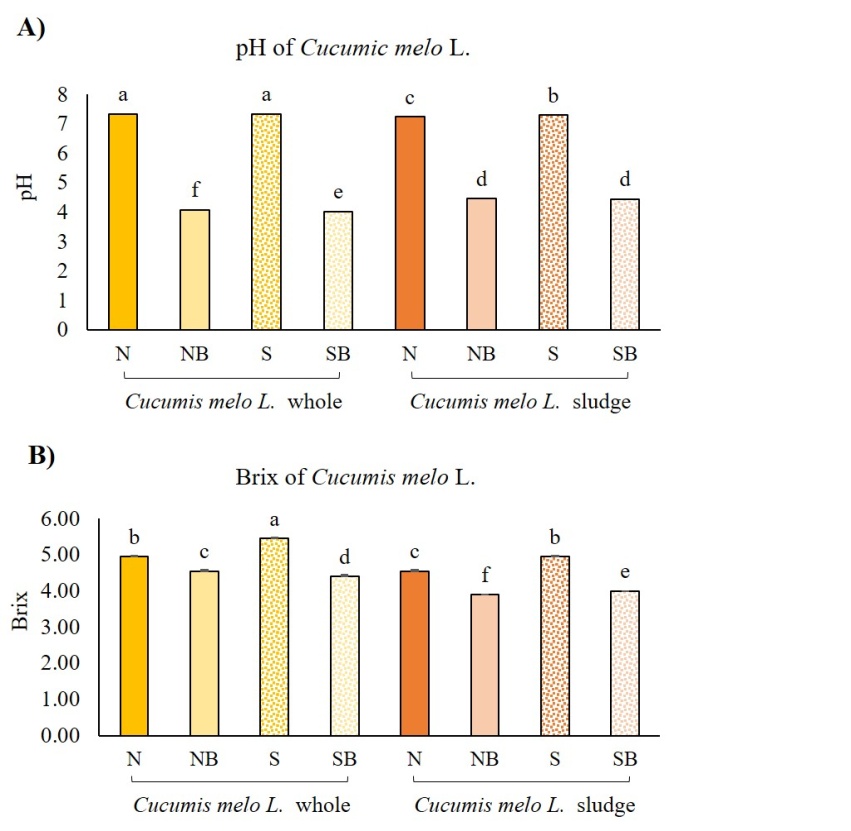
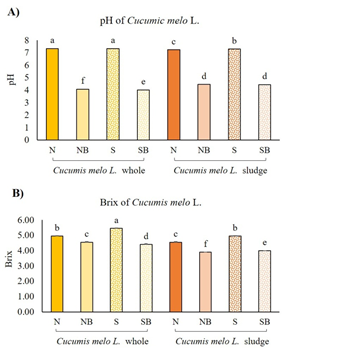
3.1. pH and BrixSuccessful fermentation was confirmed in all Cucumis melo L. byproducts samples (both whole and sludge) by notable changes in pH and brix (sugar content). After 24h of fermentation with L. kefiri DH5, the pH dropped to approximately 4.0 in both substrates, accompanied by a significant decrease in brix relative to the non-fermented controls (Figure 1, p<0.05). This indicates active lactic acid bacterial metabolism, as the LAB converted available sugars into organic acids. The reduction in pH and brix is strong evidence of fermentation progress and corresponds with the production of lactic acid and other metabolites by L. kefiri, which can influence the antioxidant activity of the substrate 22, 23. In essence, the Cucumis melo L. byproducts provided fermentable nutrients that L. kefiri rapidly consumed, lowering the pH and setting the stage for subsequent changes in polyphenol content and antioxidant capacity 15.
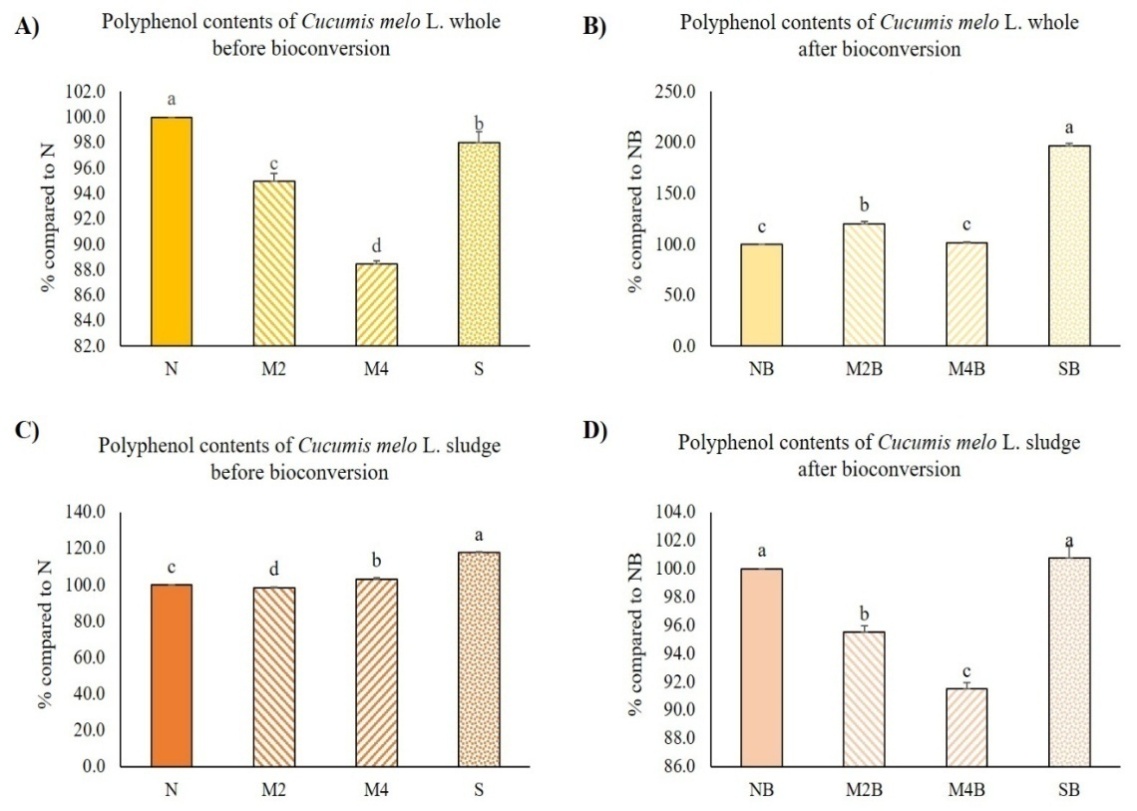
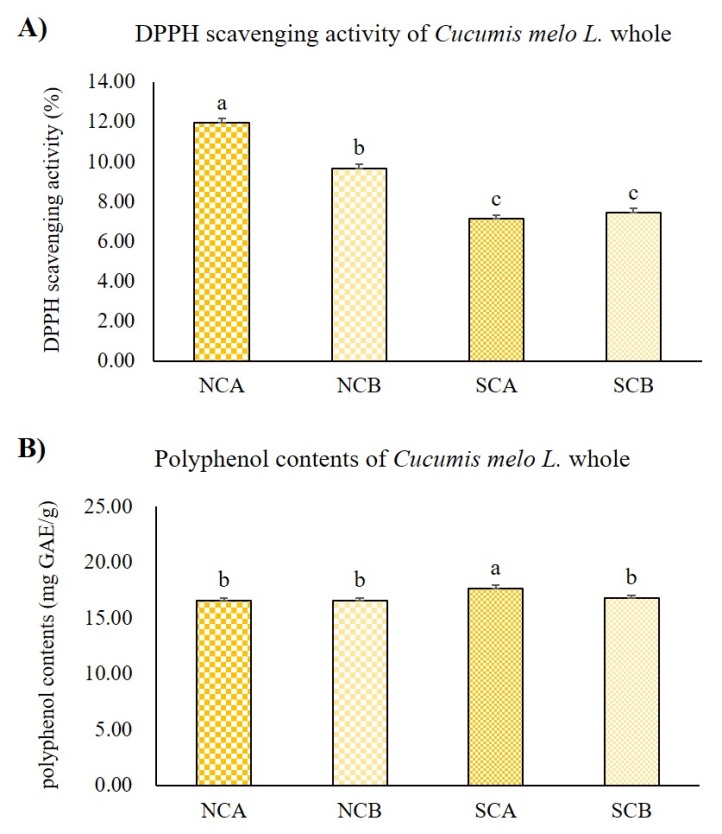
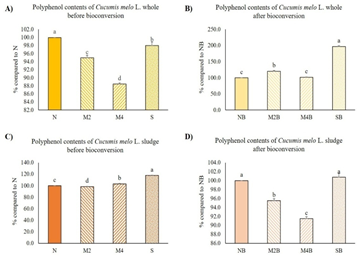
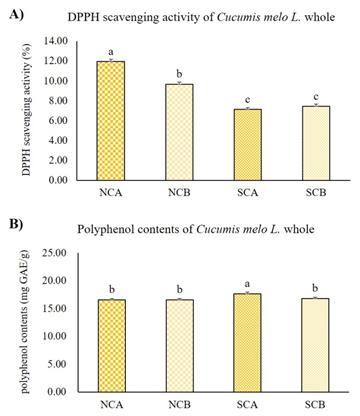
3.2. Polyphenol ContentsThe total polyphenol content of the Cucumis melo L. byproducts was significantly influenced by both the type of sample and the pretreatment applied. The Cucumis melo L. whole showed a higher polyphenol content (14.14 mg GAE/g) compared to the sludge (10.35 mg GAE/g). Figure 2 and 3 shows the changes in DPPH scavenging activity and polyphenol content of the byproducts with different pretreatments and bioconversion. In the Cucumis melo L. whole, microwave pretreatment (200W or 400W) decreased polyphenol content compared to the untreated control (N), suggesting that microwave heating may have caused some phenolic degradation or loss. In contrast, bioconversion markedly enhanced polyphenol levels, with the non-treatment (NB) showing the highest increase. Sonication combined with bioconversion (SB) also enhanced polyphenol contents, though to a lesser extent than NB. In the sludge samples, these trends were less evident. Neither sonication nor bioconversion substantially increased polyphenols, and microwave treatment had minimal impact.
This indicates that the sludge matrix, already depleted in phenolics due to juicing, provides limited substrates for either mechanical disruption or microbial bioconversion. Overall, the whole samples with bioconversion, particularly NB, yielded significantly higher polyphenol contents and antioxidant activity than all other groups, underscoring the effectiveness of microbial fermentation compared to physicochemical pretreatments. The superior performance of NB and SB groups highlights the role of microbial enzymes in phenolic bioconversion. Lactic acid bacteria such as L. kefiri are known to produce glycosidases, esterases, and decarboxylases that hydrolyze bound phenolics into free forms and may generate novel metabolites with enhanced antioxidant activity 10. Unlike ultrasound or microwave pretreatments, which rely on mechanical or thermal disruption but risk degradation of heat- or oxygen-sensitive compounds, microbial fermentation provides a mild, selective, and enzymatically driven transformation 6, 7. These results aligned with previous studies showing that LAB fermentation enhances the release and activity of polyphenols in plant matrices. For example, ultrasonic-assisted fermentation of jujube juice with L. plantarum significantly increased both total flavonoids (16.8%) and phenolic content (17.95%) compared to the control 11. The present results suggest that the strain-specific enzymatic activity of L. kefiri may further contribute to efficient phenolic release and antioxidant enhancement. Taken together, the data support that microbial bioconversion, especially without physicochemical pretreatments, maximizes polyphenol yield and activity in Cucumis melo L. whole byproducts. This highlights fermentation as a promising strategy for valorizing fruit processing residues into functional ingredients with improved bioactivity.
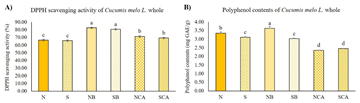
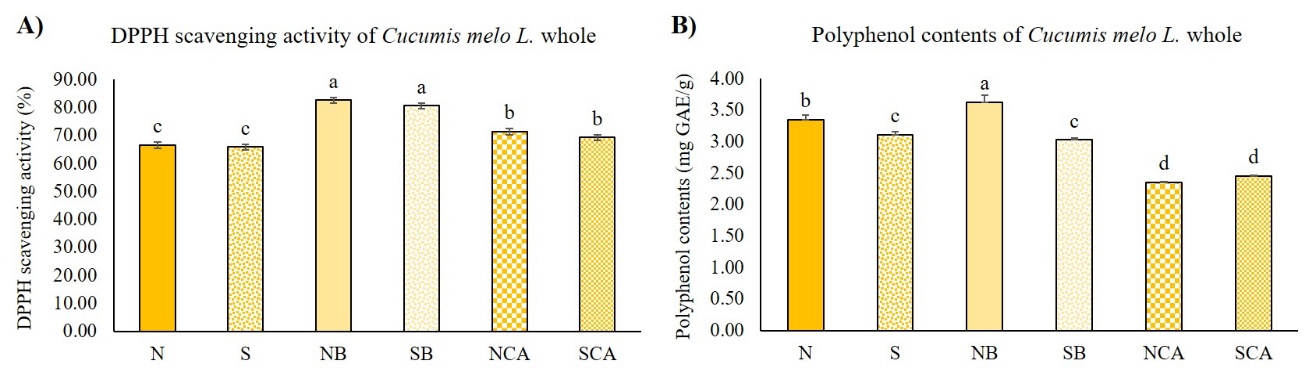
The antioxidant capacity of Cucumis melo L. byproducts, measured by DPPH radical scavenging activity, seemed to be similar trends observed in polyphenol content. In the whole samples, bioconversion markedly increased antioxidant activity, with the NB group showing the highest DPPH radical scavenging activity (82.56%) compared to the untreated control (66.6%). The SB group also showed strong activity (80%), and both NB and SB were significantly higher than other treatments (Figure 3, p<0.05). In contrast, physicochemical pretreatments without bioconversion had negligible effects: microwave or sonication without bioconversion produced only modest changes, while citric acid treatment failed to enhance antioxidant activity. Citric acid-treated samples (NCA) or sonication and citric acid-treated samples (SCA) showed no improvement over the fermented groups, both NB and SB (Figure 4, p<0.05). These results confirm that fermentation-derived enzymatic release or transformation of phenolics was the primary driver of antioxidant enhancement. Enzymatic activity of L. kefiri including β-glucosidases, esterases, and phenolic acid decarboxylases may act on a broader pool of bound phenolics and generate more bioactive metabolites 24, 25. This explains the strong correlation between polyphenol levels and DPPH radical scavenging activity in the fermented groups. These findings are consistent with previous studies on LAB-mediated enhancement of antioxidant activity in fruit- and vegetable-based matrices and further underscore fermentation as a low-energy, sustainable strategy for valorizing agro-industrial byproducts.
In contrast, the sludge showed only marginal improvements in polyphenol content and antioxidant activity across treatments. This limited response can be explained by the depletion of soluble phenolics and fermentable sugars during juicing, leaving insufficient substrates for microbial metabolism (Table 2).
Furthermore, sludge is composed mainly of fibrous residues with reduced bioactive precursors, restricting both phenolic release and enzymatic transformation by L. kefiri. In previous study, antioxidant activity was higher in blackcurrent fruits compared to pomace 26. These substrate-related limitations are consistent with previous findings on juice-derived residues, highlighting the critical role of raw material composition in determining bioconversion efficiency.
Beyond antioxidant enhancement, microbial fermentation of melon byproducts may provide additional functional benefits. Momordica charantia, an edible fruit commonly known as bitter melon fermented with Leuconostoc mesenteroides is a non-dairy probiotic plant extract used to achieve beneficial multi-health functional activities, such as anti-diabetic, antioxidant activities, preventing metabolic complications associated insulin resistance, increase of white adipose tissue, and hepatic triglyceride 27, 28. L. kefiri is known to produce metabolites such as short-chain fatty acids, γ-aminobutyric acid (GABA), and exopolysaccharides, which exert prebiotic, immunomodulatory, and gut microbiota-modulating effects. Incorporating these functional dimensions into future research through metabolomic profiling, microbiome interaction studies, and in vivo validation would broaden the nutritional relevance of melon byproduct fermentation and strengthen its potential as a next-generation functional food ingredient.
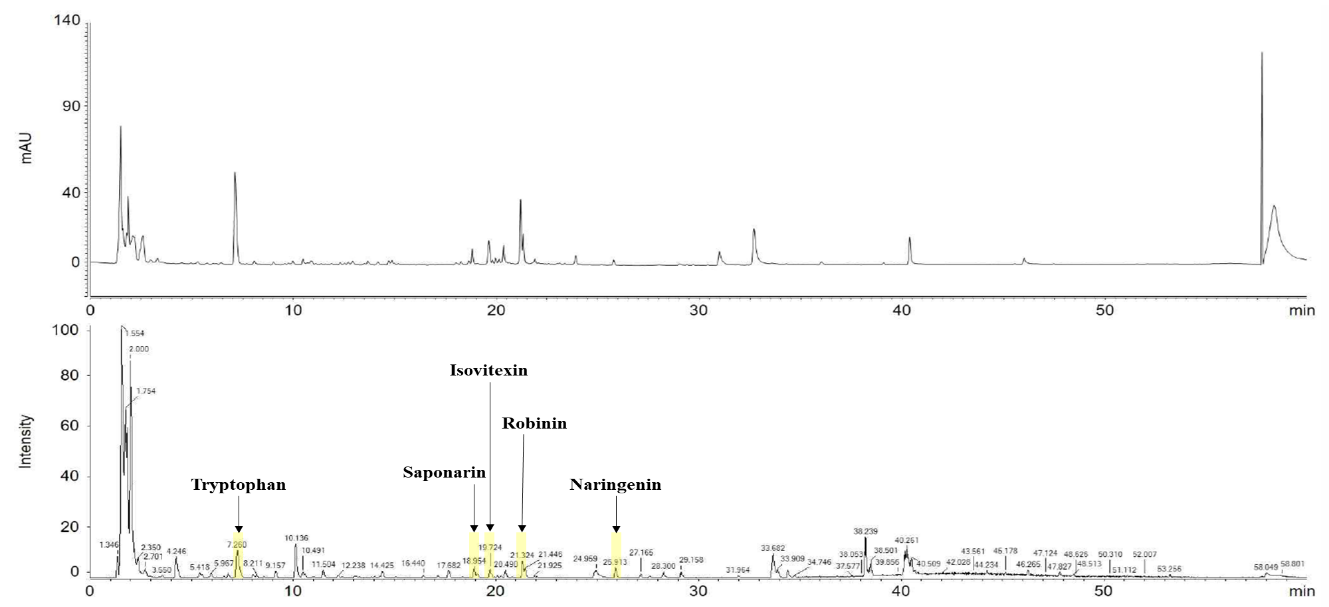
3.4. Identification of Bioactive CompoundsHigh-performance liquid chromatography (HPLC) analysis was performed to characterize the phytochemical profile of Cucumis melo L. byproducts before bioconversion. As shown in Figure 5, the unfermented whole contained notable bioactive compounds, including tryptophan, isovitexin, and robinin, as the predominant components. Minor peaks corresponding to other flavonoids such as naringenin were also detected. The detection of tryptophan and multiple flavonoids indicates that melon byproducts retain a distinct spectrum of bioactive compounds. Tryptophan, as a precursor of serotonin and melatonin, is linked to mood regulation and sleep health 29. Flavonoid glycosides such as isovitexin, saponarin, robinin, and naringenin are well-documented for their antioxidant, anti-inflammatory, and hepatoprotective effects, while naringenin has been associated with cardiovascular and metabolic benefits 29.
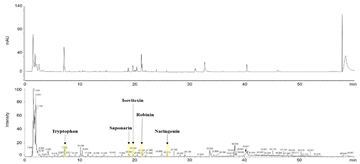
The predominance of polyphenolic constituents aligns with the strong antioxidant activity observed in fermented samples, suggesting that these compounds serve as key substrates for microbial bioconversion. Fermentation may not only increase their bioavailability but also generate novel metabolites with enhanced bioactivity. This highlights the potential of Cucumis melo L. residues as functional ingredients, particularly in prebiotic or metabolic health applications. Further studies are needed to profile the transformed metabolites after bioconversion, which could provide mechanistic insight into the enhanced antioxidant effects observed.
This study demonstrated that microbial bioconversion using L. kefiri DH5 significantly enhanced the polyphenol content and antioxidant activity of Cucumis melo L. byproducts. Among all treatments, microbial fermentation of the untreated whole (NB) yielded the greatest increases in both total polyphenol content and DPPH radical scavenging activity, highlighting the pivotal role of microbial metabolism in unlocking bioactive potential. The predominance of flavonoids and other phytochemicals detected by HPLC further supports the capacity of fermentation to improve the functional value of melon byproducts. Overall, L. kefiri DH5–driven bioconversion represents an eco-friendly and value-adding strategy for upcycling melon byproducts into functional food ingredients. This sustainable approach not only addresses agro-industrial waste challenges but also provides opportunities to develop next-generation prebiotic materials with potential benefits for metabolic health and gut microbiome modulation. To advance their practical application, future studies should integrate metabolomic profiling, gut microbiota analyses, and in vivo validation to elucidate the mechanisms underlying the enhanced bioactivity and to evaluate their feasibility in functional food development.
This study was supported by the Otoki Ham Taiho Foundation under its research and publication support program.
| [1] | K. Kumar, S. Srivastav and V.S. Sharanagat, Ultrasound assisted extraction (UAE) of bioactive compounds from fruit and vegetable processing by-products: A review. Ultrasonics sonochemistry, 2021. 70: p. 105325. | ||
| In article | View Article PubMed | ||
| [2] | M.A. Silva, T.G. Albuquerque, D.M. Ferreira, R.C. Alves, M.B.P. Oliveira and H.S. Costa, Nutritional and Bioactive Profiling of tabl L. By-Products: Towards a Circular Food Economy. Molecules, 2025. 30(6): p. 1287. | ||
| In article | View Article PubMed | ||
| [3] | P.M. Rolim, L.M.A.J. Seabra and G.R. de Macedo, Melon by-products: Biopotential in human health and food processing. Food Reviews International, 2020. 36(1): p. 15-38. | ||
| In article | View Article | ||
| [4] | A. Patra, S. Abdullah and R.C. Pradhan, Review on the extraction of bioactive compounds and characterization of fruit industry by-products. Bioresources and Bioprocessing, 2022. 9(1): p. 14. | ||
| In article | View Article PubMed | ||
| [5] | M.L. Rojas, M.T. Kubo, M.E. Caetano-Silva and P.E. Augusto, Ultrasound processing of fruits and vegetables, structural modification and impact on nutrient and bioactive compounds: a review. International Journal of Food Science and Technology, 2021. 56(9): p. 4376-4395. | ||
| In article | View Article | ||
| [6] | S.U. Kadam, B.K. Tiwari, C. Álvarez and C.P. O'Donnell, Ultrasound applications for the extraction, identification and delivery of food proteins and bioactive peptides. Trends in Food Science & Technology, 2015. 46(1): p. 60-67. | ||
| In article | View Article | ||
| [7] | N. Medina-Torres, T. Ayora-Talavera, H. Espinosa-Andrews, A. Sánchez-Contreras and N. Pacheco, Ultrasound assisted extraction for the recovery of phenolic compounds from vegetable sources. Agronomy, 2017. 7(3): p. 47. | ||
| In article | View Article | ||
| [8] | D. Huo, J. Dai, S. Yuan, X. Cheng, Y. Pan, L. Wang and R. Wang, Eco-friendly simultaneous extraction of pectins and phenolics from passion fruit (Passiflora edulis Sims) peel: Process optimization, physicochemical properties, and antioxidant activity. International Journal of Biological Macromolecules, 2023. 243: p. 125229. | ||
| In article | View Article PubMed | ||
| [9] | Z. Gulsunoglu-Konuskan and M. Kilic-Akyilmaz, Microbial bioconversion of phenolic compounds in agro-industrial wastes: a review of mechanisms and effective factors. Journal of Agricultural and Food Chemistry, 2022. 70(23): p. 6901-6910. | ||
| In article | View Article PubMed | ||
| [10] | S.J. Hur, S.Y. Lee, Y.-C. Kim, I. Choi and G.-B. Kim, Effect of fermentation on the antioxidant activity in plant-based foods. Food chemistry, 2014. 160: p. 346-356. | ||
| In article | View Article PubMed | ||
| [11] | L. Zhang, Y. Chen, X. Lan, W. Zong and X. Wang, Application of ultrasonic pretreatment on fermentation of jujube juice by Lactobacillus plantarum: investigation on physicochemical and volatile aroma components. Journal of Food Measurement and Characterization, 2025. 19(1): p. 753-767. | ||
| In article | View Article | ||
| [12] | 12.H. Wang, Y. Tao, Y. Li, S. Wu, D. Li, X. Liu, Y. Han, S. Manickam and P.L. Show, Application of ultrasonication at different microbial growth stages during apple juice fermentation by Lactobacillus plantarum: Investigation on the metabolic response. Ultrasonics Sonochemistry, 2021. 73: p. 105486. | ||
| In article | View Article PubMed | ||
| [13] | F.-B. Meng, Y.-T. Lei, Q.-Z. Li, Y.-C. Li, Y. Deng and D.-Y. Liu, Effect of Lactobacillus plantarum and Lactobacillus acidophilus fermentation on antioxidant activity and metabolomic profiles of loquat juice. Lwt, 2022. 171: p. 114104. | ||
| In article | View Article | ||
| [14] | Y. He, Y. Zhu, J. Lv, Y. Gu, T. Wang and J. Chen, Effects of lactic acid bacteria fermentation on the bioactive composition, volatile compounds and antioxidant activity of Huyou (Citrus aurantium ‘Changshan-huyou’) peel and pomace. Food Quality and Safety, 2023. 7: p. fyad003. | ||
| In article | View Article | ||
| [15] | Y. Zhou, R. Wang, Y. Zhang, Y. Yang, X. Sun, Q. Zhang and N. Yang, Biotransformation of phenolics and metabolites and the change in antioxidant activity in kiwifruit induced by Lactobacillus plantarum fermentation. Journal of the Science of Food and Agriculture, 2020. 100(8): p. 3283-3290. | ||
| In article | View Article PubMed | ||
| [16] | N. Singh, D.S. Patle and S. Kumar, Microwave-and ultrasonication-based intensified and synergetic approaches for extraction of bioactive compounds from pomegranate peels: parametric and kinetic studies. Industrial & Engineering Chemistry Research, 2024. 63(20): p. 9214-9224. | ||
| In article | View Article | ||
| [17] | R. Boggia, F. Turrini, C. Villa, C. Lacapra, P. Zunin and B. Parodi, Green extraction from pomegranate marcs for the production of functional foods and cosmetics. Pharmaceuticals, 2016. 9(4): p. 63. | ||
| In article | View Article PubMed | ||
| [18] | T. Ozturk, M.Á. Ávila-Gálvez, S. Mercier, F. Vallejo, A. Bred, D. Fraisse, C. Morand, E. Pelvan, L.-E. Monfoulet and A. González-Sarrías, Impact of lactic acid bacteria fermentation on (poly) phenolic profile and in vitro antioxidant and anti-inflammatory properties of herbal infusions. Antioxidants, 2024. 13(5): p. 562. | ||
| In article | View Article PubMed | ||
| [19] | A. Bermúdez-Oria, A. Fernández-Prior, M.L. Castejón, G. Rodríguez-Gutiérrez and J. Fernández-Bolaños, Extraction of polyphenols associated with pectin from olive waste (alperujo) with choline chloride. Food chemistry, 2023. 419: p. 136073. | ||
| In article | View Article PubMed | ||
| [20] | E. Kwaw, Y. Ma, W. Tchabo, M.T. Apaliya, M. Wu, A.S. Sackey, L. Xiao and H.E. Tahir, Effect of lactobacillus strains on phenolic profile, color attributes and antioxidant activities of lactic-acid-fermented mulberry juice. Food chemistry, 2018. 250: p. 148-154. | ||
| In article | View Article PubMed | ||
| [21] | J.E. Ramirez, R. Zambrano, B. Sepúlveda, E.J. Kennelly and M.J. Simirgiotis, Anthocyanins and antioxidant capacities of six Chilean berries by HPLC–HR-ESI-ToF-MS. Food Chemistry, 2015. 176: p. 106-114. | ||
| In article | View Article PubMed | ||
| [22] | H. Sharma, F. Ozogul, E. Bartkiene and J.M. Rocha, Impact of lactic acid bacteria and their metabolites on the techno-functional properties and health benefits of fermented dairy products. Critical Reviews in Food Science and Nutrition, 2023. 63(21): p. 4819-4841. | ||
| In article | View Article PubMed | ||
| [23] | Y. Xu, M.M. Hlaing, O. Glagovskaia, M.A. Augustin and N.S. Terefe, Fermentation by probiotic Lactobacillus gasseri strains enhances the carotenoid and fibre contents of carrot juice. Foods, 2020. 9(12): p. 1803. | ||
| In article | View Article PubMed | ||
| [24] | C. Zhang, X. Chen, X. Guo, R. Guo, L. Zhu, X. Qiu, X. Yu, J. Chai, C. Gu and Z. Feng, A novel strategy for improving the antioxidant, iridoid, and flavor properties of Noni (Morinda citrifolia L.) fruit juice by lactic acid bacteria fermentation. Lwt, 2023. 184: p. 115075. | ||
| In article | View Article | ||
| [25] | Y. Wu, S. Li, Y. Tao, D. Li, Y. Han, P.L. Show, G. Wen and J. Zhou, Fermentation of blueberry and blackberry juices using Lactobacillus plantarum, Streptococcus thermophilus and Bifidobacterium bifidum: Growth of probiotics, metabolism of phenolics, antioxidant capacity in vitro and sensory evaluation. Food chemistry, 2021. 348: p. 129083. | ||
| In article | View Article PubMed | ||
| [26] | A.E. Untea, A.-G. Oancea, P.A. Vlaicu, I. Varzaru and M. Saracila, Blackcurrant (fruits, pomace, and leaves) phenolic characterization before and after in vitro digestion, free radical scavenger capacity, and antioxidant effects on iron-mediated lipid peroxidation. Foods, 2024. 13(10): p. 1514. | ||
| In article | View Article PubMed | ||
| [27] | J. Kim, S. Yu, Y. Jeong and M. Kim, Enhancement of bioactive properties in Momordica charantia by Leuconostoc fermentation. Fermentation, 2023. 9(6): p. 523. | ||
| In article | View Article | ||
| [28] | H. Moon, J.-H. Ha, J. Lee, H. Jang, D. Kwon, M. Cho, D. Kang, I. Kim and M. Kim, The effect of fermented Momordica charantia with Leuconostoc mesenteroides MKSR on metabolic complications induced by high-fat high-cholesterol diet in C57BL/6 mice. Fermentation, 2023. 9(8): p. 718. | ||
| In article | View Article | ||
| [29] | M.A. Silva, T.G. Albuquerque, R.C. Alves, M.B.P. Oliveira and H.S. Costa, Melon (Cucumis melo L.) by-products: Potential food ingredients for novel functional foods? Trends in Food Science & Technology, 2020. 98: p. 181-189. | ||
| In article | View Article | ||
Published with license by Science and Education Publishing, Copyright © 2025 Subin Hwang, Kun-Ho Seo and Hyunsook Kim
 This work is licensed under a Creative Commons Attribution 4.0 International License. To view a copy of this license, visit
http://creativecommons.org/licenses/by/4.0/
This work is licensed under a Creative Commons Attribution 4.0 International License. To view a copy of this license, visit
http://creativecommons.org/licenses/by/4.0/
| [1] | K. Kumar, S. Srivastav and V.S. Sharanagat, Ultrasound assisted extraction (UAE) of bioactive compounds from fruit and vegetable processing by-products: A review. Ultrasonics sonochemistry, 2021. 70: p. 105325. | ||
| In article | View Article PubMed | ||
| [2] | M.A. Silva, T.G. Albuquerque, D.M. Ferreira, R.C. Alves, M.B.P. Oliveira and H.S. Costa, Nutritional and Bioactive Profiling of tabl L. By-Products: Towards a Circular Food Economy. Molecules, 2025. 30(6): p. 1287. | ||
| In article | View Article PubMed | ||
| [3] | P.M. Rolim, L.M.A.J. Seabra and G.R. de Macedo, Melon by-products: Biopotential in human health and food processing. Food Reviews International, 2020. 36(1): p. 15-38. | ||
| In article | View Article | ||
| [4] | A. Patra, S. Abdullah and R.C. Pradhan, Review on the extraction of bioactive compounds and characterization of fruit industry by-products. Bioresources and Bioprocessing, 2022. 9(1): p. 14. | ||
| In article | View Article PubMed | ||
| [5] | M.L. Rojas, M.T. Kubo, M.E. Caetano-Silva and P.E. Augusto, Ultrasound processing of fruits and vegetables, structural modification and impact on nutrient and bioactive compounds: a review. International Journal of Food Science and Technology, 2021. 56(9): p. 4376-4395. | ||
| In article | View Article | ||
| [6] | S.U. Kadam, B.K. Tiwari, C. Álvarez and C.P. O'Donnell, Ultrasound applications for the extraction, identification and delivery of food proteins and bioactive peptides. Trends in Food Science & Technology, 2015. 46(1): p. 60-67. | ||
| In article | View Article | ||
| [7] | N. Medina-Torres, T. Ayora-Talavera, H. Espinosa-Andrews, A. Sánchez-Contreras and N. Pacheco, Ultrasound assisted extraction for the recovery of phenolic compounds from vegetable sources. Agronomy, 2017. 7(3): p. 47. | ||
| In article | View Article | ||
| [8] | D. Huo, J. Dai, S. Yuan, X. Cheng, Y. Pan, L. Wang and R. Wang, Eco-friendly simultaneous extraction of pectins and phenolics from passion fruit (Passiflora edulis Sims) peel: Process optimization, physicochemical properties, and antioxidant activity. International Journal of Biological Macromolecules, 2023. 243: p. 125229. | ||
| In article | View Article PubMed | ||
| [9] | Z. Gulsunoglu-Konuskan and M. Kilic-Akyilmaz, Microbial bioconversion of phenolic compounds in agro-industrial wastes: a review of mechanisms and effective factors. Journal of Agricultural and Food Chemistry, 2022. 70(23): p. 6901-6910. | ||
| In article | View Article PubMed | ||
| [10] | S.J. Hur, S.Y. Lee, Y.-C. Kim, I. Choi and G.-B. Kim, Effect of fermentation on the antioxidant activity in plant-based foods. Food chemistry, 2014. 160: p. 346-356. | ||
| In article | View Article PubMed | ||
| [11] | L. Zhang, Y. Chen, X. Lan, W. Zong and X. Wang, Application of ultrasonic pretreatment on fermentation of jujube juice by Lactobacillus plantarum: investigation on physicochemical and volatile aroma components. Journal of Food Measurement and Characterization, 2025. 19(1): p. 753-767. | ||
| In article | View Article | ||
| [12] | 12.H. Wang, Y. Tao, Y. Li, S. Wu, D. Li, X. Liu, Y. Han, S. Manickam and P.L. Show, Application of ultrasonication at different microbial growth stages during apple juice fermentation by Lactobacillus plantarum: Investigation on the metabolic response. Ultrasonics Sonochemistry, 2021. 73: p. 105486. | ||
| In article | View Article PubMed | ||
| [13] | F.-B. Meng, Y.-T. Lei, Q.-Z. Li, Y.-C. Li, Y. Deng and D.-Y. Liu, Effect of Lactobacillus plantarum and Lactobacillus acidophilus fermentation on antioxidant activity and metabolomic profiles of loquat juice. Lwt, 2022. 171: p. 114104. | ||
| In article | View Article | ||
| [14] | Y. He, Y. Zhu, J. Lv, Y. Gu, T. Wang and J. Chen, Effects of lactic acid bacteria fermentation on the bioactive composition, volatile compounds and antioxidant activity of Huyou (Citrus aurantium ‘Changshan-huyou’) peel and pomace. Food Quality and Safety, 2023. 7: p. fyad003. | ||
| In article | View Article | ||
| [15] | Y. Zhou, R. Wang, Y. Zhang, Y. Yang, X. Sun, Q. Zhang and N. Yang, Biotransformation of phenolics and metabolites and the change in antioxidant activity in kiwifruit induced by Lactobacillus plantarum fermentation. Journal of the Science of Food and Agriculture, 2020. 100(8): p. 3283-3290. | ||
| In article | View Article PubMed | ||
| [16] | N. Singh, D.S. Patle and S. Kumar, Microwave-and ultrasonication-based intensified and synergetic approaches for extraction of bioactive compounds from pomegranate peels: parametric and kinetic studies. Industrial & Engineering Chemistry Research, 2024. 63(20): p. 9214-9224. | ||
| In article | View Article | ||
| [17] | R. Boggia, F. Turrini, C. Villa, C. Lacapra, P. Zunin and B. Parodi, Green extraction from pomegranate marcs for the production of functional foods and cosmetics. Pharmaceuticals, 2016. 9(4): p. 63. | ||
| In article | View Article PubMed | ||
| [18] | T. Ozturk, M.Á. Ávila-Gálvez, S. Mercier, F. Vallejo, A. Bred, D. Fraisse, C. Morand, E. Pelvan, L.-E. Monfoulet and A. González-Sarrías, Impact of lactic acid bacteria fermentation on (poly) phenolic profile and in vitro antioxidant and anti-inflammatory properties of herbal infusions. Antioxidants, 2024. 13(5): p. 562. | ||
| In article | View Article PubMed | ||
| [19] | A. Bermúdez-Oria, A. Fernández-Prior, M.L. Castejón, G. Rodríguez-Gutiérrez and J. Fernández-Bolaños, Extraction of polyphenols associated with pectin from olive waste (alperujo) with choline chloride. Food chemistry, 2023. 419: p. 136073. | ||
| In article | View Article PubMed | ||
| [20] | E. Kwaw, Y. Ma, W. Tchabo, M.T. Apaliya, M. Wu, A.S. Sackey, L. Xiao and H.E. Tahir, Effect of lactobacillus strains on phenolic profile, color attributes and antioxidant activities of lactic-acid-fermented mulberry juice. Food chemistry, 2018. 250: p. 148-154. | ||
| In article | View Article PubMed | ||
| [21] | J.E. Ramirez, R. Zambrano, B. Sepúlveda, E.J. Kennelly and M.J. Simirgiotis, Anthocyanins and antioxidant capacities of six Chilean berries by HPLC–HR-ESI-ToF-MS. Food Chemistry, 2015. 176: p. 106-114. | ||
| In article | View Article PubMed | ||
| [22] | H. Sharma, F. Ozogul, E. Bartkiene and J.M. Rocha, Impact of lactic acid bacteria and their metabolites on the techno-functional properties and health benefits of fermented dairy products. Critical Reviews in Food Science and Nutrition, 2023. 63(21): p. 4819-4841. | ||
| In article | View Article PubMed | ||
| [23] | Y. Xu, M.M. Hlaing, O. Glagovskaia, M.A. Augustin and N.S. Terefe, Fermentation by probiotic Lactobacillus gasseri strains enhances the carotenoid and fibre contents of carrot juice. Foods, 2020. 9(12): p. 1803. | ||
| In article | View Article PubMed | ||
| [24] | C. Zhang, X. Chen, X. Guo, R. Guo, L. Zhu, X. Qiu, X. Yu, J. Chai, C. Gu and Z. Feng, A novel strategy for improving the antioxidant, iridoid, and flavor properties of Noni (Morinda citrifolia L.) fruit juice by lactic acid bacteria fermentation. Lwt, 2023. 184: p. 115075. | ||
| In article | View Article | ||
| [25] | Y. Wu, S. Li, Y. Tao, D. Li, Y. Han, P.L. Show, G. Wen and J. Zhou, Fermentation of blueberry and blackberry juices using Lactobacillus plantarum, Streptococcus thermophilus and Bifidobacterium bifidum: Growth of probiotics, metabolism of phenolics, antioxidant capacity in vitro and sensory evaluation. Food chemistry, 2021. 348: p. 129083. | ||
| In article | View Article PubMed | ||
| [26] | A.E. Untea, A.-G. Oancea, P.A. Vlaicu, I. Varzaru and M. Saracila, Blackcurrant (fruits, pomace, and leaves) phenolic characterization before and after in vitro digestion, free radical scavenger capacity, and antioxidant effects on iron-mediated lipid peroxidation. Foods, 2024. 13(10): p. 1514. | ||
| In article | View Article PubMed | ||
| [27] | J. Kim, S. Yu, Y. Jeong and M. Kim, Enhancement of bioactive properties in Momordica charantia by Leuconostoc fermentation. Fermentation, 2023. 9(6): p. 523. | ||
| In article | View Article | ||
| [28] | H. Moon, J.-H. Ha, J. Lee, H. Jang, D. Kwon, M. Cho, D. Kang, I. Kim and M. Kim, The effect of fermented Momordica charantia with Leuconostoc mesenteroides MKSR on metabolic complications induced by high-fat high-cholesterol diet in C57BL/6 mice. Fermentation, 2023. 9(8): p. 718. | ||
| In article | View Article | ||
| [29] | M.A. Silva, T.G. Albuquerque, R.C. Alves, M.B.P. Oliveira and H.S. Costa, Melon (Cucumis melo L.) by-products: Potential food ingredients for novel functional foods? Trends in Food Science & Technology, 2020. 98: p. 181-189. | ||
| In article | View Article | ||