This study investigated coffee consumption habits of students at a health-themed university and evaluated the microbiological quality of campus café products. A two-phase design was employed. First, a cross-sectional survey was conducted among 240 students to assess consumption frequency, type preferences, and perceptions of hygienic quality. Second, an experimental analysis was performed on six coffee types (latte, mocha, cold brew, caramel macchiato, iced latte, and americano), collected at 0, 45, and 90 minutes, to determine mesophilic bacterial and yeast counts with Gram staining of selected colonies. Survey results showed that 76.2% consumed Turkish coffee and 68.8% preferred latte, while 77.1% never consumed espresso. Turkish coffee was the most frequent choice, typically consumed once daily (22.9%) or 2-3 times daily (12.9%). Consumption habits were significantly associated with hygienic perceptions (p=0.037). Microbiological tests revealed rapid bacterial growth in mocha and cold brew, with mocha exhibiting the highest bacterial and yeast counts, whereas americano and iced latte showed no growth. Findings highlight increased microbial risks in milk- and sugar-containing coffees, emphasizing the need for hygiene controls, reduced holding times, and greater student awareness.
Coffee (Coffea spp.) is a tropical plant belonging to the Rubiaceae family, with more than 90 known species 1. Among these, Coffea arabica, Coffea canephora (Robusta), and Coffea liberica are the most commonly used in production, with Coffea arabica accounting for the majority of global output 2. Coffea arabica L. is distinguished by its shorter maturation period and plant morphology, whereas Coffea canephora P. (Robusta) is characterized by its strong root system and smaller seeds 1. Throughout history, the fruits and seeds of coffee have been consumed in various forms, and today coffee ranks as the third most consumed beverage worldwide, following water and tea 3, 4. It is estimated that approximately 2-3 billion cups of coffee are consumed globally each day 5. Due to its caffeine content, coffee enhances mental alertness, concentration, and energy, making it particularly popular among young adults 6, 7. Among students, academic stress, examination periods, and social contexts further contribute to its frequent consumption 8.
Coffee is vulnerable to numerous environmental and biological threats throughout production and consumption. Owing to its sensitivity to climatic conditions, it can be contaminated by various pathogens and pests during cultivation 9, 10, 11. Common microbial agents include aflatoxins and ochratoxins 12. The isolation of ochratoxin A from coffee beans and its severe toxic effects highlight a significant risk to coffee quality and safety 10, 11, 12. Moreover, milk and sugar used in coffee preparation may also serve as potential sources of contamination. Microbial growth may occur during milking, pasteurization, and storage of milk, while spontaneous fermentation may develop at room temperature due to the proliferation of lactic acid bacteria 13.
Hygienic practices during preparation and service are therefore critical to coffee safety. Coffee types containing milk, sugar, and ice are particularly prone to microbial contamination. Previous studies have reported that beverages stored at low temperatures for extended periods (e.g., cold brew coffee) provide favorable conditions for mesophilic bacterial and yeast growth 14. Similarly, milk-based coffee types and their serving conditions have been shown to directly influence contamination risk 13. In this context, determining and controlling the microbiological quality of new generation coffee varieties that have become popular and frequently consumed among university students is an extremely important issue in terms of public health.
The aim of this study is to determine the coffee consumption frequency of students enrolled in a health-themed university and to evaluate the microbiological quality of different coffee types offered in campus cafés.
This study was conducted in two phases: the first phase employed a cross-sectional design, and the second phase was experimental. Survey data were collected from 240 students enrolled at Biruni University in Istanbul between November 2024 and January 2025. Microbiological analyses were performed between May and June 2025 at the Microbiology Laboratory of the Biruni University Scientific Research Center (BAMER). Ethical approval was obtained from the Biruni University Scientific Research Ethics Committee (decision number: 2024-BİAEK/08-47, dated 24.03.2025).
2.1. Study SampleThe study included 240 volunteer university students from different age and gender groups. The sample size was calculated using a simple random sampling method, and it was determined that at least 240 participants were required at 80% confidence level 15. The final sample consisted of 240 students who provided informed consent.
2.2. Data Collection ToolSurvey forms developed by the researchers were administered to participants through face-to-face interviews. The survey included questions on sociodemographic characteristics, coffee consumption habits, preferred coffee types, consumption frequency, and perceptions of the hygienic quality of coffee.
General Information Form: Participants were asked about their gender, age, body weight, height, department, and class level. Body mass index (BMI) was calculated as weight (kg) divided by the square of height (m²) and classified according to the World Health Organization (WHO) criteria 16.
Coffee Consumption Frequency Form: The frequency of coffee consumption was assessed using a 13-item form developed by the researchers. Participants were asked to indicate their consumption frequency for Turkish coffee, espresso, americano, latte, mocha, caramel macchiato, filter coffee, and other options using the categories: ≥4 times/day, 2-3 times/day, once/day, 2-4 times/week, once/week, 2-3 times/month, once/month, rarely (1-4 times/year), and never. In addition, one question evaluated whether participants considered the coffees sold in campus cafés to be hygienic and safe (“yes” or “no”).
2.3. Microbiological AnalysisA total of 18 coffee samples (six types coffee × three time intervals: 0-45-90 minutes) were analyzed. Six coffee types (latte, mocha, cold brew, iced latte, americano, and caramel macchiato) were purchased from a campus café and transported to the laboratory under aseptic conditions. Samples were collected at 0, 45, and 90 minutes for each coffee type. Ten-fold serial dilutions of all coffee samples (latte, mocha, and cold brew, iced latte, americano, and caramel macchiato) were prepared in peptone water. From the appropriate dilutions, 0.1 mL samples were inoculated onto different culture media. To determine the total number of mesophilic bacteria in the coffee samples, samples were taken from each coffee dilution, inoculated onto Plate Count Agar (PCA) medium and incubated at 30 °C for 48 hours. To determine the number of yeast in the coffee samples, samples were taken from each coffee dilution, inoculated onto Sabouraud dextrose agar (SDA) and incubated at 30°C for 5 days. To detect Salmonella and Shigella bacteria in the coffee samples, samples were taken from each coffee dilution, inoculated onto SS agar and incubated at 37°C for 48 hours. For the detection of S. aures in coffee samples, diluted coffee samples were cultured on Baird Parker agar and incubated at 37°C for 48 hours. For the detection of coliform bacteria in coffee samples, diluted coffee samples were cultured on Brilliant Green Bile Broth and incubated at 37°C for 48 hours 17. Following incubation period, bacterial and yeast colonies was counted and selected colonies were subjected to Gram staining.
2.4. Statistical AnalysisSurvey data were analyzed using SPSS version 30.0. Descriptive statistics (frequency and percentage distributions) were calculated. The chi-square (χ²) test was used to examine associations between categorical variables. The non-parametric Friedman test was applied to compare the frequency of consumption among different coffee types. The relationship between age and coffee consumption frequency was evaluated using Spearman’s rank correlation coefficient. A significance level of p<0.05 was considered statistically significant in all analyses.
A survey assessing coffee consumption frequency, coffee preferences, and perceptions of hygienic quality was administered to 240 university students. In addition, the microbiological quality of various coffee types obtained from campus cafés (latte, mocha, cold brew, caramel macchiato, iced latte, and americano) was evaluated.
The findings indicated that a substantial proportion of students consumed coffee on a daily basis. A significant association was found between daily coffee consumption and the perception of campus coffees as hygienic (p=0.037). Similarly, a significant relationship was observed between on-campus coffee consumption and the perception of hygienic quality (p<0.05). In contrast, no significant association was detected between gender and on-campus coffee consumption (p=0.959).
When consumption frequencies were analyzed by coffee type, Turkish coffee was identified as the most frequently consumed. Among regular consumers, the most common consumption frequencies were once daily (22.9%) and 2-3 times daily (12.9%). The proportion of students who reported never consuming Turkish coffee was 23.8%, whereas higher proportions of non-consumers were recorded for espresso (77.1%), americano (63.3%), mocha (62.1%), caramel macchiato (59.2%), and filter coffee (55.8%). For latte, the proportion of non-consumers was comparatively lower at 31.3% (Table 1). The differences in consumption frequency among coffee types were statistically significant (p<0.001). Based on mean rank values, Turkish coffee (2.58) was the most frequently consumed, while espresso (5.03) was the least consumed. Overall, Turkish coffee and latte emerged as the most frequently preferred coffee types.
According to the results of the Spearman correlation analysis, no statistically significant association was found between age and the overall patterns of coffee consumption (p>0.05). However, a weak but positive significant correlation was identified between mocha consumption and age (r=0.137, p=0.034).
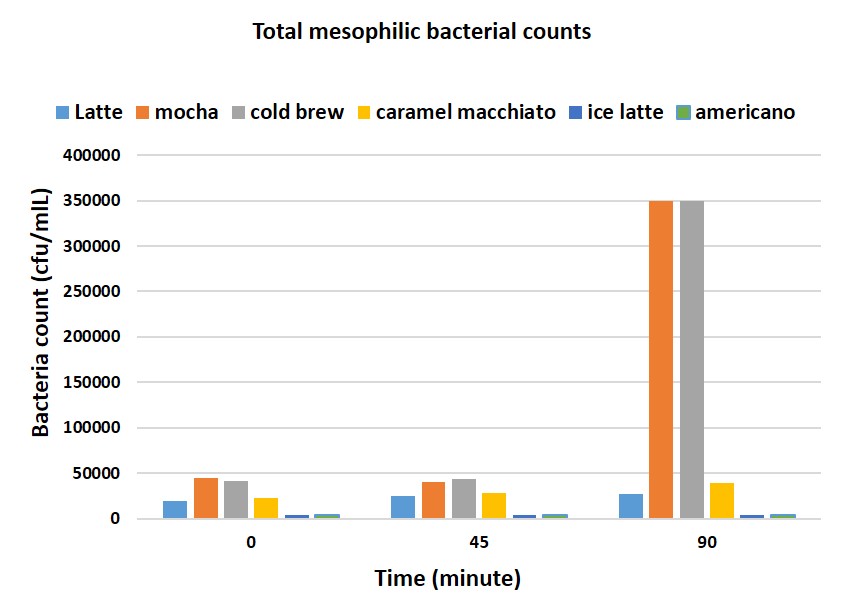
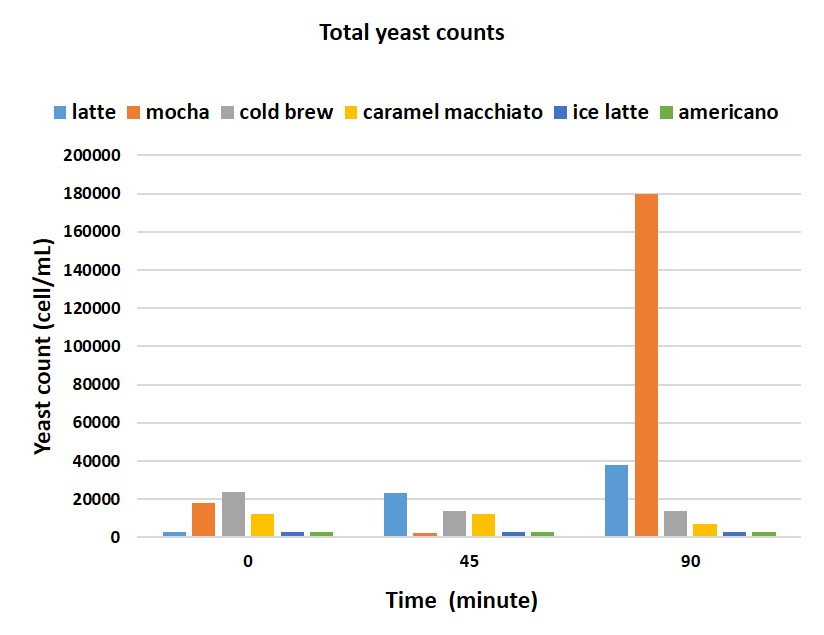
In the microbiological analysis of the coffee samples, the total mesophilic bacterial and yeast counts obtained at 0, 45, and 90 minutes are presented in Table 2 as colony-forming units per milliliter (cfu/mL). According to the results, both latte and mocha showed an increase in mesophilic bacterial and yeast counts over time, reaching their highest levels at 90 minutes. In cold brew coffee, the mesophilic bacterial count peaked at 90 minutes, while yeast counts were highest at 0 minutes and decreased at 45 and 90 minutes. In caramel macchiato, the highest mesophilic bacterial count was detected at 90 minutes, whereas yeast counts were highest at 0 and 45 minutes. The lowest mesophilic bacterial count was observed at 0 minutes, while the lowest yeast count was detected at 90 minutes. In contrast, no mesophilic bacterial or yeast growth was observed at any time point in iced latte and americano samples.
Overall, the highest mesophilic bacterial load was observed in mocha and cold brew at 90 minutes, while the lowest load was detected in latte at 0 minutes. With respect to yeasts, the greatest increase was observed in mocha at 90 minutes, whereas the lowest count was found in the same coffee at 45 minutes. Among the coffee types in which microbial growth was detected, caramel macchiato showed yellow and white colonies on PCA. On EMB, light and dark pink colonies were observed. Gram staining of these colonies revealed both Gram-negative and Gram-positive cocci. In mocha coffee, Gram staining performed on SS agar samples revealed Gram-negative bacilli. These results indicate that some coffee samples purchased from the supermarket may be contaminated with pathogenic bacteria such as salmonella, even in very small amounts. Increased pathogenic bacteria in supermarket coffee can lead to food poisoning and outbreaks. To prevent this, frequent microbiological quality monitoring of supermarket coffee is essential.
As a result of the experiments, the highest total mesophilic bacterial counts were detected in mocha and cold brew samples. When the time-dependent changes in bacterial counts were examined, mocha exhibited the highest count at 0 minutes, cold brew showed an increase at 45 minutes, and by 90 minutes both mocha and cold brew reached their peak bacterial levels (Figure 1).

When the total yeast counts in different coffee types were examined, the highest yeast count at 0 minutes was observed in cold brew. At 45 minutes, an increase was detected in latte, while at 90 minutes the highest yeast count was found in mocha, followed by latte (Figure 2).
In this study, the frequency of coffee consumption among students at a health-themed university was assessed through a survey, and microbiological analyses were conducted on different coffee types obtained from campus cafés. The survey results revealed a significant relationship between students’ coffee consumption habits and their perceptions of coffee as hygienic. The majority of students who consumed coffee both on campus and in daily life considered it hygienic, and this perception influenced their consumption behaviors. Furthermore, a weak but significant positive correlation was observed between mocha consumption and age, suggesting that with increasing age, individuals may show a greater tendency toward sweetened and milk-based coffees. In interpreting these findings, the participants’ demographic characteristics were also taken into consideration. Although no statistically significant associations were found between demographic variables and coffee type preferences, it is known from the literature that factors such as gender, age, and academic workload may influence coffee consumption behaviour. This suggests that demographic differences could partly explain the variation in consumption patterns observed in our study.
Although Turkish coffee was the most frequently consumed type according to the survey results, it was not included among the samples selected for microbiological analysis. This is because both Turkish coffee and Americano share a similar basic composition; they are prepared solely with coffee and water, without the addition of sugar or milk-based ingredients. Therefore, Americano was considered representative of Turkish coffee in terms of microbiological characteristics. Microbiological analyses demonstrated the presence of both Gram-negative and Gram-positive bacteria in mocha and caramel macchiato samples, highlighting that these coffee types provide a favorable environment for microbial growth due to their milk and sugar content. The chocolate syrup in mocha and the caramel syrup in caramel macchiato may promote bacterial proliferation. In contrast, no bacterial or yeast growth was observed in iced latte and americano samples, which may be attributed to either the cleaning of coffee machines prior to sampling or the lower nutritional content of these coffees. The highest microbial load was detected in cold brew samples, most likely due to the absence of heat treatment and the extended brewing and storage process at low temperatures. Microbial growth in latte samples remained limited, potentially due to the absence of added sugar.
Microbial analysis results revealed that the microorganism load in the coffee samples varied depending on both time and the composition of the beverage. In the Mocha sample, the number of mesophilic bacteria and total yeast decreased at 45 minutes and increased 100-fold at 90 minutes. Mocha is a coffee made with chocolate syrup and milk. The ingredients in this coffee promote the growth and spread of bacteria and yeasts, making it a favourite with these microorganisms. In a time-dependent microbiological analysis of this coffee, the initial decrease in bacteria and yeast counts at the 45-minute mark is attributed to the coffee's high temperature during this period. This allowed the bacteria to adapt to the environment. The 100-fold increase in bacteria and yeast counts at minute 90 is related to the mocha's temperature dropping to a level that is suitable for microbial growth. In addition to the ideal temperature, the milk and sugar in the mocha provide an ideal environment for microorganisms to grow. As the coffee's waiting time increases, bacteria and yeasts in the appropriate temperature use the milk and sugar in the environment and increase their numbers even more. As a result of our study, it was observed that the number of mesophilic bacteria increased 100 times in the 90th minute of cold brew coffee, while the total number of yeast decreased. Cold brew coffee is a type of coffee consisting solely of coffee and water, which doesn't provide a nutritious environment for microorganisms like sugar or milk. Furthermore, because it contains ice, it doesn't initially offer a suitable temperature for microorganism growth. However, as the coffee waits, the temperature increases due to the melting of the ice inside and the amount of water in the environment also increases. Also, the ice used in coffee preparation can carry bacteria, and when added to the coffee, it can cause bacteria to be transferred to the coffee from outside. Consequently, as the coffee sits for longer, the ice melts, and the bacteria within the ice, coupled with the increased temperature, contribute to an increase in the number of bacteria in the coffee. The 100-fold increase in bacterial count at 90 minutes in microbiological analysis of cold brew coffee is believed to be due to the factors mentioned above. On the other hand, the nutritional and physiological requirements of yeast and bacteria differ. For example, yeasts have a higher sugar requirement than bacteria. Therefore, because cold brew coffee doesn't contain sugar, it may not have provided a suitable environment for yeast growth.
Another noteworthy finding was that, while microbial growth was detected in latte samples, no microorganisms were observed in the iced latte. Latte contains milk, which provides a nutrient-rich medium that can facilitate microbial proliferation. However, temperature is a critical determinant of microbial activity. The absence of growth in the iced latte is likely due to its low initial temperature, which is not conducive to microbial development. Moreover, microorganisms were detected at minute 0 in the hot latte, whereas no microorganisms were found in the iced latte at the same time point. This difference may be attributed to variations in coffee machine hygiene at the time of preparation, as the samples were collected at different time points. The cleanliness of the machine immediately prior to preparation can directly influence the initial microbial load in the beverage.
Findings in the literature support the results of the present study. A total of 70 Dutch coffee (cold brew) samples obtained from retail outlets in the Gyeonggi region were analyzed, and aerobic bacterial or fungal contamination was detected in 37% of them. It was emphasized that long extraction times, inadequate hygiene practices, and cold-chain violations directly increased microbial load, while the low temperature and extended extraction process of Dutch coffee facilitated microbial growth and contamination risk 18. Similarly, a study at Dhaka University Campus in Bangladesh revealed significant microbial contamination in all fruit juice and sherbet samples, with the detection of fecal pathogens such as Enterobacteriaceae, E. coli, Vibrio spp., and Shigella, suggesting that most campus beverages lacked adequate microbiological quality 17. Another study from Brazil assessed microbial contamination in two coffee production facilities using four sampling methods: filtering respiratory protective devices (FRPD) worn by workers, settled dust, electrostatic dust cloths (EDC), and coffee beans. High bacterial loads were detected in FRPD samples, and Aspergillus species were widespread across all environmental samples. The study concluded that microbial contamination during coffee processing, especially at the grinding stage, poses a significant occupational risk, and emphasized the importance of multi-source sampling and the inclusion of mycotoxin exposure risk in assessments 19.
In addition, several studies have specifically investigated the microbiological quality of coffee beverages. Low levels of yeast contamination (6.8×10³ CFU/g) were detected in chocolate mint coffee, whereas aerobic mesophilic bacterial counts reached 1.2×10⁷ CFU/g in chocolate mint and Mediterranean espresso samples as well as in half of the bamboo instant Swiss coffee samples 20. The microbiological evaluation of coffee from automatic machines revealed average bacterial loads of 4.19×10² CFU/mL in cappuccino samples at <60 °C and 6.2×10¹ CFU/mL at 60–62 °C, along with the presence of pathogens such as B. cereus, S. epidermidis, and E. coli 21. A recent analysis of coffee from vending machines in Italy reported total bacterial counts of 3.98×10³ CFU/mL, yeast and fungal counts of 1×10³ CFU/mL, and low levels of Enterococcus spp. in cappuccino samples 22.
These studies collectively demonstrate that differences in bacterial and fungal counts across beverages may be attributed to coffee machine hygiene, the timing of sampling, and the composition of the coffee itself. However, most existing research has investigated only one or two coffee types and has not evaluated microbiological changes over time. In contrast, the present study provides a broader perspective by assessing six widely consumed coffee types (latte, mocha, cold brew, caramel macchiato, iced latte, and americano) and monitoring their microbiological quality over three time intervals (0, 45, and 90 minutes). This approach offers a more comprehensive understanding of both coffee type–specific and time-dependent variations in microbial load, distinguishing this study from previous research.
Taken together, these findings emphasize that beverages-particularly milk- and sugar-containing coffees-carry a high risk of microbial contamination if not prepared and served under appropriate hygienic conditions. Strict adherence to good manufacturing practices (GMP), hazard analysis and critical control points (HACCP), and food safety standards is essential during preparation, service, and storage. Ensuring microbiological safety in campus cafés is not only critical for student health but also for broader public health protection.
This study demonstrated that mocha and cold brew coffees pose the greatest microbiological risk due to rapid bacterial and yeast proliferation, while americano and iced latte were the safest, with no microbial growth detected. Latte showed only limited contamination, likely due to the absence of added sugar.
These results highlight the importance of applying strict hygiene standards in campus cafés, minimizing storage times for cold brew coffee, ensuring proper handling of milk and syrups, and implementing regular microbiological monitoring. Students should also be encouraged to consume milk- and sugar-containing coffees without prolonged holding times.
In conclusion, maintaining food safety in university settings where coffee consumption is widespread is critical for protecting public health and raising awareness. Future studies should expand to larger sample sizes, multiple universities, and more detailed microbiological assessments.
Ethics approval: Ethics committee permission was obtained for the study from Biruni University Scientific Research Ethics Committee, dated 24.03.2025 and numbered 2024-BIAEK/08-47.
Conflict of interest: The authors declare that they have no conflict of interest.
| [1] | Ghosh, P. & Venkatachalapathy, N. Processing and Drying of Coffee - A Review. International Journal of Engineering Research & Technology, 2014, 3(12): 784-794. | ||
| In article | |||
| [2] | Poltronieri, P. & Rossi, F. Challenges in Specialty Coffee Processing and Quality Assurance. Challenges, 2016, 7: 1-22. | ||
| In article | View Article | ||
| [3] | Küçükkömürler, S. & Özgen, L. Coffee and Turkish Coffee Culture. Pakistan Journal of Nutrition, 2009, 8(10): 1693-1700. | ||
| In article | View Article | ||
| [4] | Surma, S., Romańczyk, M., Filipiak, K. J., & Lip, G. Y. H. Coffee and cardiac arrhythmias: Up-date review of the literature and clinical studies. Cardiology Journal, 2023, 30(4): 654-667. | ||
| In article | View Article PubMed | ||
| [5] | Low, J. J., Tan, B. J., Yi, L. X., Zhou, Z. D., & Tan, E. K. Genetic susceptibility to caffeine intake and metabolism: a systematic review. Journal of translational medicine, 2024, 22(1): 961. | ||
| In article | View Article PubMed | ||
| [6] | Turnbull, D., Rodricks, J. V., Mariano, G. F. & Chowdhury, F. Caffeine and cardiovascular health. Regulatory Toxicology and Pharmacology, 2017, 89: 165-185. | ||
| In article | View Article PubMed | ||
| [7] | Reyes, C. M. & Cornelis, M. C. Caffeine in the Diet: Country-Level Consumption and Guidelines. Nutrients, 2018, 10(11): 1772. | ||
| In article | View Article PubMed | ||
| [8] | Błaszczyk-Bębenek, E., Jagielski, P. & Schlegel-Zawadzka, M. Caffeine Consumption in a Group of Adolescents from South East Poland-A Cross Sectional Study. Nutrients, 2021, 13(6): 2084. | ||
| In article | View Article PubMed | ||
| [9] | Mussatto, S. I., Machado, E. M. S., Martins, S. & Teixeira, J. A. Production, Composition, and Application of Coffee and Its Industrial Residues. Food and Bioprocess Technology, 2011, 4: 661-672. | ||
| In article | View Article | ||
| [10] | Lu, L., Tibpromma, S., Karunarathna, S. C., Jayawardena, R. S., Lumyong, S., Xu, J., et al. Comprehensive Review of Fungi on Coffee. Pathogens, 2022, 11: 1-17. | ||
| In article | View Article PubMed | ||
| [11] | Elhalis, H., Cox, J. & Zhao, J. Coffee fermantation: Expendition from traditional to controlled process and perspectives for industrialization. Applied Food Research, 2023, 3(1): 1-14. | ||
| In article | View Article | ||
| [12] | Alshannaq, A. & Yu, J. H. Occurrence, Toxicity, and Analysis of Major Mycotoxins in Food. International Journal of Environmental Research and Public Health, 2017, 14(6): 632. | ||
| In article | View Article PubMed | ||
| [13] | Fusco, V., Chieffi, D., Fanelli, F., Logrieco, A. F., Cho, G. S., Kabisch, J., et al. Microbial quality and safety of milk and milk products in the 21st century. Comprehensive reviews in food science and food safety, 2020, 19(4): 2013-2049. | ||
| In article | View Article PubMed | ||
| [14] | Claassen, L., Rinderknecht, M., Porth, T., Röhnisch, J., Seren, H. Y., Scharinger, A., et al. Cold Brew Coffee-Pilot Studies on Definition, Extraction, Consumer Preference, Chemical Characterization and Microbiological Hazards. Foods, 2021, (4): 865. | ||
| In article | View Article PubMed | ||
| [15] | Yazıcıoğlu, Y. & Erdoğan, S. SPSS Uygulamalı Bilimsel Araştırma Yöntemleri. Ankara: Detay Yayıncılık, 2004. | ||
| In article | |||
| [16] | Word Health Organization (WHO). 2025. Malnutrition in women. Available at: https:// www.who.int/data/ nutrition/ nlis/info/ malnutrition-in-women. Accessed July 7, 2025. | ||
| In article | |||
| [17] | Khan, M. M., Islam, M. T., Chowdhury, M. M. & Alim, S. R. Assessment of microbiological quality of some drinks sold in the streets of Dhaka University Campus in Bangladesh. International Journal of Food Contamination, 2015, 2(4): 2-5. | ||
| In article | View Article | ||
| [18] | Lee, H. K., Do, Y. S., Park, G. Y., Lee, H. K., Choi, Y. M., Lim, H. W., et al. Investigation of Microbial Contamination of Dutch Coffee Sold. Journal of Food Hygiene and Safety, 2022, 37(4): 271-276. | ||
| In article | View Article | ||
| [19] | Viegas, C., Gomes, B., Oliveira, F., Dias, M., Cervantes, R., Pena, P., et al. Microbial Contamination in the Coffee Industry: An Occupational Menace besides a Food Safety Concern? International Journal of Environmental Research and Public Health, 2022, 19: 1-18. | ||
| In article | View Article PubMed | ||
| [20] | Tournas, V. H., & Katsoudas, E. J. Microbiological quality of various medicinal herbal teas and coffee substitutes. Microbiology Insights 1, 2008. | ||
| In article | View Article | ||
| [21] | Schages, J., Brands, B., Heldt, P., Kohlmann, R., Pickel, A., & Bockmühl, D. The influence of technical and microbiological parameters on the hygienic quality of coffee from fully automated coffee machines. Journal of Bioprocessing & Biotechniques, 2018, 8 (2): 322. | ||
| In article | View Article | ||
| [22] | Venuti, I., Ceruso, M., Muscariello, T., Vallone, C., Sarnelli, P., Varcasia, G. B., & Pepe, T. Safety and quality assessment of hot-drinks vending machines in Southern Italy. Food Control, 2024, 161: 110376. | ||
| In article | View Article | ||
Published with license by Science and Education Publishing, Copyright © 2025 Sevde Kahraman, Şevval Maral Özcan Aykol, Elif Aras, Esra Akbay, Zehra Çelik, Zeynep Sena Koçyiğit and Larasu Tuana Davşan
 This work is licensed under a Creative Commons Attribution 4.0 International License. To view a copy of this license, visit
http://creativecommons.org/licenses/by/4.0/
This work is licensed under a Creative Commons Attribution 4.0 International License. To view a copy of this license, visit
http://creativecommons.org/licenses/by/4.0/
| [1] | Ghosh, P. & Venkatachalapathy, N. Processing and Drying of Coffee - A Review. International Journal of Engineering Research & Technology, 2014, 3(12): 784-794. | ||
| In article | |||
| [2] | Poltronieri, P. & Rossi, F. Challenges in Specialty Coffee Processing and Quality Assurance. Challenges, 2016, 7: 1-22. | ||
| In article | View Article | ||
| [3] | Küçükkömürler, S. & Özgen, L. Coffee and Turkish Coffee Culture. Pakistan Journal of Nutrition, 2009, 8(10): 1693-1700. | ||
| In article | View Article | ||
| [4] | Surma, S., Romańczyk, M., Filipiak, K. J., & Lip, G. Y. H. Coffee and cardiac arrhythmias: Up-date review of the literature and clinical studies. Cardiology Journal, 2023, 30(4): 654-667. | ||
| In article | View Article PubMed | ||
| [5] | Low, J. J., Tan, B. J., Yi, L. X., Zhou, Z. D., & Tan, E. K. Genetic susceptibility to caffeine intake and metabolism: a systematic review. Journal of translational medicine, 2024, 22(1): 961. | ||
| In article | View Article PubMed | ||
| [6] | Turnbull, D., Rodricks, J. V., Mariano, G. F. & Chowdhury, F. Caffeine and cardiovascular health. Regulatory Toxicology and Pharmacology, 2017, 89: 165-185. | ||
| In article | View Article PubMed | ||
| [7] | Reyes, C. M. & Cornelis, M. C. Caffeine in the Diet: Country-Level Consumption and Guidelines. Nutrients, 2018, 10(11): 1772. | ||
| In article | View Article PubMed | ||
| [8] | Błaszczyk-Bębenek, E., Jagielski, P. & Schlegel-Zawadzka, M. Caffeine Consumption in a Group of Adolescents from South East Poland-A Cross Sectional Study. Nutrients, 2021, 13(6): 2084. | ||
| In article | View Article PubMed | ||
| [9] | Mussatto, S. I., Machado, E. M. S., Martins, S. & Teixeira, J. A. Production, Composition, and Application of Coffee and Its Industrial Residues. Food and Bioprocess Technology, 2011, 4: 661-672. | ||
| In article | View Article | ||
| [10] | Lu, L., Tibpromma, S., Karunarathna, S. C., Jayawardena, R. S., Lumyong, S., Xu, J., et al. Comprehensive Review of Fungi on Coffee. Pathogens, 2022, 11: 1-17. | ||
| In article | View Article PubMed | ||
| [11] | Elhalis, H., Cox, J. & Zhao, J. Coffee fermantation: Expendition from traditional to controlled process and perspectives for industrialization. Applied Food Research, 2023, 3(1): 1-14. | ||
| In article | View Article | ||
| [12] | Alshannaq, A. & Yu, J. H. Occurrence, Toxicity, and Analysis of Major Mycotoxins in Food. International Journal of Environmental Research and Public Health, 2017, 14(6): 632. | ||
| In article | View Article PubMed | ||
| [13] | Fusco, V., Chieffi, D., Fanelli, F., Logrieco, A. F., Cho, G. S., Kabisch, J., et al. Microbial quality and safety of milk and milk products in the 21st century. Comprehensive reviews in food science and food safety, 2020, 19(4): 2013-2049. | ||
| In article | View Article PubMed | ||
| [14] | Claassen, L., Rinderknecht, M., Porth, T., Röhnisch, J., Seren, H. Y., Scharinger, A., et al. Cold Brew Coffee-Pilot Studies on Definition, Extraction, Consumer Preference, Chemical Characterization and Microbiological Hazards. Foods, 2021, (4): 865. | ||
| In article | View Article PubMed | ||
| [15] | Yazıcıoğlu, Y. & Erdoğan, S. SPSS Uygulamalı Bilimsel Araştırma Yöntemleri. Ankara: Detay Yayıncılık, 2004. | ||
| In article | |||
| [16] | Word Health Organization (WHO). 2025. Malnutrition in women. Available at: https:// www.who.int/data/ nutrition/ nlis/info/ malnutrition-in-women. Accessed July 7, 2025. | ||
| In article | |||
| [17] | Khan, M. M., Islam, M. T., Chowdhury, M. M. & Alim, S. R. Assessment of microbiological quality of some drinks sold in the streets of Dhaka University Campus in Bangladesh. International Journal of Food Contamination, 2015, 2(4): 2-5. | ||
| In article | View Article | ||
| [18] | Lee, H. K., Do, Y. S., Park, G. Y., Lee, H. K., Choi, Y. M., Lim, H. W., et al. Investigation of Microbial Contamination of Dutch Coffee Sold. Journal of Food Hygiene and Safety, 2022, 37(4): 271-276. | ||
| In article | View Article | ||
| [19] | Viegas, C., Gomes, B., Oliveira, F., Dias, M., Cervantes, R., Pena, P., et al. Microbial Contamination in the Coffee Industry: An Occupational Menace besides a Food Safety Concern? International Journal of Environmental Research and Public Health, 2022, 19: 1-18. | ||
| In article | View Article PubMed | ||
| [20] | Tournas, V. H., & Katsoudas, E. J. Microbiological quality of various medicinal herbal teas and coffee substitutes. Microbiology Insights 1, 2008. | ||
| In article | View Article | ||
| [21] | Schages, J., Brands, B., Heldt, P., Kohlmann, R., Pickel, A., & Bockmühl, D. The influence of technical and microbiological parameters on the hygienic quality of coffee from fully automated coffee machines. Journal of Bioprocessing & Biotechniques, 2018, 8 (2): 322. | ||
| In article | View Article | ||
| [22] | Venuti, I., Ceruso, M., Muscariello, T., Vallone, C., Sarnelli, P., Varcasia, G. B., & Pepe, T. Safety and quality assessment of hot-drinks vending machines in Southern Italy. Food Control, 2024, 161: 110376. | ||
| In article | View Article | ||