Product labeling ensures the defense and protection of consumers, who increasingly seek to know the food they consume. The whipping cream is a product that stands out for its application in cooking. With this in mind, this study aimed to evaluate the physicochemical requirements for acidity and fat content of different brands of whipping cream commercialized in southern Brazil and verify the compliance of the labels with the legislation for nutritional labeling and other complementary legislation. Twelve brands were randomly chosen in supermarkets in Santa Catarina, Paraná, and Rio Grande do Sul States and named A, B, C, D, E, F, G, H, I, J, K, and L. Only two brands did not present information divergences. The results elucidate the importance of intensifying the inspection of the labeling of food products to ensure product quality and consumer safety.
In some regions of Brazil, pasteurized cream with higher fat content is called whipping cream, and this version is more widely consumed in southern Brazil 1. In 2012, this dairy product was regulated by the Ministry of Agriculture, Livestock, and Supply (MAPA) in Normative Instruction No. 23, which covers the Technical Regulation of Identity and Quality of Whipping Cream 2.
Important steps have been taken by MAPA in valorizing the Brazilian tradition of consuming whipping cream and meeting an old plea of the dairy industry. The measure enshrines a tradition of a food ingredient of high nutritional value that characterizes a healthy habit of Brazilians and enables the diversification of items prepared by the industry of products of animal origin 1.
According to 3, the primary function of nutrition labeling is to present a series of relevant information about the quality and quantity of the nutritional constituents of products in a way that assists consumers in their food choices. Compliance with food labeling information goes beyond simply respecting legislation since the consumer profile has been changing and, more and more, the interest in knowing the information about the products has been a decisive factor at the time of purchase. Besides attractive packaging, the industry must pay attention to the information on the label because incorrect information or the lack of it is liable to punishment 4.
Labels are essential elements of communication between products and consumers; in order to perform their function, nutritional labels must provide food safety data to its consumers. Inadequate information can mislead consumers, causing them to consume a particular product while believing they are consuming nutrients appropriate to their needs, which goes against the Brazilian Consumer Protection Code 5.
With the mandatory legislation, the dairy industry is increasingly attentive to the information on the labels of their products; nonetheless, there is little to no data on whipping cream in the literature despite being considered a traditional product in southern Brazil. Hence, this study aimed to perform physicochemical analyses and evaluate the conformity of the information presented on whipping cream labels commercialized in Rio Grande do Sul, Santa Catarina, and Paraná States.
The samples were collected in supermarkets in southern Brazil: three brands produced in Rio Grande do Sul, five brands produced in Santa Catarina, and four brands produced in Paraná. The collection period occurred from November 2020 to January 2021. The brands were coded as A, B, C, D, E, F, G, H, I, J, K, and L. For brand E, two samples were analyzed: a potted product (E1) and a sachet product (E2), while for brand K, there were two potted versions (K1) and two sachet versions (K2) analyzed; the other brands were presented in potted version.
The samples collected were packed in a thermal box with ice before being transported to the laboratory and kept in a refrigerator at a temperature of 2-8 ºC until analysis. The samples were collected in duplicate, when possible, from different lots and evaluated for acidity and fat content to verify compliance with Normative Instruction No. 23 2.
For acidity analysis, the AOAC Official Method 947.05 6 was used, which consisted of weighing a 20-g sample in an Erlenmeyer flask and diluting it in 40 mL of CO2-free deionized water, followed by adding 2 mL of 1% phenolphthalein and titrating with 0.1 mol L-1 sodium hydroxide until a persistent pink color was obtained. The result was expressed according to Equation 1.
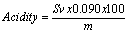 Equation 1.
In which:
Sv is the spent volume of sodium hydroxide, 0.090 is the conversion constant of the mL volume of 0.1 M NaOH (equal to 0.090 g of lactic acid), and m is the mass in grams of the test sample with two decimal places in g of lactic acid/100 g.
The Gerber method was used for fat analysis, which is still widely used 7. It is known that the official method is described in ISO 2450 IDF 16 according to Normative Instruction No. 30 7. Nonetheless, other methods can be used for operational control, provided their deviations and correlations with reference methods are known 8. The Gerber method for 70% cream consisted of transferring 5 mL of a homogenized sample with a Gerber syringe to a butyrometer containing 10 mL of the sulfuric acid solution, and after rinsing and using the same syringe, 5 mL of water between 70 and 80 ºC was transferred to the same butyrometer, adding 1 mL of isoamyl alcohol afterward. The butyrometer was then shaken vigorously and centrifuged for 5 min at 1200 rpm and incubated in a water bath at 65 ºC for 10 min. Finally, the position of the fat column was adjusted on the butyrometer scale, and the difference between the upper meniscus of the fat column and the fat/acid interface was read. The results were expressed in percentage.
The results obtained from the means of the brands were analyzed using the Excel software and Tukey’s test to check for differences between the brands using a 5% significance level. Some brands claimed on the packaging that the product could be used to make whipped cream, so a test was conducted to evaluate this characteristic; 300 g of whipping cream and 40 g of sugar were added to a mixer, the mixture was beaten, and the time was monitored until the product demonstrated similar consistency to whipped cream.
Together with the results obtained in the laboratory, an evaluation of the labeling was performed and based on the main legislation in force in Brazil (e.g., Normative Instruction No. 22 9, Normative Instruction No. 23 2, and RDC No. 259 10). The parameters observed were nutritional information, list of ingredients, allergen and lactose declaration, preservation, shelf life, lot number, sensory aspects (color, taste, odor, texture, and appearance), an industrial inspection of the establishment, and identity and quality parameters of the cream.
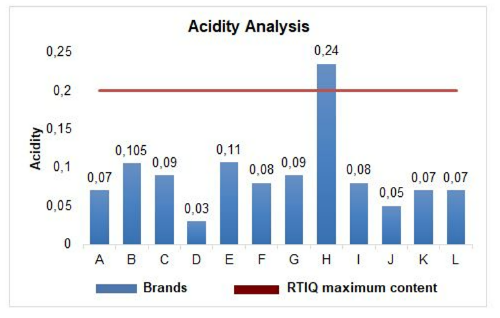
The general evaluation of the labeling and laboratory analyses presented several nonconformities. The acidity and fat content were evaluated according to the physicochemical requirements of Normative Instruction No. 23 were considered: maximum acidity 0.2% (m/m) g of lactic acid/100 g and minimum fat content 45% (m/m) g of fat/100 g 2. The results obtained in the acidity analyses showed that 91.67% of the analyzed brands met the maximum requirement of 0.2 g lactic acid/100 g (Figure 1).
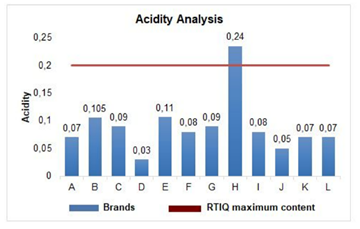
As observed, brand H presented acidity content above the permitted limit, and this deviation may be due to the quality of the raw material used or the manufacturing steps to which the cream was subjected. According to 11, all cream products are heat-treated to inactivate deteriorating and pathogenic microorganisms and enzymes to provide more safety and increase shelf life. Most vegetative cells are inactivated by pasteurization, although some thermoduric bacteria, including sporulated ones, resist pasteurization 11. 12 reported that bacteria are the main microorganisms that contaminate milk and, depending on the microbiota, these organisms ferment lactose, producing lactic acid and other organic acids that cause acidity in the milk and its derivatives.
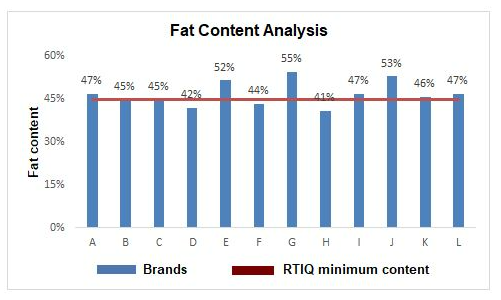
Within the categories of milk cream in Brazil, the most consumed products are the creams submitted to ultra-high temperature treatment, which are available with fat content averaging at 20%; there are also the pasteurized ones that contain, on average, 35% of fat, and the highest fat content is found in the products known as whipping cream 11. Figure 2 shows the averages of the results obtained in the fat content analysis.
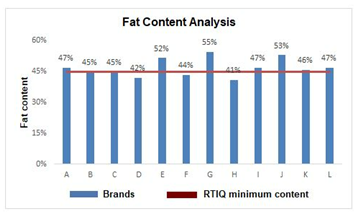
Among the brands analyzed, we observed that although all the brands claimed to be whipping cream; brands D, F, and H have fat contents that fit as pasteurized milk creams with fat content near 38%, thereby not being a whipping cream, as these products must obligatorily meet the minimum fat content of 45%. These types of pasteurized milk creams are products commonly found for sale and easily confused with whipping cream as their packaging is similar, in which only some information on the main label changes (e.g., sales denomination and the product’s brand or logo).
Of the fat analyses, 74.07% had the content on the label or higher, while 25.93% showed results below 45% fat, noting that their brands express the minimum percentage required on the packaging. It was found that the fat content was divergent, and, for this reason, these brands are in disagreement with the Technical Regulation of Quality and Identity (TRQI) and suitable for notice of infraction. According to 13, the notice of infraction is the document that initiates the administrative process of verifying the violation that must occur when there is an action or omission that results in non-compliance or disobedience of legislation, as provided in Article 521 of Decree No. 9.013 14, which aims to preserve the integrity and quality of products and the health of consumers.
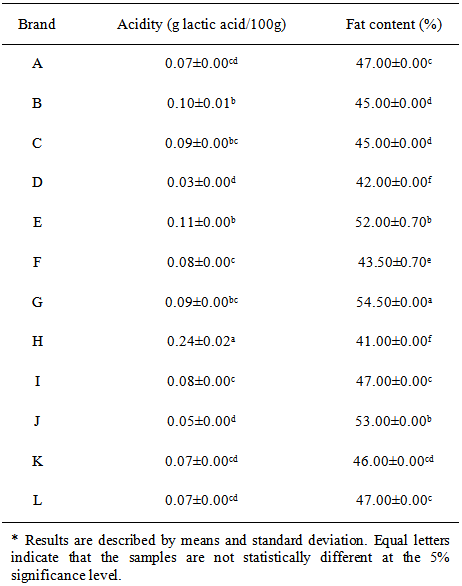
The statistical analysis of the acidity and fat content of the samples is listed in Table 1.
There was a significant difference in the results of the brands analyzed (Table 1). For acidity, the variation of the mean results ranged from 0.03 to 0.24 g of lactic acid/100 g. For fat content, the mean results obtained in the laboratory showed a content ranging from 41% (brand H) to 54.5% (brand G), indicating that despite legislation regulating these parameters, there is no standardization among the brands available to the consumer.
According to RDC No. 259 10, packaged food labeling must present the following information: the name under which the food is sold, list of ingredients, net content, origin, name or company name, lot identification, expiration date, and instructions on how to prepare and use the food, when necessary.
After evaluating the labels of the brands analyzed regarding compliance with the mandatory items, it was possible to observe that all brands had the compulsory information on their label and, in this case, no brand showed inconsistency for this item.
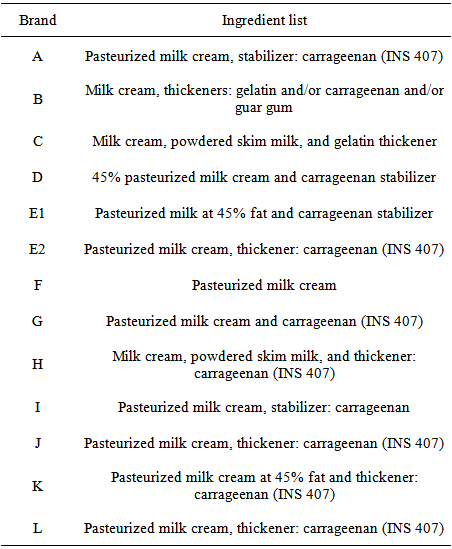
Regarding the evaluation of labeling, we began by evaluating the information contained in the list of ingredients of each brand (Table 2). The labeling registration processes are carried out through the Agricultural Management Platform (PGA-SIGSIF). One of the requirements that must be indicated at the registration stage is the product’s composition.
The system allows additives, single ingredients, or a mixture to be selected. In this case, brand B is in disagreement because the indication of the thickening component must be declared in the list of ingredients without raising doubts on the repeated use of the expression “and/or.” This term still leaves the possibility of adding three different ingredients and does not inform the exact formulation applied in practice.
According to Normative Instruction No. 23 2, the milk cream must be standardized as to fat content. For brand E, two packaging formats were found (pot and sachet); the pot version was non-compliant, as the brand declared pasteurized milk at 45% fat content as an ingredient, and this classification does not exist under current legislation; there was likely a mistake in the labeling.
Brand F presented several divergences because they have the double appeals of milk cream and whipping cream on the main label. The commercial name of the product is designated only as whipping cream, with no other specification; it also informs that it has 38% fat, although the composition requirement is at least 45%. The theoretical calculation of the table of nutritional information and laboratory analysis of this sample was performed, and we observed that it met the minimum fat content required by law. Thus, there is a need for the adequacy of these elements in the labeling.
Concerning the fat content in the list of ingredients, there are no requirements; however, the content expressed in percentage (%) of fat must appear on the main part of the label in all cases.
Normative Instruction No. 22 defines the main panel of the label as the place in which the sales designation and brand/logo must be presented as clearly as possible 9. In this case, brands A, E, and G do not comply because this information was found elsewhere on the packaging. The International Food Additive Numbering System (INS) was developed to establish an international numbering system and identify food additives in ingredient lists as an alternative to declaring the specific name of the additive. In labeling, it is optional to claim the INS of additives in the ingredients list, although it must be informed and selected in the PGA SIG/SIF system.
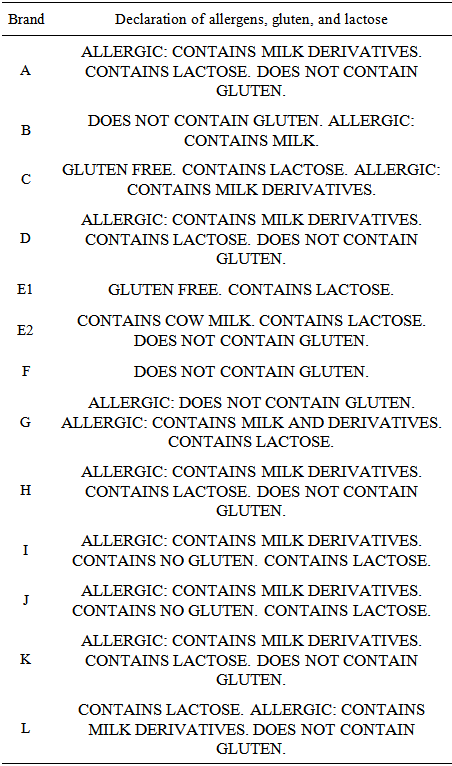
Article 6 of RDC No. 26 determines the models of warnings for allergens 15, and when these foods, ingredients, food additives, and adjuvants of technology are derived from foods listed in the annex of the legislation, they must state: “ALLERGIC: CONTAINS DERIVATIVES OF (common name of foods that cause food allergies).” The way each brand declares this information is listed in Table 3.
Based on Article 8 of RDC No. 26, these warnings must be grouped immediately above or below the list of ingredients; brands B and D do not comply since this statement is in another position on the packaging. All brands met the requirement of writing in capital letters, and only brand B did not print the text in bold letters.
Brands B and E2 indicated only milk, and the correct answer would be contains milk derivatives. An error was also identified in the labeling of brand G, which stated milk and milk derivatives. It could only be informed as “contains milk” if there was milk in its simple form in the ingredients. Notably, brands E1 and F are in complete incompliance because they do not meet these requirements.
According to 16, one of the errors observed on labels refers to the divergence between what is an ingredient and what is a derivative. Whey, milk fat, and soy lecithin were declared as allergenic ingredients. Nonetheless, these ingredients are derived from milk and soybean derivatives, respectively, and therefore should be declared as ALLERGENS: CONTAINS MILK AND SOYBEAN DERIVATIVES. According to 16, disagreements between ingredients and derivatives declared as allergenic were recurrent in the evaluation of chocolate labels when confronted with the ingredients list, with milk standing out. Milk powder is a widely used ingredient in chocolate formulations and, according to the Health and Industrial Inspection Regulations for Milk and its Derivatives, it is considered a dairy derivative; thus, it must be declared as so. Although this misunderstanding will not pose risks to consumers allergic to milk, the correct declaration is necessary and mandatory 16
In 2017, new rules were published for labeling products with lactose. There are two ANVISA resolutions; the first is RDC No. 135, which covers foods for lactose-restricted diets and regulates foods for special purposes 17. The second is RDC No. 136; it defines how lactose information should be placed on the label, regardless of the type of food 18. Article 4 of RDC No. 136 states that the packaging must state that it contains lactose immediately above or below the list of ingredients with legible text. Nonetheless, brands B and F are non-compliant because they do not mention this information, in addition to the fact that they do not state that the product is lactose-free.
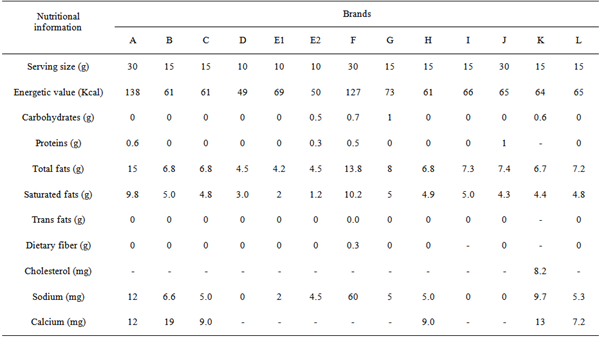
Moreover, RDC No. 360 mandates that the following information be available on the label: energy value, carbohydrates, protein, total fat, saturated fat, trans fat, dietary fiber, and sodium 19 The values found in the nutritional information of the evaluated brands are listed in Table 4.
When evaluating the nutritional table information, we identified that brands I and K are divergent because they do not contemplate the fields of dietary fiber and trans fat. Labels cannot present simplified information; that is, all the nutrients determined as mandatory must be listed, even at insignificant amounts. Like calcium, cholesterol is optional. But when a nutrition declaration is made about the type and/or quantity of fats, fatty acids, or cholesterol, the amount of saturated fat, trans fat, monounsaturated fat, polyunsaturated fat, and cholesterol must be stated. Brand K indicated the cholesterol parameter and the percent of daily values (%DV), although it did not express the nutritional property claim on the label. It is important to note that this nutrient has no daily reference values, in which case it would be correct to state that the %DV is not established.
Item 3.3.1 in the annex of RDC No. 360 states that the energy value to be declared must be calculated using the conversion factors for carbohydrates, proteins, and fats 19. We observed that brands D, E1, E2, and J do not follow this instruction for calculating the energy value. The other brands are in accordance with this criterion, as shown in Table 2. This resolution allows a tolerance of ± 20% regarding the caloric value and nutrients declared on the label; for whipping cream, the variation of the lower limit of the fat parameter does not apply because the Identity and Quality Technical Regulations (RTIQ) of the product indicates the minimum value of 45%.
RDC No 359 considers the need to establish the portion sizes of packaged foods for nutritional labeling purposes 20. As there is no specific classification for whipping cream, it is thus interpreted that by similarity to milk cream, the declared portion on the package should be 15 g, with brands A, D, E1, E2, F, and J not meeting this criterion.
The food industries that have the federal inspection seal (SIF) are allowed to market throughout the national territory and export their products. For products of animal origin that present the state inspection seal (SIE), the commercialization is limited to the state where the product’s processing and/or improvement occurred. The commercialization area is even smaller for products with the municipal inspection seal (SIM). Products bearing this stamp or label can only be sold in the municipality where they were produced 21.
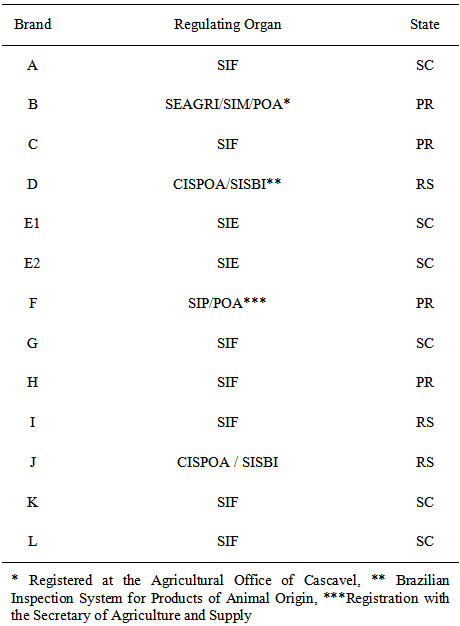
Decree No. 9.013 covers industrial and sanitary inspection and determines guidelines for the inspection of establishments 14. This can be done by state or municipal inspection services and must follow state and municipal regulations when they exist, and in their absence, the criterion becomes the federal legislation, and even if states and municipalities have them, they should not overlap the federal legislation 14. Thus, all brands evaluated must meet the criteria defined in the RTIQ of whipping cream, as specified by Normative Instruction No. 23 2. Table 5 lists the regulatory body for industrial inspection of establishments.
Of the 12 brands analyzed, 7 are registered with the SIF, 4 are registered with the SIE, and 1 with the SIM. Among the samples evaluated, 25% were produced in Rio Grande do Sul State, 33.33% in Paraná State, and 41.68% in Santa Catarina State.
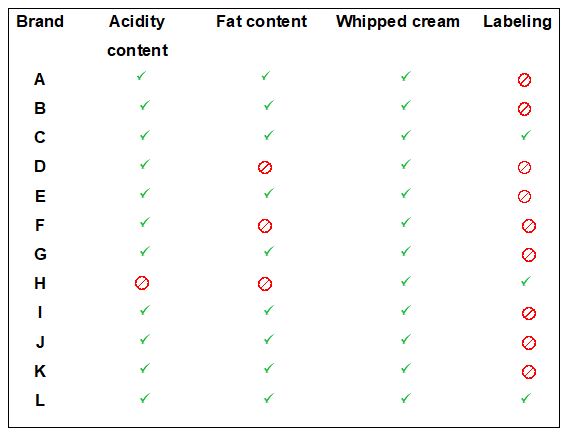
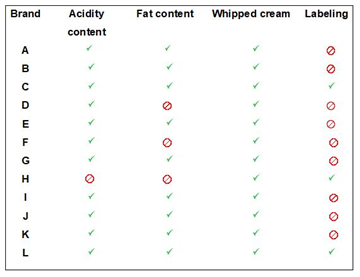
Among the 12 brands evaluated, only two brands showed no non-compliance in the evaluated attributes. It is also noted that the most significant portion of divergences occurred in the labeling elements.
There are studies on the labeling of various foods, varying in rates and percentages of compliance in the literature. 22 reported that 97.4% of yogurt labels and 100% of labels of fermented milk beverages were incomplete or suppressed some information required by law. The authors also noted that irregularities were present on product labels that bore the stamp of federal and state inspection agencies.
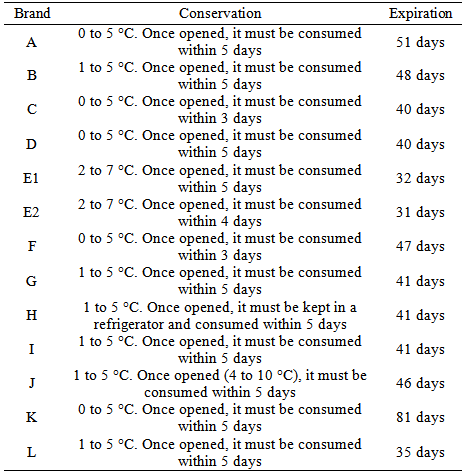
Shelf life begins when the food is produced and depends on several factors, including the production process, the type of packaging used, storage conditions, and the ingredients used. The changes in food products can be divided into chemical, physical, and microbiological changes. Microbiological changes consist of microbial multiplication and spoilage, while chemical changes include lipolytic oxidation reactions and degradation of nutrients, flavor, aroma, and texture. One of the physical changes during storage is moisture migration between the product and the storage environment 23. Information about the preservation and shelf life of the analyzed brands is described in Table 6.
The brand K stands out by presenting an extensive expiration date, which can become a differential and generate market competitiveness among other brands. According to Normative Instruction No. 23 2, the whipping cream must be stored and marketed at temperatures between 0 and 5 °C in order to maintain its characteristics. Therefore, brands E1, E2, and J do not comply with the legislation as they recommend temperatures above the established limit.
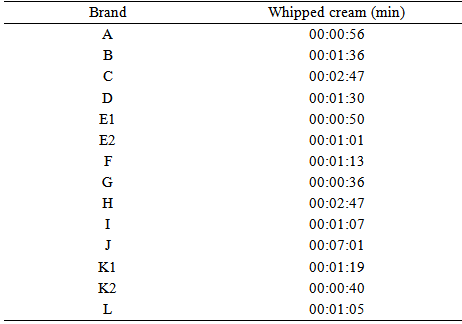
When the possibility of producing whipped cream was evaluated, we observed that the beating time varied among the brands (Table 7).
The beating times obtained varied from thirty-six seconds to seven minutes and one second. Despite the variation, all brands could be beaten to become whipped cream. Among the 12 brands analyzed, only brands A, B, and C provided this information on the label, either through the phrase “beat whipped cream” or step-by-step instructions on how to beat whipped cream.
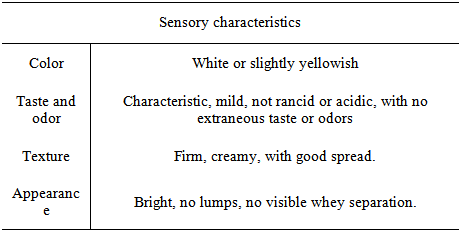
Regarding the sensory characteristics, due to its rheological characteristics, the whipping cream must present a uniform, homogeneous, and creamy texture without desorption/separation of phases throughout its shelf life 1. The RTIQ of the whipping cream establishes the following requirements for sensory parameters, as shown in Table 8.
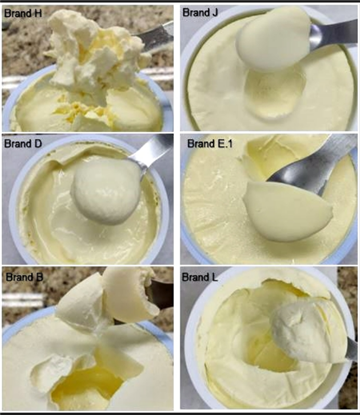
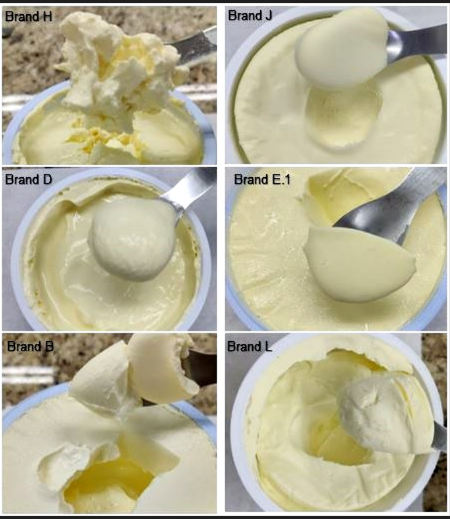
Both samples of brand H had an uncharacteristic odor and appearance reminiscent of sourness. In one of the brand I samples, the presence of mold and whey draining was noted (i.e., not meeting the required appearance requirement). In the brand B and D samples, it was also possible to observe whey drainage, which is not characteristic of the product. These aspects found in the brands may be related to poor conservation. According to 11, storage at refrigeration temperatures has beneficial effects, avoiding the whey drainage and altered viscosity, in addition to stored products having fewer changes in the texture of the cream. Figure 4 illustrates the appearance of some of the creams analyzed.
By evaluating Figure 4, it is possible to observe that although all the brands declared themselves to be whipping cream and theoretically follow all the requirements of Normative Instruction No. 23, there are evident differences between them.
During the sampling, we noticed the regionality of the product and brands as well as the difficulty in finding different brands in the same establishment, as it was rare for commercial establishments to have more than three brands available, and usually, the establishments in the same city had the same brands. This may be related to the high perishability of the product and the product’s registration classification in the regulatory agency. In addition, the brands could use the whipped cream claim as a marketing strategy to encourage the consumption of their products because the results indicated that several brands met this purpose, albeit not being mandatory information.
The irregularities found on the analyzed labels demonstrate the inefficiency on the part of the competent inspection agencies and the imprudence committed by some food manufacturers in the country because out of the twelve brands analyzed, only brands C and L had no irregularities in the criteria evaluated, and they are registered with the SIF. Moreover, the difficulty in companies standardizing their process in terms of fat content is noticeable, which shows the need for novel technologies and equipment to be developed. Another critical point is the maintenance of acceptable stability throughout the shelf life, which is affected by the quality of the raw material and deviations in the process and transport and storage conditions until the moment of purchase.
The difficulty found by companies to adapt to the legal requirements of product standardization and labeling was observed in numerous situations, in part by the various laws and norms with which the product must comply and by the difficulty found in interpreting the texts of these laws, especially for companies that do not have trained staff to perform this function. Even so, it is up to the inspection agencies to restrain and guide manufacturers as to the need for full compliance with the legislation, since it is a company’s duty and a consumer’s right since the lack of essential and mandatory information on the label may mislead the consumer, in addition to posing a risk to public health. Therefore, the consumer must be attentive at the time of purchase, seek information in reliable channels, and check all the information on product labels to ensure a safe purchase.
We would also like to thank Atlas Assessoria Linguística for help with the English version of this manuscript.
The authors have no declarations of interest.
This research did not receive any specific grant from funding agencies in the public, commercial, or not-for-profit sectors.
| [1] | Zacarchenco, P. B.; Van Dender, A. G. F. Nata: Mercado, tecnologia e a nova regulamentação. Revista Indústria de Laticínios. Número 98, sep/oct 2012, p. 62-65. Available at: https://ital.agricultura.sp.gov.br/arquivos/tl/artigos/nata_mercado_tecnologia_nova_regulamentacao.pdf. Accessed on 02 feb. 2021. | ||
| In article | |||
| [2] | Brasil. Ministério da Agricultura Pecuária e Abastecimento. Instrução Normativa nº 23, de 30 de agosto de 2012. Regulamento técnico de Identidade e Qualidade de nata. Diário Oficial da União, 31/08/2012. Seção1 p. 4. | ||
| In article | |||
| [3] | Camara, F. A.; Weschenfelder, S. Leite Uht Integral: Avaliação Da Rotulagem Nutricional E Dos Padrões De Identidade E Qualidade. Revista do Instituto de Laticínios Cândido Tostes, [s. l.], v. 69, n. 4, p. 268, 2014. | ||
| In article | View Article | ||
| [4] | Ferraz, R. G. Comportamento do Consumidor Frente à Informação Nutricional em Rotulagem de Produtos Alimentícios-Um Estudo no Varejo de Belo Horizonte / MG. Universidade Federal de Viçosa, 2001. | ||
| In article | |||
| [5] | Viana, T. R. Avaliação da rotulagem nutricional dos produtos de uma panificadora industrial do sul de santa Catarina. 2010. 59 f. Trabalho de Conclusão de Curso (Graduação de Nutrição) – Universidade do Extremo Sul Catarinense, Criciúma, 2010. | ||
| In article | |||
| [6] | AOAC. 1990. Official Methods of Analysis. 15th ed. Association of Official Analytical Chemists, Arlington, VA. | ||
| In article | |||
| [7] | Brasil. Ministério da Agricultura, Abastecimento e Pecuária. Instrução Normativa nº 30 de 26 de junho de 2018. Oficializa os métodos analíticos oficiais físico-químicos, para controle de leite e produtos lácteos. Diário Oficial da República Federativa do Brasil, Brasília-DF, 2018. | ||
| In article | |||
| [8] | Gonçalves, E. S. Relatório de convalidação de estágio laboratório de análises físico-química da Unidade Industrial de Laticínios Frimesa. Universidade Tecnológica Federal do Paraná. Departamento de estágio. Curso Superior de Tecnologia de Alimentos. Medianeira, 2014. Pag. 23 -24. | ||
| In article | |||
| [9] | Brasil. Ministério da Agricultura, Pecuária e Abastecimento. Instrução Normativa nº 22, de 24 de novembro de 2005. Aprova o Regulamento Técnico para Rotulagem de Produtos de Origem Animal Embalados. Diário Oficial da União de 25/11/2005. Brasília-DF. Available at < http:// extranet.agricultura.gov.br/ sislegisconsulta/consultarLegislacao.do?operacao=visualizar&id=144 93> Accessed on 22 jan. 2021. | ||
| In article | |||
| [10] | Brasil. Resolução RDC nº 259, de 20 de setembro de 2002. Aprovar o Regulamento Técnico sobre Rotulagem de Alimentos Embalados. Diário Oficial da República Federativa do Brasil, Brasília, 23 sep. 2002. | ||
| In article | |||
| [11] | Zacarchenco, P. B.; Spadoti, L. M.; Silva-Alves, A. T.; Van Dender, A. G. F. Creme de Leite: aspectos de mercado, tecnológicos e legais. Revista Leite & Derivados, Número 147, mai/jun 2014, p. 34-40. Available at: https:// ital. agricultura.sp.gov.br/arquivos/tl/artigos/artigo-creme-de-leite.pdf Accessed on 24 jan. 2021. | ||
| In article | |||
| [12] | Brito, M.A.; Brito, J.R.; Arcuri, E. Lange, C.; Silva, M.; Souza, G. Composição do leite; Empresa Brasileira de Pesquisa Agropecuária – Embrapa. Available at http:// www.agencia.cnptia.embrapa.br/Agencia8/AG01/arvore/AG01_128_21720039243.html. Accessed on 21 jan. 2021. | ||
| In article | |||
| [13] | Brasil. Ministério da Agricultura, Pecuária e Abastecimento. Secretaria de Defesa Agropecuária. Departamento de Inspeção de Produtos de Origem Animal. Manual de Procedimentos de Apuração de Infração: Autuação de Processos Administrativos. 2018. | ||
| In article | |||
| [14] | Brasil. Decreto Nº 9.013, DE 29 DE MARÇO DE 2017. 2017. Available at: < http:// www2.camara.leg.br/ legin/ fed/ decret/2017/decreto-9013-29-marco-2017-784536- publicacaooriginal-152253-pe.html>. Accessed on 08 de jan. 2021. | ||
| In article | |||
| [15] | Brasil. Ministério da Saúde. Agencia nacional de vigilância sanitária. Aprova o regulamento técnico sobre rotulagem de alimentos embalados. Resolução RDC º 26 de 02 de julho de 2015. Dispõe sobre os requisitos para rotulagem obrigatória dos principais alimentos que causam alergias alimentares. Diária Oficial da União República Federativa do Brasil, Brasília, DF, 03 jul. 2015. Available at: <http://portal.anvisa.gov.br>. Accessed on 22 jan. 2021. | ||
| In article | |||
| [16] | Santana, F. C. O. Rotulagem para alergênicos: uma avaliação dos rótulos de chocolates frente à nova legislação brasileira. Brazilian Journal of Food Technology, Vol. 21. Campinas, 2018. | ||
| In article | View Article | ||
| [17] | Brasil. Ministério da Saúde. Agência Nacional de Vigilância Sanitária (ANVISA). Resolução RDC nº 135, de 8 de fevereiro de 2017. Aprova o regulamento técnico referente a alimentos para fins especiais, para dispor sobre os alimentos para dietas com restrição de lactose. Diretoria Colegiada da Agência Nacional de Vigilância Sanitária, Brasília, 31 de janeiro de 2017. Available at: http://portal.anvisa.gov.br/documents/10181/2955920/RDC_135_2017_.pdf/ac21ecc5- b439-4872-8a11-01cbef2d3d51 Accessed on 10 feb. 2021. | ||
| In article | |||
| [18] | Brasil. Ministério da Saúde. Agência Nacional de Vigilância Sanitária. (ANVISA). Resolução n° 136, de 08 de fevereiro de 2017. Estabelece os requisitos para declaração obrigatória da presença de lactose nos rótulos dos alimentos. Diário Oficial da República do Brasil, 2017. | ||
| In article | |||
| [19] | Brasil. Resolução RDC n° 360, de 23 de dezembro de 2003. Regulamento Técnico sobre Rotulagem Nutricional de Alimentos Embalados, tornando obrigatória a rotulagem nutricional. Diário Oficial da União, Brasília, 26 dec. 2003. | ||
| In article | |||
| [20] | Brasil. Resolução RDC n.359, de 23 de dezembro de 2003. A Diretoria Colegiada da ANVISA/MS aprova o regulamento técnico de porções de alimentos embalados para fins de rotulagem nutricional. Diário Oficial da União. 2003 26 dez; (251):28; Seção 1. | ||
| In article | |||
| [21] | Food Safety Brasil. Available at: https:// foodsafetybrazil.org/ quantos-sao-e-quais-as-diferencas-entre-os-servicos-de-inspecao-para-produtos-de-origem-animal-existentes-no-brasil/. Accessed on 24 jan. 21. | ||
| In article | |||
| [22] | Grandi, A.Z.; Rossi, D.A. Avaliação dos itens obrigatórios na rotulagem nutricional de produtos lácteos fermentados. Rev. Inst. Adolfo Lutz, 69, 1, 62-68, 2010. | ||
| In article | View Article | ||
| [23] | Aditivos & Ingredientes – Fatores que influenciam o shelf-life nos alimentos. Available at: https:// aditivosingredientes.com.br/ upload_arquivos/201601/2016010118265001453489650.pdf. Accessed on 20 jan. 2021. | ||
| In article | |||
Published with license by Science and Education Publishing, Copyright © 2024 Evelin Sabrina Gonçalves, Márcio Rogério Leonhardt, Nathane Laís Schio, Hans Fröder and Creciana Maria Endres
 This work is licensed under a Creative Commons Attribution 4.0 International License. To view a copy of this license, visit
https://creativecommons.org/licenses/by/4.0/
This work is licensed under a Creative Commons Attribution 4.0 International License. To view a copy of this license, visit
https://creativecommons.org/licenses/by/4.0/
| [1] | Zacarchenco, P. B.; Van Dender, A. G. F. Nata: Mercado, tecnologia e a nova regulamentação. Revista Indústria de Laticínios. Número 98, sep/oct 2012, p. 62-65. Available at: https://ital.agricultura.sp.gov.br/arquivos/tl/artigos/nata_mercado_tecnologia_nova_regulamentacao.pdf. Accessed on 02 feb. 2021. | ||
| In article | |||
| [2] | Brasil. Ministério da Agricultura Pecuária e Abastecimento. Instrução Normativa nº 23, de 30 de agosto de 2012. Regulamento técnico de Identidade e Qualidade de nata. Diário Oficial da União, 31/08/2012. Seção1 p. 4. | ||
| In article | |||
| [3] | Camara, F. A.; Weschenfelder, S. Leite Uht Integral: Avaliação Da Rotulagem Nutricional E Dos Padrões De Identidade E Qualidade. Revista do Instituto de Laticínios Cândido Tostes, [s. l.], v. 69, n. 4, p. 268, 2014. | ||
| In article | View Article | ||
| [4] | Ferraz, R. G. Comportamento do Consumidor Frente à Informação Nutricional em Rotulagem de Produtos Alimentícios-Um Estudo no Varejo de Belo Horizonte / MG. Universidade Federal de Viçosa, 2001. | ||
| In article | |||
| [5] | Viana, T. R. Avaliação da rotulagem nutricional dos produtos de uma panificadora industrial do sul de santa Catarina. 2010. 59 f. Trabalho de Conclusão de Curso (Graduação de Nutrição) – Universidade do Extremo Sul Catarinense, Criciúma, 2010. | ||
| In article | |||
| [6] | AOAC. 1990. Official Methods of Analysis. 15th ed. Association of Official Analytical Chemists, Arlington, VA. | ||
| In article | |||
| [7] | Brasil. Ministério da Agricultura, Abastecimento e Pecuária. Instrução Normativa nº 30 de 26 de junho de 2018. Oficializa os métodos analíticos oficiais físico-químicos, para controle de leite e produtos lácteos. Diário Oficial da República Federativa do Brasil, Brasília-DF, 2018. | ||
| In article | |||
| [8] | Gonçalves, E. S. Relatório de convalidação de estágio laboratório de análises físico-química da Unidade Industrial de Laticínios Frimesa. Universidade Tecnológica Federal do Paraná. Departamento de estágio. Curso Superior de Tecnologia de Alimentos. Medianeira, 2014. Pag. 23 -24. | ||
| In article | |||
| [9] | Brasil. Ministério da Agricultura, Pecuária e Abastecimento. Instrução Normativa nº 22, de 24 de novembro de 2005. Aprova o Regulamento Técnico para Rotulagem de Produtos de Origem Animal Embalados. Diário Oficial da União de 25/11/2005. Brasília-DF. Available at < http:// extranet.agricultura.gov.br/ sislegisconsulta/consultarLegislacao.do?operacao=visualizar&id=144 93> Accessed on 22 jan. 2021. | ||
| In article | |||
| [10] | Brasil. Resolução RDC nº 259, de 20 de setembro de 2002. Aprovar o Regulamento Técnico sobre Rotulagem de Alimentos Embalados. Diário Oficial da República Federativa do Brasil, Brasília, 23 sep. 2002. | ||
| In article | |||
| [11] | Zacarchenco, P. B.; Spadoti, L. M.; Silva-Alves, A. T.; Van Dender, A. G. F. Creme de Leite: aspectos de mercado, tecnológicos e legais. Revista Leite & Derivados, Número 147, mai/jun 2014, p. 34-40. Available at: https:// ital. agricultura.sp.gov.br/arquivos/tl/artigos/artigo-creme-de-leite.pdf Accessed on 24 jan. 2021. | ||
| In article | |||
| [12] | Brito, M.A.; Brito, J.R.; Arcuri, E. Lange, C.; Silva, M.; Souza, G. Composição do leite; Empresa Brasileira de Pesquisa Agropecuária – Embrapa. Available at http:// www.agencia.cnptia.embrapa.br/Agencia8/AG01/arvore/AG01_128_21720039243.html. Accessed on 21 jan. 2021. | ||
| In article | |||
| [13] | Brasil. Ministério da Agricultura, Pecuária e Abastecimento. Secretaria de Defesa Agropecuária. Departamento de Inspeção de Produtos de Origem Animal. Manual de Procedimentos de Apuração de Infração: Autuação de Processos Administrativos. 2018. | ||
| In article | |||
| [14] | Brasil. Decreto Nº 9.013, DE 29 DE MARÇO DE 2017. 2017. Available at: < http:// www2.camara.leg.br/ legin/ fed/ decret/2017/decreto-9013-29-marco-2017-784536- publicacaooriginal-152253-pe.html>. Accessed on 08 de jan. 2021. | ||
| In article | |||
| [15] | Brasil. Ministério da Saúde. Agencia nacional de vigilância sanitária. Aprova o regulamento técnico sobre rotulagem de alimentos embalados. Resolução RDC º 26 de 02 de julho de 2015. Dispõe sobre os requisitos para rotulagem obrigatória dos principais alimentos que causam alergias alimentares. Diária Oficial da União República Federativa do Brasil, Brasília, DF, 03 jul. 2015. Available at: <http://portal.anvisa.gov.br>. Accessed on 22 jan. 2021. | ||
| In article | |||
| [16] | Santana, F. C. O. Rotulagem para alergênicos: uma avaliação dos rótulos de chocolates frente à nova legislação brasileira. Brazilian Journal of Food Technology, Vol. 21. Campinas, 2018. | ||
| In article | View Article | ||
| [17] | Brasil. Ministério da Saúde. Agência Nacional de Vigilância Sanitária (ANVISA). Resolução RDC nº 135, de 8 de fevereiro de 2017. Aprova o regulamento técnico referente a alimentos para fins especiais, para dispor sobre os alimentos para dietas com restrição de lactose. Diretoria Colegiada da Agência Nacional de Vigilância Sanitária, Brasília, 31 de janeiro de 2017. Available at: http://portal.anvisa.gov.br/documents/10181/2955920/RDC_135_2017_.pdf/ac21ecc5- b439-4872-8a11-01cbef2d3d51 Accessed on 10 feb. 2021. | ||
| In article | |||
| [18] | Brasil. Ministério da Saúde. Agência Nacional de Vigilância Sanitária. (ANVISA). Resolução n° 136, de 08 de fevereiro de 2017. Estabelece os requisitos para declaração obrigatória da presença de lactose nos rótulos dos alimentos. Diário Oficial da República do Brasil, 2017. | ||
| In article | |||
| [19] | Brasil. Resolução RDC n° 360, de 23 de dezembro de 2003. Regulamento Técnico sobre Rotulagem Nutricional de Alimentos Embalados, tornando obrigatória a rotulagem nutricional. Diário Oficial da União, Brasília, 26 dec. 2003. | ||
| In article | |||
| [20] | Brasil. Resolução RDC n.359, de 23 de dezembro de 2003. A Diretoria Colegiada da ANVISA/MS aprova o regulamento técnico de porções de alimentos embalados para fins de rotulagem nutricional. Diário Oficial da União. 2003 26 dez; (251):28; Seção 1. | ||
| In article | |||
| [21] | Food Safety Brasil. Available at: https:// foodsafetybrazil.org/ quantos-sao-e-quais-as-diferencas-entre-os-servicos-de-inspecao-para-produtos-de-origem-animal-existentes-no-brasil/. Accessed on 24 jan. 21. | ||
| In article | |||
| [22] | Grandi, A.Z.; Rossi, D.A. Avaliação dos itens obrigatórios na rotulagem nutricional de produtos lácteos fermentados. Rev. Inst. Adolfo Lutz, 69, 1, 62-68, 2010. | ||
| In article | View Article | ||
| [23] | Aditivos & Ingredientes – Fatores que influenciam o shelf-life nos alimentos. Available at: https:// aditivosingredientes.com.br/ upload_arquivos/201601/2016010118265001453489650.pdf. Accessed on 20 jan. 2021. | ||
| In article | |||