High school lunch waste, vegetable most, is a global issue. Vegetable species and preparation methods affected their acceptance and plate waste. Thermal process was demonstrated to reduce bitterness contents and seasoning to mask perception intensity, and thus improve vegetable consumption. In this study, the effect of culinary practice (blanching and seasoning addition) of broccoli, a common vegetable served in school lunch, on sensory characteristics (acceptance and perception intensity of astringency, bitterness, grassy smell and sweetness) was determined first. Moreover, the contribution of culinary practice application on vegetable waste in a primary school was assayed. Broccoli was prepared: raw (C), blanched (B), blanched and flavored with Japanese style sauce (Flavor-1), with cheese (Flavor-2), and with Chinese style sauce (Flavor-3). Our results showed raw materials exert the strongest perception intensity of grassy smell, bitterness and astringency but the least intensity of sweetness. Blanching and seasoning addition masked perception intensity and thus enhanced likeness of odor, flavor and overall acceptance. Blanching treatment, overall acceptance was significantly negatively correlated to intensity of grassy smell. While seasoning incorporation, overall acceptance was positively correlated to sweetness intensity and negatively correlated to astringency intensity. Application of culinary practice improved palatability and thus reduced vegetable rejection. The aggregated vegetable wastes for 4 consecutive semesters from July, 2020 to June, 2021 (87±3 day/semester) were as low as 6.5% per day.
High plate waste at school lunch is a global issue. In the USA and European, around 9 to 45% of food was wasted in primary school 1 2 3 4; while in Asia, about 21~25% of total food served were wasted in China, Taiwan, and Viet Nam schools 5 6 7. Among food categories served, vegetables are the most wasted due to unsatisfied preference and palatability 8 9 10. However, fruit and vegetable (F&V) waste at school lunch significantly reduced intake of certain nutrients including dietary fiber, folate, and Vitamin A, B1, B3, B6, B12 and C 2 11. Higher fruit and vegetable intake has been associated to prevent the risks of chronic diseases such as obesity, diabetes, hypertension, high cholesterol, and nutrient deficiency 12.
The presence of teachers during meal-time, meal policies, time for eating, preference of vegetables, and palatability of food were reported to affect school lunch waste 13 14. Moreover, dish variety, dining environment, hygiene, freshness, and cooking skills determine school lunch satisfaction 15. Among affecting factors, poor preference and palatability were the major responsible reasons for vegetable waste 8 10. Cooking and flavoring approaches were proposed to modify characteristics of vegetables and thus ameliorate preference and palatability 16 17. Cooking in hot water for 3 min significantly reduced 55% bitter content and thus improved preference of cauliflower 18 19. Various cooking methods (boiling, steaming, cooking in the combined oven, microwaving, and steaming with microwave) affected texture preference of vegetables 20. They found boiling was the most acceptable cooking method for broccoli. Cook reduced color characteristics (brightness, redness, yellowness, color saturation and h◦) of carrot but improved consumers’ preference 21. However, undercooked, cold-served and oily vegetables were dissatisfied by students 7. Furthermore, loss of attractive appearance and flavor resulted from overcooking reduced palatability and acceptability of vegetables 22.
Aroma and flavor of foods are key parameters for consumers’ acceptance. Taste qualities including sweet, salty, sour, bitterness and umami, affected food preference and consumption 23. Unpalatability from bitter taste of vegetables is a key deterrent for consumption, which led to only 7% children and 25% adults met daily recommended intakes of vegetables 24. Bakke et al. 24 found masking bitter perception by salt and sucrose incorporation promoted vegetable preference. Flavor enhancement via addition of spices and herbs was an alternative skill to overcome undesirable taste and improve palatability and consumption of vegetables 17. However, studies related to incorporation effect of common used sauces (Japanese or Chinese style sauce, cheese) at home or school lunch on vegetable intakes was lack. Thus, the objective of this study is to evidence the retarded effect of thermal treatment and seasoning addition on the perception intensity (bitterness, astringency and grassy smell) and sensory acceptance of broccoli, a common served vegetable in school. Additionally, the application of thermal treatment and Chinese style seasoning addition for reducing vegetable wastes in school lunch was investigated.
Broccoli (Brassica olearacea L. italica) was purchased from the Xiluo Fruit and Vegetable Wholesale Market (Yunlin, Taiwan). Broccoli was cleaned and chopped into 4-5 cm. Japanese style sauce (composed of soy sauce, sugar, vinegar and olive oil) was from Japanese dressing (UNI-President China Store Co., Taiwan), Mozzarell cheese from Kirkland Signature, Costco Wholesale Inc. (Settle, WA, USA), and Chinese style sauce was composed of fried shallot (I-Mei Foods Co., Ltd. Taoyuan) and soy sauce (Yamaki Mentsuyu Soy Sauce, Costco Wholesale Inc., Settle, WA, USA).
While the untreated raw broccoli served as the control (C), other broccoli samples were prepared by different culinary practices in combination with seasonings. Blanched sample: broccoli heated in boiling water for 3 min; Flavor-1 sample: broccoli heated in boiling water for 3 min and mixed with 1% Japanese style sauce; Flavor-2 sample: broccoli heated in boiling water for 3 min and mixed with 1% Mozzarell cheese; Flavor-3 sample: broccoli heated in boiling water for 3 min and mixed with 1% Chinese style sauce.
2.2. Sensory EvaluationSensory characteristics including preference and perception intensity were evaluated according to the Quantitative Sensory Testing described by Tao et al. 25 with slight modification. After a series of instructive sessions, 20 panelists (9 male and 11 female graduate students or staffs from the Department of Food Science, National Chiayi University) were served five samples (control, blanched, Flavor-1, Flavor-2 and Flavor-3) based on random 3-digital number. Bottle water was provided to clear taste between each sample. Preference attributes including color, odor, flavor and overall acceptance were descriptively evaluated using a 9-poing hedonic scale (1- highly undesirable, 9- highly desirable). Perception intensities of bitterness, astringency, grassy smell and sweetness of sample were also scored using a 9-point scale (1-highly undetectable, 9- highly detectable).
2.3. School Lunch Program and Vegetable WasteIn Taiwan, primary school students eat lunch at school during school days. Families pay for meal expenses while local and central governments support labor, overheads, and facilities 14. The menus including energy and nutrients from food served must follow the national guidelines from the Health Promotion Administration, Ministry of Health and Welfare (HPA). School lunch menu generally includes: a main carbohydrate source (rice or noodle); a main protein source (meat or fish); 2 dishes vegetables (one meat blended with vegetable and one vegetable only); a soup (blended with vegetables); fruit (2-3 times per week).
Our early study demonstrated the combination of thermal process and seasoning addition reduced bitterness contents and masked perception intensity of broccoli, which may eventually improve palatability and reduce waste of vegetables. This culinary practice (blanching and 1% Chinese style sauce) was further applied to monitor vegetable wastes at school lunch. The study was conducted in a primary school in Yulin (Taiwan) over 4 consecutive semesters from July, 2020 to June, 2021 (87±3 day/semester). Participants were students (n = 1082±50) in Grades 1–6 (aged 6–12 years). Lunch is served between 12:00 and 1:00 PM.
The frequencies of vegetables species served were recorded. Energy and nutrient contents (fiber, vitamin A, vitamin C, thiamin, niacin, vitamin B6, folate, calcium, sodium, potassium and iron) in those vegetables were estimated using the data base provided by the Taiwan Food and Drug Administration (consumer.fda.gov.tw /Food/TFND.aspx).
Vegetable waste was collected every day (5 days a week for 4 semesters). After lunch, students dumped all leftover vegetables (in 2 dishes and soup) into waste bins. Vegetable waste was daily weighted after water was drained. Percentage of vegetable waste was calculated by the ratio of aggregated vegetable discarded per total served to students.
2.4. Statistical AnalysisData were expressed as mean ± SD. Principle component analysis (PCA) was performed to find out the contribution of blanching and various seasonings to sensory acceptances and perception intensity. Cluster analysis was conducted to cluster treatment and sensory characteristics. While AMOS structure analysis was performed to establish a linear structure mode to find out the correlation between sensory intensities and overall acceptance. All the statistical analysis was carried out using SPSS Statistics, version 21.0 (IBM Corp., Armonk, NY, USA).
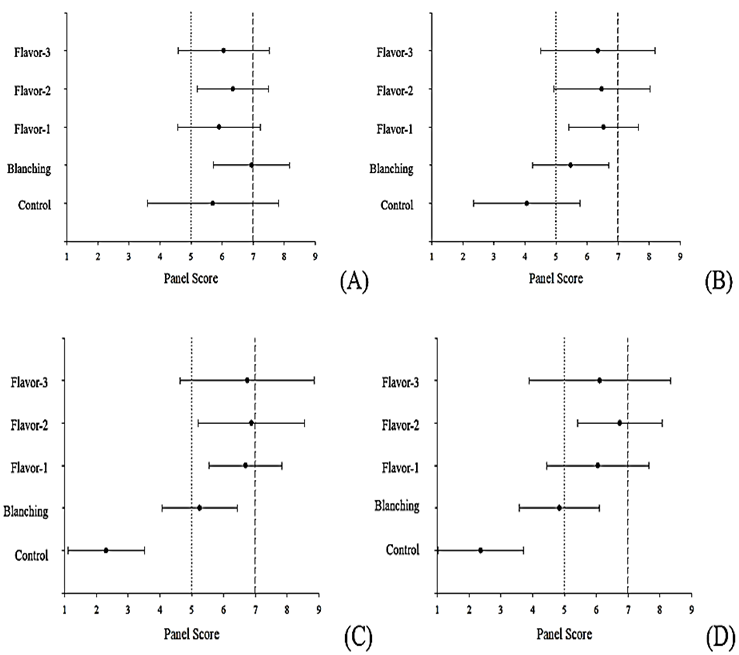
Poor preference and palatability were the major reasons for vegetable waste. In this study, sensory preference including color, odor, flavor and overall acceptance of broccoli were evaluated and shown in Figure 1. Compared to raw and flavored broccoli, blanching significantly enhanced color preference of broccoli; while seasoning addition improved odor and flavor preference of broccoli. Overall preference declined in the order of seasonings > blanching > raw broccoli (Figure 1D). High color preference score (in the range of 6 to 7) indicated color was acceptable (Figure 1A); while low odor (score in the range of 2-3 only) and flavor (score about 4) preference for raw broccoli indicated unacceptable (Figure 1B and 1C, respectively). Blanching enhanced the preference scores from 4 to 5-6 and seasoning with Japanese or Chinese sauces further increased to the level of likeness (6-7).
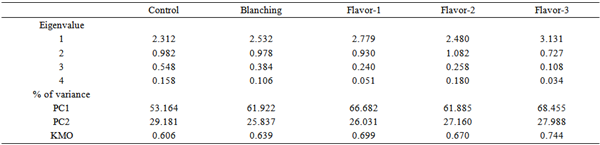
Principal Component Analysis (PCA) model grouped the scores of sensory acceptance (color, flavor, taste and overall acceptance) into two main (PC1 and PC2) components. Kaiser-Meyer-Olkin (KMO) value and Bartlett’s test were conducted to evaluate the appropriateness of PCA model 26. In this study, the KMO values for raw, blanching and three seasoning additions (Flavor-1, Flavor-2 and Flavor-3) were 0.606, 0.639, 0.699, 0.670 and 0.744, respectively; while the values of Bartlett’s test were p < 0.05 (Table 1). Those data supported PCA model is suitable to distinguish sensory preference. Eigenvalue of PC1 and PC2 was 2.3-3.1 and around 1, respectively; while percentage of variance for PC1 and PC2 was in the range of 53-68% and 25-29%, respectively. Cumulative variance contribution rate was 82-96%. Load factor, calculated from PCA model, is an indicator of correlation between sensory parameters and the scores of principle components, 1 and 0 representing strong or no correlation between factor and principal component, respectively. High load factors of PC1 in the ranges of 0.628-0.919, 0.916-0.971 and 0.924-0.974 for odor, flavor and overall acceptance, respectively, indicated strong correlation (Table 2). While high load factor of PC2 for color (in the ranges of 0.956-0.995) but low load factor of PC2 for odor, flavor and overall acceptance were found.
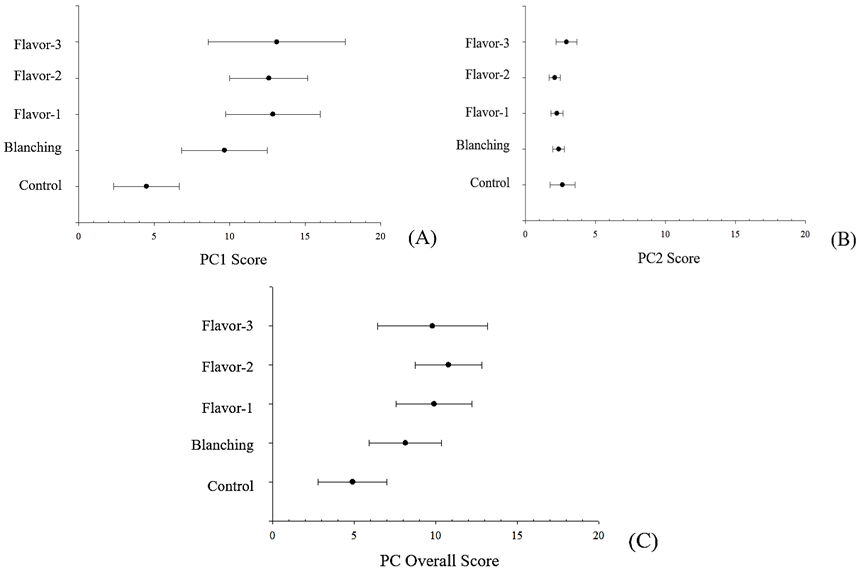
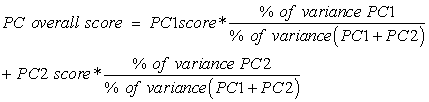
PC1 and PC2 scores of samples estimated from % of variance (Table 1) and load factor (Table 2) were shown in Figure 2A and B, respectively; while PC overall score was calculated according the equation below and shown in Figure 2C.
 |
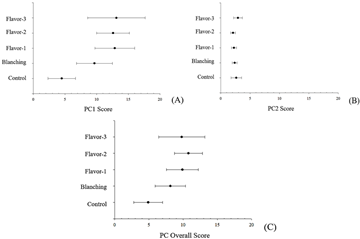
Seasoning additions significantly raised PC1 scores in the order: raw (4-5), blanched (10) and flavored (13-14) broccoli, but did not affect PC2 scores, relatively low scores of 2-4 for all samples. Moreover, significant effect of seasonings on PC overall scores (around 10) was found, much higher than blanched (8) and raw broccoli (5).
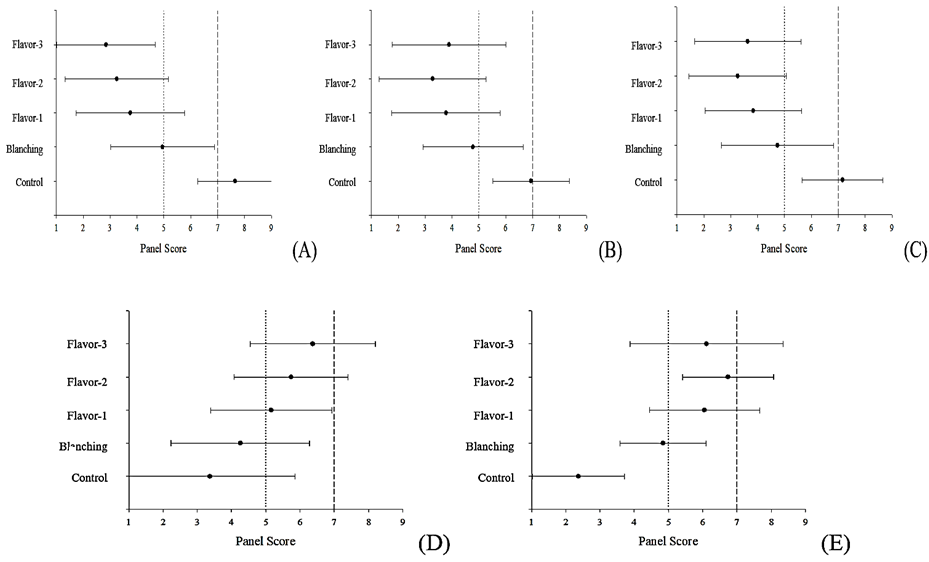
The perception intensity including bitterness, astringency, grassy smell and sweetness of sample was graded using a 9-point scale (1-highly undetectable, 9-highly detectable) and illustrated in Figure 3. Compared to the control, blanching and seasonings decreased perception intensity of grassy smell, bitterness and astringency; while perception intensity of sweetness and overall acceptance were increased.
Generally, bitterness, astringency and grassy flavor of vegetables are repulsive by human, while sweet and salty are preferred 27 28. Phenols, flavonoids and glucosinolates in plants were considered as the sources of bitter, acidity or astringent tastes 29. Glucosinolates has been identified as the determinant of cauliflower bitterness to obstruct its consumption 29 30. Study of van Doorn et al. 31 found glucosinolate contents in 16 varieties of Brussels sprouts correlated to perception intensity of bitterness. Abundant glucosinolate and its hydrolysate in broccoli were the most sensory deterrent for its preference 16 19 29. Wieczorek et al. 32 investigated the correlation between phytochemical compositions (glucosinolates, isothiocyanates, phenolics and polysaccharides) and sensory traits of 3 cultivars of broccoli, 5 of Brussels sprout, 3 of cauliflower, and 4 of kohlrabi, both raw and cooked. Data of PCA indicated bitter components negatively correlated to sensory acceptability. Another PCA data released the correlation between acceptance and perception of ten vegetables (cauliflower, broccoli, leek, carrot, onion, red bell pepper, French beans, tomato, cucumber and iceberg lettuce) prepared by raw, cooked, mashed, juice and cold mash also showed bitterness is the easily distinguish factor (66.91% weight ratio). Acceptance was negatively correlated to bitterness (r= -0.35, p < 0.05) but positively correlated to sweetness (r= 0.43, p < 0.05) 27.
Preparation methods including raw, cooked, mashed and cold pressed juice significantly altered texture, odor as well as flavor, and eventually influenced consumption and acceptance of vegetables 27 33. Compared to preparation by mashed, stir-fried, grilled and deep-fried, participants preferred carrots and French beans prepared by steamed and boiled 34. Cooking technique might increase the contents of phenolics and polysaccharides but decrease glucosinolates content and thus positively correlated to desirability and consumption of vegetables 18 19 35.
Moreover, masking of bitterness and astringent taste by flavoring was an alternative approach for improving of vegetable consumption. Polysaccharides can mask bitterness perception and enrich taste acceptance 36. Sucrose (1%) or salt (0.2%) was reported to reduce bitter component content and taste in puree of broccoli, spinach and kale without affecting texture and aroma properties. Similarly, 2% sucrose addition significantly improved acceptance of cucumber and green capsicum purees 37. Flavoring with spices and herbs enhanced desirability of broccoli, cauliflower, carrot and green beans 38. Fritts et al. 39 also found herbs and spices increased liking and preference for vegetables among rural high school students aged from 14 to 18 yr. Moreover, light dressing enhanced raw broccoli intake among bitter sensitivity children 40. While Torri et al. 41 showed both green salad blended with balsamic vinegar and vegetable mixed with cheese promoted vegetable intake. Pork gravy with 5% fat over broccoli and cauliflower significantly masked bitter taste and thus increased palatability 42. In conclusion, incorporation of sugar, salt, spice, dressing and gravy had the potential for vegetable consumption 43 44.

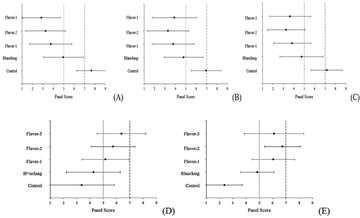
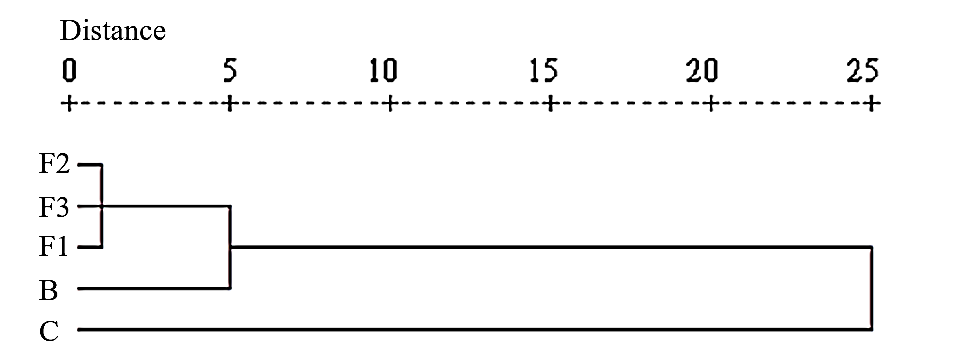
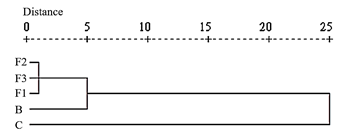
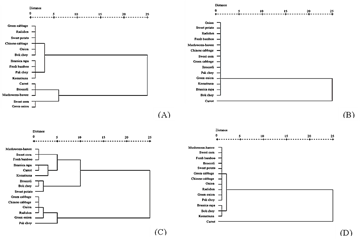
In this study, blanching and particular flavorings significantly reduced perception intensity of grassy smell, bitterness, and astringency and enhanced sweetness perception and overall acceptance (Figure 3). Ward’s Minimum Variance Clustering Method and Euclidean distance were conducted to evidence the perception intensity of grassy small, bitterness, astringency and sweetness and overall acceptance of broccoli and shown in Figure 4. Euclidean distances 5 as the survey line showed that perception intensities of grassy smell, bitterness and astringency from raw and blanched broccoli were classified into different subgroups. High intensity of grassy smell, bitterness and astringency deterred raw broccoli preference (overall acceptance about 2.5). The perception intensity of grassy smell, bitterness, astringency and sweetness were similar for various seasoning incorporations. Seasoning incorporation significantly reduced the intensity of grassy smell, bitterness and astringency and enhanced sweetness intensity and thus improved overall acceptance (panels’ score > 6).
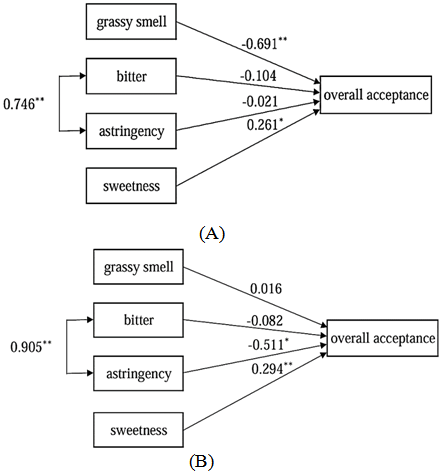
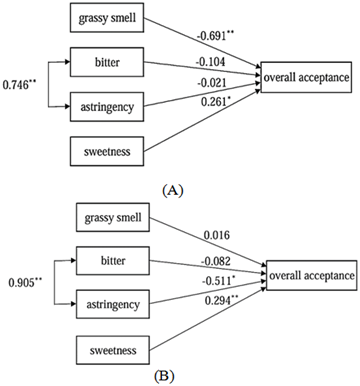
Analysis of moment structure (AMOS) was conducted to establish a linear structure model to find out the correlation between perception intensities of sensory characteristics (grassy smell, bitterness, astringency and sweetness) and overall acceptance and the correlation coefficient (r) was shown in Figure 5. Compared to raw broccoli, blanching destroyed the components of grassy smell and enhanced the components of sweetness; thus, overall acceptances were enhanced (r= -0.691 and 0.261 for grassy smell and sweetness, respectively, p < 0.01) (Figure 5A). However, de-bitterness and de-astringency by blanching didn’t affect overall acceptance, r= -0.104 and -0.021 for bitterness and astringency, respectively (Figure 5A). While seasoning incorporation, grassy smell and bitter became undetectable and thus overall acceptance was improved (r= 0.016 and -0.082 for grassy smell and bitterness, respectively) (Figure 5B). While the perception intensity of astringency and sweetness was significantly correlated well with overall acceptance (r= 0.294 and -0.511, respectively, p < 0.05). In a previous study of Dinehert et al. 30, the liking scores of Brusses sprouts and kale were significantly affected by the levels of sweet and bitter taste, r= 0.34 and -0.22 respectively (p<0.01). Our results also showed blanching removed bitterness and all the tested seasonings (vinegar/olive oil, cheese, or fried shallot/soy sauces) masked the perception of grassy smell and astringency and increased sweet perception; thus improved overall acceptance. The correlation coefficients for blanching and seasoning addition and sensory acceptance were r= 0.746 and 0.905, respectively. The overall acceptance improved from dis-likeness (2.37) for raw broccoli to dislikeness-likeness (around 5) for blanched and then to likeness (6.05-6.74) levels (Figure 3E) for blanched associated with seasoning incorporation.
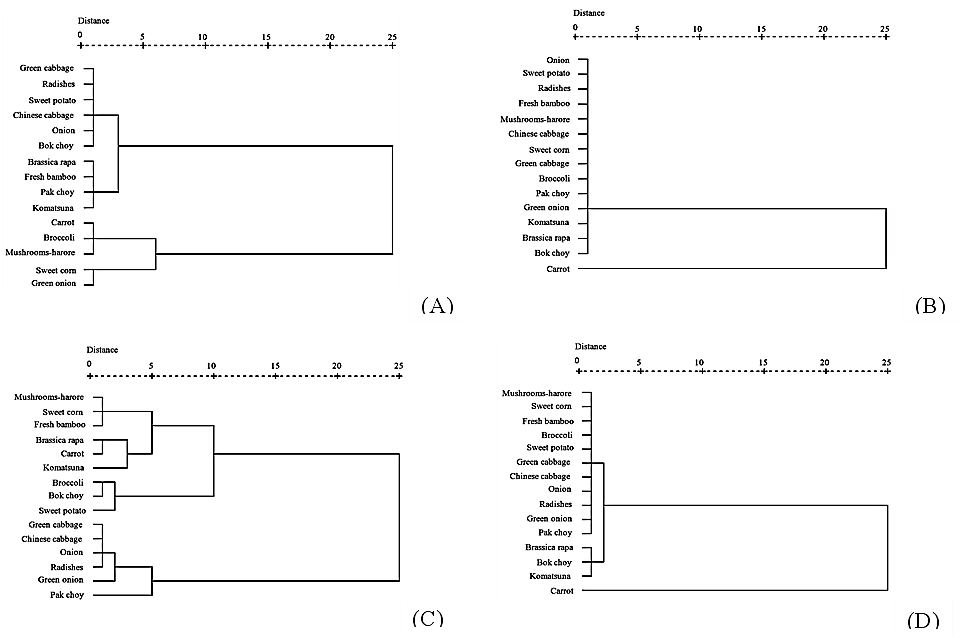
Unpleasant taste from astringency and grassy taste of vegetables hindered acceptance. Schonhof et al. 45 found glucosinolates of cauliflower substantially lost (60%) by blanching and cooking. Beside bitter components removal, cooking may cause starch converting into simple sugars and thus enhance sweet taste and mask bitter taste. Flavoring incorporation into cooked cauliflower is an alternative approach to promote likeness of consumers 46. In this study, blanching and then seasoning addition were shown to reduce the taste of astringent and improve the sensory acceptance (color, odor and flavor) and might enhance vegetables intake. Blanching and seasoning addition are simple culinary practices for preparation in large quantities such as at school lunch. In this study, blanching and seasoning addition were applied to prepare vegetables at school lunch. Our results showed school lunch provided 163±10g vegetable daily. The frequencies of 15 vegetables types served was in the order of Green cabbage, onion, Brassica rapa, Muchrooms-harore, Chinese cabbage, carrot, Pak choy, broccoli, radishes, Bok choy, sweet potato, fresh bamboo, Osaka komatsuna, sweet corn, green onion. The nutrient contents of those vegetables were clustering evaluated and shown in Figure 6. The fiber contents in vegetables were in the descending order: sweet corn and green onion (4.0~4.7g/100g), carrot, broccoli and mushrooms-harore (2.6~3.1g/100g) and others (0.9~2.2 g/100g) (Figure 6A). High vitamin A content was found in carrot (Figure 6B); while compared to other vegetables, Brassica rapa, carrot and Osaka komatsuna contain higher calcium and potassium (Figure 6D).
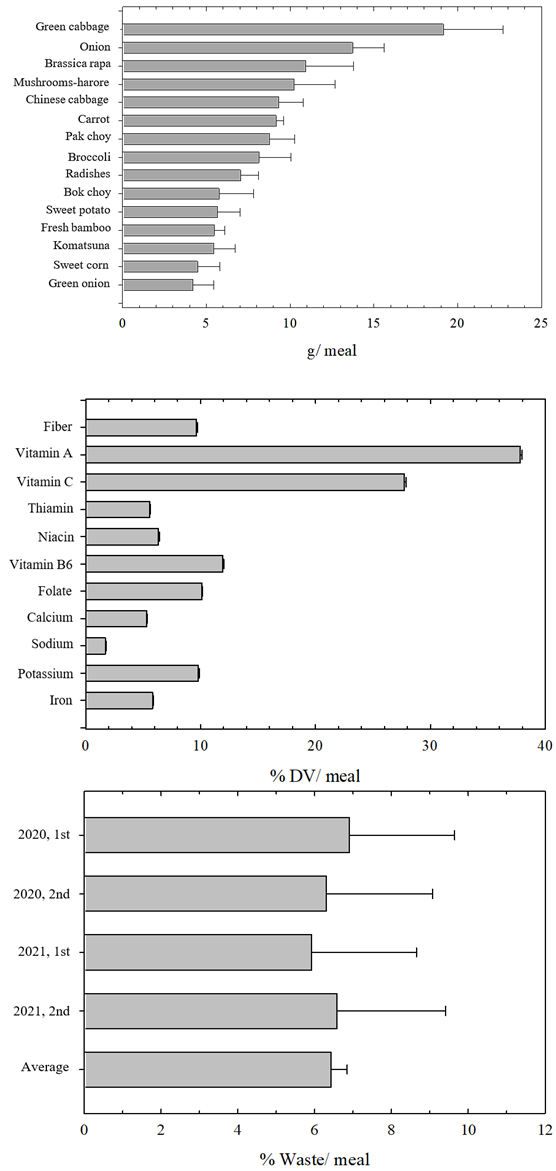
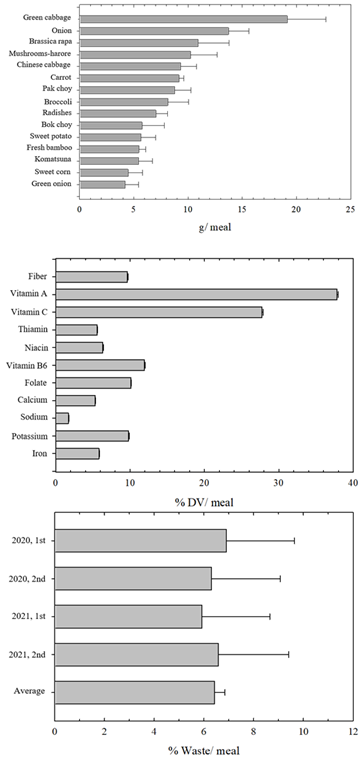
Figure 7 showed the provided amount of 15 vegetables: green cabbage (19-20 g/meal); onion, Brassica rapa, mushrooms-harore (10~14 g/meal); Chinese cabbage, carrot, pak choy, broccoli and radishes (7~10g/meal); others (4~7g/meal) (Figure 7A). The DV (%) of 15 vegetables served at school lunch were 10% for fiber, 38% for vitamin A, 28% for vitamin C, 12% for vitamin B6, 10% for folate, 6.3% for niacin, 5.6% for thiamin, 10% for potassium, 6% for Iron, 5% for calcium and 2% for sodium (Figure 7B). The accumulated vegetable wastes were 6.6, 5.9, 6.3 and 6.9% per day for every semester from 2020 to 2021, respectively (Figure 7C).
School lunch program is an important strategy in the world to prevent under nutrition of children 47. However, high vegetable waste of school lunch is a serious topic in the world. Vegetable species and preparation methods (fresh, whole, cut, cooked or processed) affected acceptance and plate waste. Marlette et al. 48 found categories and preparation method of food were the key determination factor for plate wastes. About 26, 33 and 34% of vegetable in salad, boiled corn and French-fried potatoes were discarded, respectively.
The waste percentages for boiled and mashed potato were 52 and 19%, respectively. In southern Thailand, the analyzed lunch wastes were: 7-33% rice, 9-22% meat, 7-65% vegetable, 1-19% fruit and 3-14% egg 49. In Finland and Italy, about 5.7 and 15% were discarded, respectively, particularly 25% proportion of vegetable and salad in side-dish 50 51. In Beijing of China, 21% plate lunch and 42% vegetable in proportion were discarded 5. In USA, a waste investigation (from 1978 to 2015) of school lunch showed 32-58% vegetables were discarded 52. High vegetable waste (67-75%) was also found by Cohen et al. 53 in school lunch (1030 students) from 2011-2012. In this study, blanching and seasoning addition improved palatability of vegetable in side-dishes and thus significantly reduced the waste to the level of 6.5%. Our results may provide a strategy to school and government for reducing vegetable waste.
Vegetable intake can prevent the risks of chronic diseases. However, vegetables are the most wasted due to poor preference and palatability at school lunch. Cooking and flavoring approaches were proposed to modify characteristics of vegetables and thus ameliorate preference and palatability. This study demonstrated culinary practices (blanching and seasoning incorporation) reduced perception intensity of grassy smell, bitterness and astringency and enhanced sweetness intensity. Application of this culinary practices to school lunch improved palatability and thus reduced vegetable rejection, aggregated vegetable waste as low as 6.5% per day.
The authors declare that they have no conflicts of interest to disclose with respect to this article.
| [1] | Cohen, J.F.W., Richardson, S., Austin, S.B., Economos, C.D. and Rimm, E.B,"School lunch waste among middle school students: nutrients consumed and costs", American Journal of Preventive Medicine, 44 (2). 114-121. February 2013. | ||
| In article | View Article PubMed | ||
| [2] | Smith, S. L. and Cunningham-Sabo, L, "Food choice, plate waste and nutrient intake of elementary- and middle-school students participating in the US National School Lunch Program", Public Health Nutrition, 17. 1255-1263. June 2014. | ||
| In article | View Article PubMed | ||
| [3] | Garcia-Herrero, L., Menna, F.D. and Vittuari, M, "Food waste at school. The environmental and cost impact of a canteen meal", Waste Management, 100. 249-258. December 2019. | ||
| In article | View Article PubMed | ||
| [4] | Martins, M.L., Henriques, A.S. and Rocha, A, "Evaluation of food waste and a Portuguese Geriatric institution", Sustainability, 13. 2452. January 2021. | ||
| In article | View Article | ||
| [5] | Liu, Y., Cheng, S., Liu, X., Cao, X., Xue, L. and Liu, G, "Plate waste in school lunch programs in Beijing, China", Sustainability, 8(12). 1288. October 2016. | ||
| In article | View Article | ||
| [6] | Chu, C.M., Chih, C. and Teng, C.C, "Food waste management: A case of Taiwanese high school food catering service", Sustainability, 15. 5947. March 2023. | ||
| In article | View Article | ||
| [7] | Nguyen, T., van den Berg, M. and Nguyen, M, "Food waste in primary schools:Evidence from peri-urban Viet Nam", Appetite, 183. 106485. April 2023. | ||
| In article | View Article PubMed | ||
| [8] | Ilić, A., Bituh, M., Brečić, R. and Barić, I.C, "Relationship between plate waste and food preferences among primary school students aged 7–10 years", Journal of Nutrition Education and Behavior, 54. 844-852. September 2022. | ||
| In article | View Article PubMed | ||
| [9] | Derqui, B., Fernandez, V. and Fayos, T, "Towards more sustainable food systems. Addressing food waste at school canteens", Appetite, 129. 1-11. October 2018. | ||
| In article | View Article PubMed | ||
| [10] | Giboreau, A., Schwartz, C., Morizet, D. and Meiselman, H.L, "Measuring food waste and consumption by children using photography", Nutrients, 11. 2410. October 2019. | ||
| In article | View Article PubMed | ||
| [11] | Brennan, A. and Browne, S, "Food waste and nutrition quality in the context of public health: A scoping review", International Journal of Environmental Research and. Public Health, 18. 5379. May 2021. | ||
| In article | View Article PubMed | ||
| [12] | Stanaway, J.D., Afshin, A., Ashbaugh, C., Bisignano, C., Brauer, M., Gerrara, G., Garcial, V., Haile, D., Hay, S.I., He, J., Iannucci, V., Lescinsky, H., Mullany, E.C., Parent, M.C., Serfes, A.L., Sorensen, R.J.D., Aravkin, A.Y., Zheng, P. and Murray, C.J.L, "Health effects associated with vegetable consumption: a Burden of Proof study", Nature Medicine, 28. 2066-2074. October 2022. | ||
| In article | View Article PubMed | ||
| [13] | Martins, M.L., Rodrigues, S.S.P., Cunha, L.M. and Rocha, A, "Factors influencing food waste during lunch of fourth-grade school", Waste Management, 113. 439-446. July 2020. | ||
| In article | View Article PubMed | ||
| [14] | Izumi, B.T., Akamatsu, R., Shanks, C.B. and Fujisaki, K, "An ethnographic study exploring factors that minimize lunch waste in Tokyo elementary schools", Public Health Nutrition, 23. 1142-1151. January 2020. | ||
| In article | View Article PubMed | ||
| [15] | Chen, P.C., Hung, T.Y. and Tsao, H.Y, "A study of investigating the influence factors of elementary school lunch satisfaction by using neural network", Management Information Computing, 4, 273-281. 2015. | ||
| In article | |||
| [16] | Czarnowska-Kujawska, M., Draszanowska, A. and Starowicz, M, "Effect of different cooking methods on the folate content, organoleptic and functional properties of broccoli and spinach", LWT-Food Science and Technology, 167. 113825. September 2022. | ||
| In article | View Article | ||
| [17] | D’Adamo, C.R., McArdle, P F., Balick, L., Peisach, E., Ferguson, T., Diehl, A., Bowden, B., Piberce, B.A. and Berman, B.M. (2016). "Spice MyPlate: Nutrition education focusing upon spices and herbs improved diet quality and attitudes among urban high school students", American Journal of Health Promotion, 30. 346-356. May 2016. | ||
| In article | View Article PubMed | ||
| [18] | Rungapamestry, V., Duncan, A.J., Fuller, Z. and Ratcliffe, B, "Effect of meal composition and cooking duration on the fate of sulforaphane following consumption of broccoli by healthy human subjects", British Journal of Nutrition, 97. 644-652. April 2007. | ||
| In article | View Article PubMed | ||
| [19] | Volden, J., Borge, G.I.A., Hansen, M.,Wicklund, T. and Bengtsson, G.B, "Processing (blanching, boiling, steaming) effects on the contentof glucosinolates and antioxidant-related parameters in cauliflower (Brassica oleracea L. ssp. botrytis)", LWT- Food Science and Technology, 42. 63-73. July 2009. | ||
| In article | View Article | ||
| [20] | De Castro, N.T., de Lacerda, L., de Alencar, E.R. and Botelho, R.B, "Is there a best technique to cook vegetables? – A study about physical and sensory aspects to stimulate their consumption", International Journal of Gastronomy and Food Science, 21. 100218. October 2020. | ||
| In article | View Article | ||
| [21] | Bao, S., Li, X., Lan, T., Wang, J., Hu, Y., Sun, X. and Ma, T, "Effects of different cooking treatments on the sensory qualities and pigmented phytochemicals of carrots", Food Chemistry, 405. 135015. March 2023. | ||
| In article | View Article PubMed | ||
| [22] | Huang, Z., Gao, R., Bawuerjiang, N., Zhang, Y., Huang, X. and Cai, M, "Food and nutrients intake in the school lunch program among school children in Shanghai, China", Nutrients, 9. 582. June 2017. | ||
| In article | View Article PubMed | ||
| [23] | Puputti, S., Aisala, H., Hoppu, U. and Sandell, M, "Multidimensional measurement of individual differences in taste perception", Food Quality and Preference, 65. 10-17. April 2018. | ||
| In article | View Article | ||
| [24] | Bakke, A.J., Stubbs, C.A., McDowell, E.H., Moding, K.J., Johnson, S.L. and Hayes, J.E, "Mary Poppins was right: Adding small amounts of sugar or salt reduces the bitterness of vegetables", Appetite, 126 (1). 90-101. July 2018. | ||
| In article | View Article PubMed | ||
| [25] | Tao, Y., Sun, D.-W., G´orecki, A., Baszczak, W., Lamparski, G., Amarowicz, R., Fornal, J. and Jeli´nski, T, "A preliminary study about the influence of high hydrostatic pressure processing in parallel with oak chip macertation on the physicochemical and sensory properties of a young red wine", Food Chemistry, 194. 545-554. March 2016. | ||
| In article | View Article PubMed | ||
| [26] | Granato, D., Santos, J.S., Escher, G.B., Ferreira, B.L. and Maggio, R.M, "Use of principal component analysis (PCA) and hierarchical cluster analysis (HCA) for multivariate association between bioactive compounds and functional properties in foods: A critical perspective", Trends in Food Science & Technology, 72. 83-90. February 2018. | ||
| In article | View Article | ||
| [27] | Van Stokkom, V.L., Teo, P.S., Mars, M., de Graaf, C., van Kooten, O. and Stieger, M, "Taste intensities of ten vegetables commonly consumed in the Netherlands", Food Research International, 87. 34-41. September 2016. | ||
| In article | View Article PubMed | ||
| [28] | Hoppu, U., Puputti, S. and Sandell, M, "Factors related to sensory properties and consumer acceptance of vegetables", Critical Reviews in Food Science and Nutrition, 61(10). 1751-1761. May 2021. | ||
| In article | View Article PubMed | ||
| [29] | Drewnowski, A. and Gomez-Carneros, C, "Bitter taste, phytonutrients, and the consumer: A review", The American Journal of Clinical Nutrition, 72. 1424-1435. December 2000. | ||
| In article | View Article PubMed | ||
| [30] | Dinehart, M.E., Hayes, J.E., Bartoshuk, L.M., Lanier, S.L. and Duffy, V.B, "Bitter taste markers explain variability in vegetable sweetness, bitterness, and intake", Physiology & Behavior, 87(2). 304-313. February 2006. | ||
| In article | View Article PubMed | ||
| [31] | van Doorn, H.E., Van Der Kruk, G.C., Van Holst, G.J., Raaijmakers-Ruijs, N.C.M.E., Postma, E., Groeneweg, B. and Jongen, W.H.F, "The glucosinolates sinigrin and progoitrin are important determinants for taste preference and bitterness of brussels sprouts", Journal of the Science of Food and Agriculture, 78. 30-38. September 1998. | ||
| In article | View Article | ||
| [32] | Wieczorek, M.N., Dunkel, A., Szwengiel, A., Czaczyk, K., Drożdżyńska, A., Zawirska-Wojtasiak, R. and Jeleń, H.H, "The Relation between Phytochemical Composition and Sensory Traits of Selected Brassica Vegetables", LWT-Food Science and Technology, 156. 113028. February 2022. | ||
| In article | View Article | ||
| [33] | Poelman, A.A.M., Delahunty, C.M. and de Graaf, C, (2017). "Vegetables and other core food groups: A comparison of key flavor and texture properties", Food Quality and Preference, 56. 1-7. March 2017. | ||
| In article | View Article | ||
| [34] | Zeinstra, G.G., Koelen, M.A., Kok, F.J. and de Graaf, C, "The influence of preparation method on children's liking for vegetables", Food Quality and Preference, 21(8). 906-914. December 2012. | ||
| In article | View Article | ||
| [35] | Hartmann, C., Dohle, S. and Siegrist, M, " Importance of cooking skills for balanced food choices", Appetite, 65. 125-131. June 2013. | ||
| In article | View Article PubMed | ||
| [36] | Beck, T.K., Jensen, S., Bjoern, G.K. and Kidmose, U, "The masking effect of sucrose on perception of bitter compounds in Brassica vegetables", Journal of Sensory Studies, 29. 190-200. April 2014. | ||
| In article | View Article | ||
| [37] | Van Stokkom, V.L., de Graaf, C., van Kooten, O. and Stieger, M, (2018). "Effect of taste enhancement on consumer acceptance of pureed cucumber and green capsicum", Journal of Food Science, 83(10). 2578-2585. October 2018. | ||
| In article | View Article PubMed | ||
| [38] | Feng, Y., Tapia, M.A., Okada, K., Lazo, N.B.C., Chapman-Novakofski, K., Phillips, C. and Lee, S.Y, "Consumer acceptance comparison between seasoned and unseasoned vegetables", Journal of Food Science, 83(2). 446-53. January 2018. | ||
| In article | View Article PubMed | ||
| [39] | Fritts, J.R., Fort, C., Corr, A.Q., Liang, Q., Alla, L., Cravener, T., Hayes, J.E., Rolls, B.J., D’Adamo, C. and Keller, K.L, "Herbs and spices increase liking and preference for vegetables among rural high school students", Food Quality and Preference, 68. 125-134. September 2018. | ||
| In article | View Article | ||
| [40] | Fisher, J.O., Mennella, J.A., Hughes, S.O., Liu, Y., Mendoza, P.M. and Patrick, H,"Offering “dip” promotes intake of a moderately-liked raw vegetable among pre- schoolers with genetic sensitivity to bitterness, Journal of the Academy of Nutrition and Dietetics, 112(2). 235-245. February 2012. | ||
| In article | View Article PubMed | ||
| [41] | Torri, L., Jeon, S.Y., Piochi, M., Morini, G. and Kim, K.O, "Consumer perception of balsamic vinegar: A cross-cultural study between Korea and Italy", Food Research International, 91. 148-160. January 2017. | ||
| In article | View Article PubMed | ||
| [42] | Merinert, L., Frøst, M.B., Bejerholm, C. and Aaslyng, M.D, "Enhancing the sensory quality of vegetables by decreasing some less-desired sensory properties with low-fat pork gravy", Journal of Culinary Science and Technology, 9. 113-131. June 2011. | ||
| In article | View Article | ||
| [43] | Blatt, A.D., Roe, L S. and Rolls, B.J, "Hidden vegetables: An effective strategy to reduce energy intake and increase vegetable intake in adults", The American Journal of Clinical Nutrition, 93. 756-763. April 2011. | ||
| In article | View Article PubMed | ||
| [44] | Spencer, M. and Guinard J.X, "The Flexitarian Flip TM: Testing the modalities of flavor as sensory strategies to accomplish the shift from meat-centered to vegetable-forward mixed dishes", Journal of Food Science, 83(1). 175:87. January 2018. | ||
| In article | View Article PubMed | ||
| [45] | Schonhof, I., Krumbein, A. and Brückner, B, "Genotypic effects on glucosinolates and sensory properties of broccoli and cauliflower", Nahrung. 48. 25-33. February 2004. | ||
| In article | View Article PubMed | ||
| [46] | Engel, E., Baty, C., LeCorre, D., Souchon, I. and Martin, N, "Flavor-active compounds potentially implicated in cooked cauliflower acceptance", Journal of Agricultural and Food Chemistry, 50. 6459-6467. September 2002. | ||
| In article | View Article PubMed | ||
| [47] | Oostindjer, M., Aschemann-Witzel, J., Wang, Q., Skuland, S.E., Egelandsdal, B., Amdam,G.V., Schjøll, A., Pachucki, M.C., Rozin, P., Stein, J., Almli, V.L. and Kleef, E.V, "Are school meals a viable and sustainable tool to improve the healthiness and sustainability of children´s diet and food consumption? A cross-national comparative perspective", Critical Reviews in Food Science and Nutrition, 57(18). 3942-3958. December 2017. | ||
| In article | View Article PubMed | ||
| [48] | Marlette, M.A., Templeton, S.B. and Panemangalore, M, "Food type, food preparation, and competitive food purchases impact school lunch plate waste by Sixth-Grade Students", Journal of the American Dietetic Association, 105. 1779-1782. November 2005. | ||
| In article | View Article PubMed | ||
| [49] | Petchoo, J., Kaewchutima, N. and Tangsuphoom, N, "Nutritional quality of lunch meals and plate waste in school lunch programme in Southern Thailand", Journal of Nutritional Science, 11. e35. May 2022. | ||
| In article | View Article PubMed | ||
| [50] | Silvennoinen, K., Heikkilä, L., Katajajuuri, J.M. and Reinikainen, A, "Food waste volume and origin: Case studies in the Finnish food service sector", Waste Management, 46. 140-145. December 2015. | ||
| In article | View Article PubMed | ||
| [51] | Falasconi, L., Vittuari, M., Politano, A. and Segrè, A, "Food waste in school catering: An Italian case study", Sustainability, 7(11). 14745-14760. July 2015. | ||
| In article | View Article | ||
| [52] | Shanks, C.B., Banna, J. and Serrano, E.L, "Food waste in the National School Lunch Program 1978–2015: A systematic review", Journal of the Academy of Nutrition and Dietetics, 117(11). 1792-1807. November 2017. | ||
| In article | View Article PubMed | ||
| [53] | Cohen, J.F., Richardson, S., Parker, E., Catalano, P.J. and Rimm, E.B, "Impact of the new U.S. Department of Agriculture school meal standards on food selection, consumption, and waste", American Journal of Preventive Medicine, 46(4). 388-394. April 2014. | ||
| In article | View Article PubMed | ||
Published with license by Science and Education Publishing, Copyright © 2024 Pei Yu Tien, Pei Fen Yang, Yih Ming Weng, Zer Ran Yu and Be Jen Wang
 This work is licensed under a Creative Commons Attribution 4.0 International License. To view a copy of this license, visit
https://creativecommons.org/licenses/by/4.0/
This work is licensed under a Creative Commons Attribution 4.0 International License. To view a copy of this license, visit
https://creativecommons.org/licenses/by/4.0/
| [1] | Cohen, J.F.W., Richardson, S., Austin, S.B., Economos, C.D. and Rimm, E.B,"School lunch waste among middle school students: nutrients consumed and costs", American Journal of Preventive Medicine, 44 (2). 114-121. February 2013. | ||
| In article | View Article PubMed | ||
| [2] | Smith, S. L. and Cunningham-Sabo, L, "Food choice, plate waste and nutrient intake of elementary- and middle-school students participating in the US National School Lunch Program", Public Health Nutrition, 17. 1255-1263. June 2014. | ||
| In article | View Article PubMed | ||
| [3] | Garcia-Herrero, L., Menna, F.D. and Vittuari, M, "Food waste at school. The environmental and cost impact of a canteen meal", Waste Management, 100. 249-258. December 2019. | ||
| In article | View Article PubMed | ||
| [4] | Martins, M.L., Henriques, A.S. and Rocha, A, "Evaluation of food waste and a Portuguese Geriatric institution", Sustainability, 13. 2452. January 2021. | ||
| In article | View Article | ||
| [5] | Liu, Y., Cheng, S., Liu, X., Cao, X., Xue, L. and Liu, G, "Plate waste in school lunch programs in Beijing, China", Sustainability, 8(12). 1288. October 2016. | ||
| In article | View Article | ||
| [6] | Chu, C.M., Chih, C. and Teng, C.C, "Food waste management: A case of Taiwanese high school food catering service", Sustainability, 15. 5947. March 2023. | ||
| In article | View Article | ||
| [7] | Nguyen, T., van den Berg, M. and Nguyen, M, "Food waste in primary schools:Evidence from peri-urban Viet Nam", Appetite, 183. 106485. April 2023. | ||
| In article | View Article PubMed | ||
| [8] | Ilić, A., Bituh, M., Brečić, R. and Barić, I.C, "Relationship between plate waste and food preferences among primary school students aged 7–10 years", Journal of Nutrition Education and Behavior, 54. 844-852. September 2022. | ||
| In article | View Article PubMed | ||
| [9] | Derqui, B., Fernandez, V. and Fayos, T, "Towards more sustainable food systems. Addressing food waste at school canteens", Appetite, 129. 1-11. October 2018. | ||
| In article | View Article PubMed | ||
| [10] | Giboreau, A., Schwartz, C., Morizet, D. and Meiselman, H.L, "Measuring food waste and consumption by children using photography", Nutrients, 11. 2410. October 2019. | ||
| In article | View Article PubMed | ||
| [11] | Brennan, A. and Browne, S, "Food waste and nutrition quality in the context of public health: A scoping review", International Journal of Environmental Research and. Public Health, 18. 5379. May 2021. | ||
| In article | View Article PubMed | ||
| [12] | Stanaway, J.D., Afshin, A., Ashbaugh, C., Bisignano, C., Brauer, M., Gerrara, G., Garcial, V., Haile, D., Hay, S.I., He, J., Iannucci, V., Lescinsky, H., Mullany, E.C., Parent, M.C., Serfes, A.L., Sorensen, R.J.D., Aravkin, A.Y., Zheng, P. and Murray, C.J.L, "Health effects associated with vegetable consumption: a Burden of Proof study", Nature Medicine, 28. 2066-2074. October 2022. | ||
| In article | View Article PubMed | ||
| [13] | Martins, M.L., Rodrigues, S.S.P., Cunha, L.M. and Rocha, A, "Factors influencing food waste during lunch of fourth-grade school", Waste Management, 113. 439-446. July 2020. | ||
| In article | View Article PubMed | ||
| [14] | Izumi, B.T., Akamatsu, R., Shanks, C.B. and Fujisaki, K, "An ethnographic study exploring factors that minimize lunch waste in Tokyo elementary schools", Public Health Nutrition, 23. 1142-1151. January 2020. | ||
| In article | View Article PubMed | ||
| [15] | Chen, P.C., Hung, T.Y. and Tsao, H.Y, "A study of investigating the influence factors of elementary school lunch satisfaction by using neural network", Management Information Computing, 4, 273-281. 2015. | ||
| In article | |||
| [16] | Czarnowska-Kujawska, M., Draszanowska, A. and Starowicz, M, "Effect of different cooking methods on the folate content, organoleptic and functional properties of broccoli and spinach", LWT-Food Science and Technology, 167. 113825. September 2022. | ||
| In article | View Article | ||
| [17] | D’Adamo, C.R., McArdle, P F., Balick, L., Peisach, E., Ferguson, T., Diehl, A., Bowden, B., Piberce, B.A. and Berman, B.M. (2016). "Spice MyPlate: Nutrition education focusing upon spices and herbs improved diet quality and attitudes among urban high school students", American Journal of Health Promotion, 30. 346-356. May 2016. | ||
| In article | View Article PubMed | ||
| [18] | Rungapamestry, V., Duncan, A.J., Fuller, Z. and Ratcliffe, B, "Effect of meal composition and cooking duration on the fate of sulforaphane following consumption of broccoli by healthy human subjects", British Journal of Nutrition, 97. 644-652. April 2007. | ||
| In article | View Article PubMed | ||
| [19] | Volden, J., Borge, G.I.A., Hansen, M.,Wicklund, T. and Bengtsson, G.B, "Processing (blanching, boiling, steaming) effects on the contentof glucosinolates and antioxidant-related parameters in cauliflower (Brassica oleracea L. ssp. botrytis)", LWT- Food Science and Technology, 42. 63-73. July 2009. | ||
| In article | View Article | ||
| [20] | De Castro, N.T., de Lacerda, L., de Alencar, E.R. and Botelho, R.B, "Is there a best technique to cook vegetables? – A study about physical and sensory aspects to stimulate their consumption", International Journal of Gastronomy and Food Science, 21. 100218. October 2020. | ||
| In article | View Article | ||
| [21] | Bao, S., Li, X., Lan, T., Wang, J., Hu, Y., Sun, X. and Ma, T, "Effects of different cooking treatments on the sensory qualities and pigmented phytochemicals of carrots", Food Chemistry, 405. 135015. March 2023. | ||
| In article | View Article PubMed | ||
| [22] | Huang, Z., Gao, R., Bawuerjiang, N., Zhang, Y., Huang, X. and Cai, M, "Food and nutrients intake in the school lunch program among school children in Shanghai, China", Nutrients, 9. 582. June 2017. | ||
| In article | View Article PubMed | ||
| [23] | Puputti, S., Aisala, H., Hoppu, U. and Sandell, M, "Multidimensional measurement of individual differences in taste perception", Food Quality and Preference, 65. 10-17. April 2018. | ||
| In article | View Article | ||
| [24] | Bakke, A.J., Stubbs, C.A., McDowell, E.H., Moding, K.J., Johnson, S.L. and Hayes, J.E, "Mary Poppins was right: Adding small amounts of sugar or salt reduces the bitterness of vegetables", Appetite, 126 (1). 90-101. July 2018. | ||
| In article | View Article PubMed | ||
| [25] | Tao, Y., Sun, D.-W., G´orecki, A., Baszczak, W., Lamparski, G., Amarowicz, R., Fornal, J. and Jeli´nski, T, "A preliminary study about the influence of high hydrostatic pressure processing in parallel with oak chip macertation on the physicochemical and sensory properties of a young red wine", Food Chemistry, 194. 545-554. March 2016. | ||
| In article | View Article PubMed | ||
| [26] | Granato, D., Santos, J.S., Escher, G.B., Ferreira, B.L. and Maggio, R.M, "Use of principal component analysis (PCA) and hierarchical cluster analysis (HCA) for multivariate association between bioactive compounds and functional properties in foods: A critical perspective", Trends in Food Science & Technology, 72. 83-90. February 2018. | ||
| In article | View Article | ||
| [27] | Van Stokkom, V.L., Teo, P.S., Mars, M., de Graaf, C., van Kooten, O. and Stieger, M, "Taste intensities of ten vegetables commonly consumed in the Netherlands", Food Research International, 87. 34-41. September 2016. | ||
| In article | View Article PubMed | ||
| [28] | Hoppu, U., Puputti, S. and Sandell, M, "Factors related to sensory properties and consumer acceptance of vegetables", Critical Reviews in Food Science and Nutrition, 61(10). 1751-1761. May 2021. | ||
| In article | View Article PubMed | ||
| [29] | Drewnowski, A. and Gomez-Carneros, C, "Bitter taste, phytonutrients, and the consumer: A review", The American Journal of Clinical Nutrition, 72. 1424-1435. December 2000. | ||
| In article | View Article PubMed | ||
| [30] | Dinehart, M.E., Hayes, J.E., Bartoshuk, L.M., Lanier, S.L. and Duffy, V.B, "Bitter taste markers explain variability in vegetable sweetness, bitterness, and intake", Physiology & Behavior, 87(2). 304-313. February 2006. | ||
| In article | View Article PubMed | ||
| [31] | van Doorn, H.E., Van Der Kruk, G.C., Van Holst, G.J., Raaijmakers-Ruijs, N.C.M.E., Postma, E., Groeneweg, B. and Jongen, W.H.F, "The glucosinolates sinigrin and progoitrin are important determinants for taste preference and bitterness of brussels sprouts", Journal of the Science of Food and Agriculture, 78. 30-38. September 1998. | ||
| In article | View Article | ||
| [32] | Wieczorek, M.N., Dunkel, A., Szwengiel, A., Czaczyk, K., Drożdżyńska, A., Zawirska-Wojtasiak, R. and Jeleń, H.H, "The Relation between Phytochemical Composition and Sensory Traits of Selected Brassica Vegetables", LWT-Food Science and Technology, 156. 113028. February 2022. | ||
| In article | View Article | ||
| [33] | Poelman, A.A.M., Delahunty, C.M. and de Graaf, C, (2017). "Vegetables and other core food groups: A comparison of key flavor and texture properties", Food Quality and Preference, 56. 1-7. March 2017. | ||
| In article | View Article | ||
| [34] | Zeinstra, G.G., Koelen, M.A., Kok, F.J. and de Graaf, C, "The influence of preparation method on children's liking for vegetables", Food Quality and Preference, 21(8). 906-914. December 2012. | ||
| In article | View Article | ||
| [35] | Hartmann, C., Dohle, S. and Siegrist, M, " Importance of cooking skills for balanced food choices", Appetite, 65. 125-131. June 2013. | ||
| In article | View Article PubMed | ||
| [36] | Beck, T.K., Jensen, S., Bjoern, G.K. and Kidmose, U, "The masking effect of sucrose on perception of bitter compounds in Brassica vegetables", Journal of Sensory Studies, 29. 190-200. April 2014. | ||
| In article | View Article | ||
| [37] | Van Stokkom, V.L., de Graaf, C., van Kooten, O. and Stieger, M, (2018). "Effect of taste enhancement on consumer acceptance of pureed cucumber and green capsicum", Journal of Food Science, 83(10). 2578-2585. October 2018. | ||
| In article | View Article PubMed | ||
| [38] | Feng, Y., Tapia, M.A., Okada, K., Lazo, N.B.C., Chapman-Novakofski, K., Phillips, C. and Lee, S.Y, "Consumer acceptance comparison between seasoned and unseasoned vegetables", Journal of Food Science, 83(2). 446-53. January 2018. | ||
| In article | View Article PubMed | ||
| [39] | Fritts, J.R., Fort, C., Corr, A.Q., Liang, Q., Alla, L., Cravener, T., Hayes, J.E., Rolls, B.J., D’Adamo, C. and Keller, K.L, "Herbs and spices increase liking and preference for vegetables among rural high school students", Food Quality and Preference, 68. 125-134. September 2018. | ||
| In article | View Article | ||
| [40] | Fisher, J.O., Mennella, J.A., Hughes, S.O., Liu, Y., Mendoza, P.M. and Patrick, H,"Offering “dip” promotes intake of a moderately-liked raw vegetable among pre- schoolers with genetic sensitivity to bitterness, Journal of the Academy of Nutrition and Dietetics, 112(2). 235-245. February 2012. | ||
| In article | View Article PubMed | ||
| [41] | Torri, L., Jeon, S.Y., Piochi, M., Morini, G. and Kim, K.O, "Consumer perception of balsamic vinegar: A cross-cultural study between Korea and Italy", Food Research International, 91. 148-160. January 2017. | ||
| In article | View Article PubMed | ||
| [42] | Merinert, L., Frøst, M.B., Bejerholm, C. and Aaslyng, M.D, "Enhancing the sensory quality of vegetables by decreasing some less-desired sensory properties with low-fat pork gravy", Journal of Culinary Science and Technology, 9. 113-131. June 2011. | ||
| In article | View Article | ||
| [43] | Blatt, A.D., Roe, L S. and Rolls, B.J, "Hidden vegetables: An effective strategy to reduce energy intake and increase vegetable intake in adults", The American Journal of Clinical Nutrition, 93. 756-763. April 2011. | ||
| In article | View Article PubMed | ||
| [44] | Spencer, M. and Guinard J.X, "The Flexitarian Flip TM: Testing the modalities of flavor as sensory strategies to accomplish the shift from meat-centered to vegetable-forward mixed dishes", Journal of Food Science, 83(1). 175:87. January 2018. | ||
| In article | View Article PubMed | ||
| [45] | Schonhof, I., Krumbein, A. and Brückner, B, "Genotypic effects on glucosinolates and sensory properties of broccoli and cauliflower", Nahrung. 48. 25-33. February 2004. | ||
| In article | View Article PubMed | ||
| [46] | Engel, E., Baty, C., LeCorre, D., Souchon, I. and Martin, N, "Flavor-active compounds potentially implicated in cooked cauliflower acceptance", Journal of Agricultural and Food Chemistry, 50. 6459-6467. September 2002. | ||
| In article | View Article PubMed | ||
| [47] | Oostindjer, M., Aschemann-Witzel, J., Wang, Q., Skuland, S.E., Egelandsdal, B., Amdam,G.V., Schjøll, A., Pachucki, M.C., Rozin, P., Stein, J., Almli, V.L. and Kleef, E.V, "Are school meals a viable and sustainable tool to improve the healthiness and sustainability of children´s diet and food consumption? A cross-national comparative perspective", Critical Reviews in Food Science and Nutrition, 57(18). 3942-3958. December 2017. | ||
| In article | View Article PubMed | ||
| [48] | Marlette, M.A., Templeton, S.B. and Panemangalore, M, "Food type, food preparation, and competitive food purchases impact school lunch plate waste by Sixth-Grade Students", Journal of the American Dietetic Association, 105. 1779-1782. November 2005. | ||
| In article | View Article PubMed | ||
| [49] | Petchoo, J., Kaewchutima, N. and Tangsuphoom, N, "Nutritional quality of lunch meals and plate waste in school lunch programme in Southern Thailand", Journal of Nutritional Science, 11. e35. May 2022. | ||
| In article | View Article PubMed | ||
| [50] | Silvennoinen, K., Heikkilä, L., Katajajuuri, J.M. and Reinikainen, A, "Food waste volume and origin: Case studies in the Finnish food service sector", Waste Management, 46. 140-145. December 2015. | ||
| In article | View Article PubMed | ||
| [51] | Falasconi, L., Vittuari, M., Politano, A. and Segrè, A, "Food waste in school catering: An Italian case study", Sustainability, 7(11). 14745-14760. July 2015. | ||
| In article | View Article | ||
| [52] | Shanks, C.B., Banna, J. and Serrano, E.L, "Food waste in the National School Lunch Program 1978–2015: A systematic review", Journal of the Academy of Nutrition and Dietetics, 117(11). 1792-1807. November 2017. | ||
| In article | View Article PubMed | ||
| [53] | Cohen, J.F., Richardson, S., Parker, E., Catalano, P.J. and Rimm, E.B, "Impact of the new U.S. Department of Agriculture school meal standards on food selection, consumption, and waste", American Journal of Preventive Medicine, 46(4). 388-394. April 2014. | ||
| In article | View Article PubMed | ||