This study examined the effects of value disciplines on organizational performance as well as the moderating effects of relational trust-value discipline interactions on organizational performance. Data were collected through an electronic questionnaire survey conducted among individuals holding the positions of chairperson, general manager, deputy general manager, assistant manager, and director in hotels (i.e., star-rated and tourist hotels) and inns (i.e., business hotels and motels). The results indicated that, in the hotel group, value disciplines (operational excellence and product leadership) had a significant positive influence on organizational performance, whereas in the inn group, only customer intimacy showed a significant positive influence. In addition, the interaction between relational trust and value disciplines (product leadership and customer intimacy) exhibited significant moderating effects on organizational performance in both the hotel and inn groups.
Previous research has suggested that the decision-making behavior of business operations executives not only shapes the decision-making process, but also directly influences operational performance 1. A study of 2 reveals that business value can be created by integrating the operational and management behaviors of business executives with the proper allocation and utilization of business resources. This suggests that combining executives’ operational behaviors with business resources generates positive net benefits. When the resulting benefits exceed the costs of resource allocation, business value is created. This also indicates that the success of a business depends on the operations team, which, through the division of labor, develops internal strategies and negotiates externally on behalf of the business, thereby influencing it’s operational performance. 3, 4.
Business operational strategies help define the foundational long-term goals of an enterprise, outline courses of action, and allocate resources required to achieve these goals 5. As demonstrated in numerous studies on business strategy, the concept of value disciplines has been examined with considerable academic rigor and depth 6, 7, 8. However, from a managerial and applied research perspective, greater emphasis can be placed on operational excellence, which emphasizes cost efficiency, reliability, accuracy, and availability; on customer intimacy, which prioritizes service quality; or on product leadership and service innovation 9.
Research on trust and its influence in organizational contexts has strong practical relevance and applicability. As a key element of business operation, trust provides substantial benefits to an organization. For business organizations, trust is not only something that can be created, but also serves as a powerful force that inspires and motivates people. It requires adherence to a set of values and is grounded in sincerity, fairness, perseverance, and genuine concern for others’ needs. However, 10 argues that trust determines the growth of an enterprise and the formation of competitive advantages. While the maintenance and accumulation of such relationships require the investment of time and energy, they can be easily broken. When personal values align with organizational values, performance is enhanced. 11 point out that individuals’ behavioral styles reflect the values they embrace, and that when individual values vary from organizational values, moral conflicts arise. Moreover, trust significantly affects economic development, and these behaviors, in turn, influence various aspects ranging from consumption habits to institutional development 12. Therefore, enterprises must recognize the significant role that trust plays in their business operations.
This study focused on executives in the labor-intensive hotel and accommodation sector. Using purposive sampling, participants were selected from individuals holding positions such as chairperson, general manager, deputy general manager, assistant manager, and director. Data were collected through electronic questionnaires distributed via relevant new media and online platforms, such as LINE, Facebook, and Instagram, to explore (1) the influence of value disciplines on organizational performance, and (2) the moderating effect of the interaction between relational trust and value disciplines on organizational performance.
The three value disciplines, customer intimacy, product leadership, and operational excellence, are significant strategic approaches that help companies gain competitiveness, 9. Operational excellence is a strategic approach in which a company delivers reliable products or services to customers at optimal cost-effectiveness and competitive prices. Product leadership involves the continual development and delivery of state-of-the-art products and services that enhance customer experiences or applications. Customer intimacy involves understanding and responding to the highly specific and evolving needs of narrowly defined customer segments, precisely targeting these customers, and then tailoring products and services to meet the demands and requirements of these segmented markets 9, 13, 14, 15, 16.
Numerous studies have demonstrated the influence of value disciplines on organizational performance and competitive advantage in different industrial contexts 17, 18, 19. 20 examined the software/IT sector, public utilities, the electronics industry, and the machinery industry, and demonstrated the effectiveness of the three value disciplines. They reported that each strategy demonstrates unique value creation capabilities, and that only a carefully coordinated combination of value-capturing capabilities can generate strategic advantage and excellent performance. Furthermore, a study of lending institutions in Kenya by 21 suggested that value disciplines not only help lending institutions reduce unit production costs but also enable companies to quickly adjust their product portfolios to meet customers’ changing needs. 22 also posited that, for most pharmaceutical companies in developed countries, value disciplines in diabetes care exhibit positive correlations with and influence on competitive advantages and organizational performance. Therefore, this study proposed the following hypotheses:
H1a: Operational excellence influences organizational performance.
H1b: Product leadership influences organizational performance.
H1c: Customer intimacy influences organizational performance.
2.2. The Moderating Effect of Relational Trust on the Relationship between Value Disciplines and Organizational PerformanceTrust is rooted in personal traits such as capability, responsibility, and interpersonal relationships 23. In practical business operations, aligning individual employees’ trust toward shared organizational goals requires the use of formal organizational mechanisms and procedural fairness, which are essential for achieving the desired business performance 24, 25. 26 suggest that companies develop means to improve employees’ sense of cohesion and organizational identification, thereby facilitating interdepartmental coordination and collaboration. By doing so, companies can foster conditions that lead to greater job satisfaction, managerial trust, and organizational commitment among their employees. Notably, employees’ institutional trust in the company largely stems from the decision-making competence of department managers, departmental operational effectiveness, and the organization’s comprehensive policies and procedures.
Relationships are the connections established by individuals through shared commonalities with others, which serve as the basis for determining how they interact with one another 27. From an economic perspective, the connections between individuals and others and the relationships between different members of a market are all networks formed through collaboration. Such relationships may further evolve into mutually beneficial exchanges that generate ongoing reciprocal value, enabling both parties to obtain relevant resources from one another 28, 29. Some studies argue that relationship formation between individuals is a dynamic process that may involve multiple pathways simultaneous, and resemble the creation of social network connections 30, 31. From the perspective of social exchange theory, such relational behaviors in Chinese communities are typically guided by relational judgments, including affective, instrumental, and mixed relationships, as the primary basis for relational cognition. Individuals engage in interactions or resource exchanges according to their personal assessments of the category to which the other party belongs 32.
Relational trust is present in various aspects ranging from personal relationships to economic development 33. At both individual and organizational levels, the fundamental conditions of trust involve risk and interdependence. Trust represents confidence in the members of a relationship—the belief that the other party will not take actions detrimental to oneself—and the willingness to engage in behaviors that may entail risk in order to place trust in the other party 34.
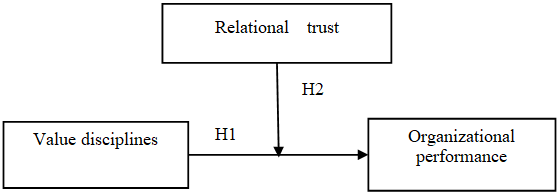
2.3. The Moderating Effect of Relational TrustThe relationship between executives’ relational trust and an organizations’ value disciplines forms an important foundation for corporate decision-making 35. Studies based on the traditional agency theory note that information asymmetry among professional managers may lead to moral hazard or shirking, thereby infringing upon overall corporate interests 36, 37. The primary objective of business operations remains the creation of long-term, sustainable shareholder value. By leveraging the professional knowledge and skills of professional managers, enterprises can effectively enhance their overall corporate value 38, 39. Regarding the practical aspect of business operations, the network of relational trust between professional managers and organizations is characterized by overlapping and shifting patterns of competition and collaboration, thereby providing extensive space for relational dynamics 40. If the utilization of corporate resources based on managerial decision-making and operational management behaviors produces positive net benefits, then corporate value is created 41, 42. Thus, this study proposed the following hypothesis:
H2: The interaction between relational trust and value disciplines affects organizational performance.
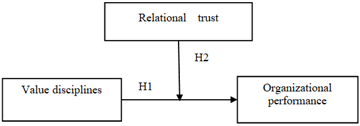
Based on the assumptions derived from the above literature, the research framework is shown in Figure 1.
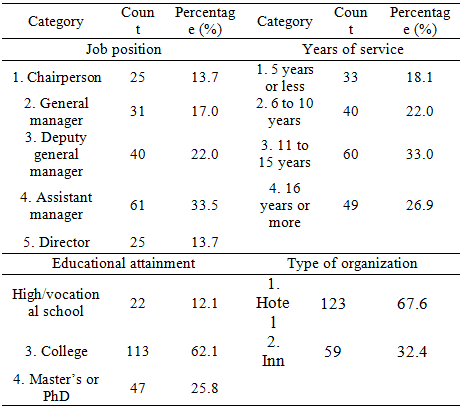
Purposive sampling was conducted through new media platform (i.e., LINE, Facebook, Instagram) groups related to professionals in the hotel and accommodation sector of Taiwan. Data collection was conducted by distributing electronic questionnaires to individuals serving as either chairperson, general manager, deputy general manager, assistant manager, and director. A total of 182 valid responses were collected and analyzed. Results of descriptive statistics are presented in Table 1. Regarding job positions, the majority of participants (61) were assistant managers, accounting for 33.5%, followed by deputy general managers, with 40 individuals and representing 22%. In terms of years of service, the largest group had between 11 and 15 years of experience (60 individuals, 33%), followed by those with 16 years or more. Concerning educational attainment, most participants held a college-level degree (113 individuals, 62.1%), followed by those possessing a graduate-level degree (47 individuals, 25.8%). With respect to the type of organization, the majority of participants were employed in hotels (including star-rated and tourist hotels), comprising 123 individuals (67.6%), followed by those working in inns (including business hotels and motel-type establishments), totaling 59 individuals (32.4%).
The questionnaire design of this study consists of the independent variable—value disciplines (operational excellence, product leadership, and customer intimacy), the moderator—relational trust, and the dependent variable—organizational performance. The operational definitions of personal background variables, questionnaire design, and measurement methods are presented as follows:
(1) Value disciplines
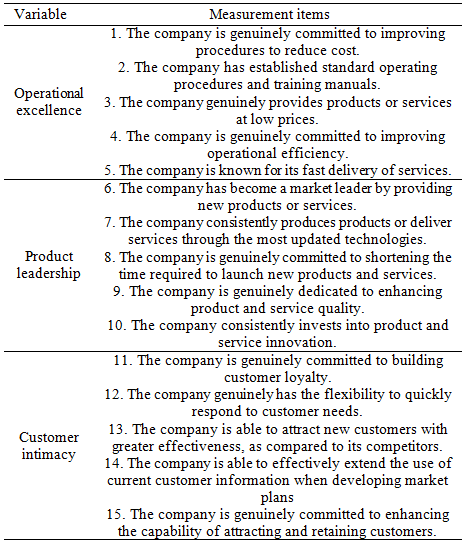
From the perspective of value disciplines, this study explored operational excellence, customer intimacy, and product leadership 7, 21. A total of 15 measurement items (Table 2) were devised and evaluated using a five-point Likert scale. First, regarding the dimension of operational excellence, the results of the exploratory factor analysis indicated that the sampling adequacy of the scale was satisfactory, with a KMO value of 0.854 and a Bartlett’s test of sphericity value of 432.716. Using principal component analysis with Varimax rotation, the extracted common factors accounted for a cumulative variance of 65.91%, and the internal consistency reliability (Cronbach’s α) was 0.869. Second, regarding the dimension of product leadership, the results of the exploratory factor analysis indicated that the sampling adequacy of the scale was satisfactory, with a KMO value of 0.837 and a Bartlett’s test of sphericity value of 437.418. Using principal component analysis with Varimax rotation, the extracted common factors accounted for a cumulative variance of 66.27%, and the internal consistency reliability (Cronbach’s α) was 0.871. Third, regarding customer intimacy, the results of the exploratory factor analysis indicated that the sampling adequacy of the scale was satisfactory, with a KMO value of 0.873 and a Bartlett’s test of sphericity value of 450.859. Using principal component analysis with Varimax rotation, the extracted common factors accounted for a cumulative variance of 68.13%, and the internal consistency reliability (Cronbach’s α) was 0.880.
(2) Organizational performance
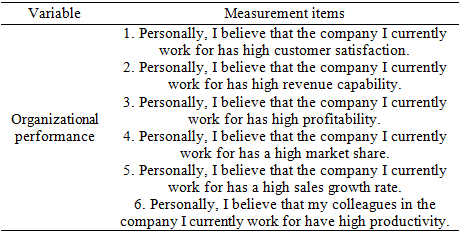
In terms of measuring organizational performance, 43 suggested that the evaluation of organizational performance primarily involves assessing customer satisfaction with company services, revenue growth rate, profitability, and market share. 44 argued that organizational performance reflects a firm’s performance in the trading market and overall operations, and that it is a cognitive-level measurement indicator. As presented in Table 3, this study measured organizational performance based on the following dimensions: (1) customer satisfaction, (2) revenue capability, (3) profitability, (4) market share, (5) sales growth rate, and (6) productivity 43, 44. All items were measured using a five-point Likert scale. The results of the exploratory factor analysis indicated that the sampling adequacy of the scale was satisfactory, with a KMO value of 0.874 and a Bartlett’s test of sphericity value of 572.026. Using principal component analysis with Varimax rotation, the extracted common factors accounted for a cumulative variance of 65.06%, and the internal consistency reliability (Cronbach’s α) was 0.891.
(3) Relational trust
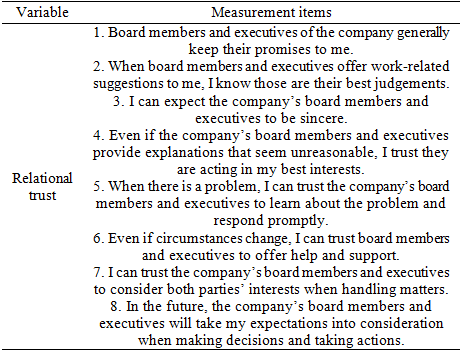
Relational trust refers to one party’s perception that the other party has both the ability and willingness to act while taking into account the interests of both parties 45. In this study, the measurement of relational trust was adapted from the scale developed by 46. A total of eight items (see Table 4) were involved and measured using a five-point Likert scale. The results of the exploratory factor analysis indicated that the sampling adequacy of the scale was satisfactory, with a KMO value of 0.934 and a Bartlett’s test of sphericity value of 980.157. Using principal component analysis with Varimax rotation, the extracted common factors accounted for a cumulative variance of 67.23%, and the internal consistency reliability (Cronbach’s α) was 0.930.
The personal background section of the questionnaire included information about job positions, years of service, educational attainment, and age.
3.4. Data Analysis MethodsThis study categorized the participants’ workplaces into two groups— (1) hotels and (2) inns—for comparative group regression analysis. Hierarchical regression analysis was employed to examine the moderating effect of relational trust on the relationship between value disciplines and organizational performance across these groups. The primary purpose of applying hierarchical regression analysis was to explain the overall predictive power of multiple independent variables on the dependent variable and to identify the linear combination of predictors that accounts for the relationship between the set of predictor variables and the criterion variable. Furthermore, the Enter method was adopted to select the most parsimonious regression model from all possible alternatives. The influence of each predictor on the criterion variable was determined based on the absolute value of the standardized regression coefficient (β).
To determine whether hierarchical regression analysis was suitable to examine the linear relationships among variables, the significance of the F-test of the regression model and the observed β coefficients were primarily applied. The proportion of the total variance explained by the model, represented by the coefficient of determination (R²), indicated the model’s goodness of fit, with a higher value suggesting a better fit. However, multicollinearity could arise in regression analysis, leading to a situation in which the overall F-test of the model may be significant, but the individual t-tests of individual predictors’ net regression coefficients are not significant. Therefore, it was necessary to assess potential multicollinearity using the Variance Inflation Factor (VIF) test 47. Severe multicollinearity is indicated when the VIF exceeds 10 48, 49.
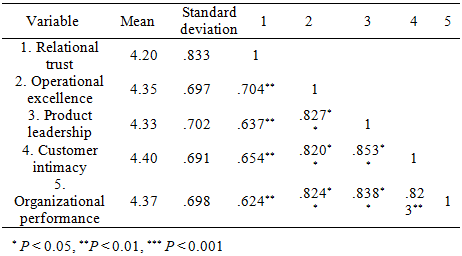
The correlation coefficients (r = 0.704**, r = 0.637**, r = 0.654**, r = 0.624**) among the moderator, independent variables (operational excellence, product leadership, and customer intimacy, all of which are value disciplines), and dependent variable (organizational performance) all exhibited statistical significance. The mean value, standard deviation, and correlation coefficient of each variable are presented in Table 5.
(1) Effects of value disciplines on organizational performance
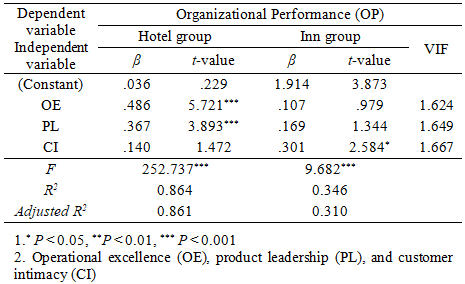
Analysis of the effects of the independent variables—operational excellence (OE), product leadership (PL), and customer intimacy (CI)—on organizational performance (OP) is presented in Table 6. First, for the hotel group, the model exhibited strong explanatory power, with OE, PL, and CI exerting significant effects on OP (R2 = 0.864, F = 252.737***); for the inn group, in Model 1, OE, PL, and CI demonstrated significant effects on OP (R2 = 0.346, F = 9.682***). The VIF values were smaller than 10, suggesting good model explanatory power. In addition, regarding the respective effects of OE, PL, and CI on OP, for the hotel group, both OE and PL (β = .486, t = 5.721***; β = .367, t = 3.893***) demonstrated significant effects on OP. For the inn group, only CI (β = .301, t = 2.584*) had significant effects on OP.
(2) Effects of the interaction between relational trust and value disciplines on organizational performance
a. Effects of the interaction between relational trust and operational excellence on organizational performance
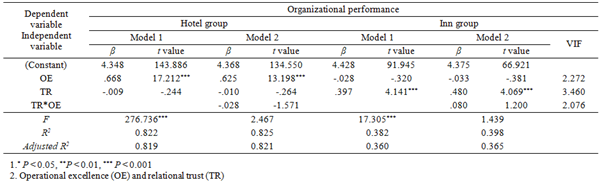
Table 7 presents the effects of the interaction between the moderator (i.e., relational trust) and operational excellence on organizational performance. First, for the hotel group, Model 1 exhibited a strong explanatory power, with operational excellence and relational trust significantly influencing organizational performance (R2 = 0.822, F = 276.736***). Model 2 incorporated the interaction term between relational trust and operational excellence, resulting in an R2 of 0.825 (F = 2.467). For the inn group, in Model 1, operational excellence and relational trust significantly influenced organizational performance (R2= 0.382, F = 17.305***). Model 2 incorporated the interaction term between relational trust and operational excellence, yielding an R2 of 0.398 (F = 1.439). All VIF values were smaller than 10, suggesting good model explanatory power.
According to regression analysis of moderating effects, for the hotel group, while operational excellence (β = .668, t = 17.212***) demonstrated a significant influence on organizational performance in Model 1, the effect of relational trust (β = -.009, t = -0.224) on organizational performance was not significant. In Model 2, the interaction term between relational trust and operational excellence (β = -.028, t = -1.571) also exhibited no significant influence on organizational performance. For the inn group, while operational excellence (β = -.028, t = 0.302) did not have a significant influence on organizational performance, relational trust (β = .397, t = 4.141***) demonstrated a significant effect on organizational performance. Additionally, in Model 2, the interaction term between relational trust and operational excellence (β = .080, t = 1.200) also exhibited no significant moderating effects on organizational performance.
b. Effects of the interaction between relational trust and product leadership on organizational performance
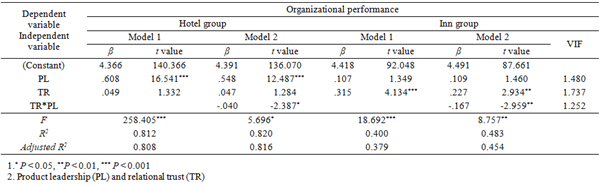
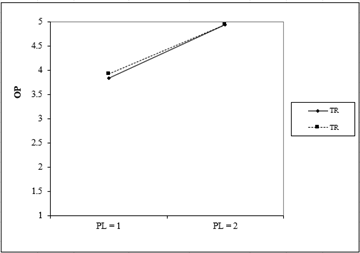
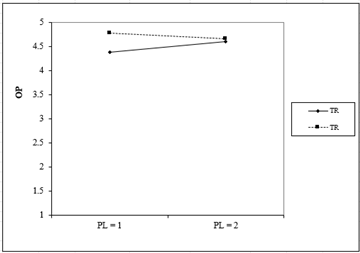
Table 8 presents the effects of the interaction between relational trust and product leadership on organizational performance. First, for the hotel group, Model 1 exhibited a strong explanatory power, with product leadership and relational trust significantly influencing organizational performance (R2 = 0.812, F = 285.405***). Model 2 incorporated the interaction term between relational trust and product leadership, resulting in an R2 of 0.820 (F = 5.696*). For the inn group, in Model 1, product leadership and relational trust significantly influencing organizational performance (R2= 0.400, F = 18.692***). Model 2 incorporated the interaction term between relational trust and product leadership, yielding an R2 of 0.483 (F = 8.757**). All VIF values were smaller than 10, suggesting good model explanatory power.
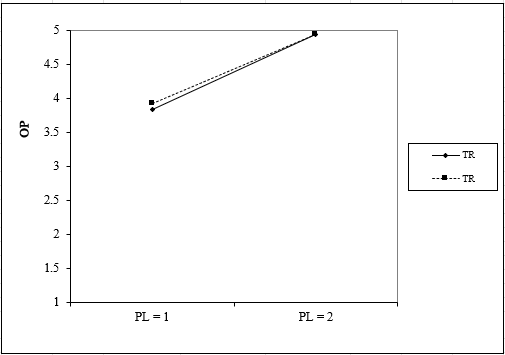
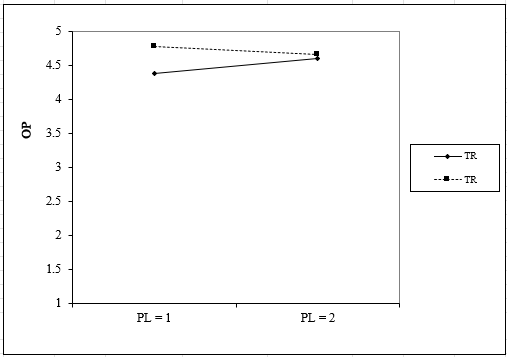
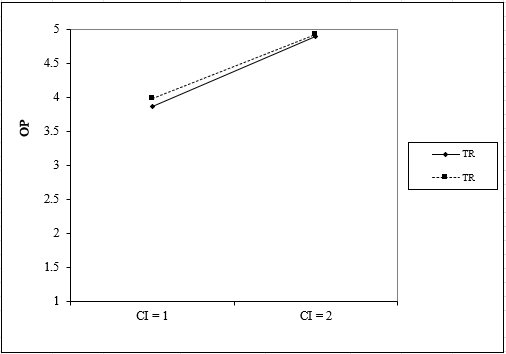
According to regression analysis of moderating effects, for the hotel group, while product leadership (β = .608, t = 16.541***) demonstrated a significant influence on organizational performance in Model 1, the effect of relational trust (β = .049, t = 1.332) on organizational performance was not significant. In Model 2, the interaction term between relational trust and product leadership (β = -.040, t = -2.387*) exhibited a significant moderating effect on organizational performance. For the inn group, while product leadership (β = .107, t = 1.349) did not have a significant influence on organizational performance, relational trust (β = .315, t = 4.134***) demonstrated a significant effect on organizational performance. Additionally, in Model 2, the interaction term between relational trust and product leadership (β = -.167, t = -2.959**) exhibited significant moderating effects on organizational performance. The moderating effects are presented in Figure 2 and Figure 3.
c. Effects of the interaction between relational trust and customer intimacy on organizational performance
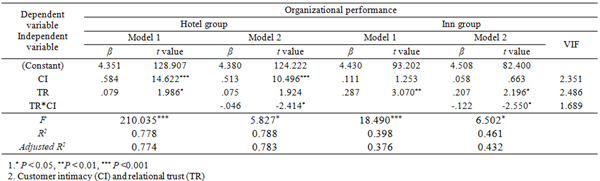
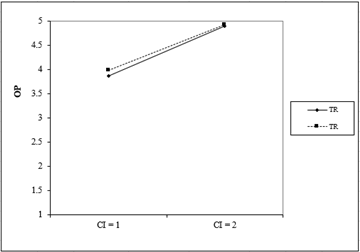
Table 9 presents the effects of the interaction between relational trust and customer intimacy on organizational performance. First, for the hotel group, Model 1 exhibited a strong explanatory power, with customer intimacy and relational trust significantly influencing organizational performance (R2 = 0.778, F = 210.035***). Model 2 incorporated the interaction term between relational trust and customer intimacy, resulting in an R2 of 0.788 (F = 5.827*). For the inn group, in Model 1, customer intimacy and relational trust significantly influencing organizational performance (R2= 0.398, F = 18.490***). Model 2 incorporated the interaction term between relational trust and customer intimacy, yielding an R2 of 0.461 (F = 6.502*). All VIF values were smaller than 10, suggesting good model explanatory power.
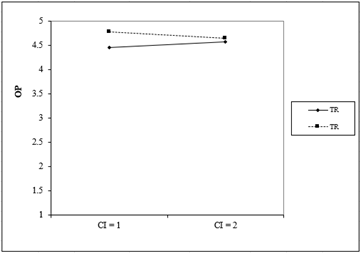
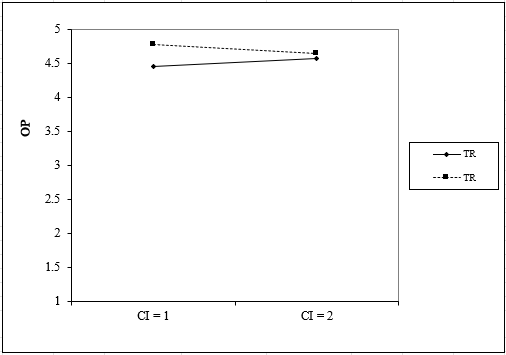
According to regression analysis of moderating effects, for the hotel group, both customer intimacy (β = .584, t = 14.622***) and relational trust (β = .079, t = 1.986*) demonstrated a significant influence on organizational performance in Model 1. In Model 2, the interaction term between relational trust and customer intimacy (β = -.046, t = -2.414*) exhibited a significant moderating effect on organizational performance. For the inn group, while customer intimacy (β = .111, t = 1.253) did not have a significant influence on organizational performance, relational trust (β = .287, t = 3.070***) demonstrated a significant effect on organizational performance. Additionally, in Model 2, the interaction term between relational trust and customer intimacy (β = -.122, t = -2.550*) exhibited significant moderating effects on organizational performance. The moderating effects are presented in Figure 4 and Figure 5.
This study conducted a questionnaire survey on executives in the labor-intensive hotel and accommodation sector. The results showed that, in the hotel group, operational excellence and product leadership exhibited significant positive influence on organizational performance, whereas in the inn group, customer intimacy demonstrated significant positive influence on organizational performance. These findings are partially consistent with the results reported by 22 and 21, suggesting that, although both hotels and inns fall within the accommodation sector, differences are present in their value disciplines and hence their organizational performance.
Regarding the moderating effects of relational trust, the findings of this study are as follows: (1) According to analysis of the effects of the respective interaction between relational trust and operational excellence, product leadership, and customer intimacy on organizational performance, the interaction between relational trust and operational excellence does not significantly influence organizational performance in both the hotel and inn groups. (2) Analysis of the effects of the interaction between relational trust and product leadership reveals that such interaction has significant moderating effects in both the hotel and inn groups. (3) Similarly, the interaction between relational trust and customer intimacy also demonstrates significant moderating effects in both the hotel and inn groups. These findings support the research hypothesis that the interaction between relational trust and value disciplines (product leadership and customer intimacy) has an influence on organizational performance.
5.2. Practical Implications for ManagementFor hotels and inns whose primary operations center on accommodation services, different operational models embody distinct value disciplines. First, for the hotel group, company executives become aware that, increasing levels of negative relational trust may lead to aggravated negative perceptions of value disciplines (product leadership and customer intimacy), ultimately leading to decreased organizational performance. In addition, for the inn group, the interaction between relational trust and value disciplines (product leadership and customer intimacy) on organizational performance is mitigated. The results suggest that, the division of labor regarding operational goals and organizational structures may lead to varied levels of relational trust among executives, shareholders, and certain department managers. This indicates that organizations should devote their managerial efforts to enhancing relational trust, as it plays a decisive role in shaping competitive advantage and improving organizational performance.
5.3. Recommendations for Future ResearchThe research of value disciplines and organizational performance has been applied in various industrial studies. This empirical study focused on hotel and inn executives and confirmed that the interaction between relational trust and value disciplines has an influence on organizational performance. The implicit relational trust harbored within the minds of executives, often not easily observable, reflects the concealed nature of interpersonal relationships in Chinese societies. This phenomenon may further be examined through social exchange theory, psychological contract theory, transaction cost theory, or equity theory.
| [1] | Shaik, M. N., & Abdul-Kader, W., Comprehensive performance measurement and causal-effect decision making model for reverse logistics enterprise. Computers & Industrial Engineering, (68), 87-103, 2014. | ||
| In article | View Article | ||
| [2] | Ma, Sheree., Extension of Internal Control—Risk Management: Clarifying the Conceptual Framework and Creating Corporate Value, Accounting Research Monthly, (238), 30-47, 2005. | ||
| In article | |||
| [3] | Mojambo, G. A., Tulung, J. E., & Saerang, R. T., The Influence of Top Management Team (TMT) Characteristics Toward Indonesian Banks Financial Performance During the Digital Era (2014-2018). JMBI UNSRAT (Jurnal Ilmiah Manajemen Bisnis dan Inovasi Universitas Sam Ratulangi)., 7(1), 1-20, 2020. | ||
| In article | View Article | ||
| [4] | Nielsen, S., Top management team diversity: A review of theories and methodologies. International Journal of Management Reviews, 12(3), 301-316, 2010. | ||
| In article | View Article | ||
| [5] | Cohen, J., Statistical power analysis (2nd ed.). 1988, Hillsdale NJ: Erlbaum. | ||
| In article | |||
| [6] | Palmer, J. W., & Markus, M. L., The performance impacts of quick response and strategic alignment in specialty retailing. Information systems research, 11(3), 241-259, 2000. | ||
| In article | View Article | ||
| [7] | Tallon, P. P., Inside the adaptive enterprise: an information technology capabilities perspective on business process agility. Information technology and management, 9(1), 21-36, 2008. | ||
| In article | View Article | ||
| [8] | Weill, P., & Ross, J. W., IT governance: How top performers manage IT decision rights for superior results. 2004, Harvard Business Press. | ||
| In article | |||
| [9] | Treacy, M., & Wiersema, F., Customer intimacy and other value disciplines. Harvard business review, 71(1), 84-93, 1993. | ||
| In article | |||
| [10] | Dromereschi, M., Organizational trust or beyond appearances. Studies and Scientific Researches. Economics Edition, (15), 351-359, 2010. | ||
| In article | View Article | ||
| [11] | López, A. G., & Cuervo-Arango, M. A., Relationship among values, beliefs, norms and ecological behaviour. Psicothema, 20(4), 623-629, 2008. | ||
| In article | |||
| [12] | Murshed, A. A., Al-Tarawneh, A., & Al-Badawi, M., How Social Norms, Values, and Beliefs Shape Economic Development. In Intelligence-Driven Circular Economy: Regeneration Towards Sustainability and Social Responsibility–Volume 1 (pp. 501-514), 2025. Cham: Springer Nature Switzerland. | ||
| In article | View Article | ||
| [13] | French, J.E., Value disciplines in community bank management. BankersMagazine, January-February, 1995, 44 -48. | ||
| In article | |||
| [14] | Gubman, E. L., Aligning people strategies with customer value. Compensation & Benefits Review, January-February, 15-22, 1995. | ||
| In article | View Article | ||
| [15] | Wiersema, F., Customer intimacy, 1996, London: HarperCollins. | ||
| In article | |||
| [16] | Zemke,R., Creating customer value. Training, 30 (9),45-54, 1993. | ||
| In article | |||
| [17] | Cousins, P. D.,The alignment of appropriate firm and supply strategies for competitive advantage. International Journal of Operations & production management, 25(5), 403-428, 2005. | ||
| In article | View Article | ||
| [18] | Fahy, J., Farrelly, F., & Quester, P., Competitive advantage through sponsorship: A conceptual model and research propositions. European journal of Marketing, 38(8), 1013-1030, 2004. | ||
| In article | View Article | ||
| [19] | Liao, S. H., & Hu, T. C., Knowledge transfer and competitive advantage on environmental uncertainty: An empirical study of the Taiwan semiconductor industry. Technovation, 27(6-7), 402-411, 2007. | ||
| In article | View Article | ||
| [20] | Zacharias, N. A., Nijssen, E. J., & Stock, R. M., Effective configurations of value creation and capture capabilities: Extending Treacy and Wiersema's value disciplines. Journal of Business Research, 69(10), 4121-4131, 2016. | ||
| In article | View Article | ||
| [21] | Odhiambo, H. J., & Anyieni, A., Value Disciplines and Competitive Advantage of Commercial Banks in Kenya. Edith Cowan Journal of Strategic Management, 6(1), 24-47, 2023. | ||
| In article | View Article | ||
| [22] | Bharadwaj, D., Farooq, A., & Jena, B. N., Value Discipline Dimensions on Organisational Performance and Competitive Advantage: A Study on Pharmaceutical Companies in Diabetes Care. International Journal of Marketing Studies, 9(3), 88-102, 2017. | ||
| In article | View Article | ||
| [23] | Barber, B., The Logic and Limits of Trust, 1983, New Brunswick, NJ: Rutgers University Press. | ||
| In article | |||
| [24] | Mayer, R. C. & Davis, J. H., An Integration Model of Organizational Trust, Academy of Management Review, 20(3), 709-735, 1995. | ||
| In article | View Article | ||
| [25] | Pearce, J. L., Branyiczki, I., & Bigley, G. A., Insufficient Bureaucracy: Trust and Commitment in Particularistic Organizations, Organization Science, 11(2), 148-162, 2000. | ||
| In article | View Article | ||
| [26] | Chang, Yu-Ling., & Huang, Wei-Quan., The Study of the Effect of Market Orientation on Corporate Performance: The Causal Dual Mediating Effects of Institutional-Based Trust and Knowledge Integration, Journal of Management & Systems, 21(2), 245-275, 2014. | ||
| In article | |||
| [27] | Jacobs, B. J., A preliminary model of particularistic ties in China political alliances: Kan-ching and kuan-his in a rural Taiwanese township. China Quarterly, (78), 237-273, 1979. | ||
| In article | View Article | ||
| [28] | Powell, W.W., Neither market nor hierarchy: Network forms of organization. Research in Organizational Behavior, (12), 295-336, 1990. | ||
| In article | |||
| [29] | Pye, L.,Chinese commercial negotiating style. 1982, Cambridge, MA, Oelgeschlage, Gunnand Hain Inc. | ||
| In article | |||
| [30] | Fan, Y., Questioning guanxi: definition, classification and implications, International Business Review, (11), 543-561, 2002. | ||
| In article | View Article | ||
| [31] | Fock, H., & Woo, K., The China market: Strategic implications of guanxi. Business Strategy Review, 7(4), 33-44, 1998. | ||
| In article | View Article | ||
| [32] | Huang, Kuang-Kuo.,Power Game of Chinese People, 1988, Taipei: CHULIU BOOK CO., LTD. | ||
| In article | |||
| [33] | Búrca, S., Fynes, B. & Roche, E., Evaluating relationship quality in a business-to-business context. Irish Journal of Management, 25(2), 61-75, 2004. | ||
| In article | |||
| [34] | Moorman, C., Deshpande, R., & Zaltman, G., Factors affecting trust in market research relationship. Journal of Marketing, 57(1), 81-101, 1993. | ||
| In article | View Article | ||
| [35] | Chua, J. H., Chrisman, J. J., & Sharma, P., Succession and nonsuccession concerns of family firms and agency relationship with nonfamily managers. Family business review, 16(2), 89-107, 2003. | ||
| In article | View Article | ||
| [36] | Lee, Hui-Hsin., Chan, Shu-Ting., & Su, I-Fang., The Agency Implication of a Professional Manager's Position: An Empirical Study of Family Businesses in Taiwan's Electronic Industry. NTU Management Review, 25(1), 259-285, 2014. | ||
| In article | |||
| [37] | Fama, E. F., & Jensen, M. C., Separation of ownership and control. The journal of law and Economics, 26(2), 301-325, 1983. | ||
| In article | View Article | ||
| [38] | Syakhroza, A., Diyanty, V., & Dewo, S. A., Top management team (TMT) age diversity and firm performance: the moderating role of the effectiveness of TMT meetings. Team Performance Management: An International Journal, 27(5/6), 486-503, 2021. | ||
| In article | View Article | ||
| [39] | Daily, C. M., Dalton, D. R., & Rajagopalan, N., Governance through ownership: Centuries of practice, decades of research. Academy of Management journal, 46(2), 151-158, 2003. | ||
| In article | View Article | ||
| [40] | Luo, J. D., & Yeh, Y. C., Neither collectivism nor individualism: Trust in the Chinese guanxi circle. Journal of Trust Research, 2(1), 53-70, 2012. | ||
| In article | View Article | ||
| [41] | Singh, S. K., Gupta, S., Busso, D., & Kamboj, S., Top management knowledge value, knowledge sharing practices, open innovation and organizational performance. Journal of business research, 128, 788-798, 2021. | ||
| In article | View Article | ||
| [42] | Sutarti, Syakhroza, A., Diyanty, V., & Dewo, S. A., Top management team (TMT) age diversity and firm performance: the moderating role of the effectiveness of TMT meetings. Team Performance Management: An International Journal, 27(5-6), 486-503, 2021. | ||
| In article | View Article | ||
| [43] | Huang, Jia-Chi., Human Capital Investment System, Innovation Strategy and Organizational Performance: A Test of Alternative Forms of Fit, Management Review, 22(1), 99-126, 2003. | ||
| In article | |||
| [44] | Uen, Jin-Feng., Wang, Bin-Jinn., & Chen, Wen-Fang., Internal Service Quality Factors of Human Resource Department and their Relationships with Organizational Performance: Top and Middle Managers' Viewpoints, Journal of Human Resource Management, 5(2), 39-66, 2005. | ||
| In article | |||
| [45] | Selnes, F. & Sallis, J., Promoting Relationship Learning. Journal of Marketing, 67: 80–95, 2003. | ||
| In article | View Article | ||
| [46] | Wu, Chih-Ming., Chu, Su-Yueh., & Fang, Wen-Chang., The Study of Trust and Commitment Influence Factors in Supply Chain Relationships-Transaction Cost and Social Exchange Theories Perspectives, Journal of Information Management, 13(S), 91-118, 2006. | ||
| In article | |||
| [47] | Wen, Fur-Hsing., Five Important Concepts of Using Regression Analysis in Social Science Studies. Journal of Management, 30(2), 169-190, 2013. | ||
| In article | |||
| [48] | Li, Mao-Neng., Variable Mean-Centering and Multicollinearity. Journal of Research on Measurement and Statistics, 25-52, 2012. | ||
| In article | |||
| [49] | Chiou, Haw-Jeng., The Impact of Multicollinearity on the Evaluations of Regressors: Comparisons of Effect Size Index, Dominance Analysis and Relative Weight Analysis in Multiple Regression, NTU Management Review, 27(3), 65-108, 2017. | ||
| In article | |||
Published with license by Science and Education Publishing, Copyright © 2025 Kao Jen-Shou, Liu Chun-Chu, Chen Po-Jen and Kan Tang-Chung
 This work is licensed under a Creative Commons Attribution 4.0 International License. To view a copy of this license, visit
http://creativecommons.org/licenses/by/4.0/
This work is licensed under a Creative Commons Attribution 4.0 International License. To view a copy of this license, visit
http://creativecommons.org/licenses/by/4.0/
| [1] | Shaik, M. N., & Abdul-Kader, W., Comprehensive performance measurement and causal-effect decision making model for reverse logistics enterprise. Computers & Industrial Engineering, (68), 87-103, 2014. | ||
| In article | View Article | ||
| [2] | Ma, Sheree., Extension of Internal Control—Risk Management: Clarifying the Conceptual Framework and Creating Corporate Value, Accounting Research Monthly, (238), 30-47, 2005. | ||
| In article | |||
| [3] | Mojambo, G. A., Tulung, J. E., & Saerang, R. T., The Influence of Top Management Team (TMT) Characteristics Toward Indonesian Banks Financial Performance During the Digital Era (2014-2018). JMBI UNSRAT (Jurnal Ilmiah Manajemen Bisnis dan Inovasi Universitas Sam Ratulangi)., 7(1), 1-20, 2020. | ||
| In article | View Article | ||
| [4] | Nielsen, S., Top management team diversity: A review of theories and methodologies. International Journal of Management Reviews, 12(3), 301-316, 2010. | ||
| In article | View Article | ||
| [5] | Cohen, J., Statistical power analysis (2nd ed.). 1988, Hillsdale NJ: Erlbaum. | ||
| In article | |||
| [6] | Palmer, J. W., & Markus, M. L., The performance impacts of quick response and strategic alignment in specialty retailing. Information systems research, 11(3), 241-259, 2000. | ||
| In article | View Article | ||
| [7] | Tallon, P. P., Inside the adaptive enterprise: an information technology capabilities perspective on business process agility. Information technology and management, 9(1), 21-36, 2008. | ||
| In article | View Article | ||
| [8] | Weill, P., & Ross, J. W., IT governance: How top performers manage IT decision rights for superior results. 2004, Harvard Business Press. | ||
| In article | |||
| [9] | Treacy, M., & Wiersema, F., Customer intimacy and other value disciplines. Harvard business review, 71(1), 84-93, 1993. | ||
| In article | |||
| [10] | Dromereschi, M., Organizational trust or beyond appearances. Studies and Scientific Researches. Economics Edition, (15), 351-359, 2010. | ||
| In article | View Article | ||
| [11] | López, A. G., & Cuervo-Arango, M. A., Relationship among values, beliefs, norms and ecological behaviour. Psicothema, 20(4), 623-629, 2008. | ||
| In article | |||
| [12] | Murshed, A. A., Al-Tarawneh, A., & Al-Badawi, M., How Social Norms, Values, and Beliefs Shape Economic Development. In Intelligence-Driven Circular Economy: Regeneration Towards Sustainability and Social Responsibility–Volume 1 (pp. 501-514), 2025. Cham: Springer Nature Switzerland. | ||
| In article | View Article | ||
| [13] | French, J.E., Value disciplines in community bank management. BankersMagazine, January-February, 1995, 44 -48. | ||
| In article | |||
| [14] | Gubman, E. L., Aligning people strategies with customer value. Compensation & Benefits Review, January-February, 15-22, 1995. | ||
| In article | View Article | ||
| [15] | Wiersema, F., Customer intimacy, 1996, London: HarperCollins. | ||
| In article | |||
| [16] | Zemke,R., Creating customer value. Training, 30 (9),45-54, 1993. | ||
| In article | |||
| [17] | Cousins, P. D.,The alignment of appropriate firm and supply strategies for competitive advantage. International Journal of Operations & production management, 25(5), 403-428, 2005. | ||
| In article | View Article | ||
| [18] | Fahy, J., Farrelly, F., & Quester, P., Competitive advantage through sponsorship: A conceptual model and research propositions. European journal of Marketing, 38(8), 1013-1030, 2004. | ||
| In article | View Article | ||
| [19] | Liao, S. H., & Hu, T. C., Knowledge transfer and competitive advantage on environmental uncertainty: An empirical study of the Taiwan semiconductor industry. Technovation, 27(6-7), 402-411, 2007. | ||
| In article | View Article | ||
| [20] | Zacharias, N. A., Nijssen, E. J., & Stock, R. M., Effective configurations of value creation and capture capabilities: Extending Treacy and Wiersema's value disciplines. Journal of Business Research, 69(10), 4121-4131, 2016. | ||
| In article | View Article | ||
| [21] | Odhiambo, H. J., & Anyieni, A., Value Disciplines and Competitive Advantage of Commercial Banks in Kenya. Edith Cowan Journal of Strategic Management, 6(1), 24-47, 2023. | ||
| In article | View Article | ||
| [22] | Bharadwaj, D., Farooq, A., & Jena, B. N., Value Discipline Dimensions on Organisational Performance and Competitive Advantage: A Study on Pharmaceutical Companies in Diabetes Care. International Journal of Marketing Studies, 9(3), 88-102, 2017. | ||
| In article | View Article | ||
| [23] | Barber, B., The Logic and Limits of Trust, 1983, New Brunswick, NJ: Rutgers University Press. | ||
| In article | |||
| [24] | Mayer, R. C. & Davis, J. H., An Integration Model of Organizational Trust, Academy of Management Review, 20(3), 709-735, 1995. | ||
| In article | View Article | ||
| [25] | Pearce, J. L., Branyiczki, I., & Bigley, G. A., Insufficient Bureaucracy: Trust and Commitment in Particularistic Organizations, Organization Science, 11(2), 148-162, 2000. | ||
| In article | View Article | ||
| [26] | Chang, Yu-Ling., & Huang, Wei-Quan., The Study of the Effect of Market Orientation on Corporate Performance: The Causal Dual Mediating Effects of Institutional-Based Trust and Knowledge Integration, Journal of Management & Systems, 21(2), 245-275, 2014. | ||
| In article | |||
| [27] | Jacobs, B. J., A preliminary model of particularistic ties in China political alliances: Kan-ching and kuan-his in a rural Taiwanese township. China Quarterly, (78), 237-273, 1979. | ||
| In article | View Article | ||
| [28] | Powell, W.W., Neither market nor hierarchy: Network forms of organization. Research in Organizational Behavior, (12), 295-336, 1990. | ||
| In article | |||
| [29] | Pye, L.,Chinese commercial negotiating style. 1982, Cambridge, MA, Oelgeschlage, Gunnand Hain Inc. | ||
| In article | |||
| [30] | Fan, Y., Questioning guanxi: definition, classification and implications, International Business Review, (11), 543-561, 2002. | ||
| In article | View Article | ||
| [31] | Fock, H., & Woo, K., The China market: Strategic implications of guanxi. Business Strategy Review, 7(4), 33-44, 1998. | ||
| In article | View Article | ||
| [32] | Huang, Kuang-Kuo.,Power Game of Chinese People, 1988, Taipei: CHULIU BOOK CO., LTD. | ||
| In article | |||
| [33] | Búrca, S., Fynes, B. & Roche, E., Evaluating relationship quality in a business-to-business context. Irish Journal of Management, 25(2), 61-75, 2004. | ||
| In article | |||
| [34] | Moorman, C., Deshpande, R., & Zaltman, G., Factors affecting trust in market research relationship. Journal of Marketing, 57(1), 81-101, 1993. | ||
| In article | View Article | ||
| [35] | Chua, J. H., Chrisman, J. J., & Sharma, P., Succession and nonsuccession concerns of family firms and agency relationship with nonfamily managers. Family business review, 16(2), 89-107, 2003. | ||
| In article | View Article | ||
| [36] | Lee, Hui-Hsin., Chan, Shu-Ting., & Su, I-Fang., The Agency Implication of a Professional Manager's Position: An Empirical Study of Family Businesses in Taiwan's Electronic Industry. NTU Management Review, 25(1), 259-285, 2014. | ||
| In article | |||
| [37] | Fama, E. F., & Jensen, M. C., Separation of ownership and control. The journal of law and Economics, 26(2), 301-325, 1983. | ||
| In article | View Article | ||
| [38] | Syakhroza, A., Diyanty, V., & Dewo, S. A., Top management team (TMT) age diversity and firm performance: the moderating role of the effectiveness of TMT meetings. Team Performance Management: An International Journal, 27(5/6), 486-503, 2021. | ||
| In article | View Article | ||
| [39] | Daily, C. M., Dalton, D. R., & Rajagopalan, N., Governance through ownership: Centuries of practice, decades of research. Academy of Management journal, 46(2), 151-158, 2003. | ||
| In article | View Article | ||
| [40] | Luo, J. D., & Yeh, Y. C., Neither collectivism nor individualism: Trust in the Chinese guanxi circle. Journal of Trust Research, 2(1), 53-70, 2012. | ||
| In article | View Article | ||
| [41] | Singh, S. K., Gupta, S., Busso, D., & Kamboj, S., Top management knowledge value, knowledge sharing practices, open innovation and organizational performance. Journal of business research, 128, 788-798, 2021. | ||
| In article | View Article | ||
| [42] | Sutarti, Syakhroza, A., Diyanty, V., & Dewo, S. A., Top management team (TMT) age diversity and firm performance: the moderating role of the effectiveness of TMT meetings. Team Performance Management: An International Journal, 27(5-6), 486-503, 2021. | ||
| In article | View Article | ||
| [43] | Huang, Jia-Chi., Human Capital Investment System, Innovation Strategy and Organizational Performance: A Test of Alternative Forms of Fit, Management Review, 22(1), 99-126, 2003. | ||
| In article | |||
| [44] | Uen, Jin-Feng., Wang, Bin-Jinn., & Chen, Wen-Fang., Internal Service Quality Factors of Human Resource Department and their Relationships with Organizational Performance: Top and Middle Managers' Viewpoints, Journal of Human Resource Management, 5(2), 39-66, 2005. | ||
| In article | |||
| [45] | Selnes, F. & Sallis, J., Promoting Relationship Learning. Journal of Marketing, 67: 80–95, 2003. | ||
| In article | View Article | ||
| [46] | Wu, Chih-Ming., Chu, Su-Yueh., & Fang, Wen-Chang., The Study of Trust and Commitment Influence Factors in Supply Chain Relationships-Transaction Cost and Social Exchange Theories Perspectives, Journal of Information Management, 13(S), 91-118, 2006. | ||
| In article | |||
| [47] | Wen, Fur-Hsing., Five Important Concepts of Using Regression Analysis in Social Science Studies. Journal of Management, 30(2), 169-190, 2013. | ||
| In article | |||
| [48] | Li, Mao-Neng., Variable Mean-Centering and Multicollinearity. Journal of Research on Measurement and Statistics, 25-52, 2012. | ||
| In article | |||
| [49] | Chiou, Haw-Jeng., The Impact of Multicollinearity on the Evaluations of Regressors: Comparisons of Effect Size Index, Dominance Analysis and Relative Weight Analysis in Multiple Regression, NTU Management Review, 27(3), 65-108, 2017. | ||
| In article | |||