Veterinarians occupy a central position in implementing the One Health framework, which emphasizes the interdependence of human, animal, and environmental health. Since over 60% of infectious diseases affecting humans and more than 75% of newly identified or re-emerging infections originate from animals, veterinarians are uniquely positioned to prevent, detect, and address health risks at the intersection of these domains. Their roles encompass more than just clinical services; they also include monitoring zoonotic diseases, ensuring food safety, fighting antimicrobial resistance, managing ecosystem health, and shaping public health policies. By collaborating with experts in fields such as medicine, environmental science, and public health, veterinarians contribute crucial knowledge in areas including epidemiology, diagnostics, biosecurity, and risk assessment. This review gathers contemporary insights into the diverse roles veterinarians fulfil within the One Health framework and highlights their significant contributions to global health security. Enhancing veterinary education, capacity, and involvement in policy-making is vital for the successful execution of One Health and for addressing pressing concerns such as emerging zoonotic diseases, antimicrobial resistance, food insecurity, and health issues tied to climate change.
According to the Centers for Disease Control and Prevention (CDC), a collaborative, multisectoral, and transdisciplinary approach is essential to achieve optimal health outcomes by recognizing the interconnectedness of humans, animals, plants, and their shared environment. This framework emphasizes coordinated actions at local, regional, national, and global levels to prevent, detect, and control infectious diseases 1. Recent global policy frameworks further define One Health as an operational strategy that integrates surveillance, risk assessment, and response mechanisms across sectors to strengthen global health security 2, 3.
Through the integration of environmental, animal, and human health, the One Health concept has acquired international recognition as a comprehensive strategy for attaining optimal health outcomes 4. The strategy was developed in response to the increasing frequency of zoonotic disease outbreaks, including COVID-19, rabies, avian influenza, and Ebola, which highlighted the close interrelationship between species and ecosystems 5. The concept itself is not new; pioneers, such as Rudolf Virchow and Calvin Schwabe emphasized the unity of animal and human medicine decades ago 6, 7. In addition, the pioneering contributions of several veterinarians, including Jacob Nufer, Johannes von Esmarch, Jean- Marie Guerin, Bernhard Bang, Daniel Salmon, James Steele, Karl Friedrich Meyer, Martin Kaplan, Edmond Nocard, Griffith Evans, Denney Udall, Johann Scutz, Mahendra Pal, Robert von Osttertag, Gaston Ramon, and Peter Doherty, are globally recognized in the advancement of public health 6. Their contributions will always be remembered in the field of public health. Modern interpretations of One Health also incorporate climate change, biodiversity loss, and antimicrobial resistance as central drivers of disease emergence, further expanding the scope of veterinary involvement in global health governance 8.
Animals are the source of more than 75% of newly emerging and re-emerging infectious diseases affecting humans 9, 10, 11. Because of their expertise in animal health, pathology, epidemiology, and zoonotic disease transmission, veterinarians are essential partners in One Health initiatives. Their involvement helps bridge the gap between environmental management, human medicine, and veterinary research 12. Recent studies emphasize that veterinarians play a critical role in early warning systems by contributing to integrated surveillance networks that monitor wildlife, livestock, and companion animals for emerging pathogens 13, 14.
Veterinarians are no longer restricted to providing clinical animal care in the 21st century. They contribute significantly to food safety, antimicrobial stewardship, wildlife conservation, biosecurity and epidemiological surveillance, which encompass the core components of the One Health agenda 15. Historically, the human health and veterinary sectors have often operated independently, with limited interdisciplinary communication. Despite its clear links to the development of infectious diseases, environmental health has received less attention and is often addressed separately 16. However, recent global initiatives such as the One Health Joint Plan of Action (2022–2026) advocate stronger institutional collaboration among veterinary, medical, and environmental professionals to address complex health challenges 17.
Artificial intelligence, digital health platforms, and GIS technologies have been used in recent years to enhance disease surveillance systems and facilitate cross-domain information sharing 18. The application of data analysis, remote sensing, and predictive modelling is increasingly enabling veterinarians to identify disease hotspots and anticipate zoonotic spillover events before they escalate into large-scale outbreaks 19. Policymakers must prioritize the integration of health sectors within the One Health framework, ensure adequate funding for its implementation, and establish educational and training initiatives to equip professionals with interdisciplinary competencies. The urgency of these efforts arises from the growing transboundary spread of infectious diseases, which necessitates strong international cooperation to prevent and control outbreaks 20, 21.
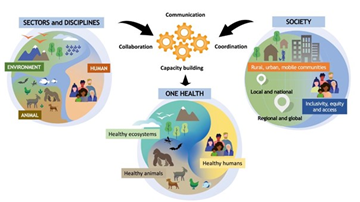
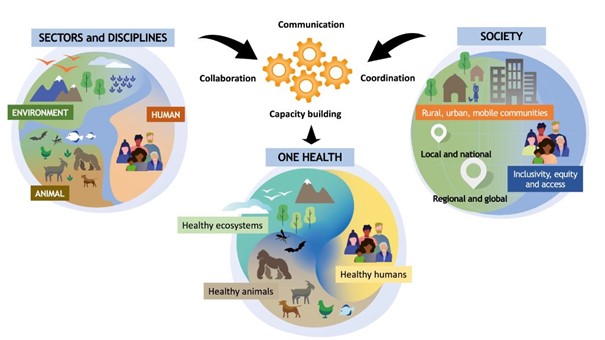
This review explores the vital role of veterinarians in the global implementation of the One Health initiative, highlighting their contributions to disease prevention, surveillance, environmental stewardship, and sustainable health systems. Furthermore, the article underscores how veterinary leadership can facilitate collaborative governance models that align animal welfare, ecosystem sustainability, and public health priorities under a unified One Health framework 22. The conceptual framework of the One Health approach illustrating the integration of human, animal, and environmental health through collaboration, coordination, and communication to achieve healthy ecosystems, animals, and human populations is as shown in Figure 1.
One Health is a valuable framework in the prevention and control of zoonotic illnesses since its principles guide the development and implementation of integrated disease surveillance systems. The One Health method is taken into account for thorough disease surveillance in order to guarantee that all data from different sectors, including environmental, animal, and human health, are taken into account. Authorities can quickly and more effectively respond to disease threats by using comprehensive data obtained via the One Health surveillance approach 23. Recent advancements in integrated digital surveillance platforms and real-time reporting tools have further strengthened cross-sectoral collaboration, enabling veterinarians and public health professionals to detect zoonotic spillover risks at earlier stages 3 19. Private veterinary practitioners contribute substantially to public health through their routine professional activities. Both large- and small-animal clinicians develop strong diagnostic competencies to identify acute and chronic diseases that may pose risks to animal owners, their families, and surrounding communities. Conducting regular health examinations, upholding immunization programs, putting in place efficient parasite control measures, counseling immune-compromised people on the dangers of animal contact, encouraging the use of guide and service animals for individuals with disabilities, and highlighting the psychological and physical advantages of the human-animal bond, especially for the elderly, people with disabilities, veterans, and those suffering from post-traumatic stress disorder, are all important contributions to public health 24. Moreover, veterinarians increasingly serve as frontline educators in antimicrobial stewardship and responsible pet ownership, which helps reduce the spread of antimicrobial resistance within communities 14, 25.
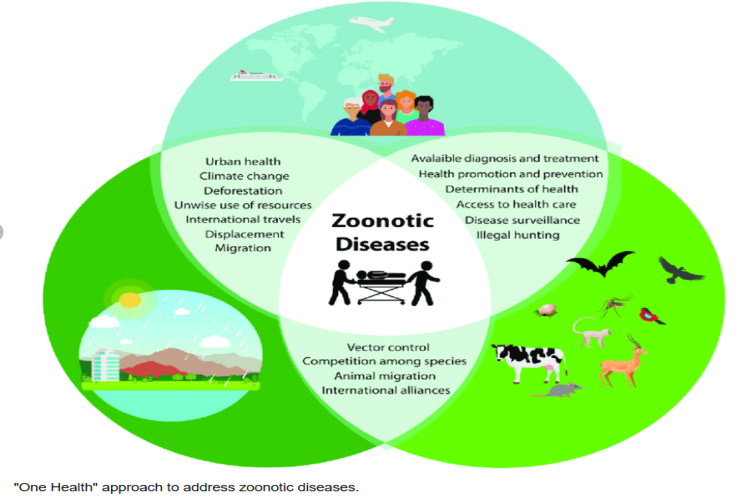
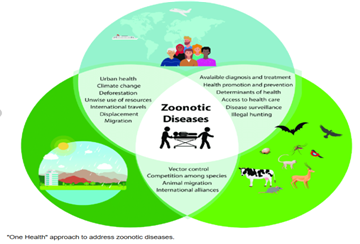
Veterinarians are at the forefront of the surveillance and management of zoonotic diseases by diagnosis, treatment and reporting diseases like anthrax, rabies, dermatophytosis, brucellosis, leptospirosis, coxillosis, tuberculosis, swine flu, listeriosis, melioidosis, sporotrichosis, avian influenza, Nipah virus, cowpox, glanders, scrub typhus, campylobacteriosis, salmonellosis, avian influenza, cat scratch fever, severe acute respiratory syndrome, monkey pox, cryptococcosis, echinococcosis, leishmaniasis, tularemia, Crimean-Congo hemorrhagic fever, Lyme disease, Hanta virus infection, Ebola hemorrhagic fever, and others that are transmitted from animals to people 6, 26, 27, 28, 29, 30, 31, 32. Veterinarians considerably lower the prevalence of zoonoses through immunization programs, biosecurity protocols, and public health education 6, 11. Recent One Health studies highlight the growing role of veterinarians in wildlife disease monitoring and genomic surveillance, which allows rapid identification of novel pathogens and variants with zoonotic potential 9, 13. Veterinary measures, such as dog vaccination and animal movement management, were crucial to the success of rabies eradication initiatives in several countries 33. In a similar vein, veterinarians keep an eye on wildlife and livestock populations to spot zoonotic hazards early and stop epidemics before they affect people 15. Their expertise in disease ecology, epidemiology, and diagnostics positions them at the core of global health security systems 34. Figure 2 illustrates the One Health framework highlighting the interconnected roles of human, animal, and environmental factors in the emergence, transmission, and control of zoonotic diseases.
The safety of the food supply is greatly enhanced by veterinarians who work with animals that produce food for the government. Production stages can be used to classify roles in the production of food animals. Animal welfare assurance, zoonotic disease detection and prevention, pre-slaughter animal inspection, and antibiotic residue testing are examples of ante-mortem activities. Carcass inspection and tissue residue analysis are examples of post-mortem tasks 24. In recent years, veterinary authorities have also contributed to risk-based inspection systems that prioritize high-risk production chains and improve the efficiency of food safety monitoring through data-driven decision-making 3, 36, 37.
Ensuring food safety from farm to fork remains a core responsibility of veterinarians. Supervision of production, processing, and inspection of foods derived from animals, including milk, meat, and eggs, to ensure they are free of chemical residues, poisons, and diseases 6. In slaughterhouses and dairy farms, the application of the Hazard Analysis and Critical Control Point (HACCP) system frequently depends on veterinary inspection 38. Additionally, veterinarians play an expanding role in antimicrobial stewardship programs within food animal production systems, promoting responsible antimicrobial use to reduce residue levels and mitigate antimicrobial resistance risks along the food chain 3, 25. Veterinarians protect consumers and uphold public health standards by preventing contamination and foodborne zoonoses, such as salmonellosis, listeriosis, campylobacteriosis, colibacillosis, and yersiniosis. Their contribution extends beyond animal health to encompass nutrition, food hygiene, and antimicrobial residue monitoring, thus aligning with the One Health philosophy of integrated health management 39. Emerging technologies, such as genomic sequencing, blockchain-based traceability systems, and digital monitoring tools are increasingly being integrated into veterinary food safety practices to enhance transparency, trace outbreaks rapidly, and strengthen global food safety surveillance networks 8 19.
2.3. Veterinary Epidemiology and Disease SurveillanceVeterinarians are extensively trained in epidemiological methods that enable them to monitor disease patterns in both animal and human populations 6, 40. National and international surveillance systems, including the FAO Emergency Prevention System (EMPRES) and the World Organization for Animal Health (WOAH/OIE), rely heavily on veterinary expertise for the early detection and reporting of transboundary animal diseases 34. In recent years, integrated One Health surveillance frameworks have increasingly incorporated wildlife health monitoring, genomic epidemiology, and digital reporting platforms to strengthen early warning systems for emerging zoonotic threats 3, 14.
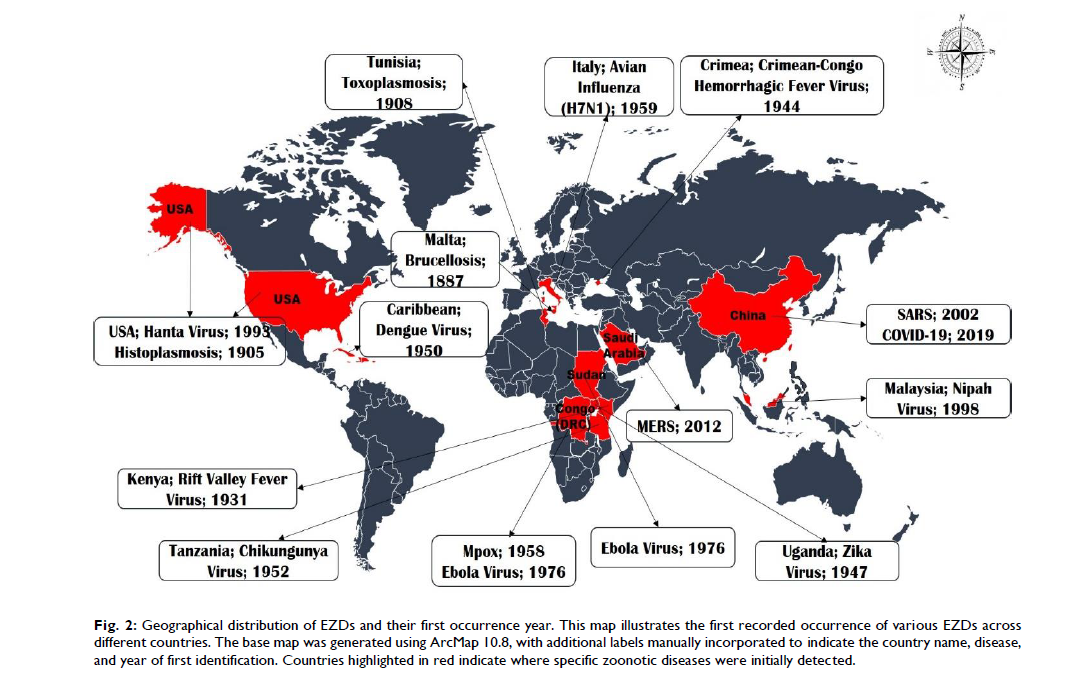
As early sentinels, field veterinarians spot unusual disease trends in pets, livestock, and wildlife. For epidemic investigation and control, their prompt reporting and diagnostic confirmation are essential 41. Veterinary leadership and well-coordinated surveillance systems were key contributors to the successful global eradication of rinderpest in 2011, demonstrating the impact of veterinary epidemiology on global health security 42. Modern veterinary epidemiology also incorporates spatial modelling, artificial intelligence, and data analytics to predict disease spread, assess risk pathways, and support evidence-based decision-making within the One Health framework 18 19. Furthermore, strengthening veterinary surveillance in low- and middle-income countries is a key strategy to enhance global preparedness for emerging infectious diseases and future pandemics 9, 22. Figure 3 shows the global distribution and historical emergence of major zoonotic diseases across different regions of the world.
2.4. Antimicrobial Resistance (AMR) ControlAntimicrobial resistance (AMR) poses significant public health and economic challenges and is now recognized as a major global health threat 31. In addition to creating stewardship programs and educating farmers about alternatives like vaccination and biosecurity, veterinarians are crucial in encouraging the sensible use of antibiotics 44. Recent One Health strategies emphasize the integration of veterinary, medical, and environmental surveillance data to better understand antimicrobial use patterns and mitigate the spread of resistant pathogens across ecosystems 2, 3.
Veterinary professionals contribute essential data on resistance trends in animals and environment through participation in global monitoring initiatives such as the Global Antimicrobial Resistance and Use Surveillance System (GLASS) and WOAH antimicrobial use reporting frameworks 4. Their involvement ensures that antimicrobial policies are evidence-based, interdisciplinary, and aligned with One Health principles. Veterinarians must balance the need to safeguard animal health and welfare while minimizing antimicrobial misuse to protect public health 6. Furthermore, veterinarians are increasingly involved in antimicrobial stewardship audits, farm-level risk assessments, and the promotion of precision livestock farming technologies that reduce unnecessary antimicrobial exposure and improve disease prevention outcomes 14, 25.
2.5. Environmental Health and Ecosystem PreservationVeterinarians play a major role in wildlife conservation and environmental preservation. Disturbed habitats, where interactions between humans, cattle, and animals expand, are the source of many viruses 45. Wildlife health veterinarians keep an eye on and treat illnesses like avian influenza, Nipah, and Ebola that start in wild animals 46. Recent One Health research highlights that biodiversity loss, land-use change, and climate-driven habitat shifts are major ecological drivers of zoonotic disease emergence, reinforcing the need for veterinary involvement in ecosystem-based surveillance and conservation programs 3, 9.
Veterinarians contribute to ecological research and environmental impact assessments aimed at preventing disease transmission associated with habitat destruction and climate change 6. Additionally, their involvement in waste management and chemical contamination control in animal production systems lowers environmental risks, supporting the One Health program's sustainability goals 34. In addition, veterinarians increasingly collaborate with environmental scientists to assess antimicrobial residues, heavy metals, and emerging contaminants in soil and water ecosystems, ensuring that animal production practices align with environmental sustainability and public health protection 8, 22.
2.6. Contribution to Public Education and Policy DevelopmentVeterinarians are educators and policy advisors in addition to practitioners. They are crucial in educating communities, farmers, and animal care providers about reducing zoonotic risk 15. Veterinarians advise national governments on biosecurity, food security, and animal welfare regulations 6. Recent studies emphasize the growing role of veterinarians as science communicators who translate complex One Health risks into culturally appropriate public health messages, thereby improving community engagement and compliance with preventive strategies 47 48.
Veterinary professionals actively participate in international organizations such as the Food and Agriculture Organization (FAO), World Organization for Animal Health (WOAH), and World Health Organization (WHO), ensuring that veterinary perspectives are integrated into global public health and policy frameworks 41. Global policy analyses indicate that veterinary leadership has been central to the development of cross-sectoral pandemic preparedness frameworks, particularly in strengthening early warning systems and multisectoral governance structures 49 50. Preparation of future veterinarians for multidisciplinary health challenges, veterinary education institutions worldwide have incorporated One Health concepts into undergraduate and postgraduate curricula 51. Recent curricular reforms have introduced interdisciplinary simulation training, digital epidemiology modules, and policy-oriented One Health education to enhance collaboration between veterinary, medical, and environmental health professionals 52 53.
2.7. Role of Veterinarians in Health Education and ExtensionAcademic institutions, particularly land-grant universities and veterinary colleges, play a central role in training future veterinarians and enhancing the skills of those already in practice. This increasingly involves interdisciplinary collaboration among basic sciences, sociology, veterinary medicine, and medical education at the collegiate level. Veterinarians also contribute to public awareness by educating communities about infectious and non-infectious disease risks, while many epidemiologists operate within governmental or private sectors. Veterinary professionals must remain informed about emerging disease threats and provide communities with access to reliable, science-based information. Effective public health communication requires a balance between risk perception and awareness, as community engagement is essential for successful disease prevention and risk management 24.
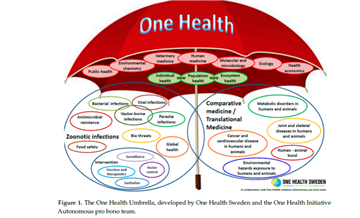
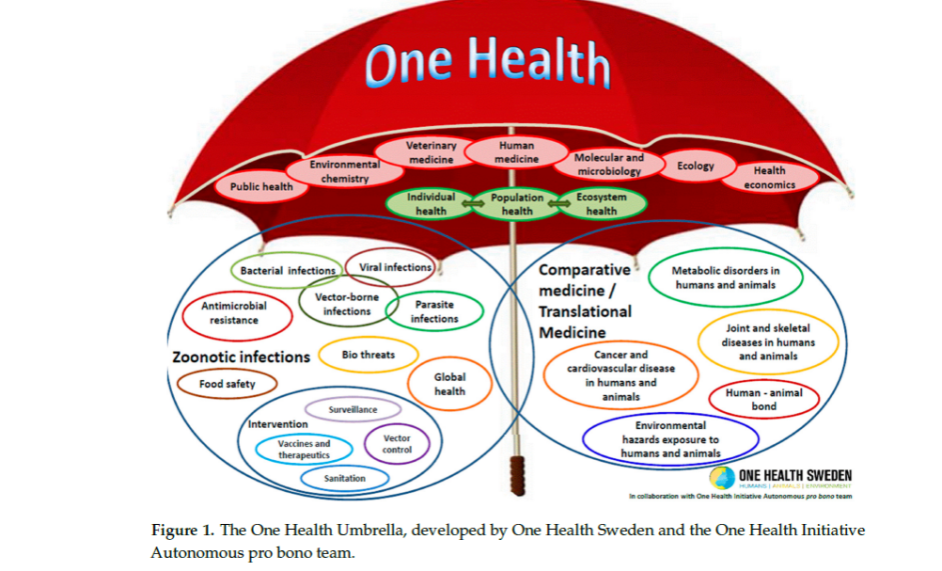
Recent One Health extension programs highlight the role of veterinarians as community facilitators who bridge scientific knowledge with local practices through participatory training, farmer field schools, and digital outreach platforms 2, 54. Studies have also demonstrated that veterinary-led extension services improve vaccination uptake, biosecurity compliance, and early disease reporting, particularly in rural and resource-limited settings where access to formal healthcare infrastructure may be limited 55 56. Furthermore, the integration of e-learning tools, mobile health applications, and tele-extension services has expanded the reach of veterinary health education, allowed real-time dissemination of disease alerts and strengthened community resilience against emerging health threats 57 58. Figure 4 illustrates the One Health Umbrella concept integrating human, animal, and environmental health disciplines to address zoonotic diseases, public health threats, and shared health challenges
Veterinarians play an effective role in the implementation of the One Health approach, serving as a critical link between animal, human, and environmental health. Their vast knowledge, unwavering dedication, relentless hard work besides great expertise in zoonotic disease prevention and control, food safety, epidemiological surveillance, antimicrobial resistance management, and ecosystem health places them at the forefront of global health protection. As emerging and re-emerging zoonoses, antimicrobial resistance, and climate-driven health threats continue to intensify, the integration of veterinary services into public health systems is no longer optional but essential. Strengthened interdisciplinary collaboration, supported by robust surveillance systems and evidence-based policies, is vital to maximizing the impact of veterinary contributions. Investing in veterinary capacity building, research, and leadership will significantly enhance global health security and sustainability under the One Health framework.
Recommendations:
√ National and international health authorities should formally integrate veterinarians into One Health governance structures, decision-making platforms, and emergency preparedness frameworks.
√ Veterinary curriculum and continuing professional development programs should emphasize One Health competencies, including epidemiology, risk analysis, environmental health, and interdisciplinary collaboration.
√ Governments and development partners should increase funding for integrated surveillance systems, applied research, and data-sharing platforms that link animal, human, and environmental health sectors.
√ Veterinarians should be empowered to lead antimicrobial stewardship programs through evidence-based prescribing, farmer education, and enforcement of regulations on antimicrobial use.
√ Veterinary professionals should play a central role in public education on zoonotic disease prevention, food safety, animal welfare, and responsible human–animal interactions.
√ Policymakers should utilize veterinary expertise in developing and implementing policies related to food safety, biosecurity, wildlife health, and environmental sustainability within the One Health framework.
√ As over 60 % of human infections are acquired from animals, and the veterinarians are considered the custodians of animal health, hence it is emphasized that they must be highly respected in every sphere of life.
We are grateful to Prof. Dr. R. K. Narayan for going through the manuscript and giving his suggestions.
This paper is dedicated to all the veterinarians who did commendable and pioneer work in the field of One Health.
All the authors contributed during the preparation of the manuscript.
The authors declare that they have no known competing financial interests or personal relationships that could have appeared to influence the work reported in this paper.
No financial support was received from any organization
| [1] | CDC. Centers for Disease Control and Prevention, About One Health, U.S. Department of Health and Human Services, Atlanta, 2024. [Online]. Available: . [Accessed Feb. 20, 2025]. | ||
| In article | |||
| [2] | FAO, UNEP, WHO. Food and Agriculture Organization of the United Nations, United Nations Environment Programme, World Health Organization and World Organization for Animal Health, One Health Joint Plan of Action (2022–2026): Working together for the health of humans, animals, plants and the environment, FAO, Rome, 2022. [Online]. Available: . | ||
| In article | |||
| [3] | WHO. World Health Organization, Operational framework for One Health implementation at the country level, World Health Organization, Geneva, 2023. [Online]. Available: . | ||
| In article | |||
| [4] | WHO. World Health Organization, One Health Joint Plan of Action (2022–2026), World Health Organization, Geneva, 2022. | ||
| In article | |||
| [5] | Zinsstag, J., Schelling, E., Waltner-Toews, D. and Tanner, M., "From 'one medicine' to 'one health' and systemic approaches to health and well-being", Preventive Veterinary Medicine, 101 (3–4), 148–156. 2011. | ||
| In article | View Article PubMed | ||
| [6] | Pal, M., Zoonoses, 2nd ed., Satyam Publishers, Jaipur, 2007. | ||
| In article | |||
| [7] | Pal, M., Gebrezabiher, W. and Rahman, M.T., "The roles of veterinary, medical and environmental professionals to achieve One Health", Journal of Advanced Veterinary and Animal Research, 1 (4), 148–155. 2014. | ||
| In article | View Article | ||
| [8] | Destoumieux-Garzón, D., Mavingui, P., Boetsch, G., Boissier, J., Darriet, F., Duboz, P., Fritsch, C., Giraudoux, P., Le Roux, F., Morand, S., Paillard, C., Pontier, D., Sueur, C. and Voituron, Y., "The One Health concept: 10 years old and a long road ahead", Frontiers in Veterinary Science, 9, 857750. 2022. | ||
| In article | |||
| [9] | UNEP. United Nations Environment Programme, Preventing the next pandemic: Zoonotic diseases and how to break the chain of transmission, UNEP, Nairobi, 2023. [Online]. Available: . | ||
| In article | |||
| [10] | Taylor, L.H., Latham, S.M. and Woolhouse, M.E., "Risk factors for human disease emergence", Philosophical Transactions of the Royal Society B: Biological Sciences, 356 (1411), 983–989. 2001. | ||
| In article | View Article PubMed | ||
| [11] | CDC. Centres for Disease Control and Prevention, Zoonotic Diseases, Centres for Disease Control and Prevention, Atlanta, 2021. | ||
| In article | |||
| [12] | Pal, M., "Public health concern due to emerging and re-emerging zoonoses", International Journal of Livestock Research, 3 (1), 56–62. 2013. | ||
| In article | View Article | ||
| [13] | Bonilla-Aldana, D.K., Dhama, K. and Rodriguez-Morales, A.J., "Revisiting the One Health approach in the context of emerging zoonotic diseases", Travel Medicine and Infectious Disease, 52, 102560. 2023. | ||
| In article | |||
| [14] | WOAH. World Organisation for Animal Health, One Health and animal health systems strengthening, WOAH, Paris, 2024. [Online]. Available: . | ||
| In article | |||
| [15] | Cleaveland, S., Sharp, J., Abela-Ridder, B., Allan, K.J., Buza, J., Crump, J.A., Davis, A., Del Rio Vilas, V.J., De Glanville, W.A., Kazwala, R.R. and Kibona, T., "One Health contributions towards more effective and equitable approaches to health in low-and middle-income countries", Philosophical Transactions of the Royal Society B: Biological Sciences, 372 (1725), 20160168. 2017. | ||
| In article | View Article PubMed | ||
| [16] | Johnson, I., Hansen, A. and Bi, P., "The challenges of implementing an integrated One Health surveillance system in Australia", Zoonoses and Public Health, 65 (1), e229–e236. 2018. | ||
| In article | View Article PubMed | ||
| [17] | WHO, UNEP, WOAH. World Health Organization, United Nations Environment Programme and World Organisation for Animal Health, One Health Joint Plan of Action (2022–2026): Working together for the health of humans, animals, plants and the environment, World Health Organization, Geneva, 2022. | ||
| In article | |||
| [18] | Zhang, L., Guo, W. and Lv, C., "Modern technologies and solutions to enhance surveillance and response systems for emerging zoonotic diseases", Science in One Health, 3, 100061. 2024. | ||
| In article | View Article PubMed | ||
| [19] | Singh, S., Sharma, P., Pal, N., Sarma, D.K., Tiwari, R. and Kumar, M., "Holistic One Health surveillance framework: Synergizing environmental, animal, and human determinants for enhanced infectious disease management", ACS Infectious Diseases, 10 (3), 808–826. 2024. | ||
| In article | View Article PubMed | ||
| [20] | Elnaiem, A., Mohamed-Ahmed, O., Zumla, A., Mecaskey, J., Charron, N., Abakar, M.F. and Dar, O., "Global and regional governance of One Health and implications for global health security", The Lancet, 401 (10377), 688–704. 2023. | ||
| In article | View Article PubMed | ||
| [21] | Mohamed, A., "The synergies between international health regulations and One Health in safeguarding global health security", Science in One Health, 3, 100078. 2024. | ||
| In article | View Article | ||
| [22] | Amuasi, J.H. and Winkler, A.S., "Future trajectories for One Health", The Lancet, 406 (10502), 426–429. 2025. | ||
| In article | View Article PubMed | ||
| [23] | Nwokedi, V.U., Okafor, B.C., Agbo, O.S., Ezeamii, V.C., Ani, C.P., Mustapha, F.A., Shoyebo, O.G., Foster-Pagaebi, E. and Chinyere, D.B., "One Health approach: integrating human, animal, and environmental health for infectious disease control", International Journal of Pathogen Research, 14 (3), 123–135. 2025. | ||
| In article | View Article | ||
| [24] | Noah, D.L., "Role of veterinarians in public health and One Health", MSD Veterinary Manual, 26. 2022. | ||
| In article | |||
| [25] | Guardabassi, L. and Prescott, J.F., "Antimicrobial stewardship in small animal veterinary practice: From theory to practice", Veterinary Clinics of North America: Small Animal Practice, 52 (2), 329–346. 2022. | ||
| In article | |||
| [26] | Pal, M., "Importance of zoonoses in public health", Indian Journal of Animal Sciences, 75 (5), 586–591. 2005. | ||
| In article | |||
| [27] | Häsler, B., Gilbert, W., Jones, B.A., Pfeiffer, D.U., Rushton, J. and Otte, M.J., "The economic value of One Health in relation to the mitigation of zoonotic disease risks", in One Health: The Human-Animal-Environment Interfaces in Emerging Infectious Diseases: The Concept and Examples of a One Health Approach, 127–151. 2012. | ||
| In article | View Article PubMed | ||
| [28] | Pal, M., "Scrub typhus: An emerging and re-emerging metazoonosis of public health significance", Madridge Journal of Immunology, 1 (1), 16- 17. 2017. | ||
| In article | View Article | ||
| [29] | Pal, M., "Severe acute respiratory syndrome: A newly recognized viral zoonosis of public health concern", Acta Scientific Microbiology, 1 (6). 01. 2018. | ||
| In article | |||
| [30] | Pal, M. and Gutama, K.P., "Can Nipah virus be considered as a potential pathogen for next pandemic? A critical appraisal", American Journal of Infectious Diseases, 9 (4), 122- 128. 2021. | ||
| In article | View Article | ||
| [31] | Pal, M., Regassa, M., Rebuma, T., Zende, R., Upadhyay, D. and Panicker, N., "Antimicrobial resistance: Navigating an unfolding public health crisis", American Journal of Medical and Biological Research, 12 (1), 27–35. 2024. | ||
| In article | View Article | ||
| [32] | Pal, M., "Leptospirosis: An emerging yet neglected occupational zoonosis of global public health concern", International Journal of Clinical and Experimental Medicine Research, 10 (1), 10–14. 2026. | ||
| In article | |||
| [33] | WHO. World Health Organization, Zero by 30: The Global Strategic Plan to End Human Deaths from Dog-Mediated Rabies by 2030, World Health Organization, Geneva, 2018. | ||
| In article | |||
| [34] | FAO. Food and Agriculture Organization, The FAO Action Plan on Antimicrobial Resistance 2021–2025, Food and Agriculture Organization, Rome, 2019. | ||
| In article | |||
| [35] | Marbán-Castro, E., Mattar, S. and González, M., "Reemerging zoonoses with 'One Health' approach", Revista MVZ Córdoba, 24 (3), 7280–7284. 2019. | ||
| In article | View Article | ||
| [36] | EFSA. European Food Safety Authority, "Risk-based meat inspection and official controls in food-producing animals", EFSA Journal, 20 (1), e07002. 2022. | ||
| In article | |||
| [37] | Baars, E.W., Weiermayer, P., Szőke, H.P. and van der Werf, E.T., "The introduction of the global traditional, complementary, and integrative healthcare (TCIH) research agenda on antimicrobial resistance and its added value to the WHO and the WHO/FAO/UNEP/WOAH 2023 research agendas on antimicrobial resistance", Antibiotics, 14 (1), 102. 2025. | ||
| In article | View Article PubMed | ||
| [38] | Hathaway, S.C., "Food safety: The veterinary contribution", Revue Scientifique et Technique (Office International des Epizooties), 32 (2), 381–392. 2013. | ||
| In article | |||
| [39] | Newell, D.G., Koopmans, M., Verhoef, L., Duizer, E., Aidara-Kane, A., Sprong, H., Opsteegh, M., Langelaar, M., Threfall, J., Scheutz, F. and van der Giessen, J., "Food-borne diseases—the challenges of 20 years ago still persist while new ones continue to emerge", International Journal of Food Microbiology, 139, S3–S15. 2010. | ||
| In article | View Article PubMed | ||
| [40] | Thrusfield, M., Veterinary Epidemiology, 4th ed., Wiley-Blackwell, Oxford, 2018. | ||
| In article | |||
| [41] | Grace, D., Mutua, F.K., Ochungo, P., Kruska, R.L., Jones, K., Brierley, L., Lapar, M.L., Said, M.Y., Herrero, M., Phuc, P.M. and Thao, N.B., Mapping of poverty and likely zoonoses hotspots, Zoonoses Project 4, Report to DFID, International Livestock Research Institute, Nairobi, 2012. | ||
| In article | |||
| [42] | Normile, D., "Rinderpest: Driven to extinction", Science, 332 (6030), 418–419. 2011. | ||
| In article | |||
| [43] | Hossain, H., Chowdhury, M.D.S.R., Khan, S., Ahmad, T., Brishty, K.A., Rahman, M., Rahman, M.N., Akter, S., Nitu, A.S., Koly, J.S., Haque, M.D.S., Mashrur, M.D.N., Imranuzzaman, M.D., Akhtar, T., Mahmud, M.S., Alam, M.D.S., Rahman, M.D.M. and Rahman, M.D.M., "Emerging zoonotic diseases: Epidemiology, public health impact, and the urgent need for a unified 'One Health' approach", Pakistan Veterinary Journal, 45 (1), 36–47. 2025. | ||
| In article | |||
| [44] | McEwen, S.A. and Collignon, P.J., "Antimicrobial resistance: A One Health perspective", in Antimicrobial Resistance in Bacteria from Livestock and Companion Animals, 521–547. 2018. | ||
| In article | View Article | ||
| [45] | Daszak, P., Cunningham, A.A. and Hyatt, A.D., "Emerging infectious diseases of wildlife-threats to biodiversity and human health", Science, 287 (5452), 443–449. 2000. | ||
| In article | View Article PubMed | ||
| [46] | Jones, K.E., Patel, N.G., Levy, M.A., Storeygard, A., Balk, D., Gittleman, J.L. and Daszak, P., "Global trends in emerging infectious diseases", Nature, 451 (7181), 990–993. 2008. | ||
| In article | View Article PubMed | ||
| [47] | Togami, E., Behravesh, C.B., Dutcher, T.V., Hansen, G.R., King, L.J., Pelican, K.M. and Mazet, J.A., "Characterizing the One Health workforce to promote interdisciplinary, multisectoral approaches in global health problem-solving", PLoS One, 18 (5), e0285705. 2023. | ||
| In article | View Article PubMed | ||
| [48] | Walsh, T. R.,"A One Health approach to antimicrobial resistance surveillance and policy development", Nature microbiology, 3(8), 854-855. 2018. | ||
| In article | View Article PubMed | ||
| [49] | Lee, K. and Brumme, Z.L., "Operationalizing the One Health approach: Global governance challenges and opportunities", The Lancet Planetary Health, 6 (1), e22–e24. 2022. | ||
| In article | |||
| [50] | Zinsstag, J., Crump, L., Schelling, E., Hattendorf, J., Maidane, Y.O., Ali, K.O., Muhummed, A., Umer, A.A., Aliyi, F., Nooh, F., Abdikadir, M.I., Ali, S.M., Hartinger, S., Mäusezahl, D., de White, M.B.G., Cordon-Rosales, C., Castillo, D.A., McCracken, J., Abakar, M.F. and Rüegg, S.R., "Climate change and One Health: A systems-based perspective on emerging health risks", The Lancet Planetary Health, 7 (6), e451–e459. 2023. | ||
| In article | |||
| [51] | Kahn, L.H., Kaplan, B., Monath, T.P. and Steele, J.H., "Teaching 'one medicine, one health'", The American Journal of Medicine, 121 (3), 169–170. 2008. | ||
| In article | View Article PubMed | ||
| [52] | Blake, J., Goodman, L., Kiguli-Malwadde, E., Stroud, C. and Thomson, D., "One Health education, training, and capacity building", in Global One Health and Infectious Diseases, CRC Press, 266–332. 2025. | ||
| In article | View Article | ||
| [53] | Steele, S.G., Toribio, J.A.L.M.L. and Mor, S.M., "Global health security must embrace a One Health approach: Contributions and experiences of veterinarians during the COVID-19 response in Australia", One Health, 13, 100314. 2021 | ||
| In article | View Article PubMed | ||
| [54] | Bardosh, K., How did the COVID pandemic response harm society? A global evaluation and state of knowledge review (2020–21), 2023. | ||
| In article | View Article | ||
| [55] | Mutua, F., Kiarie, G., Mbatha, M., Onono, J., Boqvist, S., Kilonzi, E., Mugisha, L., Moodley, A. and Sternberg-Lewerin, S., "Antimicrobial use by peri-urban poultry smallholders of Kajiado and Machakos counties in Kenya", Antibiotics, 12 (5), 905. 2023. | ||
| In article | View Article PubMed | ||
| [56] | Fasina, F.O., Bett, B., Dione, M., Mutua, F., Roesel, K., Thomas, L., Kwoba, E., Ayebazibwe, C., Mtika, N., Gebeyehu, D.T. and Mtui-Malamsha, N., "One Health gains momentum in Africa but room exists for improvement", One Health, 15, 100428. 2022. | ||
| In article | View Article PubMed | ||
| [57] | Shortall, R., Mouter, N. and Van Wee, B., "COVID-19 passenger transport measures and their impacts", Transport Reviews, 42 (4), 441–466. 2022. | ||
| In article | View Article | ||
| [58] | WHO. World Health Organization, Global report on infection prevention and control 2024, World Health Organization, Geneva, 2024. | ||
| In article | |||
| [59] | Lerner, H. and Berg, C., "The concept of health in One Health and some practical implications for research and education: What is One Health?", Infection Ecology & Epidemiology, 5 (1), 25300. 2015.. | ||
| In article | View Article PubMed | ||
Published with license by Science and Education Publishing, Copyright © 2026 Mahendra Pal, Ravindra Zende, Tesfaye Rebuma, Aishwarya Nair and Sônia de Avila Botton
 This work is licensed under a Creative Commons Attribution 4.0 International License. To view a copy of this license, visit
http://creativecommons.org/licenses/by/4.0/
This work is licensed under a Creative Commons Attribution 4.0 International License. To view a copy of this license, visit
http://creativecommons.org/licenses/by/4.0/
| [1] | CDC. Centers for Disease Control and Prevention, About One Health, U.S. Department of Health and Human Services, Atlanta, 2024. [Online]. Available: . [Accessed Feb. 20, 2025]. | ||
| In article | |||
| [2] | FAO, UNEP, WHO. Food and Agriculture Organization of the United Nations, United Nations Environment Programme, World Health Organization and World Organization for Animal Health, One Health Joint Plan of Action (2022–2026): Working together for the health of humans, animals, plants and the environment, FAO, Rome, 2022. [Online]. Available: . | ||
| In article | |||
| [3] | WHO. World Health Organization, Operational framework for One Health implementation at the country level, World Health Organization, Geneva, 2023. [Online]. Available: . | ||
| In article | |||
| [4] | WHO. World Health Organization, One Health Joint Plan of Action (2022–2026), World Health Organization, Geneva, 2022. | ||
| In article | |||
| [5] | Zinsstag, J., Schelling, E., Waltner-Toews, D. and Tanner, M., "From 'one medicine' to 'one health' and systemic approaches to health and well-being", Preventive Veterinary Medicine, 101 (3–4), 148–156. 2011. | ||
| In article | View Article PubMed | ||
| [6] | Pal, M., Zoonoses, 2nd ed., Satyam Publishers, Jaipur, 2007. | ||
| In article | |||
| [7] | Pal, M., Gebrezabiher, W. and Rahman, M.T., "The roles of veterinary, medical and environmental professionals to achieve One Health", Journal of Advanced Veterinary and Animal Research, 1 (4), 148–155. 2014. | ||
| In article | View Article | ||
| [8] | Destoumieux-Garzón, D., Mavingui, P., Boetsch, G., Boissier, J., Darriet, F., Duboz, P., Fritsch, C., Giraudoux, P., Le Roux, F., Morand, S., Paillard, C., Pontier, D., Sueur, C. and Voituron, Y., "The One Health concept: 10 years old and a long road ahead", Frontiers in Veterinary Science, 9, 857750. 2022. | ||
| In article | |||
| [9] | UNEP. United Nations Environment Programme, Preventing the next pandemic: Zoonotic diseases and how to break the chain of transmission, UNEP, Nairobi, 2023. [Online]. Available: . | ||
| In article | |||
| [10] | Taylor, L.H., Latham, S.M. and Woolhouse, M.E., "Risk factors for human disease emergence", Philosophical Transactions of the Royal Society B: Biological Sciences, 356 (1411), 983–989. 2001. | ||
| In article | View Article PubMed | ||
| [11] | CDC. Centres for Disease Control and Prevention, Zoonotic Diseases, Centres for Disease Control and Prevention, Atlanta, 2021. | ||
| In article | |||
| [12] | Pal, M., "Public health concern due to emerging and re-emerging zoonoses", International Journal of Livestock Research, 3 (1), 56–62. 2013. | ||
| In article | View Article | ||
| [13] | Bonilla-Aldana, D.K., Dhama, K. and Rodriguez-Morales, A.J., "Revisiting the One Health approach in the context of emerging zoonotic diseases", Travel Medicine and Infectious Disease, 52, 102560. 2023. | ||
| In article | |||
| [14] | WOAH. World Organisation for Animal Health, One Health and animal health systems strengthening, WOAH, Paris, 2024. [Online]. Available: . | ||
| In article | |||
| [15] | Cleaveland, S., Sharp, J., Abela-Ridder, B., Allan, K.J., Buza, J., Crump, J.A., Davis, A., Del Rio Vilas, V.J., De Glanville, W.A., Kazwala, R.R. and Kibona, T., "One Health contributions towards more effective and equitable approaches to health in low-and middle-income countries", Philosophical Transactions of the Royal Society B: Biological Sciences, 372 (1725), 20160168. 2017. | ||
| In article | View Article PubMed | ||
| [16] | Johnson, I., Hansen, A. and Bi, P., "The challenges of implementing an integrated One Health surveillance system in Australia", Zoonoses and Public Health, 65 (1), e229–e236. 2018. | ||
| In article | View Article PubMed | ||
| [17] | WHO, UNEP, WOAH. World Health Organization, United Nations Environment Programme and World Organisation for Animal Health, One Health Joint Plan of Action (2022–2026): Working together for the health of humans, animals, plants and the environment, World Health Organization, Geneva, 2022. | ||
| In article | |||
| [18] | Zhang, L., Guo, W. and Lv, C., "Modern technologies and solutions to enhance surveillance and response systems for emerging zoonotic diseases", Science in One Health, 3, 100061. 2024. | ||
| In article | View Article PubMed | ||
| [19] | Singh, S., Sharma, P., Pal, N., Sarma, D.K., Tiwari, R. and Kumar, M., "Holistic One Health surveillance framework: Synergizing environmental, animal, and human determinants for enhanced infectious disease management", ACS Infectious Diseases, 10 (3), 808–826. 2024. | ||
| In article | View Article PubMed | ||
| [20] | Elnaiem, A., Mohamed-Ahmed, O., Zumla, A., Mecaskey, J., Charron, N., Abakar, M.F. and Dar, O., "Global and regional governance of One Health and implications for global health security", The Lancet, 401 (10377), 688–704. 2023. | ||
| In article | View Article PubMed | ||
| [21] | Mohamed, A., "The synergies between international health regulations and One Health in safeguarding global health security", Science in One Health, 3, 100078. 2024. | ||
| In article | View Article | ||
| [22] | Amuasi, J.H. and Winkler, A.S., "Future trajectories for One Health", The Lancet, 406 (10502), 426–429. 2025. | ||
| In article | View Article PubMed | ||
| [23] | Nwokedi, V.U., Okafor, B.C., Agbo, O.S., Ezeamii, V.C., Ani, C.P., Mustapha, F.A., Shoyebo, O.G., Foster-Pagaebi, E. and Chinyere, D.B., "One Health approach: integrating human, animal, and environmental health for infectious disease control", International Journal of Pathogen Research, 14 (3), 123–135. 2025. | ||
| In article | View Article | ||
| [24] | Noah, D.L., "Role of veterinarians in public health and One Health", MSD Veterinary Manual, 26. 2022. | ||
| In article | |||
| [25] | Guardabassi, L. and Prescott, J.F., "Antimicrobial stewardship in small animal veterinary practice: From theory to practice", Veterinary Clinics of North America: Small Animal Practice, 52 (2), 329–346. 2022. | ||
| In article | |||
| [26] | Pal, M., "Importance of zoonoses in public health", Indian Journal of Animal Sciences, 75 (5), 586–591. 2005. | ||
| In article | |||
| [27] | Häsler, B., Gilbert, W., Jones, B.A., Pfeiffer, D.U., Rushton, J. and Otte, M.J., "The economic value of One Health in relation to the mitigation of zoonotic disease risks", in One Health: The Human-Animal-Environment Interfaces in Emerging Infectious Diseases: The Concept and Examples of a One Health Approach, 127–151. 2012. | ||
| In article | View Article PubMed | ||
| [28] | Pal, M., "Scrub typhus: An emerging and re-emerging metazoonosis of public health significance", Madridge Journal of Immunology, 1 (1), 16- 17. 2017. | ||
| In article | View Article | ||
| [29] | Pal, M., "Severe acute respiratory syndrome: A newly recognized viral zoonosis of public health concern", Acta Scientific Microbiology, 1 (6). 01. 2018. | ||
| In article | |||
| [30] | Pal, M. and Gutama, K.P., "Can Nipah virus be considered as a potential pathogen for next pandemic? A critical appraisal", American Journal of Infectious Diseases, 9 (4), 122- 128. 2021. | ||
| In article | View Article | ||
| [31] | Pal, M., Regassa, M., Rebuma, T., Zende, R., Upadhyay, D. and Panicker, N., "Antimicrobial resistance: Navigating an unfolding public health crisis", American Journal of Medical and Biological Research, 12 (1), 27–35. 2024. | ||
| In article | View Article | ||
| [32] | Pal, M., "Leptospirosis: An emerging yet neglected occupational zoonosis of global public health concern", International Journal of Clinical and Experimental Medicine Research, 10 (1), 10–14. 2026. | ||
| In article | |||
| [33] | WHO. World Health Organization, Zero by 30: The Global Strategic Plan to End Human Deaths from Dog-Mediated Rabies by 2030, World Health Organization, Geneva, 2018. | ||
| In article | |||
| [34] | FAO. Food and Agriculture Organization, The FAO Action Plan on Antimicrobial Resistance 2021–2025, Food and Agriculture Organization, Rome, 2019. | ||
| In article | |||
| [35] | Marbán-Castro, E., Mattar, S. and González, M., "Reemerging zoonoses with 'One Health' approach", Revista MVZ Córdoba, 24 (3), 7280–7284. 2019. | ||
| In article | View Article | ||
| [36] | EFSA. European Food Safety Authority, "Risk-based meat inspection and official controls in food-producing animals", EFSA Journal, 20 (1), e07002. 2022. | ||
| In article | |||
| [37] | Baars, E.W., Weiermayer, P., Szőke, H.P. and van der Werf, E.T., "The introduction of the global traditional, complementary, and integrative healthcare (TCIH) research agenda on antimicrobial resistance and its added value to the WHO and the WHO/FAO/UNEP/WOAH 2023 research agendas on antimicrobial resistance", Antibiotics, 14 (1), 102. 2025. | ||
| In article | View Article PubMed | ||
| [38] | Hathaway, S.C., "Food safety: The veterinary contribution", Revue Scientifique et Technique (Office International des Epizooties), 32 (2), 381–392. 2013. | ||
| In article | |||
| [39] | Newell, D.G., Koopmans, M., Verhoef, L., Duizer, E., Aidara-Kane, A., Sprong, H., Opsteegh, M., Langelaar, M., Threfall, J., Scheutz, F. and van der Giessen, J., "Food-borne diseases—the challenges of 20 years ago still persist while new ones continue to emerge", International Journal of Food Microbiology, 139, S3–S15. 2010. | ||
| In article | View Article PubMed | ||
| [40] | Thrusfield, M., Veterinary Epidemiology, 4th ed., Wiley-Blackwell, Oxford, 2018. | ||
| In article | |||
| [41] | Grace, D., Mutua, F.K., Ochungo, P., Kruska, R.L., Jones, K., Brierley, L., Lapar, M.L., Said, M.Y., Herrero, M., Phuc, P.M. and Thao, N.B., Mapping of poverty and likely zoonoses hotspots, Zoonoses Project 4, Report to DFID, International Livestock Research Institute, Nairobi, 2012. | ||
| In article | |||
| [42] | Normile, D., "Rinderpest: Driven to extinction", Science, 332 (6030), 418–419. 2011. | ||
| In article | |||
| [43] | Hossain, H., Chowdhury, M.D.S.R., Khan, S., Ahmad, T., Brishty, K.A., Rahman, M., Rahman, M.N., Akter, S., Nitu, A.S., Koly, J.S., Haque, M.D.S., Mashrur, M.D.N., Imranuzzaman, M.D., Akhtar, T., Mahmud, M.S., Alam, M.D.S., Rahman, M.D.M. and Rahman, M.D.M., "Emerging zoonotic diseases: Epidemiology, public health impact, and the urgent need for a unified 'One Health' approach", Pakistan Veterinary Journal, 45 (1), 36–47. 2025. | ||
| In article | |||
| [44] | McEwen, S.A. and Collignon, P.J., "Antimicrobial resistance: A One Health perspective", in Antimicrobial Resistance in Bacteria from Livestock and Companion Animals, 521–547. 2018. | ||
| In article | View Article | ||
| [45] | Daszak, P., Cunningham, A.A. and Hyatt, A.D., "Emerging infectious diseases of wildlife-threats to biodiversity and human health", Science, 287 (5452), 443–449. 2000. | ||
| In article | View Article PubMed | ||
| [46] | Jones, K.E., Patel, N.G., Levy, M.A., Storeygard, A., Balk, D., Gittleman, J.L. and Daszak, P., "Global trends in emerging infectious diseases", Nature, 451 (7181), 990–993. 2008. | ||
| In article | View Article PubMed | ||
| [47] | Togami, E., Behravesh, C.B., Dutcher, T.V., Hansen, G.R., King, L.J., Pelican, K.M. and Mazet, J.A., "Characterizing the One Health workforce to promote interdisciplinary, multisectoral approaches in global health problem-solving", PLoS One, 18 (5), e0285705. 2023. | ||
| In article | View Article PubMed | ||
| [48] | Walsh, T. R.,"A One Health approach to antimicrobial resistance surveillance and policy development", Nature microbiology, 3(8), 854-855. 2018. | ||
| In article | View Article PubMed | ||
| [49] | Lee, K. and Brumme, Z.L., "Operationalizing the One Health approach: Global governance challenges and opportunities", The Lancet Planetary Health, 6 (1), e22–e24. 2022. | ||
| In article | |||
| [50] | Zinsstag, J., Crump, L., Schelling, E., Hattendorf, J., Maidane, Y.O., Ali, K.O., Muhummed, A., Umer, A.A., Aliyi, F., Nooh, F., Abdikadir, M.I., Ali, S.M., Hartinger, S., Mäusezahl, D., de White, M.B.G., Cordon-Rosales, C., Castillo, D.A., McCracken, J., Abakar, M.F. and Rüegg, S.R., "Climate change and One Health: A systems-based perspective on emerging health risks", The Lancet Planetary Health, 7 (6), e451–e459. 2023. | ||
| In article | |||
| [51] | Kahn, L.H., Kaplan, B., Monath, T.P. and Steele, J.H., "Teaching 'one medicine, one health'", The American Journal of Medicine, 121 (3), 169–170. 2008. | ||
| In article | View Article PubMed | ||
| [52] | Blake, J., Goodman, L., Kiguli-Malwadde, E., Stroud, C. and Thomson, D., "One Health education, training, and capacity building", in Global One Health and Infectious Diseases, CRC Press, 266–332. 2025. | ||
| In article | View Article | ||
| [53] | Steele, S.G., Toribio, J.A.L.M.L. and Mor, S.M., "Global health security must embrace a One Health approach: Contributions and experiences of veterinarians during the COVID-19 response in Australia", One Health, 13, 100314. 2021 | ||
| In article | View Article PubMed | ||
| [54] | Bardosh, K., How did the COVID pandemic response harm society? A global evaluation and state of knowledge review (2020–21), 2023. | ||
| In article | View Article | ||
| [55] | Mutua, F., Kiarie, G., Mbatha, M., Onono, J., Boqvist, S., Kilonzi, E., Mugisha, L., Moodley, A. and Sternberg-Lewerin, S., "Antimicrobial use by peri-urban poultry smallholders of Kajiado and Machakos counties in Kenya", Antibiotics, 12 (5), 905. 2023. | ||
| In article | View Article PubMed | ||
| [56] | Fasina, F.O., Bett, B., Dione, M., Mutua, F., Roesel, K., Thomas, L., Kwoba, E., Ayebazibwe, C., Mtika, N., Gebeyehu, D.T. and Mtui-Malamsha, N., "One Health gains momentum in Africa but room exists for improvement", One Health, 15, 100428. 2022. | ||
| In article | View Article PubMed | ||
| [57] | Shortall, R., Mouter, N. and Van Wee, B., "COVID-19 passenger transport measures and their impacts", Transport Reviews, 42 (4), 441–466. 2022. | ||
| In article | View Article | ||
| [58] | WHO. World Health Organization, Global report on infection prevention and control 2024, World Health Organization, Geneva, 2024. | ||
| In article | |||
| [59] | Lerner, H. and Berg, C., "The concept of health in One Health and some practical implications for research and education: What is One Health?", Infection Ecology & Epidemiology, 5 (1), 25300. 2015.. | ||
| In article | View Article PubMed | ||