This study aims to evaluate the microbiological quality of ice cream sold in selected pastry shops in the city of Daloa (Côte d’Ivoire), in a context of increasing food poisoning cases associated with these products. A survey was conducted among 500 consumers and 70 vendors to analyze consumption habits and hygiene practices, complemented by microbiological analyses of 100 ice cream samples. The results reveal that 27.6% of consumers had experienced discomfort after consumption, mainly fever and vomiting. Most vendors (80%) comply with hygiene regulations, although one-third remain unaware of sanitary standards. Microbiological analyses showed an overall low microbial load, with no detection of Salmonella spp. or Staphylococcus aureus, but E. coli counts (3.66 × 10² CFU/g) were close to the acceptable limit, suggesting possible fecal contamination. These findings indicate an overall satisfactory microbiological quality but highlight the need to strengthen hygiene practices to prevent potential health risks.
Ice cream is an aerated, delicious, and nutritious dairy product that is frozen before consumption. It has been known since ancient times and has undergone many transformations over the centuries 1. The production of ice cream involves a series of successive operations aimed at obtaining a high-quality product with a smooth and homogeneous texture, while ensuring its stability and preservation. This process includes several key steps, ranging from the preparation of ingredients to the final hardening of the product 2. Since the 19th century to the present day, the growing popularity of ice cream has been accompanied by a significant increase in cases of food poisoning attributed to it 3. Indeed, ice cream provides a favorable environment for the proliferation of microorganisms, which can lead to the transmission of infectious diseases. This is due to its richness in nutrients such as lactose and proteins, as well as its nearly neutral pH 4. In Côte d’Ivoire, several recent cases of food poisoning linked to the consumption of ice cream have also been reported. In 2022, around one hundred customers of an ice cream shop in Bondoukou, aged between 2 and 32 years, suffered from food poisoning after consuming contaminated ice cream. In 2023, in the Yopougon district of Abidjan, six individuals aged between 3 and 15 years also showed symptoms of poisoning following the consumption of homemade ice cream. More recently, in 2025, more than sixty people suffered from food poisoning after consuming an ice cream cake from an ice cream shop in the commune of Songon, in southern Abidjan. These incidents highlight the vulnerability of the ice cream sector to microbiological risks, particularly when hygiene and storage conditions are not strictly observed. Indeed, microorganisms such as Salmonella, Escherichia coli, Listeria monocytogenes, and certain Enterobacteriaceae have frequently been implicated in cases of food poisoning associated with the consumption of ice cream 5 6 7. Daloa, located in the Haut-Sassandra region, is a city experiencing significant economic and demographic growth 8. It has numerous artisanal pastry shops established along major roads, which are particularly busy during weekends and festive periods. Although no cases of food poisoning related to ice cream consumption have been documented in Daloa, the high demand and the increasing number of sales outlets justify the need to assess the hygienic and microbiological quality of ice cream sold in the city, in relation to consumer habits and vendors’ hygiene practices. Specifically, this study aims, through surveys, to examine consumer habits and perceptions regarding ice cream in Daloa, and to evaluate the hygiene and handling practices of ice cream vendors. Finally, a microbiological quality analysis of the ice cream marketed in Daloa will be carried out through the detection and quantification of indicator and pathogenic microorganisms associated with poor hygiene.
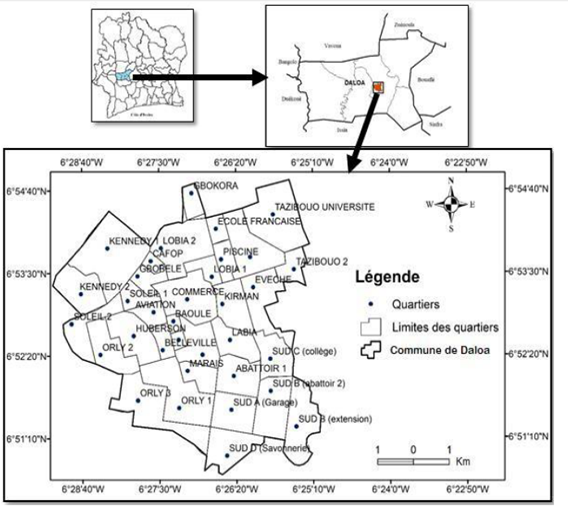
The study was conducted in Daloa, a city located in the Haut-Sassandra region, in the central-west part of Côte d’Ivoire (Figure 1). As the regional capital and a major economic hub 8, Daloa covers an area of approximately 17.76 km² and has a population of about 705,378 inhabitants. The municipality, which is experiencing rapid urban expansion, currently comprises around forty neighborhoods, the main ones being Tazibouo, Lobia, Labia, Commerce, and Gbokora 8.

The biological material used for this study consisted of ice cream samples sold in selected pastry shops in Daloa.
2.3. Survey on the Habits and Perceptions of Ice Cream Consumers in DaloaIn order to understand the ice cream consumption habits of the population in Daloa, a random survey was conducted in the streets, markets, homes, and workplaces. This survey lasted for one month (from March 1, 2025, to March 30, 2025). During the survey, men and women aged 18 years and older were interviewed. The following neighborhoods were covered: Tazibouo, Commerce, Lobia, Orly, Abattoir, Sapia, Balouzon, Gbokora, and Kennedy. In total, 500 individuals were interviewed. The survey aimed to collect various types of information related to the sociodemographic profile of the participants (age, sex, etc.), their level of knowledge about ice cream, as well as their consumption habits, particularly the frequency of consumption and the possible occurrence of food poisoning symptoms (such as vomiting, diarrhea, or other digestive disorders) following the consumption of this dessert.
2.4. Survey on the Hygiene Practices of Ice Cream Vendors in DaloaAlongside the survey conducted among ice cream consumers, a separate survey was carried out with ice cream vendors to assess their hygiene and food safety practices. In total, 70 vendors were interviewed in the previously mentioned neighborhoods. The information collected focused on product storage temperature, the type of equipment used (refrigerator or freezer), handling conditions (use of gloves), management of products suspected of contamination, and maintenance of storage equipment. These data made it possible to assess the level of hygiene applied in ice cream sales establishments in Daloa and to provide a useful information base for evaluating the microbiological quality of the analyzed products.
2.5. SamplingSampling was carried out in five different districts of the city of Daloa: Tazibouo–University, Tazibouo 1, Lobia, Commerce, and Gbokora. In each district, one pastry shop was selected based on accessibility and consumer traffic. From each shop, ten (10) ice cream samples representing the flavors available on the day of purchase were collected. Although a standard list of ten flavors was targeted across all locations (Vanilla, Chocolate, Strawberry, Coffee, Mint, Caramel, Pistachio, Mango, Banana, and Nature), some flavors such as Mint, Strawberry, and Nature occasionally varied in availability depending on the vendor. Ice cream samples were collected in sterile glass jars, carefully labeled, and immediately placed in a cooler containing dry ice to maintain the cold chain and preserve microbial integrity. Sampling was conducted twice in each district, resulting in a total of one hundred (100) samples. After collection, samples were promptly transported to the laboratory for microbiological analysis.
To better document the variability in flavor availability among vendors, Table 1 provides a detailed description of the ten flavors collected at each sampling site, highlighting both common and site-specific flavors.
Microbiological analyses were carried out in accordance with standards NF EN ISO 6887-1:2017 and NF ISO 6579:2002 Amd 1:2007. For each sample, 25 g of ice cream were homogenized in 225 mL of buffered peptone water (Biokar Diagnostics, France) to obtain the stock suspension, followed by the preparation of successive decimal dilutions in sterile distilled water. To quantify mesophilic aerobic bacteria (MAB), the decimal suspensions were inoculated on a non-selective medium, Plate Count Agar (PCA) (Biokar Diagnostics, France). For the enumeration of total and fecal coliforms, the selective media Violet Red Bile Lactose Agar (VRBL ; Oxoid, United Kingdom) and Violet Red Bile Glucose Agar (VRBG; Biokar Diagnostics, France) were used, respectively.
Finally, the detection of Salmonella spp. followed a four-step protocol: pre-enrichment in buffered peptone water (Biokar Diagnostics, France), selective enrichment in Rappaport–Vassiliadis broth (Oxoid, United Kingdom), isolation on Hektoen agar (Biokar Diagnostics, France), and incubation at 37°C for 24h. The results were expressed as colony-forming units per gram (CFU/g), calculated from the average number of colonies counted on Petri dishes, taking into account the inoculated volume and the dilution factors, using the formula below:
|
Where ∑Cᵢ represents the sum of colonies counted, V is the inoculated volume (mL), N₁ and N₂ are the numbers of plates considered at the two dilutions, and d, is the dilution factor of the first selected plate.
2.7. Criteria for Assessing the Quality of Ice CreamThe microbiological quality of the ice cream samples is evaluated by comparing the microbiological results to reference criteria. According to the two-class interpretation scheme, a sample is considered acceptable when the microbial load does not exceed the established threshold, and non-compliant otherwise (Table 2).
The data collected during the survey were entered, processed, and analyzed using SPHINX-LEXICA software. Statistical analyses were then performed with STATISTICA 7.0, and the various charts were created using Microsoft Excel.
The survey conducted on the sociodemographic profile of ice cream consumers in Daloa reveals a slight female predominance in the consumption of this product (Table 1II). Indeed, women represent 54% of consumers, compared to 46% for men. Regarding the age distribution, young people make up the majority of consumers. The 5 to 14 years age group ranks first, accounting for 47.8% of respondents, followed by the 15 to 22 years group, representing 33.8%. Finally, consumers aged 23 years and older constitute only 17.7% of the sample.
The results related to the risks associated with ice cream consumption are presented in Table IV below. They indicate that approximately one-quarter of consumers (27.6%) experienced discomfort after eating ice cream. The most frequently reported symptoms were fever (14.7%) and vomiting (5.7%), followed by digestive disorders such as abdominal bloating (3.7%), intestinal rumbling (3.0%), and diarrhea (2.7%). The majority of consumers (67.3%) reported no symptoms after consumption. Regarding the duration of discomfort, 20.3% of affected individuals stated that they were inconvenienced for one day, 6% for two days, and 3.3% for three days. Overall, most participants (67%) reported no discomfort.
The results of the survey on the hygiene and food safety practices of ice cream vendors in Daloa are presented in Table V. This table shows that most ice cream vendors in Daloa adopt relatively satisfactory hygiene and food safety practices. More than half (54.3%) store their products at the recommended temperature of 4 °C, while a smaller proportion (12.7%) keep them at a higher temperature. A large majority of vendors (88.6%) reported having received no complaints from customers, suggesting an acceptable product quality. Furthermore, 65.7% of vendors stated that they were informed about hygiene and safety standards, although about one-third (34.3%) lacked such knowledge. Regarding risk management, 80% reported wearing protective gloves during handling. In cases of suspected contamination, 82.9% opted for the withdrawal and destruction of the affected products. However, 20% of the vendors did not perform regular maintenance of their storage equipment, which represents a potential source of contamination.
The microbiological results show that the load of mesophilic aerobic bacteria is low (1.79 × 10² CFU/g), well below standard limits (Table 6), indicating an overall limited level of contamination. No Staphylococcus aureus was detected, which complies with sanitary standards. However, the average Escherichia coli count (3.66 × 10² CFU/g) reaches the upper limit of acceptable standards. Fecal coliforms (0.51 × 10² CFU/g) and thermotolerant coliforms (0.61 × 10² CFU/g) were also present but remained below regulatory thresholds. Finally, Salmonella spp. was not detected in any of the samples.
Ice cream is a highly complex food matrix and can be considered as an aerated suspension of fat and water in a concentrated sugar solution that includes stabilizers, casein micelles, and proteins 10 11. They are an excellent source of nutrients and vitamins. This study was conducted to evaluate the microbial flora of ice cream sold and consumed in Daloa. Initial observations during the sampling for this study revealed that vanilla, chocolate, and strawberry were the most prevalent flavors, as they were available at all sampling sites. This predominance could likely be explained by strong consumer demand and their status as "classic" flavors, generally offered systematically in ice cream shops. Conversely, flavors such as mint, plain, pistachio, and mango showed variable availability depending on the establishment. This variability could be linked to differences in supplies, production costs, or specific local customer preferences. The high occurrence of the three basic flavors thus suggests that pastry shops favor flavors with high demand and fewer production or storage constraints. Frozen dairy products, such as ice cream, are particularly susceptible to microbial contamination due to their nutrient-rich composition and the need for strict maintenance of the cold chain 12. Their consumption under inadequate hygienic conditions can lead to foodborne illnesses 13 14 15. The results of this study reveal that ice cream consumption in the city of Daloa mainly involves young people, particularly children and adolescents. These findings are consistent with those of 15 16 17 in Cameroon, where ice cream is highly appreciated by this age group. This preference may be explained by the attractive, sweet, and refreshing nature of these products. From a health perspective, about one-quarter of consumers reported experiencing discomfort after consuming ice cream, mainly in the form of fever, vomiting, and digestive disorders. These symptoms are characteristic of exposure to foodborne pathogens such as E. coli, S. aureus, or Salmonella spp. 15 17 18. However, the majority of consumers reported no adverse effects, suggesting that the observed cases remain sporadic and that contamination is not systematic. The assessment of vendors’ hygiene levels revealed generally satisfactory practices. More than half store their products at the recommended temperature (4°C), and the majority wear gloves during handling, reflecting a certain awareness of good hygiene practices. Indeed, according to 19, maintaining the cold chain is a determining factor in the microbiological quality of agri-food products, including dairy products. Nevertheless, the considerable proportion of vendors unaware of hygiene standards (34.3%) and those who do not perform regular maintenance of storage equipment (20%) remains concerning, as these shortcomings can promote secondary contamination of the products 20. The microbiological analyses confirm these observations. The load of mesophilic aerobic bacteria (1.79 × 10² CFU/g) is below regulatory thresholds, indicating an overall acceptable hygienic quality. The absence of Staphylococcus aureus and Salmonella spp in all samples is a positive indicator of hygiene, as these microorganisms are often involved in dairy-related foodborne illnesses 21. However, the presence of E. coli at levels close to the acceptable limit (3.66 × 10² CFU/g) and of fecal streptococci at high concentrations (12.78 × 10² CFU/g) indicates occasional fecal contamination. Similar results have been reported in other African contexts, notably in Cameroon 16 and Morocco 22, where improper handling of ice cream under inadequate hygienic conditions was identified as the main source of contamination. Such contamination may originate from the water used in preparation, serving utensils, or improper storage. According to 22, frozen products constitute an ideal nutrient medium for microbial growth due to their high protein and carbohydrate content and their nearly neutral pH. Furthermore, E. coli contamination is generally considered a direct indicator of poor hygiene during production or distribution 23. In conclusion, although the microbiological quality of ice cream sold in Daloa can be considered generally satisfactory, the presence of fecal contamination indicators highlights the need to strengthen hygiene measures throughout the production and distribution chain. Continuous awareness among vendors and regular product monitoring are essential to prevent any risk of foodborne illness and to ensure consumer safety.
This study made it possible to evaluate consumer habits and perceptions, the hygiene level of vendors, as well as the microbiological quality of ice cream sold in the city of Daloa. The results indicate that the consumption of this product is particularly widespread among young people, with a predominance of female consumers, and that most vendors demonstrate relatively acceptable hygiene practices. Despite overall satisfactory hygiene practices among ice cream vendors, certain shortcomings remain. The microbiological analyses reveal an overall acceptable sanitary quality, characterized by the absence of Staphylococcus aureus and Salmonella spp., but the presence of indicator organisms such as E. coli and fecal streptococci indicates occasional contamination. These findings highlight the need to maintain constant vigilance to ensure consumer safety.
| [1] | Badr, H.," Improving the microbial safety of ice cream by gamma irradiation". Food and public health, 2(2): 40-49. 2012. | ||
| In article | View Article | ||
| [2] | Goff H., and Hartel, R., "Ice cream and frozen desserts, in: Hui, Y. H., Legarretta, I.G.,Lim, M.H., Murrell, K.D., Nip, W.K. (Ed), Handbook of Frozen Foods. Science and Technology 477 p. 2013. | ||
| In article | View Article | ||
| [3] | Geist, E.," When ice cream was poisonous: adulteration, ptomaines, and bacteriology in the United States, 1850-1910". Bulletin of the History of Medicine, 86: (3)333-360. 2012. | ||
| In article | View Article PubMed | ||
| [4] | Zalegh, I. "Suivi de la qualité hygiénique des crèmes glacées". Projet de fin d’études. Université Sidi Mohamed Ben Abdellah, Rabat (Maroc), 24 p. 2015. | ||
| In article | |||
| [5] | Buvens, G., Possé, B., De Schrijver, K., De Zutter, L., Lauwers, S., and Piérard, D., 2011. "Virulence profiling and quantification of verocytotoxin-producing Escherichia coli O145:H28 and O26:H11 isolated during an ice cream-related hemolytic uremic syndrome outbreak". Foodborne Pathog Dis, 8(3): 421-6. 2011. | ||
| In article | View Article PubMed | ||
| [6] | Fetsch, A., Contzen, M., Hartelt, K., Kleiser, A., Maassen, S., Rau, J., Kraushaar, B., Layer F., and Strommenger B., 2014. "Staphylococcus aureus food-poisoning outbreak associated with the consumption of ice-cream ". Int J Food Microbiol, (187): 1-6. 2014. | ||
| In article | View Article PubMed | ||
| [7] | Conrad, A. R, Tubach, S., Cantu, V., Webb, L. M., Stroika, S., Moris S, Davis, M., Hunt, D.C., Bradley, K. K., Kucerova, Z., Strain, E., Doyle, M., Fields, A., Neil, K. P, Gould, L. H., Jackson, K. A., Wise, M.E., Griffin P.M., and Jackson B.R., "Listeria monocytogenes Illness and Deaths Associated With Ongoing Contamination of a Multiregional Brand of Ice Cream Products, United States, 2010-2015". Clin Infect Dis, 76(1): 89-95. 2023. | ||
| In article | View Article PubMed | ||
| [8] | Koukougnon W. G.,"Résilience des établissements hôteliers de Daloa à l’inconstance de la desserte en eau potable (Centre-Ouest de la Côte d’Ivoire) ", Revue espace géographique et société marocaine, 33-34: 289-309. 2020. | ||
| In article | |||
| [9] | Kouassi, K.C. 2021. Caracterisation nutritive des plantes aromatiques du Département de Daloa (Région du Haut-Sassandra, Côte d’Ivoire) Mémoire de Master de Biotechnologie et Biosecurité Alimentaire (Option Biotechnologie Agroalimentaire). UFR Agroforesterie, Université Jean Lorougnon Guédé, Daloa, Côte d’Ivoire, 82 p. | ||
| In article | |||
| [10] | Frøst, M. B., H. Heymann, W. L. P. Bredie, G. B. Dijksterhuis, and M. Martens. 2005. " Sensory measurement of dynamic flavor intensity in ice cream with different fat levels and flavorings". Food Qual. Prefer. 16:305–314. 2005. | ||
| In article | View Article | ||
| [11] | Erkaya, T., E. Da÷demir, and M. ùengül. " Influence of Cape gooseberry (Physalis peruviana L.) addition on the chemical and sensory characteristics and mineral concentrations of ice cream ". Food Res. Int. 45: 331–335.2012. | ||
| In article | View Article | ||
| [12] | Alsagher, M. R., Izdehar, M., Alahdab., Sahar, N., Alkhwildi, N. E., Ayda G., and Raja M. M. "Evaluation of Bacteriological quality of packed ice creams sold in retail stores in Tripoli city". Libya. Sch Acad J Pharm, 10(1): 19-23.2021. | ||
| In article | View Article | ||
| [13] | Caggiano, G., De Giglio, O., Lovero, G., Rutigliano, S., Diella, G., Balbino, S., Napoli, C., Montagna M, T." Detection of Listeria monocytogenes in ready-to-eat foods sampled from a catering service in Apulia, Italy". Ann Ig, 27(3): 590-4. 2015. | ||
| In article | |||
| [14] | Marcotrigiano, V., Magarelli, P., Sorrenti., G.T, Bertamino, E., Di Ninno, F., De Giglio O., Caggiano, G., Montagna, M.T., Orsi, G.B., and Napoli C. " Official controls regarding artisanal ice cream shops: public health policies and consumer protection in the Italian and European legislative frameworks». Ann Ig, 31(1): 76-85. 2019. | ||
| In article | |||
| [15] | Soycan, A., Bilgin, M., " Enterobacteriaceae in unpackaged ice cream: Implications for microbial safety and methodological concordance between ISO and TEMPO®". J Microbiol Methods. 238: 2025. | ||
| In article | View Article PubMed | ||
| [16] | Wouafo, M., Ndayo, N. T., Tailliez, R. "Hygiène et qualité microbiologique des crèmes glacées produites au cameroun un problème de santé publique". Bull.So. Path. Ex, 89 (5): 309-372. 1996. | ||
| In article | |||
| [17] | Kadariya, J., Smith, T.C, Thapaliya D. "Staphylococcus aureus and staphylococcal food-borne disease: anongoing challenge in public health". Biomed Res Int. 1-9. 2014. | ||
| In article | View Article PubMed | ||
| [18] | Inuwa, A., Lunt, A., Czuprynski, C., Miller, G., Rankin, S.A. "Hygienic Shortcomings of Frozen Dessert Freezing Equipment and Fate of Listeria monocytogenes on Ice Cream-Soiled Stainless Steel". J Food Prot. 80(11): 1897-1902. 2017. | ||
| In article | View Article PubMed | ||
| [19] | Sinell, H. J. "The hygiene of refrigerated and frozen foods] ". Prav Med, 187(4-6): 533-45.1989. | ||
| In article | |||
| [20] | Lianou, A., and Sofos, J. N. "A review of the incidence and transmission of Listeria monocytogenes in ready-to-eat products in retail and food service environments". J Food Prot, 70(9): 2172-98. 2007. | ||
| In article | View Article PubMed | ||
| [21] | Rios-Muñiz, D., Cerna-Cortes, J.F, Lopez-Saucedo, C., Angeles-Morales E., Bobadilla-Del, V., M, Ponce-DE Leon, A., and Estrada-Garcia, T., "Isolation of Staphylococcus aureus, Uropathogenic Escherichia coli, and Nontuberculous Mycobacteria Strains from Pasteurized Cheeses and Unpasteurized Cream Sold at Traditional Open Markets in Mexico City. " J Food Prot. 85(12): 1848-1854. 2022. | ||
| In article | View Article PubMed | ||
| [22] | Alami, E. O A., Berrada S., and Maniar, S., "Qualité microbiologique des crèmes glacées commercialisées au centre du Maroc et sensibilité aux antibiotiques des bactéries isolées". ScienceLib Editions Mersenne, 5: 1-10. 2013. | ||
| In article | |||
| [23] | Maïwore, j., Baane, M. P., Ngoune T., j. a. Fadila, J. A., Yaouba Y. M and Montet, D., Qualité microbiologique et physico-chimique des laits fermentés consommés à maroua (cameroun). Int. J. Biol. Chem. Sci. 12(3): 1234-1246. 2018. | ||
| In article | View Article | ||
Published with license by Science and Education Publishing, Copyright © 2025 Kouassi Kouassi Clément, Ouina Toualy Serge Thibaut, Zébré Arthur Constant, Assey Assere Niamien Anita Evelyne, Kouassi Kra Athanase and Konaté Ibrahim
 This work is licensed under a Creative Commons Attribution 4.0 International License. To view a copy of this license, visit
http://creativecommons.org/licenses/by/4.0/
This work is licensed under a Creative Commons Attribution 4.0 International License. To view a copy of this license, visit
http://creativecommons.org/licenses/by/4.0/
| [1] | Badr, H.," Improving the microbial safety of ice cream by gamma irradiation". Food and public health, 2(2): 40-49. 2012. | ||
| In article | View Article | ||
| [2] | Goff H., and Hartel, R., "Ice cream and frozen desserts, in: Hui, Y. H., Legarretta, I.G.,Lim, M.H., Murrell, K.D., Nip, W.K. (Ed), Handbook of Frozen Foods. Science and Technology 477 p. 2013. | ||
| In article | View Article | ||
| [3] | Geist, E.," When ice cream was poisonous: adulteration, ptomaines, and bacteriology in the United States, 1850-1910". Bulletin of the History of Medicine, 86: (3)333-360. 2012. | ||
| In article | View Article PubMed | ||
| [4] | Zalegh, I. "Suivi de la qualité hygiénique des crèmes glacées". Projet de fin d’études. Université Sidi Mohamed Ben Abdellah, Rabat (Maroc), 24 p. 2015. | ||
| In article | |||
| [5] | Buvens, G., Possé, B., De Schrijver, K., De Zutter, L., Lauwers, S., and Piérard, D., 2011. "Virulence profiling and quantification of verocytotoxin-producing Escherichia coli O145:H28 and O26:H11 isolated during an ice cream-related hemolytic uremic syndrome outbreak". Foodborne Pathog Dis, 8(3): 421-6. 2011. | ||
| In article | View Article PubMed | ||
| [6] | Fetsch, A., Contzen, M., Hartelt, K., Kleiser, A., Maassen, S., Rau, J., Kraushaar, B., Layer F., and Strommenger B., 2014. "Staphylococcus aureus food-poisoning outbreak associated with the consumption of ice-cream ". Int J Food Microbiol, (187): 1-6. 2014. | ||
| In article | View Article PubMed | ||
| [7] | Conrad, A. R, Tubach, S., Cantu, V., Webb, L. M., Stroika, S., Moris S, Davis, M., Hunt, D.C., Bradley, K. K., Kucerova, Z., Strain, E., Doyle, M., Fields, A., Neil, K. P, Gould, L. H., Jackson, K. A., Wise, M.E., Griffin P.M., and Jackson B.R., "Listeria monocytogenes Illness and Deaths Associated With Ongoing Contamination of a Multiregional Brand of Ice Cream Products, United States, 2010-2015". Clin Infect Dis, 76(1): 89-95. 2023. | ||
| In article | View Article PubMed | ||
| [8] | Koukougnon W. G.,"Résilience des établissements hôteliers de Daloa à l’inconstance de la desserte en eau potable (Centre-Ouest de la Côte d’Ivoire) ", Revue espace géographique et société marocaine, 33-34: 289-309. 2020. | ||
| In article | |||
| [9] | Kouassi, K.C. 2021. Caracterisation nutritive des plantes aromatiques du Département de Daloa (Région du Haut-Sassandra, Côte d’Ivoire) Mémoire de Master de Biotechnologie et Biosecurité Alimentaire (Option Biotechnologie Agroalimentaire). UFR Agroforesterie, Université Jean Lorougnon Guédé, Daloa, Côte d’Ivoire, 82 p. | ||
| In article | |||
| [10] | Frøst, M. B., H. Heymann, W. L. P. Bredie, G. B. Dijksterhuis, and M. Martens. 2005. " Sensory measurement of dynamic flavor intensity in ice cream with different fat levels and flavorings". Food Qual. Prefer. 16:305–314. 2005. | ||
| In article | View Article | ||
| [11] | Erkaya, T., E. Da÷demir, and M. ùengül. " Influence of Cape gooseberry (Physalis peruviana L.) addition on the chemical and sensory characteristics and mineral concentrations of ice cream ". Food Res. Int. 45: 331–335.2012. | ||
| In article | View Article | ||
| [12] | Alsagher, M. R., Izdehar, M., Alahdab., Sahar, N., Alkhwildi, N. E., Ayda G., and Raja M. M. "Evaluation of Bacteriological quality of packed ice creams sold in retail stores in Tripoli city". Libya. Sch Acad J Pharm, 10(1): 19-23.2021. | ||
| In article | View Article | ||
| [13] | Caggiano, G., De Giglio, O., Lovero, G., Rutigliano, S., Diella, G., Balbino, S., Napoli, C., Montagna M, T." Detection of Listeria monocytogenes in ready-to-eat foods sampled from a catering service in Apulia, Italy". Ann Ig, 27(3): 590-4. 2015. | ||
| In article | |||
| [14] | Marcotrigiano, V., Magarelli, P., Sorrenti., G.T, Bertamino, E., Di Ninno, F., De Giglio O., Caggiano, G., Montagna, M.T., Orsi, G.B., and Napoli C. " Official controls regarding artisanal ice cream shops: public health policies and consumer protection in the Italian and European legislative frameworks». Ann Ig, 31(1): 76-85. 2019. | ||
| In article | |||
| [15] | Soycan, A., Bilgin, M., " Enterobacteriaceae in unpackaged ice cream: Implications for microbial safety and methodological concordance between ISO and TEMPO®". J Microbiol Methods. 238: 2025. | ||
| In article | View Article PubMed | ||
| [16] | Wouafo, M., Ndayo, N. T., Tailliez, R. "Hygiène et qualité microbiologique des crèmes glacées produites au cameroun un problème de santé publique". Bull.So. Path. Ex, 89 (5): 309-372. 1996. | ||
| In article | |||
| [17] | Kadariya, J., Smith, T.C, Thapaliya D. "Staphylococcus aureus and staphylococcal food-borne disease: anongoing challenge in public health". Biomed Res Int. 1-9. 2014. | ||
| In article | View Article PubMed | ||
| [18] | Inuwa, A., Lunt, A., Czuprynski, C., Miller, G., Rankin, S.A. "Hygienic Shortcomings of Frozen Dessert Freezing Equipment and Fate of Listeria monocytogenes on Ice Cream-Soiled Stainless Steel". J Food Prot. 80(11): 1897-1902. 2017. | ||
| In article | View Article PubMed | ||
| [19] | Sinell, H. J. "The hygiene of refrigerated and frozen foods] ". Prav Med, 187(4-6): 533-45.1989. | ||
| In article | |||
| [20] | Lianou, A., and Sofos, J. N. "A review of the incidence and transmission of Listeria monocytogenes in ready-to-eat products in retail and food service environments". J Food Prot, 70(9): 2172-98. 2007. | ||
| In article | View Article PubMed | ||
| [21] | Rios-Muñiz, D., Cerna-Cortes, J.F, Lopez-Saucedo, C., Angeles-Morales E., Bobadilla-Del, V., M, Ponce-DE Leon, A., and Estrada-Garcia, T., "Isolation of Staphylococcus aureus, Uropathogenic Escherichia coli, and Nontuberculous Mycobacteria Strains from Pasteurized Cheeses and Unpasteurized Cream Sold at Traditional Open Markets in Mexico City. " J Food Prot. 85(12): 1848-1854. 2022. | ||
| In article | View Article PubMed | ||
| [22] | Alami, E. O A., Berrada S., and Maniar, S., "Qualité microbiologique des crèmes glacées commercialisées au centre du Maroc et sensibilité aux antibiotiques des bactéries isolées". ScienceLib Editions Mersenne, 5: 1-10. 2013. | ||
| In article | |||
| [23] | Maïwore, j., Baane, M. P., Ngoune T., j. a. Fadila, J. A., Yaouba Y. M and Montet, D., Qualité microbiologique et physico-chimique des laits fermentés consommés à maroua (cameroun). Int. J. Biol. Chem. Sci. 12(3): 1234-1246. 2018. | ||
| In article | View Article | ||