This study was conducted in the municipality of Korhogo (Ivory Coast) and aims to promote mango, a highly perishable fruit. To do this, yeast was first isolated from the pulp of Kent mangoes and then identified, after which its fermentation capacity was evaluated. Finally, biochemical properties such as catalase, protease, and acetic acid production tests were performed. Isolates that showed strong fermentation capacity were subjected to temperature and pH influence tests. At the end of all these analyses, twenty-one isolates of various yeasts, with regular and irregular contours, were isolated. Of these isolates, 17 showed strong fermentation capacity, with a CO₂ volume greater than 4 cm³. Of these seven isolates, three, namely YK3, YK18, and YK20, exhibited the best biochemical properties and good resistance to stress factors. These three isolates could therefore be used as potential starters in biotechnological applications to standardize and control certain fermentation processes.
The mango (Mangifera indica) is a climacteric fruit with high nutritional and economic potential. It can be grown in various agro-ecological zones ranging from subhumid to semi-arid areas 1. Mango production accounts for 50% of tropical fruit production 2.
The mango, Mangifera indica L., is a tropical fruit native to the Indo-Burma region, ranking fifth in global fruit production after citrus fruits, grapes, bananas, and apples 3. It can be grown in many regions of the world due to ecological conditions favorable to the development of mango trees. According to 2 mango is considered the second most cultivated tropical fruit after banana. Its cultivation accounted for more than 50% of the volume of tropical fruits grown worldwide in 2017 4. In terms of regional distribution, it is estimated that in 2017, 75% of global mango production came from Asia, 15% from Africa, and 10% from Latin America and the Caribbean 4. West Africa is ranked as the world's seventh largest producer, with mango production of around 1.5 million tons per year, representing 3.8% of global production 5.
In West Africa, Côte d'Ivoire is one of the main mango-producing countries. Côte d'Ivoire has extensive orchards in the north and south, with an estimated production of 150,000 tons per year 6. Côte d'Ivoire is the leading exporter of mangoes in West Africa with more than 30,000 tons of mangoes per year, followed by Mali and Senegal, and the third largest supplier to the European market after Brazil and Peru 7, 8. There are around a thousand varieties grown worldwide, differing in size, color, texture, and nutritional properties 9. This diversity of varieties makes it one of the most popular fruits in many tropical and subtropical regions. The most common varieties are Kent, Keitt, Amélie, Julie, Lippens, Brooks, and Palmer.
This varietal diversity makes it one of the most popular fruits in many tropical and subtropical regions. Mangoes are also appreciated for their sweet taste and rich vitamin content, especially vitamins A and C and minerals such as calcium, potassium, phosphorus, and iron 10. Due to its organoleptic qualities and nutritional importance, mangoes are highly valued by populations. Mangoes are characterized by seasonal production, meaning they are widely available at certain times of the year. However, the high water content of mangoes makes them highly perishable, leading to huge post-harvest losses of up to 40% in some West African countries 11. This poses a real storage problem. Given the limited size of national and subregional markets and the lack of infrastructure for storing fresh fruit, increasing the added value of mangoes necessarily involves processing in order to minimize post-harvest losses. These losses have been estimated at around 80% worldwide 12. Due to the perishability of mangoes, dozens of tons of Ivorian production are destined for the trash. Post-harvest losses account for between 30 and 35% of total production, equivalent to 3.3 billion CFA francs. There are several causes for these losses 13. The main factors that make mangoes a perishable fruit are transpiration, mechanical damage, pathological degradation, high respiration, and ethylene production 14. In addition, fungal contamination is one of the main constraints on the quality of fresh fruit in Côte d'Ivoire 14. Contamination of mangoes by fungal insects can occur in the field or during post-harvest packaging operations, in storage, and sometimes after purchase by the consumer 14.
Post-harvest losses exceed one-third of production, so processing would be an alternative way to add value to mangoes. However, to date, mango processing remains a marginal activity, using less than 2-5% of the harvest. Mangoes are processed into dried mangoes, juice/nectar, vinegar, jams, etc. This processing is carried out in artisanal, semi-industrial, and very few industrial units 15. Despite these efforts, post-harvest losses are numerous. It is therefore important to find solutions to make use of mangoes rejected from the mango production, distribution, and processing chain.
Several strategies are being explored for the recovery of mango residues. It is in this context that this work is part of a process of characterizing and selecting yeast starters from mango residues. The overall objective of this study is to contribute to the recovery of waste from the “Kent” variety of mango.

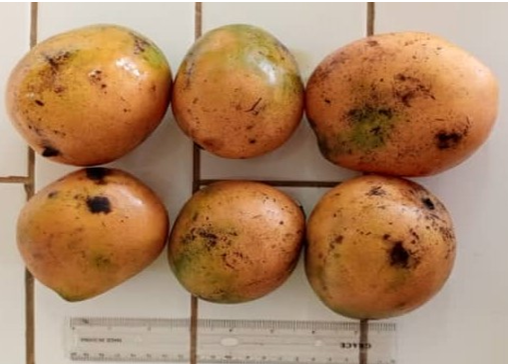
The biological material used in this study consisted of a variety of mango: Kent (Figure 1). This variety of mango came from a dried mango production plant in Korhogo. These were mangoes that were rotten, defective, or excluded from the processing chain. These mangoes were sent to the microbiology laboratory at Peleforo GON COULIBALY University (UPGC) for microbiological analysis.
2.2. MethodsMango pulp (25 g) was mixed with 225 ml of peptone saline solution (0.1% (w/v) bactopeptone and 0.85% (w/v) NaCl). The solution thus prepared constituted the stock solution, which underwent successive decimal dilutions (10-1 to 10-4) with a tryptone salt solution. A volume of 100 μL of each dilution was spread onto MYGP agar (3 g/L yeast extract, 3 g/L malt extract, 5 g/L bactopeptone, and 10 g/L glucose) containing 100 mg/L chloramphenicol. After inoculation, the Petri dishes were incubated and the yeast strains were identified morphologically after 3 days of incubation at 30°C. The yeast cells were then observed in their fresh state under a precision optical microscope (Zeiss Microlmaging GmbH 37081, Germany) at ˟100 magnifications. The presumptive yeast isolates were stored in cryotubes containing MYGP broth supplemented with 20% glycerol at -20°C for further testing (Soumahoro et al., 2024).
Depending on the test to be performed, the strains are cultured overnight at 25°C on MYGP agar or in MYGP broth, and the cultures are then used to inoculate either MYGP broth or specific media. For the latter, each strain is harvested by centrifugation (5,000 rpm for 10 min), washed once in a 0.9% (w/v) NaCl solution, then resuspended in the same solution to an optical density (OD) 600 of 1.0 16. Each strain is then deposited (5 µL) in duplicate on specific media.
The fermentative capacity of yeast strains isolated from mango pulp was studied using the method of 17 with slight modifications. A 24-hour pre-culture (100 µL) with an optical density of 0.7 at 600 nm was inoculated into a test tube containing 10 mL of YPG medium and a hemolysis tube (replacing the Durham tube). The culture was incubated at 30°C for 6 days without agitation. Fermentation capacity was determined by measuring gas production in the hemolysis tube. Under anaerobic conditions, yeasts oxidize sugars into ethanol with CO2 production 18. The volume of CO2 correlated with the fermentation capacity of the strain is related to the ethanol produced 19.
The method described by 20 was used to demonstrate catalytic activity. Yeast biomass, collected with a sterile 1 μL loop, was added to a drop of 3% (v/v) H2O2. The formation of bubbles indicates the production of catalase by the tested yeasts.
A loop (1 µL) of biomass from each strain was spread on Chalk agar (yeast extract 3 g/L, glucose 10 g/L, calcium carbonate 3 g/L, agar 15 g/L) and incubated for 7 days at 25 °C 21. The presence and extent of a clear halo around the yeast biomass indicates the rate of acetic acid production.
The method described by 22 was used to demonstrate protease activity. One hundred (100) ml of 5MYGP medium containing 3 g/L malt extract, 3 g/L yeast extract, 5 g/L bacteriological peptone, 10 g/L glucose, 5 g/L of NaCl, and 20 g/L of agar were prepared and then sterilized for 15 min in an autoclave at 121°C. Separately, 100 ml of a skim milk solution (10% w/v) was prepared and also sterilized in an autoclave at 121°C. The two media were mixed and then poured into Petri dishes. However, before pouring, the pH was adjusted to pH 3.5. The isolates were then inoculated by spot and incubated at 30°C in an oven for 48 hours. The presence of a clear zone around the colony indicates the presence of protease activity.
The effect of temperature and pH was evaluated on yeast strains with high fermentation capacity. To do this, the yeast strains were cultured in a standard liquid medium containing 0.05% yeast extract, 0.3% casein peptone, and 1% glucose at pH 5.6. To evaluate the influence of temperature on the growth of yeast isolates, 10 mL of the standard liquid medium contained in a test tube was inoculated with 100 µL of yeast pre-culture, DO600 = 0.7. The cultures were then incubated for 72 hours at varying temperatures ranging from 30 to 50°C. The influence of pH variations on the growth of yeast isolates was analyzed in the same medium at different pH values (2.5, 4, 5, and 7) and incubated at 30°C. The growth of yeast isolates was determined by measuring the turbidity of the culture medium at 600 nm using a spectrophotometer.
All measurements were performed in triplicate. Statistical data analysis was performed using Statistica software version 7.1. Means were compared using Tuckey's HSD test with a significance level of 5% (p < 0.050).
On MYGP medium, twenty-one (21) presumptive nommé de YK1 à YK21 yeast isolates have been isolated from mango pulp. Table 1 shows the morphology, color, and texture of the colonies of the different strains grown on MYGP agar.
Twenty-one (21) yeast isolates were tested for their ability to produce CO2. Based on their fermentation capacity, these twenty-one (21) yeast isolates were classified into three (3) groups according to the volume of CO2 produced (Table 2). The volumes ranged from 0 to 7.5 cm3. Among the twenty-one (21) yeast isolates analyzed for their fermentation capacity, seven (07), or 33.33%, showed a high fermentation capacity. These isolates produced a CO2 volume greater than 4 cm3. Eight (08) isolates, or 38.09%, were considered to have moderate fermentation capacity due to their CO2 production of between 1 and 4 cm3. Finally, six (06) isolates, or 28.57% of the remaining isolates, were classified as having low fermentation capacity due to their CO2 production of less than 1 cm3 (Table 3).
Catalase production varies depending on the isolates (Table 4). They were classified according to the intensity of their activity, i.e., low (+), good (++), and optimal (+++). Thus, 03 strains had optimal activity, 07 strains had average activity, and 11 strains had low activity.
Observation of the culture medium (chalk agar) on which the various yeast isolates were seeded shows the absence of a clear halo around the biomass of all yeast isolates. This indicates that the isolates do not produce acetic acid. However, six (06) isolates showed acid production among the 21 tested, while the others did not produce acid (Table 4).
All isolates were seeded on MYGP culture medium mixed with skimmed milk solution and incubated at 30°C for 48 hours. Observation of these isolates on the culture medium showed the presence of a clear zone around each yeast isolate, indicating the degradation of proteins contained in the medium. This reveals the presence of protease activity. Thus, of the 21 yeast isolates tested, 17 reacted and 04 isolates had a negative reaction (Table 4).

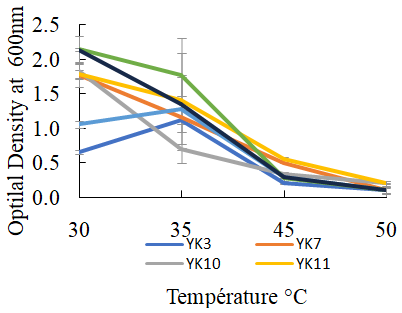
The growth of yeast isolates with high fermentation capacity (YK3, YK7, YK10, YK11, YK12, YK18, and YK20) was evaluated at different temperatures, namely 30°C, 35°C, 45°C, and 50°C (Figure 2). Analysis of variance showed a significant difference (p˂0.05) in the growth of the selected yeast isolates at all temperatures except 35°C, where no significant difference was observed. The growth of the isolates varied depending on the temperature. A gradual decline in growth was observed for isolates YK7, YK10, YK11, YK18, and YK20 from 30°C to 45°C. Most isolates grew best at 30°C. However, between 30 and 35°C, growth increased for isolates YK3 and YK12, which reached their peak (optimum temperature) at 35°C. After the peak, the growth of these two isolates declined sharply up to 45°C. From 45 to 50°C, growth became stationary for all isolates, and at 50°C, isolate YK11 showed the best growth at this temperature (OD = 0.2), while isolate YK3 showed the lowest growth (OD = 0.1).
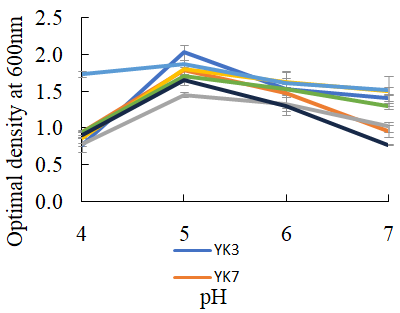
The results showed a significant difference (p˂0.05) between yeast isolates selected at different pH concentrations. The influence of pH on the growth of yeast isolates with high fermentation capacity varies depending on the pH concentration (Figure 3). This growth of yeast isolates occurred in two phases. In the first phase (from 4 to 5), rapid growth was observed for all isolates except isolate YK12, which grew slowly. All isolates reached their peak at pH = 5. Isolate YK3 recorded the highest growth value (OD = 2.0) and isolate YK10 recorded the lowest value (OD = 1.4). In the second phase (from 5 to 7), there was a gradual decline in growth for all isolates up to pH = 7, where the highest value (DO = 1.5) was obtained for isolate YK12, while isolate YK20 recorded the lowest value (DO = 0.8).

The first part of this study consisted of isolating yeasts from the pulp of Kent mangoes. Isolation on MYGP medium yielded 21 isolates: YK1 to YK21. The study of phenotypic characteristics allowed us to distinguish two colonies that share the same criteria: small convex colonies, white, matte/opaque with irregular contours, and large convex colonies, white, smooth/shiny with regular contours. These results are identical to those of 23, who states that the characteristics of pure yeast strains lie in their size, color, surface appearance, contour appearance, relief, consistency, and transparency.
The second part of the study consisted of screening the yeast isolates to select the best ones for use as starters for ethanol production. Indeed, the ability of a strain to perform better technologically and functionally is a key property for its selection as a potential starter 24. Thus, among the 21 yeast strains tested for their fermentation capacity, seven (07) showed a high fermentation capacity with a CO2 volume greater than 4 cm3. These results are identical to those of 25, who showed that among 743 strains, 113 yeast strains were selected for their high fermentation capacity with a CO2 volume greater than 4 cm3. These yeast strains are likely to produce large quantities of ethanol because during alcoholic fermentation, the amount of carbon dioxide (CO2) corresponds to the amount of ethanol produced 26. Ethanol produced during the alcoholic fermentation of plant biomass is of great importance in industry and other fields. Ethanol is also known as ethyl alcohol. Its molecular formula is CH3CH2OH. Bioethanol, or bio-based ethanol, is ethanol produced by fermentation from biomass. The same organic compound is found in alcoholic beverages. Today, bioethanol is the most widely used liquid biofuel in the world. It is mainly produced by fermenting (yeast) sugar or starch from various raw materials, including sugar cane, sugar beet, corn, cereals, agricultural waste, forestry waste, municipal waste, livestock manure, etc.
Of the twenty-one strains studied, only six produced acetic acid. Acetic acid is one of the compounds that influence the sensory profile of wine, thus contributing to the definition of its quality. An acetic acid concentration of 0.7 to 1.1 g/L is considered unpleasant. The maximum acceptable limit for volatile acidity in most wines is 1.2 g/L of acetic acid 27, 28. Strains that produce little or no acetic acid are the most interesting. From this point of view, the fifteen strains that did not produce acetic acid are the most interesting. They could be used as starters in the production of wine or biofuel in the agri-food industry.
The results of the catalase test provided information on the strains' ability to cope with oxidative stress and perform better during fermentation 29. The twenty-one (21) strains tested in this study were positive for catalase to varying degrees, as confirmed by several authors 30, 31, 32. However, strains YK14 and YK19, which had the highest catalytic activity, are the most suitable for alcoholic fermentation.
All the strains tested grew well at the different temperatures and pH levels studied. The ability of the strains to grow at high temperatures and low pH levels allows them to adapt to harsh environments. Their resistance to different temperatures corroborates the results of Leveau and Bouix (1993), who reported similar optimal temperatures for yeasts. In addition, the strains studied grew best at pH 5, a result consistent with the findings of 33, who isolated yeasts from Cola cordifolia pulp with an optimal growth temperature around pH 5. However, these results differ from those of 25, indicating that the best growth of yeasts at the pH level of cocoa pulp is between 3 and 4.
Twenty-one (21) pure isolates were isolated from the pulp of Kent mangoes. Among these twenty-one (21) yeast isolates, three (3) isolates, namely YK14, YK19, and YK20, showed the best characteristics for fermentation, namely high CO2 production, no acetic acid production, high catalytic and protease activity, and good resistance to temperature and pH variations. The growth of these yeast isolates under stress conditions confirms the ability of these yeast strains to be used as starters in many food processes, particularly in fruit fermentation.
| [1] | Grant, W., Kadondi, E., Mbaka, M., & Ochieng, S. (2015). Opportunities for financing the mango value chain: A case study of lower eastern Kenya. FSD Kenya (Nairobi, Kenya), 52 p. | ||
| In article | |||
| [2] | Jedele, S., Hau, A. M., Von Oppen, M. (2003). An analysis of the world market for mangos and its importance for developing countries. Deutscher Tropentag 2003, Göttingen, October 8-10, 2003. Conference on International Agricultural Research for Development. | ||
| In article | |||
| [3] | FAO. (2020). Major Tropical Fruits: Market Review February 2020 24. | ||
| In article | |||
| [4] | Trade H. (2017). Symposium sur la Mangue: accroître les exportations et la compétitivité de la mangue fraîche transformée en Côte d’Ivoire. 6-7 avril 2017 Hôtel Olympe Korhogo, Côte d’Ivoire, 28p. | ||
| In article | |||
| [5] | FAO. (2021). FAOSTAT Yeasts characteristic and identification. nd 2 Edition, Cambridge University Press, pp. 1-2. | ||
| In article | |||
| [6] | Rodríguez-Galán O (2013) Hélicases à ARN de levure et humaines impliquées dans la biogenèse des ribosomes: état actuel et perspectives. Biochim Biophys Acta 1829(8): 775-90. | ||
| In article | View Article PubMed | ||
| [7] | Paull RE et Duarte O. (2011). Fruits tropicaux, 2e édition, volume 1, série «Sciences de la production végétale en horticulture ». 366 p. | ||
| In article | |||
| [8] | Koffi O., Samagaci L., Goualie B., Niamke S. (2018). Screening of potential yeast starters with high ethanol production for a small-scale cocoa fermentation in Ivory Coast. Food and Environment Safety, 7 (2): 113 – 130. | ||
| In article | |||
| [9] | Maldonado-Celis, M. E., Yahia, E. M., Bedoya, R., Landázuri, P., Loango,N., Aguillón, J. , Restrepo, B. and Ospina, J. C. G. (2019). Chemical Composition of Mango (Mangifera indica L.) Fruit: Nutritional and Phytochemical Compounds. Frontiers in Plant Science, Vol 10, p. 1073. | ||
| In article | View Article PubMed | ||
| [10] | Arnoldus Van Rhijn (2011) on aphasia: A forgotten thesis .0010-9452. | ||
| In article | |||
| [11] | Kansci, G., Koubala, BB & Mbome, LI, (2003). Effet de la maturation sur la composition et l'aptitude à la confiture de différentes variétés de mangue (Mangifera indica). African Journal of Biotechnol ogy, 2 (9), 301-306. | ||
| In article | |||
| [12] | Yaouba A. and Mpounze E. G. P. (2017). Isolation and pathogenicity evaluation of postharvest fungal of some fruits in Cameroun. International Journal of Environment, Agriculture and Biotechnology (IJEAB), 256 -60. | ||
| In article | |||
| [13] | Kouamé L. M, kouamé A. K, Ouattara L., Kouadio N. F., Mireille W. alloue - B et Koffi D.M. (2020). Contraintes liées à la production et à la commercialisation des mangues (Mangifera indica) en Côte d’Ivoire: cas des variétés exportées vers l’Europe.27p. | ||
| In article | |||
| [14] | Kanté T. H. (2019). Valorisation des variétés de mangue produites au Burkina Faso: aspects biochimiques, biotechnologiques et nutritionnels.72p. | ||
| In article | |||
| [15] | Sidari, R., Ženišová, K., Tobolková, B., Belajová, E., Cabicarová, T., Buˇcková., M., Puškárová, A., Planý, M., Kuchta, T and Pangallo, D. (2021). Wine yeasts selection: Laboratory characterization and protocol review, Microorganisms, 9(11), 1-27. | ||
| In article | View Article PubMed | ||
| [16] | Dung N. T. P et Phong. X.H. (2013). Screening Thermo- and Ethanol Tolerant Bacteria for Ethanol Fermentation. American Journal of Microbiological Research, 1(2), 25-31. | ||
| In article | View Article | ||
| [17] | Hesclot, H., & Vladescu, B. (1994). La levure dans les industries alimentaires Ed. Tec & Doc, Lavoisier, p. 56. | ||
| In article | |||
| [18] | Dung N T. P., Pornthap T. & Huynh X. P., (2012) - Screening useful isolated yeasts for ethanol fermentation at high temperature. International Journal of Applied Science & Technology, 4: 65-71. | ||
| In article | |||
| [19] | Bautista Gallego, J.; Rodríguez-Gómez, F.; Barrio, E.; Querol, A.; Garrido-Fernandez, A.; Arroyo-López, F.N (2011). Exploring the yeast biodiversity of green table olive industrial fermentations for technological applications. Int. J. Food Microbiol.147, 89–96. | ||
| In article | View Article PubMed | ||
| [20] | Lemaresquier, H.; Gainvors, A.; Lequart, C.; Charlemagne, B.; Frézier, V.; Belarbi, A. (1995). Sélection de levures oenologiques á activité clarifiante. Rev. Fr. Oenol. 154, 23–29. | ||
| In article | |||
| [21] | Comitini, F.; Gobbi, M.; Domizio, P.; Romani, C.; Lencioni, L.; Mannazzu, I.; Ciani, M. (2011). Selected non-Saccharomyces wine yeasts in controlled multistarter fermentations with Saccharomyces cerevisiae. Food Microbiology., 28, 873–882. | ||
| In article | View Article PubMed | ||
| [22] | Tokindrainy A. J. C. (2015). Isolement et identification des levures du fruit du bibacier de la region vakinankaratra. Memoire de master pour l’obtention de diplôme d’étude approfondie en sciences de la vie. Université d’Antanariovo, Madagascar, 42 pages. | ||
| In article | |||
| [23] | Holzapfel W. H. (2002). Appropriate starter culture technologies for small-scale fermentation in developing countries. International journal of Food Microbiology, 75 (3): 197-212. | ||
| In article | View Article PubMed | ||
| [24] | Koffi O., Samagaci L., Goualie B., Niamke S. (2018). Screening of potential yeast starters with high ethanol production for a small-scale cocoa fermentation in Ivory Coast. Food and Environment Safety, 7 (2): 113 – 130. | ||
| In article | |||
| [25] | (Dung et al., 2012).Dung N. T. P et Phong. X.H. (2013). Screening Thermo- and Ethanol Tolerant Bacteria for Ethanol Fermentation. American Journal of Microbiological Research, 1(2), 25-31. | ||
| In article | View Article | ||
| [26] | Lambrechts, M.G.; Pretorius, I.S. (2000). Yeast and its importance to wine aroma-A review. S. Afr. J. Enol. Vitic. 21, 97–129. | ||
| In article | View Article | ||
| [27] | OIV. (2010). International Code of Oenological Practices; Office Internationale de la Vigne et du Vin: Paris, France. | ||
| In article | |||
| [28] | Bisson L. F., Karpel, J. E., Ramakrishnan, V., Joseph, L. (2007). Functional Genomics of Wine Yeast Saccharomyces cerevisiae. Advances In Food And Nutrition Research, 65-121. | ||
| In article | View Article PubMed | ||
| [29] | Mestre Furlani, M.V.; Maturano, J.P.; Combina, M.; Mercado, L.A.; Toro, M.E.; Vazquez, F. (2017). Selection of non-Saccharomyces yeasts to be used in grape musts with high alcoholic potential: A strategy to obtain wines with reduced ethanol content. FEMS Yeast Res. 17, 1–10. | ||
| In article | View Article PubMed | ||
| [30] | Barbosa, C.; Lage, P.; Esteves, M.; Chambel, L.; Mendes-Faia, A.; Mendes-Ferreira, A (2018). Molecular and phenotypic characterization of Metschnikowia pulcherrima strains from Douro wine region. Fermentation, 4, 8. | ||
| In article | View Article | ||
| [31] | Soumahoro, S., Kouame, M. L., Yao, W. K., Toure, A. and Soro, Y. R. (2024). “Physico-Chemical Analysis and Isolation of Yeasts from Wild Fruits Cola Cordifolia in the North of Côte d’Ivoire: Selection of Potential Starters”. Journal of Advances in Biology & Biotechnology, Vol 27, No10, pp. 104-12. | ||
| In article | View Article | ||
| [32] | Soumahoro, S., Kouame, M. L., Yao, W. K., Toure, A. and Soro, Y. R. (2024). Cashew apples: Physico-chemical analysis and occurrence of yeasts in plantations north of Côte d'Ivoire for processing into bioethanol and fermented beverages. GSC Biological and Pharmaceutical Sciences, Vol 29 No 01, pp. 124-133. | ||
| In article | View Article | ||
| [33] | Botton B. (1991). La physiologie des levures. Dans: Larpent J.P., biotechnologies des levures. Masson, Milan Barcelone bonn. Paris: 96-128. | ||
| In article | |||
| [34] | Dung N. T. P et Phong. X.H. (2013). Screening Thermo- and Ethanol Tolerant Bacteria for Ethanol Fermentation. American Journal of Microbiological Research, 1(2), 25-31. | ||
| In article | View Article | ||
| [35] | Leveau J. Y. et Bouix M. (1993). Microbiologie industrielle. Les micro-organismes d’intérêt industriel. Edition Lavoisier TEC et DOC, Paris (France), 612 pages. | ||
| In article | |||
| [36] | Rodríguez-Galán O (2013) Hélicases à ARN de levure et humaines impliquées dans la biogenèse des ribosomes: état actuel et perspectives. Biochim Biophys Acta 1829(8): 775-90. | ||
| In article | View Article PubMed | ||
Published with license by Science and Education Publishing, Copyright © 2026 Souleymane Soumahoro, Maimouna Liliane Kouame, Noka Lahissa Bakayoko, Sekou Coulibaly, Abdoulaye Toure and Yadé René Soro
 This work is licensed under a Creative Commons Attribution 4.0 International License. To view a copy of this license, visit
http://creativecommons.org/licenses/by/4.0/
This work is licensed under a Creative Commons Attribution 4.0 International License. To view a copy of this license, visit
http://creativecommons.org/licenses/by/4.0/
| [1] | Grant, W., Kadondi, E., Mbaka, M., & Ochieng, S. (2015). Opportunities for financing the mango value chain: A case study of lower eastern Kenya. FSD Kenya (Nairobi, Kenya), 52 p. | ||
| In article | |||
| [2] | Jedele, S., Hau, A. M., Von Oppen, M. (2003). An analysis of the world market for mangos and its importance for developing countries. Deutscher Tropentag 2003, Göttingen, October 8-10, 2003. Conference on International Agricultural Research for Development. | ||
| In article | |||
| [3] | FAO. (2020). Major Tropical Fruits: Market Review February 2020 24. | ||
| In article | |||
| [4] | Trade H. (2017). Symposium sur la Mangue: accroître les exportations et la compétitivité de la mangue fraîche transformée en Côte d’Ivoire. 6-7 avril 2017 Hôtel Olympe Korhogo, Côte d’Ivoire, 28p. | ||
| In article | |||
| [5] | FAO. (2021). FAOSTAT Yeasts characteristic and identification. nd 2 Edition, Cambridge University Press, pp. 1-2. | ||
| In article | |||
| [6] | Rodríguez-Galán O (2013) Hélicases à ARN de levure et humaines impliquées dans la biogenèse des ribosomes: état actuel et perspectives. Biochim Biophys Acta 1829(8): 775-90. | ||
| In article | View Article PubMed | ||
| [7] | Paull RE et Duarte O. (2011). Fruits tropicaux, 2e édition, volume 1, série «Sciences de la production végétale en horticulture ». 366 p. | ||
| In article | |||
| [8] | Koffi O., Samagaci L., Goualie B., Niamke S. (2018). Screening of potential yeast starters with high ethanol production for a small-scale cocoa fermentation in Ivory Coast. Food and Environment Safety, 7 (2): 113 – 130. | ||
| In article | |||
| [9] | Maldonado-Celis, M. E., Yahia, E. M., Bedoya, R., Landázuri, P., Loango,N., Aguillón, J. , Restrepo, B. and Ospina, J. C. G. (2019). Chemical Composition of Mango (Mangifera indica L.) Fruit: Nutritional and Phytochemical Compounds. Frontiers in Plant Science, Vol 10, p. 1073. | ||
| In article | View Article PubMed | ||
| [10] | Arnoldus Van Rhijn (2011) on aphasia: A forgotten thesis .0010-9452. | ||
| In article | |||
| [11] | Kansci, G., Koubala, BB & Mbome, LI, (2003). Effet de la maturation sur la composition et l'aptitude à la confiture de différentes variétés de mangue (Mangifera indica). African Journal of Biotechnol ogy, 2 (9), 301-306. | ||
| In article | |||
| [12] | Yaouba A. and Mpounze E. G. P. (2017). Isolation and pathogenicity evaluation of postharvest fungal of some fruits in Cameroun. International Journal of Environment, Agriculture and Biotechnology (IJEAB), 256 -60. | ||
| In article | |||
| [13] | Kouamé L. M, kouamé A. K, Ouattara L., Kouadio N. F., Mireille W. alloue - B et Koffi D.M. (2020). Contraintes liées à la production et à la commercialisation des mangues (Mangifera indica) en Côte d’Ivoire: cas des variétés exportées vers l’Europe.27p. | ||
| In article | |||
| [14] | Kanté T. H. (2019). Valorisation des variétés de mangue produites au Burkina Faso: aspects biochimiques, biotechnologiques et nutritionnels.72p. | ||
| In article | |||
| [15] | Sidari, R., Ženišová, K., Tobolková, B., Belajová, E., Cabicarová, T., Buˇcková., M., Puškárová, A., Planý, M., Kuchta, T and Pangallo, D. (2021). Wine yeasts selection: Laboratory characterization and protocol review, Microorganisms, 9(11), 1-27. | ||
| In article | View Article PubMed | ||
| [16] | Dung N. T. P et Phong. X.H. (2013). Screening Thermo- and Ethanol Tolerant Bacteria for Ethanol Fermentation. American Journal of Microbiological Research, 1(2), 25-31. | ||
| In article | View Article | ||
| [17] | Hesclot, H., & Vladescu, B. (1994). La levure dans les industries alimentaires Ed. Tec & Doc, Lavoisier, p. 56. | ||
| In article | |||
| [18] | Dung N T. P., Pornthap T. & Huynh X. P., (2012) - Screening useful isolated yeasts for ethanol fermentation at high temperature. International Journal of Applied Science & Technology, 4: 65-71. | ||
| In article | |||
| [19] | Bautista Gallego, J.; Rodríguez-Gómez, F.; Barrio, E.; Querol, A.; Garrido-Fernandez, A.; Arroyo-López, F.N (2011). Exploring the yeast biodiversity of green table olive industrial fermentations for technological applications. Int. J. Food Microbiol.147, 89–96. | ||
| In article | View Article PubMed | ||
| [20] | Lemaresquier, H.; Gainvors, A.; Lequart, C.; Charlemagne, B.; Frézier, V.; Belarbi, A. (1995). Sélection de levures oenologiques á activité clarifiante. Rev. Fr. Oenol. 154, 23–29. | ||
| In article | |||
| [21] | Comitini, F.; Gobbi, M.; Domizio, P.; Romani, C.; Lencioni, L.; Mannazzu, I.; Ciani, M. (2011). Selected non-Saccharomyces wine yeasts in controlled multistarter fermentations with Saccharomyces cerevisiae. Food Microbiology., 28, 873–882. | ||
| In article | View Article PubMed | ||
| [22] | Tokindrainy A. J. C. (2015). Isolement et identification des levures du fruit du bibacier de la region vakinankaratra. Memoire de master pour l’obtention de diplôme d’étude approfondie en sciences de la vie. Université d’Antanariovo, Madagascar, 42 pages. | ||
| In article | |||
| [23] | Holzapfel W. H. (2002). Appropriate starter culture technologies for small-scale fermentation in developing countries. International journal of Food Microbiology, 75 (3): 197-212. | ||
| In article | View Article PubMed | ||
| [24] | Koffi O., Samagaci L., Goualie B., Niamke S. (2018). Screening of potential yeast starters with high ethanol production for a small-scale cocoa fermentation in Ivory Coast. Food and Environment Safety, 7 (2): 113 – 130. | ||
| In article | |||
| [25] | (Dung et al., 2012).Dung N. T. P et Phong. X.H. (2013). Screening Thermo- and Ethanol Tolerant Bacteria for Ethanol Fermentation. American Journal of Microbiological Research, 1(2), 25-31. | ||
| In article | View Article | ||
| [26] | Lambrechts, M.G.; Pretorius, I.S. (2000). Yeast and its importance to wine aroma-A review. S. Afr. J. Enol. Vitic. 21, 97–129. | ||
| In article | View Article | ||
| [27] | OIV. (2010). International Code of Oenological Practices; Office Internationale de la Vigne et du Vin: Paris, France. | ||
| In article | |||
| [28] | Bisson L. F., Karpel, J. E., Ramakrishnan, V., Joseph, L. (2007). Functional Genomics of Wine Yeast Saccharomyces cerevisiae. Advances In Food And Nutrition Research, 65-121. | ||
| In article | View Article PubMed | ||
| [29] | Mestre Furlani, M.V.; Maturano, J.P.; Combina, M.; Mercado, L.A.; Toro, M.E.; Vazquez, F. (2017). Selection of non-Saccharomyces yeasts to be used in grape musts with high alcoholic potential: A strategy to obtain wines with reduced ethanol content. FEMS Yeast Res. 17, 1–10. | ||
| In article | View Article PubMed | ||
| [30] | Barbosa, C.; Lage, P.; Esteves, M.; Chambel, L.; Mendes-Faia, A.; Mendes-Ferreira, A (2018). Molecular and phenotypic characterization of Metschnikowia pulcherrima strains from Douro wine region. Fermentation, 4, 8. | ||
| In article | View Article | ||
| [31] | Soumahoro, S., Kouame, M. L., Yao, W. K., Toure, A. and Soro, Y. R. (2024). “Physico-Chemical Analysis and Isolation of Yeasts from Wild Fruits Cola Cordifolia in the North of Côte d’Ivoire: Selection of Potential Starters”. Journal of Advances in Biology & Biotechnology, Vol 27, No10, pp. 104-12. | ||
| In article | View Article | ||
| [32] | Soumahoro, S., Kouame, M. L., Yao, W. K., Toure, A. and Soro, Y. R. (2024). Cashew apples: Physico-chemical analysis and occurrence of yeasts in plantations north of Côte d'Ivoire for processing into bioethanol and fermented beverages. GSC Biological and Pharmaceutical Sciences, Vol 29 No 01, pp. 124-133. | ||
| In article | View Article | ||
| [33] | Botton B. (1991). La physiologie des levures. Dans: Larpent J.P., biotechnologies des levures. Masson, Milan Barcelone bonn. Paris: 96-128. | ||
| In article | |||
| [34] | Dung N. T. P et Phong. X.H. (2013). Screening Thermo- and Ethanol Tolerant Bacteria for Ethanol Fermentation. American Journal of Microbiological Research, 1(2), 25-31. | ||
| In article | View Article | ||
| [35] | Leveau J. Y. et Bouix M. (1993). Microbiologie industrielle. Les micro-organismes d’intérêt industriel. Edition Lavoisier TEC et DOC, Paris (France), 612 pages. | ||
| In article | |||
| [36] | Rodríguez-Galán O (2013) Hélicases à ARN de levure et humaines impliquées dans la biogenèse des ribosomes: état actuel et perspectives. Biochim Biophys Acta 1829(8): 775-90. | ||
| In article | View Article PubMed | ||