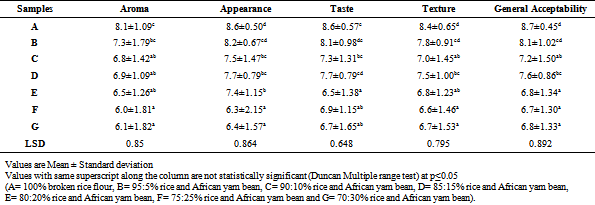
Masa is one of Nigerian indigenous food product that is produced from cereal crops such as rice, maize, guinea corn and millet. It is mostly consumed by all age groups in Nigeria in various forms. As a cereal based food product, it is lacking in protein, hence the objective of this study was to evaluate the selected physico-chemical, antioxidant and sensory properties of masa produced from inexpensive broken rice enriched with African yam bean an underutilized leguminous crop. In this study broken rice kernel and African yam bean were separately processed into flour and blended into 9 different ratios from which a preliminary sensory evaluation was carried out to determine 7 suitable blend formulations for the study, samples were labelled sample A (100% rice), sample B (95:5 rice and African yam bean blend), sample C (90:10 rice and African yam bean blend), sample D (85:15 rice and African yam bean blend), sample E (80:20 rice and African yam bean blend), sample F (75:25 rice and African yam bean blend) and sample G (70:30 rice and African yam bean blend). Functional, pasting, antioxidant and sensory properties were evaluated according to standard procedures and compared with the control, sample prepared from rice alone. Results for functional properties showed that bulk density and oil absorption capacity decreased with increasing substitution of African yam bean from 2.016 to 0.953g/cm3 and 0.9800 to 0.7833g/g respectively while that of water absorption, emulsion capacity and gelation concentration increased ranging from 1.780 to 2.093g/g, 22.763 to 27.806ml/g and 6.000 to 16.000 % respectively. Pasting properties showed increase in peak viscosity (168.55 to 181.85 RVU), pasting temperature (54.16 to 70.16°C) and trough viscosity (151.63 to 170.23 RVU) with increasing substitution of African yam bean while those of final viscosity, setback viscosity, breakdown viscosity and pasting time showed decrease ranging from 240.58 to 230.39 RVU, 88.96 to 60.17 RVU, 16.92 to 11.62 RVU and 9.86 to 6.00 min. respectively. Antioxidant activities for ferrous reducing antioxidant properties, hydroxyl radical, DPPH radical scavenging ability and ferrous chelating ability ranged from 0.120 to 0.320mmol/100g, 45.713 to 65.716%, 34.946 to 45.800% and 36.250 to 46.250% respectively. The sensory evaluation showed that African yam bean enriched samples were generally accepted with scores ranging from 6.040 to 8.120 for aroma, 6.423 to 8.600 for appearance, 6.560 to 8.600 for taste, 6.680 to 8.440 for texture, and 6.760 to 8.720 for overall acceptability. The study indicates that protein enriched and acceptable masa could be produced from blends of broken rice and African yam bean, and masa produced with up to 5 % level of African yam bean compare favorably with the control sample in all the sensory attributes.
Masa is one of Nigerian indigenous food product that is produced from cereal crop such as Rice, Maize, Guinea corn and Millet 1. The product is fried in a pan with individual cuplike depressions, and is consumed in various forms by all age groups in several states of Nigeria 2. Masa is served either as breakfast, a snack item or sometimes with local soup as bread 1. Like most single cereal based products which are generally low in protein and micronutrients, rice-masa is deficient in protein and in amino acid lysine 3.
Masa is predominantly a carbohydrate-based food but low in protein quality 2. However, masa can be nutritionally fortified with the incorporation of other food substances that are indigenous to us and have high nutritional value but have been underutilized and neglected. One of such crops with untapped potentialities and good nutritional properties is Sphenostylis stenocarpa popularly called African Yam Bean 4, 5. Considering the fact that animal protein is very expensive and can hardly be afforded by low socio economic population, African Yam Bean serves as a major source of protein to such category of people that suffer from protein energy malnutrition 6.
African Yam Bean (Sphenostylis stenocarpa) is a leguminous crop usually cultivated for its edible seeds and tubers in most Sub-Saharan African Countries 6, 7. It belongs to the family Fabaceae which is the second biggest and one of the most economically important families among the dicotyledons 8, 9. African yam bean (Sphenostylis stenocarpa) was believed to originate in Ethiopia and is also cultivated throughout West Africa countries particularly, Cameroon, Cote d’Ivore, Ghana, Nigeria and Togo 10, 11, 12, 13. Rice is a staple food in Nigeria and is the major ingredient in masa production 14, 15.
Broken rice is currently underutilized, as it is used as agricultural waste and increases post-harvest loss 16, in spite of its high potential as a raw material for the preparation of functional foods and nutraceuticals 17, 18.
The dependence on cereal as a principal food in tropical African countries has compelled the need for improving the quality and acceptability for enhanced nutrient content 19.
Rice provides the bulk of daily calories for many animals and humans 20, its glycemic index is one of the popular issues in the world, and people are re-evaluating whether to consume rice or not. Some studies even showed that rice consumption is related to higher risk of diabetes mellitus 21. These reasons necessitated the need to improve rice-based products in order to have a nutritionally balance food product with regards to availability of essential nutrients 22.
Studies has shown that African yam bean contain some anti-nutrients such as trypsin inhibitors, oxalates, phytates, tannins and saponins that interfere with the absorption of nutrients in the body 23, 24. Studies have also shown that simple processing methods reduce the level of anti-nutrients to the permissible limits 24. The use of broken rice in masa production will add value to the grain, improves its utilization and provides additional income to rice farmers.
Enrichment of staple food products with locally sourced, high protein and vitamin-rich food ingredients has been a valuable means of enhancing nutrient intakes in low-income countries 25, 26 The objective of this study was to evaluate the quality of masa produced from blends of underutilized broken rice and nutrient dense, inexpensive and underutilized African yam bean.
Broken rice (Oryza sativa L.), African yam bean (Sphenostylis stenocarpa), baker’s yeast (Sacharomyces cerevisiae), Sodium bicarbonate (kanwa), Sugar and Salt were purchased from a local market.
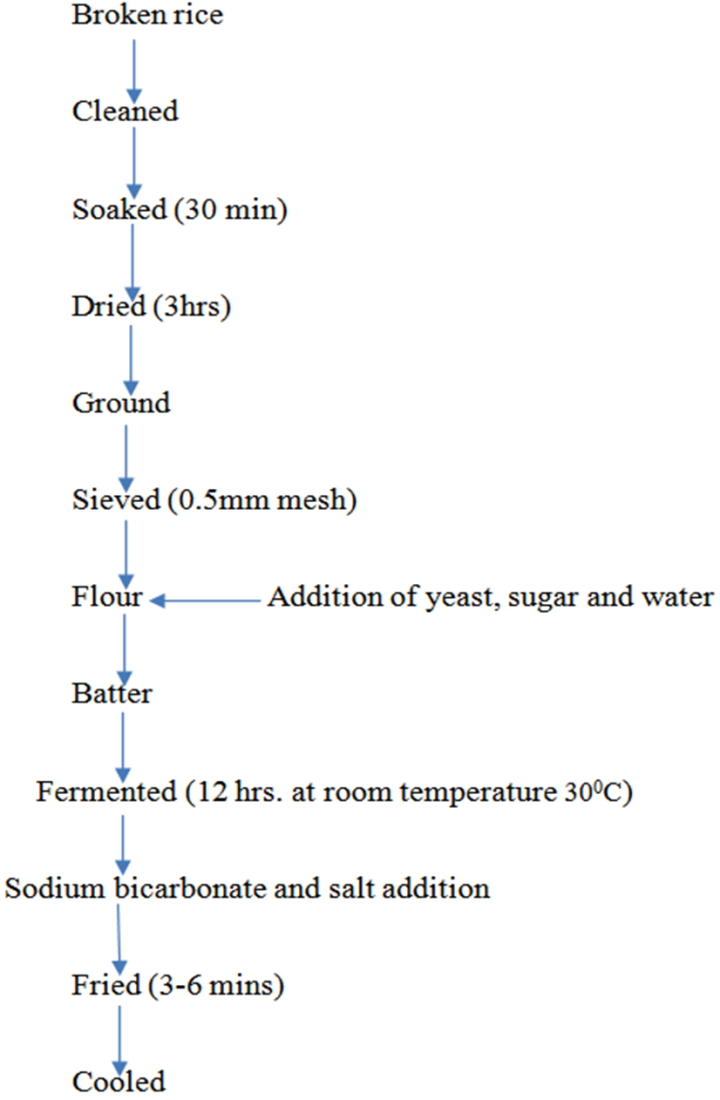
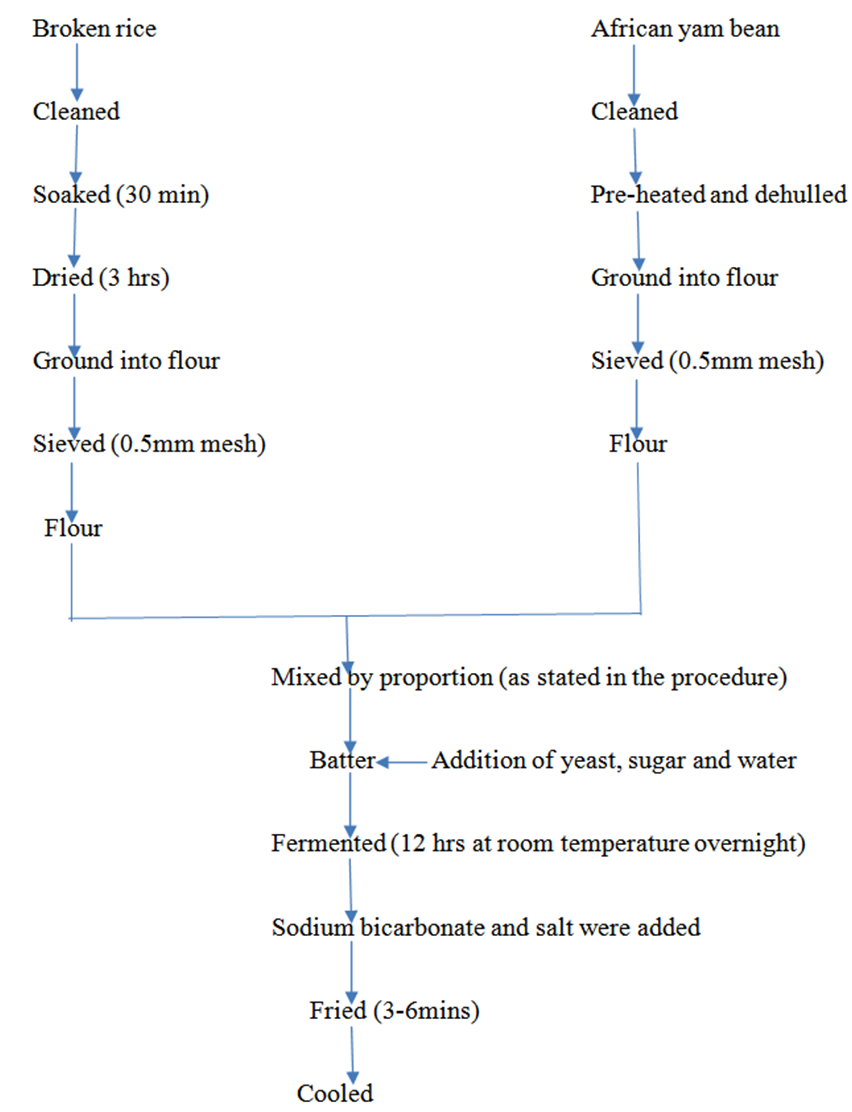
2.2. Preparation of SampleThe masa samples were prepared by the method described in the literature 1, 2, 3 with little modification in the recipe as shown in Figure 1.

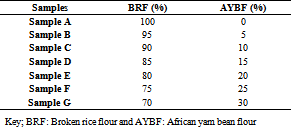
Broken rice was prepared using the method described by Owoicho et al (2020) 27. The Broken rice kernel was washed with clean water, oven dried at 45°C (3hrs), it was then milled into flour using laboratory grinder and sieved through a 0.5mm size mesh and was packaged in Low density polyethylene bags. The African yam bean was prepared using the method described by Shih et al (2003) and Vasupen et al (2008) 15, 16. The African yam bean was pre-soaked in water for 2 hours and boiled for 20 minutes to inactivate trypsin inhibitor activity and reduce the beany flavour 28. The boiled African yam bean was de-hulled by abrasion. The de-hulled African yam bean was dried to constant moisture content and then milled into flour to obtain African yam bean flour 29. The flour was prepared with different proportions of rice and African yam bean flour in the ratio 100:00, 95:5, 90:10, 85:15, 80:20, 75:25, and 70:30. As shown in Table 1. The flow chart for masa production is shown in Figure 2.
Bulk density was determined by the method described by Ade et al (2012) 29. A 5g flour sample was put into a 100ml measuring cylinder. The cylinder was tapped on laboratory bench manually until a constant volume was obtained. The bulk density (g /ml) was calculated as weight of flour (g) divided by flour volume (ml).
 |
Water absorption capacity was determined by the method described by Ade et al (2012) 29. Ten milliliters of distilled water was added to 1g of each sample in beakers. The suspension was stirred for 5 mins. The suspension obtained was thereafter centrifuged (Bosch Model No TDL-5, Germany) at 1415 RCF rpm for 30 mins and the supernatant was measured in a 10ml graduated cylinder. The density of water was taken as 1.0 g/cm3. Water absorbed was calculated as the difference between the initial volume of water added to the sample and the volume of the supernatant.
Oil absorption capacity was determined by the method described by Ade et al (2012) 29. Ten milliliters of soybean oil were added to 1g of each sample in beakers and allowed to stand at ambient temperature (30°C) for 30 min, then thereafter centrifuged (Bosch Model No TDL-5, Germany) at 1415 RCF for 30 mins and the supernatant was measured in a 10ml graduated cylinder. Oil absorbed was calculated as the difference between the initial volume of oil added to the sample and the volume of the supernatant.
Emulsion capacity of the samples were determined by the method described by Adebowale et al (2015) 30. One gram of sample, 10ml distilled water and 10ml of soybean oil was prepared in a calibrated centrifuged tube. The emulsion was centrifuged at 448 RCF for 5min and the ratio of the height of emulsion layer to the total height of the mixture was calculated as emulsion capacity in percentage.
Gelation concentration was determined by the method described by Ade et al (2012) 29. Test tubes containing suspension of 2-20% w/v of samples prepared in 5ml distilled water were heated for 1hr in boiling water followed by cooling in ice and further cooling for 2hrs at 30°C. The least gelation concentration was the one at which the sample did not fall down or slip when the test tube was inverted.
2.4. Pasting CapacityThe pasting properties was determined by the method described by Yasumatsu et al (1972) 31 using a Rapid Visco Analyzer. Three grams of the samples were weighed and dispensed into the test canister. 25.0 ml of distilled water was dispensed into the canister. The different flour sample slurry was heated from 50°C to 95°C at the rate of 12°C/min, maintained at 95°C for 2.5min, and then cooled to 50°C at the same rate. Paddle speed was then set at 3 RCF and the pasting parameters recorded were peak viscosity, final viscosity, setback viscosity, breakdown viscosity, pasting time, pasting temperature and trough.
2.5. Antioxidant PropertiesThe antioxidant properties of the sample was determined by the methods described by Ogundele et al (2015) 32. 20g of each sample was extracted with 80% methanol for 2hrs at room temperature.
2.6. Ferric Reducing Antioxidant Power (FRAP)Two mills of each sample extract were mixed with 2.5 mL of phosphate buffer (200 mM, pH 6.6) and 2.5 mL of 1% potassium ferricyanide. The mixtures were incubated for 20 min at 50°C. After incubation, 2.5 mL of 10% trichloroacetic acid were added to the mixtures, followed by centrifugation at 650×g for 10 min. The upper layer (5 mL) was mixed with 5 mL of distilled water and 1 mL of 0.1% ferric chloride and the absorbance of the resultant solution were measured at 700 nm.
2.7. Hydroxyl Radical Scavenging Ability20g of each sample was taken in four amber colored extraction bottles and soaked with 15mL of methanol. The sealed bottles were kept for 15 days with occasional shaking and stirring. The extracts were filtered separately through a fresh cotton plug and finally with Whatman No.1 filter papers. The filtrates were concentrated with a rotary evaporator (Bibby Sterlin Ltd, UK) under reduced pressure at 50 °C. Hydroxyl radical was generated by the Fe3+-ascorbate-EDTA-H2O2 system (Fenton reaction). The assay is based on the quantification of the 2-deoxy-d-ribose degradation product, which forms a pink chromogen upon heating with TBA at low pH. The reaction mixture contained 0.8 mL of phosphate buffer solution (50 mmol L−1, pH 7.4), 0.2 mL of extractives/standard at different concentration (12.5–150 μg/mL), 0.2 mL of EDTA (1.04 mmol L−1), 0.2 mL of FeCl3 (1 mmol L−1) and 0.2 mL of 2-deoxy-d-ribose (28 mmol L−1). The mixtures were kept in a water bath at 37 °C and the reaction was started by adding 0.2 mL of ascorbic acid, AA (2 mmol L−1) and 0.2 mL of H2O2 (10 mmol L−1). After incubation at 37 °C for 1 h, 1.5 mL of cold thiobarbituric acid, TBA (10 g L−1) was added to the reaction mixture followed by 1.5 mL of HCl (25 %). The mixture was heated at 100 °C for 15 min and then cooled down with water. The absorbance of solution was measured at 532 nm with a spectrophotometer. The hydroxyl radical scavenging capacity was evaluated with the inhibition of percentage of 2-deoxy-d-ribose oxidation on hydroxyl radicals. The percentage of hydroxyl radical scavenging activity was calculated according to the following formula:
 |
Where A0 is the absorbance of the control without a sample. A1 is the absorbance after adding the sample and 2-deoxy-D-ribose. A2 is the absorbance of the sample without 2-deoxy-d-ribose. Then % of inhibition was plotted against concentration, and from the graph IC50 was calculated. The experiment was repeated three times at each concentration.
2.8. DPPH Radical Scavenging ActivityStock solution was prepared by dissolving 24 mg DPPH with 100mL methanol and then stored at 20°C until needed. The working solution was obtained by mixing 10mL stock solution with 45mL methanol to obtain an absorbance of 1170.02 units at 515 nm using the spectrophotometer. Sample extracts (150 mL) were allowed to react with 2850 mL of the DPPH solution for 24 h in the dark. Absorbance was measured at 515 nm. The standard curve was linear between 25 and 800 mM Trolox. Results were expressed in mM TE/g fresh mass.
2.9. Ferrous Chelating AbilityFreshly prepared 500 μM FeSO4 (150 μL) was added to a reaction mixture containing 168 μL 0.1 M Tris-HCl (pH 7.4), 218 μL saline and the prepared sample extracts. The reaction mixture was incubated for 5 min, and 13 μL 0.25% 1.10-phenanthroline (w/v) was added. The absorbance was subsequently measured at 510 nm using a UV/Visible Spectrophotometer (Model 6405 jenway). The Fe(II) chelating ability was subsequently calculated.
2.10. Sensory Quality Attributes of MasaThe control sample (Broken rice alone) and the different proportions of composite enriched masa was tested for sensory evaluation 33. A 25-member panelist was selected to rate the sample on a 9- point hedonic scale where 1 represents lowest and 9 represents the highest for aroma, appearance, taste, texture, and general acceptability. The panelists were made up of people who were familiar with masa.
2.11. Statistical AnalysisAll the data obtained from the study were subjected to statistical analysis for variance (ANOVA). Statistical Package for Social Sciences (SPSS) version 25.0 software from IBM Corp. (Windows x86-64) was used for the analysis, where significant statistical difference in samples was tested at P < 0.05 and least significant difference (LSD).
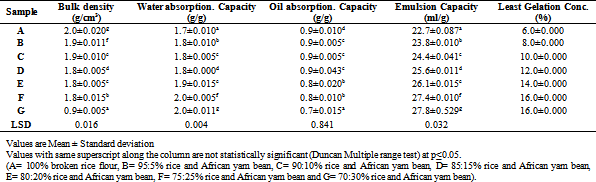
The result for functional properties of Rice and African yam bean masa blends is presented in Table 2. The result for bulk density, water absorption capacity, emulsion capacity, and gelation concentration showed an increase with increasing substitution of African yam bean with mean values ranging from 0.9 to 2.0g/cm3, 1.7 to 2.0ml/g, 22.7 to 27.8g/g, 6.0 to 16.0% respectively. The result of oil absorption capacity showed decrease with an increasing substitution of African yam bean with mean value range of 0.9 to 0.7g/g. The result showed significant difference (P < 0.05) across all the samples A-G.
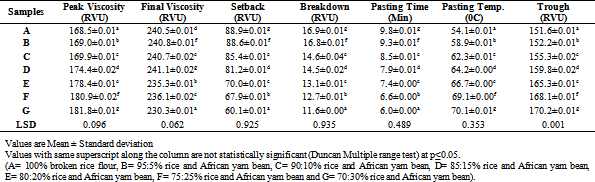
The results for pasting properties of samples are presented in Table 3. The result has mean values ranging from 168.5-181.8rvu for peak viscosity, 230.3-240.5rvu for final viscosity, 60.1-88.9rvu for setback viscosity, 11.6-16.9rvu for break down viscosity, 6.0-9.8rvu for pasting time, 54.1-70.1°C for pasting temperature and 151.6-170.2rvu for trough viscosity. There was significant difference (P < 0.05) across all the samples from A-G for all the pasting parameters.
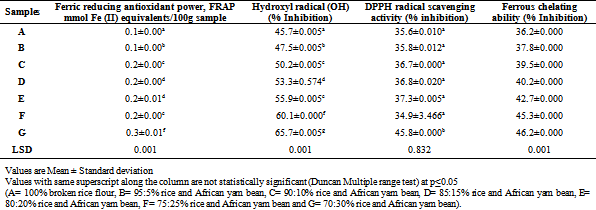
The antioxidant activities result of masa from blends of rice and African yam bean is presented in Table 4. The result showed an observable increase across the samples with an increasing substitution of African yam bean for FRAP, OH radical, DDPH radical scavenging ability and Ferrous chelating ability with mean values ranging from 0.1-0.3mmol/100g,45.7-65.7%, 35.6-45.8% and 36.2-46.2% respectively with significant difference (P < 0.05).
The results for the sensory attributes of the samples are presented in Table 5. The results showed a general decrease in sensory ratings for all the sensory attributes as the level of African yam bean increases. The results shows there were no significant difference between the control sample A (100% rice masa) and sample B (95% rice and 5% level of African yam bean) in all the sensory attributes evaluated.
The results of bulk density (Table 2) showed a decreasing trend with increase in African yam bean substitution with control sample (A-100:0) having the highest value (2.0g/cm3) and sample (G- 70:30) having the lowest value (0.9g/cm3). Bulk density is the weight of the material including the inter granular air space per unit volume; it indicates the packing behavior of products 34. The decrease in bulk density with increasing substitution of African yam bean indicates that rice being a starchy food contributed more to the bulk density therefore the lower the starch content, the lower the bulk density and the higher the starch content, the higher the bulk density agreeing with the findings of Dendegh et al (2021) 35.
The water absorption capacity showed an increasing trend with an increase in African yam bean substitution with the control sample (A- 100:0) having the lowest water absorption capacity (1.7g/g) and sample (G-70:30) having the highest water absorption capacity (2.0g/g). Water absorption is the amount of water (moisture) taken up by foods/flours to achieve the desirable consistency and create quality food product. It is the optimum amount of water required to be added to dough before it becomes excessively sticky to process 36. Water absorption capacity of a product is the ability of that product to interplay or associate with water where there is a limited supply of water 37. The variation in water absorption capacity in the entire flour sample is largely attributed to the concentration of protein which has both hydrophilic and hydrophobic properties therefore can interact with water in food samples. The polar amino acids are said to be the most preferred sites for interaction between water and proteins 37. Other factors that have been reported to have an effect on water absorption capacity includes nature of the molecules, presence of lipids, thermodynamic properties of the system (bond energy and interfacial tension) as well as the physicochemical environment such as pH, ion concentration, temperature and pressure 35. The result of water absorption capacity has similar resemblance to that reported by Abolaji et, al. (2019) 38 who reported values ranging from 1.3 to 2.4 g/g for water absorption capacities of flour blends from sorghum, African yam bean and soybean for use as complementary feeding.
Oil absorption capacity is an important functional property as the ability of flours to absorb and retain oil may improve both flavour retention and mouths feel. It is the binding of fat by the non-polar side chain of protein and its rate is very high in foods with high protein content 38. Oil absorption capacity has been attributed to entrapment of oil and the binding of fat to the hydrophobic amino acid; this binding depends on some intrinsic factors such as protein conformation, amino acid composition and surface polarity or hydrophobicity. High oil absorption is a prerequisite for the formulation of foods such as sausages, cake batters, mayonnaise and salad dressings 37. The result of oil absorption capacity in this studies ranged from 0.7g/g to 0.9g/g with sample G (70:30) having the lowest oil absorption capacity and sample A (100:0) having the highest oil absorption capacity. These values were lower compared to the one reported by Ajibola and Olapade (2015) 39 of values ranging from 0.9g/g to 1.3g/g. The decrease in oil absorption capacity with increasing substitution of African yam bean could be attributed to decrease in the presence of non-polar side chain which may bind the oil hydrocarbon side chain 35.
Emulsion capacity result shows an increasing trend with an increase substitution of African yam bean flour with values ranging from 22.763ml/g to 27.806ml/g. Emulsion capacity is the volume of oil that can be emulsified by protein before phase inversion or collapse of emulsion. It is associated with the amount of oil, non-polar amino acid residues on the surface of protein, water and other components in the product 40. An increased amount of non-polar amino acid residues on surface of protein will reduce energy barrier to adsorption which relies on the protein structure 40. The result showed that emulsion capacity increases with increasing substitution of African yam bean compare to the control sample and this also agrees with the findings of Uchegbu (2015) 41 and Chinma et al (2021) 42 which exhibit the same increasing trend in emulsion capacity with increasing African yam bean flour substitution to rice flour and this increasing emulsion capacity is attributed to the increasing protein content of the samples.
Gelation capacity also known as gel transition property is the formation of a gel from a food system with biopolymers such as starch and protein. The gel point or onset of gelation is accompanied by rapid increase in viscosity 43. The result of gelation capacity in this study showed an increase in gelation capacity with the least gelation capacity of (6.0%) for the control sample A (100:0) and highest gelation capacity of (16.0%) for sample G (70:30). This shows that gelation percentage increases with increasing supplementation of rice flour with African yam bean flour and this agrees with the findings of Abolaji et al (2019) 44 who associated variation in gelling properties of different flours to the different ratio of protein, carbohydrate and lipids that make up the flours.
4.2. Effect of African Yam Bean Addition on the Pasting Properties of Rice-AYB MasaPasting property is one of the important properties that influence quality and taste in the food industry since they affect texture, and digestibility as well as the end use of starch-based food commodities 41. It is an indicator for predicting a food ability to form a paste when subjected to heat.
Peak viscosity is the maximum viscosity achieved during heating at 95°C, it indicates the ability of starch-based foods to swell freely before their physical break down. High peak viscosity indicates high starch content and verse versa 45. The result of this studies (Table 3) showed an increasing peak viscosity with an increasing substitution of African yam bean yam bean flour at (P<0.05) significant difference with sample A-100% rice flour having the least peak viscosity (168.5rvu) and sample G-70:30% rice and African yam bean flour having the highest peak viscosity (181.8rvu). This increasing trend in peak viscosity with increasing addition of African yam bean flour also agrees with the work of Atinuke (2015) 46 who observed the same trend in his work. The relative increase in peak viscosity therefore indicates the composite flour has the capability of forming a thick paste after gelatinization.
Final viscosity is the viscosity used in determining the quality of starch-based flour; it is used in indicating the ability of the flour to form a viscous paste after cooking and cooling. This viscosity is also use to measure the degree at which the paste can resist shear force during stirring 46. The final viscosity obtained in this study ranged from 230.3-240.5rvu with sample A-100% rice flour having the highest final viscosity (240.5rvu) and sample G-70:30% rice and African yam bean flour having (230.3rvu) which is similar to the work of Atinuke (2015) 46 who recorded the same trend with 100% rice having the highest peak viscosity. This variation in final viscosity can be attributed to the starch content of the samples because a high value of final viscosity indicates aggregation of amylose and a low final viscosity indicates the paste resistance to shear stress during stirring 47. This result therefore indicates or suggests that rice and African yam bean masa flour has the ability to resist shear stress during stirring and has better ability to form viscous paste after cooking and cooling.
Set back viscosity is an indicator of retrogradation tendency of a paste prepared from starchy food. It indicates the tendency of starch granules to retrograde after gelatinization and cooling and is calculated by subtracting trough viscosity from final viscosity 48. The higher the setback viscosity, the lower the retrogradation of the flour paste during cooling and the lower the stalling rate of the products made from the flour 22. The result of setback viscosity obtained in this study showed a progressive decrease with an increasing substitution of African yam bean with sample A-100% rice flour having the highest setback viscosity (88.9rvu) and sample G-70:30% rice and African yam bean composite flour having the lowest setback viscosity (60.1rvu) but within the safe range (60rvu) of preventing retrogradation and stalling 47. This result also showed a significant difference (P<0.05) across all the samples.
Break down viscosity of flour is defined as the measure of the degree of disintegration of starch granules or its paste stability during heating 47. A Research carried out by Inyang and Nwabueze (2020) 45 had earlier reported that high breakdown viscosity indicates lesser ability of a sample to withstand heating and shear stress during cooking. The breakdown viscosity obtained in this study ranged from 11.6-16.9rvu with sample A-100% rice flour having 16.9rvu breakdown viscosity and sample G-70:30% rice and African yam bean composite flour having 11.6rvu break down viscosity which shows that composite flour sample has lower breakdown viscosity compare to the 100% rice flour sample. This means that the composite flour has high resistant to heat and shear stress during cooking. The variation observed in the mean values for breakdown viscosity has significant difference (P<0.05) across the samples.
Pasting time is the total time taken by each sample blend to attain its respective peak viscosity 47. The pasting time obtained in this studies ranged from 6.0-9.8min with sample A-100% rice flour having the highest pasting time while sample G-70:30% rice and African yam bean composite flour having the lowest. This result was slightly higher than the one obtained by Iwe et al (2016) 22 who recorded the range of (5.1-5.9min) pasting time but are similar to the work of 47 who recorded values ranging from (6.9-8.9min). The result showed decrease in pasting time with increasing substitution of African yam bean and was significantly different (P<0.05) across all the samples.
Pasting temperature is a parameter that indicates the minimum temperature required by flour to cook completely and which gives an overall idea of the energy cost involved 47. The result obtained in this study showed that there was an increase in pasting temperatures with increasing substitution of African yam bean with values ranging from 54.1-70.1°C. Sample A-100% rice flour has the lowest pasting temperature while Sample G-70:30% rice and African yam bean composite flour have the highest pasting temperature, indicating that rice flour cooks faster compare to the composite blend. Adebowale et al (2005) 30 in their work reported that high pasting temperature indicates high water-binding capacity, high gelatinization tendency, and lower swelling property of starch-based flour due to high degree of associative forces between starch granules. The increase in pasting temperature in the blend could be attributed to the damping down effect of fat on starch which causes interference with gelatinization process 22.
Trough Viscosity is defined as the minimum viscosity value in the constant temperature phase of the RVA profile which measures the ability of a paste to withstand breakdown during cooling 22. The values for trough viscosity obtained in this study were in the range 151.6-170.2rvu, the values were seen to increase with increasing substitution of African yam bean flour. Sample A-100% rice flour had the trough viscosity (151.6) while sample G-70:30% rice and African yam bean composite flour had the highest trough viscosity (170.2rvu). This indicates that both the control sample and the composite blends have high holding period and can withstand high heat treatment during processing and it is in agreement with the trend observed in the work of Asaam et al (2018) 47 and Atinuke (2015) 46.
4.3. Effect of African Yam Bean Addition on the Antioxidant Activities of Rice-AYB MasaThe results (Table 4) showed an increasing trend in antioxidant activities with an increasing substitution of African yam bean and was significantly different (P<0.05) across all the samples. The addition of African yam bean enhanced the ferric ion reducing activity in the samples from 0.1mmol/100g to 0.3mmol/100g with the control sample A-(100% rice flour) having the lowest ferric reducing activity while sample G-(70:30 rice and African yam bean blends) having the highest ferric reducing activity. This result agrees with the findings of Adeloye et al (2020) 49 who also reported increase in ferric reducing activities with increase of defatted coconut. Ferric reducing activities express the ability of a reductant to reduce Fe3+ to Fe2+. The result therefore suggests that flour blend of rice and African yam bean have the ability to scavenge free radicals and reduce ferric ion which can be used in the formulation of functional food products. High antioxidant activities are positively correlated with total phenolic and total flavonoid content 49. The hydroxyl radical increased with increasing substitution of African yam bean from 45.7% inhibition for sample A to 65.7% inhibition for sample G. The increase in hydroxyl (OH) explains the increase in antioxidant activities of the samples as is reported by 49 that the increase in antioxidant activity could be due to the increase in hydroxyl groups or amino groups in antioxidant compounds. DPPH radical scavenging activity result increased with an increasing substitution of African yam bean from 35.6% to 45.8% inhibition. DPPH is a stable nitrogen centered free radical which can be used to evaluate the antioxidant activity of natural products by measuring the radical quenching capacity in a relatively short period of time 41. The result showed that African yam bean enriched rice-based masa has higher DPPH free radical scavenging ability and could largely be attributed to the high hydroxyl groups existing in the phenolic compounds’ structure that can provide the necessary component as a radical scavenger. The result agrees with the findings of Chinma et al (2021) 42 which indicated increase in DPPH radical scavenging activities in chips produced from African yam bean. The result for ferrous chelating ability showed an increase with increasing substitution of African yam bean with controlled sample A having the lowest (36.2%) inhibition and sample G having the highest (46.2%) inhibition. This result showed that the chelating activity increased on increasing substitution of African yam bean which suggest that African yam bean have good ferrous chelating properties which agrees with the findings of Uchegbu et al (2015) 41 and largely attributed to an increase in phenolic compounds of the blends.
4.4. Effect of African Yam Bean Addition on the Sensory Attributes of Rice-African Yam Bean MasaThe results (Table 5) for aroma score ranged from 6.0-8.1 for controlled sample A-(100% rice masa) and other samples. The results for appearance ranged from 6.3-8.6. The aroma rating shows there was no significant difference between the control samples A and sample B with 5% level of African yam bean. The appearance scores shows there was no significant difference between the control sample and samples up to 20% level of African yam bean, the least rated sample was sample with the highest level of African yam bean. Taste rating shows there was no significant difference between the control sample and the sample with 5% level of African yam bean. The results for General Acceptability shows that all masa samples were generally accepted based on the 9-point hedonic scale ratings with values ranging from 6.8-8.7. The results show no significant difference between the controls and sample B with 5% level of African yam bean. The sensory results generally shows progressive decrease in sensory ratings as the level of African yam bean increases. This may be attributed to beany flavor associated with legumes 29. The results obtained in this studies was closely related to the one obtained by Okoye and Obi (2017) 50 for cookies made from blends of wheat and African yam bean and also that of Abolaji et al (2019) 38 for flour blends from sorghum, African yam bean and soybean.
The study show improvement in antioxidant properties, functional properties and pasting properties with increasing substitution of African yam bean flour. The study indicates that protein enriched and acceptable masa could be produced from blends of broken rice and African yam bean, and masa produced with up to 5% level of African yam bean compare favorably with the control sample in all the sensory attributes.
| [1] | Nkama, I., & Malleshi, N. G. (1998). Production and nutritional quality of traditional Nigerian masa from mixtures of rice, pearl millet, cowpea, and groundnut. Food and Nutrition Bulletin, 19(4), 366-373. | ||
| In article | View Article | ||
| [2] | Adegbehingbe, K. T. (2014). Production of masa using maize-sorghum blends. International Journal of Science and Research, 3(8), 484-489. | ||
| In article | |||
| [3] | Akande, A., Jolayemi, O. S., Familusi, A., & Idowu, B. (2018). Nutritional, antioxidant and sensory properties of rice-based masa enriched with grain amaranth and carrot powder. Ann. Food Sci. Technol, 19(4), 645-656. | ||
| In article | |||
| [4] | Sam, S. M. (2019). Nutrient and antinutrient constituents in seeds of Sphenostylis stenocarpa (Hochst. Ex A. Rich.) Harms. African Journal of Plant Science, 13(4), 107-112. | ||
| In article | View Article | ||
| [5] | Abdulkareem, K. A., Animasaun, D. A., Oyedeji, S., & Olabanji, O. M. (2015). Morphologicalcharacterization and variability study of African yam beans [Sphenostylis Stenocarpa (Hochst Ex A. Rich)]. Global Journal of Pure and Applied Sciences, 21(1), 21-27. | ||
| In article | View Article | ||
| [6] | Baiyeri, S. O., Uguru, M. I., Ogbonna, P. E., Samuel-Baiyeri, C. C. A., Okechukwu, R., Kumaga, F. K., & Amoatey, C. (2018). Evaluation of the nutritional composition of the seeds of some selected African yam bean (Sphenostylis stenocarpa Hochst Ex. A. Rich (Harms) accessions. Agro Science, 17(2), 37-44. | ||
| In article | View Article | ||
| [7] | Kukwa, R. E., Okpainya, P. E., & Ikya, J. K. (2018). Micronutrients in African Yam Bean Carrot Flours and Acceptability of Its Gruels for Complementary Food. Asian Food Science Journal, 4(2), 1-9. | ||
| In article | View Article | ||
| [8] | Ndidi, U. S., Ndidi, C. U., Olagunju, A., Muhammad, A., Billy, F. G., & Okpe, O. (2014). Proximate, antinutrients and mineral composition of raw and processed (Boiled and Roasted) Sphenostylis stenocarpa seeds from Southern Kaduna, Northwest Nigeria. International Scholarly Research Notices, 2014. | ||
| In article | View Article PubMed | ||
| [9] | Agunbiade, S. O., & Longe, O. G. (1996). Effect of processing on the physic-chemical properties of African yambean, Sphenostylis stenocarpa (Hochst ex A. Rich) Harms. Food/Nahrung, 40(4), 184-188. | ||
| In article | View Article | ||
| [10] | George, T. T., Obilana, A. O., & Oyeyinka, S. A. (2020). The prospects of African yam bean: past and future importance. Heliyon, 6(11), e05458. | ||
| In article | View Article PubMed | ||
| [11] | Daniel, A. B., & Celestina, O. N. (2013). A review on genetic resources, diversity and agronomy of African yam bean (Sphenostylis stenocarpa (Hochst. Ex A. Rich.) Harms): A potential future food crop. Sustainable Agriculture Research, 2(526-2016-37899). | ||
| In article | View Article | ||
| [12] | Hounyèvou, A. K., Ahounou, J. L., Houssou, A. P., Fandohan, P., Aïhou, K., Adjanohoun, A., & Padonou, S. W. (2013). Yam bean (Pachyrhizus erosus) tuber processing in Benin: productionand evaluation of the quality of yam bean-gari and yam bean fortified gari. International Journal of Biological and Chemical Sciences, 7(1), 247 259. | ||
| In article | View Article | ||
| [13] | Ameh, G. I. (2015). Seedling Morphology and Growth analysis studies of African Yam Bean, Sphenostylis Stenocarpa (Hoechst. Ex. A. Rich.) Harms (Doctoral dissertation). | ||
| In article | |||
| [14] | Erhabor, P. O. I., & Ojogho, O. (2011). Demand analysis for rice in Nigeria. Journal of food technology, 9(2), 66-74. | ||
| In article | View Article | ||
| [15] | Shih, F. F. (2003). An update on the processing of high-protein rice products. Food/Nahrung, 47(6), 420-424. | ||
| In article | View Article PubMed | ||
| [16] | Vasupen, K., Yuangklang, C., Wongsuthavas, S., Srenanul, P., Mitchaothai, J., & Beynen, A. C. (2008). Effect of dietary broken rice and cassava chips on growth, nutrient digestibility and nitrogen retention in growing Kadon pigs. Nutritional studies in native, Thai Kadon pigs, 35. | ||
| In article | |||
| [17] | Joint, F. A. O. (2010). Fats and fatty acids in human nutrition. Report of an expert consultation, 10-14 November 2008, Geneva. | ||
| In article | |||
| [18] | Nitrayová, S., Brestenský, M., Heger, J., Patráš, P., Rafay, J., & Sirotkin, A. (2014). Amino acids and fatty acids profile of chia (Salvia hispanica L.) and flax (Linum usitatissimum L.) seed. Slovak Journal of Food Sciences, 8(1). | ||
| In article | View Article | ||
| [19] | Ukwuru, M. U., Muritala, A., & Iheofor, A. O. (2018). Cereal utilization in Nigeria. Res. J. Food Nutr, 2, 1-12. | ||
| In article | |||
| [20] | Mohammed, U. A., Ibrahim, S., Hayatu, M., & Mohammed, F. A. (2019). Rice (Oryza Sativa L.) Production in Nigeria: Challenges and Prospects. Dutse Journal of Pure and Applied Sciences, 5(2), 29-37. | ||
| In article | |||
| [21] | Rhowell Jr, N. T., Fernie, A. R., & Sreenivasulu, N. (2021). Meeting human dietary vitamin requirements in the staple rice via strategies of biofortification and post-harvest fortification. Trends in Food Science & Technology, 109, 65-82. | ||
| In article | View Article | ||
| [22] | Iwe, M. O., Onyeukwu, U., & Agiriga, A. N. (2016). Proximate, functional and pasting properties of FARO 44 rice, African yam bean and brown cowpea seeds composite flour. Cogent Food & Agriculture, 2(1), 142-409. | ||
| In article | View Article | ||
| [23] | Gbenga-Fabusiwa, F. J. (2021). African yam beans (Sphenostylis stenocarpa): A review of a novel tropical food plant for human nutrition, health and food security. African Journal of Food Science, 15(2), 33-47. | ||
| In article | View Article | ||
| [24] | Nwosu, J. N. (2013). Evaluation of the proximate composition and antinutritional properties of African yam bean (Sphenostylis sternocarpa) using malting treatment. International Journal of Basic and Applied Sciences, 2(4), 157-169. | ||
| In article | |||
| [25] | Saha, S., & Roy, A. (2020). Whole grain rice fortification as a solution to micronutrient deficiency: Technologies and need for more viable alternatives. Food Chemistry, 326, 127049. | ||
| In article | View Article PubMed | ||
| [26] | Yusufu, M. I., & Abu, J. O. (2014). Quality Evaluation of Blends and Cookies from Wheat/African Fan Palm Shoot Flours. Asian Journal of Agriculture and Food Sciences, 2(6). | ||
| In article | |||
| [27] | Owoicho, M. C., Oneh, A. J., & Ikagu, Y. M.(2020) Production of Noodles from Rice (Oryza sativa), African Yam Bean (Sphenostylis stenocarpa) and Rice Bran: A Tool for Ameliorating PEM and Hidden Hunger in Nigeria. | ||
| In article | |||
| [28] | Plahar, W. A., Nti, C. A., & Annan, N. T. (1997). Effect of soy-fortification method on the fermentation characteristics and nutritional quality of fermented maize meal. Plant Foods for Human Nutrition, 51(4), 365-380. | ||
| In article | View Article PubMed | ||
| [29] | Ade, I. C., Ingbian, E. K., & Abu, J. O. (2012). Physical, chemical and sensory properties of baked products from blends of wheat and African yam bean (Sphenostylis stenocarpa) water extractable proteins. Nigerian Food Journal, 30(1), 109-115. | ||
| In article | View Article | ||
| [30] | Adebowale, Y. A., Adeyemi, I. A., & Oshodi, A. A. (2015). Functional and physicochemical properties of flours of six Mucuna species. African Journal of Biotechnology, 4(12). | ||
| In article | |||
| [31] | Yasumatsu, K., Sawada, K., Moritaka, S., Misaki, M., Toda, J., Wada, T., & Ishii, K. (1972).Whipping and emulsifying properties of soybean products. Agricultural and Biological Chemistry, 36(5), 719-727. | ||
| In article | View Article | ||
| [32] | Ogundele, G. F., Ojubanire, B. F., & Bamidele, O. P. (2015). Determination of the pasting and functional properties of cowpea (Vigna unguiculata) and soybean (Glycine max) blends. British Journal of Applied Science & Technology, 6(3), 304. | ||
| In article | View Article | ||
| [33] | Choi, C., Lim, H. W., Chon, J. W., Kim, D. H., Song, K. Y., Kim, S. H., ... & Seo, K. H. (2018). Sensory evaluation of various gouda cheeses produced from raw milk. Journal of Dairy Science and Biotechnology, 36(2), 95-105. | ||
| In article | View Article | ||
| [34] | Bruce, R. M., Atungulu, G. G., Hettiarachchy, N. S., & Horax, R. (2019). Functional properties of endosperm protein from size-fractionated broken rice kernels generated after milling of parboiled and nonparboiled rice. Cereal Chemistry, 96(3), 590-604. | ||
| In article | View Article | ||
| [35] | Dendegh, T. A., Yelmi, B. M., & Dendegh, R. A. (2021). Evaluation of stiff porridge (Ruam nahan) produced from composite flour blends of pearl millet (Pennisetum glaucum) and African yam bean (Sphenostylis stenocarpa). Asian Food Science Journal, 20(9), 63-77. | ||
| In article | View Article | ||
| [36] | Awuchi, C. G., Igwe, V. S., & Echeta, C. K. (2019). The functional properties of foods and flours. International Journal of Advanced Academic Research, 5(11), 139-160. | ||
| In article | |||
| [37] | Malomo, A. A., & Abiose, S. H. (2019). Protein quality and functional properties of masa produced from maize, acha and soybean. Food Research, 3(5), 556-563. | ||
| In article | View Article | ||
| [38] | Abolaji, B. F., Edeke, E. J., & Ajoke, S. M. (2019). Evaluation of chemical, functional and sensory properties of flour blends from sorghum, African yam bean and soybean for use as complementary feeding. Biotechnology, 4(3), 74-81. | ||
| In article | View Article | ||
| [39] | Ajibola, G. O., & Olapade, A. A. (2015). Physico-Chemical and Functional Properties of Casava and African Yam Bean Flour Blends. | ||
| In article | |||
| [40] | Adeloye, J. B., Osho, H., & Idris, L. O. (2020). Defatted coconut flour improved the bioactive components, dietary fibre, antioxidant and sensory properties of nixtamalized maize flour. Journal of Agriculture and Food Research, 2, 100042. | ||
| In article | View Article | ||
| [41] | Uchegbu, N. N. (2015). Antioxidant activity of germinated African yam bean (Sphenostylis stenocarpa) in Alloxan diabetic rats. International Journal of Nutrition and Food Engineering, 9(3), 239-243. | ||
| In article | |||
| [42] | Chinma, C. E., Adedeji, O. E., Etim, I. I., Aniaka, G. I., Mathew, E. O., Ekeh, U. B., & Anumba, N. L. (2021). Physicochemical, nutritional, and sensory properties of chips produced from germinated African yam bean (Sphenostylis stenocarpa). LWT, 136, 110330. | ||
| In article | View Article | ||
| [43] | Okoye, J. I., & Obi, C. D. (2017). Chemical composition and sensory properties of Wheat African Yam bean composite flour cookies. Discourse Journal of Agriculture and Food Sciences, 5(2), 21 27. | ||
| In article | |||
| [44] | Abolaji, B. F., Edeke, E. J., & Ajoke, S. M. (2019). Evaluation of chemical, functional and sensory properties of flour blends from sorghum, African yam bean and soybean for use as complementary feeding. Biotechnology, 4(3), 74-81. | ||
| In article | View Article | ||
| [45] | Inyang,UE, & Nwabueze, S. O. (2020). Pasting Properties of Acha-Green Banana Composite Flour Fortified with Cowpea Flour and Quality Evaluation of Gluten-Free Biscuit Made from the Blends. J. Nutri. Food S. vol.2, (5): 277-288 | ||
| In article | View Article | ||
| [46] | Atinuke, I. (2015). Chemical composition and sensory and pasting properties of blends of maize-African yam bean seed. Journal of Nutrition Health and Food Science, 3(3), 1-6. | ||
| In article | View Article | ||
| [47] | Asaam, E. S., Adubofuor, J., Amoah, I., & Apeku, O. J. D. (2018). Functional and pasting properties of yellow maize–soya bean-pumpkin composite flours and acceptability study on their breakfast cereals. Cogent Food & Agriculture, 4(1), 1501932. | ||
| In article | View Article | ||
| [48] | Shafie, B., Cheng, S. C., Lee, H. H., & Yiu, P. H. (2016). Characterization and classification of whole-grain rice based on rapid visco analyzer (RVA) pasting profile. International Journal of Food Research, 23(5) | ||
| In article | |||
| [49] | Adeloye, J. B., Osho, H., & Idris, L. O. (2020). Defatted coconut flour improved the bioactive components, dietary fibre, antioxidant and sensory properties of nixtamalized maize flour. Journal of Agriculture and Food Research, 2, 100042. | ||
| In article | View Article | ||
| [50] | Okoye, J. I., & Obi, C. D. (2017). Chemical composition and sensory properties of Wheat African Yam bean composite flour cookies. Discourse Journal of Agriculture and Food Sciences, 5(2), 21 27. | ||
| In article | |||
Published with license by Science and Education Publishing, Copyright © 2022 Yusufu Mohammed Ikagu and Alexander Destiny Ponnan
 This work is licensed under a Creative Commons Attribution 4.0 International License. To view a copy of this license, visit
http://creativecommons.org/licenses/by/4.0/
This work is licensed under a Creative Commons Attribution 4.0 International License. To view a copy of this license, visit
http://creativecommons.org/licenses/by/4.0/
| [1] | Nkama, I., & Malleshi, N. G. (1998). Production and nutritional quality of traditional Nigerian masa from mixtures of rice, pearl millet, cowpea, and groundnut. Food and Nutrition Bulletin, 19(4), 366-373. | ||
| In article | View Article | ||
| [2] | Adegbehingbe, K. T. (2014). Production of masa using maize-sorghum blends. International Journal of Science and Research, 3(8), 484-489. | ||
| In article | |||
| [3] | Akande, A., Jolayemi, O. S., Familusi, A., & Idowu, B. (2018). Nutritional, antioxidant and sensory properties of rice-based masa enriched with grain amaranth and carrot powder. Ann. Food Sci. Technol, 19(4), 645-656. | ||
| In article | |||
| [4] | Sam, S. M. (2019). Nutrient and antinutrient constituents in seeds of Sphenostylis stenocarpa (Hochst. Ex A. Rich.) Harms. African Journal of Plant Science, 13(4), 107-112. | ||
| In article | View Article | ||
| [5] | Abdulkareem, K. A., Animasaun, D. A., Oyedeji, S., & Olabanji, O. M. (2015). Morphologicalcharacterization and variability study of African yam beans [Sphenostylis Stenocarpa (Hochst Ex A. Rich)]. Global Journal of Pure and Applied Sciences, 21(1), 21-27. | ||
| In article | View Article | ||
| [6] | Baiyeri, S. O., Uguru, M. I., Ogbonna, P. E., Samuel-Baiyeri, C. C. A., Okechukwu, R., Kumaga, F. K., & Amoatey, C. (2018). Evaluation of the nutritional composition of the seeds of some selected African yam bean (Sphenostylis stenocarpa Hochst Ex. A. Rich (Harms) accessions. Agro Science, 17(2), 37-44. | ||
| In article | View Article | ||
| [7] | Kukwa, R. E., Okpainya, P. E., & Ikya, J. K. (2018). Micronutrients in African Yam Bean Carrot Flours and Acceptability of Its Gruels for Complementary Food. Asian Food Science Journal, 4(2), 1-9. | ||
| In article | View Article | ||
| [8] | Ndidi, U. S., Ndidi, C. U., Olagunju, A., Muhammad, A., Billy, F. G., & Okpe, O. (2014). Proximate, antinutrients and mineral composition of raw and processed (Boiled and Roasted) Sphenostylis stenocarpa seeds from Southern Kaduna, Northwest Nigeria. International Scholarly Research Notices, 2014. | ||
| In article | View Article PubMed | ||
| [9] | Agunbiade, S. O., & Longe, O. G. (1996). Effect of processing on the physic-chemical properties of African yambean, Sphenostylis stenocarpa (Hochst ex A. Rich) Harms. Food/Nahrung, 40(4), 184-188. | ||
| In article | View Article | ||
| [10] | George, T. T., Obilana, A. O., & Oyeyinka, S. A. (2020). The prospects of African yam bean: past and future importance. Heliyon, 6(11), e05458. | ||
| In article | View Article PubMed | ||
| [11] | Daniel, A. B., & Celestina, O. N. (2013). A review on genetic resources, diversity and agronomy of African yam bean (Sphenostylis stenocarpa (Hochst. Ex A. Rich.) Harms): A potential future food crop. Sustainable Agriculture Research, 2(526-2016-37899). | ||
| In article | View Article | ||
| [12] | Hounyèvou, A. K., Ahounou, J. L., Houssou, A. P., Fandohan, P., Aïhou, K., Adjanohoun, A., & Padonou, S. W. (2013). Yam bean (Pachyrhizus erosus) tuber processing in Benin: productionand evaluation of the quality of yam bean-gari and yam bean fortified gari. International Journal of Biological and Chemical Sciences, 7(1), 247 259. | ||
| In article | View Article | ||
| [13] | Ameh, G. I. (2015). Seedling Morphology and Growth analysis studies of African Yam Bean, Sphenostylis Stenocarpa (Hoechst. Ex. A. Rich.) Harms (Doctoral dissertation). | ||
| In article | |||
| [14] | Erhabor, P. O. I., & Ojogho, O. (2011). Demand analysis for rice in Nigeria. Journal of food technology, 9(2), 66-74. | ||
| In article | View Article | ||
| [15] | Shih, F. F. (2003). An update on the processing of high-protein rice products. Food/Nahrung, 47(6), 420-424. | ||
| In article | View Article PubMed | ||
| [16] | Vasupen, K., Yuangklang, C., Wongsuthavas, S., Srenanul, P., Mitchaothai, J., & Beynen, A. C. (2008). Effect of dietary broken rice and cassava chips on growth, nutrient digestibility and nitrogen retention in growing Kadon pigs. Nutritional studies in native, Thai Kadon pigs, 35. | ||
| In article | |||
| [17] | Joint, F. A. O. (2010). Fats and fatty acids in human nutrition. Report of an expert consultation, 10-14 November 2008, Geneva. | ||
| In article | |||
| [18] | Nitrayová, S., Brestenský, M., Heger, J., Patráš, P., Rafay, J., & Sirotkin, A. (2014). Amino acids and fatty acids profile of chia (Salvia hispanica L.) and flax (Linum usitatissimum L.) seed. Slovak Journal of Food Sciences, 8(1). | ||
| In article | View Article | ||
| [19] | Ukwuru, M. U., Muritala, A., & Iheofor, A. O. (2018). Cereal utilization in Nigeria. Res. J. Food Nutr, 2, 1-12. | ||
| In article | |||
| [20] | Mohammed, U. A., Ibrahim, S., Hayatu, M., & Mohammed, F. A. (2019). Rice (Oryza Sativa L.) Production in Nigeria: Challenges and Prospects. Dutse Journal of Pure and Applied Sciences, 5(2), 29-37. | ||
| In article | |||
| [21] | Rhowell Jr, N. T., Fernie, A. R., & Sreenivasulu, N. (2021). Meeting human dietary vitamin requirements in the staple rice via strategies of biofortification and post-harvest fortification. Trends in Food Science & Technology, 109, 65-82. | ||
| In article | View Article | ||
| [22] | Iwe, M. O., Onyeukwu, U., & Agiriga, A. N. (2016). Proximate, functional and pasting properties of FARO 44 rice, African yam bean and brown cowpea seeds composite flour. Cogent Food & Agriculture, 2(1), 142-409. | ||
| In article | View Article | ||
| [23] | Gbenga-Fabusiwa, F. J. (2021). African yam beans (Sphenostylis stenocarpa): A review of a novel tropical food plant for human nutrition, health and food security. African Journal of Food Science, 15(2), 33-47. | ||
| In article | View Article | ||
| [24] | Nwosu, J. N. (2013). Evaluation of the proximate composition and antinutritional properties of African yam bean (Sphenostylis sternocarpa) using malting treatment. International Journal of Basic and Applied Sciences, 2(4), 157-169. | ||
| In article | |||
| [25] | Saha, S., & Roy, A. (2020). Whole grain rice fortification as a solution to micronutrient deficiency: Technologies and need for more viable alternatives. Food Chemistry, 326, 127049. | ||
| In article | View Article PubMed | ||
| [26] | Yusufu, M. I., & Abu, J. O. (2014). Quality Evaluation of Blends and Cookies from Wheat/African Fan Palm Shoot Flours. Asian Journal of Agriculture and Food Sciences, 2(6). | ||
| In article | |||
| [27] | Owoicho, M. C., Oneh, A. J., & Ikagu, Y. M.(2020) Production of Noodles from Rice (Oryza sativa), African Yam Bean (Sphenostylis stenocarpa) and Rice Bran: A Tool for Ameliorating PEM and Hidden Hunger in Nigeria. | ||
| In article | |||
| [28] | Plahar, W. A., Nti, C. A., & Annan, N. T. (1997). Effect of soy-fortification method on the fermentation characteristics and nutritional quality of fermented maize meal. Plant Foods for Human Nutrition, 51(4), 365-380. | ||
| In article | View Article PubMed | ||
| [29] | Ade, I. C., Ingbian, E. K., & Abu, J. O. (2012). Physical, chemical and sensory properties of baked products from blends of wheat and African yam bean (Sphenostylis stenocarpa) water extractable proteins. Nigerian Food Journal, 30(1), 109-115. | ||
| In article | View Article | ||
| [30] | Adebowale, Y. A., Adeyemi, I. A., & Oshodi, A. A. (2015). Functional and physicochemical properties of flours of six Mucuna species. African Journal of Biotechnology, 4(12). | ||
| In article | |||
| [31] | Yasumatsu, K., Sawada, K., Moritaka, S., Misaki, M., Toda, J., Wada, T., & Ishii, K. (1972).Whipping and emulsifying properties of soybean products. Agricultural and Biological Chemistry, 36(5), 719-727. | ||
| In article | View Article | ||
| [32] | Ogundele, G. F., Ojubanire, B. F., & Bamidele, O. P. (2015). Determination of the pasting and functional properties of cowpea (Vigna unguiculata) and soybean (Glycine max) blends. British Journal of Applied Science & Technology, 6(3), 304. | ||
| In article | View Article | ||
| [33] | Choi, C., Lim, H. W., Chon, J. W., Kim, D. H., Song, K. Y., Kim, S. H., ... & Seo, K. H. (2018). Sensory evaluation of various gouda cheeses produced from raw milk. Journal of Dairy Science and Biotechnology, 36(2), 95-105. | ||
| In article | View Article | ||
| [34] | Bruce, R. M., Atungulu, G. G., Hettiarachchy, N. S., & Horax, R. (2019). Functional properties of endosperm protein from size-fractionated broken rice kernels generated after milling of parboiled and nonparboiled rice. Cereal Chemistry, 96(3), 590-604. | ||
| In article | View Article | ||
| [35] | Dendegh, T. A., Yelmi, B. M., & Dendegh, R. A. (2021). Evaluation of stiff porridge (Ruam nahan) produced from composite flour blends of pearl millet (Pennisetum glaucum) and African yam bean (Sphenostylis stenocarpa). Asian Food Science Journal, 20(9), 63-77. | ||
| In article | View Article | ||
| [36] | Awuchi, C. G., Igwe, V. S., & Echeta, C. K. (2019). The functional properties of foods and flours. International Journal of Advanced Academic Research, 5(11), 139-160. | ||
| In article | |||
| [37] | Malomo, A. A., & Abiose, S. H. (2019). Protein quality and functional properties of masa produced from maize, acha and soybean. Food Research, 3(5), 556-563. | ||
| In article | View Article | ||
| [38] | Abolaji, B. F., Edeke, E. J., & Ajoke, S. M. (2019). Evaluation of chemical, functional and sensory properties of flour blends from sorghum, African yam bean and soybean for use as complementary feeding. Biotechnology, 4(3), 74-81. | ||
| In article | View Article | ||
| [39] | Ajibola, G. O., & Olapade, A. A. (2015). Physico-Chemical and Functional Properties of Casava and African Yam Bean Flour Blends. | ||
| In article | |||
| [40] | Adeloye, J. B., Osho, H., & Idris, L. O. (2020). Defatted coconut flour improved the bioactive components, dietary fibre, antioxidant and sensory properties of nixtamalized maize flour. Journal of Agriculture and Food Research, 2, 100042. | ||
| In article | View Article | ||
| [41] | Uchegbu, N. N. (2015). Antioxidant activity of germinated African yam bean (Sphenostylis stenocarpa) in Alloxan diabetic rats. International Journal of Nutrition and Food Engineering, 9(3), 239-243. | ||
| In article | |||
| [42] | Chinma, C. E., Adedeji, O. E., Etim, I. I., Aniaka, G. I., Mathew, E. O., Ekeh, U. B., & Anumba, N. L. (2021). Physicochemical, nutritional, and sensory properties of chips produced from germinated African yam bean (Sphenostylis stenocarpa). LWT, 136, 110330. | ||
| In article | View Article | ||
| [43] | Okoye, J. I., & Obi, C. D. (2017). Chemical composition and sensory properties of Wheat African Yam bean composite flour cookies. Discourse Journal of Agriculture and Food Sciences, 5(2), 21 27. | ||
| In article | |||
| [44] | Abolaji, B. F., Edeke, E. J., & Ajoke, S. M. (2019). Evaluation of chemical, functional and sensory properties of flour blends from sorghum, African yam bean and soybean for use as complementary feeding. Biotechnology, 4(3), 74-81. | ||
| In article | View Article | ||
| [45] | Inyang,UE, & Nwabueze, S. O. (2020). Pasting Properties of Acha-Green Banana Composite Flour Fortified with Cowpea Flour and Quality Evaluation of Gluten-Free Biscuit Made from the Blends. J. Nutri. Food S. vol.2, (5): 277-288 | ||
| In article | View Article | ||
| [46] | Atinuke, I. (2015). Chemical composition and sensory and pasting properties of blends of maize-African yam bean seed. Journal of Nutrition Health and Food Science, 3(3), 1-6. | ||
| In article | View Article | ||
| [47] | Asaam, E. S., Adubofuor, J., Amoah, I., & Apeku, O. J. D. (2018). Functional and pasting properties of yellow maize–soya bean-pumpkin composite flours and acceptability study on their breakfast cereals. Cogent Food & Agriculture, 4(1), 1501932. | ||
| In article | View Article | ||
| [48] | Shafie, B., Cheng, S. C., Lee, H. H., & Yiu, P. H. (2016). Characterization and classification of whole-grain rice based on rapid visco analyzer (RVA) pasting profile. International Journal of Food Research, 23(5) | ||
| In article | |||
| [49] | Adeloye, J. B., Osho, H., & Idris, L. O. (2020). Defatted coconut flour improved the bioactive components, dietary fibre, antioxidant and sensory properties of nixtamalized maize flour. Journal of Agriculture and Food Research, 2, 100042. | ||
| In article | View Article | ||
| [50] | Okoye, J. I., & Obi, C. D. (2017). Chemical composition and sensory properties of Wheat African Yam bean composite flour cookies. Discourse Journal of Agriculture and Food Sciences, 5(2), 21 27. | ||
| In article | |||