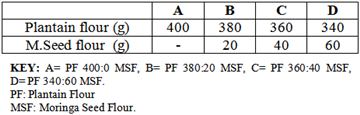
This study seeks to formulate and produce a composite product from plantain and Moringa seed flour, determine dietary fiber content, in-vitro starch hydrolysis and prediction of glycemic indices. Plantain and Moringa seed were processed into and different formulations (A= PF 400:0 MSF, B= PF 380:20 MSF, C= PF 360:40 MSF, D= PF 340:60 MSF) of the flour was used in producing Plantain Amala. The product was evaluated for dietary fibre content, in vitro starch hydrolysis and prediction of glycaemic indices. Results of dietary fibre indicated that the control sample had a significantly higher (p≥0.05) value of 12.34%. In-vitro starch hydrolysis showed that sample D had a lower amount of starch hydrolysed 30.37% after 120 mins of digestion. The results revealed that product (Plantain Amala) sample D containing 15% moringa seed flour showed significantly lower values in Equilibrium concentration 37.75, hydrolysis index 31.60, Area under the curve 9183, and a predicted glycaemic index value of 57.05.
Dietary fibre has been defined by the WHO/FAO. 1, as carbohydrate polymers with 10 or more monomeric units, which are hydrolysed by endogenous enzymes in the small intestines of human. They can be categorised into the following groups:
i) Edible carbohydrate polymers that are naturally occurring in food.
ii) Carbohydrate polymers which can be obtain from a food raw material by physical, chemical and enzymatic means, and which have been shown to have a beneficial effect on health when consumed.
Wang et.al, 2 reported that dietary fibres can be classified to two major predominant types and they are composed of those fibres that are dispersed in water, which are referred to as soluble dietary fibre (SDF) and the structural non-viscous fibers which are insoluble in water. Vegetables and cereals are especially rich in water insoluble fibers, with the highest amounts found in wheat and corn. Water insoluble fibre is responsible for increased stool bulk and helps to regulate bowl movement. The type, source, and amount of dietary fiber influence the intestinal function in a number of ways are resistant to colonic fermentation.
Also, fibres bind a large amount of water thereby enlarging the aqueous phase of the food pellets and slows down the absorption of nutrients, 3. Other benefits are prebiotic effects and cell protection.
Schulze et.al 4 investigated the beneficial effects of dietary fibre on postprandial glucose control and reported an inverse correlation between intake of high fibre content diets and type 2 diabetes mellitus. It was shown that a reduction in plasma glucose levels occurred as a result of the consumption of high viscous fibre foods. The ingestion of foods containing viscous gels can slow down gastric emptying by forming a gel matrix as a result of their holding capacity. As the hydrated fibres enter the small intestines the gel matrix may thicken the small intestinal contents, modulating digestive processes by the diffusion of nutrients for absorption.
Plantains constitute one of the major staple foods in Nigeria, and it is cultivated abundantly in the tropical humid regions of the world. Plantains belong to the genus Musa sapientum var paradisaca. They are characterized by high starch content and can be consumed ripe or unripe in a variety of preparatory methods.
Plantain starches have amylopectin chain length of 26 to 29 glucose molecules 5. Briffaz et.al, 6 studied the water uptake mechanism and temperature regimes of starch behavior and reported that due to limited water content or insufficient heating temperature, a fraction of starch can remain ungelatinized which leads to sufficient changes I starch functional properties. An incomplete swelling of starch granules will lead to a partial increase in starch susceptibility to enzyme breakdown. Thus, the extent of disruption caused by heat and moisture will directly affect the extent of enzymic hydrolysis of cooked starch.
Plantain is a major source of macro nutrients, and they contain resistant starch, dietary fibre, as well as rapidly digestible starch and slowly digestible starch. Giraldo et.al, 7 reported that plantain native starches have a starch fraction that resists alpha amylase by 66.7 percent. Therefore, Plantain starch constitutes a major potential functional ingredient in postprandial glycemic response.
Moringa oleifera has been widely grown specie of the genera Moringaceae, found in most parts of humid tropical Africa, Asia, and the South America. The tree has an average height ranging from 5 – 10m and is known in various countries with different names such as drumstick tree or horse radish tree 8. The bitter taste arising from the consumption of the seeds could be attributed to the presence of alkaloids, or saponins, Investigations have revealed very low values of anti-nutritional factors, and high amounts of polyunsaturated fatty acids, as well as appreciable protein and amino acids which are rich in Sulphur.
Oparinde et.al, 9 investigated the effect of moringa seed extracts on diabetic induced rats and reported a significant reduction in fasting blood glucose after the rats were fed with moringa seed extracts. Also, Al-Malki and Rabey 10 reported the anti-diabetic and anti-oxidant activity of moringa seed powder and affirmed its scavenging effect on nitric oxide radicals. It was further reported that moringa seed powder would be a potential source of natural antioxidant. Apart from its nutraceutical uses, moringa seed have been used in the treatment of hypercholesterolemia and hyperglycemia as well as in nutritional supplementation. It can be prescribed in food for coronary artery disease patients.
Adejoh et.al, 11 reported the inhibitory activity of moringa seeds on alpha amylase and glucosidase digestive enzymes. The glucosidase enzymes are located at the intestinal brush boarder of the intestine which is responsible for digestion of carbohydrates and absorption of glucose in the digestive tract. The management of diabetes can be achieved by reducing post prandial hyperglycemia by delaying the activities of alpha amylase and alpha glucosidase enzymes respectively.
The glycemic index is defined as the incremental area under the blood glucose response curve (the change in blood glucose level two hours after a meal) of 50g available portion of a test food expressed as a percentage of the response to the same amount of carbohydrate from a standard food (either white bread or glucose) ingested by the same subject 12. Therefore, foods are classified into Low glycemic foods (< 55), medium glycemic foods (55 – 69) and high glycemic foods (> 70). Glucose a monosaccharide induces large glycemic response and is often used as a reference food and assigned G.I of 100. However glycemic index does not take into account the amount of carbohydrate consumed, which is an important determinant of glycemic response.
Dietary carbohydrates are digested and absorbed at different rates and to different extents in the human small intestine, depending on their botanical source and the physical form of the food. Diets that contain large amounts of rapidly digested carbohydrates, which elevate blood glucose and insulin responses may be detrimental to health. It has been suggested diets rich in slow digested carbohydrates may protect against chronic diseases 13.
Starch is divided into rapidly digestible starch (RDS), slowly digestible starch (SDS), and resistant starch (RS). The designations slowly available glucose (SAG) and rapidly available glucose are designed to reflect the rate at which glucose (from sugars and starch, including maltodextrins) become available for absorption in the human small intestine.
Venn and Green 14, reported that the glycemic index of a food is affected not only by the rate of absorption of carbohydrates but also by the rate of glucose removal from the plasma. Also, the effect of glycemic index on insulin response may depend on insulin sensitivity.
The objective of this study was to formulate and produce a composite product from plantain and Moringa seed flour, determine dietary fiber content, in-vitro starch hydrolysis and prediction of glycemic indices.
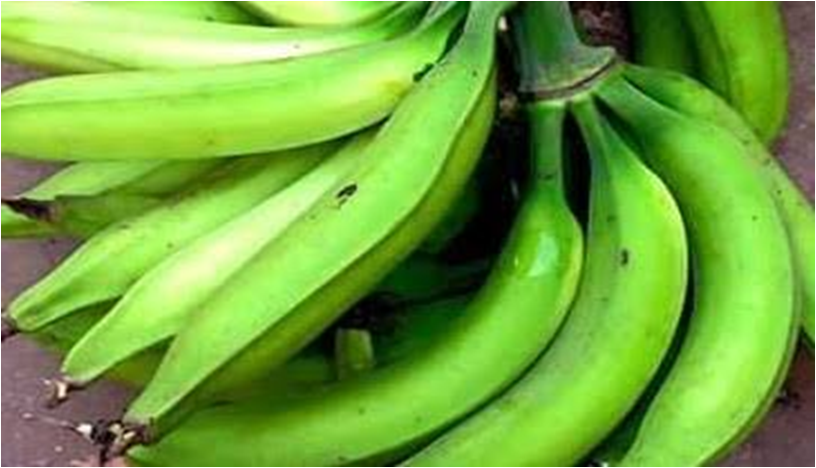
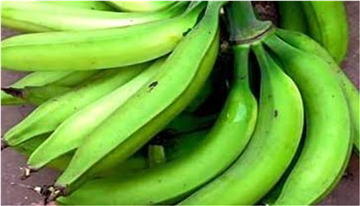
Mature unripe Plantain (Musa sapientum) was procured from the University of Port Harcourt Research farm. Plantain fingers of uniform size and maturity was used for the experiment.
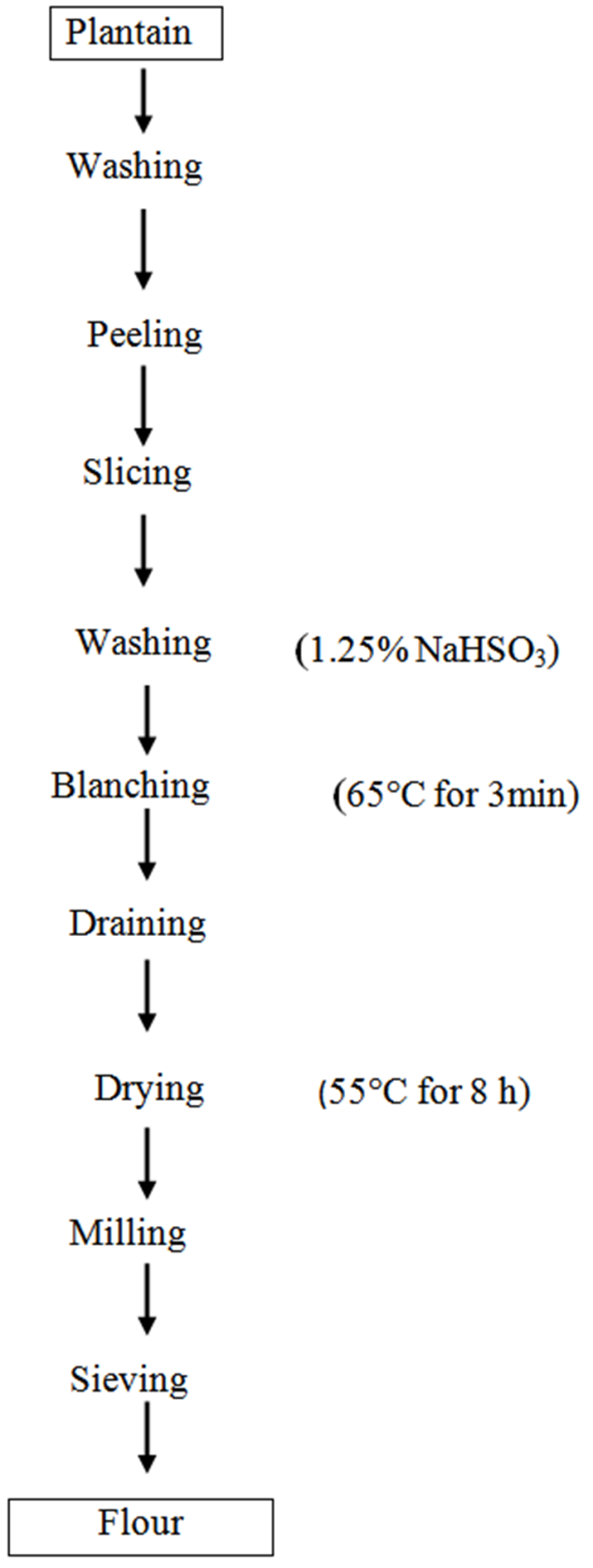
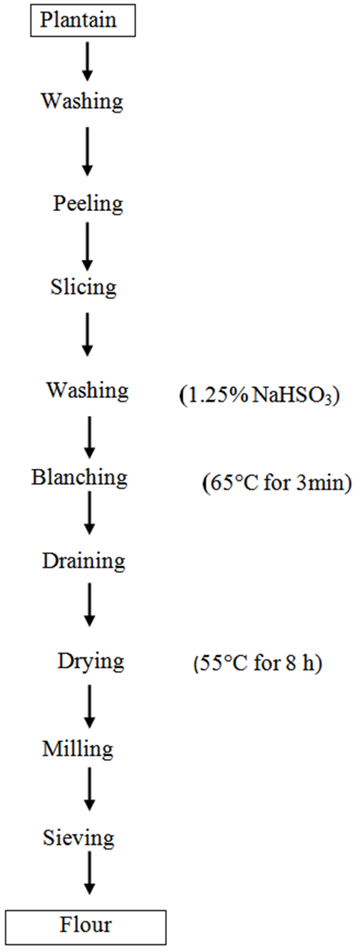
2.2. Processing of Plantain FlourPlantain flour preparation was carried out according to the method described by Mepba et.al, 15 as shown in Figure 1. Unripe plantains fruits were washed with tap water, peeled and cut into slices of less than 2 cm in thickness with a knife. Blanching was carried out using 1.25% NaHSO₃ solution at a temperature of 65 ± 2°C for 3 minutes. The blanched slices were drained and oven (Gallenkamp hot air) dried at 55°C for 8 hours. Size reduction was done by milling (Foss cyclotec 1093) the slices into finer particles that will pass through 250µm aperture sieve and packaged in polyethene material and stored at room temperature in a seal plastic container.
 |
Moringa seed flour was prepared as described by Ogunsina et.al, 16. Dried moringa seeds were sorted to remove debris and unwanted material. The seeds were then dehulled manually and the husks discarded. The seeds were then soaked in distilled water for 6 hrs and then dried in an electric oven for 4 hours at a temperature of 55°C. This was then milled to powder and packed.
2.5. Preparation of Plantain AmalaThe preparation of plantain amala was carried out in accordance with the method described by Karim et.al, 17. Plantain flour was poured into boiling and stirred continuously until a paste is formed. The paste was then allowed to cook for 5mins, stirred and allowed to cool before packing.
2.6. Determination of Dietary FibreTotal dietary fiber determination was carried out using AOAC method 985.29 18. One gram of sample was weighed into a conical flask and 50 ml of borate buffer solution added to it. Then, 0.1 ml of fungal α – amylase enzyme was added and transferred to a shaker water bath at a temperature of 95 - 100°C for 30 mins. Thereafter, this was cooled to room temperature. The pH of the solution was adjusted to 7.5 by the addition of 0.1N Sodium hydroxide (NaOH). Then, 0.1 ml protease enzyme was added to the sample and heated for 30 mins at 60°C, allowed to cool to room temperature and pH adjusted to 4.0 using 0.1N hydrochloric acid (HCl). An addition of 0.2 ml amyloglucosidase was made and the sample heated for 30 mins. The final solution was made up to 70 ml and 100 ml of alcohol at temperature of 60°C was added and allowed to stand for one hour to precipitate the residue. Pre-weighed filter paper was used to filter the sample and dried in an oven at 105°C for one hour and re-weighed. One of the weighed samples (filter paper + residue) was used for protein analysis and the other for fat.
Dietary fiber content was calculated using the following formula:
 |
The Starch hydrolysis and predicted glycemic index was determined using the modified Goni et. al, 19 as described by Frei et.al 20.
Fifty (50 mg) milligrams of sample were weighed and 10 ml of HCl- KCl buffer was added to adjust pH to 1.5. Then 0.2 ml of a solution containing 1 mg of pepsin (Cat.No P6887, Sigma) from porceine gastric mucosa were added to the sample and incubated for one hour at 40°C in a water bath with shakings at intervals. The volume was made up to 25 ml by adding phosphate buffer (pH 6.9) containing 2.5 ml of α – amylase from porceine pancreas. The flasks were then incubated in a water bath at 37°C with moderate agitation. Aliquots of 1 ml were taken from each flask every 30 minutes from time zero to three hours. Alpha amylase was inactivated by placing the tubes containing the aliquots in a boiling water bath for 5 minutes and allowed to cool. Then 3 ml of 0.2M Sodium acetate buffer (pH 4.5) and 0.06 ml of amyloglucosidase enzyme were added. This was then incubated for 45 mins at 60°C. The rate of starch digestion was expressed as a percentage of total starch hydrolyzed at different times (30, 60, 90, 120, 150,180 mins). Final glucose concentration was determined using the DNS method.
2.8. Preparation of 3. 5 Dinitrosalicylic AcidSeventy- five grams (75g) of Sodium potassium tatarate was dissolved in 125 ml of distilled water and 2.5g of 3,5, dinitrosalicylic acid was dissolved in 50 ml of 2N Sodium hydroxide solution. Both solutions were mixed and 250 ml of distilled water added.
A known quantity of digested sample (0.5 ml) was added to 1 ml of 3.5 Dinitrosalicylic acid with slight agitation and heated for 5 mins and allowed to cool. Thereafter, 3.5 ml of distilled water was added and absorbance read at 540 nm against a glucose standard. A plot of Absorbance was done against glucose concentration of 0.2, 0.4, 0.6, 0.8, and 1.0 mg/l. A standard graph was obtained and values read.
The Area under hydrolysis curve for each sample, as well as the reference sample was calculated using the trapezoid method.
Hydrolysis index (HI) was obtained by dividing the area under curve of each sample by the area under curve of the reference sample (white bread).
 |
Glycemic index (GI) was estimated using the model:
 |
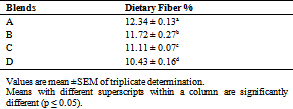
The results of the dietary fibre content of products formulated from Plantain flour and moringa flour blend was presented in Table 1. The dietary fibre content of the products ranged from 10.43 – 12.34. The result showed that all the formulations were significantly different from each other with the control having a value of 12.34%. Increasing the level of substitution with moringa seed flour reduced the dietary fibre content.
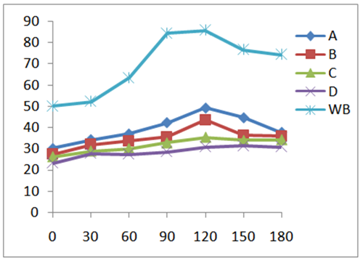
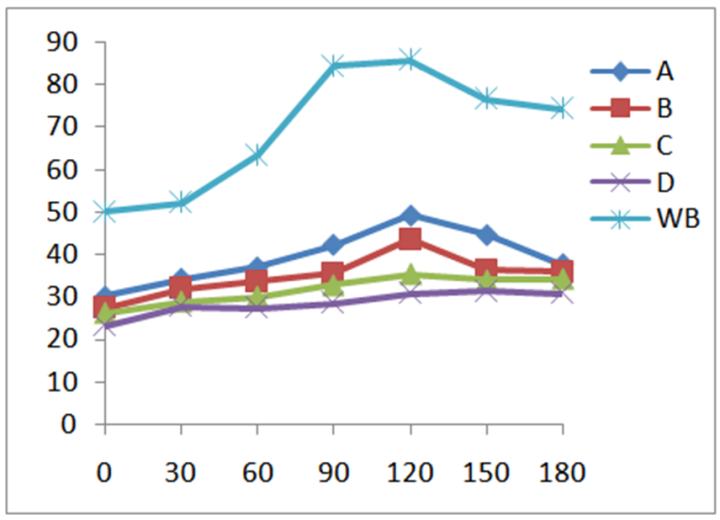
The in vitro starch hydrolysis curve of the product (Plantain Amala) formulated from Plantain flour and Moringa seed flour blend are shown in Figure 2. The starch hydrolysis curve followed the pattern of reaching a plateau at 120 mins of digestion. Values obtained for starch hydrolysis for the various samples showed that product sample A which is the control had the highest amount of starch hydrolysed to be 49.19% at 120 mins of hydrolysis. Product sample B value was 43.44%, sample C 35.31% and sample D 30.73%. After 120 mins of digestion the hydrolysis percentage of the various samples reduced between 120 and 180 mins.
The results showed that increase in the proportion of moringa seed flour decreased the percentage of starch hydrolysis in the different formulations. This result was in agreement with the pattern reported by 21, Slowly digestible starch is the portion of starch that is digested after rapidly digestible starch but not longer than 120 mins ie between 30 and 120 mins of starch digestion in vitro. It is completely but slowly digested in the human small intestine. Slowly digestible starch (SDS) offers a stabilizing and sustaining effect on blood glucoses levels and subsequently lowers glycemic index.
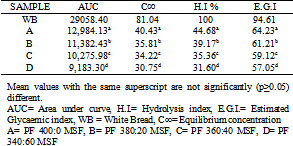
Table 2 showed the equilibrium concentration of starch hydrolysis after 180 minutes of starch digestion, the hydrolysis index, and the estimated glycaemic index of the various formulations of Plantain amala produced from plantain flour and moringa seed flour blends. Result of equilibrium concentration of starch hydrolysis after 180 minutes showed a range of values between 30.75% and 40.43% for the formulated products, while the reference sample white bread (WB) had a value of 81.04%. Sample A which is the control had a value of 40.43, sample B 35.81 and sample C 34.22, sample D 30.75. The hydrolysis of the various blends also followed the same pattern with sample A 44.68%, sample B 39.17%, sample C 35.36% and sample D 31.60%. The range of values of the estimated glycaemic index of Plantain moringa blend are between 57.05 for sample D and 64.23 for product sample A. Samples B and C had values of 61.21 and 59.12, while the estimated glycaemic index of white bread which is the reference sample was 94.61.
Equilibrium concentration represents the percentage of starch hydrolysed after 180 mins of starch digestion. The reference sample white bread (WB) had the highest equilibrium concentration (C∞) of 81.04%. Low values of equilibrium concentration generally suggest higher resistance to enzymatic hydrolysis 22.
The equilibrium concentration and hydrolysis index value of product formulated from plantain flour and moringa flour blend (Plantain Amala) showed that the decreasing values of hydrolysis index and predicted glycaemic index with the increase in the level of substitution with moringa seed flour.
The equilibrium concentration values ranged from 30.75 – 40.43 and the hydrolysis index values were between 31.60% and 44.64% for sample D and the control Sample respectively. The estimated glycaemic index values of the products were between 57.05 and 64.23.
Similar results also been reported by Hettiarachi et. al, 23 who obtained values of 44 – 51% predicted glycaemic index for different varieties of cooking banana. However, much higher values of glycaemic index have been reported for plantain flour at 65.05% 24. The result obtained 64.23% corresponds with that reported by 24. The lower values of estimated glycaemic index for samples B to D, seem to be as a result of the contributing effect of moringa seed flour. Gupta et. al, 25 reported that blood glucose reduction effect of moringa seed on Streptozocin (STZ) induced rats. Low glycaemic index foods have been reported to reduce blood glucose level 26.
One of the potential effects of low glycaemic index food is to reduce blood glucose in patients with type 2 diabetes and to reduce daily insulin requirements in patients with type 1 diabetes 27.
This study revealed that increasing the level of substitution of moringa seed flour in the formulation led to a decrease in Equilibrium concentration, Hydrolysis index, Area under the hydrolysis curve, and the predicted glycaemic index of Plantain Amala.
None.
| [1] | WHO/FAO (2008). Expert committee on Food Additives: Dietary fibre. FAO JECFA Monograph 5. | ||
| In article | |||
| [2] | Wang J, Rosell C. C, and Benedito de Barber C. (2002). Effect of the addition of different fibres on wheat dough performance and bread quality. Food Chemistry 79: 221-226. | ||
| In article | View Article | ||
| [3] | Ferguson LR, Zhu ST, and Harris P. J. (2005). Antioxidant and antigenotoxic effects of plant cell wall hydroxycinnamic acids in cultured HT-29 cells. Molecular Nutr Food Research 49: 585-93. | ||
| In article | View Article PubMed | ||
| [4] | Schulze M.B., Liu S, Rimm E. B, Manson J. E, Willett W. C, and Hu F. B. (2004). Glycemic index, glycemic load, and dietary fiber intake and incidence of type 2 diabetes in younger and middle-aged women. American Journal of Clinical Nutrition. 80: 348-56. | ||
| In article | View Article PubMed | ||
| [5] | Sajilata M, Singhai R, and Kulkarni P. (2006). Resistant Starch: A review. Comprehensive reviews in Food Science and Safety. 5(1): 1-17. | ||
| In article | View Article PubMed | ||
| [6] | Briffaz A., Mestres C, Matenico F, and Pons B, (2013). Modelling starch phase and water uptake of Rice kernels during cooking. Journal of Cereal Science, 58(3): 387-392. | ||
| In article | View Article | ||
| [7] | Giraldo T., Gilbert O, Ricci J, Duffour D, Mestres C, and Bohuson P, (2015). Digestibility prediction of cooked Plantain flour as a function of water content and temperature. Carbohydrate polymer . 118: 257-265. | ||
| In article | View Article PubMed | ||
| [8] | Anwar F., Latif S., Ashraft M., and Gilani H., (2007). Moringa oleifera: A food plant with multiple medicinal uses. Phytotherapy Research 21: 17-25. | ||
| In article | View Article PubMed | ||
| [9] | Oparinde P, Atiba S, and Adeniran S. (2014). Moringa leaf prevents stress in Wistar rats. European Journal of Medicinal Plants, 4(9): 1150-152 | ||
| In article | View Article | ||
| [10] | Al-Malki A, and EL- Rabey H. (2015). Anti diabetic effect of low doses of moringa oleifera seeds on streptozotocin induced male rats. Biomedical Research International. p 1-13. | ||
| In article | View Article PubMed | ||
| [11] | Adejoh I. P, Chiadikaobi O., Barnabas A., Ifeloluwa A. and Muhammed H. (2016). In- vivo and in vitro comparative evaluation of anti diabetic potentials of moringa oleifera. European Journal of Biotech Biosciences. 4 (1): 14-22. | ||
| In article | |||
| [12] | FAO (1998). Carbohydrate in human nutrition. Report of joint FAO/WHO Expert committee. FAO Food Report paper 66: 1-40. | ||
| In article | |||
| [13] | Englyst K, Englyst H, Hudson J, Cole T, and Cummings H. (1999). Rapidly available glucose in foods. American Journal of Clinical Nutrition. 69: 448-454. | ||
| In article | View Article PubMed | ||
| [14] | Venn B, and Green T. (2007). Glycaemic index, Glycaemic Load: Measurement Issues. European Journal of Clinical Nutrition. 61: 122-131. | ||
| In article | View Article PubMed | ||
| [15] | Mepba HD, Eboh L, and Nwaojigwa SU (2007). Chemical composition, functional and baking properties of wheat-plantain composite flours. African Journal Food Nutrition Development 7(1): 1-22. | ||
| In article | |||
| [16] | Ogunsina B.S., Indira T. N., Bhatnagar A. S., Rahha C., and Sukuma D., (2014). Quality chacteristics and stability of Moringa oleifera seed oil of Indiran Origin. Journal of Food Science and Tecnnology, 51: 503-510. | ||
| In article | View Article PubMed | ||
| [17] | Karim, O.R; Kayode, R.M.; Adeoye, O.S.; and Oyeyinka, A.T. (2013). Proximate, Mineral and Sensory qualities of Amala prepared from yam flour fortified with moringa leaf powder. Food Science and Quality management. 12: 10- 22. | ||
| In article | |||
| [18] | A.O.A.C. (1990). Association of Official Analytical Chemist. Method of Analysis, 15th edition. Washington. D.C. | ||
| In article | |||
| [19] | Goni I., Alejandra Garcia –Alonso, and Fulgenico Saura. (1997). A starch hydrolysis procedure to estimate glycaemic index. Nutrition Research, 17 (3) : 427-437. | ||
| In article | View Article | ||
| [20] | Frei M., Siddhuraju P., and Becker K, (2003). Studies in in vitro starch digestibility and the glycaemic index six different indigenous rice cultivar from Philippines. Food chemistry. 83: 395-402. | ||
| In article | View Article | ||
| [21] | Englyst K. and Englyst H. (2005). Carbohydrate bioavailability. British Journal of Nutrition. 94: 1-11. | ||
| In article | View Article PubMed | ||
| [22] | Jaisut D, Prachayawarkom S, Varanyanond W, Tungtyrakul P and Soponronnarit S. (2009). Accerelated aging of jasmin brown rice by high temperature fluidization technique. Food Research International, 425: 647-681. | ||
| In article | View Article | ||
| [23] | Hettiarachi U, Ekanayake S, and Welihinda J, (2011). Chemical Composition and glycaemic responses of Banana varieties. International Journal of Food Science and Nutrition. 62 (4): 307-309 | ||
| In article | View Article PubMed | ||
| [24] | Oboh, H.A, and Erema, V.G. (2010). Glyceamic indices of processed unripe plantain (Musa paradisiaca) meals. African Journal of Food Science, 4(8): 514-521. | ||
| In article | |||
| [25] | Gupta R, Mathur M, Bajaj K, Katariya P, Yadav S, Kamal R. (2012). Evaluation of anti diabetic and anti oxidant activity of Moringa oleifera on experimental diabetes. Journal of Diabetes . 4: 164-167. | ||
| In article | View Article | ||
| [26] | Jenkins D, Kendall C, Augustin L, and Franceschi S. (2002). Glycaemic index : Overview of implications in health and diseases. American Journal of Clinical Nutrition. 76 (1): 266S-273S. | ||
| In article | View Article | ||
| [27] | Brand-Miller J, Hayne S, Peter P, and Stephen C. (2003). Low glycaemic index diets in the management of Diabetes. Diabetes Care, 26 (8):2261-2266. | ||
| In article | View Article PubMed | ||
Published with license by Science and Education Publishing, Copyright © 2022 Wabali V.C and Jike-Wai O.
 This work is licensed under a Creative Commons Attribution 4.0 International License. To view a copy of this license, visit
http://creativecommons.org/licenses/by/4.0/
This work is licensed under a Creative Commons Attribution 4.0 International License. To view a copy of this license, visit
http://creativecommons.org/licenses/by/4.0/
| [1] | WHO/FAO (2008). Expert committee on Food Additives: Dietary fibre. FAO JECFA Monograph 5. | ||
| In article | |||
| [2] | Wang J, Rosell C. C, and Benedito de Barber C. (2002). Effect of the addition of different fibres on wheat dough performance and bread quality. Food Chemistry 79: 221-226. | ||
| In article | View Article | ||
| [3] | Ferguson LR, Zhu ST, and Harris P. J. (2005). Antioxidant and antigenotoxic effects of plant cell wall hydroxycinnamic acids in cultured HT-29 cells. Molecular Nutr Food Research 49: 585-93. | ||
| In article | View Article PubMed | ||
| [4] | Schulze M.B., Liu S, Rimm E. B, Manson J. E, Willett W. C, and Hu F. B. (2004). Glycemic index, glycemic load, and dietary fiber intake and incidence of type 2 diabetes in younger and middle-aged women. American Journal of Clinical Nutrition. 80: 348-56. | ||
| In article | View Article PubMed | ||
| [5] | Sajilata M, Singhai R, and Kulkarni P. (2006). Resistant Starch: A review. Comprehensive reviews in Food Science and Safety. 5(1): 1-17. | ||
| In article | View Article PubMed | ||
| [6] | Briffaz A., Mestres C, Matenico F, and Pons B, (2013). Modelling starch phase and water uptake of Rice kernels during cooking. Journal of Cereal Science, 58(3): 387-392. | ||
| In article | View Article | ||
| [7] | Giraldo T., Gilbert O, Ricci J, Duffour D, Mestres C, and Bohuson P, (2015). Digestibility prediction of cooked Plantain flour as a function of water content and temperature. Carbohydrate polymer . 118: 257-265. | ||
| In article | View Article PubMed | ||
| [8] | Anwar F., Latif S., Ashraft M., and Gilani H., (2007). Moringa oleifera: A food plant with multiple medicinal uses. Phytotherapy Research 21: 17-25. | ||
| In article | View Article PubMed | ||
| [9] | Oparinde P, Atiba S, and Adeniran S. (2014). Moringa leaf prevents stress in Wistar rats. European Journal of Medicinal Plants, 4(9): 1150-152 | ||
| In article | View Article | ||
| [10] | Al-Malki A, and EL- Rabey H. (2015). Anti diabetic effect of low doses of moringa oleifera seeds on streptozotocin induced male rats. Biomedical Research International. p 1-13. | ||
| In article | View Article PubMed | ||
| [11] | Adejoh I. P, Chiadikaobi O., Barnabas A., Ifeloluwa A. and Muhammed H. (2016). In- vivo and in vitro comparative evaluation of anti diabetic potentials of moringa oleifera. European Journal of Biotech Biosciences. 4 (1): 14-22. | ||
| In article | |||
| [12] | FAO (1998). Carbohydrate in human nutrition. Report of joint FAO/WHO Expert committee. FAO Food Report paper 66: 1-40. | ||
| In article | |||
| [13] | Englyst K, Englyst H, Hudson J, Cole T, and Cummings H. (1999). Rapidly available glucose in foods. American Journal of Clinical Nutrition. 69: 448-454. | ||
| In article | View Article PubMed | ||
| [14] | Venn B, and Green T. (2007). Glycaemic index, Glycaemic Load: Measurement Issues. European Journal of Clinical Nutrition. 61: 122-131. | ||
| In article | View Article PubMed | ||
| [15] | Mepba HD, Eboh L, and Nwaojigwa SU (2007). Chemical composition, functional and baking properties of wheat-plantain composite flours. African Journal Food Nutrition Development 7(1): 1-22. | ||
| In article | |||
| [16] | Ogunsina B.S., Indira T. N., Bhatnagar A. S., Rahha C., and Sukuma D., (2014). Quality chacteristics and stability of Moringa oleifera seed oil of Indiran Origin. Journal of Food Science and Tecnnology, 51: 503-510. | ||
| In article | View Article PubMed | ||
| [17] | Karim, O.R; Kayode, R.M.; Adeoye, O.S.; and Oyeyinka, A.T. (2013). Proximate, Mineral and Sensory qualities of Amala prepared from yam flour fortified with moringa leaf powder. Food Science and Quality management. 12: 10- 22. | ||
| In article | |||
| [18] | A.O.A.C. (1990). Association of Official Analytical Chemist. Method of Analysis, 15th edition. Washington. D.C. | ||
| In article | |||
| [19] | Goni I., Alejandra Garcia –Alonso, and Fulgenico Saura. (1997). A starch hydrolysis procedure to estimate glycaemic index. Nutrition Research, 17 (3) : 427-437. | ||
| In article | View Article | ||
| [20] | Frei M., Siddhuraju P., and Becker K, (2003). Studies in in vitro starch digestibility and the glycaemic index six different indigenous rice cultivar from Philippines. Food chemistry. 83: 395-402. | ||
| In article | View Article | ||
| [21] | Englyst K. and Englyst H. (2005). Carbohydrate bioavailability. British Journal of Nutrition. 94: 1-11. | ||
| In article | View Article PubMed | ||
| [22] | Jaisut D, Prachayawarkom S, Varanyanond W, Tungtyrakul P and Soponronnarit S. (2009). Accerelated aging of jasmin brown rice by high temperature fluidization technique. Food Research International, 425: 647-681. | ||
| In article | View Article | ||
| [23] | Hettiarachi U, Ekanayake S, and Welihinda J, (2011). Chemical Composition and glycaemic responses of Banana varieties. International Journal of Food Science and Nutrition. 62 (4): 307-309 | ||
| In article | View Article PubMed | ||
| [24] | Oboh, H.A, and Erema, V.G. (2010). Glyceamic indices of processed unripe plantain (Musa paradisiaca) meals. African Journal of Food Science, 4(8): 514-521. | ||
| In article | |||
| [25] | Gupta R, Mathur M, Bajaj K, Katariya P, Yadav S, Kamal R. (2012). Evaluation of anti diabetic and anti oxidant activity of Moringa oleifera on experimental diabetes. Journal of Diabetes . 4: 164-167. | ||
| In article | View Article | ||
| [26] | Jenkins D, Kendall C, Augustin L, and Franceschi S. (2002). Glycaemic index : Overview of implications in health and diseases. American Journal of Clinical Nutrition. 76 (1): 266S-273S. | ||
| In article | View Article | ||
| [27] | Brand-Miller J, Hayne S, Peter P, and Stephen C. (2003). Low glycaemic index diets in the management of Diabetes. Diabetes Care, 26 (8):2261-2266. | ||
| In article | View Article PubMed | ||