This study investigates consumer attitudes and preferences toward cultured meat, focusing on awareness, acceptance levels, and expectations. As a representative group of future agricultural professionals, students at Tekirdağ Namık Kemal University, Faculty of Agriculture were selected as the sample population due to their familiarity with agricultural and food production processes, as well as their potential to influence future food trends. While a significant portion of participants prioritized health, safety, and quality in their food choices, their acceptance of cultured meat remained limited due to concerns regarding taste, naturalness, and ethics. Awareness of the environmental and ethical advantages of cultured meat was low, whereas food safety and quality and nutritional value were deemed more important. The findings highlight that although cultured meat has the potential to reduce environmental impacts and meet protein demands, knowledge gaps, economic concerns, and cultural adaptation remain significant barriers. Facilitating cultured meat adoption requires significant improvements in taste and consumer trust, alongside targeted awareness campaigns and supportive policies addressing key economic and cultural barriers.
The relentless growth of the global population, projected by the United Nations to reach 10 billion by 2050, exerts immense pressure on planetary resources and poses substantial challenges to the sustainability of current food systems, particularly conventional meat production 1. Traditional meat industries are significant contributors to environmental degradation through intensive consumption of water, land, and energy, alongside substantial greenhouse gas emissions 2, 3. This unsustainability underscores the increasingly urgent need for innovative alternative protein sources and production methods capable of meeting global food demand within ecological limits, a core concern for sustainable food systems.
Among the emerging alternatives, cultured meat produced via cellular agriculture in laboratories, thereby decoupling meat production from live animal rearing presents a potentially transformative solution. Proponents highlight its potential to drastically reduce environmental footprints (water, land, energy use), enhance animal welfare, and mitigate risks associated with zoonotic diseases, a factor gaining prominence considering recent pandemics 4, 5, 6. However, the pathway to widespread adoption is fraught with challenges 4, 5. As Bonny et al. (2015) and Hocquette (2016) emphasize, despite potential ethical and environmental advantages, significant hurdles remain encompassing high production costs, the need for scalable technologies, navigating complex regulatory landscapes, and crucially, overcoming consumer skepticism and achieving acceptance 7, 8.
The concept, first envisioned by Winston Churchill in 1931 and realized with the first prototype in 2013 9, has seen rapid technological advancement, bringing cultured meat closer to conventional counterparts in nutritional and sensory profiles 10. Nonetheless, consumer perception remains a primary bottleneck. While some appreciate the potential benefits, a pervasive perception of cultured meat as "unnatural" significantly hinders acceptance 11. Insights from consumer readiness studies on other novel protein sources, such as insect-based products 12, strongly suggest that overcoming food neophobia and addressing deep-seated cultural perceptions tied to 'naturalness' are key determinants for the acceptance of any novel food, including cultured meat.
Regulatory frameworks are pivotal for building trust and enabling market entry. While the USA develops collaborative oversight between the FDA and USDA, and the EU mandates stringent health and safety standards 8, 11, many regions, including Türkiye, currently lack specific regulations, though legislative efforts are anticipated 13. This regulatory uncertainty adds another layer of complexity to market development.
Understanding consumer acceptance requires delving into multifaceted drivers. Parallels with consumer responses to other food biotechnologies, such as gene-edited meat 14, underscore that acceptance hinges not just on price but significantly on perceived ethical, environmental, and animal welfare benefits. Martin-Collado et al. (2022) further highlights the existence of distinct consumer segments whose attitudes vary based on demographics and knowledge, suggesting that a 'one-size-fits-all' approach to promoting acceptance is unlikely to succeed 14. This complexity is reflected globally, with systematic reviews confirming significant market potential but also wide variations in acceptance levels influenced by cultural factors and information exposure 15. National contexts reveal differing priorities; for instance, while German consumers show increasing consideration, ethical and emotional responses remain significant barriers 16. Synthesizing these diverse findings, Pakseresht et al. (2022) identify key psychological drivers’ risk-benefit perceptions, social norms, and food neophobia as persistent shapers of attitudes towards cultured meat 17. Furthermore, practical considerations like sensory attributes (taste, texture) are critical, as advancements in conventional meat grading systems like MSA demonstrate their importance for consumer satisfaction 18, providing valuable lessons for cultured meat development. Specific studies within Türkiye echo these global concerns, revealing limited awareness and significant skepticism even among supposedly informed groups like nutrition students 19, emphasizing the need for targeted educational and trust-building initiatives within this national context.
Concurrently, technological frontiers continue to advance, with innovations in bioreactor design, scaffold development, and single-cell analysis holding promise for addressing cost and quality barriers 20. Yet, uncertainties regarding long-term nutrition, large-scale manufacturing feasibility, and establishing robust consumer trust persist as key challenges for the sector's sustainable integration into food systems 21. Collectively, the literature emphasizes the multifaceted nature of cultured meat acceptance, demanding continued multidisciplinary research that bridges cultural, regulatory, technological, and ethical domains, aligning perfectly with the holistic perspective required for sustainable food system analysis.
Against this backdrop, while extensive research explores general consumer attitudes, there remains a need to understand the specific perspectives of key future stakeholders within contexts. This study addresses this gap by examining the perceptions and preferences regarding cultured meat among students at Tekirdağ Faculty of Agriculture in Türkiye. This cohort represents a unique and meaningful sample: they are a young demographic poised to enter and influence the future agricultural and food sectors; their educational background provides a degree of familiarity with food production processes (potentially influencing their views differently from the general public); and their heightened awareness of sustainability issues makes their perspective particularly relevant. By focusing on this specific group within the Turkish context, this study aims to provide nuanced, context-specific insights currently lacking in the literature, moving beyond general surveys to understand the views of future professionals who will play a role in the adoption and integration of such novel technologies. The findings are intended to guide policymakers, industry representatives, and academic institutions in developing targeted strategies to enhance cultured meat acceptance, ultimately contributing to the broader goal of fostering more sustainable and resilient food systems. Moreover, the study provides valuable insights into the interplay of environmental, ethical, and health dimensions in shaping attitudes towards novel food technologies, informing public health policies and communication strategies.
The study utilized data collected from students at Tekirdağ Faculty of Agriculture. A structured questionnaire was administered to measure participants' demographic characteristics and attitudes toward cultured meat. The questionnaire consisted of two main sections: the first section gathered demographic information (gender, age, and educational status), while the second section included questions designed with items employing a 5-point Likert scale to assess awareness and expectations regarding cultured meat.
The target population for the study comprised 1,367 students enrolled at Tekirdağ Faculty of Agriculture. To determine the sample size, p and q values were assumed to be 0.5, with a 95% confidence level and a 5% margin of error. Based on these calculations, 301 students were selected from the population using simple random sampling to participate in the study.
 |
In the formula:
N = Population size
z = Z value for a 95% confidence level (1.96)
p = Probability of preferring cultured meat
q = Probability of not preferring cultured meat (1-p)
d = Margin of error (0.05 for 5%)
Note: p and q were set at 0.5 to achieve the maximum sample size.
Ethical approval for the survey was obtained from the Scientific Research and Publication Ethics Committee of Tekirdağ Namık Kemal University's Faculty of Science and Engineering, dated 2024-03-25, under decision number T2024-1945.
2.2. MethodsData analysis was performed using IBM SPSS Statistics software, employing several statistical techniques. The methodological procedures included descriptive statistics, chi-square tests for association, exploratory factor analysis for identifying underlying constructs, and reliability analysis.
Initially, descriptive statistical analyses were conducted to provide a comprehensive summary of the sample's characteristics and baseline responses. Frequencies and percentages were calculated for categorical demographic variables, including gender, age groups, educational status, and occupation. Means and standard deviations were computed for variables measured on Likert scales, such as awareness levels and expectations regarding cultured meat, to understand central tendencies and dispersion in participant responses concerning the core research questions.
To investigate the relationships between key categorical demographic variables and participants' views and behaviors related to cultured meat, Pearson's Chi-square (χ²) tests of independence were employed. The demographic variables examined included gender, age category, educational status, and occupation. These were tested for associations with dependent variables such as self-reported meat consumption frequency, level of awareness concerning cultured meat, stated acceptance levels, and price/attribute expectations for cultured meat. This analysis aimed to identify statistically significant associations between participant subgroups and their perceptions or potential adoption patterns, thereby determining if observed frequencies in cross-tabulations differed significantly from expected frequencies under the null hypothesis of independence.
To explore the underlying structure of consumer attitudes and preferences towards cultured meat and reduce the dimensionality of the dataset, an exploratory factor analysis (EFA) was performed. This technique was applied to the set of Likert-scale items assessing various facets of consumer perceptions.
Prior to conducting the EFA, the suitability of the data for factor analysis was assessed. The Kaiser-Meyer-Olkin (KMO) measure of sampling adequacy yielded a value of 0.786, indicating good sampling adequacy (well above the recommended minimum of 0.60). Bartlett’s test of sphericity was also conducted, and the result was statistically significant (χ²(190) = 2215.56, p < 0.001), confirming that the correlation matrix was not an identity matrix and that factor analysis was appropriate for the data.
Principal Component Analysis (PCA) was selected as the extraction method to maximize the variance explained by the initial factors. Following extraction, an orthogonal rotation method, Varimax, was applied to the factor matrix to achieve a simpler and more interpretable factor structure, assuming the underlying constructs are uncorrelated. Factors with eigenvalues greater than 1.0 were retained for interpretation, consistent with Kaiser's criterion. Factor loadings were examined to determine the substantive meaning of each retained factor.
The internal consistency reliability of the measurement instrument, specifically the 20 items encompassing themes related to consumer attitudes and preferences toward cultured meat (used subsequently in the EFA), was assessed using Cronbach’s alpha coefficient. This analysis evaluates the extent to which the items within the scale measure the same underlying construct. The analysis yielded an overall Cronbach’s alpha coefficient of 0.814. As this value exceeds the commonly accepted threshold of 0.70 22, it indicates a high level of internal consistency and reliability for the measurement scale employed in this study.
This study aimed to analyze the awareness and tendencies of students at Tekirdağ Faculty of Agriculture toward cultured meat, along with their meat consumption preferences and food purchasing behaviors, to understand the distinctive consumer characteristics of this group. The findings reveal how demographic factors influence individuals' awareness, acceptance levels, and expectations regarding cultured meat. Additionally, participants’ attitudes toward cultured meat provide insights into future consumption trends. These findings are compared with existing literature on environmental sustainability, ethical concerns, and the acceptance of innovative food products, and recommendations for future food policies are developed. This section first addresses participants’ demographic characteristics and meat consumption habits, followed by detailed analyses of their awareness and expectations regarding cultured meat.
The demographic characteristics of the participants are presented in Table 1. Of the respondents, 58.8% were male, and 41.2% were female. The largest age group (50.2%) was between 21 and 24 years old, and 95% of the participants were Turkish citizens. Regarding education, 88.7% were undergraduate students. In terms of monthly income, 45.2% of the participants had an income of 790 USD or more. Most participants reported a family size of four members (41.5%), and the majority (80.7%) resided in the Marmara Region. Concerning occupation, 63.8% did not hold any professional position, while 42.2% were employed in the education sector.
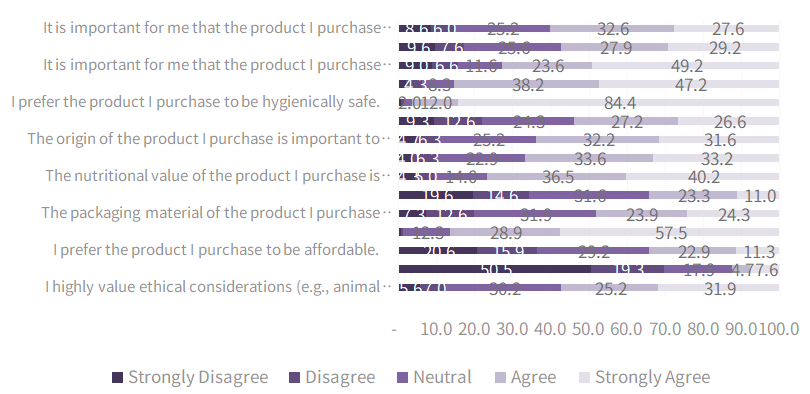
Participants' general purchasing habits and specific views on cultured meat provide context for their attitudes. When shopping for food in general (Figure 1), participants highly prioritized safety and quality (96.4%), recognized and reliable brands (85.4%), nutritional value (76.7%), and sensory quality (taste, juiciness, etc.) (86.4%). Interest in halal-certified products was also notably high (72.8%). In contrast, low prices were indicated as important by only 34.2%. While ethical issues were considered important by 57.1%, only 12.3% believed livestock farming caused significant environmental damage.
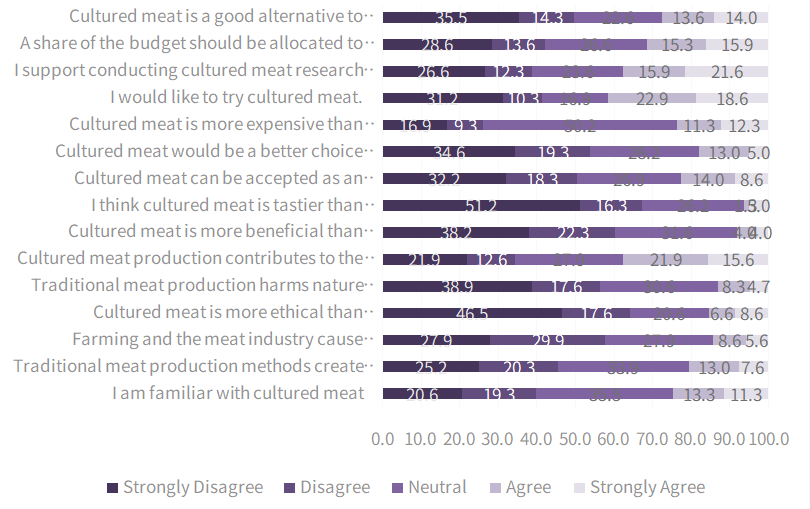
Regarding cultured meat specifically (Figure 2), a general lack of knowledge was evident: 39.9% stated they had no knowledge, while only 24.6% considered themselves informed. There was limited agreement that traditional meat production poses ethical issues (20.6% for animal rights, 14.2% for environmental harm), and a significant majority (64.1%) disagreed that cultured meat is ethically superior.
Participants' perceptions of cultured meat were polarized. While 38.2% evaluated it as "promising and/or acceptable," a larger proportion (43.2%) described it as "ridiculous and/or disgusting." Enthusiasm was limited, with only 18.3% finding it "fun and/or intriguing." The primary reason cited for opposing cultured meat was its perceived "lack of naturalness" (57.5%), followed by concerns about harming local farmers (42.2%), distrust of its safety (32.9%), and taste concerns (22.3%).

When considering potential positive aspects, "feeding a growing global population" (51.5%) was the most frequently cited reason for supporting cultured meat. Reasons such as ethical concerns (12.0%) and environmental friendliness (10.6%) were mentioned less often. Expectations focused heavily on sensory attributes, with "similar taste and flavor to traditional meat" (28.6%) being the most important factor. However, a notable 27.9% reported having no expectations from cultured meat. Willingness to consume cultured meat was low. Most participants (64.5%) expressed unwillingness to consume it regularly. The proportion willing to try it at a restaurant
(18.3%) or at home (17.9%) was similarly low. Regarding price, the majority (56.5%) expected cultured meat to be significantly cheaper than traditional meat, while 10% expected the same price and 5.3% expected it to be more expensive. Looking towards the future, nearly half (46.8%) predicted cultured meat would become widespread in the medium term (6-15 years), but 13% believed it would never become widespread. There was division on promoting research in Türkiye (37.5% support, 38.9% undecided), and only 27.6% viewed cultured meat as a good alternative for addressing potential meat shortages in the country.

To further explore these findings, chi-square tests were performed to determine if significant differences in meat consumption frequency, cultured meat awareness, and expectations existed between different demographic groups (Table 2).
The relationships between demographic factors, meat consumption frequency, tendencies toward cultured meat, and expectations were evaluated using chi-square analysis. The results, summarized in Table 2, are largely consistent with findings in the literature.
Men were found to consume meat more frequently than women (chi-square = 39.931; p < 0.001). This aligns with the study by Wilks and Phillips (2017), which indicated that men are more open to trying cultured meat and exhibit greater interest in such products compared to women. Additionally, men were more likely to expect cultured meat to be less expensive than women (chi-square = 38.767; p < 0.001). No significant difference was found between genders regarding awareness of cultured meat (chi-square = 0.974; p = 0.324).
Meat consumption frequency increased proportionally with age, with the highest frequency ("2-3 times per week") observed in the 21-24 age group (chi-square = 48.015; p < 0.001). This finding is consistent with the study by Turrell et al. (2002) 23, which reported that younger age groups are more inclined toward higher meat consumption. Furthermore, significant differences were found in awareness about cultured meat across age groups (chi-square = 12.584; p = 0.006), with the 21-24 age group showing the highest level of awareness. Similarly, there were significant differences in cultured meat consumption across age groups (chi-square = 11.447; p = 0.010), supporting Bryant and Barnett's (2020) findings that younger individuals tend to be more knowledgeable about and open to cultured meat. However, no significant differences were observed in expectations regarding cultured meat across age groups (chi-square = 48.547; p = 0.079).
Significant differences were observed in awareness levels across education levels, with undergraduate students being more informed about cultured meat (chi-square = 6.044; p = 0.049). Significant differences were also found in meat consumption frequency across education levels (chi-square = 36.342; p < 0.001) and in expectations regarding cultured meat (chi-square = 84.660; p < 0.001). However, no significant differences were found in cultured meat consumption rates among education levels (chi-square = 0.386; p = 0.825). Similarly, Bryant and Barnett (2020) highlighted that individuals with higher education levels tend to have greater awareness, but this does not necessarily translate into higher consumption rates 15.
Students and private sector employees consumed meat more frequently and exhibited higher awareness of cultured meat compared to other occupational groups (chi-square = 159.885; p < 0.001 and chi-square = 44.975; p < 0.001, respectively). These findings are consistent with Ruedlinger et al. (2022), who noted that younger and actively employed individuals are more inclined toward higher meat consumption 24. Wilks and Phillips (2017) also reported that younger and professional occupational groups tend to be more aware of cultured meat and other innovative food technologies 11.
3.1. Factor AnalysisIn this study, factor analysis was employed to understand consumers' attitudes and preferences regarding cultured meat. Factor analysis is a data reduction method that examines relationships among a set of variables, aiming to explain these variables with a smaller number of underlying factors.
To assess the internal consistency of the instrument measuring consumer attitudes and preferences toward cultured meat, Cronbach’s Alpha reliability analysis was conducted on 20 items encompassing themes such as ethical sensitivity, product safety and quality, certification standards, and perceptions of cultured meat.
The analysis yielded a Cronbach’s Alpha coefficient of 0.814, indicating a high level of internal consistency for the overall scale 22. This suggests that the items reliably measure a common underlying construct related to consumer decision-making criteria and perceptions regarding alternative protein sources.
To assess the suitability of the analysis, the Kaiser-Meyer-Olkin (KMO) Measure and Bartlett's Test of Sphericity were applied. The KMO measure was calculated as 0.786, indicating that the sample adequacy was at a good level. Bartlett's Test of Sphericity results showed a chi-square value of 2215.56, with df = 190 and p < 0.001, confirming that the correlation matrix was not an identity matrix and that factor analysis was appropriate (Table 3).
In the factor analysis, the level of total variance explained by the variables was assessed based on the eigenvalues, and a five-factor solution accounted for 60.28% of the total variance (Table 4). The first factor contributed the most, explaining 24.15% of the variance, followed by the second factor at 15.25%, the third factor at 8.67%, the fourth factor at 6.67%, and the fifth factor at 5.53%.
After Varimax rotation, the variance explained by the factors was revised to 16.71% for the first factor, 14.57% for the second factor, 12.16% for the third factor, 8.50% for the fourth factor, and 8.34% for the fifth factor. Factors with eigenvalues below 1 were excluded, and the five factors were found to be sufficient to represent most of the analyzed variables.
Factor 1: Perception and Acceptance of Cultured Meat: This factor encompasses perceptions and acceptance levels toward cultured meat. The statement "Cultured meat is an acceptable alternative" (0.828) emerged as the strongest variable, followed by "Cultured meat is better than other plant-based meat alternatives" (0.813) and "Cultured meat is a more ethical alternative" (0.76). These findings suggest that consumers view cultured meat as a positive option. Attributes such as taste (0.736) and nutritional value (0.73) were also key criteria.
Factor 2: Certification and Trust: This factor highlights the importance consumers place on safety and certifications. Strong loadings were observed for "Organic certification is important to me" (0.782), "Halal certification is important to me" (0.745), and "Good agricultural practices certification is important" (0.73). Additionally, variables such as product origin (0.657) and ethical values (0.572) indicate a preference for quality and assurance.
Factor 3: Brand and Product Features: This factor pertains to preferences related to brand, product content, and packaging. The strongest variable was "The brand of the product is important to me" (0.683). Other significant variables included calorie content (0.625), nutritional value (0.583), packaging material (0.537), and attention to additives (0.461).
Factor 4: Price and Environmental Sensitivity: This factor reflects sensitivity to product price and environmental impacts. Strong loadings were observed for "I prefer products from developed countries" (0.638), "I prefer products that are affordable" (0.571), and "Livestock farming harms the environment" (0.542). These variables suggest consumers consider both economic and environmental concerns.
Factor 5: Sensory, Safety and Quality: This factor focuses on sensory attributes, food safety and quality of products. The strongest variable was "The sensory quality of the product (e.g., taste, juiciness) is important" (0.809). Additionally, "The safety and quality of the product is important" (0.588) underscores that physical quality and safety are primary considerations in purchasing decisions.
This study examined the attitudes and preferences of students at Tekirdağ Namık Kemal University Faculty of Agriculture toward cultured meat, revealing crucial insights into their awareness, acceptance, and expectations. The findings confirm that, like many consumers, these future agricultural professionals prioritize health, safety, and product quality in food choices. However, significant barriers hinder the acceptance of cultured meat, primarily concerns regarding its taste, perceived lack of naturalness, and ethical dimensions.
As the results indicate, the primary reason for opposition was the perceived "lack of naturalness" (57.5%), a finding consistent with Wilks and Phillips (2017) who noted that negative consumer perceptions are often influenced by this factor 11. These polarizing views, where a significant portion described the product as "ridiculous and/or disgusting" (43.2%) despite others finding it "promising," mirror the observations by Verbeke (2015), demonstrating that consumer food neophobia significantly affects the willingness to adopt novel protein sources 12. The high rate of rejection based on "lack of naturalness" further emphasizes the need for improved sensory and product quality strategies to bridge the gap between innovative production and consumer expectations.
Compounding these issues is a notable lack of knowledge and awareness among participants, fostering skepticism about cultured meat's potential benefits, including environmental sustainability and enhanced food safety.
While "feeding a growing global population" (51.5%) emerged as a key positive motivator, the relatively low frequency of mentioning ethical concerns (12.0%) and environmental friendliness (10.6%) suggests limited consumer awareness in these areas. This aligns with Bryant and Barnett (2020) who noted that while a significant portion of consumers view cultured meat as a positive ethical alternative, this perception is heavily influenced by their level of awareness. Furthermore, in line with Hocquette et al. (2015), these findings underscore that while food security is a dominant motivator, the relatively low emphasis on ethics and environmental benefits may reflect insufficient communication regarding these dimensions in the current market 5. This contrasts somewhat with general purchasing habits where ethical considerations were deemed important by over half the participants (57.1%), suggesting the specific context of cultured meat triggers different sensitivities or highlights knowledge gaps more acutely.
Addressing these barriers requires multifaceted strategies. Targeted education and awareness campaigns focusing on the tangible environmental, ethical, and health advantages could mitigate skepticism and improve acceptance. However, as comparisons with the broader literature suggest, increasing awareness alone may not suffice; persistent challenges related to price, safety perceptions, and deep-seated cultural acceptance norms remain significant obstacles 15, 17.
Specifically, taste and price remain critical hurdles. The finding that "similar taste and flavor to traditional meat" (28.6%) is the most important expectation aligns with Bryant and Barnett's (2020) observation that consumers prioritize taste and texture 15. Moreover, the expectation among a majority (56.5%) for cultured meat to be significantly cheaper than traditional meat presents a major challenge. As Slade (2018) points out, current production costs are high, making this expectation unlikely to be met soon 25. This disconnect between price expectations and production realities, also highlighted by Hocquette et al. (2015) who tied acceptance closely to price and taste, needs to be addressed through both technological improvements and adjusted marketing strategies 5.
The timelines predicted for widespread adoption (46.8% expecting it in 6-15 years) reflect a cautious optimism, aligning with Bryant and Barnett (2020) who emphasized the role of technological and regulatory developments 15. However, persistent skepticism, evidenced by the 13% believing it will never become widespread, may be partly attributed to inadequate communication about ongoing technological advancements. Emphasizing improvements in production technologies, as noted by Kamalapuram et al. (2024), may help to shift these perceptions over time 20.
Integrating these findings, it becomes clear that multiple dimensions-sensory quality, safety assurance, naturalness, and price-are critical in determining consumer acceptance. A multifaceted approach that includes technological enhancement, transparent safety communication, and perhaps even the promotion of ethical narratives could gradually improve public perception and willingness to adopt cultured meat.
The diverse and sometimes conflicting responses observed in this study ranging from outright rejection due to perceived unnaturalness to cautious openness conditioned on improved sensory attributes and pricing-reinforce the findings of earlier studies 5, 11. The results highlight that advancements in production technology, together with strategic communication initiatives, are critical to overcoming the psychological and sensory barriers currently limiting the adoption of cultured meat.
Indeed, factors like food neophobia, distrust in science or the food industry, and the powerful psychological construct of "perceived unnaturalness" act as significant hurdles 26, 27. The perception of unnaturalness, often linked to disgust, appears particularly resistant to simple informational campaigns 28, 29. Therefore, fostering consumer trust through transparent communication about production processes, ensuring robust regulatory oversight, and achieving tangible technological improvements in taste and texture are paramount 26.
Crucially, the acceptance of such novel products like cultured meat is not solely determined by universal factors like taste or price; it is deeply embedded within broader psychological, cultural, and socio-political contexts. As an unfamiliar food innovation, its acceptability inevitably varies depending on geographical location, religious beliefs, cultural traditions, educational background, and even national policies or development levels 30, 31. Factors such as food neophobia, adherence to dietary laws (e.g., Halal requirements), trust in technology, psychological mindsets (fixed vs. growth), and perceived risks all contribute to shaping attitudes 17, 28, 32. Consequently, consumer perceptions differ significantly across various global regions and societal segments, as seen in studies com-paring European countries 31, the UK 32, the US 11, China 33, and the UAE 30. This inherent variability underscores the importance of conducting research within specific target groups, even if similar questions have been explored elsewhere. Findings from distinct populations, like the one in this study, are valuable precisely because they illuminate these context-specific nuances rather than simply repeating previous work.
The selection of agricultural students in this study provides a particularly valuable lens into these dynamics within the Turkish context. Firstly, these students originate from diverse geographical regions across Türkiye, potentially representing a spectrum of cultural viewpoints and socio-economic backgrounds within the country. Secondly, their agricultural education provides a unique baseline familiarity with food production systems, potentially influencing their perception and processing of information about novel technologies like cultured meat differently from the general public (perhaps making them more critical or more informed, influencing trust and perceived naturalness). Thirdly, as a predominantly young demographic (average age around 21-24 in our sample), their attitudes may offer insights into future acceptance trends and could reflect a potentially greater openness to innovation compared to older populations who might hold more established dietary habits and perceptions 30, 31. This specific focus complements recent broader investigations into Turkish perspectives, such as the comprehensive study by Şeker & Karadal (2024), by examining a key future stakeholder group in depth 34.
From a policy standpoint, establishing clear regulatory frameworks for production, labeling, and marketing is essential to build consumer confidence and facilitate industry growth. In contexts with significant Muslim populations, like Türkiye, this must include addressing Halal certification concerns 30, 32. Incorporating cultured meat safety guidelines into national and international standards, alongside dedicated R&D funding, should be prioritized 21. For producers, understanding that consumer priorities extend beyond price to include ethical considerations and certifications is critical. Developing products that demonstrably deliver on taste and quality expectations, while simultaneously enhancing affordability and production transparency, will be key to increasing consumer interest and acceptance. Communication strategies may also need tailoring based on consumer psychology, such as utilizing "effort narratives" for those with fixed mindsets or challenging the importance of naturalness for those with growth mindsets 28 or potentially reframing conventional meat as undesirable 26. For consumers themselves, accessible educational initiatives are needed to address misconceptions and clearly articulate the potential benefits regarding environmental impact, animal welfare, safety, and nutrition. Tailoring products to align with local tastes and cultural preferences could further facilitate broader adoption.
Our findings specifically highlight the tension between potential benefits and perceived drawbacks. The identification of taste, naturalness, and ethical concerns as major barriers aligns closely with research on other novel food technologies. For instance, Mar-tin-Collado et al. (2022) found that while ethical, environmental, and animal welfare factors positively influence perceptions of gene-edited meat, fundamental product attributes remain critical 14. Our results similarly suggest that while communicating benefits like improved animal welfare or reduced environmental impact is important, (perhaps especially leveraging religious ethics around moderation or environmental stewardship in some contexts, as suggested by Boereboom et al., 2022), these messages may struggle to gain traction unless core concerns about the product's intrinsic qualities (taste, natural-ness) and safety are effectively addressed 26, 32. This underscores the need for a balanced approach that tackles both the perceived risks and the potential advantages.
This study aimed to investigate the attitudes and preferences of agricultural students at Tekirdağ Namık Kemal University towards cultured meat, a unique and influential demographic poised to shape future food trends in Türkiye. Our findings highlight a complex and often polarized consumer perception, emphasizing the significant barriers that hinder widespread acceptance despite technology’s potential benefits.
A primary obstacle to cultured meat adoption was the prevalent perception of 'lack of naturalness' (57.5%), consistently cited alongside concerns regarding taste, juiciness, and safety. While the potential for 'feeding a growing global population' emerged as a key positive motivator, awareness of cultured meat's environmental and ethical advantages remained notably low among participants. Expectations regarding price, with a majority anticipating cultured meat to be significantly cheaper than traditional meat, also revealed a notable disconnect from current production realities, consistent with broader literature.
These results underscore that cultural, psychological, and economic factors are deeply intertwined in shaping the acceptance of novel food technologies, even within a group potentially familiar with food production systems. In countries like Türkiye, where Muslims constitute the majority, addressing specific cultural and religious considerations, such as the significant importance of Halal certification, is crucial. The study highlights an urgent need for targeted communication strategies that not only enhance awareness of cultured meat’s sustainability and ethical benefits but also directly tackle core consumer apprehensions about sensory attributes, safety, and price. Crucially, fostering consumer trust through transparent production processes and robust regulatory oversight will be essential for building a receptive market.
Our research uniquely contributes to existing literature by providing context-specific insights from a key future stakeholder group agricultural students demonstrating that even within this relatively informed cohort, significant educational and trust-building efforts are still required for cultured meat to gain traction. Future research should explore effective communication frameworks tailored to diverse cultural mindsets and investigate the impact of regulatory clarity and tangible technological advancements on consumer perceptions and willingness to adopt.
Ultimately, the widespread acceptance of cultured meat as a sustainable food source hinges on bridging the gap between its technological promise and deeply ingrained consumer expectations through a holistic approach that prioritizes sensory quality, natural-ness, safety, and affordability, while respecting local cultural and religious values.
| [1] | Willett, W., Rockström, J., Loken, B., Springmann, M., Lang, T., Vermeulen, S., et al. (2019). Food in the Anthropocene: The EAT-Lancet Commission on healthy diets from sustainable food systems. The Lancet, 393(10170), 447-492. | ||
| In article | View Article PubMed | ||
| [2] | Smetana, S., Mathys, A., Knoch, A., & Heinz, V. (2015). Meat alternatives: Life cycle assessment of most known meat substitutes. The International Journal of Life Cycle Assessment, 20(9), 1254-1267. | ||
| In article | View Article | ||
| [3] | Tekiner, İ. H., Darama, G., Özatil, B., & Yetim, H. (2022). Edible insects in nutritional and food sciences perspective. Academic Platform Journal of Halal Life Style. | ||
| In article | View Article | ||
| [4] | Datar, I., & Betti, M. (2010). Possibilities for an in vitro meat production system. Innovative Food Science & Emerging Tech-nologies, 11(1), 13-22. | ||
| In article | View Article | ||
| [5] | Hocquette, A., Lambert, C., Sinquin, C., Peterolff, L., Wagner, Z., Bonny, S. P., et al. (2015). Educated consumers don’t believe artificial meat is the solution to the problems with the meat industry. Journal of Integrative Agriculture, 14(2), 273-284. | ||
| In article | View Article | ||
| [6] | Bhat, Z. F., Morton, J. D., Mason, S. L., Bekhit, A. E. D. A., & Bhat, H. F. (2019). Technological, regulatory, and ethical aspects of in vitro meat: A future slaughter-free harvest. Comprehensive Reviews in Food Science and Food Safety, 18(4), 1192-1208. | ||
| In article | View Article PubMed | ||
| [7] | Bonny, S. P., Gardner, G. E., Pethick, D. W., & Hocquette, J. F. (2015). What is artificial meat and what does it mean for the future of the meat industry? Journal of Integrative Agriculture, 14(2), 255-263. | ||
| In article | View Article | ||
| [8] | Hocquette, J.-F. (2016). Is in vitro meat the solution for the future? Meat Science, 120, 167-176. | ||
| In article | View Article PubMed | ||
| [9] | Post, M. J. (2012). Cultured meat from stem cells: Challenges and prospects. Meat Science, 92(3), 297-301. | ||
| In article | View Article PubMed | ||
| [10] | Fraeye, I., Kratka, M., Vandenburgh, H., & Thorrez, L. (2020). Sensorial and nutritional aspects of cultured meat in comparison to traditional meat: Much to be inferred. Frontiers in Nutrition, 7, 35. | ||
| In article | View Article PubMed | ||
| [11] | Wilks, M., & Phillips, C. J. (2017). Attitudes to in vitro meat: A survey of potential consumers in the United States. PLOS One, 12(2), e0171904. | ||
| In article | View Article PubMed | ||
| [12] | Verbeke, W. (2015). Profiling consumers who are ready to adopt insects as a meat substitute in a Western society. Food Quality and Preference, 39, 147-155. | ||
| In article | View Article | ||
| [13] | Farhoomand, D., Okay, A., Aras, S., & Büyük, İ. (2022). Artificial meat production and future vision. Food and Health, 8(3), 260-272. | ||
| In article | View Article | ||
| [14] | Martin-Collado, D., Byrne, T. J., Crowley, J. J., Kirk, T., Ripoll, G., & Whitelaw, C. B. A. (2022). Gene-Edited Meat: Disentangling Consumers’ Attitudes and Potential Purchase Behavior. Frontiers in Nutrition, 9, Article 856491. | ||
| In article | View Article PubMed | ||
| [15] | Bryant, C., & Barnett, J. (2020). Consumer acceptance of cultured meat: An updated review (2018-2020). Applied Sciences, 10(15), 5201. | ||
| In article | View Article | ||
| [16] | Weinrich, R., Strack, M., & Neugebauer, F. (2020). Consumer acceptance of cultured meat in Germany. Meat Science, 162, Article 107924. | ||
| In article | View Article PubMed | ||
| [17] | Pakseresht, A., Ahmadi Kaliji, S., & Canavari, M. (2022). Review of factors affecting consumer acceptance of cultured meat. Appetite, 170, 105829. | ||
| In article | View Article PubMed | ||
| [18] | Mendes, N. S. R., Briceno, J. C. C., Mársico, E. T., Ellies-Oury, M.-P., Chriki, S., Hocquette, J.-F., & Ferreira de Oliveira, T. (2024). Recent technological developments and future trends in the evaluation and prediction of beef sensory quality in Brazil and France. Livestock Science, 287, Article 105550. | ||
| In article | View Article | ||
| [19] | Ede, G., & Yalçın, H. (2023). Attitudes of nutrition and dietetics students toward cultured meat consumption. Academic Food Journal (Akademik Gıda), 21(1), 80-89. | ||
| In article | View Article | ||
| [20] | Kamalapuram, S. K., Ellies-Oury, M.-P., Chriki, S., Hocquette, J.-F., Wan, A. C. A., & Gadjanski, I. (2024). Novel trends in cultured meat research. Frontiers in Nutrition, 11, 1452643. | ||
| In article | View Article PubMed | ||
| [21] | Hocquette, J.-F., Chriki, S., Fournier, D., & Ellies-Oury, M.-P. (2025). Will "cultured meat" transform our food system towards more sustainability? Animal, 19, 101145. | ||
| In article | View Article PubMed | ||
| [22] | Nunnally, J., & Bernstein, I. (1994). The Assessment of Reliability. Psychometric Theory, 3, 248-292. | ||
| In article | |||
| [23] | Turrell, G., Hewitt, B., Patterson, C., Oldenburg, B., & Gould, T. (2002). Socioeconomic differences in food purchasing behaviour and suggested implications for diet-related health promotion. Journal of Human Nutrition and Dietetics, 15(5), 355-364. | ||
| In article | View Article PubMed | ||
| [24] | Ruedlinger, J., Cid-Ossandón, V., Huidobro, A., Van De Wyngard, V., Vargas, C., & Ferreccio, C. (2022). Processed meat consumption and associated factors in Chile: A cross‐sectional study nested in the MAUCO cohort. Frontiers in Public Health, 10, Article 960997. | ||
| In article | View Article PubMed | ||
| [25] | Slade, P. (2018). If you build it, will they eat it? Consumer preferences for plant-based and cultured meat burgers. Appetite, 125, 428-437. | ||
| In article | View Article PubMed | ||
| [26] | Rosenfeld, D. L., & Tomiyama, A. J. (2023). Toward consumer acceptance of cultured meat. Trends in Cognitive Sciences, 27(8), 719-721. | ||
| In article | View Article PubMed | ||
| [27] | Dupont, J., Harms, T., & Fiebelkorn, F. (2022). Acceptance of Cultured Meat in Germany-Application of an Extended Theory of Planned Behaviour. Foods, 11(3), 424. | ||
| In article | View Article PubMed | ||
| [28] | Arango, L., Septianto, F., & Pontes, N. (2023). Challenging cultured meat naturalness perceptions: The role of consumers’ mindset. Appetite, 190, 107039. | ||
| In article | View Article PubMed | ||
| [29] | Siegrist, M., & Hartmann, C. (2020). Consumer acceptance of novel food technologies. Nature Food, 1(6), 343-350. | ||
| In article | View Article PubMed | ||
| [30] | Khaleel, S., Osaili, T., Abdelrahim, D. N., Zeb, F., Naja, F., Radwan, H., ... & Holley, R. A. (2025). Attachment to Meat and Willingness Towards Cultured Alternatives Among Consumers: A Cross-Sectional Study in the UAE. Nutrients, 17(1), 28. | ||
| In article | View Article PubMed | ||
| [31] | Liu, J., Almeida, J. M., Rampado, N., Panea, B., Hocquette, É., Chriki, S., ... & Hocquette, J.-F. (2023). Perception of cultured “meat” by Italian, Portuguese and Spanish consumers. Frontiers in Nutrition, 10, 1043618. | ||
| In article | View Article PubMed | ||
| [32] | Boereboom, A., Sheikh, M., Islam, T., Achirimbi, E., & Vriesekoop, F. (2022). Brits and British Muslims and their perceptions of cultured meat: How big is their willingness to purchase? Food Frontiers, 3(3), 529-540. | ||
| In article | View Article | ||
| [33] | Zhang, M., Li, L., & Bai, J. (2020). Consumer acceptance of cultured meat in urban areas of three cities in China. Food Control, 118, 107390. | ||
| In article | View Article | ||
| [34] | Şeker, P., & Karadal, F. (2024). A Comprehensive Research on Cultured Meat: Investigation of Turkish People's Perspectives, Willingness and Acceptance Potential towards Cultured Meat. Third Sector Social Economic Review, 59(4), 2044-2063. | ||
| In article | View Article | ||
Published with license by Science and Education Publishing, Copyright © 2026 Fuat Yılmaz, Serim Tuna Koç and Fatma Coşkun
 This work is licensed under a Creative Commons Attribution 4.0 International License. To view a copy of this license, visit
http://creativecommons.org/licenses/by/4.0/
This work is licensed under a Creative Commons Attribution 4.0 International License. To view a copy of this license, visit
http://creativecommons.org/licenses/by/4.0/
| [1] | Willett, W., Rockström, J., Loken, B., Springmann, M., Lang, T., Vermeulen, S., et al. (2019). Food in the Anthropocene: The EAT-Lancet Commission on healthy diets from sustainable food systems. The Lancet, 393(10170), 447-492. | ||
| In article | View Article PubMed | ||
| [2] | Smetana, S., Mathys, A., Knoch, A., & Heinz, V. (2015). Meat alternatives: Life cycle assessment of most known meat substitutes. The International Journal of Life Cycle Assessment, 20(9), 1254-1267. | ||
| In article | View Article | ||
| [3] | Tekiner, İ. H., Darama, G., Özatil, B., & Yetim, H. (2022). Edible insects in nutritional and food sciences perspective. Academic Platform Journal of Halal Life Style. | ||
| In article | View Article | ||
| [4] | Datar, I., & Betti, M. (2010). Possibilities for an in vitro meat production system. Innovative Food Science & Emerging Tech-nologies, 11(1), 13-22. | ||
| In article | View Article | ||
| [5] | Hocquette, A., Lambert, C., Sinquin, C., Peterolff, L., Wagner, Z., Bonny, S. P., et al. (2015). Educated consumers don’t believe artificial meat is the solution to the problems with the meat industry. Journal of Integrative Agriculture, 14(2), 273-284. | ||
| In article | View Article | ||
| [6] | Bhat, Z. F., Morton, J. D., Mason, S. L., Bekhit, A. E. D. A., & Bhat, H. F. (2019). Technological, regulatory, and ethical aspects of in vitro meat: A future slaughter-free harvest. Comprehensive Reviews in Food Science and Food Safety, 18(4), 1192-1208. | ||
| In article | View Article PubMed | ||
| [7] | Bonny, S. P., Gardner, G. E., Pethick, D. W., & Hocquette, J. F. (2015). What is artificial meat and what does it mean for the future of the meat industry? Journal of Integrative Agriculture, 14(2), 255-263. | ||
| In article | View Article | ||
| [8] | Hocquette, J.-F. (2016). Is in vitro meat the solution for the future? Meat Science, 120, 167-176. | ||
| In article | View Article PubMed | ||
| [9] | Post, M. J. (2012). Cultured meat from stem cells: Challenges and prospects. Meat Science, 92(3), 297-301. | ||
| In article | View Article PubMed | ||
| [10] | Fraeye, I., Kratka, M., Vandenburgh, H., & Thorrez, L. (2020). Sensorial and nutritional aspects of cultured meat in comparison to traditional meat: Much to be inferred. Frontiers in Nutrition, 7, 35. | ||
| In article | View Article PubMed | ||
| [11] | Wilks, M., & Phillips, C. J. (2017). Attitudes to in vitro meat: A survey of potential consumers in the United States. PLOS One, 12(2), e0171904. | ||
| In article | View Article PubMed | ||
| [12] | Verbeke, W. (2015). Profiling consumers who are ready to adopt insects as a meat substitute in a Western society. Food Quality and Preference, 39, 147-155. | ||
| In article | View Article | ||
| [13] | Farhoomand, D., Okay, A., Aras, S., & Büyük, İ. (2022). Artificial meat production and future vision. Food and Health, 8(3), 260-272. | ||
| In article | View Article | ||
| [14] | Martin-Collado, D., Byrne, T. J., Crowley, J. J., Kirk, T., Ripoll, G., & Whitelaw, C. B. A. (2022). Gene-Edited Meat: Disentangling Consumers’ Attitudes and Potential Purchase Behavior. Frontiers in Nutrition, 9, Article 856491. | ||
| In article | View Article PubMed | ||
| [15] | Bryant, C., & Barnett, J. (2020). Consumer acceptance of cultured meat: An updated review (2018-2020). Applied Sciences, 10(15), 5201. | ||
| In article | View Article | ||
| [16] | Weinrich, R., Strack, M., & Neugebauer, F. (2020). Consumer acceptance of cultured meat in Germany. Meat Science, 162, Article 107924. | ||
| In article | View Article PubMed | ||
| [17] | Pakseresht, A., Ahmadi Kaliji, S., & Canavari, M. (2022). Review of factors affecting consumer acceptance of cultured meat. Appetite, 170, 105829. | ||
| In article | View Article PubMed | ||
| [18] | Mendes, N. S. R., Briceno, J. C. C., Mársico, E. T., Ellies-Oury, M.-P., Chriki, S., Hocquette, J.-F., & Ferreira de Oliveira, T. (2024). Recent technological developments and future trends in the evaluation and prediction of beef sensory quality in Brazil and France. Livestock Science, 287, Article 105550. | ||
| In article | View Article | ||
| [19] | Ede, G., & Yalçın, H. (2023). Attitudes of nutrition and dietetics students toward cultured meat consumption. Academic Food Journal (Akademik Gıda), 21(1), 80-89. | ||
| In article | View Article | ||
| [20] | Kamalapuram, S. K., Ellies-Oury, M.-P., Chriki, S., Hocquette, J.-F., Wan, A. C. A., & Gadjanski, I. (2024). Novel trends in cultured meat research. Frontiers in Nutrition, 11, 1452643. | ||
| In article | View Article PubMed | ||
| [21] | Hocquette, J.-F., Chriki, S., Fournier, D., & Ellies-Oury, M.-P. (2025). Will "cultured meat" transform our food system towards more sustainability? Animal, 19, 101145. | ||
| In article | View Article PubMed | ||
| [22] | Nunnally, J., & Bernstein, I. (1994). The Assessment of Reliability. Psychometric Theory, 3, 248-292. | ||
| In article | |||
| [23] | Turrell, G., Hewitt, B., Patterson, C., Oldenburg, B., & Gould, T. (2002). Socioeconomic differences in food purchasing behaviour and suggested implications for diet-related health promotion. Journal of Human Nutrition and Dietetics, 15(5), 355-364. | ||
| In article | View Article PubMed | ||
| [24] | Ruedlinger, J., Cid-Ossandón, V., Huidobro, A., Van De Wyngard, V., Vargas, C., & Ferreccio, C. (2022). Processed meat consumption and associated factors in Chile: A cross‐sectional study nested in the MAUCO cohort. Frontiers in Public Health, 10, Article 960997. | ||
| In article | View Article PubMed | ||
| [25] | Slade, P. (2018). If you build it, will they eat it? Consumer preferences for plant-based and cultured meat burgers. Appetite, 125, 428-437. | ||
| In article | View Article PubMed | ||
| [26] | Rosenfeld, D. L., & Tomiyama, A. J. (2023). Toward consumer acceptance of cultured meat. Trends in Cognitive Sciences, 27(8), 719-721. | ||
| In article | View Article PubMed | ||
| [27] | Dupont, J., Harms, T., & Fiebelkorn, F. (2022). Acceptance of Cultured Meat in Germany-Application of an Extended Theory of Planned Behaviour. Foods, 11(3), 424. | ||
| In article | View Article PubMed | ||
| [28] | Arango, L., Septianto, F., & Pontes, N. (2023). Challenging cultured meat naturalness perceptions: The role of consumers’ mindset. Appetite, 190, 107039. | ||
| In article | View Article PubMed | ||
| [29] | Siegrist, M., & Hartmann, C. (2020). Consumer acceptance of novel food technologies. Nature Food, 1(6), 343-350. | ||
| In article | View Article PubMed | ||
| [30] | Khaleel, S., Osaili, T., Abdelrahim, D. N., Zeb, F., Naja, F., Radwan, H., ... & Holley, R. A. (2025). Attachment to Meat and Willingness Towards Cultured Alternatives Among Consumers: A Cross-Sectional Study in the UAE. Nutrients, 17(1), 28. | ||
| In article | View Article PubMed | ||
| [31] | Liu, J., Almeida, J. M., Rampado, N., Panea, B., Hocquette, É., Chriki, S., ... & Hocquette, J.-F. (2023). Perception of cultured “meat” by Italian, Portuguese and Spanish consumers. Frontiers in Nutrition, 10, 1043618. | ||
| In article | View Article PubMed | ||
| [32] | Boereboom, A., Sheikh, M., Islam, T., Achirimbi, E., & Vriesekoop, F. (2022). Brits and British Muslims and their perceptions of cultured meat: How big is their willingness to purchase? Food Frontiers, 3(3), 529-540. | ||
| In article | View Article | ||
| [33] | Zhang, M., Li, L., & Bai, J. (2020). Consumer acceptance of cultured meat in urban areas of three cities in China. Food Control, 118, 107390. | ||
| In article | View Article | ||
| [34] | Şeker, P., & Karadal, F. (2024). A Comprehensive Research on Cultured Meat: Investigation of Turkish People's Perspectives, Willingness and Acceptance Potential towards Cultured Meat. Third Sector Social Economic Review, 59(4), 2044-2063. | ||
| In article | View Article | ||