This paper investigates the impact of different microwave powers (700 and 800 W) and different water content (1:2, 1:3, 1:4, 1:5 and 1:6) on the physicochemical properties, crystalline characteristics and structure of the mixture of wheat starch (WS) and xanthan gum. The addition amount of xanthan gum was 0.05% of the weight of wheat starch solution. The particle size was reduced as a result of microwave treatment (MT). After being treated with different microwave treatments (MTs), the oil absorption capacity (OAC), solubility (S), and swelling power (SP) of wheat starch (WS) increased significantly. In contrast, the setback, pasting temperature, and particle size distribution (PSD) decreased significantly. In summary, microwave treatment (MT) is a general physical modification method that expands the use of wheat starch (WS) and meets the varying demands of starch-based products. This introduces new possibilities for further processing of wheat starch.
Wheat (Triticum aestivum L.) is China’s third largest food crop. One third of the world 's population eats wheat as the main grain 1. Wheat flour contains about 80-85% of wheat starch (WS). Wheat starch, a plentiful, inexpensive, and natural hydrocolloid, has various uses such as a thickening and stabilizing agent. However, its heat intolerance and tendency to retrograde make it unsuitable for use in starch-based gel foods.
Starch is stored in the form of globules in cereals (wheat and rice) 2, grants (bean and pea) 3, and tubers (potato and yam) 4. In recent years, the nutritional benefits of starch have garnered significant interest. Starch is also widely applied to many industries 5. Wheat starch can be divided into two types based on its crystalline structure: A- and B- type starches. A- type starch constitutes the majority of the total starch at 70-80%, while B- type starch represents less than 10%. In addition to A- and B- type starches, wheat starch also contains C- type starch. C- type starch is a hybrid of A- and B- type starches, with a crystalline structure that combines characteristics of both types 5. The application of starch in food science is constrained by the type and variety of the seeds from which it is derived. Therefore, modified physically, chemically, enzymatically and genetically were often used to improve ideal functional properties.
Microwave treatment is a physical method used to modify the properties of starch. This technique can alter the structure and functionality of starch, making it more suitable for specific applications in food science. Xanthan gum is a polysaccharide hydrocolloid commonly used in food. It is a microbial extracellular heteropolysaccharide obtained by biological fermentation. Xanthan gum cannot form a gel by itself, but it has good compatibility in thickening, high temperature resistance and gel efficiency. It can interact with other polysaccharides to increase viscosity 3. In order to effectively improve the production requirement of native starches, it is often not complete to use a single modification method, and some double modification methods need to be developed 6. The combinations of WS and hydrocolloids can also modify the functional properties of starch. Adding a small amount of hydrocolloids to food formulations can result in desirable quality and structural properties 7.
This study aims to investigate how the physicochemical and structural properties of a mixture of wheat starch and xanthan gum are affected by treatment with different microwave power levels and starch-water ratios. By using green methods to prepare efficient modified wheat starch, this study aims to gather data to support the wider application of microwave and hydrophilic colloid technology in starch modification and microwave chemistry. Research into the properties of starch-water systems has important implications for the advancement of the food industry.
Wheat grains (Bai Nong 307) were supplied by Henan Qiule Seed Technology Co., Ltd. Wheat flour was extracted by milling the wheat using a Buhler Laboratory Mill (MLU-202, Perten Co. Ltd., Sweden). Using the dough ball method, wheat starch was extracted from wheat flour. In all experimental work, only distilled water was used to ensure the purity and consistency of the results. Additionally, all chemicals and reagents used in the experiments were of analytical grade, meaning they met strict standards for quality and purity.
2.2. Preparation of Starch SamplesA specific quantity of starch was measured and placed into a heatable plastic container. Distilled water was then added. Otherwise, the xanthan was added according to 0.5% of the total starch water system. The mixture was stirred until fully solving. After that, suspension was heated at 700 W, 800 W for 30 s. Starch samples were cooled to 25°C, among them, start freeze-drying 48h and take it out. The modified starch samples were obtained by grinding and sieving, then transferred into a dampproof bag for storage. The obtained samples were used for subsequent experiments. The ratios of native starch and distilled water were set at 1:2, 1:3, 1:4, 1:5 and 1:6 (w/w), respectively.
2.3. Pasting PropertiesThe Rapid Visco Analyzer (RVA, Perten Instruments Ltd., mod 4500, Australia) was used to measure the pasting properties of the starch samples. The method used was based on the one described by Guo et al., with some modifications to fit the specific needs of this experiment 11. To obtain the viscosity profiles of the starch samples, 3.0 g of starch (with a moisture content of 12%) was added to Rapid Visco Analyzer (RVA) canisters along with 25 g of distilled water. The RVA then analyzed the samples to determine their viscosity profiles. The starch samples were first brought to a temperature of 50°C from room temperature and then maintained at that temperature for a duration of 1 minute. They were then heated to 95°C over a period of 3 minutes and 45 seconds. After being held at 95°C for 2 minutes and 30 seconds, the samples were cooled to 50°C over a period of 3 minutes and 45 seconds and then held at that temperature for 2 minutes. The paddle was set to rotate at a speed of 960 rpm for a duration of 10 seconds, after which its speed was reduced and stabilized at 160 rpm. The Rapid Visco Analyzer (RVA) measures several parameters to assess the pasting properties of starch. These parameters include peak viscosity (PV), which is the maximum viscosity during heating; trough viscosity (TV), which is the minimum viscosity during cooling; setback viscosity (SV), which is the difference between final and trough viscosity; breakdown viscosity (BV), which is the difference between peak and trough viscosity; final viscosity (FV), which is the viscosity at the end of the test; peak time (PT), which is the time taken to reach peak viscosity; and pasting temperature (Ptemp), which is the temperature at which the starch paste begins to form. The RVA software calculated these parameters automatically.
In order to assess the rheological properties of the starch samples, a method previously described by Duan et al. was employed with some modifications 1. Once the RVA experiment was completed, the hot starch paste was immediately moved to the rheometer platform. During the testing process, it is important to prevent evaporation in order to ensure accurate results. To achieve this, a small quantity of silicon oil was carefully applied to the edge of the parallel plate that helped to minimize evaporation and maintain the integrity of the test. Before starting the test, the starch paste was allowed to equilibrate at 25°C for 30 seconds. All rheological properties of gelatinized modify wheat starch using MARS60 Haake Rheometer from Thermo Fisher Scientific, USA. A parallel plate system was selected with the cone diameter was 35 mm and gap was 1000 μm at 25°C were characterized.
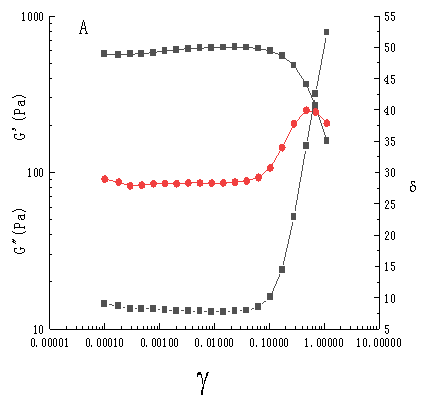
The test was set to a frequency of 10 rad/s and a strain scanning range of 0.0001 to 100%. An oscillation amplitude scan was conducted at 25°C to determine the linear viscoelastic region (LVR) 8.
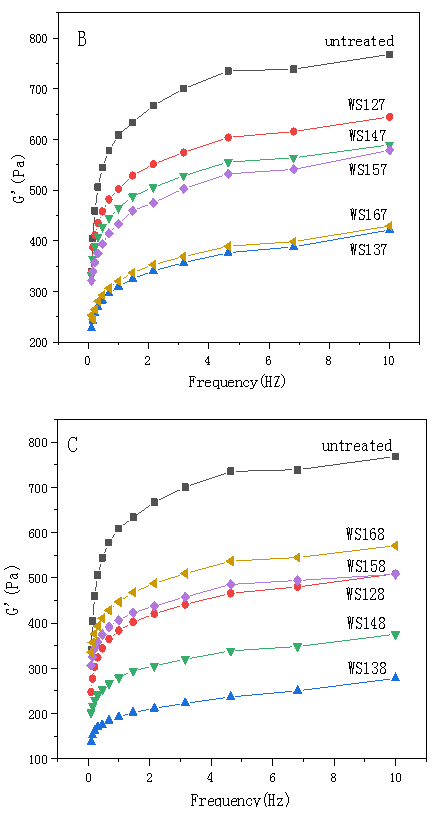
The oscillatory frequency sweep mode was used to characterize the dynamic viscoelastic properties. The angular frequency was varied from 0.1 to 10 Hz and all measurements were taken within the linear viscoelastic region at a strain of 10%. The elastic modulus (G′), viscous modulus (G′′), and loss factor (tan δ = G"/G′) were recorded 9.
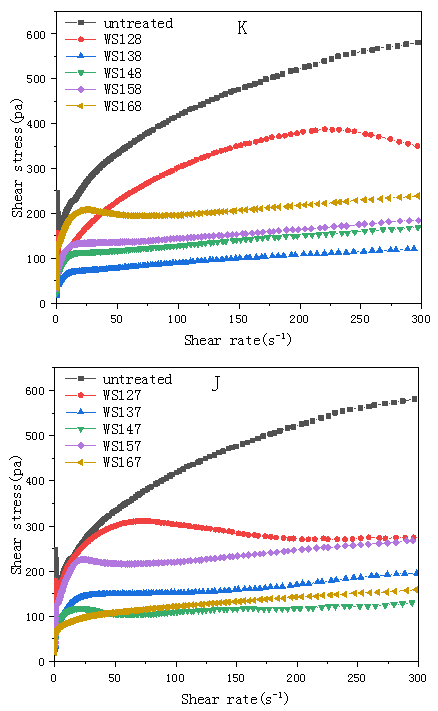
To yield steady shear viscosities, the shear rate was ramped up from 0.1 to 300 s−1 to determine the relationship between apparent viscosity (η), shear stress and shear rate 10.
2.5. Gel Texture PropertiesThe texture properties of the starch gel samples were analyzed using a modified version of the method described by Bai et al 11. This method was adapted to better suit the specific needs of the experiment. The starch paste produced by the RVA was placed into a plastic container with a lid to prevent moisture loss and then stored at a temperature of 4℃ for 24 hours. After being brought to room temperature, the samples were tested using a TA-XT plus Texture Analyzer (Stable Micro System Ltd., Godalming, UK) with a cylindrical probe (P/0.5R). The pretest, test, and posttest speeds were set to 5.00 mm/s, 1.00 mm/s, and 1.00 mm/s respectively, with a compression ratio of 25% (initial height 1.0 cm). The trigger force was 5 g and a 5 kg load cell was used at the starting point. The interval between tests was 5 s. TPA indicators recorded included hardness, springiness, cohesiveness, gumminess, chewiness, and resilience.
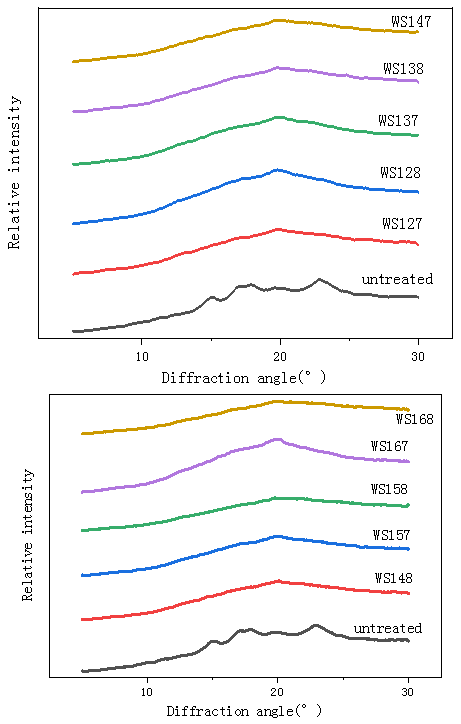
2.6. X-ray Diffraction AnalysisThe X-ray diffraction patterns of the starch samples were analyzed using a modified version of the method described by H. Wang et al(Wang et al., 2020). An X-ray diffractometer was operated at 40 kV and 40 mA at room temperature to analyze the samples. The scanning frequency was set at 4 (°) / min and the angle of diffraction was scanned from 5° to 40° with a step size of 0.06°.
2.7. Swelling Power and SolubilityA modified version of the method described by Okonkwo et al. was used to measure the swelling power and solubility of the starch samples 12. In order to carry out the experiment, a specific quantity of starch samples, denoted as M0, were carefully measured and subsequently transferred into a centrifuge tube. Following this, distilled water was added to the tube in order to attain a total concentration of 2% by weight. The resulting suspensions were then subjected to heating at a temperature of 95°C for a duration of 20 minutes, during which continuous shaking was applied. Upon completion of the heating process, the suspensions were rapidly cooled down to room temperature and subsequently centrifuged at a rate of 3000× g for a period of 15 minutes. After centrifugation, the sediment and supernatant were separated for the purpose of further analysis. The weight of the sediment was recorded as M2, while the supernatants were carefully transferred into an aluminum box and subjected to drying at a temperature of 105°C until a constant weight, denoted as M1. The determination of the solubility (S) and swelling power (SP) of the starch samples was calculated using eqn (1) and (2):
 | (1) |
 | (2) |
With the aim of measuring the oil absorption capacity of the starch samples, certain adaptations were implemented to the methodology previously delineated by Karwasra et al., so as to better conform it to the specific demands of the experiment 13. Firstly, a specific quantity of starch, weighing 0.5g, denoted as m0, was carefully measured and subsequently transferred into a pre-weighed centrifuge tube with a capacity of 25 mL, where the weight of the centrifuge tube is denoted as m2. Following this, 5.0 mL of colza oil, (colza oil, Luhua, China,) was added to the tube. The resulting mixture was then subjected to stirring for a duration of 10 minutes, after which it was centrifuged at a rate of 3000× g for a period of 15 minutes. Upon completion of the centrifugation process, the liquid was carefully poured out of the tube. Then weigh the centrifuge tube with the solid precipitate and denote its mass as m0. The determination of the OAC was calculated using eqn (3):
 | (3) |
The method described previously was used to measure the chromatic aberration of the starch samples 14. A CR-410 colorimeter was used to evaluate the color of the starch samples. Brightness is represented by L*, red-green by a*, and yellow-blue by b*. The color difference (∆E) and whiteness (H) of the starch samples were determined by using eqn (4) and (5):
 | (4) |
 | (5) |
A laser particle size distribution analyzer (BT-9300H, Baite Instrument Co., Ltd. China) was used to measure the particle size distribution of the starch. To determine the PSD, 100 mg of starch samples were dispersed using ultrasonic waves after being suspended in deionized water. The refractive index was controlled at 10 % ~ 15 % during the test, particle size range was 0.1 ~340μm. The test results were expressed by D10, D50, D90, volume average diameter and specific surface area.
2.11. Statistical AnalysisSPSS 25.0 was used to analyze all data for significant analyses at a level of 0.05. The data were presented as means ± standard deviations (SD). Figures were primarily created using Excel 2019 and Origin 2018.
The WS treatment significantly changed the pasting properties compared to the native starch sample (p < 0.05), as shown in Table 1 which displays the variation of pasting properties including trough viscosity, peak viscosity, final viscosity, breakdown, pasting temperature and setback. The pasting properties of RVA are affected by the gelation and short-term degradation of samples during heating and cooling.
Peak viscosity (PV) is an indicator of the swelling ability of starch. It is mainly influenced by factors such as the swelling of starch particles, the leaching of amylose and the interaction between starch molecules. After microwave treatment, samples had lower PV, decreasing from 2209 cP (untreated wheat starch) to 2113 cP (WS168). Microwave treatment also decreased final viscosity (FV), breakdown viscosity (BV), setback viscosity (SV) and pasting temperature (Ptemp). FV represents the ability of a starch paste to form a gel with a certain strength when cooled to room temperature. The FV of samples decreased with the different microwave power treated, which is mainly caused by the elevated expansion force of WS.
Breakdown is calculated as the discrepancy between PV and TV and indicates the ability of starch to resist shear forces at temperature 15.
The BV of samples showed an overall upward trend (WS127-WS167), reaching a maximum at WS147. but not significant, indicating that its thermal stability slight decreased. Microwave treatment at a power of 800W did not have a considerable impact on the breakdown of treated starch samples.
Setback is a term used to describe the disparity between the final viscosity FV and TV. This difference is an indication of the short-term retrogradation of starch. Microwave treatment decreased the BV and SV from 657 cP and 1140 cP (untreated wheat starch) to 257 cP and 385 cP (treated at 800 W), respectively. According to Table 1, the setback of samples experienced a more significant change than others when the microwave power was set to 700 W.
Microwave treatment also altered the pasting temperature, decreasing it from 88.35°C (untreated wheat starch) to 53.88 (treated at 700 W). The higher stability of starch granules may be the reason for the increase in pasting temperature. Furthermore, microwave treatment considerably decreased the gelatinization temperature of both treated and untreated samples (p < 0.05), confirming the conclusion drawn by SP.
3.2. Rheological Properties MeasurementsThe Linear Viscoelastic Region (LVR) of the samples was determined by sweeping the oscillatory amplitude shear strain. As the shear strain (γ) increased, the linear and nonlinear viscoelastic regions of the samples were identified. In the LVR, the G′ and G′′ curves were smooth and continuous, but at a specific rate, they rapidly declined or rose. As a result, subsequent dynamic and static rheological strains were set at 1%, as shown in Figure 1. LVR: the relationship between storage modulus (G′), loss modulus (G′′) and shear rate(γ) of native and modified wheat starch
The changes of dynamic rheological properties of starch samples after different microwave power treatments or different starch-water system are shown in Figure 2. Dynamic rheological: dynamic rheological properties of starch samples after different microwave power treatments or different starch-water system. The storage modulus (G′), loss modulus (G′′) and loss factor (tan δ = G"/G′) of the samples were obtained by sweeping the oscillation frequency. G′ and G′′ represent the solid and liquid properties of starch gels, respectively, and tan δ is an essential parameter for evaluating viscoelastic behavior 16. The smaller the tan δ value, the easier the gel sample to recover after deformation, showing a hard and strong texture.
It can be seen from the Figure 2. Dynamic rheological: dynamic rheological properties of starch samples after different microwave power treatments or different starch-water system that the G ' of all gel samples is much larger than G" and no crossing point between each other, suggesting that all starch gels displayed characteristics of a solid and were generally considered to be feeble gels 17. Otherwise, G' and G" showed the lowest modulus when the starch water system was 1:3. Microwave power decreased the G' and G" of WS gel. All modified starch exhibited a tanα value of less than 1, indicating elastic behavior 18. In comparison to the unmodified starch, the tanα value of the modified starch increased, suggesting that microwave treatment strengthened the gel network structure of the starch sample.
Figure 3. Static rheology: the relationship between viscosity, shear stress and shear rate of native and modified wheat starch shows the changes in the static rheological curves of starch samples after being treated with different microwave power levels or in different starch-water systems. As the moisture content increased, the apparent viscosity curve trended upwards and diminished progressively as the shear rate increased. As the shear rate increased, the viscosity of all samples diminished, while the shear stress of all samples increased with increasing shear rate, displaying typical shear thinning Non-Newtonian fluid behavior.


The TPA curve obtained by the TPA model can be used to evaluate the physical parameters related to human taste, including hardness, springiness, cohesiveness, chewiness and resilience. Table 2. displays the alterations in the texture properties of starch gels after being subjected to various microwave power treatments or different starch-water systems. The force needed to deform a starch gel is associated with its hardness. Hardness has a positive correlation with amylose content 19. Chewiness refers to the energy needed for swallowing. Cohesiveness is defined as the force necessary to overcome the internal bonding strength of a sample. Springiness and resilience represent the sample’s rebound force after being bitten.
According to Table 2, the hardness, resilience, and chewiness of the treated wheat starch (WS) were significantly different (p<0.05) from those of the native wheat starch. No notable disparities in elasticity were detected across all specimens(p=0.05). However, with the increase of microwave power from 700W to 800W, the hardness was significantly decreased. This suggests that the use of microwave power can effectively slow down the retrogradation process of WS gel. Similar to its effect on hardness, microwave power significantly reduced the chewiness of starch gels (p < 0.05). All of these observations suggest that the application of microwave power weakens the gel properties of WS. This could be attributed to alterations in the amylose content, starch purity, and the structure of amylose and amylopectin in WS after being subjected to microwave power 20.
3.4. X-ray Diffraction AnalysisX-ray diffraction (XRD) is commonly employed to analyze the crystal structure of starch granules and to characterize their long-range order 21. Due to its inherent nature as an organic macromolecule, the process of crystallization exhibited by starch tends to exhibit a considerable degree of intricacy 22. The changes of XRD patterns of starch samples after different microwave power treatments or different starch-water system are shown in Fig.4. Natural wheat starch samples exhibited a characteristic A-type pattern 23, with prominent peaks around 15° and 23°, as well as a double peak around 17° and 18°. Furthermore, a faint peak emerged around 20°, indicative of a V-type pattern resulting from the interaction between lipids and amylose 24.
After being subjected to microwave treatment, the crystal structure of starch gradually disintegrated, resulting in the formation of a gel. Compared with natural starch, the diffraction type of XRD pattern of wheat starch changed greatly. WS gradually transitioned to a V-type pattern, with the most intense diffraction peak appearing at 20° after microwave lyophilization. The formation of amylose-lipid complexes in a single-helix structure during the retrogradation of starch gel is the primary reason for this phenomenon. The findings presented by Sang et al. pertaining to the diffraction peaks exhibited by starch gels are consistent with and corroborate the aforementioned observation 25. However, the diffraction types of XRD patterns of wheat starch after different microwave treatments or different starch-water system did not change much. It can be seen from the Figure 4. that the larger the microwave power, the flatter the diffraction peak. After treatment, wheat starch has been shown to effectively prevent the retrogradation of amylose and amylopectin.

Oil can be physically embedded within the starch network for storage, and the emulsifying ability of starch is typically determined using OAC 26. The changes of OAC of starch samples after different microwave power treatments or different starch-water system are shown in Table 3 the OAC of the untreated starch was 2.27 g/g. After being exposed to different microwave powers, the OAC value of wheat starch showed a significant increase (p < 0.05). And the OAC of different starch-water system were 2.27 g/g (WS127) to 3.20 g/g (WS167), 3.11 g/g (WS128) to 3.87 g/g (WS168), this result was consistent with Olusegun’s in breadfruit starch 27. The data obtained from the study indicated that suitable modification of WS utilizing microwave technology can serve to enhance its emulsifying properties, thereby facilitating the expanded utilization of KS within the food industry.
The changes of swelling power and solubility of starch samples after different microwave power treatments or different starch-water system are shown in Table 3. The swelling capacity of starch is indicative of the extent of interaction between its crystalline and amorphous regions during heating 28. The S value and SP of starch are influenced by factors such as the size, shape, and molecular weight of its molecules.
As indicated in Table 3, within the same starch-water system, an increase in microwave power from 700 W to 800 W resulted in a decrease in both solubility and swelling power. It has been demonstrated that microwave treatment can prevent the expansion of starch granules and the release of amylose. The influence of microwave radiation on the hydroxyl and carboxyl constituents within starch granules may have served to intensify both intermolecular and intramolecular interactions via the formation of hydrogen bonds, resulting in the development of a relatively dense crystal structure. This, in turn, could have restricted the capacity of water molecules to bind to amylose and amylopectin through free hydroxyl groups 29. However, in different starch-water systems, microwave treatment resulted in a significant (p < 0.05) increase in both the solubility and swelling power of starch samples. This is consistent with previous research that found a decrease in the swelling power of A- and B-type granules isolated from wheat starch after being subjected to microwaving-ultrasound 30. As shown in Table 1, treatment with the same microwave power resulted in an increase in both solubility and swelling power compared to native starch. This suggests that the starch-water system has a significant impact on the swelling of starch granules and the release of amylose.
3.7. Chromatic AberrationThe changes of chromatic aberration and whiteness of starch samples after different microwave power treatments or different starch-water system are shown in Table 4. Not only does the color of a product influence its acceptability among consumers, but it also serves as a crucial factor in characterizing the product. The L* value is directly correlated with brightness, with positive values of a* and b* representing red and yellow, respectively, and negative values representing green and blue. There were significant differences (p < 0.05) in the L*, a*, b*, and H values between treated and untreated starch samples. As shown in Table 4, WS147 and WS148 have the highest L* and H values, indicating that these starch products have superior color and are more likely to be accepted by consumers. And the L* and H of same starch-water system were 93.91 (WS148) to 93.92 (WS147), 93.26 (WS148) to 93.33 (WS147), which results showed that appropriate microwave power should be 700W. Starch gel is equivalent to a translucent system, the reflected light is related to the type of material 31. An increase in the b* value indicates that the starch sample becomes progressively more yellow as microwave power is increased.
3.8. Starch Particle Size DistributionThe size of starch particles is often used to describe their degree of size, which can impact both the processing and consumption qualities of starch. D10, D50, and D90 correspond to the particle sizes at which 10%, 50%, and 90% of wheat flour particles are smaller in size, respectively.
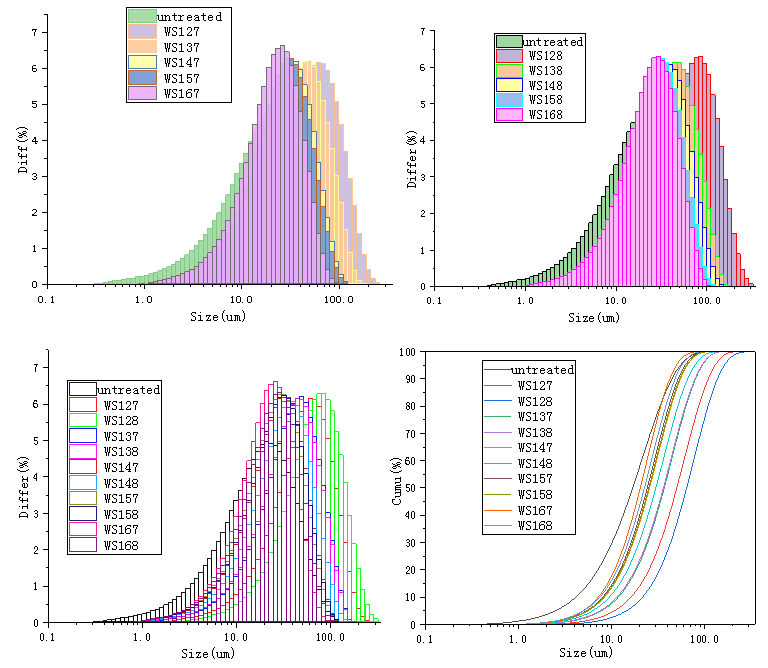
The changes of PSD of starch samples after different microwave power treatments or different starch-water system are shown in Figure 5 and Table 5. All samples presented a single starch grain distribution. At a constant microwave power, an inverse relationship has been observed between water content and the average particle size of starch granules, such that the higher the water content, the smaller the average particle size of starch granules. Furthermore, within varying starch-water systems, wheat starch exhibited a propensity towards reduction in particle size, with the magnitude of this diminution becoming increasingly pronounced as water content increased (as illustrated in Figure 5).
There were significant differences in the volume average diameter, D10, D50, and specific surface area values between the treated and untreated starch samples (p< 0.05). As shown in Table 5, the average particle size, D10, D50, and D90 of wheat starch increased as microwave power increased, reaching maximum values of 81.53, 24.19, 72.00, and 153.00 (WS128), respectively.
The specific surface area can be used to evaluate the adsorption potential of the material. It can be seen from Table 1 that the specific surface area is negatively correlated with the average particle size.
Microwave freeze treatment had an impact on the physicochemical and structural properties of wheat starch. Native WS exhibited a typical A-type structure, but as microwave power and water content increased, it gradually transformed into a V-type structure. Microwave freeze treatment was found to precipitate a significant reduction in the dimensions of particles, as well as its L* and ∆H values. In contrast, the WSI, SP, and OAC values of WS subjected to microwave modification were observed to be markedly elevated relative to those of unmodified WS. Microwave treatment may disrupt the ordered double helix structure of WS starch, resulting in a reduction of its gelatinization temperature and affecting its pasting and gel texture properties. Overall, microwave modification caused an increase in the G′and G″ values of WS, indicating a more pronounced elastic behavior. This research offers a theoretical foundation for the rational modification of wheat starch functionality and its expanded use in industrial applications.
| [1] | Liu, Y., Yu, J., Zhang, L, "Effects of Fertilization on Yield and Nitrogen Use Efficiency of Wheat and Rice with Straw Return," Communications in Soil Science and Plant Analysis, 52(10), 1161-1170, 2021. | ||
| In article | View Article | ||
| [2] | Wang, Q., Li, L., Zheng, X, "Recent advances in heat-moisture modified cereal starch: Structure, functionality and its applications in starchy food systems," Food Chemistry, 344, 128700, 2021. | ||
| In article | View Article PubMed | ||
| [3] | Dereje, B, "Composition, morphology and physicochemical properties of starches derived from indigenous Ethiopian tuber crops: A review," International Journal of Biological Macromolecules, 187, 911-921,2021. | ||
| In article | View Article PubMed | ||
| [4] | Oyeyinka, S. A., Singh, S., Amonsou, E. O, "A review on structural, digestibility and physicochemical properties of legume starch-lipid complexes," Food chemistry, 349, 129165, 2021. | ||
| In article | View Article PubMed | ||
| [5] | Parenti, O., Guerrini, L., and Zanoni, B, "Techniques and technologies for the breadmaking process with unrefined wheat flours," Trends in Food Science & Technology, 99, 152-166, 2020. | ||
| In article | View Article | ||
| [6] | Javadian N., Mohammadi Nafchi A., Bolandi M, "The effects of dual modification on functional, microstructural, and thermal properties of tapioca starch," Food Science & Nutrition, 9(10), 5467-5476, 2021. | ||
| In article | View Article PubMed | ||
| [7] | Hussain, R., Singh, A, Vatankhah, H., "Effects of locust bean gum on the structural and rheological properties of resistant corn starch," Journal of food science and technology, 54(3), 650-658, 2017. | ||
| In article | View Article PubMed | ||
| [8] | Roman, L., de la Cal, E., Gomez, M, "Specific ratio of A-to B-type wheat starch granules improves the quality of gluten-free breads: Optimizing dough viscosity and pickering stabilization," Food Hydrocolloids, 82, 510-518, 2018. | ||
| In article | View Article | ||
| [9] | Tian, L., Hu, S., Jia, J, "Effects of short-term fermentation with lactic acid bacteria on the characterization, rheological and emulsifying properties of egg yolk," Food Chemistry, 341, 128163, 2021. | ||
| In article | View Article PubMed | ||
| [10] | Zheng, L., Liu, J., Liu, R, "3D printing performance of gels from wheat starch, flour and whole meal," Food Chemistry, 356, 129546, 2021. | ||
| In article | View Article PubMed | ||
| [11] | Bai, J., Dong, M., Li, J, "Effects of egg white on physicochemical and functional characteristics of steamed cold noodles (a wheat starch gel food)," Lwt, 169, 114057,2022. | ||
| In article | View Article | ||
| [12] | Okonkwo, V. C., Kwofie, E. M., Mba, O. I, "Impact of thermo-sonication on quality indices of starch-based sauces," Ultrasonics sonochemistry, 73, 105473,2021. | ||
| In article | View Article PubMed | ||
| [13] | Karwasra, B. L., Kaur, M., Gill, B. S, "Impact of ultrasonication on functional and structural properties of Indian wheat (Triticum aestivum L.) cultivar starches," International Journal of Biological Macromolecules, 164, 1858-1866, 2020. | ||
| In article | View Article PubMed | ||
| [14] | Wang, Y. Y., Yan, J. K., Ding, Y., Rashid, M. T. and Ma, H, "Effect of sweep frequency ultrasound and fixed frequency ultrasound thawing on gelling properties of myofibrillar protein from quick-frozen small yellow croaker and its possible mechanisms," Lwt, 150, 111922, 2021. | ||
| In article | View Article | ||
| [15] | Qiu, S., Yadav, M. P., Liu, Y., Chen, H., Tatsumi, E., and Yin, L, "Effects of corn fiber gum with different molecular weights on the gelatinization behaviors of corn and wheat starch," Food Hydrocolloids, 53, 180-186, 2016. | ||
| In article | View Article | ||
| [16] | Sun, Y., Li, F., Luan, Y., Li, P., Dong, X., Chen, M., and Sun, Q, "Gelatinization, pasting, and rheological properties of pea starch in alcohol solution," Food Hydrocolloids, 112, 106331, 2021. | ||
| In article | View Article | ||
| [17] | Xu, X., Xu, J., Zhang, Y., and Zhang, L, " Rheology of triple helical Lentinan in solution: Steady shear viscosity and dynamic oscillatory behavior," Food hydrocolloids, 22(5), 735-741, 2008. | ||
| In article | View Article | ||
| [18] | Yang, L., Zhou, Y., Zheng, X., Wang, H., and Wang, N, " Determination of optimum experimental conditions for preparation and functional properties of hydroxypropylated, phosphorylated and hydroxypropyl-phosphorylated glutinous rice starch," International journal of biological macromolecules, 105, 317-327,2017. | ||
| In article | View Article PubMed | ||
| [19] | Liu, Y., Chen, X., Xu, Y., Xu, Z., Li, H., Sui, Z., and Corke, H, "Gel texture and rheological properties of normal amylose and waxy potato starch blends with rice starches differing in amylose content," International Journal of Food Science and Technology, 56(4), 1946-1958,2021. | ||
| In article | View Article | ||
| [20] | Zhang, Y., Zhu, K., He, S., Tan, L., and Kong, X, "Characterizations of high purity starches isolated from five different jackfruit cultivars," Food hydrocolloids, 52, 785-794, 2016. | ||
| In article | View Article | ||
| [21] | Blazek, J., Gilbert, E. P, "Application of small-angle X-ray and neutron scattering techniques to the characterisation of starch structure: A review," Carbohydrate Polymers, 85(2), 281-293,2011. | ||
| In article | View Article | ||
| [22] | Wang, J., Lv, X., Lan, T., Lei, Y., Suo, J., Zhao, Q., and Ma, T., "Modification in structural, physicochemical, functional, and in vitro digestive properties of kiwi starch by high-power ultrasound treatment," Ultrasonics Sonochemistry, 86, 106004, 2022. | ||
| In article | View Article PubMed | ||
| [23] | Chen, L., Tian, Y., Sun, B., Cai, C., Ma, R., and Jin, Z, "Measurement and characterization of external oil in the fried waxy maize starch granules using ATR-FTIR and XRD," Food chemistry, 242, 131-138, 2018. | ||
| In article | View Article PubMed | ||
| [24] | Ma, Y., Zhang, W., Pan, Y., Ali, B., Xu, D., and Xu, X, "Physicochemical, crystalline characterization and digestibility of wheat starch under superheated steam treatment," Food Hydrocolloids, 118, 106720, 2021. | ||
| In article | View Article | ||
| [25] | Sang, S., Chen, Y., Zhu, X., Narsimhan, G., Hu, Q., Jin, Z., and Xu, X, "Effect of egg yolk lipids on structure and properties of wheat starch in steamed bread. Journal of Cereal Science," 86, 77-85, 2019. | ||
| In article | View Article | ||
| [26] | Singh, R., Sharanagat, V. S, "Physico-functional and structural characterization of ultrasonic-assisted chemically modified elephant foot yam starch," International Journal of Biological Macromolecules, 164, 1061-1069, 2020. | ||
| In article | View Article PubMed | ||
| [27] | Otemuyiwa, I. O., Aina, A. F, "Physicochemical properties and in-vitro digestibility studies of microwave assisted chemically modified breadfruit (Artocarpus altilis) starch," International Journal of Food Properties, 24(1), 140-151, 2021. | ||
| In article | View Article | ||
| [28] | Oyeyinka, S. A., Umaru, E., Olatunde, S. J., and Joseph, J. K, "Effect of short microwave heating time on physicochemical and functional properties of Bambara groundnut starch," Food Bioscience, 28, 36-41,2019. | ||
| In article | View Article | ||
| [29] | Li, Y. D., Xu, T. C., Xiao, J. X., Zong, A. Z., Qiu, B., Jia, M., and Liu, W, "Efficacy of potato resistant starch prepared by microwave–toughening treatment," Carbohydrate polymers, 192, 299-307, 2018. | ||
| In article | View Article PubMed | ||
| [30] | Zhang, K., Zhao, D., Guo, D., Tong, X., Zhang, Y., and Wang, L, "Physicochemical and digestive properties of A-and B-type granules isolated from wheat starch as affected by microwave-ultrasound and toughening treatment," International Journal of Biological Macromolecules, 183, 481-489,2021. | ||
| In article | View Article PubMed | ||
| [31] | Rabal, A. M., Ferrero, A., Campos, J, "Automatic gonio-spectrophotometer for the absolute measurement of the spectral BRDF at in-and out-of-plane and retroreflection geometries," Metrologia, 49(3), 213, 2012. | ||
| In article | View Article | ||
Published with license by Science and Education Publishing, Copyright © 2025 Yuxiang Shen, Tianfang Ao, Jinglei Xu, Qingyang Gao, Songye Shi, Qilin Huang and Jiping Wen
 This work is licensed under a Creative Commons Attribution 4.0 International License. To view a copy of this license, visit
http://creativecommons.org/licenses/by/4.0/
This work is licensed under a Creative Commons Attribution 4.0 International License. To view a copy of this license, visit
http://creativecommons.org/licenses/by/4.0/
| [1] | Liu, Y., Yu, J., Zhang, L, "Effects of Fertilization on Yield and Nitrogen Use Efficiency of Wheat and Rice with Straw Return," Communications in Soil Science and Plant Analysis, 52(10), 1161-1170, 2021. | ||
| In article | View Article | ||
| [2] | Wang, Q., Li, L., Zheng, X, "Recent advances in heat-moisture modified cereal starch: Structure, functionality and its applications in starchy food systems," Food Chemistry, 344, 128700, 2021. | ||
| In article | View Article PubMed | ||
| [3] | Dereje, B, "Composition, morphology and physicochemical properties of starches derived from indigenous Ethiopian tuber crops: A review," International Journal of Biological Macromolecules, 187, 911-921,2021. | ||
| In article | View Article PubMed | ||
| [4] | Oyeyinka, S. A., Singh, S., Amonsou, E. O, "A review on structural, digestibility and physicochemical properties of legume starch-lipid complexes," Food chemistry, 349, 129165, 2021. | ||
| In article | View Article PubMed | ||
| [5] | Parenti, O., Guerrini, L., and Zanoni, B, "Techniques and technologies for the breadmaking process with unrefined wheat flours," Trends in Food Science & Technology, 99, 152-166, 2020. | ||
| In article | View Article | ||
| [6] | Javadian N., Mohammadi Nafchi A., Bolandi M, "The effects of dual modification on functional, microstructural, and thermal properties of tapioca starch," Food Science & Nutrition, 9(10), 5467-5476, 2021. | ||
| In article | View Article PubMed | ||
| [7] | Hussain, R., Singh, A, Vatankhah, H., "Effects of locust bean gum on the structural and rheological properties of resistant corn starch," Journal of food science and technology, 54(3), 650-658, 2017. | ||
| In article | View Article PubMed | ||
| [8] | Roman, L., de la Cal, E., Gomez, M, "Specific ratio of A-to B-type wheat starch granules improves the quality of gluten-free breads: Optimizing dough viscosity and pickering stabilization," Food Hydrocolloids, 82, 510-518, 2018. | ||
| In article | View Article | ||
| [9] | Tian, L., Hu, S., Jia, J, "Effects of short-term fermentation with lactic acid bacteria on the characterization, rheological and emulsifying properties of egg yolk," Food Chemistry, 341, 128163, 2021. | ||
| In article | View Article PubMed | ||
| [10] | Zheng, L., Liu, J., Liu, R, "3D printing performance of gels from wheat starch, flour and whole meal," Food Chemistry, 356, 129546, 2021. | ||
| In article | View Article PubMed | ||
| [11] | Bai, J., Dong, M., Li, J, "Effects of egg white on physicochemical and functional characteristics of steamed cold noodles (a wheat starch gel food)," Lwt, 169, 114057,2022. | ||
| In article | View Article | ||
| [12] | Okonkwo, V. C., Kwofie, E. M., Mba, O. I, "Impact of thermo-sonication on quality indices of starch-based sauces," Ultrasonics sonochemistry, 73, 105473,2021. | ||
| In article | View Article PubMed | ||
| [13] | Karwasra, B. L., Kaur, M., Gill, B. S, "Impact of ultrasonication on functional and structural properties of Indian wheat (Triticum aestivum L.) cultivar starches," International Journal of Biological Macromolecules, 164, 1858-1866, 2020. | ||
| In article | View Article PubMed | ||
| [14] | Wang, Y. Y., Yan, J. K., Ding, Y., Rashid, M. T. and Ma, H, "Effect of sweep frequency ultrasound and fixed frequency ultrasound thawing on gelling properties of myofibrillar protein from quick-frozen small yellow croaker and its possible mechanisms," Lwt, 150, 111922, 2021. | ||
| In article | View Article | ||
| [15] | Qiu, S., Yadav, M. P., Liu, Y., Chen, H., Tatsumi, E., and Yin, L, "Effects of corn fiber gum with different molecular weights on the gelatinization behaviors of corn and wheat starch," Food Hydrocolloids, 53, 180-186, 2016. | ||
| In article | View Article | ||
| [16] | Sun, Y., Li, F., Luan, Y., Li, P., Dong, X., Chen, M., and Sun, Q, "Gelatinization, pasting, and rheological properties of pea starch in alcohol solution," Food Hydrocolloids, 112, 106331, 2021. | ||
| In article | View Article | ||
| [17] | Xu, X., Xu, J., Zhang, Y., and Zhang, L, " Rheology of triple helical Lentinan in solution: Steady shear viscosity and dynamic oscillatory behavior," Food hydrocolloids, 22(5), 735-741, 2008. | ||
| In article | View Article | ||
| [18] | Yang, L., Zhou, Y., Zheng, X., Wang, H., and Wang, N, " Determination of optimum experimental conditions for preparation and functional properties of hydroxypropylated, phosphorylated and hydroxypropyl-phosphorylated glutinous rice starch," International journal of biological macromolecules, 105, 317-327,2017. | ||
| In article | View Article PubMed | ||
| [19] | Liu, Y., Chen, X., Xu, Y., Xu, Z., Li, H., Sui, Z., and Corke, H, "Gel texture and rheological properties of normal amylose and waxy potato starch blends with rice starches differing in amylose content," International Journal of Food Science and Technology, 56(4), 1946-1958,2021. | ||
| In article | View Article | ||
| [20] | Zhang, Y., Zhu, K., He, S., Tan, L., and Kong, X, "Characterizations of high purity starches isolated from five different jackfruit cultivars," Food hydrocolloids, 52, 785-794, 2016. | ||
| In article | View Article | ||
| [21] | Blazek, J., Gilbert, E. P, "Application of small-angle X-ray and neutron scattering techniques to the characterisation of starch structure: A review," Carbohydrate Polymers, 85(2), 281-293,2011. | ||
| In article | View Article | ||
| [22] | Wang, J., Lv, X., Lan, T., Lei, Y., Suo, J., Zhao, Q., and Ma, T., "Modification in structural, physicochemical, functional, and in vitro digestive properties of kiwi starch by high-power ultrasound treatment," Ultrasonics Sonochemistry, 86, 106004, 2022. | ||
| In article | View Article PubMed | ||
| [23] | Chen, L., Tian, Y., Sun, B., Cai, C., Ma, R., and Jin, Z, "Measurement and characterization of external oil in the fried waxy maize starch granules using ATR-FTIR and XRD," Food chemistry, 242, 131-138, 2018. | ||
| In article | View Article PubMed | ||
| [24] | Ma, Y., Zhang, W., Pan, Y., Ali, B., Xu, D., and Xu, X, "Physicochemical, crystalline characterization and digestibility of wheat starch under superheated steam treatment," Food Hydrocolloids, 118, 106720, 2021. | ||
| In article | View Article | ||
| [25] | Sang, S., Chen, Y., Zhu, X., Narsimhan, G., Hu, Q., Jin, Z., and Xu, X, "Effect of egg yolk lipids on structure and properties of wheat starch in steamed bread. Journal of Cereal Science," 86, 77-85, 2019. | ||
| In article | View Article | ||
| [26] | Singh, R., Sharanagat, V. S, "Physico-functional and structural characterization of ultrasonic-assisted chemically modified elephant foot yam starch," International Journal of Biological Macromolecules, 164, 1061-1069, 2020. | ||
| In article | View Article PubMed | ||
| [27] | Otemuyiwa, I. O., Aina, A. F, "Physicochemical properties and in-vitro digestibility studies of microwave assisted chemically modified breadfruit (Artocarpus altilis) starch," International Journal of Food Properties, 24(1), 140-151, 2021. | ||
| In article | View Article | ||
| [28] | Oyeyinka, S. A., Umaru, E., Olatunde, S. J., and Joseph, J. K, "Effect of short microwave heating time on physicochemical and functional properties of Bambara groundnut starch," Food Bioscience, 28, 36-41,2019. | ||
| In article | View Article | ||
| [29] | Li, Y. D., Xu, T. C., Xiao, J. X., Zong, A. Z., Qiu, B., Jia, M., and Liu, W, "Efficacy of potato resistant starch prepared by microwave–toughening treatment," Carbohydrate polymers, 192, 299-307, 2018. | ||
| In article | View Article PubMed | ||
| [30] | Zhang, K., Zhao, D., Guo, D., Tong, X., Zhang, Y., and Wang, L, "Physicochemical and digestive properties of A-and B-type granules isolated from wheat starch as affected by microwave-ultrasound and toughening treatment," International Journal of Biological Macromolecules, 183, 481-489,2021. | ||
| In article | View Article PubMed | ||
| [31] | Rabal, A. M., Ferrero, A., Campos, J, "Automatic gonio-spectrophotometer for the absolute measurement of the spectral BRDF at in-and out-of-plane and retroreflection geometries," Metrologia, 49(3), 213, 2012. | ||
| In article | View Article | ||