This study aimed to evaluate the therapeutic effect of black wolfberry (Lycium ruthenicum Murr.) ferment on mice with androgenetic alopecia (AGA). Mice were arbitrarily clustered into four groups: control (C), model (M), low-dosage ferment (LF), and high-dosage ferment (HF) groups. Mice in the M, LF, and HF groups had AGA induced for 16 d. Then, the C group was treated with normal saline for 16 d; and LF and HF mice received daily doses of 2.5 and 25 mL/kg body weight of black wolfberry ferment, respectively. The results indicate that black wolfberry ferment increased the weight of newborn hair on mice with AGA. It also enhanced the number of hair follicles, terminal hairs, and vellus hairs, and increased the dermal and hypodermal thickness, as verified by the proliferation of hair follicles expressing Ki-67 and hair follicle stem cell marker Sox9. A total of 1,636 genes were selected as necessary genes using differential gene expression and weighted gene co-expression network analysis. The KEGG analysis showed that the promotion of hair regrowth was most likely associated with the PI3K/AKT, NF-kappa B, and MAPK signaling pathways. Black wolfberry ferment can be used as a therapeutic agent for AGA, and the potential genes and pathways involved in its action were identified using transcriptomics.
Black wolfberry (Lycium ruthenicum Murr.) of the Solanaceae family is mostly cultivated in the arid regions of northwest China 1. Its fruit can be either directly consumed or used for drink processing in the nutritional food sector. Numerous studies have revealed the presence of bioactive components, such as flavanols, anthocyanins, dietary fiber, organic acids, and vitamin C in black wolfberry fruit 2, which is used to treat hypertension, eye disease, menstruation problems, and menopause symptoms 3, 4. Lactic acid bacteria fermentation has been employed to maintain or improve the nutrients, sensory values, and shelf-life of fruit 5, and has shown health-promoting effects in the form of probiotic supplements. During the fermentation process, microorganisms produce some bioactive compounds, such as peptides, amino acids, vitamins, and minerals in foods 6, 7. The consumption of probiotic-containing fermented products has been linked to cholesterol metabolism and angiotensin-converting enzyme inhibition, antimicrobial activity, tumor suppression, faster wound healing, and immune system modulation 8, thereby increasing the desirability of these commodities for consumers. Despite the well-established beneficial properties of black wolfberry fruit, prior to this research, when it came to developing functional foods with black wolfberry as the raw material, there was a dearth of information about the effects of its fermented drink on health-related aspects.
Androgenetic alopecia (AGA), usually known as male pattern baldness, is a common type of progressive hair loss, characterized by a specific pattern of baldness. In a Chinese epidemiological survey, AGA patients were mainly male and overall prevalence was 21.3%, and increased with age 9. Although previous research demonstrated that androgen acts on hair follicles through androgen receptors, shrinking hair follicles and inhibiting hair growth 10, most of the molecular mechanism is far from clear, thereby limiting available treatments. Current treatments for AGA include pharmacotherapy, surgery, and cosmetic aids. Despite the huge demand, only two medications are approved by the US Food and Drug Administration as a therapy for AGA. However, these medications are expensive, require an indefinitely chronic treatment, and often have undesirable side effects 11. Therefore, a safe and convenient method is needed to cure hair loss. One study found that topical transient receptor potential vanilloid-3 inhibitors hold promise as a new therapeutic approach for treating AGA 12. Hair growth and hair luster can be effectively increased by dietary intervention of vitamin E, protein, iodine, and iron 13. A polyphenol compound extracted from apple, procyanidin B-2, was found to enhance the number of total hairs in the designated scalp area, acting as a hair-growing factor for AGA 14. Proanthocyanidins identified from grape seeds accelerated the proliferation of hair follicle cells in vitro and converted the hair cycle in vivo 15. A kimchi and cheonggukjang (fermented soybean paste) probiotic product could enhance hair count and promote hair growth without reversing hair loss and without side effects such as diarrhea among men with stage II to V patterns of hair loss 16. Some previous studies have focused on the improvement of the hair loss phenotype but have not considered the abundance levels of key proteins and changes in the transcriptional regulation of genes, which are crucial for determining the mechanism of hair loss.
Little is known about the efficacy of black wolfberry as a treatment for hair loss. The present study examined newborn hair weight, numbers of lost hair, the histopathology of skin tissue, and the expressions of Ki67- and Sox9-positive cells to assess the effectiveness of black wolfberry ferment oral administration in an AGA animal model. Next-generation sequencing and weighted gene co-expression network analysis (WGCNA) were applied to identify the key genes and gene networks, to explain the molecular regulatory mechanisms underlying the alleviating effect of black wolfberry ferment on AGA mice. The research results will contribute to the utilization of black wolfberries with high added value and the development of functional foods for preventing hair loss.
Black wolfberry was purchased from Zhongning Qifuyuan Trading Co., Ltd. (Zhongwei, China). Mulberry (Fructus mori) was donated by Shandong Hegu Food Co., Ltd. (Linyi, China). Isomalto-oligosaccharides and fructo-oligosaccharides were bought from Bowling Treasure Biology Co., Ltd. (Yucheng, China). Lactobacillus plantarum HCS03-001, L. reuteri HCS02-001, and L. rhamnosus HCS01-013 were sourced from Jiangxi Renren Health Industry Co., Ltd. (Yichun, China).
2.2. Preparation of Black Wolfberry FermentThe three bacterial strains (L. plantarum HCS03-001, L. reuteri HCS02-001, and L. rhamnosus HCS01-013) were first inoculated into activated medium at an inoculum proportion of 0.05-0.08% and cultured under optimized conditions. The black wolfberry was then soaked in water and mixed with mulberry, isomalto-oligosaccharides, and fructo-oligosaccharides (1:1:1:1, w/w). The mixed solution was fermented with the pre-activated bacteria in a 5000-L fermenter (Nanjing Huike Biological Engineering Equipment Co., China) and maintained at 37 ℃ and 60-80 r/min for 47 h. Then, the fermented liquid was filtered with 300-mesh cloth. After centrifugation, the mixture was sterilized and aseptically filled in vials for further analyses. The ferment contained characteristic compounds, including 2.4 × 10⁴ g/kg of organic acids, 100 mg/100 g of crude polysaccharides, 16 mg/g of polyphenols, and superoxide dismutase (2.47 × 10⁴ U/L).
2.3. Animal Experiment DesignTwenty healthy C57BL/6 male mice aged 6–8 weeks [~20 g body weight (bw)] were purchased from Shanghai Slac Laboratory Animal Co., Ltd. All animal procedures were approved by the Experimental Animal Ethics Committee of Yanxuan Biotechnology (Hangzhou) Co., Ltd. (no. HZYX2207153750), and strictly performed according to the Guide for the Care and Use of Laboratory Animals to minimize pain and injury. During the experiment, the room was maintained at an ambient temperature of 25 ± 2°C and 12-h light/dark cycles, and the mice received normal feeding with standard pellets and water. The animals were fed adaptively for a week, during which no experiment was performed.
Before the experiment, each animal included in the study was numbered. Using a computer-generated random number table, mice were randomly separated into four groups (n = 5): control (C), model (M), low-dosage ferment (LF), and high-dosage ferment (HF) groups. Rosin and paraffin (1:1) were mixed, and heated. After slightly cooling, the mixture was applied to the dorsal hair of mice covering an area of 2 cm × 2 cm, and then the hair was removed. After 12 h, a testosterone propionate solution (5 mg/mL, 10 mL/kg bw) was applied by subcutaneous injection in M, LF, and HF groups for 16 d to generate AGA-induced mice. Normal control mice were given an equal volume of normal saline every day, so as to not induce AGA. At the same time, the experimental animals were intragastrically administered with normal saline and ferment according to the groups: the C and M groups were given normal saline, and the LF and HF groups were treated with 2.5 mL/kg bw (the ferment was diluted 10 times with normal saline) and 25 mL/kg bw of black wolfberry ferment by oral gavage, respectively. Food intake, body weight, and hair growth status were evaluated daily. After 16 d of experiment, the mice were anesthetized and sacrificed by cervical dislocation. During the experimental process, the personnel involved in experimental operations and data recording carried out their operations and recordings solely based on the numbers on the animals. The corresponding relationship between the numbers and the groupings was not revealed until all experimental data had been fully collected and the preliminary analysis had been completed.
2.4. Determination of Newborn Hair WeightNewborn hair weight was determined at the end of 16 d of treatment. All hair in the experimental area was collected and weighed with an analytical balance, which was determined as newborn hair weight.
2.5. Histological EvaluationThe dorsal skin tissues from treatment areas were soaked in 10% formalin, embedded in paraffin, and sliced into sections 2.5–4.0 μm thick. The slices were stained with a Masson Trichrome Staining Kit (Solarbio, China) to examine the intensity of blue color, which represented collagen deposition. The slices were stained with hematoxylin (Zhuhai Baso Biotechnology, China) and eosin (Sinopharm Chemical Reagent, China) to assess skin morphology and determine the numbers of hair follicles, terminal hairs, and vellus hairs. The stained sections were observed under a light microscope, and the photomicrographs were quantified using ImageJ software.
2.6. ImmunohistochemistryImmunostaining was performed on 2.5–4.0 μm sections after a series of deparaffining, rehydration, and antigen retrieval with citrate buffer (Solarbio). After blocking with 5% bovine serum albumin (Solarbio), the sections were incubated with the primary antibodies of rabbit monoclonal anti-SOX9 (ab184230; Abcam, USA) and rabbit polyclonal anti-Ki67 (ab15580; Abcam), respectively, overnight at 4°C. Then the sections were washed with phosphate buffer saline, and incubated with the secondary antibodies of goat anti-rabbit IgG (H+L) HRP (S0001, Affinity Biosciences, China) for 1 h at room temperature. Finally, the sections were stained with diaminobenzidine and counterstained with hematoxylin. The histological changes were assessed using fluorescent microscopy (AxioVert.A1, ZEISS).
2.7. RNA-Sequencing and Data ProcessingTotal RNA from hair follicles was extracted using Trizol (Invitrogen, USA), and then qualified and quantified using a Nano Drop and Agilent 2100 bioanalyzer (Thermo Fisher Scientific, USA) to construct sequencing libraries. The sequencing data were filtered by removing the low-quality fragments and adaptors. The clean reads were mapped to the reference genome and aligned to the reference coding gene set. Gene expression was calculated by RSEM (v1.2.12).
The identification of clinical trait-related gene modules and hub genes was achieved using WGCNA in the R statistical package 17. Genes were clustered into different modules based on the topological overlap matrix dissimilarity measure. The optimal soft threshold power has been reported to determine the module–trait associations, gene significance, and module membership. Importantly, differential expression analysis was conducted using the DESeq2 (v1.4.5), taking P < 0.05 and |fold change|>2 as thresholds to identify differentially expressed genes (DEGs). Gene ontology (GO) and Kyoto Encyclopedia of Genes and Genomes (KEGG) enrichment analyses were applied to understand the function of annotated DEGs or pathways involved in regulation, so as to associate with the phenotype.
2.8. Quantitative Real-time PCR (qRT-PCR)Eleven genes were randomly selected to verify the RNA-sequencing results. The RNA of dorsal skin tissue was extracted using RNAiso Plus Reagent (Takara Bio Inc., China), and complementary DNA was synthesized using PrimeScriptTM RT Master Mix (Takara Bio Inc.). The qRT-PCR was performed with SYBR Premix Ex Taq II (Takara, Japan) and analyzed in an Applied Biosystems QuantStudio 3 system (Thermo Fisher Scientific). A three-step method was used for qRT-PCR analysis with the following specific procedure: pre-denaturation at 95°C for 30 s; followed by 40 cycles of denaturation at 95°C for 5 s and annealing/extension at 60°C for 34 s; and finally, melting curve analysis at 95°C for 15 s, 60°C for 1 min, and 95°C for 15 s. The primers used are shown in Supplementary Table S1. The housekeeping gene Actin was used as internal reference, and the relative quantification of related genes was conducted by ΔΔCt method 18. Three biological and technical replicates were conducted for each sample.
2.9. Western BlotThe proteins of dorsal skin tissue were extracted with RIPA buffer (Boster, China). Protein extracts were subjected to analysis by SDS-PAGE, 20 µg of total protein per sample was resolved, and the separated proteins were transferred onto PVDF membranes (Merck KGaA, Darmstadt, Germany). After blocking with 5% skim milk, the membrane was incubated using the primary antibodies as follows: β-actin, forkhead box O3 (FOXO3), protein tyrosine phosphatase nonreceptor type 7 (PTPN7), and PIK3R5, with suggested dilutions. The immunoblotting was detected using ECL luminous fluid (Invitrogen). The gray value of the strip was determined using ImageJ, and the data were normalized using β-actin to determine the protein expression level of experimental groups. Three biological and technical replicates were conducted for each sample.
2.10. Statistical AnalysisEach experiment was repeated at least three times. The statistical data chart was drawn using GraphPad Prism 9 software, and data analysis was performed using SPSS 26 software. Student’s t-test was used to calculate the level of statistical significance compared with the M group: *, P < 0.05; **, P < 0.01; and ***, P < 0.001.
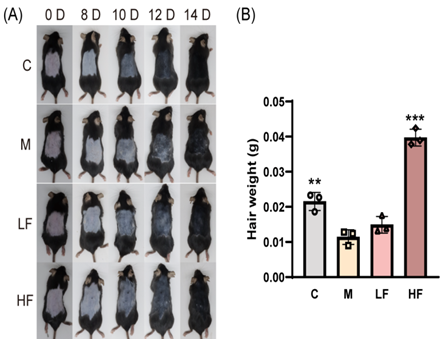
The dorsal hair of C57BL/6 mouse has a 7-week, time-synchronized hair growth cycle 19, which was used to evaluate the hair growth-promoting effect of black wolfberry ferment in this study. The skin pigmentation is considered evidence of hair growth, and the homogenously bright pink color suggests the telogen phase; whereas gray or black color indicates the anagen phase. Mice skin at the edge of the depilated area in the M and LF groups was still light pink (Figure 1A). The skin of mice became nearly all black in the C and HF groups, showing that the hair follicles were in the growing phase. Hair growth is regulated by modulation of the hair cycle, such as extending the anagen phase and promoting the transition from telogen to anagen phase 20. These observations confirmed that oral intake of black wolfberry ferment promoted the telogen to anagen transition.
Compared with the M group, the weight of newborn hairs notably increased in the C and HF groups (Figure 1B, P < 0.05). The results indicated that testosterone propionate solution successfully induced AGA in mice. Black wolfberry ferment seemed to have hair growth-promoting effect, of which HF treatment promoted hair regeneration in the mice model. These findings were consistent with a previous study of Subedi et al. 21, which found that bimatoprost increased the weight of newly grown hair in mice with AGA, showing therapeutic potential for alopecia.

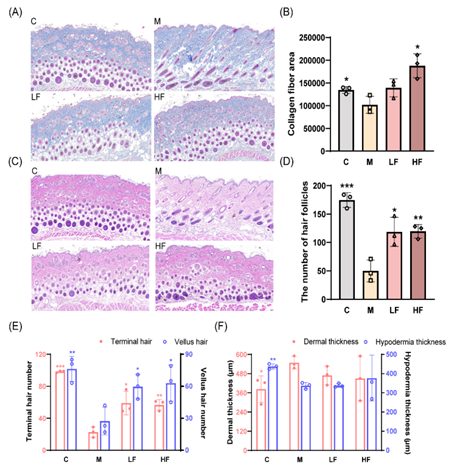
The structure of skin is divided into three layers: epidermis, dermis, and subcutaneous tissue. Collagen and elastin in the dermis maintain skin structure and are responsible for its elasticity 19. Therefore, collagen synthesis can be used to evaluate the state of hair growth through Masson’s trichrome staining. The collagen arrangements for the LF and HF groups were neater than for the M group (Figure 2A). The highest collagen fiber area was observed in the HF group (Figure 2B). A previous study found that pep-1-conjugated mitochondria induced collagen formation to promote hair regrowth in alopecia mice 22. Therefore, the formation of collagen in the LF and HF groups might be related to an induction of anagen stage.
The pathological changes of alopecia are mainly manifested in the reducing volume and number of hair follicles. The hair follicles were sparsely distributed and mostly located in the epidermis, and the cells showed vacuolization in the M group (Figure 2C). After treatment of black wolfberry ferment, the hair follicles were widely distributed and tightly arranged, and located in the deep subcutaneous tissue. The size and location of hair follicles vary according to each cycle of the anagen, catagen, and telogen phases 23. For example, the dermal papilla and hair follicles are large and deeply located in the subcutaneous tissue at the anagen phase; however, the dermal papilla is relatively small and the hair bulb is located in the dermis near the epidermis at the telogen phase 24. These findings suggested that black wolfberry ferment induced the anagen phase. Compared with M group, the number of hair follicles significantly increased in the order of C > HF > LF (Figure 2D, P < 0.05). Relatively higher numbers of terminal hair and vellus hair were observed in the LF and HF groups compared to the M group, but neither value recovered to that of the C group (Figure 2E). Furthermore, HF treatment increased dermal thickness (14.88%) and decreased hypodermal thickness (13.80%) in alopecia mice; however, there was no significant difference compared to the M group (Figure 2F, P > 0.05). Accordingly, black wolfberry ferment administration was conducive to collagen deposition and hair regrowth, increasing the numbers of terminal and vellus hairs for AGA mice. A research revealed that black wolfberry ferment is rich in anthocyanins, including cyanidin, delphinidin, malvidin, pelargonidin, and peonidin 3. An in vivo experiment with mice showed that the application of cyanidin-3-O-glucoside effectively improved hair follicle shrinkage, regression, and apoptosis caused by dihydrotestosterone 25. Kurnia et al. 25 discovered that Trichophyton cacao, which contains polyphenol compounds (including catechin, anthocyanin, and proanthocyanidin flavonoid), has anti-alopecia potential, especially catechin. It diffuses and interacts with plasma proteins that direct it to the target when given orally. Therefore, the alleviating effect of black wolfberry ferment on alopecia may be due to its rich content of anthocyanins.

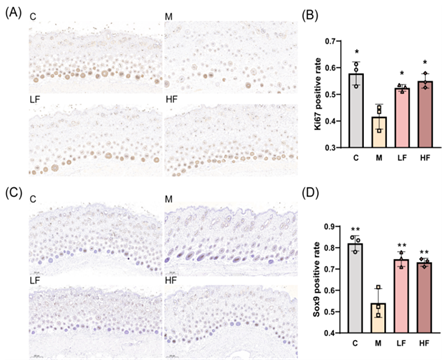
The Ki67 is an antigen associated with cell proliferation and mitosis, thus being applied to mark cells during the proliferation cycle 26. The black wolfberry ferment-treated follicular proliferative pattern in hair keratinocytes was examined by analyzing the Ki67-positive rate. Hair follicles in the C group had a high Ki67-positive rate, whereas the positive density in the M group significant decreased in the bulb (Figure 3A and B). The ferment treatment markedly increased the Ki67-positive rate in AGA mice (P < 0.05), confirming that oral gavage of black wolfberry ferment promoted the proliferation of hair follicles. In previous studies, increased Ki67-positive expression levels of red ginseng extract treatment were associated with proliferative hair matrix cells and hair growth-promoting effects 27. In this study, we confirmed that oral administration of black wolfberry ferment promoted the expression of hair growth-promoting factors.
Hair follicle stem cells are important mediators of hair regeneration, whose proliferative ability is closely related to hair follicle transition and hair growth. As a hair follicle stem cell marker, Sox9 is dedicated to maintaining stem cell bulges and is required for differentiation of the outer root sheath 28. There were significant increases in the Sox9-positive expression rate in LF and HF groups (Fig. 3C and D), showing that ferment treatment triggered the activation of hair follicle stem cells. This result was consistent with previous research, in which a significant increase in Sox9 expression was detected from bone marrow-derived mesenchymal stem cell-treated mice, thereby promoting hair regrowth 29. Overall, black wolfberry ferment induced certain key hair induction-related proteins, thus stimulating the cycle of hair follicles and promoting hair regrowth in AGA mice. However, the specific mechanisms require further exploration.

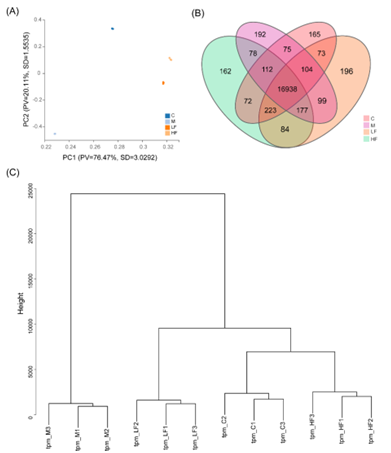
In molecular biology, RNA-sequencing is an indispensable tool to deepen our understanding of gene functions 30. Here, the transcriptional changes in dorsal skin were investigated to explore the underlying molecular mechanism using RNA-sequencing. The total number of clean reads was 177.68 million (C group, 44.48 million; M, 44.13 million; LF, 44.68 million; and HF, 44.40 million), and the proportions of total clean reads mapping to the reference genome were all above 96% (Supplementary Table S2). After normalization and annotation of the mapping reads, a total of 18,750 genes in four groups were found. Principal component analysis showed that between-group variation was greater than within-group variation (Figure S1A); therefore, four sample groups were separated and the intra-group samples were grouped together. The Venn diagram in Figure S1B illustrates 16,938 common genes shared by the four groups, with 165, 192, 196, and 162 specific genes identified in the C, M, LF, and HF groups, respectively. The hierarchical clustering tree in Fig. S1C shows no outliers among the samples, so all samples were available in the following analysis.
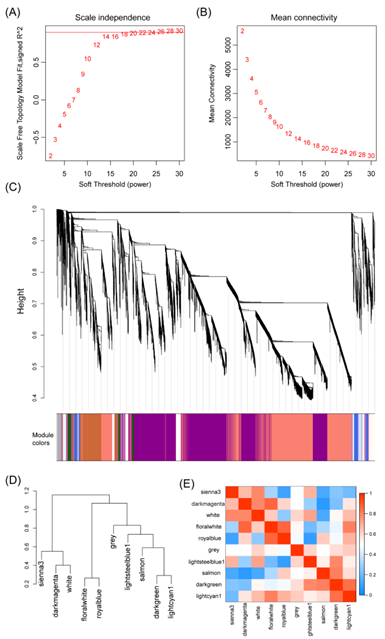
3.5. WGCNA ConstructionThe development of omics and quantitative biology have provided several approaches to confirm gene networks and their regulatory mechanisms in living bodies, among which, WGCNA is a promising method for identifying co-expressed gene networks using RNA-sequencing results. Considering that the differences in gene expression levels cannot reveal the complexity of molecular mechanisms involved in alopecia, we applied WGCNA to identify necessary genes and signaling pathways for the black wolfberry ferment treatment of hair loss. The WGCNA contributes to discovering modules and networks of co-expressed genes that have high connection with phenotypic traits, and identifying eigengenes or hub genes in the network for therapeutic targets. It is more useful than other bioinformatics analyses, and comprehensively examines the associations between co-expression modules and clinical traits, which is highly reliable and has biological significance 31. Therefore, the 16,938 common genes generated from 12 samples were used for WGCNA. Soft-thresholding power values from 1 to 20 were used to calculate network structures and obtain a co-expression network (Figure 4A). The red line in Fig. 4A indicates that when the power value was set at 18, the scale-free fit index achieved 0.85. The connectivity between genes in the network was relatively high and met the scale-free network distribution (Figure 4B). A hierarchical clustering tree was constructed according to the method of dynamic hybrid cut (Figure 4C), and a total of 10 co-expression modules were constructed (Figure 4D). The adjacency heatmap of the relationship for each model (Figure 4E) showed that the co-expression relationship of genes in the same module was strong, and that the 10 modules were relatively independent.


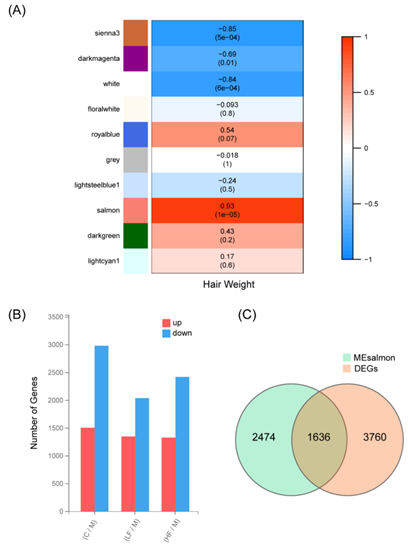
A previous study found that administration of 1 mg of finasteride significantly increased hair weight in men with AGA 8. To explore the genes related to hair weight in animal experiments, module–trait correlations were calculated (Figure 5A). Three out of 10 modules were closely connected with hair growth in AGA mice (|cor| > 0.8). The MEsalmon (cor = 0.93, P = 1 × 10⁻⁵) was positively correlated with hair weight, while MEsienna3 and MEwhite had negative correlations (cor = −0.85, P = 5 × 10⁻⁴ and cor = −0.84, P = 6 × 10⁻⁴, respectively) in AGA mice.
Using P < 0.05 and |fold change|>2 as thresholds, a total of 5,396 genes were screened as DEGs in the training group. Compared with the M group (mice injected with testosterone propionate solution), there were 1,508 up- and 2,982 down-regulated, 1,351 up- and 2,040 down-regulated, and 1,329 up- and 2,422 down-regulated genes identified in the C, LF, and HF groups, respectively (Figure 5B). Among them, 1,636 DEGs were considered key genes because they also belonged to the salmon module in the Venn diagram (Figure 5C).
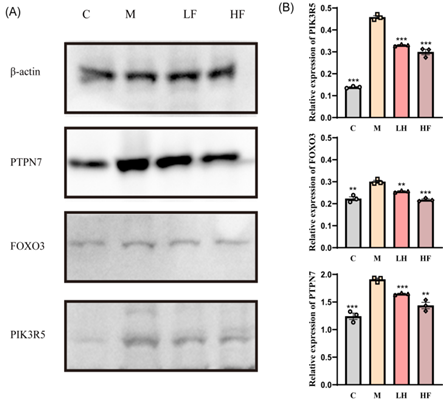
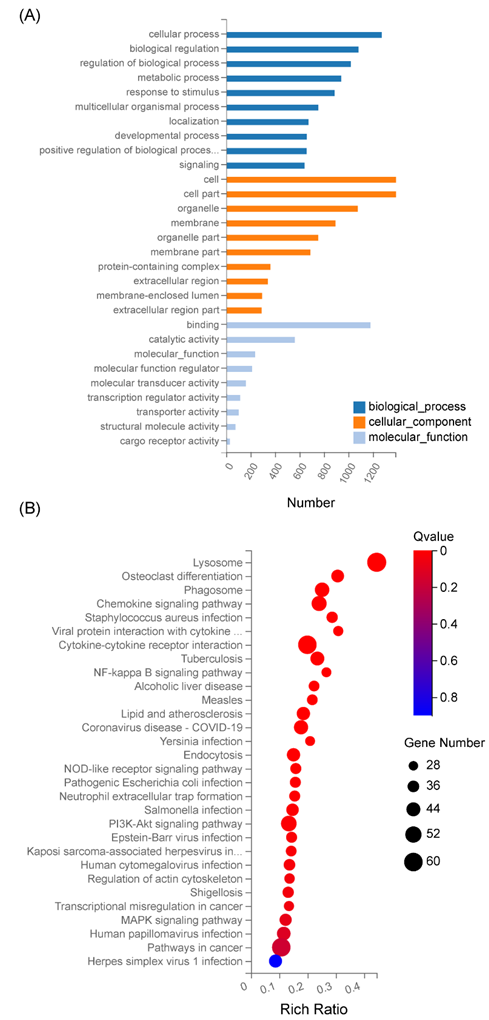
To explore the molecular functions and biological pathways of key genes involved in hair growth, GO term and KEGG enrichment analyses were performed to check gene functions and their participation in biological processes. The GO functional items can be classified into biological processes, cell components, and molecular functions (Figure S2A). The most abundant GO functional items in the category of biological processes were cellular process, biological regulation, regulation of biological process, metabolic process and response to stimulus, those in the cellular component were cell, cell part, organelle, and membrane and organelle part, and those in the molecular function were binding and catalytic activity. In order to select the gene function, KEGG enrichment analysis was conducted to annotate key genes and explore functional pathways. The top 30 pathways with the largest number of candidate genes are shown in Fig. S2B. The enrichment pathways with the most abundant gene numbers were as follows: lysosome, cytokine–cytokine receptor interaction, pathways in cancer, the PI3K/AKT signaling pathway, and the chemokine signaling pathway. The genes in these pathways may play pivotal roles in hair growth by affecting these biological processes and molecular functions. Eleven genes in the above pathways were randomly chosen for verification using qRT-PCR, and the results were found to be highly correlated with the transcriptome profiles (Figure S3), where the correlation coefficient (R) was 0.70. This result confirmed that the RNA-sequencing data were accurate and reliable. Four proteins were selected for western blot analysis. Testosterone propionate solution significantly increased the expressions of PIK3R5, FOXO3, and PTPN7 proteins (Figure 6, P < 0.05). Following black wolfberry ferment treatment, expressions of PIK3R5, FOXO3, and PTPN7 proteins significantly decreased compared with those in the M group (P < 0.05). All of these were consistent with RNA-sequencing results, showing that black wolfberry ferment mediated changes in the abundance of key proteins that affected AGA.
3.7. Black Wolfberry Ferment Promotes Hair Regrowth Through PI3K/AKT, MAPK, and NF-kappa B Signaling PathwaysIn the current study, the PI3K/AKT, MAPK, and NF-kappa B signaling pathways showed high enrichment with target genes, and gene expression levels in these pathways are presented in Supplementary Table S3. The PI3K/AKT signaling pathway is extensively present in cells, and has been shown to be involved in the regulation of cell growth, proliferation, and differentiation, especially hair follicle regeneration 32. The PI3K/AKT signaling pathway is recognized as a prominent regulator of sensory hair cell survival against oxidative stress by regulating the transcription of several antioxidant genes 33. Activation of the PI3K/AKT pathway represents a promising strategy for hair cell protection. The expression levels of genes encoding PI3K (PIK3CD and PIK3R5) were higher in the AGA mice compared with those in the C, LF, and HF groups. Western blot analysis (Figure 6) demonstrated that PIK3R5 protein level was up-regulated in a dose-dependent manner with black wolfberry ferment treatment. Black wolfberry ferment effectively down-regulated the expression level of the gene encoding FOXO3, consistent with the western blot results (Figure 6). FOXO is an essential downstream factor of the PI3K/AKT pathway. The FOXO family members actively arrest the cell cycle in cells that have the capacity to divide 34. Therefore, decreased the expression of the gene encoding FOXO3 may be beneficial to proliferation of hair follicle cells and acceleration of the hair growth cycle. Black wolfberry polysaccharides and anthocyanins were found to induce mitochondria-mediated apoptosis through the PI3K/AKT signaling pathway to exert an antitumor effect 35. Overall, black wolfberry ferment affected the secretion of factors related to hair growth through the PI3K/AKT pathway.

Mitogen-activated protein kinase (MAPK) participates in regulating proliferation, survival, differentiation, and migration of normal cells, consisting of three main groups: ERK (extracellular signal-related kinases), JNK (Jun amino-terminal kinases), and p38 36. Corticotropin-releasing hormone has been suggested to induce alopecia through the MAPK signaling pathway 37, which is involved in regulating quiescence of hair follicle stem cells and controlling the hair cycle 38. MAPK pathways are the major oxidative stress-sensitive signal transduction pathways in most cell types 39. ERK signaling participated in the multiplication of dermal papilla cell and hair matrix cell 40. The protein PTPN7 and its encoding genes were down-regulated in C, LF, and HF groups compared with the M group. The PTPN7 is a member of protein tyrosine phosphatase family and negatively controls ERK activation 41. The JNK plays an important role in proliferating and differentiating bulge hair follicle stem cells. In JNK signaling, black wolfberry ferment decreased the expression level of the gene encoding FLNa in AGA mice, consistent with the trend in the C group. A previous study reported that FLNa could activate PAK1 and induce the phosphorylation of JNK and p38, thereby leading to cytoskeleton rearrangement and cell death 42. Therefore, the downregulation of FLNa may be the cause of the alleviating effect of black wolfberry ferment on AGA in mice. In p38 signaling, the activation of p38 promoted the multiplication of dermal papilla cells to regulate hair growth 43. In this study, an increasing expression level of the gene encoding p38 (Mapk12) was observed in C, LF, and HF groups compared with the M group, which probably mediated the hair growth-promoting effect. Thus, there was a significant correlation between the black wolfberry ferment treatment of AGA and the MAPK signaling pathway.
The NF-kappa B transcription factors regulate the expression of numerous genes necessary for immune regulation, apoptosis, and cellular proliferation 44. Hair follicle regeneration can be inhibited by negatively regulating the nuclear transcription factor kappa B (NFκB)-mediated inflammatory response signaling pathway 45. Alopecia areata is considered as a type 1 inflammatory disease. The Th1 cytokine interferon-γ produced by NKG2D+CD8+ cells disrupts the immune tolerance of hair follicles and exposes self-antigens, which induces inflammatory cell infiltration and apoptosis around hair follicles, resulting in hair loss 46. Krieger et al. 47 found that the NF-kappa B signaling pathway was involved in the growth and activation of hair follicle stem cells in a mouse model. Here, all genes in the NF-kappa B signaling pathway were down-regulated in C, LF, and HF groups compared with the M group, suggesting an inhibition of inflammatory cytokine production in vivo. Extensive NF-kappa B target gene analyses suggested that NF-kappa B regulates the expression of transcription factor Sox9 47. The strong expression of Sox9 at the mRNA level in the LF and HF groups suggested a functional role of black wolfberry ferment in hair follicle stem cell activation and hair growth. In addition, a homogeneous polysaccharide from black wolfberry was discovered to induce apoptosis of pancreatic cancer cells by inactivating p38, MAPK, and NF-kappa B signaling pathways 48. In summary, the results indicated a potential role for the NF-kappa B signaling pathway in cell activation and hair proliferation in AGA mice. Compared with drug treatments, black wolfberry, as a natural food ingredient, is rich in various nutritional components and bioactive substances, and its fermentation process, which usually involves natural biological transformations, makes it more likely to be accepted by patients.
However, given the limitation of the relatively short feeding time of mice in this study, longer-term studies are needed to determine the sustained effects of black wolfberry ferment on hair loss and to ensure that the benefits do not diminish over time, and so provide a more reliable basis for practical applications. In addition, while this study identified some molecular pathways and genes involved, it did not fully elucidate the precise mechanisms that promote hair growth. These limitations do not necessarily invalidate our findings, but they underscore the need for further research to corroborate and expand upon these initial results before black wolfberry ferment can be widely recommended as a treatment for AGA. The future research scope can be gradually expanded. In addition, from AGA to other types of alopecia models (alopecia areata and telogen effluvium). The differential effects and mechanisms of black wolfberry ferment on different types of alopecia can be explored, thus broadening its application prospects.
This study demonstrated the potential of black wolfberry ferment to alleviate AGA in mice, including the promotion of newborn hair weight. The results were verified by assessing the number of hair follicles, dermal and hypodermal thickness, proliferation of hair follicles expressing Ki67, and the multiplication of hair follicle stem cell marker Sox9. RNA-sequencing data were systematically analyzed from dorsal skin samples, and 18,750 genes were identified. Using WGCNA and differential gene matching, 1,636 genes were selected as key genes involved in the hair growth processes, which were enriched in three main signaling pathways: the PI3K/AKT, MAPK, and NF-kappa B signaling pathways. Western blot confirmed that black wolfberry ferment down-regulated PIK3R5, FOXO3, and PTPN7 protein levels. Taken together, our results suggest that the fermentation of black wolfberry (a natural compound) has the potential the ameliorate AGA in mice. The study contributes to a broader exploration of black wolfberry as a source of novel bioactive compounds that can be developed into prevention and treatment strategies for alopecia. To further reveal the molecular mechanism by which black wolfberry ferment may improve AGA will require implementation of a human population experimental model and a combined analysis of multi-dimensional omics.
Funding: This work was supported by the Beijing Wu Lien-Teh Public Foundation [grant number: WLD-2022062802].
Data Availability Statement: Data is contained within the article.
Conflicts of Interest: None.
All animal procedures were approved by the Animal Experimentation Ethics Committee of Research selection Biotechnology (Hangzhou) Co., LTD (permission number SYXK(Zhe jiang)2020-0043).
All procedures were performed in strict accordance with the Guide for the Care and Use of Laboratory Animals and the Regulation of Animal Protection Committee to minimize suffering and injury.
There are no human subjects in this article and informed consent is not applicable.
This research was supported by Beijing Wu Lien-Teh Public Foundation(WLD-2022062802). The authors thank the fund of Beijing Wu Lien-Teh Public Foundation.

| [1] | Z. Liu, Q. Shu, L. Wang, M. Yu, Y. Hu, H. Zhang, Y. Tao, and Y. Shao. Genetic diversity of the endangered and medically important Lycium ruthenicum Murr. revealed by sequence-related amplified polymorphism (SRAP) markers. Biochemical Systematics and Ecology. 45, 86-97 (2012). | ||
| In article | View Article | ||
| [2] | H. Cheng, W. Wu, J. Chen, H. Pan, E. Xu, S. Chen, X. Ye, and J. Chen. Establishment of anthocyanin fingerprint in black wolfberry fruit for quality and geographical origin identification. Lwt. 157, 113080 (2022). | ||
| In article | View Article | ||
| [3] | Z. Liu, B. Liu, H. Wen, Y. Tao, and Y. Shao. Phytochemical profiles, nutritional constituents and antioxidant activity of black wolfberry (Lycium ruthenicum Murr.). Industrial Crops and Products. 154, 112692 (2020). | ||
| In article | View Article | ||
| [4] | H. Wang, J. Li, W. Tao, X. Zhang, X. Gao, J. Yong, J. Zhao, L. Zhang, Y. Li, and J.-a. Duan. Lycium ruthenicum studies: Molecular biology, phytochemistry and pharmacology. Food Chemistry. 240, 759-766 (2018). | ||
| In article | View Article PubMed | ||
| [5] | R. Di Cagno, R. Coda, M. De Angelis, and M. Gobbetti. Exploitation of vegetables and fruits through lactic acid fermentation. Food microbiology. 33, 1-10 (2013). | ||
| In article | View Article PubMed | ||
| [6] | M. Ray, K. Ghosh, S. Singh, and K. C. Mondal. Folk to functional: an explorative overview of rice-based fermented foods and beverages in India. Journal of Ethnic Foods. 3, 5-18 (2016). | ||
| In article | View Article | ||
| [7] | A. Septembre-Malaterre, F. Remize, and P. Poucheret. Fruits and vegetables, as a source of nutritional compounds and phytochemicals: Changes in bioactive compounds during lactic fermentation. Food research international. 104, 86-99 (2018). | ||
| In article | View Article PubMed | ||
| [8] | B. N. Abdul Hakim, N. J. Xuan, and S. N. H. Oslan. A comprehensive review of bioactive compounds from lactic acid bacteria: Potential functions as functional food in dietetics and the food industry. Foods. 12, 2850 (2023). | ||
| In article | View Article PubMed | ||
| [9] | T. Wang, C. Zhou, Y. Shen, X. Wang, X. Ding, S. Tian, Y. Liu, G. Peng, S. Xue, and J. Zhou. Prevalence of androgenetic alopecia in China: a community‐based study in six cities. British Journal of Dermatology. 162, 843-847 (2010). | ||
| In article | View Article PubMed | ||
| [10] | N. Hibberts, A. Howell, and V. Randall. Balding hair follicle dermal papilla cells contain higher levels of androgen receptors than those from non-balding scalp. Journal of Endocrinology. 156, 59-65 (1998). | ||
| In article | View Article PubMed | ||
| [11] | F. Lolli, F. Pallotti, A. Rossi, M. C. Fortuna, G. Caro, A. Lenzi, A. Sansone, and F. Lombardo. Androgenetic alopecia: A review. Endocrine. 57, 9-17 (2017). | ||
| In article | View Article PubMed | ||
| [12] | L. Wang, S. Mo, G. Zhang, X. Yue, Y. Qu, X. Sun, and K. Wang. Natural phenylethanoid glycoside forsythoside A alleviates androgenetic alopecia by selectively inhibiting TRPV3 channels in mice. European Journal of Pharmacology. 990, 177264 (2025). | ||
| In article | View Article PubMed | ||
| [13] | R. Rajput. A scientific hypothesis on the role of nutritional supplements for effective management of hair loss and promoting hair regrowth. J Nutr Health Food Sci. 6, 1-11 (2018). | ||
| In article | View Article | ||
| [14] | A. Kamimura, T. Takahashi, and Y. Watanabe. Investigation of topical application of procyanidin B-2 from apple to identify its potential use as a hair growing agent. Phytomedicine. 7, 529-536 (2000). | ||
| In article | View Article PubMed | ||
| [15] | T. Takahashi, T. Kamiya, and Y. Yokoo. Proanthocyanidins from grape seeds promote proliferation of mouse hair follicle cells in vitro and convert hair cycle in vivo. Acta dermato-venereologica. 78, (1998). | ||
| In article | View Article PubMed | ||
| [16] | D.-W. Park, H. S. Lee, M.-S. Shim, K. J. Yum, and J. T. Seo. Do kimchi and Cheonggukjang probiotics as a functional food improve androgenetic alopecia? A clinical pilot study. The world journal of men's health. 38, 95 (2020). | ||
| In article | View Article PubMed | ||
| [17] | E. Radulescu, A. E. Jaffe, R. E. Straub, Q. Chen, J. H. Shin, T. M. Hyde, J. E. Kleinman, and D. R. Weinberger. Identification and prioritization of gene sets associated with schizophrenia risk by co-expression network analysis in human brain. Molecular psychiatry. 25, 791-804 (2020). | ||
| In article | View Article PubMed | ||
| [18] | G. Zhang, J. Xu, Y. Wang, X. Sun, S. Huang, L. Huang, Y. Liu, H. Liu, and J. Sun. Combined transcriptome and metabolome analyses reveal the mechanisms of ultrasonication improvement of brown rice germination. Ultrasonics sonochemistry. 91, 106239 (2022). | ||
| In article | View Article PubMed | ||
| [19] | P.-J. Park, B.-S. Moon, S.-H. Lee, S.-N. Kim, A.-R. Kim, H.-J. Kim, W.-S. Park, K.-Y. Choi, E.-G. Cho, and T. R. Lee. Hair growth-promoting effect of Aconiti Ciliare Tuber extract mediated by the activation of Wnt/β-catenin signaling. Life Sciences. 91, 935-943 (2012). | ||
| In article | View Article PubMed | ||
| [20] | S. Xiao, Y. Deng, X. Mo, Z. Liu, D. Wang, C. Deng, and Z. Wei. Promotion of hair growth by conditioned medium from extracellular matrix/stromal vascular fraction gel in C57BL/6 mice. Stem cells international. 2020, 9054514 (2020). | ||
| In article | View Article PubMed | ||
| [21] | L. Subedi, P. Pandey, J.-H. Shim, K.-T. Kim, S.-S. Cho, K.-T. Koo, B. J. Kim, and J. W. Park. Preparation of topical bimatoprost with enhanced skin infiltration and in vivo hair regrowth efficacy in androgenic alopecia. Drug Delivery. 29, 328-341 (2022). | ||
| In article | View Article PubMed | ||
| [22] | H.-C. Wu, X. Fan, C.-H. Hu, Y.-C. Chao, C.-S. Liu, J.-C. Chang, and Y. Sen. Comparison of mitochondrial transplantation by using a stamp-type multineedle injector and platelet-rich plasma therapy for hair aging in naturally aging mice. Biomedicine & Pharmacotherapy. 130, 110520 (2020). | ||
| In article | View Article PubMed | ||
| [23] | S. Müller-Röver, K. Foitzik, R. Paus, B. Handjiski, C. van der Veen, S. Eichmüller, I. A. McKay, and K. S. Stenn. A comprehensive guide for the accurate classification of murine hair follicles in distinct hair cycle stages. Journal of investigative dermatology. 117, 3-15 (2001). | ||
| In article | View Article PubMed | ||
| [24] | Z.-d. Wang, Y. Feng, L.-y. Ma, X. Li, W.-f. Ding, and X.-m. Chen. Hair growth promoting effect of white wax and policosanol from white wax on the mouse model of testosterone-induced hair loss. Biomedicine & Pharmacotherapy. 89, 438-446 (2017). | ||
| In article | View Article PubMed | ||
| [25] | X. Hu, X. Li, S. Wu, X. Jiang, G. Chen, Y. Hu, J. Sun, and W. Bai. Cyanidin-3-O-glucoside and its derivative vitisin A alleviate androgenetic alopecia by exerting anti-androgen effect and inhibiting dermal papilla cell apoptosis. European Journal of Pharmacology. 963, 176237 (2024). | ||
| In article | View Article PubMed | ||
| [26] | M. Han, C. Li, C. Zhang, C. Song, Q. Xu, Q. Liu, J. Guo, and Y. Sun. Single-cell transcriptomics reveals the natural product Shi-Bi-Man promotes hair regeneration by activating the FGF pathway in dermal papilla cells. Phytomedicine. 104, 154260 (2022). | ||
| In article | View Article PubMed | ||
| [27] | G.-H. Park, K.-y. Park, H.-i. Cho, S.-M. Lee, J. S. Han, C. H. Won, S. E. Chang, M. W. Lee, J. H. Choi, and K. C. Moon. Red ginseng extract promotes the hair growth in cultured human hair follicles. Journal of Medicinal Food. 18, 354-362 (2015). | ||
| In article | View Article PubMed | ||
| [28] | M. Kadaja, B. E. Keyes, M. Lin, H. A. Pasolli, M. Genander, L. Polak, N. Stokes, D. Zheng, and E. Fuchs. SOX9: a stem cell transcriptional regulator of secreted niche signaling factors. Genes & development. 28, 328-341 (2014). | ||
| In article | View Article PubMed | ||
| [29] | C. Zhang, Y. Li, J. Qin, C. Yu, G. Ma, H. Chen, and X. Xu. TMT-based quantitative proteomic analysis reveals the effect of bone marrow derived mesenchymal stem cell on hair follicle regeneration. Frontiers in pharmacology. 12, 658040 (2021). | ||
| In article | View Article PubMed | ||
| [30] | R. Stark, M. Grzelak, and J. Hadfield. RNA sequencing: the teenage years. Nature Reviews Genetics. 20, 631-656 (2019). | ||
| In article | View Article PubMed | ||
| [31] | Y. Kong, Z.-C. Feng, Y.-L. Zhang, X.-F. Liu, Y. Ma, Z.-M. Zhao, B. Huang, A.-J. Chen, D. Zhang, and F. Thorsen. Identification of immune-related genes contributing to the development of glioblastoma using weighted gene co-expression network analysis. Frontiers in immunology. 11, 1281 (2020). | ||
| In article | View Article PubMed | ||
| [32] | Y. Chen, Z. Fan, X. Wang, M. Mo, S. B. Zeng, R.-H. Xu, X. Wang, and Y. Wu. PI3K/Akt signaling pathway is essential for de novo hair follicle regeneration. Stem Cell Research & Therapy. 11, 1-10 (2020). | ||
| In article | View Article PubMed | ||
| [33] | Y. Li, J. Wu, H. Yu, X. Lu, and Y. Ni. Formononetin ameliorates cisplatin-induced hair cell death via activation of the PI3K/AKT-Nrf2 signaling pathway. Heliyon. 10, (2024). | ||
| In article | View Article PubMed | ||
| [34] | N. Tia, A. K. Singh, P. Pandey, C. S. Azad, P. Chaudhary, and I. S. Gambhir. Role of Forkhead Box O (FOXO) transcription factor in aging and diseases. Gene. 648, 97-105 (2018). | ||
| In article | View Article PubMed | ||
| [35] | X. Qin, X. Wang, K. Xu, X. Yang, Q. Wang, C. Liu, X. Wang, X. Guo, J. Sun, and L. Li. Synergistic antitumor effects of polysaccharides and anthocyanins from Lycium ruthenicum Murr. on human colorectal carcinoma LoVo cells and the molecular mechanism. Food Science & Nutrition. 10, 2956-2968 (2022). | ||
| In article | View Article PubMed | ||
| [36] | S. Mishra, A. Tripathi, B. P. Chaudhari, P. D. Dwivedi, H. P. Pandey, and M. Das. Deoxynivalenol induced mouse skin cell proliferation and inflammation via MAPK pathway. Toxicology and applied pharmacology. 279, 186-197 (2014). | ||
| In article | View Article PubMed | ||
| [37] | Y. J. Nam, E. Y. Lee, E. J. Choi, S. Kang, J. Kim, Y. S. Choi, D. H. Kim, J. H. An, I. Han, and S. Lee. CRH receptor antagonists from Pulsatilla chinensis prevent CRH‐induced premature catagen transition in human hair follicles. Journal of Cosmetic Dermatology. 19, 3058-3066 (2020). | ||
| In article | View Article PubMed | ||
| [38] | Ö. A. Öztürk, H. Pakula, J. Chmielowiec, J. Qi, S. Stein, L. Lan, Y. Sasaki, K. Rajewsky, and W. Birchmeier. Gab1 and Mapk signaling are essential in the hair cycle and hair follicle stem cell quiescence. Cell reports. 13, 561-572 (2015). | ||
| In article | View Article PubMed | ||
| [39] | Q. Chen, Z. Wang, Y. Xiong, X. Zou, and Z. Liu. Comparative study of p38 MAPK signal transduction pathway of peripheral blood mononuclear cells from patients with coal-combustion-type fluorosis with and without high hair selenium levels. International journal of hygiene and environmental health. 213, 381-386 (2010). | ||
| In article | View Article PubMed | ||
| [40] | H.-C. Huang, H. Lin, and M.-C. Huang. Lactoferrin promotes hair growth in mice and increases dermal papilla cell proliferation through Erk/Akt and Wnt signaling pathways. Archives of dermatological research. 311, 411-420 (2019). | ||
| In article | View Article PubMed | ||
| [41] | V. V. Inamdar, H. Reddy, C. Dangelmaier, J. C. Kostyak, and S. P. Kunapuli. The protein tyrosine phosphatase PTPN7 is a negative regulator of ERK activation and thromboxane generation in platelets. Journal of Biological Chemistry. 294, 12547-12554 (2019). | ||
| In article | View Article PubMed | ||
| [42] | J. Zhou, X. Kang, H. An, Y. Lv, and X. Liu. The function and pathogenic mechanism of filamin A. Gene. 784, 145575 (2021). | ||
| In article | View Article PubMed | ||
| [43] | J.-I. Kang, H.-S. Yoon, S. M. Kim, J. E. Park, Y. J. Hyun, A. Ko, Y.-S. Ahn, Y. S. Koh, J. W. Hyun, and E.-S. Yoo. Mackerel-derived fermented fish oil promotes hair growth by anagen-stimulating pathways. International journal of molecular sciences. 19, 2770 (2018). | ||
| In article | View Article PubMed | ||
| [44] | Y. Liang, Y. Zhou, and P. Shen. NF-kappaB and its regulation on the immune system. Cell Mol Immunol. 1, 343-350 (2004). | ||
| In article | |||
| [45] | X. Lai, T. Liu, Z. Guo, Y. Wang, J. Xiao, Q. Xia, X. Liu, H. Jiang, and X. Wang. In situ formed fluorescent gold nanoclusters inhibit hair follicle regeneration in oxidative stress microenvironment via suppressing NFκB signal pathway. Chinese Chemical Letters. 36, 109762 (2025). | ||
| In article | View Article | ||
| [46] | T. Ito, R. Kageyama, S. Nakazawa, and T. Honda. Understanding the significance of cytokines and chemokines in the pathogenesis of alopecia areata. Experimental Dermatology. 29, 726-732 (2020). | ||
| In article | View Article PubMed | ||
| [47] | K. Krieger, S. E. Millar, N. Mikuda, I. Krahn, J. E. Kloepper, M. Bertolini, C. Scheidereit, R. Paus, and R. Schmidt-Ullrich. NF-κB participates in mouse hair cycle control and plays distinct roles in the various pelage hair follicle types. Journal of investigative dermatology. 138, 256-264 (2018). | ||
| In article | View Article PubMed | ||
| [48] | F. He, S. Zhang, Y. Li, X. Chen, Z. Du, C. Shao, and K. Ding. The structure elucidation of novel arabinogalactan LRP1-S2 against pancreatic cancer cells growth in vitro and in vivo. Carbohydrate Polymers. 267, 118172 (2021). | ||
| In article | View Article PubMed | ||
Published with license by Science and Education Publishing, Copyright © 2025 Ping Yu, Xiangbo Min, Lina Li, Yu Wang and Di Zhao
 This work is licensed under a Creative Commons Attribution 4.0 International License. To view a copy of this license, visit
http://creativecommons.org/licenses/by/4.0/
This work is licensed under a Creative Commons Attribution 4.0 International License. To view a copy of this license, visit
http://creativecommons.org/licenses/by/4.0/
| [1] | Z. Liu, Q. Shu, L. Wang, M. Yu, Y. Hu, H. Zhang, Y. Tao, and Y. Shao. Genetic diversity of the endangered and medically important Lycium ruthenicum Murr. revealed by sequence-related amplified polymorphism (SRAP) markers. Biochemical Systematics and Ecology. 45, 86-97 (2012). | ||
| In article | View Article | ||
| [2] | H. Cheng, W. Wu, J. Chen, H. Pan, E. Xu, S. Chen, X. Ye, and J. Chen. Establishment of anthocyanin fingerprint in black wolfberry fruit for quality and geographical origin identification. Lwt. 157, 113080 (2022). | ||
| In article | View Article | ||
| [3] | Z. Liu, B. Liu, H. Wen, Y. Tao, and Y. Shao. Phytochemical profiles, nutritional constituents and antioxidant activity of black wolfberry (Lycium ruthenicum Murr.). Industrial Crops and Products. 154, 112692 (2020). | ||
| In article | View Article | ||
| [4] | H. Wang, J. Li, W. Tao, X. Zhang, X. Gao, J. Yong, J. Zhao, L. Zhang, Y. Li, and J.-a. Duan. Lycium ruthenicum studies: Molecular biology, phytochemistry and pharmacology. Food Chemistry. 240, 759-766 (2018). | ||
| In article | View Article PubMed | ||
| [5] | R. Di Cagno, R. Coda, M. De Angelis, and M. Gobbetti. Exploitation of vegetables and fruits through lactic acid fermentation. Food microbiology. 33, 1-10 (2013). | ||
| In article | View Article PubMed | ||
| [6] | M. Ray, K. Ghosh, S. Singh, and K. C. Mondal. Folk to functional: an explorative overview of rice-based fermented foods and beverages in India. Journal of Ethnic Foods. 3, 5-18 (2016). | ||
| In article | View Article | ||
| [7] | A. Septembre-Malaterre, F. Remize, and P. Poucheret. Fruits and vegetables, as a source of nutritional compounds and phytochemicals: Changes in bioactive compounds during lactic fermentation. Food research international. 104, 86-99 (2018). | ||
| In article | View Article PubMed | ||
| [8] | B. N. Abdul Hakim, N. J. Xuan, and S. N. H. Oslan. A comprehensive review of bioactive compounds from lactic acid bacteria: Potential functions as functional food in dietetics and the food industry. Foods. 12, 2850 (2023). | ||
| In article | View Article PubMed | ||
| [9] | T. Wang, C. Zhou, Y. Shen, X. Wang, X. Ding, S. Tian, Y. Liu, G. Peng, S. Xue, and J. Zhou. Prevalence of androgenetic alopecia in China: a community‐based study in six cities. British Journal of Dermatology. 162, 843-847 (2010). | ||
| In article | View Article PubMed | ||
| [10] | N. Hibberts, A. Howell, and V. Randall. Balding hair follicle dermal papilla cells contain higher levels of androgen receptors than those from non-balding scalp. Journal of Endocrinology. 156, 59-65 (1998). | ||
| In article | View Article PubMed | ||
| [11] | F. Lolli, F. Pallotti, A. Rossi, M. C. Fortuna, G. Caro, A. Lenzi, A. Sansone, and F. Lombardo. Androgenetic alopecia: A review. Endocrine. 57, 9-17 (2017). | ||
| In article | View Article PubMed | ||
| [12] | L. Wang, S. Mo, G. Zhang, X. Yue, Y. Qu, X. Sun, and K. Wang. Natural phenylethanoid glycoside forsythoside A alleviates androgenetic alopecia by selectively inhibiting TRPV3 channels in mice. European Journal of Pharmacology. 990, 177264 (2025). | ||
| In article | View Article PubMed | ||
| [13] | R. Rajput. A scientific hypothesis on the role of nutritional supplements for effective management of hair loss and promoting hair regrowth. J Nutr Health Food Sci. 6, 1-11 (2018). | ||
| In article | View Article | ||
| [14] | A. Kamimura, T. Takahashi, and Y. Watanabe. Investigation of topical application of procyanidin B-2 from apple to identify its potential use as a hair growing agent. Phytomedicine. 7, 529-536 (2000). | ||
| In article | View Article PubMed | ||
| [15] | T. Takahashi, T. Kamiya, and Y. Yokoo. Proanthocyanidins from grape seeds promote proliferation of mouse hair follicle cells in vitro and convert hair cycle in vivo. Acta dermato-venereologica. 78, (1998). | ||
| In article | View Article PubMed | ||
| [16] | D.-W. Park, H. S. Lee, M.-S. Shim, K. J. Yum, and J. T. Seo. Do kimchi and Cheonggukjang probiotics as a functional food improve androgenetic alopecia? A clinical pilot study. The world journal of men's health. 38, 95 (2020). | ||
| In article | View Article PubMed | ||
| [17] | E. Radulescu, A. E. Jaffe, R. E. Straub, Q. Chen, J. H. Shin, T. M. Hyde, J. E. Kleinman, and D. R. Weinberger. Identification and prioritization of gene sets associated with schizophrenia risk by co-expression network analysis in human brain. Molecular psychiatry. 25, 791-804 (2020). | ||
| In article | View Article PubMed | ||
| [18] | G. Zhang, J. Xu, Y. Wang, X. Sun, S. Huang, L. Huang, Y. Liu, H. Liu, and J. Sun. Combined transcriptome and metabolome analyses reveal the mechanisms of ultrasonication improvement of brown rice germination. Ultrasonics sonochemistry. 91, 106239 (2022). | ||
| In article | View Article PubMed | ||
| [19] | P.-J. Park, B.-S. Moon, S.-H. Lee, S.-N. Kim, A.-R. Kim, H.-J. Kim, W.-S. Park, K.-Y. Choi, E.-G. Cho, and T. R. Lee. Hair growth-promoting effect of Aconiti Ciliare Tuber extract mediated by the activation of Wnt/β-catenin signaling. Life Sciences. 91, 935-943 (2012). | ||
| In article | View Article PubMed | ||
| [20] | S. Xiao, Y. Deng, X. Mo, Z. Liu, D. Wang, C. Deng, and Z. Wei. Promotion of hair growth by conditioned medium from extracellular matrix/stromal vascular fraction gel in C57BL/6 mice. Stem cells international. 2020, 9054514 (2020). | ||
| In article | View Article PubMed | ||
| [21] | L. Subedi, P. Pandey, J.-H. Shim, K.-T. Kim, S.-S. Cho, K.-T. Koo, B. J. Kim, and J. W. Park. Preparation of topical bimatoprost with enhanced skin infiltration and in vivo hair regrowth efficacy in androgenic alopecia. Drug Delivery. 29, 328-341 (2022). | ||
| In article | View Article PubMed | ||
| [22] | H.-C. Wu, X. Fan, C.-H. Hu, Y.-C. Chao, C.-S. Liu, J.-C. Chang, and Y. Sen. Comparison of mitochondrial transplantation by using a stamp-type multineedle injector and platelet-rich plasma therapy for hair aging in naturally aging mice. Biomedicine & Pharmacotherapy. 130, 110520 (2020). | ||
| In article | View Article PubMed | ||
| [23] | S. Müller-Röver, K. Foitzik, R. Paus, B. Handjiski, C. van der Veen, S. Eichmüller, I. A. McKay, and K. S. Stenn. A comprehensive guide for the accurate classification of murine hair follicles in distinct hair cycle stages. Journal of investigative dermatology. 117, 3-15 (2001). | ||
| In article | View Article PubMed | ||
| [24] | Z.-d. Wang, Y. Feng, L.-y. Ma, X. Li, W.-f. Ding, and X.-m. Chen. Hair growth promoting effect of white wax and policosanol from white wax on the mouse model of testosterone-induced hair loss. Biomedicine & Pharmacotherapy. 89, 438-446 (2017). | ||
| In article | View Article PubMed | ||
| [25] | X. Hu, X. Li, S. Wu, X. Jiang, G. Chen, Y. Hu, J. Sun, and W. Bai. Cyanidin-3-O-glucoside and its derivative vitisin A alleviate androgenetic alopecia by exerting anti-androgen effect and inhibiting dermal papilla cell apoptosis. European Journal of Pharmacology. 963, 176237 (2024). | ||
| In article | View Article PubMed | ||
| [26] | M. Han, C. Li, C. Zhang, C. Song, Q. Xu, Q. Liu, J. Guo, and Y. Sun. Single-cell transcriptomics reveals the natural product Shi-Bi-Man promotes hair regeneration by activating the FGF pathway in dermal papilla cells. Phytomedicine. 104, 154260 (2022). | ||
| In article | View Article PubMed | ||
| [27] | G.-H. Park, K.-y. Park, H.-i. Cho, S.-M. Lee, J. S. Han, C. H. Won, S. E. Chang, M. W. Lee, J. H. Choi, and K. C. Moon. Red ginseng extract promotes the hair growth in cultured human hair follicles. Journal of Medicinal Food. 18, 354-362 (2015). | ||
| In article | View Article PubMed | ||
| [28] | M. Kadaja, B. E. Keyes, M. Lin, H. A. Pasolli, M. Genander, L. Polak, N. Stokes, D. Zheng, and E. Fuchs. SOX9: a stem cell transcriptional regulator of secreted niche signaling factors. Genes & development. 28, 328-341 (2014). | ||
| In article | View Article PubMed | ||
| [29] | C. Zhang, Y. Li, J. Qin, C. Yu, G. Ma, H. Chen, and X. Xu. TMT-based quantitative proteomic analysis reveals the effect of bone marrow derived mesenchymal stem cell on hair follicle regeneration. Frontiers in pharmacology. 12, 658040 (2021). | ||
| In article | View Article PubMed | ||
| [30] | R. Stark, M. Grzelak, and J. Hadfield. RNA sequencing: the teenage years. Nature Reviews Genetics. 20, 631-656 (2019). | ||
| In article | View Article PubMed | ||
| [31] | Y. Kong, Z.-C. Feng, Y.-L. Zhang, X.-F. Liu, Y. Ma, Z.-M. Zhao, B. Huang, A.-J. Chen, D. Zhang, and F. Thorsen. Identification of immune-related genes contributing to the development of glioblastoma using weighted gene co-expression network analysis. Frontiers in immunology. 11, 1281 (2020). | ||
| In article | View Article PubMed | ||
| [32] | Y. Chen, Z. Fan, X. Wang, M. Mo, S. B. Zeng, R.-H. Xu, X. Wang, and Y. Wu. PI3K/Akt signaling pathway is essential for de novo hair follicle regeneration. Stem Cell Research & Therapy. 11, 1-10 (2020). | ||
| In article | View Article PubMed | ||
| [33] | Y. Li, J. Wu, H. Yu, X. Lu, and Y. Ni. Formononetin ameliorates cisplatin-induced hair cell death via activation of the PI3K/AKT-Nrf2 signaling pathway. Heliyon. 10, (2024). | ||
| In article | View Article PubMed | ||
| [34] | N. Tia, A. K. Singh, P. Pandey, C. S. Azad, P. Chaudhary, and I. S. Gambhir. Role of Forkhead Box O (FOXO) transcription factor in aging and diseases. Gene. 648, 97-105 (2018). | ||
| In article | View Article PubMed | ||
| [35] | X. Qin, X. Wang, K. Xu, X. Yang, Q. Wang, C. Liu, X. Wang, X. Guo, J. Sun, and L. Li. Synergistic antitumor effects of polysaccharides and anthocyanins from Lycium ruthenicum Murr. on human colorectal carcinoma LoVo cells and the molecular mechanism. Food Science & Nutrition. 10, 2956-2968 (2022). | ||
| In article | View Article PubMed | ||
| [36] | S. Mishra, A. Tripathi, B. P. Chaudhari, P. D. Dwivedi, H. P. Pandey, and M. Das. Deoxynivalenol induced mouse skin cell proliferation and inflammation via MAPK pathway. Toxicology and applied pharmacology. 279, 186-197 (2014). | ||
| In article | View Article PubMed | ||
| [37] | Y. J. Nam, E. Y. Lee, E. J. Choi, S. Kang, J. Kim, Y. S. Choi, D. H. Kim, J. H. An, I. Han, and S. Lee. CRH receptor antagonists from Pulsatilla chinensis prevent CRH‐induced premature catagen transition in human hair follicles. Journal of Cosmetic Dermatology. 19, 3058-3066 (2020). | ||
| In article | View Article PubMed | ||
| [38] | Ö. A. Öztürk, H. Pakula, J. Chmielowiec, J. Qi, S. Stein, L. Lan, Y. Sasaki, K. Rajewsky, and W. Birchmeier. Gab1 and Mapk signaling are essential in the hair cycle and hair follicle stem cell quiescence. Cell reports. 13, 561-572 (2015). | ||
| In article | View Article PubMed | ||
| [39] | Q. Chen, Z. Wang, Y. Xiong, X. Zou, and Z. Liu. Comparative study of p38 MAPK signal transduction pathway of peripheral blood mononuclear cells from patients with coal-combustion-type fluorosis with and without high hair selenium levels. International journal of hygiene and environmental health. 213, 381-386 (2010). | ||
| In article | View Article PubMed | ||
| [40] | H.-C. Huang, H. Lin, and M.-C. Huang. Lactoferrin promotes hair growth in mice and increases dermal papilla cell proliferation through Erk/Akt and Wnt signaling pathways. Archives of dermatological research. 311, 411-420 (2019). | ||
| In article | View Article PubMed | ||
| [41] | V. V. Inamdar, H. Reddy, C. Dangelmaier, J. C. Kostyak, and S. P. Kunapuli. The protein tyrosine phosphatase PTPN7 is a negative regulator of ERK activation and thromboxane generation in platelets. Journal of Biological Chemistry. 294, 12547-12554 (2019). | ||
| In article | View Article PubMed | ||
| [42] | J. Zhou, X. Kang, H. An, Y. Lv, and X. Liu. The function and pathogenic mechanism of filamin A. Gene. 784, 145575 (2021). | ||
| In article | View Article PubMed | ||
| [43] | J.-I. Kang, H.-S. Yoon, S. M. Kim, J. E. Park, Y. J. Hyun, A. Ko, Y.-S. Ahn, Y. S. Koh, J. W. Hyun, and E.-S. Yoo. Mackerel-derived fermented fish oil promotes hair growth by anagen-stimulating pathways. International journal of molecular sciences. 19, 2770 (2018). | ||
| In article | View Article PubMed | ||
| [44] | Y. Liang, Y. Zhou, and P. Shen. NF-kappaB and its regulation on the immune system. Cell Mol Immunol. 1, 343-350 (2004). | ||
| In article | |||
| [45] | X. Lai, T. Liu, Z. Guo, Y. Wang, J. Xiao, Q. Xia, X. Liu, H. Jiang, and X. Wang. In situ formed fluorescent gold nanoclusters inhibit hair follicle regeneration in oxidative stress microenvironment via suppressing NFκB signal pathway. Chinese Chemical Letters. 36, 109762 (2025). | ||
| In article | View Article | ||
| [46] | T. Ito, R. Kageyama, S. Nakazawa, and T. Honda. Understanding the significance of cytokines and chemokines in the pathogenesis of alopecia areata. Experimental Dermatology. 29, 726-732 (2020). | ||
| In article | View Article PubMed | ||
| [47] | K. Krieger, S. E. Millar, N. Mikuda, I. Krahn, J. E. Kloepper, M. Bertolini, C. Scheidereit, R. Paus, and R. Schmidt-Ullrich. NF-κB participates in mouse hair cycle control and plays distinct roles in the various pelage hair follicle types. Journal of investigative dermatology. 138, 256-264 (2018). | ||
| In article | View Article PubMed | ||
| [48] | F. He, S. Zhang, Y. Li, X. Chen, Z. Du, C. Shao, and K. Ding. The structure elucidation of novel arabinogalactan LRP1-S2 against pancreatic cancer cells growth in vitro and in vivo. Carbohydrate Polymers. 267, 118172 (2021). | ||
| In article | View Article PubMed | ||