The gastric ulcer is definited as erosion of the stomach's mucosal wall, which affects over 4.6 million people per year. The objective was to investigate the phenolic profile and the antioxidant activity of Melipona compressipes fasciculata pot-pollen collected at seasons rainy (PPMF1) and dry (PPMF2), as well as the gastroprotective and ulcer healing activities of PPMF2, as PPMF1 did not have a gastroprotective effect in screening protocols. The phenolic profile revealed compounds such as caffeic acid, quercetin, myricetin and naringenin. In models of gastric lesions by ethanol, ischemia/reperfusion (I/R) and acetic acid, PPMF2 reduced the lesion area (at doses 3 to 80 mg/kg, p.o.) and volume at doses (3 to 24 mg/kg, p.o.) with protection at percent 52 to 92%. PPMF2 too, significantly (p<0.05) elevated mucus and non-protein sulfhydryl groups (SH-NP) with an increase of 122% and 92% respectivelly compared to vehicle group, and decreased malonaldehyde (MDA) in rats (36% compared to vehicle group). As for cicatrizant activity in acetic acid-induced ulcer, PPMF2 promoted healing rates until 97%, caused significant microscopic gastric recovery, elevation of SH-NP (103%), attenuation of MDA (84%) levels and improvement of biochemical profile (p<0.05). This is a relevant and pioneering research associating stingless bee (M. compressipes fasciculata) in gastroprotective activity studies.
Gastric ulcer is definied as erosion of the stomach's mucosal wall and has a fatality rate of one death per 10,000 cases, affects over 4.6 million people per year. This high morbidity rate leads to increased medical costs and decreases in the quality of life 1. This gastrointestinal disorder has a multifactorial and complex etiology that involves an imbalance between protective factors of the gastric mucosa (mucus-bicarbonate barrier, blood flow, cell renewal and migration, antioxidant system) and aggressors (hydrochloric acid, alcohol, stress, reactive oxygen species - ROS). Other factors that contribute to gastric ulcers include excessive consumption of nonsteroidal antiinflammatory drugs (NSAIDs) and nutritional deficiencies 2.
The drugs used in the treatment of gastric ulcer are proton-pump blockers (omeprazole). H2-receptor antagonists, anticholinergic drugs, and antacids. This drugs are related to undesirable side effects and poor gastric healing quality, promoting ulcer recurrence 3. In this context, the searches for effective therapies, with minor and accessible side effects or for products capable of conferring an auxiliary protection against gastric ulcer continue and studies are turning to natural products 4.
Bee pollen is a natural material with high nutritional and medicinal value, commonly used in folk medicine in the treatment of a number of diseases, such as ulcers 5, with gastroprotective effect already reported in the literature 6. It results from the flower pollen agglutination with nectar and salivary substances 7. In hives, bees mix this collected pollen with their digestive enzymes, store and preserve it with honey and wax. Such a mixture is chemically altered by microorganisms, enzymes, temperature and humidity, and after two weeks is called "bee bread". This raises the nutrient availability and bioactive components 8. The term "bee bread" is more commonly used for pollen stored in Apis nests and "pot-pollen" for pollen in stingless bees' nests 9.
Scientific data on botanical origin, chemical composition, bioactive compounds or bee pollen pharmaceutical applications are abundant. However, for bee bread, and especially for pot-pollen, such information is still rare 10. The pot-pollen is widely appreciated in popular culture as food and natural medicine 11. In comparison to bee pollen, stored pollen (bee bread or pot-pollen) has higher stability, nutritional value and therapeutic potential, with more bioactive polyphenols and richer chemical composition. It is better absorbed by the human organism, since its constituents undergo partial fermentation, being assimilated more easily than is pollen 12.
The bee bread stimulates factors of human body protection, normalizes the metabolism and increases tissues regeneration. It also presents biological activities such as antioxidant (in vivo and in vitro), immunomodulatory, antimicrobial, hepatoprotective and adaptogenic 12, 13, 14, 15, 16. Because it has enzymatic antioxidants (such as glucose oxidase and catalase) and non-enzymatic (such as phenolic acids and flavonoids), it may be especially useful in the prevention of diseases in which free radicals are involved 17. In this context, the aim of the present study was to investigate the phenolic profile and the antioxidant activity of (PPMF1) and (PPMF2), as well as the gastroprotective and ulcer healing activities of PPMF2.
For the chromatographic analysis, the following solutions were used: catechin, epicatechin, epigallocatechin-gallate, rutin, isoquercitrin, naringenin, quercitrin, protocatechic, vanillic, homovanilic, caffeic, p-coumaric, m-coumaric, benzoic and rosmarinic acids (Sigma-Aldrich, Steinhein, Germany); gallic acid, siringeic acid and quercetin (Fluka Chemie AG, Buchs, Switzerland); procyanidin B1 (Extrasynthese, Genay, France); p-hydroxybenzoic acid (Alfa Aesar, Karlsruhe, Germany). Reagents and drugs: absolute ethanol (Vetec PA, Brazil), acetic acid, hydrochloric acid, carbenoxolone and N-acetylcysteine (NAC) (Sigma Chemical Co., St. Louis, USA), cimetidine (Medley, Campinas, Brazil).
2.2. Pot-pollen SamplesSamples of pot-pollen produced by stingless bees Melipona compressipes fasciculata (Smith, 1854), known as tiúba, were collected directly from colonies of a meliponary located in São Luís, Maranhão, Brazil. These were collected at two stations and coded as: PPMF1 - collected in the rainy season, in March; and PPMF2 - dry season, November, both in 2017. Afterwards, they were lyophilized (30.10-3 mmHg, -50°C, 72 h), crushed and stored at - 20°C until the moment of the analysis. In the tests of gastroprotective activity, the pot-pollen of M. compressipes fasciculata was codified as PPMF2 (because of this phenolic profile, a greater presence of composites with antioxidant and gastroprotective activities has been mentioned in the literature). Processed and lyophilized pot-pollen was administered in doses ranging from 3 to 80 mg/kg, suspended in 0.5% carboxymethylcellulose (CMC) and administered to the animals at a dosage of 1 mL/100 g body weight.
2.3. Phytochemical Analysis: Antioxidants and PhenolicsThe samples (PPMF1 and PPMF2) were submitted to extraction according to the methodology described 18 and their phytochemical profile was analyzed as follows.
A method adaptation of the ones reported 19 was used to evaluate the antioxidant activity. The absorbance (515 nm) was measured in t (0 and 30 min). The coefficient of determination was 0.996. The results were also expressed in % elimination of the DPPH radical.
Chromatographic analysis was performed using an Agilent 1200 HPLC system (Waldbronn, Germany), equipped with a quaternary pump, automatic sampler, thermostatic column housing, degassing device, Diode Array Detector (DAD) and an Agilent ChemStation Software for liquid chromatographic systems (LC). Analytes were separated on a Kinetex® EVO C18 100Å (150 × 3 mm i.d, 5 μm) analytical column (Phenomenex, Torrance, CA, USA) maintained at 30°C. The injection volume was 20 μL and the flow rate was 0.6 mL/min. The mobile phase consisted of: water-acetic acid (99.9:0.1 v/v) - solvent A; methanol-acetic acid (99.9:0.1 v/v) solvent B. The separation was performed in 46 min under the following conditions: 0 min, 5% B; 3 min, 10% B; 10 min, 20% B; 18 min, 30% B; 25 min, 70% B; 33 min, 100% B; 40 min, 100% B; 41 min, 5% of B.
Chromatographic peaks were identified by comparing their retention times and ultraviolet spectral data with those of the pure and confirmed patterns by overloading the samples with the standard solutions. Chromatograms were acquired at wavelengths of 278, 300 and 360 nm, depending on the maximum absorption of the compound identified. The results were expressed in μg of the compound per g of sample. The detection limit (DL) of phenolic compounds ranged from 0.05 to 0.48 μg/g; quantification limit (QL) ranged between 0.15 and 1.54 μg/g. The concentration range used for the phenolic standards was between 0.025 and 40.00 μg/g and the coefficient of determination in this interval was always higher than 0.99.
In order to confirm the presence of the phenolic compounds in the pot-pollen samples, a HPLC-MS/MS system composed of Accela automatic sampler, Accela 1250 pump with degasser coupled to a TSQ Quantum Access max quadruple mass spectrometer controlled by Xcalibur software (Thermo Fisher Scientific, San Jose, CA, USA) was used. The mass spectrometer operated in electrovaporization mode (ESI) positive for the detection of quercetin and negative for the detection of all other phenolic compounds. Chromatographic conditions were the same as those used in HPLC analysis. The compounds were characterized according to their retention time in relation to an external standard, precursor ions and the main product ions obtained. The gas used was nitrogen, with a pressure of 25 psi, a spraying voltage of 2500 V, a vaporization temperature of 340°C and a capillary temperature of 350°C. Detection was performed in a Single Reaction Monitoring (SRM).
2.4. Gastroprotective and Ulcer Healing ActivitiesWistar rats (180–220 g) were kept under controlled conditions (24 ± 1 °C, 12-h dark/ light cycle), with food and water ad libitum. They fasted for 18 h and then were acclimatized to the test environment for 2 h prior to each experiment. The animals were randomly assigned to different groups (n = 6 animals/group). After experimental procedures, animals were euthanized by means of sodium thiopental (100 mg/kg, i.p.). All experimental protocols were carried out according to the standards established by the National Council for Animal Experimentation (CONCEA) and the protocols were approved by the Ethics Committee on Animal Use (CEUA) of the Federal University of Piauí, Teresina, Brazil (number 380/2017).
Acute gastric lesions were induced in rats by oral route (1 mL/animal) of absolute etanol 20. Vehicle (CMC, 0.5%), PPMF2 (3, 8, 24 and 80 mg/kg) or carbenoxolone (100 mg/kg) were administered orally 1 h before applicationof the ulcerogenic agent. Animals were euthanized 30 min after ethanol administration and stomachs were removed and opened along the greater curvature. The area of gastric lesions was measured using Image J software-NIH® and was calculated as follows: lesion area (%) = lesion area (in square millimeters) × 100/total area (in square millimeters), 21. After measuring the lesion area, the stomachs were stored at -80°C for the study of the in vivo antioxidant activity.
Rats were orally treated with vehicle (CMC, 0.5%), PPMF2 (8, 24 and 80 mg/kg) or N-Acetylcysteine (200 mg/kg). After 30 min, animals were anesthetized with ketamine and xylazine (50 and 50 mg/kg, i.m) and subjected for 30 min to ischemia induced by celiac artery occlusion (microvascular clamp) followed by reperfusion for 1 h 22. Thereby, animals were euthanized and stomachs were excised and analyzed for gastric damage. The area of gastric lesions was measured using ImageJ-NIH®, as previously described.
Rats were anesthetized with ketamine and xylazine (50 and 50 mg/kg, i.m), submitted to the protocol of pylorus ligation 23 and treated with intraduodenal vehicle (CMC, 0.5%), PPMF2 (24 mg/kg) or carbenoxolone (100 mg/kg). The mucus content was determined according to the methodology proposed by reference 24.
Rats fasted for 18 h and then were anesthetized with ketamine and xylazine (50 and 50 mg/kg, i.m). The abdominal cavity was opened (an approximate 2-cm incision), and the stomach was exposed. To induce gastric ulcer, a glass tube 8 mm in diameter and 2 cm long was used, in contact with the serosa of the stomach to limit the area that would be injured. Seventy microliters of 80 % acetic acid was added to the tube, which remained in contact with the serosa of the stomach for 1 min. After the acetic acid was removed with the help of an automatic pipette, the site was washed with saline solution 25. The stomach was accommodated in the abdominal cavity, and the abdominal region was sutured. One day after ulcer induction, daily oral treatment was begun with vehicle (CMC, 0.5%), cimetidine (100 mg/kg) or PPMF2 (3, 8 and 24 mg/kg) for 7 days. After the chronic treatment, the animals were euthanized, and the stomach was removed (opened at the greater curvature). The ulcer volume (in cubic millimeters) was calculated by measuring the ulcerated area x depth of the ulcer 26. After this measurement, part of the stomach in the ulcer area of each rat was carefully removed for histopathological studies and the other part was stored at -80 °C for the study of in vivo antioxidant activity as described below.
The stomach tissues were fixed in 10% neutral buffered formalin followed by embedding in paraffin. Sections with 5 μm thickness were cut and stained with hematoxylin and eosin (H & E). Gastric microscopic damage was evaluated using a scoring system with a 0 to 3 (0 - negative, 1 - weak, 2 - moderate, 3 - intense) scoring system 27. The damages evaluated were: epithelial erosion, submucosal edema, presence of inflammatory cells, hemorrhagic damage and total damage (score: 0-12).
Part of the stomach of the animals treated (previous induction of injury with absolute ethanol or later with acetic acid) orally with the vehicle (CMC, 0.5%) and PPMF2 (in dose of 24 mg/kg (which was chosen because it was the lowest effective dose in the ethanol injury model and the dose that promoted greater cicatrization in the acetic acid ulcer model) was used, as well as part untreated and without induction of injury or ulcer (group - Sham). The following parameters were quantified: levels of non-protein sulfhydryl groups (SH-NP) 28 and malondialdehyde analysis (MDA) 29.
2.5. Statistical AnalysisStatistical analyzes were performed using Student's t-test for chemical tests and analysis of variance ANOVA and Tukey’s post-hoc test, for the tests of gastroprotective activity. Regarding the microscopic gastric damages by acetic acid, non-parametric Kruskal-Wallis test was applied followed by Dun's post-test for multiple comparisons. All tests were done using the GraphPad Prism™ 5.0 software (San Diego, CA, USA). Values were considered statistically significant when the value of p < 0.05.
The results of the antioxidant activity (DPPH) found for pot-pollen from the stingless bees M. compressipes fasciculata collected in two seasons was: PPMF 1 - 62.93 ± 0.51% elimination of the DPPH radical; PPMF2 - 58.86 ± 1.10% elimination of the DPPH radical. In the present work, the average value of M. compressipes fasciculata pot-pollen collected in the rainy season (PPMF1) and dry (PPMF2) did not differ statistically from each other (p < 0.05).
M. compressipes fasciculata bee pot-pollen extracts were also submitted to HPLC-DAD analysis, whose complete chromatographic profiles of the phenolic compounds showed multiplicity of peaks. Of these, 21 compounds were investigated qualitatively and quantitatively, of which 13 were found in the samples. Of the 21 compounds investigated initially, only 3 of them (protocatechic, p-hydroxybenzoic acid and syringeic acid) could be detected in the samples using HPLC-DAD; the other 10 needed to be analyzed through HPLC-ESI-MS-MS (Table 1). Quantification using HPLC-ESI-MS-MS was performed by comparison with known concentration standards. Table 2 presents the phenolic compounds in pot-pollen samples of M. compressipes fasciculata detected by means of HPLC-DAD and HPLC-ESI-MS-MS.
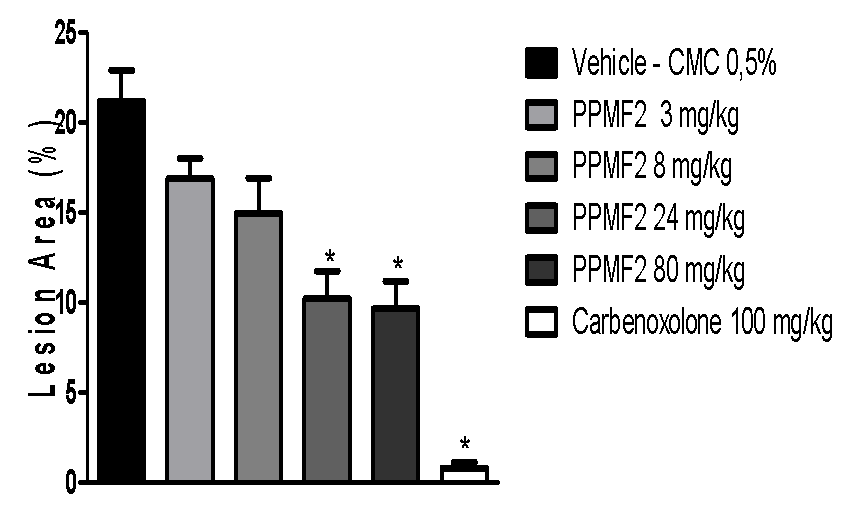
Oral administration of ethanol induced lesions in the form of hemorrhagic erosions in the glandular portion of the gastric mucosa of rats. In the vehicle group (CMC, 0.5%), severe gastric lesions were observed in the mucosa, such as thick linear hemorrhages and hyperemia, with a lesion area (LA) of 21.17 ± 1.73%. The pretreatment with PPMF2 prevented the development of gastric lesion induced by ethanol, significantly decreasing, compared to the vehicle group, at doses of 24 (10.24 ± 1.52%) and 80 mg/kg (9.68 ± 1.52%), whose percentages of were 52% and 54%, there was no significant difference in the reduction of the lesions among such doses. Animals receiving carbenoxolone (100 mg/kg) also had reduced LA (0.83 ± 0.33%) and protection of 96% (Figure 1).

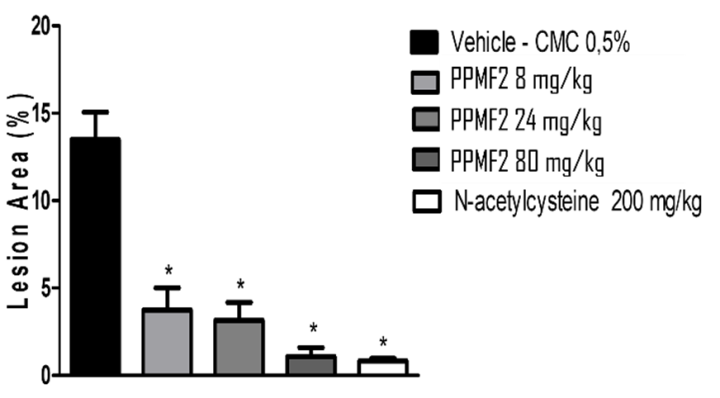
Compared with the vehicle (LA = 13.49 ± 1.57%), the pretreatment with PPMF2 prevented the development of gastric lesions, induced by the ischemia and reperfusion period, promoting a significant reduction of the LA at all doses studied: 8 (3.74 ± 1.27%), 24 (3.15 ± 1.02%) and 80 mg/kg (1.09 ± 0.51%), showing protection of 72, 77 and 92%, respectively, as well as the positive control N-acetylcysteine (LA of 0.83 ± 0.15% and protection of 96%). No significant differences were observed between all doses of PPMF2, as well as between such doses and N-acetylcysteine (p < 0.05) in Figure 2.

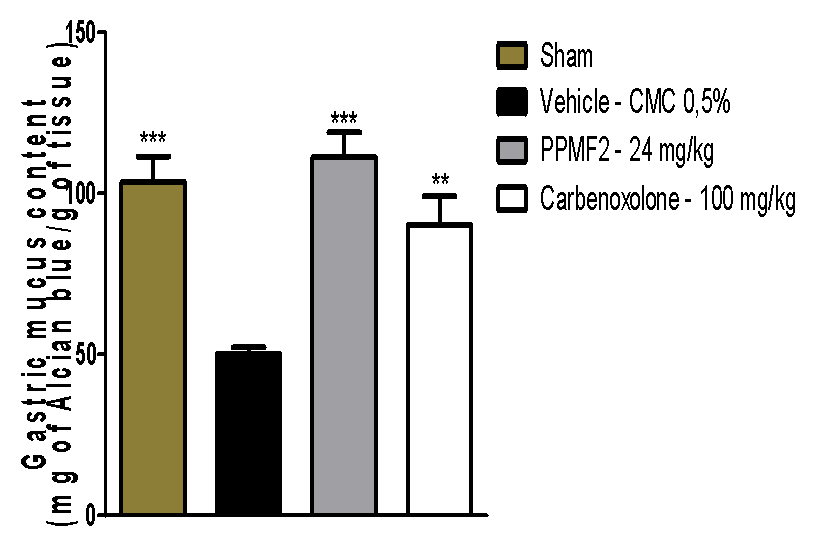
The rats submitted to pylorus ligation and treated with an intraduodenal vehicle, showed a significant reduction of the gastric mucus content (50.20 ± 2.07 μg of Alcian blue/g of tissue), in relation to the group not submitted to pylorus ligation - Sham group (103.5 ± 8.00 μg Alcian blue / g tissue). In contrast, rats treated at intraduodenal with PPMF2 at 24 mg/kg, contents of gastric mucus (111.3 ± 7.80 μg of Alcian blue/g) were significantly higher (p < 0.05), with an increase of 122% in relation to the animals treated with the vehicle. Carbenoxolone significantly increased gastric mucus content by 80% (90.17 ± 8.98 μg of Alcian blue/g, p < 0.05). Significant statistical differences between treatment with PPMF2 (24 mg / kg), carbenoxolone (100 mg / kg) and sham group were not found (p < 0.05) (Figure 3).

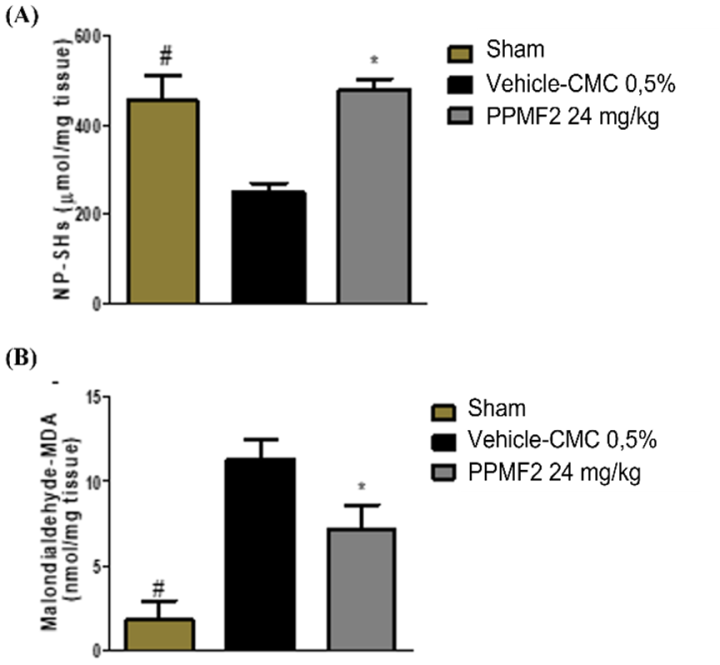
The level of groups SH-NP in the glandular region of the gastric mucosa of untreated and uninjured animals (Sham group) was 455.8 ± 56.31 μg/g tissue. Ethanol administration reduced gastric contents of groups SH-NP in vehicle-pretreated animals (250.3 ± 19.73 μg/g tissue) when compared to the uninjured group. However, pretreatment with PPMF2 (24 mg/kg) was able to maintain SH-NP groups (480.80 ± 22.70 μg/g tissue) at baseline, with a significant increase of 92% when compared with the vehicle. In the study, no statistically significant difference was observed between the group treated with PPMF2 at a dose of 24 mg/kg and the Sham group (p < 0.05) (Figure 4A). The level of MDA of non-injured animals (Sham group) was 1.81 ± 0.42 μM/g tissue. In animals pretreated with vehicle, it was observed that administration of ethanol caused elevation of this level (11.26 ± 0.48 μM/g tissue). However, pretreatment with PPMF2 at a dose of 24 mg/kg significantly (p < 0.05) reduced MDA levels (7.19 ± 0.58 μM/g tissue) in 36% comparing with the vehicle group (Figure 4B).

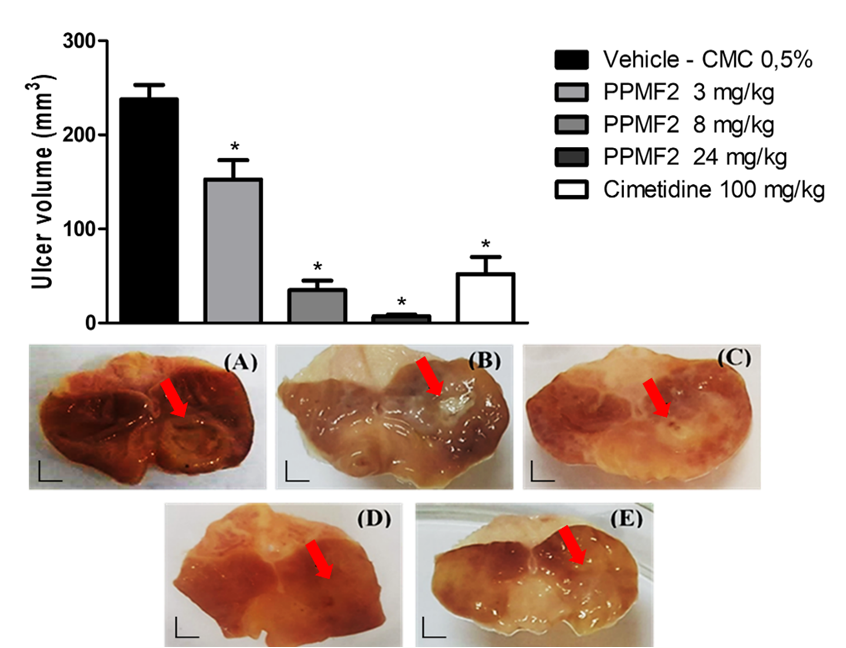
Oral treatment for seven consecutive days with PPMF2 promoted a reduction in the volume of previously induced ulcer and, thus, a greater healing of these ulcers in rats. PPMF2 significantly reduced (p < 0.05) the volume of gastric ulceration, induced by acetic acid, at doses 3 (152.67 ± 20.53 mm3), 8 (34.89 ± 10.36 mm3) and 24 mg/kg (7.09 ± 1.86 mm3), compared to the vehicle - CMC group (237.68 ± 15.47 mm3). Administration of PPMF2 at a dose of 24 mg/kg was found to provide a superior improvement in the 97% reduction/healing percentage of the ulcer resolution process followed by 8 (85%) and 3 mg/kg (36%), as well as cimetidine (78%). In the investigation, statistical similarity was verified between the groups treated with PPMF2 at doses 8 mg/kg and 24 mg/kg and cimetidine 100 mg/kg (Figure 5).

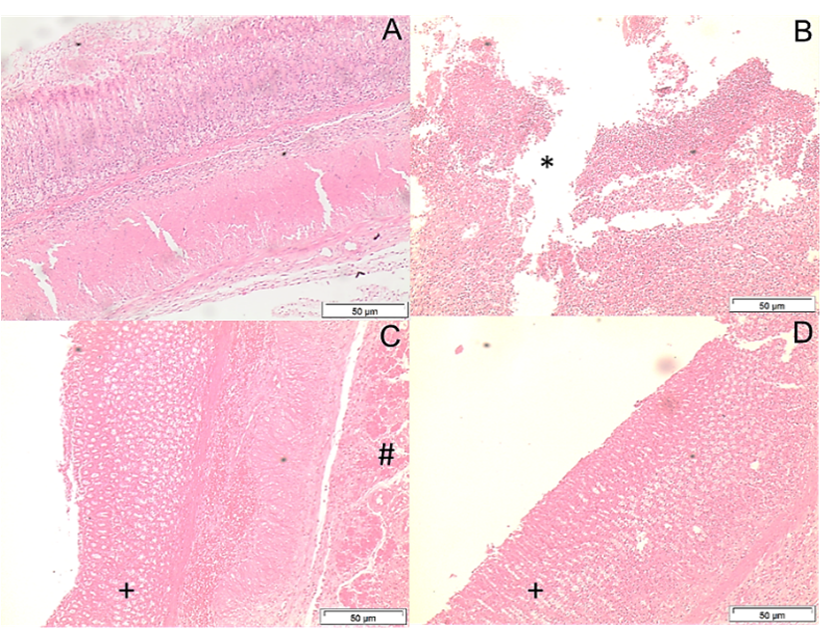
The results of the analysis of the microscopic gastric damage of the animals submitted to the chronic ulcer protocol by acetic acid is shown in Table 3. The examination of gastric sections showed that the application of acetic acid caused deep erosion of surface epithelial cells with intense production of edema, a high presence of inflammatory cells and severe hemorrhage in vehicle-treated animals. The healing effect of PPMF2 treatment was corroborated by the histological analysis. In treated animals, for seven days, PPMF2 (24 mg/kg) showed a reduction of all gastric damage significantly, when compared with vehicle group (p < 0.05). This reduction was also observed in animals treated with cimetidine (Figure 6).

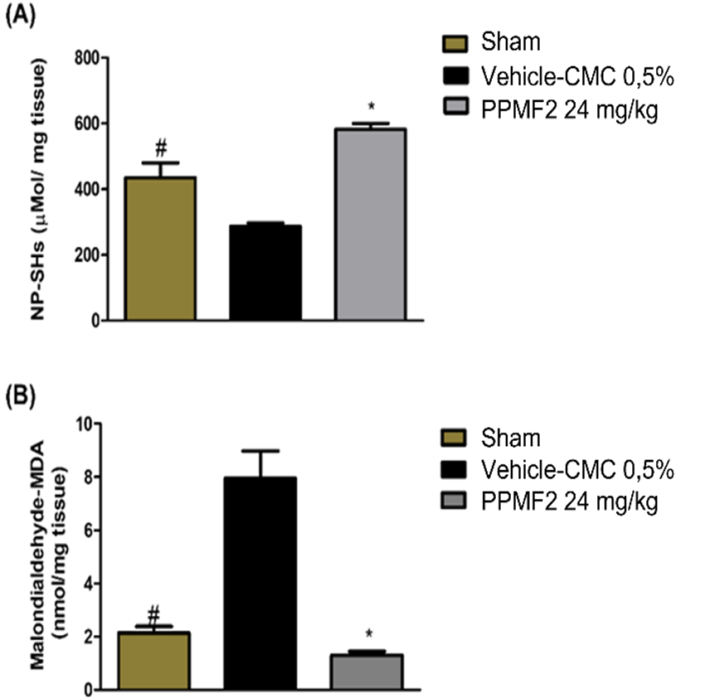
Acetic acid caused a decrease in the gastric content of of non-protein sulfhydryl groups (SH-NP) in the animals treated for seven days with vehicle (286.4 ± 11.22 μg/g tissue) compared to the non-ulcerated group (Sham) 434.8 ± 45.48 μg/g tissue. In contrast, treatment with PPMF2, at the dose of 24 mg/kg, increased the levels of the SH-NP groups (581.5 ± 18.71 μg/g tissue) in 103%, relative to the vehicle; as well as it promoted higher results than the group without ulcer induction (Sham). This treatment with PPMF2 presented a significant difference when compared to the vehicle and also to the Sham group (p < 0.05) (Figure 7A). In the stomachs of rats submitted to treatment for seven days with vehicle after the induction of chronic ulcer by acetic acid, high lipid peroxidation was observed, denoted by the high levels of MDA (7.90 ± 1.01 μM / g of tissue) when compared to animals without ulcer induction (Sham) (2.13 ± 0.24 μM / g tissue). Treatment with PPMF2, at a dose of 24 mg / kg, promoted a significant reduction in the level of MDA (1.30 ± 0.15 μM/g tissue) in 84%, when compared to the vehicle group; resulting in a decrease in MDA levels to values similar to those in the sham group (p < 0.05) (Figure 7B).

There are few data in the literature on the antioxidant activity of pollen synthesized and stored by stingless bees (pot-pollen), especially from species of the genus Melipona. The values of antioxidant activity found in this study were higher than those obtained by reference 30, whereby pollen from three species of stingless bees from Malaysia (Trigona toracica, Trigona itama and Trigona apicalis) showed percentages of DPPH inhibition of, respectively, 6.7%, 14.3% and 39%. The reference 31 shows pot-pollen from M. rufiventris, found antioxidant activity of 50% inhibition of DPPH. The bee pollen collected in different seasons and regions may exhibit distinct antioxidant capacity; the same holds true for bee bread and pot-pollen 32. The determination of the antioxidant capacity is strongly influenced by the experimental conditions and heterogeneity of the matrix 33, which may hinder the comparison between results.
In the present study, the quantitative and qualitative phenolic profile analyses were carried out using high- efficiency liquid chromatography (HPLC) and high-efficiency liquid chromatography coupled to mass spectrometry (MS/MS), pot-pollen M. compressipes fasciculata collected in the rainy and dry season. As for the phenolic compounds that were investigated and quantified through these analyses, it was verified that the sample collected in the dry season (PPMF2) showed a larger sum of these (Table 4). This variation can be correlated with the fact that phenolics are secondary plant metabolites associated to the protection and elevation of plant survival, with increased biosynthesis under different environmental factors and in response to stress conditions (such as water) and the addition of UV radiation 34.
For the class of phenolic compounds investigated in the research, the phenolic acids were the major ones. In relation to these, the p-hydroxybenzoic and protocatechuic acids followed by the syringe were the most prevalent. Among the constituents of bee pollen, the following phenolic acids and their esters have already been described: benzoic acid derivatives (gallic acid, p-hydroxybenzoic acid, vanillic acid, succinic and protocatechuic acid) and cinnamic acid derivatives (ferulic acid, p-coumaric acid, caffeic acid and its glycerol esters). Other derivatives, such as rosmarinic acid dihexoside, were also found 35.
In the present work, the following flavonoids were detected: myricetin, rutin, quercetin, isoquircetin, quercitrin and naringenin. In other studies, several phenolics such as quercetin, rutin, kaempferol have been described as the most abundant in bee pollen samples from different countries 36. In the study of investigation of the chemical composition of beebread, the authors identified by HPLC method, the chemical substances: quercetin, naringenin, kaempferol, apigenin and isorhamnetin 37.
The phenolic profile of the bread of bee is equal to the pollen of the corresponding flora (collected manually) and to bee pollen 38. Despite the current biochemical transformations during the fermentation process inside the hive, it appears that these phenolic compounds are unaffected and remain unchanged and preserved. Of the compounds present in pollen and bee bread, phenolics form an important group of bioactive structures and are useful in several applications 39. These compounds are described as the main bioactive agents in bee pollen. It is known that phenolic compounds trigger antioxidant activities, acting as free radical scavengers, and may reduce the risk of various pathologies 40. The phenolic compounds have antiulcerogenic effects related to cytoprotective activity, such as phenolic acids, caffeic acid, p-coumaric acid, cinnamic acids, among others 41. The protocatecous acid also has cyproprotective and gastroprotective activity 42. Certain flavonoids have also demonstrated antiulcerogenic and gastric lesion prevention actions in in vivo experimental models such as rutin, naringenin, quercetin, kaempferol, among others 43, 44.
Thus, due to the rich phenolic composition and other bioactive compounds reported in the pollen literature collected and stored by bees, and the lack of research on the effects of pot-pollen produced by stingless bee M. compressipes fasciculata on the gastric mucosa, the gastroprotective activity of this product in rats was investigated in this study.
Initially, the ability of M. compressipes fasciculata pot-pollen (PPMF2) to protect the gastric mucosa against lesions induced by absolute ethanol was investigated. In this study, the experimental results demonstrated that the administration of a single dose by gavage caused marked damage to the gastric mucosa of rats, especially characterized by macroscopic elongated lesions with intense hyperemia and bleeding, similar to the effect verified by other authors 45, 46. Acute gastric lesions by ethanol in experimental animals are the most used model in the preclinical evaluation of substances with potential gastroprotective effects, since ethanol has been considered as one of the main ulcerogenic agents in humans. Its use in animals enables the analysis of the cytoprotective activity of potentially active products 46.
Because it is a direct acting necrotizing agent, ethanol changes protective factors and causes lesions in the gastric mucosa due to the rupture of the muco-bicarbonate barrier, disorders in the microcirculation and ischemia, with consequent high production of reactive oxygen species (ROS). Thus, there is an increase in oxidative stress and lipid peroxidation, reduction of glutathione (GSH) and activation of inflammatory signaling pathways 47, 48. In this work, pretreatment with PPMF2 inhibited the development of gastric lesions induced by absolute ethanol, suggesting a possible cytoprotective action.
The antioxidant action is one of the most important mechanisms of gastric protection, which motivated the investigation also to the protocol of acute lesions induced by ischemia-reperfusion (I/R). The I/R gastric lesion model is used to analyze the response of products in ulcerogenic processes without the use of chemical agents, pathogens or somatic stress, isolating the ulcerative factors pertinent to free radicals developed by vascular and inflammatory events 49, 50. Ischemia alone is capable of injuring the gastric mucosa; however, it is after reoxygenation (reperfusion) that the most damaging events occur, with the lesion content increasing by approximately three-fold, compared to those caused by ischemia 51.
The experimental data evidenced the presence of damage in the glandular portion of the stomachs of the rats after the ischemia and reperfusion processes, which were significantly decreased with the PPMF2 pretreatment. It is known that both the ischemia/ reperfusion-induced gastric injury model and ethanol are directly linked to the release of ROS, which causes oxidative damage in cellular biomacromolecules and that can lead to apoptosis and tissue damage 52, 53. Thus, the action of PPMF2 to prevent the development of gastric lesions in this model by I/R, thus exhibiting gastroprotective activity, denotes antioxidant or sequestering action of EROs.
Interestingly, the treatment with PPMF2 prior to the injury induction during the I/R period promoted effects with no significant difference in relation to N-acetylcysteine, a potent antioxidant with proven action. An effect similar to that promoted by N-acetylcysteine (200 mg/kg) was observed even with pretreatment with PPMF2 at the lowest dose studied (8 mg/kg), a dose that is considerably lower than that of N-acetylcysteine.
The mucus wall that lines the gastric mucosa acts as a physical barrier against the aggressive action of gastric acid secretion. Mucus also has antioxidant action, so weakening of the mucus barrier is directly responsible for gastric lesions 54. In the present study, treatment with PPMF2 at a dose of 24 mg/kg, elevated the mucus content in the gastric mucosa in the protocol of ligature of the pylorus (in relation to the vehicle group), which suggests that the PPMF2 protects the gastric mucosa by increasing this important antioxidant and cytoprotective agent. Interestingly, it has also been found that this treatment with PPMF2 promoted results similar to those obtained with treatment with carbenoxolone (standard drug that stimulates mucus secretion) at a dose of 100 mg/kg, although the PPMF2 dose is about four times lower, corroborating the gastroprotective effect of PPMF2 and evidencing its pharmacological potentiality.
In this context, antioxidants and free radical scavengers have been identified as inhibitors of oxidative stress and, consequently, of the progression of lipid peroxidation. Studies have showed that substances with antioxidant properties may act as defenders of the gastric mucosa in various models of lesion or ulcer induction 55, 56, 57. In the present research, it was first analyzed whether PPMF2 would be able to sequester free radicals in an in vitro model through the use of DPPH radicals, as well as investigations on total phenolic content and analysis of detection and identification of these phenomena. The pot-pollen has been shown to have an antioxidant capacity in vivo and in vitro, as well as the presence of phenolic acids and antioxidant flavonoids that have already had reported gastroprotective action, such as caffeic acid, quercetin, myricetin, rutin and naringenin 43, 44. Thus, because of these characteristics, administration of PPMF2 in this study has possibly promoted improvements in cellular antioxidant defenses, which may increase the gastroprotective effect of this product against induced lesions in rats.
Since PPMF2 showed antioxidant effect in vitro and subsequent to the proving of gastroprotective activity in models of lesions induced by absolute ethanol, it was interesting to find out whether the mechanism of action was related to cellular antioxidant defenses. The participation of non-protein sulfhydryl groups (SH-NP) and the involvement of lipid peroxidation (MDA) were evaluated. In these approaches, PPMF2 was used at a dose of 24 mg/kg, which was the lowest effective dose in the model of gastric injury induced by absolute ethanol.
The gastric mucosa has high levels of reduced glutathione representing the main component of the non-protein sulfhydryl groups (SH-NP). Oral administration of ethanol decreases SH-NP levels in the mucosa 58. This reduction may be related to its binding with acetaldehyde (produced by the enzyme alcohol dehydrogenase), oxidation by toxic metabolites of ethanol and also by the reduction of GSH production 59.
These SH-NP groups participate in mucosal protection by the effect of binding to free radicals and by forming disulfide bonds between the mucus subunits, in order to avoid their dissociation. Hence, the depletion of these groups seems to be involved in the formation of the lesion 60, 61. They are important in the reduction of oxidative stress and peroxides, protecting proteic cellular structures 62, 63. Thus, they constitute an important component of intracellular defense mechanisms and maintenance of the antioxidant balance against noxious stimuli.
In the research, it was verified that the administration of absolute ethanol caused a decrease in the levels of non-protein sulfhydryl groups (SH-NP); on the other hand, pretreatment with PPMF2 was able to maintain these normal levels, promoting a significant increase when compared to the vehicle. This increase in SH-NP levels may be responsible for the gastroprotective action of PPMF2, causing potentiation of the endogenous antioxidant defense and reduction of oxidative stress damage generated by the administration of absolute ethanol.
One of the main implications of the release of ROS is the production of lipid peroxides that cause damage to biological membranes 53. Malondialdehyde (MDA) is the metastable end-product of lipid peroxidation, and its plasma levels have been added after this process 64. MDA is used to evaluate levels of lipid peroxidation; the existence of a relationship between gastric ulcer and the increase in MDA levels is suggested and an increase in its production after ethanol-induced tissue injury has been reported 65. Antioxidants are capable of both decreasing lipid peroxidation and capturing free oxygen radicals, and thus are likely to serve as antiulcer agents 66. In the present study, PPMF2 was able to significantly reduce lipid peroxidation as measured by MDA (marker of oxidative stress). This suggests that PPMF2 acts as a sequester of ROS, since it was able to protect the gastric mucosa against lipid peroxidation induced by absolute ethanol, thus exhibiting gastroprotective activity possibly related to elevation of the antioxidant effect.
After the observation of the preventive effect of PPMF2 on acute gastric ulcer models and with the purpose of better understanding this gastroprotective effect, the cicatrizant activity was evaluated against the chronic ulcer model induced by acetic acid. Gastric ulcers in this model exhibit many similarities to those observed in humans, in terms of pathological aspects, as well as in the healing processes, the difficulty of treatment and an extended period of cure 67. In general, healing of gastric ulcers is a multifactorial process involving stages such as cell proliferation, migration, differentiation and regeneration, angiogenesis and deposition of the extracellular matrix, leading to the development of a scar. These processes are orchestrated by multiple hormones, cytokines, transcription and growth factors 68. The re-epithelialization stage (migration of ulcer margin epithelial cells to restore epithelial continuity) begins three days after the ulcer induction and is essential for the healing of gastric ulcers, as this continuous epithelial barrier protects tissue from granulation against injuries and infections 69. The quality of ulcer healing is a key point in the pathogenesis of gastric ulcers, since abnormalities in mucosal regeneration within cicatrized ulcer scars have been reported, as well as the continuation of chronic inflammation evidenced by the presence of increased infiltration of macrophages and neutrophils, these processes being the basis for ulcer recurrence. Thus, the search for new therapeutic agents should also focus on improving this quality of healing 70.
The results of the present study showed that the treatment with PPMF2 for seven days significantly reduced the volume of gastric ulcer induced by acetic acid, promoting improvement in the healing response. This healing action of PPMF2 was provided even at a low dose (3 mg/kg). Interestingly, the healing effect of cimetidine (reference drug used and widely used clinically for the treatment of gastric ulcers) at a dose of 100 mg/kg showed no significant difference in the effect promoted by PPMF2 (at doses of 8 and 24 mg/kg), although these doses are considerably smaller. PPMF2 (at a dose of 24 mg/kg) also resulted in a regression of the microscopic gastric damage ascertained and induced by the direct application of acetic acid, causing gastric mucosal patterns similar to normal, corroborating its healing effect. Thus, these results indicate that PPMF2 modulates protective factors of the gastric mucosa, with healing effects on the pre-existing ulcers, being a product that can be used in the treatment of gastric ulcers.
In order to identify the possible signs of toxicity or side effects of PPMF2 on the general physiological function, behavioral follow-up of the animals during the course of the protocol of chronic gastric ulcer induced by acetic acid was verified, being verified absence of mortality, of any abnormalities or signs of toxicity. The evaluations of body weight gain and absolute body weight were also performed. All animals gained weight, with no statistical difference between the groups, and had organs with weights within the normal range for rats, indicating that the treatment with pot-pollen did not cause changes.
The use of acetic acid in the gastric mucosa induces the appearance of the gastric ulcer resulting from the oxidative stress, indicated by the reduction of the level of SH-NP groups and elevation of the lipid peroxidation evidenced by the increase of MDA 71. As discussed, antioxidant compounds are useful in the defense of the gastric mucosa against oxidative stress 61. Thus, it was evaluated whether the healing effect of PPMF2 administered seven days after the induction of chronic ulcer by acetic acid was also related to the endogenous antioxidant system. For this purpose, the gastric tissue of rats treated with PPMF2 at a dose of 24 mg/kg was used, since this dose was the highest healing index (97%).
The continuous treatment (for seven days) with PPMF2 increased considerably, relative to the vehicle, the content of the non-protein sulfhydryl groups, depleted by the elevation of ROS generated by the direct application of acetic acid to the gastric mucosa. Interestingly, this treatment with PPMF2 also promoted levels of SH-NP groups higher than those of the non-ulcerated group. These findings suggest that PPMF2 acts on the potentiation of the antioxidant system, promoting conditions that are more conductive to the healing and healing processes, since SH-NP groups are able to bind to reactive free radicals blocking their deleterious effects 60.
It was also found that this administration of PPMF2 significantly reduced the lipid peroxidation caused by the acetic acid ulcer and evidenced by the levels of the oxidative stress marker (MDA), suggesting action against ROS. Positively also, this treatment with PPMF2 promoted levels of MDA similar to those found in non-ulcerated animals, corroborating that PPMF2 acts as an antioxidant and strengthens the body's defenses. Similarly, bee pollen from Cairo and Egypt led to a significant decrease in malonaldehyde (MDA), as well as a notable increase in the levels of superoxide dismutase (SOD) and glutathione (GSH) in the blood and brain of rats, an antioxidant system against the toxicity of sodium fluoride 72.
Comparatively, these results with treatment for seven days post gastric ulcer induction were even more expressive than those found for these same single-dose pretreatment analyses in the absolute ethanol induction model, denoting that the administration of pot-pollen from M. compressipes fasciculata (PPMF2) in a continuous way is able to potentiate its gastroprotective effects.
The pot-pollen of M. compressipes fasciculata analyzed presents antioxidant activity in vitro (PPMF1 - 62.93 ± 0.51% elimination of the DPPH radical; PPMF2 - 58.86 ± 1.10% elimination of the DPPH radical), as well as the presence of phenolics with proven in PPMF2, possibly be involved in the antioxidant (increasing gastric contents of groups SH-NP and promoted a significant reduction in the level of MDA) and gastroprotective and ulcer healing activities (in the lesions gastric protocol induced by etanol, ischemia/reperfusion and acetic acid) possibly by mechanisms of potentiation of the antioxidant system, negative modulation of inflammation and restoration of the gastric mucosa with increased mucus production. Thus, pot-pollen, in addition to the already known nutritional constituents, presents several bioactive substances with potential antiulcerogenic effect, being a source of potential new antiulcerogenic products.
The researchers gratefully acknowledges the support of Higher Education Personnel Improvement Coordination (CAPES) and National Council for Scientific and Technological Development (CNPQ) for encouraging, with financial and technological help, the master's and doctoral programs of the Nucleus for Research in Medicinal Plants-UFPI.
| [1] | Idris, S., Mishra, A., Khushtar, M. Phytochemical Estimation and Therapeutic Amelioration of Aesculus hippocastanum L. Seeds Ethanolic Extract in Gastric Ulcer in Rats Possibly by Inhibiting Prostaglandin Synthesis. Chinese Journal of Integrative Medicine, 2023. | ||
| In article | View Article PubMed | ||
| [2] | Sales, I.R.P., Formiga, R.O., Machado, F.D.F., Nascimento, R.F., Pessoa, M.M.B., Barrosa, M.E.F.X., Vieira, G.C., Gadelha, F.A.A.F., Marinho, A.F., Barbosa Filho, J.M., Raimundo Júnior, F.A., Antunes, A.A., Batista, L.M. Cytoprotective, antioxidant and anti-inflammatory mechanism related to antiulcer activity of Cissampelos sympodialis Eichl. in animal models. Journal of Ethnopharmacology, 222, 190-200. 2018. | ||
| In article | View Article PubMed | ||
| [3] | Yibirin, M., De Oliveira, D., Valera, R., Plitt, A.E., Lutgen, S. Adverse Effects Associated with Proton Pump Inhibitor Use. Cureus, 13, e12759. 2021. | ||
| In article | View Article | ||
| [4] | Boutemine, I. M., Amri, M., Amir, Z. C., Fitting, C., Mecherara-Idjeri, S., Layaida, K., Sennoun, N., Berkane, S., Cavaillon, J. M., Touil-Boukoffa, C. Gastro-protective, therapeutic and anti-inflammatory activities of Pistacia lentiscus L. fatty oil against ethanol-induced gastric ulcers in rats. Journal of Ethnopharmacology, 224, 273-282. 2018. | ||
| In article | View Article PubMed | ||
| [5] | Karkar, B., Şahin, S., Güneş, M. E. Antioxidative effect of turkish chestnut bee pollen on DNA oxidation system and its phenolic compounds. GIDA/The Journal of FOOD, 43, 34-42. 2018. | ||
| In article | View Article | ||
| [6] | Lychkova, A. E., Kasyanenko, V. I., Puzikov, A. M. Gastroprotective effect of honey and bee pollen. Eksperimental'naia i klinicheskaia gastroenterologiia= Experimental & Clinical Gastroenterology, 9, 72-74. 2014. | ||
| In article | |||
| [7] | Pascoal, A., Rodrigues, S., Teixeira, A., Feás, X., Estevinho, L. M. Biological activities of commercial bee pollens: Antimicrobial, antimutagenic, antioxidant and anti-inflammatory. Food and Chemical Toxicology, 63, 233-239. 2014. | ||
| In article | View Article PubMed | ||
| [8] | Zuluaga, C. M., Serrato, J. C., Quicazán, M. C. Valorization alternatives of colombian bee pollen for Its use as food resource - A structured review. Vitae. 21, 237-247. 2014. | ||
| In article | View Article | ||
| [9] | Vit, P., Pedro, S. R., Roubik, D. W. Pot-Pollen in Stingless Bee Melittology, 2018 (481), March 2018 [Online]. | ||
| In article | View Article | ||
| [10] | Tomás, A., Falcão, S. I., Russo-Almeida, P., Vilas-Boas, M. Potentialities of beebread as a food supplement and source of nutraceuticals: Botanical origin, nutritional composition and antioxidant activity. Journal of Apicultural Research, 56, 219-230. 2017. | ||
| In article | View Article | ||
| [11] | Kerr, W. E., Carvalho, G. A., Nascimento, V. A. Abelha uruçu: biologia, manejo e conservação, 2, Fundação Acangaú. 1996. | ||
| In article | |||
| [12] | Kieliszek, M., Piwowarek, K., Kot, A. M., Błażejak, S., Chlebowska-Śmigiel, A., Wolska, I. Pollen and bee bread as new health-oriented products: A review. Trends in Food Science & Technology, 71, 170-180. 2018. | ||
| In article | View Article | ||
| [13] | Devi, A., Kumar, N.R., Kaur, J. Evaluation of the antioxidative potential of bee products: pollen and bee bread against Staphylococcus aureus infected Balb/c mice. Journal of Chemical and Pharmaceutical Research, 4, 1-5. 2016. | ||
| In article | |||
| [14] | Bobiş, O., Dezmirean, D., Mărghitaş, L.A., Bonta, V., Mărgăoan, R., Paşca, C., Urcan, A., Singh Bandhari, P. Beebread from Apis mellifera and Apis dorsata. Comparative Chemical Composition and Bioactivity. Bulletin of the University of Agricultural Sciences & Veterinary Medicine Cluj-Napoca. Animal Science & Biotechnologies, 74. 2017. | ||
| In article | View Article | ||
| [15] | Bogdanov S. Pollen: production, nutrition and health: a review. Bee Product Science. 3, 1-36. 2017. [Online]. Available: http://www.bee-hexagon.net/files/file/fileE/Health/PollenBook2Review.pdf/. [Accessed October 30, 2018]. | ||
| In article | |||
| [16] | Bakour, M., Fernandes, Â., Barros, L., Sokovic, M., Ferreira, I. C. Bee bread as a functional product: Chemical composition and bioactive properties. LWT, 19.2019. | ||
| In article | View Article | ||
| [17] | Urcan, A., Mărghitaș, L. A., Dezmirean, D. S., Bobiș, O., Bonta, V., Mureșan, C. I., Mărgăoan, R. Chemical Composition and Biological Activities of Beebread-Review. Bulletin of the University of Agricultural Sciences & Veterinary Medicine Cluj-Napoca. Animal Science & Biotechnologies, 74(1). 2017. | ||
| In article | |||
| [18] | Martínez-Casas, L., Lage-Yusty, M., & López-Hernández, J. Changes in the aromatic profile, sugars, and bioactive compounds when purple garlic is transformed into black garlic. Journal of Agricultural and Food Chemistry, 65(49), 10804-10811. 2017. | ||
| In article | View Article PubMed | ||
| [19] | Quirós, A.R.B., Lage-Yusty, M.A., López-Hernández, J. HPLC-analysis of polyphenolic compounds in Spanish white wines and determination of their antioxidant activity by radical scavenging assay. Food Research International, 42(8), 1018-1022. 2009. | ||
| In article | View Article | ||
| [20] | Robert, A., Nezamis, J.E., Lancaster, C., Hanchar, A.J. Cytoprotection by prostaglandins in rats: Prevention of gastric necrosis produced by alcohol, HCl, NaOH, hypertonic NaCl, and thermal injury. Gastroenterology, 77(3), 433-443. 1979. | ||
| In article | View Article PubMed | ||
| [21] | Bhargava, K.P., Gupta, M.B., Tangri, K.K. Mechanism of ulcerogenic activity of indomethacin and oxyphenbutazone. European Journal of Pharmacology, 22, 191-195. 1973. | ||
| In article | View Article PubMed | ||
| [22] | Ueda, S., Okada, Y. Acid secretagogues induce Ca2+ mobilization coupled to K+ conductance activation in rat parietal cells in tissue culture. Biochimica et Biophysica Acta (BBA)-Molecular Cell Research, 1012, 254-260. 1989. | ||
| In article | View Article | ||
| [23] | Visscher, F.E., Seay, P.H., Tazelaar, A.P., Veldkamp, W., Vander Brook, M.J. Pharmacology of pamine bromide. Journal of Pharmacology and Experimental Therapeutics, 110, 188-204. 1954. | ||
| In article | |||
| [24] | Corne, S.J., Morrisey, S.M., Woods, R.J. A method for the quantitative estimation of gastric barrier mucus. Journal of Physiology, 242, 116-117. 1974. | ||
| In article | |||
| [25] | Okabe, S., Pfeiffer, C.J. Chronicity of acetic acid ulcer in the rat stomach. The American Journal of Digestive Diseases, 17, 619-629. 1972. | ||
| In article | View Article PubMed | ||
| [26] | Potrich, F.B., Allemand, A., Da Silva, L.M., Dos Santos, A.C., Baggio, C.H., Freitas, C.S., Mendes, D.A.G.B., Andre, E., Werner, M.F.P., Marques, M. C. A. Antiulcerogenic activity of hydroalcoholic extract of Achillea millefolium L.: involvement of the antioxidant system. Journal of Ethnopharmacology, 130, 85-92. 2010. | ||
| In article | View Article PubMed | ||
| [27] | Mahmoud, Y.I., El-Ghffar, E.A.A. Spirulina ameliorates aspirin-induced gastric ulcer in albino mice by alleviating oxidative stress and inflammation. Biomedicine & Pharmacotherapy, 109, 314-321. 2019. | ||
| In article | View Article PubMed | ||
| [28] | Sedlak, J., Lindsay, R.H. Estimation of total, protein-bound, and nonprotein sulfhydryl groups in tissue with Ellman's reagent. Analytical Biochemistry, 25, 192-205.1968. | ||
| In article | View Article PubMed | ||
| [29] | Ohkawa, H., Ohishi, N., Yagi, K. Assay for lipid peroxides in animal tissues by thiobarbituric acid reaction. Analytical Biochemistry, 95, 351-358. 1979. | ||
| In article | View Article PubMed | ||
| [30] | Nurdianah, H. F., Firdaus, A. A., Azam, O. E., Adnan, W.W. Antioxidant activity of bee pollen ethanolic extracts from Malaysian stingless bee measured using DPPH-HPLC assay. International Food Research Journal, 23, 403-405, 2016. | ||
| In article | |||
| [31] | Silva, T., Camara, C.A., Lins, A., Agra, M.D.F., Silva, E., Reis, I.T., Freitas, B.M. Chemical composition, botanical evaluation and screening of radical scavenging activity of collected pollen by the stingless bees Melipona rufiventris (Uruçu-amarela). Anais da Academia Brasileira de Ciências, 81, 173-178. 2009. | ||
| In article | View Article PubMed | ||
| [32] | Leja, M., Mareczek, A., Wyżgolik, G., Klepacz-Baniak, J., Czekońska, K. Antioxidative properties of bee pollen in selected plant species. Food Chemistry, 100, 237-240. 2007. | ||
| In article | View Article | ||
| [33] | Sakanaka, S., Ishihara, Y. Comparison of antioxidant properties of persimmon vinegar and some other commercial vinegars in radical-scavenging assays and on lipid oxidation in tuna homogenates. Food Chemistry, 107, 739-744. 2008. | ||
| In article | View Article | ||
| [34] | Caliskan, O., Radusiene, J., Temizel, K.E., Staunis, Z., Cirak, C., Kurt, D., Odabas, M.S. The effects of salt and drought stress on phenolic accumulation in greenhouse-grown Hypericum pruinatum. Italian Journal of Agronomy, 12. 2017. | ||
| In article | View Article | ||
| [35] | Kocot, J., Kiełczykowska, M., Luchowska-Kocot, D., Kurzepa, J., Musik, I. Antioxidant potential of propolis, bee pollen, and royal jelly: Possible medical application. Oxidative Medicine and Cellular Longevity, 2018, 1-29. 2018. | ||
| In article | View Article PubMed | ||
| [36] | Ares, A.M., Valverde, S., Bernal, J.L., Nozal, M.J., Bernal, J. Extraction and determination of bioactive compounds from bee pollen. Journal of Pharmaceutical and Biomedical Analysis, 147, 110-124. 2018. | ||
| In article | View Article PubMed | ||
| [37] | Isidorov, V.A., Isidorova, A.G., Sczczepaniak, L., Czyżewska, U. Gas chromatographic–mass spectrometric investigation of the chemical composition of beebread. Food Chemistry, 115, 1056-1063. 2009. | ||
| In article | View Article | ||
| [38] | Urcan, A., Criste, A., Dezmirean, D., Mărgăoan, R., Caeiro, A., Graça Campos, M. Similarity of Data from Bee Bread with the Same Taxa Collected in India and Romania. Molecules, 23, 2491. 2018. | ||
| In article | View Article PubMed | ||
| [39] | Negri, G., Barreto, L.M.R.C., Sper, F.L., Carvalho, C.D., Campos, M.D.G.R. Phytochemical analysis and botanical origin of Apis mellifera bee pollen from the municipality of Canavieiras, Bahia State, Brazil. Brazilian Journal of Food Technology, 21, 1-17. 2018. | ||
| In article | View Article | ||
| [40] | Mărghitaş, L.A., Stanciu, O.G., Dezmirean, D.S., Bobiş, O., Popescu, O., Bogdanov, S., Campos, M.G. In vitro antioxidant capacity of honeybee-collected pollen of selected floral origin harvested from Romania. Food Chemistry, 115, 878-883. 2009. | ||
| In article | View Article | ||
| [41] | Barros, M.P., Lemos, M., Maistro, E.L., Leite, M.F., Sousa, J.P.B., Bastos, J.K., de Andrade, S.F. Evaluation of antiulcer activity of the main phenolic acids found in Brazilian Green Propolis. Journal of Ethnopharmacology, 120, 372-377. 2008. | ||
| In article | View Article PubMed | ||
| [42] | Kakkar, S., Bais, S.A review on protocatechuic acid and its pharmacological potential. ISRN Pharmacology, 2014, 1-9. 2014. | ||
| In article | View Article PubMed | ||
| [43] | La Casa, C., Villegas, I., De La Lastra, C.A., Motilva, V., Calero, M.M. Evidence for protective and antioxidant properties of rutin, a natural flavone, against ethanol induced gastric lesions. Journal of Ethnopharmacology, 71, 45-53. 2000. | ||
| In article | View Article PubMed | ||
| [44] | Kahraman, A., Erkasap, N., Köken, T., Serteser, M., Aktepe, F., Erkasap, S. The antioxidative and antihistaminic properties of quercetin in ethanol-induced gastric lesions. Toxicology, 183, 133-142. 2003. | ||
| In article | View Article PubMed | ||
| [45] | Yang, J., Zhou, W., Gu, Y., Dai, J., Li, X., Tai, P., Li, Y., Ma, X., & Zhang, Y. Protective effect of Pu-erh tea extracts against ethanol-induced gastric mucosal damage in rats. Biomedical Reports, 8, 335-342. 2018. | ||
| In article | View Article | ||
| [46] | Souza, M.C., Vieira, A.J., Beserra, F.P., Pellizzon, C.H., Nóbrega, R.H., Rozza, A. L. Gastroprotective effect of limonene in rats: influence on oxidative stress, inflammation and gene expression. Phytomedicine, 53, 37-42. 2019. | ||
| In article | View Article PubMed | ||
| [47] | Rujjanawate, C., Kanjanapothi, D., Amornlerdpison, D., Pojanagaroon, S. Anti-gastric ulcer effect of Kaempferia parviflora. Journal of ethnopharmacology, 102, 120-122. 2005. | ||
| In article | View Article PubMed | ||
| [48] | Chauhan, A.K., Kang, S.C. Therapeutic potential and mechanism of thymol action against ethanol-induced gastric mucosal injury in rat model. Alcohol, 49, 739-745. 2015. | ||
| In article | View Article PubMed | ||
| [49] | Zimmerman, B.J. Oxygen free radicals and the gastrointestinal tract: role of ischemia-reperfusion injury. Hepatogastroenterology, 41, 337-342.1994. | ||
| In article | |||
| [50] | Granger, J.P., Alexander, B.T., Llinas, M.T., Bennett, W.A., Khalil, R.A. Pathophysiology of hypertension during preeclampsia linking placental ischemia with endothelial dysfunction. Hypertension, 38, 718-722. 2001. | ||
| In article | View Article PubMed | ||
| [51] | Kitano, H., Nishimura, H., Tachibana, H., Yoshikawa, H., Matsuyama, T. ORP150 ameliorates ischemia/reperfusion injury from middle cerebral artery occlusion in mouse brain. Brain Research, 1015, 122-128. 2004. | ||
| In article | View Article PubMed | ||
| [52] | Ibrahim, M., Hassan, W., Meinerz, D.F., de Oliveira Leite, G., Nogueira, C.W., Rocha, J.B. Ethanol-induced oxidative stress: the role of binaphthyl diselenide as a potent antioxidant. Biological Trace Element Research, 147, 309-314. 2012. | ||
| In article | View Article PubMed | ||
| [53] | Yeo, D., Hwang, S.J., Kim, W.J., Youn, H.J., Lee, H.J. The aqueous extract from Artemisia capillaris inhibits acute gastric mucosal injury by inhibition of ROS and NF-kB. Biomedicine & Pharmacotherapy, 99, 681-687. 2018. | ||
| In article | View Article PubMed | ||
| [54] | Sidahmed, H.M.A., Vadivelu, J., Loke, M.F., Arbab, I.A., Abdul, B., Sukari, M.A., Abdelwahab, S.I. Anti-ulcerogenic activity of dentatin from clausena excavata Burm. f. against ethanol-induced gastric ulcer in rats: Possible role of mucus and anti-oxidant effect. Phytomedicine, 55, 31-39. 2019. | ||
| In article | View Article PubMed | ||
| [55] | Ligumsky, M., Sestieri, M., Okon, E., Ginsburg, I. Antioxidants inhibit ethanol-induced gastric injury in the rat: role of manganese, glycine, and carotene. Scandinavian Journal of Gastroenterology, 30, 854-860. 1995. | ||
| In article | View Article PubMed | ||
| [56] | Dekanski, D., Ristić, S., Mitrović, D.M. Antioxidant effect of dry olive (Olea europaea L.) leaf extract on ethanol-induced gastric lesions in rats. Mediterranean Journal of Nutrition and Metabolism, 2, 205-211, 2009. | ||
| In article | View Article | ||
| [57] | Neamati, S., Alirezaei, M., Kheradmand, A. Ghrelin acts as an antioxidant agent in the rat kidney. International Journal of Peptide Research and Therapeutics, 17, 239. 2011. | ||
| In article | View Article | ||
| [58] | Szabo, S., Trier, J.S., & Frankel, P.W. Sulfhydryl compounds may mediate gastric cytoprotection. Science, 214, 200-202. 1981. | ||
| In article | View Article PubMed | ||
| [59] | Bilici, D., Süleyman, H., Banoğlu, Z.N., Kiziltunç, A., Avci, B., Çiftçioğlu, A., Bilici, S. Melatonin prevents ethanol-induced gastric mucosal damage possibly due to its antioxidant effect. Digestive Diseases and Sciences, 47, 856-861. 2002. | ||
| In article | View Article PubMed | ||
| [60] | Avila, J.R., De La Lastra, C.A., Martín, M.J., Motilva, V., Luque, I., Delgado, D., Esteban, J., Herrerias, J. Role of endogenous sulphydryls and neutrophil infiltration in the pathogenesis of gastric mucosal injury induced by piroxicam in rats. Inflammation Research, 45(2), 83-88. 1996. | ||
| In article | View Article PubMed | ||
| [61] | Karakoyun, B., Yüksel, M., Ercan, F., Erzik, C., Yeğen, B.Ç. Alpha-lipoic acid improves acetic acid-induced gastric ulcer healing in rats. Inflammation, 32, 37-46. 2009. | ||
| In article | View Article PubMed | ||
| [62] | Hayes, J.D., Mclellan, L.I. Glutathione and glutathione-dependent enzymes represent a co-ordinately regulated defence against oxidative stress. Free Radical Research, 31, 273-300. 1999. | ||
| In article | View Article PubMed | ||
| [63] | Kimura, M., Goto, S., Ihara, Y., Wada, A., Yahiro, K., Niidome, T., Aoyagi, H., Hirayama, T., & Kondo, T. Impairment of glutathione metabolism in human gastric epithelial cells treated with vacuolating cytotoxin fromHelicobacter pylori. Microbial Pathogenesis, 31, 29-36. 2001. | ||
| In article | View Article PubMed | ||
| [64] | Vajdovich, P. Free radicals and antioxidants in inflammatory processes and ischemia-reperfusion injury. Veterinary Clinics of North America: Small Animal Practice, 38, 31-123. 2008. | ||
| In article | View Article PubMed | ||
| [65] | Liju, V.B., Jeena, K., Kuttan, R. Gastroprotective activity of essential oils from turmeric and ginger. Journal of Basic and Clinical Physiology and Pharmacology, 26, 95-103. 2015. | ||
| In article | View Article PubMed | ||
| [66] | Tu, P.S., Tung, Y.T., Lee, W.T., Yen, G.C. Protective effect of camellia oil (Camellia oleifera Abel.) against ethanol-induced acute oxidative injury of the gastric mucosa in mice. Journal of Agricultural and Food Chemistry, 65, 4932-4941. 2017. | ||
| In article | View Article PubMed | ||
| [67] | Okabe, S., Amagase, K. An Overview of Acetic Acid Ulcer Models—The History and State of the Art of Peptic Ulcer Research—. Biological and Pharmaceutical Bulletin, 28, 1321-1341. 2005. | ||
| In article | View Article PubMed | ||
| [68] | Kangwan, N., Park, J.M., Kim, E.H., Hahm, K.B. Quality of healing of gastric ulcers: natural products beyond acid suppression. World journal of Gastrointestinal Pathophysiology, 5, 40-47. 2014. | ||
| In article | View Article PubMed | ||
| [69] | Tarnawski, A.S. Cellular and molecular mechanisms of gastrointestinal ulcer healing. Digestive Diseases and Sciences, 50, 24-33. 2005. | ||
| In article | View Article PubMed | ||
| [70] | Escobedo-Hinojosa, W.I., Gomez-Chang, E., García-Martínez, K., Guerrero Alquicira, R., Cardoso-Taketa, A., Romero, I. Gastroprotective Mechanism and Ulcer Resolution Effect of Cyrtocarpa procera Methanolic Extract on Ethanol-Induced Gastric Injury. Evidence-Based Complementary and Alternative Medicine, 2018, 1-12. 2018. | ||
| In article | View Article PubMed | ||
| [71] | Mei, X.T., Xu, D.H., Xu, S.K., Zheng, Y.P., Xu, S.B. Zinc (II)-curcumin accelerates the healing of acetic acid-induced chronic gastric ulcers in rats by decreasing oxidative stress and downregulation of matrix metalloproteinase-9. Food and Chemical Toxicology, 60, 448-454. 2013. | ||
| In article | View Article PubMed | ||
| [72] | Khalil, F.A., El-Sheikh, N.M. The effects of dietary Egyptian propolis and bee pollen supplementation against toxicity if sodium fluoride in rats. Journal of American Science, 11, 310-316. 2010. | ||
| In article | |||
Published with license by Science and Education Publishing, Copyright © 2023 Josyanne Araújo Neves, Francilene Vieira da Silva, Hélio Barros Fernandes, Ana Flávia Seraine Custódio Viana, Josynaria Araújo Neves, Celyane Alves Piauilino, Benedito Pereira de Sousa Neto, Joselma Sousa Lacerda Lopes, Aline Jeane Costa Sousa, Maísa Campelo de Sousa, Lucillia Rabelo de Oliveira Torres, Julia López-Hernández, Ana Rodriguez-Bernaldo de Quirós, Raquel Sendón Garcia and Rita de Cássia Meneses Oliveira
 This work is licensed under a Creative Commons Attribution 4.0 International License. To view a copy of this license, visit
http://creativecommons.org/licenses/by/4.0/
This work is licensed under a Creative Commons Attribution 4.0 International License. To view a copy of this license, visit
http://creativecommons.org/licenses/by/4.0/
| [1] | Idris, S., Mishra, A., Khushtar, M. Phytochemical Estimation and Therapeutic Amelioration of Aesculus hippocastanum L. Seeds Ethanolic Extract in Gastric Ulcer in Rats Possibly by Inhibiting Prostaglandin Synthesis. Chinese Journal of Integrative Medicine, 2023. | ||
| In article | View Article PubMed | ||
| [2] | Sales, I.R.P., Formiga, R.O., Machado, F.D.F., Nascimento, R.F., Pessoa, M.M.B., Barrosa, M.E.F.X., Vieira, G.C., Gadelha, F.A.A.F., Marinho, A.F., Barbosa Filho, J.M., Raimundo Júnior, F.A., Antunes, A.A., Batista, L.M. Cytoprotective, antioxidant and anti-inflammatory mechanism related to antiulcer activity of Cissampelos sympodialis Eichl. in animal models. Journal of Ethnopharmacology, 222, 190-200. 2018. | ||
| In article | View Article PubMed | ||
| [3] | Yibirin, M., De Oliveira, D., Valera, R., Plitt, A.E., Lutgen, S. Adverse Effects Associated with Proton Pump Inhibitor Use. Cureus, 13, e12759. 2021. | ||
| In article | View Article | ||
| [4] | Boutemine, I. M., Amri, M., Amir, Z. C., Fitting, C., Mecherara-Idjeri, S., Layaida, K., Sennoun, N., Berkane, S., Cavaillon, J. M., Touil-Boukoffa, C. Gastro-protective, therapeutic and anti-inflammatory activities of Pistacia lentiscus L. fatty oil against ethanol-induced gastric ulcers in rats. Journal of Ethnopharmacology, 224, 273-282. 2018. | ||
| In article | View Article PubMed | ||
| [5] | Karkar, B., Şahin, S., Güneş, M. E. Antioxidative effect of turkish chestnut bee pollen on DNA oxidation system and its phenolic compounds. GIDA/The Journal of FOOD, 43, 34-42. 2018. | ||
| In article | View Article | ||
| [6] | Lychkova, A. E., Kasyanenko, V. I., Puzikov, A. M. Gastroprotective effect of honey and bee pollen. Eksperimental'naia i klinicheskaia gastroenterologiia= Experimental & Clinical Gastroenterology, 9, 72-74. 2014. | ||
| In article | |||
| [7] | Pascoal, A., Rodrigues, S., Teixeira, A., Feás, X., Estevinho, L. M. Biological activities of commercial bee pollens: Antimicrobial, antimutagenic, antioxidant and anti-inflammatory. Food and Chemical Toxicology, 63, 233-239. 2014. | ||
| In article | View Article PubMed | ||
| [8] | Zuluaga, C. M., Serrato, J. C., Quicazán, M. C. Valorization alternatives of colombian bee pollen for Its use as food resource - A structured review. Vitae. 21, 237-247. 2014. | ||
| In article | View Article | ||
| [9] | Vit, P., Pedro, S. R., Roubik, D. W. Pot-Pollen in Stingless Bee Melittology, 2018 (481), March 2018 [Online]. | ||
| In article | View Article | ||
| [10] | Tomás, A., Falcão, S. I., Russo-Almeida, P., Vilas-Boas, M. Potentialities of beebread as a food supplement and source of nutraceuticals: Botanical origin, nutritional composition and antioxidant activity. Journal of Apicultural Research, 56, 219-230. 2017. | ||
| In article | View Article | ||
| [11] | Kerr, W. E., Carvalho, G. A., Nascimento, V. A. Abelha uruçu: biologia, manejo e conservação, 2, Fundação Acangaú. 1996. | ||
| In article | |||
| [12] | Kieliszek, M., Piwowarek, K., Kot, A. M., Błażejak, S., Chlebowska-Śmigiel, A., Wolska, I. Pollen and bee bread as new health-oriented products: A review. Trends in Food Science & Technology, 71, 170-180. 2018. | ||
| In article | View Article | ||
| [13] | Devi, A., Kumar, N.R., Kaur, J. Evaluation of the antioxidative potential of bee products: pollen and bee bread against Staphylococcus aureus infected Balb/c mice. Journal of Chemical and Pharmaceutical Research, 4, 1-5. 2016. | ||
| In article | |||
| [14] | Bobiş, O., Dezmirean, D., Mărghitaş, L.A., Bonta, V., Mărgăoan, R., Paşca, C., Urcan, A., Singh Bandhari, P. Beebread from Apis mellifera and Apis dorsata. Comparative Chemical Composition and Bioactivity. Bulletin of the University of Agricultural Sciences & Veterinary Medicine Cluj-Napoca. Animal Science & Biotechnologies, 74. 2017. | ||
| In article | View Article | ||
| [15] | Bogdanov S. Pollen: production, nutrition and health: a review. Bee Product Science. 3, 1-36. 2017. [Online]. Available: http://www.bee-hexagon.net/files/file/fileE/Health/PollenBook2Review.pdf/. [Accessed October 30, 2018]. | ||
| In article | |||
| [16] | Bakour, M., Fernandes, Â., Barros, L., Sokovic, M., Ferreira, I. C. Bee bread as a functional product: Chemical composition and bioactive properties. LWT, 19.2019. | ||
| In article | View Article | ||
| [17] | Urcan, A., Mărghitaș, L. A., Dezmirean, D. S., Bobiș, O., Bonta, V., Mureșan, C. I., Mărgăoan, R. Chemical Composition and Biological Activities of Beebread-Review. Bulletin of the University of Agricultural Sciences & Veterinary Medicine Cluj-Napoca. Animal Science & Biotechnologies, 74(1). 2017. | ||
| In article | |||
| [18] | Martínez-Casas, L., Lage-Yusty, M., & López-Hernández, J. Changes in the aromatic profile, sugars, and bioactive compounds when purple garlic is transformed into black garlic. Journal of Agricultural and Food Chemistry, 65(49), 10804-10811. 2017. | ||
| In article | View Article PubMed | ||
| [19] | Quirós, A.R.B., Lage-Yusty, M.A., López-Hernández, J. HPLC-analysis of polyphenolic compounds in Spanish white wines and determination of their antioxidant activity by radical scavenging assay. Food Research International, 42(8), 1018-1022. 2009. | ||
| In article | View Article | ||
| [20] | Robert, A., Nezamis, J.E., Lancaster, C., Hanchar, A.J. Cytoprotection by prostaglandins in rats: Prevention of gastric necrosis produced by alcohol, HCl, NaOH, hypertonic NaCl, and thermal injury. Gastroenterology, 77(3), 433-443. 1979. | ||
| In article | View Article PubMed | ||
| [21] | Bhargava, K.P., Gupta, M.B., Tangri, K.K. Mechanism of ulcerogenic activity of indomethacin and oxyphenbutazone. European Journal of Pharmacology, 22, 191-195. 1973. | ||
| In article | View Article PubMed | ||
| [22] | Ueda, S., Okada, Y. Acid secretagogues induce Ca2+ mobilization coupled to K+ conductance activation in rat parietal cells in tissue culture. Biochimica et Biophysica Acta (BBA)-Molecular Cell Research, 1012, 254-260. 1989. | ||
| In article | View Article | ||
| [23] | Visscher, F.E., Seay, P.H., Tazelaar, A.P., Veldkamp, W., Vander Brook, M.J. Pharmacology of pamine bromide. Journal of Pharmacology and Experimental Therapeutics, 110, 188-204. 1954. | ||
| In article | |||
| [24] | Corne, S.J., Morrisey, S.M., Woods, R.J. A method for the quantitative estimation of gastric barrier mucus. Journal of Physiology, 242, 116-117. 1974. | ||
| In article | |||
| [25] | Okabe, S., Pfeiffer, C.J. Chronicity of acetic acid ulcer in the rat stomach. The American Journal of Digestive Diseases, 17, 619-629. 1972. | ||
| In article | View Article PubMed | ||
| [26] | Potrich, F.B., Allemand, A., Da Silva, L.M., Dos Santos, A.C., Baggio, C.H., Freitas, C.S., Mendes, D.A.G.B., Andre, E., Werner, M.F.P., Marques, M. C. A. Antiulcerogenic activity of hydroalcoholic extract of Achillea millefolium L.: involvement of the antioxidant system. Journal of Ethnopharmacology, 130, 85-92. 2010. | ||
| In article | View Article PubMed | ||
| [27] | Mahmoud, Y.I., El-Ghffar, E.A.A. Spirulina ameliorates aspirin-induced gastric ulcer in albino mice by alleviating oxidative stress and inflammation. Biomedicine & Pharmacotherapy, 109, 314-321. 2019. | ||
| In article | View Article PubMed | ||
| [28] | Sedlak, J., Lindsay, R.H. Estimation of total, protein-bound, and nonprotein sulfhydryl groups in tissue with Ellman's reagent. Analytical Biochemistry, 25, 192-205.1968. | ||
| In article | View Article PubMed | ||
| [29] | Ohkawa, H., Ohishi, N., Yagi, K. Assay for lipid peroxides in animal tissues by thiobarbituric acid reaction. Analytical Biochemistry, 95, 351-358. 1979. | ||
| In article | View Article PubMed | ||
| [30] | Nurdianah, H. F., Firdaus, A. A., Azam, O. E., Adnan, W.W. Antioxidant activity of bee pollen ethanolic extracts from Malaysian stingless bee measured using DPPH-HPLC assay. International Food Research Journal, 23, 403-405, 2016. | ||
| In article | |||
| [31] | Silva, T., Camara, C.A., Lins, A., Agra, M.D.F., Silva, E., Reis, I.T., Freitas, B.M. Chemical composition, botanical evaluation and screening of radical scavenging activity of collected pollen by the stingless bees Melipona rufiventris (Uruçu-amarela). Anais da Academia Brasileira de Ciências, 81, 173-178. 2009. | ||
| In article | View Article PubMed | ||
| [32] | Leja, M., Mareczek, A., Wyżgolik, G., Klepacz-Baniak, J., Czekońska, K. Antioxidative properties of bee pollen in selected plant species. Food Chemistry, 100, 237-240. 2007. | ||
| In article | View Article | ||
| [33] | Sakanaka, S., Ishihara, Y. Comparison of antioxidant properties of persimmon vinegar and some other commercial vinegars in radical-scavenging assays and on lipid oxidation in tuna homogenates. Food Chemistry, 107, 739-744. 2008. | ||
| In article | View Article | ||
| [34] | Caliskan, O., Radusiene, J., Temizel, K.E., Staunis, Z., Cirak, C., Kurt, D., Odabas, M.S. The effects of salt and drought stress on phenolic accumulation in greenhouse-grown Hypericum pruinatum. Italian Journal of Agronomy, 12. 2017. | ||
| In article | View Article | ||
| [35] | Kocot, J., Kiełczykowska, M., Luchowska-Kocot, D., Kurzepa, J., Musik, I. Antioxidant potential of propolis, bee pollen, and royal jelly: Possible medical application. Oxidative Medicine and Cellular Longevity, 2018, 1-29. 2018. | ||
| In article | View Article PubMed | ||
| [36] | Ares, A.M., Valverde, S., Bernal, J.L., Nozal, M.J., Bernal, J. Extraction and determination of bioactive compounds from bee pollen. Journal of Pharmaceutical and Biomedical Analysis, 147, 110-124. 2018. | ||
| In article | View Article PubMed | ||
| [37] | Isidorov, V.A., Isidorova, A.G., Sczczepaniak, L., Czyżewska, U. Gas chromatographic–mass spectrometric investigation of the chemical composition of beebread. Food Chemistry, 115, 1056-1063. 2009. | ||
| In article | View Article | ||
| [38] | Urcan, A., Criste, A., Dezmirean, D., Mărgăoan, R., Caeiro, A., Graça Campos, M. Similarity of Data from Bee Bread with the Same Taxa Collected in India and Romania. Molecules, 23, 2491. 2018. | ||
| In article | View Article PubMed | ||
| [39] | Negri, G., Barreto, L.M.R.C., Sper, F.L., Carvalho, C.D., Campos, M.D.G.R. Phytochemical analysis and botanical origin of Apis mellifera bee pollen from the municipality of Canavieiras, Bahia State, Brazil. Brazilian Journal of Food Technology, 21, 1-17. 2018. | ||
| In article | View Article | ||
| [40] | Mărghitaş, L.A., Stanciu, O.G., Dezmirean, D.S., Bobiş, O., Popescu, O., Bogdanov, S., Campos, M.G. In vitro antioxidant capacity of honeybee-collected pollen of selected floral origin harvested from Romania. Food Chemistry, 115, 878-883. 2009. | ||
| In article | View Article | ||
| [41] | Barros, M.P., Lemos, M., Maistro, E.L., Leite, M.F., Sousa, J.P.B., Bastos, J.K., de Andrade, S.F. Evaluation of antiulcer activity of the main phenolic acids found in Brazilian Green Propolis. Journal of Ethnopharmacology, 120, 372-377. 2008. | ||
| In article | View Article PubMed | ||
| [42] | Kakkar, S., Bais, S.A review on protocatechuic acid and its pharmacological potential. ISRN Pharmacology, 2014, 1-9. 2014. | ||
| In article | View Article PubMed | ||
| [43] | La Casa, C., Villegas, I., De La Lastra, C.A., Motilva, V., Calero, M.M. Evidence for protective and antioxidant properties of rutin, a natural flavone, against ethanol induced gastric lesions. Journal of Ethnopharmacology, 71, 45-53. 2000. | ||
| In article | View Article PubMed | ||
| [44] | Kahraman, A., Erkasap, N., Köken, T., Serteser, M., Aktepe, F., Erkasap, S. The antioxidative and antihistaminic properties of quercetin in ethanol-induced gastric lesions. Toxicology, 183, 133-142. 2003. | ||
| In article | View Article PubMed | ||
| [45] | Yang, J., Zhou, W., Gu, Y., Dai, J., Li, X., Tai, P., Li, Y., Ma, X., & Zhang, Y. Protective effect of Pu-erh tea extracts against ethanol-induced gastric mucosal damage in rats. Biomedical Reports, 8, 335-342. 2018. | ||
| In article | View Article | ||
| [46] | Souza, M.C., Vieira, A.J., Beserra, F.P., Pellizzon, C.H., Nóbrega, R.H., Rozza, A. L. Gastroprotective effect of limonene in rats: influence on oxidative stress, inflammation and gene expression. Phytomedicine, 53, 37-42. 2019. | ||
| In article | View Article PubMed | ||
| [47] | Rujjanawate, C., Kanjanapothi, D., Amornlerdpison, D., Pojanagaroon, S. Anti-gastric ulcer effect of Kaempferia parviflora. Journal of ethnopharmacology, 102, 120-122. 2005. | ||
| In article | View Article PubMed | ||
| [48] | Chauhan, A.K., Kang, S.C. Therapeutic potential and mechanism of thymol action against ethanol-induced gastric mucosal injury in rat model. Alcohol, 49, 739-745. 2015. | ||
| In article | View Article PubMed | ||
| [49] | Zimmerman, B.J. Oxygen free radicals and the gastrointestinal tract: role of ischemia-reperfusion injury. Hepatogastroenterology, 41, 337-342.1994. | ||
| In article | |||
| [50] | Granger, J.P., Alexander, B.T., Llinas, M.T., Bennett, W.A., Khalil, R.A. Pathophysiology of hypertension during preeclampsia linking placental ischemia with endothelial dysfunction. Hypertension, 38, 718-722. 2001. | ||
| In article | View Article PubMed | ||
| [51] | Kitano, H., Nishimura, H., Tachibana, H., Yoshikawa, H., Matsuyama, T. ORP150 ameliorates ischemia/reperfusion injury from middle cerebral artery occlusion in mouse brain. Brain Research, 1015, 122-128. 2004. | ||
| In article | View Article PubMed | ||
| [52] | Ibrahim, M., Hassan, W., Meinerz, D.F., de Oliveira Leite, G., Nogueira, C.W., Rocha, J.B. Ethanol-induced oxidative stress: the role of binaphthyl diselenide as a potent antioxidant. Biological Trace Element Research, 147, 309-314. 2012. | ||
| In article | View Article PubMed | ||
| [53] | Yeo, D., Hwang, S.J., Kim, W.J., Youn, H.J., Lee, H.J. The aqueous extract from Artemisia capillaris inhibits acute gastric mucosal injury by inhibition of ROS and NF-kB. Biomedicine & Pharmacotherapy, 99, 681-687. 2018. | ||
| In article | View Article PubMed | ||
| [54] | Sidahmed, H.M.A., Vadivelu, J., Loke, M.F., Arbab, I.A., Abdul, B., Sukari, M.A., Abdelwahab, S.I. Anti-ulcerogenic activity of dentatin from clausena excavata Burm. f. against ethanol-induced gastric ulcer in rats: Possible role of mucus and anti-oxidant effect. Phytomedicine, 55, 31-39. 2019. | ||
| In article | View Article PubMed | ||
| [55] | Ligumsky, M., Sestieri, M., Okon, E., Ginsburg, I. Antioxidants inhibit ethanol-induced gastric injury in the rat: role of manganese, glycine, and carotene. Scandinavian Journal of Gastroenterology, 30, 854-860. 1995. | ||
| In article | View Article PubMed | ||
| [56] | Dekanski, D., Ristić, S., Mitrović, D.M. Antioxidant effect of dry olive (Olea europaea L.) leaf extract on ethanol-induced gastric lesions in rats. Mediterranean Journal of Nutrition and Metabolism, 2, 205-211, 2009. | ||
| In article | View Article | ||
| [57] | Neamati, S., Alirezaei, M., Kheradmand, A. Ghrelin acts as an antioxidant agent in the rat kidney. International Journal of Peptide Research and Therapeutics, 17, 239. 2011. | ||
| In article | View Article | ||
| [58] | Szabo, S., Trier, J.S., & Frankel, P.W. Sulfhydryl compounds may mediate gastric cytoprotection. Science, 214, 200-202. 1981. | ||
| In article | View Article PubMed | ||
| [59] | Bilici, D., Süleyman, H., Banoğlu, Z.N., Kiziltunç, A., Avci, B., Çiftçioğlu, A., Bilici, S. Melatonin prevents ethanol-induced gastric mucosal damage possibly due to its antioxidant effect. Digestive Diseases and Sciences, 47, 856-861. 2002. | ||
| In article | View Article PubMed | ||
| [60] | Avila, J.R., De La Lastra, C.A., Martín, M.J., Motilva, V., Luque, I., Delgado, D., Esteban, J., Herrerias, J. Role of endogenous sulphydryls and neutrophil infiltration in the pathogenesis of gastric mucosal injury induced by piroxicam in rats. Inflammation Research, 45(2), 83-88. 1996. | ||
| In article | View Article PubMed | ||
| [61] | Karakoyun, B., Yüksel, M., Ercan, F., Erzik, C., Yeğen, B.Ç. Alpha-lipoic acid improves acetic acid-induced gastric ulcer healing in rats. Inflammation, 32, 37-46. 2009. | ||
| In article | View Article PubMed | ||
| [62] | Hayes, J.D., Mclellan, L.I. Glutathione and glutathione-dependent enzymes represent a co-ordinately regulated defence against oxidative stress. Free Radical Research, 31, 273-300. 1999. | ||
| In article | View Article PubMed | ||
| [63] | Kimura, M., Goto, S., Ihara, Y., Wada, A., Yahiro, K., Niidome, T., Aoyagi, H., Hirayama, T., & Kondo, T. Impairment of glutathione metabolism in human gastric epithelial cells treated with vacuolating cytotoxin fromHelicobacter pylori. Microbial Pathogenesis, 31, 29-36. 2001. | ||
| In article | View Article PubMed | ||
| [64] | Vajdovich, P. Free radicals and antioxidants in inflammatory processes and ischemia-reperfusion injury. Veterinary Clinics of North America: Small Animal Practice, 38, 31-123. 2008. | ||
| In article | View Article PubMed | ||
| [65] | Liju, V.B., Jeena, K., Kuttan, R. Gastroprotective activity of essential oils from turmeric and ginger. Journal of Basic and Clinical Physiology and Pharmacology, 26, 95-103. 2015. | ||
| In article | View Article PubMed | ||
| [66] | Tu, P.S., Tung, Y.T., Lee, W.T., Yen, G.C. Protective effect of camellia oil (Camellia oleifera Abel.) against ethanol-induced acute oxidative injury of the gastric mucosa in mice. Journal of Agricultural and Food Chemistry, 65, 4932-4941. 2017. | ||
| In article | View Article PubMed | ||
| [67] | Okabe, S., Amagase, K. An Overview of Acetic Acid Ulcer Models—The History and State of the Art of Peptic Ulcer Research—. Biological and Pharmaceutical Bulletin, 28, 1321-1341. 2005. | ||
| In article | View Article PubMed | ||
| [68] | Kangwan, N., Park, J.M., Kim, E.H., Hahm, K.B. Quality of healing of gastric ulcers: natural products beyond acid suppression. World journal of Gastrointestinal Pathophysiology, 5, 40-47. 2014. | ||
| In article | View Article PubMed | ||
| [69] | Tarnawski, A.S. Cellular and molecular mechanisms of gastrointestinal ulcer healing. Digestive Diseases and Sciences, 50, 24-33. 2005. | ||
| In article | View Article PubMed | ||
| [70] | Escobedo-Hinojosa, W.I., Gomez-Chang, E., García-Martínez, K., Guerrero Alquicira, R., Cardoso-Taketa, A., Romero, I. Gastroprotective Mechanism and Ulcer Resolution Effect of Cyrtocarpa procera Methanolic Extract on Ethanol-Induced Gastric Injury. Evidence-Based Complementary and Alternative Medicine, 2018, 1-12. 2018. | ||
| In article | View Article PubMed | ||
| [71] | Mei, X.T., Xu, D.H., Xu, S.K., Zheng, Y.P., Xu, S.B. Zinc (II)-curcumin accelerates the healing of acetic acid-induced chronic gastric ulcers in rats by decreasing oxidative stress and downregulation of matrix metalloproteinase-9. Food and Chemical Toxicology, 60, 448-454. 2013. | ||
| In article | View Article PubMed | ||
| [72] | Khalil, F.A., El-Sheikh, N.M. The effects of dietary Egyptian propolis and bee pollen supplementation against toxicity if sodium fluoride in rats. Journal of American Science, 11, 310-316. 2010. | ||
| In article | |||