Due to the challenge of the amplified teachers’ pedagogical ineffectiveness amidst their unprecedented proliferation of financial distress, arising from their meager salaries in Uganda, this paper synthesizes a review of literature related to Teachers’ Enterprising Pedagogical Practices (TEPPs), commonly identified as teachers’ academic-related income generating practices carried out in view of surmounting their financial distress and yet remain pedagogically diligent. Since pedagogy is multifaceted, emphasis in this paper was put on the four major aspects that were found to be summarising an ideal pedagogical environment and the four are; teachers’ preparation to teach, their actual delivery of lessons, assessment and feedback to learners, as well as attendance to any other school assigned duties and meetings. Similarly, given the composite nature of TEPPs, this paper concentrated on three cases of TEPPs which proved exceedingly common in Uganda despite being regarded as “illegitimate” by education policy makers and these are; private tutoring (coaching), part-time teaching (multi-school teaching) as well as production and selling of “unedited” reading materials (authored pamphlets). The paper surveyed literature related to the meaning, effectiveness as well as justification of TEPPs in Uganda’s education institutions. The study discovered that, although financial inspiration emerge as an overriding ingredient in the meaning of TEPPs, teachers’ interventions in view of seeking better pedagogical opportunities especially through developing catch-up programmes for “deprived” children was highly underscored in literature. Secondly, since TEPPs was found to be a catch light to teachers to create a better way of executing effective pedagogical service delivery, it was found defensible for Ugandan teachers although pessimistic voices in literature laments its effectiveness to be deeply struggling in the dilemma of the potential espousal of financial motives over pedagogical ones. Therefore, conducting an empirical study that will collect field data about the current paper’s objectives was recommended.
One of the fundamental issues that have received keen scholarly attention in the education field over the recent years is the teachers’ struggle against financial distress, while maintaining their pedagogical positions in their respective institutions. Indeed, it is self-evident that due to the ever changing global economic dynamics in which teachers survive, many of them discovered that their salary is quite insufficient in meeting their economic needs and thus, started seeking extra income generating opportunities. In Uganda and elsewhere in Africa, while some teachers engage in non academic-related income generating practices like commercial “Boda-boda’’ riding, the current study focused on the academic-related ones such as coaching, part-timing and teachers’ authored pamphlets whose scenery is not farfetched from their pedagogical obligations. Thus, financially distressed teachers in their positions as educators, seek these aggressive and objective opportunities in provision of knowledge and skills to learners in a way of going beyond the predetermined pedagogical norms. However, their engagement in academic-related practices while maintaining their pedagogical responsibility (which this study depicts as TEPPs) raises questions related to their preparedness to teach, their actual delivery of lessons, their way of assessing and providing feedback to learners as well as attendance to other assigned duties that may be accorded to them. This paper hypothesizes that, without necessarily distracting “enterprising teachers” (those involved in TEPPs) from their pedagogical obligations; their involvement can instead give support to a pedagogically effective service delivery. As a matter of fact, examining TEPPs might help to open the concept to more scholarly attention and domesticated application by many teachers. Thus, this paper which reviewed literature related to TEPPs in the need to provide answers for the following objectives;
i. To clarify the meaning of Teachers’ Enterprising Pedagogical Practices (TEPPs)
ii. To examine the effectiveness of TEPPs in pedagogical service delivery
iii. To determine the justification of TEPPs in Uganda’s education institutions
The article is organised as follows. First, it clarified on the meaning of TEPPs before it explored its effectiveness in pedagogical service delivery. In the same vein, describing and illustrating the components of the assumed ideal pedagogical environment was done before the paper examined the justification of TEPPs in Uganda’s education institutions. Lastly, the study used findings of the reviewed literature manuscripts to make conclusions, recommendations and suggestion of potential areas for further study.
This paper was based on peer-reviewed articles published between 2000 and 2020 given its conceptual nature. The reviewed articles were obtained via google scholar search engine and served as the main source of data. Inclusion and exclusion of these articles depended on their relevance to the study. Besides, the key sources which the reviewed studies had in their reference lists helped to locate other sources that this paper might have missed. For epistemological position, the study followed a pragmatism paradigm (what works) to obtain findings which were thematically organised and analysed in three themes as defined by the study’s specific objectives.
This paper construes TEPPs as teachers’ extra income generating interventions which are academic-related such as catch-up programmes for “deprived” children directed towards attending to the disregarded pedagogical concerns in view of better teaching and learning. This meaning however, is rather provisional because it does not take out the two concepts of “enterprise” and “pedagogy”. This paper attempted to clarify the two concepts in order to pack up a clear definition of TEPPs. The traditional view of the term “enterprise’’ is often dominated by an economic perspective 1. Indeed, the meaning of the term is deeply aligned with the three common economic dimensions and these are innovativeness, pro-activeness and risk–taking 1, 2. Innovativeness refers to a predisposition to engage in increasingly and experimentation of new ways of business. Pro-activeness connotes to the prediction of external events and trends and acting in anticipation of them. For risk– taking, points to the uncertainty that comes along with enterprising practices. Enterprise as explained by these dimensions is deeply looted in the business world. In the education context, therefore, the term pivots on creation of new pedagogical-related services to counterbalance students who are not equally “positioned’’ through teachers’ anticipation of the different students’ “positions’’ and act accordingly. The current study adopted this definition due to the fact that enterprising teachers offer pedagogical–related services to learners in a way that goes beyond the pre-determined pedagogical norms (innovativeness). Besides, the practices considered for this paper are done in appreciation of the differences in the way students receive learning since teachers are assumed to operate them in such anticipation (pro-activeness). Also, the practices are considered “illegitimate’’ for deviating from the currently controlled norm which makes them risky to pursue by teachers (risk–taking).
The second concept of concern in defining TEPPs is “pedagogy’’. According to 3, the term pedagogy in a Latin–derived meaning connotes the activity of educating or instructing or imparting knowledge and skills, or the context of learning and actual operations thereof. 4 construes pedagogy as teaching-learning strategies determined by the learning goals, students’ background and the general school environment. For 5, pedagogy connotes a school’s teaching-learning experience shaped by school conditions, its objectives and the nature of the learners. This paper, borrows from these studies to define pedagogy as teachers’ teaching–learning experiences shaped by their actions, objectives and preparedness towards their jobs as teachers. The first objective of the current study being to clarify the meaning of TEPPs, it is at this point that the till now elucidate meanings of the two concepts of “enterprise’’ and “pedagogy’’ are combined to define TEPPs. To begin with, a number of studies have attempted to clarify the meaning of TEPPs though referring to the concept using different synonyms such as knowledge-mediation practices and moonlighting 6, 7, 8. It is with the help of these studies that the current study attempted to clarify the meaning of TEPPs in a more focused comportment.
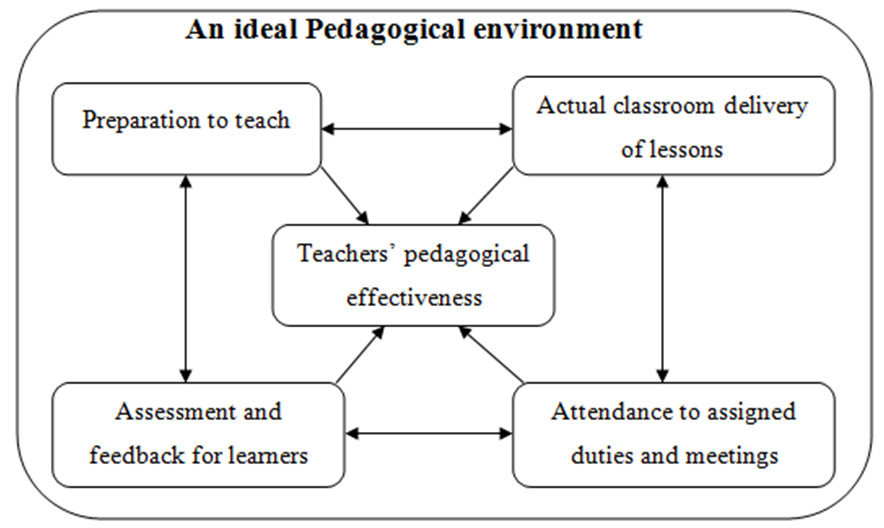
According to 7 for example, TEPPs are defined as those activities which teachers undertake so as to raise revenue to enhance their finances. However, not all practices as put up in 7’s definition qualify to fit the current study’s TEPPs due to a short of a bearing on the pedagogical constituent. To 8, TEPPs are derived from a reflection of teachers’ choice to pursue an extra income while maintaining the financial stability offered by the primary job. This definition also focuses more on the espousal of economic-related meaning of TEPPs than it does on the pedagogical connotation yet it is clear that according to the current study, the goal of TEPPs surpasses just monetary gains. In further reference to the above two definitions, while 7 defines TEPPs as finance enhancing mechanisms for teachers, 8’s definition is watchful of the primary job although emphasis was put on the monetary objective at the expense of the pedagogical one. However, one wonders how TEPPs can sustainably be rewarding financially without reflecting on its pedagogical stance. More so, since education institutions expect teachers to adhere to quite a number of pedagogical responsibilities, the above two definitions abscond from questioning how the involving teachers will linger a pedagogically effective existence. Another study that has attempted to define TEPPs in close relationship to the current study’s posture is by 6 who view TEPPs as practices which teachers undertake (while maintaining their financial stability offered by the primary job) to directly pass on knowledge of their subject content to students directed towards impressive high-stakes examinations scores. In this regard, the idea of pedagogical consciousness in the teachers’ struggle against financial distress is replete in their conceptualisation of TEPPs. In synchronization with this definition, the current study defines TEPPs as the teachers’ academic-related intervention practices for students, mainly in form of better knowledge-mediating catch-up opportunities aimed at extra income generation as well as effective and objective teaching and learning milieu. This definition implies that, pedagogically enterprising teachers are those who obstinately identify income generating opportunities that respond to academic-related needs and wisely devise means of addressing these needs in a proactive rather than reactive ways. Thus, TEPPs transcends financial motives to enhance a more focused, rewarding and objective pedagogical process 9. Thus as 10 contends, objective application of the dimensions of enterprise (innovativeness, pro-activeness and risk-taking) is essential to enhance the success of TEPPs in providing a pedagogically effective service delivery that surpasses just the monetary gains. It should however be noted that, appreciation of effectiveness of TEPPs requires understanding the nature of the assumed ideal pedagogical environment in order to discern how effective TEPPs as an interference can be in response to the ideal components of this environment. Thus, in the next section, the assumed components of an ideal pedagogical environment are illustrated (in Figure 1) before examining the effectiveness of TEPPs in the teaching-learning milieu.
It is axiomatically true that in many education systems of developing countries, the execution of the ideal pedagogical environment components, in most cases faces external interference due to the competitive nature of education (pedagogical) service delivery whose proceedings are hardly monitored closely 5. Among the many assumed interferences is the poor institutional administration, contradicting policies by education policy makers as well as interferences that arise out of teachers’ involvement in side income generating practices while maintaining the pedagogical responsibility of the primary job (TEPPs). This paper concentrated on the latter interference (TEPPs) and emphasis was put on coaching, part-time teaching and authored pamphlets. Literature indicates that, the need to adequately provide for their families, coerce many teachers into dividing their time between attending to the components of an ideal pedagogical environment and engaging in their extra income generating opportunities 6, 8, 11. Although TEPPs have for long faced a bumpy journey in education and school contexts due to the belief that their economic perspective may lead to scepticism in the pedagogical objectives 12, it forms the basis for the need to have a dialogue about the effectiveness of TEPPs within an ideal pedagogical environment. As already stated, the term pedagogy means teachers’ teaching–learning experiences shaped by their actions, objectives and preparedness towards their job as teachers. Thus the pedagogical effectiveness of enterprising teachers within the assumed ideal pedagogical environment under the current study is limited to their ability to execute the four major ideal pedagogical components namely; teachers’ preparation to teach, his/her actual classroom delivery of lessons, his/her assessment and feedback for learners as well as his/her attendance to assigned duties and meetings, as depicted in Figure 1.

Generally about the effectiveness of TEPPs within an ideal pedagogical environment, the history of education all over the world and Uganda in particular, is replete with both pessimistic and optimistic voices on the plethora of challenges which teachers face in their struggle against financial distress 2. Indeed, available literature presents a new breed of enterprising teachers, who have taken the fight against financial distress to a more opportunistic level by concurrently engaging in academic-related business practices (TEPPs) as they also attend to their pedagogical responsibilities 6. These teachers have “invented” many enterprising mechanisms whose congruence with the components of an ideal pedagogical environment in which they survive remains questionable. For example, an earlier study by 10 contend that, it is practically impossible for TEPPs when adopted in education service delivery to result into both high financial returns and better teaching-learning process since it may end up serving the business (profit) motive at the expense of the pedagogical one. This pessimistic view may make the rationalization of TEPPs in education service delivery difficult. There are however many optimistic scholars who contend the potential contribution of TEPPs in enhancing effective teaching and learning 9, 11, 14, 15. They argue that, TEPPs inspires practitioners not only to comply with institutional demands (such as better grades), but also to take a pro-active role in advancing initiatives that reflect the changing needs of pedagogical milieu 14. Thus following this argument, it can be assumed that the nature of demands of teachers’ work requires them to be enterprising in pedagogical service delivery. To defend this assertion 16 notes that, it is only because of insufficient knowledge about these TEPPs that some teachers are not sure of what they are supposed to do, why they should do it, and how it can be done.
Looking more closely at Uganda’s education context, public dissatisfaction with the quality of teaching and learning in schools is conspicuous and this is demonstrated by the reality of semi-illiterate school completers and unemployable higher education graduates 17, 18. In addition, economic liberalisation policies playing out in Uganda today have not spared education and have resulted into unprecedented proliferation of private education institutions at all levels, which has culminated into cut throat competition among education institutions 5. Besides, Uganda’s education landscape is increasingly becoming market-oriented and competitive in nature, hence the need for more dynamic enterprising pedagogical regime 9, 19. Thus, there is need to stimulate more dialogue in TEPPs to create more awareness and also to underscore key domesticated opportunities for potential participation by teachers in order to have a more focused and objective education service delivery 19. In keeping with arguments of these studies, this paper focused on three opportunities to scrutinize TEPPs (private tutoring, part-time teaching and teachers’ authored pamphlets). These opportunities/practices are not only assumed to offset public dissatisfaction with teaching and learning in schools, but they may also serve the competitive nature of education institutions as well as objective negotiation of entry into the current dynamic market-oriented education landscape.
Although teachers’ intervention in TEPPs could be a sensible endeavour in pedagogical enhancement as stated above, they are considered unfair, corrupt and “illegitimate’’ in Uganda. As a matter of fact, private tutoring (coaching) was apparently banned by Government on the assumption that involving teachers were holding some content in the mainstream classes so as to create a need for students to approach them for private tutoring 20. Similarly, strict restrictions were put on teachers’ authored pamphlets following the assumption that they turn students into examination oriented parrots that are less critical in their thinking 21. Besides, part–time teaching was also restricted due to its susceptibility to employment contract breach as well as the less time involving teachers will accord to learners in each school 22. Perhaps weather in Uganda or even any other country, available evidence of clear-cut harm of TEPPs to the components of an ideal pedagogical environment is still anecdotal. Nevertheless, many parents in Uganda are said to part with over 1 million UGX (about 300 USD) each holiday in coaching of their children 23. Many school libraries are tirelessly stocking pamphlets produced by teachers for students to use 24. And many teachers of public secondary schools in Uganda have continued to teach in more than one school 25. This implies that these practices could be imperative beyond just teachers’ financial intent.
For instance, although in the US, TEPPs already find themselves in serious dilemma, in other areas like in Asia, 26 contend a large number of teachers engaged in private tutoring for reasons ahead of just economic ones. In China, studies by 11 and 27, agree that teachers’ involvement in TEPPs highly contributes to their monthly earnings and thus motivated to offer effective teaching. Although 11’s and 27’s studies concentrated more on economic motives, a study by 28 in Brazil contend that, parents preferred private tutoring for protecting their children from hanging around streets after school. Teachers’ authored pamphlets in Nigeria proved to be a critical source of simplified learning among high school students 29 and this agrees with the Education 2030 Framework for Action that emphasizes conducive, learner friendly, content specific and available reading materials to all learners 30. Other studies such as those done in Congo 31, Hong Kong 32, Tanzania 8, 33, Pakistan and India 34 as well as Uganda 6 all agree that financial motivation is the most influencing factor for teachers’ involvement in TEPPs. Although financial motivation takes the lead in literature, some studies highlight the need by teachers to aid impressive scores in high-stakes examinations 35, 36, the need to reduce absenteeism among learners since some TEPPs makes teachers to closely monitor learners 37 as well as the need by teachers to become more experienced and becoming self-confident when interfacing with their learners 38, 39.
Literature however further presents more pessimistic voices against TEPPs from the perspective of limited commitment to their primary jobs 31, 40. More specifically, teachers’ authored pamphlets ignore differences in reading levels of learners and do not give enough explanation of content and thus preparing examination oriented citizens 41. Besides, coaching does not only promote rote learning due to drills, but also gives chance to the rich to purchase more education at the expense of the poor 2, 42. It should however be noted that, generalization of such findings should depend on the nature of the pedagogical environment which directs teachers’ interface with the learners. Thus, it is important to warn teachers against their potential espousal of the profit motive at the expense of the pedagogical one 5, 15 and therefore such warnings can be a valuable firewall to protect against divergence from objective and opportunistic education service delivery and also from the ill-conceiving of TEPPs 10, 19.The next chapter of this paper presents the justification of TEPPs in Uganda’s education institutions.
For many developing countries Uganda inclusive, education institutions are characterised by resistance to change 10 and this could militate against shielding the pervasiveness of TEPPs in Uganda’s education institutions 19. Basing on the findings of the second objective of this paper in the previous section, the effectiveness of TEPPs was found by optimistic studies to be a catch light for teachers to create a better way of executing education service delivery. However, their effectiveness was also found to be deeply struggling in the dilemma of the potential espousal of financial motives over pedagogical ones (as winched by the pessimistic voices in literature). Therefore, the current study’s effort to determine the justification of TEPPs in Uganda’s education service delivery was underpinned by the ideas of 43’s Noble Cause Corruption framework as commonly used in policing. To 43, Noble cause corruption is a means-ends dilemma model which was intended to signal a problem of supposedly good ends achieved with legally dangerous means. It was advanced by 44 but with its origin from 43 who wrote about the violations committed by police officers for a noble cause, despite the debilitating effects it may cause to the vulnerable people. In keeping with this frame work, since TEPPs (private tutoring, part-time teaching, and ‘’unedited’’ authored pamphlets) are apparently regarded as “illegitimate’’ by education policy makers in Uganda, they represent the framework’s legally dangerous means. The morally good end of TEPPs represents the study’s objective to justify teachers’ involvement in these practices in their education service delivery despite the likely debilitating effects these practices may cause to the vulnerable students.
As a matter of fact, although teachers react out of financial distress to engage in TEPPs, these teachers could as well be offering these as pedagogical–related services to learners in a way that goes beyond the pre-determined pedagogical norm (innovativeness). Besides, the three TEPPs as emphasized for this paper could be done in appreciation of the different students’ “positions’’ since for this paper, teachers are assumed to manoeuvre these practices in anticipation of such “positions” (pro-activeness). Also in Uganda as earlier stated, the three practices are considered “illegitimate’’ which makes them risky to pursue by teachers (risk–taking). Since the three dimensions of enterprise (entrepreneurship) are well embedded in what this paper refers to as TEPPs, and the fact that international policy documents have urged for integration of enterprising practices as pedagogical approaches 45 there is need for a dialogue about the justification of TEPPs within Uganda’s education institutions and this is the basis of the third objective of this paper.
Majority of the available studies related to TEPPs as adopted for this paper (coaching, part-time teaching and authored pamphlets) concentrates on their influences on teachers’ welfare, professionalism and others on reasons for teachers’ involvement in these practices rather than they did for the justification of the practices in education service delivery. For example, a recent study by 6 focused on the effect of these practices for teachers’ welfare/standards of living. In their study, correlations were tested between the two variables as well as entering the relevant constructs into a statistical method of testing cause/effect relationships. It was found out that teachers were able to improve their standards of living through their engagement in TEPPs due to the extra income they were able to yield. These findings concur with many other studies such as that of 8, 11, 46 and 47 who all agree with financial–related satisfaction teachers derive from engaging in TEPPs. However, none of these studies determined the justification of TEPPs in Uganda’s education service delivery.
In a closely related view to the justification of TEPPs, 48 shows how TEPPs enhances involving teachers’ interests, commitment and overall satisfaction with teaching. The practices also reignite the enthusiasm and excitement of enterprising teachers to remain in the classroom/school 15. The above two authors used their own experiences to recount the satisfaction they got out of engaging in TEPPs. To supplement their claim, a study by 2 indicates that, TEPPs compose teaching more interesting and more rewarding. However, since the success of any practice is normally measured in terms of “the difference it makes to the quality of individuals and collective lives” [ 49, p.47], the discovery that many teachers engage in TEPPs not primarily for the sake of extra income, but for many other non-economic reasons of which many are pedagogical in nature may be true 15, 48. These two studies established that the involvement of teachers in TEPPs also has other “intangible” or “third party” benefits like networking and socializing which help to reignite teachers’ enthusiasm.
In jeopardy of the justification for TEPPs in Uganda’s education institutions, some of the existing TEPPs exemplify lack of professionalism, which is further associated with a mistaken but growing habit of often privately soliciting for more money from learners for teachers’ private gain 2. 2’s study gave an example of coaching and selling of authored pamphlets (e.g. notes) to the few financially capable students, who can pay extra money for such services at the expense of their counterparts. This discrimination seems to be just but unethical (as depicted by the Noble Cause Corruption framework) since one wonders the kind of image of teachers this practice gives to society as teachers imbued themselves with much selfishness. The same study found out that, some teachers begin to look at students as conduits for becoming rich. More conversely, teachers are depicted to be “conmen” (or “con-women”). One wonders how much “value” a teacher will have for a poor student who buys nothing from him or her week after week 2.
In further jeopardy of the justification of TEPPs, there are also studies which approached teachers’ TEPPs from the point of view of getting diverted from their ideal pedagogical environment components. For 50, the biggest question is on whether involving teachers have the time to concurrently run these practices in a way that does not compromise their pedagogical responsibility. In the same line, 30 indicates how teachers are very busy people and yet the participation in TEPPs will also need time. The above two studies explain why 51 predict additional stressors within the teachers’ ideal pedagogical environment which causes teachers to always feel negatively towards the components of the ideal pedagogical environment. Literature however remains silent about the ways through which teachers who engage in these practices are able to meet the components of the ideal pedagogical environment simultaneously. Consequently, there is no conclusive stand point on the justification of TEPPs in education service delivery. The next section presents the study’s conclusions, recommendations as well as suggestions for further study.
This paper examined the meaning of TEPPs, its effectiveness in pedagogical service delivery as well as its justification for Uganda’s education institutions through a review of related literature. The reviewed studies offered different perspectives towards explaining the objectives of the current study pertaining to TEPPs. Most of the reviewed studies approached TEPPs from the perspective of financial, professional & social–related explanations. Analysis of these studies therefore offered divergent meanings of TEPPs, contradictory opinions on its effectiveness and none offered an eminent justification of TEPPs in Uganda’s education institutions. While some studies lamented with a pessimistic voice against TEPPs, others’ voices were optimistic yet some offered both voices. Such findings were found in dilemma with the aspects of the ideal pedagogical environment (as depicted in Figure 1) since the reviewed studies did not craft a strapping and undeviating harmony with each other pertaining the meaning, effectiveness and justification of TEPPs in Uganda. Thus this paper makes the following conclusions.
First, concerning the meaning of TEPPs, the study defines it as the teachers’ academic-related intervention practices for students, mainly in form of better knowledge-mediating catch-up opportunities aimed at extra income generation as well as effective and objective teaching and learning milieu. This definition transcends monitory rewards to include improvements in teaching-learning process in view of more domesticated and objective pedagogical service delivery. The definition further considers TEPPs as part of pro-activeness, risk-taking, and innovative aggressiveness. In other words, it depicts enterprising teachers as instruments whose income generating pedagogical-related engagements signal potential solutions to the existing pressing pedagogical problems among education institutions in Uganda.
Secondly, in trying to cope and lead a more effective TEPPs in the current dynamic pedagogical environments in most developing countries, characterised by a highly liberalised and competitive education institutions; a growing public dissatisfaction with the quality of teaching and learning in schools; and the growing need for networking among teachers, the current study concludes that it is mainly the perception of the involving teachers that mostly informs the effectiveness of TEPPs although other factors such as the nature of school administration also fall suit. This conclusion is based on the previous research suggestions that enterprising teachers consistently get distracted from the components of an ideal pedagogical milieu 50, 51. Moreover, the hypothesis that TEPPs would enable a more pedagogically powerful environment was insignificantly supported in most of the reviewed literature 2, 8, 47. However, 51 notes that TEPPs may not have a sounding signal towards teachers’ pedagogical effectiveness especially where the involvement was done after the “normal’’ school hours.
Lastly, on the justification of TEPPs in Uganda’s education landscape, the study found the ideas of 43’s Noble Cause Corruption frame work to be explaining the justification of TEPPs in Uganda’s education system since TEPPs are first of all considered “illegitimate”, and their (TEPPs)’s related literature review findings presents both the framework’s “supposedly good ends” as well as its “debilitating effects’’. This study thus concludes that, TEPPs are capable of igniting teachers to think beyond the current predetermined pedagogical norms and institutional demands to adopt a proactive rather than reactive role in advancing initiatives for creating a better way of executing education (pedagogical) service delivery, although the practices are tainted with various pessimistic consequences. As a matter of fact, once the pervasiveness of TEPPs preserve the aspects of the ideal pedagogical environment (as shown in Figure 1) in “rightful” control, then TEPPs can be justified in Uganda and thus can be improved upon for domesticated and thus appropriate implementation in a highly defensible teaching-learning service delivery.
The study makes the following recommendations. First, there is need to stimulate more discourse on TEPPs to create a more contextualised model of TEPPs and to highlight the key practices domesticated for potential enterprising teachers to undertake within an ideal pedagogical service delivery milieu.
Secondly, there is need to sensitise key stake holders in view of paying attention to pessimistic voices against the objectives of certain TEPPs to guard against the potential espousal of the profit motive at the expense of the pedagogical ones in view of realising national education goals.
There is also need for a significant change in the way these institutions are managed as well as the mindset of teachers such that the components of an ideal pedagogical environment can be closely monitored amidst TEPPs to reduce over emphasising the financial motives at the expense of the pedagogical ones.
In all, another study with related objectives but involving collection of field data is recommended by this paper. This will enable a better understanding of the concept of TEPPs beyond the literature review-based findings of this paper.
| [1] | Busnov, M. (2014). Individual-level determinants of intrapreneurship in the Netherlands https://thesis.eur.nl/pub/16697/MA-ThesisMarizBusnov.pdf. | ||
| In article | |||
| [2] | Genza, G.M. (2016). Importance of intrapreneural practices prevalent among secondary school teachers in Kalungu district (Uganda), Journal of Education and learning, 10 (1) pp. 41-52. | ||
| In article | View Article | ||
| [3] | Webster’s Tenth New Collegiate Dictionary (2007). Springfield, MA: Merriam-Webster. | ||
| In article | |||
| [4] | Gage, R. M. (1985). The conditions of learning and theory of instruction, (14th Ed.) New York: Holt, Rinehart and Winston. | ||
| In article | |||
| [5] | Musisi, B. (2013). Pedagogical ramifications of competitive secondary education market in central Uganda. A doctoral thesis submitted to the graduate school, Makerere University (unpublished). | ||
| In article | |||
| [6] | Genza, G. M., Kobusingye, P., & Mukokoma, M. (2016). The relationship between knowledge mediation entrepreneurial ventures and secondary school teachers’ standards of living (SOL) in central Uganda; the case of Kalungu District, International journal of social science and humanities Research. Vol.4, issue 1, PP.138-148. | ||
| In article | |||
| [7] | Nyamwega H. N. (2016). An Evaluation of Income Generating Projects in Public Secondary Schools in Nairobi County, International Journal of African and Asian Studies, Vol.21, PP.6-15. | ||
| In article | |||
| [8] | Mulokozi, C. (2015). Teachers’ moonlighting and its impact on their job performance in Dar-Es-Salaam region secondary schools, a master dissertation submitted to the Open University of Tanzania (unpublished). | ||
| In article | |||
| [9] | Man, T.W.Y. (2010). Clarifying the domain of educational leadership, innovation and change, Un published paper, Hong Kong institute of education. | ||
| In article | |||
| [10] | Levin, H.M. (2006). Why is educational entrepreneurship so difficult? In Hess, F. (ed.): Educational entrepreneurship. Cambridge, MA: Harvard Education press. | ||
| In article | |||
| [11] | Sangwan, S. (2014). Managing employee moonlighting: Issues and implications. International Journal of Scientific Research and Education, 2(12), pp. 2552-2556. | ||
| In article | |||
| [12] | Komulainen, k., Naskali, p., Korhonen, m. & Keskitalo-Foley, s. (2011). Internal Entrepreneurship-aTrojan horse of the Neoliberal governance of education? Finish pre-and in-service teachers’ implementation of and resistance towards entrepreneurship education. Journal for critical education policy studies, 9(1), pp.341-374. | ||
| In article | |||
| [13] | Alkahtani, M., Ahmad, A., Darmoul, S., Al-Zabidi, A. & Matraf, K. (2018). Multi tasking trends and impact on education: A literature review. International Journal of Social, Behavioural, Educational, Economics, Business and Industrial Engineering, 10(3), pp.997. | ||
| In article | |||
| [14] | Yemini, M., Addi-Raccah, A. & Katarivas, K. (2014). I have a dream: school principals as entrepreneurs. In Educational management & leadership, pp. 1-15. | ||
| In article | View Article | ||
| [15] | Lavaroni, G.T. & Leisey, D. E. (2014). Bringing the excitement of entrepreneurism to the public schools http://www.edentreprenuers.org/eduprenuer.pdp (Accessed 18th October 2019). | ||
| In article | |||
| [16] | Haara, F.O. & Jenssen, E.S. (2016). Pedagogical entrepreneurship in teacher education-what and why? Icelandic Journal of education, 25(2), pp.183-196. | ||
| In article | |||
| [17] | Itaaga, N. & Nabayengo, C. (2014). How university education in Uganda can be improved to prepare economically productive graduates, Asian Journal of social sciences and management studies, 1(2), pp. 62-70. | ||
| In article | |||
| [18] | Genza, G. M. & Muwagga, A. M. (2014). Human and economic development implications of selected secondary school teachers in central Uganda, Journal of Development studies (UMU, Nkozi) 1(4) pp.69-88. | ||
| In article | |||
| [19] | Genza, G.M. & Musisi, B. (2018). Educational Entrepreneurship (EE): Delineating the domain and highlighting its importance and feasibility in educational management in Uganda. American Journal of educational Research, Vol. 6(1) pp.9-17. | ||
| In article | |||
| [20] | EDB Circular No. 174/2007. Schools to face closure over holiday teaching, a press publication in the New vision April 29, 2015, Pp. 6. | ||
| In article | |||
| [21] | EDB circular memorandum No. 176/2015. “Selection of quality textbooks and curriculum resources for use in schools (supplementary notes) prudent section and use”. Http://application.edb.gov.ht/circular/upload/EDBCM/EDBCM1517E.pdf. | ||
| In article | |||
| [22] | DES Circular No. 0054/2019. Section 24 of the education act against moonlighting amended in 2003: Ref. No: MoES/KPMG/001. | ||
| In article | |||
| [23] | Ssenyonga, A. (2016). Private schools found in coaching children will be closed immediately and teachers arrested. In The New Vision (29th April, 2016). | ||
| In article | |||
| [24] | Ssenyonga, A. (2015). The preference for pamphlets is a manifestation of poor preparation among teachers, who settle for ‘’outline answers”. In the New Vision (4th February 2015). | ||
| In article | |||
| [25] | Murungi, D. (2018). A parent forced to pay coaching fees for her child who was referred to as a slow learner. In the daily monitor (20th August 2018). | ||
| In article | |||
| [26] | Lykins, C. & Bray, M. (2012). Shadow education: private supplementary tutoring and its implications for policy makers in Asia. Metro Manila: Asian Development Bank. | ||
| In article | |||
| [27] | Baah–Boatengl, W., Adjei, P. & Oduro, A. D. (2013). Determinants of moonlighting in china: an empirical investigation: In African review of economic and finance, Vol.4, No.2, PP.176-202. | ||
| In article | |||
| [28] | Amorim Neto, R., Rodrigues, P. & Panzer, S. (2017). Exploring the relationship between entrepreneurial behaviour and teachers’ job satisfaction Teaching and Teacher Education, Vol. 63, pp. 254-262. | ||
| In article | View Article | ||
| [29] | Babayomi, A. A. (1991). Comparative Study of the Teaching and Learning Resources in Private and Public Secondary Schools in Lagos State, Master’s thesis, Department of Educational Administration, University of Lagos Nigeria. | ||
| In article | |||
| [30] | Nasaza, J. (2016). Developing Teaching Aids to improve the training delivery skills of Vocational students’ teachers, Unpublished Master thesis submitted to the Oslo and Akershus University College of applied sciences. | ||
| In article | |||
| [31] | Kisumano, G. M., & Wa-Mbaleka, S. (2017). Moonlighting as a growing phenomenon: A case study of a Congolese Christian University, International Forum, 20(2), PP.237-253. | ||
| In article | |||
| [32] | Yung, K.W. (2011). Shadow Education in Hong Kong: The experience of Learners of English, Master of Arts in applied linguistics dissertation, The University of Hong Kong. | ||
| In article | |||
| [33] | Lyimo, G. E., (2014). Analysis of teachers’ low payments in Tanzania: a case study of public secondary schools in Moshi Rural District. In international Journal of education and Research, 2(2), pp.1-14. | ||
| In article | |||
| [34] | Aslam, M. & Atherton, P. (2011). “The shadow’’ education sector in India and Pakistan: The determinants, benefits and equity effects of private tutoring. Presentation at the UKFIET (United Kingdom Forum for International Education and Training) conference, University of Oxford, PP.13-15. | ||
| In article | |||
| [35] | Adeyemo, D. A. (2006). Teachers’ job satisfaction, job involvement, career and organizational commitments as correlates of student-academic performance, Nigerian Journal of Applied Psychology, Vol.6, No.2, PP.126-135. | ||
| In article | |||
| [36] | Osiki, J.O. (2001). Effects of remedial training Programme on the management of learning acquisition defectiveness and poor study habits problems of selected subjects in a community grammar school, Nigerian Journal of Applied Psychology, 6(2), pp.107-115. | ||
| In article | |||
| [37] | Newman, R. S. & Schwager, M.T. (1993). Student perceptions of the teacher and classmates in relation to reported help seeking in math class. Elementary School Journal, Issue 94, pp.3-17. | ||
| In article | View Article | ||
| [38] | Ololube, N. P. & Kpolovie, P. J. (2012). Educational Management in Developing Economies: cases “n” school effectiveness and quality improvement. http://www.amazon.com/educational-management-developing-economies-effectiveness/dp/3846589314. | ||
| In article | |||
| [39] | Meenu Dev. (2016). Factors affecting the academic achievement: A study of elementary school students of NCR Delhi, India. Journal of education and practice, 7(4). | ||
| In article | |||
| [40] | Wesonga, N. (2011). Stop moonlighting, Dons told. Retrieved from http://www.monitor.co.ug/news/national/-1688334/1264688/-1bhfb1yz/-/index.html. | ||
| In article | |||
| [41] | Ahmed, J., Sritharan, G. & Nasir, N. N. A. M. (2015). The effectiveness of video and pamphlets in influencing youth on environmental education, Malaysian Journal of Communication Jalid, Vol.31, No.1, PP.281-296. | ||
| In article | View Article | ||
| [42] | Kobakhidze, M. N. (2014). Corruption Risks of Private Tutoring: Case of Georgia. Asia Pacific Journal of Education, 34(4), PP.455-475. | ||
| In article | View Article | ||
| [43] | Klockars, C. B. (1980). The Dirty Harry problem, Annals of the American Academy of Political and Social Science, 452(1), PP.33-47. | ||
| In article | View Article | ||
| [44] | Delattre, E. J. (1989). Character and Cops: Ethics in policing (6th Ed.). Washington, DC: The AEI Press. | ||
| In article | |||
| [45] | European commission (2013). Entrepreneurship 2020 action plan: Reigniting the entrepreneurial spirit in Europe. Brussels: Retrieved from http://eur-lex-europa.eu/laxUriServ.do?uri=com:2012:0795:FIN:en:PDF. | ||
| In article | |||
| [46] | Ayieko, G. M., (2014). Factors that influence the need for private supplementary tuition in secondary schools: A case study of selected schools in Borabu District of Nyamira County, Kenya. A university of Nairobi project university report. | ||
| In article | |||
| [47] | Tubasise, E. (2018). Survival strategies of teachers in Government aided primary schools in Bushenyi Town Council, Masters Dissertation submitted to Makerere University (unpublished). | ||
| In article | |||
| [48] | Natalie, G. (2014). When teaching doesn’t pay the bills: Survey reveals low pay causing teachers to moonlight and consider career changes. com/education/2014-01-03/when-teaching-doesn’t-pay-bills-survey-reveals-low-pay-causing-teahers# (Accessed 18th October 2019). | ||
| In article | |||
| [49] | Wickharm, P. A., (2004). Strategic entreprenearship (3rd ed.). Harlow: Prentice Hall. Cambodia (Independent Teachers Association). | ||
| In article | |||
| [50] | Namagembe, E. (2004). The factors affecting entrepreneurial success in small-scale enterprises in Uganda, Case study: Kampala city. Unpublished thesis (MBA), Uganda Martyrs University. | ||
| In article | |||
| [51] | Parham, J. & Gordon, S. (2011). Moon lighting: A harsh reality for many teachers, Ph.DeltaKappan, 92(5), pp.47-51. | ||
| In article | View Article | ||
Published with license by Science and Education Publishing, Copyright © 2021 Sande Erunao Muwanguzi, Nicholas Itaaga and Badru Musisi
 This work is licensed under a Creative Commons Attribution 4.0 International License. To view a copy of this license, visit
http://creativecommons.org/licenses/by/4.0/
This work is licensed under a Creative Commons Attribution 4.0 International License. To view a copy of this license, visit
http://creativecommons.org/licenses/by/4.0/
| [1] | Busnov, M. (2014). Individual-level determinants of intrapreneurship in the Netherlands https://thesis.eur.nl/pub/16697/MA-ThesisMarizBusnov.pdf. | ||
| In article | |||
| [2] | Genza, G.M. (2016). Importance of intrapreneural practices prevalent among secondary school teachers in Kalungu district (Uganda), Journal of Education and learning, 10 (1) pp. 41-52. | ||
| In article | View Article | ||
| [3] | Webster’s Tenth New Collegiate Dictionary (2007). Springfield, MA: Merriam-Webster. | ||
| In article | |||
| [4] | Gage, R. M. (1985). The conditions of learning and theory of instruction, (14th Ed.) New York: Holt, Rinehart and Winston. | ||
| In article | |||
| [5] | Musisi, B. (2013). Pedagogical ramifications of competitive secondary education market in central Uganda. A doctoral thesis submitted to the graduate school, Makerere University (unpublished). | ||
| In article | |||
| [6] | Genza, G. M., Kobusingye, P., & Mukokoma, M. (2016). The relationship between knowledge mediation entrepreneurial ventures and secondary school teachers’ standards of living (SOL) in central Uganda; the case of Kalungu District, International journal of social science and humanities Research. Vol.4, issue 1, PP.138-148. | ||
| In article | |||
| [7] | Nyamwega H. N. (2016). An Evaluation of Income Generating Projects in Public Secondary Schools in Nairobi County, International Journal of African and Asian Studies, Vol.21, PP.6-15. | ||
| In article | |||
| [8] | Mulokozi, C. (2015). Teachers’ moonlighting and its impact on their job performance in Dar-Es-Salaam region secondary schools, a master dissertation submitted to the Open University of Tanzania (unpublished). | ||
| In article | |||
| [9] | Man, T.W.Y. (2010). Clarifying the domain of educational leadership, innovation and change, Un published paper, Hong Kong institute of education. | ||
| In article | |||
| [10] | Levin, H.M. (2006). Why is educational entrepreneurship so difficult? In Hess, F. (ed.): Educational entrepreneurship. Cambridge, MA: Harvard Education press. | ||
| In article | |||
| [11] | Sangwan, S. (2014). Managing employee moonlighting: Issues and implications. International Journal of Scientific Research and Education, 2(12), pp. 2552-2556. | ||
| In article | |||
| [12] | Komulainen, k., Naskali, p., Korhonen, m. & Keskitalo-Foley, s. (2011). Internal Entrepreneurship-aTrojan horse of the Neoliberal governance of education? Finish pre-and in-service teachers’ implementation of and resistance towards entrepreneurship education. Journal for critical education policy studies, 9(1), pp.341-374. | ||
| In article | |||
| [13] | Alkahtani, M., Ahmad, A., Darmoul, S., Al-Zabidi, A. & Matraf, K. (2018). Multi tasking trends and impact on education: A literature review. International Journal of Social, Behavioural, Educational, Economics, Business and Industrial Engineering, 10(3), pp.997. | ||
| In article | |||
| [14] | Yemini, M., Addi-Raccah, A. & Katarivas, K. (2014). I have a dream: school principals as entrepreneurs. In Educational management & leadership, pp. 1-15. | ||
| In article | View Article | ||
| [15] | Lavaroni, G.T. & Leisey, D. E. (2014). Bringing the excitement of entrepreneurism to the public schools http://www.edentreprenuers.org/eduprenuer.pdp (Accessed 18th October 2019). | ||
| In article | |||
| [16] | Haara, F.O. & Jenssen, E.S. (2016). Pedagogical entrepreneurship in teacher education-what and why? Icelandic Journal of education, 25(2), pp.183-196. | ||
| In article | |||
| [17] | Itaaga, N. & Nabayengo, C. (2014). How university education in Uganda can be improved to prepare economically productive graduates, Asian Journal of social sciences and management studies, 1(2), pp. 62-70. | ||
| In article | |||
| [18] | Genza, G. M. & Muwagga, A. M. (2014). Human and economic development implications of selected secondary school teachers in central Uganda, Journal of Development studies (UMU, Nkozi) 1(4) pp.69-88. | ||
| In article | |||
| [19] | Genza, G.M. & Musisi, B. (2018). Educational Entrepreneurship (EE): Delineating the domain and highlighting its importance and feasibility in educational management in Uganda. American Journal of educational Research, Vol. 6(1) pp.9-17. | ||
| In article | |||
| [20] | EDB Circular No. 174/2007. Schools to face closure over holiday teaching, a press publication in the New vision April 29, 2015, Pp. 6. | ||
| In article | |||
| [21] | EDB circular memorandum No. 176/2015. “Selection of quality textbooks and curriculum resources for use in schools (supplementary notes) prudent section and use”. Http://application.edb.gov.ht/circular/upload/EDBCM/EDBCM1517E.pdf. | ||
| In article | |||
| [22] | DES Circular No. 0054/2019. Section 24 of the education act against moonlighting amended in 2003: Ref. No: MoES/KPMG/001. | ||
| In article | |||
| [23] | Ssenyonga, A. (2016). Private schools found in coaching children will be closed immediately and teachers arrested. In The New Vision (29th April, 2016). | ||
| In article | |||
| [24] | Ssenyonga, A. (2015). The preference for pamphlets is a manifestation of poor preparation among teachers, who settle for ‘’outline answers”. In the New Vision (4th February 2015). | ||
| In article | |||
| [25] | Murungi, D. (2018). A parent forced to pay coaching fees for her child who was referred to as a slow learner. In the daily monitor (20th August 2018). | ||
| In article | |||
| [26] | Lykins, C. & Bray, M. (2012). Shadow education: private supplementary tutoring and its implications for policy makers in Asia. Metro Manila: Asian Development Bank. | ||
| In article | |||
| [27] | Baah–Boatengl, W., Adjei, P. & Oduro, A. D. (2013). Determinants of moonlighting in china: an empirical investigation: In African review of economic and finance, Vol.4, No.2, PP.176-202. | ||
| In article | |||
| [28] | Amorim Neto, R., Rodrigues, P. & Panzer, S. (2017). Exploring the relationship between entrepreneurial behaviour and teachers’ job satisfaction Teaching and Teacher Education, Vol. 63, pp. 254-262. | ||
| In article | View Article | ||
| [29] | Babayomi, A. A. (1991). Comparative Study of the Teaching and Learning Resources in Private and Public Secondary Schools in Lagos State, Master’s thesis, Department of Educational Administration, University of Lagos Nigeria. | ||
| In article | |||
| [30] | Nasaza, J. (2016). Developing Teaching Aids to improve the training delivery skills of Vocational students’ teachers, Unpublished Master thesis submitted to the Oslo and Akershus University College of applied sciences. | ||
| In article | |||
| [31] | Kisumano, G. M., & Wa-Mbaleka, S. (2017). Moonlighting as a growing phenomenon: A case study of a Congolese Christian University, International Forum, 20(2), PP.237-253. | ||
| In article | |||
| [32] | Yung, K.W. (2011). Shadow Education in Hong Kong: The experience of Learners of English, Master of Arts in applied linguistics dissertation, The University of Hong Kong. | ||
| In article | |||
| [33] | Lyimo, G. E., (2014). Analysis of teachers’ low payments in Tanzania: a case study of public secondary schools in Moshi Rural District. In international Journal of education and Research, 2(2), pp.1-14. | ||
| In article | |||
| [34] | Aslam, M. & Atherton, P. (2011). “The shadow’’ education sector in India and Pakistan: The determinants, benefits and equity effects of private tutoring. Presentation at the UKFIET (United Kingdom Forum for International Education and Training) conference, University of Oxford, PP.13-15. | ||
| In article | |||
| [35] | Adeyemo, D. A. (2006). Teachers’ job satisfaction, job involvement, career and organizational commitments as correlates of student-academic performance, Nigerian Journal of Applied Psychology, Vol.6, No.2, PP.126-135. | ||
| In article | |||
| [36] | Osiki, J.O. (2001). Effects of remedial training Programme on the management of learning acquisition defectiveness and poor study habits problems of selected subjects in a community grammar school, Nigerian Journal of Applied Psychology, 6(2), pp.107-115. | ||
| In article | |||
| [37] | Newman, R. S. & Schwager, M.T. (1993). Student perceptions of the teacher and classmates in relation to reported help seeking in math class. Elementary School Journal, Issue 94, pp.3-17. | ||
| In article | View Article | ||
| [38] | Ololube, N. P. & Kpolovie, P. J. (2012). Educational Management in Developing Economies: cases “n” school effectiveness and quality improvement. http://www.amazon.com/educational-management-developing-economies-effectiveness/dp/3846589314. | ||
| In article | |||
| [39] | Meenu Dev. (2016). Factors affecting the academic achievement: A study of elementary school students of NCR Delhi, India. Journal of education and practice, 7(4). | ||
| In article | |||
| [40] | Wesonga, N. (2011). Stop moonlighting, Dons told. Retrieved from http://www.monitor.co.ug/news/national/-1688334/1264688/-1bhfb1yz/-/index.html. | ||
| In article | |||
| [41] | Ahmed, J., Sritharan, G. & Nasir, N. N. A. M. (2015). The effectiveness of video and pamphlets in influencing youth on environmental education, Malaysian Journal of Communication Jalid, Vol.31, No.1, PP.281-296. | ||
| In article | View Article | ||
| [42] | Kobakhidze, M. N. (2014). Corruption Risks of Private Tutoring: Case of Georgia. Asia Pacific Journal of Education, 34(4), PP.455-475. | ||
| In article | View Article | ||
| [43] | Klockars, C. B. (1980). The Dirty Harry problem, Annals of the American Academy of Political and Social Science, 452(1), PP.33-47. | ||
| In article | View Article | ||
| [44] | Delattre, E. J. (1989). Character and Cops: Ethics in policing (6th Ed.). Washington, DC: The AEI Press. | ||
| In article | |||
| [45] | European commission (2013). Entrepreneurship 2020 action plan: Reigniting the entrepreneurial spirit in Europe. Brussels: Retrieved from http://eur-lex-europa.eu/laxUriServ.do?uri=com:2012:0795:FIN:en:PDF. | ||
| In article | |||
| [46] | Ayieko, G. M., (2014). Factors that influence the need for private supplementary tuition in secondary schools: A case study of selected schools in Borabu District of Nyamira County, Kenya. A university of Nairobi project university report. | ||
| In article | |||
| [47] | Tubasise, E. (2018). Survival strategies of teachers in Government aided primary schools in Bushenyi Town Council, Masters Dissertation submitted to Makerere University (unpublished). | ||
| In article | |||
| [48] | Natalie, G. (2014). When teaching doesn’t pay the bills: Survey reveals low pay causing teachers to moonlight and consider career changes. com/education/2014-01-03/when-teaching-doesn’t-pay-bills-survey-reveals-low-pay-causing-teahers# (Accessed 18th October 2019). | ||
| In article | |||
| [49] | Wickharm, P. A., (2004). Strategic entreprenearship (3rd ed.). Harlow: Prentice Hall. Cambodia (Independent Teachers Association). | ||
| In article | |||
| [50] | Namagembe, E. (2004). The factors affecting entrepreneurial success in small-scale enterprises in Uganda, Case study: Kampala city. Unpublished thesis (MBA), Uganda Martyrs University. | ||
| In article | |||
| [51] | Parham, J. & Gordon, S. (2011). Moon lighting: A harsh reality for many teachers, Ph.DeltaKappan, 92(5), pp.47-51. | ||
| In article | View Article | ||