This study developed a structural model of classroom management, job satisfaction, and stress coping mechanisms on the performance of seven hundred twenty-eight (728) public senior high school teachers in Region X for the School Year 2018-2019. The Structural Equation Modelling (SEM) method was used to establish a structural model that best fits their performance as influenced by independent variables. Results revealed that senior high school teachers' classroom management in teaching, discipline, and parent involvement were all highly managed. They were fairly satisfied with their working place, nature of work, and fringe benefits. Stress coping was high, specifically in their personal characteristics, job-related activities, and interpersonal relationships. Senior high school teachers performed very satisfactorily in all key result areas (KRAs): the teaching-learning process, learning outcome, community involvement, professional growth and development, and special tasks/plus factors. A highly significant relationship existed among senior high school teachers' classroom management, job satisfaction, and stress coping towards their performance. But only classroom management and stress coping best predict their performance. The best-fitting model was anchored on classroom management and stress-coping toward senior high school teachers' performance. The study revealed that classroom management correlated with stress-coping support on senior high school teachers' performance. Thus, the better the teachers' classroom management and stress-free life, the better the performance.
In reforming the Philippine basic educational system from Basic Education Curriculum to K to 12 Curriculum, there are stirring challenges in facing the transition scheme. Nevertheless, the current government made remedies to solve these significant issues. One of these is the creation of plantilla items of senior high school teacher positions nationwide through mass hiring, which started last year, 2015, in preparation for the incoming first batch of Grade 11 students of the school year 2016-2017. The Department of Education is authorized to hire college faculty members, professional practitioners, and other non-education graduates provided that they are already LET (Licensure Examination for Teachers) passers or must pass the LET within five (5) years or even possess the necessary certification issued by TESDA as mandated in the implementing rules and regulations of the Enhanced Basic Education Act of 2013 also known as Republic Act No. 10533 Section 13. This is done to address the lacking of teachers in the senior high school. Some are engineers, nurses, accountants, I.T. experts, historians, theologians, and other skilled professionals who can teach specialized subjects and skills to senior high school students.
With this drastic evolution of the Philippine educational system, senior high school teachers are expected to do their duties and responsibilities beyond measure. A highly qualified teacher is the cornerstone of any effective educational system since s/he is considered by many parents and experts in education as one of the most antecedent factors in students' academic performance. Hence, a teacher must provide effective learning through a disciplined classroom with established classroom management. However, prospective teachers in many higher institutions need more training on classroom management skills and strategies and receive minimal formal training and ongoing professional development in behavior management practices 1, 2.
Moreover, not all senior high school teachers in the Philippines are teachers by profession and are graduates of other degree courses, which could create workplace tension. Some realized this career did not fit them after a year of field experience. Others may cry over the misinterpreted system of the department as seen and read in one of the most famous Philippine teachers' groups created in social media – DepEd Tambayan; thus, job satisfaction is at stake, which could contribute to their stress at work.
Classroom organization and behavior management competencies can influence the persistence of new teachers in their vocations. Hence, managing problem classroom behavior is also why teachers leave the profession because they perceive they lack the skills and confidence to effectively manage students' disruptive behavior 3, 4. All these factors, combined with a move to succumb pay hike, possibly affect the performance of senior high school teachers.
A number of studies have been published on teaching pedagogies 5, 6, 7, 8, 9, 10, student preferences and readiness 11, 12, student motivation and attitude 13, 14, 15, 16, teachers’ skills, competencies, and challenges 17, 18, 19, assessment techniques and tools 20, 21, 22, 23 and other related factors 24, 25, 26, 27, 28, 29, 30 to enhance students learning outcome. Still, only a few researchers aimed to develop a model to explain the performance of senior high school teachers.
Concerning all these issues, the researcher finds interest in classroom management, job satisfaction, and stress-coping mechanisms on the performance of public senior high school teachers in Region X. Hence, the study was conducted to develop a structural model that explains teachers' performance based on the given independent variables.
Descriptive statistics, including the weighted means, frequency counts, percentages, and standard deviations, were used as a statistical technique. The maximum likelihood of Structural Equation Modelling (SEM) was used to establish a structural model that best fits the performance of senior high school teachers as influenced by independent variables, namely, classroom management, job satisfaction, and stress-coping mechanisms, in order to examine the comparative magnitude and strength of effects within the hypothesized model.
The participants of this study were the seven hundred twenty-eight (728) part-time or full-fledged public senior high school teachers of the selected public high schools in the Department of Education Region X (Northern Mindanao Region) catering senior high school for the school year 2018-2019. Those teachers who are professionals in other fields, hence, non-education graduates handling specialized subjects or other skill-concentrated areas for senior high school students, are included in the study. Region X senior high school teachers were coming from the following Divisions: Division of Bukidnon, Cagayan de Oro City Division, Camiguin Division, El Salvador City Division, Gingoog City Division, Iligan City Division, Lanao del Norte Division, Malaybalay City Division, Misamis Occidental Division, Misamis Oriental Division, Oroquieta City Division, Ozamiz City Division, Tangub City Division, and Valencia City Division.
The study employed a random sampling procedure. The survey type of research was used to gather data using a Likert scale questionnaire. Four (4) questionnaires were used to collect pertinent data for this study. The components of the instruments are (1) Classroom Management, (2) Job Satisfaction, (3) Stress Coping Mechanism, and (4) Individual Performance Commitment Review Form (IPCRF). Classroom Management is subdivided into three, namely: Teaching, Discipline, and Parent Involvement. On the other hand, job satisfaction comprises Working Place, Nature of Work, and Fringe Benefits, while Stress Coping Mechanisms are Job-related Activities, Personal Characteristics, and Interpersonal Relationships. Overall, ninety-three (93) items have been divided into ten (10) categories. The questionnaire utilized a five-point scale ranging from low to high competency.
The classroom management instrument was adopted from the existing questionnaires 31, 32. It was modified to fit the classroom management of Filipino senior high school teachers, covering the following behavior: teaching, discipline, and parent involvement, with a Cronbach's alpha equivalent of 0.887.
The instrument for job satisfaction was patterned from the studies 33, 34, 35 and was modified to suit the public senior high school teachers' experiences. It has a Cronbach’s Alpha equivalent of 0.942. On the other hand, the stress Coping instrument is reliable with a Cronbach’s Alpha equivalent of 0.929. It was used as a means of measuring the level of stress coping of senior high school teachers and was modified from the related studies 36, 37 to fit perfectly to the Filipino senior high school teachers.
To ascertain the level of performance of senior high school teachers, the instrument used was patterned in terms of their Individual Performance and Commitment Review Form (IPCRF) for Teachers of the Department of Education 38.
The following rating scale was used to understand the data better:
 |
 |
Table 1 discloses the summary of senior high school teachers' classroom management in terms of teaching, with the highest mean of 4.25, discipline having a mean of 4.14, and the least mean of 3.73 for parent involvement. Overall, it has a mean of 4.03, which has a descriptive rating of "frequent" or "Highly Managed."
Among the three indicators, teaching got a big impact on senior high school teachers' classroom management compared with the other two. It was then followed by discipline, and the least is parent involvement. Hence, senior high school teachers highly managed their classroom management in terms of teaching, discipline, and parent involvement.
With this current classroom reality, teachers know how to manage the students effectively. No matter how efficient a teacher may be, if he or she is unable to control the students in his/her classroom, only very minimal learning may take place. Classroom management is thus an essential and integral aspect of instructing and studying, as well as techniques in managing, motivating, and regulating students as can be acquired by teachers 39.
3.2. Senior High School Teachers’ Job SatisfactionAmong the three indicators, the working place got the highest mean of 3.90, followed by the nature of work with a mean of 3.78, and lastly, the fringe benefits with a mean of 3.67 (as shown in Table 2).
This finding implies that senior high school teachers of Region X are fairly satisfied with their working place, nature of work, and fringe benefits. Studies revealed that a positive work environment can contribute to the job satisfaction of teachers 40, 41. Numerous studies highlight that satisfied teachers choose to keep working in schools with a positive environment. The possibility of leaving the profession decreases when employees attain high levels of job satisfaction 42, 43. Hence, to be able to increase teacher productivity, effectiveness, and job commitment, schools must satisfy teachers’ needs by building a positive work environment.
The findings of Bongcayao 39 on a structural model of job satisfaction, professional competencies, and work attitudes on teacher performance ascertained that public school teachers are satisfied with their work conditions. This explains that the teachers are satisfied with their general working conditions, pay and promotion potentials, work relationships, use of skills and abilities, and work activities, which could possibly lead to better performance. The significance of job satisfaction and performance is very intimate to the long-term growth of any educational system around the world, which certainly rank alongside professional skill and knowledge, center competencies, educational strategies, and resources as the veritable determinants of educational success and performance.
Furthermore, researchers have shown a connection between job satisfaction and working conditions 39. Performing a job can be different under these conditions – from those completely comfortable to those very difficult and dangerous to employees’ life and health. Difficult working conditions can be influenced by: (1) external factors that include climate – meteorological conditions, temperature, humidity, drafts, lightning in the workplace, noise and interference, gases, radiation, dust, smoke, and other harmful factors; (2) subjective factors that includes gender and age of the worker, fatigue, monotony, unfavorable posture during work, etc.; (3) factors related to the organization of production such as duration of the work shift, work schedule, working time, work pace, excessive strain, etc. Difficult working conditions influence employees' performance. It is therefore necessary to take measures to eliminate uncomfortable working conditions or, if not possible, to take appropriate safety measures. Safety at work is carried out to ensure working conditions without danger to life or health, or to avoid accidents, injuries, and occupational diseases, and at least mitigate their consequences.
The working conditions of teachers may sometimes affect their capability to provide quality education. Various aspects of school life and educational policy go into the perception of teachers in their employment. As mentioned, the condition of infrastructure, availability of textbooks and learning materials, heavy workload of teaching, lack of office space to work in, and class sizes all influence the teachers' performance 44.
3.3. Senior High School Teachers’ Stress CopingTable 3 divulges the summary of senior high school teachers' stress coping in terms of job-related activities, personal characteristics, and interpersonal relationships. Senior high school teachers of Region X rated the indicators as "High," with a grand mean of 3.82. Personal Characteristics got the highest mean of 3.89. It was then followed by Job-Related Activities with a mean of 3.87. Interpersonal Relationships got the least mean of 3.72.
This implies that stress coping among senior high school teachers in Region X is high, specifically in their personal characteristics, job-related activities, and interpersonal relationships.
The study of Masood 45 revealed that employees should do work with full energy and determination to reduce stress. Social support reduces work stress in employees. To reduce stress, it is essential to know the symptoms of stress. The workload should be decreased to reduce the stress in the bank, and proper communication among the staff reduces the stress among employees 46, 47.
3.4. Senior High School Teachers’ PerformanceA country can only develop significantly and attain greater heights in the committee of nations through a comprehensive teachers' performance. In fact, teachers are the strength of the nation. Teachers' performance should assume a more active social role in producing research, in debates, and in teaching, as this will promote the development and general appreciation of the teaching profession 39.
As shown in Table 4, is the summary of senior high school teachers' performance based on the Individual Performance and Commitment Review Form (IPCRF), having a grand mean of 3.73 which indicates that senior high school teachers in Region X performed very satisfactorily in all of the Key Result Areas (KRAs) namely, Teaching-Learning Process, Learning Outcome, Community Involvement, Professional Growth and Development, and Special Tasks/Plus Factor.
Among the five indicators, community involvement has the highest mean of 3.80. Next on the list is the teaching-learning process, with a mean of 3.76. Learning outcome with a mean of 3.73 is considered next. It was followed by special tasks/plus factors, which gained a mean of 3.73. Lastly, a mean of 3.62 is the professional growth and development.
This implies that senior high school teachers in Region X performed very satisfactorily in all of the Key Result Areas (KRAs), namely, Teaching-Learning Process, Learning Outcome, Community Involvement, Professional Growth and Development, and Special Tasks/Plus Factor.
This study is in consonance with the works of 39, 48, who suggested that the performance of teachers is anchored on their competencies and emotional intelligence. The more professionally competent the teachers are, the better performance is attained.
It has been said before, and in all probability, that the single most significant factor in a student's learning is the teacher 49. Once a teacher attains a superior or outstanding performance, he or she may be in a perfect state to cope with the demands made on him or her 50. On the contrary, when a teacher performs inadequately, he or she does not only fail to achieve his/her own performance standards but may also affect the performance of others with whom he or she may come in contact. Hence, teachers' underperformance may have a negative impact on the school's reputation and stand in the community, the attainment and achievement of the students, the performance of co-teachers and the support staff, and the leadership and management of the school 51.
Considering this, it is then described that teachers may have to face a lot of distractions in the classroom daily 52. They may have to face impassionate students or may suffer from burdens in the absence of parental support. But well-founded teachers always remain committed to their profession and try to fix these problems. The studies proved that teachers' burden and problems in dealing with the pupils will be helped if parents show their support. Through performing the Homeroom Parent Teachers' Association (HRPTA) and Parent–Teachers' Conference (PTC) meetings in the classroom, teachers are given support for the problems arising, and precisely they can perform their tasks efficiently.
3.5. Structural Models TestingThis part extends the possibility of conceptualizing the interrelationships of the latent variables included in the study. Three exogenous variables were given considerations, namely: (1) Classroom Management (CLASMAN) which is measured with three variables, Teaching (CM_TEA), Discipline (CM_DIS), and Parent Involvement (CM_PAR); (2) Job Satisfaction (JOBSAT) with another three variables which are Working Place (JS_WOR), Nature of Work (JS_NOW), and Fringe Benefits (JS_FRB); (3) Stress Coping (STCOP) has three variables, Job-related Activities (SC_JRA), Personal Characteristics (SC_PER), and Interpersonal Relationships (SC_INT).
Lastly, the senior high school teachers' performance (TEPER) is an endogenous variable by nature with five measured variables (Key Result Areas) patterned in Individual Performance Commitment Review Form (IPCRF). These are KRA 1: Teaching-Learning Process (TP_TLP), KRA 2: Learning Outcome (TP_LOU), KRA 3: Community Involvement (TP_COM), KRA 4: Professional Growth and Development (TP_PEG), and KRA 5: Special Tasks/Plus Factor (TP_STP).

As to the establishment of the parsimonious fit, the following standard criterion variables served as the basis for assessing standard fit. These criterion parameters include: Chi-Square/Degrees of Freedom (CMIN/DF) with standard fit of lesser than 2.00, p-value must be greater than 0.05, Normed Fit Index (NFI), Goodness of Fit Index (GFI), Comparative Fit Index (CFI), and Tucker Lewis Index (TLI) must be greater than 0.95 and Root Mean Square Error of Approximation (RMSEA) should be less than 0.05.
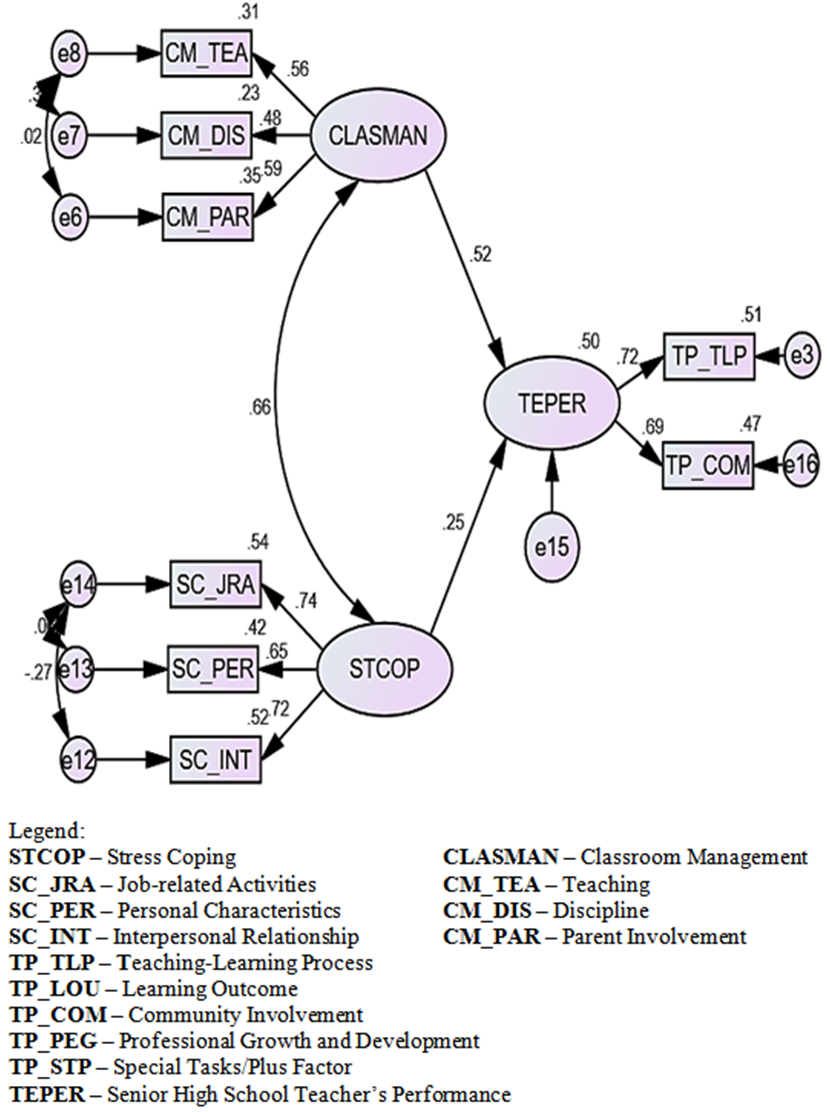
Model 5 also includes (1) Classroom Management (CLASMAN) which is measured with three variables, Teaching (CM_TEA), Discipline (CM_DIS), and Parent Involvement (CM_PAR); and (2) Stress Coping (STCOP) with three variables, Job-related Activities (SC_JRA), Personal Characteristics (SC_PER), and Interpersonal Relationships (SC_INT) towards senior high school teachers' performance (TEPER) as presented in Figure 1. Unlike the previous model, Model 5 shows senior high school teachers' performance (TEPER) which is only measured by KRA 1: Teaching-Learning Process (TP_TLP) and KRA 3: Community Involvement (TP_COM) only. This model is a product of a seemingly more elaborated theory where there was a clear, direct relationship between the latent variables.
Model 5 was found to have indices that consistently indicate a best fit to the data as indicated by its CMIN/DF having a value of 1.546, p-value = 0.113, RMSEA = 0.043, and all other indices such as GFI, NFI, TLI, and CFI are greater than 0.95. All of these fall within each criterion.
As depicted in the model, 50% of the variation in senior high school teachers' performance is accounted for by the combined effects of classroom management (CLASMAN) and stress coping (STCOP). Specifically, 52% of the variation is accounted for classroom management (CLASMAN) carried by Teaching (CM_TEA), Discipline (CM_DIS), and Parent Involvement (CM_PAR), and only 25% of variation was explained by stress coping (STCOP) along with Job-related Activities (SC_JRA), Personal Characteristics (SC_PER), and Interpersonal Relationships (SC_INT).
The standardized estimates of the direct, indirect, and total effects of classroom management and stress coping on teachers' performance are displayed in Table 5. These figures provide an overview of the overall effects among three latent variables, combining their direct and indirect effects while the relationship is mediated by one or more variables. Hence, the total effect achieved by classroom management was 52%, and stress coping was 25%.
Table 6 shows the effects of latent variables, as well as the effects between measured and latent variables, which were estimated to produce regression weights. Results revealed that both classroom management (CLASMAN) and stress coping (STCOP) yield significant relationships relative to senior high school teachers' performance (TEPER).
Table 7 presents the goodness of fit measures of teachers’ Classroom Management (CLASMAN) and Stress Coping (STCOP). It has the following indices: Chi-Square/Degrees of Freedom (CMIN/DF), p-value, Root Mean Square Error of Approximation (RMSEA), Normed Fit Index (NFI), Goodness of Fit Index (GFI), Comparative Fit Index (CFI), and Tucker Lewis Index (TLI).
The parsimonious model that best fits the data indicated that senior high school teachers' performance was embodied with a strong influence on their classroom management and stress coping. Thus, the null hypothesis stating that "There is no model that best fits senior high school teachers' performance." is rejected.
Furthermore, the study shows that classroom management correlated with stress coping supports senior high school teachers' performance. Thus, the better the teachers' classroom management coupled with stress-free life, the better the performance.
This finding is in consonance with the work of Khurshid 53, who stressed that high-performing teachers are more likely to implement innovative methods in the classroom to use classroom management approaches and adequate teaching methods that encourage students' autonomy and reduce custodial control to take responsibility, and to manage classroom problem.
With appropriate teaching methodologies and proper classroom management practices, the faculty’s level of teaching performance thus increases 54. Such a statement may indicate that there is a relationship between the teachers' classroom management style and their teaching performance. This is in contrast to the findings of Guangco 55, who revealed that there is no relationship between classroom management and the teaching performance of the faculty.
With this current classroom reality, teachers know how to manage the students effectively. No matter how efficient a teacher may be, if he or she is unable to control the students in his/her classroom, only very minimal learning may take place. Classroom management is thus an essential and integral aspect of teaching and learning, as well as techniques in managing, motivating, and regulating students as can be acquired by teachers 39. Workplace relationships directly affect a worker's ability to succeed. Because workers are spending, on average, 8 hours per day, these long work hours are resulting in the formation of workplace friendships. These connections can be both positive and have the potential to become harmful.
To address the problem of stating which model best fits senior high school teachers' performance, five (5) structural models have been presented in this study. In identifying the best-fitting model, all indices included must consistently fall within acceptable ranges.
Table 8 presents the summary of goodness of fit measures of the five structural models.
Model 1 presents the correlations of reciprocal relationship of Classroom Management (CLASMAN), Job Satisfaction (JOBSAT) and Stress Coping (STCOP) towards senior high school teachers' performance (TEPER) in five (5) KRAs indicating a poor fit relative to the data as reflected by its CMIN/DF, p-value, GFI, NFI, TLI, CFI and RMSEA with values of 5.639, 0.000, 0.923, 0.878, 0.868, 0.897, and 0.080, respectively.
Model 2 presents the Classroom Management (CLASMAN) and Job Satisfaction (JOBSAT) towards senior high school teachers' performance (TEPER) in five (5) KRAs which did not satisfy the acceptable range to establish a best model as indicated by its CMIN/DF, p-value, GFI, NFI, TLI, CFI and RMSEA with values of 6.947, 0.000, 0.929, 0.878, 0.857, 0.893, and 0.090, respectively.
Model 3 elucidates how the senior high school teachers' performance was affected by job satisfaction and stress coping. The model did not satisfy the set criteria for a good fit model based on its indices as follows: CMIN/DF, p-value, GFI, NFI, TLI, CFI and RMSEA with values of 7.412, 0.000, 0.924, 0.885, 0.864, 0.899, and 0.094, respectively.
Model 4 reveals the reciprocal relationship of (1) Classroom Management (CLASMAN) and Stress Coping (STCOP) towards senior high school teachers' performance (TEPER) in five (5) KRAs as indicated by its CMIN/DF, p-value, GFI, NFI, TLI, CFI, and RMSEA with values of 7.349, 0.000, 0.928, 0.873, 0.849, 0.887, and 0.093, respectively. Each of the index values did not fall within each criterion.
Finally, Model 5 also includes (1) Classroom Management (CLASMAN) which is measured with three variables, Teaching (CM_TEA), Discipline (CM_DIS), and Parent Involvement (CM_PAR) and (2) Stress Coping (STCOP) with three variables, Job-related Activities (SC_JRA), Personal Characteristics (SC_PER), and Interpersonal Relationships (SC_INT) towards senior high school teachers' performance (TEPER) which is only measured by KRA 1: Teaching-Learning Process (TP_TLP), and KRA 3: Community Involvement (TP_COM) only. This model is a product of a seemingly more elaborated theory where there was a clear, direct relationship between the latent variables was found to have indices that consistently indicate the best fit to the data as indicated by its CMIN/DF having a value of 1.546, p-value = 0.113, RMSEA = 0.043, and all other indices such as GFI, NFI, TLI, and CFI are greater than 0.95. All of these fall within each criterion. Hence, this is the best-fit model.

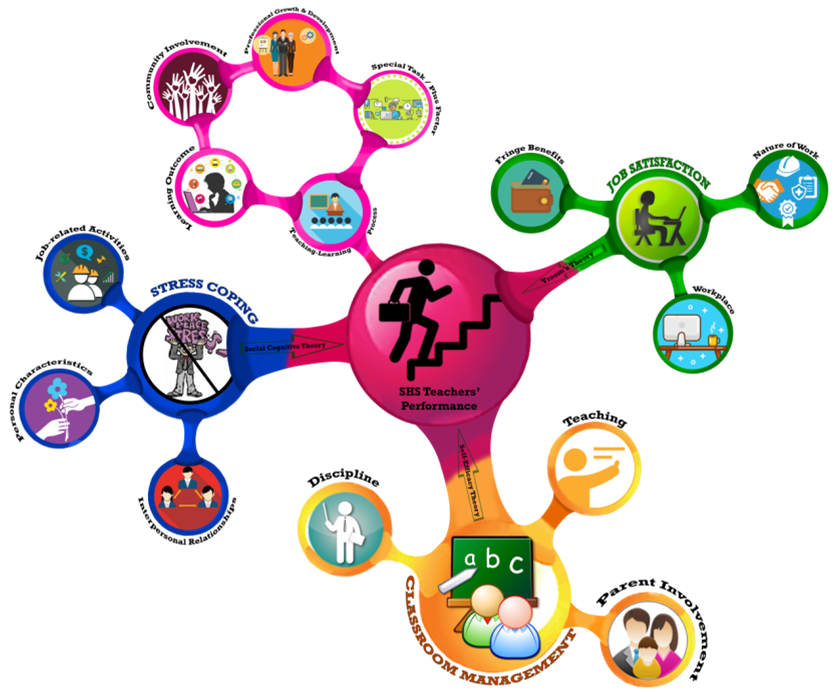
Figure 2 shows the agostic model of senior high school teachers’ performance. It signifies that the performance of senior high school teachers in Region X is affected by Classroom Management, specifically Teaching, Discipline, and Parent Involvement, Job Satisfaction in terms of Working Place, Nature of Work, and Fringe Benefits as well as Stress Coping anchored on Job-related Activities, Personal Characteristics, and Interpersonal Relationships.
The parsimonious model of this study paves the way to the Agostic Model of Senior High School Teachers' Performance, which integrated the three domains in research: classroom management, job satisfaction, and stress coping. Classroom Management consists of three (3) dimensions, namely: Teaching, Discipline, and Parent Involvement.
From a supposed ancient Greek verb ἀγοστεῖν to clasp or hold to oneself (attributed to Homer), agostic originally designates a kind of three-center bonding between a central metal atom and a hydrogen atom which is bonded to a carbon atom in another part of the same molecule; of, relating to, or involving bonding of this kind (en.oxforddictionaries.com). This interaction is involved in all the critical steps of the “ideal” interaction. The agostic M-hicH–C interaction involves the donation of the electron density associated with the C-H bond to a metal center that has a ≤16-electron configuration. Thus, it has a stabilizing effect in order to saturate the coordination sphere of a transition metal. Just like these molecules, all the domains included in this model of senior high school teachers’ performance are being drawn to an agostic interaction which displays a molecule-like structure. At the center is the Senior High School Teachers' Performance which is considered to be the priority of this study. It was then affected by classroom management, job satisfaction, and stress coping, and the three (3) theories serve as bonds/anchors between these latent variables. Classroom management which has the biggest circle among the three, indicates the greatest impact on the performance of senior high school teachers. It was then followed by stress coping, and job satisfaction executed the smallest circle, which means it has the least impact among the three domains.
Based on the vision, mission, and core values of the Department of Education, “We dream of Filipinos who passionately love their country and whose values and competencies enable them to realize their full potential and contribute meaningfully to building the nation. As a learner-centered public institution, the Department of Education continuously improves itself to better serve its stakeholders; To protect and promote the right of every Filipino to quality, equitable, culture-based, and complete basic education where Students learn in a child-friendly, gender-sensitive, safe, and motivating environment, Teachers facilitate learning and constantly nurture every learner, Administrators and staff, as stewards of the institution, ensure an enabling and supportive environment for effective learning to happen, Family, community, and other stakeholders are actively engaged and share responsibility for developing life-long learners; and Maka-Diyos, Maka-tao, Makakalikasan, and Makabansa”, respectively, the agostic model of senior high school teachers’ performance was developed comprising these following theories: Social Cognitive Theory, Self-Efficacy Theory, and Vroom’s Theory of Job Satisfaction.
This model provides an in-depth perspective on the roles of these domains in senior high school teachers’ performance. In order to achieve outstanding performance, senior high school teachers should exhibit the said domains of classroom management. It should be noted that they need to teach about responsibility and provide opportunities to the students, walk around the classroom and monitor everything that is done while students are working in their seats, and encourage them to associate the lessons from their own experiences. They may introduce classroom rules to the students on the very first day of the school year, need to be motivators to those who fails, givers of praise to those who succeed, and the stimulators of good deeds and cooperation between students, ought to convey the parents to participate in the different classroom and school activities, extending their support in the classroom needs and to conduct frequent follow-up on their child's scholastic performance. Every member of the organization may help each other and build strong partnerships in addressing students' needs and provide feedback on students' performance simultaneously.
Bandura’s theory of self-efficacy hypothesized that differences in teacher’s self-efficacy beliefs would affect their subsequent instructional quality – with higher levels of self-efficacy leading to more cognitively activating behavior, better classroom management, and instructional competence and so with teacher's performance. Teacher efficacy for classroom management is the teacher's perceived ability to manage and respond to disruptive student behavior and to establish expectations and rules to guide classroom behavior. Effective teachers possess a classroom management system that weakens the undesirable behaviors of the student and reinforces good behavior. Teachers’ classroom management style is the reflection of their instructional strategies 56. Teachers who feel efficacious about their instruction, management, and relationships with students may have more cognitive and emotional resources available to press students towards completing more complex tasks and developing deeper understandings, which could affect teachers' performance 57.
Teachers with a strong sense of individual efficacy tend to spend more time planning, designing, and organizing what they teach. They are open to new ideas, willing to try new strategies, set high goals, and persist through setbacks and times of change. Ultimately, those teachers who put forth the additional effort to develop lessons that are successful and are motivated to make changes when necessary to improve their instruction have the likelihood of increasing student motivation 58.
Stress coping, on the other hand, consists of the following domains: Job-Related Activities, Personal Characteristics, and Interpersonal Relationships. Senior high school teachers may plan activities ahead of time, turn to God and pray for guidance and protection whenever they are in times of stress, talk to someone to relieve stress and work cooperatively among the members of the organization. They may exert more effort in performing all duties and responsibilities to rate an outstanding performance.
This study also gives an overview of teachers' stressful encounters in teaching. The theoretical perspective is mainly inspired by the work of Albert Bandura in his Social Cognitive Theory when it defines stress as a particular relationship between the person and the environment that is appraised by the person as taxing or exceeding his or her resources and endangering his or her well appraisals. Stress appraisals refer to the stakes a person has in a certain encounter, such as a situation that is perceived as being either irrelevant, benign-positive, or stressful. Appraisals are determined simultaneously by sensing environmental demands and personal resources. They can change over time due to coping effectiveness, altered requirements, or improvements in personal abilities. It emphasizes the continuous, reciprocal nature of the interaction between the person and the environment. The complex process of emotion is composed of causal antecedents, mediating processes, and effects. Antecedents are person variables, such as commitment or beliefs, on the one hand, and environmental variables, such as demands or situational constraints, on the other hand. The mediating process refers to cognitive appraisals of personal coping options and situational demands as well as to coping efforts aimed at being more or less problem-focused or emotional-focused. Stress experiences and coping results may cause immediate effects, such as physiological changes or long-term effects concerning psychological well-being, somatic health and social functioning. Apparently, that emotions exist as a specific encounter of the person with the environment and that both exert a reciprocal influence on each other; second, that emotions and cognitions are antecedent to continuous change; and third, that the meaning of a transaction is derived from the underlying context, i.e., various attributes of a natural setting determine the actual experience of emotions and the resulting action tendencies 59.
To reduce stress, it is essential to know the symptoms of stress. It is important that teachers are able to develop proper coping strategies for stress that are unique to their individual personalities. Everyone reacts to the stressors differently. It is much necessary to research and practice effective coping strategies to find which will be of help to each individual. In this way, teachers will have a greater sense of purpose, clarity, and motivation about their own abilities 46, 60. As cited by Pallo 61, Guglielmi and Tatrow state that coping with stress is important for teachers to have a better quality of life, both personally and professionally. Hence, their stress does not intrude on the achievement of their educational goals.
The last aspect of this model is job satisfaction having domains as follows: Working Place, Nature of Work, and Fringe Benefits. It has the least impact on performance. Senior high school teachers must consider their job satisfaction in order to have an outstanding performance. Together with other stakeholders in the organization, they may maintain a degree of peace in the school and always be involved in school staff/faculty meetings in general to achieve job satisfaction. Administrators may initiate activities that encourage teachers to do their best and be recognized and given awards for the things they accomplished meritoriously.
Vroom’s theory of job satisfaction looked at the interaction between personal and workplace variables. However, he also injected into his theory the element of worker’s expectations. The relevance of this theory is that whenever workers perform better at work and put forth more effort, then they will be compensated accordingly. Dissatisfaction will result if discrepancies occur between the expected compensation and the actual outcome. If employees feel as if they have been treated unfairly or otherwise receive less than they expect, then dissatisfaction may occur. The compensation does not have to be in the form of monetary, but the pay is typically the most visible and most easily modified element of the outcome. Salary also has significance beyond monetary value and the potential to acquire material items, and Gruneberg 62 notes that it is also an indication of personal achievement, organizational status, and recognition. In addition, Vroom's generated a three-variable equation for scientifically determining job satisfaction. The first variable is expectancy which talks about an individual's perception of how well he or she can carry out a given task. Instrumentality is the second variable which refers to the individual's confidence that he or she will be compensated fairly for performing the task. Valence is the third variable, which considers the value of the expected reward to the employee. In Vroom's formula, when all three factors are high, workers will be more satisfied and are more motivated. If any of the factors become low, work performance and employee motivation will decline.
Teachers' satisfaction is very substantial for student achievement and school performance as well, which in turn affects their job performance. It increases teacher motivation and commitment to teaching 63, 64, 65. Satisfied teachers tend to provide higher-quality teaching, which can benefit students’ success 66, 67, 68. On the other hand, discontent teachers who are dissatisfied with their job will not be committed and productive. In the Department of Education, based on performance appraisal, poor performance surfaced as a problem 39.
Thus, this model suggests that senior high school teachers may consider enriching themselves with various classroom management and stress coping, which could enhance their skills and potential to better manage learners and have outstanding performance in order to attain job satisfaction for a globally sustainable 21st-century education.
In the light of the findings, the following conclusions were derived:
Senior high school teachers' classroom management in terms of teaching, discipline, and parent involvement are all highly managed. They are not only frequently taught academics to the students in the classroom but the responsibility and provide opportunities as well. They are also frequently walking around the classroom and monitoring everything that is done while students are working in their seats and frequently encourage them to associate the lessons with their own experiences. They frequently introduce classroom rules to the students on the very first day of the school year. They are also motivators to those who fail, givers of praise to those who succeed, and stimulators of good deeds and cooperation between their students. They frequently promote parent involvement in their classroom, and they frequently develop teacher-parent partnerships. In case a particular problem arises, teachers frequently hold extra parent conferences.
They are fairly satisfied with their working place, nature of work, and fringe benefits. Senior high school teachers are fairly satisfied with the degree of peace in the school, school staff/faculty meetings in general, and of course, the recognition and reward, also with the job reputation in society, job security, and the level of competence in the subject area. Senior high school teacher's job satisfaction in terms of fringe benefits is entailed highly with performance-based incentives, maternity/paternity leave, and sick leave policy while they are undecided about the salary loan.
Stress coping among senior high school teachers is high, specifically in their personal characteristics, job-related activities, and interpersonal relationships. To cope with stress, senior high school teachers frequently plan activities ahead of time; they frequently ensure that jobs are clearly defined to avoid ambiguity and frequently agree that stress is a mere challenge. They are spiritually built and frequently turn to God and pray for guidance and protection whenever they are in times of stress. They have mutual cooperation, and the spirit of teamwork frequently exists among the members of the organization. They frequently strive forward to achieve greater things because of the goodwill and cooperation they earn from their colleagues in the organization, and they frequently talk to someone to relieve stress.
Senior high school teachers perform very satisfactorily in all of the Key Result Areas (KRAs), namely: Teaching-Learning Process, Learning Outcome, Community Involvement, Professional Growth and Development, and Special Tasks/Plus Factor.
Among the variables included in the study, only classroom management and stress coping best predict their performance.
Based on the aforementioned conclusion, senior high school teachers are encouraged to teach about responsibility and provide opportunities to the students, walk around the classroom and monitor everything that is done while students are working in their seats, and encourage them to associate the lessons from their own experiences. They may introduce classroom rules to the students on the very first day of the school year.
Senior high school teachers, administrators, and parents need to be motivators to those who fail, givers of praise to those who succeed, and stimulators of good deeds and cooperation between students. They ought to convey to the parents to participate in the different classroom and school activities, extend their support in the classroom needs, and conduct frequent follow-ups on their child's scholastic performance.
Senior high school teachers and parents may help each other and build strong partnerships in addressing students' needs and provide feedback on students' performance simultaneously. School administrators, teachers, and stakeholders may maintain a degree of peace in the school and always be involved in school staff/faculty meetings in general to achieve job satisfaction. Administrators may initiate activities that encourage teachers to do their best and be recognized and given awards for the things they accomplished meritoriously.
Senior high school teachers may plan activities ahead of time, turn to God and pray for guidance and protection whenever they are in times of stress, talk to someone to relieve stress and work cooperatively among the members of the organization. They may exert more effort in performing all duties and responsibilities to rate an outstanding performance.
Senior high school teachers may consider enriching themselves with various classroom management and stress coping, which could enhance their skills and potential to better manage the students and improve their performance.
The researchers would like to extend their gratitude to Central Mindanao University, headed by Dr. Jesus Antonio G. Derije, the University President, Department of Education Division of Bukidnon, Old Damulog National High School, family, and friends.
| [1] | Gelpi, G. (2008). Teachers educated on discipline: Class management affects pupils' success. McClatchy - Tribune Business News. | ||
| In article | |||
| [2] | Johansen, A., Little, S. G. & Akin-Little, A. (2011). An Examination of New Zealand teachers’ attributions and perceptions of behavior, classroom management, and the level of formal teacher training received in behavior management. | ||
| In article | View Article | ||
| [3] | Ingersoll, R. M., & Smith, T. M. (2003), The wrong solution to the teacher shortage. Education Leadership (60) 7: 10-22. | ||
| In article | |||
| [4] | Donovan, J. (2002). Work motivation. In N. Anderson, D. Ones, H. Sinangil, & C. Viswesvaran (Eds.), Handbook of industrial, work & organizational psychology (pp. 53-77), London: Sage. | ||
| In article | |||
| [5] | Gayeta, N. E. & Caballes, D. G. (2017). Measuring conceptual change on stoichiometry using mental models and ill-structured problems in a flipped classroom environment. Asia Pacific Journal of Multidisciplinary Research, 5(2), 104-113. | ||
| In article | |||
| [6] | Guiao, C. D., & Caballes, D. G (2023). Teachers’ perception on integrating historical vignettes in teaching science concepts. International Journal of Innovative Science and Research Technology, 8(1), 1985-1990. | ||
| In article | |||
| [7] | Narca, M. L, & Caballes, D. G. (2021). Exploring students’ mental constructs on evolution towards proposed pedagogical interventions. International Journal of Science and Research, 10(8), 857-862. | ||
| In article | |||
| [8] | Caballes, D. G., Panol, R. F., Vasquez, A. G., & Valdez, M. R. (2022). Offline modular learning in a public school system: its perceived effects on school operations. International Journal of Research in Engineering and Science, 10(3), 21-26. | ||
| In article | |||
| [9] | Ucang, J. & Tan, D.A. (2013). Students’ Beliefs and Mathematics Performance in a Process-Oriented Guided-Inquiry Learning (POGIL) Environment. CMU Journal of Science. 17 (2013), 141-157. | ||
| In article | |||
| [10] | Florungco, J. K. E. & Caballes, D. G. (2021). A narrative study of science teaching methods and techniques in the new normal. International Journal of Asian Education, 2(3), 296-303. | ||
| In article | View Article | ||
| [11] | Ong, A. K. S., Prasetyo, Y. T., Chuenyindeedobla, T., Young, M. N., Doma, B. T., Caballes, D. G., Centeno, R. S., Morfe, A. S., & Bautista,C. S. (2022). Preference analysis on the online learning attributes among senior high school students during the COVID-19 pandemic: a conjoint analysis approach. Evaluation and Program Planning, 102100. | ||
| In article | View Article PubMed | ||
| [12] | Caballes, D. G., & Tabang, M. P. (2022). Grade 10 students' online learning readiness and e-learning engagement in a science high school during a pandemic. Journal of Humanities and Education Development, 4(3), 237-241. | ||
| In article | View Article | ||
| [13] | Narca, M. L., & Caballes, D. G. (2021). Learning motivation: strategies to increase students’ engagement in online learning at San Sebastian College-Recoletos, Manila. International Journal of Asian Education, 2(4), 573-580. | ||
| In article | View Article | ||
| [14] | Aguanta, E. & Tan, D.A. (2018). Effects of Dyad Cooperative Learning Strategy on Mathematics Performance and Attitude of Students Towards Mathematics, International Journal of English and Education, 7(3), 303-313. | ||
| In article | |||
| [15] | Ciubal-Fulgencio, N., & Tan, D. (2018). Effects of mathematics communication strategies on attitude and performance of grade 8 students, Asian Academic Research Journal of Multi-disciplinary, Volume 5, Issue 2, 44-53, February 2018. | ||
| In article | |||
| [16] | Cordova, C., & Tan, DA. (2018). Mathematics Proficiency, Attitude and Performance of Grade 9 Students in Private High School in Bukidnon, Philippines. Asian Academic Research Journal of Social Sciences and Humanities, vol. 5, issue 2, pp. 103-116, February 2018. | ||
| In article | |||
| [17] | Doblada, J. C. L. & Caballes, D. G., (2021). Relationship of teachers’ technology skills and selected profile: basis for redesigning training for online distance learning modality. Instabright International Journal of Multidisciplinary Research, 3(1), 17-22. | ||
| In article | View Article | ||
| [18] | Caballes, D. G., Panol, R. F., Vasquez, A. G., & Valdez, M. R. (2021). Competency level of science teachers in teaching evolution: basis for training design. Global Journal of Advanced Research, 8(8), 235-243. | ||
| In article | |||
| [19] | Herrera, M. B., & Caballes, D. G. (2022). Challenges of teachers amidst sustained global health crisis. Journal of Humanities and Education Development 4 (3), 142-149, 4(3), 142-149. | ||
| In article | View Article | ||
| [20] | Cordova, C., Pagtulon-an, EA., & Tan, DA. (2018). No Assignment Policy: A Boon or A Bane?. International Journal of English and Education, 8(1), 144-160, January 2019. | ||
| In article | |||
| [21] | Cordova C., Tan D. and Ucang J. (2018). Take Home Assignment and Performance of Grade 11 Students. International Journal of Scientific and Technology Researches, 7(12), 57-61, December 2018. | ||
| In article | |||
| [22] | Pagtulon-an, E. & Tan D. (2018). Students’ Mathematics Performance and Self-efficacy Beliefs in a Rich Assessment Tasks Environment. Asian Academic Research Journal of Multidisciplinary. 5(2), 54-64. | ||
| In article | |||
| [23] | Tan, D.A., Cordova, C.C., Saligumba, I.P.B., Segumpan, L.L.B. (2019). Development of Valid and Reliable Teacher-made Tests for Grade 10 Mathematics. International Journal of English and Education, 8(1), January 2019, 62-83. | ||
| In article | |||
| [24] | Jackaria, P. M., & Caballes, D. G. (2022). Equipping teachers to adapt: a look into teachers’ professional development experiences in times of COVID-19 pandemic. Journal of Humanities and Education Development, 4(4), 18-22. | ||
| In article | View Article | ||
| [25] | Panol, R. F., Vasquez, A. G., Valdez, M. R., & Caballes, D. G., (2021). Parental involvement on students' completion of learning tasks in science. International Journal of Scientific Research in Multidisciplinary Studies, 7(5), 1-7. | ||
| In article | |||
| [26] | Tan, D. A., & Balasico, C. L. (2018). Students’ Academic Performance, Aptitude and Occupational Interest in the National Career Assessment Examination. PUPIL: International Journal of Teaching, Education and Learning, 2(3), 01-21. | ||
| In article | View Article | ||
| [27] | Tan, D.A. (2018). Mathematical Problem Solving Heuristics and Solution Strategies of Senior High School Students, International Journal of English and Education, 7(3), July 2018, 1-17. | ||
| In article | |||
| [28] | Duque, C. & Tan, D. (2018). Students’ Mathematics Attitudes and Metacognitive Processes in Mathematical Problem Solving. European Journal of Education Studies, 4(11), 1-25. | ||
| In article | |||
| [29] | Balasico, C.L., & Tan, D.A., (2020). Predictors of Performance of Central Mindanao University Laboratory High School Students, PEOPLE: International Journal of Social Sciences, 6(2), 1-21. | ||
| In article | View Article | ||
| [30] | Caballes, D. G., & Sapad, R. P. (2022). Initiation of professional development program for science instructional leaders within the technological pedagogical content knowledge (TPACK) framework. The Palawan Scientist, 14(1), 75-83. | ||
| In article | |||
| [31] | Djigic, G. & Stojiljkovic, S. (2012). Protocol for classroom management styles assessment designing. The 5th Intercultural Arts Education Conference: Design Learning. Procedia - Social and Behavioral Sciences 45 (2012) 65-74. | ||
| In article | View Article | ||
| [32] | The Incredible Years, Inc. USA (2012). Teacher Classroom Management Strategies Questionnaire. Retrieved on September 1, 2018, from http://www.incredibleyears.com | ||
| In article | |||
| [33] | Gencer, E. T. (2004). The Overall Job Satisfaction And The Curriculum Satisfaction Of The Teachers At The Second Cycle Of Public Elementary Schools. Middle East Technical University. | ||
| In article | |||
| [34] | Tayyar, K. A. (2014). Job satisfaction and motivation amongst secondary school teachers in Saudi Arabia. University of York. | ||
| In article | |||
| [35] | Senate of the Philippines Legislative Digital Resources. Republic of the Philippines Department of Education RA 4670 (Magna Carta for Public School Teachers). Accessed @ https://issuances-library.senate.gov.ph/subject/magna-carta-public-school-teachers-ra-4670. | ||
| In article | |||
| [36] | Ugwuja, F. U. (2009). Preferred Stress Management Strategies Adopted by the Administrative Staff of Tertiary Institutions in Federal Capital Territory (FCT), Abuja. Department of Health and Physical Education, University of Nigeria, Nsukka. | ||
| In article | |||
| [37] | Nayak, J. (2008). Factors Influencing Stress and Coping Strategies Among the Degree College Teachers of Dharwad City, Karnataka. Department of Family Resource Management. College of Rural Home Science, University of Agricultural Sciences, Dharwad- 580 005. | ||
| In article | |||
| [38] | Republic of The Philippines Department Of Education (2015). Deped Orders. Do 2, S. 2015 – Guidelines On The Establishment And Implementation Of The Results-Based Performance Management System (Rpms) In The Department Of Education. | ||
| In article | |||
| [39] | Bongcayao, M. Y. (2014). Classroom Management, Instructional Competence, and Professional Characteristics: A Structural Model on Teachers' Performance. Unpublished Dissertation. Central Mindanao University, Musuan, Maramag, Bukidnon. | ||
| In article | |||
| [40] | Tran, V. D., & Le, M. T. L. (2015). School environment factors as predictors for teachers' teaching efficacy, teacher stress, and job satisfaction. International Education Research, 3(2), 28-46. Retrieved November 10, 2018. | ||
| In article | View Article | ||
| [41] | Skaalvik, E. M. & Skaalvik, S. (2011). Teacher job satisfaction and motivation to leave the teaching profession: relations with school context, feeling of belonging, and emotional exhaustion. Teaching and Teacher Education, 27, 1029-1038. | ||
| In article | View Article | ||
| [42] | Crossman, A. & Harris, P. (2006). Job satisfaction of secondary school teachers. Educational Management Administration and Leadership, 34, 29-46. | ||
| In article | View Article | ||
| [43] | Tye, B. B. & O’Brien, L. (2002). Why are experienced teachers leaving the profession? Phi Delta Kappan, 84(1), 24-32. | ||
| In article | View Article | ||
| [44] | Mekonnen, T. (2014). Factors Affecting Job Performance in Public Secondary Schools of West Hararghe Zone, Oromia Regional State | ||
| In article | |||
| [45] | Masood, A. (2013). Effect of job stress on employee retention. A study on the banking sector of Pakistan. International Journal of Scientific Research Publication, 3 (9), 1-8. | ||
| In article | |||
| [46] | Radha, G. (2014). Occupational stress among the bank employees in Tiruvarur District of Tamilnadu. Indian Streams Research Journal, 4(2), 1-5 | ||
| In article | |||
| [47] | Sharma, J. (2013). Role stress among employees. An Empirical Study of Commercial Bank. Gurukul Business Review, 7, 53-61 | ||
| In article | |||
| [48] | Galindo, A. M. G. (2017). Classroom Management, Emotional Intelligence, Competencies, and Performance of Teachers in Region X. Unpublished Dissertation. Central Mindanao University, Musuan, Maramag, Bukidnon | ||
| In article | |||
| [49] | Lewis, R. (2006). Classroom discipline in Australia. In C Evertson & C. S. Weinstein (Eds.), International handbook of classroom management: Research, practice and contemporary issues (pp. 1193-1214). Hillsdale, NJ: Lawrence Erlbaum. | ||
| In article | |||
| [50] | Dean, R. (2002). Effective Teaching: Educational Journal | ||
| In article | |||
| [51] | Wragg, E. (2009). Classroom Teaching Skills: the research findings of the teacher education project | ||
| In article | |||
| [52] | Moore, A. (n.d.). Problems Teachers Face in the Classroom. Accessed on November 10, 2018 at https://classroom.synonym.com/schools-children-bad-behavior-8013321.html. | ||
| In article | |||
| [53] | Khurshid, F., Tanveer, A., & Qasmi, F. N. (2012). Relationship between study habits and academic achievement among hostel living and day scholars’ university students. British Journal of Humanities and Social Sciences, 3(2), 34-42. | ||
| In article | |||
| [54] | Buskist, W. (2002). Evaluating Your Teaching Performance Classroom Management. Guide for Principals to Support Teachers. Retrieved September 19, 2018, from: www.doc.in.gov/sir/docs. | ||
| In article | |||
| [55] | Guangco, L. (2008). Classroom Management Styles and Teaching Performance of Faculty Members of La Salle University | ||
| In article | |||
| [56] | Woolfolk, H. A., Davis, H. & Pape, S. (2006). Teachers' knowledge, beliefs, and thinking. In: Alexander PA, Winne PH (eds) Handbook of educational psychology. Erlbaum, Mahwah, pp 715-737. | ||
| In article | |||
| [57] | Jaggernauth, S. H. & Charles, M. J. (2015). Initial Teacher Efficacy of In-Service Secondary Teachers in Trinidad and Tobago. Caribbean Curriculum. Vol. 23, 2015, 23-48. | ||
| In article | |||
| [58] | Roldan, K. B. (2017). Self-Efficacy, Classroom Management and Instructional Competence of Teachers: A Structural Model on Performance. Unpublished Dissertation. Central Mindanao University, Musuan, Maramag, Bukidnon | ||
| In article | |||
| [59] | Schwarzer, R. & S. Hallum (2008). Perceived Teacher Self-Efficacy as a Predictor of Job Stress and Burnout: Mediation Analyses. International Association of Applied Psychology 57(1): 152-171. | ||
| In article | View Article | ||
| [60] | Bachkirova, T. (2005). Teacher Stress and Personal Values: An Exploratory Study. School Psychology International 26(3): 340-352. | ||
| In article | View Article | ||
| [61] | Pallo, V. P. A. (2013). Structural Model of Stress Coping Behavior among Secondary School Teachers. Unpublished Dissertation. Central Mindanao University, Musuan, Maramag, Bukidnon | ||
| In article | |||
| [62] | Greenberg, P. (2007). Look out below! Early childhood today, 21(4), 16. | ||
| In article | |||
| [63] | Judge, T. A., Thoresen, C. J., Bono, J. E., & Patton, G. K. (2001). The job satisfaction–job performance relationship: A qualitative and quantitative review. Psychological Bulletin, 127(3), 376–407. | ||
| In article | View Article PubMed | ||
| [64] | OECD (Organization for Economic Cooperation and Development). (2014). TALIS 2013: Results: An International Perspective on Teaching and Learning. OECD Publishing. | ||
| In article | |||
| [65] | Van Maele, D. & Van Houtte, M. (2012). The role of teacher and faculty trust in forming teachers' job satisfaction: Do years of experience make a difference? Teaching and Teacher Education, 28(6), 879-889. | ||
| In article | View Article | ||
| [66] | Collie, R. J., Shapka, J. D., & Perry, N. E. (2012). School climate and social–emotional learning: Predicting teacher stress, job satisfaction, and teaching efficacy. Journal of Educational Psychology, 104(4), 1189-1204. | ||
| In article | View Article | ||
| [67] | Demirtas, Z. (2010). Teachers’ job satisfaction levels. Procedia - Social and Behavioral Sciences, 9, 1069-1073. | ||
| In article | View Article | ||
| [68] | Griva, E., Panitsides, E. & Chostelidou,D. (2012). Identifying factors of job Motivation and Satisfaction of Foreign Language Teachers: Research project design. Procedia Social and Behavioral Sciences, 46, 543-547. | ||
| In article | View Article | ||
Published with license by Science and Education Publishing, Copyright © 2023 Jeanalyn A. Celis, Denis A. Tan, Vicente G. Celis Jr. and Roger J. Tan
 This work is licensed under a Creative Commons Attribution 4.0 International License. To view a copy of this license, visit
http://creativecommons.org/licenses/by/4.0/
This work is licensed under a Creative Commons Attribution 4.0 International License. To view a copy of this license, visit
http://creativecommons.org/licenses/by/4.0/
| [1] | Gelpi, G. (2008). Teachers educated on discipline: Class management affects pupils' success. McClatchy - Tribune Business News. | ||
| In article | |||
| [2] | Johansen, A., Little, S. G. & Akin-Little, A. (2011). An Examination of New Zealand teachers’ attributions and perceptions of behavior, classroom management, and the level of formal teacher training received in behavior management. | ||
| In article | View Article | ||
| [3] | Ingersoll, R. M., & Smith, T. M. (2003), The wrong solution to the teacher shortage. Education Leadership (60) 7: 10-22. | ||
| In article | |||
| [4] | Donovan, J. (2002). Work motivation. In N. Anderson, D. Ones, H. Sinangil, & C. Viswesvaran (Eds.), Handbook of industrial, work & organizational psychology (pp. 53-77), London: Sage. | ||
| In article | |||
| [5] | Gayeta, N. E. & Caballes, D. G. (2017). Measuring conceptual change on stoichiometry using mental models and ill-structured problems in a flipped classroom environment. Asia Pacific Journal of Multidisciplinary Research, 5(2), 104-113. | ||
| In article | |||
| [6] | Guiao, C. D., & Caballes, D. G (2023). Teachers’ perception on integrating historical vignettes in teaching science concepts. International Journal of Innovative Science and Research Technology, 8(1), 1985-1990. | ||
| In article | |||
| [7] | Narca, M. L, & Caballes, D. G. (2021). Exploring students’ mental constructs on evolution towards proposed pedagogical interventions. International Journal of Science and Research, 10(8), 857-862. | ||
| In article | |||
| [8] | Caballes, D. G., Panol, R. F., Vasquez, A. G., & Valdez, M. R. (2022). Offline modular learning in a public school system: its perceived effects on school operations. International Journal of Research in Engineering and Science, 10(3), 21-26. | ||
| In article | |||
| [9] | Ucang, J. & Tan, D.A. (2013). Students’ Beliefs and Mathematics Performance in a Process-Oriented Guided-Inquiry Learning (POGIL) Environment. CMU Journal of Science. 17 (2013), 141-157. | ||
| In article | |||
| [10] | Florungco, J. K. E. & Caballes, D. G. (2021). A narrative study of science teaching methods and techniques in the new normal. International Journal of Asian Education, 2(3), 296-303. | ||
| In article | View Article | ||
| [11] | Ong, A. K. S., Prasetyo, Y. T., Chuenyindeedobla, T., Young, M. N., Doma, B. T., Caballes, D. G., Centeno, R. S., Morfe, A. S., & Bautista,C. S. (2022). Preference analysis on the online learning attributes among senior high school students during the COVID-19 pandemic: a conjoint analysis approach. Evaluation and Program Planning, 102100. | ||
| In article | View Article PubMed | ||
| [12] | Caballes, D. G., & Tabang, M. P. (2022). Grade 10 students' online learning readiness and e-learning engagement in a science high school during a pandemic. Journal of Humanities and Education Development, 4(3), 237-241. | ||
| In article | View Article | ||
| [13] | Narca, M. L., & Caballes, D. G. (2021). Learning motivation: strategies to increase students’ engagement in online learning at San Sebastian College-Recoletos, Manila. International Journal of Asian Education, 2(4), 573-580. | ||
| In article | View Article | ||
| [14] | Aguanta, E. & Tan, D.A. (2018). Effects of Dyad Cooperative Learning Strategy on Mathematics Performance and Attitude of Students Towards Mathematics, International Journal of English and Education, 7(3), 303-313. | ||
| In article | |||
| [15] | Ciubal-Fulgencio, N., & Tan, D. (2018). Effects of mathematics communication strategies on attitude and performance of grade 8 students, Asian Academic Research Journal of Multi-disciplinary, Volume 5, Issue 2, 44-53, February 2018. | ||
| In article | |||
| [16] | Cordova, C., & Tan, DA. (2018). Mathematics Proficiency, Attitude and Performance of Grade 9 Students in Private High School in Bukidnon, Philippines. Asian Academic Research Journal of Social Sciences and Humanities, vol. 5, issue 2, pp. 103-116, February 2018. | ||
| In article | |||
| [17] | Doblada, J. C. L. & Caballes, D. G., (2021). Relationship of teachers’ technology skills and selected profile: basis for redesigning training for online distance learning modality. Instabright International Journal of Multidisciplinary Research, 3(1), 17-22. | ||
| In article | View Article | ||
| [18] | Caballes, D. G., Panol, R. F., Vasquez, A. G., & Valdez, M. R. (2021). Competency level of science teachers in teaching evolution: basis for training design. Global Journal of Advanced Research, 8(8), 235-243. | ||
| In article | |||
| [19] | Herrera, M. B., & Caballes, D. G. (2022). Challenges of teachers amidst sustained global health crisis. Journal of Humanities and Education Development 4 (3), 142-149, 4(3), 142-149. | ||
| In article | View Article | ||
| [20] | Cordova, C., Pagtulon-an, EA., & Tan, DA. (2018). No Assignment Policy: A Boon or A Bane?. International Journal of English and Education, 8(1), 144-160, January 2019. | ||
| In article | |||
| [21] | Cordova C., Tan D. and Ucang J. (2018). Take Home Assignment and Performance of Grade 11 Students. International Journal of Scientific and Technology Researches, 7(12), 57-61, December 2018. | ||
| In article | |||
| [22] | Pagtulon-an, E. & Tan D. (2018). Students’ Mathematics Performance and Self-efficacy Beliefs in a Rich Assessment Tasks Environment. Asian Academic Research Journal of Multidisciplinary. 5(2), 54-64. | ||
| In article | |||
| [23] | Tan, D.A., Cordova, C.C., Saligumba, I.P.B., Segumpan, L.L.B. (2019). Development of Valid and Reliable Teacher-made Tests for Grade 10 Mathematics. International Journal of English and Education, 8(1), January 2019, 62-83. | ||
| In article | |||
| [24] | Jackaria, P. M., & Caballes, D. G. (2022). Equipping teachers to adapt: a look into teachers’ professional development experiences in times of COVID-19 pandemic. Journal of Humanities and Education Development, 4(4), 18-22. | ||
| In article | View Article | ||
| [25] | Panol, R. F., Vasquez, A. G., Valdez, M. R., & Caballes, D. G., (2021). Parental involvement on students' completion of learning tasks in science. International Journal of Scientific Research in Multidisciplinary Studies, 7(5), 1-7. | ||
| In article | |||
| [26] | Tan, D. A., & Balasico, C. L. (2018). Students’ Academic Performance, Aptitude and Occupational Interest in the National Career Assessment Examination. PUPIL: International Journal of Teaching, Education and Learning, 2(3), 01-21. | ||
| In article | View Article | ||
| [27] | Tan, D.A. (2018). Mathematical Problem Solving Heuristics and Solution Strategies of Senior High School Students, International Journal of English and Education, 7(3), July 2018, 1-17. | ||
| In article | |||
| [28] | Duque, C. & Tan, D. (2018). Students’ Mathematics Attitudes and Metacognitive Processes in Mathematical Problem Solving. European Journal of Education Studies, 4(11), 1-25. | ||
| In article | |||
| [29] | Balasico, C.L., & Tan, D.A., (2020). Predictors of Performance of Central Mindanao University Laboratory High School Students, PEOPLE: International Journal of Social Sciences, 6(2), 1-21. | ||
| In article | View Article | ||
| [30] | Caballes, D. G., & Sapad, R. P. (2022). Initiation of professional development program for science instructional leaders within the technological pedagogical content knowledge (TPACK) framework. The Palawan Scientist, 14(1), 75-83. | ||
| In article | |||
| [31] | Djigic, G. & Stojiljkovic, S. (2012). Protocol for classroom management styles assessment designing. The 5th Intercultural Arts Education Conference: Design Learning. Procedia - Social and Behavioral Sciences 45 (2012) 65-74. | ||
| In article | View Article | ||
| [32] | The Incredible Years, Inc. USA (2012). Teacher Classroom Management Strategies Questionnaire. Retrieved on September 1, 2018, from http://www.incredibleyears.com | ||
| In article | |||
| [33] | Gencer, E. T. (2004). The Overall Job Satisfaction And The Curriculum Satisfaction Of The Teachers At The Second Cycle Of Public Elementary Schools. Middle East Technical University. | ||
| In article | |||
| [34] | Tayyar, K. A. (2014). Job satisfaction and motivation amongst secondary school teachers in Saudi Arabia. University of York. | ||
| In article | |||
| [35] | Senate of the Philippines Legislative Digital Resources. Republic of the Philippines Department of Education RA 4670 (Magna Carta for Public School Teachers). Accessed @ https://issuances-library.senate.gov.ph/subject/magna-carta-public-school-teachers-ra-4670. | ||
| In article | |||
| [36] | Ugwuja, F. U. (2009). Preferred Stress Management Strategies Adopted by the Administrative Staff of Tertiary Institutions in Federal Capital Territory (FCT), Abuja. Department of Health and Physical Education, University of Nigeria, Nsukka. | ||
| In article | |||
| [37] | Nayak, J. (2008). Factors Influencing Stress and Coping Strategies Among the Degree College Teachers of Dharwad City, Karnataka. Department of Family Resource Management. College of Rural Home Science, University of Agricultural Sciences, Dharwad- 580 005. | ||
| In article | |||
| [38] | Republic of The Philippines Department Of Education (2015). Deped Orders. Do 2, S. 2015 – Guidelines On The Establishment And Implementation Of The Results-Based Performance Management System (Rpms) In The Department Of Education. | ||
| In article | |||
| [39] | Bongcayao, M. Y. (2014). Classroom Management, Instructional Competence, and Professional Characteristics: A Structural Model on Teachers' Performance. Unpublished Dissertation. Central Mindanao University, Musuan, Maramag, Bukidnon. | ||
| In article | |||
| [40] | Tran, V. D., & Le, M. T. L. (2015). School environment factors as predictors for teachers' teaching efficacy, teacher stress, and job satisfaction. International Education Research, 3(2), 28-46. Retrieved November 10, 2018. | ||
| In article | View Article | ||
| [41] | Skaalvik, E. M. & Skaalvik, S. (2011). Teacher job satisfaction and motivation to leave the teaching profession: relations with school context, feeling of belonging, and emotional exhaustion. Teaching and Teacher Education, 27, 1029-1038. | ||
| In article | View Article | ||
| [42] | Crossman, A. & Harris, P. (2006). Job satisfaction of secondary school teachers. Educational Management Administration and Leadership, 34, 29-46. | ||
| In article | View Article | ||
| [43] | Tye, B. B. & O’Brien, L. (2002). Why are experienced teachers leaving the profession? Phi Delta Kappan, 84(1), 24-32. | ||
| In article | View Article | ||
| [44] | Mekonnen, T. (2014). Factors Affecting Job Performance in Public Secondary Schools of West Hararghe Zone, Oromia Regional State | ||
| In article | |||
| [45] | Masood, A. (2013). Effect of job stress on employee retention. A study on the banking sector of Pakistan. International Journal of Scientific Research Publication, 3 (9), 1-8. | ||
| In article | |||
| [46] | Radha, G. (2014). Occupational stress among the bank employees in Tiruvarur District of Tamilnadu. Indian Streams Research Journal, 4(2), 1-5 | ||
| In article | |||
| [47] | Sharma, J. (2013). Role stress among employees. An Empirical Study of Commercial Bank. Gurukul Business Review, 7, 53-61 | ||
| In article | |||
| [48] | Galindo, A. M. G. (2017). Classroom Management, Emotional Intelligence, Competencies, and Performance of Teachers in Region X. Unpublished Dissertation. Central Mindanao University, Musuan, Maramag, Bukidnon | ||
| In article | |||
| [49] | Lewis, R. (2006). Classroom discipline in Australia. In C Evertson & C. S. Weinstein (Eds.), International handbook of classroom management: Research, practice and contemporary issues (pp. 1193-1214). Hillsdale, NJ: Lawrence Erlbaum. | ||
| In article | |||
| [50] | Dean, R. (2002). Effective Teaching: Educational Journal | ||
| In article | |||
| [51] | Wragg, E. (2009). Classroom Teaching Skills: the research findings of the teacher education project | ||
| In article | |||
| [52] | Moore, A. (n.d.). Problems Teachers Face in the Classroom. Accessed on November 10, 2018 at https://classroom.synonym.com/schools-children-bad-behavior-8013321.html. | ||
| In article | |||
| [53] | Khurshid, F., Tanveer, A., & Qasmi, F. N. (2012). Relationship between study habits and academic achievement among hostel living and day scholars’ university students. British Journal of Humanities and Social Sciences, 3(2), 34-42. | ||
| In article | |||
| [54] | Buskist, W. (2002). Evaluating Your Teaching Performance Classroom Management. Guide for Principals to Support Teachers. Retrieved September 19, 2018, from: www.doc.in.gov/sir/docs. | ||
| In article | |||
| [55] | Guangco, L. (2008). Classroom Management Styles and Teaching Performance of Faculty Members of La Salle University | ||
| In article | |||
| [56] | Woolfolk, H. A., Davis, H. & Pape, S. (2006). Teachers' knowledge, beliefs, and thinking. In: Alexander PA, Winne PH (eds) Handbook of educational psychology. Erlbaum, Mahwah, pp 715-737. | ||
| In article | |||
| [57] | Jaggernauth, S. H. & Charles, M. J. (2015). Initial Teacher Efficacy of In-Service Secondary Teachers in Trinidad and Tobago. Caribbean Curriculum. Vol. 23, 2015, 23-48. | ||
| In article | |||
| [58] | Roldan, K. B. (2017). Self-Efficacy, Classroom Management and Instructional Competence of Teachers: A Structural Model on Performance. Unpublished Dissertation. Central Mindanao University, Musuan, Maramag, Bukidnon | ||
| In article | |||
| [59] | Schwarzer, R. & S. Hallum (2008). Perceived Teacher Self-Efficacy as a Predictor of Job Stress and Burnout: Mediation Analyses. International Association of Applied Psychology 57(1): 152-171. | ||
| In article | View Article | ||
| [60] | Bachkirova, T. (2005). Teacher Stress and Personal Values: An Exploratory Study. School Psychology International 26(3): 340-352. | ||
| In article | View Article | ||
| [61] | Pallo, V. P. A. (2013). Structural Model of Stress Coping Behavior among Secondary School Teachers. Unpublished Dissertation. Central Mindanao University, Musuan, Maramag, Bukidnon | ||
| In article | |||
| [62] | Greenberg, P. (2007). Look out below! Early childhood today, 21(4), 16. | ||
| In article | |||
| [63] | Judge, T. A., Thoresen, C. J., Bono, J. E., & Patton, G. K. (2001). The job satisfaction–job performance relationship: A qualitative and quantitative review. Psychological Bulletin, 127(3), 376–407. | ||
| In article | View Article PubMed | ||
| [64] | OECD (Organization for Economic Cooperation and Development). (2014). TALIS 2013: Results: An International Perspective on Teaching and Learning. OECD Publishing. | ||
| In article | |||
| [65] | Van Maele, D. & Van Houtte, M. (2012). The role of teacher and faculty trust in forming teachers' job satisfaction: Do years of experience make a difference? Teaching and Teacher Education, 28(6), 879-889. | ||
| In article | View Article | ||
| [66] | Collie, R. J., Shapka, J. D., & Perry, N. E. (2012). School climate and social–emotional learning: Predicting teacher stress, job satisfaction, and teaching efficacy. Journal of Educational Psychology, 104(4), 1189-1204. | ||
| In article | View Article | ||
| [67] | Demirtas, Z. (2010). Teachers’ job satisfaction levels. Procedia - Social and Behavioral Sciences, 9, 1069-1073. | ||
| In article | View Article | ||
| [68] | Griva, E., Panitsides, E. & Chostelidou,D. (2012). Identifying factors of job Motivation and Satisfaction of Foreign Language Teachers: Research project design. Procedia Social and Behavioral Sciences, 46, 543-547. | ||
| In article | View Article | ||