Temozolomide (TMZ) is an alkylating agent central to glioblastoma therapy. Its activity is classically attributed to DNA methylation. Still, the reactive methyl-diazonium ion it generates is an electrophile with the potential to modify multiple cellular nucleophiles, and growing evidence points to a protein-level dimension of TMZ's action—including changes in histone methylation and in the activity of repair-associated enzymes. Because this protein-level activity appears cell-type-specific, treating resistance as a purely DNA-level event may overlook a mechanistic layer relevant to why tumor types differ in their sensitivity to the drug. In this course-based undergraduate research experience (CURE) in Clinical Chemistry, we evaluated the cytotoxic response of three cancer cell lines — MCF-7 (estrogen receptor-positive breast cancer), MDA-MB-231 (triple-negative breast cancer), and U87 (glioblastoma) to TMZ. Cells were treated for 48 hours across a 50–200 µM concentration range, and the MTS assay quantified viability. The Wilcoxon signed-rank test was used to assess significance relative to untreated controls, and four-parameter logistic (4PL) regression was used to model dose-response and estimate IC₅₀ values. Both breast cancer lines were sensitive to TMZ, with IC₅₀ values of 59.0 µM (MCF-7) and 46.4 µM (MDA-MB-231), whereas U87 glioblastoma cells were markedly less responsive (nominal IC₅₀ 213.7 µM). Because only half of the U87 dataset reached statistical significance, its IC₅₀ is considered preliminary. The greater resistance of glioblastoma is consistent with MGMT-mediated repair of O6-methylguanine, but is best interpreted alongside a protein-level dimension of TMZ's action observed in our prior work: in glioma cells, increasing TMZ concentrations were associated with a decrease in histone methylation and a concentration-dependent, bimodal change in the activity of the histone demethylase LSD1 (KDM1A) — largely preserved at 100 µM or below and reduced at higher concentrations — an enzyme itself linked to DNA repair. Considered together, these DNA- and protein-level effects offer a fuller account of TMZ sensitivity than DNA damage alone. Beyond these biological findings, the project gave undergraduates hands-on training in experimental design, statistical analysis, and scientific communication, illustrating the value of embedding authentic research within the undergraduate curriculum.
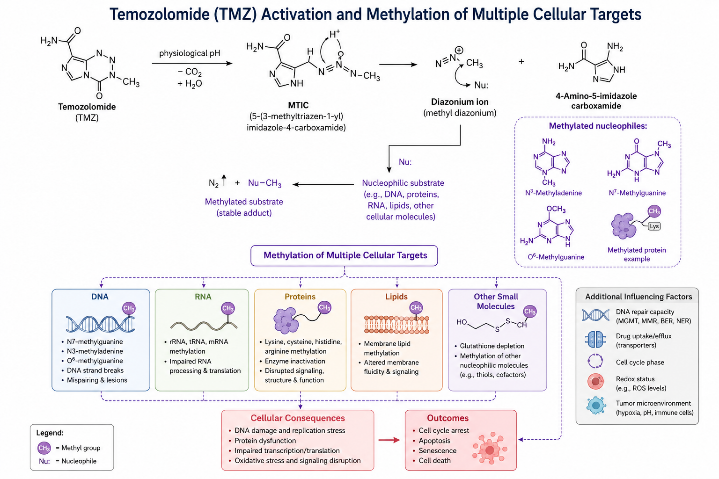
Temozolomide (TMZ) is a prototypical alkylating agent with well-established anticancer properties that exerts its therapeutic effects through DNA and protein methylation, functioning as a potent epigenetic regulator. As a prodrug, TMZ undergoes pH-dependent degradation through a well-characterized pathway: it first converts to 5-(3-methyltriazen-1-yl) imidazole-4-carboxamide (MTIC) as TMZ crosses the blood-brain barrier, which subsequently decomposes into 4-amino-5-imidazole-carboxamide (AIC)—an inactive metabolite—and a methyl-diazonium ion that serves as the primary methylating species in the nucleus 1 (Figure 1). The reactive methyl diazonium species is chemically capable of modifying many nucleophilic targets, including:
• DNA (O⁶-, N⁷-, N³-methyl adducts)
• Proteins (Lys, Cys, His, Arg, etc.)
• RNA
• Lipids and membrane components
• Small cellular nucleophiles (e.g., glutathione and cofactors)
The therapeutic potential of TMZ has been characterized most extensively at the DNA level through genetic and molecular approaches 2, 3, 4, 5, 6, 7. The methyl-diazonium ion methylates DNA at multiple nucleophilic sites: approximately 70% at the N7 position of guanine, 9% at the N3 position of adenine, and, critically, ~5% at the O6 position of guanine. Although N7-methylguanine and N3-methyladenine adducts together constitute nearly 90% of lesions, they are efficiently repaired by the base excision repair (BER) pathway and contribute minimally to cytotoxicity. In contrast, O6-methylguanine (O6-MeG), representing roughly 5–10% of TMZ-induced DNA methylation, is the principal cytotoxic lesion. During DNA replication, O6-MeG mispairs with thymine instead of cytosine, generating G: T mismatches, and futile cycles of mismatch repair (MMR) trigger DNA double-strand breaks, genomic instability, cell-cycle arrest, and ultimately apoptosis.
Beyond this canonical DNA-methylating activity, recent findings indicate that TMZ also exerts effects at the protein level, and its reactive methyl-diazonium ion has the chemical potential to modify additional cellular nucleophiles (Figure 2). One protein-level dimension our group has investigated is TMZ's effect on histone methylation. In vitro, TMZ methylates recombinant histone H3; in glioma cells, however, increasing TMZ concentrations were associated with a progressive decrease in methylated histone levels. To test whether this response is cell-type-specific, we conducted parallel experiments in breast cancer cells. We found that histone methylation was largely unaffected in MDA-MB-231 cells, indicating that the histone-methylation changes are not uniform across tumor types. To probe the basis of these changes, we assessed the activity of lysine-specific demethylase 1 (LSD1/KDM1A), an FAD-dependent amine oxidase that removes mono- and dimethyl marks from H3K4 and H3K9 and is overexpressed in glioma, where it sustains oncogenic transcriptional programs. In glioma cells, TMZ altered LSD1 demethylase activity in a concentration-dependent, bimodal manner: activity was largely preserved at lower concentrations (≤100 µM) but was significantly reduced at higher concentrations (≥150 µM). Together, these observations point to a protein-level, cell-type-specific action of TMZ that operates alongside its DNA-methylating mechanism and may contribute to the drug's overall anti-tumor effect 8, 9, 10, 11, 12, 13, 14.

Whereas TMZ sensitivity has traditionally been explained through DNA-level mechanisms - O6-methylguanine formation and its repair by MGMT and the MMR pathway - the contribution of TMZ's protein-level, epigenetic activity has received comparatively little attention. Because that activity distinguishes glioma from breast cancer cells, it may also help account for differences in TMZ sensitivity between tumor types. In the present study, we therefore evaluated the cytotoxic response of glioma (U87) and breast cancer (MCF-7, MDA-MB-231) cell lines to TMZ using the MTS viability assay, providing a functional, cell-viability readout against which these protein-level, cell-type-specific effects can be interpreted.
Understanding TMZ's effects across different cancer cell lines is essential given the molecular heterogeneity among cancers. Breast cancer, for instance, comprises various subtypes with differing molecular features and responses to chemotherapeutic agents. MCF-7, a luminal A subtype derived from a Caucasian American patient, is estrogen receptor-positive and generally less aggressive 15, 16, 17. In contrast, MDA-MB-231, derived from an African American patient, is triple-negative and exhibits a more aggressive and invasive phenotype. U87 cells, derived from a human glioblastoma, are representative of TMZ's primary clinical target because they can cross the blood-brain barrier 5.
The MDA-MB-231 cell line is characterized by the absence of estrogen receptor (ER), progesterone receptor (PR), and HER2 expression. In contrast, MCF-7 cells, which are ER- and PR-positive luminal-type cells, are responsive to hormone-based therapies such as tamoxifen due to their dependence on estrogen signaling for proliferation. Breast cancer — particularly aggressive triple-negative subtypes — has a well-documented tendency to metastasize to the brain 9, 10, 11, 13, 14. Because MDA-MB-231 cells are resistant to hormone therapies, they require alternative strategies such as chemotherapy, owing to their highly invasive phenotype and enhanced activation of pro-metastatic signaling pathways. Evaluating TMZ's effectiveness in breast cancer cell lines may therefore provide insight into its potential use in treating secondary brain tumors originating from aggressive forms of breast cancer such as MDA-MB-231.
The objective of this study was to assess the response of MCF-7, MDA-MB-231, and U87 cells to TMZ using the MTS viability assay following treatment with a range of drug concentrations. We sought to quantify the relative sensitivity of all three cell lines to provide insight into the broader therapeutic potential of TMZ beyond the well-studied U87 glioblastoma multiforme cell line.
Temozolomide Preparation and Treatment
Temozolomide (Sigma-Aldrich) was dissolved in dimethyl sulfoxide (DMSO) to prepare a stock solution. Working concentrations of 50 µM, 100 µM, 150 µM, and 250 µM were prepared by serial dilution in complete culture medium immediately before each experiment. The final DMSO concentration in all treatment wells did not exceed 0.1% (v/v) to minimize potential solvent-mediated cytotoxicity.
Culturing Cancer Cell Lines for Experimental Assays
Breast cancer cells MCF-7, MDA-MB-231 (human breast adenocarcinoma, triple-negative) and U87 glioma brain cancer cells from ATCC were used in this study. Cell lines were cultured in the Medium suggested by the ATCC protocols supplemented with 10% fetal bovine serum (FBS) and 1% penicillin-streptomycin antibiotic mixture. Cells were maintained in a humidified incubator at 37°C with a 5% CO2 atmosphere. Cell culture medium was refreshed every 2-3 days, and cells were passaged upon reaching 80-90% confluence using 0.25% trypsin-EDTA solution. 8, 9, 10, 11, 15, 16, 17
MTS Cell Viability Assay
Cell viability was assessed using the CellTiter 96 Aqueous One Solution Cell Proliferation Assay (MTS assay; #AB197010, ABCAM). Cells were seeded in 96-well plates at a density of [specify cells/well] in 200 µL complete medium and incubated overnight at 37°C to allow cell attachment and recovery. Following overnight incubation, the medium was aspirated and replaced with 200 µL of TMZ-containing medium at the designated concentrations. A control group received medium with vehicle only (0.1% DMSO).

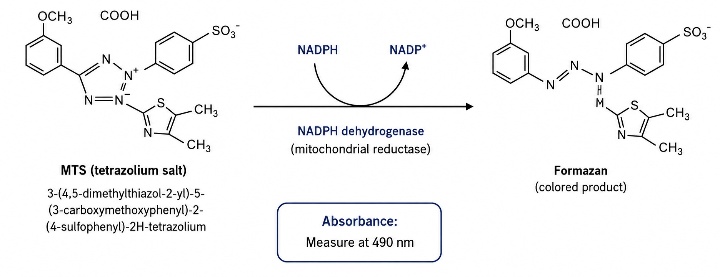
After 48 hours of TMZ exposure at 37°C, 20 µL of MTS reagent was added directly to each well without removing the treatment medium. Plates were returned to the incubator for an additional 1-hour incubation at 37°C to allow formazan product formation. The MTS tetrazolium compound [3- (4,5 – dimethylthiazol – 2 - yl) – 5 - (3 – carboxymethoxyphenyl)-2-(4-sulfophenyl)-2H-tetrazolium] is bioreduced by viable cells via NADPH-dependent dehydrogenase enzymes to generate a soluble formazan product with an absorbance maximum at 490 nm. Absorbance was measured at 490 nm using a microplate spectrophotometer. Each experimental condition was performed in nine replicates, and two independent biological experiments were conducted.
The percentage of viability and growth inhibition was calculated using the following formula:
 |
 |
The IC₅₀ value — the TMZ concentration required to inhibit 50% of cell growth — was used as the quantitative measure of drug cytotoxicity and cellular sensitivity.
Statistical Analysis
The Wilcoxon signed-rank test was used to assess whether treatment at each TMZ concentration significantly altered cell viability relative to the untreated control, with viability normalized to 100%. (H₀: median = 100). An alpha level of 0.05 was used to determine statistical significance; if p < 0.05, the null hypothesis was rejected, indicating a statistically significant TMZ response.
A four-parameter logistic (4PL) nonlinear regression model was used to fit dose-response data for each cell line:
Y = Bottom + (Top − Bottom) / [1 + (X / IC₅₀)^H]
where Y is the percent viability or inhibition, X is the TMZ concentration, Bottom and Top are the minimum and maximum asymptotic response values, IC₅₀ is the concentration producing 50% of the maximal response (the inflection point of the curve), and H is the Hill slope, describing curve steepness. Nonlinear curve fitting was performed using the Excel Solver tool via least-squares optimization to determine the best-fit values for Bottom, Top, IC₅₀, and the Hill coefficient. These parameters were used to compare TMZ sensitivity across the three cell lines.
Statistical Significance of Cell Viability Data
Wilcoxon signed-rank tests were used to determine whether TMZ treatment produced a statistically significant deviation from control (untreated, 100% viability) for each cell line. Table 1 defines the statistical parameters used throughout this analysis.
Summary of statistical findings
• U87 viability at 50 µM (p = 0.722) and 150 µM (p = 0.076) did not differ significantly from control, so only 50% of the U87 dataset reached statistical significance.
• MDA-MB-231 viability differed significantly from control at every tested concentration (100% of the dataset significant).
• MCF-7 viability at 50 µM (p = 0.286) did not differ significantly from control, while all higher concentrations did (75% of the dataset significant).
Dose-Response Curves and IC₅₀ Determination
Percent viability and inhibition were calculated for each TMZ concentration (50, 100, 150, and 200 µM). They fit a four-parameter logistic (4PL) sigmoidal dose-response model for each cell line after 48-hour TMZ exposure and MTS development.

4PL fit: 
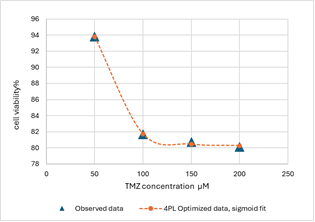
The sigmoidal 4PL regression for MCF-7 as shown in Figure 4 yielded an IC₅₀ of 59.02 µM, a top asymptote of 100.0, a bottom response of 80.02, and a Hill slope of 4.7 — indicating that the observed viability values fall within the lower, saturating region of the curve. Growth inhibition reached 19.9% at the highest TMZ dose tested (200 µM) and plateaued in the 100–200 µM range. The regression fit error of 0.15 indicates a good fit of the model to the observed data.
4PL fit: 
The 4PL regression for MDA-MB-231 was performed using the same model analysis as MCF-7 breast cancer cells, yielding an IC₅₀ of 46.4 µM (Curve not shown), a top asymptote of 100.0, a bottom response of 80.9, and a steep Hill slope of 19.8, again reflecting a response that saturates at relatively low TMZ concentrations. As shown in Table 3, all tested concentrations differed significantly from control; nonetheless, a broader concentration range would improve the robustness of the IC₅₀ estimate by reducing analytical bias and increasing statistical power.
4PL fit: 
The same approach was used to analyze glioma U87 model fitting (Curve not shown). The regression produced a nominal IC₅₀ of 213.7 µM. However, because only 50% of the underlying viability data were statistically significant (Table 2), this value should be interpreted with caution — it reflects an underpowered fit rather than a well-validated cytotoxic threshold. A larger sample size and a broader TMZ concentration range are needed to confirm the U87 IC₅₀.
IC50 results
The IC₅₀ values obtained for MCF-7, MDA-MB-231, and U87 reveal marked differences in TMZ sensitivity across the three cell lines (Table 11). MCF-7, an estrogen receptor-positive breast cancer line, showed an IC₅₀ of 59.02 µM, indicating meaningful sensitivity to TMZ. This sensitivity is consistent with low MGMT expression, which allows MCF-7 cells to rely more heavily on the more error-prone MMR pathway, predisposing damaged cells to apoptosis.
MDA-MB-231 cells, representing triple-negative breast cancer (TNBC), showed a lower IC₅₀ of 46.4 µM. Because reduced IC₅₀ indicates a lower drug concentration is needed to inhibit growth by half, this result suggests that, under these experimental conditions, MDA-MB-231 cells were at least as sensitive to TMZ as MCF-7 cells - a finding that runs somewhat counter to literature reports that TNBC lines typically show reduced TMZ sensitivity (higher IC₅₀) due to elevated MGMT-mediated repair. The comparatively higher IC₅₀ and greater variability observed for MCF-7 likely reflect greater imprecision in the MCF-7 regression fit, which may stem from random experimental error — for example, variability in cell culture conditioning, pipetting, or sample storage — rather than a true biological difference in sensitivity.
U87 glioblastoma cells were expected to show the lowest sensitivity to TMZ, consistent with upregulated MGMT expression reported in the literature 18 19 (Figure 4). The IC₅₀ of 213.7 µM obtained here is directionally consistent with that expectation; however, because only 50% of the U87 viability dataset reached statistical significance, this value cannot be considered clinically meaningful. The result instead reflects an insufficient dataset for robust 4PL regression, and the U87 IC₅₀ should be regarded as inconclusive pending further experiments with a larger sample size and a broader TMZ concentration range.
Sensitivity of TMZ through DNA level mechanisms
TMZ's mechanism of action reflects a balance between DNA damage and repair: when damage prevails, cells with limited repair capacity are more sensitive to TMZ and undergo cell death; when repair mechanisms dominate, cells tend to resist treatment 3, 4, 5.
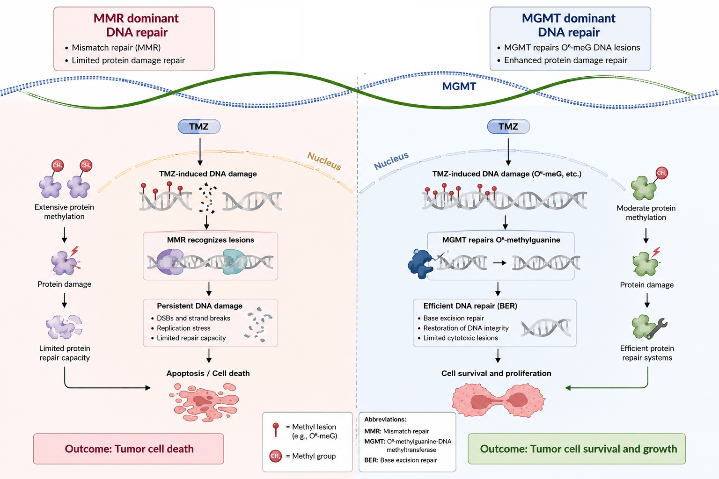
Cells repair TMZ-induced lesions primarily through mismatch repair (MMR), which is activated during DNA replication when a damaged segment is detected. However, under widespread damage, MMR becomes prone to errors and exhaustion. When MMR is defective or overwhelmed by extensive O6-methylguanine formation, replication errors go unrepaired, producing genomic instability that leads to cell death.
O6-methylguanine-DNA methyltransferase (MGMT) is a DNA repair enzyme that directly and irreversibly removes the methyl group from O6-MeG, restoring the unmethylated guanine base. In this reaction, the methyl group is transferred to a cysteine residue in the MGMT active site, inactivating the enzyme and marking it for proteasomal degradation 5 18. Because this mechanism prevents O6-MeG from mispairing with thymine, high MGMT expression is a major determinant of TMZ resistance: tumors with elevated MGMT activity can efficiently counteract TMZ-induced O6-guanine methylation.
TMZ also methylates DNA at the N7 position of guanine and the N3 position of adenine, together accounting for more than 90% of TMZ-induced methylation. These lesions are considerably less mutagenic than O6-MeG and are efficiently repaired by the BER pathway, which excises the damaged base and restores the unmethylated nucleotide. Because BER is less mutagenic and less invasive than MMR, increased BER activity generally favors cell survival and contributes to TMZ resistance 19 20.
In summary, cell fate after TMZ treatment largely depends on whether MMR is overwhelmed by MGMT-driven repair of O6-guanine methylation as malignant cells adapt to the drug's cytotoxic effects. Because BER repairs the much less mutagenic N3-adenine and N7-guanine lesions and generally favors cell survival, it was not a primary focus of the data analysis presented here.
Elevated MGMT expression is a well-documented determinant of TMZ resistance in glioblastoma multiforme (GBM). Prior work also indicates that breast cancer cell lines show variable TMZ responses depending largely on MGMT-mediated O6-methylguanine repair 21. MDA-MB-231 cells, a model of triple-negative breast cancer, often display resistance associated with MGMT expression, whereas MCF-7 cells, which are estrogen receptor-positive, tend to show greater sensitivity, consistent with lower MGMT activity and a more apoptosis-prone phenotype.
Sensitivity of TMZ through protein-level mechanisms
Interpretations of TMZ sensitivity have traditionally centered on DNA-level damage and its repair, but the differences observed here are best read as one facet of a broader mechanism. Because the methyl-diazonium ion is a reactive electrophile, TMZ can act beyond DNA, and our prior work points to a protein-level, epigenetic dimension of its activity in glioma cells. Rather than increasing histone methylation, rising TMZ concentrations were associated with a progressive decrease in methylated histone levels in glioma cells, together with a concentration-dependent, bimodal change in the activity of the histone demethylase LSD1 (KDM1A): activity was largely preserved at lower concentrations (≤100 µM) but declined at higher concentrations (≥150 µM). This behavior appears cell-type-specific—breast cancer cells such as MDA-MB-231 showed little change in histone methylation—which parallels the differential TMZ sensitivity seen across the lines examined here 11, 13. Because LSD1 is overexpressed in glioma and sustains oncogenic transcriptional programs through H3K4 demethylation, a decline in its activity at higher TMZ concentrations could, in principle, reshape chromatin structure and gene expression in a way that complements the genotoxic O6-methylguanine mechanism. 22, 23, 24, 25, 26, 27 MGMT would not capture such a protein-level contribution- and MMR-based cytotoxicity models alone- and it offers a plausible additional explanation for the relatively high TMZ concentrations required to reduce viability in glioma cells such as U87. This interpretation remains to be tested directly: paired measurement of LSD1 activity, histone-methylation status, and viability across a broader concentration range would clarify how this epigenetic dimension interacts with DNA-repair capacity to shape overall TMZ sensitivity.

This study evaluated the cytotoxic effect of Temozolomide (TMZ) on three cancer cell lines - MCF-7, MDA-MB-231, and U87 - using the MTS assay to quantify viability and growth inhibition after 48 hours of exposure, with IC₅₀ values estimated by four-parameter logistic (4PL) regression. TMZ reduced viability in all three lines, yielding IC₅₀ values of 59.0 µM for MCF-7, 46.4 µM for MDA-MB-231, and a nominal 213.7 µM for U87 (Table 12).
Both breast cancer lines were sensitive to TMZ. MCF-7 (estrogen receptor-positive) reached roughly 20% inhibition in the 150–200 µM range, and MDA-MB-231 (triple-negative) showed a comparable or slightly greater response, with an IC₅₀ indicating sensitivity at least equal to that of MCF-7 under these conditions. Because MCF-7 measurements were more variable at the lower concentrations, additional replicates are needed to firm up the estimates for both lines. U87 glioblastoma cells were the least responsive; their nominal IC₅₀ of 213.7 µM is directionally consistent with the well-documented TMZ resistance of gliomas, but because only half of the U87 dataset reached statistical significance, this value should be regarded as preliminary rather than conclusive.
The differences in sensitivity are conventionally explained at the DNA level, where high MGMT activity in glioblastoma efficiently reverses the cytotoxic O6-methylguanine lesion. At the same time, the more apoptosis-prone, MMR-reliant breast cancer lines are less able to do so. These results are consistent with that picture, but they are best interpreted as one facet of a broader mechanism. Because the methyl-diazonium ion generated by TMZ is a reactive electrophile, it has the chemical potential to modify targets beyond DNA, and our prior work points to a protein-level, epigenetic dimension to TMZ's action in glioma cells. Rather than a simple increase in histone methylation, we observed that rising TMZ concentrations were associated with a progressive decrease in histone methylation, together with a concentration-dependent, bimodal effect on the activity of the histone demethylase LSD1 (KDM1A): activity was largely preserved at concentrations of 100 µM or below and declined at higher concentrations. Figure 5 summarizes the two mechanisms that favor cell death and survival of cancer cells in response to TMZ treatment. This cell-type-specific, concentration-dependent behavior adds an interpretive layer that a purely DNA-centered model does not capture, and it offers a plausible additional contributor to the response of LSD1-expressing glioma cells such as U87 at higher TMZ doses.
Taken together, these findings indicate that TMZ meaningfully reduces the viability of both breast cancer cell lines tested, with the IC₅₀ values for MDA-MB-231 and MCF-7 supporting an underlying mechanism of cell death. This observation may have relevance for cancer treatment strategies aimed at reducing tumor cell viability and limiting progression to metastasis, including secondary brain metastases arising from aggressive breast cancer. 28 29 30 Further studies with larger biological sample sizes are needed to validate these observations and strengthen their statistical significance. In addition, direct assessment of cell-cycle regulatory and apoptotic proteins — the ultimate determinants of cell fate following TMZ-induced DNA damage — would help confirm and extend the mechanistic interpretation of these results in the MDA-MB-231 and MCF-7 cell lines.
Beyond its biological findings, this project illustrates the value of course-based undergraduate research experiences (CUREs): students in clinical chemistry CHE456 gained direct hands-on training in experimental design, quantitative data analysis, nonlinear regression modeling, and scientific writing while contributing to an open biomedical research question, reinforcing the role of authentic research in undergraduate science education. 31, 32, 33, 34
The author would like to thank CSUDH for its course-based undergraduate research support and appreciates the AI assistance during the document editing.
| [1] | Danson SJ, Middleton MR. Temozolomide: a novel oral alkylating agent. Expert Rev Anticancer Ther. 2001; 1(1): 13-19. | ||
| In article | View Article PubMed | ||
| [2] | Schaff LR, Mellinghoff IK. Glioblastoma and Other Primary Brain Malignancies in Adults: A Review. JAMA. 2023; 329(7): 574-587. | ||
| In article | View Article PubMed | ||
| [3] | Jezierzański M, Nafalska N, Stopyra M, et al. Temozolomide (TMZ) in the Treatment of Glioblastoma Multiforme: A Literature Review and Clinical Outcomes. Curr Oncol. 2024; 31(7): 3994-4002. | ||
| In article | View Article PubMed | ||
| [4] | Roos, W.P.; Thomas, A.D.; Kaina, B. DNA damage and the balance between survival and death in cancer biology. Nat. Rev. Cancer 2016, 16, 20–33. | ||
| In article | View Article PubMed | ||
| [5] | Khasraw M, Pristo E, Stupp R. 20 years of the Stupp protocol: confronting stagnation in glioblastoma therapy. The Lancet Oncology, 2026; 27, 277-280 | ||
| In article | View Article PubMed | ||
| [6] | Perry, J. R., et al. Short-Course Radiation plus Temozolomide in Elderly Patients with Glioblastoma. New England Journal of Medicine, 2017; 376, 1027–1037. | ||
| In article | View Article | ||
| [7] | Klose RJ, Bird AP. Genomic DNA methylation: the mark and its mediators. Trends Biochem Sci. 2006; 31(2): 89-97. | ||
| In article | View Article PubMed | ||
| [8] | Wang T, Pickard AJ, Gallo JM. Histone Methylation by Temozolomide: A Classic DNA Methylating Anticancer Drug. Anticancer Res. 2016; 36(7): 3289-3299. | ||
| In article | |||
| [9] | Pickard J., Diaz AJ, Mura, H., Nyuwen L, Coello, D., Saif, S., Nava, M., Gallo, J., and Wang T. Histone Methylation by Temozolomide; A Classic DNA Methylating Anticancer Drug. Supplements: World Biomedical Frontiers, 2016. | ||
| In article | |||
| [10] | Martinez, P, Bernal, R, Hills, R, and Wang, T. Investigating the Therapeutic Effects of Temozolomide Through Histone Methylation Analysis. Journal of Medical and Clinical Case Reports. 2024, 1(8). | ||
| In article | |||
| [11] | Martinez, P, Bernal, R, Hills, R, and Wang, T. Temozolomide Increases Histone Lysine Demethylase Activity in Breast Cancer Cells. Journal of Medical and Clinical Case Reports. 2026, 3 (1). | ||
| In article | |||
| [12] | Wang, T. Epigenetic Mechanisms Underlying the Therapeutic Effects of Temozolomide in Glioma. Medical Research Archives. 2025, 13 (10). | ||
| In article | View Article | ||
| [13] | Hafkenscheid, K., Jacuinde, B., Mari, A. Gomez, A., Philip, C., Prajapati, J., Diaz, AJ., and Wang, T. A bimodal Model of Temozolomide - mediated LSD 1 activity in glioma cells. American Journal of Medical Sciences and Medicine. 2026, 14 (2). | ||
| In article | View Article | ||
| [14] | Martinez, P*, Bernal, R*, Hills, R*. and Wang, T. Temozolomide Increases Histone Lysine Demethylase Activity in Breast Cancer Cells. JOURNAL OF MEDICAL & CLINICAL CASE REPORTS. 2026, 3 (1). | ||
| In article | |||
| [15] | Wang, T., Tamae, D., Shiverly, J.E., Lee, T., and Li, J.J. The role of Prx II in radioresistant MCF-7 breast cancer cells. Cancer Research, 2005, 65(22):10338-46. | ||
| In article | View Article PubMed | ||
| [16] | Wang, T., Diaz, A.J., and Yen, Y. The role of Peroxiredoxin II in chemoresistance of breast cancer cells. Breast cancer: targets and therapy. 2014, 6: 73-80. | ||
| In article | View Article PubMed | ||
| [17] | Diaz, A.J., Tamae, D., Li, J.J., Yen, Y., and Wang, T. Enhanced radiation response in MCF-7 radioresistant breast cancer cells by targeting Peroxiredoxin II. Breast cancer: targets and therapy. 2013, 5, 87-101. | ||
| In article | View Article PubMed | ||
| [18] | Poon, Michael T. C., et al. "Temozolomide Sensitivity of Malignant Glioma Cell Lines – A Systematic Review Assessing Consistencies Between in Vitro Studies." BMC Cancer, vol. 21, 2021, article no. 1240. | ||
| In article | |||
| [19] | Ortiz, Raúl, et al. "Temozolomide: An Updated Overview of Resistance Mechanisms, Nanotechnology Advances and Clinical Applications." Current Neuropharmacology, vol. 19, no. 4, Apr. 2021, pp. 513–537. | ||
| In article | View Article PubMed | ||
| [20] | Kaina B. Temozolomide, Procarbazine and Nitrosoureas in the Therapy of Malignant Gliomas: Update of Mechanisms, Drug Resistance and Therapeutic Implications. J Clin Med. 2023; 12(23): 7442. | ||
| In article | View Article PubMed | ||
| [21] | Wazer DE, Joyce M, Solares G, Schmidt-Ullrich R. Proliferative inhibition of human breast carcinoma cells by high concentration estradiol does not alter radiosensitivity. Breast Cancer Res Treat. 1991 Aug;18(3):141-8. | ||
| In article | View Article PubMed | ||
| [22] | Hoifeldt JW AK, Helin Ki. Histone lysine demethylases as targets for anticancer therapy. Nature Reviews Drug Discovery 12: 917. | ||
| In article | View Article PubMed | ||
| [23] | Perillo, B., Tramontano, A., Pezone, A. et al. (2020) LSD1: more than demethylation of histone lysine residues. Exp Mol Med 52, 1936–1947. | ||
| In article | View Article PubMed | ||
| [24] | Johnson, J.D., et al. Lysine-specific demethylase 1 as a therapeutic cancer target: Observations from a preclinical study. Expert Opinion on Therapeutic Targets, 27(12), 1177–1188. | ||
| In article | |||
| [25] | Shi Y, Lan F, Matson C, Mulligan P, Whetstine JR, Cole PA, Casero RA, Shi Y. Histone demethylation mediated by the nuclear amine oxidase homolog LSD1. Cell. 2004 Dec 29; 119(7): 941-53. | ||
| In article | View Article PubMed | ||
| [26] | Wysocka J, Milne TA, Allis CD. Taking LSD 1 to a new high. Cell. 2005; 122(5): 654-658. | ||
| In article | View Article PubMed | ||
| [27] | Yu H, Lesch BJ. Functional Roles of H3K4 Methylation in Transcriptional Regulation. Mol Cell Biol. 2024; 44 (11): 505-515. | ||
| In article | View Article PubMed | ||
| [28] | Wang H, Helin K. Roles of H3K4 methylation in biology and disease. Trends Cell Biol. 2025; 35(2): 115-128. | ||
| In article | View Article PubMed | ||
| [29] | Zimmer, Alexandra S., et al. "Temozolomide in Secondary Prevention of HER2-Positive Breast Cancer Brain Metastases." Future Oncology, vol. 16, no. 14, 2020, pp. 899–909. | ||
| In article | View Article PubMed | ||
| [30] | Fares J, Petrosyan E, Dmello C, Lukas RV, Stupp R, Lesniak MS. Rethinking metastatic brain cancer as a CNS disease. Lancet Oncol. 2025; 26(2): e111-e121. | ||
| In article | View Article PubMed | ||
| [31] | Russell SH, Hancock MP, McCullough J. Benefits of undergraduate research experiences. Science 2007, 316, 548–549. | ||
| In article | View Article PubMed | ||
| [32] | Wang, T. Integrating research as an educational strategy to weave science into the course framework of clinical chemistry. World journal of chemical education. 2024; 12 (3), 60 – 67. | ||
| In article | View Article | ||
| [33] | Russell SH and Weaver GC. A comparative study of traditional, inquiry-based, and research-based laboratory curricula: impacts on understanding of the nature of science. Chem Educ Res Prac 2011,12, 57–67. | ||
| In article | View Article | ||
| [34] | Kuh, G. D. High-Impact Educational Practices: What they are, who has access to them and why they matter. AAC&U: Washington, D.C., 2008. | ||
| In article | |||
Published with license by Science and Education Publishing, Copyright © 2026 Viacheslav S, Jorge S., Perez C., Prajapati J., Diaz A.J. and Wang T.
 This work is licensed under a Creative Commons Attribution 4.0 International License. To view a copy of this license, visit
http://creativecommons.org/licenses/by/4.0/
This work is licensed under a Creative Commons Attribution 4.0 International License. To view a copy of this license, visit
http://creativecommons.org/licenses/by/4.0/
| [1] | Danson SJ, Middleton MR. Temozolomide: a novel oral alkylating agent. Expert Rev Anticancer Ther. 2001; 1(1): 13-19. | ||
| In article | View Article PubMed | ||
| [2] | Schaff LR, Mellinghoff IK. Glioblastoma and Other Primary Brain Malignancies in Adults: A Review. JAMA. 2023; 329(7): 574-587. | ||
| In article | View Article PubMed | ||
| [3] | Jezierzański M, Nafalska N, Stopyra M, et al. Temozolomide (TMZ) in the Treatment of Glioblastoma Multiforme: A Literature Review and Clinical Outcomes. Curr Oncol. 2024; 31(7): 3994-4002. | ||
| In article | View Article PubMed | ||
| [4] | Roos, W.P.; Thomas, A.D.; Kaina, B. DNA damage and the balance between survival and death in cancer biology. Nat. Rev. Cancer 2016, 16, 20–33. | ||
| In article | View Article PubMed | ||
| [5] | Khasraw M, Pristo E, Stupp R. 20 years of the Stupp protocol: confronting stagnation in glioblastoma therapy. The Lancet Oncology, 2026; 27, 277-280 | ||
| In article | View Article PubMed | ||
| [6] | Perry, J. R., et al. Short-Course Radiation plus Temozolomide in Elderly Patients with Glioblastoma. New England Journal of Medicine, 2017; 376, 1027–1037. | ||
| In article | View Article | ||
| [7] | Klose RJ, Bird AP. Genomic DNA methylation: the mark and its mediators. Trends Biochem Sci. 2006; 31(2): 89-97. | ||
| In article | View Article PubMed | ||
| [8] | Wang T, Pickard AJ, Gallo JM. Histone Methylation by Temozolomide: A Classic DNA Methylating Anticancer Drug. Anticancer Res. 2016; 36(7): 3289-3299. | ||
| In article | |||
| [9] | Pickard J., Diaz AJ, Mura, H., Nyuwen L, Coello, D., Saif, S., Nava, M., Gallo, J., and Wang T. Histone Methylation by Temozolomide; A Classic DNA Methylating Anticancer Drug. Supplements: World Biomedical Frontiers, 2016. | ||
| In article | |||
| [10] | Martinez, P, Bernal, R, Hills, R, and Wang, T. Investigating the Therapeutic Effects of Temozolomide Through Histone Methylation Analysis. Journal of Medical and Clinical Case Reports. 2024, 1(8). | ||
| In article | |||
| [11] | Martinez, P, Bernal, R, Hills, R, and Wang, T. Temozolomide Increases Histone Lysine Demethylase Activity in Breast Cancer Cells. Journal of Medical and Clinical Case Reports. 2026, 3 (1). | ||
| In article | |||
| [12] | Wang, T. Epigenetic Mechanisms Underlying the Therapeutic Effects of Temozolomide in Glioma. Medical Research Archives. 2025, 13 (10). | ||
| In article | View Article | ||
| [13] | Hafkenscheid, K., Jacuinde, B., Mari, A. Gomez, A., Philip, C., Prajapati, J., Diaz, AJ., and Wang, T. A bimodal Model of Temozolomide - mediated LSD 1 activity in glioma cells. American Journal of Medical Sciences and Medicine. 2026, 14 (2). | ||
| In article | View Article | ||
| [14] | Martinez, P*, Bernal, R*, Hills, R*. and Wang, T. Temozolomide Increases Histone Lysine Demethylase Activity in Breast Cancer Cells. JOURNAL OF MEDICAL & CLINICAL CASE REPORTS. 2026, 3 (1). | ||
| In article | |||
| [15] | Wang, T., Tamae, D., Shiverly, J.E., Lee, T., and Li, J.J. The role of Prx II in radioresistant MCF-7 breast cancer cells. Cancer Research, 2005, 65(22):10338-46. | ||
| In article | View Article PubMed | ||
| [16] | Wang, T., Diaz, A.J., and Yen, Y. The role of Peroxiredoxin II in chemoresistance of breast cancer cells. Breast cancer: targets and therapy. 2014, 6: 73-80. | ||
| In article | View Article PubMed | ||
| [17] | Diaz, A.J., Tamae, D., Li, J.J., Yen, Y., and Wang, T. Enhanced radiation response in MCF-7 radioresistant breast cancer cells by targeting Peroxiredoxin II. Breast cancer: targets and therapy. 2013, 5, 87-101. | ||
| In article | View Article PubMed | ||
| [18] | Poon, Michael T. C., et al. "Temozolomide Sensitivity of Malignant Glioma Cell Lines – A Systematic Review Assessing Consistencies Between in Vitro Studies." BMC Cancer, vol. 21, 2021, article no. 1240. | ||
| In article | |||
| [19] | Ortiz, Raúl, et al. "Temozolomide: An Updated Overview of Resistance Mechanisms, Nanotechnology Advances and Clinical Applications." Current Neuropharmacology, vol. 19, no. 4, Apr. 2021, pp. 513–537. | ||
| In article | View Article PubMed | ||
| [20] | Kaina B. Temozolomide, Procarbazine and Nitrosoureas in the Therapy of Malignant Gliomas: Update of Mechanisms, Drug Resistance and Therapeutic Implications. J Clin Med. 2023; 12(23): 7442. | ||
| In article | View Article PubMed | ||
| [21] | Wazer DE, Joyce M, Solares G, Schmidt-Ullrich R. Proliferative inhibition of human breast carcinoma cells by high concentration estradiol does not alter radiosensitivity. Breast Cancer Res Treat. 1991 Aug;18(3):141-8. | ||
| In article | View Article PubMed | ||
| [22] | Hoifeldt JW AK, Helin Ki. Histone lysine demethylases as targets for anticancer therapy. Nature Reviews Drug Discovery 12: 917. | ||
| In article | View Article PubMed | ||
| [23] | Perillo, B., Tramontano, A., Pezone, A. et al. (2020) LSD1: more than demethylation of histone lysine residues. Exp Mol Med 52, 1936–1947. | ||
| In article | View Article PubMed | ||
| [24] | Johnson, J.D., et al. Lysine-specific demethylase 1 as a therapeutic cancer target: Observations from a preclinical study. Expert Opinion on Therapeutic Targets, 27(12), 1177–1188. | ||
| In article | |||
| [25] | Shi Y, Lan F, Matson C, Mulligan P, Whetstine JR, Cole PA, Casero RA, Shi Y. Histone demethylation mediated by the nuclear amine oxidase homolog LSD1. Cell. 2004 Dec 29; 119(7): 941-53. | ||
| In article | View Article PubMed | ||
| [26] | Wysocka J, Milne TA, Allis CD. Taking LSD 1 to a new high. Cell. 2005; 122(5): 654-658. | ||
| In article | View Article PubMed | ||
| [27] | Yu H, Lesch BJ. Functional Roles of H3K4 Methylation in Transcriptional Regulation. Mol Cell Biol. 2024; 44 (11): 505-515. | ||
| In article | View Article PubMed | ||
| [28] | Wang H, Helin K. Roles of H3K4 methylation in biology and disease. Trends Cell Biol. 2025; 35(2): 115-128. | ||
| In article | View Article PubMed | ||
| [29] | Zimmer, Alexandra S., et al. "Temozolomide in Secondary Prevention of HER2-Positive Breast Cancer Brain Metastases." Future Oncology, vol. 16, no. 14, 2020, pp. 899–909. | ||
| In article | View Article PubMed | ||
| [30] | Fares J, Petrosyan E, Dmello C, Lukas RV, Stupp R, Lesniak MS. Rethinking metastatic brain cancer as a CNS disease. Lancet Oncol. 2025; 26(2): e111-e121. | ||
| In article | View Article PubMed | ||
| [31] | Russell SH, Hancock MP, McCullough J. Benefits of undergraduate research experiences. Science 2007, 316, 548–549. | ||
| In article | View Article PubMed | ||
| [32] | Wang, T. Integrating research as an educational strategy to weave science into the course framework of clinical chemistry. World journal of chemical education. 2024; 12 (3), 60 – 67. | ||
| In article | View Article | ||
| [33] | Russell SH and Weaver GC. A comparative study of traditional, inquiry-based, and research-based laboratory curricula: impacts on understanding of the nature of science. Chem Educ Res Prac 2011,12, 57–67. | ||
| In article | View Article | ||
| [34] | Kuh, G. D. High-Impact Educational Practices: What they are, who has access to them and why they matter. AAC&U: Washington, D.C., 2008. | ||
| In article | |||