The objective of this study was to investigate the efficacy of different thermal pasteurization methods on (1) the survival of the total aerobic bacteria, E. coli O157: H7, in camel milk, and (2) the camel milk components such as the fatty acid profile, lipid peroxidation, protein fractions, and the composition of volatile compounds. Samples of camel milk (N=9) were pasteurized at 65°C/30 min (PAST-1), 72°C/5 min (PAST-2), and 80°C/15 min (PAST-3). The survival of E. coli O157: H7 was evaluated using the traditional plate count agar (PCA) method while the total aerobic bacteria were enumerated using the petrifilm aerobic count plates (ACP). Complete elimination (P<0.05) of the total aerobic bacteria were achieved using PAST-1 and PAST-3 methods but not PAST-2 (3.4 log10 CFU/ml reduction). All pasteurization methods had a significant (P<0.05) bactericidal effect on E. coli O157: H7 resulting in a 6 log10 CFU/ml reduction. There were no significant (P>0.05) differences in the fatty acid profile including the cis-9, trans-11 conjugated linoleic acid (CLA), and trans-10, cis-12 CLA, and the lipid peroxidation products between raw and pasteurized milk samples. The milk protein profile was marginally altered by PAST-2 and PAST-3 treatments but not PAST-1. Thirty-four volatile compounds (VCs) were detected in the raw milk samples compared to 29 VCs in the pasteurized milk samples. Pasteurization treatments altered the concentrations of some milk VCs, increasing the Heptanal, Tridecanal, and Undecanal while decreasing the 2-Decanal and 2-Undecanal. This study shows that PAST-1 and PAST-3 treatments are more effective than PAST-2 at inactivating total aerobic bacteria. Additionally, the absence of significant changes in milk compositions indicates that PAST-1 and PAST-3 could be applied without affecting the nutritional value of camel milk.
Camel milk has traditionally been the main source of milk in some parts of the world, especially in the dry areas of Africa and Asia. Both camel and bovine milk share most of the essential nutrients, however, some antimicrobial factors, such as lactoferrin immunoglobulin G (IgG), and lysozyme are reported to be greater in camel milk 1. Studies have reported various medicinal properties of camel milk against diabetes 2, hepatitis 3, allergies 4, autism 5, and lactose intolerance 6.
Milk and other unpasteurized dairy products are often reported to be associated with foodborne diseases. External contamination is the primary source of spoilage and pathogenic microorganisms in raw milk. One of the most prevalent serotypes of enterohemorrhagic Escherichia coli strains capable of producing Shiga toxin is E. coli O157:H 7 and responsible for about 36% of human clinical cases in North America 7, 8. The consumption of pasteurized milk contaminated with E. coli O157: H7 is the main concern to the dairy industry due to its critical clinical consequences even in a low infective dose. For instance, an E. coli O157: H7 outbreak (over a hundred people) caused by post prosess contamination was reported by 9 associated with consumption of pasteurized milk.
The dairy industry commonly uses the traditional pasteurization methods to prevent microbial contamination and enhance the shelf life of milk. However, the process of pasteurization may change the nutritional, sensory, and physicochemical properties of milk 10. Compared to bovine milk, camel milk has poor heat stability at 100-140°C 11. In addition, a recent study reported that the industrial processing methods negatively affects camel milk compositions, nutritional values, and health benefits 12. However, the effects of thermal treatments at lower temperatures (65°C-80°C) on the microbial content and camel milk components, have not been extensively studied. Therefore, The goal of this study was to see how different thermal pasteurization procedures affected the survival of the total aerobic bacteria and E. coli O157: H7, lipid peroxidation, protein fractions, fatty acid profile, and volatile compounds of camel milk.
The activation of E. coli O157: H7 (NCTC strain 12900) was done according to the guideline of the manufacturer. A 1 ml of the culture stock was mixed with 10 ml of tryptic soy broth (TSB) (Difco Laboratories, Detroit, MI, USA) and then incubated at 37°C for 24 h. A 10 µl of loop inocula from the previous culture was then transferred into 9 ml of TSB and then incubated for 18 - 24 h at 37°C to allow enough time for the stationary phase to be reached.
Bacterial concentration was determined according to 13 by measuring the optical density at 600 nm (OD600) using the GENESYS 2 Spectrophotometer (Thermo Spectronic, New York, USA). Bacterial concentration was then determined using a conversion value of 0.01 OD600 to 8.0×10⁶ colony-forming unit/ml (CFU/ml). The cell suspension of E. coli O157: H7 was added to the milk samples to provide ≈ 6 log10 CFU/ml (1×10⁶ CFU/ml).
In addition, a non-pathogenic E. coli O157: H7 (ATCC 43888, Manassas, VA, USA) was cultured at 37°C in Luria-Bertani broth (Becton Dickinson, Sparks, MD, USA) within an orbital shaker at 250 rpm. The E. coli strain was then transformed through electroporation of pXen5-luxCDABE for bioluminescence emission (Caliper life sciences, Hopkinton, MA, USA) as previously prescribed 14.
2.2. Thermal PasteurizationRaw milk samples (N = 9) in sterile bottles (250 ml) were purchased from a local camel farm and aliquots were immediately transported to the laboratory in an ice-cooled box. Three different thermal pasteurization methods were applied to raw milk samples (75 ml in 100 ml glass tube): heated in a water bath at 65°C for 30 min (PAST-1) 15; 72°C for 5 min (PAST-2) 16; and 80°C for 15 min (PAST-3) 17. Following treatments, the resulting pasteurized milk was placed within an ice bath and cooled immediately to 4-6°C. Then, 1 ml of the control (raw milk) and 1 ml of the pasteurized milk samples were serially diluted (10-1 to 10-4) with phosphate-buffered saline (0.2 M, pH 7.5). Each dilution was plated in triplicate on an aerobic count plate petrifilm (ACP) (3M, St. Paul, MN, USA) for total viable count estimation. For components analysis, an additional 15 ml were collected from the control and pasteurized milk samples and stored at -20°C until used.
To determine the CFU of E. coli O157: H7 and under sterile conditions, one ml of the bacterial suspension was added to the pasteurized milk samples to yield an approximate 106 CFU/ml (control). Once the pasteurization treatments (PAST-1, PAST-2, and PAST-3) had been applied, inoculated (control) and pasteurized milk samples were serially diluted and plated in triplicate on selective chromogenic medium HicromeTM (Sigma-Aldrich, St. Louis, USA). Each experiment was repeated three times for replications.
2.3. Bacterial AnalysisControl and pasteurized milk samples on ACP petrifilm were incubated at 37°C for 24 h, and then read using 3M Petrifilm Plate Reader (Model 6499, St. Paul, MN, USA). The viability of E. coli O157: H7 in all milk samples was evaluated using the standard plate count method. Following a tenfold dilution on the control and pasteurized milk samples that were inoculated with E. coli O157: H7, 100 µl from each diluted sample were spread on chromogenic medium HicromeTM (Sigma-Aldrich, St. Louis, USA) plates. All plates were incubated at 37°C for 24 h and bacterial colonies were counted based on CFU/ml. The microbiological analyses for each pasteurization treatment were run in triplicate.
To study the efficacy of using in vivo imaging system (IVIS) for real-time monitoring of the bacterial reduction in milk, an aliquot (1 ml) of bioluminescence E. coli O157: H7 was added to the pasteurized camel milk samples, under aseptic conditions, to yield an approximate 106 CFU/ml (control). The milk was then pasteurized using the PAST-3 method and inoculated (control) and pasteurized samples were serially diluted and plated in triplicate into sterile glass screw-capped test tubes (85 mm x 20 mm). To visualize the survival bacteria, the bioluminescence intensity of E. coli O157: H7 before and after pasteurization were measured with an IVIS in photon per second (p/sec).
2.4. Components AnalysesMilk samples were analyzed before and after pasteurization treatments to see how pasteurization affected milk protein fractions, lipid oxidation, fatty acids, and volatile compounds. The total protein of the milk samples was quantified using Pierce Coomassie plus assay kit (Thermo Fisher Scientific, Waltham, Maryland, USA), normalized amongst milk samples, and equivalent amounts were mixed with the NuPage LDS loading buffer and incubated for 10 min at 70°C. Thereafter, protein samples were resolved on a 4-12% sodium dodecyl sulfate-polyacrylamide gel electrophoresis (SDS-PAGE; Bis-Tris Nupage Mini Gel-Thermo Fisher Scientific, Waltham, MA, USA). A molecular weight marker (17 kDa to 170 kDa) was also loaded onto the gel for the identification of the molecular weight of the unknown proteins of milk samples (Fisher’s EZ-Run Pre-stained Protein Marker). All gels were then stained with Coomassie brilliant blue R-250 staining solution (Bio-Rad, Hercules, CA, USA) to visualize the protein bands. The analyses for lipid oxidation, fatty acids, and volatile compounds were as previously prescribed 18.
2.5. Statistical AnalysisOur data was statistically analyzed using JMP software (Version pro 14.0). A one-way ANOVA was used to analyze data (i. e determine differences among groups) and Tukey’s test was used to compare means at the 0.05 level.
Before pasteurization, the total viable bacterial count mean of the raw camel milk samples was 5.7 log10 CFU/ml for the three replicates. The standard plate count on ACP petrifilm revealed 3.4 log10 CFU/ml reduction in total aerobic bacteria was achieved using the PAST-2 treatment whereas no survival cells were detected with the PAST-1 and PAST-3 treatments Table 1. In addition, the initial bacterial population of E. coli O157: H7 was 6 log10 CFU/ml before pasteurization, and no viable E. coli O157: H7 were isolated from the thermally treated milk samples Table 1.
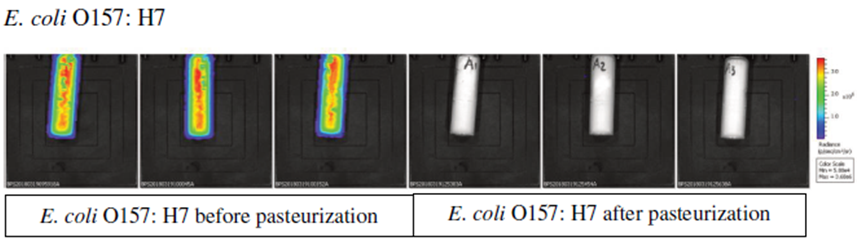
The survival of bioluminescent E. coli O157: H7 in camel milk samples subjected to the PAST-3 treatment was monitored using the IVIS imaging system. Compared to the control, the concentration of bioluminescence in E. coli O157: H7 decreased (P<0.05) in the pasteurized milk samples. The emission of bioluminescence in the E. coli O157: H7 averaged 4.87E+08 p/s in the control milk compared to 1.20E+05 p/s in the pasteurized milk samples Figure 1.
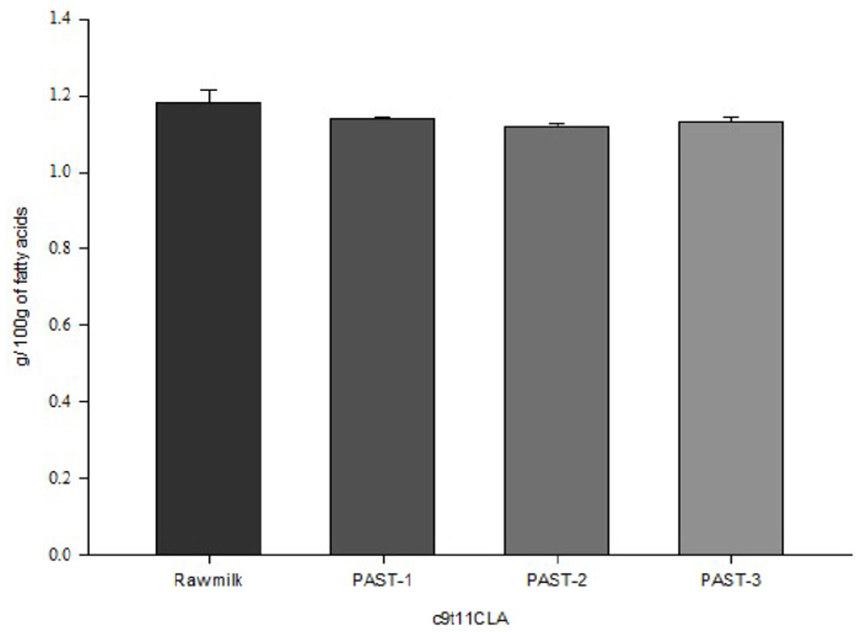
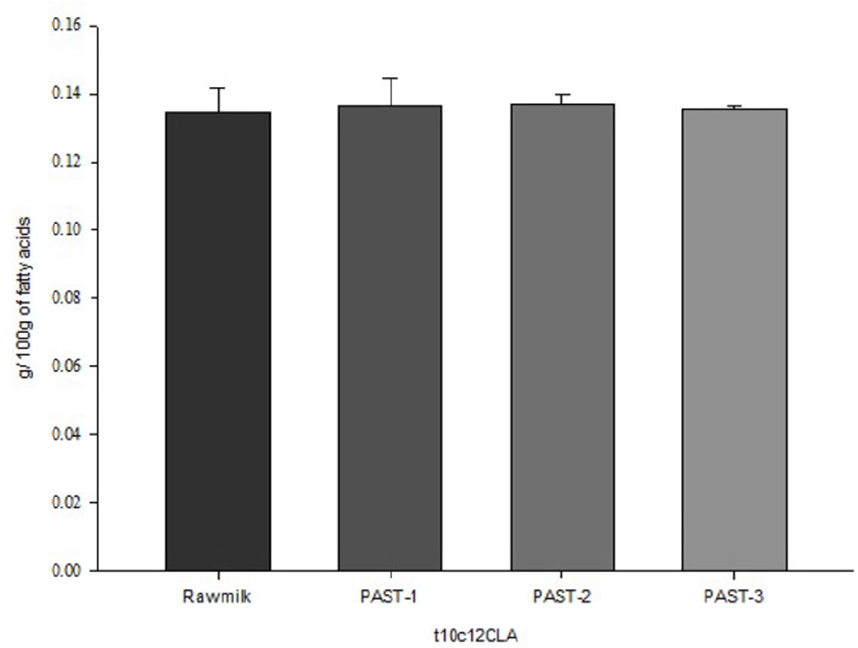
3.3. Impact of Different Pasteurization Methods on Camel Milk ComponentsThe effect of pasteurization methods on fatty acids concentration in the camel milk samples is presented in Table 2. Except for a reduction (P<0.05) in oleic acid (C18:1c9), no changes (P>0.05) were observed between the raw (control) and the pasteurized milk samples. No differences (P>0.05) were also observed between the raw and the pasteurized milk samples in their conjugated linoleic acids (CLA) content (cis-9, trans-11 CLA and trans-10, cis-12 CLA) (Figure 2 & Figure 3).


The thiobarbituric acid reactive substances (TBARS) values were the same in the raw and pasteurized milk samples, with no changes (P>0.05) among the different treatments Figure 4.
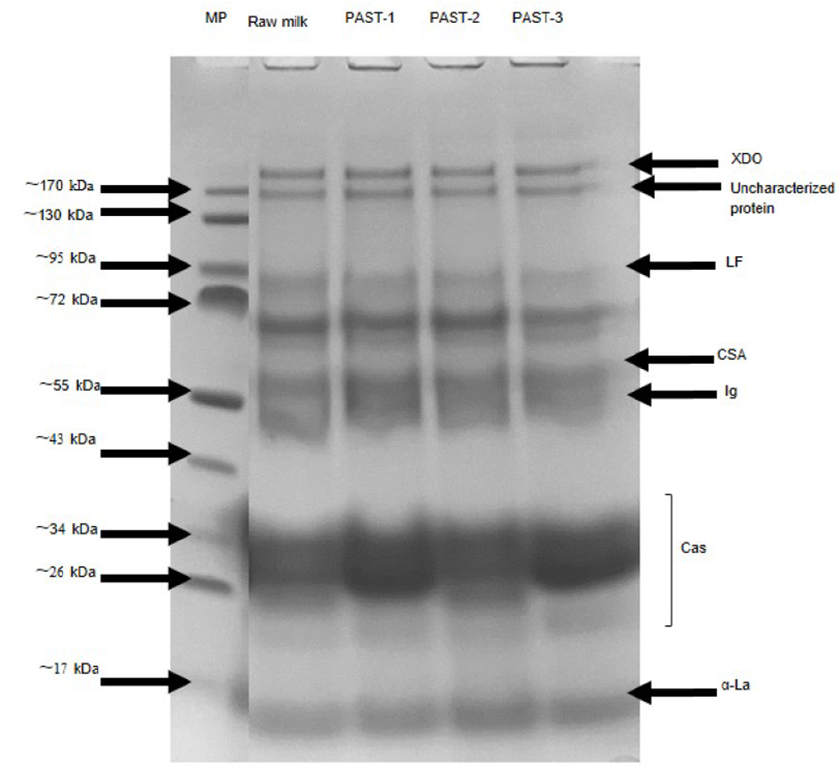
The SDS-PAGE electrophoresis shows qualitative differences in protein profiles of raw and treated milk samples (Figure 5). A total of 7 protein bands were separated with molecular weights (Mwt) of 15, 27, 50, 56, 65, 84, 164, and 200 kDa, roughly corresponding to alpha-lactalbumin (α-La), Casein proteins (Cas), Immunoglobulins (Ig), Camel serum albumin (CSA), Lactoferrin (LF), Uncharacterized protein, and Xanthine dehydrogenase/oxidase (XDO), respectively. PAST-1 caused no visible changes in the electrophoresis pattern compared to the control (raw milk). Increasing the temperature to 72°C with the PAST-2 treatment also resulted in no visible changes in the electrophoresis pattern except for increasing the intensity of the α-La (Mwt 15 kDa) band. At 80°C (PAST-3), the band intensity of LF (Mwt 84 kDa) became lighter while the band intensity of α-La (Mwt 15 kDa) increased Figure 5.
Using mass spectral matching against the NIST library standards and retention index, a total of 34 VCs were identified (Table 3). Five VC (Octanal, 1-Octanol, Ethyl caprylate (octanoate), Decanoic acid, and 9-Hexadecenoic acid) disappeared after pasteurization. Ethyl caprate (decanoate) and Ethyl laurate (dodecanoate) were detected only in the raw and the PAST-1 treatment, while β-Hydroxydodecanoic acid was detected in the raw and the PAST-3 treatment. Compared to the raw milk, pasteurization increased (P<0.05) the formation of Heptanal and decreased the formation of 2-Decanal, 2-Undecanal, and Nonanoic acid, particularly with the PAST-2 and PAST-3 treatments. Compared to the raw milk, the formation of Tridecanal and Undecanal increased only with the PAST-1 treatment. Pasteurization treatments had no effects (P>0.05) on the remaining 19 VCs.


Although milk pasteurization using thermal treatment has been reported to minimize microbial contamination and enhance shelf life, the thermal applications may have undesirable effects on different nutrients and chemical components of milk. The current study was undertaken to investigate the effects of different thermal treatment-based pasteurization methods on camel milk components, and the survivability of E. coli O157: H7 and total aerobic bacteria. As the data indicate, PAST-1 treatment is highly effective against total and E. coli O157: H7 bacteria in camel milk. Similar findings were reported by 19 and 15, who carried out holder pasteurization (63°C for 30 min) in human and camel milk, respectively. However, 20 reported a residual population of Mycobacterium paratuberculosis in the heated bovine milk at 65 °C for 30 min using a laboratory-scale pasteurizer unit. Our results revealed that PAST-3 caused complete inactivation of both E. coli O157: H7 and total aerobic bacteria. Although PAST-2 was not completely effective against the total viable count (only 3.4 log10 reduction), it was effective in the complete inactivation of E. coli O157: H7. The effects of PAST-2 and PAST-3 on camel milk composition and the preparation of fermented camel milk were reported previously 16, 17, 21, however, the antimicrobial effects of these two thermal treatments are lacking in camel milk. To our knowledge, this study is the first one that reports these findings.
In this study, the use of the IVIS imaging approach allowed real-time monitoring of the bacterial activity and providing a better sense of the bacterial presence on samples. This imaging technique has been used in previous works to assess the presence of bacteria in meats 22 or the bactericidal effects of nanoparticles 23. In the present study, the IVIS was successfully used to validate the bactericidal effect of camel milk pasteurization. Understanding that bioluminescence cannot be used in a routine with wild and not transformed bacteria, the IVIS indicates the detected bacteria in the complex milk sample was decreased to a not detectable level after pasteurization, as also determined with the (CFU /ml) counts.
Except for a slight reduction in C18:1c9 with PAST-2 and PAST-3, no significant differences in fatty acid concentrations were found between the raw and pasteurized milk samples indicating that milk fatty acids were not affected by the different pasteurization methods. The fatty acid profile of humans 24 and camel milk 25 were not significantly altered by holder pasteurization (62.5-63°C for 30 min). Additionally, both 26 and 27 obtained similar results in bovine and goat milk subjected to high-temperature, short time (HTST) pasteurization (72°C for 15 sec), respectively. Furthermore, no significant changes in the CLA were observed in the current study between the pasteurized and control samples (Figure 2 and Figure 3). These results are consistent with an earlier study by 28, who reported that the CLA content of bovine milk was not affected by thermal processing at different pasteurization temperatures. Contrarily, 29 reported a significant increase in the cis-9, trans-11 CLA after pasteurizing sheep milk at 73°C for 5 sec, while 30 reported a significant decrease in the cis-9, trans-11 CLA content of bovine milk (2% total fat) after HTST pasteurization (77.2°C for 16 sec). These differences could be attributed to differences in processing conditions (milk temperature and holding time) and/or milk types (bovine vs. sheep milk).
Malondialdehyde (MDA), a secondary product of autoxidation, was measured using the TBARS assay. Consistent with the fatty acid profile findings, our pasteurization methods (PAST-1, PAST-2, and PAST-3) did not significantly change the TBARS values of camel milk. Our results are in agreement with the findings of 31, who reported no significant differences in MDA concentration of human milk subjected to holder pasteurization (63 °C for 30 min). Similarly, 32 reported no significant changes in TBARS values of raw bovine milk subjected to industrial heat treatments.
In the current study, milk proteins were separated by using a one-dimensional SDS-PAGE. There were no noticeable differences between the electrophoresis patterns of raw and PAST-1 milk samples (Figure 5). This result is in accordance with 33 who did not find any differences in the electrophoresis pattern of the camel milk heated at 65 °C for 30 min. Another study reported no effect of the thermal treatments below 70°C on camel whey proteins 34. The increased intensity of the band corresponding to α-La was the only visible change under the PAST-2 treatment (Figure 5). A similar result was obtained by 35, who reported increases in the α-La intensity of camel milk with heating from 60-130 °C for 30 min. In contrast to earlier findings, however, 33 reported that α-La was not affected by heating camel milk at 75 °C for 30 min. In addition, a decrease in the intensity of the LF band (Mwt 84 kDa) was observed in this study after applying the PAST-3 method (Figure 5). Our results are in contrast to the findings of 36 and 35 who reported no effects on camel LF at 85 °C for 15 and 30 min while, a slight disappearance of LF after heating camel milk at 100 °C for 30 min. In the current study, CSA was not affected by all pasteurization methods in agreement with 33 who reported no changes in the electrophoresis pattern of CSA when camel milk was heated at 75°C for 30 min. A significant diminishing of CSA, however, was reported by 37 when camel milk was heated at 80°C for 60 min, while 34 reported the complete disappearance of CSA when camel milk was heated at 80°C for 30 min.
Aldehydes in raw milk are formed either during lipid oxidation 38 or by transferring to milk through the consumed feeds 39. The volatile compounds profiles of milk in the current study showed an increase in some aldehydes (Heptanal, Tridecanal, and Undecanal) following the pasteurization treatments. Similar increases in the total aldehydes were reported by 40 who investigated the effect of industrial processing methods such as HTST (75°C for 15 sec) and ultra-high temperature (140°C for 3 sec) on the volatile compounds of skimmed camel milk. Reference 41 also reported an increase in aldehydes content after subjecting bovine milk to HTST (75°C for 15 sec). Similarly, treated human milk with high-pressure thermal processing resulted in an increase in the aldehydes content 42. On the other hand, some other aldehyde compounds (2-Decanal and 2-Undecanal) significantly decreased (P<0.05) following pasteurization treatments. This finding is in agreement with the results of 43 who reported pasteurization (72°C for 15 sec) decreased the levels of some aldehydes in Spanish ewe milk.
The present study has shown that both the PAST-1 and PAST-3 methods have better bactericidal effects against the total viable count than the PAST-2 method. A 6-log10 reduction in E. coli O157: H7 was reported in all pasteurized milk samples. This research also revealed that camel milk protein fractions, lipid peroxides, and fatty acids were not significantly affected by pasteurization treatments. However, the concentrations of some milk aldehydes were altered after pasteurization. The present findings will be useful to the camel dairy processors for optimal pasteurization of dairy products.
The authors wish to thank Frank and Friends Camel Dairy, Morton, MS, the USA for providing the milk samples.
| [1] | Kumar D, Chatli MK, Singh R, Mehta N, Kumar P. Antioxidant and antimicrobial activity of camel milk casein hydrolysates and its fractions. Small Ruminant Research. 2016; 139: 20-5. | ||
| In article | View Article | ||
| [2] | Malik A, Al-Senaidy A, Skrzypczak-Jankun E, Jankun J. A study of the anti-diabetic agents of camel milk. International journal of molecular medicine. 2012; 30(3): 585-92. | ||
| In article | View Article PubMed | ||
| [3] | El Miniawy HM, Ahmed KA, Tony MA, Mansour SA, Salah Khattab MMJIJoVS, Medicine. Camel milk inhibits murine hepatic carcinogenesis, initiated by diethylnitrosamine and promoted by phenobarbitone. 2014; 2(2): 136-41. | ||
| In article | View Article | ||
| [4] | Ehlayel MS, Hazeima KA, Al-Mesaifri F, Bener A, editors. Camel milk: an alternative for cow's milk allergy in children. Allergy and asthma proceedings; 2011: OceanSide Publications. | ||
| In article | View Article PubMed | ||
| [5] | Al-Ayadhi LY, Elamin NE. Camel milk as a potential therapy as an antioxidant in autism spectrum disorder (ASD). Evidence-Based Complementary and Alternative Medicine. 2013; 2013. | ||
| In article | View Article PubMed | ||
| [6] | Cardoso RR, Santos R, Cardoso C, Carvalho M. Consumption of camel's milk by patients intolerant to lactose. A preliminary study. Revista Alergia de Mexico. 2010; 57(1). | ||
| In article | |||
| [7] | Eppinger M, Mammel MK, Leclerc JE, Ravel J, Cebula TA. Genomic anatomy of Escherichia coli O157: H7 outbreaks. Proceedings of the National Academy of Sciences. 2011; 108(50): 20142-7. | ||
| In article | View Article PubMed | ||
| [8] | Kim S-W, Karns JS, Van Kessel JAS, Haley BJ. Genome sequences of 30 Escherichia coli O157: H7 isolates recovered from a single dairy farm and its associated off-site heifer-raising facility. Genome announcements. 2017; 5(35): e00814-17. | ||
| In article | View Article | ||
| [9] | Upton P, Coia JJTL. Outbreak of Escherichia coli 0157 infection associated with pasteurised milk supply. 1994; 344(8928): 1015. | ||
| In article | View Article | ||
| [10] | Sun D-W. Thermal food processing: new technologies and quality issues: Crc Press; 2012. | ||
| In article | View Article | ||
| [11] | Sagar SP, Mehta BM, Wadhwani K, Darji V, Aparnathi K. Evaluation of camel milk for selected processing related parameters and comparisons with cow and buffalo milk. International Journal of Health, Animal Science and Food Safety. 2016; 3(1). | ||
| In article | |||
| [12] | Metwalli AA, Hailu Y. Effects of Industrial Processing Methods on Camel Milk Composition, Nutritional Value, and Health Properties. Handbook of Research on Health and Environmental Benefits of Camel Products: IGI Global; 2020. p. 197-239. | ||
| In article | View Article | ||
| [13] | Gera N, Doores S. Kinetics and mechanism of bacterial inactivation by ultrasound waves and sonoprotective effect of milk components. Journal of food science. 2011; 76(2): M111-M9. | ||
| In article | View Article PubMed | ||
| [14] | Dhahir N, Feugang J, Witrick K, Park S, AbuGhazaleh A. Impact of ultrasound processing on some milk-borne microorganisms and the components of camel milk. Emirates Journal of Food and Agriculture. 2020: 245-54. | ||
| In article | View Article | ||
| [15] | Sela S, Pinto R, Merin U, Rosen B. Thermal inactivation of Escherichia coli in camel milk. Journal of food protection. 2003; 66(9): 1708-11. | ||
| In article | View Article PubMed | ||
| [16] | Wernehy U, HANKE B, Bantu F. The effect of heat treatment on some camel milk constituents. Food Sci Technol. 1999; 34: 543-56. | ||
| In article | |||
| [17] | Rahman IEA, Dirar HA, Osman MA. Microbiological and biochemical changes and sensory evaluation of camel milk fermented by selected bacterial starter cultures. African Journal of Food Science. 2009; 3(12): 398-405. | ||
| In article | |||
| [18] | Dhahir N, Feugang J, Witrick K, Park S, White S, AbuGhazaleh A. The effect of different ultraviolet-C light doses on microbial reduction and the components of camel milk. Food Science and Technology International. 2020: 1082013220935230. | ||
| In article | View Article PubMed | ||
| [19] | Lima HK, Wagner-Gillespie M, Perrin MT, Fogleman AD. Bacteria and bioactivity in Holder pasteurized and shelf-stable human milk products. Current developments in nutrition. 2017; 1(8): e001438. | ||
| In article | View Article PubMed | ||
| [20] | Stabel J, Steadham E, Bolin C. Heat inactivation of Mycobacterium paratuberculosis in raw milk: are current pasteurization conditions effective? Applied and Environmental Microbiology. 1997; 63(12): 4975-7. | ||
| In article | View Article PubMed | ||
| [21] | Wernery U. Camel milk, the white gold of the desert. Journal of Camel Practice and Research. 2006; 13(1): 15. | ||
| In article | |||
| [22] | Park SB, White SB, Steadman CS, Cavinder CA, Willard ST, Ryan PL, et al. Real-time bioluminescence analysis of Escherichia coli O157: H7 survival on livestock meats stored fresh, cold, or frozen. Journal of Food Protection. 2018; 81(11): 1906-12. | ||
| In article | View Article PubMed | ||
| [23] | Park SB, White SB, Steadman CS, Pechan T, Pechanova O, Clemente HJ, et al. Silver-coated magnetic nanocomposites induce growth inhibition and protein changes in foodborne bacteria. Scientific reports. 2019; 9(1): 1-11. | ||
| In article | View Article PubMed | ||
| [24] | Henderson TR, Fay TN, Hamosh M. Effect of pasteurization on long chain polyunsaturated fatty acid levels and enzyme activities of human milk. The Journal of pediatrics. 1998; 132(5): 876-8. | ||
| In article | View Article | ||
| [25] | Hattem H, Naeim MA, Sakr HS, Abouel-Einin EH. A study on the effect of thermal treatments on composition and some properties of camel milk. Journal of Brewing and Distilling. 2011; 2(4): 50-4. | ||
| In article | |||
| [26] | Tallini RA. Effects of pasteurization and ultra-high temperature processes on proximate composition and fatty acid profile in bovine milk. American Journal of Food Technology. 2015; 10(6): 265-72. | ||
| In article | View Article | ||
| [27] | Pereira R, Martins RC, Vicente A. Goat milk free fatty acid characterization during conventional and ohmic heating pasteurization. Journal of Dairy Science. 2008; 91(8): 2925-37. | ||
| In article | View Article PubMed | ||
| [28] | Herzallah S, Humeid M, Al-Ismail K. Effect of heating and processing methods of milk and dairy products on conjugated linoleic acid and trans fatty acid isomer content. J Dairy Sci. 2005; 88(4): 1301-10. | ||
| In article | View Article | ||
| [29] | Buccioni A, Rapaccini S, Antongiovanni M, Minieri S, Conte G, Mele M. Conjugated linoleic acid and C18: 1 isomers content in milk fat of sheep and their transfer to Pecorino Toscano cheese. International Dairy Journal. 2010; 20(3): 190-4. | ||
| In article | View Article | ||
| [30] | Campbell W, Drake M, Larick D. The impact of fortification with conjugated linoleic acid (CLA) on the quality of fluid milk. Journal of Dairy Science. 2003; 86(1): 43-51. | ||
| In article | View Article | ||
| [31] | Silvestre D, Miranda M, Muriach M, Almansa I, Jareño E, Romero FJ. Antioxidant capacity of human milk: effect of thermal conditions for the pasteurization. Acta Paediatrica. 2008; 97(8): 1070-4. | ||
| In article | View Article PubMed | ||
| [32] | Dias FFG, Augusto-Obara TR, Hennebelle M, Chantieng S, Ozturk G, Taha AY, et al. Effects of industrial heat treatments on bovine milk oxylipins and conventional markers of lipid oxidation. Prostaglandins, Leukotrienes and Essential Fatty Acids. 2020; 152: 102040. | ||
| In article | View Article PubMed | ||
| [33] | Elagamy E. Effect of heat treatment on camel milk proteins with respect to antimicrobial factors: a comparison with cows' and buffalo milk proteins. Food Chemistry. 2000; 68(2): 227-32. | ||
| In article | View Article | ||
| [34] | Farah Z. [Effect of heat treatment on whey proteins of camel milk]. [English]. Milchwissenschaft. 1986. | ||
| In article | |||
| [35] | Clement CD. Effect of Heat Treatment on Camel Milk Proteins. 2018. | ||
| In article | |||
| [36] | Abdel-Salam AM, Alharbi KB, Magzoub MA, Mousa HM. Effect of heat treatment on the chromatographic detection, electrophoretic pattern and antibacterial activity of lactoferrin purified from camel milk. J Food Agri Environ. 2014; 12: 132-5. | ||
| In article | |||
| [37] | Felfoul I, Jardin J, Gaucheron F, Attia H, Ayadi M. Proteomic profiling of camel and cow milk proteins under heat treatment. Food Chemistry. 2017; 216: 161-9. | ||
| In article | View Article PubMed | ||
| [38] | Calvo MM, de la Hoz L. Flavour of heated milks. A review. International Dairy Journal. 1992; 2(2): 69-81. | ||
| In article | View Article | ||
| [39] | Scanlan R, Lindsay R, Libbey L, Day E. Heat-induced volatile compounds in milk. Journal of Dairy Science. 1968; 51(7): 1001-7. | ||
| In article | View Article | ||
| [40] | Omar A. Effects of industrial processing methods on skimmed camel milk properties: University of Reading; 2018. | ||
| In article | View Article | ||
| [41] | Zhang S, Yang R, Zhao W, Hua X, Zhang W, Zhang Z. Influence of pulsed electric field treatments on the volatile compounds of milk in comparison with pasteurized processing. Journal of food science. 2011; 76(1): C127-C32. | ||
| In article | View Article PubMed | ||
| [42] | Garrido M, Contador R, García-Parra J, Delgado F, Delgado-Adámez J, Ramírez R. Volatile profile of human milk subjected to high-pressure thermal processing. Food Research International. 2015; 78: 186-94. | ||
| In article | View Article PubMed | ||
| [43] | Ortigosa M, Torre P, Izco J. Effect of pasteurization of ewe's milk and use of a native starter culture on the volatile components and sensory characteristics of Roncal cheese. Journal of dairy science. 2001; 84(6): 1320-30. | ||
| In article | View Article | ||
Published with license by Science and Education Publishing, Copyright © 2021 Namariq Dhahir, Jean Feugang, Katherine Witrick, Hasan Shamimul and Amer AbuGhazaleh
 This work is licensed under a Creative Commons Attribution 4.0 International License. To view a copy of this license, visit
http://creativecommons.org/licenses/by/4.0/
This work is licensed under a Creative Commons Attribution 4.0 International License. To view a copy of this license, visit
http://creativecommons.org/licenses/by/4.0/
| [1] | Kumar D, Chatli MK, Singh R, Mehta N, Kumar P. Antioxidant and antimicrobial activity of camel milk casein hydrolysates and its fractions. Small Ruminant Research. 2016; 139: 20-5. | ||
| In article | View Article | ||
| [2] | Malik A, Al-Senaidy A, Skrzypczak-Jankun E, Jankun J. A study of the anti-diabetic agents of camel milk. International journal of molecular medicine. 2012; 30(3): 585-92. | ||
| In article | View Article PubMed | ||
| [3] | El Miniawy HM, Ahmed KA, Tony MA, Mansour SA, Salah Khattab MMJIJoVS, Medicine. Camel milk inhibits murine hepatic carcinogenesis, initiated by diethylnitrosamine and promoted by phenobarbitone. 2014; 2(2): 136-41. | ||
| In article | View Article | ||
| [4] | Ehlayel MS, Hazeima KA, Al-Mesaifri F, Bener A, editors. Camel milk: an alternative for cow's milk allergy in children. Allergy and asthma proceedings; 2011: OceanSide Publications. | ||
| In article | View Article PubMed | ||
| [5] | Al-Ayadhi LY, Elamin NE. Camel milk as a potential therapy as an antioxidant in autism spectrum disorder (ASD). Evidence-Based Complementary and Alternative Medicine. 2013; 2013. | ||
| In article | View Article PubMed | ||
| [6] | Cardoso RR, Santos R, Cardoso C, Carvalho M. Consumption of camel's milk by patients intolerant to lactose. A preliminary study. Revista Alergia de Mexico. 2010; 57(1). | ||
| In article | |||
| [7] | Eppinger M, Mammel MK, Leclerc JE, Ravel J, Cebula TA. Genomic anatomy of Escherichia coli O157: H7 outbreaks. Proceedings of the National Academy of Sciences. 2011; 108(50): 20142-7. | ||
| In article | View Article PubMed | ||
| [8] | Kim S-W, Karns JS, Van Kessel JAS, Haley BJ. Genome sequences of 30 Escherichia coli O157: H7 isolates recovered from a single dairy farm and its associated off-site heifer-raising facility. Genome announcements. 2017; 5(35): e00814-17. | ||
| In article | View Article | ||
| [9] | Upton P, Coia JJTL. Outbreak of Escherichia coli 0157 infection associated with pasteurised milk supply. 1994; 344(8928): 1015. | ||
| In article | View Article | ||
| [10] | Sun D-W. Thermal food processing: new technologies and quality issues: Crc Press; 2012. | ||
| In article | View Article | ||
| [11] | Sagar SP, Mehta BM, Wadhwani K, Darji V, Aparnathi K. Evaluation of camel milk for selected processing related parameters and comparisons with cow and buffalo milk. International Journal of Health, Animal Science and Food Safety. 2016; 3(1). | ||
| In article | |||
| [12] | Metwalli AA, Hailu Y. Effects of Industrial Processing Methods on Camel Milk Composition, Nutritional Value, and Health Properties. Handbook of Research on Health and Environmental Benefits of Camel Products: IGI Global; 2020. p. 197-239. | ||
| In article | View Article | ||
| [13] | Gera N, Doores S. Kinetics and mechanism of bacterial inactivation by ultrasound waves and sonoprotective effect of milk components. Journal of food science. 2011; 76(2): M111-M9. | ||
| In article | View Article PubMed | ||
| [14] | Dhahir N, Feugang J, Witrick K, Park S, AbuGhazaleh A. Impact of ultrasound processing on some milk-borne microorganisms and the components of camel milk. Emirates Journal of Food and Agriculture. 2020: 245-54. | ||
| In article | View Article | ||
| [15] | Sela S, Pinto R, Merin U, Rosen B. Thermal inactivation of Escherichia coli in camel milk. Journal of food protection. 2003; 66(9): 1708-11. | ||
| In article | View Article PubMed | ||
| [16] | Wernehy U, HANKE B, Bantu F. The effect of heat treatment on some camel milk constituents. Food Sci Technol. 1999; 34: 543-56. | ||
| In article | |||
| [17] | Rahman IEA, Dirar HA, Osman MA. Microbiological and biochemical changes and sensory evaluation of camel milk fermented by selected bacterial starter cultures. African Journal of Food Science. 2009; 3(12): 398-405. | ||
| In article | |||
| [18] | Dhahir N, Feugang J, Witrick K, Park S, White S, AbuGhazaleh A. The effect of different ultraviolet-C light doses on microbial reduction and the components of camel milk. Food Science and Technology International. 2020: 1082013220935230. | ||
| In article | View Article PubMed | ||
| [19] | Lima HK, Wagner-Gillespie M, Perrin MT, Fogleman AD. Bacteria and bioactivity in Holder pasteurized and shelf-stable human milk products. Current developments in nutrition. 2017; 1(8): e001438. | ||
| In article | View Article PubMed | ||
| [20] | Stabel J, Steadham E, Bolin C. Heat inactivation of Mycobacterium paratuberculosis in raw milk: are current pasteurization conditions effective? Applied and Environmental Microbiology. 1997; 63(12): 4975-7. | ||
| In article | View Article PubMed | ||
| [21] | Wernery U. Camel milk, the white gold of the desert. Journal of Camel Practice and Research. 2006; 13(1): 15. | ||
| In article | |||
| [22] | Park SB, White SB, Steadman CS, Cavinder CA, Willard ST, Ryan PL, et al. Real-time bioluminescence analysis of Escherichia coli O157: H7 survival on livestock meats stored fresh, cold, or frozen. Journal of Food Protection. 2018; 81(11): 1906-12. | ||
| In article | View Article PubMed | ||
| [23] | Park SB, White SB, Steadman CS, Pechan T, Pechanova O, Clemente HJ, et al. Silver-coated magnetic nanocomposites induce growth inhibition and protein changes in foodborne bacteria. Scientific reports. 2019; 9(1): 1-11. | ||
| In article | View Article PubMed | ||
| [24] | Henderson TR, Fay TN, Hamosh M. Effect of pasteurization on long chain polyunsaturated fatty acid levels and enzyme activities of human milk. The Journal of pediatrics. 1998; 132(5): 876-8. | ||
| In article | View Article | ||
| [25] | Hattem H, Naeim MA, Sakr HS, Abouel-Einin EH. A study on the effect of thermal treatments on composition and some properties of camel milk. Journal of Brewing and Distilling. 2011; 2(4): 50-4. | ||
| In article | |||
| [26] | Tallini RA. Effects of pasteurization and ultra-high temperature processes on proximate composition and fatty acid profile in bovine milk. American Journal of Food Technology. 2015; 10(6): 265-72. | ||
| In article | View Article | ||
| [27] | Pereira R, Martins RC, Vicente A. Goat milk free fatty acid characterization during conventional and ohmic heating pasteurization. Journal of Dairy Science. 2008; 91(8): 2925-37. | ||
| In article | View Article PubMed | ||
| [28] | Herzallah S, Humeid M, Al-Ismail K. Effect of heating and processing methods of milk and dairy products on conjugated linoleic acid and trans fatty acid isomer content. J Dairy Sci. 2005; 88(4): 1301-10. | ||
| In article | View Article | ||
| [29] | Buccioni A, Rapaccini S, Antongiovanni M, Minieri S, Conte G, Mele M. Conjugated linoleic acid and C18: 1 isomers content in milk fat of sheep and their transfer to Pecorino Toscano cheese. International Dairy Journal. 2010; 20(3): 190-4. | ||
| In article | View Article | ||
| [30] | Campbell W, Drake M, Larick D. The impact of fortification with conjugated linoleic acid (CLA) on the quality of fluid milk. Journal of Dairy Science. 2003; 86(1): 43-51. | ||
| In article | View Article | ||
| [31] | Silvestre D, Miranda M, Muriach M, Almansa I, Jareño E, Romero FJ. Antioxidant capacity of human milk: effect of thermal conditions for the pasteurization. Acta Paediatrica. 2008; 97(8): 1070-4. | ||
| In article | View Article PubMed | ||
| [32] | Dias FFG, Augusto-Obara TR, Hennebelle M, Chantieng S, Ozturk G, Taha AY, et al. Effects of industrial heat treatments on bovine milk oxylipins and conventional markers of lipid oxidation. Prostaglandins, Leukotrienes and Essential Fatty Acids. 2020; 152: 102040. | ||
| In article | View Article PubMed | ||
| [33] | Elagamy E. Effect of heat treatment on camel milk proteins with respect to antimicrobial factors: a comparison with cows' and buffalo milk proteins. Food Chemistry. 2000; 68(2): 227-32. | ||
| In article | View Article | ||
| [34] | Farah Z. [Effect of heat treatment on whey proteins of camel milk]. [English]. Milchwissenschaft. 1986. | ||
| In article | |||
| [35] | Clement CD. Effect of Heat Treatment on Camel Milk Proteins. 2018. | ||
| In article | |||
| [36] | Abdel-Salam AM, Alharbi KB, Magzoub MA, Mousa HM. Effect of heat treatment on the chromatographic detection, electrophoretic pattern and antibacterial activity of lactoferrin purified from camel milk. J Food Agri Environ. 2014; 12: 132-5. | ||
| In article | |||
| [37] | Felfoul I, Jardin J, Gaucheron F, Attia H, Ayadi M. Proteomic profiling of camel and cow milk proteins under heat treatment. Food Chemistry. 2017; 216: 161-9. | ||
| In article | View Article PubMed | ||
| [38] | Calvo MM, de la Hoz L. Flavour of heated milks. A review. International Dairy Journal. 1992; 2(2): 69-81. | ||
| In article | View Article | ||
| [39] | Scanlan R, Lindsay R, Libbey L, Day E. Heat-induced volatile compounds in milk. Journal of Dairy Science. 1968; 51(7): 1001-7. | ||
| In article | View Article | ||
| [40] | Omar A. Effects of industrial processing methods on skimmed camel milk properties: University of Reading; 2018. | ||
| In article | View Article | ||
| [41] | Zhang S, Yang R, Zhao W, Hua X, Zhang W, Zhang Z. Influence of pulsed electric field treatments on the volatile compounds of milk in comparison with pasteurized processing. Journal of food science. 2011; 76(1): C127-C32. | ||
| In article | View Article PubMed | ||
| [42] | Garrido M, Contador R, García-Parra J, Delgado F, Delgado-Adámez J, Ramírez R. Volatile profile of human milk subjected to high-pressure thermal processing. Food Research International. 2015; 78: 186-94. | ||
| In article | View Article PubMed | ||
| [43] | Ortigosa M, Torre P, Izco J. Effect of pasteurization of ewe's milk and use of a native starter culture on the volatile components and sensory characteristics of Roncal cheese. Journal of dairy science. 2001; 84(6): 1320-30. | ||
| In article | View Article | ||