The main objective of this study was to determine optimum conditions for aerobic fermentation for the production of a probiotic sorghum beverage using as ferment Lactobacillus fermentum, Bifidobacterium bifidum and bil-bil (a sorghum based traditional beer). Microbiological analyses on bil-bil showed 5x10⁴ CFU/mL total mesophilic flora and 3.5x10³ CFU/mL lactic acid bacteria. Physicochemical characterization on sorghum grains gave a water content, thousand corn weight, germinative energy and germinative capacity of 7.02±0.16%, 19.2±0.1g 99.82±0.11%, 100% respectively. Optimization of physicochemical and microbiological parameters of the beverage through a D-optimal plan after maximizing reducing sugars, polyphenols, vitamin C, total soluble sugars, antioxidant activity, probiotic load and minimizing titratable acidity, pH, turbidity and viscosity, resulted in an inoculation rate of 10 % L. fermentum and B. bifidum and 80 % bil-bil, a fermentation temperature of 37°C and fermentation time of 3 days. These operating conditions resulted in a beverage with a titratable acidity of 3.15 mEqg ac.mal/mL, pH of 3.05, vitamin C content of 74.28 mg/L, polyphenol content of 0.46 mg/mL, reducing sugar content of 0.86 mg/mL, TSS of 4.88°Brix, a probiotic load of 25.11x10⁶ CFU/mL, turbidity of 409.38 EBC, and a viscosity of 5.18 mPa.s. Mix fermentation could be exploited in the production of a probiotic sorghum beer.
The artisanal production of sorghum beer (locally called bil-bil in the northern regions of Cameroon) is of a remarkable socio-economic pertinence as it is widely used in traditional ceremonies and is an important source of income for producers 1. The relative success of bil-bil among consumers could be due to the therapeutic virtues attributed to it and the diet improvement of millions of people 2 partly due to the presence of lactic acid bacteria. The interest needed for the recognition of probiotic microorganisms as important health agents was renewed by the characterization of specific probiotic cultures and by the scientific demonstration of their positive influence on health 3. The Food and Agriculture Organization of the United Nations (FAO) and World Health Organization (WHO) joint Working Group defined probiotics as “live microorganisms which when administered in adequate amounts confer a health benefit on the host” 4, 5, 6.
Over the past decade there has been a steady increase in demand for probiotic-enriched products where consumption increase of up to 150% has been recorded 7. The probiotic market currently accounts for 10% of the functional food market 8. Although dairy products are currently the main suppliers of probiotics 9, 10, more and more non-dairy products containing probiotics are being developed from cereals, chocolate bars, cookies, soft bars and probiotic-enriched juices 11, 12, 13. There is a growing emphasis on healthy and beneficial eating and a positive public perception of the positive effects of “good bacteria”.
Despite its increasing diversification, the probiotic market still appears to be too limited to ensure sufficient consumption of probiotics necessary to achieve the beneficial effects they provide 14, 15. Moreover, it remains mainly limited to dairy products, which makes it not easily accessible to low consumers of this range of products 10. Indeed, habits, food tastes and behaviors, such as the increasingly important emergence of vegetarianism and veganism, keep consumers away from dairy probiotic products 16. Moreover, a good percentage of the world’s population is limited in their access to dairy probiotics due to lactose intolerance 17.
Whole grain cereals and cereal components offer a route of having probiotic vehicles with a dual advantage of providing beneficial bioactive constituents and fibers 18, 19, 20. Such constituents comprise soluble fiber, non-digestible carbohydrates and phytochemicals such as antioxidants (phenolic compounds, vitamin C, carotenoids), phytoestrogens and phytic acids 18, 19.
Despite being the principal source of dietary nutrients, cereal grains are deficient in some basic food constituents such as amino acids 6, 21. Fermentation may improve the nutritional value, sensory attributes and functional qualities of cereals 21, 22, and their products such as beer.
In order to maximize consumption and diversify the sources of probiotics, and to give an added value to beer, the concept of developing a probiotic sorghum beer-like beverage fits. The main objective of this study is to determine the optimal aerobic fermentation conditions for the production of a probiotic sorghum beverage using Lactobacillus fermentum, Bifidobacterium bifidum and bil-bil. Specifially, the fermentation temperature, duration and the proportion of each component in the ferment – mix has to be determined.
The plant material used for the production of the beer was a sorghum cultivar, S.35, which was purchased from the Institute of Agricultural Research for Development (IRAD) Maroua in April 2020.
One of the ferment, a traditional beer (bil-bil), produced from a random mixture of two sorghum cultivars: dark red ndjigari and pale red mbayéri was obtained from local vendor in the Ngaoundere locality. The lactic ferments used, whose probiotic potential were prior determined, were Lactobacillus fermentum and Bifidobacterium bifidum, obtained from the Food Microbiology Laboratory of ENSAI, University of Ngaoundere.
2.2. Methods• Revival and multiplication of strains
The probiotic strains, Lactobacillus fermentum and Bifidobacterium bifidum were initially lyophilized and therefore necessitates revival before it could be applied. Into 10 mL of maximum recovery dilution saline (DS; 0.85% NaCl and 0.1% peptone in distilled water) was added 1 g of lyophilizate of each strain and the resulting suspension well agitated for 10 min. The solution was then transferred to 1 L of previously prepared and sterilized MRS (De Man, Rogosa and Sharpe) broth. After incubation for 48 h at 42 °C, the MRS broth containing the multiplicates was centrifuged at 6500 g for 15 min at 4 °C. The supernatant was then removed, the pellet washed in DS without being re-suspended and then re-centrifuged as before. The supernatant was discarded and the pellet finally re-suspended in 10 mL of DS, and the volume later made up to 250 mL with DS. The probiotic concentration of this solution was obtained by serial dilutions of factor 10 in tubes containing 9 mL of SD. The dilutions were spread on MRS Petri dishes and incubated for 24 h at 42 °C and the colonies counted.
• Determination of the cell concentration of multiplicates
Serial dilutions of factor 10 were carried out in tubes containing 9 mL of normal saline solution. Dilutions were inoculated by the spreading method on MRS plated Petri dishes and incubated at 42 °C for 24 h before colony counts were conducted.
In order to determine if the sorghum grains cultivar S.35 could be malted, several preliminary analyses were carried out: water content (about 5 g of crushed grains were dried at 105 oC for 24 hrs. The difference in mass before and after drying was expressed as the percentage water content per the massing before drying), germinative capacity (hydrogen peroxide method), germinative energy (4 mL and 8 mL test) and the weight of a thousand grains (to predict density). All tests were carried out according to the European Brewing Convention (EBC) methods 23.
Sorghum grains were sorted to be cleared of bad grains and foreign matter and then washed with distilled water. The grains were then steeped in distilled water at ambient temperature (22-25 °C) for 48 hrs. The steep liquor was changed after every 18 hours with 30 minutes of air-rest before re-steeping in a fresh liquor. At the end of steeping, the grains were put in a germination chamber at an initial temperature of 25 oC to allow for germination. Germination is a traditional and well-known technique to ameliorate the nutrient composition of grains. Furthermore, according to Gunenc et al. 24, germination has continuously been applied in softening grain structure and reducing anti-nutritional factors. Germination lasted for 48 hours upon development of shoots and rootlets. The germinated grains were kilned in a ventilated oven at a temperature of 45 °C for two days in order to arrest germination, conserve enzymes and stop further degradation of the grains’ starchy endosperm 25.
Decoction mashing was adopted for sweet wort production. The malted sorghum grains were ground to a coarse flour using a Polymix PX-MFC 90D grinder. Using a PAKWA DAHONGYING brand electronic scale, 4 kg of coarse flour were weighed and added to 25 L of distilled water (at 45 °C) contained in the brewing tank (BRAUMEISTER). The pump was turned on to agitate the media to avoid floc formation and the vessel was held at 45°C (optimal temperature for protein hydrolyses) for one hour. Upon resting to allow for decantation, part of the supernatant (21 L) was removed. The rest, containing that starch granules, was brought to boiling while stirring intermittently at regular intervals, in a separate vessel to allow for starch gelatinization. After gelatinization, the resulting paste and supernatant were returned to the Braumeister and the temperature raised to 65 °C, marking the start of saccharification (amylase activity). After one and a half hour, the temperature was raised to 72°C and agitation continued at this temperature for 30 min. The spent grains were then filtered off and the resulting wort was boiled for one hour. Cooling immediately followed to prepare for fermentation.
A 5-factor D-optimal mixing plan (three components of the mixture and two process factors) was used for the fermentation of cultivar S.35. The five factors were the quantity of L. fermentum, the quantity of B. bifidium, the amount of bil-bil, the fermentation temperature and fermentation time. For the seeding rates of L. fermentum and B. bifidium, the choice of levels (1-10%) took account of exploratory studies. For the bil-bil rate, the interval (80-98 %) was chosen, taking into account the fundamental stress after setting the rate of L. fermentum and B. bifidium. The interval (37-42°C) was considered for temperature based on the optimal growth temperature of the two lactic ferments. Exploratory studies showed a considerable contamination after three days of fermentation, thus, 1-3 days was considered. Fermentation was carried out in an anaerobic condition. The fermentation operation was repeated trice and each fermentation sample analyzed.
• Probiotic load
The probiotic loading was determined by the seeding dilution method.
• Total Soluble Solids (Brix)
Total soluble solid was measured with the help of an optical refractometer (Hanna Instruments HI-96801). Distilled water was used to calibrate the instrument before reading of samples.
• pH
The pH of samples were measured directly using a CONSORT C830 pH meter.
• Titratable acidity
The AFNOR 26 method was used to determine titratable acidity using 0.1 N NaOH with phenolphthalein as an indicator.
In a conical flask, 5 mL of each beverage sample was introduced, and three drops of phenolphthalein was added. The sample was titrated with a 0.1 N NaOH solution till a persistent pink coloration was attained. The volume of NaOH consumed, was noted in mL.The total titratable acidity was calculated thus:

V = volume of NaOH used,
N = concentration of NaOH T = sample volume
• Antiradical activity
Antiradical activity at DPPH (2.2 diphenyl-1-picrylhydrazine) was evaluated using the method described by Muanda et al. 27.
• Turbidity
Beverage sample was inserted in an HACH 2100N turbidimeter and the turbidity read directly.
• Viscosity
It was evaluated using a NDJ-5S rotary viscometer.
• Vitamin C content
The iodine titration method was employed in the determination of vitamin C as described by Helmenstine 28. In the form of triiodide, iodine oxidizes vitamin C to form dehydroascorbic acid.
C6H8O6 + I3- + H2O → C6H6O6 + 3I- + 2H+
After complete oxidation of vitamin C, excess iodine and triiodide will react with starch to form a blue-black complex, marking the endpoint of the titration.
A 1 % starch solution was prepared by adding 0.5 g of soluble starch in 50 mL of distilled water at 90 oC. The solution was well agitated to enable complete dissolution.
Iodine solution was prepared by dissolving 5 g of KI and 0.268 g of KIO3 in 200 mL of distilled water. 30 mL of 3 M sulfuric acid was then added. The volume was then completed to 500 mL with distilled water.
A standard solution of vitamin C was prepared by dissolving 0.25 g of vitamin C in 100 mL of distilled water. After complete dissolution, distilled water was used to make up 250 mL.
The vitamin C content of the standard solution was determined using 25 mL in a 250 mL conical flask and 5 drops of 1 % starch solution added to it. The resulting solution was titrated with iodine until the endpoint and the volume noted. A similar procedure was carried out for the probiotic beer samples.
The vitamin C content was calculated as the ratio of the volume of iodine used for the standard solution compared to beer samples.
• Polyphenol Content
Phenolic compounds were extracted using 70% ethanol, then determined by the Folin-Ciocalteu reagent method 29.
Beer samples were diluted at a ratio of 1:5 with distilled water and placed in a volumetric flask. To prepare 5000 mg/L mother solution, 50 mg of gallic acid was added in a 10 mL volumetric flask and dissolved in 2 mL of methanol, and distilled water was used to complete the volume. From the mother solution, 1 mL was added to a 50 mL volumetric flask and the volume completed with distilled water. A standard was prepared with 1, 2, 3, 8, 12, and 24 mg/L and distilled water was used as blank. The calibration standard curve was achieved by adding 3, 6, 12, 24, 36, and 72 μL of 100 ppm gallic acid to a final volume of 208 μL with distilled water. For the beer samples, 24 μL were mixed with 184 μL distilled water in a thermos-microtiter 96‐well plate (TM Roskilde), adding 12 μL of Folin-Ciocalteu reagent and 30 μL of sodium carbonate (200 g/L). The mixtures were incubated in the dark for 1 hr at ambient temperature. After the incubation period, 50 μL of distilled water was added, and absorbance was read at 765 nm.
The results were expressed as milligram equivalent of gallic acid in 100 g of dry product from equation 2 obtained from the gallic acid standard curve.
Optical density = aQ + b ……… Eq 2
Q: the amount of phenolic compounds; a, b constants to be determined.
• Reducing Sugars
The method described by Alejandro et al. [30] for the determination of reducing sugar was modified and used. In a 50 mL flask, 0.5 g of DNS was weighed and dissolved in 10 mL of 10 % NaOH. Then 15 g of Na and K double tartrate was dissolved in 25 mL of distilled water. The two solutions were mixed and made up to 50 mL with distilled water.
A standard solution, S1, of maltose with a concentration of 2 mg/mL was prepared by mixing 0.1 g of maltose in 50 mL of distilled water. Standard solutions S2, S3, S4, and S5, of concentrations 0.25, 0.5, 1, and 1.5 mg/mL, were prepared by serial dilution of solution S1. Using standard solutions S1, S2, S3, S4, and S5 of maltose, the calibration range was prepared, and the test of the samples was carried out as indicated. The quantity of reducing sugars in each test sample was determined by referring to the regression equation calibration curve as in equation 2.
The factors chosen were those which would have a significant influence on the microbiological and physicochemical characteristics of the beverage. These include the seeding rate of L. fermentum (A), the seeding rate of B. bifidum (B), the seeding rate of bil-bil (C), the fermentation temperature (D) and the fermentation time (E). The D-optimal mixing plan was used to define the different tests.
The mathematical models obtained took into account the coded variables. These were polynomial mathematical models of the quadratic type taking into account the elements of the first degree (A, B, C, D, and E), the second degree (A2, B2, C2, D2 and E2) and interactions (AB, AC, AD, AE, BC, BD, BE, CD, CE and DE). These factors were considered statistically significant if the probability (p) was ≤ 0.05.
The responses that were measured were: pH, Brix, probiotic load, reducing sugar content, Vitamin C content, total polyphenols, antioxidant activity, turbidity, viscosity and titratable acidity.
Digital optimization was carried out with the software Design-Expert 11. To optimize a response or all of the responses, it was a question of setting the optimal conditions for each response and then using the software for practical modalities. The latter made it possible to obtain the theoretical optimum (maximum or minimum) of all the responses.
Prior to malting, sorghum grains were tested for their malting potential and aptitude for beer production. The physico-chemical characteristics of the grains are presented in Table 1.
The water content of the sorghum S35 cultivar was 7.02 ± 0.16 %, a value that is less than the recommended 13 % 31 for long term storage of cereal grains. This implies that the grains could be stored for a long period of time. More so, appropriate steeping duration will be required to increase the water content to facilitate germination during malting.
The thousand corn weight is an indication on grain size. For cereals destined for beer making, this parameter gives an estimate of the yield of wort density if starch is totally hydrolyzed 31. The thousand corn weight also had a value within the recommended range.
The germinative energy gives the percentage of grains which can be expected to germinate fully if the sample is malted normally at the time of the test. The values obtained were 99 ± 0.0 and 97 ± 0.0 % for the 4 and 8 mL tests respectively, giving a water sensitivity value of 2 %. The germinative capacity gives a measure of living grains in the sample. A value of 100 % was obtained, implying that the sample was entire viable.
According to Analytica-EBC 23 and Briggs et al. 31, the sorghum S35 grains met with malting expectations owing to the analyzed characteristics.
3.2. Physico-chemical Characteristics of Sorghum Wort and bil-bilAfter malting of sorghum grains and subsequent mashing of the malt, wort to be fermented was obtained. The wort, and one of the ferment, the traditional beer bil-bil, were characterized. The results of the physico-chemical analyses are shown in Table 2.
The reducing sugar content and brix are indications of wort to undergo fermentation as they indicate the nutrient source (fermentable sugar) to be converted by specific microorganisms during the fermentation process 31. The relative high values of these parameters makes the wort suitable as a good fermentation medium.
The pH of the wort was found to be 6.12 ± 0.55, a pH value suitable for the growth of B. bifidum, whose optimal pH range is 6.5 – 7.0, and does not grow below pH 4.5 – 5.0 [32, 33] 32, 33. L. fermentum, on the other hand, is known to tolerate pH values down to 4.5 34.
Vitamin C content was lower in the sorghum wort compared to that of the bil-bil. This could be due to the fact that the bil-bil has undergone fermentation and is therefore richer in vitamin C. Similarly, polyphenols were lower in the sorghum wort compared to that in the bil-bil. On the other hand, the titratable acidity, reducing sugar content, total soluble sugars and pH were relatively lower in bil-bil, due to fermentation metabolism 35.
Microbiological analyses showed that bil-bil contained 5×10⁴ CFU/mL of total mesophilic bacteria and 3.5×10³ CFU/mL of lactic acid bacteria. These values were relatively low, enabling the bil-bil to be a non-pathogenic source. Worthy of note is the fact that bil-bil is a consortium of different microorganism, among which are lactic acid bacteria which are of probiotic interest 36. Though bil-bil contains probiotics, it is far from being considered a probiotic drink because of its relatively low concentration of probiotic bacteria compared to the limits (106 to 109 CFU/mL) stipulated be WHO. If used as a starter culture, upon cell multiplication during fermentation, the eventual product obtain could have the recommended dose of probiotic concentration.
Yeast cells were identified but the concentration was not determined since the point of interest was on probiotic strains.
3.4. Modelling and Evolution of Parameters During FermentationThe mathematical model obtained following the evolution of probiotic load took into consideration coded and real variables, as presented in equation 2:
YCP (A,B,C,D,E) = +44.43A +16.96B +0.9765C -38.39AB -39.77AC +2.77AD +13.60AE -10.03BC -15.22BD +14.32BE + 0.0470CD +0.4498CE + 20.75ABD -51.17ABE -7.79ACD -23.06ACE +21.19BCD -25.72BCE Eq 3
With YCP: Probiotic load
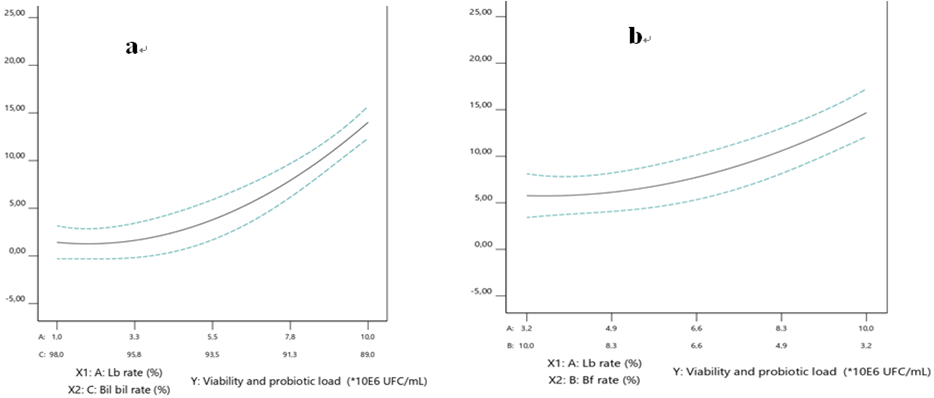
• Influence of single factors on probiotic load

• Influence of ferment seeding rate interactions on probiotic load
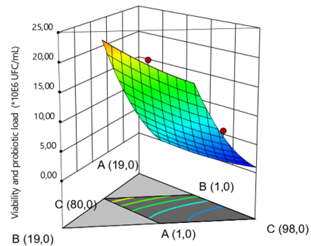
Evolution of the probiotic load as a function of the seeding rates of L. fermentum (A), B. bifidum (B) and bil-bil (C) is as shown in Figure 2. The three ferments, taken individually, contribute significantly in increasing the probiotic load as the concentration of the ferment increases. This is shown by the coefficients of the model which are positive for all three factors. Indeed, the probiotic load increases from 2 to 23x106 CFU/mL. This could be due to the multiplication of microorganisms in the medium as a function of fermentation time 37.

The mathematical model obtained for titratable acidity is shown in equation 4:
Y (A,B,C,D,E) = +3.64×A +3.634×B +3.59×C +0.0268×A×D -0.3694×A×E + 0.0477 × B × D -0.2705×B×E +0.0050×C×D -0.5421×C×E -0.0410×A×D×E + 0.0036 ×C×D×E + 0.0042 × C×D×E + 0.2918×A×D2 -0.4541×A×E2 +0.1511×A×C×D -0.3485×B×E2 - 0.2590 × C×D2 +0.6876×C×E2Eq 4
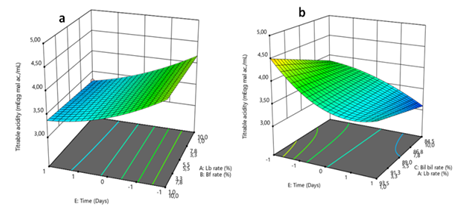
Evolution of titratable acidity of the beers as a function of fermentation time (E) and the seeding rates of L. fermentum (A) and B. bifidum (B) is shown in Figure 3a, while Figure 3b shows the evolution of the titratable acidity of the beers as a function of the fermentation time (E), L. fermentum seeding rate (A) and bil-bil rate (C).

In each case, all three factors combined contribute significantly in increasing the titratable acidity. Indeed, the acidity decreased from 4.3 to 3.4 mEqg of malic acid/mL for fermentation times ranging from 1 to 3 days and for the seeding rates of L. fementum and B. bifidum varying from 1 to 10%. During aerobic fermentation, organic acids are released over time by the microorganisms present, thus acidifying the medium 38. This is done either by genetic mutation of the microorganisms or by co-culture (bacteria-yeast).
The sugar saturation model is depicted by equation 5:
Y(A,B,C,D,E) = +3.80×A +7.04×B +4.60×C +1.37×A×B +6.06×A×C -0.3232×A×D -0.8585 ×A×E -0.2682×B×C +0.2493×B×D -1.42×B×E +0.1761×C×D -1.23×C×E + 0.0987 ×A×B×D +0.0998×A×B×E +0.4151×A×C×D +0.2924×A×C×E +0.3237×A×D×E -0.7112 × B×C×D +1.30×B×C×E -0.5855×B×D×E +0.1292×C×D×E -0.3027×A×D2 + 1.85 × A×E2 +1.20×B×D2-2.05×B×E2 +0.4459×C×D2 +0.3363×C×E2 + 0.5623 × A × B × D ×E -0.3180 ×A×C×D×E +1.25×B×C×D×E -1.32×A×B×D2 + 0.8051 × A × B×E2 -0.3697 × A × C×D2 -5.25×A×C×E2-3.39×B×C×D2 +2.32×B×C×E2Eq 5
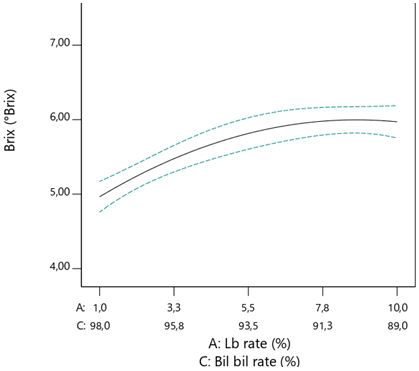
Figure 4 shows the evolution of the Brix of beers as a function of the L. fermentum seeding rate (A) and the bil-bil (C). The Brix increases when the L. fermentum seeding rate increases in the beer and a decrease in the bil-bil rate. Furthermore, the Brix value increases from 4.6 to 5.72 ºBrix for L. fermentum seeding rates ranging from 1 to 10% and for bil-bil seeding rates ranging from 98 to 89%. This could be due to the fact that bil-bil contains a consortium of microorganisms capable of transforming the sugars contained in the wort.

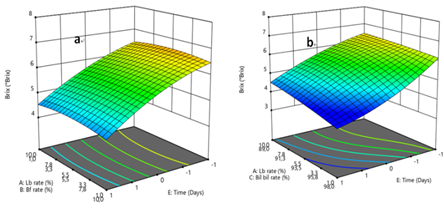
Figure 5a shows Brix evolution in beers as a function of the B. bifidum seeding rate (B) and the fermentation time (E). The B. bifidum seeding rate alone does not significantly influence the Brix. However, combined with the fermentation time, they have a significant impact on Brix. They contribute significantly to lowering the Brix. For any value of B. bifidum rate and for a long fermentation time (E = 3 days), the Brix was the lowest possible (4.5 °Brix). This could be explained by the multiplicative metabolism of B. bifidum over time, although it was in small quantities compared to bil-bil.
The Brix evolution of the beers as a function of the bil-bil seeding rate (C) and the fermentation time (E) is shown in Figure 5b.
The interaction of these two factors significantly influences the Brix. They contribute significantly in lowering the Brix. For a high value of bil-bil (C = 98%) and for a long fermentation time (E = 3 days), the Brix is the lowest possible (4.5 °Brix). This could be as a result of the fermentative metabolism of the microorganisms contained in bil-bil. Indeed, these microorganisms need nutrients (mainly sugars) to ensure their survival over time. It is the phenomenon of glycolysis that is involved.

Equation 6 represents the mathematical model for pH
Y(A,B,C,D,E) = 3.17×A +3.30×B +3.11×C -0.5817×A×B -0.2470×A×C -0.2112×A×D +0.3646×A×E -0.4436×B×C +0.2694×B×D +0.2287×B×E +0.0715×C×D -0.0831×C×E +0.3071×A×B×D -1.75×A×B×E +0.2017×A×C×D -1.02×A×C×E +1.03×A×D×E -0.9669×B×C×D -0.6183×B×C×E -0.6137×B×D×E -0.0706×C×D×E -0.5078×A×D2 +0.0053×A×E2 +1.02×B×D2-1.77×B×E2 -0.1636×C×D2 +0.1028×C×E2 -1.22×A×B×D×E -1.68×A×C×D×E +1.53×B×C×D×E -0.5873×A×B×D2 +3.53×A×B×E2 +1.52×A×C×D2 -0.2343×A×C×E2 -1.28×B×C×D2 +3.04×B×C×E2 Eq 6
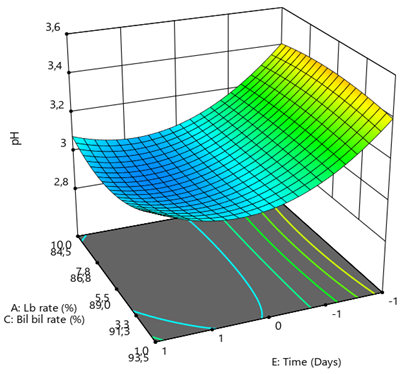
The evolution of the pH of the beers as a function of the bil-bil seeding rate (C), the L. fermentum seeding rate (A) and the fermentation time (E) is shown in Figure 6.

The interaction of these factors significantly decreases the pH. This decrease in pH could be due to the fact that the microorganisms consume the sugars present in the medium to produce ethanol. The latter is then oxidized into organic acids by lactic acid bacteria and yeasts, releasing organic agents. The lactic acids and organic agents released contribute to the formation of free H+ ions in the medium, resulting in acidification of the medium 39, 40.
The mathematical model for antioxidant activity is depicted in equation 7:
Y(A,B,C,D,E) = +53.85 +2.52×D +20.35×E Eq 7
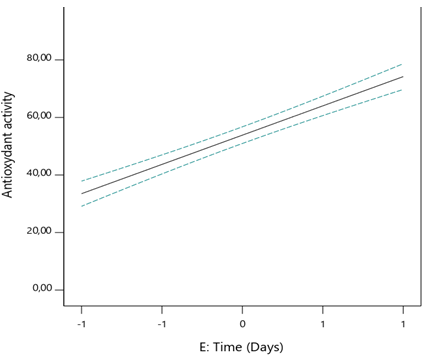
The evolution of the antioxidant activity of beers as a function of fermentation time is shown in Figure 7.

Time contributes significantly to the increase in antioxidant activity. This increase could be due to the secretion of free radical scavenging compounds such as vitamin C and phenolic compounds from the medium with time, which over time act as primary antioxidants. The action of these antioxidants is thought to be due to their ability to donate hydrogen atoms or electrons derived mainly from the hydroxyl ring of flavonoids 41.
Equation 8 shows the mathematical model for reducing sugars evolution during fermentation.
Y(A,B,C,D,E)= +1.37×A +1.26×B +0.0.8334×C +0.2214×A×D -0.7687×A×E -0.0212 × A × D -0.6016×B×E +0.0628×C×D -0.5547×C×EEq 8

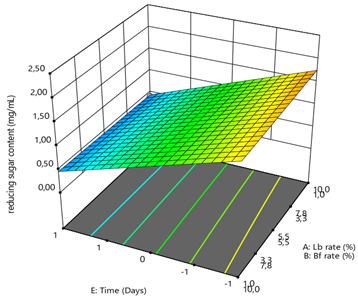
Figure 8 shows the evolution of reducing sugars as a function of fermentation time and bil-bil seeding rate.
Reducing sugars decreases significantly with increase in fermentation time combined with the bil-bil seeding rate. Indeed, the values range from 1.5 mg/mL to 0.0 mg/mL for fermentation time values ranging from 1 to 3 days and for ferment rate values varying between 1 and 10%. The bil-bil used is a consortium of microorganisms including yeasts. The yeast will consume the sugar present in the medium, producing alcohol. The higher the bil-bil seeding rate for a fix volume of wort, the greater the yeast concentration and the more reducing sugar is being consumed.
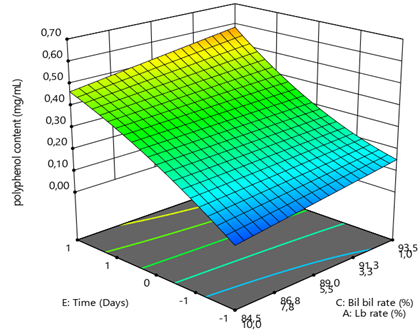
Evolution of the phenolic content of beers during fermentation is shown in the mathematical model of equation 9:
Y(A,B,C,D,E) = +0.2860×A +0.2676×B +0.3261×C -0.0160×A×D ++0.2038×A×E +0.0080×C×D×E +0.0362×A×D2 -0.0861×A×E2 +0.2172×B×D2 -0.0598×B×E2 +0.0152×C×D2 +0.0973×C×E2 Eq 9
The evolution of phenolic content as a function of fermentation time and bil-bil seeding rate is shown in Figure 9. The phenolic compound content increases significantly with increase in fermentation time combined with the bil-bil seeding rate. Indeed, it goes from 0.00 mg/mL to a value of 5.59 mg/mL for fermentation time values ranging from 1 to 3 days and for bil-bil values varying between 84.5 and 93.5%. This growth could be due to the release of polyphenols during fermentation. Indeed, microbial metabolism is characterised by the production of antioxidant compounds including polyphenols 42.

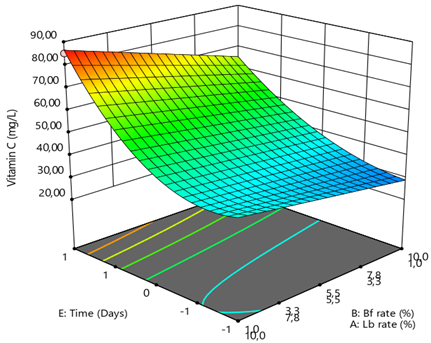
The mathematical model of vitamin C evolution is depicted in equation 10.
Y(A,B,C,D,E) = +50.84×A +36.81×B +42.14×C -2.54×A×D +26.45×A×E -2.28×B×D +16.39×B×E +3.84×C×D +20.01×C×E -6.57×A×D×E +1.65×B×D×E +1.13×C×D×E -22.34×A×D2 -26.90×A×E2 -2.48×B×D2 +8.89×B×E2 +5.93×C×D2 +6.47×C×E2 Eq 10
Figure 10 shows the evolution of vitamin C as a function of the fermentation time, the seeding rates of bil-bil and L. fermentum.

The vitamin C content increases significantly with fermentation time combined with the B. bifidum rate. In fact, it goes from 26 mg/L to a value of 83 mg/L for values of fermentation time ranging from 1 to 3 days and for values of bil-bil rate varying between 1 and 10% (possibly 1 to 10% L. fermentum). This growth could be due to the release of antioxidants during fermentation. Indeed, microbial metabolism is characterized by the production of antioxidant compounds, including vitamin C 42.
Turbidity evolution was modelled mathematically as shown in equation 11.
Y(A,B,C,D,E) = +3184.04×A -4616.04×B +865.56×C +4486.02×A×B -5968.64×A×C +9636.49×B×C -5555.16×A×B×C -9848.94×A×B(A-B) -3943.58×A×C(A-C) + 6762.36 × B ×C(B-C) Eq 11
Figure 11 shows the evolution of the turbidity of beers as a function of the different ferments. It can be seen that all factors significantly influence turbidity, even when combined. Furthermore, the turbidity value increases between 300 and 800 EBC for A and B values ranging from 1 to 10% and for bil-bil seeding rates varying between 84.5 and 93.5%. This could be due to the effect of microbial metabolism whereby the microorganisms present release biopolymers into the medium thereby increasing turbidity 43.
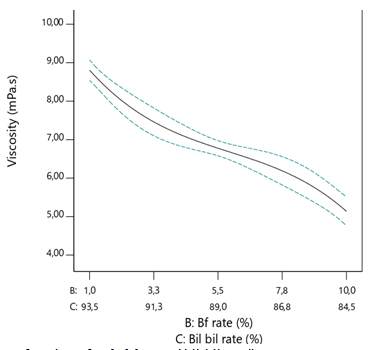
The mathematical model for viscosity is shown in equation 12:
Y(A,B,C,D,E)= +44.57×A -15.84×B +10.24×C -36.96×A×B -81.41×A×C +37.60×B×C +40.42×A×B×C -75.14×A×B(A-B) -55.98×A×C(A-C) +24.06×B×C(B-C)Eq 12
Figure 12 shows the evolution of beer viscosity as a function of temperature, B. bifidum seeding rate (B) and bil-bil rate (C). It was found that the viscosity decreased significantly when these factors were combined. Furthermore, the viscosity value decreases from 8.8 to 5.00 mPa.s for seeding rate values of L. fermentum and B. bifidum ranging from 1 to 10%. This could be due to the effect of microbial metabolism whereby the microorganisms present release biopolymers into the medium which make it more viscous.

In order to find ideal and optimal physicochemical and microbiological characteristics for consumption, an optimization was carried out using the Design Expert 11 software. The aim was to find an optimum for each response. The conditions obtained were: Inoculation rate of L. fermentum (A) = 10%; Inoculation rate of B. bifidum (B) = 7%; Inoculation rate of bil-bil (C) = 83%; Fermentation temperature (D) = 39.5 oC; Fermentation time (E) = 2 days. The optima responses obtained are presented in Table 4.
To perceive a positive health effect from consumption, a least concentration of probiotic microbes is essential. The recommended quantity is between 106 – 1011 CFU/day 44. With a probiotic load of 17.9 × 10⁶ CFU/mL, the beer produced under optimised conditions could be considered as a source of probiotics.
The outcome of this study showed that mixed fermentation can be successfully carried out on sorghum wort to produce a probiotic beer. Alcohol fermentation was achieved by yeast present in bil-bil, while L. fermentum, B. bifidum and lactic acid bacteria found in bil-bil were responsible, not only for lactic acid fermentation, but also for the probiotic load.
The authors declare no conflict of interest.
| [1] | Djè, K. M., N’guessan, K. F., Djeni, N. T. and Dadié A. T., (2008). Biochemical changes during alcoholic fermentation in the production of tchapalo, a traditional sorghum beer. Int. J. Food Eng., 4(7). | ||
| In article | View Article | ||
| [2] | Van der Aa Kuhle, A., Lene, J., Glover, R. L. K., Diawara, B. and Jakobsen, M. (2001). Identification and Characterization of Saccharomyces cerevisiae strains isolated from west African sorghum beer. Yeast, 18(11): 1069-79. | ||
| In article | View Article PubMed | ||
| [3] | FAO/WHO (2001). Health and Nutritional Properties of probiotics in Food including Powder Milk with Live Lactic Acid Bacteria. Cordoba, Argentina: Food and Agriculture Organization of the United Nations and World Health Organization Expert Consultation Report. | ||
| In article | |||
| [4] | FAO/WHO (2002). Guidelines for the evaluation of probiotics in food. Food and Agriculture Organization of the United Nations and World Health Organization Working Group Report. | ||
| In article | |||
| [5] | Gil-Rodríguez, A. M., Carrascosa, A. V., Requena, T. (2015). Yeasts in foods and beverages: In vitro characterisation of probiotic traits. LWT - Food Sci Technol 64:1156–1162 | ||
| In article | View Article | ||
| [6] | Marsh, A. J., Hill, C., Ross, R. P. and Cotter, P. D. (2014). Fermented beverages with health-promoting potential: Past and future perspectives. Trends Food Sci Technol 38:113–124 | ||
| In article | View Article | ||
| [7] | Stanton, A. L., Revenson, T. A., and Tennen, H. (2007). Health Psychology: psychological adjustment to chronic disease. Annu. Rev. Psychol. 58: 565-592. | ||
| In article | View Article PubMed | ||
| [8] | Champagne, C. P., Ross R. P., Saarela, M., (2011). Recommendations for viability assessment of probiotics as concentrated cultures and in food matrices. Int. J. Food Microbiol. 149(3): 185-193. | ||
| In article | View Article PubMed | ||
| [9] | Heller, K. J., (2001). Probiotic Bacteria in fermented foods: Product characteristics and starter organisms – a review. Am J Clin Nutr. 73(2): 374 – 379. | ||
| In article | View Article PubMed | ||
| [10] | Salmerón, I. (2017). Fermented cereal beverages: from probiotic, prebiotic and synbiotic towards nanoscience designed healthy drinks. Lett Appl Microbiol 12:3218–3221 | ||
| In article | View Article PubMed | ||
| [11] | Costa, K. K. F. D., Soares Júnior, M. S., Rosa, S. I. R., Caliari, M. and Pimentel T. C. (2017). Changes of probiotic fermented drink obtained from soy and rice byproducts during cold storage. LWT- Food Sci. Technol. 78, 23–30. | ||
| In article | View Article | ||
| [12] | Xu, Y., Zhao, H., Yan, X. and Zhao, S. (2020). Preparation of a probiotic rice tablet: Sensory evaluation and antioxidant activity during gastrointestinal digestion. LWT - Food Sci. Technol., 124, 108911. | ||
| In article | View Article | ||
| [13] | Rasika, D. M. D., Vidanarachchi, J. K., Luiz, S. F., Azeredo, D. R. P., Cruz, A. G. and Ranadheera, C. S. (2021). Probiotic Delivery through Non-Dairy Plant-Based Food Matrices. Agriculture, 11(599); 1-23. | ||
| In article | View Article | ||
| [14] | Sanders, M. E., Tompkins, T., Heimbach, J. T. and Kolida, S. (2005). Weight of evidence needed to substantiate a health effect for probiotics and prebiotics. Eur J. Nutr. 44(5), 303-310. | ||
| In article | View Article PubMed | ||
| [15] | Koirala, S. and Anal, A. K. (2021). Probiotics-based foods and beverages as future foods and their and their overall safety and regulatory claims. Future Foods 3:100013. | ||
| In article | View Article | ||
| [16] | Kumar, B. V., Vijayendra, S. V. N., Reddy, O. V. S. (2015). Trends in dairy and non-dairy probiotic products – a review. J. Food Sci. Technol 52 (10): 6112-6124. | ||
| In article | View Article PubMed | ||
| [17] | Kolida, S., Saulnier, D., and Gibson, G. (2006). Gastrointestinal microflora: probiotics. Adv. Appl. Microbiol 59, 187-219. | ||
| In article | View Article PubMed | ||
| [18] | Lamsal, B. P. and Faubion, J. M. (2009). The beneficial use of cereal and cereal components in probiotic foods. Food Rev Int 25:103–114 | ||
| In article | View Article | ||
| [19] | Waters, D M., Mauch, A., Coffey, A., Arendt, E. K. and Zannini, E. (2015). Lactic acid bacteria as a cell factory for the delivery of functional biomolecules and ingredients in cereal-based beverages: a review. Crit Rev Food Sci Nutr 55:503–520 | ||
| In article | View Article PubMed | ||
| [20] | Enujiugha, V. N., Badejo, A. A. (2017). Probiotic potentials of cereal-based beverages. Crit Rev Food Sci Nutr 57:790–804 | ||
| In article | View Article PubMed | ||
| [21] | Amadou, I., Gbadamosi, O. S., Le G-W (2011). Millet-based traditional processed foods and beverages: a review. Cereal Foods World 56:1–7 | ||
| In article | View Article | ||
| [22] | Navarrete-Bolaños, J. L. (2012). Improving traditional fermented beverages: how to evolve from spontaneous to directed fermentation. Eng Life Sci 12:410–418. | ||
| In article | View Article | ||
| [23] | Analytica-EBC (1998). European Brewery Convention. Analytica-EBC (5th edn, with revisions), Fachverlag Hans Carl, NuÈrnberg. | ||
| In article | |||
| [24] | Gunenc, A., Yeung, M. H., Lavergne, C., Bertinato, J., and Hosseinian, F. (2017). Enhancements of antioxidant activity and mineral solubility of germinated wrinkled lentils during fermentation in kefir. J. of Funct. Foods, 32, 72–79. | ||
| In article | View Article | ||
| [25] | Desobgo, Z. S. C., (2012). Modélisation de l’action des hydrolases sur quelques caracteristiques physico-chimiques des mouts de deux cultivars de sorgho. Thèse, Ecole Nationale Superieure des Sciences Agro-Industrielles, Université de Ngaoundéré, Cameroon. 206 p | ||
| In article | |||
| [26] | AFNOR (Association Française de Normalisation) (1993). Recueils of French standards, Quality control of food products, milk and milk products, physicochemical analyzes. Afnor-dgccrf. 4th ed. Paris: La Defense, 562. | ||
| In article | |||
| [27] | Muanda, F. N., (2010). Identification des Polyphénols, évaluation de leur activité antioxydante et étude de leurs propriétés biologiques Thèse de Doctorat de l’Université Paul Verlaine, Metz, France, 294p. | ||
| In article | |||
| [28] | Helmenstine, A. M. (2019). "Vitamin C Determination by Iodine Titration." ThoughtCo, Aug. 27, 2020, thoughtco.com/vitamin-c-determination-by-iodine-titration-606322. | ||
| In article | |||
| [29] | Marigo, G. and Gadal, P. (1973). Etude comparative du contenu phénolique du genre Quercus et de ses zoocecides. Eur. J. For. Pathol. 3(3): 181-186. | ||
| In article | View Article | ||
| [30] | Alejandro, H. L., Daniel, A. Sánchez, F., Zenaida, Z. S., Itzel, G. B., Tzvetanka, D. D., and Alma, X. A. A. (2020). Quantification of Reducing Sugars Based on the Qualitative Technique of Benedict. ACS Omega 2020 5 (50), 32403-32410. | ||
| In article | View Article PubMed | ||
| [31] | Briggs, D. E., Boulton C. A., Brookes P. A. and Stevens R. (2004). Brewing Science and practice. Woodhead Publishing Limited, Abington Hall, Abington Cambridge CB1 6AH, England. | ||
| In article | |||
| [32] | Shah, N. P., (2011). Bacteria, Beneficial | Bifidobacterium spp.: Morphology and Physiology, in Fuquay, J.W. (Ed), Encyclopedia of Dairy Sciences, second edition, Academic Press. | ||
| In article | View Article PubMed | ||
| [33] | Ferreira, S. B., Fukase, G. O., Gomes, R. G. and Bruschi, M. L. (2020). Mucoadhesive wafers for buccal delivery of probiotic bacteria: Mechanical properties and enumeration. J. Drug Deliv Sci Technol 61: 102201. | ||
| In article | View Article | ||
| [34] | LeBlanc, J. G., Garro, M. S. and Savoy de Giori G. (2004). Effect of pH on Lactobacillus fermentum growth, raffinose removal, α-galactosidase activity and fermentation products. Appl Microbiol Biotechnol. 65: 119-123. | ||
| In article | View Article PubMed | ||
| [35] | Kayodé, A. P. P., Vieira-Dalode, G., Linnemann, A. R. Kotchoni, S. O., Hounhouigan, A. J. D., van Boekel, M. J. S. and Nout, M. J. R. (2011). Diversity of yeasts involved in the fermentation of tchoukoutou, an opaque sorghum beer from Benin. Afr. J. Microbiol. Res., 5(18), 2737- 2742. | ||
| In article | View Article | ||
| [36] | Coulibaly, W. H., N’guessan, K. F., Coulibaly, I., Koffi, M. D., Thonart, P., (2014). Yeast and lactic acid bacteria involved in traditional sorghum beer produced in sub-Saharan Africa. A review. Biotechnol. Agron. Soc. Environ. 18(2), 209-219. | ||
| In article | |||
| [37] | Glover, R. L. K., Sawadogo-Lingani, H., Diawara, B., Jespersen, L., and Jakobsen, M. (2009). Utilization of Lactobacillus fermentum and Saccharomyces cerevisiae as starter cultures in the production of “dolo”. J. Appl. Biosci., 22, 1312-1319. | ||
| In article | |||
| [38] | Xia, X. Yiqiang, D., Han, W., Xiaoli, L., Ying, W., Liqing, Y., Zhe, W., Xiaonan, L. and Jianzhong, Z. (2019). Kombucha fermentation enhances the health promoting properties of soymilk beverage. J. Funct. Foods. 69: 1-13. | ||
| In article | View Article | ||
| [39] | Holmgren, M., Liu, Y., Xu, Y., Yellen, G., (1996). On the Use of Thiol-modifying Agents to Determine Channel Topology. Neuropharmacology 35(7), 797-804. | ||
| In article | View Article PubMed | ||
| [40] | Chen, C., and Liu, B. Y., (2000). Changes in major components of tea fungus metabolites during prolonged fermentation. J. Appl Microbiol. 89(5): 834-839. | ||
| In article | View Article PubMed | ||
| [41] | Li, Y., Lopez, P., Durand, P., Ouazzani, J., Badet, B. and Badet-Denisot, M. A. (2007). An enzyme-coupled assay for aminotransferase activity of glucosamine-6-phosphate synthase. Anal Biochem 370(2):142-146. | ||
| In article | View Article PubMed | ||
| [42] | Liu, G., Xinguo, Z., Yu, H., Zhumei, C., Yichen, W., Xuying, W., Xueliang C., and Hongxi W. (2017). Ocean acidification decreases mussel byssal attachment strength and induces molecular byssal responses. Mar Ecol Prog Ser. 565: 67-77. | ||
| In article | View Article | ||
| [43] | Kahle, E., Zarnkow, M., Jacob, F. (2020). Beer Turbidity Part 1: A Review of Factors and Solutions. J. Am Society of Brewing Chemists. 79(2): 99 – 114. | ||
| In article | View Article | ||
| [44] | Mombelli, B., and Gismondo, M. R. (2000). The use of probiotics in medical practice. Int. J. Antimicrob Agents. 16(4): 531-536. | ||
| In article | View Article PubMed | ||
Published with license by Science and Education Publishing, Copyright © 2023 Brai Olivier, Wilson Agwanande Ambindei, Ngwasiri Pride Ndasi, Makebe Calister Wingang, Wiyeh Claudette Bakisu Muala, Desobgo Zangue Steve Carly and Nso Emmanuel Jong
 This work is licensed under a Creative Commons Attribution 4.0 International License. To view a copy of this license, visit
http://creativecommons.org/licenses/by/4.0/
This work is licensed under a Creative Commons Attribution 4.0 International License. To view a copy of this license, visit
http://creativecommons.org/licenses/by/4.0/
| [1] | Djè, K. M., N’guessan, K. F., Djeni, N. T. and Dadié A. T., (2008). Biochemical changes during alcoholic fermentation in the production of tchapalo, a traditional sorghum beer. Int. J. Food Eng., 4(7). | ||
| In article | View Article | ||
| [2] | Van der Aa Kuhle, A., Lene, J., Glover, R. L. K., Diawara, B. and Jakobsen, M. (2001). Identification and Characterization of Saccharomyces cerevisiae strains isolated from west African sorghum beer. Yeast, 18(11): 1069-79. | ||
| In article | View Article PubMed | ||
| [3] | FAO/WHO (2001). Health and Nutritional Properties of probiotics in Food including Powder Milk with Live Lactic Acid Bacteria. Cordoba, Argentina: Food and Agriculture Organization of the United Nations and World Health Organization Expert Consultation Report. | ||
| In article | |||
| [4] | FAO/WHO (2002). Guidelines for the evaluation of probiotics in food. Food and Agriculture Organization of the United Nations and World Health Organization Working Group Report. | ||
| In article | |||
| [5] | Gil-Rodríguez, A. M., Carrascosa, A. V., Requena, T. (2015). Yeasts in foods and beverages: In vitro characterisation of probiotic traits. LWT - Food Sci Technol 64:1156–1162 | ||
| In article | View Article | ||
| [6] | Marsh, A. J., Hill, C., Ross, R. P. and Cotter, P. D. (2014). Fermented beverages with health-promoting potential: Past and future perspectives. Trends Food Sci Technol 38:113–124 | ||
| In article | View Article | ||
| [7] | Stanton, A. L., Revenson, T. A., and Tennen, H. (2007). Health Psychology: psychological adjustment to chronic disease. Annu. Rev. Psychol. 58: 565-592. | ||
| In article | View Article PubMed | ||
| [8] | Champagne, C. P., Ross R. P., Saarela, M., (2011). Recommendations for viability assessment of probiotics as concentrated cultures and in food matrices. Int. J. Food Microbiol. 149(3): 185-193. | ||
| In article | View Article PubMed | ||
| [9] | Heller, K. J., (2001). Probiotic Bacteria in fermented foods: Product characteristics and starter organisms – a review. Am J Clin Nutr. 73(2): 374 – 379. | ||
| In article | View Article PubMed | ||
| [10] | Salmerón, I. (2017). Fermented cereal beverages: from probiotic, prebiotic and synbiotic towards nanoscience designed healthy drinks. Lett Appl Microbiol 12:3218–3221 | ||
| In article | View Article PubMed | ||
| [11] | Costa, K. K. F. D., Soares Júnior, M. S., Rosa, S. I. R., Caliari, M. and Pimentel T. C. (2017). Changes of probiotic fermented drink obtained from soy and rice byproducts during cold storage. LWT- Food Sci. Technol. 78, 23–30. | ||
| In article | View Article | ||
| [12] | Xu, Y., Zhao, H., Yan, X. and Zhao, S. (2020). Preparation of a probiotic rice tablet: Sensory evaluation and antioxidant activity during gastrointestinal digestion. LWT - Food Sci. Technol., 124, 108911. | ||
| In article | View Article | ||
| [13] | Rasika, D. M. D., Vidanarachchi, J. K., Luiz, S. F., Azeredo, D. R. P., Cruz, A. G. and Ranadheera, C. S. (2021). Probiotic Delivery through Non-Dairy Plant-Based Food Matrices. Agriculture, 11(599); 1-23. | ||
| In article | View Article | ||
| [14] | Sanders, M. E., Tompkins, T., Heimbach, J. T. and Kolida, S. (2005). Weight of evidence needed to substantiate a health effect for probiotics and prebiotics. Eur J. Nutr. 44(5), 303-310. | ||
| In article | View Article PubMed | ||
| [15] | Koirala, S. and Anal, A. K. (2021). Probiotics-based foods and beverages as future foods and their and their overall safety and regulatory claims. Future Foods 3:100013. | ||
| In article | View Article | ||
| [16] | Kumar, B. V., Vijayendra, S. V. N., Reddy, O. V. S. (2015). Trends in dairy and non-dairy probiotic products – a review. J. Food Sci. Technol 52 (10): 6112-6124. | ||
| In article | View Article PubMed | ||
| [17] | Kolida, S., Saulnier, D., and Gibson, G. (2006). Gastrointestinal microflora: probiotics. Adv. Appl. Microbiol 59, 187-219. | ||
| In article | View Article PubMed | ||
| [18] | Lamsal, B. P. and Faubion, J. M. (2009). The beneficial use of cereal and cereal components in probiotic foods. Food Rev Int 25:103–114 | ||
| In article | View Article | ||
| [19] | Waters, D M., Mauch, A., Coffey, A., Arendt, E. K. and Zannini, E. (2015). Lactic acid bacteria as a cell factory for the delivery of functional biomolecules and ingredients in cereal-based beverages: a review. Crit Rev Food Sci Nutr 55:503–520 | ||
| In article | View Article PubMed | ||
| [20] | Enujiugha, V. N., Badejo, A. A. (2017). Probiotic potentials of cereal-based beverages. Crit Rev Food Sci Nutr 57:790–804 | ||
| In article | View Article PubMed | ||
| [21] | Amadou, I., Gbadamosi, O. S., Le G-W (2011). Millet-based traditional processed foods and beverages: a review. Cereal Foods World 56:1–7 | ||
| In article | View Article | ||
| [22] | Navarrete-Bolaños, J. L. (2012). Improving traditional fermented beverages: how to evolve from spontaneous to directed fermentation. Eng Life Sci 12:410–418. | ||
| In article | View Article | ||
| [23] | Analytica-EBC (1998). European Brewery Convention. Analytica-EBC (5th edn, with revisions), Fachverlag Hans Carl, NuÈrnberg. | ||
| In article | |||
| [24] | Gunenc, A., Yeung, M. H., Lavergne, C., Bertinato, J., and Hosseinian, F. (2017). Enhancements of antioxidant activity and mineral solubility of germinated wrinkled lentils during fermentation in kefir. J. of Funct. Foods, 32, 72–79. | ||
| In article | View Article | ||
| [25] | Desobgo, Z. S. C., (2012). Modélisation de l’action des hydrolases sur quelques caracteristiques physico-chimiques des mouts de deux cultivars de sorgho. Thèse, Ecole Nationale Superieure des Sciences Agro-Industrielles, Université de Ngaoundéré, Cameroon. 206 p | ||
| In article | |||
| [26] | AFNOR (Association Française de Normalisation) (1993). Recueils of French standards, Quality control of food products, milk and milk products, physicochemical analyzes. Afnor-dgccrf. 4th ed. Paris: La Defense, 562. | ||
| In article | |||
| [27] | Muanda, F. N., (2010). Identification des Polyphénols, évaluation de leur activité antioxydante et étude de leurs propriétés biologiques Thèse de Doctorat de l’Université Paul Verlaine, Metz, France, 294p. | ||
| In article | |||
| [28] | Helmenstine, A. M. (2019). "Vitamin C Determination by Iodine Titration." ThoughtCo, Aug. 27, 2020, thoughtco.com/vitamin-c-determination-by-iodine-titration-606322. | ||
| In article | |||
| [29] | Marigo, G. and Gadal, P. (1973). Etude comparative du contenu phénolique du genre Quercus et de ses zoocecides. Eur. J. For. Pathol. 3(3): 181-186. | ||
| In article | View Article | ||
| [30] | Alejandro, H. L., Daniel, A. Sánchez, F., Zenaida, Z. S., Itzel, G. B., Tzvetanka, D. D., and Alma, X. A. A. (2020). Quantification of Reducing Sugars Based on the Qualitative Technique of Benedict. ACS Omega 2020 5 (50), 32403-32410. | ||
| In article | View Article PubMed | ||
| [31] | Briggs, D. E., Boulton C. A., Brookes P. A. and Stevens R. (2004). Brewing Science and practice. Woodhead Publishing Limited, Abington Hall, Abington Cambridge CB1 6AH, England. | ||
| In article | |||
| [32] | Shah, N. P., (2011). Bacteria, Beneficial | Bifidobacterium spp.: Morphology and Physiology, in Fuquay, J.W. (Ed), Encyclopedia of Dairy Sciences, second edition, Academic Press. | ||
| In article | View Article PubMed | ||
| [33] | Ferreira, S. B., Fukase, G. O., Gomes, R. G. and Bruschi, M. L. (2020). Mucoadhesive wafers for buccal delivery of probiotic bacteria: Mechanical properties and enumeration. J. Drug Deliv Sci Technol 61: 102201. | ||
| In article | View Article | ||
| [34] | LeBlanc, J. G., Garro, M. S. and Savoy de Giori G. (2004). Effect of pH on Lactobacillus fermentum growth, raffinose removal, α-galactosidase activity and fermentation products. Appl Microbiol Biotechnol. 65: 119-123. | ||
| In article | View Article PubMed | ||
| [35] | Kayodé, A. P. P., Vieira-Dalode, G., Linnemann, A. R. Kotchoni, S. O., Hounhouigan, A. J. D., van Boekel, M. J. S. and Nout, M. J. R. (2011). Diversity of yeasts involved in the fermentation of tchoukoutou, an opaque sorghum beer from Benin. Afr. J. Microbiol. Res., 5(18), 2737- 2742. | ||
| In article | View Article | ||
| [36] | Coulibaly, W. H., N’guessan, K. F., Coulibaly, I., Koffi, M. D., Thonart, P., (2014). Yeast and lactic acid bacteria involved in traditional sorghum beer produced in sub-Saharan Africa. A review. Biotechnol. Agron. Soc. Environ. 18(2), 209-219. | ||
| In article | |||
| [37] | Glover, R. L. K., Sawadogo-Lingani, H., Diawara, B., Jespersen, L., and Jakobsen, M. (2009). Utilization of Lactobacillus fermentum and Saccharomyces cerevisiae as starter cultures in the production of “dolo”. J. Appl. Biosci., 22, 1312-1319. | ||
| In article | |||
| [38] | Xia, X. Yiqiang, D., Han, W., Xiaoli, L., Ying, W., Liqing, Y., Zhe, W., Xiaonan, L. and Jianzhong, Z. (2019). Kombucha fermentation enhances the health promoting properties of soymilk beverage. J. Funct. Foods. 69: 1-13. | ||
| In article | View Article | ||
| [39] | Holmgren, M., Liu, Y., Xu, Y., Yellen, G., (1996). On the Use of Thiol-modifying Agents to Determine Channel Topology. Neuropharmacology 35(7), 797-804. | ||
| In article | View Article PubMed | ||
| [40] | Chen, C., and Liu, B. Y., (2000). Changes in major components of tea fungus metabolites during prolonged fermentation. J. Appl Microbiol. 89(5): 834-839. | ||
| In article | View Article PubMed | ||
| [41] | Li, Y., Lopez, P., Durand, P., Ouazzani, J., Badet, B. and Badet-Denisot, M. A. (2007). An enzyme-coupled assay for aminotransferase activity of glucosamine-6-phosphate synthase. Anal Biochem 370(2):142-146. | ||
| In article | View Article PubMed | ||
| [42] | Liu, G., Xinguo, Z., Yu, H., Zhumei, C., Yichen, W., Xuying, W., Xueliang C., and Hongxi W. (2017). Ocean acidification decreases mussel byssal attachment strength and induces molecular byssal responses. Mar Ecol Prog Ser. 565: 67-77. | ||
| In article | View Article | ||
| [43] | Kahle, E., Zarnkow, M., Jacob, F. (2020). Beer Turbidity Part 1: A Review of Factors and Solutions. J. Am Society of Brewing Chemists. 79(2): 99 – 114. | ||
| In article | View Article | ||
| [44] | Mombelli, B., and Gismondo, M. R. (2000). The use of probiotics in medical practice. Int. J. Antimicrob Agents. 16(4): 531-536. | ||
| In article | View Article PubMed | ||