Acute malnutrition, the third leading cause of death in children under 5 years of age worldwide, remains a major health concern in the Republic of Congo. Considering this problem, mothers should necessarily be aware of prevention and treatment aspects. Therefore, this study aims to assess mother’s knowledge and practices regarding the prevention and management of acute childhood malnutrition. For this purpose, a questionnaire was used to collect data from direct interviews with 234 mothers. The results shows that 97.86% of mothers were at least 18 years old, 56.4% had a secondary education level, 65.81% had an income-generating activity, 56.41% were single, and 95.73% attended a health center. In addition, at least 80% of mothers know and practice food hygiene, 69% are aware of infant and young child feeding (IYCF), 64.1% know colostrum while 86% do not know the recommended time to give it and 50% know the duration of exclusive breastfeeding (EBF). Half of the mothers know the food square, 92.74% know the weaning age. 64% introduce complementary food as recommended. 79.48% are informed about child malnutrition, 64.95% have attended an education session while half recognize marasmus and 33.33% recognize kwashiorkor. 26% have already had a case of malnourished child of which 52% were detected by a community relay and 92% of them followed the treatment in a health center. Additionally, 214 mothers were unaware that diagnostic parameters include height, mid-upper arm circumference, weight and edema. In short, a nutrition education strategy is urgently needed for IYCF, breastfeeding practices and the introduction of complementary foods, knowledge of the forms of acute malnutrition and diagnostic methods of acute malnutrition.
In the context of sustainable development, countries' commitment to ensuring the good health of their populations focuses on disease prevention and treatment. Among these diseases is malnutrition, for which the most vulnerable population group remains, at the present time, children under five (5) years of age 1. In fact, malnutrition, characterized in its severe forms by severe emaciation, stunted growth or obesity 2 in young children, is a real public health challenge affecting every continent. In Africa, nearly 16.5 million children are expected to be affected by acute malnutrition in 2023, including 4.8 million in its severe form 1. In the Republic of Congo, nearly 21.2% of children from 6 to 59 months of age suffer from stunted growth, compared to 8% who are emaciated. 3.
However, it has been proven that children's vulnerability to malnutrition and the window of opportunity to protect them from it occur within the first 1,000 days of their lives 4. Furthermore, cases of malnutrition that are not cared for during childhood can have adverse consequences in adulthood. For this purpose, taking action to prevent malnutrition in infants and young children means taking effective action to ensure their good health before their second year of life and, consequently, involving mothers and childcare providers 5. Moreover, involving mothers and childcare providers means training them, informing them and equipping them with knowledge and best practices for protecting children and preventing childhood illnesses. 6.
It is within this framework that several global nutrition initiatives have been taken, such as the Sustainable Development Goals (Goal 2) and the Scaling Up Nutrition (SUN) movement, of which the Republic of Congo has been a member since October 2013. As a result, these initiatives have created a political and socio-health environment conducive to nutrition and to progress in the fight against malnutrition 3.
Thus, considering the implementation of various measures to combat child malnutrition in the Republic of Congo, this study aims to assess mothers' knowledge, attitudes and practices regarding the prevention and management of acute malnutrition in children under 5 years of age in relation to the nutritional education intervention thresholds described in the Food and Agriculture Organization’s (FAO) knowledge, attitudes and practices assessment guide 7.
The study was conducted in the departments of Kouilou and Pointe-Noire. Kouilou, covering an area of 12,517 km², is one of the departments of the Republic of Congo located in the south of the country (4°14'00‘, 11°56'00’ east) with a population of 97,362 people spread across six (6) districts. Pointe-Noire is a department, port city and economic capital of the Republic of Congo, located in the extreme south of the country (4°46'43.21'“south and 11°51'49.1”' east). Pointe-Noire has a population of 1,420,612 spread across six (6) boroughs and one urban commune covering an area of 2,134 km².
This study covered the period from May to July 2024.
2.2. Equipment: Data Collection ToolAs a data collection tool, an individual assessment form was developed using the KoboToolbox online platform. It includes various questions relating to mothers' knowledge and practices regarding the prevention and management of child malnutrition, as well as their attitudes towards malnutrition and prevention recommendations.
This is a descriptive cross-sectional study. The population of interest consists of mothers of children under the age of 5 residing in the study area.
3.2. SamplingThe sample of mothers participating in the study was selected using a simple random sampling method, identifying survey areas based on the addresses of mothers attending selected ambulatory nutritional recovery units (ANRU). As a result, mothers were sampled in the health areas of Mvou-Mvou, Bissongo, Mouissou Madeleine and Voungou in the department of Pointe-Noire and the health area of Mengo in the department of Kouilou.
The sample size was calculated using the following formula:
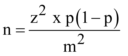 |
Where n = minimum sample size required, z = confidence level according to the reduced normal distribution (for a confidence level of 95%, z = 1.96), p = estimated proportion of the population with the characteristic (when unknown, p = 0.5 is used, which corresponds to the worst-case scenario, i.e. the greatest dispersion), m = tolerated margin of error. With a margin of error of 7%, 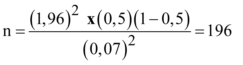 8
8
The minimum sample size required for our study is therefore 196 mothers. Thus, 234 mothers who clearly expressed their consent to participate in the study, had at least one child in the target age group and had been residing in the study area for more than a year, represented the study sample. However, any mothers of children who did not consent to participate and any who had been living in the study area for less than one year were excluded from the study.
3.3. Data CollectionData collection was carried out using a qualitative approach through individual interviews combined with direct observations in households. It was carried out by a team of community investigators identified on the basis of their activity in the selected health areas. In addition, the information collected from mothers included: socio-demographic data; knowledge and practices on the prevention of malnutrition; knowledge of malnutrition and its various forms, including diagnostic methods and recommendations for management in the event of a positive screening result. The data also reported mothers' perceptions of growth monitoring activities.
3.4. Data AnalysisData collection was carried out using the KoboCollect tool. Data processing and analysis were performed using Epi Info, SPSS and Microsoft Excel software. The different variables are described by proportions, which are compared using the Chi² test for a significance threshold of α = 5%.
3.5. Ethical ConsiderationsThis study was conducted after approval by the Health Sciences Research Ethics Committee (CERSSA) of Brazzaville, registered under number 400/ MERSIT/ IRSSA-CERSSA/2022, and after obtaining research authorizations delivered by the Departmental Directorates of Health Care and Services of Pointe-Noire and Kouilou (786/MSP/DGSSSa/DDDSSSa-PN-S/2022 and 127/ MSP/ CAB/DGSSSa/DDSSSa-K). The objectives of the study and the data collection procedures were explained to the mothers of the children. The mothers' participation in the study was voluntary, the informed consent of the respondents was sought, and their anonymity was respected.
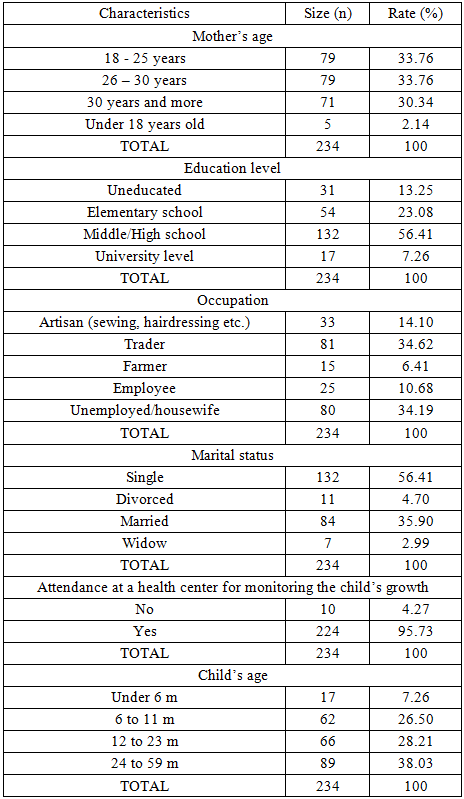
Table 1 presents the profile of mothers of children under five according to their age, level of education, employment status, marital status, age of the child and attendance at a health center for child follow-up. At 2.14%, the proportion of mothers under the age of 18 is very low compared to those aged 18-25, 26-30 and over 30, who are almost equally represented at 33.76%, 33.76% and 30.34% respectively. Furthermore, 56.41% of mothers have a middle/high school level, 23.08% have an elementary school level, 13.25% have no education, and only 7.26% have attained an university level. In terms of occupation, on the one hand, mothers who are traders and unemployed are the most represented, with 34.62% and 34.19% respectively; and on the other hand, 14.10% of mothers are craftswomen, 6.41% are market gardeners and 10.68% are employees. Furthermore, in terms of marital status, single mothers are the most represented with 56.41%, followed by 35.90% of married mothers, while the least represented are widows with 2.90% and divorced women with 4.70%. In addition, 95.73% of mothers attend a health center for their child's follow-up, while 4.27% do not. Finally, children aged 24 to 59 months are the most represented with 38.03%, followed by those aged 6-11 and 12-23 months with 26.50% and 28.21% respectively, and then the lowest rate is that of children under 6 months with7.26%.
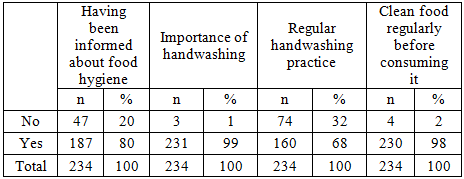
4.2. Mothers' Knowledge and Practices Regarding the Prevention of Child UndernutritionTable 2 shows the proportions of mothers who had been informed about food hygiene, who considered washing hands to be important, and the distribution of mothers according to hand washing and food cleaning practices. The results show higher rates in the positive responses, with 80% having already been informed about the importance of food hygiene, 99% attaching importance to hand washing, 68% washing their hands regularly and 98% cleaning food before consuming it themselves or giving it to their children.
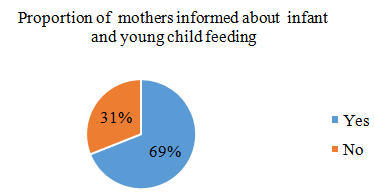
Figure 1 shows the distribution of mothers in terms of nutritional education. It reveals that 69% of mothers have already been educated about infant and young child feeding (IYCF), compared to 31% who have no knowledge of the subject.
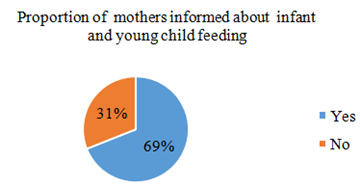
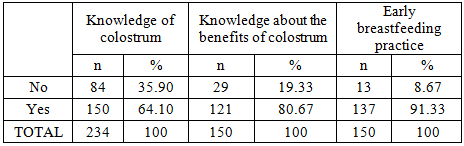
Table 3 shows the proportion of mothers who are informed about colostrum and its benefits, as well as the distribution of mothers according to early breastfeeding practices. The results show that the majority of mothers, 64.10%, say they are familiar with colostrum, compared to nearly 36% who are not. Of those who are familiar with colostrum, 81% are aware of its benefits, while 91.33% have already given it to their babies.
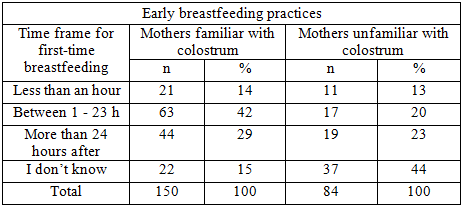
Table 4 presents an assessment of early breastfeeding practices based on mothers' knowledge of colostrum. On the one hand, among mothers who were aware of colostrum, 14% gave it within one hour of giving birth, while nearly half (42%) gave it between 1 and 23 hours after giving birth, and 29% gave it 24 hours after giving birth. On the other hand, among mothers who were not aware of colostrum, 13% gave it within an hour of giving birth, 20% between 1 and 23 hours after giving birth, and 23% 24 hours after giving birth. Furthermore, 15% of mothers who were aware of colostrum did not know the time at which their baby was breastfed, while 44% of mothers who were unaware of colostrum did not know the time of the first breastfeeding.
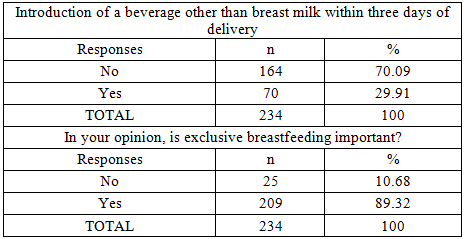
Table 5 describes the distribution of mothers according to the practice and importance of exclusive breastfeeding (EBF). Of the 234 mothers interviewed, 89.32% consider EBF important, and nearly 70% of them fed their babies only breast milk in the three (3) days following delivery. However, nearly 30% of mothers say they introduced a drink other than breast milk during this same period.
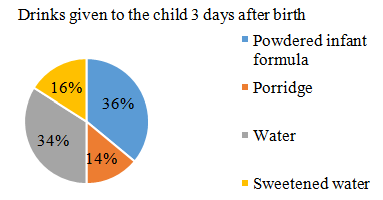
The Figure 2 shows the percentage of mothers according to the different drinks given to their babies in the three days following delivery. The results reveal that powdered infant formula for bottle feeding was the most commonly given drink (36%), followed by water for 34% of mothers. Porridge and sweetened water complete the list, with 16% and 14% of mothers respectively.
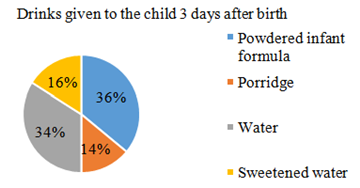
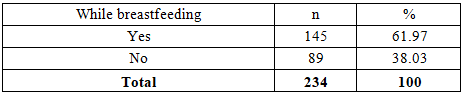
Table 6 shows the percentage of mothers observed breastfeeding during data collection. The results reveal that 61.97% of mothers were breastfeeding, compared to 38.03% who had already stopped breastfeeding.
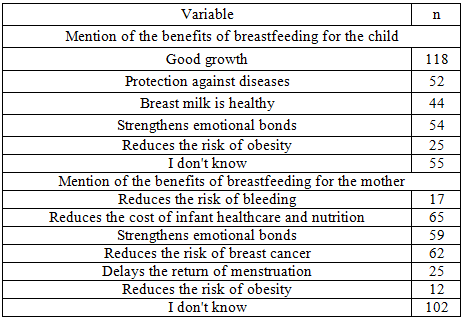
Table 7 presents the distribution of mothers according to the known benefits of breastfeeding for the baby and the mothers. On the one hand, the results reveal that just over half of the mothers (118) mentioned that breast milk promotes healthy growth in babies; 54 of them stated that breastfeeding strengthens the emotional bond between babies and their mothers; and 52 recognized that breast milk helps to strengthen the child's immunity. However, 55 mothers were unaware of the benefits of breastfeeding for their babies. On the other hand, the results reveal that the most widely known benefits of breastfeeding for mothers are: reduced healthcare and feeding costs for the baby (65 quotes), reduced risk of breast cancer (62 quotes) and strengthened emotional bonds between mother and child (59 quotes). However, several mothers (102/234) stated that they were unaware of the benefits of breastfeeding for themselves.
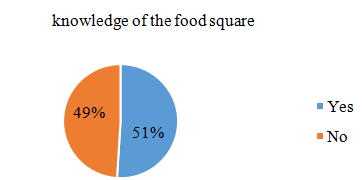
Figure 3 shows the distribution of mothers in terms of their knowledge of the nutritional square. The results show that 51% of mothers say they are informed about the nutritional square, compared to 49% who are not.
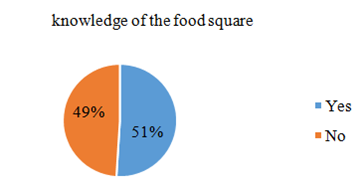
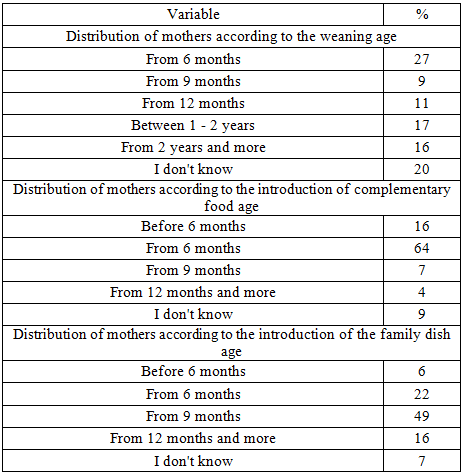
Table 8 presents the mothers' distribution according to weaning age, introduction of complementary food and family dish. Thirst, the results reveal that 27% of the 234 mothers interviewed would stop breastfeeding when their child is 6 months old. Equally, 17% of them would stop breastfeeding between 1 and 2 years of age or even at 2 years of age and older. However, 20% of mothers say they do not know the recommended age for stop breastfeeding their child. Concerning the age at which they introduced complementary foods, the results show that 64% of mothers introduced complementary foods from 6 months onwards and 16% did so before the child reached 6 months. Furthermore, concerning the introduction of family meals, the results show that nearly half of mothers (49%) introduce family meals from 9 months onwards, 22% say that children can eat family meals from 6 months onwards, and 16% of mothers wait until 12 months or older to introduce family meals.4.3. Mothers' Knowledge of Acute Childhood Malnutrition and Diagnosis
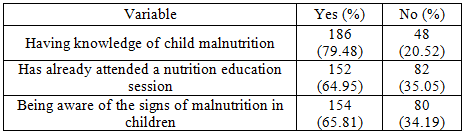
Table 9 shows the proportion of mothers according to their access to information on childhood malnutrition and their knowledge of the signs of malnutrition in children. The results reveal that 79.48% of mothers had heard of childhood malnutrition, compared with 20.52% who had not; 64.95% of mothers had attended a nutrition education session, compared to 35.05% who had not; and 66.81% of mothers were aware of the signs of malnutrition, compared to 34.19% who were not.
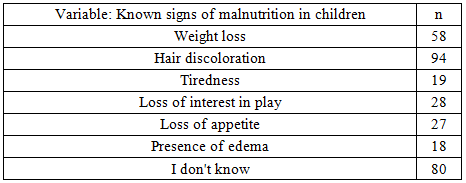
Considering the malnutrition signs recognized in children, Table 10 shows that hair discoloration is the most commonly recognized sign, with 94 quotes, followed by weight loss (58 quotes) and loss of interest in play and appetite (28 and 27 quotes respectively). Nevertheless, 78 mothers, or 33.33%, say they are ignorant of the signs of malnutrition.
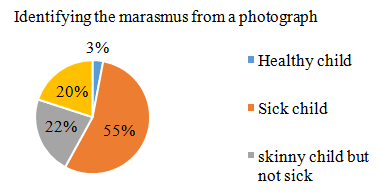
Figure 4 illustrates mothers' ability to recognize marasmus, a severe form of acute malnutrition in children, from photographs. 55% of mothers recognized a malnourished and therefore sick child in the photograph, 22 % recognized a thin but healthy child, and 20 % did not give an opinion on the child's state of health.
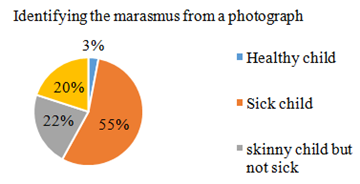
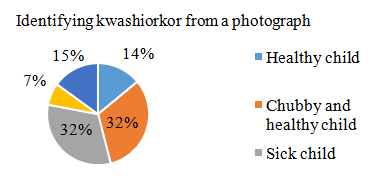
Figure 5 illustrates mothers' ability to recognize kwashiorkor, a severe form of acute malnutrition in children, from photographs. The results show that 32% of mothers recognize the presence of oedema and conclude that the child is ill, while 32% describe the child as overweight and therefore not malnourished. 14% of mothers consider the child to be normal with no health problems, compared to 15% who do not express an opinion.
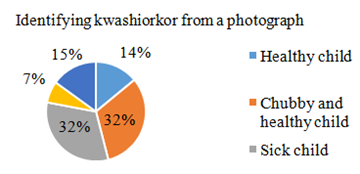
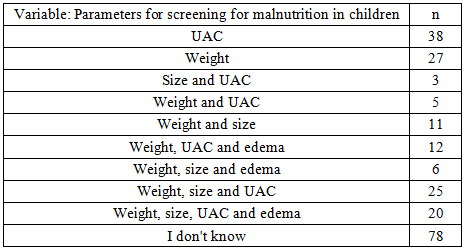
Table 11 shows the different methods of screening for malnutrition in children known by mothers. The results reveal that 78 mothers have no knowledge of methods for detecting undernutrition in children. Of those who do know, 38 mentioned measuring upper arm circumference (UAC) as a screening method, while 27 mentioned measuring weight as a method for detecting undernutrition in children. In addition, 25 mothers combine weight measurement with height and arm circumference measurement, while 20 of them combine the search for nutritional oedema with the measurement of anthropometric parameters.
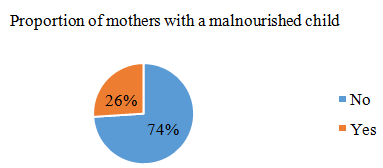
Figure 6 shows the distribution of the 234 mothers according to the nutritional status of their children at the time of the study up to three months before the interview. The results show that 60 of the 234 mothers, or 26% of those participating in the study, had at least one child who suffered from malnutrition during the study period.
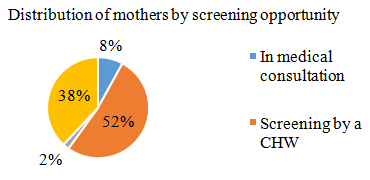
Of these mothers with malnourished children, Figure 7 shows a classification of children according to the screening opportunity. The results reveal that 52% of malnutrition cases were detected by a community health worker (CHW) during a home visit and 38% of cases were detected during a growth monitoring appointment. However, 8% of malnutrition cases were detected during a curative consultation for another health problem.
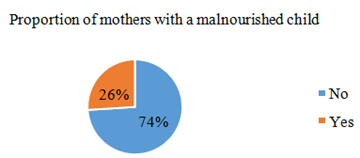
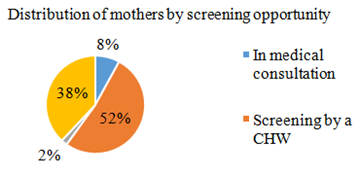
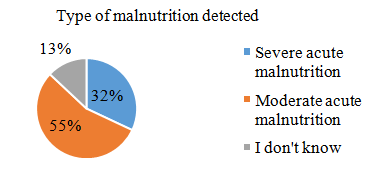
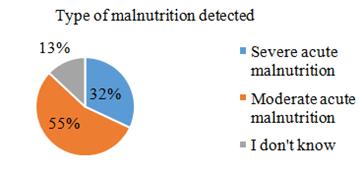
Figure 8 shows mothers' knowledge of the type of malnutrition detected affecting their children. The results show that 55% of mothers with malnourished children knew that their children were suffering from moderate acute malnutrition (MAM), compared to 32% who knew that their children were suffering from severe acute malnutrition (SAM). However, 13% of these mothers never knew what type of malnutrition their child was suffering from.
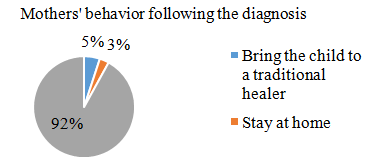
In addition, the results relating to mothers' behavior following the detection of malnutrition in their children are shown in Figure 9. Discussions with mothers revealed that 92% of them sought treatment at a health center following a diagnosis of malnutrition, compared to 5% who sought treatment from a traditional healer and 3% who stayed at home, exposing their children to a worsening of their health condition.
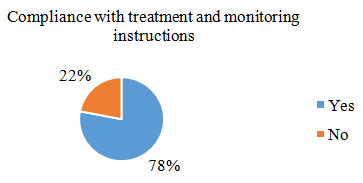
Finally, Figure 10 shows the percentage of mothers with malnourished children who followed the instructions for treating and monitoring their children's nutritional status. The results reveal that 78% of mothers with malnourished children followed the instructions for treating and monitoring their children's nutritional status, compared to 22% of mothers who did not follow them.
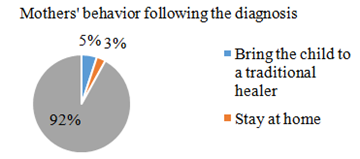
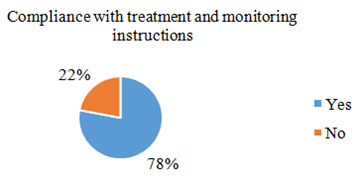
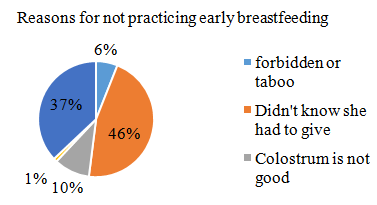
Figure 11 illustrates the reasons for not practicing early breastfeeding given by mothers who did not give colostrum to their children. Among all the reasons given, 46% of mothers were ignorant that they should give colostrum to their children, 37% stated that colostrum did not flow, while 10% believed that colostrum was harmful and 6% cited a prohibition in their tradition.
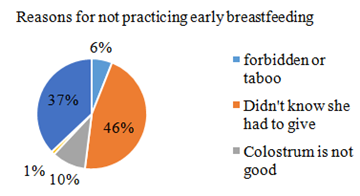
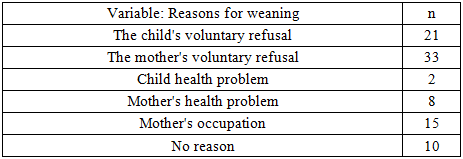
Table 12 20 shows the various reasons for stopping breastfeeding given by mothers who no longer breastfeed their children. The mother's voluntary refusal to continue breastfeeding her child appears to be the most frequently cited reason for stopping breastfeeding, with 33 mentions, followed by the child's voluntary refusal, with 21 mentions. In addition, working outside the home and health problems in the mother are also reasons for weaning, with 15 and 8 mentions respectively.
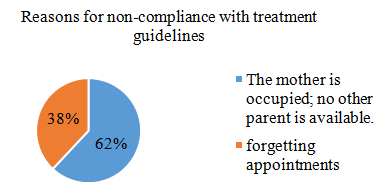
In the case of mothers who had a malnourished child, Figure 12 presents the main reasons for non-compliance with treatment instructions or even abandonment of their child's care. The mother's occupation on appointment days appears to be the main reason for non-compliance with treatment procedures, with 62% of replies, compared to 38% who cited forgetting appointments.
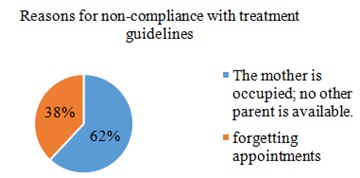
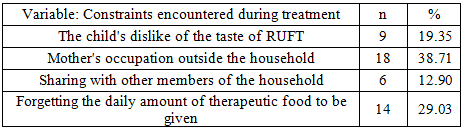
Table 13 shows the constraints or difficulties encountered by mothers who reported having followed treatment and follow-up instructions during the treatment period for their malnourished child. The results reveal that the mother's occupation outside the household is one of the main constraints, with nearly 39% of cases, followed by forgetting the daily amount of therapeutic food to be given, with 29.03% of mentions. In addition, the child's dislike of the taste of RUFT makes it difficult to consume in 19.35% of cases, and sharing with other members of the household (12.90%) also disrupts the success of the treatment.
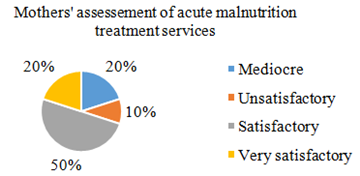
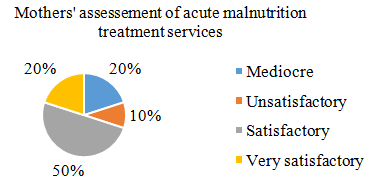
Figure 13 gives the proportion of mothers who had a malnourished child according to their appreciation of the malnutrition care services in their health area. The results show that among the 60 mothers involved in the care of their malnourished children, 30 (50%) find the malnutrition care services in their health area satisfactory and 20% of mothers express a very satisfactory assessment. However, 20% of mothers rated the malnutrition care services in their health area as poor, with 10% of them being dissatisfied with the care provided to their malnourished child.
This study consisted of assessing the knowledge and practices of mothers in the departments of Pointe-Noire and Kouilou with regard to the prevention and treatment of malnutrition in children under the age of 5.
Socio-demographic data
Concerning the age of mothers, our findings reveal that the majority of mothers are at least 18 years old. This is similar to previous studies which showed, on the one hand, that the majority of mothers were at least 18 years old, and on the other hand, that 90% of mothers were between 20 and 40 years old. 9, 10. Secondly, just over half of mothers have secondary education, while a quarter have primary education. This is in line with studies reporting that 64% of mothers had secondary education and a quarter had higher education 11. Furthermore, our results show that the majority of mothers have an income-generating activity. They are either civil servants, market gardeners, artisans or traders, compared to one third of mothers who are housewives. This is similar to the findings of Adomi et al., who showed that the majority of mothers are engaged in income-generating activities such as farming or other businesses, and less than a third of mothers are housewives 12. Also, our study shows that more than half of mothers are single, one-third are married, and a small number are divorced. Contrary to our study, another study reported that more than 91.1% of mothers are married and a smaller number are widowed or divorced 13. Besides, the majority of mothers in our study frequent a health center with a high representation of children aged from 6 to 59 months. This is consistent with certain authors who have reported a large number of mothers frequenting health centers. However, unlike our study, these same authors did not take into account the age range of the children 14. Our findings regarding the socio-demographic characteristics of mothers can be explained by the factor of where mothers live: urban and peri-urban areas guarantee access to secondary education, value girls' education and promote women's employability 15. As a result, national education policies encouraging further education, national reproductive health initiatives and socio-cultural factors have significantly reduced the rate of early pregnancy among girls under the age of 18. At the same time, access to health services is reportedly better in urban areas 16.
Mothers' knowledge of preventing acute child malnutrition
With regard to the prevention of undernutrition, the majority of mothers are aware of the importance of food hygiene (80%), wash their hands regularly (68%) and clean food before eating it themselves or giving it to their children. This is consistent with the findings of two recent studies, which show that almost all mothers consider food hygiene to be important and practice it for their own well-being and that of their children [9,17,18,]. Our results can be explained by the fact that mothers understand that food hygiene combined with hand washing can prevent diarrheal diseases in children, boosted by multiple awareness campaigns due to the recent COVID-19 pandemic. Furthermore, the national multiple indicator cluster survey in 2015 (MICS, p17) 16 already demonstrated the availability of soap or other cleaning products in most households, which confirms this strong adherence to food hygiene.
In addition, two-thirds of the mothers in our study had already been educated about infant and young child feeding (IYCF). This number of mothers informed about IYCF is higher than that of a study in which only 40.3% of mothers had been educated 9. Moreover, our study shows that two-thirds of mothers are informed about colostrum and, among these, almost all (81%) are aware of its benefits for children and have given it to their children, while one-third of mothers do not know what colostrum is. This is similar to the results of a study, which reported that 73.9% of mothers were aware of colostrum, compared to 26.1% who were not 19. Our results can be explained by the fact that mothers received information about colostrum from healthcare professionals they encountered during their pregnancy and then during pre-school consultations 20 or within the family environment 18. Furthermore, only one-seventh of mothers know the recommended time to give colostrum. Our result contrasts with that of a study which reported that almost all mothers gave colostrum to their children within one hour of giving birth 20. Our findings on early breastfeeding could be explained by several indirect factors, such as healthcare workers' knowledge and practices regarding preparing and initiating mothers to breastfeeding 20, 21, 22 and direct factors, such as perceptions, beliefs and traditions, as well as physiological factors, such as mode of delivery and agalactorrhea, thus explaining the low rates observed 9, 23, 24, 25.
In addition, almost all mothers attach importance to exclusive breastfeeding and nearly half of them know that the duration of exclusive breastfeeding is up to 6 months. However, about one-third of them introduced other drinks within the first 3 days after delivery. Our results contradict those of a study that reported that exclusive breastfeeding was practiced for up to 6 months by less than half of mothers and that just over half introduced other foods within the 6 months of exclusive breastfeeding 9. Our results could be explained by poor preparation of mothers for breastfeeding and late initiation of early breastfeeding, creating missed opportunities, as it has been proven that mothers who start breastfeeding their babies early are more likely to breastfeed exclusively 14. What's more, exclusive breastfeeding can be hindered by a lack of communication and inappropriate advice from medical staff 21.
In addition, some mothers mentioned that breastfeeding promotes healthy growth in babies, strengthens the emotional bond between mother and child, and helps boost the child's immunity, while less than a third of mothers were unaware of these benefits. In line with our findings, other studies have reported the same benefits of breastfeeding for the child 12, 26. However, our study reports that the benefits of breastfeeding for the mother are unknown to nearly half of mothers, while those mentioned are: reduced healthcare and feeding costs for the baby, reduced risk of breast cancer, and strengthened emotional bonds between mother and child. Our results are similar to those of Modjadji et al., who reported the attachment between mother and child, economic benefits and reduced difficulties, the mother's mental well-being, and the promotion of birth spacing 26. Our results could be explained by the fact that the topics covered in breastfeeding awareness activities during antenatal and postnatal care focus more on aspects of breastfeeding related to the child than those related to the mother. Also, the focus on infant health and the cultural and social perception that breastfeeding is a maternal act intended to nourish and protect the child rather than a practice that benefits the mother's own health contribute to reinforcing this misconception 27.
With regard to the food pyramid, which represents the ideal proportions of different food groups for a balanced diet, half of the mothers have informational knowledge, while the other half are unaware of it. Our results contrast with a study that reports only 32.7% of mothers having a good knowledge of the food pyramid 11. Our findings could be explained by the fact that mothers are not consistently informed about healthy eating during prenatal appointments to prevent complications such as gestational diabetes, or during follow-up appointments to monitor their child's growth 28.
When it comes to breast weaning, only about one-sixth of mothers know the exact age for weaning, which is 2 years and older. This is low compared to the results reported by Poudel et al., where nearly two-thirds of mothers mentioned 2 years and older 17. Furthermore, with regard to the introduction of complementary foods, two-thirds of mothers introduce complementary foods from 6 months of age as recommended, and half identify the recommended time for introducing family meals as 9 months of age. Our results are in agreement with those of the same study, which showed that 86% of mothers know the right time to introduce complementary foods, but their study does not mention family meals 17. In addition, mothers introduced powdered infant formula, water, porridge and sugar water within three days of giving birth. Contrary to our study, research has shown that mothers introduced foods such as biscuits, tea, water, fresh butter, rice, fruit and yoghurt at 3, 4 and 5 months 21. The findings on mothers' inadequate knowledge of breastfeeding duration and the age at which solid foods are introduced can be explained by the fact that the source of information for mothers about nutrition and the prevention of child malnutrition, particularly health workers, is not sufficient to bring about lasting behavioral changes, as cultural factors linked to traditions and the mother's family environment can influence feeding practices 29, 30. Insufficient nutrition education can also lead to poor knowledge and practices among mothers 31.
Mothers' knowledge of acute child malnutrition
With reference to awareness of child malnutrition, two-thirds of mothers reported having heard of child malnutrition, having attended a nutrition education session, and being aware of the signs of malnutrition in children. Our statistics are, on the one hand, higher than those of a study that included 54.5% of mothers aware of malnutrition and 33.9% aware of its causes 17 and, on the other hand, higher than those reported by Shahid et al., which included 91.84% of mothers with low awareness of nutrition and health 28. Furthermore, in line with our findings, one study established that 63.3% of mothers were aware of the causes of child malnutrition 11. Among the signs of malnutrition mentioned, hair discoloration, weight loss, loss of interest in play and loss of appetite were the most commonly cited. This differs from the signs reported in a previous study, which included vomiting and skin that becomes thin, inelastic, dry or slow to heal 32. Our results can be explained by the fact that mothers have access to information on child malnutrition: communication for behavioral change (CBC) sessions are held, resulting in a high level of declarative knowledge of the signs of malnutrition. In addition, regular awareness-raising sessions on the risks of poor monitoring of children's growth during preschool consultation (PSC) activities could also explain our observations 28.
With a view to recognizing images of marasmus, half of the mothers recognized a child with marasmus as a malnourished child, while barely a third of mothers recognized the presence of oedema as a sign that the child had kwashiorkor. Our results are similar to those of a study that showed that mothers recognized severe forms of acute malnutrition 33. Mothers are unaware that screening for malnutrition should include measurements of weight, height, upper arm circumference, nutritional oedema and weight-to-height ratio. Our results can be explained by a lack of visual aids (no picture cards) and insufficient explanation of the procedures during the awareness-raising sessions for mothers at their appointments, which makes it difficult for mothers to recognize the malnutrition type presented to them, because the main source of information for mothers on nutrition is health workers 28.
Mothers' knowledge and practices regarding the treatment of child undernutrition
Nearly a quarter of mothers had at least one child who suffered from malnutrition during the study period, and most cases were detected by a community health worker at home or during a growth monitoring appointment. Our results contradict those of a study that showed that all mothers had had a child suffering from malnutrition, but did not mention how the screening was carried out 11. Active screening of children in households during the implementation of minimum package of activities (MPA) and the implementation of community health projects including nutritional monitoring could explain our observations 34, 35. Screening during a PSC appointment could be explained by regular attendance at the health center and compliance with medical prescriptions by mothers 9. The vast majority of mothers were aware of their child's nutritional status diagnosis. On the one hand, almost all of these mothers followed treatment at the health center following the diagnosis of malnutrition, while very few of them resorted to a traditional healer or stayed at home. On the other hand, a large number of these mothers followed the treatment instructions and monitored their child's nutritional status. Our results are similar to those of a study which, although it did not take into consideration knowledge of nutritional status diagnosis, showed that 77% of mothers recommended that their children be treated at health centers, while 15.8% recommended local methods 9. Overall, our results can be explained by the limited communication skills of health professionals, but also by the low level of education of mothers, which may limit their understanding of medical terms 36. Furthermore, there is a disparity in the procedures for treatment of cases detected in health facilities between different health districts: in some, the diagnosis and treatment modalities are explained to the mother according to the national protocol, while in others, for various reasons, the mother is not involved in the process of assessing the child's nutritional status and thus becomes a spectator of the treatment rather than a co-actor 37. Finally, the accessibility of the units and the awareness of mothers about the availability and free nature of treatment products could justify mothers' adherence to the treatment of child malnutrition at the health center 37.
Social factors influencing mothers' practices in preventing and caring for child undernutrition
Firstly, the reasons given by mothers who did not give their babies colostrum for not practicing early breastfeeding are ignorance, lack of milk flow, the belief that colostrum is bad, or a prohibition in relation to their tradition. Studies have reported that the reasons are, on one part, that colostrum is considered dirty, a cause of neonatal diseases, a cultural taboo or too thick 19 and, on the other part, because of its yellow color or smell 21, the abdominal cramps it causes 38 and the fact that it is not recommended by health services 21. Our results could be explained by several factors, such as the knowledge and practices of health workers in preparing and initiating mothers to breastfeeding 20, 21. Secondly, the various reasons for weaning cited by mothers who are no longer breastfeeding their children include the mother's voluntary refusal to continue breastfeeding her child, the child's voluntary refusal, the mother's occupation outside the home for professional reasons, or health problems in the mother. One study reported that the reasons for weaning are: returning to work, challenges with breastfeeding, the mother's health (including HIV), advice from health workers and family against breastfeeding, and other reasons 39. Our findings can be explained by the fact that mothers' living environment and occupation may encourage early weaning of children. Indeed, work constraints and the attraction of breast milk substitutes are greater in urban areas. 40, 41. In addition, pressure from the mother's family and friends, as well as another pregnancy, also contribute to discouraging continued breastfeeding, as reported in a study on infant feeding in Mauritania 29.
With regard to care, the main reasons for compliance or non-compliance with instructions for monitoring the care of malnourished children are the mother being away from home on appointment days or forgetting appointments, forgetting the daily amount of therapeutic food to be given, the child's dislike of the taste of RUTF, or sharing with other members of the home. Our results could be explained by the fact that socio-cultural, psychological, economic and health factors can influence mothers' practices in terms of the care and prevention of child malnutrition at the household level 42.
Mothers' perceptions of the monitoring and care of their children who have previously been malnourished
Finally, two-thirds of mothers who had a malnourished child found the care services satisfying. Our results are consistent with those of a study that showed that 57% of mothers were satisfied with health workers, while 43% were dissatisfied 11. Our results can be explained by the fact that accessibility, quality of care, trusting relationships with healthcare workers, emotional support, low cost or even free care, and significant improvement of the child's nutritional status are among the factors that may justify the mothers' appreciation 43.
This study shows that of the mothers surveyed most were educated, had a good level of knowledge about preventing malnutrition in terms of food hygiene and the importance and benefits of breastfeeding for children. However, their knowledge of the international recommendations on infant and young child feeding and the benefits breastfeeding for mothers and children was insufficient to lead to good practices. In addition, although the mothers showed fairly good knowledge of the signs of malnutrition, their rate of recognition of severe forms such marasmus and kwashiorkor are low similarly to their level of knowledge about screening for childhood malnutrition. Furthermore, most of mothers attended the health care center for treatment of their malnourished children. In the same way, the majority of mothers expressed a good understanding of the diagnosis and a positive attitude towards following treatment instructions.
Finally, because of the many socio-economic factors that influence the knowledge and practices of prevention and care of child malnutrition among mothers of children under five, national strategies for educating mothers about nutrition must be improved, strengthened and harmonized across all intervention units.
| [1] | CROUZET, M. Rapport Mondial sur les Crises Alimentaires : 59 pays touchés par la malnutrition aiguë en 2023 Available online: https://www.unicef.fr/article/rapport-mondial-sur-les-crises-alimentaires-59-pays-touches-par-la-malnutrition-aigue-en-2023/ (accessed on 25 August 2024). | ||
| In article | |||
| [2] | Genève : Organisation mondiale de la Santé Cibles mondiales de nutrition 2025 : note d’orientation sur l’émaciation [Global nutrition targets 2025: wasting policy brief]. 2017, 8. | ||
| In article | |||
| [3] | ScalinUp Nutrition Congo Profil pays_bilan 2020 SUN-Congo 2020. | ||
| In article | |||
| [4] | The Lancet La Nutrition Maternelle et Infantile. Synthèse de La Série d’études de La Revue The Lancet Sur La Nutrition Maternelle et Infantile. | ||
| In article | |||
| [5] | Angèle, K.; Lucien, D.D.; Chantal, Z.; Caroline, Y.; Makoura, B.; Hamidou, K.; Oumarou, S.; Chantal, B.; Coumbo, B.; Ibrahima, O.; et al. Prévalence et facteurs associes a la malnutrition des nourrissons ages de 6 a 23 mois admis aux urgences pédiatriques du centre hospitalier universitaire Yalgado Ouedraogo, Burkina Faso. 2020. | ||
| In article | |||
| [6] | Tahilramani G; Meena RK; Mathur A To Study Knowledge, Attitude and Practices (Kap) of Mothers of Children (1-59 Months) Admitted with Severe Acute Malnutrition (Sam) Regarding Feeding and Prevention of Malnutrition. To Study Knowledge, Attitude and Practices (Kap) of Mothers of Children (1-59 Months) Admitted with Severe Acute Malnutrition (Sam) Regarding Feeding and Prevention of Malnutrition 2023. | ||
| In article | |||
| [7] | Yvette Fautsch Macías; Peter Glasauer; FAO Guide pour évaluer les Connaissances, Attitudes et Pratiques liées à la nutrition. FAO 2016, 188, E-ISBN 978-92-5-208098-5. | ||
| In article | |||
| [8] | LAFONT, F. Déterminer la taille de l’échantillon - le blog de Questio. Blog de Questio 2024. | ||
| In article | |||
| [9] | Haran, H.S.; Elameen, A.M.; Eltahir, Y.A.M.; Arbab, A.H. Knowledge, Attitudes, and Practices of Mothers with Acutely Malnourished Children Regarding Child Feeding and Malnutrition Prevention in Sudan. Matrix Science Pharma 2024, 8, 70–78. | ||
| In article | View Article | ||
| [10] | Indris, A.; Shaleka, D.; Ashenafi, M. Child Nutritional Status, Mothers’ Nutritional Knowledge and Practice and Household Food Security Status in Tehuledere Woreda, South Wollo, Ethiopia. SEJS 2021, 44, 161–171. | ||
| In article | View Article | ||
| [11] | Zowini’s, C.; Johannes, M.; Clever, M. An Investigation on the Knowledge, Attitudes and Practices of Caregivers Nursing Children with Malnutrition towards the Health Education Given on the Condition at Public Health Institutions in Zimbabwe. 2023. | ||
| In article | |||
| [12] | Adomi Mbina, S.; Magaji, G.; Fanuel, A.; Pius, T.; Gorret, A.; Nicholas Mavine, A.; Lucky, N.; Ronald, A.; Dominic Terkimbi, S.; Stellamaris, K. Breastfeeding Practices Among Infants and Young Children in Bushenyi, Uganda: Influence of Maternal Knowledge and Occupation. JFMHC 2021, 7, 90. | ||
| In article | View Article | ||
| [13] | Abd-Alrazig, M.H.A.; Dakeen, M.A.-A.O.; Ali, M.A.H.M.; Nasr, R.M.H. Mother’s Nutritional Knowledge and Practice towards Children under Two Years of Age and Its Impact on Their Health in Abuzaid Albuluk Pediatric Specialized Hospital in 2023. FNS 2023, 14, 746–776. | ||
| In article | View Article | ||
| [14] | Mustafa, M.; Jareebi, M.A.; Hakami, H.A.; Jadah, A.A.; Alkorbi, B.N.; Kuriri, R.M.; Madkhali, H.Y.; Shok, S.H.; Ayyashi, N.M.; Aljudayba, R.; et al. Exploring Mothers’ Knowledge and Practices of Colostrum Feeding in the Jazan Region, Saudi Arabia. Saudi Journal for Health Sciences 2024, 13, 226–233. | ||
| In article | View Article | ||
| [15] | Rep. Du Congo Stratégie sectorielle de l’éducation 2015-2025 2015. | ||
| In article | |||
| [16] | Institut National de la Statistique; UNICEF Enquête Par Grappes à Indicateurs Multiples (MICS5 2014-2015), Rapport Final. Brazzaville, Congo 2015. | ||
| In article | |||
| [17] | Poudel, G. Association between mothers knowledge on child care and nutritional status of 6-59 months children of dharan sub metropolitan city. 2018, 93. | ||
| In article | |||
| [18] | Almahmoud, K.; Almousa, A.; Albalawi, L.; Althobaiti, R.; Alothman, A.; Almhizai, R. Colostrum Knowledge among Mothers in Riyadh, Saudi Arabia. Medical Science 2022, 26, 1. | ||
| In article | View Article | ||
| [19] | Mose, A.; Dheresa, M.; Mengistie, B.; Wassihun, B.; Abebe, H. Colostrum Avoidance Practice and Associated Factors among Mothers of Children Aged Less than Six Months in Bure District, Amhara Region, North West, Ethiopia: A Community-Based Cross-Sectional Study. PLoS ONE 2021, 16, e0245233. | ||
| In article | View Article PubMed | ||
| [20] | Sisay, B.M.; Endale, S.Z.; Senbeta, F.W. Colostrum Avoidance and Associated Factors among Postnatal Mothers in Health Facilities in Addis Ababa, Ethiopia: A Mixed Method Study. BMC Public Health 2025, 25, 248. | ||
| In article | View Article PubMed | ||
| [21] | Ahmed, F.; Malik, N.I.; Shahzad, M.; Ahmad, M.; Shahid, M.; Feng, X.L.; Guo, J. Determinants of Infant Young Child Feeding Among Mothers of Malnourished Children in South Punjab, Pakistan: A Qualitative Study. Front. Public Health 2022, 10, 834089. | ||
| In article | View Article PubMed | ||
| [22] | Khofidhotur Rofiah; Betanuari Sabda Nirwana; Sutrisni; Alfika Awatiszahro; Erike Yunicha V Relationship Between Post Partum Mother’s Knowledge About The Importance Of Colostrum And Mother’s Interest In Giving Colostrum. JGRPH 2023, 8, 74–77. | ||
| In article | View Article | ||
| [23] | Hina Jawaid; Marriam Sheraz; Khudija Amna Arif; Zia Ul Hassan; Akhter, H. Barriers in Use of Colostrum, Breast Milk, and Supplemental Feed: Assessing Maternal Knowledge & Practices. JUMDC 2022, 13. | ||
| In article | View Article | ||
| [24] | Amaje, E.; Gebremeskel, F.; Tufa, G.; Gelchu, M.; Wayessa, Z.J. Colostrum Avoidance Practices and Its Associated Factors among Mothers of Children Aged Less Than 12 Months in Jinka Town, South Ethiopia, 2020. A Community Based Cross Sectional Study. Health Services Research and Managerial Epidemiology 2022, 9, 23333928221106056. | ||
| In article | View Article PubMed | ||
| [25] | Asaro, T.; Gutema, B.T.; Weldehawaryat, H.N. Colostrum Avoidance Practice and Associated Factors among Mothers of Infants Less than Six Months in Chencha District: Cross-Sectional Study. BMC Nutr 2023, 9, 18. | ||
| In article | View Article PubMed | ||
| [26] | Modjadji, P.; Seabela, E.S.; Ntuli, B.; Madiba, S. Beliefs and Norms Influencing Initiation and Sustenance of Exclusive Breastfeeding: Experiences of Mothers in Primary Health Care Facilities in Ermelo, South Africa. IJERPH 2023, 20, 1513. | ||
| In article | View Article PubMed | ||
| [27] | World Health Organization Indicateurs pour évaluer les pratiques d’alimentation du nourrisson et du jeune enfant partie 2 : calcus. Indicators for assessing infant and young child feeding practices: part 2: measurement 2011. | ||
| In article | |||
| [28] | Shahid, M.; Cao, Y.; Ahmed, F.; Raza, S.; Guo, J.; Malik, N.I.; Rauf, U.; Qureshi, M.G.; Saheed, R.; Maryam, R. Does Mothers’ Awareness of Health and Nutrition Matter? A Case Study of Child Malnutrition in Marginalized Rural Community of Punjab, Pakistan. Front. Public Health 2022, 10, 792164. | ||
| In article | View Article PubMed | ||
| [29] | Diagana, M.S.; Kane, H. Alimentation des nourrissons à Nouakchott : entre recommandations médicales et instructions des grand-mères. Santé Publique 2016, 28, 235–243. | ||
| In article | View Article PubMed | ||
| [30] | Takassi OE; Mihesso AYA; Temanou-Fiogbe E; Atakouma DY Facteurs Associes a La Pratique de l’allaitement Maternel Exclusif a 6 Mois En Milieu Rural Au Togo. J Afric Neonatal 2023; 2: 60 – 64 2023, 5. | ||
| In article | |||
| [31] | Annah, R.A. The impact of mothers’ knowledge and attitude on malnutrition preventive practices in thulamela local municipality, South africa. | ||
| In article | |||
| [32] | Ara, G.; Manzoor, D.M.; Hussain, Z. Knowledge, Attitude And Practices Of Mothers Regarding Breastfeeding Having Malnourished Children Under 5 Years Age Bracket: A Cross Sectional Study Of Children Hospital Multan, Pakistan. | ||
| In article | |||
| [33] | Lindberg, L.; Nhambongo, I.; Nhampossa, T.; Munguambe, K.; Priebe, G. A Qualitative Study of Mothers’ Health Literacy Related to Malnutrition in under 5-Year-Old Children in Southern Mozambique. Public Health Nutr. 2022, 25, 1947–1955. | ||
| In article | View Article PubMed | ||
| [34] | Keith, N.; Kone, M.; Cness, B. Etude Sur Les Connaissances, Attitudes, Comportements et Pratiques Des Communautés / Populations Vis-à-Vis de La Nutrition, Des Soins Primaires de Santé Pout La Femme Enceinte et Le Nourrisson, l’accès à l’eau Potable, l’hygiène et l’assainissement, l’accès Aux Soins de Santé Pour Le Jeune Enfant Dans La Région de Maradi Au Niger. l’hygiène et l’assainissement, l’accès aux soins de santé pour le jeune enfant dans la région de Maradi au Niger. United Nations Children’s Fund 2007. | ||
| In article | |||
| [35] | Rep. Du Congo; UNICEF PLAN Stratégique national de santé communautaire 2021-2024 2020. | ||
| In article | |||
| [36] | Dembélé, Y.; Poma, H.A.; Traoré, B.C.; Diarra, E.; Doumbia, S.; Diarra, S.; Traoré, S.A.; Keita, C.; Diallo, F.; Sidibé, M.; et al. Connaissances attitudes et pratiques des mères par rapport a la malnutrition des enfants de moins de 5ans dans le csref de Sikasso en 2022. 2023, 11. | ||
| In article | |||
| [37] | Rep. Du Congo, F. Cadre stratégique de lutte contre la malnutrition au Congo horizon 2025 2015. | ||
| In article | |||
| [38] | Yeshambel Wassie, A.; Atnafu Gebeyehu, N.; Abebe Gelaw, K. Knowledge, Attitude, and Associated Factors towards Colostrum Feeding among Antenatal Care Attendant Mothers in Gununo Health Centre, Wolaita Zone, Ethiopia 2019: Cross-Sectional Study. International Journal of Pediatrics 2020, 2020, 1–10. | ||
| In article | View Article PubMed | ||
| [39] | Kaldenbach, S.; Engebretsen, I.M.S.; Haskins, L.; Conolly, C.; Horwood, C. Infant Feeding, Growth Monitoring and the Double Burden of Malnutrition among Children Aged 6 Months and Their Mothers in KwaZulu‐Natal, South Africa. Maternal & Child Nutrition 2022, 18, e13288. | ||
| In article | View Article PubMed | ||
| [40] | Alive & Thrive; UNICEF Facteurs Influençant La Pratique de l’allaitement Maternel Exclusif et Les Autres Pratiques d’alimentation Du Nourrisson Pendant Les Six Premiers Mois de Vie En Afrique de l’Ouest et Du Centre; Afrique de l’Ouest et du Centre, 2022; p. 67. | ||
| In article | |||
| [41] | ZEHNATI, A.; SIDI-YAKHLEF, A. Prévalence et déterminants de l’allaitement maternel poursuivi au-delà de 6 mois chez les femmes algériennes. Analyse à partir des données de l’enquête par grappes à indicateurs multiples. MTSI 2024, Vol. 4 No 1 (2024): MTSIRevue. | ||
| In article | |||
| [42] | Kwerengwe, R.I.; Singh, K. Impact of knowledge, attitude and practice of mothers regarding complementary feeding on nutritional status of children. SALT JSRH 2023, 01–12. | ||
| In article | View Article | ||
| [43] | Kadidiatou, R.K.; Lassina, C.; Méazieu, C.S.; Ouattara, J.; Agbré-Yacé, M.L.; Doukouré, D.; Manouan, M.N.; Konan-Kouakou, V.; Kouakou, J.S.; Aké, O. Facteurs associés à la satisfaction des mères à l’unité Soins Mère Kangourou du CHU de Treichville: une enquête transversale par approche mixte en Côte d’Ivoire. Revue Africaine de Médecine et de Santé Publique 2022, 5, 2–14. | ||
| In article | |||
Published with license by Science and Education Publishing, Copyright © 2026 N’ZAMBI Pressy Dornelle Jessy, ELENGA Michel, MANANGA Vital and ITOUA OKOUANGO Yvon Simplice
 This work is licensed under a Creative Commons Attribution 4.0 International License. To view a copy of this license, visit
http://creativecommons.org/licenses/by/4.0/
This work is licensed under a Creative Commons Attribution 4.0 International License. To view a copy of this license, visit
http://creativecommons.org/licenses/by/4.0/
| [1] | CROUZET, M. Rapport Mondial sur les Crises Alimentaires : 59 pays touchés par la malnutrition aiguë en 2023 Available online: https://www.unicef.fr/article/rapport-mondial-sur-les-crises-alimentaires-59-pays-touches-par-la-malnutrition-aigue-en-2023/ (accessed on 25 August 2024). | ||
| In article | |||
| [2] | Genève : Organisation mondiale de la Santé Cibles mondiales de nutrition 2025 : note d’orientation sur l’émaciation [Global nutrition targets 2025: wasting policy brief]. 2017, 8. | ||
| In article | |||
| [3] | ScalinUp Nutrition Congo Profil pays_bilan 2020 SUN-Congo 2020. | ||
| In article | |||
| [4] | The Lancet La Nutrition Maternelle et Infantile. Synthèse de La Série d’études de La Revue The Lancet Sur La Nutrition Maternelle et Infantile. | ||
| In article | |||
| [5] | Angèle, K.; Lucien, D.D.; Chantal, Z.; Caroline, Y.; Makoura, B.; Hamidou, K.; Oumarou, S.; Chantal, B.; Coumbo, B.; Ibrahima, O.; et al. Prévalence et facteurs associes a la malnutrition des nourrissons ages de 6 a 23 mois admis aux urgences pédiatriques du centre hospitalier universitaire Yalgado Ouedraogo, Burkina Faso. 2020. | ||
| In article | |||
| [6] | Tahilramani G; Meena RK; Mathur A To Study Knowledge, Attitude and Practices (Kap) of Mothers of Children (1-59 Months) Admitted with Severe Acute Malnutrition (Sam) Regarding Feeding and Prevention of Malnutrition. To Study Knowledge, Attitude and Practices (Kap) of Mothers of Children (1-59 Months) Admitted with Severe Acute Malnutrition (Sam) Regarding Feeding and Prevention of Malnutrition 2023. | ||
| In article | |||
| [7] | Yvette Fautsch Macías; Peter Glasauer; FAO Guide pour évaluer les Connaissances, Attitudes et Pratiques liées à la nutrition. FAO 2016, 188, E-ISBN 978-92-5-208098-5. | ||
| In article | |||
| [8] | LAFONT, F. Déterminer la taille de l’échantillon - le blog de Questio. Blog de Questio 2024. | ||
| In article | |||
| [9] | Haran, H.S.; Elameen, A.M.; Eltahir, Y.A.M.; Arbab, A.H. Knowledge, Attitudes, and Practices of Mothers with Acutely Malnourished Children Regarding Child Feeding and Malnutrition Prevention in Sudan. Matrix Science Pharma 2024, 8, 70–78. | ||
| In article | View Article | ||
| [10] | Indris, A.; Shaleka, D.; Ashenafi, M. Child Nutritional Status, Mothers’ Nutritional Knowledge and Practice and Household Food Security Status in Tehuledere Woreda, South Wollo, Ethiopia. SEJS 2021, 44, 161–171. | ||
| In article | View Article | ||
| [11] | Zowini’s, C.; Johannes, M.; Clever, M. An Investigation on the Knowledge, Attitudes and Practices of Caregivers Nursing Children with Malnutrition towards the Health Education Given on the Condition at Public Health Institutions in Zimbabwe. 2023. | ||
| In article | |||
| [12] | Adomi Mbina, S.; Magaji, G.; Fanuel, A.; Pius, T.; Gorret, A.; Nicholas Mavine, A.; Lucky, N.; Ronald, A.; Dominic Terkimbi, S.; Stellamaris, K. Breastfeeding Practices Among Infants and Young Children in Bushenyi, Uganda: Influence of Maternal Knowledge and Occupation. JFMHC 2021, 7, 90. | ||
| In article | View Article | ||
| [13] | Abd-Alrazig, M.H.A.; Dakeen, M.A.-A.O.; Ali, M.A.H.M.; Nasr, R.M.H. Mother’s Nutritional Knowledge and Practice towards Children under Two Years of Age and Its Impact on Their Health in Abuzaid Albuluk Pediatric Specialized Hospital in 2023. FNS 2023, 14, 746–776. | ||
| In article | View Article | ||
| [14] | Mustafa, M.; Jareebi, M.A.; Hakami, H.A.; Jadah, A.A.; Alkorbi, B.N.; Kuriri, R.M.; Madkhali, H.Y.; Shok, S.H.; Ayyashi, N.M.; Aljudayba, R.; et al. Exploring Mothers’ Knowledge and Practices of Colostrum Feeding in the Jazan Region, Saudi Arabia. Saudi Journal for Health Sciences 2024, 13, 226–233. | ||
| In article | View Article | ||
| [15] | Rep. Du Congo Stratégie sectorielle de l’éducation 2015-2025 2015. | ||
| In article | |||
| [16] | Institut National de la Statistique; UNICEF Enquête Par Grappes à Indicateurs Multiples (MICS5 2014-2015), Rapport Final. Brazzaville, Congo 2015. | ||
| In article | |||
| [17] | Poudel, G. Association between mothers knowledge on child care and nutritional status of 6-59 months children of dharan sub metropolitan city. 2018, 93. | ||
| In article | |||
| [18] | Almahmoud, K.; Almousa, A.; Albalawi, L.; Althobaiti, R.; Alothman, A.; Almhizai, R. Colostrum Knowledge among Mothers in Riyadh, Saudi Arabia. Medical Science 2022, 26, 1. | ||
| In article | View Article | ||
| [19] | Mose, A.; Dheresa, M.; Mengistie, B.; Wassihun, B.; Abebe, H. Colostrum Avoidance Practice and Associated Factors among Mothers of Children Aged Less than Six Months in Bure District, Amhara Region, North West, Ethiopia: A Community-Based Cross-Sectional Study. PLoS ONE 2021, 16, e0245233. | ||
| In article | View Article PubMed | ||
| [20] | Sisay, B.M.; Endale, S.Z.; Senbeta, F.W. Colostrum Avoidance and Associated Factors among Postnatal Mothers in Health Facilities in Addis Ababa, Ethiopia: A Mixed Method Study. BMC Public Health 2025, 25, 248. | ||
| In article | View Article PubMed | ||
| [21] | Ahmed, F.; Malik, N.I.; Shahzad, M.; Ahmad, M.; Shahid, M.; Feng, X.L.; Guo, J. Determinants of Infant Young Child Feeding Among Mothers of Malnourished Children in South Punjab, Pakistan: A Qualitative Study. Front. Public Health 2022, 10, 834089. | ||
| In article | View Article PubMed | ||
| [22] | Khofidhotur Rofiah; Betanuari Sabda Nirwana; Sutrisni; Alfika Awatiszahro; Erike Yunicha V Relationship Between Post Partum Mother’s Knowledge About The Importance Of Colostrum And Mother’s Interest In Giving Colostrum. JGRPH 2023, 8, 74–77. | ||
| In article | View Article | ||
| [23] | Hina Jawaid; Marriam Sheraz; Khudija Amna Arif; Zia Ul Hassan; Akhter, H. Barriers in Use of Colostrum, Breast Milk, and Supplemental Feed: Assessing Maternal Knowledge & Practices. JUMDC 2022, 13. | ||
| In article | View Article | ||
| [24] | Amaje, E.; Gebremeskel, F.; Tufa, G.; Gelchu, M.; Wayessa, Z.J. Colostrum Avoidance Practices and Its Associated Factors among Mothers of Children Aged Less Than 12 Months in Jinka Town, South Ethiopia, 2020. A Community Based Cross Sectional Study. Health Services Research and Managerial Epidemiology 2022, 9, 23333928221106056. | ||
| In article | View Article PubMed | ||
| [25] | Asaro, T.; Gutema, B.T.; Weldehawaryat, H.N. Colostrum Avoidance Practice and Associated Factors among Mothers of Infants Less than Six Months in Chencha District: Cross-Sectional Study. BMC Nutr 2023, 9, 18. | ||
| In article | View Article PubMed | ||
| [26] | Modjadji, P.; Seabela, E.S.; Ntuli, B.; Madiba, S. Beliefs and Norms Influencing Initiation and Sustenance of Exclusive Breastfeeding: Experiences of Mothers in Primary Health Care Facilities in Ermelo, South Africa. IJERPH 2023, 20, 1513. | ||
| In article | View Article PubMed | ||
| [27] | World Health Organization Indicateurs pour évaluer les pratiques d’alimentation du nourrisson et du jeune enfant partie 2 : calcus. Indicators for assessing infant and young child feeding practices: part 2: measurement 2011. | ||
| In article | |||
| [28] | Shahid, M.; Cao, Y.; Ahmed, F.; Raza, S.; Guo, J.; Malik, N.I.; Rauf, U.; Qureshi, M.G.; Saheed, R.; Maryam, R. Does Mothers’ Awareness of Health and Nutrition Matter? A Case Study of Child Malnutrition in Marginalized Rural Community of Punjab, Pakistan. Front. Public Health 2022, 10, 792164. | ||
| In article | View Article PubMed | ||
| [29] | Diagana, M.S.; Kane, H. Alimentation des nourrissons à Nouakchott : entre recommandations médicales et instructions des grand-mères. Santé Publique 2016, 28, 235–243. | ||
| In article | View Article PubMed | ||
| [30] | Takassi OE; Mihesso AYA; Temanou-Fiogbe E; Atakouma DY Facteurs Associes a La Pratique de l’allaitement Maternel Exclusif a 6 Mois En Milieu Rural Au Togo. J Afric Neonatal 2023; 2: 60 – 64 2023, 5. | ||
| In article | |||
| [31] | Annah, R.A. The impact of mothers’ knowledge and attitude on malnutrition preventive practices in thulamela local municipality, South africa. | ||
| In article | |||
| [32] | Ara, G.; Manzoor, D.M.; Hussain, Z. Knowledge, Attitude And Practices Of Mothers Regarding Breastfeeding Having Malnourished Children Under 5 Years Age Bracket: A Cross Sectional Study Of Children Hospital Multan, Pakistan. | ||
| In article | |||
| [33] | Lindberg, L.; Nhambongo, I.; Nhampossa, T.; Munguambe, K.; Priebe, G. A Qualitative Study of Mothers’ Health Literacy Related to Malnutrition in under 5-Year-Old Children in Southern Mozambique. Public Health Nutr. 2022, 25, 1947–1955. | ||
| In article | View Article PubMed | ||
| [34] | Keith, N.; Kone, M.; Cness, B. Etude Sur Les Connaissances, Attitudes, Comportements et Pratiques Des Communautés / Populations Vis-à-Vis de La Nutrition, Des Soins Primaires de Santé Pout La Femme Enceinte et Le Nourrisson, l’accès à l’eau Potable, l’hygiène et l’assainissement, l’accès Aux Soins de Santé Pour Le Jeune Enfant Dans La Région de Maradi Au Niger. l’hygiène et l’assainissement, l’accès aux soins de santé pour le jeune enfant dans la région de Maradi au Niger. United Nations Children’s Fund 2007. | ||
| In article | |||
| [35] | Rep. Du Congo; UNICEF PLAN Stratégique national de santé communautaire 2021-2024 2020. | ||
| In article | |||
| [36] | Dembélé, Y.; Poma, H.A.; Traoré, B.C.; Diarra, E.; Doumbia, S.; Diarra, S.; Traoré, S.A.; Keita, C.; Diallo, F.; Sidibé, M.; et al. Connaissances attitudes et pratiques des mères par rapport a la malnutrition des enfants de moins de 5ans dans le csref de Sikasso en 2022. 2023, 11. | ||
| In article | |||
| [37] | Rep. Du Congo, F. Cadre stratégique de lutte contre la malnutrition au Congo horizon 2025 2015. | ||
| In article | |||
| [38] | Yeshambel Wassie, A.; Atnafu Gebeyehu, N.; Abebe Gelaw, K. Knowledge, Attitude, and Associated Factors towards Colostrum Feeding among Antenatal Care Attendant Mothers in Gununo Health Centre, Wolaita Zone, Ethiopia 2019: Cross-Sectional Study. International Journal of Pediatrics 2020, 2020, 1–10. | ||
| In article | View Article PubMed | ||
| [39] | Kaldenbach, S.; Engebretsen, I.M.S.; Haskins, L.; Conolly, C.; Horwood, C. Infant Feeding, Growth Monitoring and the Double Burden of Malnutrition among Children Aged 6 Months and Their Mothers in KwaZulu‐Natal, South Africa. Maternal & Child Nutrition 2022, 18, e13288. | ||
| In article | View Article PubMed | ||
| [40] | Alive & Thrive; UNICEF Facteurs Influençant La Pratique de l’allaitement Maternel Exclusif et Les Autres Pratiques d’alimentation Du Nourrisson Pendant Les Six Premiers Mois de Vie En Afrique de l’Ouest et Du Centre; Afrique de l’Ouest et du Centre, 2022; p. 67. | ||
| In article | |||
| [41] | ZEHNATI, A.; SIDI-YAKHLEF, A. Prévalence et déterminants de l’allaitement maternel poursuivi au-delà de 6 mois chez les femmes algériennes. Analyse à partir des données de l’enquête par grappes à indicateurs multiples. MTSI 2024, Vol. 4 No 1 (2024): MTSIRevue. | ||
| In article | |||
| [42] | Kwerengwe, R.I.; Singh, K. Impact of knowledge, attitude and practice of mothers regarding complementary feeding on nutritional status of children. SALT JSRH 2023, 01–12. | ||
| In article | View Article | ||
| [43] | Kadidiatou, R.K.; Lassina, C.; Méazieu, C.S.; Ouattara, J.; Agbré-Yacé, M.L.; Doukouré, D.; Manouan, M.N.; Konan-Kouakou, V.; Kouakou, J.S.; Aké, O. Facteurs associés à la satisfaction des mères à l’unité Soins Mère Kangourou du CHU de Treichville: une enquête transversale par approche mixte en Côte d’Ivoire. Revue Africaine de Médecine et de Santé Publique 2022, 5, 2–14. | ||
| In article | |||