Obesity is recognized as a significant public health concern. Although licorice extract from the root of Glycyrrhiza uralensis exhibits anti-obesity effects, limited knowledge regarding its active components has hindered the development of standardized preparations. Therefore, this study aimed to identify the compound responsible for the anti-obesity activity of licorice extract. By isolating and characterizing a compound exhibiting lipolytic activity against 3T3-L1 adipocytes, glyasperin B was identified. In a diet-induced obesity mouse model, the efficacy of licorice extracts correlated with glyasperin B content, suggesting that glyasperin B is a key contributor to the anti-obesity effects of Glycyrrhiza uralensis. This study’s findings may facilitate the standardized preparation of licorice extracts for weight management, potentially aiding in the fight against obesity.
Obesity is characterized by an excessive accumulation of body fat, which can adversely affect health and is considered a significant public health concern. Unhealthy lifestyle choices, such as excessive food intake and inadequate physical activity, contribute to body fat accumulation. Specifically, abdominal fat accumulation can lead to elevated blood pressure, high blood sugar, and/or abnormal cholesterol or triglyceride levels, thereby increasing the risk of cardiovascular disease, stroke, and type 2 diabetes 1, 2, 3. Visceral fat, the intra-abdominal adipose tissue surrounding various organs, can trigger inflammation owing to the release of inflammatory cytokines from macrophages within the tissue 4. This inflammation may result in several pathological conditions, such as insulin resistance, ultimately contributing to the aforementioned lifestyle diseases 5. Therefore, for individuals who are overweight, weight loss, particularly through the reduction of visceral fat, is critical for restoring a healthy life.
Licorice, a perennial leguminous plant native to various arid regions, has been utilized for over 4,000 years both as a traditional medicine and a sweetener in food, rendering it one of the most popular herbal plants globally. While the medicinal use of licorice typically involves complex formulations, occasional applications of licorice extract alone have been documented for weight management. Morikawa et al. reported that the oral intake of flavonoids extracted from the root of Glycyrrhiza glabra reduces body fat, including visceral fat, leading to weight loss in healthy Japanese individuals who are overweight 6. Among the flavonoids present in this extract, glabridin, which promotes fatty acid degradation and suppresses fatty acid synthesis, has been identified as a key compound contributing to the reduction of body fat, as noted in several studies 7, 8, 9.
Similarly, Tsukamoto et al. found that the root extract of Glycyrrhiza uralensis significantly reduced abdominal body fat in healthy volunteers 10. The continuous oral intake of this licorice extract led to decreased abdominal visceral and subcutaneous fat, resulting in weight loss among participants with a high-normal body mass index. The licorice extract presumably activates triglyceride degradation, as evidenced by increased levels of blood ketone bodies.
As regards the components of licorice extract from Glycyrrhiza uralensis root, Sasakawa et al. reported the anti-inflammatory activity of several flavonoids and terpenoids, which inhibit the release of monocyte chemoattractant protein-1 from 3T3-L1 adipocytes stimulated by tumor necrosis factor alpha 11. However, there is limited information on the anti-obesity properties of compounds in Glycyrrhiza uralensis, thus posing challenges for the consistent preparation of licorice extract aimed at obesity management.
Thus, the present study aimed to isolate anti-obesity compounds from the root extract of Glycyrrhiza uralensis. The isolation process, guided by a lipolysis assay utilizing 3T3-L1 adipocytes, led to the identification of glyasperin B. Subsequent animal studies examining various licorice extracts confirmed that glyasperin B is likely the most active compound contributing to the anti-obesity effects of Glycyrrhiza uralensis root extract.
The licorice extracts utilized in this study are detailed in Table 1. The preparation procedure involved grinding dried licorice roots using mills, followed by extraction with eight volumes (v/w) of a 1:1 (v/v) aqueous ethanol solution twice for several hours at room temperature. The resulting extracts were subsequently dried using either freeze-drying or spray-drying methods to obtain a powdered form.
Glyasperin B, employed as a standard chemical for high-performance liquid chromatography (HPLC) analysis, was purchased from Nagara Science Co., Ltd. (Gifu, Japan), while glabridin, used for the same purpose, was procured from Wako Pure Chemical Industries, Ltd. (Osaka, Japan).
Mouse 3T3-L1 preadipocytes (JCRB9014; JCRB Cell Bank, Osaka, Japan) were seeded at a density of 1.0 × 10⁴ /cm2 in 24- or 48-well plates and subsequently incubated overnight at 37°C under 5% CO2 in Dulbecco’s modified Eagle medium (DMEM; NacalaiTesque, Kyoto, Japan) supplemented with 10% newborn calf serum. The following day, the cells were cultured in DMEM supplemented with 10% fetal bovine serum (FBS) for 3 days and subsequently transitioned to adipocyte differentiation medium (0.5 mM isobutyl-methylxanthine, 1 μM dexamethasone, and 1 μg/mL insulin in DMEM supplemented with 10% FBS) for an additional 2 days. Thereafter, the cells were maintained in DMEM supplemented with 10% FBS and 1 μg/mL insulin for 6–9 days prior to the lipolysis assay.
The lipolysis assay procedure for 3T3-L1 adipocytes involved stimulating the cells overnight (16–24 h) with each test substance dissolved in phenol-red-free DMEM supplemented with 10% FBS and 1 μg/mL insulin. Where necessary, to minimize background interference from test substances, the cells were incubated for an additional 4 h in fresh, subject-free medium. The glycerol released into the culture medium (either during overnight stimulation or the subsequent short-term incubation, depending on the experiment) was quantified using the Lab Assay™ Triglyceride kit (FUJIFILM Wako Pure Chemical, Osaka, Japan) to evaluate lipolysis in the cultured cells.
2.3. HPLCThe Waters 2695 Separations Module (Waters, Milford, USA), equipped with a Waters 2487 dual lambda absorbance detector, was used in the present study. To fractionate licorice extract and isolate glyasperin B, the following conditions were employed: column: TSK gel ODS-100V (4.6 mm ID × 150 mm, 5 μm; TOSO, Tokyo, Japan), column temperature: 40°C, mobile phase: acetonitrile/water (60:40 or 45:55), flow rate: 1.0 mL/min, and detection wavelength: 290 nm. To determine glyasperin B content in licorice extract, the following conditions were applied: column: YMC-Pack Pro C18 RS (4 mm ID × 250 mm, 5 μm; YMC, Kyoto, Japan), column temperature: 40°C, mobile phase: acetonitrile/water/TFA (425:575:1), flow rate: 1.0 mL/min, and detection wavelength: 290 nm.
2.4. Chromatographic Fractionation of Licorice ExtractLicorice extract (MG Pharma) was initially fractionated using Sep-pak® C18 Environmental Cartridges (Waters) with a step gradient solvent system comprising acetonitrile/water (20:80, 50:50, 55:45, 60:40, 65:35, 70:30, 75:25, 80:20, 85:15, and 90:10) or absolute methanol. The fractions were dried in vacuo and subsequently suspended in dimethyl sulfoxide for the lipolysis assay. The active fractions in the lipolysis assay (acetonitrile/water 55:45) were further fractionated via HPLC under the previously mentioned conditions for subsequent analysis.
2.5. Isolation of Active CompoundLicorice extract (3 g; MG Pharma) was partitioned between ethyl acetate and water (10 mL each). The organic layer was dried over magnesium sulfate, evaporated in vacuo, and chromatographed using silica gel (silica gel 60 [70–230 mesh; Merck, Germany]) with a hexane/ethyl acetate solvent system (1:1). Following analytical HPLC verification, the fractions containing the target compound were dried in vacuo and subjected to preparative HPLC. The resulting semi-pure compound underwent mass spectrometry analysis. For nuclear magnetic resonance (NMR) analysis, an additional preparative purification was carried out by Nagara Science Co., Ltd. (Gifu, Japan).
2.6. Spectroscopic AnalysisHigh-resolution electrospray ionization (ESI) mass spectrometry was performed using a JMS-T100LP mass spectrometer (JEOL, Tokyo, Japan), while electron ionization (EI) mass spectrometry was conducted using a GCMS-QP2010 Ultra gas chromatograph–mass spectrometer (Shimadzu, Kyoto, Japan). 1H and 13C NMR spectra were acquired using a JEOL ECA 500 spectrometer (JEOL, Tokyo, Japan).
2.7. Animal StudiesThis study adhered to the ethical guidelines for animal experimentation established by MG Pharma Inc. (Approval No. 20160926-1), consistent with the Declaration of Helsinki. Healthy 4-week-old male C57BL/6J mice from Japan SLC (Shizuoka, Japan) were utilized in the experiments. The mice, which exhibited good pelage condition, were housed in an air-conditioned environment (23 ± 2 ℃, 50 ± 10% relative humidity) with a 12-h light/dark cycle (light hours: 7:00–19:00). Before commencing the experiment, the mice were acclimatized for 7 days in an experimental animal room with ad libitum access to a mouse formula (MF) diet (Oriental Yeast, Tokyo, Japan; 5% fat, 55% carbohydrate [55% cornstarch], and 23% protein) and water.
At 5 weeks of age, the mice were randomly assigned to one of eight groups (n=6 each): normal, control, A, B, C, D, E, or F (Table 1). Each group was fed a specific diet for 8 weeks. The normal group received the MF diet, while the control group was administered a high-fat high-sucrose (HFS) diet (D12079BM; Research Diets, New Brunswick, NJ, USA; 21% fat, 50% carbohydrate [34% sucrose], and 20% protein). The experimental groups were administered the HFS diet supplemented with various extracts of licorice, as outlined in Table 1. Following the 8-week dietary period, body weight and visceral fat mass were measured, with visceral fat mass defined as the total weight of the epididymal, perirenal, and mesenteric fat tissues.
2.8. Statistical AnalysisResults are presented as the mean ± standard error of the mean. Statistical analysis was performed using one-way analysis of variance, followed by Dunnett’s test (single-step method), with the control group serving as the reference 12. Statistical significance was set at p<0.05.
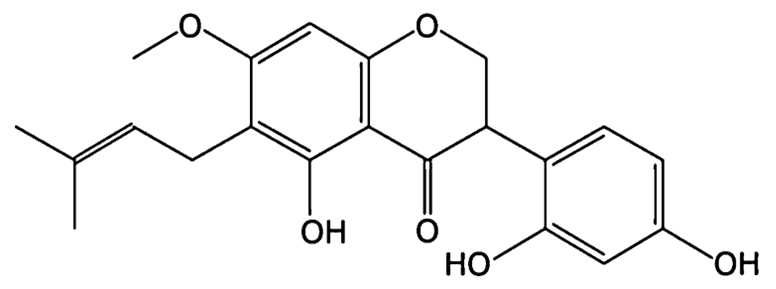
We initially fractionated licorice extract using a cartridge column (Sep-pak® C18 Environmental Cartridges), followed by HPLC. The resulting fractions were subsequently subjected to a lipolysis assay. The fraction exhibiting lipolytic activity underwent further purification via HPLC under modified conditions, and the purified compound was spectroscopically analyzed to elucidate its structure. The molecular formula was determined to be C21H22O6, corresponding to a peak detected at m/z 393.13059 (C21H22O6Na requires 393.13086) through high-resolution ESI mass spectrometry. A literature search for licorice metabolites based on the estimated chemical formula identified glyasperin B as a candidate, anticipated to be the target compound 13. The fragmentation patterns observed in the EI-MS spectrum supported this hypothesis, as they closely resembled previously reported data (data not shown). To definitively confirm that the target compound was glyasperin B, we conducted 1H and 13C NMR analyses. The NMR spectra were consistent with those reported in the literature, leading to the identification of the target compound as glyasperin B (Figure 1). The obtained NMR spectra were as follows: 1H NMR (acetone-d6) ppm: 1.63 (3H, s), 1.74 (3H, s), 3.24 (2H, d, J=7.0 Hz), 3.90 (3H, s), 4.27 (1H, dd, J=5.5, and 10.5 Hz), 4.48 (1H, dd, J=5.0, and 11.5 Hz), 4.62 (1H, t, J=10.5 Hz), 5.17 (1H, t, J=7.0 Hz), 6.13 (1H, s), 6.33 (1H, dd, J=2.0 and 8.5 Hz), 6.45 (1H, d, J=2.0 Hz), 6.94 (1H, d, J=8.5 Hz), 8.30 (1H, bs), 8.63 (1H, bs), and 12.48 (1H, s); 13C NMR (acetone-d6) ppm: 17.6, 21.4, 25.7, 47.2, 56.2, 71.0, 91.3, 103.5, 103.7, 107.6, 109.7, 113.5, 123.3, 131.1, 131.5, 156.8, 158.7, 161.1, 162.7, 165.8, and 198.7.

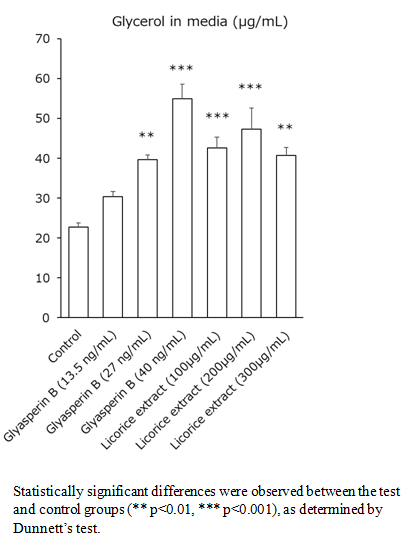
The lipolytic activity of the purified glyasperin B was evaluated alongside the original licorice extract using a bioassay with 3T3-L1 adipocytes. To facilitate comparison, the concentrations of glyasperin B in the test solutions were standardized. As depicted in Figure 2, at low concentrations (glyasperin B: 13.5 ng/mL or licorice extract: 100 μg/mL), glyasperin B exhibited insufficient activity compared to the original licorice extract. However, at intermediate (glyasperin B: 27 ng/mL or licorice extract: 200 μg/mL) and high (glyasperin B: 40 ng/mL or licorice extract: 300 μg/mL) concentrations, the lipolytic activity of glyasperin B was comparable to or exceeded that of the original extract.

To elucidate the relationship between the efficacy and content of glyasperin B, the anti-obesity effects of licorice extract were examined in a model of HFS diet-induced obesity. The control group exhibited significant increases in both body and visceral fat weights (Table 2). Among the test groups, the most pronounced reductions in body weight and visceral fat were observed in group E, achieving statistical significance. Although a similar trend was noted in group F, the reductions did not reach statistical significance (body weight gain: p<0.1, visceral fat weight: p=0.12). The results for the remaining test groups were comparable to those for the control group.
The glyasperin B content of the licorice extract samples was determined using analytical HPLC, with results presented in Table 1. The highest concentration was detected in extract E (148.1 μg/g), followed closely by extract F (137.5 μg/g). This pattern aligns with observations from the animal study, which indicated decreases in both body weight and visceral fat. Although glabridin was analyzed simultaneously, it was exclusively detected in extract D, with no presence in the other samples.
Numerous studies have reported the direct effects of flavonoid compounds on adipocytes 14, 15. The compounds present in Ural licorice, which is known for its diverse flavonoid content 16, presumably exert lipolytic effects on 3T3-L1 adipocytes. The characterization of the active compound in the assay led to the successful isolation of glyasperin B. Furthermore, the licorice extracts demonstrated a capacity to suppress weight and body fat gain in a diet-induced obesity mouse model, correlating with the glyasperin B content.
Glyasperin B was initially isolated from Glycyrrhiza aspera 13 and subsequently re-isolated by Inami et al. as an antimutagenic component against N-methyl-N-nitrosourea 17. Nevertheless, no reports have documented its lipolytic activity in the existing literature. To date, our search has revealed no studies on glyasperin B, rendering this the first report of its isolation as a compound with lipolytic properties.
Regarding the mode of action of glyasperin B, it ostensibly activates triglyceride degradation in adipose tissue, as suggested by in vitro test results. Certain flavonoids, such as quercetin and catechin, which enhance lipolysis in 3T3-L1 adipocytes 14, 15, demonstrate their effects solely in the presence of noradrenaline. These compounds induce lipolysis by activating hormone-sensitive lipase, rendering noradrenaline essential for triggering lipolysis in adipocytes. In contrast, glyasperin B stimulated lipolysis independently of noradrenaline, suggesting a potentially different mechanism of action compared to these flavonoids, although the precise mechanism warrants further investigation.
Several licorice extracts were evaluated for their anti-obesity effects using a diet-induced obesity mouse model, with the observed effects appearing to correlate with the glyasperin B content in each extract. To ascertain the presence of other compounds within the licorice extracts, glabridin, a known anti-obesity compound, was analyzed via HPLC. The results indicated that the licorice extracts exhibiting efficacy did not contain glabridin (Table 1 and Table 2). Notably, all effective licorice extracts in this study were sourced from Ural licorice (Glycyrrhiza uralensis), which is not expected to contain glabridin 18. The absence of glabridin, despite its recognized anti-obesity properties, further corroborates the conclusion that the anti-obesity effects observed in this study are attributable to glyasperin B. Further studies aimed at identifying and quantifying other lipolytic agents would help to better understand the mechanisms underlying the anti-obesity effects of licorice extracts.
The isolation and characterization of a compound with lipolytic activity from Glycyrrhiza uralensis extract led to the identification of glyasperin B. In a diet-induced obesity mouse model, licorice extract demonstrated efficacy associated with the glyasperin B content, suggesting that it should be a key contributor to the anti-obesity effects of licorice extract. The findings of this study potentially facilitate the standardized and consistent preparation of licorice extracts for obesity management.
I would like to express my gratitude to all members of the Internal Medicine and Functional Food Development Division at Rohto Pharmaceutical Co., Ltd., for their valuable and stimulating discussions. Several spectroscopic measurements for this study were technically supported by the Analytical Instrumentation Facility, Graduate School of Engineering, Osaka University.
All authors of this study are affiliated with MG Pharma Inc., the manufacturer of the licorice extract utilized in this research.
| [1] | Mathieu P, Lemieux I and Després JP. “Obesity, inflammation, and cardiovascular risk,” Clinical Pharmacology & Therapeutics, 87 (4). 407-416. April 2010. | ||
| In article | View Article PubMed | ||
| [2] | Piché ME, Tchernof A and Després JP. “Obesity phenotypes, diabetes, and cardiovascular diseases,” Circulation Research, 126 (11). 1477-1500. May 2020. | ||
| In article | View Article PubMed | ||
| [3] | Kernan WN, Inzucchi SE, Sawan C, Macko RF and Furie KL. “Obesity: a stubbornly obvious target for stroke prevention,” Stroke, 44 (1). 278-286. October 2013. | ||
| In article | View Article PubMed | ||
| [4] | Kahn SE, Hull RL and Utzschneider KM. “Mechanisms linking obesity to insulin resistance and type 2 diabetes,” Nature, 444. 840-846. December 2006. | ||
| In article | View Article PubMed | ||
| [5] | Abdullah SR, Nur Zati Iwani AK, Ahmad Zamri L, Wan Mohd Zin RM, Abu Seman N, Zainal Abidin NA, Hamzah SS, Azizul NH, Omar A, Seman Z, Yahya A and Md Noh MF. “Visceral adiposity loss is associated with improvement in cardiometabolic markers: findings from a dietary intervention study,” Frontiers in Endocrinology, 16. 1576599. June 2025. | ||
| In article | View Article PubMed | ||
| [6] | Morikawa H, Sawashita J, Kishida H, Fukuhara I, Hosoe K and Funahashi I. “Effects of licorice flavonoid oil concentrate solution supplementation on body weight and abdominal and total body fat in Japanese healthy volunteers—a randomized, double-blind, placebo-controlled study,” Japanese Pharmacology & Therapeutics, 49(3). 427-438. March 2021. | ||
| In article | |||
| [7] | Kamisoyama H, Honda K, Tominaga Y, Yokota S and Hasegawa S. “Investigation of the anti-obesity action of licorice flavonoid oil in diet-induced obese rats,” Bioscience Biotechnology and Biochemistry, 72(12). 3225-3231. December 2008. | ||
| In article | View Article PubMed | ||
| [8] | Honda K, Kamisoyama H, Tominaga Y, Yokota S and Hasegawa S. “The molecular mechanism underlying the reduction in abdominal fat accumulation by licorice flavonoid oil in high fat diet‐induced obese rats,” Animal Science Journal, 80(5). 562-569. September 2009. | ||
| In article | View Article PubMed | ||
| [9] | Lee JW, Choe SS, Jang H, Kim J, Jeong HW, Jo H, Jeong KH, Tadi S, Park MG, Kwak TH, Man Kim J, Hyun DH and Kim JB. “AMPK activation with glabridin ameliorates adiposity and lipid dysregulation in obesity,” Journal of Lipid Research, 53(7). 1277-1286. July 2012. | ||
| In article | View Article PubMed | ||
| [10] | Tsukamoto K, Fukada K, Sekii Y, Ogura C, Ishido K, Sasakawa Y, Sumida Y and Fukuda M. “Effects of a capsule containing licorice extract on body fat: a randomized, double-blind, placebo-controlled, parallel-group study,” Journal of Food and Nutrition Research, 11(12). 772-784. December 2023. | ||
| In article | View Article | ||
| [11] | Sasakawa Y, Kominami A, Abe M, Yamamoto K, Nakao M, Nakaoka F, Okumura S, Juneja LR and Kunisawa J. “The anti-obesity and anti-inflammatory effects of LICONINE™, an extract of Glycyrrhiza uralensis, on diet-induced obese mice and 3T3-L1 mouse adipocytes,” Journal of Food and Nutrition Research, 5(10). 781-788. October 2017. | ||
| In article | |||
| [12] | Dunnett CW. “New tables for multiple comparisons with a control,” Biometrics, 20(3). 482-491. March 1964. | ||
| In article | View Article | ||
| [13] | Fukai T, Lu Z, Nishizawa J, Ying-Hua W and Nomura T. “Four isoprenoid-substituted flavonoids from Glycyrrhiza aspera,” Phytochemistry, 36(1). 233-236. January 1994. | ||
| In article | View Article | ||
| [14] | Tateishi N, Egawa K, Kanzaki N, Kitagawa Y, Shibata H and Kiso Y, Enomoto S, Fukuda D, Nagai R and Sata M. “Effects of quercetin glucosides on diet-induced obesity in mice—the lipolytic activity of quercetin,” Japanese Pharmacology and Therapeutics, 37(2). 123-131. February 2009. | ||
| In article | |||
| [15] | Chen S, Osaki N and Shimotoyodome A. “Green tea catechins enhance norepinephrine-induced lipolysis via a protein kinase A-dependent pathway in adipocytes,” Biochemical and Biophysical Research Communications, 461(1). 1-7. January 2015. | ||
| In article | View Article PubMed | ||
| [16] | Wang C, Cai Z, Shi J, Chen S, Tan M, Chen J, Chen L, Zou L, Chen C, Liu Z and Liu X. “Comparative metabolite profiling of wild and cultivated licorice based on ultra-fast liquid chromatography coupled with triple quadrupole-time of flight tandem mass spectrometry,” Chemical and Pharmaceutical Bulletin, 67(10). 1104-1115. October 2019. | ||
| In article | View Article PubMed | ||
| [17] | Inami K, Mine Y, Tatsuzaki J, Mori C and Mochizuki M. “Isolation and characterization of antimutagenic components of Glycyrrhiza aspera against N-methyl-N-nitrosourea,” Genes and Environment, 39(5). 5. January 2017. | ||
| In article | View Article PubMed | ||
| [18] | Kondo K, Shiba M, Nakamura R, Morota T and Shoyama Y. “Constituent properties of licorices derived from Glycyrrhiza uralensis, G. glabra, or G. inflata identified by genetic information,” Biological and Pharmaceutical Bulletin, 30(7). 1271-1277. July 2007. | ||
| In article | View Article PubMed | ||
Published with license by Science and Education Publishing, Copyright © 2025 Keiichi Ishido, Yuka Sasakawa, Michiyo Abe, Fumiko Nakaoka, Mayumi Nakao, Kaori Yamamoto, Chizuko Fukuhama and Yasuo Sumida
 This work is licensed under a Creative Commons Attribution 4.0 International License. To view a copy of this license, visit
http://creativecommons.org/licenses/by/4.0/
This work is licensed under a Creative Commons Attribution 4.0 International License. To view a copy of this license, visit
http://creativecommons.org/licenses/by/4.0/
| [1] | Mathieu P, Lemieux I and Després JP. “Obesity, inflammation, and cardiovascular risk,” Clinical Pharmacology & Therapeutics, 87 (4). 407-416. April 2010. | ||
| In article | View Article PubMed | ||
| [2] | Piché ME, Tchernof A and Després JP. “Obesity phenotypes, diabetes, and cardiovascular diseases,” Circulation Research, 126 (11). 1477-1500. May 2020. | ||
| In article | View Article PubMed | ||
| [3] | Kernan WN, Inzucchi SE, Sawan C, Macko RF and Furie KL. “Obesity: a stubbornly obvious target for stroke prevention,” Stroke, 44 (1). 278-286. October 2013. | ||
| In article | View Article PubMed | ||
| [4] | Kahn SE, Hull RL and Utzschneider KM. “Mechanisms linking obesity to insulin resistance and type 2 diabetes,” Nature, 444. 840-846. December 2006. | ||
| In article | View Article PubMed | ||
| [5] | Abdullah SR, Nur Zati Iwani AK, Ahmad Zamri L, Wan Mohd Zin RM, Abu Seman N, Zainal Abidin NA, Hamzah SS, Azizul NH, Omar A, Seman Z, Yahya A and Md Noh MF. “Visceral adiposity loss is associated with improvement in cardiometabolic markers: findings from a dietary intervention study,” Frontiers in Endocrinology, 16. 1576599. June 2025. | ||
| In article | View Article PubMed | ||
| [6] | Morikawa H, Sawashita J, Kishida H, Fukuhara I, Hosoe K and Funahashi I. “Effects of licorice flavonoid oil concentrate solution supplementation on body weight and abdominal and total body fat in Japanese healthy volunteers—a randomized, double-blind, placebo-controlled study,” Japanese Pharmacology & Therapeutics, 49(3). 427-438. March 2021. | ||
| In article | |||
| [7] | Kamisoyama H, Honda K, Tominaga Y, Yokota S and Hasegawa S. “Investigation of the anti-obesity action of licorice flavonoid oil in diet-induced obese rats,” Bioscience Biotechnology and Biochemistry, 72(12). 3225-3231. December 2008. | ||
| In article | View Article PubMed | ||
| [8] | Honda K, Kamisoyama H, Tominaga Y, Yokota S and Hasegawa S. “The molecular mechanism underlying the reduction in abdominal fat accumulation by licorice flavonoid oil in high fat diet‐induced obese rats,” Animal Science Journal, 80(5). 562-569. September 2009. | ||
| In article | View Article PubMed | ||
| [9] | Lee JW, Choe SS, Jang H, Kim J, Jeong HW, Jo H, Jeong KH, Tadi S, Park MG, Kwak TH, Man Kim J, Hyun DH and Kim JB. “AMPK activation with glabridin ameliorates adiposity and lipid dysregulation in obesity,” Journal of Lipid Research, 53(7). 1277-1286. July 2012. | ||
| In article | View Article PubMed | ||
| [10] | Tsukamoto K, Fukada K, Sekii Y, Ogura C, Ishido K, Sasakawa Y, Sumida Y and Fukuda M. “Effects of a capsule containing licorice extract on body fat: a randomized, double-blind, placebo-controlled, parallel-group study,” Journal of Food and Nutrition Research, 11(12). 772-784. December 2023. | ||
| In article | View Article | ||
| [11] | Sasakawa Y, Kominami A, Abe M, Yamamoto K, Nakao M, Nakaoka F, Okumura S, Juneja LR and Kunisawa J. “The anti-obesity and anti-inflammatory effects of LICONINE™, an extract of Glycyrrhiza uralensis, on diet-induced obese mice and 3T3-L1 mouse adipocytes,” Journal of Food and Nutrition Research, 5(10). 781-788. October 2017. | ||
| In article | |||
| [12] | Dunnett CW. “New tables for multiple comparisons with a control,” Biometrics, 20(3). 482-491. March 1964. | ||
| In article | View Article | ||
| [13] | Fukai T, Lu Z, Nishizawa J, Ying-Hua W and Nomura T. “Four isoprenoid-substituted flavonoids from Glycyrrhiza aspera,” Phytochemistry, 36(1). 233-236. January 1994. | ||
| In article | View Article | ||
| [14] | Tateishi N, Egawa K, Kanzaki N, Kitagawa Y, Shibata H and Kiso Y, Enomoto S, Fukuda D, Nagai R and Sata M. “Effects of quercetin glucosides on diet-induced obesity in mice—the lipolytic activity of quercetin,” Japanese Pharmacology and Therapeutics, 37(2). 123-131. February 2009. | ||
| In article | |||
| [15] | Chen S, Osaki N and Shimotoyodome A. “Green tea catechins enhance norepinephrine-induced lipolysis via a protein kinase A-dependent pathway in adipocytes,” Biochemical and Biophysical Research Communications, 461(1). 1-7. January 2015. | ||
| In article | View Article PubMed | ||
| [16] | Wang C, Cai Z, Shi J, Chen S, Tan M, Chen J, Chen L, Zou L, Chen C, Liu Z and Liu X. “Comparative metabolite profiling of wild and cultivated licorice based on ultra-fast liquid chromatography coupled with triple quadrupole-time of flight tandem mass spectrometry,” Chemical and Pharmaceutical Bulletin, 67(10). 1104-1115. October 2019. | ||
| In article | View Article PubMed | ||
| [17] | Inami K, Mine Y, Tatsuzaki J, Mori C and Mochizuki M. “Isolation and characterization of antimutagenic components of Glycyrrhiza aspera against N-methyl-N-nitrosourea,” Genes and Environment, 39(5). 5. January 2017. | ||
| In article | View Article PubMed | ||
| [18] | Kondo K, Shiba M, Nakamura R, Morota T and Shoyama Y. “Constituent properties of licorices derived from Glycyrrhiza uralensis, G. glabra, or G. inflata identified by genetic information,” Biological and Pharmaceutical Bulletin, 30(7). 1271-1277. July 2007. | ||
| In article | View Article PubMed | ||