Consumption of fermented foods is associated with a wide range of nutraceutical benefits, including antioxidant and antibacterial properties. Because of this, the demand for fermented food products is steadily increasing. Vinegar is a fermented product with many health benefits. The purpose of this work is to characterize and evaluate the antioxidant and antibacterial activities of vinegar produced through a natural two-step fermentation process: an alcoholic fermentation followed by an acetic fermentation. This vinegar is made from two apple varieties, Gala and Golden, and compared with a control composed of industrial vinegar. Prepared vinegars contain varying amounts of nutrients (B, K, Ca, Mg, Na, and Fe), pectins, and β-carotene. Prepared vinegars are richer in these elements compared to industrial vinegar. Vinegar from the Golden variety exhibits higher antiradical activity (IC50 = 20 mg/mL) compared to the Gala variety (IC50 = 40 mg/mL) and industrial vinegar (IC50 = 25 mg/mL).This activity may be influenced by the presence of carotenoids, as demonstrated in this study. However, no clear proportional relationship was observed between carotenoid content and antiradical activity, since the highest carotenoid concentration was found in the vinegar from the Gala variety, which exhibited lower antiradical activity. The antibacterial activity of vinegar samples was evaluated based on their inhibitory effect on bacterial growth. The study focused on measuring inhibition zones, which are widely recognized indicators of antibacterial potential. This approach allowed us to assess the functional antibacterial properties of the vinegars by determining their effectiveness in limiting bacterial proliferation. Antibacterial activity was observed against three bacterial strains: Hafnia alvei, Bacillus subtilis, and Escherichia coli. The vinegar from the Golden variety exhibited greater activity against Hafnia alvei (12 mm vs. 9 mm) and Escherichia coli (9.2 mm vs. 7 mm) compared to the Gala variety, which showed higher activity against Bacillus subtilis, with an inhibition diameter of 10.1 mm. The different properties found in these prepared vinegars can be utilized in different sectors such as the agri-food or nutraceutical sector.
Much has been written about the interest, now unsuspected, in plants both from the point of view of food largely linked to health and from the point of view of use in industries: agri-food, pharmaceuticals and cosmetics; or from an ecological point of view. These different properties related to plants are due to the enormous reservoir of very different molecules that plants present. These molecules are substances of primary metabolism but especially those of secondary metabolism: phenols, nitrogenous molecules and terpenes. Indeed, more than 100,000 secondary metabolites have been identified and it is estimated that each plant produces at least a hundred different molecules 1. These different molecules constitute the basis of the active principles of medicinal plants; they also play an important role by acting directly on the nutritional quality of fruits and vegetables. Indeed, several studies have reported that a high consumption of fruits and vegetables reduces the risk of cardiovascular diseases 2, 3, 4, certain cancers 5, 6 and some chronic diseases 7, 8, 9.
These different properties of plants can be found enhanced in food processing products. Among these transformation products, mention may be made of fermented products, which, in recent years, have experienced worldwide interest 10. In parallel, several studies associate the consumption of fermented foods with a variety of beneficial impacts. Fermentation boosts the vitamin, amino acid and protein content of food. It eliminates or reduces the presence of elements unsuitable for consumption. It improves the digestibility of food by improving the intestinal flora. It can produce antimicrobial agents and bacteriocins that aid in the inhibition or elimination of pathogenic bacteria. Thus, fermented products have a range of uses 11, 12.
Many properties are attributed to fermented products such as antioxidant, anti-inflammatory, neuroprotective, anti-apoptotic, anticancer, antifungal, antibacterial, immunomodulatory and cholesterol-lowering properties 13. On the other hand, fermented foods and their probiotic bacteria have recently attracted increasing interest due to the potential for high antiviral activity. Diversity, health benefits, interaction with the immune system, and antiviral activity of fermented foods and their probiotic bacteria have been reported 14. All benefits of fermented food products make these products have great prospects in the food industry or as alternative therapeutic options.
Vinegar is a fermented food product. This product has been widely used and many therapeutic virtues have been attributed to it. Vinegar regulates blood glucose levels 15 it also regulates blood pressure 16, it helps digestion 17 and stimulates the absorption of calcium 18.
Its antioxidant properties have been widely recognized, with balsamine-derived vinegar exhibiting antioxidant activity due to the phenolic compounds and flavonoids characteristic of this plant species. 19. other authors have attributed this activity to melanoidin, a molecule that occurs during the Maillard reaction during the process of vinegar formation 20. This same antioxidant activity has been reported in other vinegars including rice, persimmon 21 and apple 22.Vinegar inhibits the oxidation of lipids extracted from foods. This oxidation of lipids in foods is a serious problem in the food industry; this results in flavor, colors and the formation of toxic products. To overcome this problem, controlling the oxidation of lipids in food is essential and often leads to the use of synthetic antioxidants. However, the use of these products, becoming increasingly undesirable for the consumer, has led to a very active search for natural products that can be added to food products in order to inhibit the oxidation of lipids. In addition, the inhibiting activity of vinegar on the growth of certain fungi has also been reported and exploited in the protection of fruits after harvest. This is how Scholberg et al. demonstrated that the use of vinegar vapor reduced the growth of conidia responsible for the rot of certain fruits such as Prunus, Malus and Fragaria 12.
Several virtues are attributed to the apple. This is linked to its richness in antioxidants but also in fibers, pectins, mineral elements and vitamins 23, 24, 25. These different properties can be found enhanced in apple processing products such as apple vinegar. In recent years, there has been a growing interest in research and innovation in fermented foods, especially traditional fermented foods, with the aim of developing new fermented foods and ingredients.
This work falls within this framework; it is intended to be an enhancement of vinegar resulting from a natural double fermentation of the apple. The work focused on two vinegars from 2 varieties of apple: Royal Gala and Golden Delicious belong to the Rosaceae family in the Malus genus. It aims at a comparative study of the characteristics and of the antioxidant and antimicrobial activity of the vinegars of the two varieties of apple in comparison with those of an industrial vinegar. Phytochemical characterization consisted in determining the content of vinegar in acetic acid, mineral elements, carotenoids and pectins. The antioxidant activity was demonstrated and evaluated in vitro by the DPPH test. The antibacterial activity is sought on three bacteria chosen for their high frequency of contaminating foodstuffs and for their pathogenic power. There are two gram- negative bacteria: Escherichia coli and Hafnia alvei and one gram- positive bacteria: Bacillus subtilis.
All chemicals and reagents involved in this study were of analytical grade. They are obtained from Sigmaa-Aldrich, VW R Prolabo Chemicals, Labkem, Biokar diagnostic, and Oxford Lab Fine Chem LLP.
Sodium hydroxide (NaOH), phenolphthalein (3,3-bis-1- monobenzofuranon), ethyl ether (C2H5)2O, methanol (CH3OH), petroleum ether (C6H14), silica gel (SiO2), acetone ( C3H6O), hydrochloric acid (HCl), absolute ethanol (C₂H₅OH), DPPH (2,2-diphenyl 1-picrylhydrazyl; (C18H12N5O6), glucose (C6H12O6), oxytetracycline (C22H24N2O9), calcium carbonate (CaCO₃), sodium chloride (NaCl), peptone, tryptone, yeast extract , agar.
Tryptone Glucose Extract (TGE) medium is prepared by mixing 5 g of tryptone, 2.5 g of yeast extract, 10 g of glucose and 10 g of agar in one liter of distilled water.
Oxytetracycline glucose agar (OGA) medium is prepared by mixing 5 g of yeast extract, 20 g of glucose and 15 g of agar in one liter of distilled water. 1 mg of oxytetracycline is added to the medium at 45°C.
Frateur medium is prepared by mixing 30 g of yeast extract, 20 g of calcium carbonate and 20 g of agar in one liter of distilled water.
Luria-Bertani (LB) medium: is prepared by mixing 10 g of peptone, 5 g of yeast extract, and 10 g of NaCl and 16 g of agar in one liter of distilled water.
2.2. InstrumentationThe following equipment was used in this study, along with their respective manufacturers: pH meter (EUTECH Instruments pH 510), refractometer (CETI BELGIUM FSS 01), inductively coupled plasma (ICP) – operating at 8000 to 10,000 K, conductivity meter (ORION 3 STAR BENCHTOP), refrigerated incubator (BINDER), refrigerated centrifuge (HERMLE Z 300), spectrophotometer (VWR International UV/Vis UV-3100PC), and optical microscope (OLYMPUS).
All equipment was provided by the Laboratory of Functional Ecology and Environmental Engineering in Fez. The ICP analysis was conducted at the Innovation City of Sidi Mohammed Ben Abdellah University, Fez.
2.3. Plant MaterialThe plant material is procured from agricultural production in the region of Fez in Morocco (geographical coordinates: 34° 3' 0" North, 4° 58' 48" West). The samples were identified in the laboratory using books and plant catalogs. Two varieties of apples: Royal Gala and Golden Delicious belonging to the Rosaceae family; to the genus Malus are used separately for a natural double fermentation resulting in a vinegar whose properties, antioxidant, and antimicrobial activity are sought after.
2.4. Experimental MethodsFor the characterization of apple musts, physicochemical and microbiological parameters were determined at the time of fermentation and throughout fermentation. Direct reading, using a previously calibrated pH meter of the EUTECH type, of a crushed apple (4 g / 200 ml), carries out the determination of the pH. The sugar content is determined by the refractometric method using a CETI BELGIUM FSS 01 type refractometer, which gives the Brix value then, converted into sugar levels. The determination of the microbial flora consisted in the evaluation of germs, yeasts and bacteria from 25 g of crushed apples homogenized with sterile distilled water. The diluted stock solution is used for inoculation in appropriate culture media: Tryptone Glucose Extract (TGE) for germs; Oxytetracycline glucose agar (OGA) for yeasts and moulds, and Frateur for acetic acid bacteria. Colonies are counted after 72 hours of incubation and the number of colony-forming units (CFU) per 1 g of fruit is determined as follows: CFU=100 x (number of colonies per box x reverse dilution)/Inoculated volume. For the same dilution, the average number of colonies is determined after counting at the level of 3 boxes.
Washed and drained apples are left to ferment in stoppered glass containers and placed for 40 days at 30° and in the dark. After 40 days, the liquid obtained is filtered under vacuum with 0.45 µm paper. This filtrate is used for: physico-chemical analysis and for the identification and evaluation of the biological activities of vinegar.
The characterization concerned the determination of electrical conductivity, acetic acid, mineral elements, solid elements, carotenoids and pectins. The electrical conductivity of each prepared vinegar is measured by an ORION 3 STAR benchtop conductivity type conductivity meter. The results are expressed in µs/cm. Acetic acid is determined by titrimetry with (NaOH) at 0.1 M in the presence of phenol phthalein. The acid concentration is expressed in grams per liter. The content of mineral elements is determined using a plasma source emission spectrophotometer by reference to control standard ranges. The determination of water and total solids is carried out by the thermogravimetric method. The previously weighed samples are placed in an oven at 105°C until a constant weight is obtained. The determination of the carotenoid content of vinegar is carried out according to a method recommended by (Harborne, 1984; Britton et al., 1995). 5 ml of the extract are mixed with 10 ml of acetone and refrigerated for 2 hours at 4°C, which allows the phospholipids to precipitate, which are subsequently removed by centrifugation. The supernatant is taken up with ethyl ether (v/v), after stirring the two phases separate. The epiphase containing the carotenoids is evaporated; the residue is weighed and then dissolved in a mixture of water-methanol-petroleum ether (5; 45; 50; v/v/v). After stirring, the two phases are separated by centrifugation. The epiphase (petroleum ether) mainly contains carotene, while the hypophase (methanol) contains xanthophylls, which are a type of carotenoids. The water-methanol-petroleum ether mixture carries out the carotene-xanthophyll separation. The carotenes are separated by thin layer chromatography (TLC) and then characterized by their chromatographic and spectral properties and finally assayed by reference to a standard range prepared from β carotene. The different constituents of the epiphase are separated by thin layer chromatography. The separation medium used is silica gel. The migration solvent is a mixture of petroleum ether-acetone-ethyl ether (4; 1; 1; v/v/v). 50 μl of total extract are taken, after chromatography, the bands corresponding to the carotenes were eluted from the silica with acetone. Carotenes are identified by reference to their Rf and their absorption spectrum established with a spectrophotometer.
For pectins, the extraction is carried out by a method described by Kulkarni and Vijayanand (2010). The extract is placed in the presence of hydrochloric acid (v/v), for 1 hour. After filtration on Wathman No.3 paper, the pectins are precipitated with absolute ethanol (v/2v) for 2 hours at room temperature. Subsequent filtration provides a pectin extract which is dried at 50°C; the residue obtained is weighed and the pectin content is expressed in mg/ml of vinegar.
The antioxidant power of the various vinegars tested was measured by the method of trapping free radicals using DPPH (Brand-Williams et al. 1995). For each case, 25, 50 or 100 µl of the compound to be tested are added to 0.5 ml of DPPH (0.5 mM) and then supplemented to 2 ml of ethanol. The absorbance of the whole is measured by a visible spectrophotometer at 517 nm at time 0 and then after 30 min in the dark. The results are expressed as % inhibition of DPPH compared to a control containing ethanol instead of the product to be tested. The inhibition of the DPPH radical is expressed as a percentage as follows: Inhibition (in %) = 100 (Ac - Ae)/Ac; Ac = absorbance of the control; Ae = absorbance of the sample to be tested. The IC50, representing the concentration inhibiting 50% of the DPPH radical, is determined from the regression line of the percentage inhibition as a function of the concentration of the product tested. The antioxidant activity of the different vinegars, including industrial vinegar, was tested and compared.
The antibacterial activity of the prepared vinegars was evaluated against three bacterial strains: Escherichia coli, Hafnia alvei, and Bacillus subtilis. The disc diffusion method on solid Luria-Bertani (LB) agar medium (Bertani, 2004) was used. This method is widely employed for preliminary screening of antibacterial activity and allows for a qualitative and comparative assessment of inhibitory potential. The antibacterial activity of the extracts was determined by measuring the diameter of the inhibition zone around the discs containing different concentrations of vinegar after 24 hours of incubation at 37°C.
2.5. Statistical AnalyzesThe experiments are carried out with 3 repetitions. Each repetition is the average of 5 values. The results are subjected to the analysis of variance (unifactorial ANOVA). The multiple comparison tests per pair make it possible to determine the means which differ and this using the SPSS software (version 11). The differences are considered significant for p ≤ 0.05.
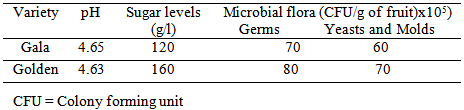
Table 1 provides information on the characteristics of the apple musts tested. The pH value of the must of the two varieties of apples is acidic and equal to 4.65 for Royal Gala and 4.63 for Golden Delicious. This pH is favorable for the development of acidophilic microorganisms. The Golden variety is richer in sugars (160 g/l against 120 g/l for the Gala variety) and in microbial population (80 CFU/g x105 against 70 CFU/g x105 for the Gala variety).
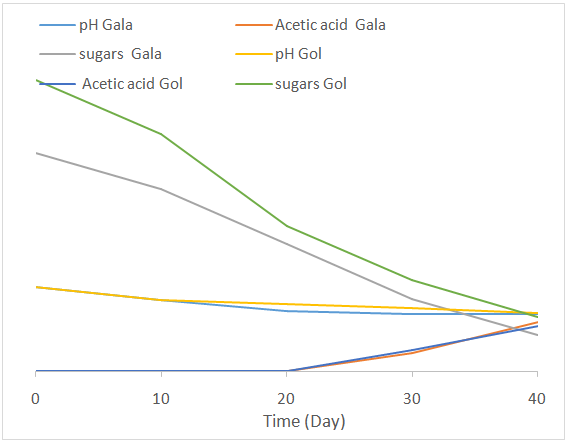
The evolution of pH, sugar level, and microbial load is monitored throughout the fermentation. This evolution is illustrated in Figure 1, which shows a decrease in pH in the first days of fermentation and a reduction in the sugar level in both varieties during fermentation. This is the result of yeast activity, which converts sugar into ethanol. The lowering of pH also reflects the activity of yeasts and molds in the first days of fermentation
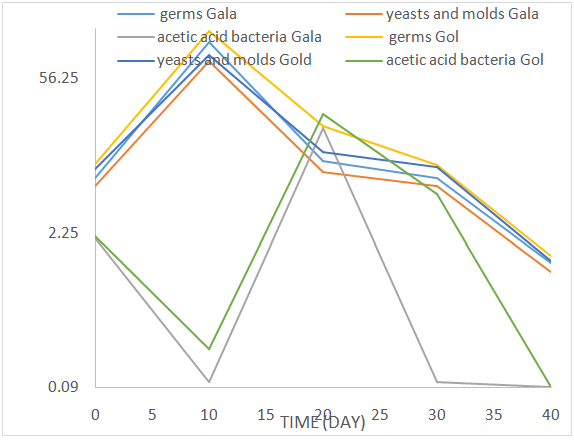
Regarding the evolution of microbial populations, Figure 2 illustrates the changes observed during fermentation. A proliferation of microorganisms, including bacteria, yeasts, and molds, is observed up to the 10th day of fermentation. Between the 10th and 20th day, a decline in the population of these microorganisms is noted, as they are progressively replaced by acetic acid bacteria. By the end of the fermentation process, on the 40th day, a significant reduction in these microbial populations is observed, though some residual presence may persist.
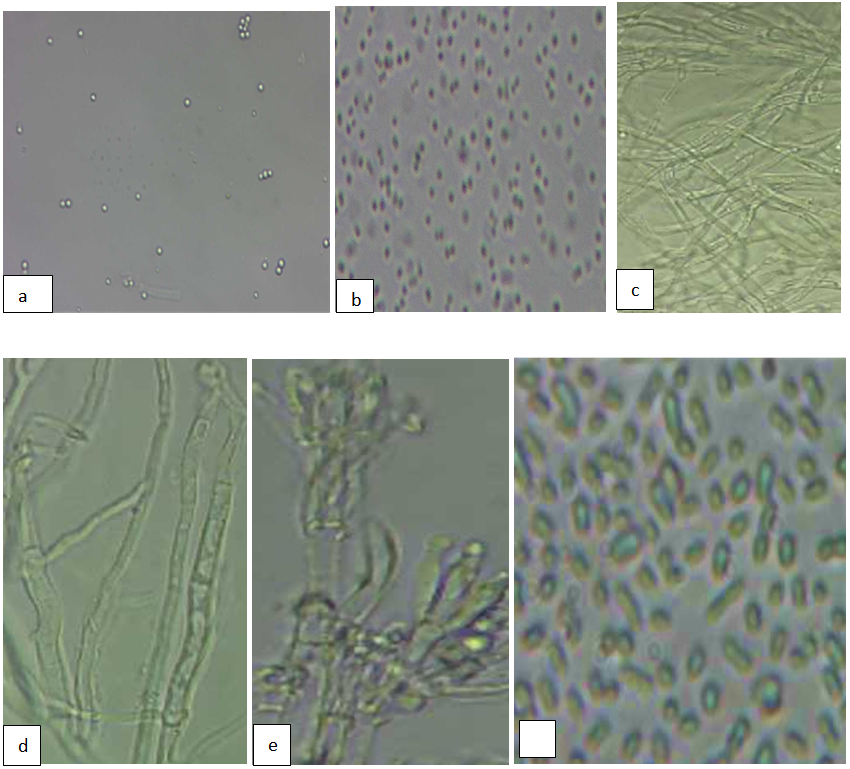
Figure 3 shows the types of fungi that grew on OGA medium. These are mainly yeasts and molds. Yeasts are of different shapes, different sizes, isolated cells grouped in clusters, round or slightly elongated cells. Molds are composed of multicellular, septate, branched mycelium. The figure also shows colonies of rod bacteria developed on Frateur medium on the 20th day of fermentation.
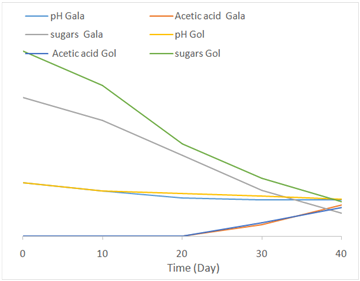
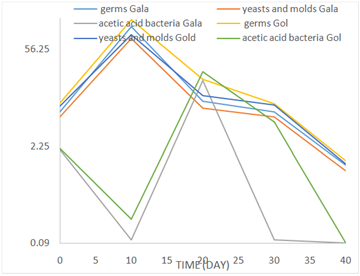
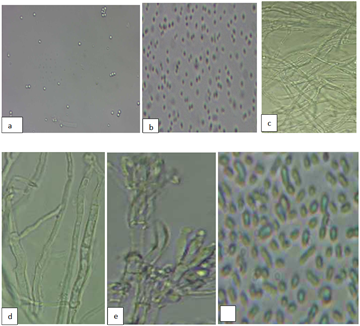
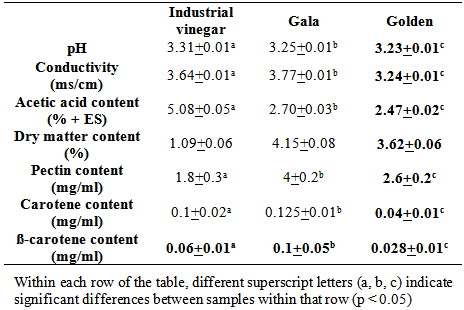
Table 2 gives the physico-chemical parameters of vinegar resulting from the natural double fermentation of 2 varieties of apple and industrial vinegar (VI). The pH of the different vinegars is comparable and acidic. The electrical conductivity, which reflects the content of dissolved salts in the medium, shows higher values in the vinegar from Gala. From Table 2, it appears that the three types of vinegar have different concentrations of acetic acid. The percentage of acetic acid in industrial vinegar (5.1%) is greater than that prepared from Gala or Golden. The dry matter content varies according to the type of vinegar. The vinegar from Gala has a higher dry matter content compared to that from Golden. In addition, industrial vinegar has the lowest content equal to 1.09%. The table also shows a greater richness in pectin of prepared vinegars compared to industrial vinegar and that the vinegar from the gala apple is richer in pectin (4 mg/ml) compared to that from the golden apple (2.6 mg/ml). Also this gala vinegar showed a higher carotene and β carotene content.
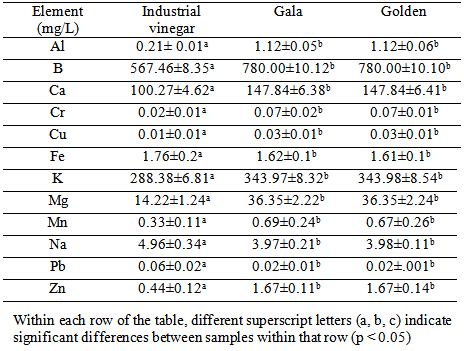
Table 3 presents the mineral content of the various vinegars tested. Qualitatively, the vinegars contain the mineral elements characteristic of apple vinegars, namely boron (B), potassium (K), calcium (Ca), magnesium (Mg), sodium (Na), and iron (Fe). However, the prepared vinegars exhibit higher concentrations of these elements, particularly B, Ca, K, and Mg. The table also indicates a higher aluminum content in the prepared vinegars compared to the control, while remaining within the authorized limits (less than 5 mg/L).
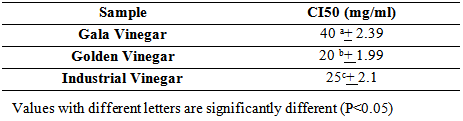
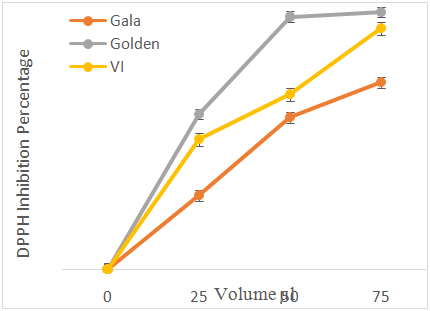
Figure 4 shows that for the different types of vinegar tested, the antioxidant activity increases linearly with the concentration. Industrial vinegar and the one from Golden appear the most active. Table 4 provides information on the IC50 of the various vinegars. The lowest value is noted for Golden vinegar indicating significant antiradical activity compared to the other vinegars tested.
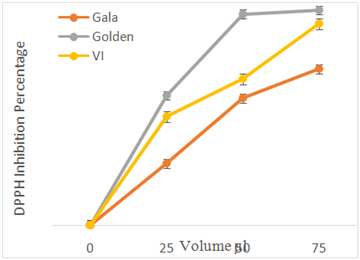
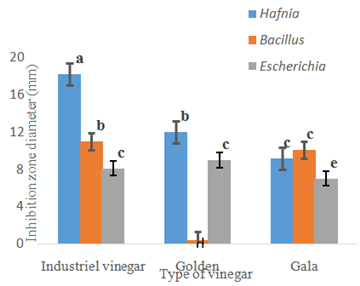
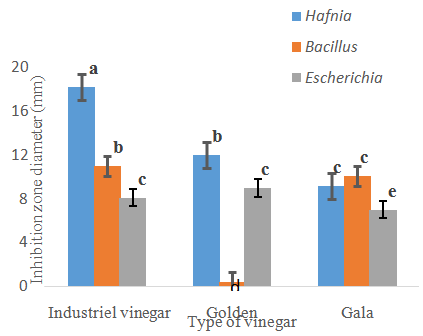
Figure 5 shows the results of the activity of the different vinegars against three bacteria, Hafnia alvei, Bacillus subtilis, and Escherichia coli. Antibacterial activity, estimated by the diameter of the zone of inhibition, against the three bacteria tested is observed. Golden vinegar is more active against Hafnia with a diameter of the inhibition zone of 12 mm against 9 mm for Gala vinegar. Golden's vinegar is also more active than Gala's on Escherichia (9mm versus 7mm). On the other hand, on Bacillus it is the Gala vinegar, which is active; that of Golden does not exert any inhibitory activity on this bacterium. In addition, the figure reports the effectiveness of industrial vinegar against the 3 bacteria tested.
This work has focused on the valorization of a product resulting from a natural double fermentation; it is an organic vinegar obtained from the apple. The virtues of apple are widely demonstrated; they are attributed to its richness in antioxidants. The apple contains flavonoids, such as quercetin, procyanidins, catechin and epicatechin, as well as other phenolic compounds, such as chlorogenic acid 23, 24, 25.
Antioxidant polyphenols would reduce the proliferation of cancer cells and the risk of cardiovascular disease 31. This is particularly the case of quercetin, a powerful antioxidant with potential protection against both cancer and cardiovascular disease 32, 33. The procyanidins, epicatechin and catechin, have been associated with a decrease in the oxidation of bad cholesterol (LDL) and procyanidins with the prevention of the development of cancer cells 34.
Alongside the metabolites mentioned above, other compounds such as mineral elements, vitamins or even pectins can justify the virtues of the apple. Pectin, for example, can partly bind sugar and cholesterol in the intestine and thus reduce their absorption 35. It would thus reduce the blood cholesterol level 36, 37. The comparative study carried out allowed the characterization of two vinegars from two varieties of apple. It showed a difference between the two vinegars attributed to the variety. Thus, the pH value of the must from the two apple varieties is approximately acidic, with a value of 4.65 for Royal Gala and 4.63 for Golden Delicious. This pH is favorable for the development of acidophilic microorganisms 38.
A decrease in pH is recorded during the fermentation at the end of which the pH reaches a value of 3.2 for the two vinegars; this constitutes a favorable environment for the development of acetic acid bacteria 39.
Concerning the content of sugars and germs of gala and golden apple musts, our results showed that these musts could allow fermentation without the addition of exogenous microorganisms. Nevertheless, the must of the Golden variety is richer in sugars (160 g/l against 120 g/l for the must of the Gala variety) and in germs (80 CFU/g of fruit x105 against 70 CFU/g of fruit x105 for the must of the Gala variety). The acidic pH of vinegars imparts antiseptic properties, helping to prevent the growth of undesirable bacteria and yeasts. This acidity also promotes digestion by increasing stomach acidity, facilitating the breakdown of food and the absorption of nutrients. Our results showed that the prepared vinegars have a lower acetic acid concentration than industrial vinegar (5.1%) but comply with authorized standards (less than 5%).
The electrical conductivity, which reflects the content of dissolved salts in the medium, shows higher values in the vinegar from Gala. This is due to a higher content of mineral elements in this vinegar, which also has a higher dry matter content (4.15%) compared to that of Golden (3.62%); industrial vinegar has the lowest content and is equal to 1.09%. Our results also showed a greater pectin content in the prepared vinegars compared to industrial vinegar and that the vinegar from the Gala variety is richer in pectin than the one from the Golden variety. The health benefits of pectin have been widely demonstrated 40. Through its ability to form a gel, pectin can bind, in part, sugar and cholesterol in the intestine and thus reduce their absorption. 35. It would thus reduce the blood cholesterol level 36, 37. However, for industrialized products, various clarification techniques are often used involving the degradation or modification of the pectin present therein; this may justify the difference in pectin content between prepared vinegars and industrial vinegar.
The two prepared vinegars contain β-carotene but with a richness of the vinegar of Golden in this compound compared to the vinegar resulting from Gala. β - carotene is a provitamin, it is a plant precursor of vitamin A which has antioxidant properties since it is able to trap free radicals. Its presence in vinegar gives them an important nutritional quality 41.
Concerning the content of mineral elements of the Prepared vinegar from the Gala and Golden apple and in comparison with a control composed of industrial vinegar, qualitatively, the three vinegars contain the mineral elements characterizing apple vinegar, namely a richness in Boron (B), Potassium (K), Calcium (Ca), Magnesium (Mg), Sodium (Na) and Iron (Fe). We note, however, that the prepared vinegars are richer in these elements; especially in B, Ca, K and Mg. The role of these elements is of great importance. Potassium works cooperatively with sodium to control water balance, transmission of nerve signals, muscle contraction, and maintenance of normal heart rhythm. Magnesium is a vital catalyst in the activity of enzymes. It is involved in the transformation of food into energy. It assists calcium and potassium in the formation of bones and teeth. Boron is also a trace element with an essential role. It participates in the formation of bones, the production of red blood cells and cells of the immune system. Iron is a mineral present in every cell of the body and is essential for the formation of blood cells. Manganese is one of the essential trace elements in the body; it is involved in the synthesis of thyroid hormones, insulin, in the activation of many enzymes and in the metabolism of cholesterol. It would also participate in neutralizing free radicals 42. Zinc is a trace element that is involved in many enzymatic reactions and plays an important role in the metabolism of proteins, carbohydrates and lipids. An antioxidant would intervene in the prevention of toxic effects due to free radicals. Its role in health and disease is demonstrated, in particular its role in neurodegenerative and neurodevelopmental disorders, diabetes and obesity. For example, Anatoly et al. 43 reported an association between altered Zn status and multiple diseases.
Our results also showed a higher presence of aluminum in prepared vinegar compared to industrial vinegar but which remains within the normal levels values. This relative richness in aluminum can come from water. Aluminum products are in fact variously used, in particular for the treatment of water. All constituents present in apple vinegars can justify the antioxidant activity highlighted in these vinegars, in particular the presence of carotenoids, β carotene and the mineral elements manganese and zinc whose health benefits and antioxidant properties are already reported by many works 44.
Finally, concerning the antibacterial activity tested in the two Prepared vinegars, our results showed an activity that inhibited the growth of the bacteria tested; but this activity depends on the type of vinegar, it is vinegar from the Gala apple which has shown inhibitory activity on Hafnia, Baccillus and Escherichia bacteria; vinegar from Golden is more active on Hafnia and Escherichia.
The gram-negative bacteria Escherichia coli are the most common aerobic commensal host in the colon. However, all strains are infectious when they invade healthy sites. The E. coli species is a versatile bacterium that includes both commensal bacteria of the digestive tract, pathogenic bacteria and bacteria adapted to the environment 45. Certain strains of E coli are an important cause of hemolytic uraemic syndrome 46, 47. For Bacillus subtilis, despite the fact that it is a bacterium with low pathogenic potential, it can give rise to formidable infections or be the cause of food poisoning as is the case with the strain thermotolerant NHV391-98 48. For Hafnia alvei, it is also a commensal bacterium of the human gastrointestinal tract; some strains of this species are implicated in human infections. It is also a specific pathogen in bees 49.
This study demonstrated that traditional food fermentation can lead to a product whose composition imparts significant biological properties, such as antioxidant and antibacterial activities. These properties can be utilized in the health sector as well as in the agri-food industry.
Although this study highlighted these effects, identifying the microorganisms responsible for fermentation is crucial for a better understanding of the fermentation process and its effects on the biological properties of the final product. Identifying and characterizing microbial strains would not only clarify their role in the development of antioxidant and antibacterial activities but also optimize the fermentation process to enhance its health benefits and agri-food applications.
Moreover, it would also be advisable to expand the tests to include other pathogens in order to provide a more comprehensive assessment of the antibacterial efficacy of the prepared products. Finally, an interesting perspective would be to consider a formulation combining the two vinegars, which could strengthen their biological activities and open the door to new applications. Future research will further deepen knowledge of traditional fermentation and explore its potential for the development of functional products.
| [1] | Hopkins, W.G. 2003. Physiologie végétale. De Boeck Supérieur. 532 pages. ISBN, 2744500895. | ||
| In article | |||
| [2] | Knekt A., Jarvinen R., Reunanen A. and Maatela, J.1996. Flavonoid intake and coronary mortality in Finland: a cohort study. British Medical Journal. 312(7029): 478-813. | ||
| In article | View Article PubMed | ||
| [3] | Bazzano, L. A., Serdula, M. K. and Liu, S. 2003: Dietary intake of fruits and vegetables and risk of cardiovascular disease. Current atherosclerosis reports. 5: 492-499. | ||
| In article | View Article PubMed | ||
| [4] | Aune, D., Giovannucci, E., Boffetta, P., Fadnes, L., TeresaNorat, N., Greenwood, D.C., Riboli, E. Vatten, L.J. and Tonstad, S. 2017. Fruit and vegetable intake and the risk of cardiovascular disease, total cancer and all-cause mortality—a systematic review and dose-response meta-analysis of prospective studies. International journal of epidemiology. 46(3): 1029–1056. | ||
| In article | View Article PubMed | ||
| [5] | Hertog, M.L.G., Hollman, P.C.H. and Katan, M.B. 1992. Content of Potentially Anticarcinogenic Flavonoids of 28 Vegetables and 9 Fruits Commonly Consumed in the Netherlands. Journal of Agriculture and Food Chemistry. 40: 2379-2383. | ||
| In article | View Article | ||
| [6] | Scalbert, A., Manach, C., Morand, C., Rémésy, C. and Jiménez, L. 2005. Dietary polyphenols and the prevention of diseases. Critical Reviews in Food Science and Nutrition. 45(4):287-306. | ||
| In article | View Article PubMed | ||
| [7] | Lampe, J.W. 1999. Health effects of vegetables and fruits: Assessing mechanisms of action in human experimental studies. The American Journal of Clinical Nutrition. 70: 475-490. | ||
| In article | View Article PubMed | ||
| [8] | Nicoli, M.C, Anese, M. and Parpinel, M. 1999. Influence of processing on the antioxidant properties of fruit and vegetables. Trends in Food Science & Technology. 10 (3): 94-100. | ||
| In article | View Article | ||
| [9] | Okoko, B. J., Burney, P. G., Newson, R. B., Potts, J. F. and Shaheen, S. O. 2007. Childhood asthma and fruit consumption. European Respiratory Journal. 29: 1161-1168. | ||
| In article | View Article PubMed | ||
| [10] | Mukherjee, A., Gómez-Sala, B., Eibhlís M., O'Connor, E.M., Kenny, J.G. and. Cotter, P.D. 2022. Global Regulatory Frameworks for Fermented Foods: A Review. Frontiers in Nutrition. 9: 26-42. | ||
| In article | View Article PubMed | ||
| [11] | Li, K.J., Brouwer-Brolsma E.M., Burton-Pimentel K.J., Vergères, G. and Feskens, E.J.M. 2021. A Systematic Review to Identify Biomarkers of Intake for Fermented Food Products. Genes & Nutrition. 16(1): 5. | ||
| In article | View Article PubMed | ||
| [12] | Scholberg, P., Haag, P. Hocking, R. and Bedford, K. 2000. The use of vinegar vapor to reduce postharvest decay of harvest fruit. HortScience. 35 (5): 898 – 903. | ||
| In article | View Article | ||
| [13] | Muganti, R.K., Farahin, A., SweeKeong,Y., Janna Ong, A., Melati, K., Abdul Rahman, O. Mohd. Azuraidi, O., Adam Thean, C.L., Sharifah Alawieyah, S.M, and Noorjahan, B. A. 2022. Clinical and Preclinical Studies of Fermented Foods and Their Effects on Alzheimer’s. Diseas Antioxydants.11 (5): 883. | ||
| In article | View Article PubMed | ||
| [14] | Muhialdin BJ, Zawawi N, Abdull Razis AF, Bakar J, Zarei M. 2021. Antiviral activity of fermented foods and their probiotics bacteria towards respiratory and alimentary tracts viruses. Food Control. 127:108140. | ||
| In article | View Article PubMed | ||
| [15] | Ebihara, K. and Nakajima, A. 1998. An Effect of Acetic Acid and Vinegar on Blood Glucose and Insulin Responses to Orally Administered Sucrose and Starch. Agricultural and Biological Chemistry 52 (5): 1311 – 1312. | ||
| In article | View Article | ||
| [16] | KONDO, S., Kenji, T., Yoshinori, T., Katsumi, I. and Yukio, Y. 2001. Antihypertensive Effects of Acetic Acid and Vinegar on Spontaneously Hypertensive Rats. Bioscience, Biotechnology, and Biochemistry. 65, (12): 2690–2694. | ||
| In article | View Article PubMed | ||
| [17] | Liljeberg, H. and Björck, I. 1998. Delayed gastric emptying rate may explain improved glycaemia in healthy subjects to a starchy meal with added vinegar. European Journal of Clinical Nutrition. 52: 368-371. | ||
| In article | View Article PubMed | ||
| [18] | KISHI, M., Masahiro, F., Yoshinori, T., Takashi, N. Kazushige, T. and Naoyuki, N. 1999. Enhancing Effect of Dietary Vinegar on the Intestinal Absorption of Calcium in Ovariectomized Rats, Bioscience, Biotechnology, and Biochemistry, 63(5): 905-910. | ||
| In article | View Article PubMed | ||
| [19] | Verzellon, P., Tagliazucchi, D. and Conte, A. 2007. Relationship between the antioxidant properties and the phenolic and flavonoid. Food chemistry. 105 (2): 564-571. | ||
| In article | View Article | ||
| [20] | Qingping, X. Wenyi T. and Zonghua, A. 2007. A Antioxidant activity of vinegar melanoidins. Food chemistry. 102 (3): 841-849. | ||
| In article | View Article | ||
| [21] | Sakanaka, S. and Ishihara, Y. 2008. Comparison of Antioxidant Properties of Persimmon Vinegar and Some Other Commercial Vinegars in Radical-Scavenging Assays and on Lipid Oxidation in Tuna Homogenates. Food Chemistry. 107: 739-744. | ||
| In article | View Article | ||
| [22] | Ousaaid, D., Laaroussi, H., Mechchate, H., Bakour, M., El Ghouizi, A., Mothana, R.A., Noman, O., Es-safi, I., Lyoussi, B. and El Arabi, I. 2022. The Nutritional and Antioxidant Potential of Artisanal and Industrial Apple Vinegars and Their Ability to Inhibit Key Enzymes Related to Type 2 Diabetes In Vitro. Molecules. 27(2):567. | ||
| In article | View Article PubMed | ||
| [23] | Pearson, D.A. and Tan, C.H.1999. Apple juice inhibits human low-density lipoprotein oxidation. Life Sciences. 64: 1913-1920. | ||
| In article | View Article PubMed | ||
| [24] | Vinson, J.A., Su, X., Zubik, L. and Bose, P. 2001. Phenol antioxidant quantity and quality in foods: fruits. Journal of Agricultural and Food Chemistry. 49 (11): 5315-21. | ||
| In article | View Article PubMed | ||
| [25] | Boyer, J. and Liu, R.H. 2004. Apple Phytochemicals and Their Health Benefits. Nutrition Journal. 3: 1-15. | ||
| In article | View Article PubMed | ||
| [26] | Harborne, J.B. 1984. Textbook of Phytochemical Methods. A Guide to Modern Techniques of Plant Analysis. 5th Edition, Chapman and Hall Ltd, London, 21-72. | ||
| In article | |||
| [27] | Britton, G., Liaeen, J. S. and Pfander, H. 1995. Carotenoïd Isolation and analysis. Birkhauser Verlay. Booston. | ||
| In article | |||
| [28] | Kulkarni, S.G. and Vijayanand, P. 2010. Effect of extraction conditions on the quality characteristics of pectin from passion fruit peel (Passiflora edulis f. flavicarpa L.) LWT- Food Science and Technology. 43 (7): 1026 1031. | ||
| In article | View Article | ||
| [29] | Brand-Williams, W., Cuvelier, M.E. and Berset, C. 1995. Use of a free radical method to evaluate antioxidant activity Article preview LWT - Food Science and Technology. 28 (1): 25-30. | ||
| In article | View Article | ||
| [30] | Bertani, G. 2004. Lysogeny at mid-twentieth century: P1, P2, and other experimental systems. Journal Bacteriology. 186: 595-600. | ||
| In article | View Article PubMed | ||
| [31] | Koch, T. C. L., Briviba, K., Watzl, B., Fähndrich, Ch.; Bub, A., Rechkemmer, G. and Barth, S. W. 2009. Prevention of colon carcinogenesis by apple juice in vivo: impact of juice constituents and obesity. Molecular Nutrition & Food Research. 53 (10): 1289-302. | ||
| In article | View Article PubMed | ||
| [32] | Lamson, D.W. and Brignall, M.S. 2000. - Antioxidants and cancer, part 3: quercetin. Alternative Medicine Review. 5: 196-208. | ||
| In article | |||
| [33] | Hubbard, G.P., Wolffram, S., Lovegrove, J.A. and Gibbins, J.A. 2003. The role of polyphenolic compounds in the diet as inhibitors of platelet function. Proceedings of the Nutrition Society. 62: 469-478. | ||
| In article | View Article PubMed | ||
| [34] | Gerhauser, C. 2008. Cancer chemopreventive potential of apples, apple juice, and apple components. Planta Medica. 74(13): 1608-1624. | ||
| In article | View Article PubMed | ||
| [35] | Mee, K.A., Gee, D.L. 1997. Apple fiber and gum arabic lowers total and low-density lipoprotein cholesterol levels in men with mild hypercholesterolemia. Journal of the American Dietetic Association. 97: 422-424. | ||
| In article | View Article PubMed | ||
| [36] | Gonzalez, M., Rivas, C., Caride, B., Lamas, M.A. and Taboada, M.C. 1998. Effects of orange and apple pectin on cholesterol concentration in serum, liver and faeces. Journal of Physiology and Biochemistry. 54: 99-104. | ||
| In article | View Article PubMed | ||
| [37] | Aprikian, O. Duclos, V. S. Guyot, S., Besson, C., Manach, C., Bernalier, A., Morand, C., Rémésy, C.and Demigné, C. 2003. Apple pectin and a polyphenol-rich apple concentrate are more effective together than separately on cecal fermentations and plasma lipids in rats. The Journal of Nutrition. 133: 1860-1865. | ||
| In article | View Article PubMed | ||
| [38] | Peces-Pérez, R., Vaquero, C., Jesús Callejo, M. and Antonio Morata, A. 2022. Biomodulation of Physicochemical Parameters, Aromas, and Sensor Profile of Craft Beers by Using Non-Saccharomyces Yeasts. ACS Omega. 7(21): 17822–17840. | ||
| In article | View Article PubMed | ||
| [39] | JiaJia, W., Ying K. M., Fen Fen, Z.and FuSheng, C.2012. Biodiversity of yeasts, lactic acid bacteria and acetic acid bacteria in the fermentation of Shanxi aged vinegar, a traditional Chinese vinegar. Food Microbiology. 30(1): 289-97. | ||
| In article | View Article PubMed | ||
| [40] | Beukema, M. Faas, M.M. and De Vos, P. 2020. The effects of different dietary fiber pectin structures on the gastrointestinal immune barrier: impact via gut microbiota and direct effects on immune cells. Experimental & Molecular Medicine. 52(9): 1364–1376. | ||
| In article | View Article PubMed | ||
| [41] | Miazek, K., Beton, K., Śliwińska, A. and Płuska, B. 2022. The Effect of β-Carotene, Tocopherols and Ascorbic Acid as Anti-Oxidant Molecules on Human and Animal in Vitro/in Vivo Studies: A Review of Research Design and Analytical Techniques Used. Biomolecules. 12(8): 1087. | ||
| In article | View Article PubMed | ||
| [42] | Haftek, M., Abdayem, A. and Guyonnet-Debersac, P. 2022. Skin Minerals: Key Roles of Inorganic Elements in Skin Physiological Functions. International Journal of Molecular Sciences. 23(11): 62-67. | ||
| In article | View Article PubMed | ||
| [43] | Anatoly, V. S., Michael A., and Alexey A.T. 2021. Chapter 8 – Zinc. Advances in Food and Nutrition Research. 96: 251–310. | ||
| In article | View Article PubMed | ||
| [44] | Owumi, S.E., Nwozo, S.O., Effiong, M.E. and Najophe, E.S. 2020. Gallic acid and omega-3 fatty acids decrease inflammatory and oxidative stress in manganese-treated rats. Journal of Experimental Biology. 245(9): 835-844. | ||
| In article | View Article PubMed | ||
| [45] | Tenaillon, O., Skurnik, D. Picard, B. and Denamur, E. 2010. The population genetics of commensal Escherichia coli. Nature Reviews Microbiology. 8 (3): 207-217. | ||
| In article | View Article PubMed | ||
| [46] | Rowe, P.C., Orrbine, E., Lior, H., Wells, G.A. and McLaine, P.N. 1993. A prospective study of exposure to verotoxin-producing Escherichia coli among Canadian children with hemolytic uraemic syndrome. The CPKDRC co-investigators. Epidemiology and Infection. 110: 1–7. | ||
| In article | View Article PubMed | ||
| [47] | Rangel, J.M., Sparling, P.H., Crowe, C., Griffin, P.M. and Swerdlow, D.L. 2005. Epidemiology of Escherichia coli O157:H7 outbreaks, United States, 1982–2002. Emerging Infectious Diseases. 11: 603-9. | ||
| In article | View Article PubMed | ||
| [48] | Halleux, Ma. 2018. Bacillus cytotoxicus dans les matrices alimentaires. Faculté des bioingénieurs, Université catholique de Louvain, 2018. Prom.: Mahillon, Jacques. | ||
| In article | |||
| [49] | Haoyu, L., Huijuan D., Jieni, W., Wenhao, Z., Guo,J., Zhang, X. and Hao, Z. 2022. Specific Strains of Honeybee Gut Lactobacillus Stimulate Host Immune System to Protect against Pathogenic Hafnia alvei. Microbiology spectrum. 10(1): 1896-21. | ||
| In article | View Article PubMed | ||
Published with license by Science and Education Publishing, Copyright © 2025 MIKOU Karima
 This work is licensed under a Creative Commons Attribution 4.0 International License. To view a copy of this license, visit
http://creativecommons.org/licenses/by/4.0/
This work is licensed under a Creative Commons Attribution 4.0 International License. To view a copy of this license, visit
http://creativecommons.org/licenses/by/4.0/
| [1] | Hopkins, W.G. 2003. Physiologie végétale. De Boeck Supérieur. 532 pages. ISBN, 2744500895. | ||
| In article | |||
| [2] | Knekt A., Jarvinen R., Reunanen A. and Maatela, J.1996. Flavonoid intake and coronary mortality in Finland: a cohort study. British Medical Journal. 312(7029): 478-813. | ||
| In article | View Article PubMed | ||
| [3] | Bazzano, L. A., Serdula, M. K. and Liu, S. 2003: Dietary intake of fruits and vegetables and risk of cardiovascular disease. Current atherosclerosis reports. 5: 492-499. | ||
| In article | View Article PubMed | ||
| [4] | Aune, D., Giovannucci, E., Boffetta, P., Fadnes, L., TeresaNorat, N., Greenwood, D.C., Riboli, E. Vatten, L.J. and Tonstad, S. 2017. Fruit and vegetable intake and the risk of cardiovascular disease, total cancer and all-cause mortality—a systematic review and dose-response meta-analysis of prospective studies. International journal of epidemiology. 46(3): 1029–1056. | ||
| In article | View Article PubMed | ||
| [5] | Hertog, M.L.G., Hollman, P.C.H. and Katan, M.B. 1992. Content of Potentially Anticarcinogenic Flavonoids of 28 Vegetables and 9 Fruits Commonly Consumed in the Netherlands. Journal of Agriculture and Food Chemistry. 40: 2379-2383. | ||
| In article | View Article | ||
| [6] | Scalbert, A., Manach, C., Morand, C., Rémésy, C. and Jiménez, L. 2005. Dietary polyphenols and the prevention of diseases. Critical Reviews in Food Science and Nutrition. 45(4):287-306. | ||
| In article | View Article PubMed | ||
| [7] | Lampe, J.W. 1999. Health effects of vegetables and fruits: Assessing mechanisms of action in human experimental studies. The American Journal of Clinical Nutrition. 70: 475-490. | ||
| In article | View Article PubMed | ||
| [8] | Nicoli, M.C, Anese, M. and Parpinel, M. 1999. Influence of processing on the antioxidant properties of fruit and vegetables. Trends in Food Science & Technology. 10 (3): 94-100. | ||
| In article | View Article | ||
| [9] | Okoko, B. J., Burney, P. G., Newson, R. B., Potts, J. F. and Shaheen, S. O. 2007. Childhood asthma and fruit consumption. European Respiratory Journal. 29: 1161-1168. | ||
| In article | View Article PubMed | ||
| [10] | Mukherjee, A., Gómez-Sala, B., Eibhlís M., O'Connor, E.M., Kenny, J.G. and. Cotter, P.D. 2022. Global Regulatory Frameworks for Fermented Foods: A Review. Frontiers in Nutrition. 9: 26-42. | ||
| In article | View Article PubMed | ||
| [11] | Li, K.J., Brouwer-Brolsma E.M., Burton-Pimentel K.J., Vergères, G. and Feskens, E.J.M. 2021. A Systematic Review to Identify Biomarkers of Intake for Fermented Food Products. Genes & Nutrition. 16(1): 5. | ||
| In article | View Article PubMed | ||
| [12] | Scholberg, P., Haag, P. Hocking, R. and Bedford, K. 2000. The use of vinegar vapor to reduce postharvest decay of harvest fruit. HortScience. 35 (5): 898 – 903. | ||
| In article | View Article | ||
| [13] | Muganti, R.K., Farahin, A., SweeKeong,Y., Janna Ong, A., Melati, K., Abdul Rahman, O. Mohd. Azuraidi, O., Adam Thean, C.L., Sharifah Alawieyah, S.M, and Noorjahan, B. A. 2022. Clinical and Preclinical Studies of Fermented Foods and Their Effects on Alzheimer’s. Diseas Antioxydants.11 (5): 883. | ||
| In article | View Article PubMed | ||
| [14] | Muhialdin BJ, Zawawi N, Abdull Razis AF, Bakar J, Zarei M. 2021. Antiviral activity of fermented foods and their probiotics bacteria towards respiratory and alimentary tracts viruses. Food Control. 127:108140. | ||
| In article | View Article PubMed | ||
| [15] | Ebihara, K. and Nakajima, A. 1998. An Effect of Acetic Acid and Vinegar on Blood Glucose and Insulin Responses to Orally Administered Sucrose and Starch. Agricultural and Biological Chemistry 52 (5): 1311 – 1312. | ||
| In article | View Article | ||
| [16] | KONDO, S., Kenji, T., Yoshinori, T., Katsumi, I. and Yukio, Y. 2001. Antihypertensive Effects of Acetic Acid and Vinegar on Spontaneously Hypertensive Rats. Bioscience, Biotechnology, and Biochemistry. 65, (12): 2690–2694. | ||
| In article | View Article PubMed | ||
| [17] | Liljeberg, H. and Björck, I. 1998. Delayed gastric emptying rate may explain improved glycaemia in healthy subjects to a starchy meal with added vinegar. European Journal of Clinical Nutrition. 52: 368-371. | ||
| In article | View Article PubMed | ||
| [18] | KISHI, M., Masahiro, F., Yoshinori, T., Takashi, N. Kazushige, T. and Naoyuki, N. 1999. Enhancing Effect of Dietary Vinegar on the Intestinal Absorption of Calcium in Ovariectomized Rats, Bioscience, Biotechnology, and Biochemistry, 63(5): 905-910. | ||
| In article | View Article PubMed | ||
| [19] | Verzellon, P., Tagliazucchi, D. and Conte, A. 2007. Relationship between the antioxidant properties and the phenolic and flavonoid. Food chemistry. 105 (2): 564-571. | ||
| In article | View Article | ||
| [20] | Qingping, X. Wenyi T. and Zonghua, A. 2007. A Antioxidant activity of vinegar melanoidins. Food chemistry. 102 (3): 841-849. | ||
| In article | View Article | ||
| [21] | Sakanaka, S. and Ishihara, Y. 2008. Comparison of Antioxidant Properties of Persimmon Vinegar and Some Other Commercial Vinegars in Radical-Scavenging Assays and on Lipid Oxidation in Tuna Homogenates. Food Chemistry. 107: 739-744. | ||
| In article | View Article | ||
| [22] | Ousaaid, D., Laaroussi, H., Mechchate, H., Bakour, M., El Ghouizi, A., Mothana, R.A., Noman, O., Es-safi, I., Lyoussi, B. and El Arabi, I. 2022. The Nutritional and Antioxidant Potential of Artisanal and Industrial Apple Vinegars and Their Ability to Inhibit Key Enzymes Related to Type 2 Diabetes In Vitro. Molecules. 27(2):567. | ||
| In article | View Article PubMed | ||
| [23] | Pearson, D.A. and Tan, C.H.1999. Apple juice inhibits human low-density lipoprotein oxidation. Life Sciences. 64: 1913-1920. | ||
| In article | View Article PubMed | ||
| [24] | Vinson, J.A., Su, X., Zubik, L. and Bose, P. 2001. Phenol antioxidant quantity and quality in foods: fruits. Journal of Agricultural and Food Chemistry. 49 (11): 5315-21. | ||
| In article | View Article PubMed | ||
| [25] | Boyer, J. and Liu, R.H. 2004. Apple Phytochemicals and Their Health Benefits. Nutrition Journal. 3: 1-15. | ||
| In article | View Article PubMed | ||
| [26] | Harborne, J.B. 1984. Textbook of Phytochemical Methods. A Guide to Modern Techniques of Plant Analysis. 5th Edition, Chapman and Hall Ltd, London, 21-72. | ||
| In article | |||
| [27] | Britton, G., Liaeen, J. S. and Pfander, H. 1995. Carotenoïd Isolation and analysis. Birkhauser Verlay. Booston. | ||
| In article | |||
| [28] | Kulkarni, S.G. and Vijayanand, P. 2010. Effect of extraction conditions on the quality characteristics of pectin from passion fruit peel (Passiflora edulis f. flavicarpa L.) LWT- Food Science and Technology. 43 (7): 1026 1031. | ||
| In article | View Article | ||
| [29] | Brand-Williams, W., Cuvelier, M.E. and Berset, C. 1995. Use of a free radical method to evaluate antioxidant activity Article preview LWT - Food Science and Technology. 28 (1): 25-30. | ||
| In article | View Article | ||
| [30] | Bertani, G. 2004. Lysogeny at mid-twentieth century: P1, P2, and other experimental systems. Journal Bacteriology. 186: 595-600. | ||
| In article | View Article PubMed | ||
| [31] | Koch, T. C. L., Briviba, K., Watzl, B., Fähndrich, Ch.; Bub, A., Rechkemmer, G. and Barth, S. W. 2009. Prevention of colon carcinogenesis by apple juice in vivo: impact of juice constituents and obesity. Molecular Nutrition & Food Research. 53 (10): 1289-302. | ||
| In article | View Article PubMed | ||
| [32] | Lamson, D.W. and Brignall, M.S. 2000. - Antioxidants and cancer, part 3: quercetin. Alternative Medicine Review. 5: 196-208. | ||
| In article | |||
| [33] | Hubbard, G.P., Wolffram, S., Lovegrove, J.A. and Gibbins, J.A. 2003. The role of polyphenolic compounds in the diet as inhibitors of platelet function. Proceedings of the Nutrition Society. 62: 469-478. | ||
| In article | View Article PubMed | ||
| [34] | Gerhauser, C. 2008. Cancer chemopreventive potential of apples, apple juice, and apple components. Planta Medica. 74(13): 1608-1624. | ||
| In article | View Article PubMed | ||
| [35] | Mee, K.A., Gee, D.L. 1997. Apple fiber and gum arabic lowers total and low-density lipoprotein cholesterol levels in men with mild hypercholesterolemia. Journal of the American Dietetic Association. 97: 422-424. | ||
| In article | View Article PubMed | ||
| [36] | Gonzalez, M., Rivas, C., Caride, B., Lamas, M.A. and Taboada, M.C. 1998. Effects of orange and apple pectin on cholesterol concentration in serum, liver and faeces. Journal of Physiology and Biochemistry. 54: 99-104. | ||
| In article | View Article PubMed | ||
| [37] | Aprikian, O. Duclos, V. S. Guyot, S., Besson, C., Manach, C., Bernalier, A., Morand, C., Rémésy, C.and Demigné, C. 2003. Apple pectin and a polyphenol-rich apple concentrate are more effective together than separately on cecal fermentations and plasma lipids in rats. The Journal of Nutrition. 133: 1860-1865. | ||
| In article | View Article PubMed | ||
| [38] | Peces-Pérez, R., Vaquero, C., Jesús Callejo, M. and Antonio Morata, A. 2022. Biomodulation of Physicochemical Parameters, Aromas, and Sensor Profile of Craft Beers by Using Non-Saccharomyces Yeasts. ACS Omega. 7(21): 17822–17840. | ||
| In article | View Article PubMed | ||
| [39] | JiaJia, W., Ying K. M., Fen Fen, Z.and FuSheng, C.2012. Biodiversity of yeasts, lactic acid bacteria and acetic acid bacteria in the fermentation of Shanxi aged vinegar, a traditional Chinese vinegar. Food Microbiology. 30(1): 289-97. | ||
| In article | View Article PubMed | ||
| [40] | Beukema, M. Faas, M.M. and De Vos, P. 2020. The effects of different dietary fiber pectin structures on the gastrointestinal immune barrier: impact via gut microbiota and direct effects on immune cells. Experimental & Molecular Medicine. 52(9): 1364–1376. | ||
| In article | View Article PubMed | ||
| [41] | Miazek, K., Beton, K., Śliwińska, A. and Płuska, B. 2022. The Effect of β-Carotene, Tocopherols and Ascorbic Acid as Anti-Oxidant Molecules on Human and Animal in Vitro/in Vivo Studies: A Review of Research Design and Analytical Techniques Used. Biomolecules. 12(8): 1087. | ||
| In article | View Article PubMed | ||
| [42] | Haftek, M., Abdayem, A. and Guyonnet-Debersac, P. 2022. Skin Minerals: Key Roles of Inorganic Elements in Skin Physiological Functions. International Journal of Molecular Sciences. 23(11): 62-67. | ||
| In article | View Article PubMed | ||
| [43] | Anatoly, V. S., Michael A., and Alexey A.T. 2021. Chapter 8 – Zinc. Advances in Food and Nutrition Research. 96: 251–310. | ||
| In article | View Article PubMed | ||
| [44] | Owumi, S.E., Nwozo, S.O., Effiong, M.E. and Najophe, E.S. 2020. Gallic acid and omega-3 fatty acids decrease inflammatory and oxidative stress in manganese-treated rats. Journal of Experimental Biology. 245(9): 835-844. | ||
| In article | View Article PubMed | ||
| [45] | Tenaillon, O., Skurnik, D. Picard, B. and Denamur, E. 2010. The population genetics of commensal Escherichia coli. Nature Reviews Microbiology. 8 (3): 207-217. | ||
| In article | View Article PubMed | ||
| [46] | Rowe, P.C., Orrbine, E., Lior, H., Wells, G.A. and McLaine, P.N. 1993. A prospective study of exposure to verotoxin-producing Escherichia coli among Canadian children with hemolytic uraemic syndrome. The CPKDRC co-investigators. Epidemiology and Infection. 110: 1–7. | ||
| In article | View Article PubMed | ||
| [47] | Rangel, J.M., Sparling, P.H., Crowe, C., Griffin, P.M. and Swerdlow, D.L. 2005. Epidemiology of Escherichia coli O157:H7 outbreaks, United States, 1982–2002. Emerging Infectious Diseases. 11: 603-9. | ||
| In article | View Article PubMed | ||
| [48] | Halleux, Ma. 2018. Bacillus cytotoxicus dans les matrices alimentaires. Faculté des bioingénieurs, Université catholique de Louvain, 2018. Prom.: Mahillon, Jacques. | ||
| In article | |||
| [49] | Haoyu, L., Huijuan D., Jieni, W., Wenhao, Z., Guo,J., Zhang, X. and Hao, Z. 2022. Specific Strains of Honeybee Gut Lactobacillus Stimulate Host Immune System to Protect against Pathogenic Hafnia alvei. Microbiology spectrum. 10(1): 1896-21. | ||
| In article | View Article PubMed | ||