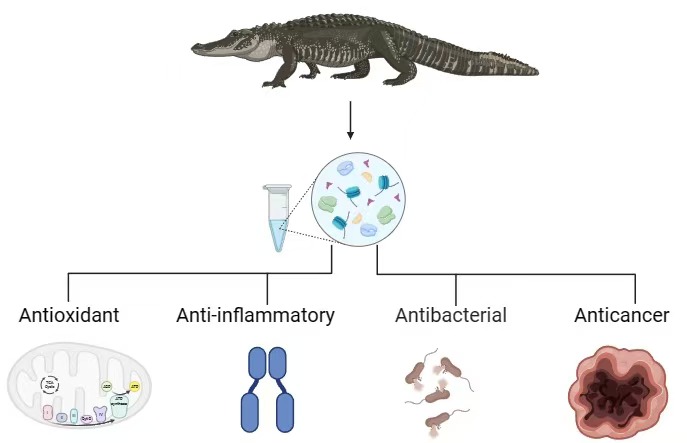
Bioactive peptides are a group of biological molecules derived from animals, plants, or microorganisms, which can naturally occur or be obtained through proteolytic cleavage of proteins. Increasingly, these peptides have been developed into functional foods, specialized medical foods, and pharmaceuticals. Crocodile-derived bioactive peptides have gained consumer favor over the past decade. In this review, we summarize the sources, the production methods, and the applications of these peptides including antibacterial, antioxidant, anti-aging, anti-tumor, and anti-inflammatory effects, and discuss the prospects for the future development of the crocodile peptide industry, which provides a reference for researchers interested in biomedicine, functional foods, bioactive peptides, and the crocodile industry.
Bioactive peptides are primarily isolated from diverse sources, including bacteria, fungi, plants, and animals. They typically consist of simple linear chains of amino acids, ranging from a few to several hundred residues, but some of them also exist in cyclic forms with more complex structures 1. Most bioactive peptides are considered specific protein fragments that offer health benefits to humans by exerting various biological activities, thereby contributing to overall wellness and potentially preventing diseases 2. Recognized as a new generation of bioactive regulators, these peptides play a crucial role in preventing food oxidation and enhancing disease management. Their unique properties make them valuable for promoting health and extending the shelf life of food products 3. They primarily affect the cardiovascular, nervous, digestive, and immune systems, with large dependent on the specific amino acid residues. Therefore, the study of the structure and function of various peptides is essential for promoting human health and enhancing immunity 4.
The crocodile is one of the oldest living species on Earth, appearing as early as 200 million years ago 5. A total of 23 species of crocodilians have been identified, divided into two families: Alligatoridae and Crocodylidae. The Alligatoridae family includes the genera Alligator, Caiman, Paleosuchus, and Melanosuchus, while Crocodylidae comprises Gavialis, Tomistoma, Mecistops, Osteolaemus, and Crocodylus, the largest genus with 11 species 6. Most crocodile species are found in Africa, Asia, North and South America, as well as in the humid, swampy tropical regions of Australia 7, 8. Crocodiles are fierce, egg-laying carnivores that feed on fish, waterfowl, deer, and other prey. Unfortunately, their wild populations have significantly declined due to habitat loss, hunting, and human persecution 5. They live for extended periods in bacteria-rich, murky environments often contaminated with heavy metals and frequently feed on carrion. Despite these harsh conditions, they rarely fall ill 9, leading to speculation that crocodiles may possess potent antibacterial properties.
In recent years, increasing attention has been directed toward studying the potential applications of materials derived from crocodiles. Substances obtained from crocodile organ lysates have demonstrated a range of bioactive properties, such as anti-amoebic 9, wound healing 10, treatment of anemia 11, antioxidant 12, anti-tumor 13, anti-inflammatory 14, anti-aging 15, and antibacterial effects 16. However, the use of crocodile-derived products is still in its early stages. This paper reviews recent advancements in research on crocodile peptides and the development of crocodile peptide-based products for medical and health applications.
The use of bioactive peptides has long been recognized as a promising strategy due to their favorable biosafety profiles and their medicinal and nutritional properties 17. Bioactive peptides are typically composed of multiple amino acid residues, many of which remain concealed within the intact protein structure 18. These peptides exhibit a range of biological effects, including blood pressure reduction, anti-obesity properties, wound healing, and antioxidant activity 19. Investigations in animal models have demonstrated the significant potential of these peptides as health-promoting agents in both food and pharmaceutical applications 20.
Bioactive peptides are typically obtained through various methods such as acid and alkaline hydrolysis, fermentation, chemical synthesis, genetic engineering, and enzymatic hydrolysis. Some peptides are redesigned based on existing proteins or enzymes 21. Fragments derived from hydrolyzed crocodile hemoglobin using hydrogen bromide exhibit antibacterial properties and promote wound healing 22. Acid-base hydrolysis involves breaking down proteins into peptide fragments. Under conventional acid hydrolysis conditions, the recovery rate of amino acids is often low, particularly for hydrophobic proteins. When sequencing these hydrophobic proteins, challenges arise due to their insolubility and the inaccessibility of chemical reagents to the hydrophobic regions 23. Heidelberg discovered that strong organic acids can effectively hydrolyze hydrophobic peptide bonds. A mixture of concentrated hydrochloric acid and trifluoroacetic acid, when used in the right proportions, was proved more efficient than conventional methods 24.
Chemical synthesis of polypeptides includes liquid and solid-phase methods 25. Solid-phase synthesis primarily utilizes Fmoc (9-fluorenylmethoxycarbonyl) and Boc (t-butyloxycarbonyl) strategies. In Boc synthesis, t-butyloxycarbonyl serves as the α-amino protection group, removable using trifluoroacetic acid (TFA), while benzyl alcohols are employed for side-chain protection 26. During synthesis, a Boc amino acid derivative is covalently attached to the resin. The Boc group is then removed using TFA, activating the free amino terminal with triethylamine and dicyclohexylcarbodiimide (DCC). Subsequently, the next amino acid is coupled, and finally, the protective groups are removed 27. The primary difference between Fmoc and Boc synthesis methods lies in the protective groups used. Fmoc serves as the α-amino protective group, which is removable by alkaline conditions. In Fmoc synthesis, side-chain protection is typically achieved using t-butyloxy groups, removable with TFA. Combining with 90% TFA, p-alkoxybenzyl alcohol resin has an excellent cleaved efficiency, avoid of the strong acid treatment 28. Advantages of the Fmoc method include convenience, speed, ease of automation, and the ability to synthesize longer peptides. Barksdale et al.,(2016) used the Fmoc chemical method to synthesize the known crocodile peptides 29. They successfully synthesized three new peptides—Apo5, Apo6, and A1P—using this method and concluded that these peptides exhibit strong in vitro activity against Staphylococcus aureus, Escherichia coli, Pseudomonas aeruginosa, and Acinetobacter baumannii.
Enzymatic hydrolysis is the most common method for producing bioactive peptides, involving the enzymatic cleavage of peptide bonds in protein molecules 30. This process breaks down proteins into smaller fragments and amino acids using appropriate proteases 31. The enzymatic hydrolysis process and its products are controllable and reproducible 32. Importantly, peptides derived from enzymatic hydrolysis do not diminish the nutritional value of the original protein. The reactions are highly specific and relatively mild, preserving both the nutritional value and functional properties of the resulting peptides 33. However, enzymatic hydrolysis also has disadvantages such as low efficiency and being time-consuming 34. Lueangsakulthai et al.,(2021) employed this method to obtain initial products by enzymatic hydrolysis of crocodile white blood cell extracts using trypsin and papain and they found the obtained peptides exhibited excellent antioxidant effects 35.
Fermentation is another method for preparing bioactive peptides by hydrolyzing substrate proteins using proteases produced by microorganisms 36. Microorganisms can produce a variety of complex enzymes during their metabolic processes, such as proteases that efficiently degrade substrate proteins 37.
The gene recombination expression method can also be used to produce target peptides. The DNA corresponding to some peptides can be introduced into a plasmid vector and then transformed into prokaryotic or eukaryotic strains for expression 38. This method has a strong expression orientation and a low production cost but posses challenges in extraction, purification, and gene expression research and development 39. Currently, no studies have used this method for the preparation of crocodile peptides.
Extraction and separation are critical steps in the development of the polypeptide industry. Common methods for extracting and separating polypeptides include salting out, ultrafiltration, gel filtration, isoelectric point precipitation, ion exchange chromatography, affinity chromatography, adsorption chromatography, and gel electrophoresis 40. These methods have been used to extract crocodile peptides 41. For example, extracts from crocodile liver were partially purified using ammonium sulfate precipitation to extract the target peptide 42. In this method, the protein is precipitated with ammonium sulfate, increasing the solubility of the globular protein after salt addition. However, whether through mechanical treatment or solvent-based extraction methods, cell homeostasis is inevitably disrupted, leading to potential protein degradation or instability 43. Kristinsson et al.,(2000) obtained peptides with antibacterial and antioxidant activities by acid-hydrolyzing crocodile white blood cell extracts 44. Their findings demonstrated that these peptides effectively inhibited the growth of various pathogenic bacteria while also exhibiting strong antioxidant properties, suggesting their potential applications in food preservation and health supplements. Further studies could explore the mechanisms underlying these activities and the peptides' efficacy in vivo 10.
Recent studies showed that crocodile peptides have a variety of biological activities, such as antibacterial, antioxidant, anti-aging, anti-tumor, and anti-inflammatory. (Figure 1)

Because crocodiles inhabit swampy areas rich in resilient microorganisms 9, an increasing number of antimicrobial peptides have been identified in these animals. The most typical antimicrobial peptides can destroy bacterial cell membranes, leading to cell death 45. To date, 45 potential antimicrobial peptides have been identified, among which 24 are categorized as cationic antimicrobial peptides 46 (Table 1).
APOC164–88~ A1P394–428 is the American Alligator(Alligator mississippiensis) Host Defense-Peptidome, The team evaluated the antibacterial effects of five peptides, all of which exhibited antibacterial activity against various bacteria Notably, the peptide APOC177-88 has demonstrated a significant activity against Pseudomonas aeruginosa. CATH1 to CATH6, derived from the Chinese alligator, are novel antimicrobial peptides exhibiting antibacterial and immunomodulatory effects. Peptides such as Am2HR to HBD3 have been synthesized or characterized from beta-defensins native to crocodiles. Among these, Am23SK monoisomers exhibit an extensive antibacterial activity against methicillin-resistant Staphylococcus aureus (MRSA), Salmonella typhimurium, Acinetobacter baumannii, and Enterobacter cloacae in vitro; concentrations of Am23SK can inhibit the OD₆₀₀ of planktonic bacteria by more than 90%. Additionally, peptides AM-CATH36, AM-CATH28, AM-CATH21, and NA-CATH, derived from the Mississippi alligator, have shown remarkable effects against Acinetobacter baumannii and Klebsiella pneumoniae.
This discovery helps explain the long life expectancy and low disease occurrence rates observed in crocodiles, despite their exposure to bacteria-rich environments. Generally, these peptides are characterized by a high biological activity, a low toxicity, and a high specificity 47.
Another natural group of peptides is the host defense peptides, components of the crocodile's innate immune system. These peptides directly combat invading microbial pathogens and play a crucial role in promoting and regulating host immunity 48. They are characterized by a powerful, a broad-spectrum, and a rapid bacteriostatic activity, and are unlikely to induce bacterial drug resistance.
Crocodiles possess a robust immune system, and extracts from their plasma and white blood cells exhibit broad-spectrum antibacterial effects 49. It is thought that cationic antimicrobial peptides are the active components responsible for this antibacterial activity 50. The cationic antibiotics cOT2 and sOT2 in crocodiles have been extended through their amino acid sequences to form new peptides, which have demonstrated destructive effects on intact bacterial cells 16. These two peptides were isolated from reptile egg transferrin via chromatographic purification and characterized using mass spectrometry and N-terminal sequencing. To enhance antibacterial efficacy, two new peptides cOT2(+6) and sOT2(+5) were designed and synthesized by extending the primary amino acid sequences of cOT1 and sOT1. cOT2 and sOT2 can induce various morphological changes in bacterial cells, with these effects increasing at higher peptide concentrations. Additionally, Kommanee et al.,(2007) purified an antibacterial substance, a lysozyme-like protein, from crocodile white blood cell extracts. They found that this substance exhibited antibacterial activity against Pseudomonas aeruginosa ATCC 2785 and Vibrio cholera 51. Another study demonstrated the antibacterial and bactericidal effects of undiluted crocodile plasma against both Gram-positive and Gram-negative bacteria 52. Crocodiles also possess an innate immune component known as β-defensin. Researchers synthesized and characterized this peptide, and the results indicated that the newly formed peptides exhibit antibacterial activities against Salmonella typhi, Staphylococcus aureus, and other pathogens 53. Crocodile defensin CpoBD13 exhibits potent antifungal activity mediated by pH-dependent membrane targeting 54. It is the most abundant and widely expressed β-defensin among all vertebrates, capable of directly targeting negatively charged phospholipids. Li et al.,(2023) investigated the antibacterial mechanism of Alligator sinensis cathelicidins against Gram-negative bacteria. Through molecular dynamics simulations, it was found that the infiltration of AS4 hydrophobic residues into the bacterial membrane disrupted lipid accumulation, causing an imbalance in tension between the two leaflets and ultimately leading to the destruction of the membrane structure 55.
To enhance antimicrobial activity, the proposed RN15 peptide was modified. They employed template and physicochemical methods to design antimicrobial peptides and predicted RN15 derivative peptides through structural modeling, assessments of antimicrobial potency, and peptide-membrane calculations. The bacteriostatic and cytotoxic activities of the candidate peptides were investigated, the results indicating that the modified peptide exhibited a low minimum inhibitory concentration for most bacteria and fungi 56. Many potential compounds derived from crocodiles can be developed into new antibacterial drugs. The ongoing discovery and synthesis of novel antimicrobial peptides pave the way for practical applications in biological and medical fields, while also addressing issues associated with antibiotic overuse.
3.2. Anti-oxidant and Anti-agingOxidation reactions produce free radicals that can cause cell damage or death; antioxidants inhibit these reactions and play significant roles in food preservation and clinical applications 57. Scientists have analyzed crocodile whole blood and isolated two short peptides that exhibited antioxidant activity 58. Further experiments involving DPPH free radical scavenging, lipid peroxidation inhibition, and reducing capacity demonstrated that crocodile white blood cell extracts have a significant potential for developing antioxidant drugs 59. These peptides were hydrolyzed using papain and tested for antioxidant activity, revealing a high reducing capacity 34. These studies have significantly contributed to the clinical application of treatments for oxidative stress-related diseases.
Antioxidant properties are closely linked to anti-aging effects, as aging represents an imbalance between the damage caused by reactive oxygen species and the body's antioxidant defenses 60. Crocodiles are long-lived reptiles 61; therefore, researchers have explored whether the secrets of their longevity can be found in crocodile-derived substances. Li et al.,(2021) conducted a study on this issue 15. They hydrolyzed crocodile meat using the Maillard reaction to obtain glycosylated peptides and tested their anti-aging effects using a fruit fly model. Although relevant studies on the anti-aging properties of crocodile peptides are limited and more in-depth research is needed, crocodile peptides hold great potential for anti-aging drug research.
3.3. Anti-tumor effectCrocodiles live in harsh environments often contaminated with heavy metals, yet no cases of crocodile cancer have been reported, suggesting a strong immune system 62. This makes crocodiles a promising subject for cancer research 63. Based on this, numerous studies have identified around 100 peptides with potential anti-tumor properties, including the toxic effects of crocodile serum on cervical, breast, and prostate cancer cells 64.
The antitumor activity of crocodile white blood cell extract was evaluated in HeLa cells, and found that these extracts could induce HeLa cell apoptosis through both Caspase-dependent and independent pathways. Later, Maraming et al.,(2018) discovered the -RT2 peptide from crocodile white blood cells, which exhibited anti-tumor effects on human colon cancer xenotransplants in nude mice and induced apoptosis in human cervical cancer cells 65. It was also extracted another active peptide, KT2, which could internalize through plasma membranes, alter cell morphology, and inhibit human melanoma cells by partially blocking the FAK pathway. Crocodile-derived choline also showed a promise, reducing cyclin expression, arresting the cell cycle in the G2/M phase, and accelerating apoptosis via the mitochondrial pathway. It has shown a particular efficacy against human gastric cancer cells, suggesting a novel treatment approach 66. Additionally, crocodile organ lysates demonstrated antitumor activity against prostate cancer cells, killing more than 60% of PC-3 cells 67. These findings highlight the potential of crocodile peptides in cancer research. With cancer impacting countless families, developing anticancer drugs from these peptides could provide substantial societal benefits.
In a study by Siddiqui et al.,(2021), crocodile serum and heart lysate had up to a 70% mortality rate against prostate cancer cells. However, they did not exhibit any toxic effects on mammalian cells 63. The KT2 and RT2 cationic antimicrobial peptides found in crocodiles were lethal to colon cancer HCT-116 cells, but the cell viability assay showed no toxic effects on non-cancerous Vero cells. Other studies also indicated that crocodile antimicrobial peptides show low cytotoxicity to macrophage cell lines. Collectively, these results indicate that crocodile peptides are weakly toxic to normal cells but toxic to cancer cells.
3.4. Anti-inflammatoryInflammation is a physiological immune response caused by inflammatory factors that plays a restorative role during infection and injury 68. Anti-inflammatory drugs are used to reduce inflammation or swelling and alleviate pain. Over time, many studies have examined the anti-inflammatory effects of crocodile peptides.
The basic mechanism of anti-inflammatory activity of crocodile hemoglobin was elucidated in many studies. When RAW264.7 cells were stimulated with LPS, crocodile hemoglobin treatment made nitric oxide (NO) production decrease, indicating that crocodile hemoglobin has anti-inflammatory activity 69. Some scientists suggest that crocodiles' ability to survive in harsh environments may be influenced by their unique gut microbiota. Siddiqui et al.,(2023) isolated a strain from the intestinal tract of crocodiles, which showed a significant inhibitory effect on nitric oxide production, potentially offering a new therapeutic approach for intestinal diseases 70.
Crocodile peptides show significant potential with diverse effects. However, there are limited relevant studies, possibly because (1) artificial breeding of crocodiles is uncommon, and wild crocodiles are difficult to obtain, (2) studying crocodiles is costly, and (3) some crocodile species are endangered. More investigations are needed before clinical applications, including the effects on the human body, routes of administration, effective doses, and so on.
Active components of crocodile peptides have been extracted from white blood cells, organ lysates, hemoglobin, meat hydrolysates, and reprocessed peptides. Exploring the mechanisms of action and interaction with the human body can yield valuable insights. Current studies suggest that crocodile peptides have antibacterial effects by damaging cell membranes, but the specific target remains unknown. Additionally, studies on RT2 have included animal experiments, but other peptides have only been studied at the cellular level, with no animal experiments.
Crocodile peptide products, such as functional food, dietary supplements, and drinks, are already marketed. However, the relative effectiveness of crocodile peptide products remains uncertain. Studies have demonstrated that crocodile peptides have antimicrobial, antioxidant, anticancer or anti-aging effects, but most of the studies are at the in vitro experimental stage, and further mechanistic studies are needed to confirm the specificity of their biological functions.
Crocodile peptides are widely distributed throughout crocodiles and exhibit antibacterial, antioxidant, anti-aging, anti-cancer, and anti-inflammatory properties, all while being non-toxic to normal mammalian cells. They are also abundant and can be sourced in large quantities, making them more accessible for extensive experimentation compared to other valuable biological samples.
Identifying the active components of crocodile peptides, along with conducting further animal testing, is vital for their development as therapeutic drugs. Given their promising biological activities, crocodile peptides represent a potentially effective solution for addressing various health issues. Continued research into their mechanisms of action, optimal dosages, and delivery methods is essential for translating these findings into clinical applications, paving the way for novel medical treatments.
This article is based on studies published in English-language journals available in PubMed and Google Scholar as of December 2023. The following keywords were used to search for studies on crocodile peptides: "crocodile peptides," "antibacterial," "antioxidant," "anti-aging," "anti-tumor," "anti-cancer," and "anti-inflammatory," among others. Other relevant information was gathered according to the theme to fill the knowledge gap in crocodile peptide-related research.
This study is supported by Open Project Funding of the Key Laboratory of Fermentation Engineering (Ministry of Education, Hubei, China, grant No.202409FE19) to C. Yao, the Collaborative Grant-in-Aid of the HBUT National "111" Center for Cellular Regulation to C. Yao. Writting, Jiangning Yan; editing, Chenguang Yao, Mengting Wu, and Zi Xiong; conceptualization and supervision, Chenguang Yao; methodology, Jiangning Yan, Zi Xiong and Mengting Wu; writing the initial draft of the manuscript, Jiangning Yan; revisions and suggestions for manuscripts, Youzhen Chen; project administration, Chenguang Yao; funding acquisition, Chenguang Yao.
The authors declare that they have no competing interests, and all authors confirm its accuracy.
| [1] | Gill I, López-Fandiño R, Jorba X, Vulfson EN, Biologically active peptides and enzymatic approaches to their production, Enzyme and Microbial Technology, 1996, 162-183. | ||
| In article | View Article PubMed | ||
| [2] | Kitts, DD and Weiler K, Bioactive proteins and peptides from food sources, Applications of bioprocesses used in isolation and recovery. Current pharmaceutical design, 2003, 1309-1323. | ||
| In article | View Article PubMed | ||
| [3] | Fields K, Falla TJ, Rodan K, Bush L, Bioactive peptides: signaling the future, Journal of cosmetic dermatology, 2009, 8-13. | ||
| In article | View Article PubMed | ||
| [4] | Korhonen H and Pihlanto A, Bioactive peptides: Production and functionality, International dairy journal, 2006, 945-960. | ||
| In article | View Article | ||
| [5] | Fleming GJ, Crocodilian anesthesia, Veterinary clinics of North America: exotic animal practice, 2001, 119-145. | ||
| In article | View Article PubMed | ||
| [6] | Meganathan PR, Dubey B, Batzer MA, Ray DA, Haque I, Complete mitochondrial genome sequences of three Crocodylus species and their comparison within the Order Crocodylia, Gene, 2011, 35-41. | ||
| In article | View Article PubMed | ||
| [7] | Chen K, Wu M, Zhang Y, Zhang F, Wang H, Liang J, Yan P, Li E, Yao L, Xu J, Wu X, Two introduced crocodile species had changed reproductive characteristics in China, Animal reproduction science, 2018, 150-159. | ||
| In article | View Article PubMed | ||
| [8] | Milián-García Y, Amato G, Gatesy J, Hekkala E, Rossi N, Russello M, Phylogenomics reveals novel relationships among Neotropical crocodiles (Crocodylus spp.), Molecular Phylogenetics and Evolution, 2020, 106924. | ||
| In article | View Article PubMed | ||
| [9] | Siddiqui R, Jeyamogan S, Ali SM, Abbas F, Sagathevan KA, Khan NA, Crocodiles and alligators: Antiamoebic and antitumor compounds of crocodiles, Experimental parasitology, 2017, 194-200. | ||
| In article | View Article PubMed | ||
| [10] | Pakdeesuwan A, Araki T, Daduang S, Payoungkiattikun W, Jangpromma N, Klaynongsruang S, In vivo wound healing activity of crocodile (Crocodylus siamensis) hemoglobin and evaluation of antibacterial and antioxidant properties of hemoglobin and hemoglobin hydrolysate, Journal of Microbiology and Biotechnology, 2017, 26-35. | ||
| In article | View Article PubMed | ||
| [11] | Chook CYB, Chen FM, Leung FP, Chen ZY, Wong WT, Potential of crocodile blood as a medication and dietary supplement: A systemic review, Clinical and Experimental Pharmacology and Physiology, 2021, 1043-1058. | ||
| In article | View Article PubMed | ||
| [12] | Lueangsakulthai J, Phosri S, Theansungnoen T, Jangpromma N, Temsiripong T, Mckendrick JE, Khunkitti W, Klaynongsruang S, Novel antioxidant and anti‐inflammatory peptides from the Siamese crocodile (Crocodylus siamensis) hemoglobin hydrolysate, Biotechnology and Applied Biochemistry, 2018, 455-466. | ||
| In article | View Article PubMed | ||
| [13] | Maraming P, Klaynongsruang S, Boonsiri P, Peng SF, Daduang S, Rungsa P, Tavichakorntrakool R, Chung JG, Daduang J, Anti-metastatic effects of cationic KT2 Peptide (a lysine/tryptophan-rich peptide) on human melanoma A375. S2 cells, In vivo, 2021, 215-227. | ||
| In article | View Article PubMed | ||
| [14] | Jangpromma N, Poolperm N, Pornsri K, Anwised P, Proteomics profiling and inflammatory factor gene expression in LPS-stimulated RAW 264.7 cells treated with Crocodylus siamensis hemoglobin, Chiang Mai J Sci, 2017, 800-815. | ||
| In article | |||
| [15] | Li Y, Hu D, Huang J, Wang S, Glycated peptides obtained from cultured crocodile meat hydrolysates via Maillard reaction and the anti-aging effects on Drosophila in vivo, Food and Chemical Toxicology, 2021, 112376. | ||
| In article | View Article PubMed | ||
| [16] | Prajanban BO, Jangpromma N, Araki T, Klaynongsruang S, Antimicrobial effects of novel peptides cOT2 and sOT2 derived from Crocodylus siamensis and Pelodiscus sinensis ovotransferrins, Biochimica et Biophysica Acta (BBA)-Biomembranes, 2017, 860-869. | ||
| In article | View Article PubMed | ||
| [17] | Bhandari D, Rafiq S, Gat Y, Gat P, Waghmare R, Kumar V, A review on bioactive peptides: Physiological functions, bioavailability and safety, International Journal of Peptide Research and Therapeutics, 2020, 139-150. | ||
| In article | View Article | ||
| [18] | Daliri EB, Oh DH, Lee BH. Bioactive peptides, Foods, 2017, 32. | ||
| In article | View Article PubMed | ||
| [19] | Ranathunga S, Rajapakse N, Kim SK, Purification and characterization of antioxidative peptide derived from muscle of conger eel (Conger myriaster), European Food Research and Technology, 2006, 310-315. | ||
| In article | View Article | ||
| [20] | Akbarian M, Khani A, Eghbalpour S, Uversky VN, Bioactive peptides: Synthesis, sources, applications, and proposed mechanisms of action, International journal of molecular sciences, 2022, 1445. | ||
| In article | View Article PubMed | ||
| [21] | Sharma P, Kaur H, Kehinde BA, Chhikara N, Shama D, Panghal A, Food-derived anticancer peptides: a review, International Journal of Peptide Research and Therapeutics, 2021, 55-70. | ||
| In article | View Article | ||
| [22] | Gonzalez AC, Costa TF, Andrade ZA, Medrado AR, Wound healing-A literature review, Anais brasileiros de dermatologia, 2016, 614-620. | ||
| In article | View Article PubMed | ||
| [23] | Ida S, Morita Y, Studies on Respiratory Enzymes in Rice Kernel: Part VII. Purification of an Acidic Flavoprotein, Glutathione Reductase, from Rice EmbryosPart VIII. Enzymatic Properties and Physical and Chemical Characterization of Glutathione Reductase from Rice Embryos, Agricultural and Biological Chemistry, 1971, 1542-1557. | ||
| In article | View Article | ||
| [24] | Tsugita A, Scheffler JJ, A new rapid method for acid hydrolysis of protein, Proceedings of the Japan Academy, Series B, 1982, 1-4. | ||
| In article | View Article | ||
| [25] | Jung G, Beck‐Sickinger AG, Multiple peptide synthesis methods and their applications, New synthetic methods (87), Angewandte Chemie International Edition in English, 1992, 367-383. | ||
| In article | View Article | ||
| [26] | Chan W, White P, Fmoc solid phase peptide synthesis: a practical approach, Vol. 222. 1999: OUP Oxford. | ||
| In article | View Article | ||
| [27] | Ananda K, Gopi H, Suresh BV, Convenient and efficient synthesis of Boc‐/Z‐/Fmoc‐β‐amino acids employingN‐protected α-amino acid fluorides, The Journal of Peptide Research, 2000, 289-294. | ||
| In article | View Article PubMed | ||
| [28] | Behrendt R, White P, Offer J, Advances in Fmoc solid‐phase peptide synthesis, Journal of Peptide Science, 2016, 4-27. | ||
| In article | View Article PubMed | ||
| [29] | Barksdale SM, Hrifko EJ, Chung EM, van Hoek ML, Peptides from American alligator plasma are antimicrobial against multi-drug resistant bacterial pathogens including Acinetobacter baumannii, BMC microbiology, 2016, 1-14. | ||
| In article | View Article PubMed | ||
| [30] | Nongonierma AB, FitzGerald RJ, Enhancing bioactive peptide release and identification using targeted enzymatic hydrolysis of milk proteins, Analytical and bioanalytical chemistry, 2018, 3407-3423. | ||
| In article | View Article PubMed | ||
| [31] | Gauthier SF, Pouliot Y, Saint-Sauveur D, Immunomodulatory peptides obtained by the enzymatic hydrolysis of whey proteins, International dairy journal, 2006, 1315-1323. | ||
| In article | View Article | ||
| [32] | Navarrete del Toro MA, García‐Carreño FL, Evaluation of the progress of protein hydrolysis, Current protocols in food analytical chemistry, 2003, B2. 2.1-B2. 2.14. | ||
| In article | View Article | ||
| [33] | Je JY, Qian ZJ, Byun HG, Kim SK, Purification and characterization of an antioxidant peptide obtained from tuna backbone protein by enzymatic hydrolysis, Process Biochemistry, 2007, 840-846. | ||
| In article | View Article | ||
| [34] | Lueangsakulthai J, Michael N, Temsiripong T, Khunkitti W, Klaynongsruang S, Jangpromma N, Antioxidant and Anti-inflammatory Activities of the Siamese Crocodile (Crocodylus siamensis) Hemoglobin Hydrolysate Derived from Trypsin and Papain Hydrolysis, Chiang Mai J Sci, 2019, 915-929. | ||
| In article | |||
| [35] | Cruz-Casas DE, Aguilar CN, Ascacio-Valdés JA, Rodríguez-Herrera R, Chávez-González ML, Flores-Gallegos AC, Enzymatic hydrolysis and microbial fermentation: The most favorable biotechnological methods for the release of bioactive peptides, Food Chemistry: Molecular Sciences, 2021, 100047. | ||
| In article | View Article PubMed | ||
| [36] | Chai KF, Voo AYH, Chen WN, Bioactive peptides from food fermentation: A comprehensive review of their sources, bioactivities, applications, and future development, Comprehensive Reviews in Food Science and Food Safety, 2020, 3825-3885. | ||
| In article | View Article PubMed | ||
| [37] | Vallabha VS, Tiku PK, Antihypertensive peptides derived from soy protein by fermentation, International Journal of Peptide Research and Therapeutics, 2014, 161-168. | ||
| In article | View Article | ||
| [38] | Flaschel E, Friehs K, Improvement of downstream processing of recombinant proteins by means of genetic engineering methods, Biotechnology advances, 1993, 31-77. | ||
| In article | View Article PubMed | ||
| [39] | Mackay M, Delivery of recombinant peptide and protein drugs, Biotechnology and Genetic Engineering Reviews, 1990, 251-278. | ||
| In article | View Article PubMed | ||
| [40] | Aristoteli LP, Molloy MP, Baker MS, Evaluation of endogenous plasma peptide extraction methods for mass spectrometric biomarker discovery, Journal of proteome research, 2007, 571-581. | ||
| In article | View Article PubMed | ||
| [41] | Anwised P, Suttee K, Mahakunakorn P, Klaynongsruang S, Crocodylus siamensis Liver Extracts Exhibit Antimicrobial Activity and Induce Phagocytic Activity in Macrophage Cells, Indian Journal of Pharmaceutical Sciences, 2022, 84(1). | ||
| In article | View Article | ||
| [42] | Wingfield P, Protein precipitation using ammonium sulfate, Current protocols in protein science, 1998, A. 3F. 1-A. 3F. 8. | ||
| In article | View Article PubMed | ||
| [43] | Kawashima Y, Fukutomi T, Tomonaga T, Takahashi H, Nomura F, Maeda T, Kodera Y, High-yield peptide-extraction method for the discovery of subnanomolar biomarkers from small serum samples, Journal of proteome research, 2010, 1694-1705. | ||
| In article | View Article PubMed | ||
| [44] | Kristinsson HG, Rasco BA, Fish protein hydrolysates: production, biochemical, and functional properties, Critical reviews in food science and nutrition, 2000, 43-81. | ||
| In article | View Article PubMed | ||
| [45] | Chen Y, Cai S, Qiao X, Wu M, Guo Z, Wang R, Kuang YQ, Yu H, Wang Y, As-CATH1–6, novel cathelicidins with potent antimicrobial and immunomodulatory properties from Alligator sinensis, play pivotal roles in host antimicrobial immune responses, Biochemical Journal, 2017, 2861-2885. | ||
| In article | View Article PubMed | ||
| [46] | Bishop BM, Juba ML, Devine MC, Barksdale SM, Rodriguez CA, Chung MC, Russo PS, Vliet KA, Schnur JM, van Hoek ML, Bioprospecting the American alligator (Alligator mississippiensis) host defense peptidome, PLoS One, 2015, e0117394. | ||
| In article | View Article PubMed | ||
| [47] | Sun YJ, Chang R, Li QY, Li BS, Isolation and characterization of an antibacterial peptide from protein hydrolysates of Spirulina platensis, European Food Research and Technology, 2016, 685-692. | ||
| In article | View Article | ||
| [48] | Guo Z, Qiao X, Cheng R, Shi N, Wang A, Feng T, Chen Y, Zhang F, Yu H, Wang Y, As-CATH4 and 5, two vertebrate-derived natural host defense peptides, enhance the immuno-resistance efficiency against bacterial infections in Chinese mitten crab, Eriocheir sinensis, Fish & Shellfish Immunology, 2017, 202-209. | ||
| In article | View Article PubMed | ||
| [49] | Leelawongtawon R, Siruntawineti J, Chaeychomsri W, Sattaponpan C, Antibacterial and antifungal activities from Siamese crocodile blood, J Med Assoc Thai, 2010, S58-64. | ||
| In article | |||
| [50] | Barksdale SM, Hrifko EJ, Van Hoek ML, Cathelicidin antimicrobial peptide from Alligator mississippiensis has antibacterial activity against multi-drug resistant Acinetobacter baumanii and Klebsiella pneumoniae, Developmental & Comparative Immunology, 2017, 135-144. | ||
| In article | View Article PubMed | ||
| [51] | Pata1 S, Daduang S, Svasti J, Thammasirirak S, Isolation of Lysozyme like protein from crocodile leukocyte extract (Crocodylus siamensis), Current Applied Science and Technology, 2007, 70-85. | ||
| In article | |||
| [52] | Kommanee J, Preecharram S, Daduang S, Temsiripong Y, Dhiravisit A, Yamada Y, Thammasirirak S, Antibacterial activity of plasma from crocodile (Crocodylus siamensis) against pathogenic bacteria, Annals of Clinical Microbiology and Antimicrobials, 2012, 1-8. | ||
| In article | View Article PubMed | ||
| [53] | Santana FL, Arenas I, Haney EF, Estrada K, Hancock REW, Corzo G, Identification of a crocodylian β-defensin variant from Alligator mississippiensis with antimicrobial and antibiofilm activity, Peptides, 2021, 170549. | ||
| In article | View Article PubMed | ||
| [54] | Williams SA, Lay FT, Bindra GK, Banjara S, Poon IKH, Phan TK, Kvansakul M, Hulett MD, Crocodile defensin (CpoBD13) antifungal activity via pH-dependent phospholipid targeting and membrane disruption, Nature Communications, 2023, 1170. | ||
| In article | View Article PubMed | ||
| [55] | Li X, Fu L, Zhang S, Wang Y, Gao L, How Alligator Immune Peptides Kill Gram-Negative Bacteria: A Lipid-Scrambling, Squeezing, and Extracting Mechanism Revealed by Theoretical Simulations, International Journal of Molecular Sciences, 2023, 10962. | ||
| In article | View Article PubMed | ||
| [56] | Jangpromma N, Konkchaiyaphum M, Punpad A, Sosiangdi S, Daduang S, Klaynongsruang S, Tankrathok A, Rational design of RN15m4 cathelin domain-based peptides from Siamese Crocodile cathelicidin improves antimicrobial activity, Applied Biochemistry and Biotechnology, 2023, 1096-1108. | ||
| In article | View Article PubMed | ||
| [57] | Shahidi F, Zhong Y, Measurement of antioxidant activity, Journal of functional foods, 2015, 757-781. | ||
| In article | View Article | ||
| [58] | Sujiwattanarat P, Pongsanarakul P, Temsiripong Y, Temsiripong T, Thawornkuno C, Uno Y, Unajak S, Matsuda Y, Choowongkomon K, Srikulnath K, Molecular cloning and characterization of Siamese crocodile (Crocodylus siamensis) copper, zinc superoxide dismutase (CSI-Cu, Zn-SOD) gene, Comparative Biochemistry and Physiology Part A: Molecular & Integrative Physiology, 2016, 187-195. | ||
| In article | View Article PubMed | ||
| [59] | Theansungnoen T, Yaraksa N, Daduang S, Dhiravisit A, Thammasirirak S. Purification and characterization of antioxidant peptides from leukocyte extract of Crocodylus siamensis. Protein J. 2014 Feb; 33(1): 24-31. | ||
| In article | View Article PubMed | ||
| [60] | Bjørklund G, Shanaida M, Lysiuk R, Antonyak H, Klishch I, Shanaida V, Peana M, Selenium: an antioxidant with a critical role in anti-aging, Molecules, 2022, 6613. | ||
| In article | View Article PubMed | ||
| [61] | Briggs-Gonzalez V, Bonenfant C, Basille M, Cherkiss M, Beauchamp J, Mazzotti F, Life histories and conservation of long-lived reptiles, an illustration with the American crocodile (Crocodylus acutus), Journal of Animal Ecology, 2017, 1102-1113. | ||
| In article | View Article PubMed | ||
| [62] | Khan NA, Soopramanien M, Siddiqui R, Crocodiles and alligators: physicians’ answer to cancer? Current oncology, 2019, 186. | ||
| In article | View Article PubMed | ||
| [63] | Wang L, Dong C, Li X, Han W, Su X, Anticancer potential of bioactive peptides from animal sources, Oncology reports, 2017, 637-651. | ||
| In article | View Article PubMed | ||
| [64] | Siddiqui R, Maciver S, Elmoselhi A, Soares NC, Khan NA, Longevity, cellular senescence and the gut microbiome: Lessons to be learned from crocodiles, Heliyon, 2021. 7(12). | ||
| In article | View Article PubMed | ||
| [65] | Maraming P, Klaynongsruang S, Boonsiri P, Maijaroen S, Daduang S, Chung JG, Daduang J. Antitumor activity of RT2 peptide derived from crocodile leukocyte peptide on human colon cancer xenografts in nude mice, Environmental toxicology, 2018, 972-977. | ||
| In article | View Article PubMed | ||
| [66] | Mao XM, Fu QR, Li HL, Zheng YH, Chen SM, Hu XY, Chen QX, Chen QH, Crocodile choline from Crocodylus siamensis induces apoptosis of human gastric cancer, Tumor Biology, 2017, 1010428317694320. | ||
| In article | View Article PubMed | ||
| [67] | Jeyamogan S, Khan NA, Siddiqui R, Animals living in polluted environments are a potential source of anti-tumor molecule (s), Cancer Chemotherapy and Pharmacology, 2017, 919-924. | ||
| In article | View Article PubMed | ||
| [68] | 68.García-Moreno PJ, Espejo-Carpio FJ, Guadix A, Guadix EM, Peptides and protein hydrolysates exhibiting anti-inflammatory activity: Sources, structural features and modulation mechanisms, Food & Function, 2022, 12510-12540. | ||
| In article | View Article PubMed | ||
| [69] | Phosri S, Jangpromma N, Patramanon R, Kongyingyoes B, Mahakunakorn P, Klaynongsruang S, Protective effect of crocodile hemoglobin and whole blood against hydrogen peroxide-induced oxidative damage in human lung fibroblasts (MRC-5) and inflammation in mice, Inflammation, 2017, 205-220. | ||
| In article | View Article PubMed | ||
| [70] | Siddiqui R, Akbar N, Maciver SK, Alharbi AM, Alfahemi H, Khan NA, Gut microbiome of Crocodylus porosus and cellular stress: inhibition of nitric oxide, interleukin 1-beta, tumor necrosis factor-alpha, and prostaglandin E2 in cerebrovascular endothelial cells, Archives of Microbiology, 2023, 344. | ||
| In article | View Article PubMed | ||
Published with license by Science and Education Publishing, Copyright © 2025 Jiangning Yan, Zi Xiong, Mengting Wu, Youzhen Chen and Chenguang Yao
 This work is licensed under a Creative Commons Attribution 4.0 International License. To view a copy of this license, visit
http://creativecommons.org/licenses/by/4.0/
This work is licensed under a Creative Commons Attribution 4.0 International License. To view a copy of this license, visit
http://creativecommons.org/licenses/by/4.0/
| [1] | Gill I, López-Fandiño R, Jorba X, Vulfson EN, Biologically active peptides and enzymatic approaches to their production, Enzyme and Microbial Technology, 1996, 162-183. | ||
| In article | View Article PubMed | ||
| [2] | Kitts, DD and Weiler K, Bioactive proteins and peptides from food sources, Applications of bioprocesses used in isolation and recovery. Current pharmaceutical design, 2003, 1309-1323. | ||
| In article | View Article PubMed | ||
| [3] | Fields K, Falla TJ, Rodan K, Bush L, Bioactive peptides: signaling the future, Journal of cosmetic dermatology, 2009, 8-13. | ||
| In article | View Article PubMed | ||
| [4] | Korhonen H and Pihlanto A, Bioactive peptides: Production and functionality, International dairy journal, 2006, 945-960. | ||
| In article | View Article | ||
| [5] | Fleming GJ, Crocodilian anesthesia, Veterinary clinics of North America: exotic animal practice, 2001, 119-145. | ||
| In article | View Article PubMed | ||
| [6] | Meganathan PR, Dubey B, Batzer MA, Ray DA, Haque I, Complete mitochondrial genome sequences of three Crocodylus species and their comparison within the Order Crocodylia, Gene, 2011, 35-41. | ||
| In article | View Article PubMed | ||
| [7] | Chen K, Wu M, Zhang Y, Zhang F, Wang H, Liang J, Yan P, Li E, Yao L, Xu J, Wu X, Two introduced crocodile species had changed reproductive characteristics in China, Animal reproduction science, 2018, 150-159. | ||
| In article | View Article PubMed | ||
| [8] | Milián-García Y, Amato G, Gatesy J, Hekkala E, Rossi N, Russello M, Phylogenomics reveals novel relationships among Neotropical crocodiles (Crocodylus spp.), Molecular Phylogenetics and Evolution, 2020, 106924. | ||
| In article | View Article PubMed | ||
| [9] | Siddiqui R, Jeyamogan S, Ali SM, Abbas F, Sagathevan KA, Khan NA, Crocodiles and alligators: Antiamoebic and antitumor compounds of crocodiles, Experimental parasitology, 2017, 194-200. | ||
| In article | View Article PubMed | ||
| [10] | Pakdeesuwan A, Araki T, Daduang S, Payoungkiattikun W, Jangpromma N, Klaynongsruang S, In vivo wound healing activity of crocodile (Crocodylus siamensis) hemoglobin and evaluation of antibacterial and antioxidant properties of hemoglobin and hemoglobin hydrolysate, Journal of Microbiology and Biotechnology, 2017, 26-35. | ||
| In article | View Article PubMed | ||
| [11] | Chook CYB, Chen FM, Leung FP, Chen ZY, Wong WT, Potential of crocodile blood as a medication and dietary supplement: A systemic review, Clinical and Experimental Pharmacology and Physiology, 2021, 1043-1058. | ||
| In article | View Article PubMed | ||
| [12] | Lueangsakulthai J, Phosri S, Theansungnoen T, Jangpromma N, Temsiripong T, Mckendrick JE, Khunkitti W, Klaynongsruang S, Novel antioxidant and anti‐inflammatory peptides from the Siamese crocodile (Crocodylus siamensis) hemoglobin hydrolysate, Biotechnology and Applied Biochemistry, 2018, 455-466. | ||
| In article | View Article PubMed | ||
| [13] | Maraming P, Klaynongsruang S, Boonsiri P, Peng SF, Daduang S, Rungsa P, Tavichakorntrakool R, Chung JG, Daduang J, Anti-metastatic effects of cationic KT2 Peptide (a lysine/tryptophan-rich peptide) on human melanoma A375. S2 cells, In vivo, 2021, 215-227. | ||
| In article | View Article PubMed | ||
| [14] | Jangpromma N, Poolperm N, Pornsri K, Anwised P, Proteomics profiling and inflammatory factor gene expression in LPS-stimulated RAW 264.7 cells treated with Crocodylus siamensis hemoglobin, Chiang Mai J Sci, 2017, 800-815. | ||
| In article | |||
| [15] | Li Y, Hu D, Huang J, Wang S, Glycated peptides obtained from cultured crocodile meat hydrolysates via Maillard reaction and the anti-aging effects on Drosophila in vivo, Food and Chemical Toxicology, 2021, 112376. | ||
| In article | View Article PubMed | ||
| [16] | Prajanban BO, Jangpromma N, Araki T, Klaynongsruang S, Antimicrobial effects of novel peptides cOT2 and sOT2 derived from Crocodylus siamensis and Pelodiscus sinensis ovotransferrins, Biochimica et Biophysica Acta (BBA)-Biomembranes, 2017, 860-869. | ||
| In article | View Article PubMed | ||
| [17] | Bhandari D, Rafiq S, Gat Y, Gat P, Waghmare R, Kumar V, A review on bioactive peptides: Physiological functions, bioavailability and safety, International Journal of Peptide Research and Therapeutics, 2020, 139-150. | ||
| In article | View Article | ||
| [18] | Daliri EB, Oh DH, Lee BH. Bioactive peptides, Foods, 2017, 32. | ||
| In article | View Article PubMed | ||
| [19] | Ranathunga S, Rajapakse N, Kim SK, Purification and characterization of antioxidative peptide derived from muscle of conger eel (Conger myriaster), European Food Research and Technology, 2006, 310-315. | ||
| In article | View Article | ||
| [20] | Akbarian M, Khani A, Eghbalpour S, Uversky VN, Bioactive peptides: Synthesis, sources, applications, and proposed mechanisms of action, International journal of molecular sciences, 2022, 1445. | ||
| In article | View Article PubMed | ||
| [21] | Sharma P, Kaur H, Kehinde BA, Chhikara N, Shama D, Panghal A, Food-derived anticancer peptides: a review, International Journal of Peptide Research and Therapeutics, 2021, 55-70. | ||
| In article | View Article | ||
| [22] | Gonzalez AC, Costa TF, Andrade ZA, Medrado AR, Wound healing-A literature review, Anais brasileiros de dermatologia, 2016, 614-620. | ||
| In article | View Article PubMed | ||
| [23] | Ida S, Morita Y, Studies on Respiratory Enzymes in Rice Kernel: Part VII. Purification of an Acidic Flavoprotein, Glutathione Reductase, from Rice EmbryosPart VIII. Enzymatic Properties and Physical and Chemical Characterization of Glutathione Reductase from Rice Embryos, Agricultural and Biological Chemistry, 1971, 1542-1557. | ||
| In article | View Article | ||
| [24] | Tsugita A, Scheffler JJ, A new rapid method for acid hydrolysis of protein, Proceedings of the Japan Academy, Series B, 1982, 1-4. | ||
| In article | View Article | ||
| [25] | Jung G, Beck‐Sickinger AG, Multiple peptide synthesis methods and their applications, New synthetic methods (87), Angewandte Chemie International Edition in English, 1992, 367-383. | ||
| In article | View Article | ||
| [26] | Chan W, White P, Fmoc solid phase peptide synthesis: a practical approach, Vol. 222. 1999: OUP Oxford. | ||
| In article | View Article | ||
| [27] | Ananda K, Gopi H, Suresh BV, Convenient and efficient synthesis of Boc‐/Z‐/Fmoc‐β‐amino acids employingN‐protected α-amino acid fluorides, The Journal of Peptide Research, 2000, 289-294. | ||
| In article | View Article PubMed | ||
| [28] | Behrendt R, White P, Offer J, Advances in Fmoc solid‐phase peptide synthesis, Journal of Peptide Science, 2016, 4-27. | ||
| In article | View Article PubMed | ||
| [29] | Barksdale SM, Hrifko EJ, Chung EM, van Hoek ML, Peptides from American alligator plasma are antimicrobial against multi-drug resistant bacterial pathogens including Acinetobacter baumannii, BMC microbiology, 2016, 1-14. | ||
| In article | View Article PubMed | ||
| [30] | Nongonierma AB, FitzGerald RJ, Enhancing bioactive peptide release and identification using targeted enzymatic hydrolysis of milk proteins, Analytical and bioanalytical chemistry, 2018, 3407-3423. | ||
| In article | View Article PubMed | ||
| [31] | Gauthier SF, Pouliot Y, Saint-Sauveur D, Immunomodulatory peptides obtained by the enzymatic hydrolysis of whey proteins, International dairy journal, 2006, 1315-1323. | ||
| In article | View Article | ||
| [32] | Navarrete del Toro MA, García‐Carreño FL, Evaluation of the progress of protein hydrolysis, Current protocols in food analytical chemistry, 2003, B2. 2.1-B2. 2.14. | ||
| In article | View Article | ||
| [33] | Je JY, Qian ZJ, Byun HG, Kim SK, Purification and characterization of an antioxidant peptide obtained from tuna backbone protein by enzymatic hydrolysis, Process Biochemistry, 2007, 840-846. | ||
| In article | View Article | ||
| [34] | Lueangsakulthai J, Michael N, Temsiripong T, Khunkitti W, Klaynongsruang S, Jangpromma N, Antioxidant and Anti-inflammatory Activities of the Siamese Crocodile (Crocodylus siamensis) Hemoglobin Hydrolysate Derived from Trypsin and Papain Hydrolysis, Chiang Mai J Sci, 2019, 915-929. | ||
| In article | |||
| [35] | Cruz-Casas DE, Aguilar CN, Ascacio-Valdés JA, Rodríguez-Herrera R, Chávez-González ML, Flores-Gallegos AC, Enzymatic hydrolysis and microbial fermentation: The most favorable biotechnological methods for the release of bioactive peptides, Food Chemistry: Molecular Sciences, 2021, 100047. | ||
| In article | View Article PubMed | ||
| [36] | Chai KF, Voo AYH, Chen WN, Bioactive peptides from food fermentation: A comprehensive review of their sources, bioactivities, applications, and future development, Comprehensive Reviews in Food Science and Food Safety, 2020, 3825-3885. | ||
| In article | View Article PubMed | ||
| [37] | Vallabha VS, Tiku PK, Antihypertensive peptides derived from soy protein by fermentation, International Journal of Peptide Research and Therapeutics, 2014, 161-168. | ||
| In article | View Article | ||
| [38] | Flaschel E, Friehs K, Improvement of downstream processing of recombinant proteins by means of genetic engineering methods, Biotechnology advances, 1993, 31-77. | ||
| In article | View Article PubMed | ||
| [39] | Mackay M, Delivery of recombinant peptide and protein drugs, Biotechnology and Genetic Engineering Reviews, 1990, 251-278. | ||
| In article | View Article PubMed | ||
| [40] | Aristoteli LP, Molloy MP, Baker MS, Evaluation of endogenous plasma peptide extraction methods for mass spectrometric biomarker discovery, Journal of proteome research, 2007, 571-581. | ||
| In article | View Article PubMed | ||
| [41] | Anwised P, Suttee K, Mahakunakorn P, Klaynongsruang S, Crocodylus siamensis Liver Extracts Exhibit Antimicrobial Activity and Induce Phagocytic Activity in Macrophage Cells, Indian Journal of Pharmaceutical Sciences, 2022, 84(1). | ||
| In article | View Article | ||
| [42] | Wingfield P, Protein precipitation using ammonium sulfate, Current protocols in protein science, 1998, A. 3F. 1-A. 3F. 8. | ||
| In article | View Article PubMed | ||
| [43] | Kawashima Y, Fukutomi T, Tomonaga T, Takahashi H, Nomura F, Maeda T, Kodera Y, High-yield peptide-extraction method for the discovery of subnanomolar biomarkers from small serum samples, Journal of proteome research, 2010, 1694-1705. | ||
| In article | View Article PubMed | ||
| [44] | Kristinsson HG, Rasco BA, Fish protein hydrolysates: production, biochemical, and functional properties, Critical reviews in food science and nutrition, 2000, 43-81. | ||
| In article | View Article PubMed | ||
| [45] | Chen Y, Cai S, Qiao X, Wu M, Guo Z, Wang R, Kuang YQ, Yu H, Wang Y, As-CATH1–6, novel cathelicidins with potent antimicrobial and immunomodulatory properties from Alligator sinensis, play pivotal roles in host antimicrobial immune responses, Biochemical Journal, 2017, 2861-2885. | ||
| In article | View Article PubMed | ||
| [46] | Bishop BM, Juba ML, Devine MC, Barksdale SM, Rodriguez CA, Chung MC, Russo PS, Vliet KA, Schnur JM, van Hoek ML, Bioprospecting the American alligator (Alligator mississippiensis) host defense peptidome, PLoS One, 2015, e0117394. | ||
| In article | View Article PubMed | ||
| [47] | Sun YJ, Chang R, Li QY, Li BS, Isolation and characterization of an antibacterial peptide from protein hydrolysates of Spirulina platensis, European Food Research and Technology, 2016, 685-692. | ||
| In article | View Article | ||
| [48] | Guo Z, Qiao X, Cheng R, Shi N, Wang A, Feng T, Chen Y, Zhang F, Yu H, Wang Y, As-CATH4 and 5, two vertebrate-derived natural host defense peptides, enhance the immuno-resistance efficiency against bacterial infections in Chinese mitten crab, Eriocheir sinensis, Fish & Shellfish Immunology, 2017, 202-209. | ||
| In article | View Article PubMed | ||
| [49] | Leelawongtawon R, Siruntawineti J, Chaeychomsri W, Sattaponpan C, Antibacterial and antifungal activities from Siamese crocodile blood, J Med Assoc Thai, 2010, S58-64. | ||
| In article | |||
| [50] | Barksdale SM, Hrifko EJ, Van Hoek ML, Cathelicidin antimicrobial peptide from Alligator mississippiensis has antibacterial activity against multi-drug resistant Acinetobacter baumanii and Klebsiella pneumoniae, Developmental & Comparative Immunology, 2017, 135-144. | ||
| In article | View Article PubMed | ||
| [51] | Pata1 S, Daduang S, Svasti J, Thammasirirak S, Isolation of Lysozyme like protein from crocodile leukocyte extract (Crocodylus siamensis), Current Applied Science and Technology, 2007, 70-85. | ||
| In article | |||
| [52] | Kommanee J, Preecharram S, Daduang S, Temsiripong Y, Dhiravisit A, Yamada Y, Thammasirirak S, Antibacterial activity of plasma from crocodile (Crocodylus siamensis) against pathogenic bacteria, Annals of Clinical Microbiology and Antimicrobials, 2012, 1-8. | ||
| In article | View Article PubMed | ||
| [53] | Santana FL, Arenas I, Haney EF, Estrada K, Hancock REW, Corzo G, Identification of a crocodylian β-defensin variant from Alligator mississippiensis with antimicrobial and antibiofilm activity, Peptides, 2021, 170549. | ||
| In article | View Article PubMed | ||
| [54] | Williams SA, Lay FT, Bindra GK, Banjara S, Poon IKH, Phan TK, Kvansakul M, Hulett MD, Crocodile defensin (CpoBD13) antifungal activity via pH-dependent phospholipid targeting and membrane disruption, Nature Communications, 2023, 1170. | ||
| In article | View Article PubMed | ||
| [55] | Li X, Fu L, Zhang S, Wang Y, Gao L, How Alligator Immune Peptides Kill Gram-Negative Bacteria: A Lipid-Scrambling, Squeezing, and Extracting Mechanism Revealed by Theoretical Simulations, International Journal of Molecular Sciences, 2023, 10962. | ||
| In article | View Article PubMed | ||
| [56] | Jangpromma N, Konkchaiyaphum M, Punpad A, Sosiangdi S, Daduang S, Klaynongsruang S, Tankrathok A, Rational design of RN15m4 cathelin domain-based peptides from Siamese Crocodile cathelicidin improves antimicrobial activity, Applied Biochemistry and Biotechnology, 2023, 1096-1108. | ||
| In article | View Article PubMed | ||
| [57] | Shahidi F, Zhong Y, Measurement of antioxidant activity, Journal of functional foods, 2015, 757-781. | ||
| In article | View Article | ||
| [58] | Sujiwattanarat P, Pongsanarakul P, Temsiripong Y, Temsiripong T, Thawornkuno C, Uno Y, Unajak S, Matsuda Y, Choowongkomon K, Srikulnath K, Molecular cloning and characterization of Siamese crocodile (Crocodylus siamensis) copper, zinc superoxide dismutase (CSI-Cu, Zn-SOD) gene, Comparative Biochemistry and Physiology Part A: Molecular & Integrative Physiology, 2016, 187-195. | ||
| In article | View Article PubMed | ||
| [59] | Theansungnoen T, Yaraksa N, Daduang S, Dhiravisit A, Thammasirirak S. Purification and characterization of antioxidant peptides from leukocyte extract of Crocodylus siamensis. Protein J. 2014 Feb; 33(1): 24-31. | ||
| In article | View Article PubMed | ||
| [60] | Bjørklund G, Shanaida M, Lysiuk R, Antonyak H, Klishch I, Shanaida V, Peana M, Selenium: an antioxidant with a critical role in anti-aging, Molecules, 2022, 6613. | ||
| In article | View Article PubMed | ||
| [61] | Briggs-Gonzalez V, Bonenfant C, Basille M, Cherkiss M, Beauchamp J, Mazzotti F, Life histories and conservation of long-lived reptiles, an illustration with the American crocodile (Crocodylus acutus), Journal of Animal Ecology, 2017, 1102-1113. | ||
| In article | View Article PubMed | ||
| [62] | Khan NA, Soopramanien M, Siddiqui R, Crocodiles and alligators: physicians’ answer to cancer? Current oncology, 2019, 186. | ||
| In article | View Article PubMed | ||
| [63] | Wang L, Dong C, Li X, Han W, Su X, Anticancer potential of bioactive peptides from animal sources, Oncology reports, 2017, 637-651. | ||
| In article | View Article PubMed | ||
| [64] | Siddiqui R, Maciver S, Elmoselhi A, Soares NC, Khan NA, Longevity, cellular senescence and the gut microbiome: Lessons to be learned from crocodiles, Heliyon, 2021. 7(12). | ||
| In article | View Article PubMed | ||
| [65] | Maraming P, Klaynongsruang S, Boonsiri P, Maijaroen S, Daduang S, Chung JG, Daduang J. Antitumor activity of RT2 peptide derived from crocodile leukocyte peptide on human colon cancer xenografts in nude mice, Environmental toxicology, 2018, 972-977. | ||
| In article | View Article PubMed | ||
| [66] | Mao XM, Fu QR, Li HL, Zheng YH, Chen SM, Hu XY, Chen QX, Chen QH, Crocodile choline from Crocodylus siamensis induces apoptosis of human gastric cancer, Tumor Biology, 2017, 1010428317694320. | ||
| In article | View Article PubMed | ||
| [67] | Jeyamogan S, Khan NA, Siddiqui R, Animals living in polluted environments are a potential source of anti-tumor molecule (s), Cancer Chemotherapy and Pharmacology, 2017, 919-924. | ||
| In article | View Article PubMed | ||
| [68] | 68.García-Moreno PJ, Espejo-Carpio FJ, Guadix A, Guadix EM, Peptides and protein hydrolysates exhibiting anti-inflammatory activity: Sources, structural features and modulation mechanisms, Food & Function, 2022, 12510-12540. | ||
| In article | View Article PubMed | ||
| [69] | Phosri S, Jangpromma N, Patramanon R, Kongyingyoes B, Mahakunakorn P, Klaynongsruang S, Protective effect of crocodile hemoglobin and whole blood against hydrogen peroxide-induced oxidative damage in human lung fibroblasts (MRC-5) and inflammation in mice, Inflammation, 2017, 205-220. | ||
| In article | View Article PubMed | ||
| [70] | Siddiqui R, Akbar N, Maciver SK, Alharbi AM, Alfahemi H, Khan NA, Gut microbiome of Crocodylus porosus and cellular stress: inhibition of nitric oxide, interleukin 1-beta, tumor necrosis factor-alpha, and prostaglandin E2 in cerebrovascular endothelial cells, Archives of Microbiology, 2023, 344. | ||
| In article | View Article PubMed | ||