Native Brazilian fruits are rich in bioactive compounds, such as carotenoids and phenolic compounds. This is one of the reasons why their pulps and by-products became so popular. However, to make them accessible to different places, special care in their packaging is necessary. Not only does it provide protection from physical damage, but also prevents diseases and chemical contamination. Furthermore, there are additional advantages of its properties for developing biodegradable packaging. This recent review highlights the increasing development of edible films and coatings to preserve native Brazilian fruits. Brazil produces a wide variety of tropical fruits that remains underexplored, offering numerous possibilities for research, new products, and development of biodegradable packaging. Diverse, rich in nutrients and highly perishable, native Brazilian fruits can be sold in various countries, not limited to tropical regions, depending on the sustainable development of packaging. Therefore, we encourage future studies to integrate native Brazilian fruits into food and industrial applications across different parts of the globe.
The consumption of minimally processed fruits and vegetables has steadily increased due to the convenience and health benefits associated with their high content of vitamins, antioxidants, minerals, and dietary fibers 1, 2. The growing interest in fruit consumption draws attention to typical fruits commonly found in Brazilian markets, which is the third largest producer of fruits globally 3. Brazil produces a great variety of fruit species, both native and exotic, with excellent nutritional and commercial characteristics. Some of these species have gained prominence in tropical fruit production, including fresh consumption and the development of processed food products for domestic and foreign markets 4, 5.
However, the production of minimally processed fresh fruit (MPF), especially when the fruit is climacteric, faces some difficulties related to increased exposure to oxidative stress and the action of browning enzymes on the surface of fresh-cut fruits 6. Changes in the color of MPF compromise consumer acceptance, as the visual aspect of the product is among the most significant quality attributes 7.
Packaging plays a crucial role in fruit preservation. It not only protects from physical damage, but also prevents diseases and chemical contamination, ensuring freshness and nutritional quality during long-distance transportation and prolonged storage 8, 9.
Modified atmosphere film packaging has been widely used for fruit and vegetable storage 10. One of the most promising approaches to extend the shelf life of foods sensitive to oxidative and microbial deterioration is by incorporating antioxidant and/or antimicrobial active components in packaging and coatings 11, 12. In edible antioxidant films and coatings, natural active compounds are generally preferred over synthetic additives due to consumer’s perception of natural components as healthier.
The coating of fruits and vegetables involves techniques that maintain their freshness over an extended period. These techniques include controlling moisture transport, surface ablation, and reducing the permeability of O2 and CO2 13. In addition, coatings in direct contact with fruits and vegetables provide mechanical support, resisting overall quality degradation in terms of texture, appearance, color, and weight loss 14.
The main factors influencing physiological processes in fruits during storage and the occurrence of adverse changes are temperature, humidity, and the levels of oxygen and carbon dioxide in the storage environment. The appropriate balance and interaction of these factors significantly impact the characteristics and properties of stored fruits 15. Additionally, modern storage technologies include modified atmosphere with specific gas compositions tailored to the rate of biochemical changes in the fruit, allowing for extended storage without compromising biological quality 16.
Respiration observed during storage involves the conversion of compounds produced and accumulated during photosynthesis with the participation of oxygen. It also relates to compounds that influence fruit taste (e.g., sugars and acids). The application of the aforementioned technologies allows for the slowing down of this process, thereby preserving the desired organoleptic characteristics 17.
1.2. Sustainable Packaging ChallengesMendes & Pedersen 18 assert that bio-based plastic packaging materials exhibit reduced climate impact compared to conventional packaging materials. However, it is essential to consider other environmental impacts associated with bio-based materials. When designing new innovative plastic packaging materials for food, some parameters should take precedence to ensure more sustainable packaging.
According to the authors, these materials should feature optimal barriers to enhance food shelf life and minimize food loss. Additionally, the packaging should be designed with (mechanical) recycling in mind, and bio-based materials should be efficiently produced from second generation feedstock.
In contrast, conventionally used synthetic polymers outperform biopolymers. Biopolymers tend to have inferior barrier, thermal, and mechanical properties compared to their synthetic counterparts 19. This limitation restricts their commercial applications, especially in areas like food packaging. One partial solution to these challenges involves crosslinking, grafting or functionalization of the monomers 20. Notably, several biodegradable and bio-based polymers have been extensively studied for food packaging, including poly(lactic acid) (PLA) 21, polyhydroxyalkanoates (PHAs) 22, chitosan 23, and proteins obtained from animals (gelatin, caseinates, etc.) and vegetables (soy, gluten, etc.) 24.
1.3. Native Brazilian Fruits, Main Characteristics and ApplicationsBrazil is known for having the highest biological biodiversity globally, with a vast array of plant species. Many of these species thrive in the Southern Region, encompassing the states of Paraná, Santa Catarina, and Rio Grande do Sul 25, 26. Researchers have increasingly focused on native Brazilian fruits due to their potential to enhance human health 27.
Despite Brazil’s favorable climatic and geographical conditions for cultivating these species and their remarkable economic and nutritional potential, they remain underutilized by both the general population and the food industry 28, 29.
A wealth of native fruits grows distributed across Brazil, each harboring interesting pharmacological and nutritional properties suitable for food and medicinal purposes 30. Unfortunately, many of these fruits remain relatively unknown, leading to insufficient research and consumption. Factors such as limited consumer interest, low commercial value, and inadequate investment in research and development have pushed some of these species toward extinction 31.
Some studies have shown several promising pharmacological properties associated with native Brazilian fruits, including antioxidant, anti-inflammatory, antidiabetic, anticancer, antiviral, and antitumoral activities. These properties, associated with the protection from degenerative biological processes and chronic diseases 32, are attributed to bioactive compounds (e.g., phenolics, terpenes, and alkaloids) present in these fruits 33. Additionally, some of these fruits contain chemical structures that could potentially replace synthetic additives commonly used in food products 34, 35.
This review highlights the increasing use of Brazilian fruits in the development of edible films and coatings. These fruits, rich in nutrients and highly perishable, serve as valuable resources for creating new products and biodegradable packaging. The convergence of these ideas suggests that sustainable packaging solutions using native Brazilian fruits can extend beyond tropical regions and be adopted globally.
To present this topic systematically, the research was conducted in the scientific database “Web of Science”. Using keywords such as “tropical fruit coating” OR “tropical fruit edible film” OR “tropical fruit packing” in titles or abstracts, 5270 relevant documents were published between 2015 and 2024. This review focuses on the last five years of publications or the highly-cited articles from earlier years. Considering that reports about native Brazilian fruits are still limited, this review provides an overview on the most recent developments in edible films and coatings using tropical fruits. These innovations serve either to enhance the fruits themselves or to protect them from deterioration.
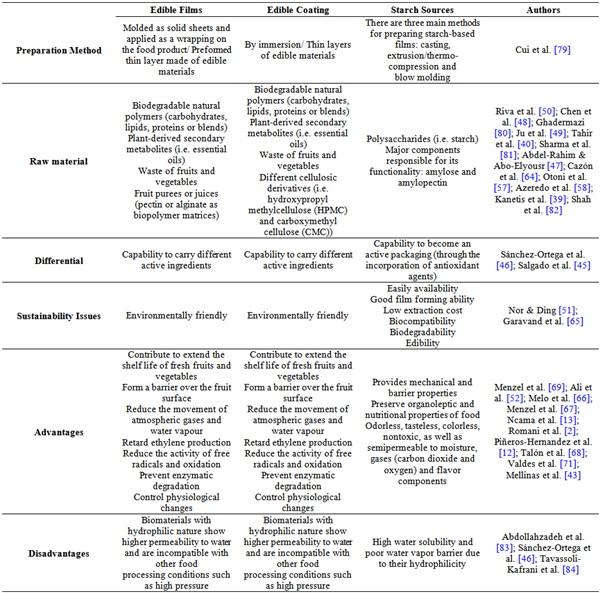
Edible coatings can be defined as thin layers of edible materials formed on the surface of food products, typically by immersing the food in a solution containing the coating material. On the other hand, an edible film is a preformed thin layer made of edible materials. These materials are first molded into solid sheets and then applied as a wrapping around the food product 36, 37. Edible coatings are formulated using biodegradable natural polymers due to their recyclability, cost reduction potential and minimal pollution and waste generation 38, 39. Researchers have focused on transforming fruit and vegetable waste into other valuable products to address environmental pollution 40.
Both edible films and coatings have been shown to extend the shelf life of fresh fruits and vegetables. They achieve this by reducing moisture and solids migration, controlling gas exchange due to respiration, and inhibiting oxidative reactions 41, 42, 43. Additionally, they can carry different active ingredients (colorants, flavors, antioxidants, nutrients, antibrowning and antimicrobial agents, among others), further extending shelf life and reducing pathogen growth on food surfaces 44, 45, 46. These characteristics have elevated edible films and coatings to one of the most significant research topics in food science and technology. Over the past 5 years, more than 1700 scientific articles related to this issue have been published, according to the scientific database “Web of Science”
Edible films and coatings derived from plant-based natural products, including natural polymers (proteins, polysaccharides, and lipids), and plant-derived secondary metabolites (e.g., essential oils), play a crucial role in fruit storage 47, 48, 49, 50. These materials are environmentally friendly and highly biodegradable 51, and their proper use may have no adverse effects on human health.
The potential impact of edible films and coatings derived from natural plant-based products is closely related to their ability to create a barrier on the fruit surface. This property makes them useful for reducing the movement of atmospheric gases and water vapor 13. Besides that, natural plant-based products may retard ethylene production, reduce free radical activity and oxidation, prevent enzymatic degradation, and also control physiological changes 52, 53.
Several studies have explored the development of edible films containing fruit purees or juices 54, 55, 56, 57, 58. The polysaccharides naturally present in fruits serve as film matrices or co-matrices, while sugars act as plasticizers. Furthermore, the sensory and nutritional properties of the fruits contribute to the market appeal of fruit-containing films. These edible films are usually produced using biopolymer matrices, such as pectin 58, 59, 60 or alginate 61, 62.
2.2. Starch SourcesThe development of films and coatings based on polysaccharides has experienced significant growth in recent years due to their interesting mechanical and barrier properties 63, 64. Starch, a polysaccharide, finds wide application in the food industry due to its easily availability, low extraction cost, biocompatibility, biodegradability, edibility, and good film forming ability 65. Several studies have shown the successful incorporation of antioxidant agents (both natural and synthetic) into starch films for the development of active packaging 2, 12, 52, 66, 67, 68, 69.
However, starch-based edible coatings exhibit high water solubility and poor water vapour barrier properties due to their hydrophilicity, which can limit their application in high moisture products and environments 46. Starch possesses remarkable functionality attributed to two major components: amylose and amylopectin, as well as their organization within the granular structure. The effectiveness of the starch in forming better edible coatings and films depends on the amount of amylose present in the specific starch source 70.
The application of starch-based edible coatings is extensive due to their lack of smell or taste and their ability to reduce gas exchange 46. These coatings effectively preserve the organoleptic and nutritional properties of food 71. Currently, there is significant interest in obtaining starch with improved physicochemical and functional characteristics from nonconventional sources 72. Moreover, starch is an abundant, low-cost, renewable, and easy to use polysaccharide 73.
Bananas (Mussa paradisiaca) are both an interesting source of starch and an important food crop extensively grown in tropical and subtropical regions worldwide. Unripe bananas contain approximately 36% starch and are readily available in local markets 74. Banana’s starch stands out for its higher amylose content compared to potato and wheat starch, as well as its resistance to hydrolysis 75. Table 1 provides an overview of the key characteristics and distinctions between edible films, edible coatings, and starch-based packaging sources.
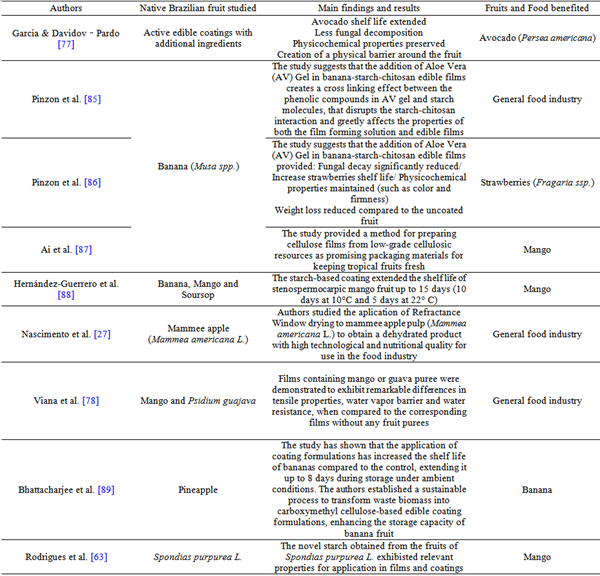
The main findings and results from recent research on edible films and coatings produced with native Brazilian fruits are summarized in Table 2. These studies explore various fruit types and food products that have benefited from these innovations.
Promising environmentally friendly solutions to replace problematic plastic packaging for regenerated cellulose films can be found in nearly all the studies listed in Table 2. In addition, different methodologies have been developed to optimize the composition of edible coatings for application on various native Brazilian fruits, including acerola, cajá, mango, and pitanga. Researchers have also investigated the impact of using edible films and coatings on the physicochemical characteristics and post-harvest shelf life of these fruits.
Rodrigues et al. 63 described the first study that developed active films using chemical fractions extracted from Spondias purpurea L. (seriguela). Sophisticated methods, including Refractance Window drying, were employed to obtain a dehydrated product with high technological and nutritional quality for use in the food industry, as demonstrated by Nascimento et al. 76 with mammee apple pulp (Mammea americana L.).
In studies where bioactive compounds were used for the development of films and coatings, antifungal and antimicrobial activities were observed. These properties helped preserve the physicochemical characteristics of fruits and added further value to the final results 77. Viana et al. 78 found that films containing mango or guava puree exhibited significant differences in tensile properties, water vapor barrier, and water resistance compared films without any fruit purees. These findings lead us to consider the distinct properties that native Brazilian fruits can offer.
This review highlights the abundant possibilities that native Brazilian fruits offer. Whether for the development of edible films and coatings or the creation of innovative packaging strategies for their distribution, these fruits are diverse, rich in nutrients, and highly perishable. By ensuring sustainable packaging practices, native Brazilian fruits can be marketed beyond tropical regions, reaching consumers in various countries. Therefore, we encourage further research to integrate these fruits into the food industry globally.
Funding: The authors would like to thank Capes (Coordenação de Aperfeiçoamento de Pessoal de Nível Superior) for the financial support.
| [1] | Miller FA, Brandão TRS, Silva CLM. (2023). New Approaches for Improving the Quality of Processed Fruits and Vegetables and Their By-Products. Foods 12(7): 1353. | ||
| In article | View Article | ||
| [2] | Romani VP, Hernández CP, Martins VG. (2018). Pink pepper phenolic compounds incorporation in starch/protein blends and its potential to inhibit apple Browning. Food Packaging and Shelf Life 15: 151–158. | ||
| In article | View Article | ||
| [3] | FAO. (2022). Faostat. Food and Agriculture Organization of the United Nations. https://www.fao.org/faostat/en/#home | ||
| In article | |||
| [4] | Almeida FLC, Oliveira ENA, Almeida EC, Souza WFC, Silva MO, Melo AM, Castro MPJ, Bullo GT, Luna LC, Prata AS, Forte MBS. (2022). Hancornia speciosa: An overview focused on phytochemical properties, recent achievements, applications, and future perspectives. International Journal of Gastronomy and Food Science 29: 100561. | ||
| In article | View Article | ||
| [5] | Biazotto KR, Mesquita LMS, Neves BV, Braga ARC, Tangerina MMP, Vilegas W, Mercadante AZ, Rosso VV. (2019). Brazilian biodiversity fruits: discovering bioactive compounds from underexplored sources. Journal of Agricultural and Food Chemistry 67(7): 1860-1876. | ||
| In article | View Article | ||
| [6] | Ali A, Chen Y, Liu H, Yu L, Baloch Z, Khalid S, Zhu J, Chen L. (2019). Starch-based antimicrobial films functionalized by pomegranate peel. International Journal of Biological Macromolecules 15: 1120–1126. | ||
| In article | View Article | ||
| [7] | Zahedi SM, Hosseini MS, Karimi M, Ebrahimzadeh A. (2019). Effects of postharvest polyamine application and edible coating on maintaining quality of mango (Mangifera indica L.) cv. Langra during cold storage. Food Science & Nutrition 7: 433-441. | ||
| In article | View Article | ||
| [8] | Anggono AD, Rebezov M, Mironov S, Thangavelu L, Aravindhan S, Aljeboree AM, Al-Janabi S, Alrazzak NA, Alkaim AF, Abdelbasset WK. (2022). Fruit preservation packaging technology based on air adjustment packaging method. Food Science and Technology 42: e29221. | ||
| In article | View Article | ||
| [9] | Guillard V, Gaucel S, Fornaciari C, Angellier-Coussy H, Buche P, Gontard N. (2018). The next generation of sustainable food packaging to preserve our environment in a circular economy context. Frontiers in Nutrition 121(5): 1-13. | ||
| In article | View Article | ||
| [10] | Wilson MD, Stanley RA, Eyles A, Ross T. (2019). Innovative processes and technologies for modified atmosphere packaging of fresh and fresh-cut fruits and vegetables. Critical Reviews in Food Science and Nutrition 59: 411–422. | ||
| In article | View Article | ||
| [11] | Basanta MF, Rojas AM, Martinefski MR, Tripodi VP, De'nobili MD, Fissore EM. (2018). Cherry (Prunus avium) phenolic compounds for antioxidant preservation at food interfaces. Journal of Food Engineering 132: 15-25. | ||
| In article | View Article | ||
| [12] | Piñeros-Hernandez D, Medina-Jaramillo C, López-Córdoba A, Goyanes S. (2017). Edible cassava starch films carrying rosemary antioxidant extracts for potential use as active food packaging. Food Hydrocolloids 63: 488-495. | ||
| In article | View Article | ||
| [13] | Ncama K, Magwaza LS, Mditshwa A, Tesfay SZ. (2018). Plant-based edible coatings for managing postharvest quality of fresh horticultural produce: A review. Food Packaging and Shelf Life 16: 157-167. | ||
| In article | View Article | ||
| [14] | Odetayo T, Tesfay S, Ngobese NZ. (2022). Nanotechnology‐enhanced edible coating application on climacteric fruits. Food Science & Nutrition 10(7): 2149–2167. | ||
| In article | View Article | ||
| [15] | Fang Y, Wakisaka MA. (2021). Review on the Modified Atmosphere Preservation of Fruits and Vegetables with Cutting-Edge Technologies. Agriculture 11(10): 992. | ||
| In article | View Article | ||
| [16] | Czerwiński K, Rydzkowski T, Wróblewska-Krepsztul J, Thakur VK. (2021). Towards Impact of Modified Atmosphere Packaging (MAP) on Shelf-Life of Polymer-Film-Packed Food Products: Challenges and Sustainable Developments. Coatings 11(12): 1504. | ||
| In article | View Article | ||
| [17] | Horvitz, S. (2017). Postharvest Handling of Berries. InTech. Chapter 6, 107-123. | ||
| In article | View Article | ||
| [18] | Mendes AC, Pedersen GA. (2021). Perspectives on sustainable food packaging: is bio-based plastics a solution? Trends in Food Science & Technology 112: 839-846. | ||
| In article | View Article | ||
| [19] | Jabeen N, Majid I, Nayik GA. (2015). Bioplastics and food packaging: A review. Cogent Food & Agriculture 1(1): 1117749. | ||
| In article | View Article | ||
| [20] | Hambardzumyan A, Foulon L, Bercu NB, Pernes M, Maigret JE, Molinari M. (2015). Organosolv lignin as natural grafting additive to improve the water resistance of films using cellulose nanocrystals. Chemical Engineering Journal 264: 780-788. | ||
| In article | View Article | ||
| [21] | Swetha TA, Bora A, Mohanrasu K, Balaji P, Raja R, Ponnuchamy K, Muthusamy G, Arun A. (2023). A comprehensive review on polylactic acid (PLA) – Synthesis, processing and application in food packaging. International Journal of Biological Macromolecules 234: 123715. | ||
| In article | View Article | ||
| [22] | Khosravi-Darani K, Yazdian F. (2022). Polyhydroxyalkanoates (PHAs) in Food Packaging. In: Dutt Tripathi, A., Darani, K.K., Rai, D.C., Paul, V. (eds) Biodegradable Polymer-Based Food Packaging. Springer, Singapore. | ||
| In article | View Article | ||
| [23] | Flórez M, Guerra-Rodríguez E, Cazón P, Vázquez M. (2022). Chitosan for food packaging: Recent advances in active and intelligent films. Food Hydrocolloids, 124: 107328. | ||
| In article | View Article | ||
| [24] | Peelman N, Ragaert P, Ragaert K, de Meulenaer B, Devlieghere F, Cardon L. (2015). Heat resistance of new biobased polymeric materials, focusing on starch, cellulose, PLA, and PHA. Journal of Applied Polymer Science, 132(48): 42305. | ||
| In article | View Article | ||
| [25] | Bvenura C, Sivakumar D. (2017). The role of wild fruits and vegetablesin delivering a balanced and healthy diet. Food Research International 99: 15-30. | ||
| In article | View Article | ||
| [26] | Coradin L, Siminski A, Reis A. (2011). Espécies nativas da flora brasileira de valor econômico atual ou potencial: plantas pra o futuro. Espécies Nativas da Flora Brasileira de Valor Econômico Atual ou Potencial Plantas para o Futuro - Região Sul. Brasília: Ministério do Meio Ambiente. | ||
| In article | |||
| [27] | Nascimento CS, Rodrigues AMC, Silva LHM. (2020). Development of a dehydrated product with edible film characteristics from mammee apple (Mammea americana L.) using Refractance Window drying. Food Science and Technology 40(1): 245-249. | ||
| In article | View Article | ||
| [28] | Sviech F, Ubbink J, Prata AS. (2022). Potential for the processing of Brazilian fruits - A review of approaches based on the state diagram. LWT-Food Science and Technology 156: 113013. | ||
| In article | View Article | ||
| [29] | Schiassi MCEV, Souza VR, Lago AMT, Campos LG, Queiroz F. (2018). Fruits from the Brazilian Cerrado region: Physico-chemical characterization, bioactive compounds, antioxidant activi-ties, and sensory evaluation. Food Chemistry 245: 305-311. | ||
| In article | View Article | ||
| [30] | Neri-Numa IA, Sancho RAS, Pereira APA, Pastore GM. (2018). Small Brazilian wild fruits: Nutrients, bioactive compounds, health-promotion properties and commercial interest. Food Research International 103: 345-360. | ||
| In article | View Article | ||
| [31] | Beltrame DMO, Oliveira CNS, Borelli T, Santiago RAC, Coradin L, Hunter D. (2018). Brazilian underutilised species to promote dietary diversity, local food procurement, and biodiversity conservation: a food composition gap analysis. Lancet Planetary Health 2: S22. | ||
| In article | View Article | ||
| [32] | Macedo JGF, Rangel, JML, Santos, MO, Camilo CJ, Costa JGM, Souza, MMA. (2021). Therapeutic indications, chemical composition and biological activity of native Brazilian species from Psidium genus (Myrtaceae): A review. Journal of Ethnopharmacology 278: 114248. | ||
| In article | View Article | ||
| [33] | Karimi A, Kazemi M, Samani SA, Simal-Gandara J. (2021). Bioactive compounds from by-products of eggplant: Functional properties, potential applications and advances in valorization methods. Trends Food and Science Technology 112: 518-531. | ||
| In article | View Article | ||
| [34] | Inada KOP, Leite IB, Martins ABN, Fialho E, Tomás-Barberán FA, Perrone D, et al. (2021). Jaboticaba berry: A comprehensive review on its polyphenol composition, health effects, metabolism, and the development of food products. Food Research International 147: 110518. | ||
| In article | View Article | ||
| [35] | Santos RAR, Neta MTSL, Silva MAP, Carnelossi MAG, Narain N. (2021). Process optimization for elaboration of cajá-umbu (Spondias spp.) fruit jelly: The effect of pulp and pectin contents on sensory attributes and volatile constituents. International Journal of Gastronomy and Food Science 24: 100315. | ||
| In article | View Article | ||
| [36] | Kumar N, Pratibha, Prasad J, Yadav A, Upadhyay A, Neeraj, Shukla S, Petkoska AT, Heena, Suri S, Gniewosz M, Kieliszek M. (2023). Recent Trends in Edible Packaging for Food Applications — Perspective for the future. Food Engineering Reviews 15: 718–747. | ||
| In article | View Article | ||
| [37] | Cerqueira MAPR. (2019). Edible Packaging. Encyclopedia of Food Chemistry, pp. 173-176. | ||
| In article | View Article | ||
| [38] | Al Mahmud MZ, Mobarak MH, Hossain N. (2024). Emerging trends in biomaterials for sustainable food packaging: A comprehensive review. Heliyon 10(1): e24122. | ||
| In article | View Article | ||
| [39] | Kanetis L, Exarchou V, Charalambous Z, Goulas V. (2016). Edible coating composed of chitosan and Salvia fruticosa Mill. extract for the control of grey mould of table grapes. Journal of the Science Food and Agricultural 97: 452. | ||
| In article | View Article | ||
| [40] | Tahir HE, Xiaobo Z, Mahunu GK, Arslan M, Abdalhai M, Zhihua L. (2019). Recent developments in gum edible coating applications for fruits and vegetables preservation: A review. Carbohydrate Polymer 224: 115141. | ||
| In article | View Article | ||
| [41] | Nunes C, Silva M, Farinha D, Sales H, Pontes R, Nunes J. (2023). Edible Coatings and Future Trends in Active Food Packaging–Fruits’ and Traditional Sausages’ Shelf Life Increasing. Foods 12(17): 3308. | ||
| In article | View Article | ||
| [42] | Blancas-Benitez FJ, Montaño-Leyva B, Aguirre-Güitrón L, Moreno-Hernández CL, Fonseca-Cantabrana A, Romero-Islas LC, González-Estrada RR. (2022). Impact of edible coatings on quality of fruits: A review. Food Control 139: 109063. | ||
| In article | View Article | ||
| [43] | Mellinas C, Valdés A, Ramos M, Burgos N, Garrigós M. dC, Jiménez A. (2016). Active edible films: Current state and future trends. Journal of Applied Polymer Science 133(2): 42631. | ||
| In article | View Article | ||
| [44] | Anean HA, Mallasiy LO, Bader DMD, Shaat HA. (2023). Nano Edible Coatings and Films Combined with Zinc Oxide and Pomegranate Peel Active Phenol Compounds Has Been to Extend the Shelf Life of Minimally Processed Pomegranates. Materials 16(4): 1569. | ||
| In article | View Article | ||
| [45] | Salgado PR, Ortiz CM, Musso YS, Di Giorgio L, Mauri AN. (2015). Edible films and coatings containing bioactives. Current Opinion in Food Science 5: 86-92. | ||
| In article | View Article | ||
| [46] | Sánchez-Ortega I, García-Almendarez BE, Santos-López EM, Reyes-González LR, Regalado C. (2016). Characterization and antimicrobial effect of starch-based edible coating suspensions. Food Hydrocolloids 52: 906-913. | ||
| In article | View Article | ||
| [47] | Abdel-Rahim IR, Abo-Elyousr KAM. (2017). Using of endophytic Saccharomycopsis fibuligera and thyme oil for management of gray mold rot of guava fruits. Biological Control 110: 124–131. | ||
| In article | View Article | ||
| [48] | Chen J, Shen Y, Chen C, Wan C. (2019). Inhibition of key citrus postharvest fungal strains by plant extracts in vitro and in vivo: A review. Plants 8(2): 26. | ||
| In article | View Article | ||
| [49] | Ju J, Xie Y, Guo Y, Cheng Y, Qian H, Yao W. (2019). Application of edible coating with essential oil in food preservation. Critical Reviews in Food Science and Nutrition 59(15): 2467-2480. | ||
| In article | View Article | ||
| [50] | Riva SC, Opara UO, Fawole OA. (2020). Recent developments on postharvest application of edible coatings on stone fruit: A review. Scientia Horticulturae 262: 109074. | ||
| In article | View Article | ||
| [51] | Nor SM, Ding P. (2020). Trends and advances in edible biopolymer coating for tropical fruit: A review. Food Research International 134: 109208. | ||
| In article | View Article | ||
| [52] | Ali S, Khan AS, Nawaz A, Anjum MA, Naz S, Ejaz S, Hussain S. (2019). Aloe vera gel coating delays postharvest browning and maintains the quality of harvested litchi fruit. Postharvest Biology and Technology 157: 110960. | ||
| In article | View Article | ||
| [53] | Maringgal B, Hashim N, Tawakkal ISMA, Mohamed MTM. (2020). Recent advance in edible coating and its effect on fresh/fresh-cut fruits quality. Trends in Food Science & Technology 96: 253-267. | ||
| In article | View Article | ||
| [54] | Janowicz M, Galus S, Ciurzyńska A, Nowacka M. (2023). The Potential of Edible Films, Sheets, and Coatings Based on Fruits and Vegetables in the Context of Sustainable Food Packaging Development. Polymers 15(21): 4231. | ||
| In article | View Article | ||
| [55] | Pimiento CRQ, Fernández PV, Ciancia M, López-Córdoba A, Goyanes S, Bertuzzi MA, Foresti ML. (2023). Antioxidant Edible Films Based on Pear Juice and Pregelatinized Cassava Starch: Effect of the Carbohydrate Profile at Different Degrees of Pear Ripeness. Polymers, 15(21): 4263. | ||
| In article | View Article | ||
| [56] | Yıldırım-Yalçın M, Sadıkoğlu H, Şeker M. (2021). Characterization of edible film based on grape juice and cross-linked maize starch and its effects on the storage quality of chicken breast fillets. LWT-Food Science and Technology 142: 111012. | ||
| In article | View Article | ||
| [57] | Otoni CG, Avena-Bustillos RJ, Azeredo HMC, Lorevice MV, Moura MR, Mattoso LHC, McHugh TH. (2017). Recent advances on edible films based on fruits and vegetables - a review. Comprehensive Reviews in Food Science and Food Safety 16: 1151-1169. | ||
| In article | View Article | ||
| [58] | Azeredo HMC, Morrugares-Carmona R, Wellner N, Cross K, Bajka B, Waldron KW. (2016). Development of pectin films with pomegranate juice and citric acid. Food Chemistry 198: 101-106. | ||
| In article | View Article | ||
| [59] | Neog B, Das JK, Vijayakumar A, Badwaik LS. (2022). Development and Characterization of Edible Films Made with Indian Jujube Fruit Puree and Pectin. Journal of Food Process Engineering 45: e13977. | ||
| In article | View Article | ||
| [60] | Ribeiro ACB, Cunha AP, da Silva LMR, Mattos ALA, Brito ES, Filho MSMS, Azeredo HMC, Ricardo NMPS. (2021). From Mango By-Product to Food Packaging: Pectin-Phenolic Antioxidant Films from Mango Peels. International Journal of Biological Macromolecules 193: 1138–1150. | ||
| In article | View Article | ||
| [61] | Medina-Jaramillo C, Quintero-Pimiento C, Gómez-Hoyos C, Zuluaga-Gallego R, López-Córdoba A. (2020). Alginate-Edible Coatings for Application on Wild Andean Blueberries (Vaccinium meridionale Swartz): Effect of the Addition of Nanofibrils Isolated from Cocoa By-Products. Polymers 12(4): 824. | ||
| In article | View Article | ||
| [62] | Oliveira Filho JG, Sousa TL, Bertolo MRV, Bogusz Junior S, Mattoso LHC, Pimentel TC, Egea MB. (2023). Next-generation food packaging: Edible bioactive films with alginate, mangaba pulp (Hancornia speciosa), and Saccharomyces boulardii. Food Bioscience 54: 102799. | ||
| In article | View Article | ||
| [63] | Rodrigues FAM, Santos SBF, Lopes MMA, Guimarães DJS, Oliveira ES, Souza MSMF, Mattos ALA, Silva LMR, Azeredo HMC, Ricardo NMPS. (2021). Antioxidant films and coatings based on starch and phenolics from Spondias purpurea L. International Journal of Biological Macromolecules 182: 354-365. | ||
| In article | View Article | ||
| [64] | Cazón P, Velazquez G, Ramírez JA, Vázquez M. (2017). Polysaccharide-based films and coatings for food packaging: a review. Food Hydrocolloids 68: 136-148. | ||
| In article | View Article | ||
| [65] | Garavand F, Rouhi M, Razavi SH, Cacciotti I, Mohammadi R. (2017). Improving the integrity of natural biopolymer films used in food packaging by crosslinking approach: a review. International Journal of Biological Macromolecules 104: 687-707. | ||
| In article | View Article | ||
| [66] | Melo PEF, Silva APM, Marques FP, Ribeiro PRV, Souza Filho MMS, Brito ES, Lima JR, Azeredo HMC. (2019). Antioxidant films from mango kernel components. Food Hydrocolloids 95: 487-495. | ||
| In article | View Article | ||
| [67] | Menzel C, González-Martínez C, Chiralt A, Vilaplana F. (2019). Antioxidant starch films containing sunflower hull extracts. Carbohydrate Polymers 214: 142–151. | ||
| In article | View Article | ||
| [68] | Talón E, Trifkovic KT, Nedovic VA, Bugarski BM, Vargas M, Chiralt A, González-Martínez C. (2017). Antioxidant edible films based on chitosan and starch containing polyphenols from thyme extracts. Carbohydrate Polymer 157: 1153-1161. | ||
| In article | View Article | ||
| [69] | Menzel C, González-Martínez C, Vilaplana F, Diretto G, Chiralt A. (2020). Incorporation of natural antioxidants from rice straw into renewable starch films. International Journal of Biological Macromolecules 146: 976–986. | ||
| In article | View Article | ||
| [70] | Tarique J, Zainudin ES, Sapuan SM, Ilyas RA, Khalina A. (2022). Physical, Mechanical, and Morphological Performances of Arrowroot (Maranta arundinacea) Fiber Reinforced Arrowroot Starch Biopolymer Composites. Polymers 14(3):388. | ||
| In article | View Article | ||
| [71] | Valdes A, Ramos M, Beltrán A, Jiménez A, Garrigós M. (2017). State of the art of antimicrobial edible coatings for food packaging applications. Coatings 7(4): 56. | ||
| In article | View Article | ||
| [72] | Jingyi Y, Reddy CK, Fan Z, Xu B. (2023). Physicochemical and structural properties of starches from non-traditional sources in China. Food Science and Human Wellness 12(2): 416-423. | ||
| In article | View Article | ||
| [73] | Zarski A, Bajer K, Kapuśniak J. (2021). Review of the Most Important Methods of Improving the Processing Properties of Starch toward Non-Food Applications. Polymers 13(5): 832 | ||
| In article | View Article | ||
| [74] | Wang J.-S, Wang A.-B, Ma W.-H. (2019). Comparison of physicochemical properties and in vitro digestibility of starches from seven banana cultivars in China. International Journal of Biological Macromolecules 121: 279–284. | ||
| In article | View Article | ||
| [75] | Cahyana Y, Wijaya E, Halimah TS, Marta H, Suryadi E, Kurniati D. (2019). The effect of different thermal modifications on slowly digestible starch and physicochemical properties of green banana flour (Musa acuminata colla). Food Chemistry 274: 274-280. | ||
| In article | View Article | ||
| [76] | Nascimento RP, Reguengo LM, Machado FAP, Marostica Junior MR. (2022). The preventive and therapeutic potential of native Brazilian fruits on colorectal câncer. Food Bioscience 46: 101539. | ||
| In article | View Article | ||
| [77] | Garcia F, Davidov‐Pardo G. (2021). Recent advances in the use of edible coatings for preservation of avocados: A review. Journal of Food Science 86(1): 6-15. | ||
| In article | View Article | ||
| [78] | Viana RM, Sá NM, Barros MO, Borges MF, Azeredo HM. (2018). Nanofibrillated bacterial cellulose and pectin edible films added with fruit purees. Carbohydrate polymers 196: 27-32. | ||
| In article | View Article | ||
| [79] | Cui C, Ji N, Wang Y, Xiong L, Sun Q (2021). Bioactive and inteligente starch-based films: A review. Trends in Food Science & Technology 116: 854-869. | ||
| In article | View Article | ||
| [80] | Ghadermazi R, Hamdipour S, Sadeghi K, Ghadermazi R, Asl AK. (2019). Effect of various additives on the properties of the films and coatings derived from hydroxypropyl methylcellulose - A review. Food Science and Nutrition 7(11): 3363-3377. | ||
| In article | View Article | ||
| [81] | Sharma A, Thakur M, Bhattacharya M, Mandal T, Goswami S. (2019). Commercial application of cellulose nano-composites - A review. Biotechnology Reports 21: e00316. | ||
| In article | View Article | ||
| [82] | Shah MR, Liang Y, Cheng JJ, Daroch M. (2016). Astaxanthin-Producing Green Microalga Haematococcus pluvialis: From Single Cell to High Value Commercial Products. Frontiers in Plant Science 7: 531. | ||
| In article | View Article | ||
| [83] | Abdollahzadeh E, Nematollahi A, Hosseini H. (2021). Composition of antimicrobial edible films and methods for assessing their antimicrobial activity: A review. Trends in Food Science & Technology 110: 291-303. | ||
| In article | View Article | ||
| [84] | Tavassoli-Kafrani E, Shekarchizadeh H, Masoudpour-Behadi M. (2016). Development of edible films and coatings from alginates and carrageenans. Carbohydrate Polymers 137: 360-374. | ||
| In article | View Article | ||
| [85] | Pinzon MI, Garcia OR, Villa CC. (2018). The influence of Aloe vera gel incorporation on the physicochemical and mechanical properties of banana starch‐chitosan edible films. Journal of the Science of Food and Agriculture 98(11): 4042-4049. | ||
| In article | View Article | ||
| [86] | Pinzon MI, Sanchez LT, Garcia OR, Gutierrez R, Luna JC, Villa CC. (2020). Increasing shelf life of strawberries (Fragaria ssp) by using a banana starch‐chitosan‐Aloe vera gel composite edible coating. International Journal of Food Science & Technology 55(1): 92-98. | ||
| In article | View Article | ||
| [87] | Ai B, Zheng L, Li W, Zheng X, Yang Y, Xiao D, Shi J, Sheng Z. (2021). Biodegradable Cellulose Film Prepared From Banana Pseudo-Stem Using an Ionic Liquid for Mango Preservation. Frontiers in Plant Science 12: 625878-625878. | ||
| In article | View Article | ||
| [88] | Hernández-Guerrero SE, Balois-Morales R, Palomino-Hermosillo YA, López-Guzmán GG, Berumen-Varela G, Bautista-Rosales PU, Alejo-Santiago G. (2020). Novel Edible Coating of Starch-Based Stenospermocarpic Mango Prolongs the Shelf Life of Mango “Ataulfo” Fruit. Journal of Food Quality 1320357: 1-9. | ||
| In article | View Article | ||
| [89] | Bhattacharjee S, Haldar D, Manna MS, Gayen K, Bhowmick TK. (2021). A sustainable approach to enhance fruit shelf-life: Edible coating from pineapple fruit waste biomass. Journal of Applied Polymer Science 138: e50388. | ||
| In article | View Article | ||
Published with license by Science and Education Publishing, Copyright © 2024 Bruna Mayara Roldão Ferreira, Ana Paula Stafussa, Carla Adriana Ferrari Artilha Mesquita, Antonio Roberto Giriboni Monteiro and Grasiele Scaramal Madrona
 This work is licensed under a Creative Commons Attribution 4.0 International License. To view a copy of this license, visit
https://creativecommons.org/licenses/by/4.0/
This work is licensed under a Creative Commons Attribution 4.0 International License. To view a copy of this license, visit
https://creativecommons.org/licenses/by/4.0/
| [1] | Miller FA, Brandão TRS, Silva CLM. (2023). New Approaches for Improving the Quality of Processed Fruits and Vegetables and Their By-Products. Foods 12(7): 1353. | ||
| In article | View Article | ||
| [2] | Romani VP, Hernández CP, Martins VG. (2018). Pink pepper phenolic compounds incorporation in starch/protein blends and its potential to inhibit apple Browning. Food Packaging and Shelf Life 15: 151–158. | ||
| In article | View Article | ||
| [3] | FAO. (2022). Faostat. Food and Agriculture Organization of the United Nations. https://www.fao.org/faostat/en/#home | ||
| In article | |||
| [4] | Almeida FLC, Oliveira ENA, Almeida EC, Souza WFC, Silva MO, Melo AM, Castro MPJ, Bullo GT, Luna LC, Prata AS, Forte MBS. (2022). Hancornia speciosa: An overview focused on phytochemical properties, recent achievements, applications, and future perspectives. International Journal of Gastronomy and Food Science 29: 100561. | ||
| In article | View Article | ||
| [5] | Biazotto KR, Mesquita LMS, Neves BV, Braga ARC, Tangerina MMP, Vilegas W, Mercadante AZ, Rosso VV. (2019). Brazilian biodiversity fruits: discovering bioactive compounds from underexplored sources. Journal of Agricultural and Food Chemistry 67(7): 1860-1876. | ||
| In article | View Article | ||
| [6] | Ali A, Chen Y, Liu H, Yu L, Baloch Z, Khalid S, Zhu J, Chen L. (2019). Starch-based antimicrobial films functionalized by pomegranate peel. International Journal of Biological Macromolecules 15: 1120–1126. | ||
| In article | View Article | ||
| [7] | Zahedi SM, Hosseini MS, Karimi M, Ebrahimzadeh A. (2019). Effects of postharvest polyamine application and edible coating on maintaining quality of mango (Mangifera indica L.) cv. Langra during cold storage. Food Science & Nutrition 7: 433-441. | ||
| In article | View Article | ||
| [8] | Anggono AD, Rebezov M, Mironov S, Thangavelu L, Aravindhan S, Aljeboree AM, Al-Janabi S, Alrazzak NA, Alkaim AF, Abdelbasset WK. (2022). Fruit preservation packaging technology based on air adjustment packaging method. Food Science and Technology 42: e29221. | ||
| In article | View Article | ||
| [9] | Guillard V, Gaucel S, Fornaciari C, Angellier-Coussy H, Buche P, Gontard N. (2018). The next generation of sustainable food packaging to preserve our environment in a circular economy context. Frontiers in Nutrition 121(5): 1-13. | ||
| In article | View Article | ||
| [10] | Wilson MD, Stanley RA, Eyles A, Ross T. (2019). Innovative processes and technologies for modified atmosphere packaging of fresh and fresh-cut fruits and vegetables. Critical Reviews in Food Science and Nutrition 59: 411–422. | ||
| In article | View Article | ||
| [11] | Basanta MF, Rojas AM, Martinefski MR, Tripodi VP, De'nobili MD, Fissore EM. (2018). Cherry (Prunus avium) phenolic compounds for antioxidant preservation at food interfaces. Journal of Food Engineering 132: 15-25. | ||
| In article | View Article | ||
| [12] | Piñeros-Hernandez D, Medina-Jaramillo C, López-Córdoba A, Goyanes S. (2017). Edible cassava starch films carrying rosemary antioxidant extracts for potential use as active food packaging. Food Hydrocolloids 63: 488-495. | ||
| In article | View Article | ||
| [13] | Ncama K, Magwaza LS, Mditshwa A, Tesfay SZ. (2018). Plant-based edible coatings for managing postharvest quality of fresh horticultural produce: A review. Food Packaging and Shelf Life 16: 157-167. | ||
| In article | View Article | ||
| [14] | Odetayo T, Tesfay S, Ngobese NZ. (2022). Nanotechnology‐enhanced edible coating application on climacteric fruits. Food Science & Nutrition 10(7): 2149–2167. | ||
| In article | View Article | ||
| [15] | Fang Y, Wakisaka MA. (2021). Review on the Modified Atmosphere Preservation of Fruits and Vegetables with Cutting-Edge Technologies. Agriculture 11(10): 992. | ||
| In article | View Article | ||
| [16] | Czerwiński K, Rydzkowski T, Wróblewska-Krepsztul J, Thakur VK. (2021). Towards Impact of Modified Atmosphere Packaging (MAP) on Shelf-Life of Polymer-Film-Packed Food Products: Challenges and Sustainable Developments. Coatings 11(12): 1504. | ||
| In article | View Article | ||
| [17] | Horvitz, S. (2017). Postharvest Handling of Berries. InTech. Chapter 6, 107-123. | ||
| In article | View Article | ||
| [18] | Mendes AC, Pedersen GA. (2021). Perspectives on sustainable food packaging: is bio-based plastics a solution? Trends in Food Science & Technology 112: 839-846. | ||
| In article | View Article | ||
| [19] | Jabeen N, Majid I, Nayik GA. (2015). Bioplastics and food packaging: A review. Cogent Food & Agriculture 1(1): 1117749. | ||
| In article | View Article | ||
| [20] | Hambardzumyan A, Foulon L, Bercu NB, Pernes M, Maigret JE, Molinari M. (2015). Organosolv lignin as natural grafting additive to improve the water resistance of films using cellulose nanocrystals. Chemical Engineering Journal 264: 780-788. | ||
| In article | View Article | ||
| [21] | Swetha TA, Bora A, Mohanrasu K, Balaji P, Raja R, Ponnuchamy K, Muthusamy G, Arun A. (2023). A comprehensive review on polylactic acid (PLA) – Synthesis, processing and application in food packaging. International Journal of Biological Macromolecules 234: 123715. | ||
| In article | View Article | ||
| [22] | Khosravi-Darani K, Yazdian F. (2022). Polyhydroxyalkanoates (PHAs) in Food Packaging. In: Dutt Tripathi, A., Darani, K.K., Rai, D.C., Paul, V. (eds) Biodegradable Polymer-Based Food Packaging. Springer, Singapore. | ||
| In article | View Article | ||
| [23] | Flórez M, Guerra-Rodríguez E, Cazón P, Vázquez M. (2022). Chitosan for food packaging: Recent advances in active and intelligent films. Food Hydrocolloids, 124: 107328. | ||
| In article | View Article | ||
| [24] | Peelman N, Ragaert P, Ragaert K, de Meulenaer B, Devlieghere F, Cardon L. (2015). Heat resistance of new biobased polymeric materials, focusing on starch, cellulose, PLA, and PHA. Journal of Applied Polymer Science, 132(48): 42305. | ||
| In article | View Article | ||
| [25] | Bvenura C, Sivakumar D. (2017). The role of wild fruits and vegetablesin delivering a balanced and healthy diet. Food Research International 99: 15-30. | ||
| In article | View Article | ||
| [26] | Coradin L, Siminski A, Reis A. (2011). Espécies nativas da flora brasileira de valor econômico atual ou potencial: plantas pra o futuro. Espécies Nativas da Flora Brasileira de Valor Econômico Atual ou Potencial Plantas para o Futuro - Região Sul. Brasília: Ministério do Meio Ambiente. | ||
| In article | |||
| [27] | Nascimento CS, Rodrigues AMC, Silva LHM. (2020). Development of a dehydrated product with edible film characteristics from mammee apple (Mammea americana L.) using Refractance Window drying. Food Science and Technology 40(1): 245-249. | ||
| In article | View Article | ||
| [28] | Sviech F, Ubbink J, Prata AS. (2022). Potential for the processing of Brazilian fruits - A review of approaches based on the state diagram. LWT-Food Science and Technology 156: 113013. | ||
| In article | View Article | ||
| [29] | Schiassi MCEV, Souza VR, Lago AMT, Campos LG, Queiroz F. (2018). Fruits from the Brazilian Cerrado region: Physico-chemical characterization, bioactive compounds, antioxidant activi-ties, and sensory evaluation. Food Chemistry 245: 305-311. | ||
| In article | View Article | ||
| [30] | Neri-Numa IA, Sancho RAS, Pereira APA, Pastore GM. (2018). Small Brazilian wild fruits: Nutrients, bioactive compounds, health-promotion properties and commercial interest. Food Research International 103: 345-360. | ||
| In article | View Article | ||
| [31] | Beltrame DMO, Oliveira CNS, Borelli T, Santiago RAC, Coradin L, Hunter D. (2018). Brazilian underutilised species to promote dietary diversity, local food procurement, and biodiversity conservation: a food composition gap analysis. Lancet Planetary Health 2: S22. | ||
| In article | View Article | ||
| [32] | Macedo JGF, Rangel, JML, Santos, MO, Camilo CJ, Costa JGM, Souza, MMA. (2021). Therapeutic indications, chemical composition and biological activity of native Brazilian species from Psidium genus (Myrtaceae): A review. Journal of Ethnopharmacology 278: 114248. | ||
| In article | View Article | ||
| [33] | Karimi A, Kazemi M, Samani SA, Simal-Gandara J. (2021). Bioactive compounds from by-products of eggplant: Functional properties, potential applications and advances in valorization methods. Trends Food and Science Technology 112: 518-531. | ||
| In article | View Article | ||
| [34] | Inada KOP, Leite IB, Martins ABN, Fialho E, Tomás-Barberán FA, Perrone D, et al. (2021). Jaboticaba berry: A comprehensive review on its polyphenol composition, health effects, metabolism, and the development of food products. Food Research International 147: 110518. | ||
| In article | View Article | ||
| [35] | Santos RAR, Neta MTSL, Silva MAP, Carnelossi MAG, Narain N. (2021). Process optimization for elaboration of cajá-umbu (Spondias spp.) fruit jelly: The effect of pulp and pectin contents on sensory attributes and volatile constituents. International Journal of Gastronomy and Food Science 24: 100315. | ||
| In article | View Article | ||
| [36] | Kumar N, Pratibha, Prasad J, Yadav A, Upadhyay A, Neeraj, Shukla S, Petkoska AT, Heena, Suri S, Gniewosz M, Kieliszek M. (2023). Recent Trends in Edible Packaging for Food Applications — Perspective for the future. Food Engineering Reviews 15: 718–747. | ||
| In article | View Article | ||
| [37] | Cerqueira MAPR. (2019). Edible Packaging. Encyclopedia of Food Chemistry, pp. 173-176. | ||
| In article | View Article | ||
| [38] | Al Mahmud MZ, Mobarak MH, Hossain N. (2024). Emerging trends in biomaterials for sustainable food packaging: A comprehensive review. Heliyon 10(1): e24122. | ||
| In article | View Article | ||
| [39] | Kanetis L, Exarchou V, Charalambous Z, Goulas V. (2016). Edible coating composed of chitosan and Salvia fruticosa Mill. extract for the control of grey mould of table grapes. Journal of the Science Food and Agricultural 97: 452. | ||
| In article | View Article | ||
| [40] | Tahir HE, Xiaobo Z, Mahunu GK, Arslan M, Abdalhai M, Zhihua L. (2019). Recent developments in gum edible coating applications for fruits and vegetables preservation: A review. Carbohydrate Polymer 224: 115141. | ||
| In article | View Article | ||
| [41] | Nunes C, Silva M, Farinha D, Sales H, Pontes R, Nunes J. (2023). Edible Coatings and Future Trends in Active Food Packaging–Fruits’ and Traditional Sausages’ Shelf Life Increasing. Foods 12(17): 3308. | ||
| In article | View Article | ||
| [42] | Blancas-Benitez FJ, Montaño-Leyva B, Aguirre-Güitrón L, Moreno-Hernández CL, Fonseca-Cantabrana A, Romero-Islas LC, González-Estrada RR. (2022). Impact of edible coatings on quality of fruits: A review. Food Control 139: 109063. | ||
| In article | View Article | ||
| [43] | Mellinas C, Valdés A, Ramos M, Burgos N, Garrigós M. dC, Jiménez A. (2016). Active edible films: Current state and future trends. Journal of Applied Polymer Science 133(2): 42631. | ||
| In article | View Article | ||
| [44] | Anean HA, Mallasiy LO, Bader DMD, Shaat HA. (2023). Nano Edible Coatings and Films Combined with Zinc Oxide and Pomegranate Peel Active Phenol Compounds Has Been to Extend the Shelf Life of Minimally Processed Pomegranates. Materials 16(4): 1569. | ||
| In article | View Article | ||
| [45] | Salgado PR, Ortiz CM, Musso YS, Di Giorgio L, Mauri AN. (2015). Edible films and coatings containing bioactives. Current Opinion in Food Science 5: 86-92. | ||
| In article | View Article | ||
| [46] | Sánchez-Ortega I, García-Almendarez BE, Santos-López EM, Reyes-González LR, Regalado C. (2016). Characterization and antimicrobial effect of starch-based edible coating suspensions. Food Hydrocolloids 52: 906-913. | ||
| In article | View Article | ||
| [47] | Abdel-Rahim IR, Abo-Elyousr KAM. (2017). Using of endophytic Saccharomycopsis fibuligera and thyme oil for management of gray mold rot of guava fruits. Biological Control 110: 124–131. | ||
| In article | View Article | ||
| [48] | Chen J, Shen Y, Chen C, Wan C. (2019). Inhibition of key citrus postharvest fungal strains by plant extracts in vitro and in vivo: A review. Plants 8(2): 26. | ||
| In article | View Article | ||
| [49] | Ju J, Xie Y, Guo Y, Cheng Y, Qian H, Yao W. (2019). Application of edible coating with essential oil in food preservation. Critical Reviews in Food Science and Nutrition 59(15): 2467-2480. | ||
| In article | View Article | ||
| [50] | Riva SC, Opara UO, Fawole OA. (2020). Recent developments on postharvest application of edible coatings on stone fruit: A review. Scientia Horticulturae 262: 109074. | ||
| In article | View Article | ||
| [51] | Nor SM, Ding P. (2020). Trends and advances in edible biopolymer coating for tropical fruit: A review. Food Research International 134: 109208. | ||
| In article | View Article | ||
| [52] | Ali S, Khan AS, Nawaz A, Anjum MA, Naz S, Ejaz S, Hussain S. (2019). Aloe vera gel coating delays postharvest browning and maintains the quality of harvested litchi fruit. Postharvest Biology and Technology 157: 110960. | ||
| In article | View Article | ||
| [53] | Maringgal B, Hashim N, Tawakkal ISMA, Mohamed MTM. (2020). Recent advance in edible coating and its effect on fresh/fresh-cut fruits quality. Trends in Food Science & Technology 96: 253-267. | ||
| In article | View Article | ||
| [54] | Janowicz M, Galus S, Ciurzyńska A, Nowacka M. (2023). The Potential of Edible Films, Sheets, and Coatings Based on Fruits and Vegetables in the Context of Sustainable Food Packaging Development. Polymers 15(21): 4231. | ||
| In article | View Article | ||
| [55] | Pimiento CRQ, Fernández PV, Ciancia M, López-Córdoba A, Goyanes S, Bertuzzi MA, Foresti ML. (2023). Antioxidant Edible Films Based on Pear Juice and Pregelatinized Cassava Starch: Effect of the Carbohydrate Profile at Different Degrees of Pear Ripeness. Polymers, 15(21): 4263. | ||
| In article | View Article | ||
| [56] | Yıldırım-Yalçın M, Sadıkoğlu H, Şeker M. (2021). Characterization of edible film based on grape juice and cross-linked maize starch and its effects on the storage quality of chicken breast fillets. LWT-Food Science and Technology 142: 111012. | ||
| In article | View Article | ||
| [57] | Otoni CG, Avena-Bustillos RJ, Azeredo HMC, Lorevice MV, Moura MR, Mattoso LHC, McHugh TH. (2017). Recent advances on edible films based on fruits and vegetables - a review. Comprehensive Reviews in Food Science and Food Safety 16: 1151-1169. | ||
| In article | View Article | ||
| [58] | Azeredo HMC, Morrugares-Carmona R, Wellner N, Cross K, Bajka B, Waldron KW. (2016). Development of pectin films with pomegranate juice and citric acid. Food Chemistry 198: 101-106. | ||
| In article | View Article | ||
| [59] | Neog B, Das JK, Vijayakumar A, Badwaik LS. (2022). Development and Characterization of Edible Films Made with Indian Jujube Fruit Puree and Pectin. Journal of Food Process Engineering 45: e13977. | ||
| In article | View Article | ||
| [60] | Ribeiro ACB, Cunha AP, da Silva LMR, Mattos ALA, Brito ES, Filho MSMS, Azeredo HMC, Ricardo NMPS. (2021). From Mango By-Product to Food Packaging: Pectin-Phenolic Antioxidant Films from Mango Peels. International Journal of Biological Macromolecules 193: 1138–1150. | ||
| In article | View Article | ||
| [61] | Medina-Jaramillo C, Quintero-Pimiento C, Gómez-Hoyos C, Zuluaga-Gallego R, López-Córdoba A. (2020). Alginate-Edible Coatings for Application on Wild Andean Blueberries (Vaccinium meridionale Swartz): Effect of the Addition of Nanofibrils Isolated from Cocoa By-Products. Polymers 12(4): 824. | ||
| In article | View Article | ||
| [62] | Oliveira Filho JG, Sousa TL, Bertolo MRV, Bogusz Junior S, Mattoso LHC, Pimentel TC, Egea MB. (2023). Next-generation food packaging: Edible bioactive films with alginate, mangaba pulp (Hancornia speciosa), and Saccharomyces boulardii. Food Bioscience 54: 102799. | ||
| In article | View Article | ||
| [63] | Rodrigues FAM, Santos SBF, Lopes MMA, Guimarães DJS, Oliveira ES, Souza MSMF, Mattos ALA, Silva LMR, Azeredo HMC, Ricardo NMPS. (2021). Antioxidant films and coatings based on starch and phenolics from Spondias purpurea L. International Journal of Biological Macromolecules 182: 354-365. | ||
| In article | View Article | ||
| [64] | Cazón P, Velazquez G, Ramírez JA, Vázquez M. (2017). Polysaccharide-based films and coatings for food packaging: a review. Food Hydrocolloids 68: 136-148. | ||
| In article | View Article | ||
| [65] | Garavand F, Rouhi M, Razavi SH, Cacciotti I, Mohammadi R. (2017). Improving the integrity of natural biopolymer films used in food packaging by crosslinking approach: a review. International Journal of Biological Macromolecules 104: 687-707. | ||
| In article | View Article | ||
| [66] | Melo PEF, Silva APM, Marques FP, Ribeiro PRV, Souza Filho MMS, Brito ES, Lima JR, Azeredo HMC. (2019). Antioxidant films from mango kernel components. Food Hydrocolloids 95: 487-495. | ||
| In article | View Article | ||
| [67] | Menzel C, González-Martínez C, Chiralt A, Vilaplana F. (2019). Antioxidant starch films containing sunflower hull extracts. Carbohydrate Polymers 214: 142–151. | ||
| In article | View Article | ||
| [68] | Talón E, Trifkovic KT, Nedovic VA, Bugarski BM, Vargas M, Chiralt A, González-Martínez C. (2017). Antioxidant edible films based on chitosan and starch containing polyphenols from thyme extracts. Carbohydrate Polymer 157: 1153-1161. | ||
| In article | View Article | ||
| [69] | Menzel C, González-Martínez C, Vilaplana F, Diretto G, Chiralt A. (2020). Incorporation of natural antioxidants from rice straw into renewable starch films. International Journal of Biological Macromolecules 146: 976–986. | ||
| In article | View Article | ||
| [70] | Tarique J, Zainudin ES, Sapuan SM, Ilyas RA, Khalina A. (2022). Physical, Mechanical, and Morphological Performances of Arrowroot (Maranta arundinacea) Fiber Reinforced Arrowroot Starch Biopolymer Composites. Polymers 14(3):388. | ||
| In article | View Article | ||
| [71] | Valdes A, Ramos M, Beltrán A, Jiménez A, Garrigós M. (2017). State of the art of antimicrobial edible coatings for food packaging applications. Coatings 7(4): 56. | ||
| In article | View Article | ||
| [72] | Jingyi Y, Reddy CK, Fan Z, Xu B. (2023). Physicochemical and structural properties of starches from non-traditional sources in China. Food Science and Human Wellness 12(2): 416-423. | ||
| In article | View Article | ||
| [73] | Zarski A, Bajer K, Kapuśniak J. (2021). Review of the Most Important Methods of Improving the Processing Properties of Starch toward Non-Food Applications. Polymers 13(5): 832 | ||
| In article | View Article | ||
| [74] | Wang J.-S, Wang A.-B, Ma W.-H. (2019). Comparison of physicochemical properties and in vitro digestibility of starches from seven banana cultivars in China. International Journal of Biological Macromolecules 121: 279–284. | ||
| In article | View Article | ||
| [75] | Cahyana Y, Wijaya E, Halimah TS, Marta H, Suryadi E, Kurniati D. (2019). The effect of different thermal modifications on slowly digestible starch and physicochemical properties of green banana flour (Musa acuminata colla). Food Chemistry 274: 274-280. | ||
| In article | View Article | ||
| [76] | Nascimento RP, Reguengo LM, Machado FAP, Marostica Junior MR. (2022). The preventive and therapeutic potential of native Brazilian fruits on colorectal câncer. Food Bioscience 46: 101539. | ||
| In article | View Article | ||
| [77] | Garcia F, Davidov‐Pardo G. (2021). Recent advances in the use of edible coatings for preservation of avocados: A review. Journal of Food Science 86(1): 6-15. | ||
| In article | View Article | ||
| [78] | Viana RM, Sá NM, Barros MO, Borges MF, Azeredo HM. (2018). Nanofibrillated bacterial cellulose and pectin edible films added with fruit purees. Carbohydrate polymers 196: 27-32. | ||
| In article | View Article | ||
| [79] | Cui C, Ji N, Wang Y, Xiong L, Sun Q (2021). Bioactive and inteligente starch-based films: A review. Trends in Food Science & Technology 116: 854-869. | ||
| In article | View Article | ||
| [80] | Ghadermazi R, Hamdipour S, Sadeghi K, Ghadermazi R, Asl AK. (2019). Effect of various additives on the properties of the films and coatings derived from hydroxypropyl methylcellulose - A review. Food Science and Nutrition 7(11): 3363-3377. | ||
| In article | View Article | ||
| [81] | Sharma A, Thakur M, Bhattacharya M, Mandal T, Goswami S. (2019). Commercial application of cellulose nano-composites - A review. Biotechnology Reports 21: e00316. | ||
| In article | View Article | ||
| [82] | Shah MR, Liang Y, Cheng JJ, Daroch M. (2016). Astaxanthin-Producing Green Microalga Haematococcus pluvialis: From Single Cell to High Value Commercial Products. Frontiers in Plant Science 7: 531. | ||
| In article | View Article | ||
| [83] | Abdollahzadeh E, Nematollahi A, Hosseini H. (2021). Composition of antimicrobial edible films and methods for assessing their antimicrobial activity: A review. Trends in Food Science & Technology 110: 291-303. | ||
| In article | View Article | ||
| [84] | Tavassoli-Kafrani E, Shekarchizadeh H, Masoudpour-Behadi M. (2016). Development of edible films and coatings from alginates and carrageenans. Carbohydrate Polymers 137: 360-374. | ||
| In article | View Article | ||
| [85] | Pinzon MI, Garcia OR, Villa CC. (2018). The influence of Aloe vera gel incorporation on the physicochemical and mechanical properties of banana starch‐chitosan edible films. Journal of the Science of Food and Agriculture 98(11): 4042-4049. | ||
| In article | View Article | ||
| [86] | Pinzon MI, Sanchez LT, Garcia OR, Gutierrez R, Luna JC, Villa CC. (2020). Increasing shelf life of strawberries (Fragaria ssp) by using a banana starch‐chitosan‐Aloe vera gel composite edible coating. International Journal of Food Science & Technology 55(1): 92-98. | ||
| In article | View Article | ||
| [87] | Ai B, Zheng L, Li W, Zheng X, Yang Y, Xiao D, Shi J, Sheng Z. (2021). Biodegradable Cellulose Film Prepared From Banana Pseudo-Stem Using an Ionic Liquid for Mango Preservation. Frontiers in Plant Science 12: 625878-625878. | ||
| In article | View Article | ||
| [88] | Hernández-Guerrero SE, Balois-Morales R, Palomino-Hermosillo YA, López-Guzmán GG, Berumen-Varela G, Bautista-Rosales PU, Alejo-Santiago G. (2020). Novel Edible Coating of Starch-Based Stenospermocarpic Mango Prolongs the Shelf Life of Mango “Ataulfo” Fruit. Journal of Food Quality 1320357: 1-9. | ||
| In article | View Article | ||
| [89] | Bhattacharjee S, Haldar D, Manna MS, Gayen K, Bhowmick TK. (2021). A sustainable approach to enhance fruit shelf-life: Edible coating from pineapple fruit waste biomass. Journal of Applied Polymer Science 138: e50388. | ||
| In article | View Article | ||