The objective of this research is to study the biological activity of date syrups of four cultivars: Kantichi, Tamesrit, Tantbouchet and Degla Beida from the South-East Algerian region. This study is carried out in the context of contributing to the enhancement of date palm heritage on the one hand and innovation of dietary products on the other hand, by a technological method. Diffusion of water soluble solids at two different concentration temperatures (65°C and 105°C) the targeted extraction technique in this practice. Qualitative characterization was positioned by the phytochemical screening. The quantitative analysis was carried out by measuring the phenolic compounds and condensed tannins. The evaluation of the antioxidant (anti-radical) activity was determined by the 1,1-Diphenyl-2-picryhydrazyl (DPPH) test. However, antibacterial activity was tested by the agar diffusion method against two bacterial strains (Escherichia coli, Staphylococcus aureus). The results obtained note the presence of flavonoids, tannins, coumarins, terpenoids, steroids, cardiotonic glycosides, saponosides and essential oils. The content of polyphénols varies between 194-712 mg equivalent of gallic acid/100 g of date syrup, that of condensed tannins varies between 34.7-265.34 mg of catechin equivalent/100g of date syrup. The concentration temperature of date syrups did not show a significant effect on the composition of phytochemicals. The evolution of the anti-free radical activity was perfectly clear according to the percentage inhibition curve (48.18%-97%). The inhibitory concentration (IC50) recorded was interesting, it oscillates between 0.04-0.47 mg/ml. The sensitivity of the strains to the syrups studied is manifested by significant zones of inhibition (10-12.5 mm) for concentrations (71-74° Brix). Overall, these elaborate syrups can be considered as an important source of natural antioxidant and / or functional food conferring appealing therapeutic properties.
Algeria has significant date palm potential with a thousand cultivars inventoried. Algerian date palm production is appreciable. It can reach hundreds of thousands of tons per year. Dates are the most produced fruits in Algeria. Date palms of Ouargla, a region in the southeastern Algeria, are characterized by their diversity in cultivars. The latter are different in taste, shape, color, mode of preservation and use in the food industry 1.
The date is a source of molecules with biological and pharmacological activity 2, 3. In the whole world and particularly in Algeria, dates are an essential component of the diet in most regions, mainly in the Saharan zones; these fruits can be considered as “dietetic food” by the presence of certain compounds having nutritional and biological properties such as dietary fibers, polyphenols and mineral elements (potassium, magnesium, sodium) 4. Many date palm cultivars remain poorly exploited, even marginalized, it is important to contribute to the safeguarding of this date palm heritage threatened by genetic erosion by developing new products, by technological means 5. The products derived from dates on the national market remain weak quantitatively with regard to the importance of the production. Date paste and more recently rob or date syrup remains the most common products on the national market, as processed date-based products 6.
In this context, we proposed to develop date-based syrups by a technological method from the four cultivars of low market value Kintichi, Tamesrite, Degla Beida and Tantbouchet in the framework of contributing to the enhancement of this date palm heritage on the one hand and innovation of a dietary product on the other hand by the characterization of its phytochemical compounds transferred by its raw material in which they are derived.
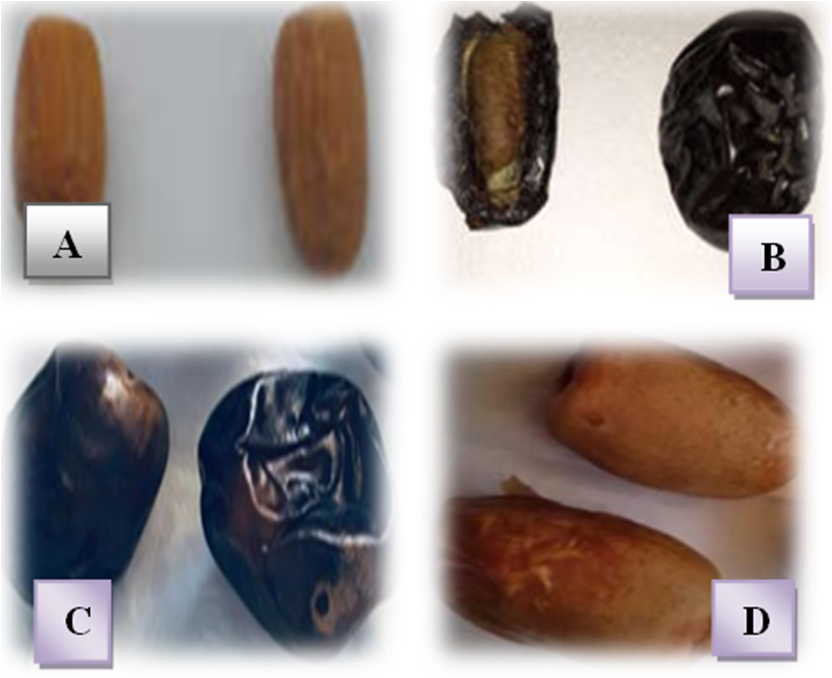
The material used in this study is based on plant material and bacterial strains tested. The choice of the Kentichi (K), Tamesrit (Tam), Degla Beida (DB) and Tantbouchet (Tan) cultivars is justified by their low market value, their taste quality, their availability and their appreciation by the population of Ouargla region (Figure 1). The dates of the cultivars are harvested from a palm grove in Ouargla, in November 2021 at the stage of complete maturation. In general, these cultivars can be consumed in their state or intended for technological transformation into several products including date syrup. Two bacterial strains (Escherichia coli, Staphylococcus aureus) were tested.

The extraction method adopted in this study is based on simple diffusion laws. This method allows the passage by passive transport of soluble solids from the date plant cells to the solution (hot water or juice) through the cellulosic membrane 7. The concentration of the juice is carried out by the evaporation of the free water, at 65°C by evaporation (low temperature) and 105°C by direct heating (high temperature). The purpose of evaporation is to obtain saturated and stable syrup against microbial alterations with a Brix degree between 72 - 75°Brix.
2.2. Sample AnalysisQualitative analysis highlights the presence of some compounds chemicals transferred from dates to their syrups, including flavonoids, tannins, coumarins, anthocyanins, alkaloids, terpenoids, saponosids, glycosids, steroids, anthraquinons and essential oils. The analysis is carried out by phytochemical tests of color reactions (screening).
This analysis authorizes the determination of phenolic compounds and condensed tannins by the spectral method. The oxidation of phenolic compounds by the Folin-Ciocalteu reagent leads to the formation of a new blue-colored molybdenum-tungsten complex which absorbs at 760 nm. The concentration of phenolic compounds is expressed in milligrams of gallic acid equivalent/100g of date syrup. The transformation of proanthocyanidins into anthocyanidins by the breaking of interflavinic bonds in an acid medium (HCl) followed by oxidation in the presence of Fe+3 makes it possible to assay the condensed tannins. The concentration of tannins is expressed in milligrams of catechin equivalent/100g of dates 8, 9.
2.3. Biological ActivityThe in vitro anti-radical activity was evaluated by measuring the scavenging power of the DPPH radical (1,1-Diphenyl-2-picryhydrazyl). DPPH is a stable free radical that acts by combining with other free radicals 10. These free radicals used to study the structure-activity relationship of phenolic compounds. The radical has a free electron on an atom of the nitrogen bridge. The delocalization of this electron results in the characteristic blue-violet coloration of the reagent, this delocalization also allows the DPPH to remain in the form of monomers and to be stable at ambient temperature 11. The evaluation of the anti-free radical activity is then expressed by the quantity of antioxidant necessary to reduce DPPH by 50% (IC50). It is the measurement of the kinetics of the reduction of the DPPH radical (decrease in the DPPH absorbance) which allows monitoring the rate of hydrogen transfer from the antioxidant to the DPPH radical and to neutralize it 11.
The antibacterial activity of date syrups is evaluated by the method of diffusion in agar medium against two bacterial strains Gram – (Echerichia Coli ATCC 25922) and Gram + (Staphylococcus aureus ATCC 25923). After activation of the stored microbial strains, they are inoculated onto petri dishes containing Muller Hinton agar and then incubated for 24 hours at 37°C. From a young culture (24 hours old), 2 to 3 well-isolated colonies are transferred into 10ml tubes of sterile physiological water. Culture media are inoculated using a sterile swab soaked in the bacterial suspension 12. The Watman n° 6 paper discs soaked in the extracts of the concentrated date syrups are dissolved in dimethyl sulfoxide (DMSO) at a concentration of 1 mg/ml. The boxes thus inoculated are incubated at 37° C. for 24 hours; all the tests are repeated three times. The measurement of the zone of inhibition around the disc makes it possible to evaluate the antibacterial activity.
2.4. Statistical AnalysisThe average values of the data obtained from several observations according to the tests were calculated and represented with the standard deviations using the Windows Excel software. The risk probabilities were evaluated at the threshold at 0.05 by the ANOVA test (Scheffe test) the was used as a means of analysis. The results were considered significant for p < 0.01.
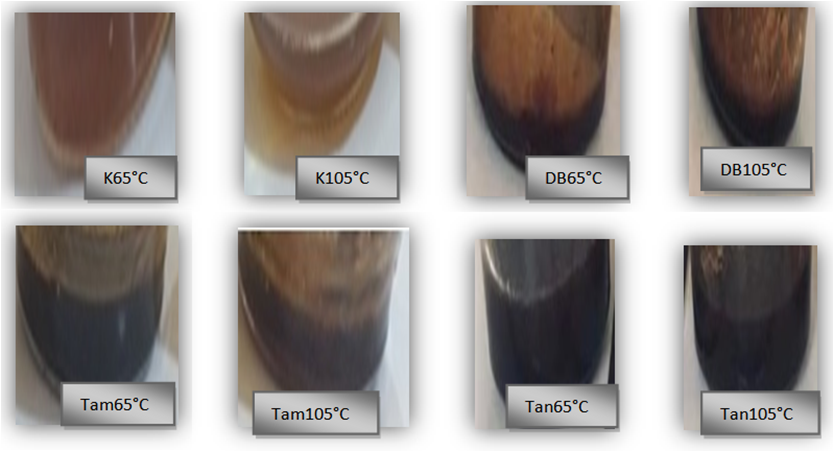
The syrups obtained by diffusion extraction method present a different coloring, this one varies according to the cultivars of dates studied. Date syrup from cultivar Kantichi and Degla Beida have a dark yellow-brown color, while those from cultivar Tamesrit and Tantbouchet have a dark black color. These syrups are clear, which avoids the clarification step (Figure 2).

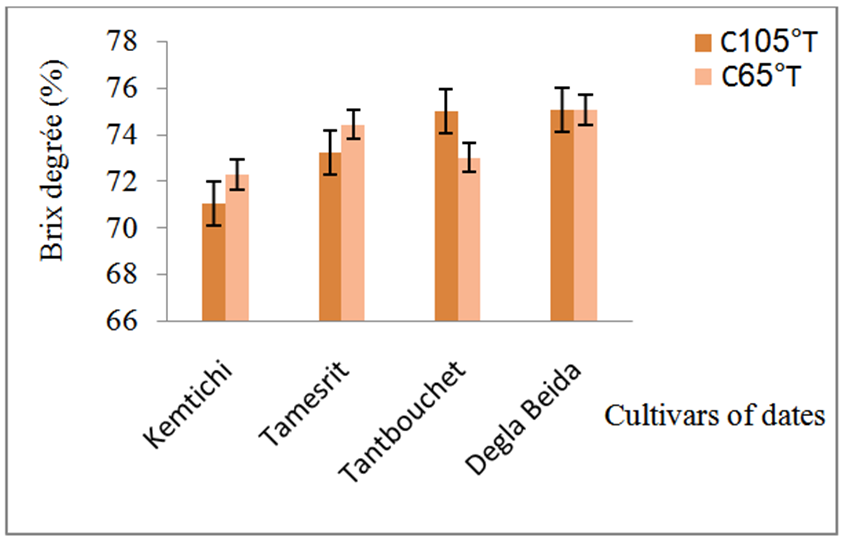
The concentration of the filtrates of two cultivars at 65°C and 105°C allowed us to determine the Brix degree of these syrups. The values are fluctuated between 72-74°Brix (Figure 3).

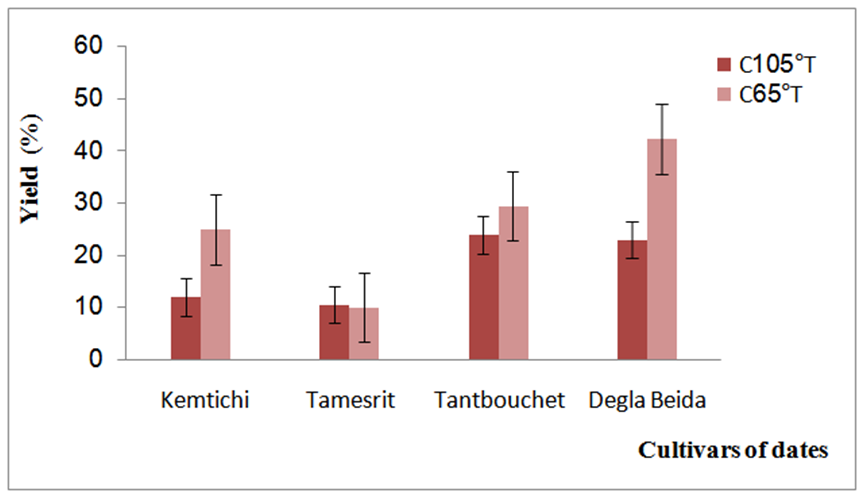
The yield in dates syrups at two concentration temperatures (65°C and 105°C) is mentioned below. The yield obtained at 65°C seems significant for the majority of cultivars, namely: Kantichi 65°C (25%), Tantbouchet 65 °C (29.6%) and Degla Beida 65°C (42.4%) (Figure 4).

The phytochemical screening showed the presence of the majority of the chemical groups sought in all the syrups of the cultivars studied with variable reactions ranging from frankly positive to negative (Table 1).

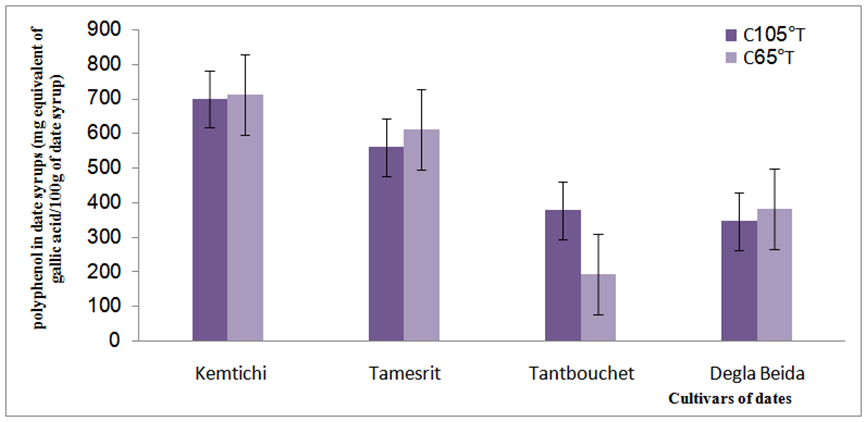
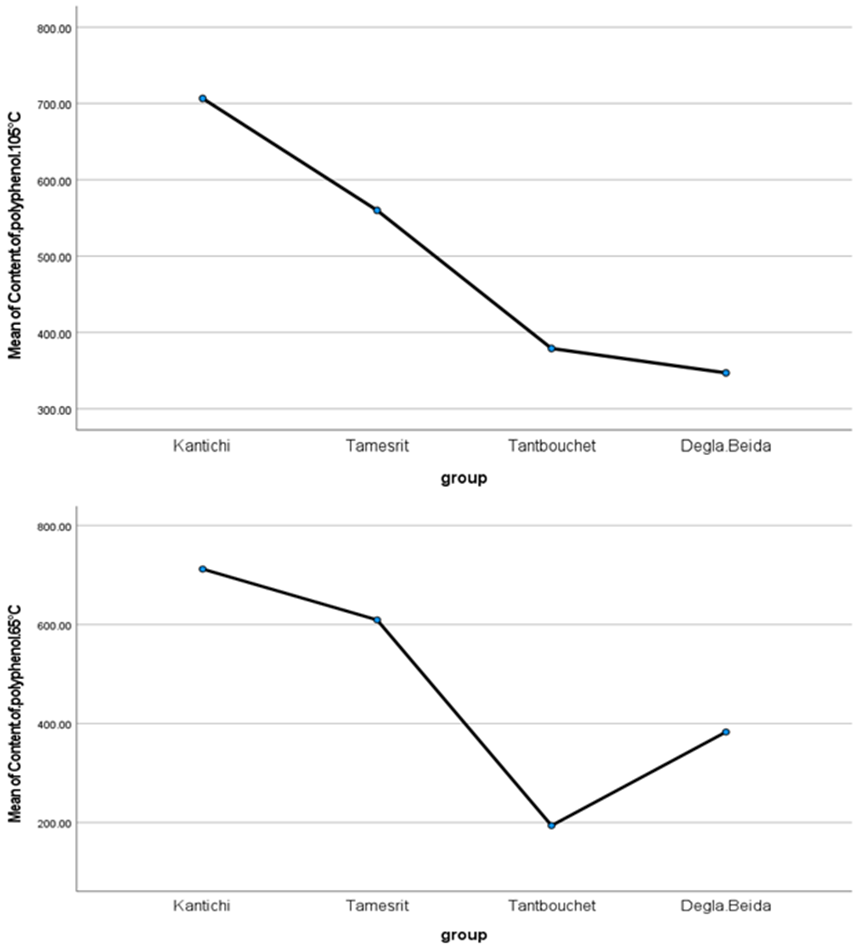
The Scheff test showed a significant difference between cultivars (p < 0.01) in the polyphenols content of date syrups, naymely: Kantichi cultivars (K65°C:712 mg GAE/100 g of date syrup; K105°C:700 mg GAE /100 g of date syrup), Tamesrit (Tam65°C:612 mg GAE /100 g of date syrup; Tam 105°C: 560 mg GAE/100 g of date syrup), (Tan 65°C: 194 mg GAE/100 g of date syrup; Tan105°C:379 mg GAE /100 g of date syrup) and Degla Beida (DB65°C:383 mg GAE /100 g of date syrup; (DB105°C:347 mg GAE /100 g of date syrup) regardless of the concentration temperature. The groups studied are spaced apart according to this test (Figure 5A; B).


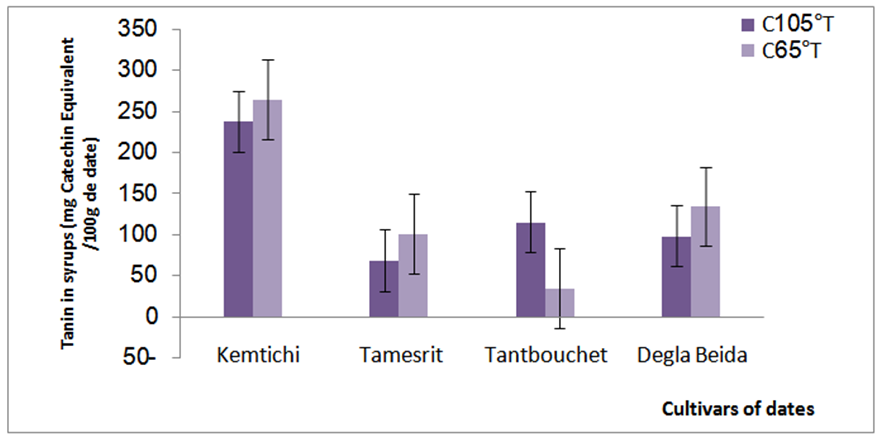
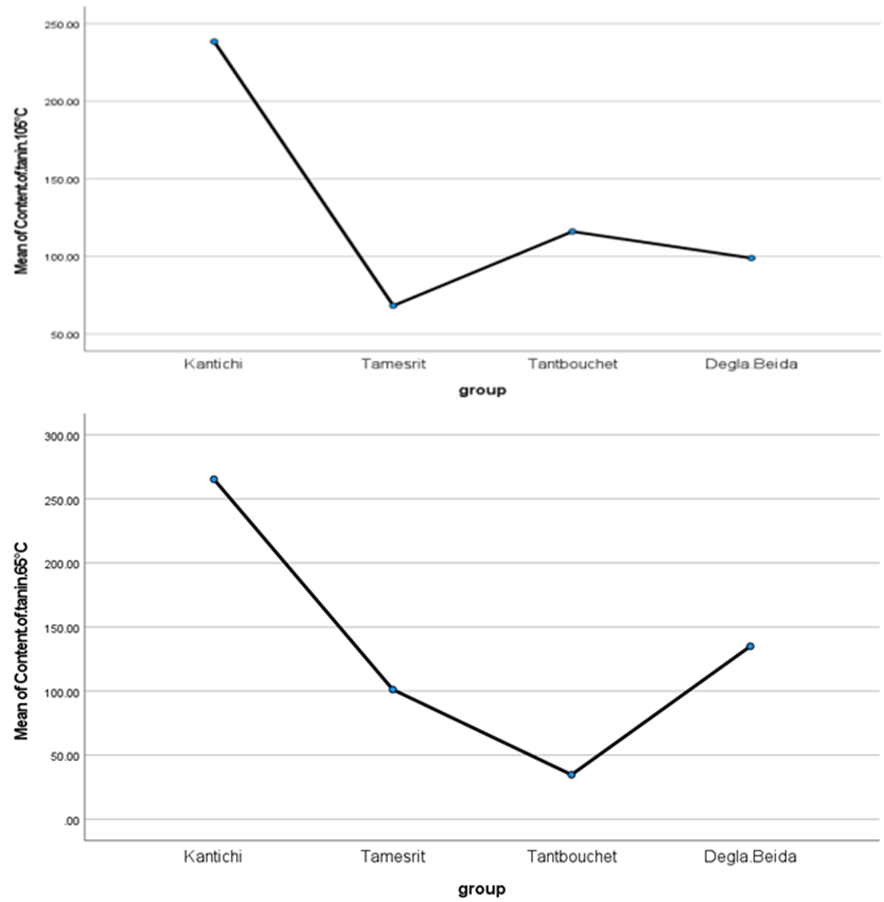
Condensed tannins contents in the syrups of the four date cultivars studied is variable in decreasing order K65°C > K105°C > DB65°C > Tan105°C > Tam65°C > DB105°C > Tam105°C > Tan 65°C. The Scheff test showed a significant difference between cultivars (p < 0.01) in the condensed tannins content of date syrups, (Figure 6 A; B).


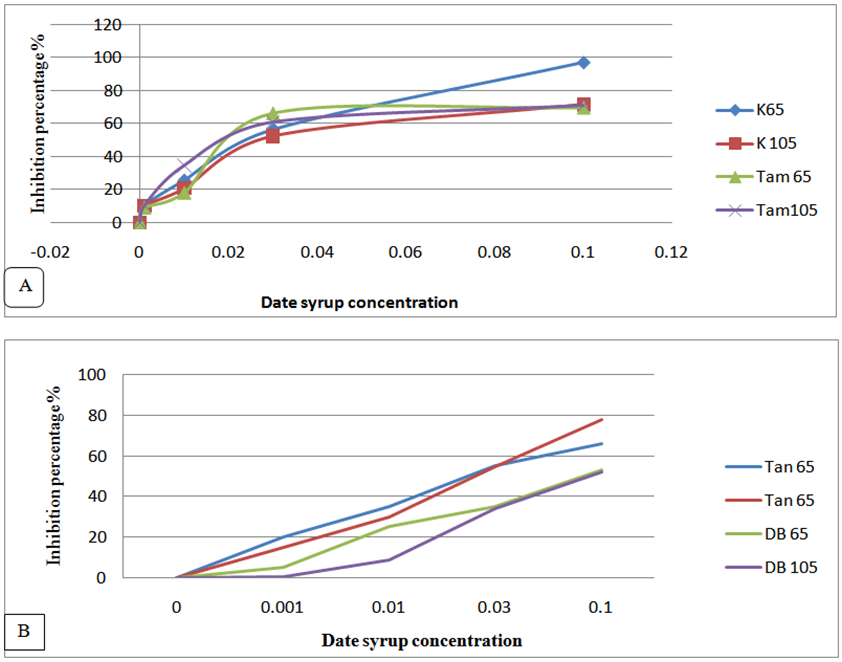
The date syrups of the cultivars studied show percentages of inhibition in decreasing order, namely: K 65°C (97.12%), K 105°C (71.76%), Tam105°C (71.23%), Tan 105°C (70.50%), Tam65°C (69.5%), Tan65°C (65.40%), DB65°C (60.20%) and DB105°C (48.18%) (Figure 7A; B).
The anti-radical properties are measured and highlighted by the Inhibitory Concentration (IC50), this corresponds to 50% reduction in the concentration of DPPH in the reaction medium 11.
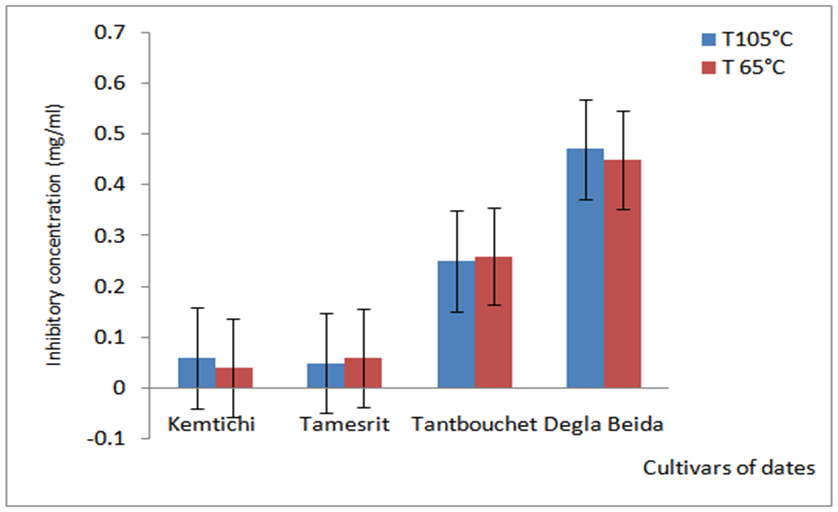
By comparison of elaborated date syrups, the greatest anti-radical activity is indicated by the lowest value of the inhibitory concentration (IC50) represented by date syrup K 65°C with an inhibitory concentration (IC50) equal to 0.0471 mg / ml. On the other hand, the DB105°C date syrup has the highest inhibitory concentration (IC50), which is equal to 0.47 mg / ml (Figure 8).
Among the syrups studied, the best result is obtained by K65°C with a percentage inhibition of the DPPH radical equal to 97.12% and IC50 0.0471 at a concentration of 0.1 mg / ml. The high percentage inhibition of this syrup may be due to the notable presence of polyphenols. Similarly, the speam's test confirmed these results according to the high correlation between the inhibitory concentration and the polyphenols content (Correlation factor > 0.5, namely FC:- 0.720 at 65°C and -0.863 at 105°C) (Table 2).


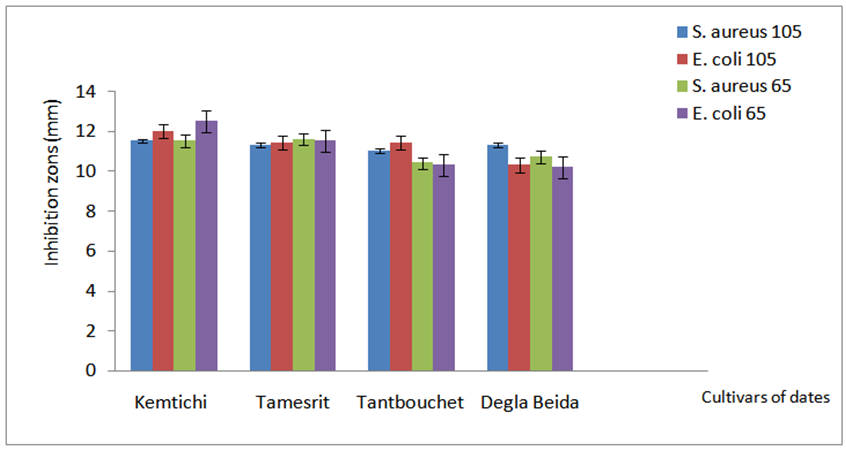
The antibacterial activity of date syrups at two concentration temperatures against two bacterial strains: E. Coli and S. Aureus, is shown in Figure 9.
The syrups obtained by the same cultivar and at two concentration temperatures 65°C and 105°C did not show any visual difference in color, which allows us to say that the concentration temperature has no effect on the color of the syrup.
°Brix values are in the range quoted by other studies (72 –73°Brix) 5. The concentration temperature did not show any effect on the °Brix here, because the latter is controlled by the manipulator. Based on the criterion of having a consumable product meet the recommendations of the specific organs of the diet. The concentration of juice, is carried out by the evaporation of free water, in order to make them stable against microbial alterations.
Regarding the yield of dates syrups, the cultivar Degla Beida has recorded the most important value compared to the other cultivars, this can be explained by the difference between cultivars (wealth in soluble solids). A double extraction of dates by water maintained at 80 °C records a relatively low yield compared to that cited for Ghars cultivar syrup obtained by a triple extraction (47.5 %) 6. Overall, these yields seem interesting that those obtained by the Granny President for syrup from Degla Beida cultivar (18.82%). The low yield in date syrups would probably be due to the low water content in the date, or even prevents the dissemination of sugars in the solvent. Dry or semi-soft dates require sufficient time to moisten to allow soluble solids to diffuse into water. The yield of the extraction depends on several parameters, namely: the plant material studied (morphological and physicochemical characteristics) 13, the duration of storage of the dates, harvest period and the applied extraction method 14.
The phytochemical screening showed note the presence of flavonoids, tannins (catechics), saponosids and glycosids in the syrups of four cultivars studied. However, the presence of coumarins characterizes the syrups of three cultivars except the Tantbouchet cultivar. Furthermore, the alkaloids and essential oils are visible only in the syrups of the Kantichi and Tamesrit cultivars. Nevertheless, the syrups of the Tantbouchet and Degla Beida cultivars showed their richness in terpenoids.
Most of the phenolic compounds were reported in the syrups of the cultivars combined at two concentration temperatures (65°C and 105°C), this means that this temperature did not influence the phytochemical composition. In the same perspective, the studies mentioned by 15, 16 reported the presence of flavonoids, tannins, coumarins, terpenoids, saponsides, cardiac glycosides and essential oils in dates of Algerian cultivars. Similarly, 17 report the presence of volatile oils in Nigerien dates. These results are consistent with other studies that have reported that date pulp is rich in phytochemicals 18, 19.
Regarding the polyphenols composition of date syrups, the concentration temperature of 65°C showed a significant difference (p<0.01) in polyphenols compared to the temperature 105°C for all the syrups except that from the tantbouchet cultivar 65°C. Our results are far superior to those found by 15, 20, 21, who estimate that dates contain polyphenols contents between 2 to 400 mg GAE/100 g fresh matter, respectively for Algerian and Iranian dates. Others research, find even lower values of 1.8 and 2.35 mg GAE/100 g fresh matter of total polyphenols for the Egyptian cultivars Siwi and Amhat 22. On the other hand, our results for date syrups of Kentichi, Tamesrit, Tantbouchet and Degla Beida cultivars are included in the range reported by 14, who quantified total polyphenols in ten Algerian cultivars from Biskra region. These authors found that the rates vary between 167 to 709 mg GAE/100 g fresh matter.
Many factors affect the polyphenols levels in dates, which explains the great variability between the studies. These include the geographical origin of the cultivar, growing conditions, maturity of dates tested, season, soil fertilization, exposure time to the sun, storage conditions, sampling and extraction methods.
Concerning the condensed tannins, the highest value is observed in K 65°C 265.34 mg CE /100 g of date syrup, and the lowest in Tan 34.7 mg CE /100 g of date syrup. The groups studied are spaced apart according to this test. Kantichi and Degla Beida cultivars recorded the highest values compared to the other cultivars. The rates of date syrups studied in condensed tannins show a significant difference between the cultivars and the concentration temperatures. Our results are higher than those reported by 16, for Ghars, Deglet Nour and Degla Beida date extracts (8 and 45 mg CE /100 g of dates). However, these results are within the range mentioned by 12, who estimate that the condensed tannins contents of the Ghars, Deglet-Nour and Mech-Degla cultivars from Tolga region in Algeria vary between 34.33±9.15 and 300.18±7.70 mg CE/100 g of the fresh weight of the date.
Overall, the results of the phytochemicals seem significant compared to the studies mentioned above on date extracts, because our elaborate syrups are concentrated products of the order of 72 - 74°brix.
Phenolic compounds play an important role in growth and reproduction, providing protection against predators and agents pathogens. They also have antioxidant, antiviral and antibacterial properties 23.
The date syrup From cultivar K65°C manifests with a significant percentage of inhibition at the concentration of 0.1 mg / ml. However, DB105°C shows the lowest percentage inhibition with the same concentration. The date syrups of four cultivars and at two concentration temperatures showed a high linear correlation was found between the antioxidant activity and the polyphenols content (p<0.01).
The antioxidant activity of dates and its products could provide phytochemicals including polyphenols, tannins, carotenoids, anticyans…etc. 24. It is also important to note that certain reducing sugars (saccharides and holosides). Present in dates have antioxidant properties 25. Furthermore, the antioxidant activity of dates can be attributed to the presence of other antioxidant compounds, such as ascorbic acid, vitamin E, carotenoids and selenium 24, 26, 27, 28. The antioxidant activity of Algerian date extracts at the Rotab stage estimated by 25 Sayeh (2018) oscillates between 71.23% - 10.88% at 10 mg / ml. In addition, Sultanate of Oman cultivars Fardh, Khalas and Khasab present at the Routab stage, according to 29, inhibition percentages of 65%, 63.4% and 62.5%. These results are relatively lower than the inhibition percentages of the date syrups studied.
Studied the antioxidant activity of Algerian date extracts at the Routab stage was studied by 16. The latter reported IC50 values between 4.47 mg / ml – 5.06 mg / ml. The study of antioxidant activity of methanolic extracts of five date cultivars in Ouargla evoked by 30. They report IC50 values that decrease in the order Deglet-Nour > Ghars > Tamjhourt > Degla-beida > Tafezauine. These values range from 21.27 to 10.83 mg / ml. The results of the free anti- radical activity recorded during the present study seem low compared to the studies cited above, which enhances the therapeutic and dietary interest of these elaborate syrups. The results obtained show that date syrups K65°C and K105°C have interesting inhibitory activities against bacterial growth depending on the bacterial strain. E.coli appears to be the most sensitive strain to date syrups at two concentration temperatures with inhibition zones of 12.5 and 12 mm compared to S.aureus.
The antibacterial activity of these syrups can be explained by the results of phytochemical analysis. Natural phenolic compounds like catechin, quercetin and gallic acid were known for their high antibacterial potency, and activity against E.coli, P.aeruginosa and S.aureus 31. In addition, 32, showed that flavonics (apigenin, kaempferol) are endowed with a strong effect on bacterial strains with Gram negative (E. coli) and Gram positive (S. aureus).
The study of 33, mentioned a study on the composition of date syrup. He identified potentially important antioxidants because of their oxidizing power. He also proposed their medicinal application as an antimicrobial agent.
The date syrups, the subject of this study, confer an interesting phytochemical composition. The 65°C concentration temperature of date syrups showed a positive effect on this composition, this may be due probably to the high concentration temperature which could affect the phytochemical composition of date syrups. These results are supported by the antioxidant activity provided by the anti-radical activity of DPPH. The latter showed the ability of antioxidants to scavenge free radicals with a percentage inhibition of around 97% against the inhibitory concentration (IC50) of 0.04 mg/ml. The high antioxidant activity of the syrups studied is attributed to the concentration of the syrups in soluble solids compared to the date extracts. The sensitivity of bacterial strains (Escherichia coli, Staphylococcus aureus) with zones of inhibition greater than 6mm (11 – 12.5 mm) for concentrations (71 – 74°Brix), gives the syrups produced an antimicrobial activity by inhibiting bacterial growth, this allows us to offer them in medicinal applications as antimicrobial agents. The phytochemicals (soluble solids) transferred from dates of low market value to their syrups seem to be non-negligible. Date syrups of all cultivars combined show interesting biological activity. Overall, these elaborate syrups can integrate in to the diet of the local population as an important source of natural antioxidant.
| [1] | Tirichine HS. Ethnobotanical study, antioxidant activity and phytochemical analysis of some date palm cultivars (Phoenix dactylifera L.) from southeastern Algeria, (magister thesis), University of Oran-Es, Senia, 2010. 10-180. | ||
| In article | |||
| [2] | Baliga MS, Baliga BR, Kandathil SM,. Bhat HP, Vayalil PK. A review of the chemistry and pharmacology of date fruits (Phoenix dactylifera L.). Food research international, 2011. 44: 1812-1822. | ||
| In article | View Article | ||
| [3] | Vayalil PK. Date Fruits (Phoenix dactylifera L), An Emerging Medicinal, Ed Delevigne, Paris, 2012, 15-20. | ||
| In article | |||
| [4] | Munier P. The date palm, Agricultural technique and tropical production, Ed Larousse, Paris, 1973, 45-50. | ||
| In article | |||
| [5] | Mimouni Y, Siboukeur OK. Date syrup extraction technique comparison with high fructose syrups (HFCS), European University Editions:, EUE, 2014, 55-69. | ||
| In article | |||
| [6] | Mimouni Y, Siboukeur OK. Study of the nutritional and dietary properties of date syrups extracted by diffusion, in comparison with high fructose syrups (isoglucoses), from the starch industry. Ann Science Tech, 2011. 3: 1-11. | ||
| In article | |||
| [7] | Alberts A, BRAY D, Johnson A, Lenis J, Raff M, Roberts K, Nater P. The essentials of cell biology, Ed Delevigne, Paris, 2002, 230-450. | ||
| In article | |||
| [8] | Vermerris W, Nicholson R. Phenolic compound biochemistry, Ed Springer Gainesvil, 2006, 78-80l. | ||
| In article | |||
| [9] | Collin S, Crouzet J. Polyphenols and processes, Ed Tec and doc, Paris, 2011, 55-98. | ||
| In article | |||
| [10] | Pelli K, Lyly M. Antioxidants in the diet, Ed, INRA, Paris, 2003, 77-81. | ||
| In article | |||
| [11] | Guillouty A. Medicinal plants and antioxidant. (Doctoral Thesis), Toulouse University, France, 2016, 99-230. | ||
| In article | |||
| [12] | Daasamiour S, Alloui-lombarkia O., Bouhdila F, Ayachi A, Hambaba L. Study of the involvement of phenolic compounds from the extracts of three date varieties in its antibacterial activity. Phytotherapy, 2014. 12: 135-142. | ||
| In article | View Article | ||
| [13] | Ali haimoud S. Phytochemical study and biological roles of Phoenix varieties dactylifera (date) from Algeria. (Doctoral thesis), University of Hassiba Benbouali: Chlef, 2017, 54-60. | ||
| In article | |||
| [14] | Benmeddour Z, Mehinagic E, Meurlay D, Louaileche H. Phenolic composition and antioxidant capacities of ten Algerian date (Phoenix dactylifera L.) cultivars: A comparative study, Journal of Functional Foods, 2013, 5: 346-354. | ||
| In article | View Article | ||
| [15] | Gourchala F. Physicochemical, phytochemical and biochemical characterization of five varieties of dates from Algeria, Phoenix dactylifera L. (Degletnoor, Ghars, H’mira, Tamesrit and Tinissine), Effects of their ingestion on certain biological parameters (Glycemia, lipid profile, glycemic index and blood pressure. (Doctoral Thesis), University of Badji Mokhtar, Annaba, 2015, 23-130. | ||
| In article | |||
| [16] | Sayah Z. Physico-chemical and biochemical characteristics and biological activities some dry, soft and semi-soft dates from the Ouargla basin at the Routab stadium and Tmar, (Doctoral Thesis), Kasdi Merbah University, Ouargla, 2018. 58-60. | ||
| In article | |||
| [17] | Yahaya SA, Omokhudu CA, Abdulahi MA, Sanusi MK, Photochemical screening and mineral evaluation of fresh fruits (Phoenix dactylifera L.) in wet season of Nigeria, Journal of Agricultural and Crop Research, 2015, 3: 47-52. | ||
| In article | |||
| [18] | Abdul A, Allaith A.. Antioxidant activity of Bahraini date palm (Phoenix dactylifera L.) fruit of various cultivars, International Journal of Food Science and Technology, 2008, 43: 1033-1040. | ||
| In article | View Article | ||
| [19] | Faqir MA, Iqbal S, Issa A H, Khan M, Shahzad H, Arshad MS. M.S. Phytochemical characteristics of Date Palm (Phoenix dactylifera L) extracts fruit Pak, J. Food Sci, 2012, 22: 117-120. | ||
| In article | |||
| [20] | Mansouri A B, Embarec G, Kokkalou E, Kefalas P. Phenolic profile and antioxydant activity of the Algerian ripe date palm fruit (Phoenix dactylifera L), Food chemistr, 2005, 89: 411-420. | ||
| In article | View Article | ||
| [21] | Biglari F, Alkarkhi AFM, Mateasa A. Antioxydant activity and phenolic content of various date palm (Phoenix dactylifera L) fruits from Iran, Food chemistry, 2008, 107: 1636-1641. | ||
| In article | View Article | ||
| [22] | Khalil KE, Abd-El-Bari MS, Hafiz NE. Ahmed EY. Production, evaluation and utilization of date syrup concentrate (Dibis), Egyptian Journal of Food Science, 2002, 30: 179-203. | ||
| In article | |||
| [23] | Kan Y, Gokbulut A, Kartal M, Konuklugil B, Yilmaz G. Development and Validation of a LC Method for the Analysis of Phenolic Acids in Turkish Salvia Species, Chromatographia Supplemen, 2007, 66: 147-152. | ||
| In article | View Article | ||
| [24] | Al-farsi M, Alasalvar C, Morris A, Baron M, Shahidi F. Comparison of antioxidant activity, anthocyanins, carotenoids and phenolics of three native fresh and sundried date (Phonix dactylifera L.) varieties grown in Oman, Journal of agricultural and food chemistry, 2005, 53: 7592-7599. | ||
| In article | View Article PubMed | ||
| [25] | Hong YJ, Tomas-Barberan FA, Kader AA, Mitchell AE. The flavonoid glycosides and procyanidin composition of Deglet Noor dates (Phoenix dactylifera L). J Agric Food Chem, 2006, 54: 2405-2411. | ||
| In article | View Article PubMed | ||
| [26] | Boudries H, Kefalas P, Hormaso-Mendez D. Carotenoid composition of Algerian date varietes (Poenix dactylifera L) at different edible maturation stages, Food chemistry, 2007, 101: 1372-1377. | ||
| In article | View Article | ||
| [27] | Al-farsi M, Lee CY. Nutritional and functional properties of dates, Critical reviews in food science and nutrition, 2008, 48: 877-887. | ||
| In article | View Article PubMed | ||
| [28] | Ismail I, Altuwairki D. Chemical composition and antimicrobial efficacy of date palm fruit of Saudi Arabia, World applied sciences journal, 2016, 34: 140-146. | ||
| In article | |||
| [29] | Singh V, Guizani N. Essa MM, Hakkim FL, Rahman MS. Comparative analysis of total phenolics, flavonoid content and antioxidant profile of different date varieties (Phoenix dactylifera L.) from Sultanate of Oman, International Food Research Journal, 2012, 19: 1063-1070. | ||
| In article | |||
| [30] | Ghiaba Z, Boukouada M, Djeridane A, Saidi M, Yousfi M. Screening of antioxidant activity and phenolic compounds of various date palm (Phoenix dactylifera L) fruits from Algeria, Mediterranean journal of nutrition and metabolism, 2012, 5: 119-126. | ||
| In article | View Article | ||
| [31] | Rodrigues HG, Diniz YS, Faine LA. Antioxidant effect of saponin: potential action of a soybean flavonoid on glucose tolerance and risk factors for atherosclerosis, Int. J Food Sci Nutr, 2005, 56: 79-85. | ||
| In article | View Article PubMed | ||
| [32] | Katarzyna U, Anna M , Marta M, Joanna JB, Grzegorz W. Assessment of antibacterialeffects of flavonids by estimqtion of generation times in liquiidbacterial cultures, Biologia, 2007, 62: 132-135. | ||
| In article | View Article | ||
| [33] | Dialla D. Ethno pharmacological survey of medicinal plant in Mali and phytochimical study of four of them: Ghinusoppositifolius (Azoaceae), Diospyrosa by ssinica (Eblanceae), entadaafricana (Meliaceae), (Doctoral Thesis), University of Lausanne, Lausanne Switzerland, 2000. 23-34. | ||
| In article | |||
Published with license by Science and Education Publishing, Copyright © 2023 Mimouni Yamina, Benaissa Atika and Bedda Hafsia
 This work is licensed under a Creative Commons Attribution 4.0 International License. To view a copy of this license, visit
http://creativecommons.org/licenses/by/4.0/
This work is licensed under a Creative Commons Attribution 4.0 International License. To view a copy of this license, visit
http://creativecommons.org/licenses/by/4.0/
| [1] | Tirichine HS. Ethnobotanical study, antioxidant activity and phytochemical analysis of some date palm cultivars (Phoenix dactylifera L.) from southeastern Algeria, (magister thesis), University of Oran-Es, Senia, 2010. 10-180. | ||
| In article | |||
| [2] | Baliga MS, Baliga BR, Kandathil SM,. Bhat HP, Vayalil PK. A review of the chemistry and pharmacology of date fruits (Phoenix dactylifera L.). Food research international, 2011. 44: 1812-1822. | ||
| In article | View Article | ||
| [3] | Vayalil PK. Date Fruits (Phoenix dactylifera L), An Emerging Medicinal, Ed Delevigne, Paris, 2012, 15-20. | ||
| In article | |||
| [4] | Munier P. The date palm, Agricultural technique and tropical production, Ed Larousse, Paris, 1973, 45-50. | ||
| In article | |||
| [5] | Mimouni Y, Siboukeur OK. Date syrup extraction technique comparison with high fructose syrups (HFCS), European University Editions:, EUE, 2014, 55-69. | ||
| In article | |||
| [6] | Mimouni Y, Siboukeur OK. Study of the nutritional and dietary properties of date syrups extracted by diffusion, in comparison with high fructose syrups (isoglucoses), from the starch industry. Ann Science Tech, 2011. 3: 1-11. | ||
| In article | |||
| [7] | Alberts A, BRAY D, Johnson A, Lenis J, Raff M, Roberts K, Nater P. The essentials of cell biology, Ed Delevigne, Paris, 2002, 230-450. | ||
| In article | |||
| [8] | Vermerris W, Nicholson R. Phenolic compound biochemistry, Ed Springer Gainesvil, 2006, 78-80l. | ||
| In article | |||
| [9] | Collin S, Crouzet J. Polyphenols and processes, Ed Tec and doc, Paris, 2011, 55-98. | ||
| In article | |||
| [10] | Pelli K, Lyly M. Antioxidants in the diet, Ed, INRA, Paris, 2003, 77-81. | ||
| In article | |||
| [11] | Guillouty A. Medicinal plants and antioxidant. (Doctoral Thesis), Toulouse University, France, 2016, 99-230. | ||
| In article | |||
| [12] | Daasamiour S, Alloui-lombarkia O., Bouhdila F, Ayachi A, Hambaba L. Study of the involvement of phenolic compounds from the extracts of three date varieties in its antibacterial activity. Phytotherapy, 2014. 12: 135-142. | ||
| In article | View Article | ||
| [13] | Ali haimoud S. Phytochemical study and biological roles of Phoenix varieties dactylifera (date) from Algeria. (Doctoral thesis), University of Hassiba Benbouali: Chlef, 2017, 54-60. | ||
| In article | |||
| [14] | Benmeddour Z, Mehinagic E, Meurlay D, Louaileche H. Phenolic composition and antioxidant capacities of ten Algerian date (Phoenix dactylifera L.) cultivars: A comparative study, Journal of Functional Foods, 2013, 5: 346-354. | ||
| In article | View Article | ||
| [15] | Gourchala F. Physicochemical, phytochemical and biochemical characterization of five varieties of dates from Algeria, Phoenix dactylifera L. (Degletnoor, Ghars, H’mira, Tamesrit and Tinissine), Effects of their ingestion on certain biological parameters (Glycemia, lipid profile, glycemic index and blood pressure. (Doctoral Thesis), University of Badji Mokhtar, Annaba, 2015, 23-130. | ||
| In article | |||
| [16] | Sayah Z. Physico-chemical and biochemical characteristics and biological activities some dry, soft and semi-soft dates from the Ouargla basin at the Routab stadium and Tmar, (Doctoral Thesis), Kasdi Merbah University, Ouargla, 2018. 58-60. | ||
| In article | |||
| [17] | Yahaya SA, Omokhudu CA, Abdulahi MA, Sanusi MK, Photochemical screening and mineral evaluation of fresh fruits (Phoenix dactylifera L.) in wet season of Nigeria, Journal of Agricultural and Crop Research, 2015, 3: 47-52. | ||
| In article | |||
| [18] | Abdul A, Allaith A.. Antioxidant activity of Bahraini date palm (Phoenix dactylifera L.) fruit of various cultivars, International Journal of Food Science and Technology, 2008, 43: 1033-1040. | ||
| In article | View Article | ||
| [19] | Faqir MA, Iqbal S, Issa A H, Khan M, Shahzad H, Arshad MS. M.S. Phytochemical characteristics of Date Palm (Phoenix dactylifera L) extracts fruit Pak, J. Food Sci, 2012, 22: 117-120. | ||
| In article | |||
| [20] | Mansouri A B, Embarec G, Kokkalou E, Kefalas P. Phenolic profile and antioxydant activity of the Algerian ripe date palm fruit (Phoenix dactylifera L), Food chemistr, 2005, 89: 411-420. | ||
| In article | View Article | ||
| [21] | Biglari F, Alkarkhi AFM, Mateasa A. Antioxydant activity and phenolic content of various date palm (Phoenix dactylifera L) fruits from Iran, Food chemistry, 2008, 107: 1636-1641. | ||
| In article | View Article | ||
| [22] | Khalil KE, Abd-El-Bari MS, Hafiz NE. Ahmed EY. Production, evaluation and utilization of date syrup concentrate (Dibis), Egyptian Journal of Food Science, 2002, 30: 179-203. | ||
| In article | |||
| [23] | Kan Y, Gokbulut A, Kartal M, Konuklugil B, Yilmaz G. Development and Validation of a LC Method for the Analysis of Phenolic Acids in Turkish Salvia Species, Chromatographia Supplemen, 2007, 66: 147-152. | ||
| In article | View Article | ||
| [24] | Al-farsi M, Alasalvar C, Morris A, Baron M, Shahidi F. Comparison of antioxidant activity, anthocyanins, carotenoids and phenolics of three native fresh and sundried date (Phonix dactylifera L.) varieties grown in Oman, Journal of agricultural and food chemistry, 2005, 53: 7592-7599. | ||
| In article | View Article PubMed | ||
| [25] | Hong YJ, Tomas-Barberan FA, Kader AA, Mitchell AE. The flavonoid glycosides and procyanidin composition of Deglet Noor dates (Phoenix dactylifera L). J Agric Food Chem, 2006, 54: 2405-2411. | ||
| In article | View Article PubMed | ||
| [26] | Boudries H, Kefalas P, Hormaso-Mendez D. Carotenoid composition of Algerian date varietes (Poenix dactylifera L) at different edible maturation stages, Food chemistry, 2007, 101: 1372-1377. | ||
| In article | View Article | ||
| [27] | Al-farsi M, Lee CY. Nutritional and functional properties of dates, Critical reviews in food science and nutrition, 2008, 48: 877-887. | ||
| In article | View Article PubMed | ||
| [28] | Ismail I, Altuwairki D. Chemical composition and antimicrobial efficacy of date palm fruit of Saudi Arabia, World applied sciences journal, 2016, 34: 140-146. | ||
| In article | |||
| [29] | Singh V, Guizani N. Essa MM, Hakkim FL, Rahman MS. Comparative analysis of total phenolics, flavonoid content and antioxidant profile of different date varieties (Phoenix dactylifera L.) from Sultanate of Oman, International Food Research Journal, 2012, 19: 1063-1070. | ||
| In article | |||
| [30] | Ghiaba Z, Boukouada M, Djeridane A, Saidi M, Yousfi M. Screening of antioxidant activity and phenolic compounds of various date palm (Phoenix dactylifera L) fruits from Algeria, Mediterranean journal of nutrition and metabolism, 2012, 5: 119-126. | ||
| In article | View Article | ||
| [31] | Rodrigues HG, Diniz YS, Faine LA. Antioxidant effect of saponin: potential action of a soybean flavonoid on glucose tolerance and risk factors for atherosclerosis, Int. J Food Sci Nutr, 2005, 56: 79-85. | ||
| In article | View Article PubMed | ||
| [32] | Katarzyna U, Anna M , Marta M, Joanna JB, Grzegorz W. Assessment of antibacterialeffects of flavonids by estimqtion of generation times in liquiidbacterial cultures, Biologia, 2007, 62: 132-135. | ||
| In article | View Article | ||
| [33] | Dialla D. Ethno pharmacological survey of medicinal plant in Mali and phytochimical study of four of them: Ghinusoppositifolius (Azoaceae), Diospyrosa by ssinica (Eblanceae), entadaafricana (Meliaceae), (Doctoral Thesis), University of Lausanne, Lausanne Switzerland, 2000. 23-34. | ||
| In article | |||