Fish and shrimp-based value-added products of Bangladesh have great potential in the food markets. A panel test was conducted on ready-to-eat shrimp and fish products, called the Balachao, with 60 respondents of different ages and genders to evaluate consumer preference. Twenty participants were chosen from each of the three age classes: less than 20, 20-40, and above 40 years, with a 1:1 ratio for males and females. Three groups of products were prepared: dried shrimp (A), Bombay duck fish (B), and ribbon fish (C). Each product group had three unique recipe codes with different dried fish and shrimp percentages. The proximate composition was analyzed to determine the nutritional value of the products. Participants' feedback on external appearance, taste, odor, juiciness, crispness, price and overall acceptability was collected through a questionnaire, categorized, and statistically analyzed. Recipes A2 (50% shrimp), B2 (50% Bombay duck), and C2 (50% ribbon fish) obtained the highest mean scores for each evaluation criterion, and they were significantly different from the other recipes (p < 0.05). In addition, the highest percentage of participants from different age classes and genders preferred these recipes. No significant correlation was found between overall acceptability and participants' sex and age class (p > 0.05). The study revealed that recipes A2, B2, and C2 had good acceptability to consumers and could be potential value-added fishery products in Bangladesh. The findings of this study will contribute to the field of consumer behavior and market potential for value-added fishery products.
Bangladesh is globally recognized for its enriched fisheries resources and ranks third in the world in inland fisheries production 1, 2, 3. Fish contributes to food and nutritional security in Bangladesh by accounting for 3.52% of the Gross Domestic Product (GDP), 26.37% of the Agricultural GDP, 1.39% of total export profits, and more than 12% of employment. It is currently turning into a self-sufficient fish-producing nation that meets approximately 60% of its population's daily animal protein requirements, with a per capita intake of 62.58 g/day compared with the provision of 60 g/day 4. Consumer demand for value-added fish products is increasing along with the rising trend in fish production in Bangladesh. The best strategy to increase the demand for fishery products and ensure their proper usage of fishery products in Bangladesh is to produce quality-based value-added fish products 5, 6, 7.
Globally, fish and shrimp are in high demand because they contain high-quality proteins, essential vitamins, and crucial polyunsaturated fatty acids 8, 9. Unselective fishing methods produce significant shrimp by-products, which result in the disposal of tiny fish and shrimp, leaving underutilized resources 9, 10, 11. These underutilized fish and shrimp species can potentially provide sources of high-quality proteins and other nutrients 12. The need to increase the use of underutilized fish as value-added fishery products for human consumption has received considerable attention worldwide 13.
A procedure that alters the qualities of primary materials to add value to a product or service is known as adding value, and the result is known as a value-added product 14. The fish processing industry now emphasizes quality assurance and value addition to improve profitability. Value-added products in the fish processing industry have created opportunities for foreign exchange 15. Currently, different types of value-added products are available in Bangladesh, including mince- or surimi-based fish products, ready-to-eat, and ready-to-cook fish products, among which ready-to-eat products such as fish fingers, cutlets, patties, burgers, sausages, and fish balls are more popular to the people 16.
Food preference tests and measurements are extrinsic indicators of food quality, management systems, and acceptability in the market chain 17, 18. Some tactics, such as cues, allow customers to gain information and make judgments regarding food quality. Sensory evaluation of fish products is the traditional and most commonly used method for assessing food quality 19. Moreover, understanding food products' quality is somehow dependable on the consumer preference test 20. Preference tests help consumers understand food quality by evaluating its quality attributes 21.
Customer perception survey is a common way to determine how customers differ from one another in terms of their potential product preferences 22, 23. Recently, a trained panel test on food quality was used to better understand consumer perceptions and preferences, allowing for the development of efficient marketing strategies for the food industry 24. In recent years, consumer preferences have significantly increased for ready-to-eat (RTE) products owing to rapid urbanization, lack of time for cooking 25, and the increased purchasing capacity of consumers 26. Students, young people, and working people now prefer ready-to-eat foods to save time and energy 25.
Balachao is a popular value-added fishery product among the people of the Chattogram and Cox's Bazar regions of Bangladesh. It is a dried and spicy pickle; made from shrimp, fish, fried onions, garlic, ginger, and red chilies traditionally. There is no documented ingredient composition and preparation procedure for Balachao. Consumers can have it directly or use it as an additive to improve the taste of regular local dishes, such as fried rice, mixed dal, khichuri, noodles, and vegetables. Unfortunately, only a few value-added fish products are commercially produced in Bangladesh.
In Bangladesh, there is a limited attempt to conduct consumer preference tests of value-added products because of a lack of entrepreneurship, unavailability of quality products, and variability in consumer behavior 27. Bangladesh has the potential as well as the limitations to grow its fish and seafood export market. Public and private standards must play a role in ensuring the safety and quality of exportable fish products 28. It is necessary to assess the consumer acceptance of fish and seafood products to standardize them for national and international markets. Therefore, the present study aimed to investigate the consumer acceptance of three value-added fish and shrimp Balachao and derive the influence of age and sex on consumer preferences for these products. The study adds to the body of knowledge regarding consumer expectations for value-added fishery products, and the findings offer the practical potential of standard recipes of Balachao for food market applications. The findings will be particularly helpful for businesses existing on or wanting to enter the Balachao market, and make contributions to the subject of consumer behavior.
Three groups of ready-to-eat Balachao products were prepared using dried fish and shrimp as raw materials. The dried raw materials were shrimps of different species, dried Bombay duck (Harpadon nehereus), and dried ribbon fish (Trichiurus haumela), denoted as A, B, and C, respectively. Each of the products (A, B and C) had three unique recipes with different percentages of dried shrimp, fish, and spice ingredients. The detailed ingredients list of the recipes is given in Table 1. The dried raw materials of shrimp and fish were collected from Shah Amanat Traders, located at Cox's Bazar, Bangladesh. The collected raw materials were inspected for quality before collection and further processing. The supplier of the raw materials (dried shrimp and fish) was laboratory certified and used to follow a hygienic procedure, mechanical drying method, and vacuum packing system. The preparation procedure for the ready-to-eat Balachao includes several steps. First, the dried shrimps and fishes were chopped into small pieces. Second, the pieces were fried with oil and then cooled in large containers. Third, the fried pieces were mixed with fried sprained onion, garlic, and red chili flakes according to the recipe codes. Finally, the products were taken in airtight aluminum pots and sealed properly to avoid contamination. All ethical guidelines regarding animal welfare and standard laboratory protocols were strictly followed at each step of the whole process.
The proximate composition of the recipes was conducted at the Fish Processing Laboratory, Chattogram Veterinary and Animal Sciences University (CVASU). Crude protein, crude fiber, crude fat, ash, and minerals (Calcium and Phosphorous) content were analyzed using the standard methods of the Association of Official Analytical Chemists (AOAC) 29.
2.3. Preparation of the Questionnaire and Selection of the Criteria for Product EvaluationA pre-constructed questionnaire in both English and Bengali was used to collect data from participants. Each questionnaire contained a unique identification number (ID), recipe code, participants' consent for the test, and criteria for product evaluation. The product evaluation criteria were external appearance, taste, odor, juiciness, crispness, price, and overall acceptability. Each criterion was assigned a five-point Likert scale: 5 = strongly acceptable, 4 = moderately acceptable, 3 = acceptable, 2 = less acceptable, and 1 = not acceptable.
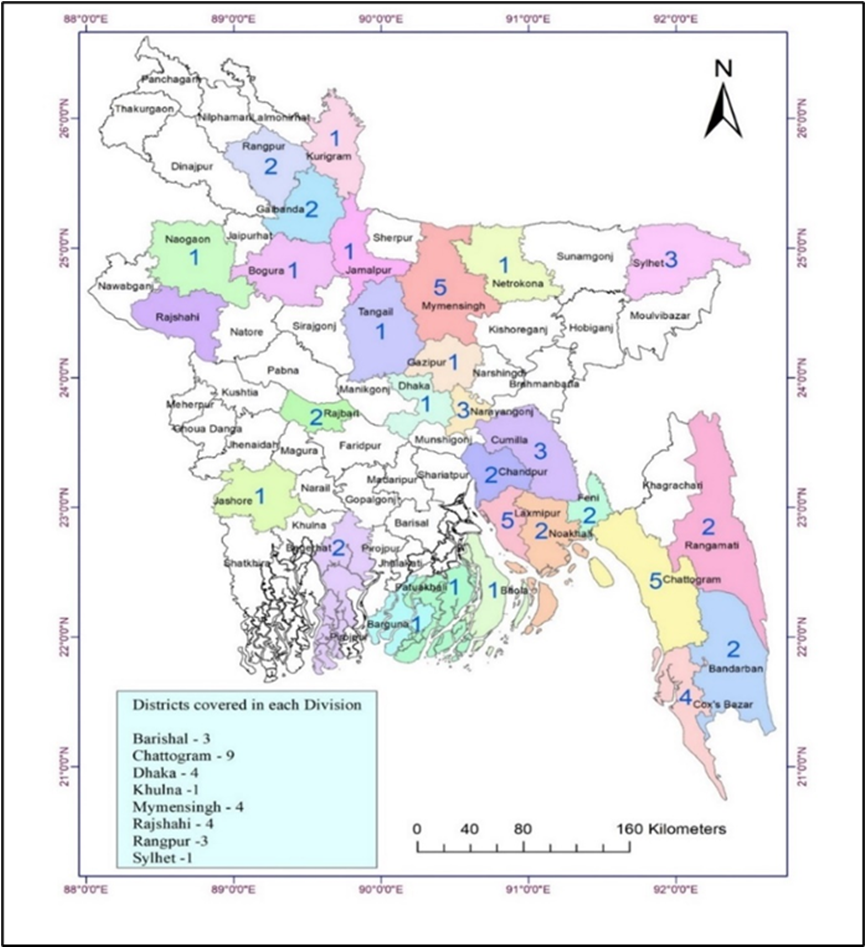
2.4. Selection and Training of the ParticipantsThe selection criteria for the participants were age, class, gender, and area to ensure diversity of the participants, precision of the panel test results, and avoidance of bias. A total of 60 participants were selected from 29 districts and eight (8) divisions of Bangladesh (Figure 1). The male-female ratio was 1:1, and each of the three age classes (below 20, 20 to 40, and above 40 years) had 20 participants for the test. The selected participants were trained in the product evaluation process, scale and scoring system, questionnaire fill-up process, and overall guidelines prior to the panel test.
2.5. Distribution of the Products and Performing the TestEach participant received a questionnaire and nine packets of products (three recipes from each category: A, B, and C) for evaluation. The packets were properly sealed and designated using a recipe code. The participants were given three consecutive days to taste one product group (A, B and C) with three recipes per day. They were properly instructed and trained to observe the product attributes and record their response to the questionnaire.

The questionnaires with participants' feedback were collected, and product evaluation data were recorded, categorized, and analyzed using Microsoft Excel (Version 2019) and the Statistical Package for Social Science (SPSS) (Version 24). The collected data were evaluated based on each criterion's average mean score on a Likert scale and expressed as mean ± standard deviation (SD). Likert scale (1-5) responses of the participants were statistically analyzed to evaluate the participants’ preferences for the formulated recipes. The Kruskal-Walli's test was used to identify the variability of participants' responses on the recipes of each product group (A, B, and C) with 95% confidence interval (p < 0.05). Spearman's correlation was conducted between 'overall acceptability and gender' and 'overall acceptability and age classes' to determine the influence of age and sex on product preferences (p < 0.05).
Table 2 presents the nutritional parameter percentages of the formulated recipes, including moisture (M), crude protein (CP), crude fiber (CF), crude fat (EE), Ash, calcium (Ca), and phosphorus (P). Recipe B1 had the highest percentage of M (6.91%), CF (8.08%), and EE (46.88%). The highest percentage of CP (41.65%) and ash (10.41%) content was found in recipe A3, whereas recipe B3 had the highest Ca (1.5%) and P (0.50%) content. Among the recipe groups (A, B, and C), the highest CP values were found in recipe groups A3, B3, and C3, the highest CF and EE values were found in A1, B1, and C1. The bacteriological test results for Escherichia coli and Salmonella sp. were negative for all recipes.
Eight (8) different occupation groups of participants were identified: government employees (7.2%), housewives (20%), labor (11.1%), students (33.3%), researchers (6.7%), private jobs (8.3%), teachers (3.3%), and businessmen (10%). Among the selected panelists, the education level was illiterate (6.5%), school passed (46.9%), undergraduate (35%), and postgraduate (11.7%) (Table 3).
Participants provided their opinions on a 5-point Likert scale for each chosen criterion, which included external appearances, taste, odor, juiciness, crispiness, overall acceptability, and price of the recipes; the mean value of the scale is documented in Table 4. The mean score of the Likert-scale assessment and the significant variability among the recipes for each assessment criterion (based on the mean rank score) are discussed below.
The recipes with the highest mean values for external appearance among groups A, B, and C were A2 (3.950 ± 0.649), B2 (4.137 ± 0.698), and C2 (4.233 ± 0.945), respectively (Table 4). No significant variations were observed in the mean rank values of the Likert scale among the recipes in Group A (p > 0.05). B1-B2 and B3-B2 in group B and C3-C2 in group C showed statistically significant differences (Table 5).
A2, B2, and C2 from recipe groups A, B, and C, received the highest mean scores on taste from panelists as 4.217 ± 0.761, 4.417 ± 0.850, and 4.150 ± 0.777, respectively (Table 4). A notable significant difference was found between recipes A1-A2, B3-B1, B3-B2, B1-B2, C3-C2, and C1-C2, indicating variability among the panelists regarding recipe taste preference (p < 0.05) (Table 5).
In Group A, recipe A2 achieved the highest mean score (3.983 ± 0.748) for odor preference of supplied recipes. B2 and C2 from Groups B and C had the highest mean scores of 4.033 ± 0.663 and 4.167 ± 0.806, respectively (Table 4). A1-A3, A1-A2, B1-B2, and C3-C2 exhibited significant variability in the panelists' odor preferences (p < 0.05) (Table 5).
For the assessment criterion of juiciness, the recipes from groups A, B, and C with the highest mean scores from the panelists were A2 (4.000 ± 0.611), B2 (3.817 ± 0.537), and C2 (4.250 ± 0.680) (Table 4). The juiciness of recipes from groups A and B did not differ significantly from one another (p > 0.05); however, the variation between C3-C2 and C1-C2 from group C was significant (p < 0.05) (Table 5).
According to the participants' responses, A2 (4.100 ± 0.730), B2 (4.133 ± 0.892), and C2 (4.283 ± 0.958) had the highest mean crispiness scores in Groups A, B, and C, respectively (Table 4). B3-B2 and C1-C2 showed statistically significant differences in mean rank scores for crispiness (p < 0.05) (Table 5).
Participants passed their judgments on the given price for the recipes using a hedonic scale score. The highest mean scores were obtained for recipes A2 (4.267 ± 0.686), B2 (4.433 ± 0.621), and C2 (4.283 ± 0.691) in groups A, B, and C (Table 4). Significant differences in price preferences were observed among the panelists between recipe A1-A2, A3-A2, B3-B1, B3-B2, B1-B2, C3-C2 and C1-C2 (p < 0.05) (Table 4).
The panelists considered all criteria discussed above to provide feedback on the supply recipe's overall acceptability. The highest mean scores for overall acceptability were observed for recipes A2 (4.067 ± 0.800), B2 (4.167 ± 0.457), and C2 (4.200 ± 0.860) in groups A, B, and C, respectively (Table 4). A2-A1 and A2-A3 from group A, B3-B2 and B1-B2 from group B, and C3-C2 and C1-C2 from group C showed significant variability in terms of the overall acceptability of the supplied recipes (p < 0.05) (Table 5).
According to Table 4, recipes A2 (50% shrimp), B2 (50% Bombay duck), and C2 (50% Ribbon fish) had better mean scores than the other recipes from groups A, B, and C, respectively. Table 5 shows that, in most cases, recipes A2, B2, and C2 showed statistically significant variations from the others. Therefore, regarding the mean hedonic scale and mean rank score variations, panelists preferred recipes A2, B2, and C2 from recipe groups A, B, and C.


Overall acceptability was the key assessment criterion in this study. The percentages of the Likert scale values varied with participant age and sex in terms of overall acceptability. To better understand the influence of gender and age on the participant recipe preference, Spearman's rank correlation (n=60) was calculated between the overall acceptability-gender and overall acceptability-age classes at a 95% confidence interval, and the results are shown in Table 6.
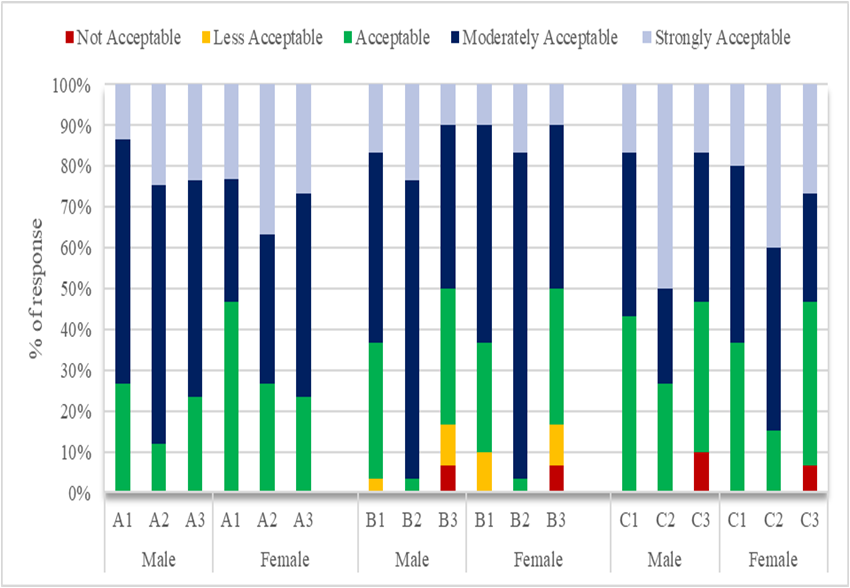
A2, B2, and C2 had the highest overall acceptability among the male and female participants because they had higher acceptability percentages in the “moderately acceptable” and “strongly acceptable” criteria than in the other recipes. Recipe A2 from group A had better overall acceptability from the female participants (strongly acceptable = 36.3%), as well as from the male participants (strongly acceptable = 24.7%), than the others (Figure 2). In group B, recipe B2 was found to be strongly acceptable (23.3%), moderately acceptable (73.4%), and acceptable in 3.3% of the male participants, whereas it was strongly acceptable in 16.7%, moderately acceptable in 80%, and acceptable in 3.3% of the female participants. Male panelists rated recipe C2 as strongly acceptable (50%), moderately acceptable (23.3%), and acceptable (26.7%), whereas female panelists rated it as moderately acceptable (44.7%) to strongly acceptable (40%). None of the male or female panelists rated recipes A2, B2, or C2 as not acceptable or less acceptable. Less than 10% of male and female participants classified recipes B1, B3, and C3 as less acceptable or not acceptable (Figure 2).
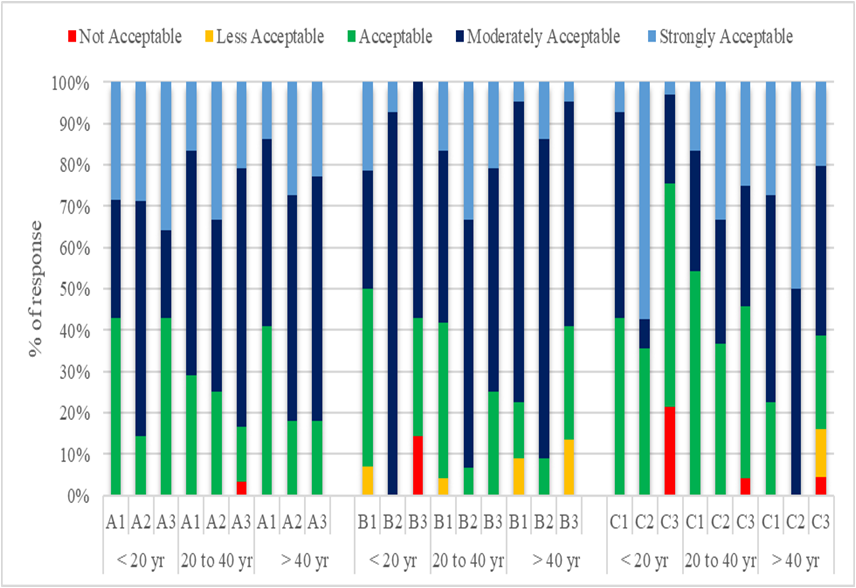
The percentage of participants of different ages varied in their responses to the recipes' overall acceptability. Fig. 3 shows that in most cases, recipes A2, B2, and C2 were moderately acceptable to all age classes of the participants. None of the age-class participants rated recipes A2, B2, or C2 as less acceptable or unacceptable.


Although the participants varied in the percentage of their responses based on their age and gender, no strong significant correlation was observed between age class overall acceptability and overall gender acceptability (p > 0.05) (Table 6). The findings indicated that the sex and age of the participants did not influence their preference.
The process by which humans accept or reject food is multi-dimensional. Consumer responses to a product vary with sensory characteristics and inherent qualities 30, 31. Close interactions between food and consumers determine food acceptance. Consumer preferences can vary according to their characteristics, including attitudes, behaviors, and origins 32, 33. According to different previous studies, sociodemographic characteristics, including age, gender, and educational attainment, have an impact on food consumers' purchase decisions 34, 35 Thus, this study incorporated participants from eight divisions and 29 districts of Bangladesh to provide greater area coverage and to include diversified consumers of different ages, genders, education levels, and occupations (Table 3). The diverse origins of the participants made the test findings more precise and factual.
Physical, chemical, and nutritional characteristics determine the acceptability of food to consumers 36. This is significant since learning about a product and forming opinions about it are related to the first step of the decision-making process 37. This study analyzed the proximate composition of value-added fish and shrimp products in terms of moisture, crude protein, crude fiber, crude fat, ash, and minerals (Ca and P). Crude protein and crude lipid percentages were higher in products with a high percentages of dried fish and shrimp content (Table 2). The percentages of these nutrients were not similar to the proximate composition of dried mixed shrimp (Palaemon karnafuliensis, Metapenaeus Monoceros, and Ferapenaeus indicus) 38, dried Bombay duck (Harpadon nehereus), and dried ribbon fish (Trichiurus savala) 39. The proximate composition of any product can vary depending on the processing method 40, 41. Because the recipes in this study were produced using various species and other components, such as oil, red chili powder, turmeric powder, and onion, they did not match with the proximate composition cited above.
The development of a new product must consider the consumer's perspective 42. Food acceptance depends on whether it responds to consumer needs and the degree of satisfaction that it can provide. End-product preference is normally calculated based on consumers' perception of a product's overall appearance, taste, color, odor, and texture 26. Hedonic tests are used to evaluate acceptance to determine how much users prefer particular sensory aspects of a product 14. In this study, recipes A2, B2, and C2 were within the acceptable to highly acceptable range (based on the Likert scale value) for the participants in terms of external appearance, taste, odor, juiciness, crispiness, and overall acceptability (Table 4). Consumer acceptance studies of value-added fishery products by 43 also agree with these findings, as their products were found to be acceptable in terms of similar sensory criteria.
People worldwide are now seeking food attributes like convenience, flavor, quality, and low prices as consumer needs are changing 44. Along with the extrinsic and inherent quality of products, consumer perceptions greatly depend on the price of products 45. The panelists in this study were more satisfied with the given prices of recipes A2, B2, and C2 than the other recipes within the product groups (Table 4).
The present study found significant variations among recipes, with the highest acceptability percentage in recipes A2, B2, and C2 among the three recipe groups (Table 5). This variation could be due to consumer perceptions 46 and different ingredient compositions, with varying amounts of fish muscle in their products 43, 46. For instance, fish protein snacks with 9% fish protein powder had the lowest preference, while snacks with 3%, 5%, and 7% fish protein had equal preferences for odour, texture, flavor, and overall acceptability in a previous study 47.
Age, gender, and environment have an impact on the extent of food acceptability. Significant differences (P < 0.05) were found between ages, where the younger and older ages preferred different recipes in some previous studies also 48. The present study found no significant correlation between overall product acceptability and age or gender (p > 0.05). Both male and female participants rated recipes A2, B2, and C2 more than the others, similar to the panelists' age groups. Age and sex did not influence panelist's preferences in this study (Table 6).
The overall study findings indicated that recipes A2 (50% shrimp), B2 (50% bombay duck), and C2 (50% ribbon fish) were the products most rated and accepted by the panelists due to their better quality than the other recipes. Participants of different ages and sex also provided positive feedback on these recipes. Therefore, these recipes could be the best formulations to produce and market ready-to-eat Balachao from shrimp, Bombay duck and ribbon fish.
This study concluded that a recipe composed of 50% dried shrimp and fish, with other ingredients, had better quality and the highest acceptance rate among the consumer. The chosen recipes have potential market opportunities in Bangladesh's value-added fishery products industry. Formulating value-added products from the recipes recommended in the present study would help proper utilization of underutilized fish and shrimp resources. Through a proper marketing strategy, the products might reach to the consumer and the fishery product industries of Bangladesh will be benefited. This could also help lessen fishing pressure on a fishery resource that is currently overfished.
This research was supported by CoxsBazarShop.com located at Cox's Bazar and funded by Feed the Future Bangladesh Aquaculture and Nutrition Activity.
The authors are grateful to the Ecological Laboratory, Department of Fisheries Resource Management, Faculty of Fisheries, CVASU, for providing laboratory research facilities. The authors are also grateful to CoxsBazarShop.com for their support in the research protocol.
The authors declare no competing interest.
AOAC: association of official analytical chemists, ID: identification number, SPSS: statistical package for social science, SD: standard deviation, M: moisture, CP: crude protein, CF: crude fiber, EE: crude fat, Ca: calcium, P: phosphorus, DoF: Department of Fisheries, GDP: Gross Domestic Product, RTE: ready-to-eat.
The datasets generated and/or analyzed during the current study are available from the corresponding author upon reasonable request.
The research methodology for this investigation was approved in accordance with the standard policies and procedures of the Ecological Laboratory, Department of Fisheries Resource Management, Faculty of Fisheries, Chattogram Veterinary and Animal Sciences University (CVASU), Bangladesh. All participants were declared constant regarding their participation in the research process in the provided questionnaire. Documented approval was obtained from the ethical approval committee of the Department of Fisheries Resource Management, CVASU, prior to the start of the study.
| [1] | Shamsuzzaman, M.M., Islam, M.M., Tania, N.J., Al-Mamun, M.A., Barman, P.P. and Xu, X, “Fisheries resources of Bangladesh: Present status and future direction”, Aquaculture and Fisheries, 2. 145-156. May 2013. | ||
| In article | View Article | ||
| [2] | Tasnim, N., Sultana, M.A., Tabassum, K., Islam, M.J. and Kunda, M, “A review of the water quality indices of riverine ecosystem, Bangladesh”, Archives of Agriculture and Environmental Science, 7 (1). 104-113. Mar 2022. | ||
| In article | View Article | ||
| [3] | Hassan, M.K., Poppy, M., Ahamed, T., Morsheda, F., Yadav, R., Hasan, A. and Siddique, M.P, “Bacterial Flora Isolated from Dried Fishes Sold at Retail Markets Within Dhaka City Corporation of Bangladesh”, Research in Agriculture Livestock and Fisheries, 8 (1). 109-115. May 2021. | ||
| In article | View Article | ||
| [4] | DOF, Yearbook of Fisheries Statistics of Bangladesh, 2019-2020, Fisheries Resource Survey System (FRSS), Department of Fisheries, Bangladesh; Ministry of Fisheries and Livestok. 2020. | ||
| In article | |||
| [5] | Hoque, M.S., Roy, S., Mukit, S.S., Rahman, M.B. and Akter, S, “Effects of Pangasius (Pangasius hypophthalmus) and Skipjack Tuna (Sarda orientalis) mince blend on the quality of fish products: Ways to utilize resources and nutrition in Bangladesh”, Food Science and Nutrition, 9 (12). 6642-6652. Dec 2021. | ||
| In article | View Article PubMed | ||
| [6] | Islam, M.J. and Peñarubia, O.R, “Seafood Waste Management Status in Bangladesh and Potential for Silage Production”, Sustainability, 13 (4). 2363-2372. Feb 2021. | ||
| In article | View Article | ||
| [7] | Dhar, A.R., Uddin, M.T. and Nielsen, M, “Enhancing export potential of Pangasius and Tilapia through quality assurance and safety compliances: Case study of processing plants and exporters in Bangladesh”, Aquaculture, 531. e735921. Nov 2021. | ||
| In article | View Article | ||
| [8] | Ehsani, A. and Jasour, M.S, “Microbiological properties and biogenic amines of whole pike perch (Sander lucioperca, Linnaeus 1758): a perspective on fish safety during postharvest handling practices and frozen storage”, Journal of Food Science, 77 (12). 664-668. Dec 2012. | ||
| In article | View Article PubMed | ||
| [9] | Vaidyanathan, T., Zhang, X., Balakrishnan, R. and Vincent, A, “Catch and trade bans for seahorses can be negated by non‐selective fisheries”, Aquatic Conservation: Marine and Freshwater Ecosystems. 31 (1). 43-59, Jan 2021. | ||
| In article | View Article | ||
| [10] | Davies, R.W.D., Cripps, S.J., Nickson, A. and Porter, G. “Defining and estimating global marine fisheries bycatch”, Marine Policy, 33 (4). 661-672. Jul 2009. | ||
| In article | View Article | ||
| [11] | Maynou, F., Vinuesa, A.G., Martinez-Banos, P., Sanchez, P. and Demestre, M, “Relative catch performance of two gear modifications used to reduce bycatch of undersized fish and shrimp in Mediterranean bottom trawl fisheries, Marine and Coastal Fisheries, 13 (5). 518-533, Aug 2021. | ||
| In article | View Article | ||
| [12] | Ruxton, C.H.S., Reed, S.C., Simpsona, M.J.A. and Millington, K.J, “The health benefits of omega-3 polyunsaturated fatty acids: a review of the evidence”, Journal of Human Nutrition, 17 (5). 449-459. Oct 2004. | ||
| In article | View Article PubMed | ||
| [13] | Asefa, B.G, “Nutritional and Techno-Functional Properties of Fish Protein Powder (FPP) from Underutilized Small Fish (Barbus paludinosus) Species”, Journal of Food and Nutrition Sciences, 9 (3). 84-88. Jun 2021. | ||
| In article | View Article | ||
| [14] | Fiorentini, M., Kinchla, A.J. and Nolden, A.A, “Role of sensory evaluation in consumer acceptance of plant-based meat analogs and meat extenders: A scoping review”, Foods, 9 (9). 2-15. Sep 2020. | ||
| In article | View Article PubMed | ||
| [15] | Athukorala, P.C. and Patunru, A.A, “Domestic value added, exports, and employment: an input-output analysis of Indonesian manufacturing”, Bulletin of Indonesian Economic Studies, 1-31. Dec 2022. | ||
| In article | View Article | ||
| [16] | Kolekar, A.D. and Pagarkar, A.U, “Quality evaluation of ready-to-eat fish ball in curry”, SAARC Journal of Agriculture, 11 (1). 35-43. Mar 2013. | ||
| In article | View Article | ||
| [17] | Caswell, J.A., Noelke, C.M. and Mojduszka, E.M, Unifying two frameworks for analyzing quality and quality assurance for food products, Springer, Boston, 2002, 43-61. | ||
| In article | View Article | ||
| [18] | Hossain, A., Nielsen, M. and Roth, E, “Consumer willingness to pay for quality attributes of pangasius (pangasianodoan hypophthalmus) in Bangladesh: A hedonic price analysis”, Aquaculture, 555. e738205. Jun 2022. | ||
| In article | View Article | ||
| [19] | Baskar, D., Dhanapal, K., Madhavan, N., Madhavi, K., Kumar, G.P., Manikandan, V. and Sushma, M, “Proximate composition and sensory evaluation of extruded snacks enriched with fish flour and shrimp head exudate during storage conditions”, Journal of Food Processing and Preservation, 58. 241-245. Apr 2022. | ||
| In article | View Article | ||
| [20] | Petrescu, D.C., Vermeir, I. and Petrescu-Mag, R.M, “Consumer understanding of food quality, healthiness, and environmental impact: A cross-national perspective”, International journal of environmental research and public health, 17 (1). 169-176. Jan 2020. | ||
| In article | View Article PubMed | ||
| [21] | Van Rijswijk, W. and Frewer, L.J, “Consumer perceptions of food quality and safety and their relation to traceability” British Food Journal, 110. 1034-1046. Sep 2008. | ||
| In article | View Article | ||
| [22] | Kim, I.A., Kim, H.L., Cho, H.Y. and Lee, H.S, “Optimal difference test sequence and power for discriminating soups of varying sodium content: DTFM version of dual-reference duo-trio with unspecified tetrad tests”, Food Research International, 76. 458-465. Oct 2015. | ||
| In article | View Article PubMed | ||
| [23] | Rousseau, B, “Sensory discrimination testing and consumer relevance”, Food Quality and Preference, 43. 122-125. Jul 2015. | ||
| In article | View Article | ||
| [24] | Wang, E., Gao, Z., Heng, Y. and Shi, L, “Chinese consumers' preferences for food quality test/measurement indicators and cues of milk powder: A case of Zhengzhou, China”, Food Policy, 89. e101791. Dec 2019. | ||
| In article | View Article | ||
| [25] | Islam, S., Islam, M.J., Famous, M., Hossain, M.A. and Khan, M.M.H, “Production and Quality Assessment of Value-added Fast Foods by Using Lowcost Fish in Bangladesh”, Aquatic Food Studies, 1(2). AFS72. Jan 2021. | ||
| In article | View Article | ||
| [26] | Uddin, M.T., Rasel, M.H., Dhar, A.R., Badiuzzaman, M. and Hoque, M.S, “Factors determining consumer preferences for Pangas and Tilapia fish in Bangladesh: consumers' perception and consumption habit perspective”, Journal of Aquatic Food Product Technology, 28 (4). 438-449. Apr 2019. | ||
| In article | View Article | ||
| [27] | Ejaz, M.A., Shikha, F.H. and Hossain, M.I., “Preparation of fish burger from pangus catfish (pangasius sutchi) and evaluation of quality and shelf life during different storage conditions”, Progressive Agriculture, 20 (1-2). 153-162. May 2009. | ||
| In article | View Article | ||
| [28] | Costell, E., Tárrega, A. and Bayarri, S, “Food acceptance: the role of consumer perception and attitudes”, Chemosensory perception, 3 (1). 42-50. Mar 2010. | ||
| In article | View Article | ||
| [29] | AOAC, Official method of Analysis, Association of Officiating Analytical Chemists, Washington DC, 2005. | ||
| In article | |||
| [30] | Ruiz-Capillas, C. and Herrero, A.M, “Sensory analysis and consumer research in new product development”, Foods, 10 (3). 565-582. Mar 2021. | ||
| In article | View Article PubMed | ||
| [31] | Wardle, J., Parmenter, K. and Waller, J, “Nutrition knowledge and food intake”, Appetite, 34 (3). 269-275. Oct 2000. | ||
| In article | View Article PubMed | ||
| [32] | Witter, A., Murray, G. and Sumaila, U.R, “Consumer seafood preferences related to alternative food networks and their value chains”, Marine Policy, 131. e104694. Sep 2021. | ||
| In article | View Article | ||
| [33] | McCluskey, J.J., Grimsurd, K.M., Ouchi, H. and Wahl, T.I, “Consumer response to genetically modified food products in Japan”, Agricultural and Resource Economics Review, 32 (2). 222-231. Oct 2003. | ||
| In article | View Article | ||
| [34] | Hantoush, A.A., Al-Hamadany, Q.H., Al-Hassoon, A.S. and Al-Ibadi, H.J, “Nutritional value of important commercial fish from Iraqi waters”, Mesopotamian Journal of Marine Sciences, 29 (1). 13-22. Apr 2014. | ||
| In article | |||
| [35] | Ward, C.B. and Tran, T, Consumer gifting behaviors: One for you, one for me?, Services Marketing Quarterly, 29 (2). 1-17. Feb 2008. | ||
| In article | View Article | ||
| [36] | Das, P., Salman, M., Islam, M.A., Suraiya, S., and Haq, M, “Proximate composition, amino acids, and fatty acids contents of dried shrimp products available in Jashore region, Bangladesh”, Asian Journal of Medical and Biological Research, 7 (2). 138-146, Jun 2021. | ||
| In article | View Article | ||
| [37] | Ronteltap, A., van Trijp, J.C., Renes, R.J. and Frewer, L.J, “Consumer acceptance of technology‐based food innovations: Lessons for the future of nutrigenomic”, Appetite, 49 (1). 1-17. Jan 2007. | ||
| In article | View Article PubMed | ||
| [38] | Kar, M., Hoq, M.E., Islam, M.S., Islam, M.M., Meghla, N.T., Suravi, M., and Kabir, H, “Monitoring of proximate composition, heavy metal concentrations and pesticide residues in marine dried fish available in the coastal region of Bangladesh”, Grassroot J Natural Resources, 3 (2). 30-41. Jun 2020. | ||
| In article | View Article | ||
| [39] | Abraha, B., Admassu, H., Mahmud, A., Tsighe, N., Shui, X.W., and Fang, Y, “Effect of processing methods on nutritional and physico-chemical composition of fish: a review”, MOJ Food Processing & Technology, 6 (4). 376-382, Aug 2018. | ||
| In article | View Article | ||
| [40] | Tenyang, N., Mawamba, L. A., Ponka, R., Mamat, A., Tiencheu, B. and Womeni, H.M, “Effect of cooking and smoking methods on proximate composition, lipid oxidation and mineral contents of Polypterus bichir bichir fish from far-north region of Cameroon”, Heliyon, 8 (10). e10921. Oct 2022. | ||
| In article | View Article PubMed | ||
| [41] | Kolade, O.Y., Adeyemi, Y.B. and Amusan, E.E, “Development, nutritional and sensory evaluation of innovative ready-to-fry crackers from pink shrimp (Penaeus notialis)”, Continental J. Food Science and Technology, 8 (1). 16-21. Jun 2014. | ||
| In article | |||
| [42] | Grunert, K.G., Verbeke, W., Kügler, J.O., Saeed, F. and Scholderer, J, “Use of consumer insight in the new product development process in the meat sector”, Meat Science, 89. 251-258. Nov 2011. | ||
| In article | View Article PubMed | ||
| [43] | Li, X.E., Jervis, S.M. and Drake, M.A, “Examining extrinsic factors that influence product acceptance: a review”, Journal of food science, 80 (5). 901-909, May 2015. | ||
| In article | View Article PubMed | ||
| [44] | Boughanmi, H., Al-Musalami, J., Al-Oufi, H. and Zaibet, L, “Estimating consumer preferences for value-added fish products in Oman: A conjoint analysis”, Journal of Food Products Marketing, 13 (2). 47-68. May 2007. | ||
| In article | View Article | ||
| [45] | Ainsa, A., Honrado, A., Marquina, P.L., Roncalés, P., Beltrán, J. A. and Calanche, M.J.B., “Innovative development of pasta with the addition of fish by-products from two species”, Foods, 10 (8). 1883-1889. Aug 2021. | ||
| In article | View Article PubMed | ||
| [46] | Shepherd, R., and Sparks, P, Modelling food choice, Springer, Boston, MA, 1994, 202-226. | ||
| In article | View Article | ||
| [47] | Shaviklo, G.R., Olafsdottir, A., Sveinsdottir, K., Thorkelsson, G. and Rafipour, F, “Quality characteristics and consumer acceptance of a high fish protein puffed corn-fish snack”, Journal of Food Science and Technology, 48 (6). 668-676. Dec 2011. | ||
| In article | View Article PubMed | ||
| [48] | Lako, J., Natasha, J. and South, R, “Consumer preferences for Nile tilapia (Oreochromis niloticus) value-added products in Samoa”, SPC Women in Fisheries Information Bulletin. 28. 23-32. Jun 2018. | ||
| In article | |||
Published with license by Science and Education Publishing, Copyright © 2023 Saifuddin Rana, Antar Sarker, Md. Nazmul Hasan, Shahida Arfine Shimul, S. M. Nurun Nabi, Manjurul Karim and Sk. Ahmad Al Nahid
 This work is licensed under a Creative Commons Attribution 4.0 International License. To view a copy of this license, visit
http://creativecommons.org/licenses/by/4.0/
This work is licensed under a Creative Commons Attribution 4.0 International License. To view a copy of this license, visit
http://creativecommons.org/licenses/by/4.0/
| [1] | Shamsuzzaman, M.M., Islam, M.M., Tania, N.J., Al-Mamun, M.A., Barman, P.P. and Xu, X, “Fisheries resources of Bangladesh: Present status and future direction”, Aquaculture and Fisheries, 2. 145-156. May 2013. | ||
| In article | View Article | ||
| [2] | Tasnim, N., Sultana, M.A., Tabassum, K., Islam, M.J. and Kunda, M, “A review of the water quality indices of riverine ecosystem, Bangladesh”, Archives of Agriculture and Environmental Science, 7 (1). 104-113. Mar 2022. | ||
| In article | View Article | ||
| [3] | Hassan, M.K., Poppy, M., Ahamed, T., Morsheda, F., Yadav, R., Hasan, A. and Siddique, M.P, “Bacterial Flora Isolated from Dried Fishes Sold at Retail Markets Within Dhaka City Corporation of Bangladesh”, Research in Agriculture Livestock and Fisheries, 8 (1). 109-115. May 2021. | ||
| In article | View Article | ||
| [4] | DOF, Yearbook of Fisheries Statistics of Bangladesh, 2019-2020, Fisheries Resource Survey System (FRSS), Department of Fisheries, Bangladesh; Ministry of Fisheries and Livestok. 2020. | ||
| In article | |||
| [5] | Hoque, M.S., Roy, S., Mukit, S.S., Rahman, M.B. and Akter, S, “Effects of Pangasius (Pangasius hypophthalmus) and Skipjack Tuna (Sarda orientalis) mince blend on the quality of fish products: Ways to utilize resources and nutrition in Bangladesh”, Food Science and Nutrition, 9 (12). 6642-6652. Dec 2021. | ||
| In article | View Article PubMed | ||
| [6] | Islam, M.J. and Peñarubia, O.R, “Seafood Waste Management Status in Bangladesh and Potential for Silage Production”, Sustainability, 13 (4). 2363-2372. Feb 2021. | ||
| In article | View Article | ||
| [7] | Dhar, A.R., Uddin, M.T. and Nielsen, M, “Enhancing export potential of Pangasius and Tilapia through quality assurance and safety compliances: Case study of processing plants and exporters in Bangladesh”, Aquaculture, 531. e735921. Nov 2021. | ||
| In article | View Article | ||
| [8] | Ehsani, A. and Jasour, M.S, “Microbiological properties and biogenic amines of whole pike perch (Sander lucioperca, Linnaeus 1758): a perspective on fish safety during postharvest handling practices and frozen storage”, Journal of Food Science, 77 (12). 664-668. Dec 2012. | ||
| In article | View Article PubMed | ||
| [9] | Vaidyanathan, T., Zhang, X., Balakrishnan, R. and Vincent, A, “Catch and trade bans for seahorses can be negated by non‐selective fisheries”, Aquatic Conservation: Marine and Freshwater Ecosystems. 31 (1). 43-59, Jan 2021. | ||
| In article | View Article | ||
| [10] | Davies, R.W.D., Cripps, S.J., Nickson, A. and Porter, G. “Defining and estimating global marine fisheries bycatch”, Marine Policy, 33 (4). 661-672. Jul 2009. | ||
| In article | View Article | ||
| [11] | Maynou, F., Vinuesa, A.G., Martinez-Banos, P., Sanchez, P. and Demestre, M, “Relative catch performance of two gear modifications used to reduce bycatch of undersized fish and shrimp in Mediterranean bottom trawl fisheries, Marine and Coastal Fisheries, 13 (5). 518-533, Aug 2021. | ||
| In article | View Article | ||
| [12] | Ruxton, C.H.S., Reed, S.C., Simpsona, M.J.A. and Millington, K.J, “The health benefits of omega-3 polyunsaturated fatty acids: a review of the evidence”, Journal of Human Nutrition, 17 (5). 449-459. Oct 2004. | ||
| In article | View Article PubMed | ||
| [13] | Asefa, B.G, “Nutritional and Techno-Functional Properties of Fish Protein Powder (FPP) from Underutilized Small Fish (Barbus paludinosus) Species”, Journal of Food and Nutrition Sciences, 9 (3). 84-88. Jun 2021. | ||
| In article | View Article | ||
| [14] | Fiorentini, M., Kinchla, A.J. and Nolden, A.A, “Role of sensory evaluation in consumer acceptance of plant-based meat analogs and meat extenders: A scoping review”, Foods, 9 (9). 2-15. Sep 2020. | ||
| In article | View Article PubMed | ||
| [15] | Athukorala, P.C. and Patunru, A.A, “Domestic value added, exports, and employment: an input-output analysis of Indonesian manufacturing”, Bulletin of Indonesian Economic Studies, 1-31. Dec 2022. | ||
| In article | View Article | ||
| [16] | Kolekar, A.D. and Pagarkar, A.U, “Quality evaluation of ready-to-eat fish ball in curry”, SAARC Journal of Agriculture, 11 (1). 35-43. Mar 2013. | ||
| In article | View Article | ||
| [17] | Caswell, J.A., Noelke, C.M. and Mojduszka, E.M, Unifying two frameworks for analyzing quality and quality assurance for food products, Springer, Boston, 2002, 43-61. | ||
| In article | View Article | ||
| [18] | Hossain, A., Nielsen, M. and Roth, E, “Consumer willingness to pay for quality attributes of pangasius (pangasianodoan hypophthalmus) in Bangladesh: A hedonic price analysis”, Aquaculture, 555. e738205. Jun 2022. | ||
| In article | View Article | ||
| [19] | Baskar, D., Dhanapal, K., Madhavan, N., Madhavi, K., Kumar, G.P., Manikandan, V. and Sushma, M, “Proximate composition and sensory evaluation of extruded snacks enriched with fish flour and shrimp head exudate during storage conditions”, Journal of Food Processing and Preservation, 58. 241-245. Apr 2022. | ||
| In article | View Article | ||
| [20] | Petrescu, D.C., Vermeir, I. and Petrescu-Mag, R.M, “Consumer understanding of food quality, healthiness, and environmental impact: A cross-national perspective”, International journal of environmental research and public health, 17 (1). 169-176. Jan 2020. | ||
| In article | View Article PubMed | ||
| [21] | Van Rijswijk, W. and Frewer, L.J, “Consumer perceptions of food quality and safety and their relation to traceability” British Food Journal, 110. 1034-1046. Sep 2008. | ||
| In article | View Article | ||
| [22] | Kim, I.A., Kim, H.L., Cho, H.Y. and Lee, H.S, “Optimal difference test sequence and power for discriminating soups of varying sodium content: DTFM version of dual-reference duo-trio with unspecified tetrad tests”, Food Research International, 76. 458-465. Oct 2015. | ||
| In article | View Article PubMed | ||
| [23] | Rousseau, B, “Sensory discrimination testing and consumer relevance”, Food Quality and Preference, 43. 122-125. Jul 2015. | ||
| In article | View Article | ||
| [24] | Wang, E., Gao, Z., Heng, Y. and Shi, L, “Chinese consumers' preferences for food quality test/measurement indicators and cues of milk powder: A case of Zhengzhou, China”, Food Policy, 89. e101791. Dec 2019. | ||
| In article | View Article | ||
| [25] | Islam, S., Islam, M.J., Famous, M., Hossain, M.A. and Khan, M.M.H, “Production and Quality Assessment of Value-added Fast Foods by Using Lowcost Fish in Bangladesh”, Aquatic Food Studies, 1(2). AFS72. Jan 2021. | ||
| In article | View Article | ||
| [26] | Uddin, M.T., Rasel, M.H., Dhar, A.R., Badiuzzaman, M. and Hoque, M.S, “Factors determining consumer preferences for Pangas and Tilapia fish in Bangladesh: consumers' perception and consumption habit perspective”, Journal of Aquatic Food Product Technology, 28 (4). 438-449. Apr 2019. | ||
| In article | View Article | ||
| [27] | Ejaz, M.A., Shikha, F.H. and Hossain, M.I., “Preparation of fish burger from pangus catfish (pangasius sutchi) and evaluation of quality and shelf life during different storage conditions”, Progressive Agriculture, 20 (1-2). 153-162. May 2009. | ||
| In article | View Article | ||
| [28] | Costell, E., Tárrega, A. and Bayarri, S, “Food acceptance: the role of consumer perception and attitudes”, Chemosensory perception, 3 (1). 42-50. Mar 2010. | ||
| In article | View Article | ||
| [29] | AOAC, Official method of Analysis, Association of Officiating Analytical Chemists, Washington DC, 2005. | ||
| In article | |||
| [30] | Ruiz-Capillas, C. and Herrero, A.M, “Sensory analysis and consumer research in new product development”, Foods, 10 (3). 565-582. Mar 2021. | ||
| In article | View Article PubMed | ||
| [31] | Wardle, J., Parmenter, K. and Waller, J, “Nutrition knowledge and food intake”, Appetite, 34 (3). 269-275. Oct 2000. | ||
| In article | View Article PubMed | ||
| [32] | Witter, A., Murray, G. and Sumaila, U.R, “Consumer seafood preferences related to alternative food networks and their value chains”, Marine Policy, 131. e104694. Sep 2021. | ||
| In article | View Article | ||
| [33] | McCluskey, J.J., Grimsurd, K.M., Ouchi, H. and Wahl, T.I, “Consumer response to genetically modified food products in Japan”, Agricultural and Resource Economics Review, 32 (2). 222-231. Oct 2003. | ||
| In article | View Article | ||
| [34] | Hantoush, A.A., Al-Hamadany, Q.H., Al-Hassoon, A.S. and Al-Ibadi, H.J, “Nutritional value of important commercial fish from Iraqi waters”, Mesopotamian Journal of Marine Sciences, 29 (1). 13-22. Apr 2014. | ||
| In article | |||
| [35] | Ward, C.B. and Tran, T, Consumer gifting behaviors: One for you, one for me?, Services Marketing Quarterly, 29 (2). 1-17. Feb 2008. | ||
| In article | View Article | ||
| [36] | Das, P., Salman, M., Islam, M.A., Suraiya, S., and Haq, M, “Proximate composition, amino acids, and fatty acids contents of dried shrimp products available in Jashore region, Bangladesh”, Asian Journal of Medical and Biological Research, 7 (2). 138-146, Jun 2021. | ||
| In article | View Article | ||
| [37] | Ronteltap, A., van Trijp, J.C., Renes, R.J. and Frewer, L.J, “Consumer acceptance of technology‐based food innovations: Lessons for the future of nutrigenomic”, Appetite, 49 (1). 1-17. Jan 2007. | ||
| In article | View Article PubMed | ||
| [38] | Kar, M., Hoq, M.E., Islam, M.S., Islam, M.M., Meghla, N.T., Suravi, M., and Kabir, H, “Monitoring of proximate composition, heavy metal concentrations and pesticide residues in marine dried fish available in the coastal region of Bangladesh”, Grassroot J Natural Resources, 3 (2). 30-41. Jun 2020. | ||
| In article | View Article | ||
| [39] | Abraha, B., Admassu, H., Mahmud, A., Tsighe, N., Shui, X.W., and Fang, Y, “Effect of processing methods on nutritional and physico-chemical composition of fish: a review”, MOJ Food Processing & Technology, 6 (4). 376-382, Aug 2018. | ||
| In article | View Article | ||
| [40] | Tenyang, N., Mawamba, L. A., Ponka, R., Mamat, A., Tiencheu, B. and Womeni, H.M, “Effect of cooking and smoking methods on proximate composition, lipid oxidation and mineral contents of Polypterus bichir bichir fish from far-north region of Cameroon”, Heliyon, 8 (10). e10921. Oct 2022. | ||
| In article | View Article PubMed | ||
| [41] | Kolade, O.Y., Adeyemi, Y.B. and Amusan, E.E, “Development, nutritional and sensory evaluation of innovative ready-to-fry crackers from pink shrimp (Penaeus notialis)”, Continental J. Food Science and Technology, 8 (1). 16-21. Jun 2014. | ||
| In article | |||
| [42] | Grunert, K.G., Verbeke, W., Kügler, J.O., Saeed, F. and Scholderer, J, “Use of consumer insight in the new product development process in the meat sector”, Meat Science, 89. 251-258. Nov 2011. | ||
| In article | View Article PubMed | ||
| [43] | Li, X.E., Jervis, S.M. and Drake, M.A, “Examining extrinsic factors that influence product acceptance: a review”, Journal of food science, 80 (5). 901-909, May 2015. | ||
| In article | View Article PubMed | ||
| [44] | Boughanmi, H., Al-Musalami, J., Al-Oufi, H. and Zaibet, L, “Estimating consumer preferences for value-added fish products in Oman: A conjoint analysis”, Journal of Food Products Marketing, 13 (2). 47-68. May 2007. | ||
| In article | View Article | ||
| [45] | Ainsa, A., Honrado, A., Marquina, P.L., Roncalés, P., Beltrán, J. A. and Calanche, M.J.B., “Innovative development of pasta with the addition of fish by-products from two species”, Foods, 10 (8). 1883-1889. Aug 2021. | ||
| In article | View Article PubMed | ||
| [46] | Shepherd, R., and Sparks, P, Modelling food choice, Springer, Boston, MA, 1994, 202-226. | ||
| In article | View Article | ||
| [47] | Shaviklo, G.R., Olafsdottir, A., Sveinsdottir, K., Thorkelsson, G. and Rafipour, F, “Quality characteristics and consumer acceptance of a high fish protein puffed corn-fish snack”, Journal of Food Science and Technology, 48 (6). 668-676. Dec 2011. | ||
| In article | View Article PubMed | ||
| [48] | Lako, J., Natasha, J. and South, R, “Consumer preferences for Nile tilapia (Oreochromis niloticus) value-added products in Samoa”, SPC Women in Fisheries Information Bulletin. 28. 23-32. Jun 2018. | ||
| In article | |||