Climate change is a growing global crisis with far-reaching implications for environmental, economic, social, and public health stability. The Arab region, comprising 22 countries in the Middle East and North Africa (MENA), faces unique challenges due to its arid climate, limited freshwater resources, and reliance on climate-sensitive sectors such as agriculture and energy. Rising temperatures, intensified heatwaves, and increasing water scarcity have already begun to disrupt ecosystems, exacerbate food insecurity, and challenge the region’s socio-economic development. Given the region’s projected population growth and the expected decline in agricultural productivity, it is crucial to identify sustainable pathways to address these interconnected crises. Universities, as key institutions of knowledge, research, and societal engagement, hold significant potential in tackling climate change and driving adaptation and mitigation strategies. This paper examines how Arab universities can contribute more effectively to climate action, focusing on their roles in research, curriculum development, sustainable campus operations, and community outreach. Through a combination of PEST (Political, Economic, Social, and Technological) analysis, expert surveys, and Policy Pathways Mapping, the study assesses the factors influencing the ability of Arab universities to engage in climate change initiatives. It identifies key barriers, including inadequate funding, fragmented research efforts, and weak policy integration, as well as opportunities for improving institutional responses to climate challenges. The paper proposes strategic policy pathways that emphasize the importance of regional collaboration, sustainable financing, and the integration of climate change into educational frameworks. It further outlines actionable recommendations for enhancing universities' roles in climate change mitigation and adaptation, such as fostering interdisciplinary research, expanding climate literacy, adopting green campus practices, and strengthening community engagement. By implementing these policy pathways, Arab universities can become critical drivers of change in the region’s climate response efforts, advancing both national and global climate goals. The paper concludes with a call for a comprehensive, coordinated approach to align higher education institutions with climate action frameworks and policies, ensuring that universities fulfill their potential as leaders in climate resilience and sustainability.
Climate change is increasingly recognized not only as an environmental crisis but also as a profound threat to economic stability, public health, education, and social development across the globe 1, 2, 3, 4. Climate change, driven by rising temperatures, shifting precipitation, and natural disasters, threatens biodiversity loss and food insecurity, necessitating sustainable solutions to mitigate impacts on ecosystems and food systems 5. With projections indicating a global population nearing 9 billion by 2050, the Earth faces increasing difficulty in meeting food demands, particularly as crop yields are already showing signs of decline 6. The Food and Agriculture Organization (FAO) estimates that food production must rise by approximately 70% by mid-century to address this anticipated demand 7. Beyond its physical impacts, climate change also affects human well-being by increasing psychological stressors, which can negatively influence mental health, especially among vulnerable populations. At the same time, heightened awareness of climate risks has the potential to drive collective action and strengthen societal resilience in the face of environmental challenges 8.
Climate change poses a significant threat to Arab countries, a region spanning 22 nations across the Middle East and North Africa, known for its arid and semi-arid climates. is characterized by its harsh desert landscapes, limited freshwater resources, rich cultural heritage, geopolitical significance, rapid population growth (481.7 million people, according to World Bank 60, these conditions, combined with limited freshwater resources and reliance on climate-sensitive sectors like agriculture and energy, make the region particularly vulnerable 9, 10, 11. Research suggests that temperatures in the Arab States are rising twice as fast as the global average, intensifying droughts and worsening water scarcity. By 2050, climate-related water shortages could cost the region up to 14% of its GDP. Nearly half of its farmland faces salinity, nutrient loss, and erosion, threatening a 30% drop in water and agricultural productivity 12.
Global average temperatures have risen significantly since the pre-industrial era, largely as a result of anthropogenic greenhouse gas (GHG) emissions 13. This escalation in temperature has not only altered global climate systems but has also had profound regional impacts, including in the Arab region 14. The warming trajectory of the Arab world is closely linked to global efforts, particularly the outcomes of the Paris Agreement. However, despite mitigation goals, the region continues to experience strong warming trends that pose a serious threat to future human habitability, particularly in vulnerable coastal zones such as the Persian Gulf and the Red Sea 15, 16, 17, 18, 19. The Arab region is currently experiencing a substantial rise in average temperatures as a direct consequence of global climate change. This warming trend has led to an observable increase in the frequency, duration, and intensity of heatwaves, placing significant stress on public health, energy infrastructure, and ecosystems 20, 21, 57.
Arab countries are increasingly impacted by rising temperatures driven by global climate change, resulting in more frequent and intense heatwaves. Table 1 indicates the Arab countries directly and rapidly affected by climate change. This is evident in the high averages and "trend patterns" that indicate a dangerous increase in temperatures. The average temperature increase for Arab countries between 2010 and 2022 was approximately 1.5 to 2°C in most cases, exceeding the levels warned against by the Paris Agreement (a maximum of 1.5°C). Gulf countries such as Bahrain, Kuwait, and Saudi Arabia experienced the highest increases, reflecting increasing pressures on energy and water. In contrast, countries such as Egypt and Libya exhibited extreme variability, indicating unstable climate fluctuations 22. This escalating heat further burdens energy infrastructures, primarily due to increased cooling demands, and heightens concerns regarding water availability and agricultural production. Rising temperatures and the growing frequency of extreme weather events driven by climate change directly amplify energy consumption for cooling, placing additional pressure on energy systems 23
During the recent period, the region saw one of its most severe drought cycles in the past century, leading to a loss of livelihoods, high food prices, and decreased purchasing power for the average citizen, where more than 40 percent of the people in the Arab region have already been exposed to drought and other climatic disasters 24, Climate change profoundly impacts water resources in Arab countries, a region already characterized by extreme aridity and limited freshwater availability, exacerbating existing vulnerabilities in water security 25. Water scarcity remains an enduring concern for MENA, with climate change exacerbating the situation by diminishing available freshwater resources, thereby intensifying competition among agriculture, industry and households for the limited water supply 26. The Arab region has a total area of about 14 millionkm2, out of which, more than 87% are deserts, marking the region as a highly arid environment, along with a poor vegetation cover 27.
The Middle East and North Africa (MENA) region, encompassing the 22 Arab nations, is among the most water-scarce globally, with per capita renewable water resources below 1,000 m³/year in most countries, well below the global average of 7,000 m³/year, 19 out of 22 Arab countries fall below the water scarcity line of 1,000 cubic metres per capita per year, and 13 fall below the absolute annual renewable freshwater scarcity threshold of 500 cubic metres percapita 28. Climate change profoundly impacts water resources in Arab countries, a region already characterized by extreme aridity and limited freshwater availability, exacerbating existing vulnerabilities in water security 29. High temperatures are expected to increase by 0.4–1.0°C from 2010 to 2024 in the region, leading to increased evaporation, which reduces the availability of surface water in rivers and reservoirs. The interaction between higher temperatures and lower rainfall amplifies water scarcity, posing a critical challenge to sustainable development in Arab countries 20, 30.
Climate change poses significant challenges to food security in Arab nations, exacerbating issues like ongoing conflicts, economic downturns, and high population growth, which collectively hinder efforts to achieve stability and sustainability in food production and distribution 31. Due to food insecurity in the Arab region, as a result of unsustainable and inefficient agricultural practices, an estimated US$1 billion is needed to provide immediate relief to those who are food insecure 24, According to the Food and Agriculture Organization temperature increases and shifting precipitation patterns are already resulting in substantial reductions in crop yields. For instance, wheat, a staple crop, is expected to face yield declines of up to 35 % by 2050 due to climate change 22. Climate change is thus contributing to rising food prices, disproportionately impacting vulnerable populations and potentially leading to social unrest. Therefore, climate adaptation strategies should include food security measures to ensure access to affordable and sustainable nutrition.
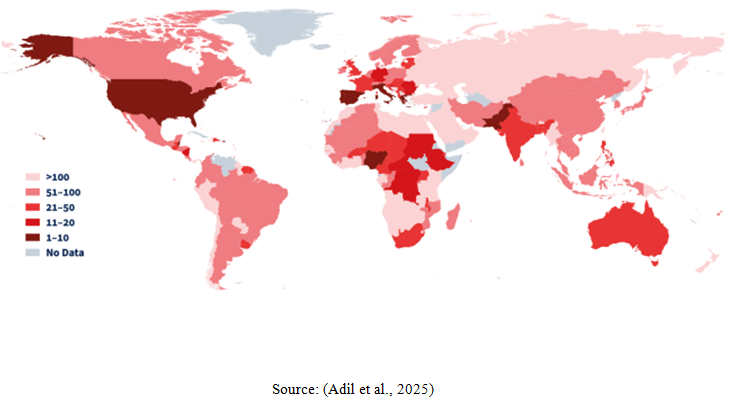
To better understand how climate events affect different nations, indices such as the Climate Risk Index (CRI) provide valuable data. These assessments not only highlight immediate weather-related damages but also reveal deeper patterns of vulnerability. The CRI 2025 report offers insight into how various Arab countries have been affected by extreme weather events in recent decades and particularly in the year 2022 29. By analyzing data from 1993–2022 and the single year 2022, the report ranks countries based on fatalities, affected populations, and economic losses relative to GDP. In the 2022 Climate Risk Index (CRI, Arab countries exhibited varied vulnerability to extreme weather events, assessed through fatalities, affected populations, and economic losses relative to GDP (Figure 1). Sudan (Rank 15) was the most affected, with recent floods impacting over 3.2 million people, causing over 600 deaths, displacing 1.4 million, and incurring USD 4.2 billion in losses, exacerbated by conflict. Djibouti (Rank 31) faced severe droughts, threatening food security and livelihoods in its arid landscape. Mauritania (Rank 83) saw reduced impacts compared to its long-term trend, though droughts persisted. Algeria (Rank 99) and Tunisia (Rank 114) reported minor impacts, likely not reflective of heatwave effects, while Iraq (Rank 118) experienced significant heat impacts. Jordan, Kuwait, Lebanon, Libya, Oman, Qatar, Saudi Arabia, Morocco, the United Arab Emirates, and Egypt (Ranks 125–170) reported minor impacts but face significant risks related to sea-level rise, agricultural challenges, rising temperatures, and water scarcity.

Within the framework of the Sustainable Development Goals (SDGs), education is recognized as a fundamental instrument for advancing global climate objectives. SDG 13, which focuses on “Climate Action,” explicitly includes the target (13.3) to enhance education, awareness, and institutional capacity in relation to climate change mitigation, adaptation, impact reduction, and early warning systems. Complementarily, SDG 4 emphasizes the importance of ensuring inclusive, equitable, and quality education while promoting lifelong learning opportunities for all 32. In alignment with these goals, Article 12 of the Paris Agreement 33 urges state parties to strengthen efforts in climate change education, training, public awareness, participation, and access to information. Building upon these global commitments, the Higher Education Sustainability Initiative (HESI), launched in preparation for COP 20, called upon higher education institutions to expand their contributions through enhanced teaching, research, public engagement, and knowledge dissemination (UN Sustainable Development Platform, 2016). These international frameworks collectively underscore the significant yet underutilized potential of universities to play a transformative role in addressing the challenges of climate change 34.
Universities occupy a central role in tackling climate change through their interconnected missions of research, education, institutional practices, and community engagement. On the research front, they generate innovations in areas such as renewable energy, sustainable transportation, and low-carbon manufacturing, which help reduce greenhouse gas emissions while maintaining quality of life 34, 35. Alongside these technological advances, universities also undertake applied research and climate risk assessments, translating scientific knowledge into practical strategies that guide adaptation and mitigation at the local level 36. Equally important is their role in education: by embedding sustainability into curricula, training, and projects, universities cultivate awareness of climate challenges across disciplines and empower future leaders to make sustainable choices and actively contribute to climate solutions 37.
In addition to knowledge production and education, universities lead by example through their campus operations, which increasingly serve as living laboratories for sustainability. Initiatives such as renewable energy integration, efficient waste management, water conservation, and green building design not only reduce environmental footprints but also provide hands-on demonstrations of climate-conscious practices 38, 39. By aligning their actions with their advocacy, universities enhance their credibility as change agents and inspire surrounding communities to follow suit 40. Beyond campus boundaries, they extend their impact through partnerships with governments, industries, and civil society, co-developing climate solutions that strengthen the legitimacy of local adaptation processes and contribute to broader sustainability goals. In doing so, universities position themselves as both trusted knowledge brokers and catalysts of systemic transformation 36, 37. Universities carry a social responsibility to act as agents of change, demonstrating leadership not only through research and education but also by transforming their own institutional practices to minimize environmental impact 40. Yet, evidence suggests that many institutions still fall short in fully addressing their ecological footprints, underscoring the importance of stronger leadership, clearer strategies, and deeper institutional commitment to sustainability 40.
Universities in Arab countries play a pivotal role in national climate strategies. As centers of knowledge, innovation, and human capital development, they are uniquely positioned to support climate change adaptation and mitigation efforts. Through research, curriculum development, public policy engagement, and community outreach, universities can lead evidence-based climate action. However, in many Arab countries, the potential of universities as drivers of climate action remains underutilized. National climate strategies and adaptation plans often overlook this potential. Integrating universities into these frameworks not only enhances national resilience but also ensures that climate action is grounded in science, technology, and inclusive social development.
The main purpose of this paper is to explore how policy frameworks can be strengthened to enhance the contribution of Arab universities to climate action. It examines the readiness of universities to address both mitigation and adaptation challenges, identifying gaps in current practices and institutional commitments. To achieve this, the study proposes new policy options aimed at expanding the role of universities in research and innovation, education, sustainable campus operations, and community engagement. By outlining a set of forward-looking policy pathways, the paper seeks to support Arab universities in becoming more effective agents of change and in advancing regional and global efforts to confront climate change.
To explore the readiness of Arab universities for climate change mitigation and to propose strategic policy pathways, this study adopted a qualitative and participatory research design. The methodology integrated three sequential components: a PEST (Political, Economic, Social, and Technological) analysis to assess the external contextual factors influencing institutional action; an online expert survey to gather regional perspectives on policy priorities, challenges, and opportunities; and a Policy Pathways Mapping process to synthesize findings and visualize the causal relationships among interventions, enablers, and outcomes. The combination of these approaches provided both a systematic assessment of environmental and institutional conditions and a participatory platform for consolidating expert consensus on actionable strategies for climate-responsive higher education across the Arab region.
2.1. PEST AnalysisThe first stage applied the PEST analytical framework to explore the external environment shaping climate action in Arab universities. The political dimension examined higher education governance, climate-related regulations, and regional cooperation frameworks. The economic dimension considered funding constraints, resource allocation, and investment opportunities for sustainable infrastructure. The social dimension assessed levels of climate awareness among students and communities, cultural attitudes toward sustainability, and stakeholder engagement. And the technological dimension focused on access to innovations, digital tools, and adoption of green technologies within universities. The PEST analysis provided a structured baseline for understanding systemic drivers and barriers that influence institutional readiness for climate change mitigation. Data sources of PEST analysis depend on the national climate and higher education policy documents, international sustainability reports, university strategic plans, and peer-reviewed literature relevant to the Arab region.
2.2. Expert Online SurveyFollowing the PEST analysis, an online questionnaire survey was conducted to capture expert perspectives on institutional priorities, barriers, and policy mechanisms for advancing climate action in Arab higher education. The survey was distributed electronically to 130 experts strategically selected from Arab universities, government institutions, non-governmental organizations, and sustainability focused professional networks. The selection process prioritized individuals with proven expertise in higher education management, climate policy development, and sustainability practice, ensuring balanced representation across academic, governmental, and civil society domains. A total of 117 valid responses were received, yielding a response rate of approximately 90 %, which provides a strong empirical basis for subsequent analysis. The questionnaire included both closed-ended and open-ended questions. Five closed-ended questions were used to quantify expert assessments of priority areas, implementation barriers, and enabling conditions, while open-ended questions allowed respondents to provide more detailed insights on contextual challenges, innovative practices, and policy recommendations. The survey tool was structured around four thematic domains identified through the PEST analysis: (1) research and innovation, (2) curriculum and education, (3) sustainable campus operations, and (4) community engagement. Prior to distribution, the questionnaire was pilot tested with a small subset of experts to confirm clarity, reliability, and content validity. The online format enabled broad regional participation and facilitated efficient data collection across multiple countries.
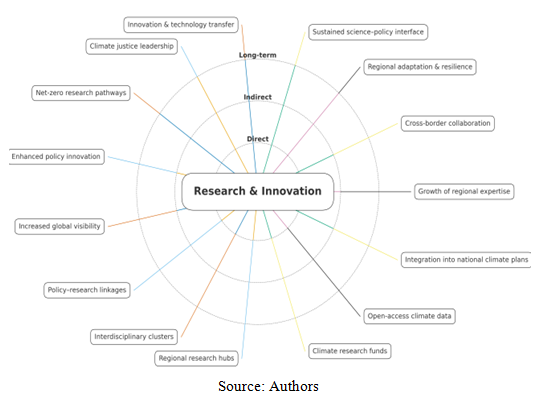
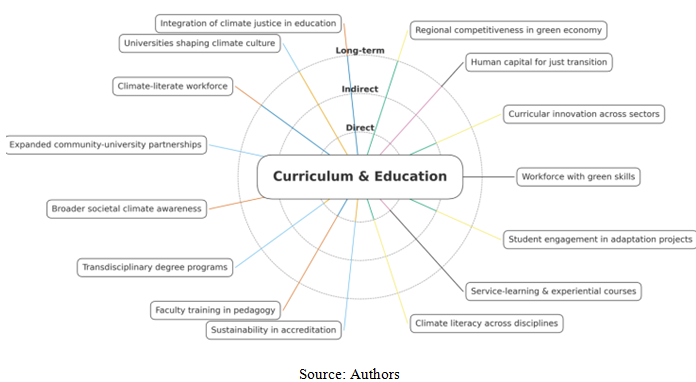
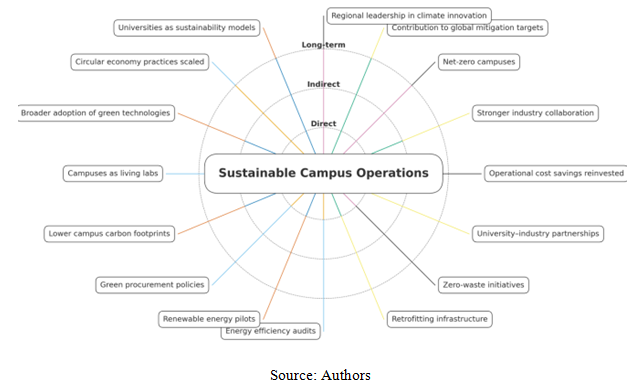
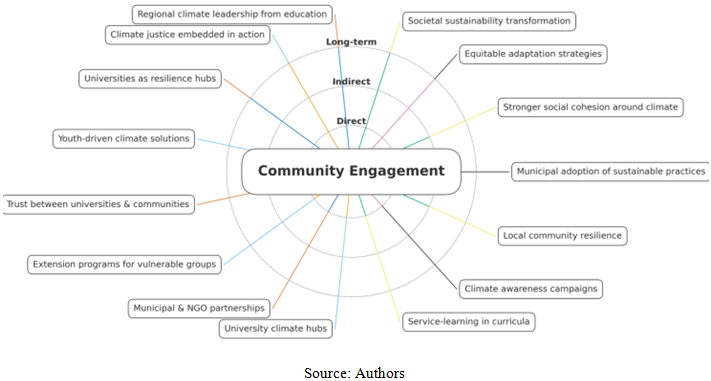
2.3. Policy Pathways MappingA Policy Pathways Mapping approach was applied to synthesize expert insights from the online survey and visualize the causal links between interventions, enabling factors, and expected outcomes across the four thematic domains. Integrating systems thinking and participatory analysis, the process translated expert data into conceptual maps illustrating how specific policy actions can drive institutional and societal transformation. Each map (Figures 5-9) represents a distinct yet interconnected pathway covering research and innovation, curriculum and education, sustainable campus operations, and community engagement and identifies both direct interventions and indirect, long-term effects that collectively advance climate action within Arab higher education.
This PEST analysis explores the key factors shaping climate change mitigation within Arab universities, examining the political, economic, social, and technological dimensions that define their external environment. As hubs of education, research, innovation, and community engagement, universities in countries such as Egypt, Qatar, Tunisia, Saudi Arabia, and the United Arab Emirates play a critical role in advancing regional sustainability agendas. Their contributions align not only with global frameworks like the United Nations Sustainable Development Goal 13 (Climate Action) but also with national strategies including Saudi Arabia’s Vision 2030, the UAE’s National Climate Change Plan 2050, and Egypt’s Vision 2030. By integrating regional policies with university-level initiatives, this analysis highlights both opportunities and barriers to embedding climate mitigation strategies such as emission reduction, green curricula, sustainable campus operations, and technological innovation into institutional practices and long-term development pathways.
The political environment is a fundamental factor shaping how Arab universities engage with climate change mitigation and adaptation. Over the past decade, many Arab countries have incorporated climate action into their national development plans as part of comprehensive strategies to address the environmental, economic, and social consequences of climate change. These plans are closely aligned with international frameworks, including the Paris Agreement and the United Nations Sustainable Development Goals, particularly SDG 13 on Climate Action 33. By embedding climate objectives into national strategies, governments have positioned universities as strategic partners in implementing climate policies. Higher education institutions contribute to these efforts by conducting scientific research, developing innovative technologies, supporting policy implementation, and producing skilled graduates who can address national climate priorities 41. Universities implement mitigation strategies (e.g., decarbonizing operations, energy efficiency) and adaptation measures (e.g., resilient infrastructure, climate-focused curricula). They serve as centers for developing, testing, and sharing knowledge on climate solutions 42. In Egypt, universities have expanded their research portfolios to include climate-resilient agriculture, water resource management, and sustainable energy, in support of the goals outlined in Egypt Vision 2030 43. In Jordan, the University of Jordan plays a prominent role in advancing national adaptation efforts. Its Sustainability Strategy (2025–2050) outlines a comprehensive framework that includes sourcing 100% of its electricity through a 16 MW solar power system and implementing extensive water-efficiency measures 44.
Similar examples can be found in Gulf countries, where national visions provide strong political backing for climate action. In Saudi Arabia, King Abdulaziz University has established the Excellency Center for Climate Change Research, which employs both global and regional climate models tailored to the climate dynamics of the Arabian Peninsula and northern Africa initiatives aligned with the environmental priorities of Saudi Vision 2030 45. In the United Arab Emirates, institutions such as Khalifa University have developed climate innovation hubs that support the National Climate Change Plan 2050, reinforced by national initiatives like Masdar City and strategies to increase the share of renewable energy in the country’s energy mix 46. In Qatar, Qatar University has aligned its research agenda with the objectives of the Qatar National Vision 2030, emphasizing sustainable development across economic, environmental, and governance domains. Its focus on innovation, entrepreneurship, and digital transformation contributes to the country’s transition toward a knowledge-based, sustainable economy 47. In Kuwait, Kuwait University demonstrates its commitment by integrating sustainability into campus operations through energy-saving measures and resource efficiency programs 48.
Economic factors play a pivotal role in shaping the capacity of Arab universities to implement climate change mitigation strategies, particularly through their impact on research funding, educational programming, and sustainable infrastructure development. The availability of public and private financing is one of the most critical determinants of universities’ ability to engage meaningfully in climate-related research and innovation. Increasingly, Arab universities rely on government grants, international climate finance programs, and private sector partnerships to sustain their climate initiatives. For example, institutions such as American University in Cairo and United Arab Emirates University have established specialized research funds focused on climate resilience and sustainability. These funds are often supported by international collaborations, which enable universities in resource-constrained contexts to secure essential financing for climate-focused research 49.
However, the broader regional economic landscape presents considerable financing challenges that affect institutional readiness. Between 1992 and November 2023, the region secured approximately $2.7 billion from the major global climate funds, representing only 6.6% of global allocations, alongside $21.7 billion in co-financing from development banks, governments, and the private sector. Although this totals $24.4 billion, it remains among the smallest global shares. The complex application processes associated with climate funds, as highlighted by United Nations ESCWA 28, further limit access to critical financing. Moreover, funding is heavily concentrated in a few North African countries, with around 78% directed to Morocco, Egypt, Tunisia, and Jordan. Over half of these funds are loans, compounding already high debt burdens in the region. For instance, Egypt’s debt-to-GDP ratio exceeds 92.9%, while Tunisia’s is around 80%, a situation worsened by rising interest rates 50. This constrained financial landscape restricts the ability of Arab universities to secure dedicated resources for climate research, innovation, and resilience-building programs.
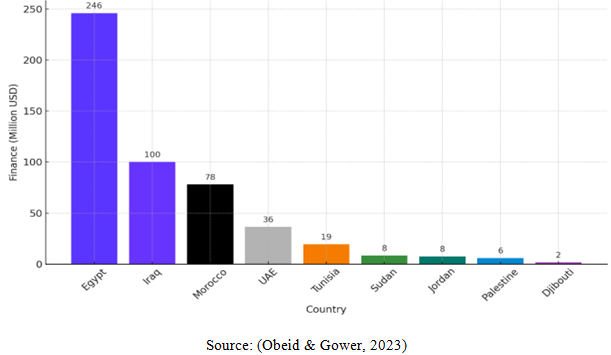
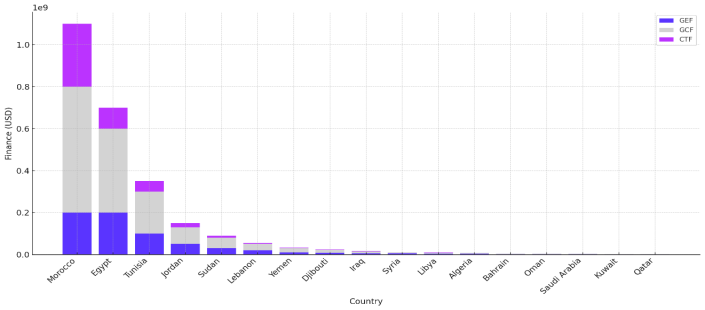
Furthermore, current climate finance levels fall drastically short of what is required to meet regional climate targets. The nine MENA countries that have quantified their financing needs for achieving their NDC goals by 2030–2040 estimate a combined requirement of $495 billion, with Egypt and Iraq alone accounting for 67% of this total. As illustrated in Figure 2, achieving these targets would necessitate at least a twenty-fold increase in climate finance inflows 50, 58, 59. In addition, Figure 3 highlights the unequal distribution of approved funding, showing that Morocco and Egypt together receive 66% of total allocations, while several GCC states rely predominantly on lower-value technical assistance from the GEF. This uneven allocation reflects deep structural economic disparities across the region, which influence universities’ ability to access financial resources, invest in climate adaptation and mitigation technologies, and support national climate objectives. Without more equitable and scaled-up climate financing, Arab universities may face considerable obstacles in advancing climate action and enhancing their institutional readiness.


Social factors are central to shaping Arab universities’ ability to respond effectively to climate change. Public awareness, social attitudes toward sustainability, and cultural values influence both the demand for climate education and the willingness of stakeholders to support climate initiatives. Universities across the region are increasingly integrating climate change into their curricula, awareness campaigns, and community outreach programs. A prominent example is University of Jordan, which actively collaborates with local partners on environmental initiatives and advocates for sustainable policies. This includes organizing awareness campaigns aimed at students and local communities to enhance environmental literacy and participation in climate action 26. However, despite such efforts, there remains a recognized gap in public understanding and engagement with climate change issues, suggesting the need for more comprehensive and sustained educational initiatives to foster societal involvement and support.
In parallel, many public universities in the Gulf region are advancing institutional and operational sustainability measures that complement academic integration. For example, Qatar University has developed a Carbon Footprint Report to estimate the institution’s contribution to climate change and guide emission reduction strategies 47, 53. These initiatives aim not only to reduce environmental impact within the university but also to model sustainable practices that can inspire broader societal change. Moreover, climate change education in Arab universities increasingly seeks to prepare students as future leaders in climate mitigation and adaptation, equipping them with the knowledge, skills, and agency to address challenges at local, national, and global levels 37, 51. Nonetheless, significant challenges persist, including a lack of comprehensive studies on student awareness and the effectiveness of climate change education in several Arab countries, particularly within the GCC. Much of the existing research remains focused on international contexts, highlighting the urgent need for localized studies and educational strategies tailored to the region’s unique social, cultural, and environmental realities 52.
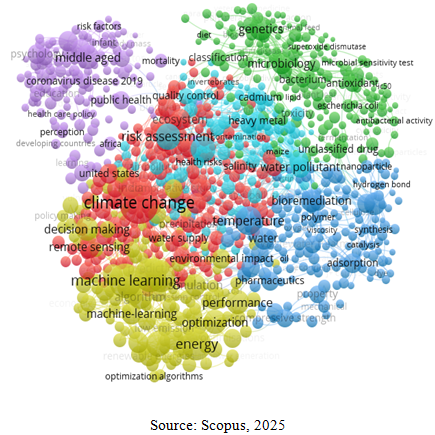
Universities act as hubs for interdisciplinary research, bringing together diverse expertise to tackle complex climate challenges. This includes developing new technologies, promoting public awareness, and influencing policy decisions related to climate change mitigation and adaptation 35. The keyword network visualization (Figure 4) presents a comprehensive analysis of 20,000 articles published in 2024 on climate change, specifically focusing on Arab Universities extracted from Scopus database. The red cluster, which includes terms such as "climate change," "temperature," "precipitation," and "water supply," underscores the region's primary concern with environmental changes, particularly the impacts on water resources. This highlights the vulnerability of Arab countries to rising temperatures and shifting weather patterns, which threaten water availability and agricultural productivity. The presence of keywords like "risk assessment" and "health risks" suggests an emerging focus on the public health implications of climate change, particularly in relation to water scarcity and heatwaves. In the purple cluster, terms like "public health," "risk factors," and "mortality" indicate a growing awareness of the direct and indirect health impacts of climate change, including increased risks to vulnerable populations such as the elderly and children. The intersection of health and environmental risks is a key concern, particularly with mentions of diseases like "coronavirus disease 2019," highlighting the complexity of global health crises in the context of climate change.
The green cluster focused on "genetics," "microbiology," and "antioxidants," reveals the region's increasing emphasis on understanding the biological impacts of climate change, particularly on agriculture, biodiversity, and soil health. This is evident in keywords like "heavy metal" and "microbial sensitivity test," which reflect concerns about pollution and the resilience of ecosystems to environmental stressors. The blue cluster, featuring terms like "energy," "optimization," and "performance," highlights the significant push for sustainable energy solutions in Arab countries, emphasizing renewable energy and energy efficiency as vital components of climate change mitigation. The region is prioritizing the transition away from fossil fuels, with a focus on technologies that can optimize energy generation and reduce emissions. Finally, the yellow cluster, with keywords like "machine learning" and "optimization algorithms," demonstrates the growing role of advanced computational methods in addressing climate change. These technologies are being leveraged to model climate scenarios, improve resource management, and develop adaptive strategies, particularly in sectors like water, agriculture, and energy. Overall, this analysis illustrates the interdisciplinary nature of climate change research in Arab countries, spanning environmental science, public health, energy, and technology, with a clear focus on building resilience and mitigating the impacts of climate change 55, 56.

Arab universities are increasingly recognizing the importance of integrating climate change into their academic programs, although the extent and methods of integration vary. A key approach involves aligning educational efforts with national visions and strategies. For instance, Saudi universities are aligning their academic programs with national strategies such as Saudi Vision 2030. This integration ensures that climate change education not only addresses national goals but also raises awareness and prepares future leaders to tackle the pressing challenges of climate change 51. In addition to national alignment, climate change education is being incorporated both within university curricula and through co-curricular activities. This integration aims to equip students with essential knowledge and skills to adapt to and mitigate climate change impacts. The focus is on influencing students’ behaviors and lifestyles, fostering long-term adaptation strategies. Moreover, this integration encourages student activism and collaboration with various stakeholders, facilitating broader engagement in climate action 37, 54. However, there remains a gap in systematically assessing how climate change is integrated into curricula, as well as how students perceive and engage with these topics, signaling a need for further research and development in this area 37.
3.2. Policy Pathways for Arab UniversitiesBased on the PEST analysis, expert insights were used to develop clear policy directions for strengthening the role of Arab universities in climate change mitigation. The results show that universities face major challenges, such as limited funding and weak coordination, but also have important opportunities to act. By combining insights from universities, policymakers, and sustainability experts, the analysis highlights practical steps that Arab universities can follow. To make the results clear, they are organized into four main areas: (i) research and innovation, (ii) curriculum and education, (iii) sustainable campus operations, and (iv) community engagement. Each area sets out a main pathway, a number of sub-policies, and the expected long-term effects, which are illustrated in the policy pathway maps (Figures 5–9). Overall, the results point to a strong agreement among experts that finance, governance, and collaboration are key to positioning Arab universities as leaders in regional climate action.
The results on research and innovation showed both the opportunities and barriers affecting Arab universities’ role in climate action”. Experts noted that climate related research remains fragmented, underfunded, and often weakly connected to national policy agendas. Limited access to sustained funding and the absence of systematic collaboration across universities were identified as major impediments to advancing knowledge production in the region. To address these challenges, the main policy pathway identified was the promotion of regional collaboration and variation of research funding. This pathway reflects the recognition that climate challenges in the Arab world are transboundary and require coordinated institutional responses to achieve cumulative impact. Several sub-policies (Table 2) were identified to operationalize this pathway, including the creation of inter-university climate research hubs, the establishment of regional funding schemes, and the incentivization of interdisciplinary clusters and open-access data platforms. Importantly, results also emphasized the need to enhance the policy relevance of academic outputs by explicitly linking research agendas to national adaptation and mitigation strategies.


The Policy Pathways Map for Research and Innovation (Figure 5) show how targeted interventions can initiate a chain of transformative effects. Setting up regional research hubs and creating competitive climate research funds are immediate steps that can help overcome the current fragmentation and lack of resources. These actions make it easier for researchers from different fields to work together, give universities better access to shared climate data, and ensure that research is more relevant to real policy needs. As a result, university research can connect more directly to national adaptation and mitigation strategies, while also raising the international profile of Arab universities in global climate debates. Over time, these combined efforts pave the way for net-zero research, greater regional resilience, and the recognition of Arab universities as key leaders in climate justice.
The experts revealed that efforts to integrate climate-related content into higher education curricula remain largely fragmented and inconsistent. Climate topics are typically introduced within environmental science or engineering programs, while most other academic fields remain disengaged from sustainability education. Participants identified several structural and cultural barriers, including the absence of accreditation standards mandating the integration of sustainability principles and prevailing perceptions that frame climate change as a peripheral rather than a core academic concern. To address these challenges, experts emphasized the need for systemic integration of climate education across all disciplines, supported by accreditation mechanisms and innovative pedagogical approaches. Recommended policy directions included embedding sustainability criteria within national quality assurance and accreditation frameworks, mainstreaming climate literacy across diverse disciplines, and expanding experiential and service-learning opportunities that connect students with real-world sustainability challenges. Faculty training in sustainability pedagogy and the development of transdisciplinary programs, such as joint degrees and micro-credentials, were also deemed critical. Collectively, these measures aim to position universities as key agents of societal transformation, fostering climate-literate graduates equipped with the competencies necessary for leadership in addressing the complex challenges of climate change. The sub-policies and their anticipated outcomes are summarized in Table 3.
The Policy Pathways Map for Curriculum and Education (Figure 6) highlight the transformative potential of embedding climate literacy into accreditation frameworks and across disciplines. Experts emphasized that direct interventions such as sustainability-oriented accreditation processes, faculty training in climate pedagogy, experiential and service-learning opportunities, and the establishment of transdisciplinary programs serve as key entry points for systemic reform in higher education. These initiatives were identified as catalysts for broader indirect outcomes, including increased student engagement in climate adaptation and mitigation projects, the cultivation of a green-skilled workforce, heightened societal awareness of climate challenges, and strengthened community–university partnerships. Over time, these processes are expected to foster the emergence of a climate-literate generation and contribute to the development of human capital essential for a just and sustainable transition. Ultimately, experts agreed that such reforms would position universities as central actors in advancing regional competitiveness within the green economy, while aligning educational transformation with global imperatives for sustainability literacy, climate justice, and cultural change.
The results on sustainable campus operations revealed considerable variation among Arab universities, shaped by differences in financial capacity, infrastructure, and institutional priorities. Experts noted that while some universities have successfully implemented renewable energy and energy efficiency projects, many continue to face challenges that hinder the wider adoption of sustainability practices. Economic constraints particularly limited budgets and competing institutional demands were consistently identified as major obstacles. To address these issues, experts emphasized a policy pathway focused on the gradual adoption of sustainable infrastructure and operational practices, supported by collaboration with industry and government partners. This approach recognizes that universities can steadily reduce their environmental footprint through the step-by-step implementation of practical and affordable measures, while positioning campuses as models of climate-responsive solutions. Summarized in Table 4, the proposed sub-policies include regular energy efficiency assessments, upgrading existing buildings and facilities, piloting renewable energy projects, and advancing zero-waste initiatives. Additional actions such as green purchasing policies and partnerships with industry were identified as important means for gaining access to new technologies and co-financing opportunities. Together, these strategies aim to embed sustainability within daily campus operations and strengthen universities’ roles as leaders in the transition toward climate resilience.
The Policy Pathways Map for Sustainable Campus Operations (Figure7) illustrates how coordinated technical and administrative measures can reduce the environmental impact of universities. Practical measures such as energy audits, infrastructure upgrades, renewable energy trials, waste reduction programs, sustainable procurement, and partnerships with industry establish the foundation for lasting operational change. These initiatives lead to broader impacts, including measurable reductions in carbon emissions, transforming campuses into living laboratories, and strengthening links between academia and industry. Over time, these pathways promote the transition to net-zero campuses, the integration of circular economy practices, meaningful contributions to global climate goals, and position universities as key players in sustainability governance and regional leaders in climate innovation., where Campus-level reforms serve as a mitigation strategy and a catalyst for broader systemic transformation.

Experts highlighted that Arab universities hold a strong position of social trust within their communities; however, their engagement in local climate action remains uneven and fragmented. According to the expert assessments, most climate-related activities are initiated by student organizations or individual faculty members rather than being embedded in institutional frameworks. Collaborations with municipalities, NGOs, and local industries were described as occasional and dependent on personal relationships rather than formalized agreements. The experts identified the key policy direction as the institutionalization of structured community engagement mechanisms, moving universities from isolated outreach efforts toward sustained collaboration. Table 5 reviews the sub-policies proposed under this pathway, including the establishment of university-based climate hubs, the integration of service-learning and volunteer programs into curricula, and the development of strategic partnerships with municipal and civil society actors. Additional recommendations underscored the need for community awareness initiatives and extension programs tailored to rural and vulnerable populations.
Experts noted that universities play a pivotal role in extending the reach of climate action beyond their campuses through structured mechanisms of community engagement. They emphasized that coordinated interventions such as establishing university climate hubs, integrating service-learning into academic curricula, forming partnerships with municipalities and NGOs, and implementing awareness campaigns and targeted programs for vulnerable populations form the essential groundwork for local climate initiatives. As illustrated in Figure 8, these policy pathways outline how organized engagement structures can strengthen the societal role of universities. The experts observed that such interventions generate broader effects, including stronger community resilience, increased trust between universities and citizens, municipal adoption of sustainable practices, youth-led climate innovation, and greater social cohesion around environmental issues. Over time, these dynamics can transform universities into regional resilience hubs that advance equitable adaptation strategies, embed principles of climate justice in local governance, and contribute meaningfully to broader societal sustainability transitions. In doing so, universities emerge as central actors linking science with society and aligning community engagement with global priorities for inclusive climate action.


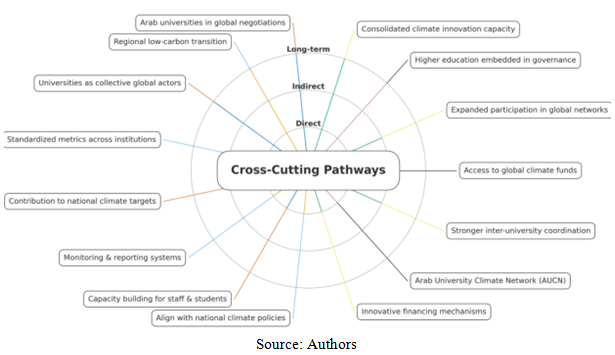
Experts identified several cross-cutting pathways that support and enable progress across all thematic domains of climate action in Arab universities. They emphasized that without systemic alignment between university strategies and national climate policies, institutional initiatives risk remaining fragmented and insufficiently supported by policy frameworks. Financial constraints were consistently cited as a key barrier affecting research, education, operations, and outreach simultaneously, highlighting the need for innovative and sustainable financing mechanisms. Table 6 shows the proposed sub-policies developed under these cross-cutting pathways, which include targeted measures for institutional alignment, resource mobilization, and capacity enhancement. Experts further underscored the importance of capacity building, noting that limited expertise among faculty and administrative staff continues to hinder effective implementation of climate initiatives. They also strongly supported the establishment of a regional Arab University Climate Network (AUCN) to facilitate knowledge exchange, joint projects, and collective advocacy, these cross-cutting pathways constitute the structural enablers required for universities to move from isolated efforts toward coordinated contributions at both national and regional levels.
Experts emphasized that sustained climate action within Arab universities depends on a set of structural enablers that cut across institutional domains and support long-term coordination. They identified interventions such as aligning university strategies with national climate policies, establishing innovative financing mechanisms, enhancing the capacities of staff and students, building a regional climate network, and introducing standardized monitoring systems to overcome systemic barriers to collaboration and resource mobilization. As shown in Figure 9, these cross-cutting policy pathways outline how finance, governance, and collaboration act as reinforcing levers that amplify the impact of actions across research, education, operations, and community engagement. According to expert analysis, these measures foster indirect outcomes including stronger inter-university collaboration, more coherent contributions to national climate targets, improved access to international climate finance, harmonized performance metrics, and deeper involvement in global knowledge and policy networks. Over time, these dynamics consolidate the collective role of higher education in the low-carbon transition, embed universities more firmly within regional climate governance structures, and strengthen their visibility and influence in international climate negotiations.
This study highlights the essential role Arab universities can play in addressing the multifaceted challenges posed by climate change. As key hubs for research, innovation, and community engagement, these institutions are uniquely positioned to lead efforts in both mitigating and adapting to climate impacts. However, the findings reveal that the full potential of universities in the region has yet to be fully realized, primarily due to several barriers that hinder their involvement in climate action. A major challenge highlighted in the paper is the fragmented political landscape that affects how universities engage with climate change. While some national climate policies exist, the integration of these policies into higher education institutions' strategic frameworks remains insufficient. Financial limitations, such as inadequate funding for climate research and the implementation of sustainable infrastructure, further restrict the capacity of universities to take meaningful action. On the social front, limited public awareness and engagement with climate issues hinder the broader adoption of climate education and the mobilization of stakeholders to support university-led climate initiatives. Technologically, while progress has been made, universities still face challenges in accessing the latest tools and technologies needed for impactful climate research and solutions.
In response to these challenges, this paper proposes a series of policy pathways aimed at empowering Arab universities to become more effective contributors to climate action. These pathways are organized around four main areas: research and innovation, curriculum development, campus sustainability, and community engagement. By fostering regional collaborations, establishing dedicated climate research hubs, and securing competitive funding opportunities, universities can enhance their research output and ensure it is aligned with national climate goals. This will not only amplify their role in climate change mitigation but also elevate their influence in regional and global climate discussions. Embedding climate change education across all academic disciplines is vital for preparing future leaders who can address climate challenges in their respective fields. Universities must integrate sustainability and climate literacy throughout their curricula, ensuring that all students, regardless of their major, are equipped with the knowledge and skills to contribute to sustainable development. Faculty training programs, interdisciplinary coursework, and hands-on learning opportunities are essential to fostering a climate-conscious culture within universities. By doing so, universities can empower students to become proactive participants in the global response to climate change.
Sustainable campus operations are another important area where universities can make a significant impact. By adopting renewable energy technologies, improving energy efficiency, and reducing waste, universities can minimize their environmental footprints. Furthermore, universities can serve as living labs, demonstrating the practicality of sustainable practices and technologies. These efforts not only reduce operational costs but also act as models for other institutions and the surrounding communities, highlighting the potential for widespread adoption of climate-friendly practices. Universities must also extend their influence beyond campus borders by engaging with local communities. This can be achieved through partnerships with government bodies, NGOs, and businesses to create and implement tailored climate solutions that meet the needs of local populations. Establishing climate innovation hubs, promoting service-learning and volunteer programs, and running public climate awareness campaigns are key strategies for building stronger community engagement. By doing so, universities can help ensure that climate action is inclusive, equitable, and addresses the needs of vulnerable groups who are most at risk from climate impacts. Arab universities have a vital role to play in the region’s climate response, but to fully realize this potential, they must overcome the challenges identified in this study. Both institutional reforms and external support are needed to strengthen universities' engagement with climate action. Collaboration among policymakers, university leaders, and other stakeholders is essential to align higher education institutions with national and regional climate goals. Increased investment in climate research, the integration of climate change into curricula, and the promotion of sustainable campus practices will enable universities to serve as effective agents of change. By following the proposed policy pathways, Arab universities can contribute significantly to building climate resilience, both regionally and globally, and help pave the way for a more sustainable future.
| [1] | Kumekawa, I. (2024). Lessons from Environmental and Economic Crises. Enterprise & Society, 25(2), 628–636. | ||
| In article | View Article | ||
| [2] | Galaz, V. (2020). Climate and environmental crises. Oxford Research Encyclopedia of Politics. | ||
| In article | View Article | ||
| [3] | Rezk, M. R. A., Piccinetti, L., Radwan, A. et al. (2020). Egypt beyond covid 19, the best and the worst-case scenarios. Entrepreneurship and Sustainability Issues, 8(2), 147-162. | ||
| In article | View Article | ||
| [4] | Rezk, M. R. A., Salem, N. M., Radwan, A., Piccinetti, L., Elshayeb, Y., Sakr, M. M., BenAmara, A., & Abdel-Fattah, Y. R. (2022). The big picture of climate change research in the Arab world: Insights from bibliometric analysis. Entrepreneurship and Sustainability Issues, 10(2), 653–671. | ||
| In article | View Article PubMed | ||
| [5] | Muluneh, M. G. (2021). Impact of climate change on biodiversity and food security: a global perspective—a review article. Agriculture & Food Security, 10(1). | ||
| In article | View Article | ||
| [6] | Rani, P., & Reddy, R. G. (2023). Climate change and its impact on food security. International Journal of Environment and Climate Change, 13(3), 104–108. | ||
| In article | View Article | ||
| [7] | Ragab, R. (2023). The global challenges facing the water resources and irrigation sector. E3S Web of Conferences, 368, 03002. | ||
| In article | View Article | ||
| [8] | Nie, P., Zhao, K., Ma, D., Liu, H., Amin, S., & Yasin, I. (2024). Global Climate Change, Mental Health, and Socio-Economic Stressors: Toward Sustainable Interventions across Regions. Sustainability, 16(19), 8693. | ||
| In article | View Article | ||
| [9] | Zaouaq, K. (2024). Climate change, conflicts, and forced migration in the Middle East (2006-2022). WIMAYA, 5(02), 98–107. | ||
| In article | View Article | ||
| [10] | Waha, K., Krummenauer, L., Adams, S., Aich, V., Baarsch, F., Coumou, D., Fader, M., Hoff, H., Jobbins, G., Marcus, R., Mengel, M., Otto, I. M., Perrette, M., Rocha, M., Robinson, A., & Schleussner, C. (2017). Climate change impacts in the Middle East and Northern Africa (MENA) region and their implications for vulnerable population groups. Regional Environmental Change, 17(6), 1623–1638. | ||
| In article | View Article | ||
| [11] | Gayar, A. E., & Hamed, Y. (2017). Climate change and water resources management in Arab countries. In Advances in Science, Technology & Innovation/Advances in science, technology & innovation (pp. 89–91). | ||
| In article | View Article | ||
| [12] | El-nahlawy, H. (2023, September 23). Rising to the challenge: Climate action in the Arab region. UNDP. Retrieved May 1, 2025, from https://www.undp.org/arab-states/stories/rising-challenge-climate-action-arab-region. | ||
| In article | |||
| [13] | Bindoff, N. L., Stott, P. A., AchutaRao, K. M., Allen, M. R., Gillett, N., Gutzler, D., et al. (2013). Detection and attribution of climate change: From global to regional. In T. F. Stocker, D. Qin, G.‐K. Plattner, M. Tignor, S. K. Allen, J. Boschung, et al. (Eds.), Climate Change 2013: ThePhysical Science Basis. Contribution of Working Group I to the Fifth Assessment Report of the Intergovernmental Panel on Climate Change (pp. 867–952). Cambridge University Press. | ||
| In article | View Article | ||
| [14] | Olonscheck, D., Schurer, A. P., Lücke, L., & Hegerl, G. C. (2021). Large-scale emergence of regional changes in year-to-year temperature variability by the end of the 21st century. Nature Communications, 12(1). | ||
| In article | View Article PubMed | ||
| [15] | Almazroui, M., Alowaibdi, T., & Hasanean, H. (2022). Dynamical downscaled CMIP5 scenario–based future climate changes over the Arabian Peninsula. Arabian Journal of Geosciences, 15(10). | ||
| In article | View Article | ||
| [16] | Ntoumos, A., Hadjinicolaou, P., Zittis, G., Proestos, Y., & Lelieveld, J. (2022). Projected air temperature extremes and maximum heat conditions over the Middle-East-North Africa (MENA) region. Earth Systems and Environment, 6(2), 343–359. | ||
| In article | View Article | ||
| [17] | Zhao, L., Oleson, K., Bou-Zeid, E., Krayenhoff, E. S., Bray, A., Zhu, Q., Zheng, Z., Chen, C., & Oppenheimer, M. (2021). Global multi-model projections of local urban climates. Nature Climate Change, 11(2), 152–157. | ||
| In article | View Article | ||
| [18] | Raymond, C., Matthews, T., & Horton, R. M. (2020). The emergence of heat and humidity too severe for human tolerance. Science Advances, 6(19). | ||
| In article | View Article PubMed | ||
| [19] | Safieddine, S., Clerbaux, C., Clarisse, L., Whitburn, S., & Eltahir, E. a. B. (2022). Present and future land surface and wet bulb temperatures in the Arabian Peninsula. Environmental Research Letters, 17(4), 044029. | ||
| In article | View Article | ||
| [20] | Al-Maliki, L. A., Al-Mamoori, S. K., Al-Ansari, N., El-Tawel, K., & Comair, F. G. (2022). Climate change impact on water resources of Iraq (a review of literature). IOP Conference Series Earth and Environmental Science, 1120(1), 012025. | ||
| In article | View Article | ||
| [21] | Alghamdi, A. S. (2022). Recent climatology (1991–2020) and trends in local warm and cold season extreme temperature days and nights in Arabia. International Journal of Environmental Research and Public Health, 19(5), 2506. | ||
| In article | View Article PubMed | ||
| [22] | Qasem, R. H. M., & Scholz, M. (2025). Climate change impact on resources in the MENA region: a systematic and critical review. Physics and Chemistry of the Earth Parts a/B/C, 103936. | ||
| In article | View Article | ||
| [23] | Lung, T., Dosio, A., Becker, W., Lavalle, C., & Bouwer, L. M. (2013). Assessing the influence of climate model uncertainty on EU-wide climate change impact indicators. Climatic Change, 120(1–2), 211–227. | ||
| In article | View Article | ||
| [24] | UNDP. (2018). Climate change adaptation in the Arab States. United Nations Development Programme. https:// www.undp.org/ publications/climate-change-adaptation-arab-states. | ||
| In article | |||
| [25] | Borgomeo, E., Fawzi, N. A., Hall, J. W., Jägerskog, A., Nicol, A., Sadoff, C. W., Salman, M., Santos, N., & Talhami, M. (2020). Tackling the trickle: ensuring sustainable water management in the Arab region. Earth S Future, 8(5). | ||
| In article | View Article | ||
| [26] | Derbas, A., Ayyoub, H. Y., Hyarat, T., Hnaif, A., Al-Quraan, R., Al-Serhan, A., Al-Tawil, M., Al-Awamleh, A., Quteshat, W., & Zyoud, I. A. (2025). The role of E-learning in institutions of higher education in achieving the goals of sustainable development in Jordan. PLoS ONE, 20(3), e0319192. | ||
| In article | View Article PubMed | ||
| [27] | ESCWA, 2005. ESCWA Water Development Report 1: Vulnerability of the Region to Socio-Economic Drought. United Nations, New York. | ||
| In article | |||
| [28] | ESCWA. (2022). ESCWA Water Development Report 9: Groundwater in the Arab region. https:// www.unescwa.org/ sites/default/ files/event/ materials/2301673E-ClimateFinance-Water-ArabRegion-PolicyBrief-WEB.pdf? utm_ source= chatgpt. com. | ||
| In article | |||
| [29] | Adil, L., Eckstein, D., Künzel, V., Schäfer, L., & germanwatch. (2025). Climate Risk Index 2025. In A. Goulston (Ed.), Climate Risk Index. Germanwatch e.V. https:// www.germanwatch.org/ sites/ default/ files/2025-02/ Climate% 20Risk% 20Index% 202025.pdf. | ||
| In article | |||
| [30] | Lange, M. A. (2019). Impacts of climate change on the Eastern Mediterranean and the Middle East and North Africa region and the Water–Energy Nexus. Atmosphere, 10(8), 455. | ||
| In article | View Article | ||
| [31] | Rahman, M. M., Akter, R., Bari, J. B. A., Hasan, M. A., Rahman, M. S., Shoaib, S. A., Shatnawi, Z. N., Alshayeb, A. F., Shalabi, F. I., Rahman, A., Alsanad, M. A., & Rahman, S. M. (2022). Analysis of climate change impacts on the food system security of Saudi Arabia. Sustainability, 14(21), 14482. | ||
| In article | View Article | ||
| [32] | United Nations. (2023). Goal 13 | Department of Economic and Social Affairs. Retrieved from https://sdgs.un.org/goals/goal13. | ||
| In article | |||
| [33] | UNFCCC, 2015. Adoption of the Paris Agreement, 12 December. Paris. Available at: https:// unfccc.int/ resource/ docs/2015/ cop21/eng/l09r01.pdf. (Accessed 1 May 2025). | ||
| In article | |||
| [34] | Leal Filho, W., Azeiteiro, U. M., Balogun, A. L., Setti, A. F. F., Mucova, S. A., Ayal, D., Totin, E., Lydia, A. M., Kalaba, F. K., & Oguge, N. O. (2021). The influence of ecosystems services depletion to climate change adaptation efforts in Africa. Science of the Total Environment, 779, 146414. | ||
| In article | View Article PubMed | ||
| [35] | Shields, R. (2019). The sustainability of international higher education: Student mobility and global climate change. Journal of Cleaner Production, 217, 594–602. | ||
| In article | View Article | ||
| [36] | McMahan, B., & Gerlak, A. K. (2020). Climate risk assessment and cascading impacts: Risks and opportunities for an electrical utility in the U.S. Southwest. Climate Risk Management, 29, 100240. | ||
| In article | View Article | ||
| [37] | Filho, W. L., Ayal, D. Y., Wall, T., Shiel, C., Paco, A., Pace, P., Mifsud, M., Salvia, A. L., Skouloudis, A., Moggi, S., LeVasseur, T., Antonio, G. V., Azeiteiro, U. M., Ioannis, N., & Kovaleva, M. (2023). An assessment of attitudes and perceptions of international university students on climate change. Climate Risk Management, 39, 100486. | ||
| In article | View Article | ||
| [38] | Sun, L., Kaufman, M. F., Sirk, E. A., Durga, S., Mahowald, N. M., & You, F. (2022). COVID-19 impact on an academic Institution’s greenhouse gas inventory: The case of Cornell University. Journal of Cleaner Production, 363, 132440. | ||
| In article | View Article | ||
| [39] | Aung, P. N., & Hallinger, P. (2022). The intellectual structure of the literature on sustainability leadership in higher education: an author co-citation analysis. International Journal of Educational Management, 36(5), 784–799. | ||
| In article | View Article | ||
| [40] | Roca-Barcelo, A., Gaines, A. M., Sheehan, A., Thompson, R., Chamberlain, R. C., Bos, B., & Belcher, R. N. (2021). Making academia environmentally sustainable: a student perspective. The Lancet Planetary Health, 5(9), e576–e577. | ||
| In article | View Article | ||
| [41] | UNESCO. (2024). Education and climate change Learning to act for people and planet. | ||
| In article | |||
| [42] | Moldovan, R., Rus, T., Beu, D., Albu, H., Domnița, F., & Moldovan, A. (2025). From assessment to action: A strategic approach to carbon management for climate neutrality in higher education. Sustainable Futures, 10, 101354. | ||
| In article | View Article | ||
| [43] | Raafat, Y. (2025). National Efforts in Climate Change Adaptation in Agriculture: Assessing Policies and Practices in Egypt’s Nile Delta, Master's Thesis, the American University in Cairo. AUC Knowledge Fountain. https://fount.aucegypt.edu/etds/240. | ||
| In article | |||
| [44] | University of Jordan. (2025). University of Jordan sustainability strategy and action plans 2025–2050 (Deans’ Council Decision No. 17/3/2025). Retrieved from https:// ju.edu.jo/ Documents/ University%20of%20Jordan%20Sustainability%20Strategy%20and%20Action%20Plans%202025.pdf. | ||
| In article | |||
| [45] | Şen, Z. (2015). Climate change, droughts, and water resources. In Elsevier eBooks (pp. 321–391). | ||
| In article | View Article | ||
| [46] | Kumari, P., Yahmadi, R., Mumtaz, F., Vega, L. F., Ceriani, A., Tribuzio, R., Dumée, L. F., & Decarlis, A. (2024). CO2 capture via subsurface mineralization geological settings and engineering perspectives towards long-term storage and decarbonization in the Middle East. Carbon Capture Science & Technology, 13, 100293. | ||
| In article | View Article | ||
| [47] | Zaidan, E., Wazen, C., & Al-Saidi, M. (2025). Vehicles for change? Public universities, development plans, and the post-carbon transition in the Gulf states. Research in Globalization, 100294. | ||
| In article | View Article | ||
| [48] | Mahameed, M. A., Riaz, U., Aldoob, M. S., & Halari, A. (2023). The implementation of sustainability practices in Arab higher education institutions. Journal of Financial Reporting & Accounting, 23(3), 1161–1185. | ||
| In article | View Article | ||
| [49] | American University in Cairo. (2025). Funding Opportunities. Retrieved from https://www.aucegypt.edu/about/sponsored-programs/ funding-opportunities. | ||
| In article | |||
| [50] | Obeid, J., & Gower, A. (2023, December). Mind the gap: Highlighting MENA’s climate finance challenge. SRMG Think. Retrieved from https://www.srmgthink.com/highlighting-menas-climate-finance-challenge?utm_source=chatgpt.com. | ||
| In article | |||
| [51] | Perkins, K. M., Munguia, N., Moure-Eraso, R., Delakowitz, B., Giannetti, B. F., Liu, G., Nurunnabi, M., Will, M., & Velazquez, L. (2018). International perspectives on the pedagogy of climate change. Journal of Cleaner Production, 200, 1043–1052. | ||
| In article | View Article | ||
| [52] | Freije, A. M., Hussain, T., & Salman, E. A. (2016). Global warming awareness among the University of Bahrain science students. Journal of the Association of Arab Universities for Basic and Applied Sciences, 22(1), 9–16. | ||
| In article | View Article | ||
| [53] | Barbhuiya, S., Das, B. B., & Adak, D. (2024). Roadmap to a net-zero carbon cement sector: Strategies, innovations and policy imperatives. Journal of Environmental Management, 359, 121052. | ||
| In article | View Article PubMed | ||
| [54] | Climate Action Tracker. (2024, April). Saudi Arabia. Retrieved April 13, 2025, from https:// climateactiontracker.org/ countries/ saudi-arabia/. | ||
| In article | |||
| [55] | Filho, W. L., Dinis, M. a. P., Salvia, A. L., Sierra, J., Vasconcelos, H., Henderson-Wilson, C., Diatta, S., Kumar, T. V. L., Meirelles, M. G., & Carvalho, F. (2024). Assessing climate change and health provisions among staff in higher education institutions: A preliminary investigation. PLoS ONE, 19(5), e0304019. | ||
| In article | View Article PubMed | ||
| [56] | Han, X., Hua, E., Engel, B. A., Guan, J., Yin, J., Wu, N., Sun, S., & Wang, Y. (2022). Understanding implications of climate change and socio-economic development for the water-energy-food nexus: A meta-regression analysis. Agricultural Water Management, 269, 107693. | ||
| In article | View Article | ||
| [57] | Malik, A., Stenchikov, G., Mostamandi, S., Parajuli, S., Lelieveld, J., Zittis, G., Ahsan, M. S., Atique, L., & Usman, M. (2024). Accelerated historical and future warming in the Middle East and North Africa. Journal of Geophysical Research Atmospheres, 129(22). | ||
| In article | View Article | ||
| [58] | SRMG Think. (2023). MENA Forum report: The case for cooperation beyond de-escalation. SRMG Think Research and Advisory. https://www.srmgthink.com/featured-insights/ 121/ mena- forum- reportthe-case-co-operation-beyond-de-escalation. | ||
| In article | |||
| [59] | United Nations ESCWA. (2022). Review of policy brief: Climate finance flows in the Middle East. UNESCWA. https:// www.unescwa.org/sites/default/files/pubs/pdf/climate-finance-needs-flows-arab-region-english.pdf. | ||
| In article | |||
| [60] | World Bank. (2023). World Bank Open Data. Retrieved March 14, 2025, from https:// data.worldbank.org/ indicator/ SP.POP. TOTL? locations=1A. | ||
| In article | |||
Published with license by Science and Education Publishing, Copyright © 2025 Mohamed Ramadan A. Rezk, Leonardo Piccinetti, Donatella Santoro, Nahed Salem, Trevor Uyi Omoruyi, Mohammed Mahgoub Hassan and Alaa A. El-Bary
 This work is licensed under a Creative Commons Attribution 4.0 International License. To view a copy of this license, visit
http://creativecommons.org/licenses/by/4.0/
This work is licensed under a Creative Commons Attribution 4.0 International License. To view a copy of this license, visit
http://creativecommons.org/licenses/by/4.0/
| [1] | Kumekawa, I. (2024). Lessons from Environmental and Economic Crises. Enterprise & Society, 25(2), 628–636. | ||
| In article | View Article | ||
| [2] | Galaz, V. (2020). Climate and environmental crises. Oxford Research Encyclopedia of Politics. | ||
| In article | View Article | ||
| [3] | Rezk, M. R. A., Piccinetti, L., Radwan, A. et al. (2020). Egypt beyond covid 19, the best and the worst-case scenarios. Entrepreneurship and Sustainability Issues, 8(2), 147-162. | ||
| In article | View Article | ||
| [4] | Rezk, M. R. A., Salem, N. M., Radwan, A., Piccinetti, L., Elshayeb, Y., Sakr, M. M., BenAmara, A., & Abdel-Fattah, Y. R. (2022). The big picture of climate change research in the Arab world: Insights from bibliometric analysis. Entrepreneurship and Sustainability Issues, 10(2), 653–671. | ||
| In article | View Article PubMed | ||
| [5] | Muluneh, M. G. (2021). Impact of climate change on biodiversity and food security: a global perspective—a review article. Agriculture & Food Security, 10(1). | ||
| In article | View Article | ||
| [6] | Rani, P., & Reddy, R. G. (2023). Climate change and its impact on food security. International Journal of Environment and Climate Change, 13(3), 104–108. | ||
| In article | View Article | ||
| [7] | Ragab, R. (2023). The global challenges facing the water resources and irrigation sector. E3S Web of Conferences, 368, 03002. | ||
| In article | View Article | ||
| [8] | Nie, P., Zhao, K., Ma, D., Liu, H., Amin, S., & Yasin, I. (2024). Global Climate Change, Mental Health, and Socio-Economic Stressors: Toward Sustainable Interventions across Regions. Sustainability, 16(19), 8693. | ||
| In article | View Article | ||
| [9] | Zaouaq, K. (2024). Climate change, conflicts, and forced migration in the Middle East (2006-2022). WIMAYA, 5(02), 98–107. | ||
| In article | View Article | ||
| [10] | Waha, K., Krummenauer, L., Adams, S., Aich, V., Baarsch, F., Coumou, D., Fader, M., Hoff, H., Jobbins, G., Marcus, R., Mengel, M., Otto, I. M., Perrette, M., Rocha, M., Robinson, A., & Schleussner, C. (2017). Climate change impacts in the Middle East and Northern Africa (MENA) region and their implications for vulnerable population groups. Regional Environmental Change, 17(6), 1623–1638. | ||
| In article | View Article | ||
| [11] | Gayar, A. E., & Hamed, Y. (2017). Climate change and water resources management in Arab countries. In Advances in Science, Technology & Innovation/Advances in science, technology & innovation (pp. 89–91). | ||
| In article | View Article | ||
| [12] | El-nahlawy, H. (2023, September 23). Rising to the challenge: Climate action in the Arab region. UNDP. Retrieved May 1, 2025, from https://www.undp.org/arab-states/stories/rising-challenge-climate-action-arab-region. | ||
| In article | |||
| [13] | Bindoff, N. L., Stott, P. A., AchutaRao, K. M., Allen, M. R., Gillett, N., Gutzler, D., et al. (2013). Detection and attribution of climate change: From global to regional. In T. F. Stocker, D. Qin, G.‐K. Plattner, M. Tignor, S. K. Allen, J. Boschung, et al. (Eds.), Climate Change 2013: ThePhysical Science Basis. Contribution of Working Group I to the Fifth Assessment Report of the Intergovernmental Panel on Climate Change (pp. 867–952). Cambridge University Press. | ||
| In article | View Article | ||
| [14] | Olonscheck, D., Schurer, A. P., Lücke, L., & Hegerl, G. C. (2021). Large-scale emergence of regional changes in year-to-year temperature variability by the end of the 21st century. Nature Communications, 12(1). | ||
| In article | View Article PubMed | ||
| [15] | Almazroui, M., Alowaibdi, T., & Hasanean, H. (2022). Dynamical downscaled CMIP5 scenario–based future climate changes over the Arabian Peninsula. Arabian Journal of Geosciences, 15(10). | ||
| In article | View Article | ||
| [16] | Ntoumos, A., Hadjinicolaou, P., Zittis, G., Proestos, Y., & Lelieveld, J. (2022). Projected air temperature extremes and maximum heat conditions over the Middle-East-North Africa (MENA) region. Earth Systems and Environment, 6(2), 343–359. | ||
| In article | View Article | ||
| [17] | Zhao, L., Oleson, K., Bou-Zeid, E., Krayenhoff, E. S., Bray, A., Zhu, Q., Zheng, Z., Chen, C., & Oppenheimer, M. (2021). Global multi-model projections of local urban climates. Nature Climate Change, 11(2), 152–157. | ||
| In article | View Article | ||
| [18] | Raymond, C., Matthews, T., & Horton, R. M. (2020). The emergence of heat and humidity too severe for human tolerance. Science Advances, 6(19). | ||
| In article | View Article PubMed | ||
| [19] | Safieddine, S., Clerbaux, C., Clarisse, L., Whitburn, S., & Eltahir, E. a. B. (2022). Present and future land surface and wet bulb temperatures in the Arabian Peninsula. Environmental Research Letters, 17(4), 044029. | ||
| In article | View Article | ||
| [20] | Al-Maliki, L. A., Al-Mamoori, S. K., Al-Ansari, N., El-Tawel, K., & Comair, F. G. (2022). Climate change impact on water resources of Iraq (a review of literature). IOP Conference Series Earth and Environmental Science, 1120(1), 012025. | ||
| In article | View Article | ||
| [21] | Alghamdi, A. S. (2022). Recent climatology (1991–2020) and trends in local warm and cold season extreme temperature days and nights in Arabia. International Journal of Environmental Research and Public Health, 19(5), 2506. | ||
| In article | View Article PubMed | ||
| [22] | Qasem, R. H. M., & Scholz, M. (2025). Climate change impact on resources in the MENA region: a systematic and critical review. Physics and Chemistry of the Earth Parts a/B/C, 103936. | ||
| In article | View Article | ||
| [23] | Lung, T., Dosio, A., Becker, W., Lavalle, C., & Bouwer, L. M. (2013). Assessing the influence of climate model uncertainty on EU-wide climate change impact indicators. Climatic Change, 120(1–2), 211–227. | ||
| In article | View Article | ||
| [24] | UNDP. (2018). Climate change adaptation in the Arab States. United Nations Development Programme. https:// www.undp.org/ publications/climate-change-adaptation-arab-states. | ||
| In article | |||
| [25] | Borgomeo, E., Fawzi, N. A., Hall, J. W., Jägerskog, A., Nicol, A., Sadoff, C. W., Salman, M., Santos, N., & Talhami, M. (2020). Tackling the trickle: ensuring sustainable water management in the Arab region. Earth S Future, 8(5). | ||
| In article | View Article | ||
| [26] | Derbas, A., Ayyoub, H. Y., Hyarat, T., Hnaif, A., Al-Quraan, R., Al-Serhan, A., Al-Tawil, M., Al-Awamleh, A., Quteshat, W., & Zyoud, I. A. (2025). The role of E-learning in institutions of higher education in achieving the goals of sustainable development in Jordan. PLoS ONE, 20(3), e0319192. | ||
| In article | View Article PubMed | ||
| [27] | ESCWA, 2005. ESCWA Water Development Report 1: Vulnerability of the Region to Socio-Economic Drought. United Nations, New York. | ||
| In article | |||
| [28] | ESCWA. (2022). ESCWA Water Development Report 9: Groundwater in the Arab region. https:// www.unescwa.org/ sites/default/ files/event/ materials/2301673E-ClimateFinance-Water-ArabRegion-PolicyBrief-WEB.pdf? utm_ source= chatgpt. com. | ||
| In article | |||
| [29] | Adil, L., Eckstein, D., Künzel, V., Schäfer, L., & germanwatch. (2025). Climate Risk Index 2025. In A. Goulston (Ed.), Climate Risk Index. Germanwatch e.V. https:// www.germanwatch.org/ sites/ default/ files/2025-02/ Climate% 20Risk% 20Index% 202025.pdf. | ||
| In article | |||
| [30] | Lange, M. A. (2019). Impacts of climate change on the Eastern Mediterranean and the Middle East and North Africa region and the Water–Energy Nexus. Atmosphere, 10(8), 455. | ||
| In article | View Article | ||
| [31] | Rahman, M. M., Akter, R., Bari, J. B. A., Hasan, M. A., Rahman, M. S., Shoaib, S. A., Shatnawi, Z. N., Alshayeb, A. F., Shalabi, F. I., Rahman, A., Alsanad, M. A., & Rahman, S. M. (2022). Analysis of climate change impacts on the food system security of Saudi Arabia. Sustainability, 14(21), 14482. | ||
| In article | View Article | ||
| [32] | United Nations. (2023). Goal 13 | Department of Economic and Social Affairs. Retrieved from https://sdgs.un.org/goals/goal13. | ||
| In article | |||
| [33] | UNFCCC, 2015. Adoption of the Paris Agreement, 12 December. Paris. Available at: https:// unfccc.int/ resource/ docs/2015/ cop21/eng/l09r01.pdf. (Accessed 1 May 2025). | ||
| In article | |||
| [34] | Leal Filho, W., Azeiteiro, U. M., Balogun, A. L., Setti, A. F. F., Mucova, S. A., Ayal, D., Totin, E., Lydia, A. M., Kalaba, F. K., & Oguge, N. O. (2021). The influence of ecosystems services depletion to climate change adaptation efforts in Africa. Science of the Total Environment, 779, 146414. | ||
| In article | View Article PubMed | ||
| [35] | Shields, R. (2019). The sustainability of international higher education: Student mobility and global climate change. Journal of Cleaner Production, 217, 594–602. | ||
| In article | View Article | ||
| [36] | McMahan, B., & Gerlak, A. K. (2020). Climate risk assessment and cascading impacts: Risks and opportunities for an electrical utility in the U.S. Southwest. Climate Risk Management, 29, 100240. | ||
| In article | View Article | ||
| [37] | Filho, W. L., Ayal, D. Y., Wall, T., Shiel, C., Paco, A., Pace, P., Mifsud, M., Salvia, A. L., Skouloudis, A., Moggi, S., LeVasseur, T., Antonio, G. V., Azeiteiro, U. M., Ioannis, N., & Kovaleva, M. (2023). An assessment of attitudes and perceptions of international university students on climate change. Climate Risk Management, 39, 100486. | ||
| In article | View Article | ||
| [38] | Sun, L., Kaufman, M. F., Sirk, E. A., Durga, S., Mahowald, N. M., & You, F. (2022). COVID-19 impact on an academic Institution’s greenhouse gas inventory: The case of Cornell University. Journal of Cleaner Production, 363, 132440. | ||
| In article | View Article | ||
| [39] | Aung, P. N., & Hallinger, P. (2022). The intellectual structure of the literature on sustainability leadership in higher education: an author co-citation analysis. International Journal of Educational Management, 36(5), 784–799. | ||
| In article | View Article | ||
| [40] | Roca-Barcelo, A., Gaines, A. M., Sheehan, A., Thompson, R., Chamberlain, R. C., Bos, B., & Belcher, R. N. (2021). Making academia environmentally sustainable: a student perspective. The Lancet Planetary Health, 5(9), e576–e577. | ||
| In article | View Article | ||
| [41] | UNESCO. (2024). Education and climate change Learning to act for people and planet. | ||
| In article | |||
| [42] | Moldovan, R., Rus, T., Beu, D., Albu, H., Domnița, F., & Moldovan, A. (2025). From assessment to action: A strategic approach to carbon management for climate neutrality in higher education. Sustainable Futures, 10, 101354. | ||
| In article | View Article | ||
| [43] | Raafat, Y. (2025). National Efforts in Climate Change Adaptation in Agriculture: Assessing Policies and Practices in Egypt’s Nile Delta, Master's Thesis, the American University in Cairo. AUC Knowledge Fountain. https://fount.aucegypt.edu/etds/240. | ||
| In article | |||
| [44] | University of Jordan. (2025). University of Jordan sustainability strategy and action plans 2025–2050 (Deans’ Council Decision No. 17/3/2025). Retrieved from https:// ju.edu.jo/ Documents/ University%20of%20Jordan%20Sustainability%20Strategy%20and%20Action%20Plans%202025.pdf. | ||
| In article | |||
| [45] | Şen, Z. (2015). Climate change, droughts, and water resources. In Elsevier eBooks (pp. 321–391). | ||
| In article | View Article | ||
| [46] | Kumari, P., Yahmadi, R., Mumtaz, F., Vega, L. F., Ceriani, A., Tribuzio, R., Dumée, L. F., & Decarlis, A. (2024). CO2 capture via subsurface mineralization geological settings and engineering perspectives towards long-term storage and decarbonization in the Middle East. Carbon Capture Science & Technology, 13, 100293. | ||
| In article | View Article | ||
| [47] | Zaidan, E., Wazen, C., & Al-Saidi, M. (2025). Vehicles for change? Public universities, development plans, and the post-carbon transition in the Gulf states. Research in Globalization, 100294. | ||
| In article | View Article | ||
| [48] | Mahameed, M. A., Riaz, U., Aldoob, M. S., & Halari, A. (2023). The implementation of sustainability practices in Arab higher education institutions. Journal of Financial Reporting & Accounting, 23(3), 1161–1185. | ||
| In article | View Article | ||
| [49] | American University in Cairo. (2025). Funding Opportunities. Retrieved from https://www.aucegypt.edu/about/sponsored-programs/ funding-opportunities. | ||
| In article | |||
| [50] | Obeid, J., & Gower, A. (2023, December). Mind the gap: Highlighting MENA’s climate finance challenge. SRMG Think. Retrieved from https://www.srmgthink.com/highlighting-menas-climate-finance-challenge?utm_source=chatgpt.com. | ||
| In article | |||
| [51] | Perkins, K. M., Munguia, N., Moure-Eraso, R., Delakowitz, B., Giannetti, B. F., Liu, G., Nurunnabi, M., Will, M., & Velazquez, L. (2018). International perspectives on the pedagogy of climate change. Journal of Cleaner Production, 200, 1043–1052. | ||
| In article | View Article | ||
| [52] | Freije, A. M., Hussain, T., & Salman, E. A. (2016). Global warming awareness among the University of Bahrain science students. Journal of the Association of Arab Universities for Basic and Applied Sciences, 22(1), 9–16. | ||
| In article | View Article | ||
| [53] | Barbhuiya, S., Das, B. B., & Adak, D. (2024). Roadmap to a net-zero carbon cement sector: Strategies, innovations and policy imperatives. Journal of Environmental Management, 359, 121052. | ||
| In article | View Article PubMed | ||
| [54] | Climate Action Tracker. (2024, April). Saudi Arabia. Retrieved April 13, 2025, from https:// climateactiontracker.org/ countries/ saudi-arabia/. | ||
| In article | |||
| [55] | Filho, W. L., Dinis, M. a. P., Salvia, A. L., Sierra, J., Vasconcelos, H., Henderson-Wilson, C., Diatta, S., Kumar, T. V. L., Meirelles, M. G., & Carvalho, F. (2024). Assessing climate change and health provisions among staff in higher education institutions: A preliminary investigation. PLoS ONE, 19(5), e0304019. | ||
| In article | View Article PubMed | ||
| [56] | Han, X., Hua, E., Engel, B. A., Guan, J., Yin, J., Wu, N., Sun, S., & Wang, Y. (2022). Understanding implications of climate change and socio-economic development for the water-energy-food nexus: A meta-regression analysis. Agricultural Water Management, 269, 107693. | ||
| In article | View Article | ||
| [57] | Malik, A., Stenchikov, G., Mostamandi, S., Parajuli, S., Lelieveld, J., Zittis, G., Ahsan, M. S., Atique, L., & Usman, M. (2024). Accelerated historical and future warming in the Middle East and North Africa. Journal of Geophysical Research Atmospheres, 129(22). | ||
| In article | View Article | ||
| [58] | SRMG Think. (2023). MENA Forum report: The case for cooperation beyond de-escalation. SRMG Think Research and Advisory. https://www.srmgthink.com/featured-insights/ 121/ mena- forum- reportthe-case-co-operation-beyond-de-escalation. | ||
| In article | |||
| [59] | United Nations ESCWA. (2022). Review of policy brief: Climate finance flows in the Middle East. UNESCWA. https:// www.unescwa.org/sites/default/files/pubs/pdf/climate-finance-needs-flows-arab-region-english.pdf. | ||
| In article | |||
| [60] | World Bank. (2023). World Bank Open Data. Retrieved March 14, 2025, from https:// data.worldbank.org/ indicator/ SP.POP. TOTL? locations=1A. | ||
| In article | |||