The issues of governance diversity have taken center stage with many organizations seeking to be compliant to regulatory requirements and reaching the diversity thresholds set up by different frameworks. The composition of any institutional board should be taken seriously as the board has the mandate to oversee the management decisions in taking the organization forward. Most diversity studies look at gender diversity, age diversity, ethnic diversity and educational diversity. However, it appears the conclusions stop at determining their role in creating organizational effectiveness. This study set out to achieve two things as guided by the research questions. First was to determine the nature, strength, and statistical significance of the relationship between independent variables (gender diversity, age diversity, ethnic diversity and educational diversity) and the dependent variable (Board Effectiveness). Second was to identify principal determinant among the independent variables to the board effectiveness. This study found that all listed independent variables have a linear and positive correlation which is statistically significant. Results showed relationship between independent variables and dependent variable board effectiveness to be positive and statistically significant (education diversity r = .419; p=<.001; age diversity r=.183, p=<.05; gender diversity r=.172, p=<.05; ethnic diversity r=.345, p=<.001). However, in identifying the principal determinant of board effectiveness, it was found that education diversity on the board had the highest coefficient which was also statistically significant (standardized beta .318 and p-values <.05) while the ethnic diversity was .244, and p-value <.05 with age diversity at .183 and p-value <.05. It has also been found that gender diversity contributes weakly to the variability in board effectiveness, which is not statistically significant, standardized beta .061, p-value >.05. Therefore, it can be said that the best way to increase gender participation at the governance levels is through development of experience, expertise and higher education. In this study n=160; Cronbach’s Alpha=.687; KMO=.698 and Bartlett’s Test of Sphericity =<.001.
Board heterogeneity refers to the competence mix among board members. It has to do with the highest possible combinations of skills on the board and how they support each other for better outcomes of the board. However, some studies have revealed that board heterogeneity may create board conflict as it may inhibit organizational change 1. However, Beekun, Stedham, and Young 2 argue that board heterogeneity has been reported as responsible for adherence to outcome-based control for evaluating the CEO and accessing external resources 3.
Board members who attend other boards more frequently tend to build organization-specific competencies and enhance a significant rapporteur of relationships across the industry. According to A. Hillman et al. 4, shareholders are weary with independent directors who have longer tenure due to autonomy and control they develop over time, Kosnik 5 found that there was a relationship between the level of board tenure and the level of resistance to corporate raiders or hostile takeovers.
However, S. G. Johnson, Schnatterly, and Hill 6 conclude that collective personal attributes on the board affect board activities’ strategic trajectory because board tenure, expertise, and experiences impact their cognitive abilities and decision-making processes. Relational dynamics at board levels depend on the heterogeneity of the board. It has to do with how they are perceived in society and how they interact with managers of the organization. S. G. Johnson et al. 6 say that when the CEO of the focal firm sits on the board of a hosting firm there exists a double bond between the board member and the organization, a situation commonly referred to as board member interlock.
As expounded by the Resource Dependency Theory of corporate governance, Carpenter and Westphal 7 say that board directors’ expertise and connections prove to be vital to the strategic perspective of their boards. Stuart and Yim, 8 concur that directors with equity connections are likely to connect their boards to existing opportunities which may include opportunities for expansion 9, influence organizations’ strategic direction and acquisitions 10.
S. G. Johnson et al. 6 provide an alternative perspective that shows that it could be counterproductive to shareholders to have interlocked directors as it is possible to collude against their proprietors. They elaborate that should a board member vote to raise the salary of the CEO in a focal firm, there may arise a legitimate expectation for the board member to expect the same when the CEO seats on the alternate board.
Therefore, according to Ruigrok, Peck, and Keller 11, such interlocked board members may not be sufficiently independent, a situation that may compromise their effectiveness and could lead them to be more interested in management welfare as opposed to the shareholder interests. This was also observed by Bizjak, et al. 12, that interlocked board members have a predisposition to engage in practices that benefit management at the expense of shareholders.
Much like interlocked board members, affiliated board members also pose a risk to shareholder interests 6, due to compromised independence through business relationships and other relational dynamics outside the board which may have adverse interests on the shareholder interests 13. Affiliated board members are usually those invited into the board by the CEO 14, who have shown they could fundamentally be inclined to entrench management as opposed to creating shareholder value 15.
On the other hand, affiliated board members are more influential on the board than those that do not have such private connections 16. S. G. Johnson et al. 6 suggest that board members’ connections with other boards facilitate information sharing and resource travel between the home board and focal firm. However, such connections may not be positively connected to the performance of the focal firm 17.
Boards that have members who are socially connected tend to provide a positive image of the organization 18, as directors with prestige would seek to preserve their image in public eyes. There is some evidence to suggest that interlocked board members are associated with organizational fraud 19 such that when these board members cease to sit on such boards, shareholder value increases with their departure, suggesting that there is a relationship between the social standing of board members and the share value of their firms 20. The diversity of board structure may be viewed in terms of board demography, board members’ attributes, and board members’ interpersonal cohesion. There is a general agreement among researchers that board demographic configuration should include age, gender, race or ethnicity, and educational background 21, 22.
Deloitte 23 looks at the diversity of the board as the variety of perspectives and approaches offered by members of the board from different entity groups which include diversity in fields of knowledge, skills, and experiences such as people’s age, culture race, and gender. Boards need to have a broad mix of skills, knowledge, and experience. Different directors have different skills and backgrounds. Australian Institute of Company Directors 24 acknowledges that the goal in selecting board members is to build a mix that can work as a well-rounded team of people, each with an appropriate range of experience skills and attributes relevant to the purpose, needs, and strategies of the organization. In selecting a new board member, the board should consider the skills, knowledge, attributes, and experience needed to govern the organization both now and in the future 24.
As the diversity of perspectives is seen as a valuable addition to a board’s deliberations, boards should have a diversity policy that has measurable objectives for achieving diversity including diversity of gender, age, ethnicity, and life’s experiences 24.
1.1. Age of Board MembersIn a study about Age Board Diversity, Neukirchen, et al. 25 found that boards that have age diversity in their composition experience significantly less institutional misconduct. There are fewer regulatory violations and less corporate fines where boards have noticeable age diversity. The study further observed that age-diversified boards are instrumental in curbing management misconduct and prevent CEOs from intentional wrongdoing. Findings by Emrah 26 suggest that age-diversified boards are positively associated with better business outcomes, effective risk management and higher shareholder earnings.
According to Janahi, Millo and Voulgaris, 27 boards that are age-diversified have lower management earnings which creates higher dividends to the shareholders. Another study further observes that age-diversified boards are more effective at monitoring management decisions and increase management effectiveness. However, Gardiner 28 found that boards that consistently perform better in Corporate Social Responsibility (CSR) generally have age-diversity. According to available studies, age plays a critical role in the board member’s ability to initiate and embrace the strategic change of an organization they serve. Wiersema and Bantel 29 have observed that older board members are less likely to initiate change while Ahn and Walker 30 have concluded that younger board members are associated with greater strategic change.
In another study, Golden and Zajac 31 observed that the percentage of board members who were 50 years or older was positively associated with organizational strategic change while Platt and Platt 32 found that organizations that succumbed to bankruptcy had younger board members. This appears to indicate that while younger board members are likely to be change agents, older board members tend to be a safer pair of hands for the stability of the organization. Platt & Platt 32 conclude that age determines experience and risk perception. Mustafa et al., 33 observed that globally corporate boards comprise of members that are 50 to 70 years old and required evidence in favour of intergenerational boards. Zhang 34 concludes that impact of board age diversity is important as there is a global movement towards boards that are age diversified.
1.2. Gender DiversityBaker et al., 35 observed that there should be gender considerations in constituting corporate boards with Harjoto and Rossi 36 arguing that gender diversified boards tend to be more informed about market dynamics which may contribute to positive economic outlook of the business coupled with environmental, social and governance performance.
Literature appears to suggest that gender diversity on the board tends to effective the board dynamics, decision-making, and cognitive processes which in effect also affect the board outcomes. For example, while gender diversity has not to be noted as affecting an organization’s profitability, there appears to be evidence to the effect that gender diversity does impact board dynamics 37. However, Bøhren and Strøm 38 observe that evidence of the impact of board gender diversity is weak with studies finding positive and negative and sometimes no relationship between board gender diversity and organizational profitability. According to Kabongo and Okpara 39, gender diversified boards tend to offer outstanding worldviews due to rich expertise, experience, and knowledge.
Researchers make attempts to explain the lack of conclusive evidence of the impact of gender diversity due to either board composition, type of sector or industry 40 or cultural realities 41. For instance, R. B. Adams and Ferreira 40 found that female board members tend to attend board meetings more regularly while male board members appear to skip board meetings more frequently. They also find that male board members seem to participate more in gender-diverse boards while Nielsen and Huse 42 have discovered that boards that are gender diverse experience less conflict and are known to be more strategic than those boards whose gender representation is skewed.
Available literature further suggests that there is a threshold for female participation for optimal board outcomes. As opposed to having female representation by percentage, Post, Rahman, and Rubow 43 recommend that three women threshold on the board makes a qualitative difference, especially with corporate social responsibility. A positive relationship between the percentage of females on the board of directors and firm performance was found by 44.
Hindasah and Harsono 45 offer that gender diverse boards become effective by enhancing their economic well-being through strategic foresight. Therefore, the inclusion of women increases shareholder profitability and reducing business risk. This is consistent with the notion that women are risk-averse. Khan et al., 46 assert that women are more risk-averse than men which leads them to influence the boards they serve in to adopt more cautious approaches to governance and management.
Bennouri et al., 47 confirmed that when women participate on the corporate boards, they enhance organizational performance, increase profitability and affect decision-making processes and drive organizational performance. They also observe that female board members are accredited for defusing tension, reducing conflicts due to their sensitivity and interpersonal abilities. This leads to quality discussions, improvement in board attendance leading into effective governance. Naveed et al., 48 concludes that gender diversified boards tend to be more efficient, promote organizational reputation, propping up positive organizational outlook and legitimacy that in turn raise shareholder value and investor confidence.
1.3. Ethnic DiversityFernandez and Thams 49 found that ethnic diversity on corporate boards are responsible for increase board effectiveness and stakeholder management. Guest 50 also found that ethnic diverse boards improve overall organizational performance. Later, Guest 51 observed that board ethnic diversity contributes to general performance of the organization decision-making process, diversity human capital attitudes, cognitive functions and organizational belief system.
According to Krause & Van Thiel 52, the issue of racial or ethnic diversity as a corporate board attribute has received support. Like gender, race and ethnicity tend to reflect inherently different perspectives and alter board dynamics which results in impacting the organizational outcomes. Evidence has surfaced that shows that organizations that have multinational and ethnic diversity on the board are likely to favourably consider off-shore and cross-national expansion strategies 53.
Further, in their study, Oxelheim and Randøy 79 affirm that second and third-culture directors are associated with high-value Scandinavian ventures. However, Carter et al. 44 have not found definitive evidence that ethnically diverse boards deliver financially successful firms in the US. This may mean that while racial and ethnic diversity determines board dynamics, cognitive processing, and venture outcomes, they do not necessarily impact the performance of such organizations.
It may be concluded that board demographic diversity will affect board dynamics by creating conflicts in the board 1 or create opportunities for generating different perspectives 54 or become instrumental in leveraging a wider resource base 41. Depending on the situation, board diversity may facilitate better outcomes, limit the performance of organizations or create a balance of views and perspectives 55.
1.4. Education, (Academic, Experience and Expertise) DiversityAccording to Magnaneli, Paolucci and Pirolo 56 education diversified boards are those with various levels of educational background and different fields of learning with the four levels of qualifications from diploma, through first and second degrees up to doctoral levels. They concluded that educational qualifications affect the way people think, process ideas and participate during deliberations. This leads to increased board performance and effective corporate strategy. Shatnawi, et al., 57 observed that highly specialized boards tend to be more engaged and motivated especially in CSR activities which tends to improve the image of the organization.
The educational background and the quality of previous educational experience have a way of influencing the board members’ cognitive decision-making processes. 58 found that board members’ education impacts their ability to innovate. In another study, Dalziel, et al. 59 also found that advanced educational degrees of independent directors negatively affected expenditures. Beji et al., 60 confirms that educational levels likely bring to the boardroom different competences, attributes, skills and knowledge that bring a variety of solutions to different situations affecting the board and the organization. They further challenge that board members with higher levels of education bring their intellectual competence to that board in a way that creates new options by challenging the status quo.
Wincent et al. 17 concur that a cumulative sum of university qualifications was responsible for board capacity to innovate and enhance board independence. Bond and Bedenlier 80 found that the educational background of British board members influenced the type of associations, affiliations, and collaborations organizations would accept to be identified with.
According to Kor and Sundaramurthy 81 observe that boards seek to recruit into their ranks former captains of their industries because of the experience and expertise they bring to the board from their previous employment. Interestingly, Kassinis and Vafeas 61 seem to observe that such firms have a higher rate of lawsuits while Westphal and Fredrickson 78 point out that boards tend to hire CEOs from strategically similar ventures.
Studies have also shown that when the board members have been CEOs before, they bring to the board executive experience that becomes helpful in the board they are serving 62. This seems to indicate that industry experience, familiarity, and expertise wield some value in their specific sector 32. Research further points to the fact that former CEOs are associated with financially viable firms while those firms that have gone under have had fewer or no former CEOs on their boards 63. This appears to show that University Council would do well to recruit former educators and academic professionals to be members of the councils.
Studies have also shown that board members with strong sector experience are associated with stronger corporate governance 64. Board members with financial expertise have been known to be effective in firms’ financial management, debt strategies, management of financial reserves, and decisions to do with the hire and replacement of the firm’s auditors 65.

Further, literature shows that board members who have released management in the past are more likely to do the same with much ease 66 while 67 found that boards with more legal experts tend to do better in environmental stewardship. According to Wellalage and Locke 68 educational diversity brings a variety of perspectives. It is only sensible for boards to benefit from such expertise. Kabara et al., 69 insist that universities produce knowledge and skills that are instrumental in creating effective captains of industry through intelligent board participation.
Research Design: This study used a Descriptive research design which seeks to describe the status of an identified variable, Board Effectiveness. Among the types of quantitative research, this design helps to understand perceptions attached to the effectiveness of institutional Boards, Council and Executive Committees of two Union Conferences in SID. According to Sharma, 70. the goal of descriptive research is to describe a phenomenon and its characteristics. This study is focused on the status of demographic diversity of governing bodies rather than how or why something has happened. Descriptive research design is a quantitative research method that attempts to collect quantifiable information that used statistical analysis of the population sample. It is a popular market research tool that allows to collect and describe the nature of the demographic segment 71.
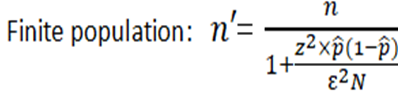
Population and Sampling: This research used the standard formula for sample size calculation of a known population. The study has a total population of 390 comprising of 286 board members and 104 senior management. The participants were selected through random sampling technique where a list of institutions was randomly selected from a jar. Each selected institution had a list of board members and senior management. Given 95% confidence level and 5% error margin with 50% proportion of the population, the online sample size calculator gave 194 as appropriate sample size. There was a provision of 10% for response failure. Therefore, the total target respondents were 214. The names of board members and senior managers were numbered, and the numbers were placed in a cup. Three people were picking the numbers from the cup and one person was correlating the numbers with the names until the appropriate number of respondents was reached.

Where z is the z score, ε is the margin of error, N is the population size, p̂ is the population proportion.
The Cronbach’s Alpha score was .687 which is >.50 which means that the instrument has adequate internal consistency. The KMO measure of sampling adequacy is .698 which is >.50. This means that the sample size is adequate for making some regression assumptions. The Bartlett’s Test of Sphericity shows that the sampling is statistically significant with the alpha score of <.005.
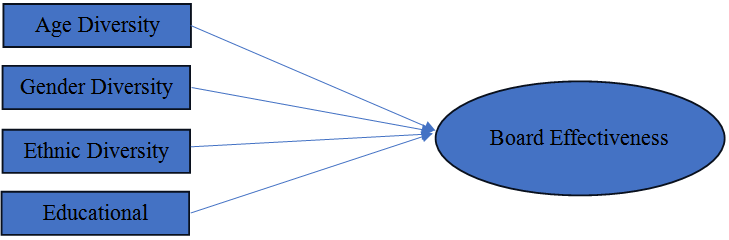
Statistical Treatment of Data: Data analysis was done by using IBM’s SPSS software. Intensity of correlations was interpreted based on the following criteria: ≥ .70 = strong correlation, ≥ .50= moderate correlation and ≤.50 = weak correlation. Linear relationships were observed between the independent variables (Age Diversity, Gender Diversity, Ethnic Diversity and Education Diversity) with the dependent variable (Board Effectiveness).

Ethical Consideration: The questionnaire included a section of informed consent for participants, which stipulated that a participant had the freedom to choose to participate or not to participate in the study. Those board members who chose to participate in the study did so voluntarily and had freedom to not to proceed at any point they felt no longer willing to proceed without any consequences. The Kobo Toolbox instrument had respondent identifier disabled so that it was not possible to track or follow the identity of a respondent. Therefore, there was protection and confidentiality of respondents. Ethical considerations also included commitment to truthful reporting of data without manipulation.
There was a total of 82% response rate giving 160 valid responses for analysis. There were 160 respondents with 131 males representing 82% and 29 female respondents representing 18%. Those with Bachelors degrees came to 131 which is 82%. Those respondents with Masters Degrees were 34 which is 21% while those with Doctoral Degrees were 42 representing 26%. Respondents from ecclesiastical institutions were 61 representing 38% while those from educational institutions were 86 making 54%. Respondents from medical institutions were 13 representing 8% response rate while those from service or product organizations were 20 representing 13%.
Research Question 1: Is there a statistically significant relationship between Board Age Diversity, Gender Diversity, Ethnic Diversity and Education Diversity on the Board with the Effectiveness of the Board?
The results show there is a linear positive correlation between the dependent variable (Board Effectiveness) and the independent variables (Education, Gender, Age and Ethnicity of Board Members). Although the Pearson’s Correlation is somewhat marginal moderate to weak (.419, .345, .183, and .172), the correlations are statistically significant which agrees with literature that has been cited. Since the results show that there is indeed a linear significant correlation between the independent and dependent variables, we fail to reject the null. From this finding, it may be concluded that board heterogeneity is an important attribute to be considered when constituting the corporate board. The inclusion of different members with different age groups, with a clearly diversified gender balance and ethnicity and varied educational backgrounds improves the effectiveness of the board.
Research question 2: Which is the greatest predictor of the response variable (Board Effectiveness) among the independent variables (Age diversity, Gender diversity, Ethnic Diversity and Education Diversity)?
The Coefficient table below shows that education of the Board or Executive Members in the governing body is the strongest predictor of Board Effectiveness. With each unit increase in the education, experience and expertise of the board members, Board effectiveness increases by .254. The changes in the education variability are statistically significant as p-value is <.05. The results also show that gender diversity and age diversity of the governing board are statistically significant predictors of board effectiveness as their p-values are <.05. With every unit variability in ethnic diversity and age diversity, board effectiveness improves by .183 and .142 respectively.
However, it is important to observe that the results appear to show that gender diversity may not be a strong predictor of board effectiveness as it has the weakest contribution to the variability of board effectiveness. It also appears that the contribution of gender diversity on the board is not statistically significant, p-value >.05. It may be concluded therefore, that gender considerations may not matter at the top of organizations as there are other predictors of success like education, experience and expertise. Therefore, it may be concluded that while it is fashionable to promote gender inclusion, it should be education of women and development of their expertise that is in the forefront. Women must have the same exposure, experience and expertise and education. That will prepare and position women to take up roles that make a difference in the corporate tables.
Conclusion: The study has demonstrated that age diversity is a significant matter in constituting the corporate board. Neukirchen, Posch, and Betzer 72 confirm that age diversified boards and reduced corporate misconduct compared to age homogeneous board. Therefore, age should be considered as a critical factor in compositing boards in Malawi Union Conference. It has also been seen in this study that gender diversity on the board is an important element to be considered. The study has also shown that gender inclusion has a statistically significant correlation with board effectiveness. Khamis, Eldabi, and Sarea 73 affirm that gender inclusion on the board promotes effectiveness and business success. Moreno-Gómez, Lafuente, Vaillant 74, further confirm that gender inclusion is best practice most organizations are developing intentional policy of gender inclusion at board level of their organizations.
The study has also revealed that ethnic diversity on the board is beneficial to the organization. Deloitte and Alliance for Board Diversity 75 affirmed that corporate boards with ethnic or racial diversity tend to attract more foreign investments than otherwise. Further they found that board diversity that includes ethnic diversity is more effective. Zattoni, et al., 76 confirm that such type of diversity improves organizational performance and shareholder value. The study has upheld the notion of the value of education and its contribution to the board. The study has identified education as the greatest contribution to the effectiveness of the board and the organization. Gold, et. Al., 77 content that education improves how board members engage on issues, how they relate with management and how they focus on organizational strategy. They further assert that educational diversity on the board significantly improves sustainability of organizations.
Gender Implications: The findings presented in the literature on gender diversity in corporate boards carry significant implications for organizations, their stakeholders, and society at large. Gender diversity impacts the dynamics of board discussions, decision-making processes, and cognitive approaches. Women's presence on boards can lead to more informed discussions, considering a broader range of perspectives, which can ultimately improve decision outcomes. Additionally, women's tendency to be more risk-averse may influence boards to adopt more cautious and strategic approaches to governance and management.
Research suggests a positive correlation between gender-diverse boards and organizational performance, profitability, and economic well-being. Women's participation on boards has been associated with enhanced organizational performance, increased profitability, and improved decision-making processes. This could be attributed to the diverse skills, expertise, and perspectives that women bring to the table. Gender diversity on boards is linked with corporate social responsibility initiatives. Studies indicate that a threshold of female representation, such as having at least three women on the board, can positively impact CSR practices. Women on boards may be more attuned to social and environmental issues, leading to more responsible business practices, which can enhance organizational reputation and legitimacy.
Female board members are often credited with defusing tension and reducing conflicts due to their sensitivity and interpersonal abilities. This can lead to quality discussions, improved board attendance, and more effective governance. Gender-diverse boards are also found to experience less conflict and are known to be more strategic, which can contribute to better organizational outcomes. Gender-diverse boards are associated with increased shareholder value and investor confidence. Organizations with gender-diverse boards may be perceived as more efficient, reputable, and legitimate, which can attract investors and positively impact shareholder returns.
The impact of gender diversity on board outcomes may vary depending on contextual factors such as board composition, industry sector, and cultural realities. Researchers highlight the importance of considering these factors when interpreting findings related to gender diversity on boards. Overall, the literature underscores the importance of promoting gender diversity in corporate boards not only for reasons of equity and inclusion but also for the tangible benefits it can bring to organizational performance, governance effectiveness, and stakeholder value. Organizations stand to gain from harnessing the diverse perspectives and talents of both men and women in their leadership teams.
Recommendation: This study offers three specific recommendations around age diversity, ethnic diversity, and educational diversity on the board. As the study has shown, Church institutions should adopt a policy of diversity and inclusion on its institutional boards. In constituting the boards, thought should be exercises to ensure that young Adventist professionals are included on the institutional boards. Finally, members should be engaged because of their education, experience, and expertise. This adds quality to the deliberations on the board. Those members that come to the board based on their positions elsewhere should be kept to a minimum. While proponents of gender inclusion would like to see a recommendation of gender diversity, there is no compelling evidence that gender diversity adds real value to the effectiveness of the board. However, while gender diversity may not be the primary determinant of board effectiveness according to this study, it remains an important aspect of governance diversity that contributes to broader organizational success, equity, and inclusivity. Balancing efforts to enhance education and expertise with targeted initiatives to promote gender diversity can lead to more effective and diverse corporate boards.
| [1] | Goodstein, J., Gautam, K., & Boeker, W. (1994). The effects of board size and diversity on strategic change. Strategic Management Journal, 15(3), 241–250. | ||
| In article | View Article | ||
| [2] | Beekun, R. I., Stedham, Y., & Young, G. J. (1998). Board characteristics, managerial controls and corporate strategy: A Study of U.S. Hospitals. Journal of Management, 24(1), 3-19. | ||
| In article | View Article | ||
| [3] | Siciliano, J. I. (1996). The relationship of board member diversity to organizational performance. Journal of Business Ethics, 15(12), 1313-1320. | ||
| In article | View Article | ||
| [4] | Hillman, A., Withers, C., & Collins, B. J. (2009). Resource dependence theory: A review. Journal of Management, 35(6), 1404-1427. | ||
| In article | View Article | ||
| [5] | Kosnik, R. D. (1990). Effects of board demography and directors’ incentives on corporate greenmail decisions. The Academy of Management Journal, 33(1), 129–150. | ||
| In article | View Article | ||
| [6] | Johnson, S. G., Schnatterly, K., & Hill, A. D. (2013). Board composition beyond independence: Social capital, human capital, and demographics. Journal of Management, 39(1), 232–262. | ||
| In article | View Article | ||
| [7] | Carpenter, M. A., & Westphal, J. D. (2001). The strategic context of external network ties: Examining the impact of director appointments on board involvement in strategic decision making. Academy of Management Journal, 44(4), 639–660. | ||
| In article | View Article | ||
| [8] | Stuart, T. E., & Yim, S. (2010). Board interlocks and the propensity to be targeted in private equity transactions. Journal of Financial Economics, 97(1), 174–189. | ||
| In article | View Article | ||
| [9] | Connelly, B., Johnson, J., Tihanyi, L., & Ellstrand, A. (2011). More than adopters: Competing influences in the interlocking directorate. Organization Science, 22, 688–703. | ||
| In article | View Article | ||
| [10] | Haunschild, P. R. (1994). How much is that company worth?: Interorganizational relationships, uncertainty, and acquisition premiums. Administrative Science Quarterly, 39(3), 391–411. | ||
| In article | View Article | ||
| [11] | Ruigrok, W., Peck, S. I., & Keller, H. (2006). Board characteristics and involvement in strategic decision making: Evidence from Swiss companies. Journal of Management Studies, 43(5), 1201–1226. | ||
| In article | View Article | ||
| [12] | Bizjak, J., Lemmon, M., & Whitby, R. (2009). Option backdating and board interlocks. The Review of Financial Studies, 22(11), 4821–4847. | ||
| In article | View Article | ||
| [13] | Rhee, M., & Lee, J.-H. (2008). The signals outside directors send to foreign investors: Evidence from Korea. Corporate governance: An International review, 16(1), 41–51. | ||
| In article | View Article | ||
| [14] | Jones, C. D., Makri, M., & Gomez–Mejia, L. R. (2008). Affiliate directors and perceived risk bearing in publicly-traded, family–controlled firms: The case of diversification. Entrepreneurship theory and practice, 32(6), 1007–1026. | ||
| In article | View Article | ||
| [15] | Frankforter, S. A., Berman, S. L., & Jones, T. M. (2000). Boards of directors and shark repellents: Assessing the value of an agency theory perspective. Journal of Management Studies, 37(3), 321–348. | ||
| In article | View Article | ||
| [16] | Stevenson, W., & Radin, R. (2009). Social capital and social influence on the board of directors. Journal of Management Studies, 46(1), 16-44. | ||
| In article | View Article | ||
| [17] | Wincent, J., Anokhin, S., & Örtqvist, D. (2010). Does network board capital matter? A study of innovative performance in strategic SME networks. Journal of Business Research, 63(3), 265-275. | ||
| In article | View Article | ||
| [18] | Certo, S. T. (2003). Influencing initial public offering investors with prestige: signalling with board structures. The Academy of Management Review, 28(3), 432-446. | ||
| In article | View Article | ||
| [19] | Kang, E. (2008). Director interlocks and spill over effects of reputational penalties from financial reporting fraud. Academy of Management Journal, 51(3), 537-555. | ||
| In article | View Article | ||
| [20] | Fich, E. M., & Shivdasani, A. (2007). Financial fraud, director reputation, and shareholder wealth. Journal of Financial Economics, 86(2), 306–336. | ||
| In article | View Article | ||
| [21] | Carpenter, M. A., Geletkanycz, M. A., & Sanders, W. G. (2004). Upper echelons research revisited: Antecedents, elements, and consequences of top management team composition. Journal of Management, 30(6), 749-778. | ||
| In article | View Article | ||
| [22] | Joshi, P. (2011). Security issues in routing protocols in MANETs at the network layer. Procedia computer science, 3, 954-960. | ||
| In article | View Article | ||
| [23] | Deloitte. (2019). King IV Independent Directors: How to assess independence. Retrieved from Deloitte South Africa website: https:// www2.deloitte.com/za/en/pages/africa-centre-for-corporate-governance/articles/kingiv_independent_directors.html. | ||
| In article | |||
| [24] | Australian Institute of Company Directors. (2013). Role of the board governance relations. Australian Institute of Company Directors. https:// aicd.companydirectors.com.au/ -/media/cd2/resources/director-resources/director-tools/pdf/05446-3-11-mem-director-gr-role-of-board_a4-v3.ashx. | ||
| In article | |||
| [25] | Neukirchen, Daniel and Posch, Peter N. and Betzer, André, Board Age Diversity and Corporate Misconduct (April 27, 2022). | ||
| In article | View Article | ||
| [26] | Emrah Arioglu (2020) Board age and value diversity: Evidence from a collectivistic and paternalistic culture http:// www.elsevier.com/ journals/borsa-istanbul-review/2214-8450 Cukurova University, IIBF Isletme Bolumu, Balcali, Adana, 01330, Turkey. | ||
| In article | |||
| [27] | Janahi, Mohamed, Millo, Yuval and Voulgaris, Georgios (2023) Age diversity and the monitoring role of corporate boards : evidence from banks. Human Relations, 76 (10). pp. 1599-1633. | ||
| In article | View Article | ||
| [28] | Gardiner, E. (2022). What’s age got to do with it? The effect of board member age diversity: a systematic review. Manag Rev Q. | ||
| In article | View Article | ||
| [29] | Wiersema, M. F., & Bantel, K. A. (1992). Top management team demography and corporate strategic change. The Academy of Management Journal, 35(1), 91–121. | ||
| In article | View Article | ||
| [30] | Ahn, S., & Walker, M. D. (2007). Corporate governance and the spinoff decision. Journal of Corporate Finance, 13(1), 76–93. | ||
| In article | View Article | ||
| [31] | Golden, B. R., & Zajac, E. J. (2001). When will boards influence strategy? Inclination x power = strategic change. Strategic Management Journal, 22(12), 1087–1111. | ||
| In article | View Article | ||
| [32] | Platt, H., & Platt, M. (2012). Corporate board attributes and bankruptcy. Journal of Business Research, 65(8), 1139–1143. | ||
| In article | View Article | ||
| [33] | Mustafa AS, Che-Ahmad A, Chandren S (2018) Board diversity, audit committee characteristics and audit quality: the moderating role of control-ownership wedge. Bus Econ Horizons 14:587–614. | ||
| In article | View Article | ||
| [34] | Zhang C, Luo L (2021) Board diversity and risk-taking of family firms: evidence from China. Int Entrep Manag J 17(4):1569-1590. | ||
| In article | View Article | ||
| [35] | Baker-Kent, H., Pandey, N., Kumar, S., & Haldar, A. (2019). A bibliometric analysis of board diversity: Current status, development, and future research directions. Journal of Business Research, 108, 232-246. | ||
| In article | View Article | ||
| [36] | Harjoto, M. A., & Rossi, F. (2019). Religiosity, female directors, and corporate social responsibility for Italian listed companies. Journal of Business Research, 95, 338–346. | ||
| In article | View Article | ||
| [37] | Terjesen, S., Sealy, R., & Singh, V. (2009). Women directors on corporate boards: A Review and Research Agenda. Corporate Governance: An International Review, 17(3), 320–337. | ||
| In article | View Article | ||
| [38] | Bøhren, Øy., & Strøm, R. (2010). Governance and Politics: Regulating independence and diversity in the board room. Journal of Business Finance & Accounting, 37(9), 1281–1308. | ||
| In article | View Article | ||
| [39] | Kabongo, Jean & Okpara, John. (2019). Timing and speed of internationalization: Evidence from African banks. Journal of Business Research. 102. 12-20. 10.1016/j.jbusres.2019.05.003. | ||
| In article | View Article | ||
| [40] | Adams, R. B., & Ferreira, D. (2009). Women in the boardroom and their impact on governance and performance. Journal of Financial Economics, 94(2), 291–309. | ||
| In article | View Article | ||
| [41] | Arfken, D. E., Bellar, S. L., & Helms, M. M. (2004). The ultimate glass ceiling revisited: The presence of women on corporate boards. Journal of Business Ethics, 50(2), 177–186. | ||
| In article | View Article | ||
| [42] | Nielsen, S., & Huse, M. (2010). The contribution of women on boards of directors: Going beyond the surface. Corporate Governance: An International Review, 18(2), 136–148. | ||
| In article | View Article | ||
| [43] | Post, C., Rahman, N., & Rubow, E. (2011). Green governance: Boards of directors’ composition and environmental corporate social responsibility. Business & Society, 50(1), 189–223. | ||
| In article | View Article | ||
| [44] | Carter, D. A., D’Souza, F., Simkins, B. J., & Simpson, W. G. (2010). The Gender and ethnic diversity of US boards and board committees and firm financial performance. Corporate Governance: An International Review, 18(5), 396–414. | ||
| In article | View Article | ||
| [45] | Hindasah, Lela & Harsono, Mugi. (2021). Gender Diversity on the Board of Director and Firm Performance: Agency Theory Perspective. Jurnal Manajemen Bisnis. 12. 10.18196/mb.v12i2.10804. | ||
| In article | View Article | ||
| [46] | Khan, M. H., Fraz, A., Hassan, A., & Abedifar, P. (2020). Female board representation, risktaking and performance: Evidence from dual banking systems. Finance Research Letters, 37, 101541. | ||
| In article | View Article | ||
| [47] | M. Bennouri, T. Chtioui, H. Nagati, M. Nekhili (2018). Female board directorship and firm performance: what really matters? J. Bank. Financ., 88 (3) (2018), pp. 267-291, 10.1016/j.jbankfin.2017.12.010. | ||
| In article | View Article | ||
| [48] | K. Naveed, C.L. Voinea, Z. Ali, F. Rauf, C. Fratostiteanu (2021). Board gender diversity and corporate social performance in different industry groups: evidence from China. Sustainability, 13 (6) (2021), article 3142, 10.3390/su13063142. | ||
| In article | View Article | ||
| [49] | Fernandez, W. D., & Thams, Y. (2018). Board diversity and stakeholder management: the moderating impact of boards’ learning environment. Learning Organization, 26(2), 160–175. | ||
| In article | View Article | ||
| [50] | Guest, P. M. (2018). Does Board Ethnic Diversity Impact Board Monitoring Outcomes? British Journal of Management, 30(1), 53-74. | ||
| In article | View Article | ||
| [51] | Guest, Paul. (2019). Does Board Ethnic Diversity Impact Board Monitoring Outcomes?. British Journal of Management. 30. 53-74. 10.1111/1467-8551.12299. | ||
| In article | View Article | ||
| [52] | Krause, T., & Van Thiel, S. (2019). Perceived managerial autonomy in municipally owned corporations: Disentangling the impact of output control, process control, and policy-profession conflict. Public Management Review, 21(2), 187–211. | ||
| In article | View Article | ||
| [53] | Staples, C. L. (2008). Cross-border acquisitions and board globalization in the world’s largest TNCS, 1995-2005. The Sociological Quarterly, 49(1), 31–51. | ||
| In article | View Article | ||
| [54] | Farrell, K., & Hersch, P. (2005). Additions to corporate boards: The effect of gender. Journal of Corporate Finance, 11(1-2), 85-106. | ||
| In article | View Article | ||
| [55] | Sundaram, A. K., & Inkpen, A. C. (2004). The corporate objective revisited. Organization science, 15(3), 350–363. | ||
| In article | View Article | ||
| [56] | Magnanelli, B. S., Paolucci, G., & Pirolo, L. (2021). Diversity in boardrooms and firm performance: The role of tenure and educational level of board members. Corporate Board: Role, Duties and Composition, 17(3), 31–41. | ||
| In article | View Article | ||
| [57] | Shatnawi, Ahmad & Al-Gasawneh, Jassim & Mansur, Hasan & Alresheedi, Adel. (2022). The effect of board nationality and educational diversity on CSR performance: Empirical evidence from Australian companies. Uncertain Supply Chain Management. 10.5267/ j.uscm.2022.6.009. | ||
| In article | View Article | ||
| [58] | Kim, H., & Lim, C. (2010). Diversity, outside directors and firm valuation: Korean evidence. Journal of Business Research, 63(3), 284–291. | ||
| In article | View Article | ||
| [59] | Dalziel, T., Gentry, R. J., & Bowerman, M. (2011). An integrated agency–resource dependence view of the influence of directors’ human and relational capital on firms’ R&D spending. Journal of Management Studies, 48(6), 1217–1242. | ||
| In article | View Article | ||
| [60] | Beji, R., Yousfi, O., Loukil, N., & Omri, A. (2021). Board diversity and corporate social responsibility: Empirical evidence from France. Journal of Business Ethics, 173(1), 133-155. | ||
| In article | View Article | ||
| [61] | Kassinis, G., & Vafeas, N. (2002). Corporate boards and outside stakeholders as determinants of environmental litigation. Strategic Management Journal, 23(5), 399–415. | ||
| In article | View Article | ||
| [62] | Rosenstein, J., Bruno, A. V., Bygrave, W. D., & Taylor, N. T. (1993). The CEO, venture capitalists, and the board. Journal of Business Venturing, 8(2), 99–113. | ||
| In article | View Article | ||
| [63] | Wang, J., & Dewhirst, H. D. (1992). Boards of directors and stakeholder orientation. Journal of Business Ethics, 11(2), 115–123. | ||
| In article | View Article | ||
| [64] | Filatotchev, I., Wright, M., & Arberk, M. (2006). Venture capitalists, syndication and governance in initial public offerings. Small Business Economics, 26(4), 337–350. | ||
| In article | View Article | ||
| [65] | Chen, K. Y., & Zhou, J. (2007). Audit committee, board characteristics, and auditor switch decisions by Andersen’s clients. Contemporary Accounting Research, 24(4), 1085–1117. | ||
| In article | View Article | ||
| [66] | Dahl, D. (1994). Successor origin, initiating force, and managerial tenure in banking. Journal of Business Research, 29(1), 47–55. | ||
| In article | View Article | ||
| [67] | de Villiers, C., Naiker, V., & van Staden, C. J. (2011). The effect of board characteristics on firm environmental performance. Journal of Management, 37(6), 1636–1663. | ||
| In article | View Article | ||
| [68] | Wellalage, Hewa., Nirosha & Locke, Stuart. (2013). Corporate governance, board diversity and firm financial performance: New evidence from Sri Lanka. Int. J. of Business Governance and Ethics. 8. 116 - 136. 10.1504/IJBGE.2013.054416. | ||
| In article | View Article | ||
| [69] | Kabara, A. S., Khatib, S. F. A., Bazhair, A. H., & Sulimany, H. G. H. (2022). The Effect of the Board’s Educational and Gender Diversity on the Firms’ Performance: Evidence from Non-Financial Firms in Developing Country. Sustainability, 14(17), 11058. MDPI AG. Retrieved from. | ||
| In article | View Article | ||
| [70] | Sharma, Sohil. (2019). Descriptive Research Designs. https:// www.researchgate.net/publication/333220662_Descriptive_Research_Designs/citation/download. | ||
| In article | |||
| [71] | Manjunatha, N., (2019). Descriptive Research. International Journal of Emerging Technologies and Innovative Research (www.jetir.org), ISSN:2349-5162, Vol.6, Issue 6, page no.863-867, June 2019, Available :http:// www.jetir.org/papers/JETIR1908597.pdf. | ||
| In article | |||
| [72] | Neukirchen, Daniel and Posch, Peter N. and Betzer, André, Board Age Diversity and Corporate Misconduct (April 27, 2022). | ||
| In article | View Article | ||
| [73] | Khamis, Ree & Eldabi, Tillal & Sarea, Adel. (2017). Board Gender Diversity: A Review of the Literature. 10.47556/ B.OUTLOOK2017.15.14. | ||
| In article | View Article | ||
| [74] | Moreno-Gómez, J., Lafuente, E., Vaillant, Y. (2018). Gender diversity in the board, women’s leadership and business performance. Gender in Management: An International Journal, in press. | ||
| In article | View Article | ||
| [75] | Deloitte and Alliance for Board Diversity (2020) https:// www2.deloitte.com/us/en/pages/center-for-board-effectiveness/ articles/missing-pieces-report-board-diversity.html. | ||
| In article | |||
| [76] | Zattoni, A., Leventis, S., Van Ees, H., & De Masi, S. (2023). Board diversity's antecedents and consequences: A review and research agenda. Leadership Quarterly, 34(1), Article 101659. | ||
| In article | View Article | ||
| [77] | Gold, Nusirat & Aifuwa, Hope & Usman, Muhammed & Muhammed, Lawal & Subair, & Osazevbaru, Albert & Moroyin, Betsy. (2021). Board Members' Education Diversity and Sustainability Reporting. Annals of Spiru Haret University Economic Series. 21. 109-129. 10.26458/2115. | ||
| In article | |||
| [78] | Westphal, J. D., & Fredrickson, J. W. (2001). Who directs strategic change? Director experience, the selection of new CEOs, and change in corporate strategy. Strategic Management Journal, 22(12), 1113–1137. | ||
| In article | View Article | ||
| [79] | Oxelheim, L. and Randoy, T. (2003) The Impact of Foreign Board Membership on Firm Value. Journal of Banking & Finance, 27, 2369-2392. | ||
| In article | View Article | ||
| [80] | Bond, M and Bedenlier, S. 2019. Facilitating Student Engagement Through Educational Technology: Towards a Conceptual Framework. Journal of Interactive Media in Education, 2019(1): 11, pp. 1–14. | ||
| In article | View Article | ||
| [81] | Kor, Yasemin & Sundaramurthy, Chamu. (2008). Experience-Based Human Capital and Social Capital of Outside Directors. Journal of Management. 35. 10.2139/ssrn.1090251. | ||
| In article | View Article | ||
Published with license by Science and Education Publishing, Copyright © 2024 Dennis John Rabson Matekenya PhD and Judith Musvosvi PhD Candidate
 This work is licensed under a Creative Commons Attribution 4.0 International License. To view a copy of this license, visit
https://creativecommons.org/licenses/by/4.0/
This work is licensed under a Creative Commons Attribution 4.0 International License. To view a copy of this license, visit
https://creativecommons.org/licenses/by/4.0/
| [1] | Goodstein, J., Gautam, K., & Boeker, W. (1994). The effects of board size and diversity on strategic change. Strategic Management Journal, 15(3), 241–250. | ||
| In article | View Article | ||
| [2] | Beekun, R. I., Stedham, Y., & Young, G. J. (1998). Board characteristics, managerial controls and corporate strategy: A Study of U.S. Hospitals. Journal of Management, 24(1), 3-19. | ||
| In article | View Article | ||
| [3] | Siciliano, J. I. (1996). The relationship of board member diversity to organizational performance. Journal of Business Ethics, 15(12), 1313-1320. | ||
| In article | View Article | ||
| [4] | Hillman, A., Withers, C., & Collins, B. J. (2009). Resource dependence theory: A review. Journal of Management, 35(6), 1404-1427. | ||
| In article | View Article | ||
| [5] | Kosnik, R. D. (1990). Effects of board demography and directors’ incentives on corporate greenmail decisions. The Academy of Management Journal, 33(1), 129–150. | ||
| In article | View Article | ||
| [6] | Johnson, S. G., Schnatterly, K., & Hill, A. D. (2013). Board composition beyond independence: Social capital, human capital, and demographics. Journal of Management, 39(1), 232–262. | ||
| In article | View Article | ||
| [7] | Carpenter, M. A., & Westphal, J. D. (2001). The strategic context of external network ties: Examining the impact of director appointments on board involvement in strategic decision making. Academy of Management Journal, 44(4), 639–660. | ||
| In article | View Article | ||
| [8] | Stuart, T. E., & Yim, S. (2010). Board interlocks and the propensity to be targeted in private equity transactions. Journal of Financial Economics, 97(1), 174–189. | ||
| In article | View Article | ||
| [9] | Connelly, B., Johnson, J., Tihanyi, L., & Ellstrand, A. (2011). More than adopters: Competing influences in the interlocking directorate. Organization Science, 22, 688–703. | ||
| In article | View Article | ||
| [10] | Haunschild, P. R. (1994). How much is that company worth?: Interorganizational relationships, uncertainty, and acquisition premiums. Administrative Science Quarterly, 39(3), 391–411. | ||
| In article | View Article | ||
| [11] | Ruigrok, W., Peck, S. I., & Keller, H. (2006). Board characteristics and involvement in strategic decision making: Evidence from Swiss companies. Journal of Management Studies, 43(5), 1201–1226. | ||
| In article | View Article | ||
| [12] | Bizjak, J., Lemmon, M., & Whitby, R. (2009). Option backdating and board interlocks. The Review of Financial Studies, 22(11), 4821–4847. | ||
| In article | View Article | ||
| [13] | Rhee, M., & Lee, J.-H. (2008). The signals outside directors send to foreign investors: Evidence from Korea. Corporate governance: An International review, 16(1), 41–51. | ||
| In article | View Article | ||
| [14] | Jones, C. D., Makri, M., & Gomez–Mejia, L. R. (2008). Affiliate directors and perceived risk bearing in publicly-traded, family–controlled firms: The case of diversification. Entrepreneurship theory and practice, 32(6), 1007–1026. | ||
| In article | View Article | ||
| [15] | Frankforter, S. A., Berman, S. L., & Jones, T. M. (2000). Boards of directors and shark repellents: Assessing the value of an agency theory perspective. Journal of Management Studies, 37(3), 321–348. | ||
| In article | View Article | ||
| [16] | Stevenson, W., & Radin, R. (2009). Social capital and social influence on the board of directors. Journal of Management Studies, 46(1), 16-44. | ||
| In article | View Article | ||
| [17] | Wincent, J., Anokhin, S., & Örtqvist, D. (2010). Does network board capital matter? A study of innovative performance in strategic SME networks. Journal of Business Research, 63(3), 265-275. | ||
| In article | View Article | ||
| [18] | Certo, S. T. (2003). Influencing initial public offering investors with prestige: signalling with board structures. The Academy of Management Review, 28(3), 432-446. | ||
| In article | View Article | ||
| [19] | Kang, E. (2008). Director interlocks and spill over effects of reputational penalties from financial reporting fraud. Academy of Management Journal, 51(3), 537-555. | ||
| In article | View Article | ||
| [20] | Fich, E. M., & Shivdasani, A. (2007). Financial fraud, director reputation, and shareholder wealth. Journal of Financial Economics, 86(2), 306–336. | ||
| In article | View Article | ||
| [21] | Carpenter, M. A., Geletkanycz, M. A., & Sanders, W. G. (2004). Upper echelons research revisited: Antecedents, elements, and consequences of top management team composition. Journal of Management, 30(6), 749-778. | ||
| In article | View Article | ||
| [22] | Joshi, P. (2011). Security issues in routing protocols in MANETs at the network layer. Procedia computer science, 3, 954-960. | ||
| In article | View Article | ||
| [23] | Deloitte. (2019). King IV Independent Directors: How to assess independence. Retrieved from Deloitte South Africa website: https:// www2.deloitte.com/za/en/pages/africa-centre-for-corporate-governance/articles/kingiv_independent_directors.html. | ||
| In article | |||
| [24] | Australian Institute of Company Directors. (2013). Role of the board governance relations. Australian Institute of Company Directors. https:// aicd.companydirectors.com.au/ -/media/cd2/resources/director-resources/director-tools/pdf/05446-3-11-mem-director-gr-role-of-board_a4-v3.ashx. | ||
| In article | |||
| [25] | Neukirchen, Daniel and Posch, Peter N. and Betzer, André, Board Age Diversity and Corporate Misconduct (April 27, 2022). | ||
| In article | View Article | ||
| [26] | Emrah Arioglu (2020) Board age and value diversity: Evidence from a collectivistic and paternalistic culture http:// www.elsevier.com/ journals/borsa-istanbul-review/2214-8450 Cukurova University, IIBF Isletme Bolumu, Balcali, Adana, 01330, Turkey. | ||
| In article | |||
| [27] | Janahi, Mohamed, Millo, Yuval and Voulgaris, Georgios (2023) Age diversity and the monitoring role of corporate boards : evidence from banks. Human Relations, 76 (10). pp. 1599-1633. | ||
| In article | View Article | ||
| [28] | Gardiner, E. (2022). What’s age got to do with it? The effect of board member age diversity: a systematic review. Manag Rev Q. | ||
| In article | View Article | ||
| [29] | Wiersema, M. F., & Bantel, K. A. (1992). Top management team demography and corporate strategic change. The Academy of Management Journal, 35(1), 91–121. | ||
| In article | View Article | ||
| [30] | Ahn, S., & Walker, M. D. (2007). Corporate governance and the spinoff decision. Journal of Corporate Finance, 13(1), 76–93. | ||
| In article | View Article | ||
| [31] | Golden, B. R., & Zajac, E. J. (2001). When will boards influence strategy? Inclination x power = strategic change. Strategic Management Journal, 22(12), 1087–1111. | ||
| In article | View Article | ||
| [32] | Platt, H., & Platt, M. (2012). Corporate board attributes and bankruptcy. Journal of Business Research, 65(8), 1139–1143. | ||
| In article | View Article | ||
| [33] | Mustafa AS, Che-Ahmad A, Chandren S (2018) Board diversity, audit committee characteristics and audit quality: the moderating role of control-ownership wedge. Bus Econ Horizons 14:587–614. | ||
| In article | View Article | ||
| [34] | Zhang C, Luo L (2021) Board diversity and risk-taking of family firms: evidence from China. Int Entrep Manag J 17(4):1569-1590. | ||
| In article | View Article | ||
| [35] | Baker-Kent, H., Pandey, N., Kumar, S., & Haldar, A. (2019). A bibliometric analysis of board diversity: Current status, development, and future research directions. Journal of Business Research, 108, 232-246. | ||
| In article | View Article | ||
| [36] | Harjoto, M. A., & Rossi, F. (2019). Religiosity, female directors, and corporate social responsibility for Italian listed companies. Journal of Business Research, 95, 338–346. | ||
| In article | View Article | ||
| [37] | Terjesen, S., Sealy, R., & Singh, V. (2009). Women directors on corporate boards: A Review and Research Agenda. Corporate Governance: An International Review, 17(3), 320–337. | ||
| In article | View Article | ||
| [38] | Bøhren, Øy., & Strøm, R. (2010). Governance and Politics: Regulating independence and diversity in the board room. Journal of Business Finance & Accounting, 37(9), 1281–1308. | ||
| In article | View Article | ||
| [39] | Kabongo, Jean & Okpara, John. (2019). Timing and speed of internationalization: Evidence from African banks. Journal of Business Research. 102. 12-20. 10.1016/j.jbusres.2019.05.003. | ||
| In article | View Article | ||
| [40] | Adams, R. B., & Ferreira, D. (2009). Women in the boardroom and their impact on governance and performance. Journal of Financial Economics, 94(2), 291–309. | ||
| In article | View Article | ||
| [41] | Arfken, D. E., Bellar, S. L., & Helms, M. M. (2004). The ultimate glass ceiling revisited: The presence of women on corporate boards. Journal of Business Ethics, 50(2), 177–186. | ||
| In article | View Article | ||
| [42] | Nielsen, S., & Huse, M. (2010). The contribution of women on boards of directors: Going beyond the surface. Corporate Governance: An International Review, 18(2), 136–148. | ||
| In article | View Article | ||
| [43] | Post, C., Rahman, N., & Rubow, E. (2011). Green governance: Boards of directors’ composition and environmental corporate social responsibility. Business & Society, 50(1), 189–223. | ||
| In article | View Article | ||
| [44] | Carter, D. A., D’Souza, F., Simkins, B. J., & Simpson, W. G. (2010). The Gender and ethnic diversity of US boards and board committees and firm financial performance. Corporate Governance: An International Review, 18(5), 396–414. | ||
| In article | View Article | ||
| [45] | Hindasah, Lela & Harsono, Mugi. (2021). Gender Diversity on the Board of Director and Firm Performance: Agency Theory Perspective. Jurnal Manajemen Bisnis. 12. 10.18196/mb.v12i2.10804. | ||
| In article | View Article | ||
| [46] | Khan, M. H., Fraz, A., Hassan, A., & Abedifar, P. (2020). Female board representation, risktaking and performance: Evidence from dual banking systems. Finance Research Letters, 37, 101541. | ||
| In article | View Article | ||
| [47] | M. Bennouri, T. Chtioui, H. Nagati, M. Nekhili (2018). Female board directorship and firm performance: what really matters? J. Bank. Financ., 88 (3) (2018), pp. 267-291, 10.1016/j.jbankfin.2017.12.010. | ||
| In article | View Article | ||
| [48] | K. Naveed, C.L. Voinea, Z. Ali, F. Rauf, C. Fratostiteanu (2021). Board gender diversity and corporate social performance in different industry groups: evidence from China. Sustainability, 13 (6) (2021), article 3142, 10.3390/su13063142. | ||
| In article | View Article | ||
| [49] | Fernandez, W. D., & Thams, Y. (2018). Board diversity and stakeholder management: the moderating impact of boards’ learning environment. Learning Organization, 26(2), 160–175. | ||
| In article | View Article | ||
| [50] | Guest, P. M. (2018). Does Board Ethnic Diversity Impact Board Monitoring Outcomes? British Journal of Management, 30(1), 53-74. | ||
| In article | View Article | ||
| [51] | Guest, Paul. (2019). Does Board Ethnic Diversity Impact Board Monitoring Outcomes?. British Journal of Management. 30. 53-74. 10.1111/1467-8551.12299. | ||
| In article | View Article | ||
| [52] | Krause, T., & Van Thiel, S. (2019). Perceived managerial autonomy in municipally owned corporations: Disentangling the impact of output control, process control, and policy-profession conflict. Public Management Review, 21(2), 187–211. | ||
| In article | View Article | ||
| [53] | Staples, C. L. (2008). Cross-border acquisitions and board globalization in the world’s largest TNCS, 1995-2005. The Sociological Quarterly, 49(1), 31–51. | ||
| In article | View Article | ||
| [54] | Farrell, K., & Hersch, P. (2005). Additions to corporate boards: The effect of gender. Journal of Corporate Finance, 11(1-2), 85-106. | ||
| In article | View Article | ||
| [55] | Sundaram, A. K., & Inkpen, A. C. (2004). The corporate objective revisited. Organization science, 15(3), 350–363. | ||
| In article | View Article | ||
| [56] | Magnanelli, B. S., Paolucci, G., & Pirolo, L. (2021). Diversity in boardrooms and firm performance: The role of tenure and educational level of board members. Corporate Board: Role, Duties and Composition, 17(3), 31–41. | ||
| In article | View Article | ||
| [57] | Shatnawi, Ahmad & Al-Gasawneh, Jassim & Mansur, Hasan & Alresheedi, Adel. (2022). The effect of board nationality and educational diversity on CSR performance: Empirical evidence from Australian companies. Uncertain Supply Chain Management. 10.5267/ j.uscm.2022.6.009. | ||
| In article | View Article | ||
| [58] | Kim, H., & Lim, C. (2010). Diversity, outside directors and firm valuation: Korean evidence. Journal of Business Research, 63(3), 284–291. | ||
| In article | View Article | ||
| [59] | Dalziel, T., Gentry, R. J., & Bowerman, M. (2011). An integrated agency–resource dependence view of the influence of directors’ human and relational capital on firms’ R&D spending. Journal of Management Studies, 48(6), 1217–1242. | ||
| In article | View Article | ||
| [60] | Beji, R., Yousfi, O., Loukil, N., & Omri, A. (2021). Board diversity and corporate social responsibility: Empirical evidence from France. Journal of Business Ethics, 173(1), 133-155. | ||
| In article | View Article | ||
| [61] | Kassinis, G., & Vafeas, N. (2002). Corporate boards and outside stakeholders as determinants of environmental litigation. Strategic Management Journal, 23(5), 399–415. | ||
| In article | View Article | ||
| [62] | Rosenstein, J., Bruno, A. V., Bygrave, W. D., & Taylor, N. T. (1993). The CEO, venture capitalists, and the board. Journal of Business Venturing, 8(2), 99–113. | ||
| In article | View Article | ||
| [63] | Wang, J., & Dewhirst, H. D. (1992). Boards of directors and stakeholder orientation. Journal of Business Ethics, 11(2), 115–123. | ||
| In article | View Article | ||
| [64] | Filatotchev, I., Wright, M., & Arberk, M. (2006). Venture capitalists, syndication and governance in initial public offerings. Small Business Economics, 26(4), 337–350. | ||
| In article | View Article | ||
| [65] | Chen, K. Y., & Zhou, J. (2007). Audit committee, board characteristics, and auditor switch decisions by Andersen’s clients. Contemporary Accounting Research, 24(4), 1085–1117. | ||
| In article | View Article | ||
| [66] | Dahl, D. (1994). Successor origin, initiating force, and managerial tenure in banking. Journal of Business Research, 29(1), 47–55. | ||
| In article | View Article | ||
| [67] | de Villiers, C., Naiker, V., & van Staden, C. J. (2011). The effect of board characteristics on firm environmental performance. Journal of Management, 37(6), 1636–1663. | ||
| In article | View Article | ||
| [68] | Wellalage, Hewa., Nirosha & Locke, Stuart. (2013). Corporate governance, board diversity and firm financial performance: New evidence from Sri Lanka. Int. J. of Business Governance and Ethics. 8. 116 - 136. 10.1504/IJBGE.2013.054416. | ||
| In article | View Article | ||
| [69] | Kabara, A. S., Khatib, S. F. A., Bazhair, A. H., & Sulimany, H. G. H. (2022). The Effect of the Board’s Educational and Gender Diversity on the Firms’ Performance: Evidence from Non-Financial Firms in Developing Country. Sustainability, 14(17), 11058. MDPI AG. Retrieved from. | ||
| In article | View Article | ||
| [70] | Sharma, Sohil. (2019). Descriptive Research Designs. https:// www.researchgate.net/publication/333220662_Descriptive_Research_Designs/citation/download. | ||
| In article | |||
| [71] | Manjunatha, N., (2019). Descriptive Research. International Journal of Emerging Technologies and Innovative Research (www.jetir.org), ISSN:2349-5162, Vol.6, Issue 6, page no.863-867, June 2019, Available :http:// www.jetir.org/papers/JETIR1908597.pdf. | ||
| In article | |||
| [72] | Neukirchen, Daniel and Posch, Peter N. and Betzer, André, Board Age Diversity and Corporate Misconduct (April 27, 2022). | ||
| In article | View Article | ||
| [73] | Khamis, Ree & Eldabi, Tillal & Sarea, Adel. (2017). Board Gender Diversity: A Review of the Literature. 10.47556/ B.OUTLOOK2017.15.14. | ||
| In article | View Article | ||
| [74] | Moreno-Gómez, J., Lafuente, E., Vaillant, Y. (2018). Gender diversity in the board, women’s leadership and business performance. Gender in Management: An International Journal, in press. | ||
| In article | View Article | ||
| [75] | Deloitte and Alliance for Board Diversity (2020) https:// www2.deloitte.com/us/en/pages/center-for-board-effectiveness/ articles/missing-pieces-report-board-diversity.html. | ||
| In article | |||
| [76] | Zattoni, A., Leventis, S., Van Ees, H., & De Masi, S. (2023). Board diversity's antecedents and consequences: A review and research agenda. Leadership Quarterly, 34(1), Article 101659. | ||
| In article | View Article | ||
| [77] | Gold, Nusirat & Aifuwa, Hope & Usman, Muhammed & Muhammed, Lawal & Subair, & Osazevbaru, Albert & Moroyin, Betsy. (2021). Board Members' Education Diversity and Sustainability Reporting. Annals of Spiru Haret University Economic Series. 21. 109-129. 10.26458/2115. | ||
| In article | |||
| [78] | Westphal, J. D., & Fredrickson, J. W. (2001). Who directs strategic change? Director experience, the selection of new CEOs, and change in corporate strategy. Strategic Management Journal, 22(12), 1113–1137. | ||
| In article | View Article | ||
| [79] | Oxelheim, L. and Randoy, T. (2003) The Impact of Foreign Board Membership on Firm Value. Journal of Banking & Finance, 27, 2369-2392. | ||
| In article | View Article | ||
| [80] | Bond, M and Bedenlier, S. 2019. Facilitating Student Engagement Through Educational Technology: Towards a Conceptual Framework. Journal of Interactive Media in Education, 2019(1): 11, pp. 1–14. | ||
| In article | View Article | ||
| [81] | Kor, Yasemin & Sundaramurthy, Chamu. (2008). Experience-Based Human Capital and Social Capital of Outside Directors. Journal of Management. 35. 10.2139/ssrn.1090251. | ||
| In article | View Article | ||