Oral cancer (OC) is a global health burden with a 5-year survival rate of 50%. It is traditionally defined as oral squamous cell carcinoma due to more than 90% of oral cancers histologically originating in the squamous cells. Early detection of OC improves morbidity accompanying its treatment therefore it is vital for clinicians to recognise the various clinical presentations of OC to facilitate prompt referral and early management. OC has a wide range of presentations with a spectrum ranging from a small asymptomatic lump, red or white, or mixed red and white patch to a large extensive ulcer or growth. In locally advanced cases, pain is usually present accompanied by referred pain to the ear, halitosis, trismus, dysphagia and odynophagia, intra-oral bleeding, weight loss and neck swelling. Due to the wide variation in clinical presentation, general dental practitioners and dental specialists may be unsure of suspicious lesions and the urgency of referrals required in such cases. This review aims to illustrate the clinical presentations of OC using representative clinical photographs from patients attending our Oral Medicine Clinic.
One of the most significant causes of mortality and morbidity worldwide is cancer 1. Oral cancer (OC) represents 2% of the cancer burden worldwide with an annual number of new cases exceeding 377,000 and 177,000 mortalities 2. It most commonly presents as oral squamous cell carcinoma (OSCC) in 90% of the cases 3. The mucosal lining epithelium is the site at which OSCC originates 3. OSCC is a tumour involving invasive epithelial cells with a ranging degree of squamous differentiation 4. OC most commonly presents in males between the ages of 60-79 5. The incidence of OC has a diverse geographic variation, and a greater burden is observed in low- and middle-income countries such as Latin America, South-East Asia, and Western Europe 6. This diverse incidence rate seems to be linked to the adaptation of different OC behavioural risk factors 7.
The modality of management of OC is primarily through surgical resection of the tumour site and may include radiotherapy or chemotherapy 2. Cancer treatment usually leads to the development of oral symptoms including dysphagia, salivary gland dysfunction, and mucositis 7. Salivary gland dysfunction may result in altered taste, difficulty swallowing and infections of fungal origin 7. Patients who undergo radiotherapy or chemotherapy may end up with mucositis which is inflammation of the tissues, resulting in sores and ulcers in 40% of the cases 7.
The management of oral cancer through surgery and radiotherapy may not only result in disfigurement but may also interfere with daily activities such as talking, eating, and drinking 8. Changes in appearance may follow even with successful reconstructive surgery and patients may end up with an increased risk of airway obstruction, hence may require a tracheostomy and a feeding tube 2. Anatomical sites in which OC presents are listed in Table 1. These sites are important for speech, swallowing, and taste, therefore OC and its treatment may have considerable functional sequelae with subsequent impairment of quality of life. This review illustrates a plethora of clinical features of oral cancer presenting in different oral cavity subsites.
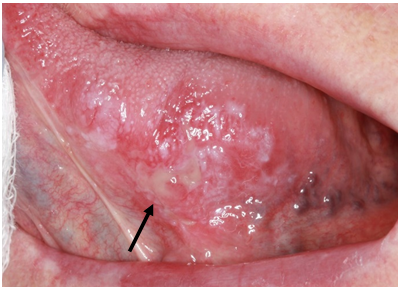
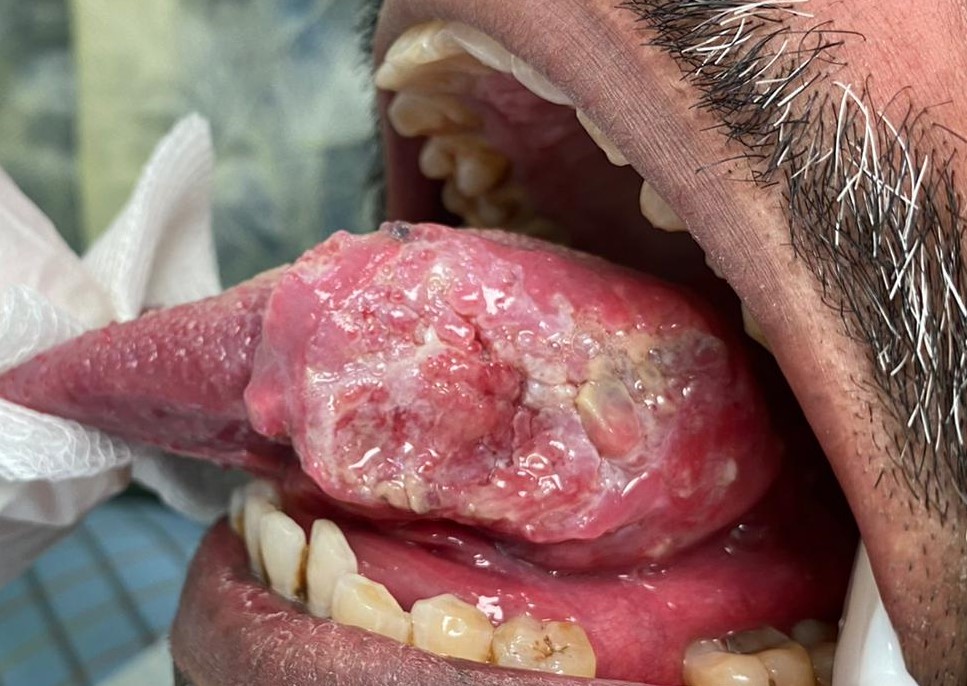
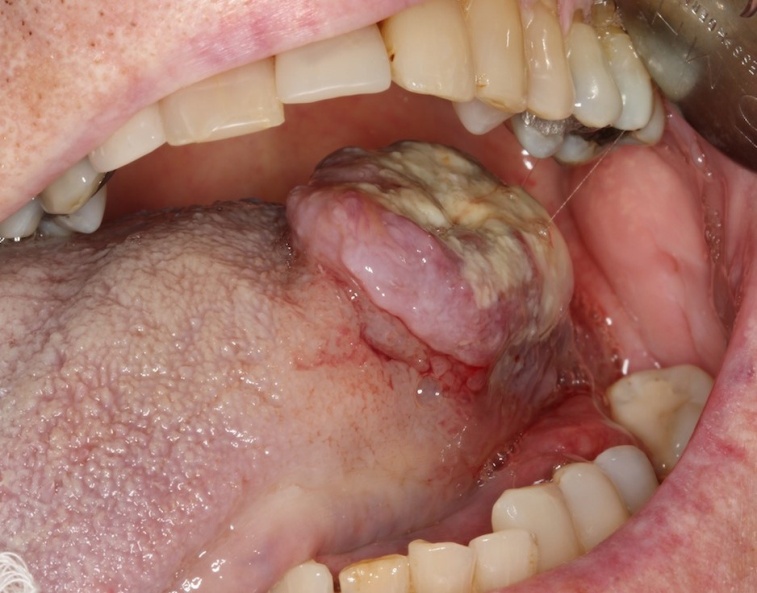
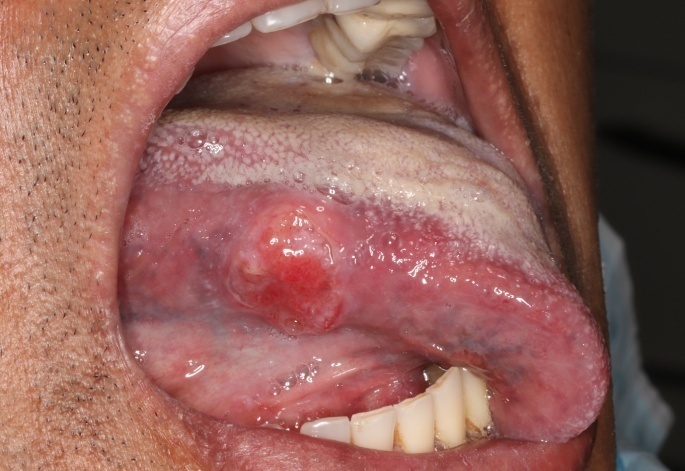
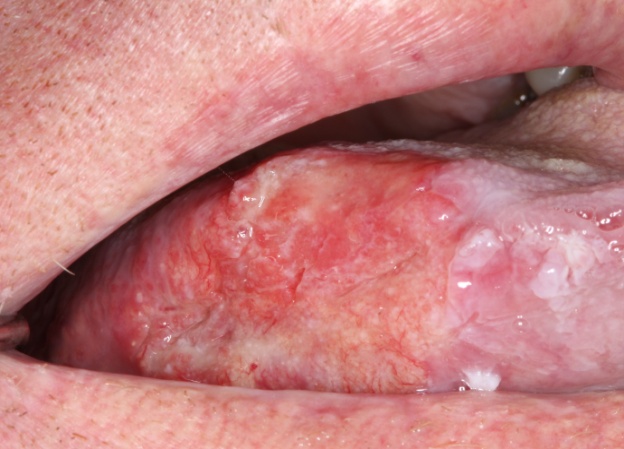
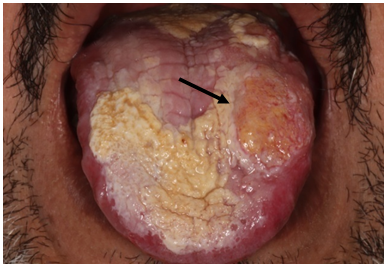
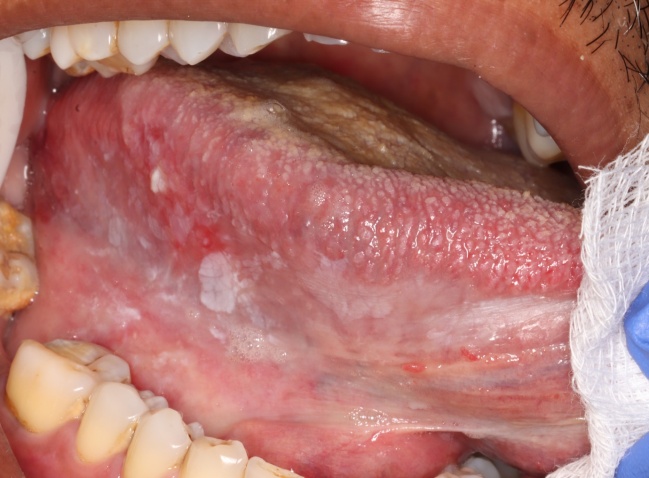
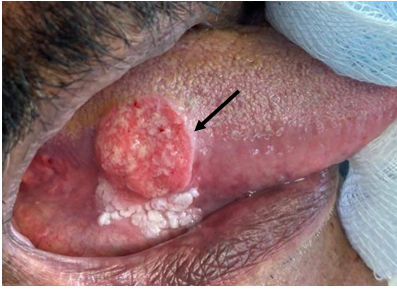
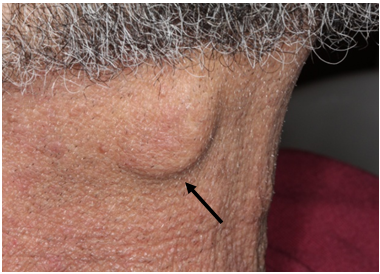
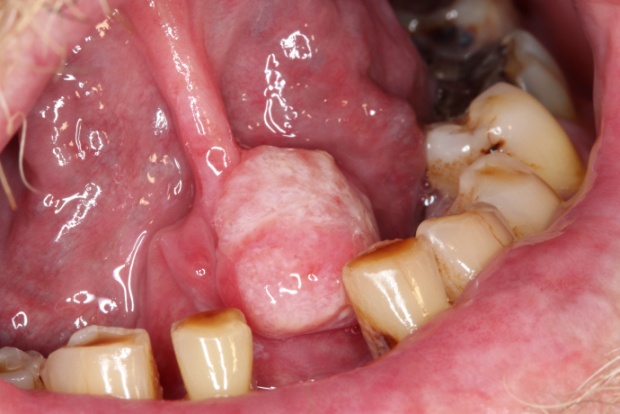
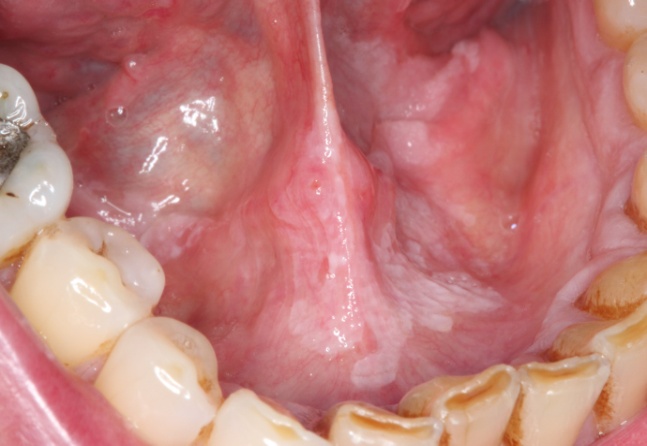
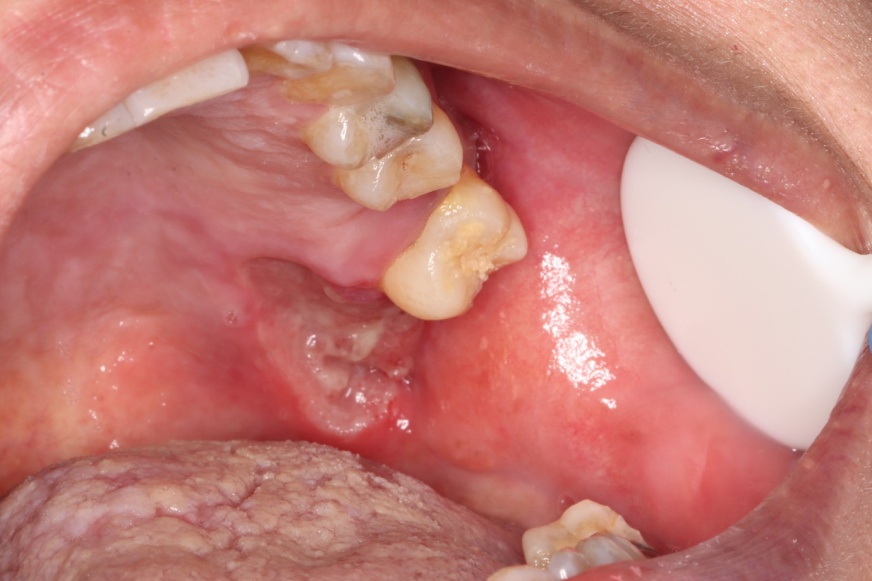
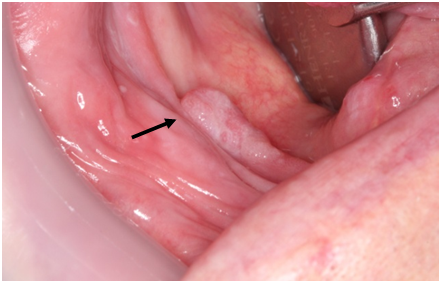
OC may arise in any oral cavity subsite (Table 1). According to the affected subsite, clinical features may vary. OC may be detected at its early stages where lesions may appear as asymptomatic small ulcers or lumps. The size of initial OC lesions can range from a few millimeters to several centimeters as the lesions progress. Lesions may appear as erythroleukoplakias with central ulcerations indicating suspicion for carcinoma in situ or invasive squamous cell carcinoma at the time of detection (Figure 1). Late-stage disease however appears as large growths with rolled margins and surface ulcerations (Figure 2). The tongue is a common oral cavity subsite for the development of OC (Figure 3). Suspicious tongue lesions may present as a small growth-like lesion (Figure 4) to a larger ulcerative lesion extending to the ventral surface (Figure 5). Some tumours present within large non-homogenous leukoplakias (Figure 6-8). In advanced cases, tumours present as ulceroproliferative growths with areas of necrosis and extension to surrounding structures such as muscle, bone, and layers of the skin with neck metastasis (Figure 9). The floor of mouth represents the second most common site for the development of OC (Figure 10). Lesions are likely to arise from a pre-existing leukoplakia or erythroplakia (Figure 11). The palate may also be affected with OC when lesions present as non-healing indurated ulcers with a depressed alveolar mucosa (Figure 12). It is worth noting that appropriate retraction of oral tissues aids in the detection of suspicious lumps presenting in edentulous spaces such as the lower posterior alveolar ridge (Figure 13).
Risk factors for the development of OC include alcohol abuse, tobacco consumption and betel-quid chewing 10. Individuals who are heavy smokers and binge drinkers are 38 times more likely to develop OC in comparison to abstainers 6. This may be due to acetaldehyde, a metabolite of alcohol and a component of tobacco, which is classed as a carcinogen 6. Acetaldehyde prevents the synthesis of DNA and its repair 2. Heavy smokers are three times more likely to develop OC than their non-smoking counterparts 2. Tobacco and alcohol together have a synergistic effect on the risk of developing OC 1. Smokeless tobacco such as betel quid is sometimes combined with ground areca nut 2. Areca nut alone without its combination with tobacco is associated with the development of OC as it causes cytotoxic damage of the mucosa through hypoxia and inflammation of the tissues 2. These behavioural risk factors are thought to cause OC as they interfere with cellular processes and alter genetics 7. Human Papilloma Virus (HPV) also seems to be linked to the development of OC 10. A study from 27 countries examining head and neck squamous cell carcinoma revealed a greater risk in those with a low educational background and income regardless of behavioural risk factors such as alcohol consumption and smoking 11. This shows the independent effect of one’s socioeconomic status on their OC development risk 11.


In advanced stages of OC, ulceration is one of the most common features presenting with an irregular floor and margins, elevation, and induration. With large lesions, the pain is severe and usually radiates to the ipsilateral ear 12. Less common presentations include paraesthesia of the chin or delayed healing following a dental extraction or sometimes a lump with abnormal blood vessel supply, dysphagia, or weight loss. In these advanced cases, neck metastases and cervical lymph node enlargement can be seen (Figure 8). Large OC lesions (Stages T3-T4) with lymph node involvement (N2a-N2b) were most associated with mortality in a study on 216 patients over a period of 5 years 13. Despite advances in medicine, OC has high rates of mortality with a global five-year survival rate of 50% 10. Treatment leaves patients with high rates of morbidity 14. In comparison to other cancers such as breast or colon, OC has worse survival rates due to failure of thorough screening, low index of suspicion, and poor dental attendance which all delay the diagnosis 14. When the diagnosis is delayed, patients present late with more advanced disease which is more challenging to treat and hence a greater negative impact on their quality of life is observed. Cancer survival is heavily dependent on the stage of diagnosis 6. More than half of patients (60%) with OC present in stages three and four, hence more complex treatment is required 6. Higher survival rates are seen in patients treated with early stages of OC, hence early disease detection and referral improve survival 5. A higher incidence of OC is seen in patients with a low socio-economic background and those patients tend to have worse outcomes such as worse survival rates 10. OC seems to be closely linked to economic and social deprivation, with the highest incidence of disease occurring in those most deprived 6. Cancer survival trends revealed a gap in survival rates between the most deprived and affluent groups 5. This may be due to several factors including barriers to access and inadequate awareness 1.
At the time of diagnosis, approximately half of OC patients present with metastases either regional or distant, leading to greater rates of mortality 15. Late presentation is also associated with more complex treatment of an increased cost and increased morbidity 3. In order to detect disease at early stages, a comprehensive oral examination should be routinely carried out by clinicians and if a potentially malignant lesion is present, referral to a specialist is required for a definitive diagnosis 14. Malignant transformation is determined after histopathological grading of a specimen is completed to determine the presence and extent of oral epithelial dysplasia 15. OSCC is usually preceded by oral potentially malignant disorders such as leukoplakia, erythroplakia and submucous fibrosis 16. On some occasions, OSCC may develop from sound epithelium free of dysplastic changes 14. However, a visible pre-clinical phase of dysplasia precedes most OSCC cases 17. Screening could prevent malignant changes or ensure that disease is diagnosed at earlier stages 18. It is the process of identifying individuals at increased risk of a disease from an apparently healthy population 18. Screening is seen in multiple forms such as screening an entire population, or selectively where the focus is only on high-risk individuals, or opportunistically when individuals are screened after attending for other reasons 6. OC screening is a straightforward, quick, cheap procedure that involves good lighting, gloves, and gauze in comparison to breast cancer screening which involves mammograms 3. The incidence and mortality rates have been significantly improved after screening programmes have been introduced for common cancers such as breast and bowel cancer 6. Screening programmes may allow for early disease detection and improved survival 3. Clinicians are also encouraged to keep a detailed record of a lesion including the site, size, texture, borders, colour, and clinical photography is advised to monitor the lesion.
Guidelines on practices and treatment enhance outcomes as they set the standards for managing patients 1. It is encouraged that local guidelines are developed for the referral of patients with potentially malignant lesions. In the United Kingdom, a 2 week wait pathways has been developed to ensure patients with a red/white patch, ulcer, or a new growth present in the mouth for more than three weeks are referred urgently to specialist services 14. Having a clear referral system reduces error and ensures that patients are seen in a timely manner. Developing national guidelines may bridge the gap between general practitioners and specialists, hence minimising abuse of the system with unnecessary referrals and maximising effectiveness.
It is important to emphasise the crucial role of disease prevention in which General Dental Practitioners (GDP) identify risk factors through history taking and address them appropriately as part of the holistic treatment plan. Cultural barriers should be overcome especially when taking a social history. GDPs are expected to give smoking cessation and alcohol advice or signpost patients to the appropriate services. Managing those risk factors will not only reduce the risk of OC, but of other diseases as well. HPV vaccinations have been introduced globally. Patients should be encouraged to take the vaccine at appropriate ages. Governments tend to place resources on cancer treatment with a low emphasis on prevention 1. According to the World health Organization, it is advised that measures are put in place for prevention of OC as part of local cancer control programmes 3. Hence campaigns should be developed to shed light on risk factors, signs, and symptoms of OC. Policy makers could work on initiatives to address risk factors such as taxing tobacco.
Additionally, the awareness of General Medical Practitioners and medical disciplines including otolaryngologists, gastroenterologists, and dermatologists with regards to OC is important. Many patients with oral diseases present to otolaryngology departments since patients consider the oral cavity to be within the realm of the throat, while many gastroenterologists assume oral lesions develop due to gastrointestinal disease 19. The ultimate aim is to enhance early detection thereby improving prognosis for patients presenting with OC.
Oral cancer is a preventable disease and early detection can reduce cancerous transformation hence potentially improve survival rates. General dental practitioners and medical disciplines have an important role in giving advice on risk factors implicated in OC and to recognise and promptly refer suspicious lesions. This review illustrates a plethora of clinical features of OC presenting in different oral cavity subsites. Knowledge of the various clinical features facilitates prompt referral to specialist services for diagnosis and management.
The authors wish to thank the patients for giving consent to obtain clinical photographs.
| [1] | Petersen, P.E, “Oral cancer prevention and control- The approach of the World Health Organization,” Oral Oncology, 45(4-5),454-60, April-May 2009. [Online]. Available: https:// www.sciencedirect.com/science/article/abs/pii/S1368837508001760 [Accessed January 6, 2024]. | ||
| In article | View Article PubMed | ||
| [2] | Heller, M.A, Nyirjesy, S.C, Balsiger, R, Talbot, N, VanKoevering, K.K, Haring, C.T, Old, M.O, Kang, S.Y, Seim, N.B, “Modifiable risk factors for oral cavity cancer in non-smokers: A systematic review and meta-analysis.” Oral Oncology, 137, January 2023. [Online]. Available: https:// www.sciencedirect.com/science/ article/abs/pii/S1368837522005905 [Accessed January 10, 2024]. | ||
| In article | View Article PubMed | ||
| [3] | Ribeiro, M.F.A, Oliveira, M.C.M, Leite, A.C, Bruzinga, F.F.B, Mendes, P.A, Grossmann, S.D.M.C, Araujo, V.E.D, Souto, G.R, “Assessment of screening programs as a strategy for early detection of oral cancer: a systematic review,” Oral Oncology, 130(1), June 2022. [Online]. Available: https://www.sciencedirect.com/science/article/pii/S1368837522002251?via%3Dihub [Accessed January 8, 2024]. | ||
| In article | View Article PubMed | ||
| [4] | Liang, J, Sun, Z, “Overexpression of membranal SLC3A2 regulates the proliferation of oral squamous cancer cells and affects the prognosis of oral cancer patients,” Journal of Oral Pathology & Medicine, 50(4),371-7, September 2020. | ||
| In article | View Article PubMed | ||
| [5] | Warnakulasuriya, S, Mak, V, Möller, H, “Oral cancer survival in young people in South East England,” Oral Oncology, 43(10),982–6, March 2007. [Online]. Available: https:// pubmed.ncbi.nlm.nih.gov/17350878/ [Accessed January 7, 2024]. | ||
| In article | View Article PubMed | ||
| [6] | Brocklehurst, P, Kujan, O, O’Malley, L, Ogden, G.R, Shepherd, S, Glenny, A-M, “Screening programmes for the early detection and prevention of oral cancer,” Cochrane Database of Systematic Reviews, (11), November 2013. | ||
| In article | View Article PubMed | ||
| [7] | Ali, J, Sabiha, B, Jan, H.U, Haider, S.A, Khan, A.A, Ali, S.S, “Genetic etiology of oral cancer,” Oral Oncology, 70, 23-8, May 2017. [Online]. Available: https: // www.sciencedirect.com/science/article/abs/pii/S1368837517301136 [Accessed January 9, 2024]. | ||
| In article | View Article PubMed | ||
| [8] | Glenny, A-M, Furness, S, Worthington, H.V, Conway, D.I, Oliver, R, Clarkson, J.E, Macluskey, M, Pavitt, S, Chan, K.K.W, Brocklehurst, P, The CSROC Expert Panel, “Interventions for the treatment of oral cavity and oropharyngeal cancer: Radiotherapy,” Cochrane Database of Systematic Reviews, (12), December 2010. | ||
| In article | View Article | ||
| [9] | World Health Organization (WHO), ICD-O: International classification of diseases for oncology, World Health Organization, Geneva, 2013. 3rd ed. [Online]. Available: https://iris.who.int/bitstream/handle/10665/96612/9789241548496_eng.pdf?sequence=1&isAllowed=y [Accessed January 14, 2024]. | ||
| In article | |||
| [10] | Chan, K.K, Glenny, A-M, Weldon, J.C, Furness, S, Worthington, H.V, Wakeford, H, “Interventions for the treatment of oral and oropharyngeal cancers: Targeted therapy and immunotherapy,” Cochrane Database of Systematic Reviews, (12), December 2015. | ||
| In article | View Article | ||
| [11] | Ramadan, S, Lee, J.J, Wang, R, Jackson R.S, Pipkorn, P, Rich, J, Harbison, R.A., Zolkind, P, Kang, S.Y, Puram, S.V, Mazul, A.L, “Neighborhood socioeconomic status and race are associated with incidence disparities in oral cavity cancers,” Oral Oncology, 147, December 2023. [Online]. Available: https:// www.sciencedirect.com/science/article/abs/pii/S1368837523003032 [Accessed January 8, 2024]. | ||
| In article | View Article PubMed | ||
| [12] | Bagan, J, Sarrion, G, Jimenez, Y, “Oral Cancer: clinical features,” Oral Oncology, 46(6),414-7, April 2010. [Online]. Available: 10.1016/j.oraloncology.2010.03.009 [Accessed January 14, 2024]. | ||
| In article | View Article PubMed | ||
| [13] | Capilla, M.V, Olid, M.N.R, Gaya, M.V.O, Botella, C.R, Ruiz, V.B, “Factors related to survival from oral cancer in an Andalusian population sample (Spain),” Med Oral Patol Oral Cir Bucal, 12(7),518-23, November 2007. [Online]. Available: chrome-extension://efaidnbmnnnibpcajpcglclefindmkaj/http:// www.medicinaoral.com/pubmed/medoralv12_i7_pE518.pdf [Accessed January 14, 2024]. | ||
| In article | |||
| [14] | Walsh, T, Macey, R, Kerr, A.R, Lingen, M.W, Ogden, G.R, Warnakulasuriya, S, “Diagnostic tests for oral cancer and potentially malignant disorders in patients presenting with clinically evident lesions,” Cochrane Database of Systematic Reviews, (7), July 2021. | ||
| In article | View Article PubMed | ||
| [15] | Kujan, O, Huang, G, Ravindran, A, Vijayan, M, Farah, C.S, “CDK4, CDK6, Cyclin D1 and Notch1 immunocytochemical expression of oral brush liquid‐based cytology for the diagnosis of oral leukoplakia and oral cancer,” Journal of Oral Pathology & Medicine, 48(7), 566–73, June 2019. [Online]. Available: https:// pubmed.ncbi.nlm.nih.gov/31172614/ [Accessed January 9, 2024]. | ||
| In article | View Article PubMed | ||
| [16] | Alsarraf, A, Kujan, O, Farah, C.S, “Liquid-based oral brush cytology in the diagnosis of oral leukoplakia using a modified Bethesda Cytology system,” Journal of Oral Pathology & Medicine, 47(9), 887-94, June 2018. | ||
| In article | View Article PubMed | ||
| [17] | Scully, C, Bagan, J, “Oral squamous cell carcinoma overview,” Oral Oncology, 45(4-5),301-8, April-May 2009. | ||
| In article | View Article PubMed | ||
| [18] | Pivovar, A, Santos, Z.F.D.G.D, Torres-Pereira C.C, “Oral cancer screening for high-risk individuals in the primary healthcare setting using an active approach,” Journal of Oral Pathology and Medicine, 46(9), 786-91, February 2017. | ||
| In article | View Article PubMed | ||
| [19] | Alsarraf, A, Alfadalah, Q, “The Clinical Practice of Oral Medicine in Specialty Dental Centres of Kuwait,” The International Arab Journal of Dentistry, 13(1), 24-9, February 2022. [Online]. Available: https://digitalcommons.aaru.edu.jo/iajd/vol13/iss1/1/ [Accessed January 14, 2024]. | ||
| In article | |||
Published with license by Science and Education Publishing, Copyright © 2024 Abdulhameed Alsarraf and Roqaya Alrumaih
 This work is licensed under a Creative Commons Attribution 4.0 International License. To view a copy of this license, visit
http://creativecommons.org/licenses/by/4.0/
This work is licensed under a Creative Commons Attribution 4.0 International License. To view a copy of this license, visit
http://creativecommons.org/licenses/by/4.0/
| [1] | Petersen, P.E, “Oral cancer prevention and control- The approach of the World Health Organization,” Oral Oncology, 45(4-5),454-60, April-May 2009. [Online]. Available: https:// www.sciencedirect.com/science/article/abs/pii/S1368837508001760 [Accessed January 6, 2024]. | ||
| In article | View Article PubMed | ||
| [2] | Heller, M.A, Nyirjesy, S.C, Balsiger, R, Talbot, N, VanKoevering, K.K, Haring, C.T, Old, M.O, Kang, S.Y, Seim, N.B, “Modifiable risk factors for oral cavity cancer in non-smokers: A systematic review and meta-analysis.” Oral Oncology, 137, January 2023. [Online]. Available: https:// www.sciencedirect.com/science/ article/abs/pii/S1368837522005905 [Accessed January 10, 2024]. | ||
| In article | View Article PubMed | ||
| [3] | Ribeiro, M.F.A, Oliveira, M.C.M, Leite, A.C, Bruzinga, F.F.B, Mendes, P.A, Grossmann, S.D.M.C, Araujo, V.E.D, Souto, G.R, “Assessment of screening programs as a strategy for early detection of oral cancer: a systematic review,” Oral Oncology, 130(1), June 2022. [Online]. Available: https://www.sciencedirect.com/science/article/pii/S1368837522002251?via%3Dihub [Accessed January 8, 2024]. | ||
| In article | View Article PubMed | ||
| [4] | Liang, J, Sun, Z, “Overexpression of membranal SLC3A2 regulates the proliferation of oral squamous cancer cells and affects the prognosis of oral cancer patients,” Journal of Oral Pathology & Medicine, 50(4),371-7, September 2020. | ||
| In article | View Article PubMed | ||
| [5] | Warnakulasuriya, S, Mak, V, Möller, H, “Oral cancer survival in young people in South East England,” Oral Oncology, 43(10),982–6, March 2007. [Online]. Available: https:// pubmed.ncbi.nlm.nih.gov/17350878/ [Accessed January 7, 2024]. | ||
| In article | View Article PubMed | ||
| [6] | Brocklehurst, P, Kujan, O, O’Malley, L, Ogden, G.R, Shepherd, S, Glenny, A-M, “Screening programmes for the early detection and prevention of oral cancer,” Cochrane Database of Systematic Reviews, (11), November 2013. | ||
| In article | View Article PubMed | ||
| [7] | Ali, J, Sabiha, B, Jan, H.U, Haider, S.A, Khan, A.A, Ali, S.S, “Genetic etiology of oral cancer,” Oral Oncology, 70, 23-8, May 2017. [Online]. Available: https: // www.sciencedirect.com/science/article/abs/pii/S1368837517301136 [Accessed January 9, 2024]. | ||
| In article | View Article PubMed | ||
| [8] | Glenny, A-M, Furness, S, Worthington, H.V, Conway, D.I, Oliver, R, Clarkson, J.E, Macluskey, M, Pavitt, S, Chan, K.K.W, Brocklehurst, P, The CSROC Expert Panel, “Interventions for the treatment of oral cavity and oropharyngeal cancer: Radiotherapy,” Cochrane Database of Systematic Reviews, (12), December 2010. | ||
| In article | View Article | ||
| [9] | World Health Organization (WHO), ICD-O: International classification of diseases for oncology, World Health Organization, Geneva, 2013. 3rd ed. [Online]. Available: https://iris.who.int/bitstream/handle/10665/96612/9789241548496_eng.pdf?sequence=1&isAllowed=y [Accessed January 14, 2024]. | ||
| In article | |||
| [10] | Chan, K.K, Glenny, A-M, Weldon, J.C, Furness, S, Worthington, H.V, Wakeford, H, “Interventions for the treatment of oral and oropharyngeal cancers: Targeted therapy and immunotherapy,” Cochrane Database of Systematic Reviews, (12), December 2015. | ||
| In article | View Article | ||
| [11] | Ramadan, S, Lee, J.J, Wang, R, Jackson R.S, Pipkorn, P, Rich, J, Harbison, R.A., Zolkind, P, Kang, S.Y, Puram, S.V, Mazul, A.L, “Neighborhood socioeconomic status and race are associated with incidence disparities in oral cavity cancers,” Oral Oncology, 147, December 2023. [Online]. Available: https:// www.sciencedirect.com/science/article/abs/pii/S1368837523003032 [Accessed January 8, 2024]. | ||
| In article | View Article PubMed | ||
| [12] | Bagan, J, Sarrion, G, Jimenez, Y, “Oral Cancer: clinical features,” Oral Oncology, 46(6),414-7, April 2010. [Online]. Available: 10.1016/j.oraloncology.2010.03.009 [Accessed January 14, 2024]. | ||
| In article | View Article PubMed | ||
| [13] | Capilla, M.V, Olid, M.N.R, Gaya, M.V.O, Botella, C.R, Ruiz, V.B, “Factors related to survival from oral cancer in an Andalusian population sample (Spain),” Med Oral Patol Oral Cir Bucal, 12(7),518-23, November 2007. [Online]. Available: chrome-extension://efaidnbmnnnibpcajpcglclefindmkaj/http:// www.medicinaoral.com/pubmed/medoralv12_i7_pE518.pdf [Accessed January 14, 2024]. | ||
| In article | |||
| [14] | Walsh, T, Macey, R, Kerr, A.R, Lingen, M.W, Ogden, G.R, Warnakulasuriya, S, “Diagnostic tests for oral cancer and potentially malignant disorders in patients presenting with clinically evident lesions,” Cochrane Database of Systematic Reviews, (7), July 2021. | ||
| In article | View Article PubMed | ||
| [15] | Kujan, O, Huang, G, Ravindran, A, Vijayan, M, Farah, C.S, “CDK4, CDK6, Cyclin D1 and Notch1 immunocytochemical expression of oral brush liquid‐based cytology for the diagnosis of oral leukoplakia and oral cancer,” Journal of Oral Pathology & Medicine, 48(7), 566–73, June 2019. [Online]. Available: https:// pubmed.ncbi.nlm.nih.gov/31172614/ [Accessed January 9, 2024]. | ||
| In article | View Article PubMed | ||
| [16] | Alsarraf, A, Kujan, O, Farah, C.S, “Liquid-based oral brush cytology in the diagnosis of oral leukoplakia using a modified Bethesda Cytology system,” Journal of Oral Pathology & Medicine, 47(9), 887-94, June 2018. | ||
| In article | View Article PubMed | ||
| [17] | Scully, C, Bagan, J, “Oral squamous cell carcinoma overview,” Oral Oncology, 45(4-5),301-8, April-May 2009. | ||
| In article | View Article PubMed | ||
| [18] | Pivovar, A, Santos, Z.F.D.G.D, Torres-Pereira C.C, “Oral cancer screening for high-risk individuals in the primary healthcare setting using an active approach,” Journal of Oral Pathology and Medicine, 46(9), 786-91, February 2017. | ||
| In article | View Article PubMed | ||
| [19] | Alsarraf, A, Alfadalah, Q, “The Clinical Practice of Oral Medicine in Specialty Dental Centres of Kuwait,” The International Arab Journal of Dentistry, 13(1), 24-9, February 2022. [Online]. Available: https://digitalcommons.aaru.edu.jo/iajd/vol13/iss1/1/ [Accessed January 14, 2024]. | ||
| In article | |||