Objective: The study investigates the link between Hyperuricemia, Body mass index (BMI) and Metabolic syndrome in middle-aged adults, providing insights for future interventions to prevent metabolic syndrome. Methods: A study was conducted between the periods July 2023 to March 2024 at the Department of General Medicine, Sir Sunder Lal Hospital, Banaras Hindu University (BHU), Varanasi, Uttar Pradesh, India among the adults in Eastern Uttar Pradesh and South Bihar. A total of 102 adult subjects aged 35 to 65 years were selected using sampling approach. The data collection included anthropometric measurements (height, weight, body mass index), blood pressure assessment and relevant biochemical investigations, which include fasting blood sugar (FBS), postprandial blood sugar (PPBS), glycated haemoglobin (HbA1c) and serum uric acid (SUA) levels. Furthermore, well-designed interview-based questionnaires were re-used to obtain sociodemographic and lifestyle information. All measurements were conducted under protocols and diagnosis of metabolic syndrome was evaluated based on recognized diagnostic criteria. Statistical analyses were carried out to assess the correlation between hyperuricemia, BMI and metabolic syndrome. A p-value of less than 0.05 was considered statistically significant. Results: The study revealed a significant association between hyperuricemia, increased adiposity and critical components of metabolic risk. Subjects aged between 46 to 55 years showed higher prevalence of increased serum uric acid (SUA) levels along with a maximum occurrence of metabolic irregularities. The dietary patterns and physical activity parameters of subjects were found to be profoundly modified with socio-demographic and lifestyle modifications. Additionally, hyperuricemia revealed a significant association with increased blood pressure and poor glycemic control, emphasizing its potential relation to the initial stage of metabolic syndrome. Conclusion: A systematic approach towards the nutritional pattern and physical activity criterion of subjects was profoundly modified with socio-demographic and lifestyle modifications. As follows, early detection of elevated uric acid levels and lifestyle interventions (diet, exercise, weight control) are essential to prevent the progression of metabolic complications. However, high blood pressure and blood sugar control are also essential for preventing metabolic syndrome consequences. Subjects that approach all of these variables systematically can significantly prevent their risk of suffering from crucial health problems associated with hyperuricemia.
Globally, hyperuricemia (HU) is a condition defined by elevated levels of uric acid in the blood, which can lead to situations such as gout and kidney stones. It is important for subjects with HU to monitor their diet and lifestyle approach to help control their condition and prevent complications 1, 2, 3. Although, hyperuricemia is linked with the general name, i.e., gout, which is a form of inflammatory arthritis and modern science increasingly emphasizes its physiological effect beyond joint involvement 3. Hyperuricemia is now recognized as a risk factor for metabolic and cardiovascular issues. Several studies have been conducted that emphasize the increasing public health burden associated with hyperuricemia 4, 5. Moreover, hyperuricemia has been associated with conditions such as hypertension, chronic kidney disease, and metabolic syndrome 6, 7. Consequently, early detection and management of hyperuricemia are essential in preventing long-term health complications. Several studies have shown that hyperuricemia may also be associated to an increased risk of diabetes and stroke. Therefore, monitoring and controlling elevated uric acid levels can have significant implications for overall health and well-being 8, 9, 10. Research demonstrates that hyperuricemia is closely associated with obesity, which is a significant component of metabolic syndrome 11, 12, 13. High body mass index (BMI) is often associated with elevated uric acid levels, emphasizing the importance of maintaining a healthy weight to prevent complications related to hyperuricemia and metabolic syndrome. Many studies have been done to control the hyperuricemia and metabolic syndrome complications 14, 15, 16. Apart from that, the study of sociodemographic factors and clinical anthropometric measurements is one of them. Sociodemographic factors such as age, gender, and race have been found to impact the prevalence of hyperuricemia. The study conducted by Lee et al. showed that higher uric acid levels were associated with both male gender and older age 17. Additionally, the study exposed that subjects with a higher body mass index also had elevated uric acid levels. The results of this study suggest that certain demographic and lifestyle factors may play a role in uric acid levels. Furthermore, clinical anthropometric measurements such as waist circumference and body fat percentage have also been associated to hyperuricemia, which is major factors in the prevention and control of this condition include the increasing prevalence of obesity and metabolic syndrome, which are known risk factors for hyperuricemia 18. Moreover, the complex interplay between genetics, lifestyle factors and comorbidities can make diagnosis and treatment of hyperuricemia challenging for healthcare providers 19. In the current global scenario, further research is needed at the socio-demographic and clinical anthropological levels to fully understand these issues.
This study investigated the associations between hyperuricemia, BMI and metabolic syndrome in middle-aged adults, providing insights for future interventions to prevent metabolic syndrome. The study was conducted between the periods of July 2023 - March 2024 at the Department of General Medicine, Sir Sunder Lal Hospital, Banaras Hindu University (BHU), Varanasi, Uttar Pradesh, India among subjects in Eastern Uttar Pradesh and South Bihar. A total of 102 adult subjects aged 35 to 65 years were selected using a sampling approach. It was found that the subjects aged between 46-55 years showed higher prevalence of increased SUA levels along with a maximum occurrence of metabolic irregularities. Early detection of SUA levels in middle-aged subjects plays an essential role in the enhancement of prevention of metabolic syndrome. Ultimately, a systematic approach to nutritional patterns and physical activity along with early detection of elevated uric acid levels and lifestyle interventions can significantly reduce the risk of metabolic complications associated with hyperuricemia.
This study explored the relationship between hyperuricemia, body mass index (BMI) and metabolic syndrome among adults in Eastern Uttar Pradesh and South Bihar. Data collections were conducted between July 2023 to March 2024 at Sir Sunder Lal Hospital, Banaras Hindu University (BHU), Varanasi. The primary objective was to assess the impact of serum uric acid concentration (SUAC) on fat distribution and metabolic risk factors. Ethical approval was obtained from the Institute of Science, BHU (Ref. No. I. Sc./ECM-XVI/2023-24), and written informed consent was secured from all participants. A total of 102 individuals aged 35–65 years were recruited using purposive sampling.
2.2. Inclusion and Exclusion CriteriaParticipants were recruited from Sir Sunder Lal Hospital, BHU. Eligible individuals were adults aged 35–65 years, permanently residing in Eastern Uttar Pradesh or South Bihar. Exclusion criteria included pregnancy or lactation, a history of gastrointestinal disorders and the presence of any chronic medical conditions that could influence metabolic parameters.
2.3. Data CollectionData collections were conducted through a step-by-step process. Anthropometric measurements e.g. height, weight, waist, and hip circumference were recorded to assess body composition. Blood pressures of patients were measured using a manual sphygmomanometer in resting state. Fasting blood samples were drawn to evaluate serum uric acid levels and other biochemical parameters. Additionally, a structured questionnaire was used to gather information on participants’ medical history, dietary habits, physical activity, and lifestyle patterns.
All statistical analyses were performed using IBM SPSS software (version 26). Descriptive statistics, including mean and standard deviation (Mean ± SD), were used to summarize the data. Associations between variables were assessed using appropriate statistical tests and a p-value of less than 0.05 was considered to indicate statistical significance.
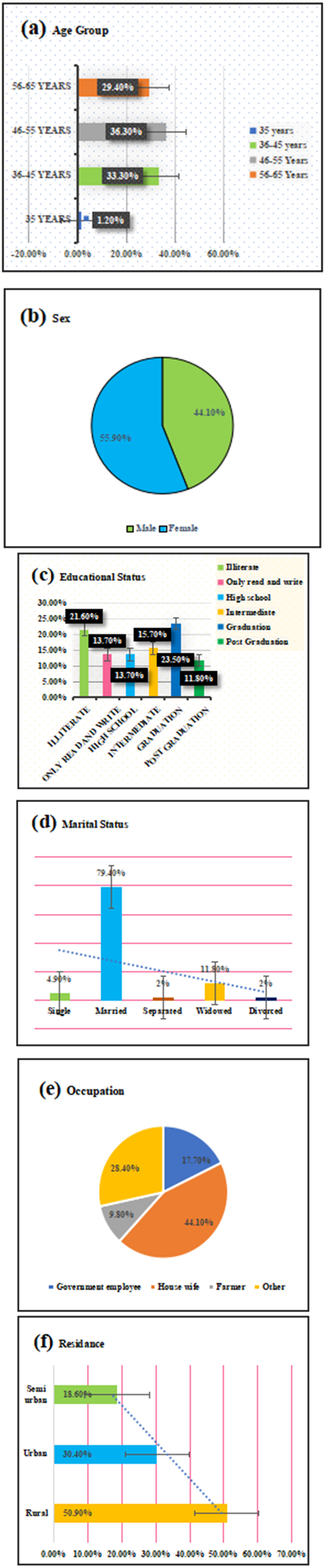
Figure 1 shows the sociodemographic distribution of the study participants in detail, which provides the important information about the cohort's demographic conditions. The study reveals a middle-aged adult population with a mean age of 50.32 ± 8.49 years with the most prominent age groups being 46-55 years (36.30 %) and 36-45 years (33.30%) as represented in Figure (a). In contrast, the study also focuses mostly on that subject, which has numerous chronic health conditions that may emerge, making the findings particularly important to this group. However, females are slightly better represented with 55.90 % of the participants vs. 44.1% for men, as represented in the sex distribution in Figure 1 (b). This minimal gender disparity may affect the particular health outcomes, mostly those with gender-specific predispositions. Figure 1 (c) indicates the education level of subjects and the significant variations are recognized heterogeneously in terms of literacy and academic achievement. It is found that 23.50 % are graduate subjects while 21.60 % are illiterate. Consequently, the education levels also influence subjects’ comprehension of complicated health information, persistence to interventions and overall health literacy. Such type of variations show that health education initiatives may need to be adjusted to different levels of awareness. Moreover, 79.40 % of subjects are married, which represents a significant majority as represented in the marital status Figure 1(d). This majority of married adults may indicate the possibility of spousal support with health management, or on the other hand, shared domestic responsibilities that may influence lifestyle choices related to health. In spite of that, it is obtained from 44.1% of the total, with housewives representing the largest group, which is followed by informal workers, based on the occupational status in Figure 1 (e). This study is important because it stresses the main roles as well as prospective time restrictions that might affect adherence to lifestyle changes or participation in health initiatives. The slightly higher percentage of women is also consistent with the prevalence of housewives. Furthermore, the area of residence is shown in Figure 1(f), which indicates that a significant 50.9% of participants reside in rural areas. This demographic information is relevant because rural residents may experience different challenges in accessing healthcare services and may have different lifestyle behavioral patterns than urban residents. This illustrates the essential requirement for focused health treatments that satisfy specific needs and accessibility difficulties that exist in missed rural areas.

Table 1 shows a comprehensive study of the clinical and anthropometric characteristics of the study subjects, expressing the mean values and standard deviations (SD) for important health variables. Table 1 included age, sex, height, weight, waist circumference (WC), body mass index (BMI), body fat percentage (BF%), systolic blood pressure (SBP), diastolic blood pressure (DBP), fasting blood sugar (FBS), postprandial blood sugar (PPBS), glycated hemoglobin (HbA1c) and serum uric acid (SUA), respectively. The study suggested statistically significant differences (p<0.05) across several anthropometric measures: sex, height, weight, WC, BMI, and BF%. It reveals fundamental differences in physical characteristics across this study population. Another very important result showed the prevalence of increased WC, defined as >94 cm for males and >80 cm for females. The obtained results strongly indicate a heightened risk of central adiposity and metabolic syndrome. Such similar results are contrary to the norms reported by Alberti et al. This discrepancy highlights the need to reevaluate the methods used in the study. Further research may reveal underlying factors that contribute to these unexpected results 20.
Central obesity is an essential risk factor for several metabolic disorders. Moreover, the World Health Organization (WHO) classified an important proportion of participants as overweight (39.2% with a mean BMI of around 25.29 kg/m²) or obese (16.7% with BMI >30 kg/m²). Present study shows a significant association between obesity and hyperuricemia, which is similar to previous studies done by Grundy et al. and Ford et al. 21, 22. Body fat percentage was also much higher among people classed as overweight or obese, that confirms the prevalence of extra body fat in this group. While not all clinical factors were statistically significant, SUA showed significant associations with other essential health indicators. SUA showed a favourable connection with both systolic and diastolic blood pressure measurements. Result suggests an independent association between higher uric acid levels and hypertension, even after accounting for other factors. Present result is consistent with, who reported a 9% increased risk of hypertension for each unit rise in SUA 23. It is possible that mechanisms include reduced nitric oxide synthase activity and activation of the renin-angiotensin-aldosterone system (RAAS), both of which can contribute to elevated blood pressure. Moreover, SUA was significantly associated with fasting blood sugar (FBS), postprandial blood sugar (PPBS), and glycated hemoglobin (HbA1c). The essential link elaborates a relationship between higher uric acid levels and hyperglycemia, reinforcing the connection between hyperuricemia and impaired glucose metabolism. The results support research reported that there is a positive association between high SUA levels and an increased risk of type 2 diabetes 24.
Table 2 summarizes the prevalence of significant clinical and anthropometric parameters, which provides the important information into the metabolic health risks and behavioral patterns of the study group. An important observation was that there was universal presence of systolic and diastolic blood pressure (SBP and DBP), fasting blood sugar (FBS) and postprandial blood sugar (PPBS) values which were found to be increased in 100% of the subjects. The results indicate a significant and concerning prevalence of hypertension and hyperglycemia throughout the study cohort, reflecting a population at high risk for cardiovascular disease and mellitus. In the case of predisposing variables, a substantial 30.4% of individuals indicated a family history of hyperuricemia with metabolic syndrome. The results indicate an inherited propensity to these complicated metabolic abnormalities in the research group, stressing the importance of genetic and familial factors in disease development.
With respect to risk factors related to behaviour, the data reflect an array of changes. Oral tobacco use was reported by 30.4% of individuals, confirming that many people participated in a recognized health-damaging work. Furthermore, 8.8% smoked and 4.9% drank alcohol, further to their overall risk profile. Although 43.1% reported no addictive habits, 12.7% used drugs sometimes, showing a diverse range of lifestyle options among the population. In terms of physical activity, an important proportion of individuals reported doing little or no regular exercise. 57.8% proved a moderate lifestyle, which, while not completely inactive, may not be sufficient to achieve optimal metabolic health. Of those surveyed, 30.4% were inactive, which shows many people with inadequate activity. However, a small percentage, 11.8%, participated in serious physical activity. The overall lack of regular activity among participants is an essential contributor to the revealed metabolic risks. The body mass index (BMI) distribution indicates the prevalence of obesity. A significant 39.2% of subjects were categorized as overweight, whereas 16.7% were obese. In contrast, only 16.7% have a normal BMI, and only 2.0% are underweight. The aforementioned large proportion of subjects falling into the overweight or obese categories highlights the prevalent problem of excess body weight in the study, which is a significant cause of metabolic syndrome and related consequences. Lastly, the majority of participants (55.9%) were female, suggesting the significance of gender-specific approaches for creating and implementing health interventions that address metabolic problems. This demographic information, together with the other data, enables a better-focused understanding of the population's specific needs.
Table 3 systematically shows the Pearson's correlation coefficients (r-values), which indicate the strength and direction of linear relationships between SUA levels and various clinical and anthropometric variables, specifically within the MS cohort. This research shows important associations (p-values < 0.01), which indicates an effective metabolic relationship. A very important exploration is that serum uric acid has a very significant association with both diastolic blood pressure (DBP) (r = 0.910) and postprandial blood sugar (PPBS) (r = 0.874). Furthermore, these extremely high correlation values show in essence, a direct and highly persistent linear relationship, showing that as SUA levels rise, DBP and PPBS climb significantly in this group. Similarly, an important positive association was identified between serum uric acid and systolic blood pressure (SBP) (r = 0.770), which confirms the strong relationship between hyperuricemia and elevated blood pressure. The results obtained are significant, finding uric acid as an important risk factor to hypertension and hyperglycemia in metabolic syndrome participants. A moderate correlation was found between SUA and fasting blood sugar (FBS) (r = 0.358). Although not as important as the correlations with DBP, PPBS and SBP, this shows a noticeable metabolic relationship, which implies that higher SUA levels consistently correspond with higher fasting glucose, albeit to a smaller amount than postprandial glucose. In contrast to these strong metabolic correlations, the study found highly insignificant correlations between serum uric acid and direct measures of adiposity, such as waist circumference (WC) (r = 0.179), body mass index (BMI) (r = 0.158), and body fat percentage (BF%) (r = 0.184). The aforementioned demographic variables found extremely low r-values, which implies a less direct or insignificant linear relationship with blood uric acid levels in this specific cohort of metabolic syndrome patients. This is a significant contrast, which suggests that although obesity may be a component of the higher metabolic syndrome, its direct correlation with serum uric acid is less obvious than that of blood pressure and blood sugar levels.
This study highlights that middle-aged subjects, particularly females and rural residents are significantly affected by hyperuricemia and associated metabolic risks. A strong association was observed between elevated serum uric acid (SUA) and clinical parameters such as diastolic blood pressure, postprandial blood sugar, and systolic blood pressure, indicating a high risk for hypertension and hyperglycemia. While obesity was prevalent, its direct correlation with SUA was weak, suggesting that metabolic dysfunction rather than adiposity alone may be more critical. Furthermore, sedentary lifestyles, low education levels and behavioural risk factors (e.g., tobacco, alcohol) compound the risk. These findings emphasize the need for early detection and tailored interventions focusing on blood pressure and glucose management in high-risk populations.
To establish the relationship between the variables between the SUA and MS, future studies should concentrate on long-term, prospective research. Such studies should be enhanced to incorporate large-scale, multicenter and longitudinal designs in order to significantly improve the statistical power and generalization of results across varied subjects. Furthermore, the most important next phase is to thoroughly assess the effectiveness of specific lifestyle interventions, i.e. tailored dietary modifications and structured physical activities with the aim to determine their precise impact on reducing hyperuricemia and associated metabolic risks.
The present study possesses some drawbacks. The very small sample size limits the statistical power and generalization of our results to greater cohorts. Another notable limitation was the lack of accurate, detailed nutritional consumption and physical activity. Therefore, the minimized the depth of our lifestyle studies and prevented a more precise assessment of their impact. Future studies demand a more comprehensive, multicentric approach and extensive longitudinal data collection to further understand the complex associations between SUA levels and MS.
The present study investigated the associations between hyperuricemia, BMI and metabolic syndrome in middle-aged adults, providing insights for future interventions aimed at preventing metabolic syndrome. The study was conducted from July 2023 to March 2024 at the Department of General Medicine, Sir Sunder Lal Hospital, Banaras Hindu University (BHU), Varanasi, Uttar Pradesh, India, among subjects in Eastern Uttar Pradesh and South Bihar and 102 subjects, aged 35 to 65 years, were selected using a sampling approach. Sociodemographic factors and clinical anthropometric measurements were utilized in this study. Almost, it was found that subjects aged 46-55 years (≈ 36.30%), females (≈ 55.90%) and those from rural residences (≈ 50.90%) showed a higher prevalence of increased SUA levels and the highest occurrence of metabolic irregularities. Early detection of SUA levels in middle-aged subjects was also found to play a crucial role in enhancing the prevention of metabolic syndrome. This suggests that a systematic approach to nutritional patterns and physical activity along with early detection of elevated uric acid levels and lifestyle interventions can significantly reduce the risk of metabolic complications associated with hyperuricemia.
The first author (AS) gratefully acknowledges the University Grants Commission (UGC), India, for providing financial support through the National Fellowship. The authors also extend their sincere appreciation to all the study participants for their valuable time, cooperation and support, without which this research would not have been possible.
The authors declare that there are no conflicts of interest related to this study.
Anamika Saroj: Conceptualization, Methodology, Analysis, Writing - Original Draft.
Mukta Singh: Supervision, Conceptualization, Writing - Review & Editing.
L. P. Meena: Supervision, Conceptualization, Writing - Review & Editing, Investigation of resources.
Ajay Kumar Choudhary: Writing- Review & Editing, Analysis
| [1] | Li, W., Wu, H., Han, Y., Wu, H., Lin, Z., & Zhang, B. (2023). Global status and trends in gout research from 2012 to 2021: A bibliometric and visual analysis. Clinical Rheumatology, 42(5), 1371–1388. | ||
| In article | View Article PubMed | ||
| [2] | Caron, J. P., Kreher, M. A., Mickle, A. M., Wu, S., Przkora, R., Estores, I. M., & Sibille, K. T. (2022). Intermittent fasting: Potential utility in the treatment of chronic pain across the clinical spectrum. Nutrients, 14(12), 2536. | ||
| In article | View Article PubMed | ||
| [3] | Petridou, G. (2023). Pain with a PR problem: Narrating gout-induced pain in the Second Sophistic. In J. Clarke, D. King, & H. Baltussen (Eds.), Pain narratives in Greco-Roman writings: Studies in the representation of physical and mental suffering (pp. 121–144). Brill. | ||
| In article | View Article | ||
| [4] | Singh, M., Gupta, P., & Reddy, L. (2022). Hyperuricemia screening camp data: Prevalence and associated risk factors. Journal of Metabolic Syndrome, 12(4), 287–294. | ||
| In article | |||
| [5] | Patel, R., Sharma, A., & Kumar, S. (2023). Prevalence of hyperuricemia in the Indian population: A systematic review. Indian Journal of Public Health, 67(2), 123–135. | ||
| In article | |||
| [6] | Choi, H. K., &Curhan, G. (2007). Independent impact of gout on mortality and risk for coronary heart disease. Circulation, 116(8), 894 900. | ||
| In article | View Article PubMed | ||
| [7] | Feig, D. I., Kang, D. H., & Johnson, R. J. (2008). Uric acid and cardiovascular risk. New England Journal of Medicine, 359(17), 1811- 1821. | ||
| In article | View Article PubMed | ||
| [8] | Bove, M., Cicero, A. F. G., Veronesi, M., & Borghi, C. (2017). An evidence-based review on urate-lowering treatments: Implications for optimal treatment of chronic hyperuricemia. Vascular Health and Risk Management, 13, 23–28. | ||
| In article | View Article PubMed | ||
| [9] | Borghi, C., Agabiti-Rosei, E., Johnson, R. J., Kielstein, J. T., Lurbe, E., Mancia, G., Redon, J., Stack, A. G., &Tsioufis, K. P. (2020). Hyperuricaemia and gout in cardiovascular, metabolic and kidney disease. European Journal of Internal Medicine, 80, 1–11. | ||
| In article | View Article PubMed | ||
| [10] | Kuwabara, M., Hisatome, I., Ae, R., Kosami, K., Aoki, Y., Andres-Hernando, A., Kanbay, M., &Lanaspa, M. A. (2025). Hyperuricemia: A new cardiovascular risk. Nutrition, Metabolism and Cardiovascular Diseases, 35(3), 103796. | ||
| In article | View Article PubMed | ||
| [11] | Kim, I. Y., Han, K. D., Kim, D. H., Eun, Y., Cha, H. S., Koh, E. M., Lee, J., & Kim, H. (2019). Women with metabolic syndrome and general obesity are at a higher risk for significant hyperuricemia compared to men. Journal of Clinical Medicine, 8(6), 837. | ||
| In article | View Article PubMed | ||
| [12] | Puig, J. G., & Martinez, M. A. (2008). Hyperuricemia, gout, and the metabolic syndrome. Current Opinion in Rheumatology, 20(2), 187- 191. | ||
| In article | View Article PubMed | ||
| [13] | Gong, M., Wen, S., Nguyen, T., Wang, C., Jin, J., & Zhou, L. (2020). Converging relationships of obesity and hyperuricemia with special reference to metabolic disorders and plausible therapeutic implications. Diabetes, Metabolic Syndrome and Obesity: Targets and Therapy, 13, 943–962. | ||
| In article | View Article PubMed | ||
| [14] | Choi, H. K., & Ford, E. S. (2007). Prevalence of the metabolic syndrome in individuals with hyperuricemia. The American Journal of Medicine, 120(5), 442–447. | ||
| In article | View Article PubMed | ||
| [15] | Chen, H. S. (2011). Clinical implications of the metabolic syndrome and hyperuricemia. Journal of the Chinese Medical Association, 74(12), 527 528. | ||
| In article | View Article PubMed | ||
| [16] | Billiet, L., Doaty, S., Katz, J. D., & Velasquez, M. T. (2014). Review of hyperuricemia as new marker for metabolic syndrome. International Scholarly Research Notices, 2014(1), 852954. | ||
| In article | View Article PubMed | ||
| [17] | Lee, J. M., Kim, H. C., Cho, H. M., Oh, S. M., Choi, D. P., & Suh, I. (2012). Association between serum uric acid level and metabolic syndrome. Journal of Preventive Medicine and Public Health, 45(3), 181–187. | ||
| In article | View Article PubMed | ||
| [18] | Wu, J., Qiu, L., Cheng, X., Xu, T., Wu, W., Zeng, X., Ye, Y., & Li, Y. (2017). Hyperuricemia and clustering of cardiovascular risk factors in the Chinese adult population. Scientific Reports, 7(1), 5456. | ||
| In article | View Article PubMed | ||
| [19] | Roman, Y. M. (2022). Moving the needle in gout management: The role of culture, diet, genetics, and personalized patient care practices. Nutrients, 14(17), 3590. | ||
| In article | View Article PubMed | ||
| [20] | Alberti, K. G., & Zimmet, P. Z. (1998). Definition, diagnosis and classification of diabetes mellitus and its complications. Part 1: Diagnosis and classification of diabetes mellitus provisional report of a WHO consultation. Diabetic Medicine, 15(7), 539–553. | ||
| In article | View Article | ||
| [21] | Grundy, S. M., Brewer, H. B., Jr, Cleeman, J. I., Smith, S. C., Jr, &Lenfant, C. (2004). Definition of metabolic syndrome: Report of the National Heart, Lung, and Blood Institute/American Heart Association conference on scientific issues related to definition. Circulation, 109(3), 433–438. | ||
| In article | View Article PubMed | ||
| [22] | Ford, E. S., Giles, W. H., & Dietz, W. H. (2002). Prevalence of the metabolic syndrome among US adults: Findings from the third National Health and Nutrition Examination Survey. JAMA, 287(3), 356–359. | ||
| In article | View Article PubMed | ||
| [23] | Krishnan, E., Chen, L., & Schumacher, H. R. (2006). Hyperuricemia and incident hypertension among men with gout. Hypertension, 48(1), 28–33. | ||
| In article | |||
| [24] | Nakanishi, N., Tatara, K., Okamoto, M., Matsuo, H., & Ueshima, H. (2003). Serum uric acid and risk for development of hypertension and impaired fasting glucose or type II diabetes in Japanese male office workers. European Journal of Epidemiology, 18(6), 523–529. | ||
| In article | View Article PubMed | ||
Published with license by Science and Education Publishing, Copyright © 2025 Anamika Saroj, Mukta Singh, L. P. Meena and Ajay Kumar Choudhary
 This work is licensed under a Creative Commons Attribution 4.0 International License. To view a copy of this license, visit
http://creativecommons.org/licenses/by/4.0/
This work is licensed under a Creative Commons Attribution 4.0 International License. To view a copy of this license, visit
http://creativecommons.org/licenses/by/4.0/
| [1] | Li, W., Wu, H., Han, Y., Wu, H., Lin, Z., & Zhang, B. (2023). Global status and trends in gout research from 2012 to 2021: A bibliometric and visual analysis. Clinical Rheumatology, 42(5), 1371–1388. | ||
| In article | View Article PubMed | ||
| [2] | Caron, J. P., Kreher, M. A., Mickle, A. M., Wu, S., Przkora, R., Estores, I. M., & Sibille, K. T. (2022). Intermittent fasting: Potential utility in the treatment of chronic pain across the clinical spectrum. Nutrients, 14(12), 2536. | ||
| In article | View Article PubMed | ||
| [3] | Petridou, G. (2023). Pain with a PR problem: Narrating gout-induced pain in the Second Sophistic. In J. Clarke, D. King, & H. Baltussen (Eds.), Pain narratives in Greco-Roman writings: Studies in the representation of physical and mental suffering (pp. 121–144). Brill. | ||
| In article | View Article | ||
| [4] | Singh, M., Gupta, P., & Reddy, L. (2022). Hyperuricemia screening camp data: Prevalence and associated risk factors. Journal of Metabolic Syndrome, 12(4), 287–294. | ||
| In article | |||
| [5] | Patel, R., Sharma, A., & Kumar, S. (2023). Prevalence of hyperuricemia in the Indian population: A systematic review. Indian Journal of Public Health, 67(2), 123–135. | ||
| In article | |||
| [6] | Choi, H. K., &Curhan, G. (2007). Independent impact of gout on mortality and risk for coronary heart disease. Circulation, 116(8), 894 900. | ||
| In article | View Article PubMed | ||
| [7] | Feig, D. I., Kang, D. H., & Johnson, R. J. (2008). Uric acid and cardiovascular risk. New England Journal of Medicine, 359(17), 1811- 1821. | ||
| In article | View Article PubMed | ||
| [8] | Bove, M., Cicero, A. F. G., Veronesi, M., & Borghi, C. (2017). An evidence-based review on urate-lowering treatments: Implications for optimal treatment of chronic hyperuricemia. Vascular Health and Risk Management, 13, 23–28. | ||
| In article | View Article PubMed | ||
| [9] | Borghi, C., Agabiti-Rosei, E., Johnson, R. J., Kielstein, J. T., Lurbe, E., Mancia, G., Redon, J., Stack, A. G., &Tsioufis, K. P. (2020). Hyperuricaemia and gout in cardiovascular, metabolic and kidney disease. European Journal of Internal Medicine, 80, 1–11. | ||
| In article | View Article PubMed | ||
| [10] | Kuwabara, M., Hisatome, I., Ae, R., Kosami, K., Aoki, Y., Andres-Hernando, A., Kanbay, M., &Lanaspa, M. A. (2025). Hyperuricemia: A new cardiovascular risk. Nutrition, Metabolism and Cardiovascular Diseases, 35(3), 103796. | ||
| In article | View Article PubMed | ||
| [11] | Kim, I. Y., Han, K. D., Kim, D. H., Eun, Y., Cha, H. S., Koh, E. M., Lee, J., & Kim, H. (2019). Women with metabolic syndrome and general obesity are at a higher risk for significant hyperuricemia compared to men. Journal of Clinical Medicine, 8(6), 837. | ||
| In article | View Article PubMed | ||
| [12] | Puig, J. G., & Martinez, M. A. (2008). Hyperuricemia, gout, and the metabolic syndrome. Current Opinion in Rheumatology, 20(2), 187- 191. | ||
| In article | View Article PubMed | ||
| [13] | Gong, M., Wen, S., Nguyen, T., Wang, C., Jin, J., & Zhou, L. (2020). Converging relationships of obesity and hyperuricemia with special reference to metabolic disorders and plausible therapeutic implications. Diabetes, Metabolic Syndrome and Obesity: Targets and Therapy, 13, 943–962. | ||
| In article | View Article PubMed | ||
| [14] | Choi, H. K., & Ford, E. S. (2007). Prevalence of the metabolic syndrome in individuals with hyperuricemia. The American Journal of Medicine, 120(5), 442–447. | ||
| In article | View Article PubMed | ||
| [15] | Chen, H. S. (2011). Clinical implications of the metabolic syndrome and hyperuricemia. Journal of the Chinese Medical Association, 74(12), 527 528. | ||
| In article | View Article PubMed | ||
| [16] | Billiet, L., Doaty, S., Katz, J. D., & Velasquez, M. T. (2014). Review of hyperuricemia as new marker for metabolic syndrome. International Scholarly Research Notices, 2014(1), 852954. | ||
| In article | View Article PubMed | ||
| [17] | Lee, J. M., Kim, H. C., Cho, H. M., Oh, S. M., Choi, D. P., & Suh, I. (2012). Association between serum uric acid level and metabolic syndrome. Journal of Preventive Medicine and Public Health, 45(3), 181–187. | ||
| In article | View Article PubMed | ||
| [18] | Wu, J., Qiu, L., Cheng, X., Xu, T., Wu, W., Zeng, X., Ye, Y., & Li, Y. (2017). Hyperuricemia and clustering of cardiovascular risk factors in the Chinese adult population. Scientific Reports, 7(1), 5456. | ||
| In article | View Article PubMed | ||
| [19] | Roman, Y. M. (2022). Moving the needle in gout management: The role of culture, diet, genetics, and personalized patient care practices. Nutrients, 14(17), 3590. | ||
| In article | View Article PubMed | ||
| [20] | Alberti, K. G., & Zimmet, P. Z. (1998). Definition, diagnosis and classification of diabetes mellitus and its complications. Part 1: Diagnosis and classification of diabetes mellitus provisional report of a WHO consultation. Diabetic Medicine, 15(7), 539–553. | ||
| In article | View Article | ||
| [21] | Grundy, S. M., Brewer, H. B., Jr, Cleeman, J. I., Smith, S. C., Jr, &Lenfant, C. (2004). Definition of metabolic syndrome: Report of the National Heart, Lung, and Blood Institute/American Heart Association conference on scientific issues related to definition. Circulation, 109(3), 433–438. | ||
| In article | View Article PubMed | ||
| [22] | Ford, E. S., Giles, W. H., & Dietz, W. H. (2002). Prevalence of the metabolic syndrome among US adults: Findings from the third National Health and Nutrition Examination Survey. JAMA, 287(3), 356–359. | ||
| In article | View Article PubMed | ||
| [23] | Krishnan, E., Chen, L., & Schumacher, H. R. (2006). Hyperuricemia and incident hypertension among men with gout. Hypertension, 48(1), 28–33. | ||
| In article | |||
| [24] | Nakanishi, N., Tatara, K., Okamoto, M., Matsuo, H., & Ueshima, H. (2003). Serum uric acid and risk for development of hypertension and impaired fasting glucose or type II diabetes in Japanese male office workers. European Journal of Epidemiology, 18(6), 523–529. | ||
| In article | View Article PubMed | ||