Pink lake, an emblematic ecosystem of Senegal with a strong tourist attraction, is today facing a worrying environmental and ecological degradation. Thus, this study aims to assess the quality of the lake's waters, through a rigorous scientific approach combining physicochemical analyses and statistical processing, in order to identify the links between variables and better understand the origin of pollution. The study was based on sampling carried out in October 2024 at five stations on the lake. A number of parameters such as pH, conductivity, salinity, TDS, COD, heavy metals, pesticides and other hazardous substances were determined. The analysis results showed average values of COD (217.77 mg/L) and TDS (282002 mg/L), critical compared to environmental standards, reflecting an excessive organic and mineral load. Furthermore, the average salinity of the lake (181456.2 mg/L) decreased compared to the threshold value (380000 mg/L). According to multiple linear regression modeling, pH prediction was statistically associated with salinity, COD and conductivity, with interactions between salinity and COD as well as between salinity and conductivity modulating this effect. The model showed excellent data fit with an R2 of 0.9967 and a p-value of 0.0008319 indicating its significance. Widespread contamination of the lake by heavy metals was also observed. Some, such as Pb (0.0106 mg/L), As (0.6712 mg/L), Cd (0.0661 mg/L) and Ni (4.6930 mg/L), had high levels exceeding regulatory thresholds with a particularly alarming concentration at the surface of the first station. The presence of pesticides, plasticizers and hydrocarbons was also detected in the water, thus indicating pollution of agricultural, domestic and industrial origin. Thus, this study highlighted an advanced deterioration in the water quality of pink lake, with potential risks for human health and the aquatic ecosystem. These findings call for urgent measures for the restoration and sustainable management of this natural heritage.
Water is a renewable natural resource essential for life. Globally, it occurs in different forms (oceans, seas, lakes, rivers) that support complex ecosystems and provide essential ecosystem services. Surface water, in particular, plays a dual role. Indeed, it meets the basic needs of living beings and provides a habitat for a wide variety of animal and plant species, thus contributing to a distinctive ecological diversity of a given region 1.
In Senegal, the Niayes area constitutes a particular eco-geographical space, marked by a succession of inter-dune lakes such as lake Tanna, lake Retba, etc. extending along the great coast 2. Among these bodies of water, lake Retba known as pink lake is of a very remarkable specificity. Indeed, the lake offers a great geodiversity which supports an important biodiversity nonesuch to Senegal. Its fauna and flora are particularly diverse and its emblematic pinkish hue comes from the presence of a halophilic micro-algae called Dunaliella salina, known for its high content of carotenes, particularly in β-carotene isomers 3. Dunaliella salina grows in very salty waters 4. Due to this fascinating coloration, pink lake has long been an important tourist attraction, attracting thousands of visitors each year and thus becoming one of the main tourist and economic centers of Senegal. In addition, the high salinity of the lake, reaching concentrations ten times higher than that of sea water (between 350 and 380 g/l), has for several decades favored the artisanal production of salt, making Senegal the largest producer of salt in West Africa 5. However, these extreme salt concentrations give the waters of the lake an almost azoic character, that is to say almost devoid of aquatic life 5.
Furthermore, the presence of market gardening areas around the lake reinforces its importance as a source of supply and ecosystem services. Thus, several economic activities have ended up developing around this site, thus becoming the economic lung of the surrounding villages.
However, in recent years, pink lake has been facing a worrying ecological and environmental degradation, to the point that it has lost its characteristic color. This deterioration is likely largely linked to the intensification of human activities as well as the effects of climate change 6.
In addition, the lake's ecosystem underwent significant alterations, creating unfavorable conditions for the development of Dunaliella salina, which was no longer in favorable conditions for the production of beta-carotene, responsible for the pink color of the lake.
This situation has had negative consequences on the economic development of this site and the surrounding villages, as all activities have slowed down. On the other hand, it could impact the quality of water and salt with potential consequences on human and animal health 7, 8, 9. Thus, the loss of this economic jewel was in perspective and its restoration then became imperative. The safeguarding of this ecosystem should then begin with an analysis of the waters for the discovery of potential pollution. It is in this context that this study was carried out to assess the impact of human activities and climate change on lake Retba. It aims to carry out a complete assessment of the quality of the lake's waters based on an analysis of basic physicochemical parameters, a quantification of certain potentially toxic heavy metals as well as the detection of pesticide residues and other dangerous compounds. In addition, no study on the characterization of the waters of the pink lake has yet been undertaken. A statistical analysis through multiple linear regression modeling and principal component analysis were also carried out to assess the degree of correlation between the variables studied.
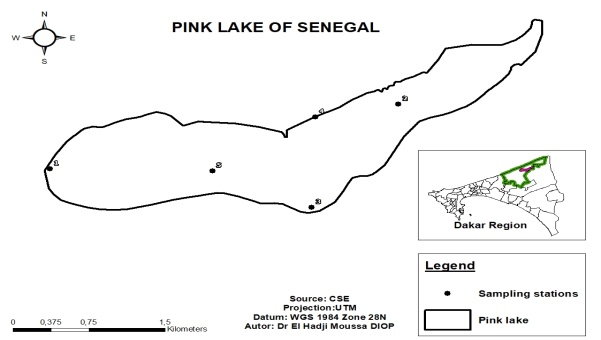
Lake Retba, with an area of 3 km2, which is the subject of this study, is located approximately 35 km north-northeast of the city of Dakar. Its geographical coordinates are between 17°12'13''W and 17°15'W; 14°49'57''N and 14°51'09''N, at an altitude of 0 m. It extends in a NNE-SSW direction. Sampling of the waters subjected to analysis was carried out in October 2024 at five (5) stations on the lake (Figure 1). The geographical coordinates of the sampling stations were determined using a GARMIN 64S GPS and the mapping was carried out using ArcGIS 10.4.1 software. At each station, a two-litre (2 L) sample was taken from the surface (SUR1 to SUR5) and at a depth of 1.5 m (PRO1 to PRO5) and then packaged in polyethylene bottles in accordance with TS EN ISO 5667. These bottles, previously cleaned, were rinsed with water from the station before filling. These bottles containing lake water were immediately stored in ice cubes for transport, then placed in the refrigerator (4°C) for the analysis of physicochemical parameters not measured in situ.

pH (NF T90-008), electrical conductivity (NF EN 27888), Total Dissolved Solids (TDS) (NF EN 15216) and salinity of the lake waters were measured in situ using a portable multimeter type HQ4300. For COD, it was determined according to AFNOR Standard T-90-101 (1969) 10. Two milliliters of water samples were first mineralized at 150 °C for 2 h in a heating block with previously dosed reagents (H2SO4, Ag2SO4, K2SO4 and K2Cr2O7). COD measurement was then made using an integral multiparameter photometer type HI83399-02.
Heavy metal analysis in lake water samples was performed by energy dispersive X-ray fluorescence spectrometry (ED-XRF). An Epsilon1 ED-XRF designed by Malver-PANalytical was used.
Pesticide residues were determined by gas chromatography coupled with mass spectrophotometry (GC-MS) according to ISO standard6468: 1996 11. The method consisted first of isolating organic contaminants present in water samples by liquid-liquid extraction. Thus, 1000 mL of water sample to be analyzed was introduced into a separating funnel containing 75 mL of dichloromethane. After vigorously shaking for 5 minutes to allow the transfer of analytes into the organic solvent, periodic degassing was carried out by opening the stopcock of the funnel. The mixture was allowed to settle to obtain phase separation (dichloromethane at the bottom, water at the top). The lower phase (dichloromethane) was collected and filtered through a glass wool funnel containing anhydrous sodium sulfate to remove moisture. 75 mL of dichloromethane was then added to the funnel and the process is repeated to improve the extraction yield. The obtained extract was evaporated and recovered with 1 mL of acetonitrile using an ultrasonic bath which ensures complete homogenization. The final extract was finally transferred into a reading vial for analysis. An Agilent 7890A gas chromatograph (GC) coupled to a mass spectrometer (MS) (Agilent 5975C) was used for reading. The device was equipped with an automatic sampler. The operating conditions of the (GC-MS) are presented in Table 1.
Multiple linear regression modeling was performed to assess the impact of physicochemical parameters such as COD, salinity, electrical conductivity, and TDS on pH variance. Principal component analysis (PCA), which is the most widespread factorial method, and numerical classification were also performed on the heavy metal analysis results to highlight the information carried by these in the water samples from the five sampling stations. All statistical analyses were performed with R software(version 4.4.2). To standardize the measurement scales and allow an objective comparison of the results, normalization according to the Min-Max method (equation 1) was applied 12. This simple technique allows the data to be accurately scaled within a predefined range, which is between 0 and 1.
 | (1) |
Where X is the original value of the variables; X' is the value after normalization; Xmin and Xmax are the minimum and maximum observed values of X in the dataset, respectively.
All analyses were performed in triplicate and mean values were presented.
Physicochemical analyses carried out on the waters of lake Retba revealed a significantly degraded water quality, both organic and mineral.The results are shown in Table 2.
The pH value of the water can affect the physical, chemical and bacteriological properties. According to Table 2, the recorded pH values did not show significant variations. They ranged between 7.08 (PRO4) and 7.92 (SUR3) and complied with the current regulations (pH 6-9) 13. However, it was noted that the environment was slightly neutral to basic, which is consistent with a high presence of alkaline minerals typical of saline or hypersaline lakes 14. In addition, for all stations, the pH of the water at the surface was slightly higher than at depth. Thus, the environment would be more reducing at depth due to the anaerobic degradation of organic matter.
For COD, the levels varied between 86.84 mg/L (PRO1) and 313.96 mg/L (SUR5). Samples from SUR2, SUR3, SUR4, SUR5, PRO2 and PRO4 had COD values higher than the Senegalese standard (200 mg/L). In addition, unlike pH, in all stations, surface samples had higher COD values than those at depth. This would indicate an accumulation of oxidizable materials on the surface linked to direct inputs of pollutants or by infiltration of domestic or industrial runoff water 15. This accumulation could reduce dissolved oxygen in the environment and the salt concentration, thus slowing down natural biodegradation 16. Surfaces 4 and 5 were the areas most polluted by COD and required special monitoring.
The salinity in the lake water samples ranged from 149022 mg/L to 210384 mg/L, indicating an extremely saline environment. However, these values were significantly lower than the average salinity of the lake (350 to 380 g/L) 5. This decrease in salinity is thought to be due to inputs of rainwater and possibly industrial water, modifying the lake's ecosystem and preventing the algae (Dunaliella salina) responsible for the pink coloration from developing. The high conductivity value (140.7 to 148.7 mS /cm) observed at the lake level, particularly at depth, was mainly explained by its very high salinity. Indeed, these conductivity values were not only a direct indicator of the high salinity of the pink lake, but also a reflection of the natural processes of evaporation, mineralization and anthropogenic processes that govern the evolution of its chemical quality.
TDS measures the amount of dissolved organic and inorganic ions in water. The results of this study presented TDS (from 249220mg/L to 339600mg/L) that were well above the standards (>30000 ppm TDS). This would result from an input of dissolved solids by infiltration of domestic, storm or industrial wastewater. These results also showed that the deep samples were more loaded with dissolved solids than those at the surface despite small variations. These slight variations in TDS between surface and deep samples indicated chemical stratification, a phenomenon often observed in closed aquatic systems 17.
3.2. Variance of pH by Multiple Linear RegressionThe analysis of the physicochemical quality of the pink lake was approached through multiple linear regression modeling. The objective was to identify the relationships between the parameters and understand their influence on a dependent variable, pH (a quality indicator). The explanatory variables considered in the model were salinity, TDS, COD, conductivity as well as salinity-COD and salinity-conductivity interactions. The results of the linear regression showed that the model presented an excellent quality of fit to the data with a multiple R- squared of 0.9967 and an adjusted R- squared of 0.9901. In addition, the Fisher statistic (F- statistic = 150.3) was higher than that of the critical Fisher (F'= 8.941) and associated with a p-value of (0.0008319), indicating that the model was significant. Table 3 presents the ANOVA of the model.
The results in Table 3 showed that the variables TDS, Salinity and COD had significant influences with mostly negative effects. However, the Salinity-COD and Salinity-Conductivity interactions had modulating effects. Indeed, the Salinity-COD interaction presented a positive synergy unlike the Salinity-Conductivity interaction which had an inverse influence.
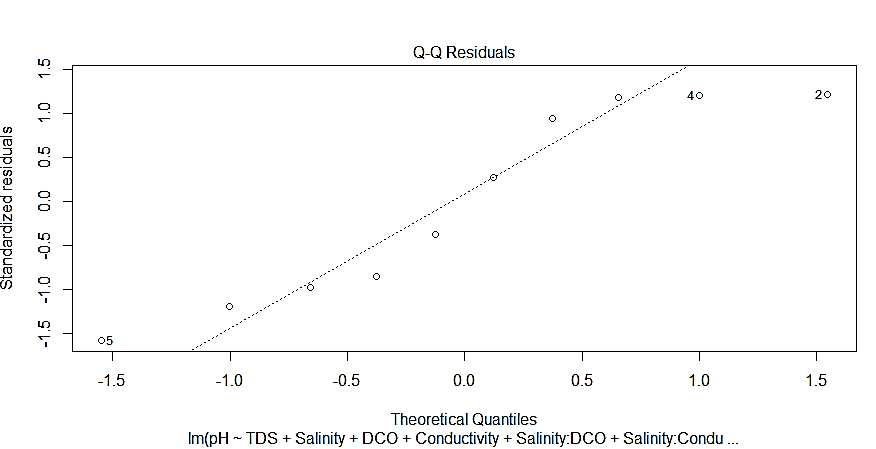
Figure 2 presented the plot of standardized residuals versus theoretical quantiles. It was found that most of the residual points followed the theoretical line quite well with only slight deviations at the ends (points 5, 4, and 2). This indicated that the model residuals followed a normal distribution.
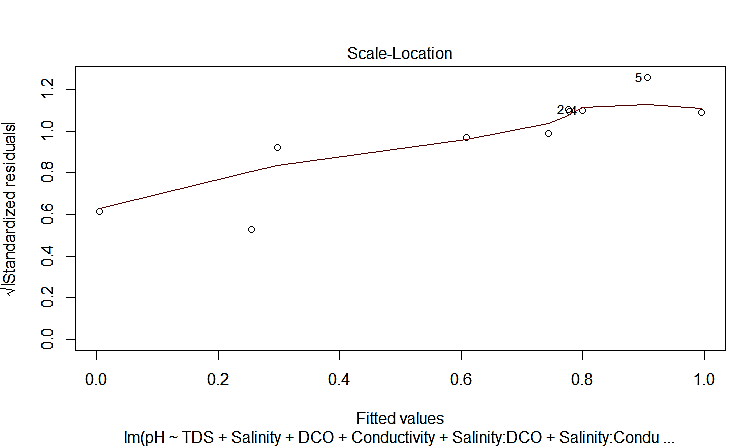
Figure 3 presented the graph of standardized residuals versus predicted values. This graph allowed us to verify the consistency of the residuals.
From the analysis of Figure 3, it was noticed that the trend line showed a slight increase in the dispersion of the residuals (error variance). However, this variation remained moderate (without large peaks). Some samples presented a high statistical leverage. These influential points 2, 4 and 5 representing respectively samples SUR2, SUR4 and SUR5, corresponded to areas of the lake particularly loaded with high salinity and high COD. The relationship between COD and pH, modulated by salinity, reflected redox processes linked to the degradation of organic matter 18.
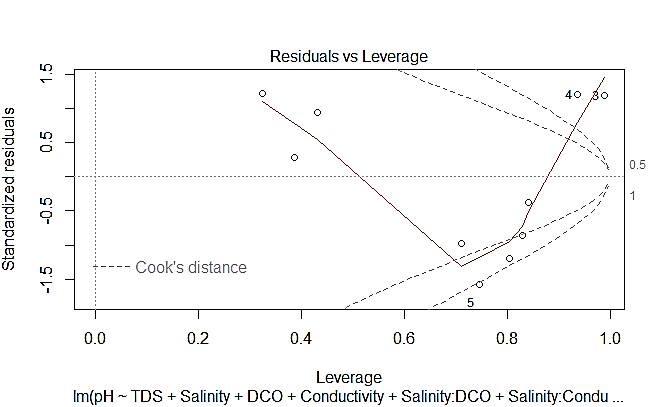
Figure 4 presented the graph of standardized residuals as a function of leverage effects.


The analysis of Figure 4 showed that points 4, 5 and 8 (from areas with atypical but not aberrant pollution) and corresponding respectively to the samples of SUR4, SUR5 and PRO3, had a high leverage. This meant that they had a significant weight in the model adjustment but their residuals were not very extreme. In addition, no point exceeded the critical threshold of the Cook's distance line. This means that no point excessively influenced the stability of the model.
Thus, the multiple linear regression model was able to explain a significant part of the variance in pH, which showed that the selected physicochemical parameters had a real and measurable impact on the water quality of pink lake. Salinity, COD and conductivity were key variables that influenced pH, with interactions between salinity and COD as well as between salinity and conductivity modulating this effect. These interactions indicated that the combined effect of these parameters was different from the sum of their individual effects, thus highlighting the complexity of the physicochemical processes in the lake. The model diagnosis (verification of the assumptions of linearity, normality, homogeneity of the residuals) ensured the validity of the results. Thus, the model was stable and robust. This suggested that the extreme natural or anthropogenic variations in the lake were well integrated. Thus, the pollution was present and modelable.
A somewhat similar study by (Saalidong et al., 2022) showed that parameters like TDS, turbidity, calcium and total alkalinity were statistically associated with pH prediction. According to the authors, none of the heavy metals and bacteriological factors were significant in predicting pH levels in Tarkwa surface waters 13
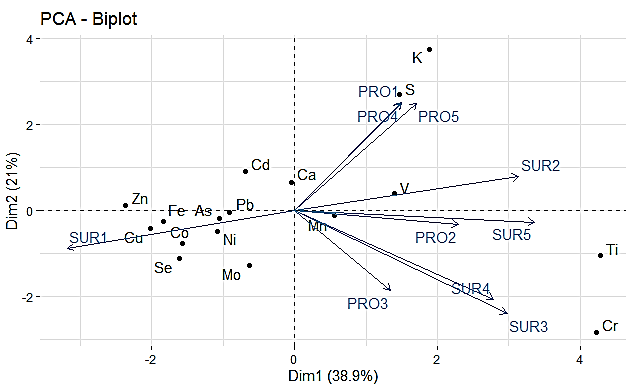
3.3. Heavy Metal AnalysisHeavy metals are among the main categories of pollutants and have a huge potential to affect the environment and public health. They are non-biodegradable, accumulative and toxic 19. To better appreciate the pollution of the Pink Lake by heavy metals, the results were processed in the form of a principal component analysis (PCA). The latter also made it possible to calculate the variances expressed for each factor and their accumulation. The Biplot -PCA (Figure 5) made it possible to simultaneously visualize the individuals (heavy metals) and the variables (sampling stations) as well as their relationships. It was also found that the first two dimensions (Dim 1 and Dim 2) together explained nearly 60% of the total variability, i.e. 38.9% and 21% respectively. These two factorial axes retained for this statistical analysis were thus assumed to be representative of the variance of the entire data set. From the analysis of (Figure 5), it appears that there was an accumulation of heavy metals in the lake both on the surface and in depth. However, station 1 was the area most polluted with heavy metals. Chromium and Titanium were strongly correlated with the surface samples (SUR3, SUR4 and SUR 5). The average contents of these two metals on the surface of the lake were estimated at 0.2529 and 0.0063 mg/L respectively. Elements such as Zn, Cu, As, Co, Fe, Ni, Se, Mo, Pb and Cd were also found in the lake water samples. According to the Biplot-PCA (Figure 5), these were more present in surface 1 (SUR1). Some such as lead, arsenic, cadmium, zinc, nickel and copper with average surface concentrations of 0.0110 ppm, 0.7054 ppm, 0.0659 ppm, 13.6420 ppm, 5.0468 ppm and 3.0284 ppm respectively exceeded the environmental quality standards, thus indicating potential contamination. In addition, the limit levels for these heavy metals were set at 0.0100 ppm for lead, 0.3 ppm for arsenic, 0.003 ppm for cadmium, 5 ppm for zinc, 0.2 ppm for nickel and 2 ppm for copper. The high concentrations, both at the surface and at depth, of these heavy metals, toxic to the environment and human health, indicated diffuse and persistent pollution. The presence of these heavy metals in the lake waters would be mainly linked to industrial, agricultural or urban waste discharges. Indeed, rainwater running off industrial or agricultural surfaces can collect pollutants such as oils, pesticide or fertilizer residues, heavy metals and other waste present in these areas 20. This could subsequently reach the lake waters by infiltration. In addition, market gardening is applied around Lac pink lake. Natural sources such as rock erosion, volcanic activity and atmospheric deposition can also contribute to the contamination of the lake with heavy metals. These heavy metals can accumulate in the salt, thus causing serious health problems for consumers. Moreover, recent studies have shown the presence of heavy metals in salts 21.

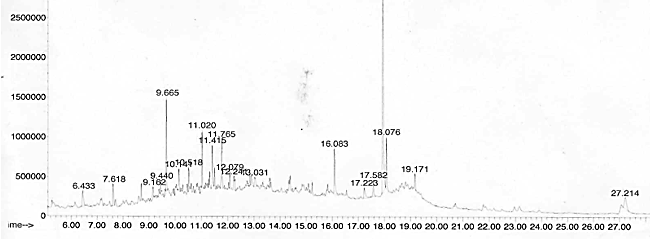
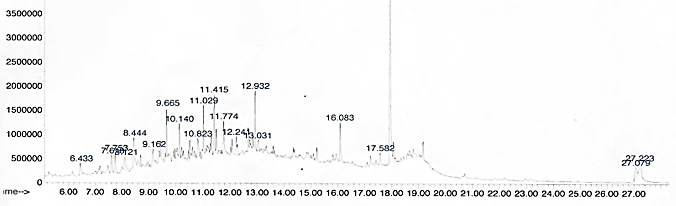
The search for pesticide residues and other potentially dangerous compounds in the lake was carried out. Figures (6 & 7) presented respectively the chromatograms of pesticides and other substances detected at the surface and at depth of the lake, at different retention times.


The detected substances were grouped into several main categories, each presenting specific risks to the lake's ecosystem. The results revealed the existence of three classes of pesticides (herbicides, insecticides and fungicides) in the lake. Indeed, insecticides (organosulfur and organophosphate) such as dicofol, 4,4'-dichlorobenzophenone and dimefox were found in the water and detected at respective retention times of 7.753 minutes, 7.753 minutes and 9.440 minutes. The first two were discovered at depth (Figure 7) and dimefox at the surface (Figure 6). Dicofol, highly toxic to aquatic organisms, is an acaricide synthesized from technical DDT while dimefox is a metabolite of dimethoate, an organophosphate insecticide. These organochlorines have been recognized for their high persistence in the environment, their ability to bioaccumulate in the fatty tissues of organisms and to biomagnify along trophic chains 22. This would be a risk for the organisms in the lake and the birds feeding on them. Of the carbamates such as propoxur and butoxycarboxim were also detected in the lake surface waters at times of 9.440 and 10.518 minutes, respectively. These compounds are potent neurotoxins that act by inhibiting the enzyme acetylcholinesterase. They have been known to be highly toxic to aquatic invertebrates and are neurological and hormonal disruptors 23. Herbicides of the anilide family as monalide was also detected with a retention time of 9.665 minutes. This herbicide is generally designed to affect plant growth. However, in an aquatic environment like the lake, it could disrupt primary flora, such as algae and phytoplankton (Dunaliella salina), which are the base of the food chain and responsible for the characteristic pink color of the lake. Another herbicide from the triazine family such as methoprotryne, which is very dangerous in contact with skin, was also identified at depth at a retention time of 12.241 minutes. These classes of herbicides are inhibitors of photosynthesis 24. Their presence could directly impact the primary production of the lake by affecting photosynthetic microalgae. The death and decomposition of these organisms could also contribute to the increase in COD observed in some samples.
In addition to insecticides and herbicides, the fungicide triadimenol was also present in the lake waters both at the surface and at depth and detected at a retention time of 17.582 minutes. Although targeting fungi, this fungicide could have unintended effects on other microorganisms and aquatic organisms, influencing the biogeochemical cycles of the lake. It could also pose hazards to human health, including skin and eye irritation 25.
In addition, many phthalates were detected, such as dibutyl phthalate (11.765 min) and various phthalic acid esters such as isobutyl octyl ester (11.020 minutes), phthalic acid, 2-ethylhexyl tridecyl ester (16.083 minutes) … These compounds are widely used as plasticizers and their presence in the lake waters indicated contamination by plastic waste or industrial leachate. Phthalates have been recognized as endocrine disruptors, capable of affecting the hormonal systems of humans and aquatic organisms such as Dunaliella salina 26.
Saturated hydrocarbons such as tetradecane (6.433 minutes), pentadecane (7.618 minutes), pentadecane,4-methyl (9.162 minutes), heptadecane (9.665 minutes), octadecane,3-methyl (12.241 minutes), 2,6,10,14,18,22-tetracosahexane, 2,6,10,15,19,23-hexamethyl-, (all-E) (18.076 minutes) etc. were also present. Their source could be anthropogenic (oil effluent discharges). The presence of these hydrocarbons could permanently alter aquatic fauna and flora. It could also threaten the use of the site as a resource used for salt production.
Although the pesticides, plasticizers and hydrocarbons found in the pink lake have not been quantified, their presence, even in low doses, raises significant health and environmental concerns. A similar study conducted in Serbia in lake Zobnatica by (Petrović et al. 2025), also revealed the presence of pesticides, and other organic pollutants such as phthalate esters, fatty acids, phenols and aldehydes exceeding the standards 27.
The pink lake of Senegal, which offered economic benefits by acting as a major tourist attraction, had completely denatured itself by losing its famous color. Thus, the study carried out had the main objective of assessing the extent of the deterioration of the water quality of this lake and to determine the causes, in a context marked by the intensification of anthropogenic pressures and the effects of climate change. The results obtained highlighted an advanced alteration of the quality of the waters of the lake. The diversity and nature of the pollutants identified such as heavy metals (Pb, As, Cd, Ni...) with levels higher than environmental standards, pesticides, plasticizers and hydrocarbons, highlighted a significant and multi-source contamination of the lake, probably due to discharges of domestic, agricultural and industrial wastewater. These contaminants represent a threat to the ecological balance of this hypersaline body of water, by directly affecting the key organism of its trophic chain which is the Dunaliella salina. The persistence of these compounds and their potential for bioaccumulation may have chronic effects on the lake's biodiversity, including migratory birds, and potentially on the quality of harvested salt.
Thus, it would be essential to establish integrated governance of the resource, including mechanisms for regulating agricultural, industrial and domestic discharges, as well as the active involvement of local communities. Safeguarding pink lake cannot be limited to a one-off response but should be part of a strategy of sustainable management and ecological restoration. This work constitutes a useful scientific basis for understanding polluting dynamics and paves the way for broader future studies, essential for the preservation of this natural, economic and symbolic heritage of Senegal. Thus, it would still be very interesting to evaluate the physicochemical state of the lake in space and time in order to better understand the impact of human activities and climate change, but also to characterize the soils of the lake in order to determine the correlation that exists between the physicochemical properties of the water and the edaphic characteristics of the lake.
Acknowledgements: We would like to warmly thank Social Change Factory for giving us the opportunity to conduct this study through the fifth edition of Voice of the Youth.
Statement of Competing Interests: The authors have no competing interests
| [1] | D. Ruidas, SC Pal, A. Saha, I. Chowdhuri, and M. Shit, “Hydrogeochemical characterization based water resources vulnerability assessment in India's first Ramsar site of Chilka lake”, Mar. Pollut. Bull., flight. 184, p. 114107, Nov. 2022. | ||
| In article | View Article PubMed | ||
| [2] | E. Mbaye, “Economic evaluation of a supply service in the Pink lakearea (Dakar, Senegal): example of market gardening”, Int. J. Econ. Stud. Manag. IJESM, Nov. 2022. | ||
| In article | |||
| [3] | VM Amador-Luna, M. Herrero, G. Domínguez-Rodríguez, E. Ibáñez, and L. Montero, “Enhancing the bioactivity of Dunaliella salina extracts through ultra-high pressure supercritical fluid extraction (UHP-SFE),” Innov. Food Sci. Emerg. Technol., flight. 95, p. 103697, Jul. 2024. | ||
| In article | View Article | ||
| [4] | Y. Sharma, R. Yadav, H. Sharma, and CP Singh, “Identification of microRNAs in Dunaliella salina and their potential role in carotenogenesis under salinity stress,” Biologia ( Bratisl.), July. 2025. | ||
| In article | View Article | ||
| [5] | YC Ibrahima, SE Hadji, E. Ezzoura, D. Yankhoba, G. Adama, and S. Raphaël, “The Pink lakegeosite (NE Dakar, Senegal): challenges of preserving an exceptional geoheritage threatened with disappearance”, Géomorphologie Relief Process. Environ., vol. 28, n o 2, Art. n o 2, juill. 2022. | ||
| In article | View Article | ||
| [6] | A. Diop, N. Diop, and PI Ndiaye, “Bird diversity in a Sahelian ecosystem under restoration: A study in the great Grenn wall extension area of Senegal”, Ecol. Forehead., flight. 44, no. 1, p. 42‑53, Feb. 2024. | ||
| In article | View Article | ||
| [7] | NM Ali, MK Khan, B. Mazhar, and M. Mustafa, “Impact of Water Pollution on Waterborne Infections: Emphasizing Microbial Contamination and Associated Health Hazards in Humans,” Discov. Water, vol. 5, no. 1, p. 19, March 2025. | ||
| In article | View Article | ||
| [8] | JT Adu and FI Aneke, “Evaluation of heavy metal contamination in landfills from e-waste disposal and its potential as a pollution source for surface water bodies”, Results Eng., flight. 25, p. 104431, March 2025. | ||
| In article | View Article | ||
| [9] | S. Gao, T. Zheng, X. Zheng, and J. Luo, “Impact of river-groundwater interactions on residual saltwater pollution in estuarine groundwater reservoirs,” Water Res., flight. 279, p. 123474, Jul. 2025. | ||
| In article | View Article PubMed | ||
| [10] | F. Rafiq et al., “First assessment of domestic and industrial effluents impact on intertidal zone of Safi coastline (west of Morocco): physicochemical characteristics and metallic trace contamination”, Desalination Water Treat., flight. 245, p. 167‑177, Jan. 2022. | ||
| In article | View Article | ||
| [11] | J. Onyango, N. Kitaka, JJA van Bruggen, K. Irvine, and J. Simaika, “Agricultural intensification in Lake Naivasha Catchment in Kenya and associated nutrients and pesticides pollution,” Sci. Rep., flight. 14, no. 1, p. 18539, August 2024. | ||
| In article | View Article PubMed | ||
| [12] | L. Zhou and W. Suh, “A Comprehensive Study on Static and Dynamic Operational Efficiency in Major Korean Container Terminals Amid the Smart Port Development Context,” Sustainability, vol. 16, no. 13, Art. No. 13, Jan. 2024. | ||
| In article | View Article | ||
| [13] | BM Saalidong, SA Aram, S. Otu, and PO Lartey, “Examining the dynamics of the relationship between water pH and other water quality parameters in ground and surface water systems,” PLOS ONE, vol. 17, no. 1, p. e0262117, Jan. 2022. | ||
| In article | View Article PubMed | ||
| [14] | KC Benison, JE Hallsworth, P. Zalar, M. Glavina, and N. Gunde-Cimerman, “Extremophilic and common fungi in acid brines and their halite,” Extremophiles, vol. 29, no. 1, p. 15, Feb. 2025. | ||
| In article | View Article PubMed | ||
| [15] | A. DAS, "Assessment of potability of surface water and its health involvement in Mahanadi Basin, Odisha", Mater. Today Proc., May 2023. | ||
| In article | View Article | ||
| [16] | J. Kim et al., "Long-Term Trends in Dissolved Oxygen and Environmental Parameters in Jinhae Bay, Korea: A 25-Year Analysis (1997–2021)", Ocean Coast. Manag., flight. 257, p. 107347, nov. 2024. | ||
| In article | View Article | ||
| [17] | AH Roy, AM Quick, RL Hale, KG Hopkins, and JS Soucie, “Salting and management behaviors influence urban stream conductivity in Boston, Massachusetts (USA),” Freshw. Sci., June 2025. | ||
| In article | View Article | ||
| [18] | M. Yun, C. Zhang, B. Wang, J. Huang, and J. Sun, “The effects and mechanism of organic matter degradation in river sediment driven by humic-reducing bacteria,” J. Water Process Eng., flight. 67, p. 106150, Nov. 2024. | ||
| In article | View Article | ||
| [19] | S. Kotnala et al., "Impact of Heavy Metal Toxicity On the Human Health and Environment", SCI. Total Approx., flight. 987, p. 179785, Jul. 2025. | ||
| In article | View Article PubMed | ||
| [20] | C. Guo, Q. Wang, W. Bo, and J. Li, "Initial Urban Stormwater Runoff Pollution and its Fate in Rain Garden Soil", J. Sustain. Water Built Approx., flight. 11, no. 3, p. 04025008, August 2025. | ||
| In article | View Article | ||
| [21] | MWH Chan, KA Hasan, D. Balthazar-Silva, ZA Mirani, and M. Asghar, “Evaluation of heavy metal pollutants in salt and seawater under the influence of the Lyari River and potential health risk assessment,” Mar. Pollut. Bull., flight. 166, p. 112215, May 2021. | ||
| In article | View Article PubMed | ||
| [22] | D. Mukherjee et al., "Silent Threats Beneath The Surface: Unraveling the Impact of Organophosphate Toxicity On Fish", SCI. Total Approx., flight. 985, p. 179725, Jul. 2025. | ||
| In article | View Article PubMed | ||
| [23] | OK Olayemi et al., “Propoxur-Induced Nephrotoxicity and Haematotoxicity : Ameliorative Role of Ascorbic Acid in Adult Male Wistar Rats,” Sokoto J. Med. Lab. Sci., vol. 10, no. 1, May 2025, Accessed : August 7, 2025. [Online]. Available at: https://sokjmls.com.ng/index.php/SJMLS/article/view/659. | ||
| In article | View Article | ||
| [24] | J. Huang, X. Piao, Y. Zhou, and S. Li, “Toxicity Assessment of 36 Herbicides to Green Algae: Effects of Mode of Action and Chemical Family,” Agrochemicals, vol. 3, no. 2, p. 164-180, June 2024. | ||
| In article | View Article | ||
| [25] | M. Arici, A. Bilgehan, ED Dincel, and G. Özhan, “The impact of triadimenol on male fertility: An in vitro study and molecular docking examination,” Reprod. Toxicol., flight. 132, p. 108861, March 2025. | ||
| In article | View Article PubMed | ||
| [26] | RAA Isaac, R. Subbarayalu, MSK Kumar, TM Martin, SC Lo, and W. Santosh, “Human endocrine disruption: an updated review of toxicological insights into parabens and phthalates,” Toxicol. Approximately. Health Sci., May 2025. | ||
| In article | View Article | ||
| [27] | M. Petrović et al., “Environmental Risk Evaluation for Specific Organic Micropollutants in Protected Area of Lake Zobnatica, Serbia”. | ||
| In article | |||
Published with license by Science and Education Publishing, Copyright © 2025 El Hadji Moussa Diop, Kalidou BA, Demo KOITA, Alioune Badara PAYE and Houéfa Bossèdé Glorieuse Ange-Carelle DANSOU
 This work is licensed under a Creative Commons Attribution 4.0 International License. To view a copy of this license, visit
http://creativecommons.org/licenses/by/4.0/
This work is licensed under a Creative Commons Attribution 4.0 International License. To view a copy of this license, visit
http://creativecommons.org/licenses/by/4.0/
| [1] | D. Ruidas, SC Pal, A. Saha, I. Chowdhuri, and M. Shit, “Hydrogeochemical characterization based water resources vulnerability assessment in India's first Ramsar site of Chilka lake”, Mar. Pollut. Bull., flight. 184, p. 114107, Nov. 2022. | ||
| In article | View Article PubMed | ||
| [2] | E. Mbaye, “Economic evaluation of a supply service in the Pink lakearea (Dakar, Senegal): example of market gardening”, Int. J. Econ. Stud. Manag. IJESM, Nov. 2022. | ||
| In article | |||
| [3] | VM Amador-Luna, M. Herrero, G. Domínguez-Rodríguez, E. Ibáñez, and L. Montero, “Enhancing the bioactivity of Dunaliella salina extracts through ultra-high pressure supercritical fluid extraction (UHP-SFE),” Innov. Food Sci. Emerg. Technol., flight. 95, p. 103697, Jul. 2024. | ||
| In article | View Article | ||
| [4] | Y. Sharma, R. Yadav, H. Sharma, and CP Singh, “Identification of microRNAs in Dunaliella salina and their potential role in carotenogenesis under salinity stress,” Biologia ( Bratisl.), July. 2025. | ||
| In article | View Article | ||
| [5] | YC Ibrahima, SE Hadji, E. Ezzoura, D. Yankhoba, G. Adama, and S. Raphaël, “The Pink lakegeosite (NE Dakar, Senegal): challenges of preserving an exceptional geoheritage threatened with disappearance”, Géomorphologie Relief Process. Environ., vol. 28, n o 2, Art. n o 2, juill. 2022. | ||
| In article | View Article | ||
| [6] | A. Diop, N. Diop, and PI Ndiaye, “Bird diversity in a Sahelian ecosystem under restoration: A study in the great Grenn wall extension area of Senegal”, Ecol. Forehead., flight. 44, no. 1, p. 42‑53, Feb. 2024. | ||
| In article | View Article | ||
| [7] | NM Ali, MK Khan, B. Mazhar, and M. Mustafa, “Impact of Water Pollution on Waterborne Infections: Emphasizing Microbial Contamination and Associated Health Hazards in Humans,” Discov. Water, vol. 5, no. 1, p. 19, March 2025. | ||
| In article | View Article | ||
| [8] | JT Adu and FI Aneke, “Evaluation of heavy metal contamination in landfills from e-waste disposal and its potential as a pollution source for surface water bodies”, Results Eng., flight. 25, p. 104431, March 2025. | ||
| In article | View Article | ||
| [9] | S. Gao, T. Zheng, X. Zheng, and J. Luo, “Impact of river-groundwater interactions on residual saltwater pollution in estuarine groundwater reservoirs,” Water Res., flight. 279, p. 123474, Jul. 2025. | ||
| In article | View Article PubMed | ||
| [10] | F. Rafiq et al., “First assessment of domestic and industrial effluents impact on intertidal zone of Safi coastline (west of Morocco): physicochemical characteristics and metallic trace contamination”, Desalination Water Treat., flight. 245, p. 167‑177, Jan. 2022. | ||
| In article | View Article | ||
| [11] | J. Onyango, N. Kitaka, JJA van Bruggen, K. Irvine, and J. Simaika, “Agricultural intensification in Lake Naivasha Catchment in Kenya and associated nutrients and pesticides pollution,” Sci. Rep., flight. 14, no. 1, p. 18539, August 2024. | ||
| In article | View Article PubMed | ||
| [12] | L. Zhou and W. Suh, “A Comprehensive Study on Static and Dynamic Operational Efficiency in Major Korean Container Terminals Amid the Smart Port Development Context,” Sustainability, vol. 16, no. 13, Art. No. 13, Jan. 2024. | ||
| In article | View Article | ||
| [13] | BM Saalidong, SA Aram, S. Otu, and PO Lartey, “Examining the dynamics of the relationship between water pH and other water quality parameters in ground and surface water systems,” PLOS ONE, vol. 17, no. 1, p. e0262117, Jan. 2022. | ||
| In article | View Article PubMed | ||
| [14] | KC Benison, JE Hallsworth, P. Zalar, M. Glavina, and N. Gunde-Cimerman, “Extremophilic and common fungi in acid brines and their halite,” Extremophiles, vol. 29, no. 1, p. 15, Feb. 2025. | ||
| In article | View Article PubMed | ||
| [15] | A. DAS, "Assessment of potability of surface water and its health involvement in Mahanadi Basin, Odisha", Mater. Today Proc., May 2023. | ||
| In article | View Article | ||
| [16] | J. Kim et al., "Long-Term Trends in Dissolved Oxygen and Environmental Parameters in Jinhae Bay, Korea: A 25-Year Analysis (1997–2021)", Ocean Coast. Manag., flight. 257, p. 107347, nov. 2024. | ||
| In article | View Article | ||
| [17] | AH Roy, AM Quick, RL Hale, KG Hopkins, and JS Soucie, “Salting and management behaviors influence urban stream conductivity in Boston, Massachusetts (USA),” Freshw. Sci., June 2025. | ||
| In article | View Article | ||
| [18] | M. Yun, C. Zhang, B. Wang, J. Huang, and J. Sun, “The effects and mechanism of organic matter degradation in river sediment driven by humic-reducing bacteria,” J. Water Process Eng., flight. 67, p. 106150, Nov. 2024. | ||
| In article | View Article | ||
| [19] | S. Kotnala et al., "Impact of Heavy Metal Toxicity On the Human Health and Environment", SCI. Total Approx., flight. 987, p. 179785, Jul. 2025. | ||
| In article | View Article PubMed | ||
| [20] | C. Guo, Q. Wang, W. Bo, and J. Li, "Initial Urban Stormwater Runoff Pollution and its Fate in Rain Garden Soil", J. Sustain. Water Built Approx., flight. 11, no. 3, p. 04025008, August 2025. | ||
| In article | View Article | ||
| [21] | MWH Chan, KA Hasan, D. Balthazar-Silva, ZA Mirani, and M. Asghar, “Evaluation of heavy metal pollutants in salt and seawater under the influence of the Lyari River and potential health risk assessment,” Mar. Pollut. Bull., flight. 166, p. 112215, May 2021. | ||
| In article | View Article PubMed | ||
| [22] | D. Mukherjee et al., "Silent Threats Beneath The Surface: Unraveling the Impact of Organophosphate Toxicity On Fish", SCI. Total Approx., flight. 985, p. 179725, Jul. 2025. | ||
| In article | View Article PubMed | ||
| [23] | OK Olayemi et al., “Propoxur-Induced Nephrotoxicity and Haematotoxicity : Ameliorative Role of Ascorbic Acid in Adult Male Wistar Rats,” Sokoto J. Med. Lab. Sci., vol. 10, no. 1, May 2025, Accessed : August 7, 2025. [Online]. Available at: https://sokjmls.com.ng/index.php/SJMLS/article/view/659. | ||
| In article | View Article | ||
| [24] | J. Huang, X. Piao, Y. Zhou, and S. Li, “Toxicity Assessment of 36 Herbicides to Green Algae: Effects of Mode of Action and Chemical Family,” Agrochemicals, vol. 3, no. 2, p. 164-180, June 2024. | ||
| In article | View Article | ||
| [25] | M. Arici, A. Bilgehan, ED Dincel, and G. Özhan, “The impact of triadimenol on male fertility: An in vitro study and molecular docking examination,” Reprod. Toxicol., flight. 132, p. 108861, March 2025. | ||
| In article | View Article PubMed | ||
| [26] | RAA Isaac, R. Subbarayalu, MSK Kumar, TM Martin, SC Lo, and W. Santosh, “Human endocrine disruption: an updated review of toxicological insights into parabens and phthalates,” Toxicol. Approximately. Health Sci., May 2025. | ||
| In article | View Article | ||
| [27] | M. Petrović et al., “Environmental Risk Evaluation for Specific Organic Micropollutants in Protected Area of Lake Zobnatica, Serbia”. | ||
| In article | |||